(Continued)

The Indian Ocean surrounds India on most of its Eastern, Southern and Western sides. It is the third largest of the world’s oceanic divisions. Often, cyclones and tsunamis come about, enabling water, one of the five elements of nature, to demonstrate its disastrous powers. Plum uses this to comic advantage.
- In Jeeves in the Offing, Kipper, upon seeing the newspaper announcement of the engagement of Bobby Wickham and Bertie, writes a stinker to her. Bobby Wickham takes umbrage. She takes his head off and Kipper experiences something akin to that of facing a typhoon on the Indian Ocean. She promptly announces her intention to get married to Bertie and returns Kipper to store. Jeeves, who is off to Herne Bay on a vacation, gets promptly roped in and helps Bertie Wooster to avoid a saunter down the aisle.
- In ‘Feet of Clay’, Nothing Serious, Captain Jack Fosdyke tells Agnes Flack of the time he saved Princess della Raviogli in the Indian Ocean. He claims that ‘there were half a dozen sharks horsing about then and behaving as if the place belonged to them’. He used a Boy Scout pocket knife to teach them a lesson or two.

Indian scriptures often use the Sanskrit term ‘siddhi’ to signify either a remarkable accomplishment or a singular proficiency attained by an aspirant. These could be material, paranormal, supernatural or magical in nature, attained by such practices as meditation, yoga and intense ‘tapas’ (austere practices).
Such attainments could include the ability to reduce one’s body to the size of an atom or even become invisible, to become infinitely large, to become weightless or lighter than air, to instantaneously travel or be anywhere at will, to achieve or realize whatever one desires, to control nature, individuals, organisms, etc., and also the ability to control all material elements or natural forces.
Like much else, this facet of India is also used by Plum to amuse, elevate and entertain his readers.
Floating Around Like a Gas
One of the sterling qualities of Jeeves is that of quietly popping up as and when the Master needs him. This quality of his is routinely invoked by Plum, using the teleportation analogy from India.
- In ‘The Artistic Career of Corky’, Carry On, Jeeves, he is described as ‘one of those birds in India which dissolves itself into thin air and hop through space in a sort of disembodied way, assembling the parts again just where it wants them’.
- In such other narratives as Right Ho, Jeeves and Stiff Upper Lip, Jeeves, he is said to be like those who go into thin air in Bombay (now Mumbai), reassemble the parts a little later in Calcutta (now Kolkata), displaying the property of a kind of gas which seems to float from Spot A to Spot B without much ado.
- Joy in the Morning compares Jeeves to Indian blokes ‘who shoot their astral bodies to and fro’, disappearing in Rangoon (now Yangoon) and reassembling the parts in Calcutta (now Kolkata).
- In ‘Trouble Down at Tudsleigh’, Young Men in Spats, Freddie demonstrates a similar proficiency by means of the speed at which he rushes down the stairs, only to run into Captain Bradbury. He behaves like an Indian fakir who would go ‘into thin air in Bombay (now Mumbai) and reassemble the parts two minutes later in Darjeeling’.
- Galahad at Blandings also alludes to Indian fakirs of this kind.
Curling Up on Spikes
- In Pigs have Wings, Jerry Vail does not like the ambience of Emsworth Arms and finds a furnished villa on rent as an option. However, when inspecting the bed on offer, he shrinks from the prospect of occupying it for many nights. After all, he is not an Indian fakir who is accustomed from childhood onwards to curling up on spikes.
- In Summer Lightning, Rupert Baxter, when he starts becoming conscious of a growing cramp in his left leg, turns on one side with the nonchalance of those Indian fakirs who spend the formative years of their lives lying on iron spikes.
Contemplating the Infinite
- In The Clicking of Cuthbert, Plum captures the kind of discipline and meditative contemplation required while playing golf. The club gets raised at least two times, touching the ball and being raised back again after a careful inspection of the horizon. At the third attempt, he brings it down and ‘then stands motionless, wrapped in thought, like some Indian fakir contemplating the infinite. Then he raises his club again and replaces it behind the ball. Finally he quivers all over, swings very slowly back, and drives the ball for about a hundred and fifty yards in a dead straight line.’
- In The Girl on the Boat, when Sam achieves an almost imbecile state of boredom, his position is described as that of one of those Indian mystics who sit perfectly still for twenty years, contemplating the Infinite.
Wherever Plum is, love cannot be far behind. India has gifted the world with the Kama Sutra, but it is not surprising that Plum never alludes to this unique treatise, because he never used sex as a ploy to popularize his narratives. All of his male characters are steeped in chivalry, strictly bound by Victorian norms. This aspect of his work had been covered by me in an earlier article entitled ‘Cupid in Plumsville’: (https://ashokbhatia.wordpress.com/2019/02/14/cupid-in-plumsville)
In his narratives, Wodehouse appears to have instead based his observations on The Garden of Kama, a collection of lyric poetry of Indian origin published in 1901, which makes liberal use of imagery and symbols from the poets of the North-West Frontier of India and the Sufi poets of Persia (Iran). The poems, written by Laurence Hope, a pseudonym of Violet Nicholson, are typically about unrequited love and loss. She had married Colonel Malcolm Hassels Nicolson, who was a commandant of the 3rd Battalion of the Baluch Regiment. The couple lived in Mhow in the central part of India from 1895 to 1900.
One of her famous compositions, known as a ‘Kashmiri Song’, also appears in at least two of Plum’s narratives.
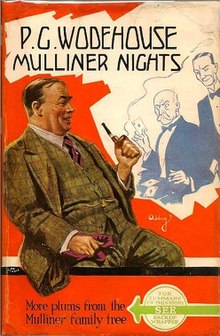
- In ‘The Knightly Quest of Mevryn’, Mulliner Nights, when Mervyn pops up at Clarice’s abode to report having suffered several privations and challenges in procuring strawberries in the month of December, he is made to wait in the drawing room where there is not much to entertain and amuse a visitor. He finds a photograph of the girl’s late father on the mantelpiece and several other items, including a copy of Indian Love Lyrics bound in limp cloth.
- In Galahad at Blandings, Galahad strongly urges Lord Emsworth to be alert and on his guard. Dame Daphne Winkworth is not to be allowed to get him alone in the rose garden or on the terrace by moonlight. If she starts talking about the dear old days, he is to change the subject. He is to be wary if Dame Daphne Winkworth asks him to read her extracts from the Indian Love Lyrics after dinner. According to him, these have to be avoided like poison, because the consequences could be disastrous.
- Jeeves and the Feudal Spirit opens with Bertie Wooster in his bath tub. ‘As I sat in the bath tub, soaping a meditative foot and singing, if I remember correctly, “Pale Hands I Loved Beside the Shalimar”, it would be deceiving my public to say that I was feeling boomps-a-daisy. The evening that lay before me promised to be one of those sticky evenings, no good to man or beast. My Aunt Dahlia, writing from her country residence, Brinkley Court down in Worcestershire, had asked me as a personal favour to take some acquaintances of hers out to dinner, a couple of the name of Trotter.’
- In Ring for Jeeves, we find an alert and bright Captain Biggar crooning ‘Pale hands I loved beside the Shalimar, where are you now, where are you now? Where are you now? Where are you now?’ Jeeves walks in just then and outlines his ‘spider sequence’, a scheme to deprive Mrs. Spottsworth of a precious pendant she wears around her neck, thereby bringing some financial relief to all concerned.
(Continued)
Notes:
The inspiration for this essay comes from the scholarly work done by Ms. Masha Lebedeva, who had earlier whipped up a research paper entitled The Russian Salad by P. G. Wodehouse.
The author expresses his sincere gratitude to an eminent expert on Plummy matters for having spared the time to go through a part of this composition and provide insightful suggestions. Some fans of P. G. Wodehouse have also suggested improvements in its contents.
Thanks are also due to Mr. Suvarna Sanyal for dishing out the main illustration in Part 1; also, to Ms. Sneha Shoney, who has edited the text.
Those of you who wish to cruise through this essay in its entirety may kindly write to akb_usha@rediffmail.com for a PDF version of the complete document to be mailed to them.
Related Posts:


 ashokbhatia