Feeds:
Posts
Comments

Posts Tagged ‘Mahatma Gandhi’

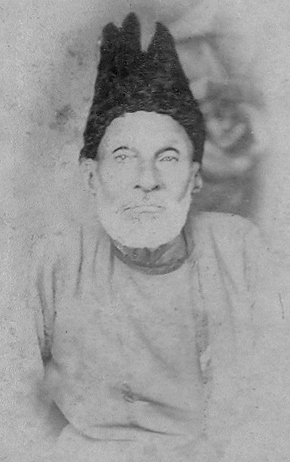
Mirza Asadullah Baig Khan, known popularly as Mirza Ghalib, was not just a poet but a literary phenomenon whose works have transcended time and space. He lived during the turbulent period from 1797 to 1869. He ended up being a chronicler of the chaotic times faced by the country during the 1857 revolt when many of the markets and localities in Delhi vanished. The mansions of his friends were razed to the ground. He wrote that Delhi had become a desert. Water was scarce. The city had turned into “a military camp”. It was the end of the feudal elite to which Ghalib had belonged. He wrote:

है मौजज़न इक क़ुल्ज़ुम-ए-ख़ूँ काश यही हो

आता है अभी देखिए क्या क्या मिरे आगे

An ocean of blood churns around me – Alas! Was this all?

The future will show what more remains for me to see.

Having settled down in the Chandni Chowk area of Delhi, he experienced first-hand the demise of the Mughal dynasty and the rise of the British Empire in India. Within a few months of his death in 1869, Mahatma Gandhi, who eventually led India to its independence in 1947, was born, though far away in Gujarat.

Why Chandni Chowk? I guess it would have been a posh area of the walled city known as Shahajahanabad then. Proximity to the Mughal court might have also weighed on his mind. The ease of shopping might have been another consideration.
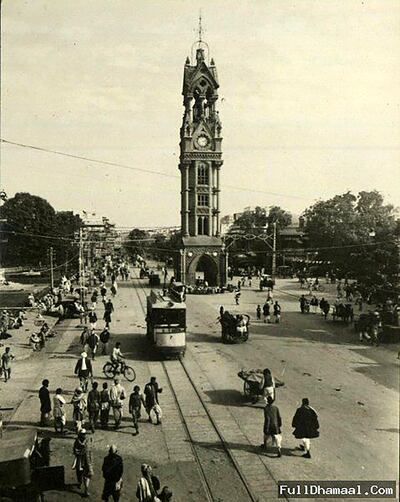
The Moonlit Square in Delhi

History buffs may recall that Chandni Chowk was built in 1650 by the Mughal Emperor Shah Jahan, and designed by his daughter, Jahanara. The market was once divided by a shallow water channel (now closed) fed by water from the river Yamuna. It would reflect moonlight. Hence its name.

There were roads and shops on either side of the channel. Ladies from the royal family are said to have ventured out of the Red Fort to shop for jewellery, clothes, and accessories. The place continues to be a shoppers’ paradise and has also become the biggest wholesale market in North India.

Shakeel Badayuni, the poet and lyricist, beautifully captures the image of this shoppers’ paradise thus in one of his nazms, ‘Tasaadum’:

वो बाज़ार की ख़ुशनुमा जगमगाहट

वो गोशआश्ना चलने फिरने की आहट

वो हर तरफ़ बिजलियों की बहारें

दुकानात की थी दुरबिया कतारें

That blissful glow of the market

That hustle-bustle of wide-eyed shoppers

A veritable spring of well-lit places

The endless rows of jewellery shops.

The range of products available is truly mind-boggling. Electrical goods, lamps and light fixtures, medical essentials and related products, silver and gold jewellery, trophies, shields, mementoes, and related items, metallic and wooden statues, sculptures, bells, handicrafts, stationery, books, paper and decorative materials, greeting and wedding cards, plumbing and sanitary ware, hardware and hotel kitchen equipment, all kinds of spices, dried fruits, nuts, herbs, grains, lentils, pickles and preserves/murabbas, industrial chemicals,  home furnishing fabrics, including ready-made items as well as design services.  

As to the mouth-watering sweets, savouries, and street food available in Chandni Chowk, right from the crispy jalebies of Dariba Kalan to the spicy chhole-chawal of Gol Hatti at Fatehpuri, full-length books alone may suffice.
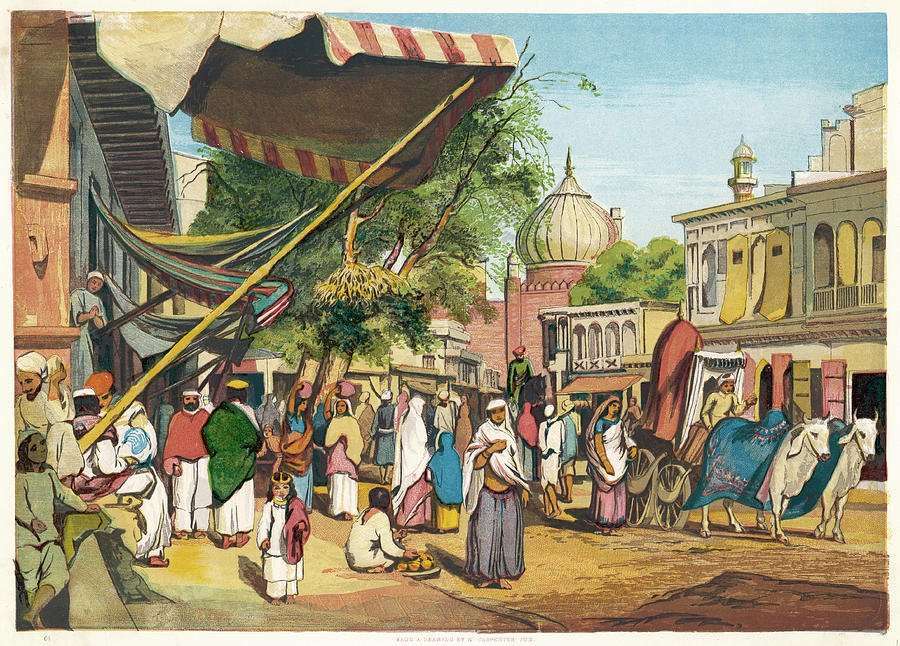
Kuchas, katras, and havelis

The road now called Chandni Chowk has several streets running off it which are called kuchas(streets/wings). Each kucha usually had several katras (cul de sac or guild houses), which, in turn, had several havelis.

Typically, a kucha would have houses whose owners shared some common attributes, usually their occupation. Hence the names Kucha Maaliwara (the gardeners’ street) and Kucha Ballimaran (the oarsmen’s street).

All this is not to say that there are no aspects of Chandni Chowk which one does not despise. One loathes its jostling crowds, its smells, its noises, its congested lanes, the mind-boggling variety of vehicles on its roads, its endless traffic snarls, its highly polluted air, its beggars trying to persuade perfect strangers to bear the burden of their maintenance with an optimistic vim, and its crowded pavements with aggressive sellers pouncing upon one to peddle their stuff. But if one has nerves of chilled steel and can manage all these with a chin-up attitude, one could eventually find one’s way to Ghalib ki Haveli, located in Gali Qasim Jan of Kucha Ballimaran.

As to Ghalib’s choice to live in Kucha Ballimaran, an area where oarsmen used to reside, one may merely surmise that as a creative genius of the literary world, he believed himself to be an oarsman, guiding his catamaran through the choppy waters of life!

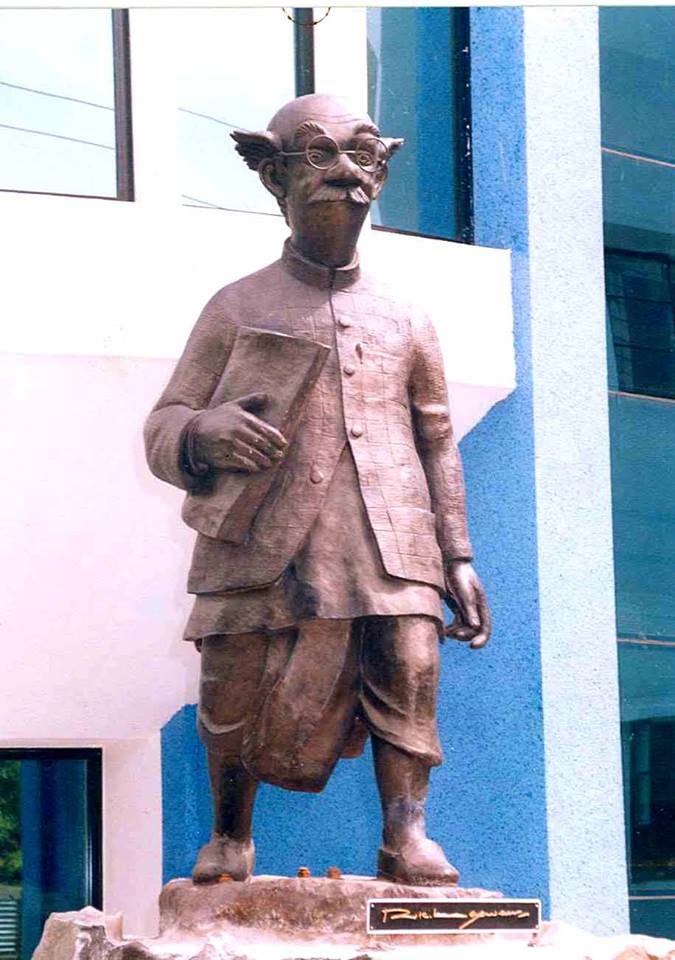
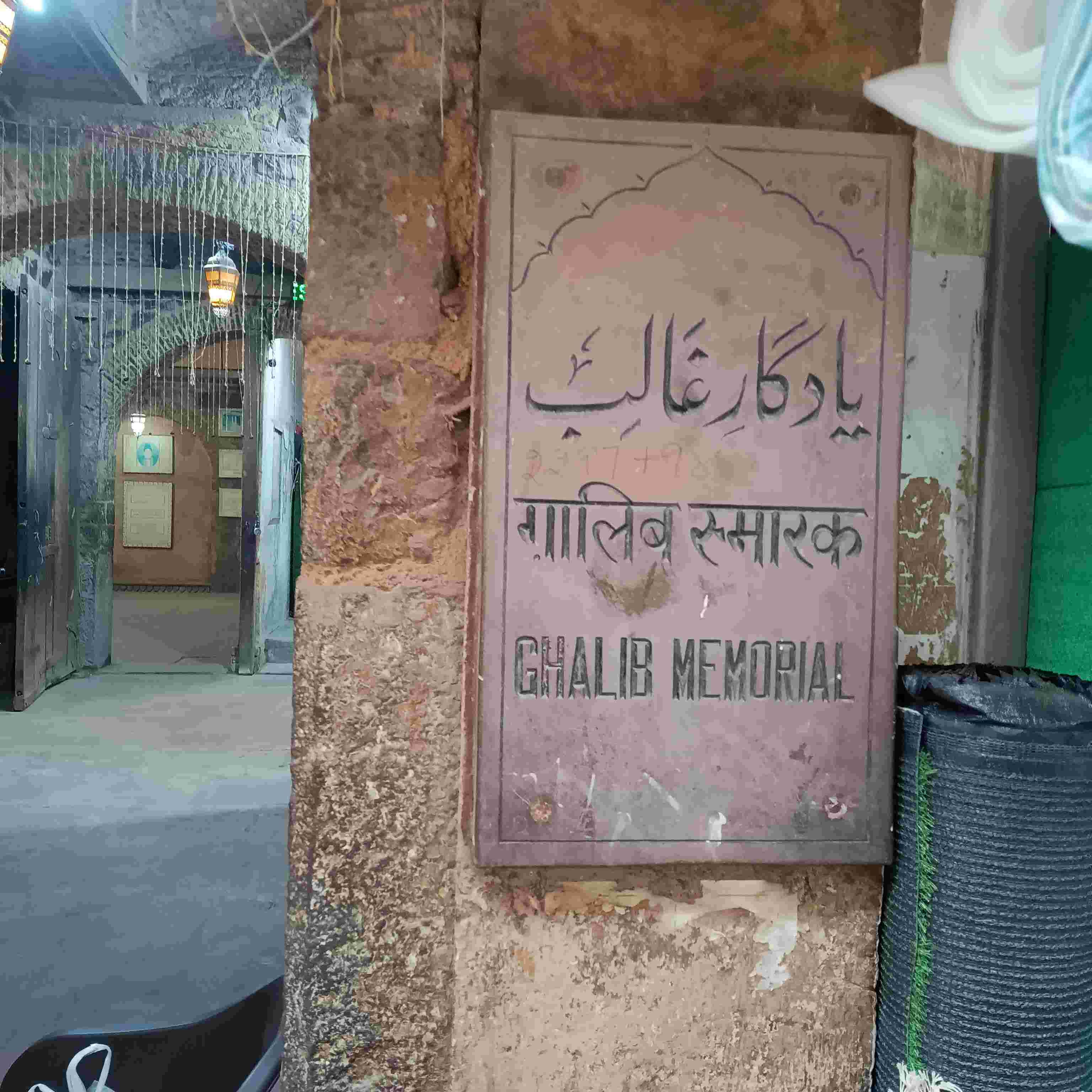
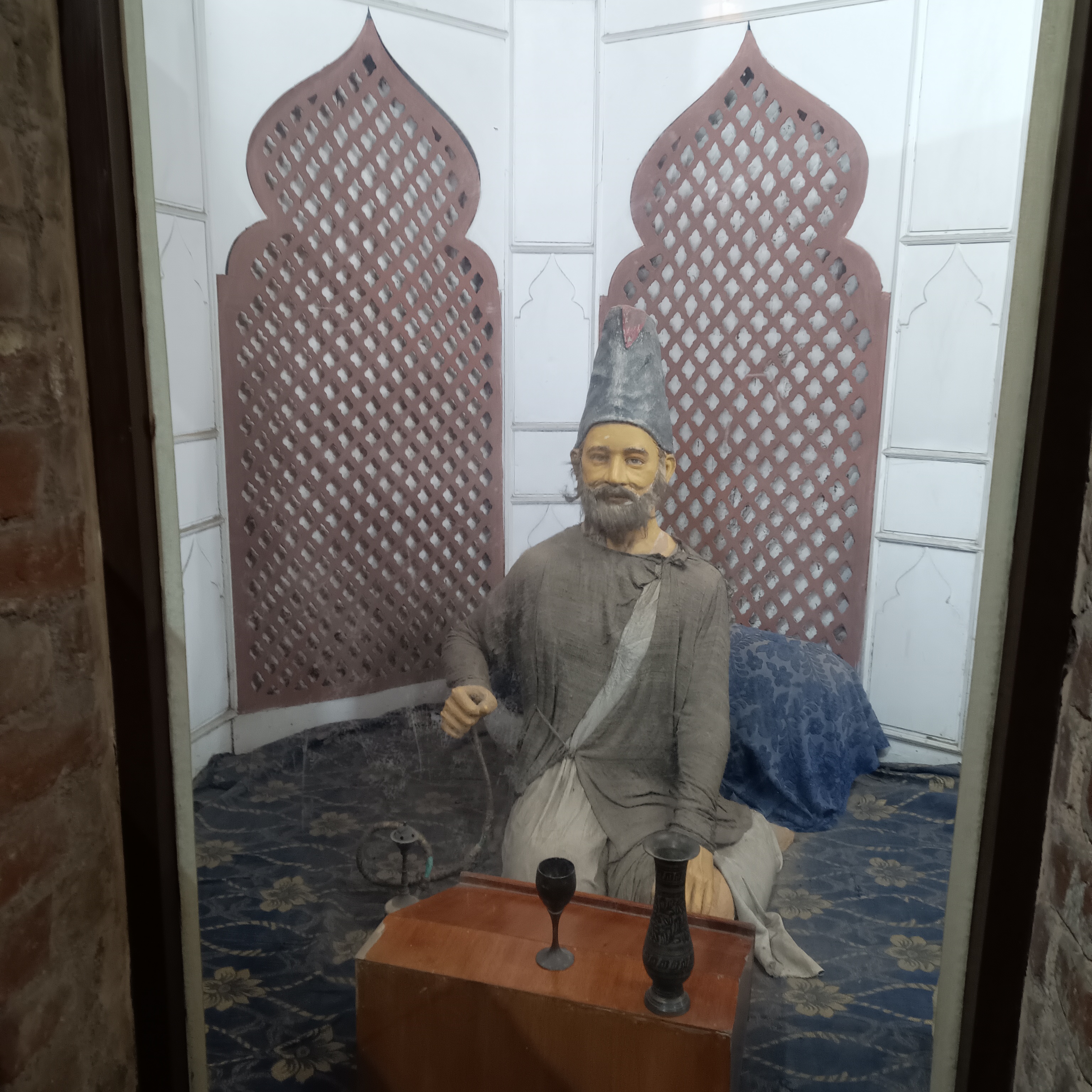
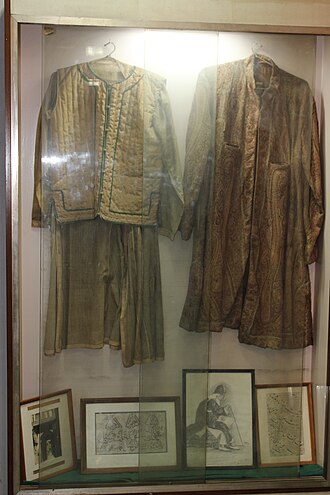
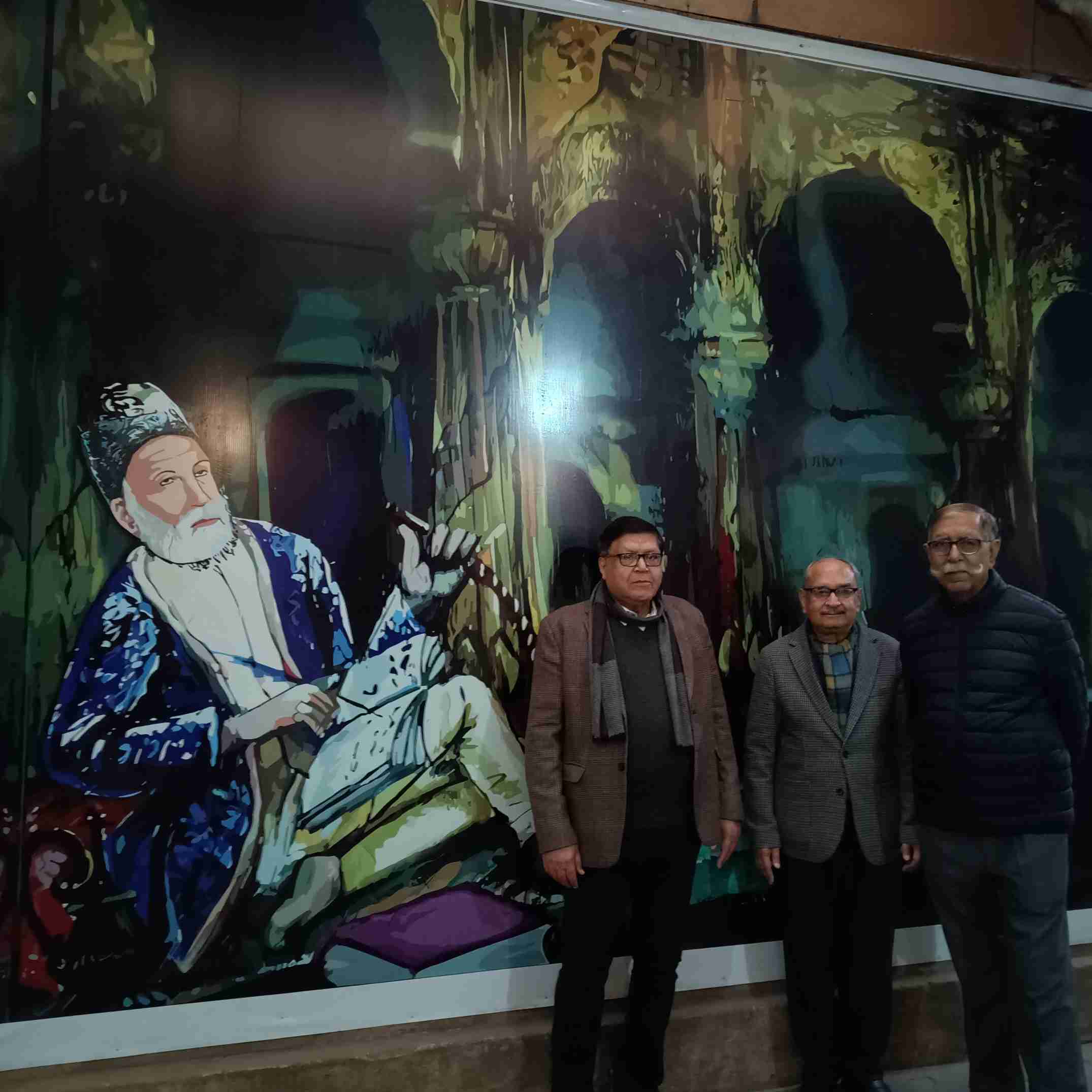
This place, where he lived from 1860 to 1869, till the time he breathed his last, has now been converted into a small museum of sorts. The main bust of Ghalib’s on display here has been gifted by Gulzar.
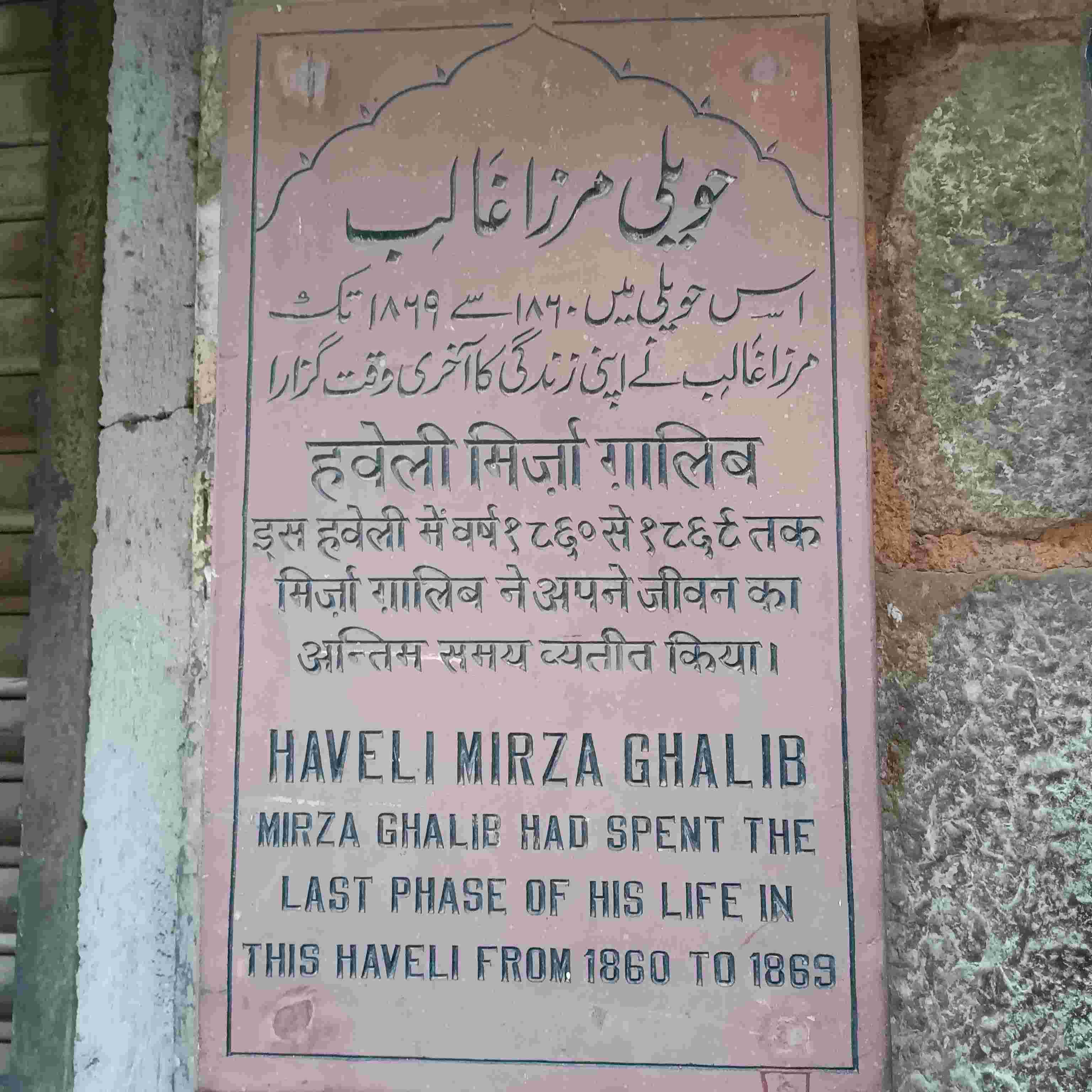
Mirza Ghalib

Born on December 27, 1797, in Agra, India, Ghalib’s life was marked by personal tragedies, political upheavals, and cultural transitions, all of which deeply influenced his poetic expression. Today, more than a century after his death, Ghalib remains one of the most celebrated poets in the Urdu and Persian literary traditions. His verses, rich with layers of meaning, continue to resonate with readers and scholars alike, offering insights into the human condition, love, pain, and the complexities of life.
Early Life and Personal Struggles

Ghalib was born into a family of Turkish aristocrats who had settled in India during the Mughal era. His father, Abdullah Beg Khan, was an officer in the army, but he died when Ghalib was just five years old. This left young Ghalib under the care of his uncle, Nasrullah Beg Khan, who also passed away a few years later. The early loss of his parents had a profound impact on Ghalib, and themes of loss, loneliness, and existential inquiry are recurrent in his poetry.

At the age of thirteen, Ghalib was married to Umrao Begum, a match arranged by his family. However, the marriage did not bring him the solace one might expect. Ghalib’s domestic life was fraught with tensions, and he found little happiness in it. None of his seven children survived beyond infancy. His financial struggles added to his woes, as he never held a stable job and relied on royal patronage, which was inconsistent at best.

The idea that life is one continuous painful struggle that can end only when life itself ends, is a recurring theme in his poetry. Consider this:

जब ज़िंदगी की क़ैद और ग़म का बन्धन एक ही है तो…

मरने से पहले आदमी ग़म से निजात पाए क्यूँ ?

The prison of life and the bondage of sorrow are the same,

Why should man be free of sorrow before dying?

Ghalib’s Literary Genius

Despite his personal hardships, Ghalib’s intellectual and poetic prowess blossomed. He was a polyglot, proficient in Urdu, Persian, and Turkish, and his poetry is a testament to his erudition. Ghalib’s work in Persian is extensive, but it is his Urdu poetry that has earned him eternal fame.

Ghalib’s ghazals are celebrated for their depth and complexity. A ghazal is a poetic form consisting of rhyming couplets and a refrain, with each line sharing the same meter. Ghalib mastered this form, infusing his verses with profound philosophical reflections, emotional intensity, and linguistic ingenuity. His poetry often grapples with the paradoxes of existence, the transience of life, and the elusive nature of love.

In keeping with the conventions of the classical ghazal, in most of Ghalib’s verses, the identity and the gender of the beloved are indeterminate. The critic/poet/writer Shamsur Rahman Faruqui explains that the convention of having the “idea” of a lover or beloved instead of an actual lover/beloved freed the poet-protagonist-lover from the demands of realism.

In one of my personal favourites on the tender emotion of love, he says:

उनके देखे से जो जाती है मुहं पर रौनक,

वो समझते हैं की बीमार का हाल अच्छा है.

My face is flushed with joy upon seeing my beloved,

Beloved mistakes my sickness to be a sign of good health.

One of the most remarkable aspects of Ghalib’s poetry is his exploration of the self. He delves into the intricacies of human identity, the soul’s relationship with the divine, and the quest for meaning in an indifferent world. For instance, in one of his famous couplets, Ghalib writes:

हज़ारों ख्वाहिशें ऐसी के हर ख्वाहिश पर दम निकले,

बहुत निकले मेरे अरमान फिर भी कम निकले

Thousands of desires, each worth dying for,

Many of them I have realised… yet I yearn for more.

This couplet reflects the insatiable nature of human desires, a theme that recurs throughout Ghalib’s poetry. His verses often portray a deep sense of melancholy, rooted in the understanding that the fulfilment of worldly desires is fleeting, and the ultimate truth lies beyond the material realm.

In many ways, the core of Ghalib’s poetry is not too far off from what Indian scriptures speak of.

The Philosophical Depth of Ghalib’s Poetry

Beyond his commentary on the socio-political changes of his time, Ghalib’s poetry delves into the philosophical. He was influenced by Sufism, a mystical Islamic belief system that emphasises the inward search for God and the personal experience of the divine. Sufi themes of love, union with the divine, and the eternal quest for truth permeate his poetry. However, Ghalib’s relationship with Sufism was complex. While he was drawn to its ideals, he also maintained a rational scepticism, often questioning established religious norms and dogmas. In one of his compositions, he mocks the hypocrisy of the preachers of Islam thus:

कहाँ मय-ख़ाने का दरवाज़ा ‘ग़ालिब’ और कहाँ वाइ’ज़

पर इतना जानते हैं कल वो जाता था कि हम निकले

What is the relation between the Preacher and the door of the tavern,

But believe me, Ghalib, I am sure I saw him slip in as I departed.

Ghalib’s poetry is also notable for its exploration of existential themes. He frequently contemplates the nature of reality, the impermanence of life, and the mysteries of the cosmos. His verses suggest a deep awareness of human knowledge’s limitations and the unknown’s vastness. In this sense, Ghalib can be seen as a precursor to modern existentialist thinkers, who similarly grappled with existence’s uncertainties.
Legacy and Influence

Ghalib passed away on February 15, 1869, in Delhi, but his legacy has only grown stronger with time. His poetry has been translated into numerous languages and continues to be studied, recited, and cherished by people across the world. Ghalib’s influence extends beyond literature; he has inspired musicians, filmmakers, and artists who have drawn upon his work to create new forms of artistic expression.

In India, Pakistan and elsewhere, Ghalib is not just a literary figure but a cultural icon. His ghazals are an integral part of the classical music tradition, and his life has been the subject of numerous plays, films, and television series.

Way back in 1954, Sohrab Modi gave us the movie Mirza Ghalib. Likewise, in 1961, Ataullah Hashmi of Pakistan gave us a movie on him.

In 1988, Gulzar came up with his television series which featured ghazals sung and composed by Jagjit Singh and Chitra Singh.

Various ghazal maestros like Mehdi Hassan, Iqbal Bano, Abida Parveen, Farida Khanum, Tina Sani, Noor Jehan, Suraiya, K L Saigal, Mohammed Rafi, Asha Bhosle, Begum Akhtar, Ghulam Ali, Lata Mangeshkar, Nusrat Fateh Ali Khan, and Rahat Fateh Ali Khan have sung his ghazals.
Low on The Richter Scale of Comprehension

Modern-day communication thrives on simplicity. Complex ideas are conveyed in a language that the masses understand. In other words, verses which would rate extremely high on the Richter Scale of Comprehension. However, it appears that most of our famous poets and literary figures perfected the art which is just the opposite. Simple ideas couched in high-profile and complex language, which only those at the top of the Language Proficiency Pyramid might fathom. Perhaps such literary geniuses wish to differentiate themselves from the hoi polloi.

When it comes to this particular trait, Ghalib has good company. In Urdu poetry, he is not always easy to understand. The poems dished out by him are often tough to understand, enriched as they happen to be with words drawn from the Persian language. In Hindi, the poetry of Jai Shankar Prasad comes to my mind. In Sanskrit, Kalidasa often keeps a lay reader guessing. In English, Shakespeare always leaves me baffled.

Quite some time back, I had luckily invested in a book of his poems which has not only the Urdu versions but also the corresponding translations in English and Hindi. As and when the ambience is right, I would play one of the renderings of Jagjit Singh, but only after having spotted the poem in the book. With lights dimmed, and one’s favourite tissue restorative perched on the table nearby, I get to feel the intensity of his words and end up experiencing a bliss which cannot be described in words!

Mirza Ghalib’s poetry is a treasure trove of wisdom, beauty, and emotional depth. His verses transcend the boundaries of time, language, and culture, speaking to the universal human experience. Ghalib’s ability to articulate the complexities of life with such eloquence and grace makes him a timeless poet, one whose work will continue to inspire generations to come. His legacy, like his poetry, is eternal—a shining beacon in the vast ocean of literary history.

For all lovers of Urdu poetry, visiting Ghalib’s haveli is a pilgrimage of sorts.

Notes:

  1. Vignettes of Chandni Chowk and movie/series posters courtesy of the World Wide Web.
  2. Museum snaps taken by yours truly during a recent visit to the place.
  3. Inputs received from Colonel Vivek Prakash Singh (Retired), a renowned poet in Urdu and Hindi, are gratefully acknowledged.
  4. Thanks are due to Sanjay Bhatia and Ashok Kalra who enabled this visit!
Related Posts:

Read Full Post »

Read Full Post »

Read Full Post »

One of the perils of suffering from the third and final stage of Wodehousitis is that wherever you may be and whatever mischief you may be up to, allusions to Plum’s characters and situations lurk just around the corner.

Recently, I had the opportunity of visiting the historic city of Allahabad (or Prayagraj, as it is known these days) in the northern part of India. The couple who took the risk of hosting me were cast in the mould of Angela and Tuppy Glossop. Having sunk all their differences over sharks, they had long since settled down to a state of matrimonial bliss. They were the epitome of hospitality, fussing over me and pampering me no end. Three times a day, the lavish spreads on offer made Greed win over Prudence, as they say. Trips to exotic locales in the city were meticulously planned and executed. All the itineraries inevitably included stopovers at joints famous for their importance, whether in terms of geography, history, culture, or those offering a lip-smacking variety of street foods, sweets, and savouries.

Sangam, the renowned confluence of three rivers – the Ganges, the Yamuna, and the mythical Saraswati – made one wonder if students at Allahabad University ever organize boat-racing nights there, eventually depriving some of the rozzers on duty of their caps or helmets. Also, after every twelve/six years, when a religious congregation of millions of persons happens, whether someone like Ukridge runs a syndicate which encourages people to bet on the percentage of dysfunctional public toilets in the area.  

The city also boasts of haing been the capital of India for a single day.

A friend like Rev. Aubrey Upjohn, who happens to be a senior faculty member at Allahabad University, offered to drive me around the campus. He was accompanied by his illustrious elder brother who practices at the local High Court and is also a former student of the University. The latter proved to be a treasure trove of the institution’s glorious past. While passing by the English Department, which was once headed by such a literary stalwart as Harivansh Rai Bachchan, one’s head simply bowed in reverence.  

When passing by an iconic coffee house in the Civil Lines area, one is told of the small room in its corner which used to play the role of the Drones Club where famous literary figures of yore would meet up and exchange ideas of books and poems to be unleashed upon the unsuspecting public.    

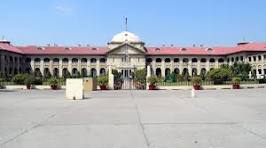
While driving past the majestic High Court building, one wonders if a beak as prominent as Sir Watkyn Bassett would be dishing out harsh sentences to some criminals inside its hallowed precincts. If so, one pities the latter who, despite having mentioned false identities, might still be meekly shuffling their feet.

While watching a sound and light show which highlighted, inter alia, the supreme sacrifice made by one of India’s freedom fighters, one wonders if either Roderick Spode or Stilton Cheesewright had ever heard of him.         

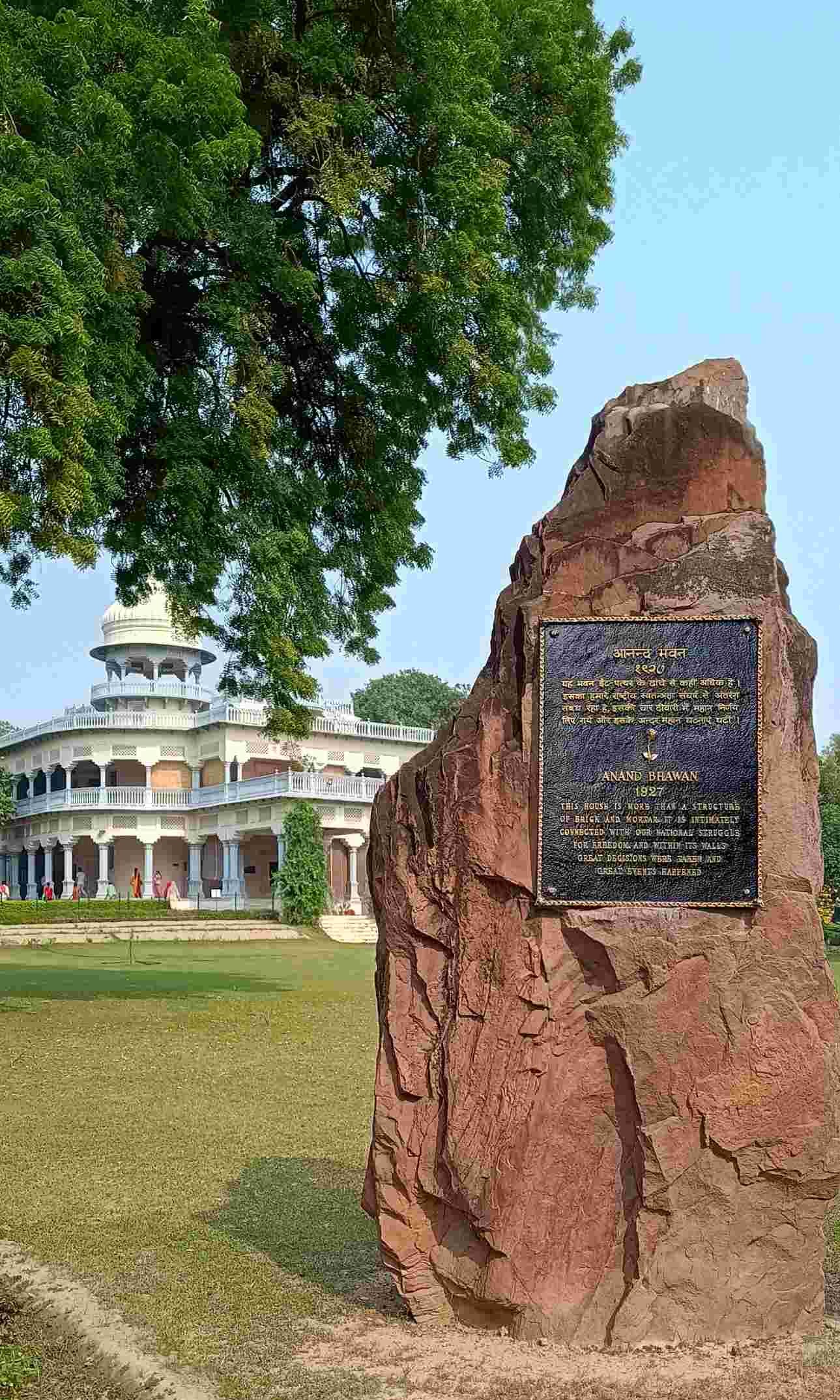
When visiting Anand Bhavan, the ancestral residence of the Nehru family and the place which played a crucial role in India’s fight for independence from British rule, one comes across a room where Mahatma Gandhi used to stay when visiting the place. One shudders to think of the outcome for India if the British had ever conspired to entice him there with a good juicy steak, followed by roly-poly pudding and a spot of Stilton, possibly nipping his movement of civil disobedience in bud.  

Of course, the icing on the cake was a meeting with Ma and Pop Stoker who happen to live in the city. Just like yours truly, the latter happens to be not only a Plum fan but also a movie enthusiast. Both were gracious enough to call on me and discuss matters of mutual interest.

Pop Stoker is done with the Telecommunications stream of the Indian Air Force. He has had a jolly good time there, especially because, unlike the other ‘arms’ of Indian army, which happen to have more of a stiff-upper-lip temperament, the air force believes in keeping its tribe happier. It does so by according ‘Humour’ a remarkably high priority. This would perhaps explain his fascination with the antics of Jeeves, Bertie, Ukridge, Lord Emsworth, and the rest of them. As and when he can tear himself away from Plum’s oeuvre, he loves spending his time goggling at divas like Sophia Lauren, Julie Andrews, Audrey Hepburn, Julia Roberts, Drew Barrymore, and Meryl Streep on the screen. Having settled down in the sylvan surroundings of Chuffnell Hall, he and his wife have a large heart, generously offering to host even lesser mortals like yours truly at their place.  

Ma Stoker has not really been an avid Wodehouse reader herself. But matrimony comes with associated perils. She is not immune to the moments when her husband is spotted variously chuckling, guffawing and, to use a modern illusion, rolling on the floor with laughter. Investigations conducted at these junctures do keep popping up Wodehousean passages as chief suspects. And she excels at that profound quality found in the better or bitter halves of devoted readers, without which the very pursuit of reading would be rendered impossible – indulgence. She indulges Pop Stoker as he reads and tolerates him even as he sometimes reads aloud to her. It was this sterling indulgence, supplemented by a dash of feminine curiosity, which had brought her to size me up.

Both happen to be proud parents of Pauline and Emerald. Pauline assists a large conglomerate in her capacity as an Instruction Designer. Since she has landed a desk job, it is not clear if she still expects her loved ones to swim a mile before breakfast and then proceed to play five sets of tennis post-lunch. Perhaps her dynamism now manifests itself in the virtual world. It is also not known if she is fond of wearing heliotrope pyjamas, whether borrowed from a friend or bought online.

Emerald is training to be a lawyer with an institute of eminence. One is not aware if she ever lost a bet on the racing tracks and had to work as a cook to cover up the losses. She could be one of those soothing, sympathetic legal eagles a wannabe litigant could take her troubles to, confident of having her hand held and her head patted, restoring her faith in our judicial system.   

When persons known to one from social media pop up thus in flesh and blood, it is a refreshing experience to talk to them over a piping hot cup of tea and a couple of fresh samosas, duly organised by my genial hosts.

It defies one’s imagination to believe that a city like Allahabad which boasts of a rich literary heritage hosts only a single fan of Wodehouse. I am reasonably certain that there are quite a few others. However, they hide themselves well.

Plum was not much off the mark when he said that “There is no surer foundation for a beautiful friendship than a mutual taste in literature.” With due apologies to him, one gets tempted to add fine arts and movies as well to his assertion. 

Related Posts


Read Full Post »

ashokbhatia's avatarashokbhatia

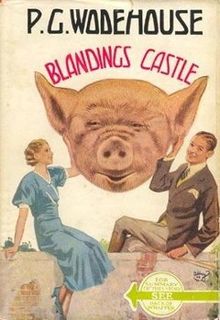
Here is a juicy excerpt from Blandings Castle which fans of P G Wodehouse and Mahatma Gandhi may relish!

“It has sometimes seemed to me (said Mr Mulliner, thoughtfully sipping his
hot Scotch and lemon) that to the modern craze for dieting may be attributed
all the unhappiness which is afflicting the world to-day. Women, of course,
are chiefly responsible. They go in for these slimming systems, their sunny
natures become warped, and they work off the resultant venom on their menfolk.

“These, looking about them for someone they can take it out of, pick on
the males of the neighbouring country, who themselves are spoiling for a
fight because their own wives are on a diet, and before you know where you
are war has broken out with all its attendant horrors.

“This is what happened in the case of China and Japan. It is this that lies at

View original post 100 more words

Read Full Post »

What happens when one comes across a bevy of super-brainy persons who ended up contributing something significant to the society at large?

For one, the sheer creativity and perseverance of such persons leaves one shaking one’s head in awe, admiration, and bafflement. One wonders as to from which plane of consciousness these persons were operating while making discoveries which have improved our lives. It also makes one realize how little one has achieved in one’s own life. A deep feeling of humility envelopes one. And yes, it motivates us lesser mortals to do something better in our own lives!

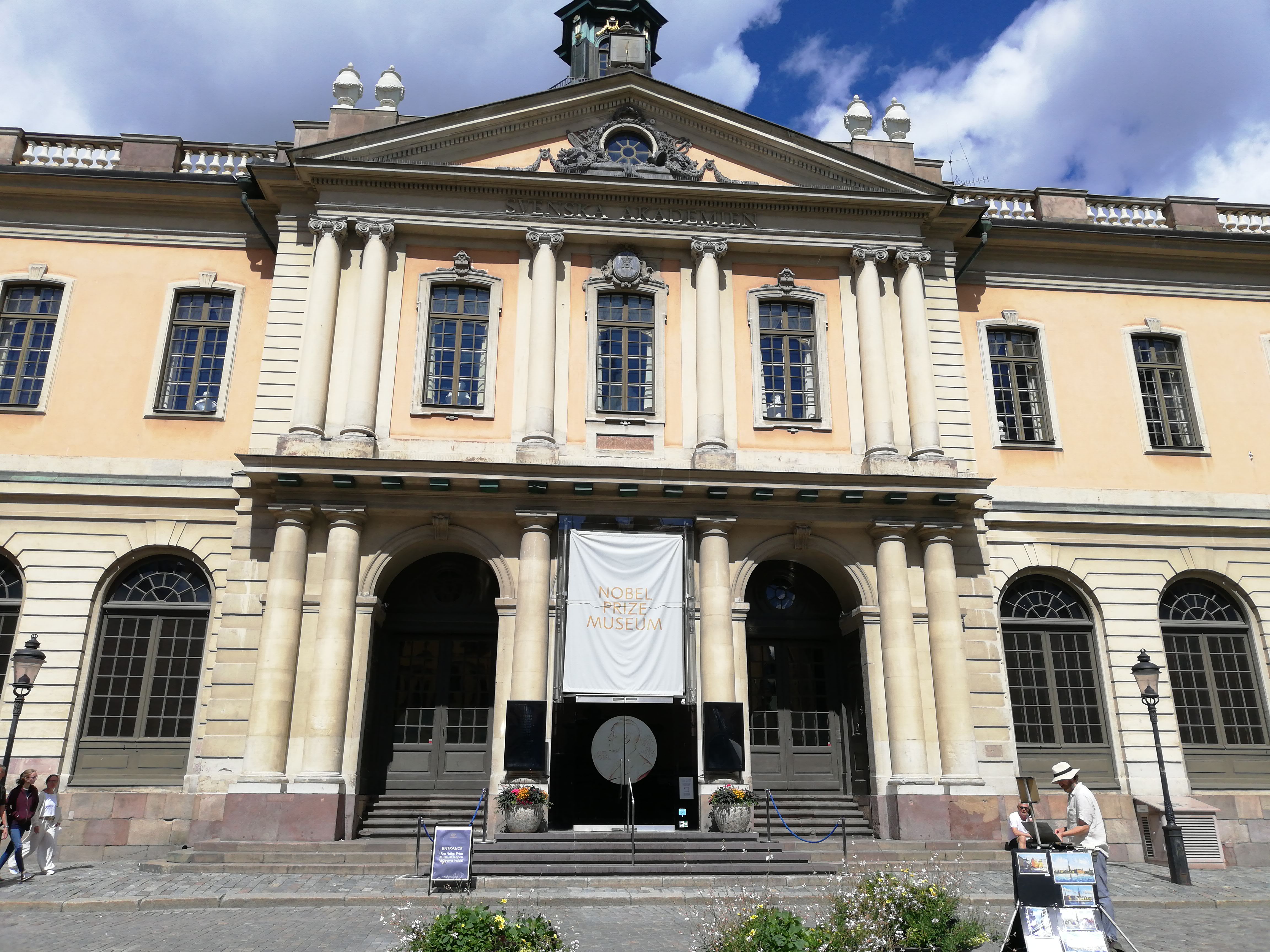
On a recent visit to Stockholm, your truly could visit the Nobel Prize Museum in the city. In the process, all the feelings mentioned above were experienced.

When Negativity Leads to Positivity

Swedish industrialist Alfred Nobel (1833-1896) was a chemist, engineer, and inventor. He amassed a fortune during his lifetime, with most of his wealth coming from his 355 inventions, of which dynamite is the most famous.

In 1888, Nobel was astonished to read his own obituary, titled “The merchant of death is dead”, in a French newspaper. In fact, it was Alfred’s brother Ludvig who had died in an uncontrolled experiment relating to explosives. The article disconcerted Nobel and made him apprehensive about how he would be remembered.

Nobel wrote several wills during his lifetime. Inspired by the death of his brother, he composed the last one over a year before he died, signing it at the Swedish–Norwegian Club in Paris on 27 November 1895, bequeathing all his ‘remaining reliable assets’ to create the prestigious prize named after him. In his will, he wrote that he wanted to reward those who had ‘conferred the greatest benefit to humankind’.

On December 10, 1896, Alfred Nobel died in his villa in San Remo, Italy, from a cerebral haemorrhage. He was 63 years old then.

Owing to scepticism surrounding the will, it was not approved by the Norwegian Parliament until 26 April 1897.

Nobel Prizes were first awarded in 1901.

Nobel Prizes were originally awarded in the fields of Physics, Chemistry, Physiology or Medicine, Literature, and Peace. In 1968, Sweden’s central bank funded the establishment of the Prize in Economic Sciences in Memory of Alfred Nobel, to also be administered by the Nobel Foundation.

In 1905, the union between Sweden and Norway was dissolved. Till this day, except for the Peace Prize, the Nobel Prizes are presented in Stockholm, Sweden, at the annual Prize Award Ceremony on December 10, the anniversary of Nobel’s death.

The Prize

The prize ceremonies take place annually. Each recipient (known as a “laureate”) receives a gold medal, a diploma, and a monetary award. In 2021, the Nobel Prize monetary award was 10,000,000 SEK.

The recipients’ lectures are normally held in the days prior to the award ceremony. The Peace Prize and its recipients’ lectures are presented at the annual Prize Award Ceremony in Oslo, Norway, usually on December 10.

The award ceremonies and the associated banquets are major international events. One can secure an invitation to these only if one happens to know some of the laureates! I understand that these are now broadcast live.  

The Prizes awarded in Sweden’s ceremonies are held at the Stockholm Concert Hall, with the Nobel banquet following immediately at Stockholm City Hall.

The Nobel Peace Prize ceremony has been held at the Norwegian Nobel Institute (1905–1946), at the auditorium of the University of Oslo (1947–1989), and at Oslo City Hall (1990–present).

The highlight of the Nobel Prize Award Ceremony in Stockholm occurs when each Nobel laureate steps forward to receive the prize from the hands of the King of Sweden. In Oslo, the chairman of the Norwegian Nobel Committee presents the Nobel Peace Prize in the presence of the King of Norway and the Norwegian royal family.

After the award ceremony in Sweden, a banquet is held in the Blue Hall at the Stockholm City Hall, which is attended by the Swedish Royal Family and around 1,300 guests. The Nobel Peace Prize banquet is held in Norway at the Oslo Grand Hotel after the award ceremony. Apart from the laureate, guests include the president of the Norwegian Parliament, on occasion the Swedish prime minister, and, since 2006, the King and Queen of Norway. In total, about 250 guests attend.

The Curious Case of India’s Apostle of Non-violence

Although Mahatma Gandhi, an icon of non-violence in the 20th century, was nominated for the Nobel Peace Prize five times, in 1937, 1938, 1939, 1947, and a few days before he was assassinated on January 30, 1948, he was never awarded the prize, possibly due to the cordial relations between Norway and the United Kingdom.  

In 1948, the year of Gandhi’s death, the Norwegian Nobel Committee decided to make no award that year on the grounds that “there was no suitable living candidate”.

In 1989, this omission was publicly regretted, when the 14th Dalai Lama was awarded the Peace Prize, the chairman of the committee said that it was “in part a tribute to the memory of Mahatma Gandhi”.

Geir Lundestad, 2006 Secretary of Norwegian Nobel Committee, said:

The greatest omission in our 106-year history is undoubtedly that Mahatma Gandhi never received the Nobel Peace Prize. Gandhi could do without the Nobel Peace Prize. Whether Nobel committee can do without Gandhi is the question.

Display at the Museum

Besides the history of the Nobel Prize, the museum displays many gifts from many of the laureates. These include a letter from Albert Einstein confessing the inability of mathematical formulae to capture the nuances of human behaviour. There is a unique display of the kind of dresses used by celebrities while attending some of the banquets and many other details.

A guided tour lasting about 30 minutes shares interesting anecdotes from the lives of some of the laureates.

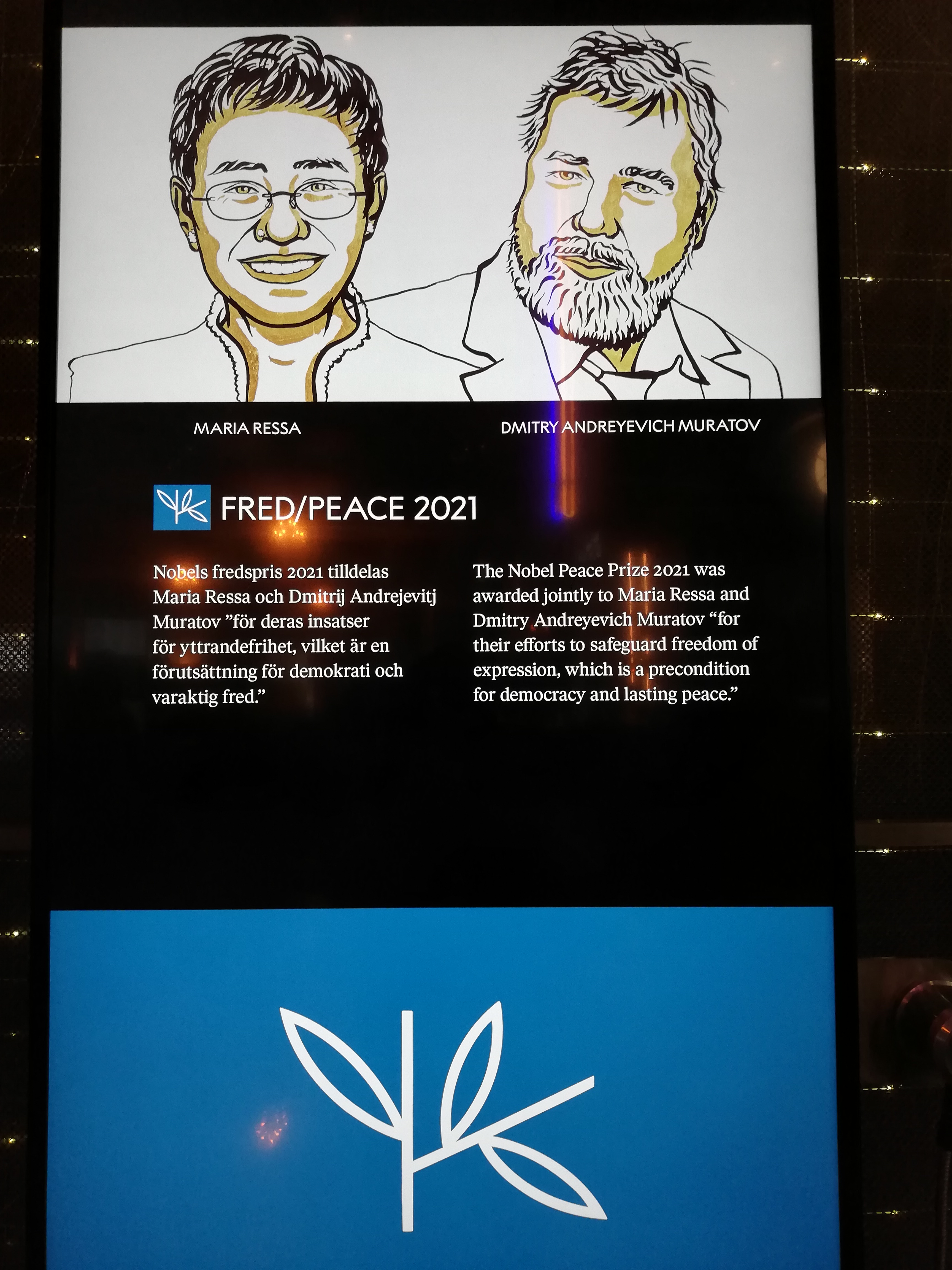
At the age of 17, Malala Yousafzai, is so far the youngest to have received a Nobel Peace Prize in 2014.

The Cultural Outreach

Being a symbol of scientific or literary achievement which is recognisable worldwide, the Nobel Prize is often depicted in fiction. In my younger days, I recall having read The Prize, a novel by Irwing Wallace. There have been films like The Prize (1963), Nobel Son (2007), and The Wife (2017) about fictional Nobel laureates, as well as fictionalised accounts of stories surrounding real prizes such as Nobel Chor (The Nobel Thief), a 2012 film based on the theft of Rabindranath Tagore’s prize. In a series named Genius (2017) on Netflix, a meeting between Albert Einstein and Marie Curie at one of the Nobel Prize ceremonies was depicted.

Improving the World

The Nobel Prize shows that ideas can change the world. The courage, creativity and perseverance of the Nobel Laureates inspire us and give us hope for the future.

Such initiatives help create exciting encounters between people – people who dare to challenge the status quo, who want to ask new questions, think new thoughts and contribute to a better world.

(Sources: The Nobel Museum guided tour and website, Wikipedia)

(Related Post:

Read Full Post »

What ho!

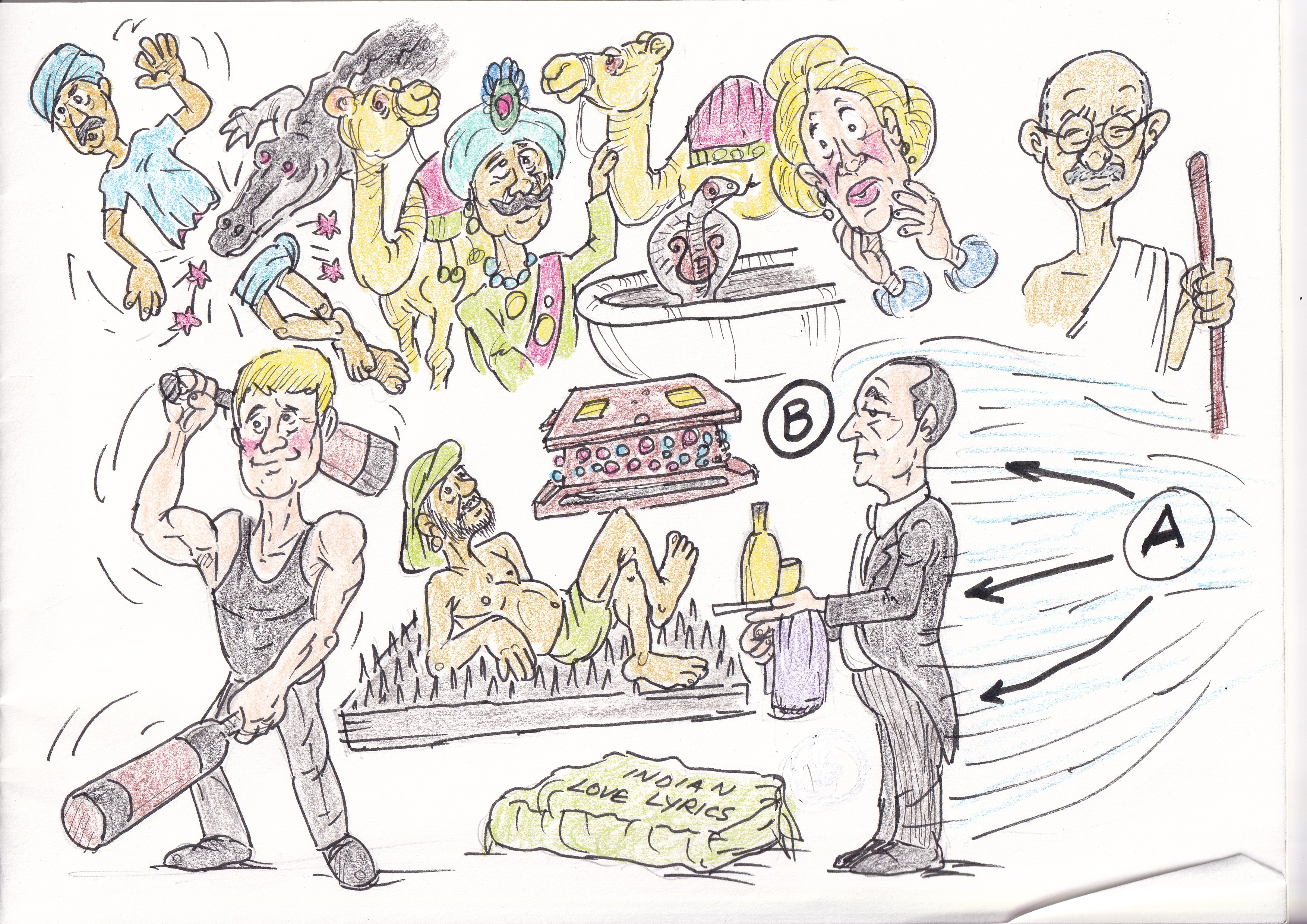
To the best of my knowledge and belief, P. G. Wodehouse never set foot on Indian soil. But he has often alluded to its exotic temples, its wildlife, its royalty, its fakirs and mystics with magical powers, and even its love lyrics. Many times he has vividly captured facets of my beautiful country, serving up a delectable curry spiced with uniquely Indian condiments.

In the essay under reference, the reader will find a random sample of references to India in Wodehouse’s novels and short stories. Such references are found across all his narratives, whether he is writing a Jeeves and Bertie story, a tale of Blandings, or a stand-alone novel. What I present here is merely a synopsis.

The Indian Curry: A Brief

  • In some of his novels, jewels associated with idols of gods in Indian temples get stolen, with overzealous priests chasing the villains.
  • Indian fauna such as spiders, scorpions, cobras, elephants, tigers, cheetahs and lions regale the reader across many of Plum’s narratives. Walking butlers like Beach get described as elephants sauntering through an Indian jungle. Princes and maharajas of yore also find a mention occasionally.
  • Plum suggests a link between the Indian Civil Disobedience movement and the dietary and fasting habits of Mahatma Gandhi. Bertie Wooster motivates Tuppy Glossop to forsake pleasures of the table by quoting Mahatma’s example. The Cawnpore (now Kanpur) Mutiny gets referred to in at least two places.
  • Military men who had served in India as part of their duties tell us interesting anecdotes about that distant land, including about their time in the North Western Frontier Province. Some of you may recall that the latter was a province of British India from 1901 to 1947, when it was ceded to Pakistan.
  • When Bobby Wickham takes umbrage, she ticks off Kipper like a typhoon on the Indian Ocean. Elsewhere, to impress a heart throb, the hero claims to have used a Boy Scout pocket knife to teach the sharks there a lesson or two.
  • Indian scriptures often use the Sanskrit term ‘siddhi’ to signify either a remarkable accomplishment or a singular proficiency attained by an aspirant. These could be material, paranormal, supernatural or magical in nature, attained by such practices as meditation, yoga and intense ‘tapas’ (austere practices).

Like much else, this facet of India is also used by Plum to amuse, elevate and entertain his readers. Jeeves, for instance, gets repeatedly portrayed as someone who possesses the property of a gas floating from Spot A to Spot B without much ado. Some characters undergo an experience akin to that of curling up on spikes while others are found contemplating the infinite.

  • Wherever Plum is, love cannot be far behind. India has gifted the world with the Kama Sutra, but it is not surprising that Plum never alludes to this unique treatise, because he never used sex as a ploy to popularize his narratives. All of his male characters are steeped in chivalry, strictly bound by Victorian norms.

In his narratives, Wodehouse appears to have instead based his observations on The Garden of Kama, a collection of lyrical poetry of Indian origin published in 1901, which makes liberal use of imagery and symbols from the poets of the North-West Frontier of India and the Sufi poets of Persia (Iran). The poems, written by Laurence Hope, a pseudonym of Violet Nicholson, are typically about unrequited love and loss. One of her famous compositions, known as a ‘Kashmiri Song’, appears in at least two of Plum’s narratives. 

  • India rubber is one name for the natural rubber that comes from the sap of certain trees. Rubber trees that grow in South America and India produce the majority of India rubber. Plum uses its properties of agility, elasticity, flexibility and robustness to cover a wide range of physical endeavours of the characters in many of his narratives.
  • Some characters have a fetish for remaining as fit as a fiddle. One of the instruments which they happen to depend upon to do so is a pair of Indian clubs.
  • Some of his characters have either visited India or plan to do so. While Lady Malvern whips up a book relating to Indians, Crispin Blakeney goes off there to deliver a series of lectures. Some of us may recall that in ‘Bertie Changes His Mind’, Carry On, Jeeves, Bertie Wooster tells Jeeves that he has a sister in India.
  • Indian handicrafts come up for a mention. So does Taj Mahal. Gurudev Rabindranath Tagore’s dietary habits get commented upon. Some behavioural traits of Indians get covered. The age old sordid custom of ‘sati’ gets touched upon, as do the Indian Civil Services. Stilton Cheesewright has the unique distinction of having come under the spell of Buddhism briefly.
  • The Luck Stone, a concoction whipped up by Plum under the pseudonym Basil Windham, was serialized in a magazine known as ‘Chums: An Illustrated Paper for Boys’ during 1908-1909. It touches upon Indian Vedas, mythology and superstitions.

Some Missing Ingredients

Plum’s works surely throw up several references to India. But if he had wanted to, he could have used a number of other Indian resources to further enrich his narratives.

Alas, we do not find any mention of such literary figures as Kalidasa, besides Aryabhata or Ramanuja, the famous mathematicians. The Vedas do find a solitary mention but any other references to India’s soft power comprising such aspects as spirituality, its multi-layered scriptures and various dance forms are sadly missing.

Above all, the mind-numbing diversity of the spirit of India is missing. Its wide spectrum of ethnicities, languages, beliefs, practices and cuisines is nowhere to be found. These are facets of India which have missed out on his wit and wisdom. It is indeed a delectable irony of sorts that this write up is labelled as The Indian Curry Dished Out by P G Wodehouse, even though it has not thrown up even a single reference to any specifically Indian dish!

As to a liberal use of many other resources of an Indian origin, imagine a distraught Gussie Fink-Nottle pining for Madeline Bassett and sending messages to her through clouds passing overhead, a la ‘Meghadut’, the classic poem penned by Kalidasa. Poets like Ralston McTodd would have been found drawing some inspiration from the creative outpourings of Tagore. To improve Bertie’s intellect, all Florence Craye had to do was to insist that he peruse at least one of the chapters of the ‘Bhagavad Gita’. Laura Pyke could have drawn some inspiration from the science of ‘Ayurveda’, the healthy-lifestyle system that people in India have used for more than 5,000 years. Anatole could have been found whipping up ‘chhole-bhature’ or ‘dosa’s!

Yoga could have helped someone like Ashe Marson to treat his clients suffering from acute dyspepsia to heal faster and better. Sir Roderick Glossop could have gone about advising his loonier patients to make meditation an essential part of their mundane lives. Vicars could have lived a happier Thos-infested life while brooding on spiritual tenets dished out by Indian scriptures, thereby becoming hotter at their jobs. George Bevan, while working on one of his next musical comedies, could have been drawing inspiration from the ‘Natya Shastra’ of Bharata Muni. Gentlemen aspiring for India rubber legs could have been practising such dance forms as ‘Kathak’ or ‘Bharatnatyam.’

The possibilities are endless. The mind boggles. But one would do well not to be concerned with what might have been. Instead, the focus needs to be on the rich legacy Plum has left behind for us to rejoice in.

In fact, it is befitting that quite a few of his works have been translated into some other languages – like Bengali, Kannada, Telugu and Sanskrit – forming a pale parabola of subtle humour across India.

Consistent Depiction, Despite 1947

The India that Plum would refer to belongs to an era which is long since bygone. India gained independence in 1947, but his works published during the period from 1947 (Joy in the Morning) till 1974 (Aunts Aren’t Gentlemen) do not reveal much change in his imagination. Astral bodies, scorpions and cobras continue to rule the roost.

From a global perspective, the devastation caused by the Second World War (1939–45) was then the main area of concern, rather than the fact of India gaining independence on 15 August 1947. Plum had personally suffered in his life owing to political developments then and had relocated from Europe to USA during April 1947, never to visit Europe again. Owing to his preoccupation with other matters then, perhaps the last thing on his mind would have been the British (or American) reaction to the events unfolding in India. Hence his storylines and characters never touched upon the emergence of an independent India.

Love sans Borders

The love for Plum’s oeuvre in the Indian subcontinent transcends any political considerations. Moreover, Plum sets a gold standard of pristine humour not only in English but also in many other languages into which his works have been translated, including in many regional ones in India.

Plum dished out his narratives in a pre-Internet era, when access to information was severely restricted. It is amazing that based mostly on secondary data, so to say, he could leave behind for us a spicy Indian curry, making India shine through in so many ways through a vast array of his novels and stories.

Pip pip!

Notes:

  1. Illustration courtesy Suvarna Sanyal.
  2. The full text of this essay can be accessed at https://ashokbhatia.wordpress.com/2021/08/31/the-indian-curry-dished-out-by-p-g-wodehouse.
  3. A version of this synopsis appears in the December 2021 issue of Jeeves, the annual journal of The Wodehouse Society in Sweden (WSS).
  4. A version of this synopsis also appears in the March 2022 issue of The Wooster Sauce, the Quarterly Journal of The P. G. Wodehouse Society (UK).
  5. A version of this synopsis also appears in the Autumn 2022 issue of Plum Lines, the Qurterly Journal of The Wodehouse Society, USA.

Read Full Post »

(Continued)

Of Civil Disobedience and Mutinies

Till the year 1947, India was under the British Raj. The period was marked by Indians struggling to gain independence through means which were peaceful as well as violent. From 1920 onwards, the self-rule struggle was characterized by Mahatma Gandhi’s policy of non-violence and civil disobedience, duly complemented by several other campaigns.  

  • When people are hungry, they become angry. They want to go out and fight. This could even be true of Mahatma Gandhi, who is given a singularly juicy mention in ‘The Juice of an Orange’ in Blandings Castle and Elsewhere.

While narrating the story of Wilmot Mulliner, Mr. Mulliner blames the modern dieting craze of women for all the unhappiness which afflicts the world.

‘Women, of course, are chiefly responsible. They go in for these slimming systems, their sunny natures become warped, and they work off the resultant venom on their men-folk. These, looking about them for someone they can take it out of, pick on the males of the neighbouring country, who themselves are spoiling for a fight because their own wives are on a diet, and before you know where you are war has broken out with all its attendant horrors.

‘This is what happened in the case of China and Japan. It is this that lies at the root of all the unpleasantness in the Polish Corridor. And look at India. Why is there unrest in India? Because its inhabitants eat only an occasional handful of rice. The day when Mahatma Gandhi sits down to a good juicy steak and follows it up with roly-poly pudding and a spot of Stilton you will see the end of all this nonsense of Civil Disobedience.

‘Till then we must expect Trouble, Disorder … in a word, Chaos.’

  • Those who are familiar with the Indian mutiny of 1857 may recall that the Siege of Cawnpore is one of its key episodes. The British forces and civilians in Cawnpore (now Kanpur) were unprepared for an extended siege and surrendered to rebel forces in return for a safe passage to Allahabad (now Prayagraj), another city nearby. As a rescue force approached Kanpur, an unfortunate massacre took place, leading even to a war cry ‘Remember Cawnpore’. On at least two occasions, Plum captures the sentiments of elation experienced by girls under siege in Kanpur when they hear the sound of the bagpipers of the British reinforcements.   

The Girl in Blue describes how an authoress feels when she finds that a horn-rimmed American is trying to locate a copy of her latest book Daffodil Days. Flannery and Martin’s book shop in Sloane Square in London does not stock her latest brain child but when a stranger walks in and asks for it, Vera Upshaw is thrilled beyond measure. 

She whips around, her lips part, her eyes widen and her lovely body experiences a tingling of sorts. Her sentiments get compared to the thrill a girl would have experienced when, in the midst of the Indian Mutiny, during the siege of Cawnpore (Kanpur, 1857), she would have heard the skirl of the bagpipes, heralding the arrival of British reinforcements.

In Pearls, Girls and Monty Bodkin, similar uplifting sentiments are experienced by Monty when he suddenly finds a friend and sympathizer in Mr. Llewellyn.

Men in Uniform, the North Western Frontier Province (NWFP) and Hunting

Military men who had served in India as part of their duties tell us interesting anecdotes about that distant land, including about their time in the NFWP. The latter was a province of British India from 1901 to 1947, when it was ceded to Pakistan. Hunting was a common pastime. Some such references enrich many of Plum’s narratives.   

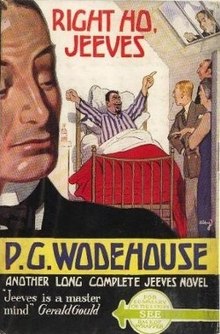
  • In Right Ho, Jeeves, while allaying the fears of Gussie that his trousers will split while delivering a speech at the Market Snodsbury Grammar School, an example is cited by Bertie Wooster – that of General Bosher, who was a D.S.O. (Distinguished Service Order), ‘with a fine record of service on the north-western frontier of India, and his trousers split.’  
  • In ‘Ukridge and the Home from Home’, Lord Emsworth and Others, we find that Ukridge has turned his Aunt Julia’s house into a hotel. Amongst the six guests, we find one Lieutenant-Colonel B. B. Bagnew, late of the Fourth Loyal Lincolnshires. In Ukridge, we find a suave and genial host, presiding over the dinner-table on most nights. As and when the conversation in the group ‘touched a high level and feasts of Reason and flows of Soul occurred’, one of the major contributors was the Colonel. He narrated his anecdotes of India, where he had served his country faithfully and well.
  • In the same story, Ukridge tells Corky that Indian army men are not to be trusted.  He thinks that all of them believe themselves to be heroes. Hence, they get greatly disliked. He cites Lieutenant-Colonel B. B. Bagnew’s clear views on lesser mortals like burglars. Colonel is of the view that if he were to ‘show them a good old army revolver, they would run like rabbits.’
  • In ‘Trouble Down at Tudsleigh’, Young Men in Spats, Freddie Widgeon gets formally introduced by Lady Carroway to Captain Bradbury from the Indian Army. He is competing with Freddie for the affections of April. Freddie believes that the Captain might have such advantages as a natty moustache, a rich tan and deep-set eyes, but what bowls over a refined and poetical girl is a refined soul. He intends to devour Tennyson over the next few days and be equivalent to six souls so as to beat his rival hollow.

At the end of a get-together, Captain Bradbury draws him aside and gives him the sort of look he would have given a Pathan discovered pinching the old regiment’s rifles out on the North-Western Frontier. He also mentions to Freddie that he had won the Heavyweight Boxing Championship of India earlier  

  • In the same narrative, one gets to learn that when one is up against one of the Indian Army strategists, one realizes how thoroughly they get trained from early youth to do the dirty on the lawless tribes of the North-Western Frontier. Captain Bradbury, when outfoxed at the door, is not one to beat a hasty retreat. Rather, he tries to outflank Freddie by trying to enter through the sitting-room window.

This is how Plum describes the aftermath:

‘But the interchange of glances did not last long. These Indian Army men do not look, they act. And it has been well said of them that, while you may sometimes lay them a temporary stymie, you cannot baffle them permanently. The Captain suddenly turned and began to gallop round the corner of the house. It was plainly his intention to resume the attack from another and a less well-guarded quarter. This, I believe, is a common manoeuvre on the North-West Frontier. You get your Afghan shading his eyes and looking out over the maidan (field), and then you sneak up the pahar (mountain/hillock) behind him and catch him bending.’

  • In the story ‘Bill the Bloodhound’ in Man with Two Left Feet, we find Henry, dressed up as an old Indian colonel one week, contentedly puffing away at a cigar provided by Walter Jelliffe while fondling his silver moustache. Only when Walter finds him comfortable enough does he pop the question.

‘And now tell me, old man, which of us is it you’re trailing?’

  • In Summer Moonshine, Colonel Tanner tells Mr. Waugh-Bonner about his life in Poona (now Pune), while Mr. Chinnery plays croquet with Mrs. Folsom. Throughout the narrative, he speaks enthusiastically of his life in the city, supplementing the spoken word with a display of photographic snapshots illustrating conditions in those parts. He also speaks of the Bengal Lancers, a regiment of the British Indian Army.
  • Captain Biggar, one of the several unique characters in Ring for Jeeves, loves hunting. One would never get surprised to run into him ‘in such hunting grounds as in Kenya or Malaya or Borneo or India’! It would be perfectly in order.

(Continued)

Notes:

The inspiration for this essay comes from the scholarly work done by Ms. Masha Lebedeva, who had earlier whipped up a research paper entitled The Russian Salad by P. G. Wodehouse.

The author expresses his sincere gratitude to an eminent expert on Plummy matters for having spared the time to go through a part of this composition and provide insightful suggestions. Some fans of P. G. Wodehouse have also suggested improvements in its contents.

Thanks are also due to Mr. Suvarna Sanyal for dishing out the main illustration in Part 1; also, to Ms. Sneha Shoney, who has edited the text.

Those of you who wish to cruise through this essay in its entirety may kindly write to akb_usha@rediffmail.com for a PDF version of the complete document to be mailed to them.

Related Posts:
Read Full Post »

(Non-statutory warning: Reading the article below could be injurious to readers’ mental health and leave them a wee bit depressed. Caution is advised.

The author is reasonably certain that this article is not an outcome of the kind of wholesome pessimism which is believed to envelope one in advancing age.)

There is a mood of despondency which descends upon my frail grey cells once in a while. Dark clouds which have gathered upon me are accompanied by sinister rumblings. Lightning streaks of a menacing kind keep lighting up the sky, duly followed by thunderous howls which pierce my ears. One peers into the future and one shudders to think of the kind of world one would leave behind for our progeny to live in. Tectonic plates of our society appear to be shifting, causing major upheavals.

No, one does not allude to the pandemic stalking us these days. Nor does one refer to such universal problems like global warming, economic disparities, widespread poverty and illiteracy etc. Instead, one refers here to tectonic plates of a different kind – the ones which impact our value systems, human values, social harmony, honesty, fairness and justice, norms of democracy, absence of truthful and factual information, materialistic progress, and the like.

Consider what is happening around us these days.

Some Ground Realities

The Lack of a Conscious Approach to Business Goals

Businesses continue to be driven by greed and avarice alone. Hapless CEOs have no other option but to keep delivering results from one quarter to the next.

There are no guarantees that Volkswagen will not soon come up with yet another technical trick to befool the regulators and its customers. Boeing may yet again secure approvals for launching a model which might put air passengers’ lives at risk. Financial scams will keep tumbling out of corporate closets at a standard frequency which might put an atomic clock to shame.

Think of rising inequalities. Consider a report presented by Oxfam at the January 2021 World Economic Forum’s Davos Agenda, titled ‘The Inequality Virus’. It says that the 1,000 richest people on the planet recouped their Covid-19 losses within just nine months of 2020, whereas the world’s poorest could take up to a decade to recover from the pandemic induced setback. I am certain that philanthropic initiatives of the richest have not suddenly seen a proportionately higher uptick.

So, every crisis that humanity faces turns out to be an opportunity for the well endowed to amass greater wealth. Is this the kind of Materialistic and Unconscious Business model that we wish to continue following? Our answer would of course depend based on whether we are from the ‘haves’ side or the ‘have-nots’ side of the society.

The Monkey Business Called Politics

Probity and decency in the public life of our leaders is long since buried. Gone are the days when vibrant democracies needed a strong opposition to thrive. These days, even the President of a country can himself turn against the hallowed portals of democracy and send rampaging mobs braying for the blood of those out to declare him defeated in an election. In other words, it is one of those promotional offers – you vote in a President and get another one for free!

The aforesaid top boss’ term has revealed enormous gaps between the ideals of American democracy and the reality. Even before he exhorted his followers to attack the Capitol and the legislative branch of government, he ignored watchdog rulings and constitutional safeguards, pressed to overturn the outcome of an election, and pardoned those who covered for him, all the while funneling taxpayer dollars to his family business.

In yet another country, the main adversary runs the risk of not only being poisoned but also getting imprisoned on some ground or the other, while those in power brutally suppress dissent marked by men’s underwear and gold-painted toilet cleaning brushes.

World over, there is no dearth of leaders who have dictatorial ambitions but mask these well with democratic credentials. Speak of transparent political funding and all one gets is the silence of a tomb.

In yet another country, lies, obfuscation of facts and clever data management seem to have become a norm. Photo-ops, positive optics and feel-good media feed by devout followers keep the entire nation in thrall. Attempts to stifle dissent and to paint anyone not toeing the rulers’ line as unpatriotic continue unchecked. Getting offended by comments made by those living thousands of miles away appears to have become a national pastime. When a stand-up comedian speaks up, our clairvoyant nature allows us to guess what offending remark he is yet to make. Prompt legal action gets taken, nipping the intended mischief in the bud.

Building physical infrastructure is simply great. So is the drive to embrace technology to make life of a common man simpler. But when this comes at the cost of demolishing social harmony and making a democratic country free of any kind of opposition worth its while, the long term price of a ‘progress’ of this kind is rather high. I am not an economist, but I wonder if an economy can grow while the society itself is getting fragmented.

World over, quite a few governments have even used the pandemic as a cover to suppress dissent and cut short processes to introduce laws of an unpopular kind. In the process, their soft power is bound to dive down.

The Rudderless Social (and Anti-Social) Media

During 2020, in India, when our northern neighbour had encroached upon our land, and when the media should have been doling out useful health tips for people to stay safe in the midst of a pandemic, the only ‘breaking news’ was the suspected suicide of a Bollywood actor and the activities of his girl friend.

Social media, duly backed by smart algorithms, Artificial Intelligence and Machine Learning, keeps shaping our thought processes, our choices, our preferences, our perceptions and our beliefs. We are already living in a fish bowl where the law makers as well as the private players are hands in glove to sell detailed information about us to the highest bidder. Privacy concerns and personal liberties be damned. Pretty soon, it may happen that government support is available only to those who have a pro-government presence on various media platforms.

The whole idea is perhaps to help a lay person evolve into a dumb chum of the first order, unable to use his own judgement in matters of public importance; essentially, to numb the person’s grey cells. In other words, we all become zombies (or jack asses, if you prefer) of the first order.

Little do we realize that there are no free lunches in life. Any service available to us free of cost over the world-wide-web we have spun around ourselves only means that ‘We, the People’ are the product on sale!

If our social media czars do not come up with a realistic code of conduct for themselves soon enough, governments, to salvage their public image, may soon have to start dishing out harsher laws.

Perhaps, one of the czars will soon set up an academy to groom many of our whizz kids into becoming ethical hackers and algorithm developers.

Neglecting Half of the Homo Sapiens

If they stay at home, their contribution to society is never even acknowledged. Rather, it is taken for granted. If they venture out of their home and hearth, lustful gazes disrobe them mentally. If they get violated, they only have to take the rap. In war zones, they are the instruments used to inflict deep wounds on the psyche of the other.

Yes, I refer to the tribe of the so-called delicately nurtured. They are the ones upon whom Mother Nature has conferred the unique capacity of keeping our civilization alive and ticking. They may be as tough as nails and proving themselves to be better than the so-called sterner sex in all fields of human endeavour. A fact which was reinforced yet again when a deadly pandemic arrived at our doorsteps. In public, they may get put on a pedestal and revered. But in private, they often get treated like a doormat, treated as mere objects, only to be used and abused.

Doting lover boys, upon metamorphosing into husbands, often shed their chivalrous masks and start behaving like dictators. If a family breaks up owing to mistreatment, ridicule, abuse and violence at the hands of their husbands, it is the lady of the house alone who gets the entire blame – for being obstinate and uncompromising. The general view is that she is a gold digger of sorts.

Such a patriarchal mindset is not an exclusive prerogative of the poor alone. Nor does it respect geographical boundaries. Education levels also do not make much of a difference. Take couples across different countries, economic status and education level and one is apt to find this to be a universal phenomenon. The Chivalry Quotient may vary across all these parameters, but a singular shortage of preux chevaliers is felt all over our planet. Religious beliefs and even some spiritual tenets reinforce such derogatory views.

In respect of the legal framework, our experience in India has been a mixed one. The females have learnt the art of terrorizing their husbands and their families by foisting cases of imagined harassment, with the sole aim of securing better settlements while seeking divorce. Surely, the training in chivalry truly begins at home – either in the kitchen or at the dining table. Laws can play only a limited role.

The tectonic shift taking place here is that of divorce rates going up and couples preferring to remain friends with perks. Upwardly mobile wives who can stand on their own feet detest drawing husbands who refuse to wear skirts and help out with domestic chores. Once the family structure crumbles, there is a higher probability of the value system of the next generation going for a toss.

The Silence of the Lambs

In many of the issues brought out above, are we ourselves not responsible for the mess that we are in? The silence of our intellectuals, the self-centredness and public apathy of the middle class which more or less upholds values in society and the mute surrender of the common man – are these not some of the factors which have enabled this situation to have come about?

Many years back, I vaguely recall having read a satirical story in Hindi, written by a well known humourist in the language, Hari Shankar Parsai. A herd of lambs is made to believe that few wily foxes alone can solve all their problems. Pretty soon, foxes get voted in. One fine day, a ruling comes that to save the ruling foxes, some sheep should voluntarily surrender to be sacrificed each day so the patriotic fervour is kept alive and the nation is run effectively!

I am not a political science buff. Thus, I am not qualified to say if democracy as a model of governance is failing us. But one of its enabling factors is the presence of conscious leaders who are not shameless and still have traces of humility, empathy, decency and a concern for genuine overall good.

With No Malice towards Anyone  

Educated youth who have no means of earning a living, will they not have a raw anger simmering within them? Will the poorer lot not take a jaundiced view of grand government schemes the benefits of which do not reach them?

Perhaps there is a feeling of helplessness within them. Perhaps they have dollops of patience.  May be they realize that they are too small to bring about any change and feel it is better to accept things as they are and continue wallowing in misery and self-pity, blaming God for all their troubles.

But is a meek acceptance of murkier developments in the world around us a better approach? Can we not dissipate the seething anger within by at least saying what we find to be reproachable? Can we not break our silence of the lambs and speak up?

With Whom Does the Buck Stop?!

Are we ourselves not a part of the problem? Why have we, reasonably educated and rather wise people, decided to outsource our thinking processes and have instead opted to become zombies?!

Do we not keep patronizing companies even when we know that they have been cheating in the past? Are we not the ones who get swayed by propaganda and cast a vote for a particular party or a particular leader? Do we ever boycott a media outlet which acts as a mouth piece of those in power?

If we are addicted to, say, WhatsApp or Facebook, can we really blame their inventors for the issues that we face? Don’t we find it convenient to remain in touch with our friends and family members through these platforms?

When we notice a female being harassed, are we not likely to look the other way? Is the onus of ‘adjusting’ not always put on the female? Can we take a pause before we make a victim the facilitator of a crime?

Overall, by remaining a mute spectator and witness to acts of corruption, misinformation, lies and half-truths, do we not become accomplices to such misdeeds?

It is not wise to altogether point a finger at others only. A knife kind of a tool is given to us. Let us use it to prepare a juicy dish and not to hurt someone. The choice of usage is with us.

Our endeavour therefore should be to stand up, be courageous and outspoken. This alone can get us counted. Even if there is one sane voice amongst all the noise and din, it would resonate with other like-minded individuals out there.

Our salute needs to reach out not only to those who are already raising their voices but also to the decision makers who might eventually get around to listening to us.

Some Silver Linings

All this is not to say that there are no silver linings in the dark clouds hovering above us. As P G Wodehouse puts it, even when the air is pregnant with V or W-shaped depressions, there are always silver linings on the clouds. We shall do well never to repine, never to despair, but to work upon our own selves and on others in our sphere of influence. It is good to remember that, no matter how dark the skies may be, the sun is shining somewhere and will eventually come smiling through.

There are business houses which keep following good values and ethics in their day to day operations. There are leaders who respond well to challenges like social disharmony and stalking pandemics with a dash of human values. They treat dissent as a valuable input for their decision making processes. We also have very few social media and gig economy barons who are being forced by their own employees to either shape up or ship out.

Lawmakers and pressure groups in USA are already reported to be thinking of ways to bring in a wide-ranging overhaul of ethics, laws, the likes of which have not been seen since the post-Watergate era.

Perhaps, eminent legal eagles in India can also take a leaf out of the USA experience. As a country, we had experienced suppression of dissent even during the 1970s, when an emergency was declared. Can some more constitutional safeguards be brought in so that a popular mandate does not give the executive the right to ride rough shod over other arms of the government, thereby increasing the probability of the country being taken in a direction which is not the same as what our founding fathers had envisioned?

Above all, it is the man on the street, busy keeping his body and soul together, eking out a living for his family and even helping others in distress. When the scales from his eyes fall and he wakes up to a life threatening situation at hand, he reacts. The farmers in India are already showing their resolve following the strategy of peaceful protests and civic disobedience used by Mahatma Gandhi many decades ago.

Then we have lone wolf professional bodies. World Without Corruption in Belgium gives businesses a voice in fighting corrupt practices. The Conscious Enterprises Network in UK speaks of conscious leaders leading their enterprises in a holistic value-based manner in all spheres of human enterprise. The Center for Business Ethics & Compliance in Russia is focused on best practices in the realm of ethics and compliance.

Likewise, in India, Spandan Foundation is passionate about human values in organizations and even plans to set up a centre dedicated to the cause. Shakti Leadership highlights the importance of using feminine traits like empathy and compassion in decision making and assists individuals and organizations in their quest for conscious evolution. The Association for Democratic Reforms keeps relevant political issues alive and kicking in public eye.

I am sure there are many others scattered over other continents. Their attempt is to bring like-minded people together and keep the embers of a pious fire aglow, focused on values and ethics.

The Mighty Churning

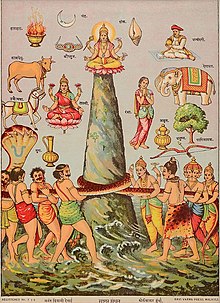
The society is always in a flux. These days, it appears to be undergoing a mightier churning which reminds one of the episode of Samudra Manthan (The Churning of the Sea) in Indian scriptures. The churning throws up poison as well as the nectar which grants immortality. Those who believe in following the path of righteousness end up securing the latter.

It is easy to see that we have a leadership crisis on our hands. Since a situation also produces a leader, one hopes that more and more conscious leaders keep emerging, nudging us in the right direction.

Admittedly, the silver linings appear to be like a pale parabola of joy, to borrow an expression from P G Wodehouse. This will remain so till the time a bevy of conscious leaders – whether in business or in politics – do not appear on the scene and convert this into a shimmering parabola of bliss.

The solution is not to keep sweeping issues like hunger, poverty, economic non-inclusion, global warming and prejudicial animosity under the carpet. Nor is it to raise the existing walls, whether political, commercial, attitudinal or religious. It lies instead in a truly global view based on the concept of Vasudhaiva Kutumbukam: The World is One Family.

Being a born optimist who believes in having a chin-up attitude, I do hope that some of these tectonic shifts can at least get retarded, if not altogether reversed, in the years to come.

(Related Posts:

https://ashokbhatia.wordpress.com/2020/06/17/why-the-wren-is-a-patriot-and-not-a-nationalist-guest-post-by-prof-badri-raina

https://ashokbhatia.wordpress.com/2020/11/23/jeeves-and-the-social-media-challenge

https://ashokbhatia.wordpress.com/2016/09/23/bertie-jeeves-and-the-internet-of-things

https://ashokbhatia.wordpress.com/2014/12/08/bertie-social-media-and-blogging-blues

https://ashokbhatia.wordpress.com/2018/01/10/jeeves-seeks-a-placement)


Read Full Post »

Here is a juicy excerpt from Blandings Castle which fans of P G Wodehouse and Mahatma Gandhi may relish!

“It has sometimes seemed to me (said Mr Mulliner, thoughtfully sipping his
hot Scotch and lemon) that to the modern craze for dieting may be attributed
all the unhappiness which is afflicting the world to-day. Women, of course,
are chiefly responsible. They go in for these slimming systems, their sunny
natures become warped, and they work off the resultant venom on their menfolk.

“These, looking about them for someone they can take it out of, pick on
the males of the neighbouring country, who themselves are spoiling for a
fight because their own wives are on a diet, and before you know where you
are war has broken out with all its attendant horrors.

“This is what happened in the case of China and Japan. It is this that lies at
the root of all the unpleasantness in the Polish Corridor. And look at India.
Why is there unrest in India? Because its inhabitants eat only an occasional
handful of rice. The day when Mahatma Gandhi sits down to a good juicy
steak and follows it up with roly-poly pudding and a spot of Stilton you will
see the end of all this nonsense of Civil Disobedience.”

“Till then we must expect Trouble, Disorder … in a word, Chaos.”


(From the story ‘The Juice of an Orange’ by P G Wodehouse. Illustration of Mahatma Gandhi courtesy R K Laxman)


Read Full Post »

Older Posts »