Feeds:
Posts
Comments

Posts Tagged ‘Management’

ashokbhatia's avatarashokbhatia

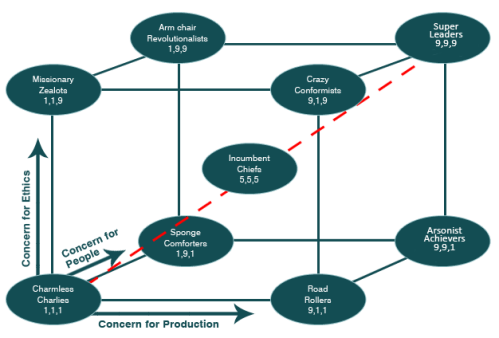
This is the most commonly found breed of CEOs. They are crazy about getting results. They plan well. They execute even better. People rank high amongst their priorities. They protect them much like a tigress would shield her cubs. But when it comes to ethics, values and systems, they could not care less. Auditors cannot be faulted for labelling them as arsonists.

Managements love them. The efficient ones amongst their team members adore them. The sloppy ones dread them. Their Concern for Production is invariably high. They are often sharp when it comes to adapting newer technologies in the organization’s processes. Their Concern for People is also high. They can be found praising their people in public while ruthlessly ticking them off in private.

However, when it comes to Concern for Ethics, they rank very poorly. Their value systems are driven by commercial goals alone. Systems and procedures are merely the…

View original post 633 more words

Read Full Post »

ashokbhatia's avatarashokbhatia

One of the relatively rare species of CEOs is that of the Sponge Comforters. These are hapless souls who are gifted with too much of the Milk of Human Kindness sloshing about within them. They happen to be compassionate by nature. People are their first priority. It is easier to persuade them to buy excuses.

Their key strength is their Concern for People. In their value paradigm, Concern for Production and Concern for Ethics take a back seat. In terms of the modified Blake Mouton Grid, they happen to be in the 1,9,1 slot.X Y Z upgraded

Their people just love them. The loyalty they command is often exemplary. Even though the feudal spirit prevails, their style of functioning is democratic in nature. People working with them are invariably happier. Work gets done in a calmer and more relaxed atmosphere. Physical activity does not get confused with efficiency. Their planning is excellent. Their…

View original post 335 more words

Read Full Post »

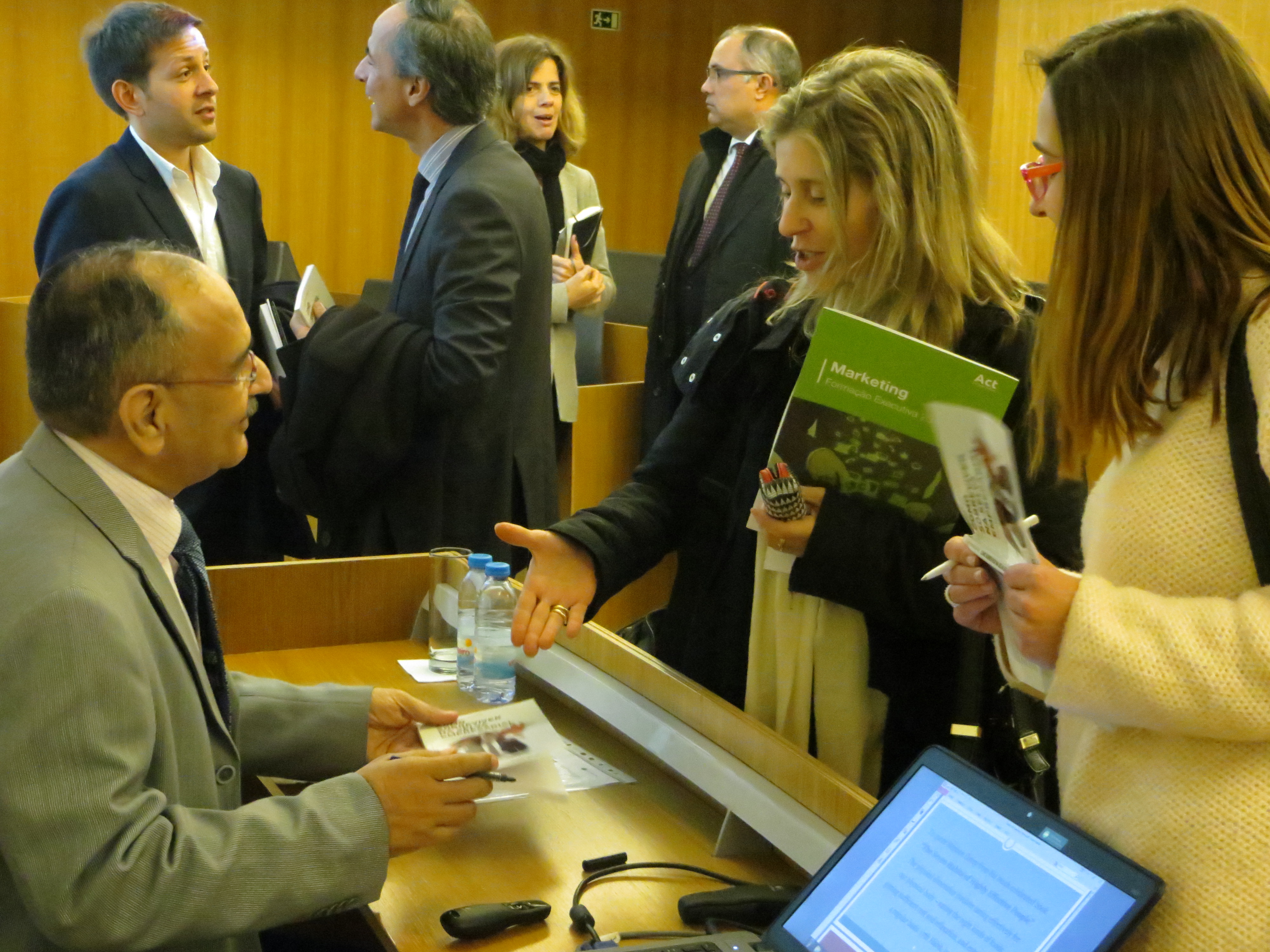
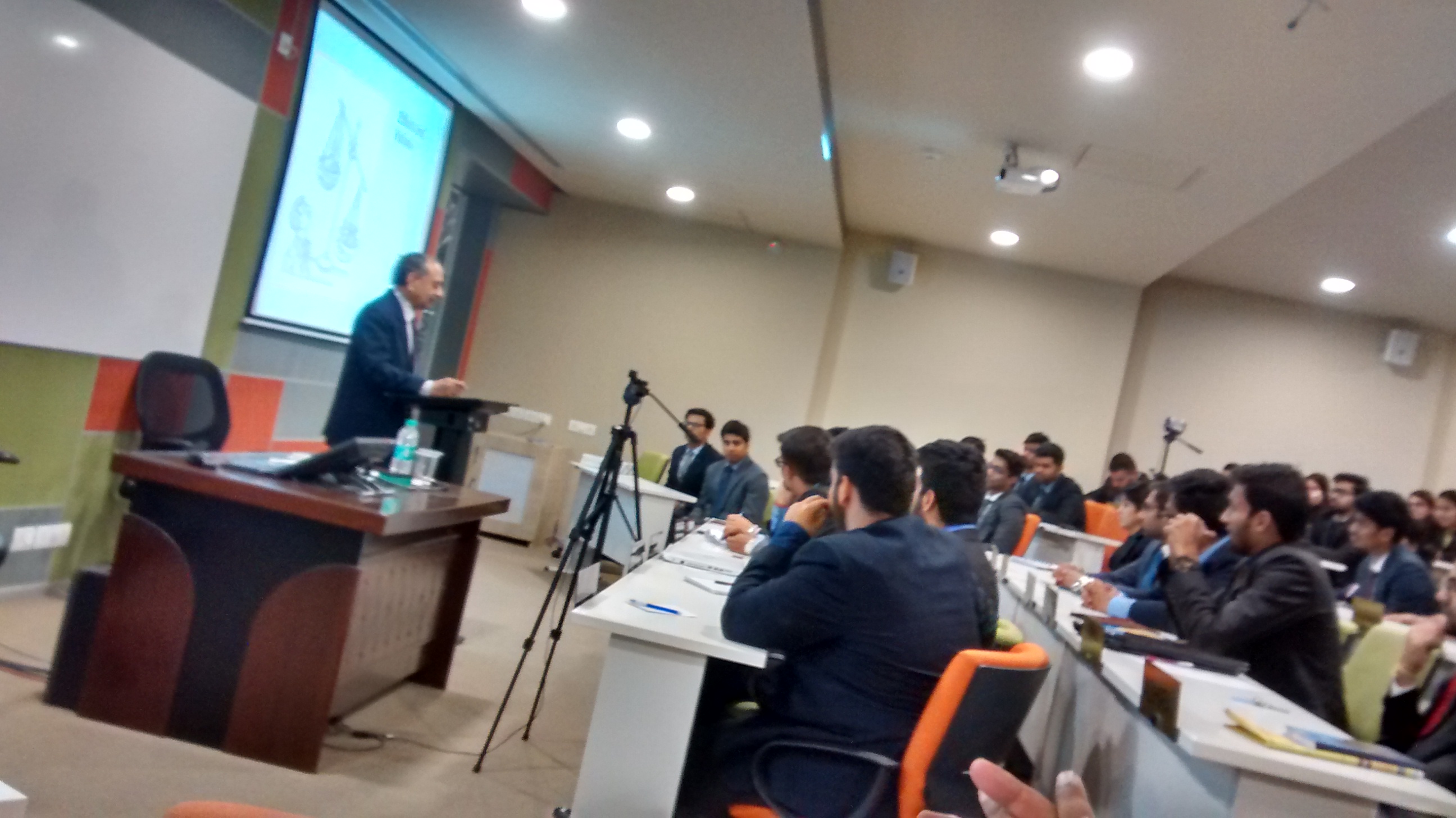
Encounters with brighter minds invariably leave an author invigorated. When managers, whether the practising kind or the aspiring kind, ask searching questions based on what one has proposed in one’s books or blogs, the writer’s thought process also gets enriched. The more pungent the query, the more fulfilled one feels.

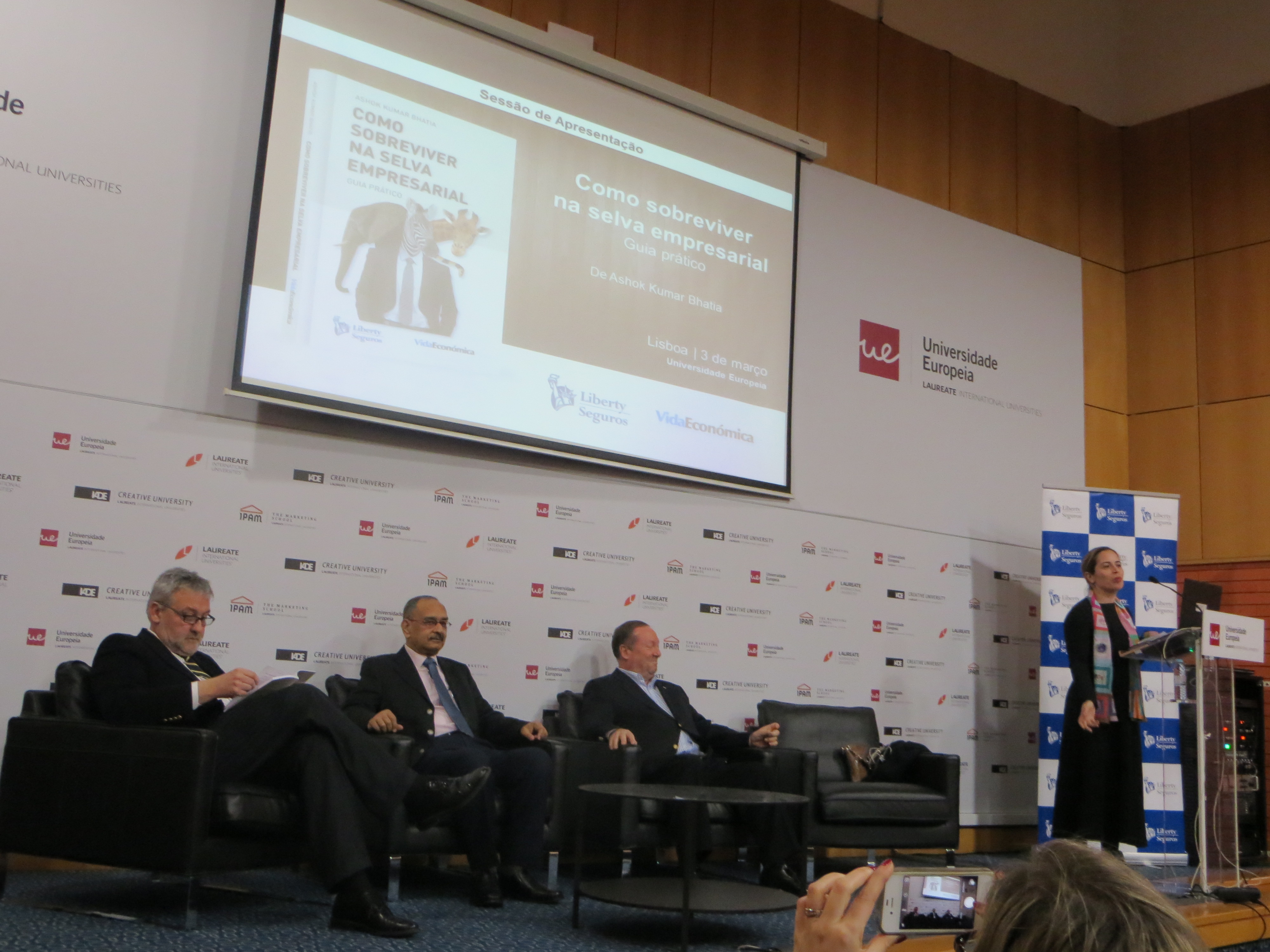
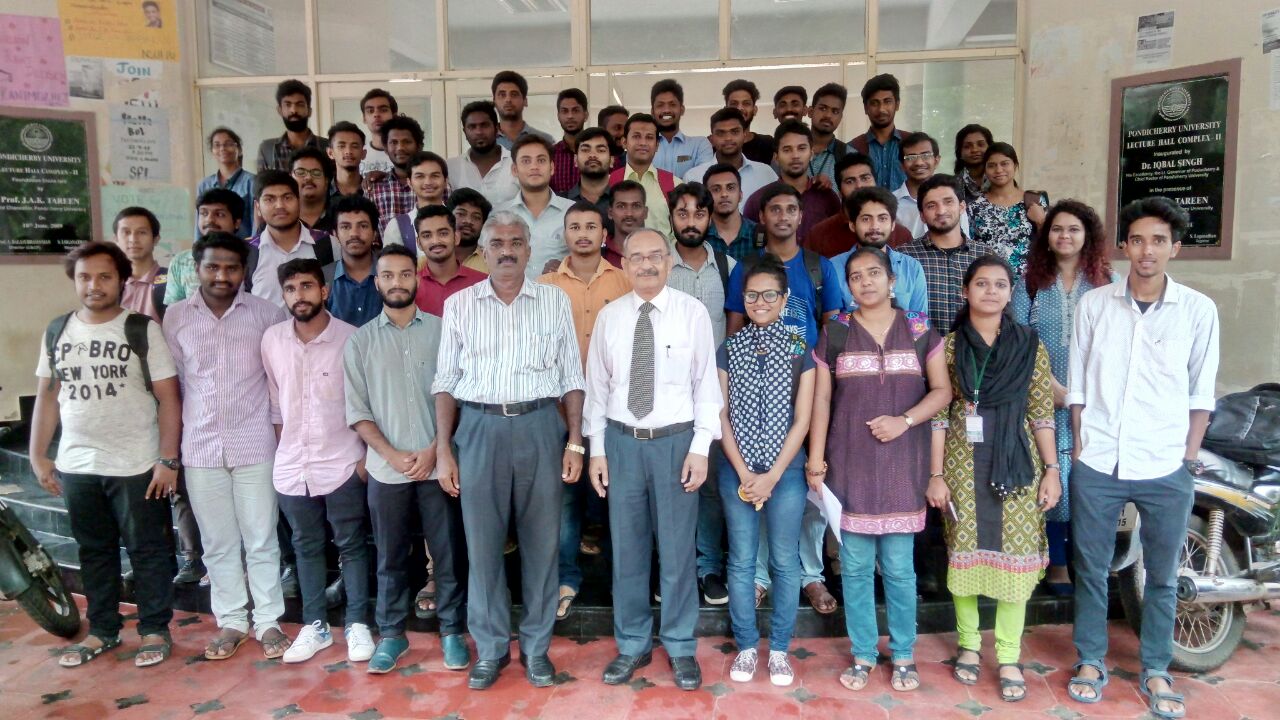
Over the past few years, yours truly has had several opportunities of interacting with youth who aspire to be future managers and entrepreneurs. The topics have been wide ranging, like Work Life Balance, Management Lessons from Movies, Management Lessons from India, Ethics and Values in Business, Managing Interpersonal Relationships, Four Pillars of Integral Management and Surviving in the Corporate Jungle.

Here are some of the outfits which have been kind enough to grant such opportunities:

  1. Catolica Porto Business School, Porto, Portugal.
  2. Department of Management Studies, Universidade Europeia, Lisbon, Portugal.
  3. Madras Management Association, Pondicherry Chapter, India.
  4. Sri Aurobindo Center for Advanced Research, Pondicherry, India.
  5. C K College of Engineering and Technology, Cuddalore, India.
  6. Sri Manakula Vinayagar Engineering College, Pondicherry, India.
  7. Indian Institute of Management, Lucknow: NOIDA Campus, India.
  8. International Minds in Finland, Finland.
  9. Madras Management Association, Chennai, India.
  10. Department of Management Studies, Pondicherry University, India.
  11. Department of Management Studies, Indian Institute of Technology, Delhi, India.
  12. Great Lakes Institute of Management, Gurgaon, India.

And mentioned below are some of the frequently asked questions yours truly has encountered in the recent past. Against each query, you will find a short summary of the response.

What precisely is Spiritual Quotient (SQ)? How does one develop it?

Those who have a high SQ have this uncanny ability to be creative and insightful in their approach to problem solving. They build up their level of self-awareness and there intuitive faculties. They realize that there is a realm of intelligence which is beyond the five senses that our physical bodies are endowed with.

SQ has several components: gratitude, self-esteem, self-awareness, consciousness, compassion, surrender, service and ego.

Meditation can help develop our Spiritual Quotient. So can heartfulness and mindfulness.

When you speak of the ‘Draupadi Syndrome’ in management parlance, you are speaking of managing multiple bosses. How does one handle such a situation?

Organizations are becoming flatter. Functional silos are breaking down. This means working in multi-disciplinary teams and reporting to multiple bosses at times.

Tact, patience and a better understanding of the psychology of each boss can help a manager to handle many bosses at the same time. Bad-mouthing one in front of the other would not help. Playing one against the other could also land one in a soup.

Due to parental pressure and financial insecurity, can one take up a job which is with a company which is marketing a dubious product?

It is not advisable to go in for a job where your value system does not match with that of the organization. You will not be able to put your heart into it. This may result into your being caught in a low-result and lower-rewards vicious cycle, undermining your self confidence.

If you are absolutely with your back to the wall, you may do so for a very short stint; be ready to change to the next one at the first possible opportunity.


You advise us to avoid being a Yes-man. How does one convey one’s difference of opinion to a senior? How does one say ‘no’ to one’s boss?

Politely. By marshalling your thoughts and sharing those with the senior at an appropriate time. Be open and respectful to his views. Registering dissent is a responsibility we all carry on our shoulders.

Please give examples of Eustress, the positive kind of stress you speak of.

When you are rushing for a meeting with your girl friend, or going to a movie, you feel a kind of stress which is positive in nature. When the end result is likely to be a pleasurable experience, you feel Eustress.

It follows that when we handle an assignment which connects us to a cause we happen to be passionate about, we experience positive stress. We enjoy doing it.  


According to you, interpersonal relationships have a half-life of their own, much like that of a radioactive substance. How can one increase the life span of a relationship?

I believe this can be done by avoiding anger, greed and a tendency to bad-mouth the party of the other part, especially when he/she is not present. Anticipating the needs of a person and assisting him/her in achieving a goal helps.


Ethics and Values in business: For an entity which is geared for generating a surplus for its equity holders and boasts of a great market valuation, just how practical is this concept?

Most businesses run on a quarter to quarter basis, with a focus on guideline values. But those which care about developing their brand equity operate based on a compass which is configured on a basic set of ethics and values.

In the Indian context, why do we respect Tatas? Because the group has a 150-year old tradition of good thoughts, good work and a basic sense of decency and honesty. They continue to do so much for the society, mostly in fields which have no direct connection to their diverse businesses.  

Any general career advice you would give to us?

Five years down the road, do you not see businesses becoming more dependent on technology? So, the writing on the wall is pretty clear. Be ready to embrace change. Learn digital skills and be ready to play a relevant role in the business, whether your own or that of someone else.

Do not be scared of bargaining for a better work-life balance. Remain connected to your inner self. Introspect, do a SWOT analysis, and create a USP for yourself. Invest in a good image on social media.

Build credibility. Observe company culture. Volunteer willingly. Build healthy relationships. Keep improving your skill-set.

Book cover English Front

Each interaction proves to be a good learning opportunity!

(Wish to look up my profile? You can find it here.

Related post: https://ashokbhatia.wordpress.com/2016/04/01/about-me)


Read Full Post »

ashokbhatia's avatarashokbhatia

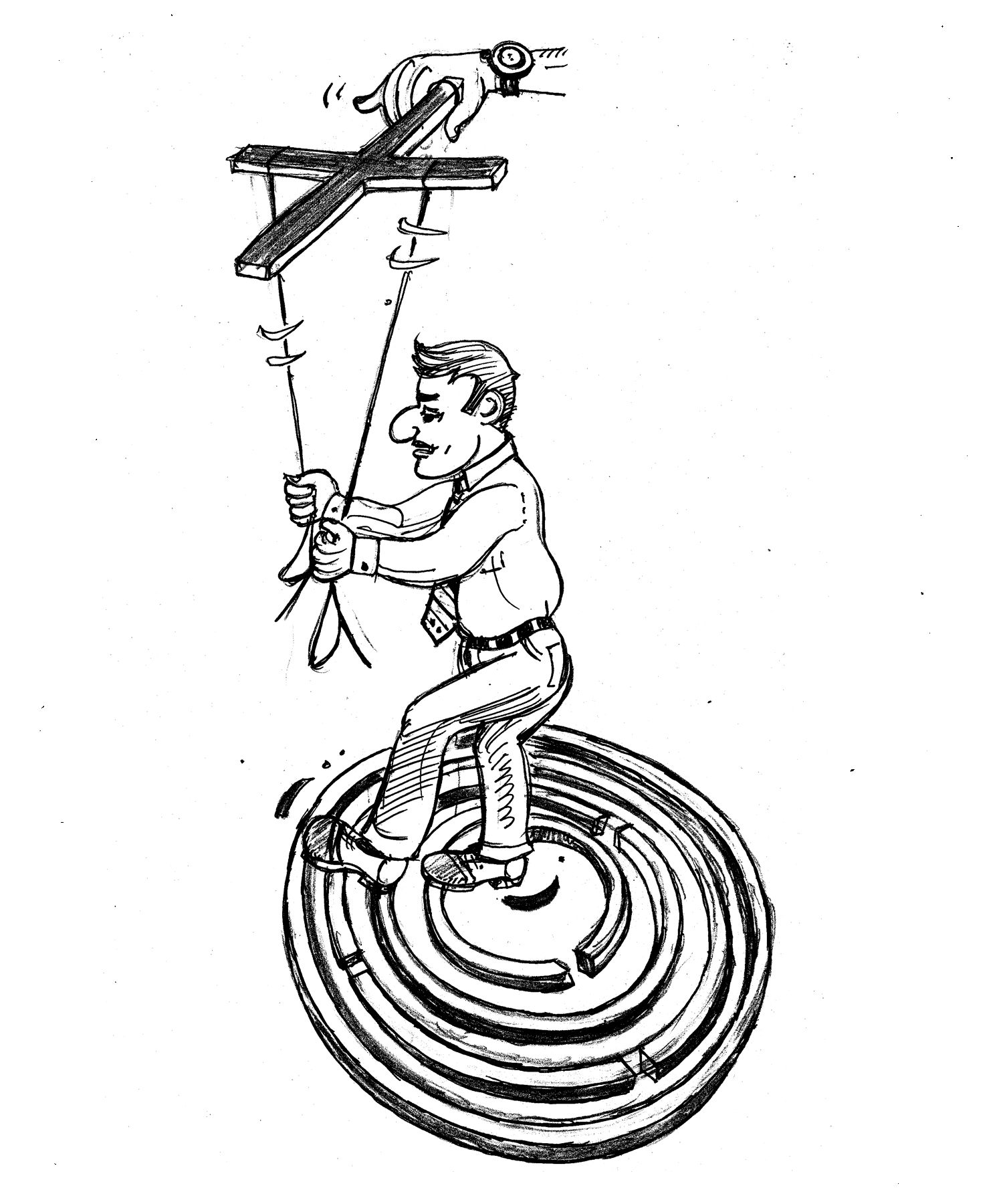
One of the professional hazards CEOs face is that of giving in to relentless pressure and becoming Road Rollers. Quarterly targets have to be necessarily met. Stakeholders have to be kept happy. Auditors have to be kept in good humour. Regulatory agencies have to be held at an arm’s length. Star performers have to be kept excited.

Amidst all this razzmatazz, CEOs run the risk of caring about results alone. They would achieve targets by ruthlessly crushing anything that comes in their way. Concern for Production gets the top priority. Concern for People takes a back seat. Concern for Ethics gets dumped. In terms of the modified Blake Mouton Grid, they end up being slotted at 9,1,1.X Y Z upgraded

Such heartless hard task masters end up neglecting even the genuine needs of their team members. Employees have to be dealt with in a stern manner. Shorter working hours are held to be…

View original post 569 more words

Read Full Post »

The brand called Jeeves stands for impeccable service. It signifies delivery of results which exceed one’s expectations, that too with due respect, politeness and sagacity. The methods may be rough at times, but the neat results obtained do provide satisfaction to all concerned.

On the flip side, the brand also represents cunning. An undercurrent of subterfuge often manifests itself. An excessive control over the affairs of the hapless and mentally negligible masters is a cost to be borne to avail of the service package on offer.

Residents of Plumsville often wonder as to how Jeeves, the well-known gentleman’s personal gentleman, acquired the traits that eventually made him an indispensable asset to the upper crust of English society – the art of shimmering in and out, the detailed knowledge of Debrett’s British Peerage, the knack of solving some tricky problems facing his blue-blooded masters or his pals, and, of course, a deep understanding of the psychology of the individual.

C. Northcote Parkinson, the proponent of the famous law so very well known in management and bureaucratic circles, in his inimitable whodunit entitled Jeeves: A Gentleman’s Personal Gentleman’ (ISBN 0-312-44144-4), unravels the kind of life Reginald Jeeves led, much before we get introduced to him in the memoirs of Bertie Wooster. For good measure, he also captures for us his life in the later years.

The making of the brand Jeeves

A rolling stone gathers no moss, the wise men have said. Jeeves, with his keen intelligence and a bulky head bulging at the back, uses each of his career pit stops to acquire diverse skills. Failures do not deter him. Instead, he uses these to learn and assimilate his knowledge, to be used for any future employer who might end up needing it.

Jeeves has learnt to beware of aunts. He has learnt to move silently, hear everything and say nothing. As a page boy in an academy for young ladies, he has learnt that all girls are to be avoided as much as possible and that those with red hair are especially dangerous. He has learnt that the ideal employer must always be, and should always remain, a bachelor. He has understood the nuances of flat racing. He has realized that a gentleman’s gentleman leads a more interesting life than that of a butler. He has discovered his talent in playing bridge and poker.

The repertoire of his skill sets is vast indeed. Regrettably, the narrative is completely silent on the kind of fish Jeeves is said to be fond of.

What makes Jeeves happy?

Intense introspection has led him to conclude that his inner happiness lies in resolving a tricky situation in such a manner as to merit a hearty round of applause from all concerned. The final scene has to belong to him. While all others are bewildered and confused, he would like to walk in, offering a neat solution to the problem at hand. He must be imperturbable, dignified and conclusively right. The solution may be such as to not only solve the main problem at hand, but also tie up a couple of other loose ends as well, thereby winning a warm approval from a wider cast of actors in the play. At this stage, the curtains may fall.

His keenest pleasure is in solving problems for people whose ability fell short of his.

Looking for an ideal employer

During the course of his long career, Jeeves has found that his preference is for prosperous and reasonably but not fanatically honest men. His employer must always be a gentleman, without a passion for horses, dogs, goldfish and parrots.

Pragmatic to the core, Jeeves does not boast of exceptionally high moral principles. Instead, he places a higher premium on social standards, excellence in sartorial tastes and polite behaviour.

Glisteroll in hair he does not approve of. Dazzlo toothpaste he scoffs at. Use of Seductor after shave lotion he does not recommend. Such are his exquisite tastes.

Bunter, the man of Lord Peter Wimsey, the detective, advises Jeeves to never work for a very clever gentleman like his own employer. After all, of what use is to work for someone whom one can never hope to deceive, someone who sees through every excuse and knows every trick? One has one’s own private life to lead. One should therefore find an employer who need not be mentally handicapped but should certainly be far from clever.

By seeking an employer who is stupid – good-natured, popular, but utterly brainless – he has the great possibility of making him dependent on himself. In his career, he aspires to be a Holmes to a Dr. Watson.

According to the narrative at hand, Jeeves goes out of his way to ferret out an employer who matches his expectations. Diving deep into the exhaustive journal maintained at the Junior Ganymede Club, he comes across one Bertram Wilberforce Wooster.

For Jeeves to identify his manservant Meadows and file a complaint against him for misappropriating his employer’s socks is the work of a moment. Meadows gets the sack and a vacancy gets created.

Two days later, Jeeves calls at 6A, Crighton Mansions, Berkeley Street, W1, only to find that there is indeed a vacancy for a gentleman’s personal gentleman.

The rest, as we all know, is history.

From valeting to buttling

Bertie taking a fancy to playing the banjolele marks the beginning of a phase where he and Jeeves start drifting apart.

Whereas a butler becomes the key figure in an established household, he does miss his days of roving the world as a bachelor’s personal attendant. ‘In becoming a valet the former valet admits to himself that middle age has arrived. He is about to settle down and put on weight.’

Jeeves accepts a position with the fifth baron Chuffnell, who is struggling to maintain Chuffnell Hall with his limited means. Once the baron decides to settle down with Pauline Stoker, Jeeves moves back to Bertie, when assured that the banjolele had been burnt in a fire at the cottage.

But this turns out to be a short reunion. Soon, the master decides to go off to learning the art of mending socks and Jeeves takes up the role of a butler to William Egerton Bamfylde Ossingham Belfry, 9th Earl of Rowcester, who is struggling to stay afloat at Rowcester Abbey, a picturesque ruin subject to regular flooding. Having assisted him in resolving his problems, Jeeves tactfully gives notice.

Jeeves yearns for permanence

Followers of Plum’s narratives would recall Jeeves returning to Bertie in the role of a valet thereafter. But Parkinson would have us believe that Jeeves has by then realized that to achieve stability and permanence in life, he has to settle down in the role of a butler, but not with some impoverished nobleman. A background of solid wealth is necessary. Eventually, he decides to return to Lord Worplesdon, who is now married to the wealthy Mrs. Gregson, Bertie Wooster’s formidable Aunt Agatha.

For many years, Aunt Agatha has avoided an inner urge to ask her middle-aged nephew to walk down the aisle. Results of her last attempt to do so, when a seemingly innocent girl at Cannes had turned out to be a gangster’s moll, had proven to be highly embarrassing. This time round, however, her attention is focused on Valerie Pendlebury-Davenport. Unbeknown to her, Jeeves intervenes and saves Bertie from losing his bachelor status.

Working with Aunt Agatha needs nerves of chilled steel, something which could be trying even for someone like Jeeves. Moreover, he now goes about polishing the silver with a dwindling enthusiasm and a growing dislike of the Countess, whose dislike for him is fully reciprocated.

Eventually, he puts in his papers and starts wondering as to how to use his many talents in some other field.

Support from a dashing Bertie Wooster

Meanwhile, with the death of Sir George Wooster, the Earl of Yaxley, Bertie Wooster has inherited the family estate, Wooster Castle, which also comprises Angler’s Rest. Countess Maud Wilberforce plans to return to her previous home in East Dulwich.


Armed with a title and property, Bertie enjoys a higher degree of self-confidence. He is now a justice of the peace and can no longer afford to pinch policemen’s helmets. No longer can he be considered as one being mentally negligible.

He decides to take a walk down the aisle with one of the most famous, though dreaded, characters from the tribe of the delicately nurtured, overcoming serious objections from her mother. One would not like to play a spoil sport here and reveal the identity of the new Countess, though.

Bertie also offers Jeeves the position of a landlord at Angler’s Rest. If one were to visit it these days, one can be sure of being told by him one of the several Hollywood stories concerning the two movies he had appeared in: Little Lord Fauntleroy and The Vampire of Vitriola, both produced by Perfecto Zizzbaum. Alas, Mr Mulliner has faded slowly into the cold and darkness of the night.

Brand Jeeves: Managing bosses

The character of Jeeves has a distinctive aura of its own. It teaches us the art of managing bosses. Significantly, it also teaches us how to manage our own selves better.

A brand stands for reliability and credibility. It signifies professional excellence. It delivers satisfaction to those it serves. Jeeves qualifies to be labeled as a brand on all these fronts.

The narrative dished out by C. Northcote Parkinson reaffirms the following to be the key factors behind his success in his chosen profession:

  1. Clarity as to what he loves doing in life, and a relentless endeavour to steer his career in that direction.
  2. Using his intelligence to introspect and understand the profile of an ideal employer to suit his temperament; taking adequate steps through proper channels to zero in on such employers from time to time.
  3. A keen sense of observation which helps him to anticipate the needs of his blue-blooded employers; ensuring continued dependence of his employers on him.
  4. Being a respectful and dignified listener, speaking only when necessary.
  5. Excellent learning ability; seeking advice from those in the know of things and following the same when it matches with his own values.
  6. Leading people by appearing to be a devout follower.
  7. Cultivating a boss who would take care of one in one’s sunset years.

Managers of all hues, sizes and shapes could learn much from the brand called Jeeves. An ability to introspect and strategize. Understanding one’s own strengths and weaknesses. Making the best use of opportunities that come our way. Using our inner resources to neutralize the threats we come across. Meeting the boss, dim-wit or otherwise, half-way through. Learning from successes as well as from failures. Being open minded. Choosing the company to work for with due diligence. Commanding respect and building one’s brand equity by delivering in excess of what is expected of oneself.

Those who are not blissfully ignorant of the existence of Jeeves can belong to two schools of thought. One, those who admire Jeeves and would love to have someone like him at their disposal. Two, those who detest him and would not like someone like him controlling their lives, even if it means their having to handle the harsh slings and arrows of Fate single-handedly.

But if there were indeed a Jeeves’ Academy of Boss Management, would you not like to enroll for a course thereat, irrespective of the school of thought you happen to belong to? It might add a unique sparkle to your career graph!
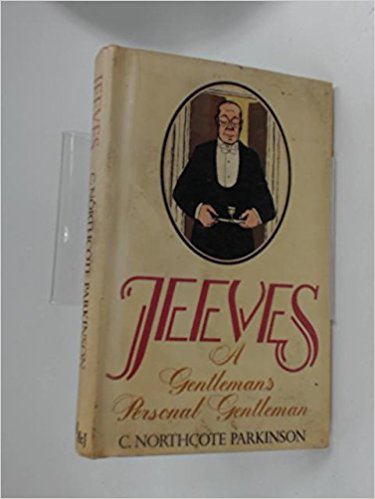
Jeeves by Northcote Parkinson

The fictional biography of Jeeves whipped up by C. Northcote Parkinson supplements the Wodehouse canon beautifully. It is built around characters and events that Plum fans are already familiar with. It captures the spirit of Jeeves’ character very well.

One is left wondering as to how Monte Carlo never came up with the idea of offering a honorary citizenship to Reginald Jeeves, following the example of Meringen (Switzerland) which has honoured Sherlock Holmes thus!

(Related Posts:

https://ashokbhatia.wordpress.com/2018/01/10/jeeves-seeks-a-placement

https://ashokbhatia.wordpress.com/2015/06/03/introducing-jeeves-saviour-or-snake

https://ashokbhatia.wordpress.com/2013/11/09/when-jeeves-takes-charge

https://ashokbhatia.wordpress.com/2013/11/13/when-jeeves-takes-charge-2-0

https://ashokbhatia.wordpress.com/2014/05/28/sherlock-holmes-the-honorary-citizen-of-meiringen-switzerland)


Read Full Post »

ashokbhatia's avatarashokbhatia

In an earlier post, we had looked at the various leadership styles which emerge from an upgraded Blake Mouton Grid which has three axes: Concern for Production, Concern for People and Concern for Ethics. One of the styles we came across was that of the Charmless Charlies.X Y Z upgraded

These are hapless souls who could not care less for getting results, or, for that matter, for the people who slog their butts out for them. Issues of ethics or improprieties involved in any decision-making do not appear to affect them.

They rank poorly on all the three dimensions – Concern for Production, Concern for People and Concern for Ethics. In terms of an upgraded Blake-Mouton Grid, they would earn a rating of 1,1,1. These are CEOs who, having reached their level of incompetence, exemplify the Peter Principle.

In large organizations, these could be very senior managers who carry a rich legacy of…

View original post 280 more words

Read Full Post »

ashokbhatia's avatarashokbhatia

What is the best Christmas present a CEO can give to her organization?

In keeping with the Yuletide spirit, the best gift could perhaps be a resolve to take decisions based not only on commercial considerations but also on sound ethics and values. Decisions which would serve the strategic interests of the organization and would never lead it to a situation of public disgrace and compromise.

An upgraded Blake Mouton Grid

If one were to take the liberty of modifying the Blake Mouton grid, the leadership style of such a CEO would qualify for either a 9,9,9 or a 5,5,5 classification.X Y Z upgraded

Here is a quick rundown on the various leadership styles which emerge from a grid of this nature:

1,1,1: Charmless Charlies

One can only wish their organizations the best of luck.

9,1,1: Road Rollers

They would achieve a target by ruthlessly crushing anything that comes in their way.

1,9,1:…

View original post 533 more words

Read Full Post »

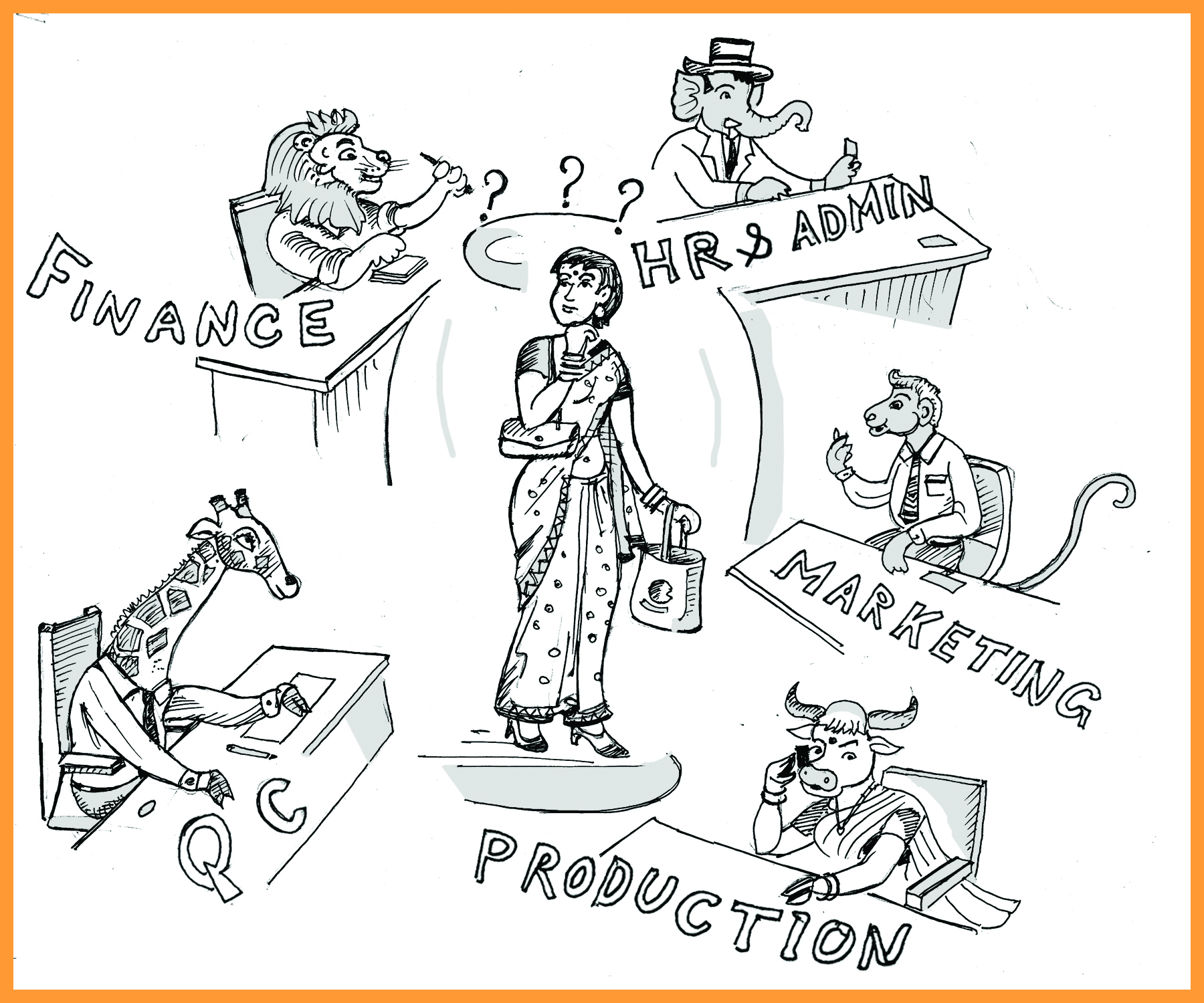
Organizations where the top management believes that any suggestion for improvement in a department emanating from another department amounts to interference and sacrilege tend to become like zoological parks. All subject experts get confined to their ‘cages’ or ‘enclosures’. Forays into another’s territory are frowned upon. This is a sure shot recipe for nipping creativity and innovation at the work place.

The biggest casualty of course is the hapless customer who has had the misfortune of buying a product which turns out to be defective. The incessant running from pillar to post a disgruntled customer is subjected to ends up creating a market ambassador the organization could surely do without.

(Excerpt from my book ‘Surviving in the Corporate Jungle’, the English version of which was released recently. Here is a video clip which captures the journey of the book so far:

https://ashokbhatia.wordpress.com/2017/10/14/surviving-in-the-corporate-jungle-a-video)

Read Full Post »

Saint Thiruvalluvar was a humble weaver and an enlightened soul who gave us the Thirukkural, one of the finest specimens of Indian spiritual literature. It carries within itself eternal values and wisdom which could guide a lay person as well as a professional in all spheres of life.

Thiruvalluvar

Thirukkural captures the three-fold direction of life – Aram, or virtue; Porul, or wealth; and Inbam, or love.

The sage says that the life of a householder is superior to that of someone who opts for renunciation. He goes on to describe the duties and responsibilities to be discharged by a householder in great detail.

While describing the duties of kings, Thiruvalluvar touches upon the art of management and governance in very clear terms. This aspect has already been captured in some detail here.

Thirukkural speaks of matters of the heart with great elan. It gives love as much importance as ethical behaviour and righteous conduct. Feminists can take heart from the fact that it highlights the need for respect of women in unequivocal terms.

Thirukkural is an enduring example of the eternity of values, ethics and a humane approach to problem solving.


(Related Posts: 

https://ashokbhatia.wordpress.com/2015/01/16/management-lessons-from-thirukkural

https://ashokbhatia.wordpress.com/2017/06/23/management-lessons-from-india)


Read Full Post »
A vast majority of professionals decide to be ‘passengers’ and not ‘drivers’ in their careers. They are happy to behave like headless chickens, strutting about sounding very busy but with meagre results to show. Typically, they outsource the thinking part to brainy birds around them and lead a mentally sedentary but self-contented lifestyle.

Call them file-pushers, clock-watchers, head clerks, or what you will – they do serve a useful purpose in keeping big bureaucracies running like well-oiled machines. They can also be groomed to become devoted followers for charismatic and dynamic leaders.

(Excerpt from my book ‘Surviving in the Corporate Jungle’, the English version of which was released recently. Here is a video clip which captures the journey of the book so far:

https://ashokbhatia.wordpress.com/2017/10/14/surviving-in-the-corporate-jungle-a-video)

Read Full Post »

« Newer Posts - Older Posts »