Feeds:
Posts
Comments

Posts Tagged ‘Management’

Yes-men

They are to be found in all spheres of life. They have perfected the art of boosting the sagging morale and flaccid ego of their superiors, thereby securing better perks and intangible benefits for themselves. Due to close proximity to their bosses – whether perceived or real – they end up being king makers.

Smart bosses easily figure out how to remain at an arm’s length from them. The tricks they use to steer clear of yes-men: a discouraging body language, asking for hard evidence for all the charges being levied against someone who is absent and generally berating them on select occasions in public.

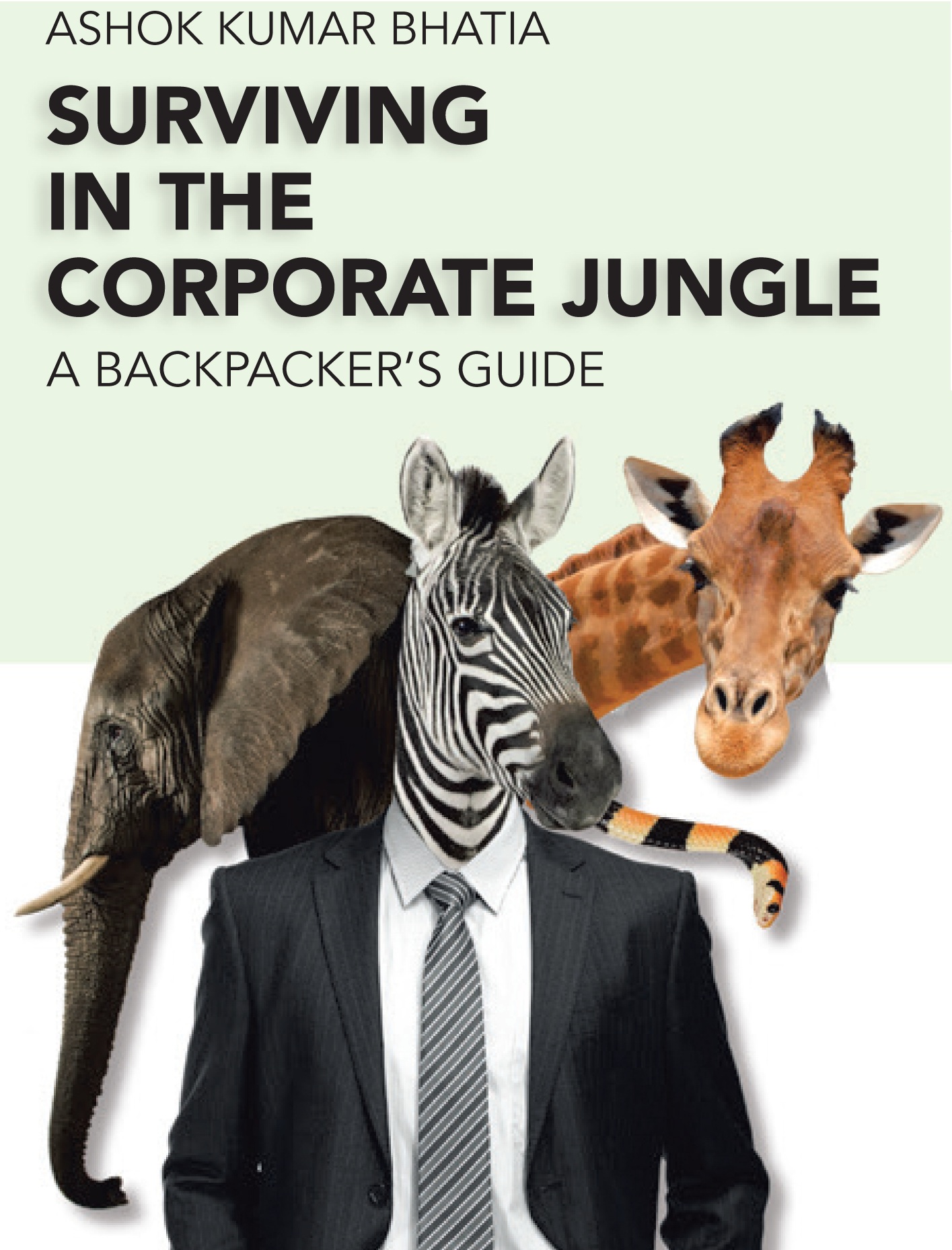
(Excerpt from my book ‘Surviving in the Corporate Jungle’, the English version of which was released recently. Here is a video clip which captures the journey of the book so far:

https://ashokbhatia.wordpress.com/2017/10/14/surviving-in-the-corporate-jungle-a-video)

Read Full Post »

The cultural ethos of an organization is essentially reflected in the way the top honchos conduct themselves. It also manifests in the manner in which the organization handles its relationships with diverse stakeholders.

Empathy is a critical component of the ethos of an organization. The trait of being able to put oneself in another person’s shoes and arriving at business goals and decisions by consensus helps the organization to be more efficient.

Understanding and empathizing with the perspective of the party of the other part also makes it easier to negotiate and successfully close tricky business deals. As an example, when one tries to finalize an order with a customer of Japanese origin, one discovers the value of empathy and mutual trust, because the latter is apt to ask for a detailed costing of the product on offer, a prospect often disliked by most businessmen hailing from a different culture.

Unfortunately, empathy and consensus do not always form a part of the arsenal of business owners and CEOs who are considered successful. Quite a few business leaders have brought to fore a leadership style which tolerates no dissent and abhors a natural impulse to seek consensus. Bill Gates, Steve Jobs and Jeff Bezos are some who have demonstrated that a leadership style which celebrates conflict, disruption and dominance is not only a virtue but possibly also an enabler of sustained creativity, technological evolution and advancement.

Of humility, consensus and culture

However, it appears that CEOs with a Western mind and an Eastern heart are configured somewhat differently. Microsoft CEO, Satya Nadella, sounds passionate about leadership and transformation, but the route he chooses is based on ethos, empathy, empowerment and democratization. In his book Hit Refresh, he concludes that ‘the choice of leading through consensus versus fiat is a false one.’

He goes on to propose that the ‘C’ in the CEO represents culture, thereby implying that culture building forms the core of his leadership style. In his leadership paradigm, hubris gives way to humility and envy to empathy. A CEO is as much responsible to the investors as he is accountable to the citizens.

A transformation in the offing?

Brand Microsoft has never been about empathy. Rather, its operating style has always been that of crushing the competition. But then, why would it allow Linux applications to run on Windows as well? Perhaps, rapid progress in the realm of technology is making friends out of foes, leveling off the field and making diversity and inclusion the critical components of a business strategy.

How this transformation plays out in future would depend on many factors. The way the market environment shapes up. The degree of freedom truly enjoyed by a senior person at the helm of affairs. The collective consciousness and value system of the core team which supports the CEO in steering the business, possibly based not only on a commercial compass but also on a spiritual one.

The argument one often comes across is that when satisfactory business results are coming in, what is the need for management to deploy such soft practices as empathy, humility and consensus in their operations?

In his book entitled “Be Unreasonable”, Paul Lemberg argues that when a top honcho believes in being reasonable, the business only gets buried deeper in conventional wisdom. He goes on to demonstrate how unreasonable strategies can bring one unconventional success.

This does seem like a workable proposition, especially when one is working in a highly competitive and disruptive environment. However, such a materialistic approach is open to challenge in some ways. One, the long term sustainability of business itself could come under a cloud. The success can then be fuelled only by a perennial outpouring of disruptive innovations, a feat which many businesses may find difficult to achieve. Two, the human capital of the business is likely to remain underserved and underexploited. It is almost certain that team members working under such conditions would not be happy souls who put in their best performance.

A feminine touch

In yet another noteworthy piece of work entitled Shakti Leadership, authors Nilima Bhat and Raj Sisodia argue that too many people have bought into a notion of leadership that exclusively emphasizes traditionally ‘masculine’ qualities: hierarchical, militaristic, win-at-all-costs. They propose that this approach has led to corruption, environmental degradation, social breakdown, stress, depression and a host of serious problems.

They show us a more balanced way, a leadership that is generative, cooperative, creative, inclusive and empathetic. These are traditionally regarded as ‘feminine’ qualities, but are worthy of emulation. In the Indian yogic tradition, these are symbolized by Shakti, the source that powers all life.

Indian scriptures speak of the concept of Ardha Naareeshwara, a form which is an eclectic mix of masculine and feminine features. This is what could turn out to be a better recipe for sustained success in the decades to come. A leadership style which is based on both masculine as well as feminine traits.

The technology explosion

Much like capital, technology in itself is soulless. However, American author Tracy Kidder has held that ‘technology is nothing more than the collective soul of those who build it.’ One would therefore not be wrong in surmising that even in the face of the technological explosion that we experience in our times, human beings – and as a logical corollary, human values – shall always play a definitive role in shaping the society along more just and humane lines.

The power of social media to shape public discourse and reform political decision making is already on display. Yes, there is always the danger of people getting manipulated by an overt use of the same social media. But surely these are short-time blips on the dimension we label as time and cannot last too long.

The future holds hope

Empathy appears to be kicking in. So-called feminine traits like creation and inclusion are taking centre stage. Competition is giving way to collaboration.

A noteworthy feature of organizations which believe in the virtue of empathy is the intention to give back to society some part of what the business gains from it. What follows is a keenness to offer products and services for the overall good. That is the kind of approach that Microsoft and many other enlightened businesses take.

(Related Post: https://ashokbhatia.wordpress.com/2016/04/04/super-leaders-the-near-perfect-ceos)


Read Full Post »

For those interested in the art and science of management, here is a video clip which captures the journey of my book so far.

Feedback is welcome.

(Related Posts:

https://ashokbhatia.wordpress.com/2017/07/31/a-tale-of-two-countries-and-a-book-launch

https://ashokbhatia.wordpress.com/2017/10/01/surviving-in-the-corporate-jungle-some-comments)


Read Full Post »

Ravana, an ardent devotee of Lord Shiva, was not only a great scholar but also a capable ruler. He had a great taste in music and had mastered the veena. He is said to have been an expert in astrology and political science. He is also believed to have written a treatise on Siddha medicine.

He is described as having ten heads which are said to represent his knowledge of the six shastras and the four Vedas. Folklore has it that even while lying on his deathbed, he imparted valuable wisdom to Lord Rama and Lakshmana.

Much like powerful CEOs of large corporate bodies, Ravana had the necessary knowledge and skills to steer his kingdom to great heights. But his sheer pride, arrogance and a tendency of stifling dissent did him in. His obstinacy, and intolerance towards dissent, eventually led to his fall from grace.

The fact that he coveted a woman who was someone else’s soul mate also led to his ruin. Popular belief takes a jaundiced view of his character since he had abducted Sita and had held her in captivity, thereby inviting the wrath of Lord Rama. His wife, Mandodari, brother Vibheeshana and grandfather Malyavaan – all advise him to return Sita to Rama. Instead, he chose to listen to his courtiers who played on his ego and pride and advised him not to do so.

Learning from Ravana

If CEOs of today were to take a leaf out of Ravana’s life, they would avoid becoming proud and arrogant. They would learn to be more tolerant and open-minded to views which do not match their own. They would run their fiefdoms with much greater finesse and grace, ensuring sustainable prosperity for all stakeholders to their business.

Getting rid of one’s ego does not necessarily mean that the CEO becomes a doormat. Or that he allows his team members to exploit the system and take advantage of his good intentions and decent behaviour. It simply means that he cultivates an ability to see the other person’s perspective before arriving at a decision; that a consultative and collaborative approach to decision making gets followed; that those who happen to be shy in a meeting are drawn out so he may check if they have something valuable to add to the issue on the table.

Consciously letting go of his pride is another quality they can cultivate. Privileges which go with a corner office can be readily forsaken. Exclusive car parking spaces can be given up. Preferential treatment in the common food court for employees can be politely declined. The barriers between himself and others can be lowered to the barest minimum. In all official proclamations, an ‘I’ can give way to a ‘We’.

Arrogance can get avoided. Instead, feigned anger can get used as a tool, either to defuse a tricky situation or to gently put in place a team member whose behaviour crosses the limits of decency.

Discouraging yes-men amongst their team members is yet another critical quality a CEO needs to develop. Encouraging healthy and objective dissent goes a long way in enjoying success in all spheres of life.

Respecting women in the workforce is another trait which is essential. Promoting a culture of zero tolerance towards harassment of the opposite sex helps a company to shore up its productivity and improve employee morale. Top achievers in the team cannot be allowed to act upon their amorous instincts at the work place.

Several qualities of Ravana are worth emulating by CEOs of today. Always striving to learn something new. Forever looking for new markets and new customers, much like Ravana harboured an ambition to conquer dev-loka, the heavens beyond. Tirelessly seeking different ways to achieve a goal. Adopting new technologies and cultivating an innovative mindset. Developing hobbies and interests which would help to keep a sense of balance in their lives.

The real victory is within us

This year, too, on the day of Vijayadashmi, we shall witness the burning of Ravana’s effigies and believe it to be the victory of good over evil. But would we stop for a moment to introspect and try to get rid of our own king-size egos? Would we resolve to let go of our arrogance and become good listeners, especially when someone like Vibheeshana is trying to tell us an unpalatable truth?

The day a CEO starts doing this would indeed be the true Vijayadashmi day for him!

(Related Posts:

https://ashokbhatia.wordpress.com/2013/05/27/management-lessons-from-ramayana

https://ashokbhatia.wordpress.com/2016/06/07/some-management-lessons-from-india

https://ashokbhatia.wordpress.com/2016/04/04/super-leaders-the-near-perfect-ceos)

Read Full Post »

Successful organisations which boast of high brand equity follow several sustainable practices. One of these is the practice of treating their human assets with the respect and dignity they deserve. While compassion and empathy govern their HR practices, it would be wrong to surmise that they do so by compromising on their business goals.

This unique species of organisations, referred to here as Homo Organisationum, is envisaged as the one comprising Functionally Humane Organisations, where an optimal balance is maintained between business results and human relations.

Let me share one such instance from my own career.

High performance vs domestic bliss

A star performer in an IT manufacturing set-up had to strike a fine balance between her role as a crucial final quality controller and that of being a homemaker. In her absence, high-priority shipments could get delayed. At home, she had to take care of an ailing mother-in-law and a kid. Her husband used to work in another set-up around 900 kms away and would come visiting once every two months.

On a specific weekend, when an important shipment was to leave the factory late at night, amessage came that her husband was on his way home. Much to her dismay, a permission to leave the factory at the normal closing time was promptly turned down by her immediate superior.

The grapevine ensured that the incident of refusal of permission percolated upwards to the manufacturing head. The superior was called in without delay and given a dressing down. He, and the head of Quality Assurance, were guided on making alternative arrangements.

Eventually, the woman was delighted to receive permission to leave the place of work by lunchtimeinvolve itself, adding a few precious hours to her domestic bliss. The shipment also got despatched without any compromise on the immediate business goal.

Several such examples abound. Regrettably, however, these are outnumbered by the kind of instances which involve blatant exploitation of employees. Across organisations, this manifests in so many ways. Inhuman treatment while pursuing an immediate business goal. Depriving the employees of their rightful dues. Lower salaries, accompanied by liberal grant of personal loans and advances, thereby keeping the employees perennially indebted to the employer, and the like.

The leaner Davids and the flabbier Goliaths

When I look back at my 35+ years of exposure to the private sector, one thing stands out. The positive examples were mostly from the larger companies in the organized sector. The negative examples were invariably from the small-scale sector.

Large companies have a better-organised way of working. They often carry some flab. Systems take precedence over individuals. On the contrary, the smaller ones tend to be much leaner – though decidedly not fitter – simply because one person gets hired only when three are required!

The Consciousness of Organisations

Members of the species of entities known as Homo Organisationum thrive only when they can add value to their diverse stakeholders. However, to create a brand which is respected by their customers as well as their employees, as also to add value on a sustainable basis, they need to have a working culture which places a higher premium on such values as empathy, compassion, dignity, respect, justice, honesty, openness, transparency and equality.

Their employees then become their brand ambassadors, making it easier for them to attract better talent. In turn, this makes them more efficient and effective.

All organisations have a consciousness which seeps through all their organs. It manifests itself in myriad ways; specifically, through its culture. It is reflected in the manner in which the seniors conduct themselves. It shows up in the way decisions get taken. Unlike grandiose Vision and Mission statements which adorn their physical walls, it is not easy to articulate culture in words. Nor can it be readily replicated.

Just like a tiger is known by its stripes, an organisation is known by the kind of consciousness it lives and operates by. The more humane the same, the higher the probability of sustainable success.

Some crystal gazing

Advances in technology are already reshaping our organisations. Gone are the control-and-command structures. Hierarchies are getting flatter. Mundane tasks are being taken over by Artificial Intelligence and Robotics. Geeks are twiddling their thumbs, trying to cope with Machine Learning, Augmented Reality, Virtual Reality, the Internet of Things, et al.

Besides technology, buyer behaviour is changing. Geopolitics is changing. Workforce attitudes are changing.

But Homo Organisationum face little risk of becoming extinct. On the contrary, it is quite likely that with the kind of changes in the offing, the need for organisations to be humane would only go up in the future.

Time for CEOs and HR honchos to re-skill themselves.

(A version of this article was published in the IBA Journal, volume 9, issue 2)

Read Full Post »

Most of the management events we get enticed to attend are very much alike. Somebody gets up and introduces the chair person and the speaker of the evening. Then, the chair person mumbles a few words designed to cheer up the speaker. The speaker of the evening then goes on to describe at great length what he thinks of the scandalous manner in which private sector managements behave or exposes the inefficient goings-on in the public sector.

The hapless soul tasked to chair the session makes sympathetic observations about the subject at hand. He makes brief notes in a studious manner. Later, he uses these to wrap up the proceedings as quickly as norms of society, dictates of behavioural sciences and standards of politeness would allow.

The speaker of the evening is invariably dressed in an impeccable corporate style. This is merely to mask the inner shivering he experiences at the prospect of facing a firing squad. Externally, he exudes confidence. Internally, he is all of a twitter. Unfortunately, many speakers are blissfully unaware of the technique of public speaking unwittingly perfected by Gussie Fink Nottle of P G Wodehouse fame – that of getting adequately braced with generous helpings of a strong tissue restorative prior to delivering a speech.

While he tries his best to convey some serious messages to the unsuspecting audience, he also attempts to induct some humour into the otherwise listless and sombre proceedings. This helps him to sugar-coat his dull message to the unsuspecting audience.

The audience upon which the speaker’s verbosity is unleashed listens in a state of polite resignation, often suppressing a yawn or two. With an eye on the wrist watch and a nose trying to detect the faint aroma of snacks and coffee being served outside the lecture hall, they bide their time, hoping for the ordeal to end soon.

From time to time, some members in the audience rise and ask carefully rehearsed questions, which get answered fully and satisfactorily by the speaker. Often, when a question gets asked in the pure spirit of proving to the assembled group that the questioner is smarter than the questioned, the latter either ignores him, or says haughtily that he can find him arguments but cannot find him brains. Or, occasionally, when the question is an easy one, he answers it.

When the discussion gets out of hand, and the speaker is found to be twiddling his thumbs, the chair person rushes in to conclude the affair, thereby bringing joy and relief all around.

The speaker is delighted that he has been rescued just in time and looks upon the chair much like a typhoon survivor would look upon the US marines when they arrive to rescue him from a disastrous situation.

The audience is happy that the trauma is finally over. They look forward to grabbing the vitamins laid outside the hall, so as to keep their body and souls together and also to overcome the state of depression induced by the presentation.

The organisers breathe easy, having saved their furniture and other items from any damage. Someone from their side quickly offers a vote of thanks to all and sundry, lest the speaker change his mind and go on to bore the audience any further.

A smoothly conducted management meeting is one of our civilization’s most delightful indoor games. When the meeting turns boisterous, the audience has more fun, but the speaker a good deal less.

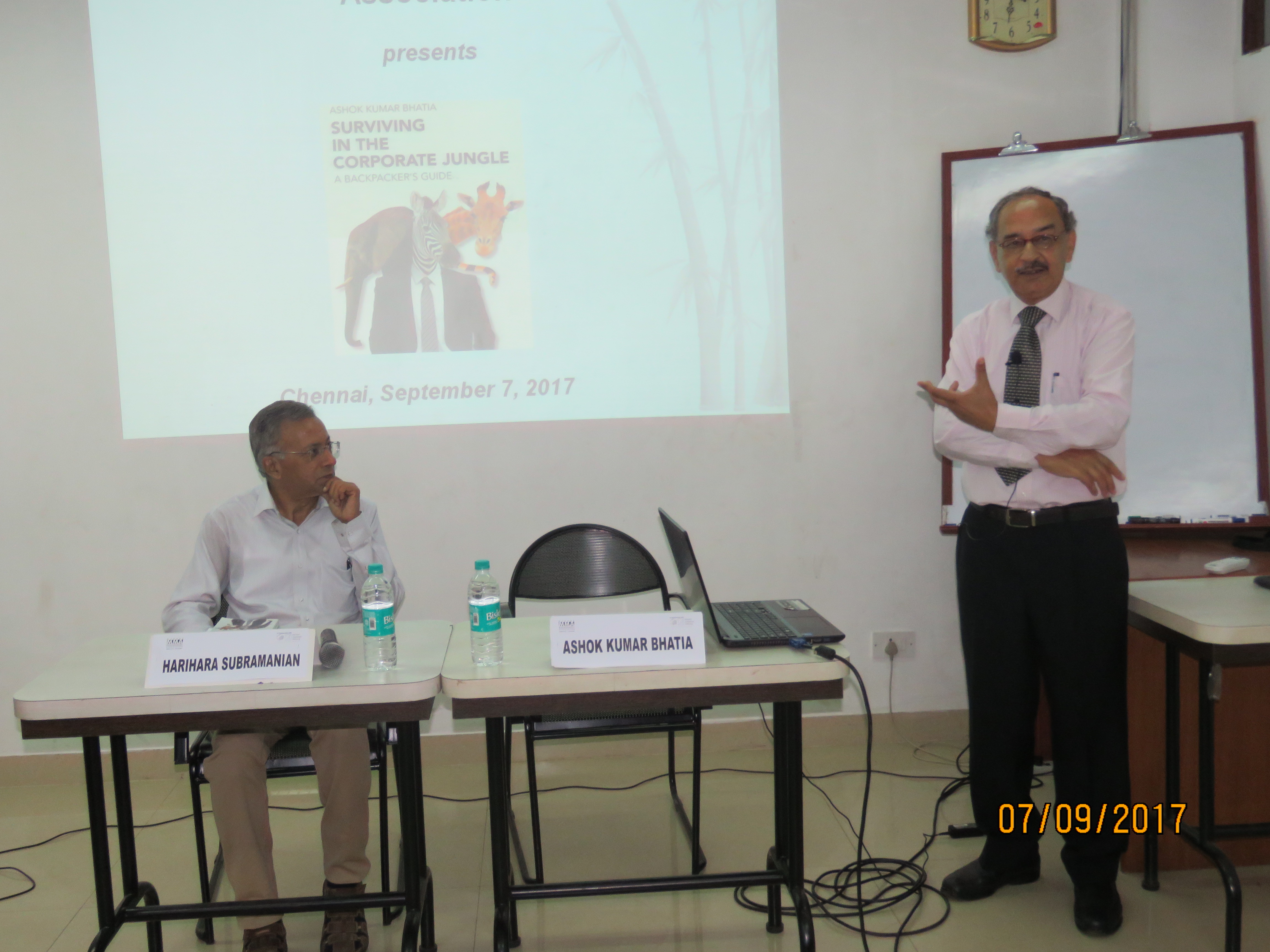
The book presentation session at Madras Management Association recently was true to form in more ways than one. Save and except for the following:

– Being chaired by an exceptional business person who is practising the art of true social responsibility.

– The presentation of some portions of the book was more of an interactive session which never tended to be boisterous.

– There was a singular absence of any rehearsed questions from the audience.

The session had attracted around forty odd souls who suffered the trauma of listening to yours truly and others for about forty minutes or so. Perhaps Einstein’s Theory of Relativity kicked in and these forty minutes felt like forty hours to them, because when it was time for the Q and A, they pounced on an inwardly shuddering yours truly with much glee.

As luck would have it, much light was generated in the discussion that followed the brief presentation. The heat generated was perceptibly less; thus, no fire alarms went off in the lecture hall. The brainy coves assembled for the evening proved their mettle by coming up with astute observations and insightful comments. An enlightened soul in the audience even went on to enquire as to what precisely is meant by Spiritual Quotient, and what could be done to shore it up.

Leadership styles got discussed. Tips on managing Lion Bosses got shared. Dignity of women at workplace came in for a mention. The delicate art of dishing out selective favours to those who really deserve support was brooded upon. Several other topics of contemporary interest were discussed, including the recent boardroom battles which played out at Infosys and at Tata House.

One is grateful to Madras Management Association for having provided this opportunity to share one’s thoughts with their brainy members and honourable invitees.

(Related Post: https://ashokbhatia.wordpress.com/2017/07/31/a-tale-of-two-countries-and-a-book-launch)

Read Full Post »

There are Lion King bosses who epitomize terror at the work place. Insulting and demeaning you is second nature to them. As long as the task is in your hands, it would be top priority; once it reaches their own desk, you may not hear of it for the next two months. Some of them have agricultural inclinations – a suggestion made by you would get rejected with much fanfare, in full public view; after six months, it would sprout as ‘their’ idea and get marketed to the top brass.

Fight or flight? If you are sure of your ground and stand up to them once in a while, heavens will not fall. You could end up dealing with a less aggressive boss in the days to follow. The flight option gets linked to the status of the industry as well as your own Unique Selling Proposition in the job market.

When under such a boss, bide your time and hope for a better planetary configuration to emerge in the days to come. Or, quietly work through the grapevine to have alternate relationships and collaborations within the company, so the immediate boss’ sins get exposed to others who might be able to do something about it.

(Excerpt from my book ‘Surviving in the Corporate Jungle’, the English version of which was released recently. The Portuguese version of the excerpt follows.)

Read Full Post »

(Here are some excerpts from a blog by Mr N Harihara Subramaniyan. The full version can be found at his own blog site: http://www.visionhari.com/chanakya.php.

Permission to reproduce it here is gratefully acknowledged.)


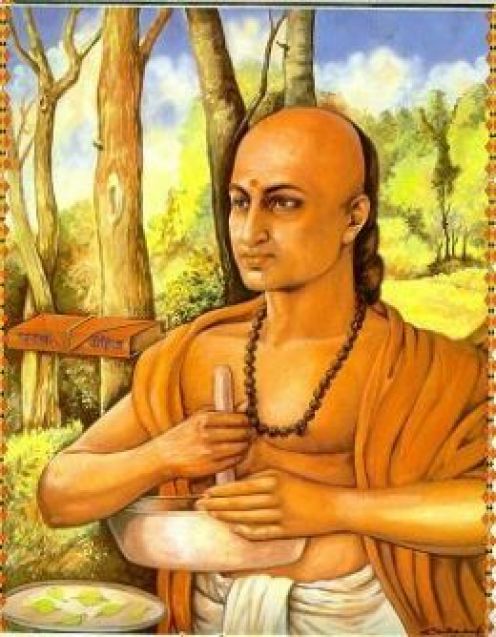
Chanakya was an Indian teacher, philosopher, and royal advisor. Originally a professor of economics and political science at the ancient Takshashila University, Chanakya managed the first Maurya emperor Chandragupta’s rise to power at a young age. He is widely credited for having played an important role in the establishment of the Maurya Empire, which was the first empire in archaeologically recorded history to rule most of the Indian subcontinent. Chanakya served as the chief advisor to both Chandragupta and his son Bindusara. Chanakya is traditionally identified as Kautilya or Vishnu Gupta, who authored the ancient Indian political treatise called Arthasastra (Economics). As such, he is considered as the pioneer of the field of economics and political science in India, and his work is thought of as an important precursor to classical economics. His works were lost near the end of the Gupta dynasty and not rediscovered until 1915.

Brief About Chanakya

Son of Rishi Chanak, Chanakya, also known as Kautilya or Vishnugupta, was born in Pataliputra, Magadh (modern Bihar), and later moved to Taxila, in Gandhar province (now in Pakistan). At a very early age little Chanakya started studying Vedas. The Vedas considered being the toughest scriptures to study were completely studied and memorized by Chanakya in his infancy. He was attracted to studies in politics. In politics Chanakya’s acumen and shrewdness was visible right from childhood. He was a student of politics right from child hood. Known as a masterful political strategist, He knew how to put his own people in the opposite camp and spy the enemy without his knowledge before destroying him forever. Chanakya was an ace in turning tables in his favor irrespective of the circumstances. He never budged to pressure tactics by the ruthless politicians. In this way after studying religion and politics, he turned his attention to economics, which remained his lifelong friend. “Nitishastra”, a treatise on the ideal way of life shows his in depth study of the Indian way of life. He was a professor (acharya) of political science at the Takshashila University and later the Prime Minister of the Emperor Chandragupta Maurya. He is regarded as one of the earliest known political thinkers, economists and king-makers. He was the man to envision the first Indian empire by unification of the then numerous kingdoms in the Indian sub-continent and provide the impetus for fights against the Greek conqueror Alexander.

Leadership Qualities

  • He was brave enough to speak from his heart to any ruler at any situation.
  • His strategic movement based on information from enemy side using his spies
  • He administered well on various faculties like law & order, taxation, revenue, foreign policy, defence, war, strategy formation and foreign relations etc.
  • He worked at the total annihilation of problems by the roots.
  • As a person, Chanakya had been described variously, as a saint, as a ruthless administrator, as the king maker, a devoted nationalist, a selfless ascetic and a person devoid of all morals.
  • Some of his stark views made him into an ambivalent personality for the world like the observance of morals and ethics was secondary to the interests of the ruler.

Principles & Practices

Chanakya advocated the following for the welfare of country

  • Self-sufficient economy not dependent on foreign trade.
  • An egalitarian society where there are equal opportunities for all.
  • The efficient management of land is essential for the development of resources.
  • The state should take care of agriculture at all times.
  • Government machinery should be directed towards the implementation of projects aimed at supporting and nurturing the various processes; beginning from sowing of seeds to harvest.
  • The nation should envisage constructing forts and cities.
  • Internal trade was more important to Chanakya than external trade.
  • The state should collect taxes at a bare minimum level, so that there is no chance of tax evasion.
  • Laws of the state should be the same for all, irrespective of the person who is involved in the case.
  • Destitute women should be protected by the society because they are the result of social exploitation and the uncouth behavior of men.
  • Antisocial elements should be kept under check along with the spies who may enter the country at anytime.

Chanakya envisioned a society where the people are not running behind material pleasures. Control over the sense organs is essential for success in any endeavor. Spiritual development is essential for the internal strength and character of the individual. Material pleasures and achievements are always secondary to the spiritual development of the society and country at large.

Achievements

His work on Arthashastra transcends the time broadly covers fourteen areas

  • Deals with the King – his training, appointment of minister etc.
  • Describes the duties of various officers of the state and gives a complete picture of the state activities.
  • Concerned with law and administration of justice.
  • On suppression of crimes.
  • A sundry collection of topics including salaries of officials.
  • On foreign policy and constituent elements of state.
  • The way in which each of the six methods of foreign policy may be used in various situations
  • Relates to calamities.
  • On preparations of war.
  • Concerned with fighting and types of battle arrays.
  • How a conqueror deal with a number of chiefs rather than one king.
  • Shows how a weak king when threatened by a stronger one must overpower him.
  • Concerned with the conquest of the enemy’s fort by fighting.
  • Deals with occult practices.

Literary Works

Chanakya is perhaps less well known outside India compared to other social and political philosophers of the world like Confucius and Machiavelli. His foresight and wide knowledge coupled with politics of expediency helped found the mighty Mauryan Empire in India. He compiled his political ideas into the ‘Arthashastra’, one of the world’s earliest treatises on political thought and social order. His ideas remain popular to this day in India. In Jawaharlal Nehru’s Discovery of India, Chanakya has been called the Indian Machiavelli. Three books are attributed to Chanakya: Arthashastra, Nitishastra and Chanakya Niti. Arthashastra (literally ‘the Science of Material Gain’ in Sanskrit) is arguably the first systematic book on economics. It discusses monetary and fiscal policies, welfare, international relations, and war strategies in details. Many of his nitis or policies have been compiled under the book title Chanakya Niti. Nitishastra is a treatise on the ideal way of life, and shows Chanakya’s in depth study of the Indian way of life.


Read Full Post »

Teams

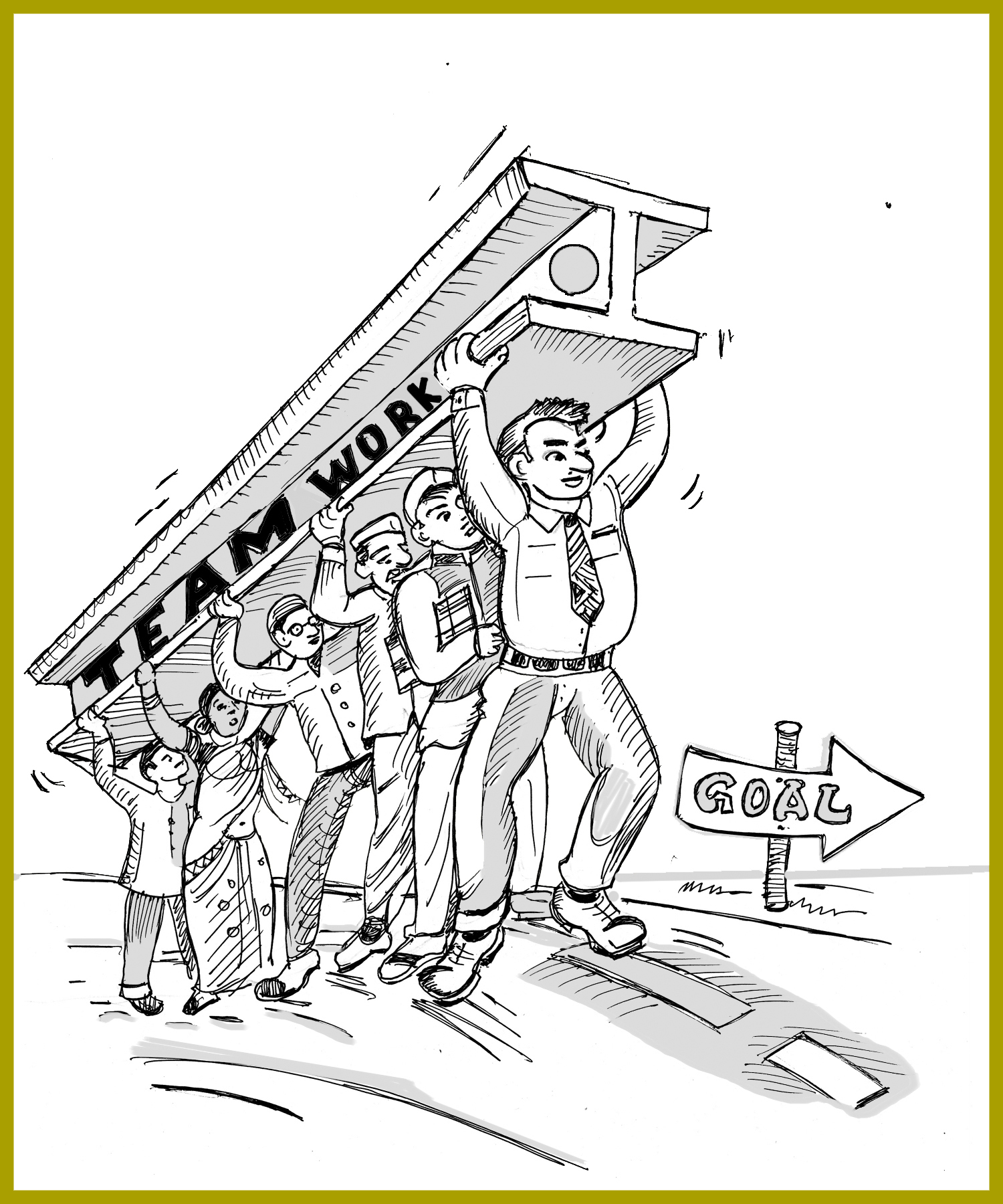
For cross-functional tasks to be carried out, build teams with due care. Let your team have like-minded people as well as a minority of likely dissidents who will ensure the team does not go off track.

Hunters have practised this art since the beginning of our civilization.

(Excerpt from my book ‘Surviving in the Corporate Jungle’, the English version of which was released recently. The Portuguese version of the excerpt follows.)


EQUIPAS

Para que as tarefas multifuncionais possam ser realizadas, deverá constituir as equipas com todo o cuidado. Assegure que na sua equipa há pessoas que pensam da mesma forma, mas também alguns tendencionais dissidentes que irão garantir que a equipa se mantém no bom caminho.

Os caçadores praticam esta arte desde o início da nossa civilização.

(This is how you can lay your hands on the Portuguese version of the book, launched in Portugal during March, 2016.)


Read Full Post »

Pressure is an ‘external’ stimulus. Stress is what ‘we’ experience. The level of stress we experience therefore is directly proportional to the pressure we receive. The good news is that stress is inversely proportional to our inner strength and resilience.

Since each individual is uniquely configured, the response of each person to the same level of pressure would be different. Some would take it lightly and focus on the action at hand, thereby improving their chances of a better and quicker delivery of results. Others would take it seriously, and jeopardize their own achievements and career. Those who are ever-anxious and have an ‘A’ type personality would invariably experience more stress than those who are the happy-go-lucky ‘B’ types.

Stress experienced by a professional is also a function of time. The psychological condition varies with time and also plays a role.

To sum up, a mathematical formulation for stress could qualitatively be along the following lines:

stress

Distress can be handled positively. Art of creative dissatisfaction, loosening up and letting go, a habit of forgiveness, a dash of humour, and meditation can help.

A little bit of stress is good for a professional’s health and output. Thanks to Richard Lazarus and Hans Selye, we understand the distinction between ‘eustress’ and ‘distress’!

(Excerpt from my book ‘Surviving in the Corporate Jungle’, the English version of which was released recently. The Portuguese version of the excerpt follows.)


STRESS

A pressão é um estímulo “externo”. O stress é o que “nós” sentimos. O nível de stress que sentimos, portanto, é diretamente proporcional à pressão que recebemos. A boa notícia é que o stresse é inversamente proporcional à nossa
força interior e resiliência.

Como cada indivíduo tem uma configuração única, a resposta de cada um ao mesmo nível de pressão será diferente. Alguns conseguem aceitar a pressão de ânimo leve, concentrando-se naquilo que estão a fazer e aumentando, assim, as suas probabilidades de uma execução mais rápida e com melhores resultados. Outros levam a pressão demasiado a sério, pondo em perigo as suas próprias realizações e carreira. Aqueles que estão sempre ansiosos e têm uma personalidade do tipo A sofrem invariavelmente de mais stresse do que os ‘deixa-andar’ do tipo B.

O stress que um profissional sente é também uma função do tempo. A condição psicológica varia com o tempo e também desempenha um papel.

É possível lidar com a angústia de forma positiva. A arte da insatisfação criativa, soltar-se e deixar andar, o hábito de perdoar, uma pitada de humor e meditação, tudo isso pode ajudar.

Um pouco de stress é bom para a saúde e para os resultados de um profissional.  Graças a Richard Lazarus e Hans Selye, sabemos distiguir o ‘eustress’ (stress bom) do ‘distress’ (stress mau)!

(This is how you can lay your hands on the Portuguese version of the book, launched in Portugal during March, 2016.)

Read Full Post »

« Newer Posts - Older Posts »