Feeds:
Posts
Comments

Posts Tagged ‘Management’

packages

Packages are negotiable only at the entry stage; later on, they tend to lose their elasticity!

Bear in mind that packages are not necessarily related to the innate worth of an incumbent. These have more to do with the company’s corporate ego (read brand value), and also the comfort levels offered. Companies offering high-pressure assignments in high-entropy business environments tend to be more liberal with the packages they offer.

The rate of growth of packages outside the company would always be better than the jumps you get in-house. If you are willing to challenge yourself and move out of your present comfort zone, do not grumble for long; find another exciting opportunity and move on!

As postulated by the Motivation-Hygiene Theory of Herzberg, packages fall in the Hygiene category of rewards. To use a medical analogy, their presence does not necessarily make a person healthier; on the contrary, their absence can cause deterioration in health.

To put it simply, when it comes to individual motivation levels, packages have a rather short shelf life.

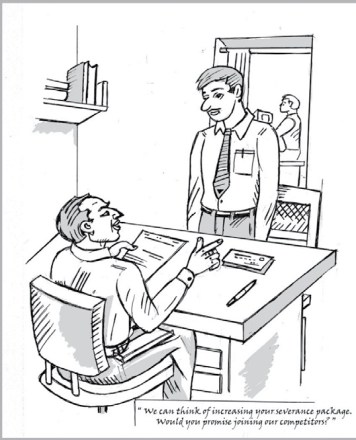
When it comes to chucking out the deadwood, organizations could come up with innovative severance packages!

(Excerpt from my book ‘Surviving in the Corporate Jungle’, the English version of which was released recently.)

Read Full Post »

All ideas which sound revolutionary from a new incumbent fade exponentially over a period of time. The incumbent himself gets bored and a sense of fatalism sets in. A smart incumbent would call it quits before he reaches this state of vegetation.

Seniors who decide to overstay their welcome run the risk of being derided and hounded out. They do a great disservice to the organization and also end up lowering the morale of their would-be-successors who have to wait interminably for getting a shot at occupying the throne in the corner office.

A tired and exhausted lion can no longer afford to cling to his seat of power.

(Excerpt from my book ‘Surviving in the Corporate Jungle’, the English version of which was released recently. The Portuguese version of the excerpt follows.)


Read Full Post »

A sure way of becoming a liability for your team and also for your employers is to micromanage – getting into the nitty-gritty of each and every aspect of the task at hand.

Learn to delegate and allow your team members to make mistakes.

Demand results, but develop your people in the long run.

If you happen to report to a boss who believes in getting things done by breathing down your neck, try the following to keep your sanity in check:

  1. Make it a habit to meet him half-way through.
  2. Empathize with the poor soul. Try to reduce his blood pressure. That is what you get paid for.
  3. Be clear about your deliverables.
  4. Sincerity helps. Following due processes and protocol helps.
  5. Have a positive attitude. At an opportune time, let him know that you are not too comfortable being micromanaged.

(Excerpt from my book ‘Surviving in the Corporate Jungle’, the English version of which was released recently. The Portuguese version of the excerpt follows.)

MICROGESTÃO

A maneira mais certa de se tornar um peso para a sua equipa e também para seus empregadores é a microgestão –meter-se em todas as tarefas até ao mais ínfimo pormenor.

Aprenda a delegar e a permitir que os seus colaboradores cometam erros.

Exija resultados, mas desenvolva as competências dos seus colaboradores no longo prazo.

(This is how you can lay your hands on the Portuguese version of the book, launched in Portugal during March, 2016.)

Read Full Post »

An ever-changing discipline, though surely not the only one. When conceived and described by Philip Kotler, it consisted of the famous four Ps – Product, Price, Place, and Promotion. With due respects to the great man, one may safely add one more P – Password (used for viral marketing).

Till the 1970s, Indians had to wait for years to get to ride their own ‘Hamara Bajaj’. On the car front, there were just three manufacturers in the fray then. Now, the automobile market has global brands wooing the customer and competing cheek and jowl for a slice of the great Indian market pie.

With the advent of the Internet has come a virtual democracy in information. Changes in technology have brought in a new way the customers and brands interact. Marketing has undergone a sea change and will continue to do so in future as well, what with social re-engineering leading to a greater degree of inclusion in the economy and with hordes of new customers from a so-far underprivileged social milieu joining the market.

Brick and mortar retailers are increasingly competing with e-retailers for the customers’ attention. Tech-savvy customers now routinely research brands before making a decision. They are increasingly welcoming fresh content rather than repetitive ads.

The role of a Chief Marketing Officer continues to evolve in sync with the increasing complexities of brand-building and marketing. Ensuring that the customer’s voice is heard within the confines of the board room has already become one of his key roles.

The customer has now become a more empowered king!

(Excerpt from my book ‘Surviving in the Corporate Jungle’, the English version of which was released recently. The Portuguese version of the excerpt follows.)


Uma disciplina em constante mudança, embora certamente não a única. Quando o conceito foi elaborado e descrito por Philip Kotler, consistia nos famosos 4 Ps – Produto, Preço, Ponto-de-venda e Promoção. Com o devido respeito ao grande homem, pode-se perfeitamente acrescentar mais um P – Password (‘Senha’, que se refere ao marketing viral).

Até à década de 1970, os indianos tinha esperar anos para poderem conduzir o seu próprio “Hamara Bajaj”. Em matéria de automóveis, havia apenas três fabricantes em liça Como Sobreviver na Selva Empresarial na altura. Agora, o mercado automóvel tem marcas globais que cortejam os clientes e competem acerrimamente por uma fatia do grande bolo que é mercado indiano.

Com o advento da Internet, chegou a democracia virtual da informação. As mudanças tecnológicas trouxeram uma nova forma de interação entre os clientes e as marcas. O marketing sofreu uma mudança radical e vai continuar a mudar no futuro, com a reengenharia social a conseguir um maior nível de inclusão na economia e com hordas de novos clientes, oriundos de meios sociais até à data desfavorecidos, a entrarem no mercado.

Os vendedores de tijolos e de argamassa estão cada vez mais a concorrer com lojas online na disputa por clientes. Hoje em dia, os clientes que dominam a tecnologia, costumam fazer uma pesquisa de marcas antes de tomarem uma decisão. Estão cada vez mais recetivos a conteúdos novos, em vez de anúncios repetitivos.

O papel de um Diretor de Marketing continua a evoluir de acordo com as crescentes complexidades de desenvolvimento de marcas e do marketing. A garantia de que a voz do cliente é ouvida na sala de reuniões da Direção já se tornou um dos seus papéis principais.

O cliente passou a ser um rei com mais poderes!

(This is how you can lay your hands on the Portuguese version of the book, launched in Portugal during March, 2016.)


Read Full Post »

After the 2008 economic meltdown, the management world has discovered that CEOs need to follow not only the Business Compass but also a Moral Compass to steer the enterprises they happen to run. Improving one’s Spiritual Quotient is now a sheer business necessity, and shall be more so in the decades to come.

It is here that Indian scriptures and sages provide a ready template for managers of all sizes and shapes.

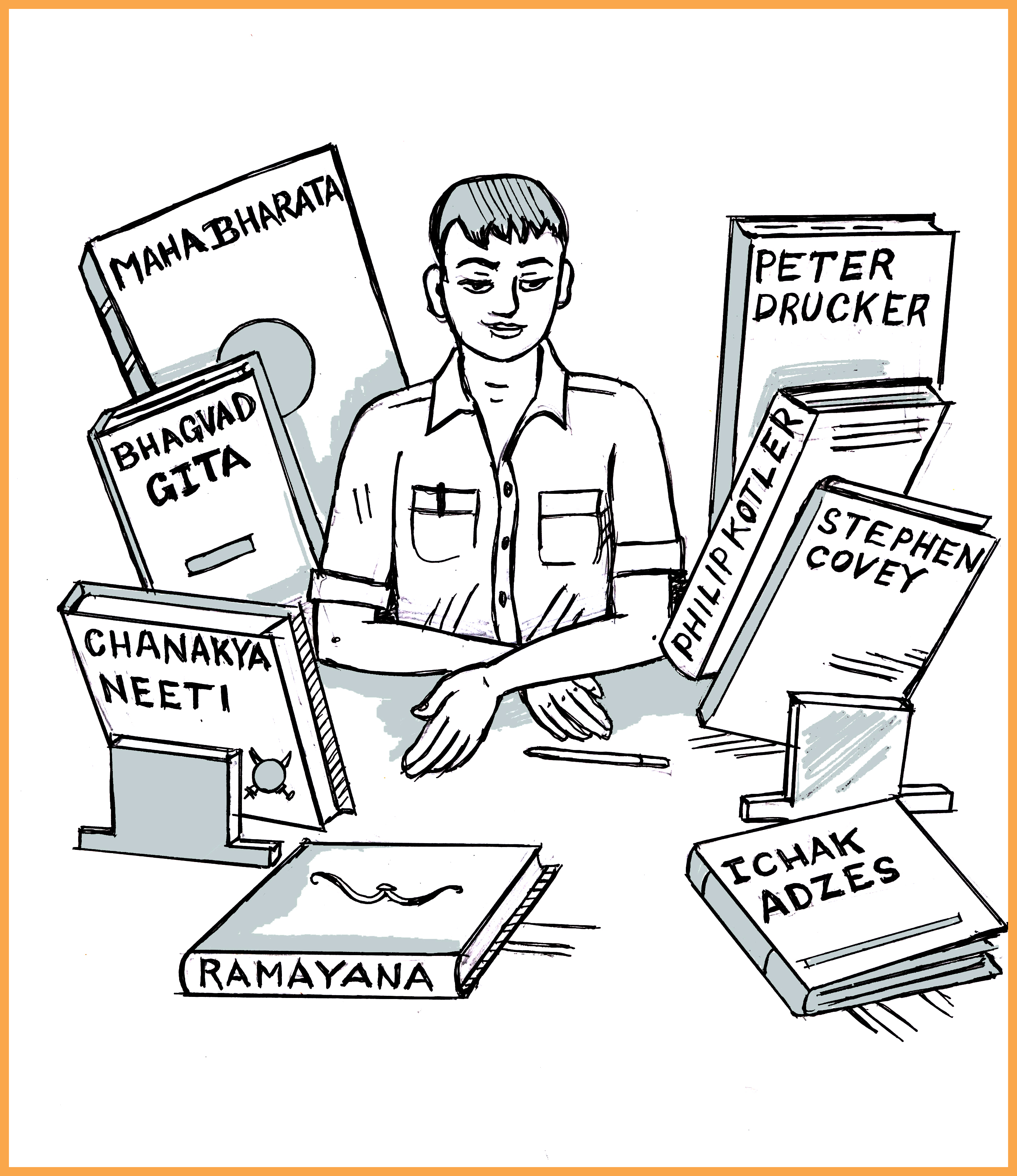
The bookSurviving in the Corporate Jungle’ covers some lessons from the following:

-Ramayana

-Mahabharata

-Bhagavad-Gita

-Thirukkural

-Chanakya Neeti

-Sri Aurobindo

Managers with a Western Mind and an Eastern Heart

The success of the likes of Satya Nadella (currently the CEO of Microsoft) and Sundar Pichai (currently the CEO of Google Inc) goes on to show the growing importance of managers who are not only exposed to the Western models of management but also steeped in Eastern wisdom in the realm of management.


Read Full Post »

Leaders

Management can be learnt; leadership is inborn. The good news is that in most cases, leadership styles trickle down the organization and get copied. This spawns leaders in the same genre and also improves behavioural consistency across the entire set up.

Successful leaders have several outstanding traits. Their intuitive faculties are well developed. They do not say one thing and do another. They handle tough tasks themselves. They take responsibility for their failures, often shielding their team mates. They do not have henchmen to execute their dirty plans so their own hands look clean. They put everyone on the same pedestal. They never encourage yes-men. They always encourage no-men to speak up.

CEOs who rank high not only on their Intelligence Quotient and Emotional Quotient but also on their Spiritual Quotient go on to make super leaders. Their concern for business ethics is as high as their concern for business results.

Lao-Tzu, a Chinese philosopher, said ‘To lead the people, walk behind them’.

(Excerpt from my book ‘Surviving in the Corporate Jungle’, the English version of which was released recently. The Portuguese version of the excerpt follows.)

LÍDERES

A gestão pode ser aprendida; a liderança é inata. A boa notícia é que, na maioria dos casos, os estilos de liderança encontram-
se espalhados pela organização e são replicados, o que produz líderes do mesmo tipo, melhorando ao mesmo tempo a consistência comportamental ao longo da cadeia hierárquica.

Os líderes de sucesso têm em comum vários traços que se destacam. As suas faculdades intuitivas estão bem desenvolvi as. Não dizem uma coisa e fazem outra. Enfrentam eles próprios as tarefas difíceis. Assumem a responsabilidade pelos seus fracassos, muitas vezes, protegendo os seus colaboradores.

Não recorrem a capangas para executar os seus planos sujos e parecer, assim, que têm as mãos limpas. Põem todos no mesmo pedestal. Nunca incentivam os “lambe-botas”. Incentivam sempre os “discordantes” a falarem.

Lao-Tzu, um filósofo chinês, disse: “Para liderar as pessoas, ande atrás delas”.

(This is how you can lay your hands on the Portuguese version of the book, launched in Portugal during March, 2016.)

Read Full Post »


Managements are well known for their propensity to give priority to business targets, and to hell with all the systems, controls, and procedures! So, go in for systems which are simple and can be operated by idiots. The acid test to be applied to check most systems would be KISS (Keep It Simple, Stupid).

Auditors will keep coming up with new Standard Operating Procedures. Before rolling those out, a manager would do well to first go in for a pilot run, debug the process, and only then formalize it. This would eliminate the chances of a smart aleck junior coming up with innovative shortcuts to brow beat the system!

(Excerpt from my book ‘Surviving in the Corporate Jungle’, the English version of which was released recently. The Portuguese version of the excerpt follows.)


BEIJE COM FREQUÊNCIA

Os executivos são conhecidos pela sua propensão para dar prioridade aos objetivos do negócio, e que se lixem os sistemas, os controlos e os procedimentos! Por isso, opte por sistemas que sejam simples e possam ser seguidos por idiotas. O ‘teste do algodão’ a aplicar à maioria dos sistemas é o KISS (beijo, em inglês, de “Keep It Simple, Stupid” – Simplifica, Palerma).

Os auditores irão propor sempre novas normas de procedimentos operacionais. Antes de as implementar, o melhor que um executivo tem a fazer é começar por fazer um teste-piloto, depurar o processo e só então formalizálas, eliminando, assim, as possibilidades de um qualquer subordinado espertinho inventar formas sub-reptícias de dar a volta ao sistema!

(This is how you can lay your hands on the Portuguese version of the book, launched in Portugal during March, 2016.)

Read Full Post »

The Patient Satisfaction Quotient

It is well-known that the Patient Satisfaction Quotient is a function of various factors – the time spent with the physician, the quality of interaction had, the seniority of the physician in the system hierarchy, etc.

It follows that the following laws might apply:

Law #1: The more the time spent with a physician, the higher the level of satisfaction of a patient.

Admittedly, this law does not apply to those perched on a dentist chair. Nor does it apply to those facing a minor surgical procedure without the aid of analgesics.

Law #2: The better the quality of interaction, the higher the level of satisfaction of a patient.

This law is a direct derivative of the psychology of the individual. The more a patient is able to off-load her worries and anxieties onto the hapless physician, the happier she is apt to feel.

There are some exceptions here as well. A physician found making an inappropriate remark about the weight of a patient who is a member of the female of our species risks losing the latter’s goodwill.

Law #3: The patient satisfaction level is directly proportional to the seniority of the physician being consulted.

Amongst the well-heeled patients, the respect and admiration for a physician depends upon the amount of fee being charged, the waiting period to get an appointment, the seniority of the physician in the system, and the value as well as the rare availability of the medications being prescribed.

This one surely does not apply to the teeming multitudes who strive to keep their body and soul together day after day.

It follows that most patients using the public hospitals are left dissatisfied. It does not occur to them that the sheer exposure of such physicians is so very wide that the medical advice they dish out is much better. Superfluous investigations are discouraged. Medications recommended are often of a generic kind, saving the patient some precious money.

A Patient Motivation-Hygiene Proposition

Those familiar with Herzberg’s two-factor theory, popular in the realm of organizational behaviour, would notice a striking similarity between the situation envisaged in organizations and the one we are endeavouring to explore here.

In case of organizations, job satisfaction and job dissatisfaction are not part of a continuum. Absence of satisfaction does not necessarily imply presence of dissatisfaction. If the presence of Motivation Factors (respect and recognition on the job, for instance) improves job satisfaction levels, the absence of Hygiene Factors (such as physical working conditions, etc) leads to higher job dissatisfaction levels.

Likewise, satisfaction/dissatisfaction levels of patients perhaps tend to be independent of each other. If the treatment is effective in the long run, the satisfaction level improves. If the time spent by the physician is inadequate, dissatisfaction sets in.
In that sense, Effectiveness of Treatment would be akin to a Motivation Factor in the theory propounded by Herzberg.

However, the set of laws proposed above would be like Hygiene Factors, the absence of which would cause a patient dissatisfaction.

Patients of various hues

Patients obviously come in various body sizes, pocket sizes, shapes and hues. Amongst those who do not face a medical emergency, there are wide variations in temperaments. Here are some which might be of interest.

The Reluctant Ones

These are patients who believe that a doctor should be visited only as a last resort and that medicines need to be stopped as soon as the immediate problem is addressed. They believe that there is no need for any follow-up visit, till, of course, the next crisis strikes.

The Casual Ones

These are the ones who are casual in their approach. They may or may not follow either a doctor’s prescriptions or the food restrictions placed on them. Nevertheless, a medical consultation is akin to a pleasurable outing for the, so they shall keep coming back to see the physician. For a public service doctor, they happen to be a nuisance. For those in the private sector, they are a source of delight.

The Conscientious Ones

In this category fall the hapless and anxious souls who take their illnesses rather seriously. They take medicines regularly, and follow diet-related advice to the best of their ability. They tend to seek guidance at frequent intervals. Those who suffer from lifestyle diseases often end up forging a close bond with the physician, thereby replicating the age-old system of ‘family doctors’.

The Anxious Ones

Then there are the well-heeled hyper-anxious ones who take a magnified view of their afflictions, tend to be jumpy, worry excessively about prognosis, and keep troubling the physician concerned with inane queries from time to time.

(Notes:

This forms part of an article which has appeared in an issue of NAMAH:

NAMAH_OCTOBER_2017

Inputs from Dr Shivani Salil and Dr Shruti Bhatia are gratefully acknowledged)

(Related Post:

https://ashokbhatia.wordpress.com/2017/06/19/an-armchair-view-of-physicians-and-patients)


Read Full Post »
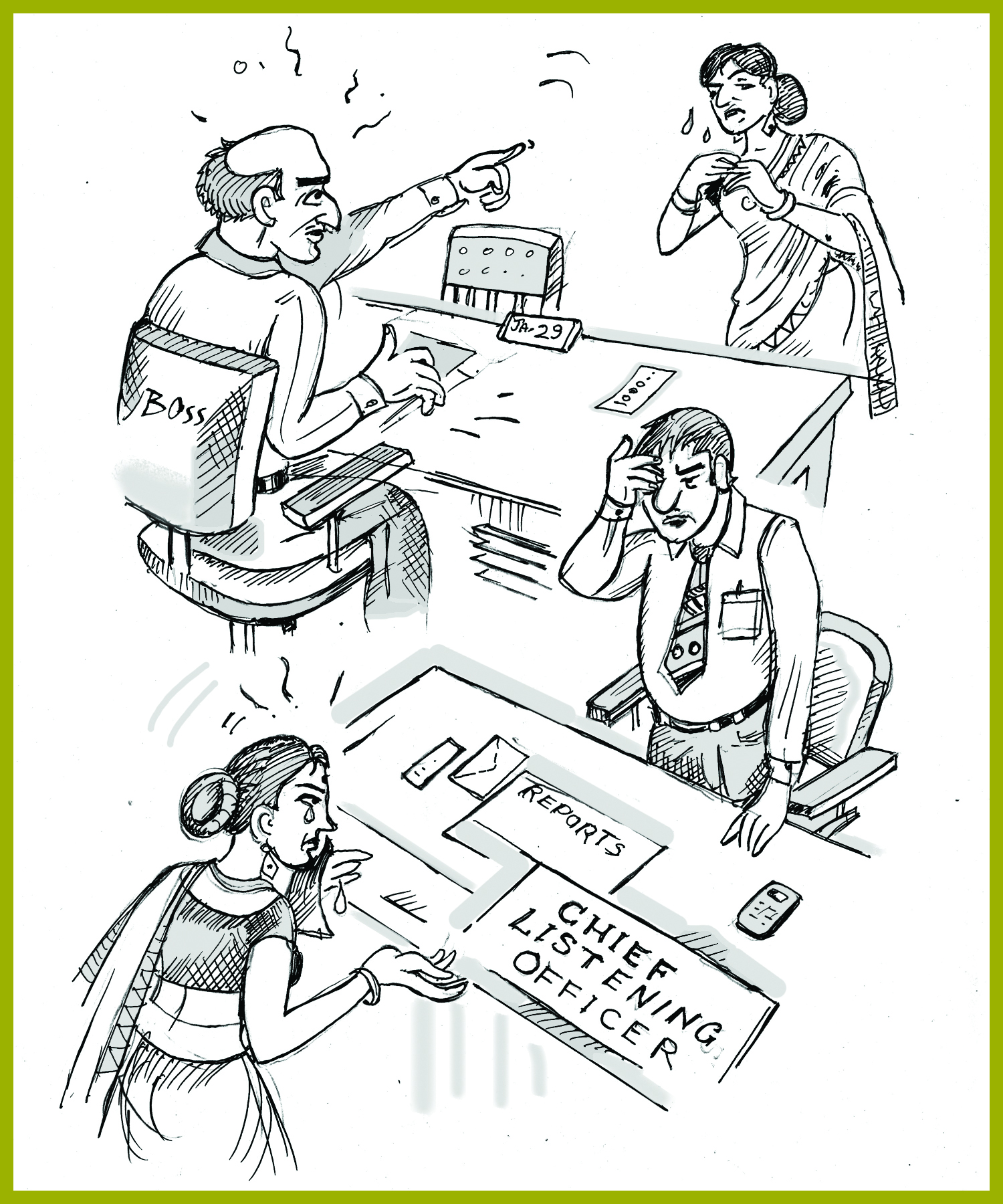
Tired of time-worn designations? Try these:

·         Chief Worrying Officer: Normally, the Chief Financial Officer who is worried sick about legal compliance in all areas of business.

·         Chief Listening Officer: A Vice President – Human Resources who is always ready with a bucket and a towel to help employees facing emotional distress.

·         Chief Results Officer: The Chief Executive Officer who believes that ends justify all means.

·         Chief Dreams Officer: The Research & Development head who keeps dreaming of new products and businesses.

·         Chief Conscience Keeper: Keeps a strict eye on fraudulent behaviour anywhere in the organization.

Here are some job labels which appear to be on the horizon:

·         Chief Risk Officer: Ensures corporate governance criteria are met and regulatory frameworks respected.

·         Chief Counselling Officer: A legal eagle who can vet agreements of all sizes and shapes and counsel on a legally safe route to take.

·         Chief Data Crunchers: With big data coming up in a big way, the day is not far off when specialists in data management would be seen occupying corner suites in offices.

·       Chief Merchandising Officers: With organized retail picking up, professionals with a feel of the customers’ pulse move up the organizational hierarchy.

(Excerpt from my book ‘Surviving in the Corporate Jungle’, the English version of which was released recently. The Portuguese version of the excerpt follows.)

TÍTULOS DE CARGOS

Cansado dos títulos muito batidos? Experimente estes:

Diretor de Preocupações: normalmente, o Diretor Financeiro, que está preocupado com a conformidade legal em todas as áreas de negócio.

Diretor Ombro Amigo: um Vice-Presidente de Recursos Humanos sempre pronto com um balde e uma toalha para ajudar os funcionários em sofrimento emocional.

• Diretor-Geral que acredita: que os fins justificam todos os meios.

Diretor de Sonhos: um Responsável por Investigação & Desenvolvimento que está sempre a sonhar com novos produtos e negócios.

Guardião da Consciência: está sempre de olho nos comportamentos fraudulentos onde quer que possam ocorrer na organização.

E eis alguns novos cargos que parecem estar no horizonte:

Diretor de Riscos: assegura que os critérios de gestão são cumpridos e os quadros regulamentares são respeitados.

Diretor de Aconselhamento Jurídico: um ás em direito com poderes para vetar todo o tipo de acordos e dar conselhos sobre os caminhos a seguir que sejam juridicamente seguros.

Diretor de Tratamento de Dados: com cada vez mais dados à disposição das empresas, não estará longe o dia em que os especialistas em tratamento de dados irão ocupar os melhores gabinetes do escritório.

Diretores de Merchandising: à medida que a distribuição organizada ganha terreno, os profissionais capazes de sentir o pulso dos consumidores vão subindo na hierarquia das empresas.

(This is how you can lay your hands on the Portuguese version of the book, launched in Portugal during March, 2016.)

Read Full Post »

It makes sense to follow the golden rule, ‘the boss is always right’, even when he is absolutely wrong and is a perfect fool. However, sycophancy has its long-term limitations. Once in a while, if you do not agree with the boss, find the courage and the right time to register your disagreement. This way, you end up becoming a more effective and a healthier manager.

Beware of juniors who are ‘yes men’. They could be pretty dangerous to your career progression in the long run.

(Excerpt from my book ‘Surviving in the Corporate Jungle’, the English version of which was released recently.)

(This is how you can lay your hands on the Portuguese version of the book, launched in Portugal during March, 2016.)

Read Full Post »

« Newer Posts - Older Posts »