Feeds:
Posts
Comments

Posts Tagged ‘Management’

Interpersonal relationships happen to be a key factor in achieving success in aRelationship managerial career. Even otherwise, positive relationships boost our Happiness Quotient in life.

Here are few insights on relationships based on some well-known scientific principles.

FB and the Roentgen Effect

Never take a person at face value. Be ruthless in acting like a X-ray machine, Scientist Roentgenascertaining the inner motives of the party of the other part.

Create your own Facebook – a filtered version of the bosses, peers and subordinates you come across. Categorize them into, say, Close Friends, Friends, Acquaintances, Foes and those Vehemently Opposed to whatever you say or do. Deal with them at their respective wavelengths. You would vibe well.

Be sceptical of sudden unwarranted praise. A very tough project could be coming your way. The lynching mob could be sharpening its arsenal by the time you gleefully accept to drive a car all the way to the Moon.

Relativity and Relationships

The longevity of a relationship is directly proportional to the match between the Frames of Reference of two individuals.

The closer the two persons or organizations in their shared values andScientist Albert_Einstein principles, the longer the relationship would last. The more complimentary their needs happen to be, the better the longevity of the relationship.

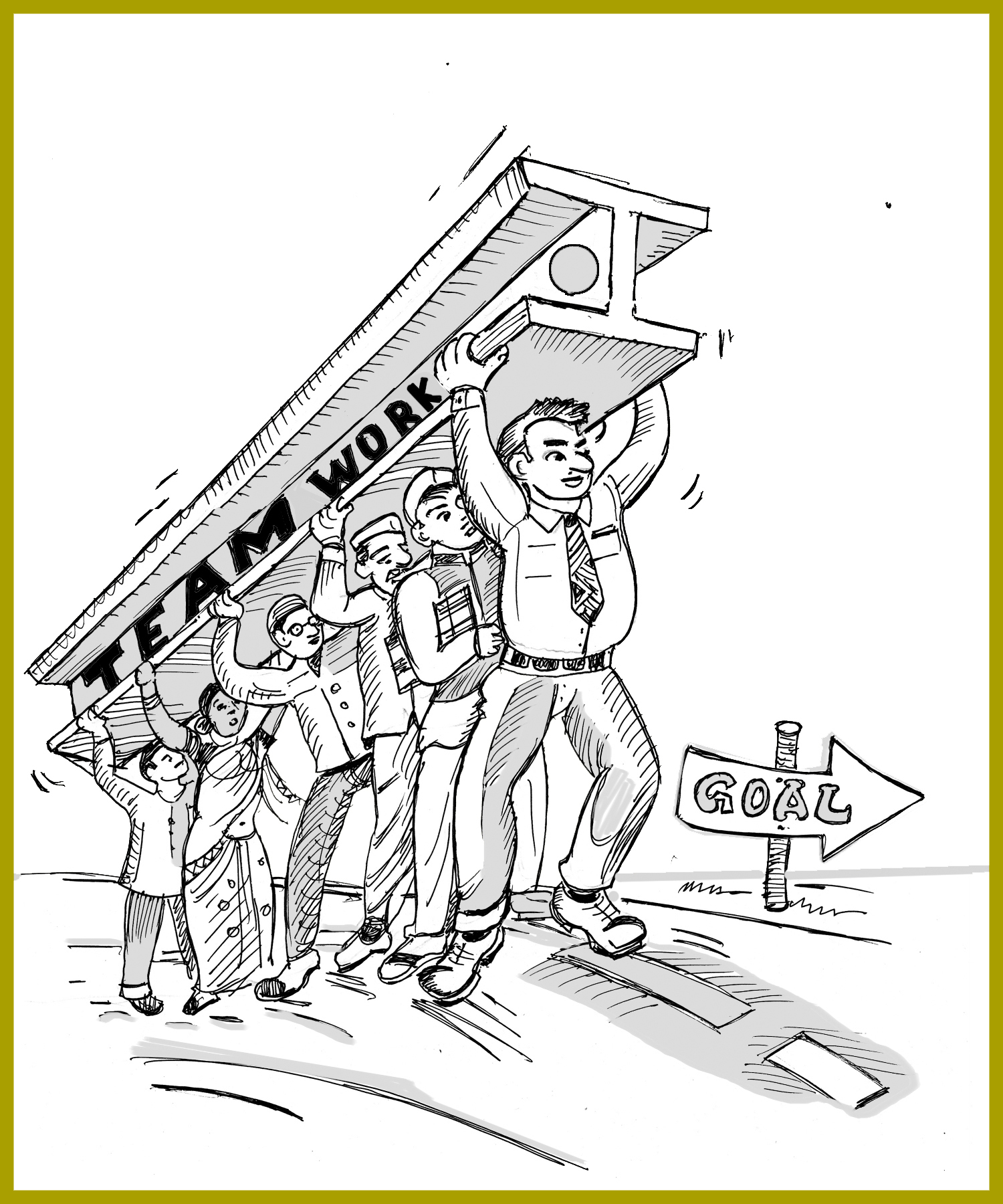
All teams work on this principle. With each member bringing a unique strength to the table, the team emerges stronger.

The speed of Time in Relationships

The more you like a person’s company, the higher the speed of time spent together.

The more you hate a person, the lesser the speed of time spent together.

Laws of Motion of Relationships

Newton was dead right when he said that every action has an equal and opposite reaction.

Hate a colleague. She would catch your negative vibes and return the same.Scientist IsaacNewton-1689
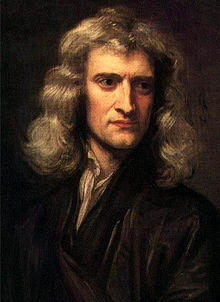
Be fond of a colleague and she could reciprocate the sentiment. Both of you could then produce some great results together.

The Optics of a Relationship

The way a relationship looks on the surface is often an optical illusion. Dive below the surface and you could be in for a surprise. Principles of reflection, refraction and diffusion work in the realm of relationships as well.

Take the case of a spouse. A perfect one cannot make us complete. He/she can only act as a mirror and help us in discovering ourselves and in becoming the right person.

The Orbit Effect

Those who happen to be Yes-men electrons with a negative charge can be readily seen orbiting around a boss who has a few protons of positivity up his sleeve and behaves like a pompous nucleus.

Once the nucleus gets hit by powerful rays of adversity, the Yes-men are forced to scurry for cover and look for another nucleus.

The Half-life of Relationships

Much like radioactive substances, almost all relationships suffer fromScientist Marie_Curie exponential decay. Constant emission of alpha particles of Anger, beta particles of Badmouthing and gamma rays of Greed lowers the warmth in a relationship.
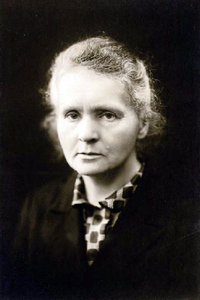
At a personal level, infusing the relationship with innovative ideas often helps to arrest the trend.

In case of organizations, dealing with gifted high-performers can be a ticklish challenge. Prompt steps need to be taken to stem the rot. Job-rotation, job-enrichment, flexible working hours, higher level of empathy and engagement with the family members can be some of the techniques deployed by HR professionals to address this issue.

The Valency Factor

Two individuals whose Valency happens to be the same would intrinsically vibe well with each other. The compound they make together is bound to become a formidable team.

One risk here is that they could end up becoming a Mutual Appreciation Team,Gilbert_N_Lewis leading to lofty expectations and a self-belief which could be misleading in critical situations. Their bosses need to worry about this.

Another risk is of a more sinister nature. If one party is from amongst the tribe of the delicately nurtured and another from the so-called sterner sex, an amorous alliance could emerge. This could have even more serious implications if there is a hierarchical gap between the two individuals.

The boss has to then act like an anti-catalyst to defuse the reaction so the reputation as well as the work of the organization does not suffer.

The algorithm of Relationships

Relationships are a complex non-linear function of Expectations, Realizations and Time.

Expectations evolve over a period of time. If not matched with realizations in aSrinivasa_Ramanujan dynamic manner, deterioration in the quality of the relationship is bound to follow.
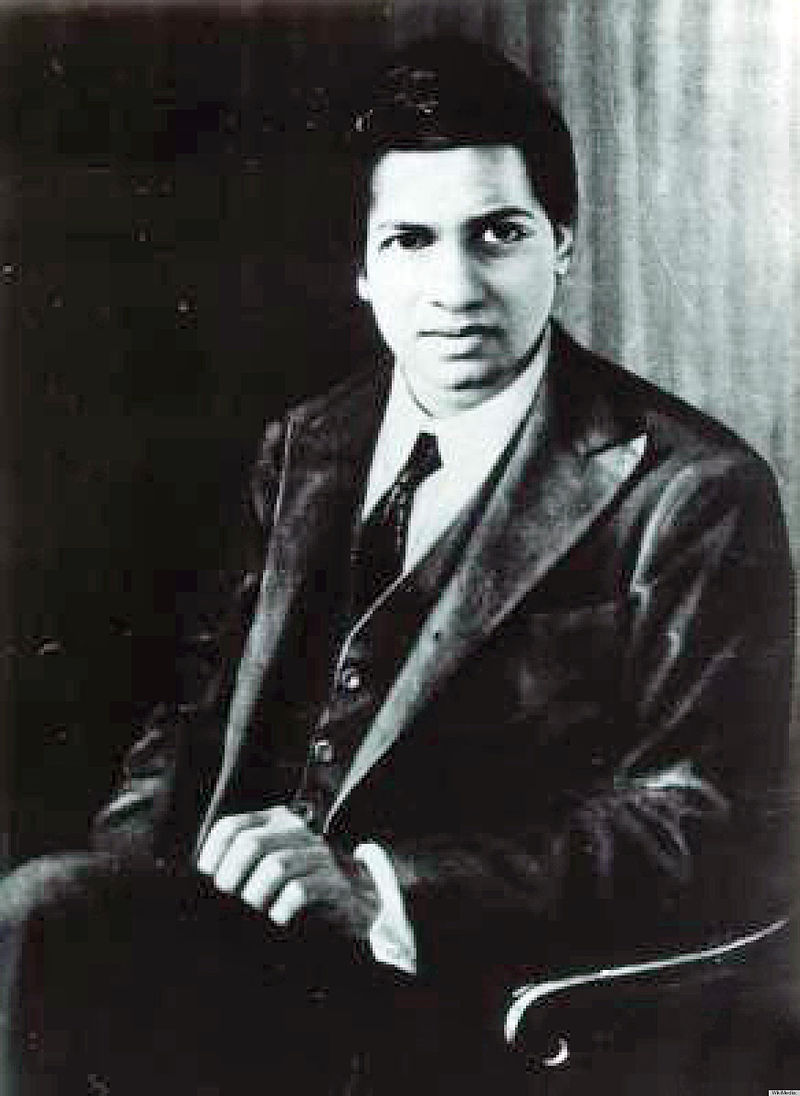
Having clawed your way up in an organization, do not expect to be treated the way you were treated the very first day when you walked in.

Do not rest on your laurels. Let successes not make you complacent.

The Warmth of a Relationship

The Coefficient of Warmth of any relationship is directly proportional to the love and trust put in to nurture the same; it is inversely proportional to the benefit expected in return.

Organizations which value their Brand Equity ensure they treat separations with kid gloves. An employee speaking well of her previous employer is a great asset to have. Here is a relationship which has a lingering warmth and sweetness.

Laws of Thermodynamics

Zero-th Law

If two persons/entities are in the equilibrium of a good relationship with aJosiah_Willard_Gibbs Thermodynamics third person/entity, it follows that they must be in a good relationship with each other as well.

First Law

The Law of Conservation of Energy applies. There is a limit to which you may work on improving a relationship. If the party of the other part fails to reciprocate, it is perhaps time to move on.

Second Law

Entropy or disorder is bound to increase in a relationship. The only way out is to keep cleansing your system of negative thoughts at regular intervals. Talking to the party of the other part about your areas of discomfort, and encouraging the other one to share her thoughts likewise alone helps.

The Botany of Relationships

Relationships happen to be like tender saplings. Given the right soil conditionsPlants relationships of our own character, regular exposure to the sunlit warmth of care, routine watering by the elixir of affection, and occasional nourishment by pleasant surprises, the plant grows. Its roots become stronger. Its branches and leaves provide the perfect shelter.

A relationship which is either not nurtured thus, or is planted on the soil of fear and necessity alone, tends to wither away over a period of time.

All these laws govern professional as well as personal relationships. Smart managers utilize these to grow in the organization they work for. They also deploy the same to keep the boss at home happy and grinning.

Post script

How about the relationship that we have with our own inner self? Do weTechnology MEDITATION-ENTREPRENEUR-SUCCEED under-rate ourselves? Or do we end up dominating those around us? When was the last time we patted ourselves on the back?

An introspection of this nature improves our inner resilience and reduces stress. Our dependence on others to determine our state of happiness comes down. Our chances of having positive interpersonal relations improve.

(Note: Published in New Race, the e-journal of Sri Aurobindo Centre for Advanced Research:

Read Full Post »

CEOs lead a challenging life. Apart from making and meeting long-term business goals, they face a relentless SQpressure, living from one quarter to the next. Customers have to be handled with kid gloves. Suppliers have to be kept in good humour. People have to be kept motivated at all times. Interpersonal conflicts between team members have to be sorted out. A lonely life has to be lived.

Unlike their juniors who invariably face Peer Pressure, CEOs face Pear Pressure. Some call it signs of prosperity. Some refer to it as a Battle of the Bulge. Others label it as flab around the waist.

The Battle of the Bulge

A CEO in possession of a portly disposition projects an image of a soul which has finally attained salvation and has become a super-hero of the species generally alluded to as managers. Walk into any gathering of the top dogs across most professions and one would be convinced that bosses are generally more portly than their bossed-over managers.

The smarter the top boss, the more he is likely to make his team members run around achieving targets. In the process, the juniors end up getting flatter tummies, a much-coveted attribute. In turn, hard-working subordinates often end up making their bosses lazier, with the latter ending up with convex-shaped protrusions in their midriffs.

Over 1.9 billion adults worldwide are overweight. Of these, some 600 million are further classified as obese. How does this come about? Lack of exercise is said to be the main culprit. Stress is yet another. Genetic factors take a part of the blame. Long working hours leading to lesser workouts get blamed.Exercise 1

Of decision-making and waistlines

Recently, a study by Australian universities has ended up linking decision-making to higher Body Mass Index.

According to researchers, people whose work days require constant decision-making are at greater risk of expanded waistlines. Conversely, workers who exercise control by regularly applying their skills to their jobs — known as skill discretion — were found to have lower Body Mass Index and a smaller waist size.

In other words, the researchers conclude that it is skinny people who are most often good at what they do and enjoy using their skills. However, those who have the power to make decisions are distinctly wider around the middle.

This justifies the derisive term Fat Cats often used to refer to those who control the levers of business. Admittedly, larger waistlines are perhaps a consequence of the CEOs’ sedentary job requirements instead of being the reason for their elevation to decision-making levels.

Perhaps further studies may reveal that weighty decisions need personal countervailing ballast in order to be balanced. It sounds as if power ends up making business leaders more expansive.

Beyond the Peter Principle

Concerned CEOs may wish further research to be designed in such a way as to establish the veracity of some Peters_principle.svgprinciples of the following kind:

1. A manager’s waistline is directly proportional to his position in any decision-making hierarchy.

2.  According to the Peter Principle, in any organization, employees rise to their level of incompetence. Further studies could confirm if their rise is also linked to the propensity of their bodies to achieve the maximum girth permitted by their constitution.

3.  Depending upon their Body Mass Index and the waistline, successful CEOs could be classified into three categories.
Potato CEOs: Those who have dazzled with their performance in the good old days. They have outgrown   the stage of feeling Pear Pressure.
Pear CEOs: Those who are currently guiding teams and delivering reasonably good results. The hapless souls are yet to come to terms with their pear-shaped midriffs.
Banana CEOs: Those who are good at planning as well as execution. They aspire to attain the status of Peer CEOs, without their bariatric blues.

4. For Potato CEOs, Pear CEOs are objects of envy. Likewise, Pear CEOs, howsoever reassured they might sound, secretly aspire to be like Banana CEOs, with concave-shaped bellies.

5. A hypothesis that can be put to test would be if the rate of rise in a hierarchy determines the rate of increase in waistlines.

6. All these propositions need to be cross-validated across different cultures and societies.

Such studies would enrich the science of Hierarchiology. These would be highly useful for head hunters as well as for Human Resource professionals. The insights gained thus would enable managers of all sizes and shapes to improve their quality of life.

Pear Pressure in organizations

Ironically, what is true of individual CEOs is also true of organizations.

The very successful and dynamic ones indulge in frequent bariatric surgeries and ensure that their midriffs remainZOO ORGANIZATIONS under strict control. They are acutely aware of Pear Pressure and have checks and balances in place to avoid carrying excessive flab.

The mediocre ones end up accumulating flab in the middle. At every success, they end up hiring more people than is necessary. At every failure, they undergo a liposuction procedure. They have learnt the art of managing Pear Pressure.

The not-so-successful organizations have the highest Body Mass Index. They are replete with massive layers in their hierarchies. Their processes are bogged down with archaic procedures. Most public sector undertakings are shining examples of this kind.

This is THE challenge all CEOs need to fight single-handedly. They have to wage a relentless war on adipose tissue of all kinds. Unless they decide to take the matter in their own hands, literally as well as metaphorically, the excess belly fat – whether on their own personas or in their organizations – would refuse to melt away.

(Reference: http://www.theweek.in/news/sci-tech/how-your-job-could-be-influencing-your-waistline-study.html)

Read Full Post »

CEOs and managers wanting to puncture the stress bubble these days have several options. Some can head to the nearest gym and burn away those blues. Some can simply switch off their technical gizmos and spend some quality time with their loved ones. Some can start learning yoga and meditation. Some can choose to put off the lights at home, put on some soothing music and relish their favourite tissue restorative, sans any distraction.

Others can pick up any work of P G Wodehouse or Terry Pratchett and recharge their batteries. Or, they can look up the delightful work of such eminent cartoonists as R K Laxman and Mario Miranda, both of whom have looked at managerial situations with the lens of sparkling wit and humour.

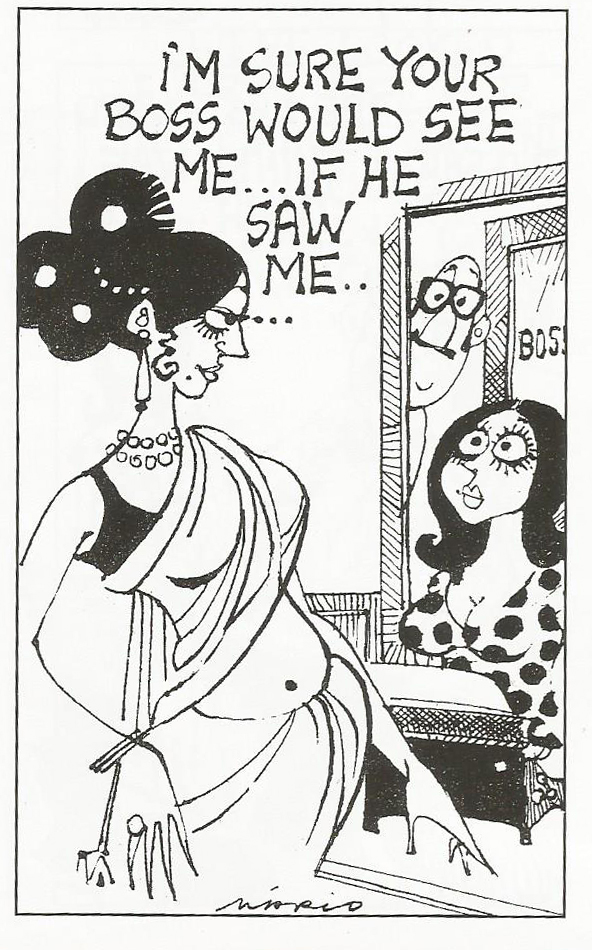
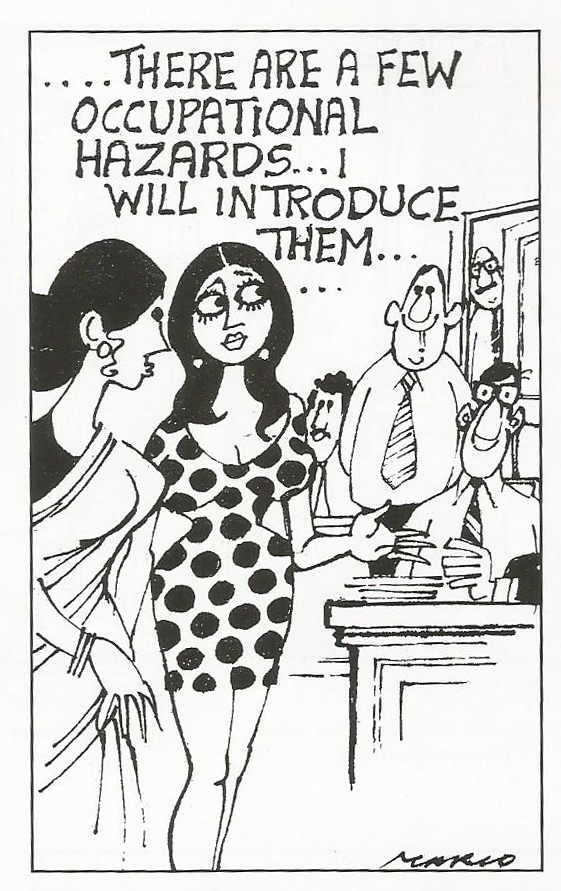
In Mario Miranda’s cartoons and illustrations, we come across the buxom but woolly headed secretary, Miss Fonseca. We also get to meet Mr. Godbole, the diffident and spineless manager, who is placed rather high in the hierarchy of goofy characters. And yes, no office scenario can be complete without a stiff-upper-lip superior, The Boss. He is the Lord and Master of all that he surveys.

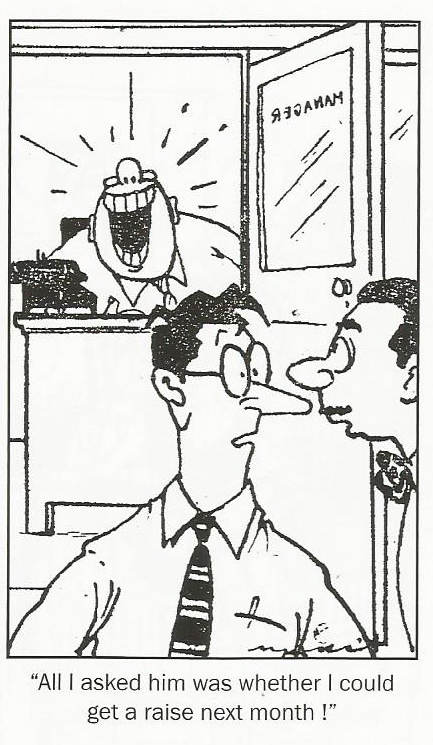
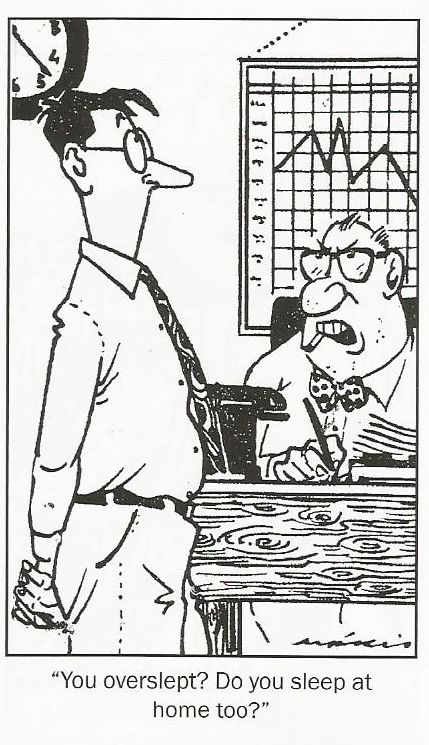
Here is a delectable sample of some of Mario Miranda’s great work. Each one has an in-built lesson for a manager, whether an aspiring one or a practising one!

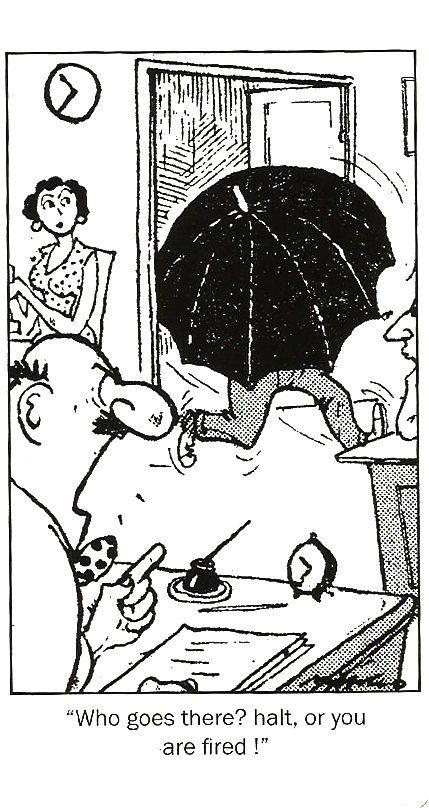
Not in a mood to work today? Think of an ingenious excuse to leave early. Or, just make a dash for it, hoping you remain invisible to The Boss.Office 01

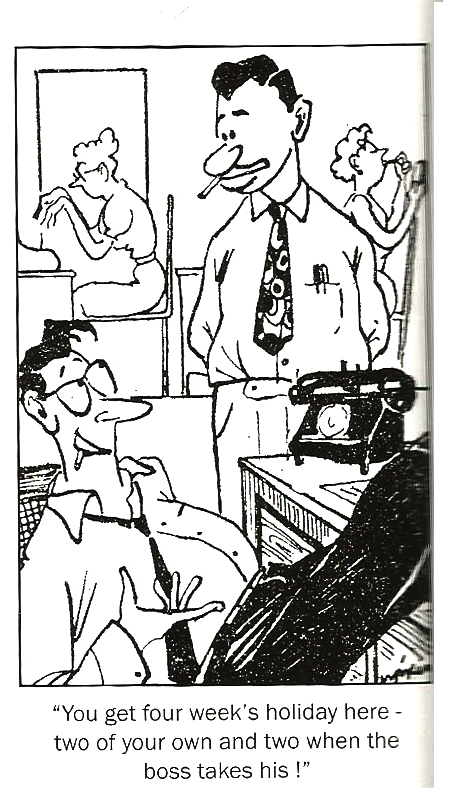
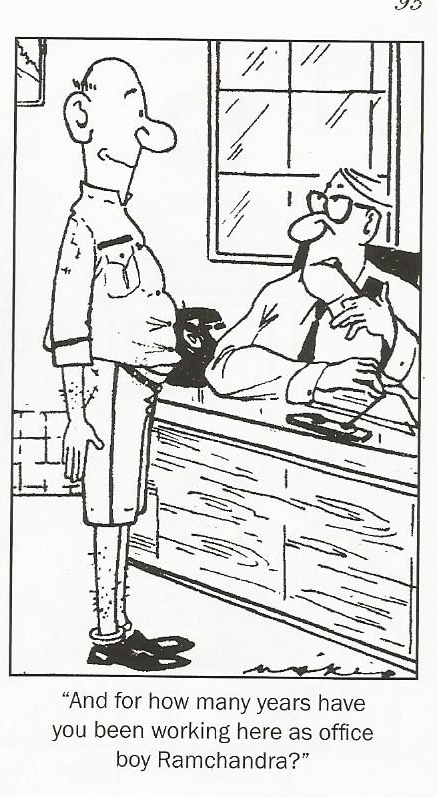
For those who have just joined the company, it is useful to interact with some old hands. They could explain the finer points of the company’s leave policy.Mario Office 02
When hiring people, it is useful to enquire about their sleep patterns. This ensures that when an employee is taking a power nap, The Boss’ blood pressure remains under control.

Mario Office 03

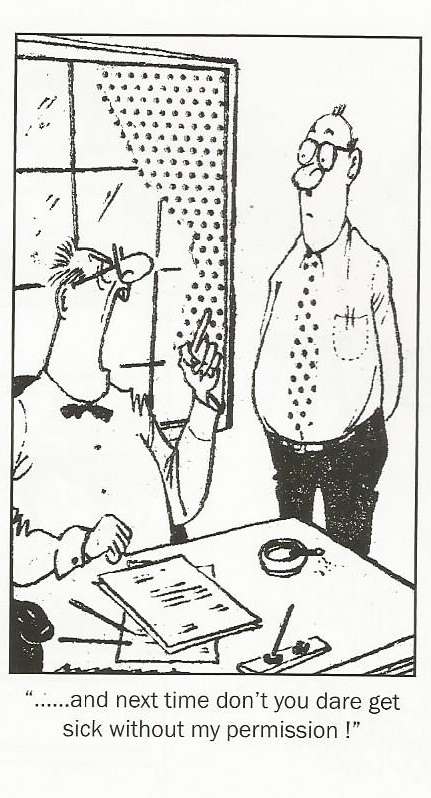
Wish to report sick? Better seek advance permission from The Boss!

Mario Office 04
The Boss’ reputation travels far and wide. Those wanting to gate-crash into his office invariably use it to their advantage.

Mario Office 05

Bosses can be forgiven for their blind spots. No office can run without those who have become a part of the landscape.

Mario Office 06

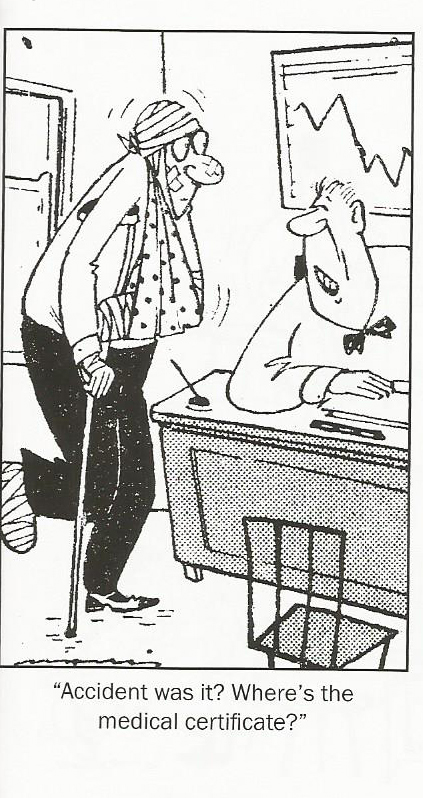
For blue-blooded bureaucrats, documentary evidence reigns supreme.

Mario Office 07
Employees often crawl into their place of work. Invariably, they run back home. Customers who happen to walk in at Closing Time get treated with as much derision as they deserve.

Mario Office 08
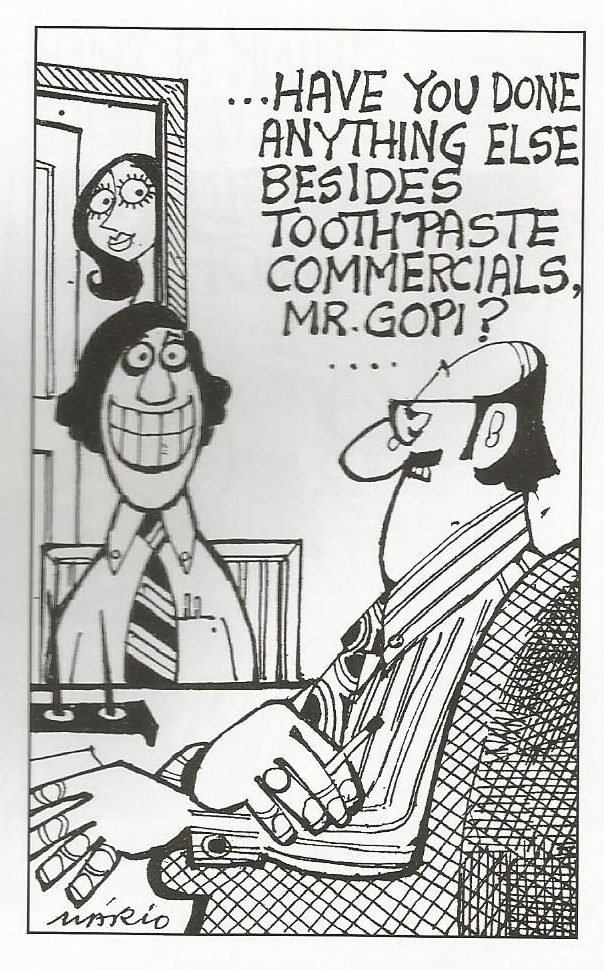
When selecting people, The Boss knows the importance of body language.

Mario Office 09
Just joined a company? Befriend someone who can give you the inner dope on all colleagues.

Mario Office 10
One way to keep The Boss happy is to allow him to refuse your request for a raise.

Mario Office 11
Yet another way to make The Boss laugh is to ask him for a raise!

Mario Office 12
When a raise does come about, smart managers make sure they pay their obeisance to The Boss at regular intervals.

Mario Office 14
Reporting late for work? Think of a brand new excuse so as to escape The Boss’ wrath.

Mario Office 13
The Bosses always believe that physical activity of an employee is directly proportional to his/her real output at work.

Mario Office 15Mario Miranda’s cartoons not only entertain but also educate. To a stressed out manager, these are a ready means of chasing away those blues, much like a work of P G Wodehouse. To Plum fans, Miss Fonseca might sound like Madeline Bassett. Mr Godbole, the average Joe, may appear to be configured along the lines of Bertie Wooster, without the brainy support of Jeeves. The Boss might sound as if he is built along the lines of Sir Watkyn Bassett.

To aspiring managers, Mario Miranda’s cartoons offer unique insights into how companies function. They have a chance to learn how to navigate their way through the maze of management policies and practices, many of which are never covered in voluminous manuals and in Standard Operating Procedures of large conglomerates.

(Source: Mario’s Best Cartoons, Book I, ISBN 978-81-901830-6-2, gifted to yours truly by a thoughtful friend based at Goa in India)

(Related Posts:

https://ashokbhatia.wordpress.com/2015/11/01/of-secretaries-and-the-inimitable-miss-fonseca

https://ashokbhatia.wordpress.com/2013/10/15/the-inimitable-r-k-laxman)

Read Full Post »

In a highly competitive and inter-connected world, how can organizations keep pace with the ever-evolving business environment? How can business leaders and CEOs achieve results, when faced with disruptive technologies which keep changing the way the business works?

An alternative paradigm for management processes can perhaps help. This paradigm comprises four aspects which underlie all aspects of management, as it is understood, taught and practiced by working as well as by aspiring managers.

The four aspects of Integral Management, drawn from Sri Aurobindo’s writings, are: Perfection, Power, Harmony and Wisdom. Perfection in whatever an organization plans and does. The Power that a company uses to achieve its goals. The Harmony which is required to enable the achievement of goals. Above all, the Wisdom which goes into running a business enterprise in a sustainable fashion.jrd-tata

Smart managers always aim for Perfection. It is said that Mr. R. M. Lala, an editor, writer and publisher of repute, once commented to Mr. J. R. D. Tata that the latter believed in excellence. The great man is said to have retorted thus: “Not excellence. Perfection. You aim for Perfection, you will attain excellence. If you aim for excellence, you will go lower.”

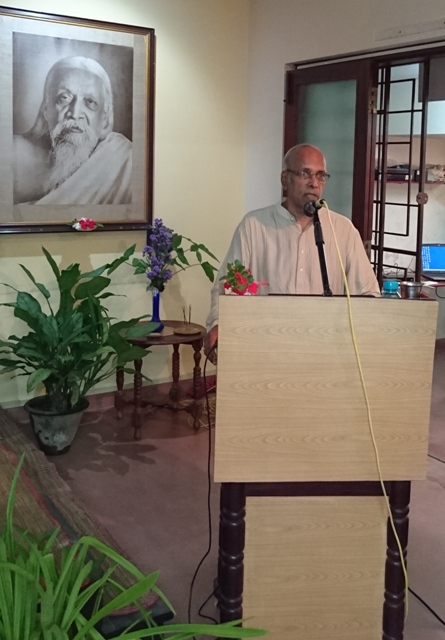
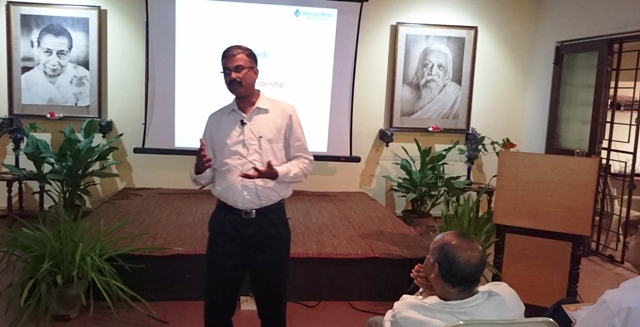
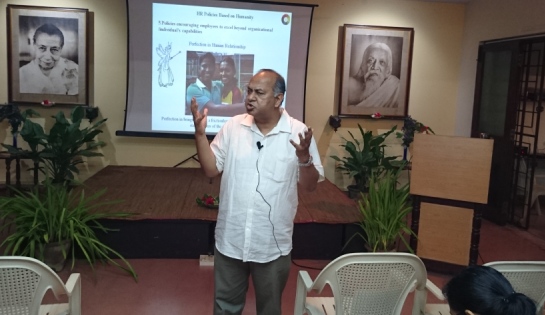
Sri Aurobindo Center for Advanced Research (SACAR), a NGO devoted to disseminating the thoughts and vision of the well-renowned seer of India, recently held a day-long seminar on various aspects of managerial perfection. The seminar was held at Pondicherry in India.

DSC_0071 Resized

Some of the key issues deliberated upon at the seminar

Making ‘Make in India’ a success needs a change in the attitudes of those who practice the art of management. The attitude of compromise needs to be shunned in all spheres of life. A strong sense of self-belief is a pre-requisite.IMG_4242 Resized

Imperfection leads to higher stress. When faced with a challenge, ‘Root Cause Analysis’ often leads to a state of perfection being achieved. Attention to detail alone helps. Pushing down complexity is yet another way to realize our goal of perfection.

IMG_4245Resized

Perfection is a dynamic concept. It is a moving goal. Even 99.9% is not good enough. Factors which help a leader in her journey towards perfection are:
o Unquenchable thirst, constant endeavour
o Catering to revised customer expectations
o Vision to reach there
o Perfect planning
o Obedience
o Constant supervision and vigilance
o Perfect balance and enduranceIMG_4254 Resized

Decision making can be made more perfect by supplementing rational thinking with intuition. The higher the level of uncertainty, the greater the role that intuition can play. Intuitive faculties can be developed by means of:
o Listening better
o Reflecting on a decision before implementing
o Examining your beliefs
o Communicating to, and consulting, others
o Learning to recognize and interpret your emotions
o Creating the right learning environment; allow failures
o Using situational assessments and case studies

DSC_0113

Leadership styles can be perfected by following some concurrent processes:
o Leading oneself first – introspection, self-improvement, practicing gratitude, shouldering      responsibility, improving quality of action and self-discipline; self-image plays a crucial role
o Leading others – by example
o Delivering results
o Grooming leadersDSC_0114 Resized

A sound HR philosophy is the essence of Perfection, which is an inner state of living. The principles of Liberty, Equality and Fraternity are useful in crafting innovative HR policies. Employees at all levels deserve an operational freedom which needs to be balanced with a sense of collective responsibility.DSC_0121 Resized

Some real-life examples which were touched upon

The following were some of the real-life examples which came up for discussion at the seminar:
• Evolution of manufacturing excellence across the world, from the first World War onwards
• Products of Apple and the no-nonsense attitude of Steve Jobs
• The SAS turnaround by Jan Carlzon; lessons from ‘Moments of Truth’
• Nestle India’s delayed decision to withdraw Maggi noodles from the shelves
• Recall of more than 2 million cars by Honda due to faulty air bags

The seminar, entitled ‘In Pursuit of Managerial Perfection’, drew an enthusiastic response from business managers, scholars and students alike. It was addressed by Dr. Ananda Reddy, Director of SACAR, Mr. R. Mananathan, Chairman and MD, Manatec group of companies, Prof R. P. Raya, Dean, School of Management, Pondicherry University, Prof. Jaisree Anand, Founder LearnMore India Consultant, Mr. Ganesh Babu, Founder and CEO Winning Minds, Prof. Kisholoy Gupta, Senior HR Professional and yours truly – a heady mix of management educators, lifestyle coaches, business thinkers and influencers.

Dr Shruti Bidwaikar, Assistant Director, SACAR, summed up the proceedings of the day. Dr Arvind Gupta, Assistant Director, Directorate of Distance Education, Pondicherry University, advised the participants to imbibe the day’s learning in an appropriate manner while facing challenges in life.

SACAR proposes to organize a series of follow-up seminars touching upon the three other pillars of Integral Management, viz., Harmony, Power and Wisdom.

(Related Post: https://ashokbhatia.wordpress.com/2015/03/17/an-inner-approach-to-leadership-and-management-note-on-a-seminar)

Read Full Post »

Gandhi by R K Laxman

Mahatma Gandhi, revered the world over as an apostle of peace and non-violence, led India’s freedom movement. His birth anniversary gets celebrated on the 2nd of October.

Are his teachings relevant to the world of commerce and business? Can CEOs of today learn a thing or two from his aphorisms?

Here are few of his thoughts which business owners, CEOs and managers might find of some interest.

The future depends on what you do today.

Managements who care for their brands re-engineer their business processes and ensure sustainable operations. They respect the environment and the aspirations of the local communities. They ensure compliance with local laws. Ethics and values are strictly adhered to.

A customer is the most important visitor on our premises. He is not dependent on us. We are dependent on him. He is not an interruption in our work. He is the purpose of it. He is not an outsider in our business. He is part of it. We are not doing him a favor by serving him. He is doing us a favor by giving us an opportunity to do so.

Smart CEOs already know this, thanks in part perhaps to Philip Kotler and others who have proclaimed that ‘Customer is King.’ A small time retailer practices this axiom even without having come across it. Managements of organized retail chains try to drill this message into their front-line staff, hoping to make shopping a pleasurable experience.

Marketing honchos these days are twiddling their thumbs trying to solemnize a holy matrimony between e-commerce outfits and brick-and-mortar stores.

Be the change you want to see in the world.

CEOs spend a lot of their time trying to reform others. But the trick perhaps lies in understanding oneself internally – one’s own motivations, value systems, strengths and weaknesses.

To be a true leader also means to lead by example. A business leader who cries hoarse over corruption but is seen as dishing out lucrative business deals to a family member would never get taken seriously. A company which projects a clean image but does not deliver good value for customer’s money, or sets aside funds for speedier navigating through the politico-bureaucratic maze of a country it operates in, succeeds only in the short run.

Freedom is not worth having if it does not include the freedom to make mistakes.

CEOs in the King Lion mode make good mentors when they take the mistakes of their cubs in their stride, coach them appropriately and do not indulge in demolishing their sense of self-worth.

It is unwise to be too sure of one’s own wisdom. It is healthy to be reminded that the strongest might weaken and the wisest might err.

Great leaders are often humble. They learn from their failures as well as from their successes. CEOs and marketing heads of FMCG companies who are getting out of their silos and venturing into rural markets are learning this rather quickly.

Be congruent, be authentic, be your true self.

Gravitating towards an external profile which is a reflection of what one happens to be internally is one of the ingredients of success. This harmony leads to better degree of mental peace and equanimity, which in turn brings about better decision-making.

If I have the belief that I can do it, I shall surely acquire the capacity to do it even if I may not have it at the beginning.

A clear sense of purpose and a strong self-belief alone are necessary but not sufficient for go-getter CEOs to realize their aims. A conscious effort to acquire the knowledge and the skills necessary to achieve one’s aim is a pre-requisite of success.

Strength does not come from physical capacity. It comes from an indomitable will.

A strong will power and a sense of conviction help CEOs in achieving their goals. Followers look up to them for strategic inputs and end up assisting them in execution.

Will it with all your heart, and see your vision taking a tangible shape.

A ‘No’ uttered from the deepest conviction is better than a ‘Yes’ merely uttered to please, or worse, to avoid trouble.

Smart CEOs know when and how to say a ‘No’. They also understand the perils of being a ‘Yes’-person. Registering dissent is an art which they often learn the hard way.

Live as if you were to die tomorrow. Learn as if you were to live forever.

Living in the present is an art which successful CEOs practice in a state of blissful ignorance. Ensuring that all customer queries get responded to on the very day these are raised is a matter of habit for them.

Going back to school is an option which many senior managers exercise these days. Organizations which encourage such endeavours keep topping the charts of the most-favourite-employers year after year.

Mahatma Gandhi was not a management consultant. What he said was not in the context of business management. But some of the principles he has left behind for us to munch upon are practical, hard-nosed and shrewd.

Business owners, CEOs and managers of all hues are sure to find that many of his ideas are worth emulating. Mere brooding over these gems of business could transform our attitudes and produce gratifying results. Bringing them in practice could help businesses burnish their brands and build a formidable competitive edge.

(Caricature by late Sh. R K Laxman)

(This post can also be found at http://www.mdaceoworld.com/blog)

Read Full Post »

Lord Krishna, whose birthday will be celebrated tomorrow, happens to be one of the most revered and liked gods of the Hindu pantheon. Looked at from a management point of view, he is a leader par excellence. He manages events and people in such a manner that the end result is eventually positive and leads to a greater good.

Here are some facets of his personality which might be instructive for managers at all levels.

A friendly demeanour

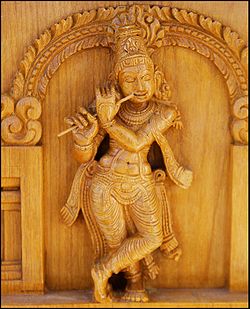
When a devotee plans to seek a straight forward favour, like when a much-awaited promotion is due and hard workKrishna_holding_flute has indeed been put in for the purpose, Lord Rama is often the more sought after religious figure. But when a devious request has to be made, say when praying for the transfer of a CEO who keeps disturbing one’s mental peace, the attention invariably turns to Lord Krishna. After all, he is our friend, with whom we can be frank and open!

This is the kind of appeal Krishna has. The fact that he has been depicted as a playful child and teenager adds to his unique image. The manner in which he treats his friends like Arjuna and Sudama multiplies his allure as a great problem solver. His ready availability is his Unique Selling Proposition. This is a quality which many a manager would find good to imbibe.

Flexibility in Approach

When it becomes apparent that Jarasandh would not allow the kingdom of Mathura to enjoy uninterrupted peace as long as he and Balarama are there, Krishna does not hesitate to leave his comfort zone. In order to ensure that the denizens of the city remain safe, he decides to build a new capital at Dwarka and shift his operating headquarters there.

When market dynamics change, business leaders and their team members in FMCG companies do not hesitate to travel to the hinterland. This helps them to understand the customer psyche better, thereby improving their presence in diverse markets.

Examples abound of companies which did not keep pace with the changes in technology and the market place. They continue to remain alive in our memories only.

Accessibility

Whosoever happens to be facing a challenge can approach him. Whether it is Arjuna or Duryodhana, there is no hesitation in seeking his help. Yes, whether and how he decides to help depends on which side of ‘Dharma’ we happen to be on. Duryodhana gets the support of his entire army, whereas Arjuna ends up getting him as a personal charioteer.

The privilege of accessibility is granted even to those opposed to him. Sisupala has the liberty of abusing him publically. Admittedly, he has a quota which, when exceeded, results into his death.

True blue leaders are invariably accessible to their team members. When a sudden challenge pops up, anyone can reach out to them and seek guidance.

Adherence to ‘Dharma’ (Righteousness)

The values inherent in a corporate policy, the vision for the company, the mission of the organization – theseMahabharat Disrobing_of_Draupadi constitute the ‘Dharma’ of all leaders, CEOs and managers.

When Krishna gets invited to the palace of Duryodhana for a rich feast, he declines. Instead, he prefers to have simple food at Vidura’s place. When Draupadi gets disrobed in King Dhritarashtra’s court, he manages to protect her honour. When a war becomes inevitable, he sides with the Pandavas. Invariably, he sides with those who follow the path of righteousness.

Strategy and Vision

In a careful reading of the major turning events in the whole narrative of Mahabharata, Krishna emerges as an eminent strategist. He keeps Draupadi’s frustration under check. He knows that Kauravas would never agree to let Pandavas have their share of the kingdom in a peaceful manner. Yet, he himself goes to plead their cause so that peace is given a last chance.

In the battle that ensues, he virtually leads the 7 divisions of Pandavas’ army to a decisive win against the 11 divisions of Kauravas’ army.

All mighty warriors on the Kauaravas’ side fall with specific inputs from Krishna. In case of Bhishma, Arjuna attacks him standing behind Shikhandi. Dronacharya is misled to believe that his son Ashwatthama has fallen. When Duryodhana appears to be invincible in his mace fight with Bhima, Krishna gestures to the latter to hit the former below the navel, thereby incapacitating him. When Balarama gets upset with Bhima for having broken a cardinal principle in his final fight with Duryodhana, Krishna intervenes to pacify him by reminding him of the several injustices perpetrated by the Kauravas on Pandavas.

Detachment

The manner in which Krishna persuades a demoralized Arjuna to take up his arms by enunciating the basic principles Mahabharat Krishna Arjunaof life in the Bhagavad Gita is exemplary. The gospel of devotion to duty, without attachment or desire of reward, continues to show the way of life to all those who seek light in the dark problems of life.

Krishna not only preaches but also practices detachment. Consider the manner in which he decides to leave his home and hearth in Gokul and Vrindaban. To him, the call of duty, of restoring the kingdom of Mathura to King Ugrasena, a just and righteous monarch dethroned and imprisoned by his own son, Kansa, is supreme. The fact that Kansa happens to be his maternal uncle does not stand in the way of Krishna killing him to achieve his goal.

He does not entertain the thought of ruling over Mathura himself. He believes that in order to be a competent ruler, he first needs to complete his study of the Vedas, achieve proficiency in warfare and understand the nuances of governance.

What does a CEO do when business conditions warrant a manufacturing unit to be shut down, even though he himself had painstakingly set it up two decades back? What does a manager do when a much-liked junior commits an act of impropriety and has to be asked to leave the company? Or, when a plum assignment has to be given up due to compelling personal reasons? A sense of detachment comes in handy in all such situations. The higher the level of detachment, the more objective the decision is likely to be.

Unstinted Support

When Abhimanyu gets killed on the battle field, a grief-stricken Arjuna vows to slay the warrior responsible – Jayadratha – by next sunset, or end his own life. Krishna manages to save Arjuna’s honour, bringing much relief to the Pandavas.

To those who remain committed and loyal to them, leaders provide unstinted support.Krishna

The Many Masks

Krishna does not hesitate to reveal himself in his entirety in the midst of the battlefield. Arjuna is petrified to see the ‘Vishwa Roopa’ of someone he considers to be a close friend.

Leaders also wear several masks. They could be polite and gentle. They could be loving and compassionate. But if the situation demands it, they could also invoke dread and fear amongst their team members. Just like Krishna, they possess a multi-faceted personality.

The Inner Voice

One of the basic concepts enunciated by Krishna in the Bhagavad Gita is that of the everlasting nature of the soul. The concept of a soul now finds a resonance even in modern management literature. In ‘The 8th Habit’, Stephen Covey urges professionals to pay heed to their ‘inner voice’. While proposing the whole person paradigm, he speaks of the four dimensions of a person – spirit, body, heart and mind.

Intuition

Once the war gets over and all his sons have got killed, Dhritarashtra attempts to kill Bhima by crushing him in a close embrace. Krishna is able to read his mind and deftly pushes across a metal statue instead, thereby saving Bhima’s life.

Smart managers go beyond ‘analysis paralysis.’ They do use information, but they also rely on their intuition. A more balanced decision-making comes about.

Tenacity and Perseverance

When the disappearance of a valuable gem, the ‘syamantak mani’, is attributed to Krishna, he does not wallow in self-pity. With a chin-up attitude, he keeps working on the problem till the time it becomes clear that his conduct is as pure as the driven snow.

CEOs with a tenacity of purpose build up a unique team of followers. Perseverance is ingrained in their character. To give up does not come easily to them.

A Global MindsetMahabharat Draupadi_and_Pandavas

Personally, Krishna has little to gain from the great war. All his actions are directed towards the overall benefit of the society. Once Yudhishtira assumes the charge of the entire kingdom, peace prevails and development comes about.

Great business leaders share the same quality with Krishna. They try to give back to society in more ways than one. Sustainable business practices ensure that their companies’ operations do not cause irreparable damage to the eco-system.

Leading from Behind

Unlike Lord Rama, who leads an army from the front, Lord Krishna leads it from behind. The former leads an army of monkeys. The latter leads an army of illustrious people. Each one has great prowess, expertise and self-mastery. He also gets to handle people who are more shrewd and cunning.

In the initial phases of industrial revolution, when manufacturing was the primary activity, most of the leaders had to lead their teams from the front. In the services sector, as also in the emerging knowledge economy, leaders mostly manage from behind.

Depending upon the situation at hand, leaders switch from one mode to another. The style also varies from person to person.

A Tryst with Adversity

Krishna lives a unique life which is full of adverse circumstances. He is born in captivity. He is separated with hisKrishna birth parents immediately after his birth. Even as a child, he manages to survive attempts on his life. He leaves his foster home, never to return. He leaves the city of his birth and relocates to a far off place. He continues to be busy solving other’s problems throughout life. His whole clan gets destroyed in a bitter fight between its own members.

At no stage do we find Krishna blaming his circumstances. He is self-assured. He is confident. He is clear on what he wants to achieve. His methods may be rough at times, but they deliver.

Sure enough, like many a business leader, he pays a heavy price for upholding righteousness. With little time for family and children, the progeny is destined to remain unsung.

Tough situations bring out the best within managers. Life strives to chisel their character into a fine shape, much like a finely carved statue which is much admired by those who view it from the outside. Few realize the pain, suffering and sacrifice that the stone has undergone to achieve that exalted beauty and that state of perfection.Krishna_Arjuna_Gita

Krishna – A Spiritual Leader

Much like a business leader of modern times, Krishna displays vision, flexibility in approach, resourcefulness and an excellent capacity to command. The authority that he exercises over others is born more out of love and concern, not fear. He is the trouble-shooter par excellence who leads, inspires, guides and motivates. He sets a fine example for business leaders and managers to emulate.

Krishna is a role model for spiritually inclined leaders and managers. He demonstrates that being spiritual does not necessarily mean being soft. It only implies that one’s decisions and actions are rooted in stark pragmatism, backed by sound values and propelled by a desire to achieve the greater good.

(Related posts:

  1. https://ashokbhatia.wordpress.com/2013/05/27/management-lessons-from-ramayana
  2. https://ashokbhatia.wordpress.com/2013/07/12/management-lessons-from-mahabharata)

Read Full Post »

All of us encounter angry bosses – whether at our places of work or at our homes. Permit me to re-share some thoughts on this subject with you.

ashokbhatia's avatarashokbhatia

Quite often, life gives us a roller-coaster ride. We get pulled and pushed by forces beyond our control. Then, we suddenly discover someone on whom we can work off our pent-up feelings. In the house, it could be the unsuspecting spouse who ends up absorbing the shock. In an office setting, we ourselves could be at the receiving end. If so, we quickly find a scapegoat onto whom our own brand of vitriol could be off-loaded.

Consider this. The CEO, when things are going wrong, takes it out on the VP. The VP goes and ticks off the General Manager. The GM, the unpleasant OVERSTAYING ONE’S WELCOMEinteraction concluded, immediately proceeds to crucify the Manager. The Manager loses no time in giving a piece of his mind to the hapless Executive. While the Manager sits down to have a cup of coffee in an attempt to cool off, the fuming Executive takes the…

View original post 1,177 more words

Read Full Post »

Professionals need to step back every once in a while and check if their brand image is bright and shining. Keeping one’s brand value burnished helps in career progression. It is also an immensely satisfying slice of life which promotes self-worth and boosts self-confidence.

Here is a checklist of the kind of inputs which go into keeping a professional’s brand value burnished.

1. Under-promise, over-deliver
Being aware of our core strengths as well as limitations helps us to assess our chances of success in delivering on a project. By ensuring that we commit conservatively but deliver zealously, we build up a reputation of reliability. There are indeed times when a polite ‘no’ could save us from denting our reputation.

2. Practice honesty and openness in relationships
Our colleagues and team members are equally smart. They are quick to sense a touch of opacity on our part. They detest a lack of transparency in us. Dealing with those around us with honesty ensures that they repose their faith and trust in us. As a result, our capability of getting things done improves.

3. Be a friend, philosopher and guide
All of us have some expertise which may not be directly relevant to our Key Result Area. It could be an insight into theTEAMS realm of alternative therapies which a colleague can use for one of her family members. It could be about handling rebellious teenagers at home. If we put such expertise to use by helping others around us, word goes around and others rush in to seek our counsel. We might have the image of a tough task master, but this softer aspect of our personality helps us to build a unique brand for ourselves.

4. Network
Whether within the organization or outside, networking goes a long way in building up our reputation. The trick, however, is in avoiding those with a negative outlook, while promoting ties with those who have positive vibes.

5. Keep learning
Keeping the saw sharpened always helps. By refreshing our knowledge pool continuously, we remain a leader in more ways than one. Often, a dash of humility is all it needs to remain ahead of the curve.

6. Be genuine
By being ourselves, we enhance our dependability. Others feel reassured and refreshed after each encounter with us. They do not mind confiding in us. In turn, this helps us to understand and address their anxiety and concerns better. Our ability to deliver improves.

A brand is all about reliability and dependability. It offers good value for money. So do professionals who work on the basis of deliverables. Smart ones realize that an image is merely a matter of perception. It needs to be backed by real inputs so one’s brand value remains intact and is kept burnished at all times.

Read Full Post »

On the occasion of the upcoming International Yoga Day, managers of all sizes and shapes are all of a twitter, shuddering at the prospect of being called upon to celebrate the day by performing some complicated asanas, that too at the crack of dawn, on a day which, unfortunately, happens to be a Sunday.

It is not that people who pride themselves to be managers are any less patriotic. Nor are they any less health conscious. Those who believe that managers are forever thinking only of evading taxes while leading a sedentary life full of fun and frolic at star rated joints could not be more wrong.

The reason managers need not earmark a particular day for practicing yoga is rather simple. This hapless overworked breed is already devoting much of its time and energy to following yogic pursuits. This alone helps them to retain their sanity while riding their high octane roller coaster careers. By following yogic principles, managers are continually enhancing their mental and physical well being, living a more fulfilling and meaningful life.

A communion and a harmony

Most of us are well aware that yoga is a state of communion. Spiritual enthusiasts tell us that it is the science of unison of our finite self with the cosmic Self. Bhagavad Gita describes it as the art of perfect unanimity with right thoughts and action.

To a conscientious manager, though, the communion is that between one’s individual value systems and those of the organization and the boss one works for. As long as harmony prevails, one is able to discharge one’s obligations while remaining in a state of bliss.

The yogins in an organization

Organizations have an eclectic mix of professionals with yogic propensities of different kinds.

There are the intellectual kinds who follow Jnana Yoga. Usually, they gravitate towards R&D, product design, market research and planning kind of careers but could be found in any stream of an organization. Those in the higher echelons of management often believe they practice this kind of yoga.

Karma Yoga is rigorously followed by those who implement and execute plans. Often, they are found performing unattached service to their organizations and bosses. The genuinely committed ones continue to perform, without waiting for promotions or increments.

The mystic path of devotion gets followed by quite a few. They practice Bhakti Yoga. They hang on to the coat tails or skirts of their bosses till the time the latter’s career advancements result into their own climb on the corporate ladder. Organizations keep devising imaginative severance packages so as to ensure that their bloodstreams do not remain clogged with deadwood which entertains a misplaced sense of devotion.

A manager’s yogic postures

Those who place a greater emphasis on the different kinds of yogic postures try to devour the vast repertoire of such experts as B K S Iyengar. They look up Larsen exercises (popularized by ‘Something Fresh’ of P G Wodehouse fame). They try to unravel the mystery behind Sivananda yoga. They try to differentiate between Bikram yoga and Anusara yoga.

After brooding over the various alternatives on offer, managers become better aware of the kind of posturing they have to indulge in so as to be able to survive and do well at their places of work. Whether employed in the public or the private sector, here are some of the popular yogic postures deployed by them.

Balasana

(A Child’s Posture)

Yoga BalasanaWhile sipping the morning dose of their favourite tissue restorative, when the better half is interrupting their devoted perusal of the morning newspaper and is handing over the list of domestic chores to be completed by the end of the day without fail.

(“Balasana” by Iveto – Own work. Licensed under GFDL via Wikimedia Commons )

Kukkutasana

(A Cock’s Posture)

Yoga Kukkutasana_Yoga-Asana_Nina-MelWhile rushing through peak hour traffic, managers inhale and inflate their chest cavity to full when handling errant bikers whizzing across their path; they exhale and deflate their lungs when accosted with buses and trucks pouncing upon their humble means of transport. At all times, while driving, they maintain a hawk like vigil.

(“Kukkutasana Yoga-Asana Nina-Mel” by Kennguru – Own work. Licensed under CC BY 3.0 via Wikimedia Commons )

Ardha Chandrasana

(The Half Moon Posture)

Yoga Ardha-Chandrasana_Yoga-Asana_Nina-MelWhen the task assigned is impossible to achieve and the boss needs to be convinced that a divine intervention alone could help.

(Ardha-Chandrasana Yoga-Asana Nina-Mel” by Kennguru – Own work. Licensed under CC BY 3.0 via Wikimedia Commons)

Ardha Matsyendrasana

(Half Lord of the Fish Posture)

Yoga Ardha-Matsyendrasana_Yoga-Asana_Nina-MelWhen a situation calls for a look-in-the-eye confrontation, making the party of the other part wilt and run for cover.

(“Ardha-Matsyendrasana Yoga-Asana Nina-Mel” by Kennguru – Own work. Licensed under CC BY 3.0 via Wikimedia Commons )

Chakrasana

(The Wheel Posture)

Yoga Chakrasana_Yoga-Asana_Nina-MelWhen presented with a problem which has wheels within wheels – or multiple implications – the manager takes some time off to perform this asana. Soon, the mind is stilled and an out-of-the-box solution emerges.

(“Chakrasana Yoga-Asana Nina-Mel” by Kennguru – Own work. Licensed under CC BY 3.0 via Wikimedia Commons )

Dhanurasana

(The Bow Posture)

Yoga Dhanurasana_Yoga-Asana_Nina-MelManagers practice it when called upon to either announce or execute unpopular tasks, which could range from closing down business units to handing over a pink slip. The unpleasant arrow, conceptualized and designed by the top management, is shot. The manager graciously offers himself as a bow from which the arrow is finally shot.

(“Dhanurasana Yoga-Asana Nina-Mel” by Kennguru – Own work. Licensed under CC BY 3.0 via Wikimedia Commons )

Ek Pada Koundinyasana

(Koundinya’s Single Foot Posture)

Yoga Parivritta_Eka_Pada_KoundinyasanaA task which was on the back burner for the past six months suddenly needs to be executed at a lightning speed. Going off on a vacation is not an option.

(“Parivritta Eka Pada Koundinyasana” by Jemasty – Own work. Licensed under CC BY-SA 3.0 via Wikimedia Commons )

Garudasana

(The Eagle Posture)

Yoga Garudasana_Yoga-Asana_Nina-MelHandling either a supplier who, despite repeated warnings, fails to deliver on time or an employee who continues to under-perform.

(“Garudasana Yoga-Asana Nina-Mel” by Kennguru – Own work. Licensed under CC BY 3.0 via Wikimedia Commons )

Eka Pada Raja Kapotasana

(The Single Foot King Pigeon Posture)

Yoga Eka-Pada-Raja-Kapotasana_Yoga-Asana_Nina-MelMeeting either a politician or a government servant, with an attitude of abject surrender and servitude.

(“Eka-Pada-Raja-Kapotasana Yoga-Asana Nina-Mel” by Kennguru – Own work. Licensed under CC BY 3.0 via Wikimedia Commons )

Hanumanasana

(Lord Hanuman’s Posture)

Yoga Hanumanasana_-_Hanuman's_Posture_-_in_Diagonal_ViewAttending to an urgent task dished out by the boss at the last minute.

(“Hanumanasana – Hanuman’s Posture – in Diagonal View” by lululemon athletica – Flickr: Yoga Journal Conference. Licensed under CC BY 2.0 via Wikimedia Commons )

Janusirsasana

(The Head to Calf Forward Bend Posture) Yoga Janusirsasana_Yoga-Asana_Nina-MelTackling the CFO and answering some ticklish audit related queries.

(“Janusirsasana Yoga-Asana Nina-Mel” by Kennguru – Own work. Licensed under CC BY 3.0 via Wikimedia Commons )

Matsyasana

(The Fish Posture)

Yoga Matsyasana_Yoga-Asana_Nina-MelWhen reversing an earlier decision dished out to the team members, the manager needs to be as slippery as a fish only can be.

(“Matsyasana Yoga-Asana Nina-Mel” by Kennguru – Own work. Licensed under CC BY 3.0 via Wikimedia Commons )

 Vrikshasana

(The Tree Posture)

Yoga Vriksasana_Yoga-Asana_Nina-MelWhen motivating team members to undertake a task which sounds impossible.

(“Vriksasana Yoga-Asana Nina-Mel” by Kennguru – Own work. Licensed under CC BY 3.0 via Wikimedia Commons )

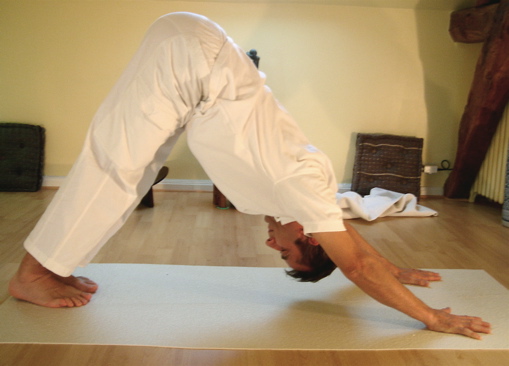
Adho-mukha-shvanasana

(The Downward Facing Dog Pose)

Yoga Ado-muka-shvanasanaWhen the boss decides to reprimand the manager, hopefully in private.

(“Ado-muka-shvanasana” by Joseph RENGER – Own work. Licensed under CC BY-SA 3.0 via Wikimedia Commons )

Bharadvajasana

(The Bharadvaj Posture)Yoga Bharadvajasana1When a junior approaches the manager seeking either leave or an undue favour.

(“Bharadvajasana1 (cropped)” by Iveto – Own work. Licensed under GFDL via Wikimedia Commons )

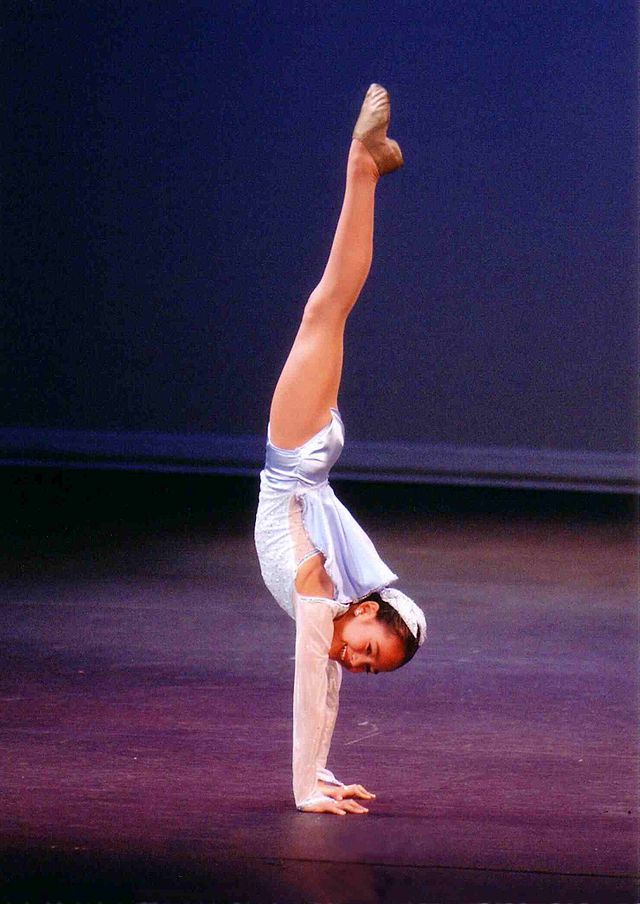
Adho-mukha-vrikshasana

(The Downward Facing Tree Posture)Yoga AcroDanceHandstandWhen the manager herself needs to seek either leave or an undue favour from the boss.

(“AcroDanceHandstand” by Lambtron at en.wikipedia. Licensed under CC BY 3.0 via Wikimedia Commons )

Padmasana

(The Lotus Posture)

Yoga Tanumânasî_en_Meditacion_Loto_PadmasanaAfter listening to the end of the day woes of the better half, this posture, if performed, leads to mental peace.

(“Tanumânasî en Meditacion Loto Padmasana” by Jesús Bonilla (Tanumânasî) – Retiros de yoga. Licensed under Public Domain via Wikimedia Commons )

With all these postures already a part of a manager’s daily life, is there a need for them to do some yoga on the appointed day as well?

Well, on this International Day of Yoga, I am toying with the idea of taking a dip in the Bay of Bengal nearby. To a busybee like me, it is a more exciting activity than Surya Namaskar – a set of twelve asanas for those with a lot of time on their hands.

Yet another option is to simply perform my favourite one only – the Shavasana.

Shavasana

(The Corpse Pose)

Yoga ShavasanaShavasana involves shutting down one unit of one’s body after another like a factory in the small place where I live, and then again turning them on one after another like the well heeled women at a ghazal concert.

Most managers would agree with me that this is the coolest thing that yoga offers.

(“Shavasana” by Joseph RENGER – Own work. Licensed under CC BY-SA 3.0 via Wikimedia Commons )

Related Post: https://ashokbhatia.wordpress.com/2015/01/01/a-new-year-resolution-for-couch-potatoes

Read Full Post »

WORK-LIFE BALANCECXOs of today operate in a hyper-competitive, fast-paced world. Round the clock connectivity gives them a great advantage – of being always accessible. However, it also takes a heavy toll. Making time for personal commitments poses a serious challenge; so does the absence of introspection as to where their own life and career is headed.

Here are some simple and do-able tips for CXOs to keep driving in the fast lane, with a clear view of the horizon and occasional stopovers in the sunlit valleys of life. In other words, to achieve the delicate goal of better work-life harmony.

Family time IS important

If you happen to be in station, earmark a time of the day which is exclusively for the family. Could be breakfast time. Could be dinner time. Make sure your international calls and Skype conferences are scheduled in such a way as to not to impinge on to this time.

Treat your weekly off days with the respect they deserve. Do not allow yourself the luxury of driving over to your office on such days.

Avoid sweating over small stuff

Small stuff is important. But you do have team members who take care of the minute details. Guide them, by all means. Do not get directly involved. You would only get blamed for micro-managing.

Prioritize well. Prioritize in advance. Follow Bhagavad Gita, which exhorts us to render our duties faithfully, guided not by desired results but by imperatives of the tasks themselves.

Check if you suffer from a decision fatigue. Put routine decision-making in an auto-pilot mode. This is bound to free up lot of your time which could be used more productively.

Managing technology

Let your biological age not bog you down. Learn and use technology in such a manner as to ensure some breathing space for yourself. That is when you will feel connected to terrestrial life outside your extra-terrestrial universe of work.

Technology can enable you to be virtually present at different places in different time zones. It can also enable you to be connected to anything critical happening which you genuinely feel might need your intervention. Use technology to delegate better and more effectively.

Schedule your priorities

Time is a finite resource. Use it intelligently. Engage when necessary; take a break when required. Meaningful interactions with family and close friends could leave you well charged up for the tasks ahead. Productive discussions with clients and professionals can help in resolving issues more effectively.

Excellence needs the fuel of passion. When passion drives your professional journey, constraints become less formidable. Tasks cease to become chores. Wise scheduling of your priorities results into excellence.

From IQ and EQ, on to SQ

Give your overworked brain some rest. Try using your heart to decide upon an issue. You will notice that improving your Spiritual Quotient would improve your performance. Small doses of gratitude and compassion help. Being aware of yourself and being conscious of what is happening within you helps. Humility helps. Developing equanimity helps.

Happiness and contentment within is great to have. You end up radiating it to those around you. Harmony in the work atmosphere improves. Output of the whole group improves.

You might find that IQ, EQ and SQ are like the spokes in the wheel of life, of which career is but one component. If all are equally developed, the wheel does not wobble – it runs smoothly.

A non sequitur?!

Before I sign off, allow me the liberty to pose a question. By hyphenating ‘work’ and ‘life’, are we not demeaning life? While chugging through our careers, we could honestly believe that work is much greater than life. In fact, it is merely a part of life. A subset, which needs to be in harmony with all other aspects of the multi-hued experience we call life. Perhaps, it is time to correct our perspective.

My proposal is this. Next time round, do not think about work-life harmony. Think only about achieving a state of harmony between the work-sphere of your life and the other spheres of your life – family, friends, hobbies, and the like.

When the conductor of an opera gets on to the stage to produce music that touches our souls, what he strives for is excellence, based on harmony. A discordant note from a single cello could ruin the performance. Likewise, all CXOs strive to get desired results, based on a harmony – between different managerial functions, between the organization and its various stakeholders and, above all, between the different constituents of their own lives.

So, how do you achieve this state of harmony? Would you like to share some insights?

Read Full Post »

« Newer Posts - Older Posts »