Feeds:
Posts
Comments

Posts Tagged ‘Management’

MANAGEMENT

Unlike a “should” guy who is a philosopher, and a “would” guy who is a politician, a good manager is a “could” guy. He is aware of the constraints of resources at his disposal, and get things done accordingly.

He is the first one to come in and the last one to go from office. No job is too small for him; he is a true hands-on guy, but develops his team by delegation.

He defines and respects the invisible boundary of professional distance between himself and his key team players. When his team members are attacked, he behaves like a lioness out to protect her cubs. His team just loves him!

MARKETINGMARKETING

An ever-changing discipline, though surely not the only one. When conceived and described by Philip Kotler, it consisted of the famous 4 Ps – Product, Price, Place and Promotion. With due respects to the great man, one may safely add one more P – Password (used for viral marketing).

With the advent of internet has come a virtual democracy in information. Changes in technology have brought in a new way the customers and brands interact. Marketing has undergone a sea change and will continue to do so in future as well, what with social re-engineering leading to a greater degree of inclusion in the economy, with hordes of new customers from a so-far underprivileged social milieu joining the market. Persons with access to internet now research the brands before making a decision. They are increasingly welcoming fresh content rather than repetitive ads.

Take note of the mini packs of biscuits, noodles and other consumer items being marketed at price points of Rs. 5 and below. Thirty years back, Indians had to wait for years to get to ride their own “Hamara Bajaj”. On the car front, there were hardly three suppliers in the fray then. Now, we see global brands wooing the customer and competing cheek and jowl for a slice of the market pie.

The Customer has now become a more empowered king!

MEETINGS

Meetings to decide strategic issues are best held off campus, though not necessarily in exotic locales.

Meetings to review operations are best kept short, held in the standing mode, at regular intervals (like TV news) without prior intimation, kept crisp by ruthlessly disallowing inter-departmental issues getting discussed while all others gape in horror and ignorance, ending much before the deadline and minutes being circulated by the end of the day with clear responsibilities defined in respect of targets to be met and respective deadlines.

It is generally accepted that the probability of a meeting taking place is inversely proportional to the number of participants.

Parkinson’s Law of Meetings states that “To a certain degree, the time spent in a meeting on an item is inversely proportional to its value”.

MEDIOCRITY vs. EXCELLENCE vs. PERFECTION

Always aim for perfection! It is said that Mr. R. M. Lala, an editor, writer and publisher of repute, once commented to Mr. J. R. D. Tata that the latter believed in excellence. The great man is said to have retorted thus: “Not excellence. Perfection. You aim for perfection, you will attain excellence. If you aim for excellence, you will go lower.”

Rabindranath Tagore, in his Gitanjali, captures the same concept thus: “Where tireless striving stretches its arms towards perfection”. Even though “perfection” may not be attainable in reality, what matters is the “tireless striving”, which could well prove to be a reward in itself. “Perfection”, like happiness, need not be a station one arrives at, but a mode of travel, making the journey interesting and worthwhile.MICROMANAGING
To improve our personal capacity utilization, our basic struggle needs to be attitudinal – to adopt a Culture of Perfection and to give up the Culture of Mediocrity.  Our collective chalta hai attitude is passé.

MICROMANAGING

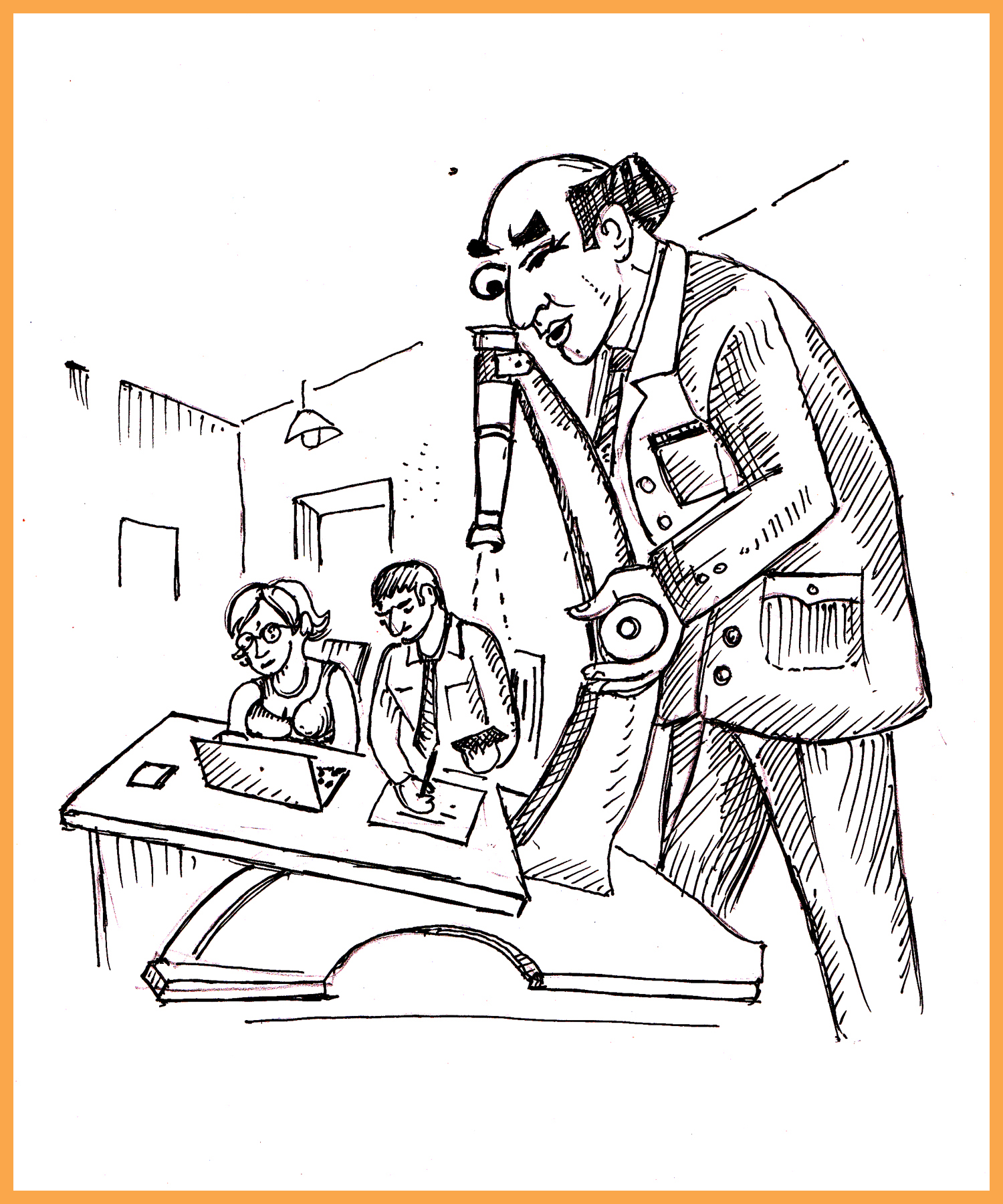
A sure way of becoming a liability for your team and also for your employers is to micromanage – getting into the nitty-gritty of each and every aspect of the task at hand. Learn to delegate and allow your team members to make mistakes. Demand results, but develop your people in the long run.

MISTAKES, HANDLING OF

As an individual, say sorry. Say it openly. Add a dash of humor and laugh at yourself publically. Avoid a buck passing posture. Do a root cause analysis. Suggest and work on a solution to rectify the mistake. Try to avoid a recurrence.

As a corporate, get your PR to handle the issue well. Take demonstrable steps to set the record straight. During June 2011, Toyota globally recalled as many as 1,06,000 vehicles, offering to replace front right hand shaft in selected vehicles. During 2007, Mattel announced a recall of over 19 million toys fearing that the toys had powerful magnets which could come loose and be swallowed by infants. Their brand recall value only shot up.

Read Full Post »

KISS FREQUENTLYKISS FREQUENTLY

Managements are well-known for their propensity to give priority to business targets, and to hell with all the systems, controls and procedures! So, go in for systems which are simple and can be operated by idiots. Auditors will keep coming up with new SoPs. Before rolling these out, a manager would do well to apply the KISS (Keep It Simple and Stupid) test.

LAWYERS

Choose a lawyer based on the gravity of the issue at hand. Local lawyers are pretty effective for minor matters. For global issues affecting the industry, get your HO to rope in the second best in the country. This way, you will get first-rate attention, service and results.

LEADERS

Management can be learnt; leadership is inborn. The good news is that in some cases, leadership styles trickle down the organization, and get copied, thereby improving the behavioral consistency across the set up.

Lao-tzu, a Chinese philosopher, said “To lead the people, walk behind them”. LEADERS

LOGIC VS EMOTION

Formal education systems lead us to depend more on the mind, which thrives on logic alone. However, the heart is the seat of emotions, and has intelligence of its own. The power of intuition flows from the heart, and so does empathy. To survive and do well in the corporate jungle, managers need both in equal measure!

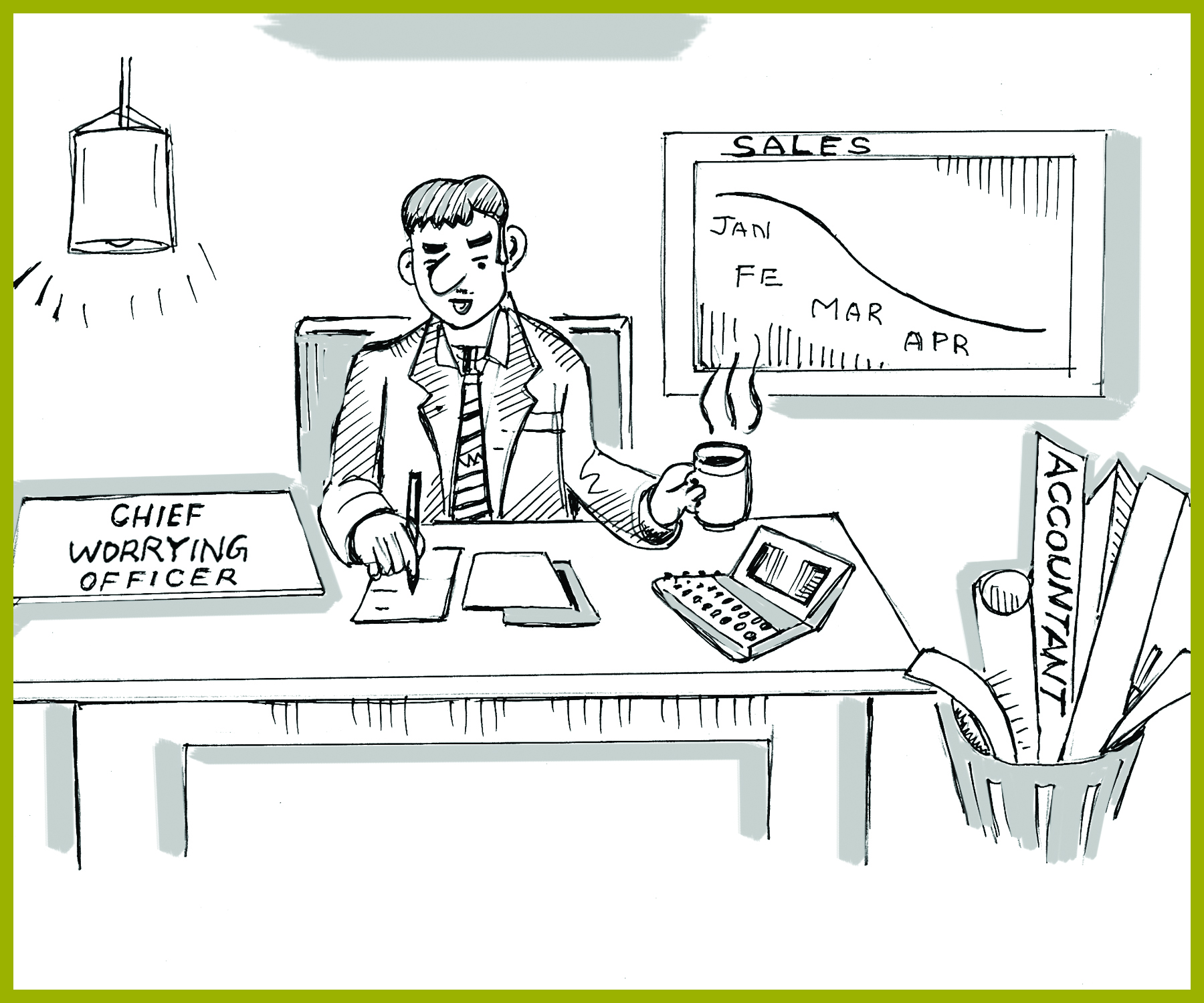
LONELINESS BLUES

The men at the top are a lonely lot, with no one to share their blues with. Special care needs to be taken to ensure they have a circle of neutral confidantes who can help them in retaining their balance and perspective on issues facing the organization from time to time.

Read Full Post »

DECISION MAKING
Strategic decisions made in a jiffy on a sudden impulse could lead to disasters. The company could end up having a wrong plant location, an outdated product, or a service of which the time is yet to come. Changing such a decision would invariably be an expensive affair.
Run of the mill decisions, like which brand of Xerox paper to buy for the office, or whether the car parking positions of officers should depend on hierarchy or time of arrival, are best delegated and left to be made at the operational level, where the executives are closer to the ground realities.

DELEGATION
When you can’t do something as well as the other person can, a smart choice you can make is that of delegating the task; that is, moving from doing it yourself to getting it done through others. If you do not learn to delegate, you could suffocate.
Trust, instinct, communication and control are the pre-requisites of delegation. Delegation without benchmarking and monitoring of targets is abdication!

DESIGNATIONS
Designations are not important in cases where the external exposure of the employee is minimal. They form the psychological part of an employee’s compensation package.DESIGNATIONS
For those whose role demands an external exposure, a higher sounding designation would improve the canvas of opportunities, enabling a faster realization of company’s goals.
For employees who have outlived their core utility in companies which believe in firing people only when there is a disaster of a nuclear nature, an improvement in designation would be a valuable tool in the HR arsenal.

DETACHMENT
Beware of managements which exhort you to follow the much misunderstood principle of detachment expounded in the Gita – you should continue to slog all year long but do not expect that elusive overdue promotion. Do a reality check – are you repeating your own past performance? Is there a way you can improve the quality of your targets? Upgrade your work plans and actions accordingly.
If you can follow the principle of detachment, though, mental peace is guaranteed.

DIRECTOR, BEING ONE
Invited to be a director on the board of a company? Accept the offer only after a due diligence at your own risk and peril. You may earn a modest fee and some handsome privileges, but would have little control over the kind of legal and procedural misadventures taking place across the company. Unless, of course, getting served with a notice or landing in a jail is your idea of having fun in life.

DISCRETION
If you wish to start a relationship with the receptionist, better give the idea skip. There is not much difference between a manager rooting for an executive and a cashier having his hands in the till. Managements need to handle such cases with discretion; if the manager concerned is otherwise a good performer, he can be helped to get transferred to a temptation free location and kept under watch. Another misdemeanor, just throw him out.
Complex businesses require discretion in handling information of a sensitive nature – could be related to pay packets, new products and services or long term business plans. Judge the pros and cons and be discreet wherever necessary.

DRAUPADI SYNDROME
In what are euphemistically known as “matrix” organizations, reporting to several bosses at the same time could be a challenging experience. One has to learn to balance each one’s expectations against those of others. Much depends on their relative seniority or clout in the company, based on which one could handle the situation. Of course, it does not pay to pitch one of your bosses against the other, whether directly or indirectly.

Read Full Post »

The other day, I was surprised to run into a friend of mine. He seemed to have suddenly advanced in age. With drooping shoulders, he offered a rather limp handshake, a far cry from his ebullient self and the firm grip I had experienced all along. We sat down to enjoy a cup of tea. It did not take me long to figure out that his long working hours, devoid of any relaxation and exercise, had possibly led to a gradual decline in his well-being. If urgent steps were not taken, he would be soon courting trouble with his heart, a contingency which is best avoided.

Some Corporate Maxims

In the rush of living life in the fast lane, most managers today hardly find time for themselves. A high-octane careerSTRESS would often demand very long working hours at the work place. This is especially true in India, where the feudal mindset still prevails. As per some of the popular corporate maxims prevalent in this part of the world:

(1)                          A manager’s efficiency and effectiveness on the job is directly proportional to the number of hours put in at the work station,

(2)                          Promotions depend upon one’s commitment to company’s goals, where the level of commitment is in reverse proportion to the amount of leave taken,

(3)                          The company culture is designed to enforce a check-in time in the office, but the check-out time is invariably left open. After all, there is a strong belief in the old adage that those who watch the clock merely remain the hands!

(4)                          The manager has no life outside the place of work. More odd the hours at which mails emanate from him, especially those between the stroke of midnight and till about 4 AM, the more committed he/she is!

For those in the senior echelons, the communication revolution has made the task of “switching off” even more challenging. Laptops and cell phones are invariably present, even though they may be supposedly on leave with their near and dear ones. It is fashionable to answer a critical mail while on a vacation. We now have an entire generation of managers and executives who have developed an addiction to the latest gizmos. 24 by 7 connectivity is the buzz word. If you are not in the e-rat race, you just do not count!

The path of Least Resistance

The result is an early burn-out for most managers. With no time to spend with the family, let alone any quality time,WORK-LIFE BALANCE stress builds up pretty fast. Hobbies and extra-curricular activities get relegated to the background. If at all any health issue crops up, there is no time to see a doctor. Finally, when the visit to a medical specialist does fructify, a brief spell of pill popping provides instant relief and, voila, the problem is solved! A wise doctor would always work on a mix of drugs, diet, relaxation and exercise. But, as a patient, a manager is happy to find his own path of least resistance – focusing only on drugs but totally neglecting diet, relaxation and exercise.  

As to physical exercise, a “busy” manager could not care less. The physical bodies are taken for granted. If a gym is joined, the work-out keeps getting deferred on one pretext or the other. After all, the body is a sturdy one, so why pay any attention to it? On a daily basis, it is imagined that one is doing one’s duty by performing the morning ablutions, by providing the run down body with nourishment which could well be junk food, and by allowing oneself some sleep, howsoever disturbed it might be.

Recharging our batteries

It is rightly said that we are what we eat. If alone we were to focus on developing correct eating habits, with a large dose of fruits and vegetables, good results would ensue. When we eat junk food, do we realize that the same amount of money would allow us to buy fruits which we would not be able to consume in one go? When we continue to flush our digestive system with acidic foods, we cause irreparable damage to our delicate organs. Meals could also be irregular, depending upon the pressure of work at hand. The result is heartburn, upset stomach, ulcer, pancreatic malfunction and, in extreme cases, even cancer.

Why do we detest physical activity? In some cases, sheer lethargy, lack of time management skills and an over-ridingYoga Dhanurasana_Yoga-Asana_Nina-Mel addiction to desk work prompts us to lead sedentary lifestyles. Diabetes, hypertension, cardiovascular diseases soon follow. Quite a few of us end up facing the surgeon’s scalpel, with dietary restrictions and exercising regimen which we are then forced to follow.

Undoubtedly, managers perform under tremendous pressure. But what is more important is as to how they take the pressure. For a thick-skinned manager, the going may be relatively easier; for a thin-skinned one, the same assignment could involve a high degree of stress. Possibly, the solution lies in transforming one from with-in, so as to change the way a manager perceives stress because of the circumstances with-out. Regular meditation, a healthy diet and a positive frame of mind could work wonders in the long run, keeping the manager always charged up!

Need for innovative HR policies

Far-sighted managements would surely take notice and fine tune their HR policies to ensure that a healthy work-life balance is maintained for all senior employees. In one of the evolved companies I happened to be associated with some time back, an annual master health check-up was made mandatory for all those above the age of 45. The top guy resolved not to disturb his team members on weekends, unless absolutely unavoidable. A planned annual leave of 15 continuous days was made compulsory – the experiment demonstrated that the company did not collapse during the 15 days’ period! Managers learnt to plan in advance and also delegate their tasks better. Every six months, an in-house yoga camp was held. Two years down the road, employee satisfaction levels had improved, and so had white-collar productivity!

To quote Stephen Covey from his much celebrated book “The Seven Habits of Highly Effective People”: The physical dimension involves caring effectively for our physical body – eating the right kinds of foods, getting sufficient rest and relaxation, and exercising on a regular basis. (7th Habit, page 289).

The Divine has granted us this life and given us a body to live it through. The soul strives to evolve by gaining newer experiences in this life time of ours. But it can do so only through the medium of our physical body. Should we not respect it, take care of it and remain physically fit? Just like our vehicles and household gadgets need preventive maintenance, our bodies also need to be looked after well, so as to fulfill their purpose – that of supporting our soul, the Divine presence within us, to experience what this wonderful gift of life has on offer for us.

Surely, we can summon our will power and plan as well as execute a plan to achieve this worthy goal?

(Related Posts:

https://ashokbhatia.wordpress.com/2014/08/22/of-offices-and-vacations

https://ashokbhatia.wordpress.com/2015/06/06/achieving-work-life-harmony)


Read Full Post »

« Newer Posts