Posts Tagged ‘Movies’
Hindi film characters with books: Guest Post by Dustedoff
Posted in The Magic of Movies!, tagged Bollywood, Books, Characters, Hindi, Movies on June 1, 2024| Leave a Comment »
Tribute to a Cinematic and Literary Genius: Guest Post by Suryamouli Datta
Posted in A Vibrant Life!, tagged Crime, Feluda, Fiction, Humour, Literature, Movies, P G Wodehouse, Satyajit Ray on May 2, 2024| Leave a Comment »

Allow me to share with you how his creative genius has exercised his soft power on a lesser mortal like me.
My earliest interactions with the master of Indian Cinema
I shall not delve into an analysis of his writing or filmmaking style here. Instead, allow me to recount my enduring fascination with this individual, a fascination that has only grown over the years despite conceding to certain critics who possess a profound understanding of the art of cinema and literature. My initial encounter with this luminary was through his debut film, ‘Panther Panchali (Verses of the Road).’
Back then, in the third grade, I was enthralled by action-packed movies and witty dialogues, the kind that resonated with my young mind. To me, Spiderman, Superman, and He-Man held more allure than any film of that era. I would eagerly watch the screen, whether on television or at the cinema, during fight scenes, shootouts, or comedic moments. It was during this time that I first encountered ‘Verses of the Road.’ Watching it alongside my younger cousin, who was two years my junior, I experienced a newfound appreciation for storytelling. Unlike the captivating action sequences, my interest in this film stemmed not from its technical aspects, which was perhaps too much to expect from me at that time, but rather from its narrative, which evoked the storytelling style of my elders.
Then, a film called ‘Shakha Proshakha’ (‘The Branches of a Tree’) was aired on television. Despite being by the same director, it failed to captivate me, save for a few clever lines delivered by a young child actor who amusingly mimicked phrases like ‘Batman’ and ‘Superman’. His familiar gestures, like darting into a thicket with a toy gun, alone resonated with me deeply.
As I followed his journey, other films like ‘Apur Sansar’ (The World of Apu) and ‘Mohapurush’ (The God Man) caught my attention, yet failed to resonate, perhaps because I was too young to grasp their significance back then.
Back in my fifth-grade days, I harboured a fervent desire to emulate him – a film director, you see. It stemmed from my own struggles with academic achievements of any kind, a trait that he shares with me. I recall stumbling upon his stories in books or magazines and catching a glimpse of him on TV. Looking back, I cannot help but chuckle at my youthful naivety. As I’ve matured, both physically and mentally, I’ve come to understand that he occupies a pedestal beyond my reach. Critics may nitpick, and there may have been filmmakers of greater acclaim before and after him, but none hold a candle to the place he holds in my heart. He serves as a guiding light, steering me towards a deep appreciation for the world of film and literature.
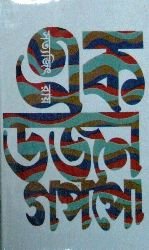
Immersed in the legend’s Literary Palette: An Anthology of Wonder
In the 5th grade, amidst one of my summer breaks, I stumbled upon a book from my mother’s collection titled ‘Ek Dojon Goppo’ (‘An Anthology of a Dozen Stories’). The initial tale, ‘Septopus-er Khide’ (‘The Hungry Septopus’), depicted a carnivorous plant resembling an octopus, bringing peril to its owner. At the time, while I found some scenes thrilling, overall, the story failed to captivate me.
Following this was ‘Bankubabu-r Bandhu’ (‘Banku’s Friend’), narrating the story of an innocent village schoolmaster teased by peers and students until encountering an alien named ‘Ang,’ subsequently altering his life. Interestingly, I had already watched a televised adaptation of this story, featuring Sadhu Meher as Banku. Having also seen ‘E.T.’ by then, the narrative felt somewhat familiar. Controversy arose when the author, also a filmmaker, envisioned earlier adapting the tale into a Hollywood collaboration film named ‘Alien,’ encountering similarities with ‘E.T.’ Yet, irrespective of the debate, the story failed to resonate with me at the time, likely due to my prior exposure to its audio-visual renditions.
First Realization: Indigo Terror
As I delved into the pages of the book ‘Ek Dojon Goppo,’ initially sceptical of its worth, one particular short story, ‘Neel Atanka’ (The Indigo Terror), captured my attention entirely. Aniruddha Bose, a 29-year-old employee of a prestigious multinational corporation, embarks on a journey to Dumka, near Bolpur, Shantiniketan, in his own car. Along the way, he encounters a series of mishaps—his car’s tires bursting at regular intervals, forcing him to rely on only one replacement. With no other recourse, he seeks refuge in a nearby house overseen by a caretaker, a narrative device that may have subsequently inspired the Ramsay Brothers, albeit uncredited (wink!). Exhausted, Aniruddha resigns himself to rest for the night. However, in the dead of night, he awakens to find himself transformed into the former owner of the house, a European indigo planter from long ago. The story unfolds with Aniruddha grappling with his new identity and the events that follow.
Long before the film ‘Bhool Bhulaiyaa,’ this narrative evoked the eerie atmosphere of a psychological horror tale. Moreover, being a short story, it left unresolved whether Aniruddha was possessed or was merely grappling with a psychological affliction that fateful night. Much like Tagore’s ‘The Hungry Stones,’ this tale masterfully navigated a complex plot with deceptive simplicity.
How The Indigo Terror Brought Out The Creator In Me
Let me share more reflections on this story, particularly the profound impact it had on me. Aniruddha, in my perception, embodied the essence of a western cowboy, albeit without the guns and horses. He exuded a down-to-earth demeanour, living life on his own terms. Even when faced with the peculiar experience in the former European indigo planter’s house, he approached it with remarkable nonchalance, almost as if it were just another day. This aspect deeply resonated with me. By no stretch of imagination can I be held to be an expert in the craft of dishing out screenplays. However, such was the grip of the narrative that I found myself compelled to draft my own screenplay. Let me recount a few memorable elements from my envisioned screenplay:
FADE IN:
EXT. HIGHWAY – DAY
Aniruddha drives his Ambassador car at full speed on a highway, flanked by trucks and lorries. Tense and escalating background music sets the mood.
CUT TO:
INT. AMBASSADOR CAR – DAY
Close up on Aniruddha, his face filled with determination as he drives with full concentration. The camera shifts focus to three tyres – one on the driver’s side and two at the back.
CUT TO:
EXT. HIGHWAY – DAY
The right tyre at the back bursts suddenly, startling Aniruddha. He grips the steering wheel tightly, his irritation evident. The camera quickly moves outside to show the car stopped in a peculiar position on the side of the road.
CUT TO:
EXT. HIGHWAY – DAY
Aniruddha steps out of the car, frustration evident in his movements. He begins working on replacing the burst tyre, his hands moving swiftly. The camera blacks out from a top view, only the sharp sound of metal is heard.
CUT TO:
EXT. HIGHWAY – DAY
The camera lights up, revealing Aniruddha having completed his mission. His shirt clings to his body due to sweat, but his expression is one of determination and accomplishment.
—
End of Scene.
In the narrative, I recollect the scene vividly, perhaps the most haunting sequence I experienced at that time. Aniruddha gradually comes to the realization that he has transformed into someone else. His slumber is abruptly interrupted by the howling of a hound. Aniruddha casually attempts to check his watch, an automatic timepiece that was quite in vogue when the tale was penned, only to discover it missing. With a sense of dread creeping over him, he turns around to reach for his torch, only to find it absent as well! Gripped by fear, he wonders if he has been pilfered during the night in this unfamiliar locale. Springing out of bed, he rushes to inspect his luggage, only to find it gone too!
I recall envisioning myself directing this scene with a not-so-well-defined screenplay in my mind.
**FADE OUT.**
**INT. ANIRUDDHA’S BEDROOM – NIGHT**
Aniruddha’s POV: Darkness envelops the room. Moonlight spills in through the window, casting eerie shadows.
SOUND: Howling of the hound continues, distant yet haunting.
Camera captures Aniruddha’s left hand, indicating he was trying to look at his watch, finding it bare. Panic flickers in the darkness.
SOUND: A muffled gasp, barely audible.
Camera captures Aniruddha’s other hand that darts to the other side of the bed, finding emptiness where the torch should be.
SOUND: Howling of the hound intensifies, heightening the tension.
Aniruddha’s body lurches forward, the camera capturing the movement as he dives under the bed.
SOUND: Silence, broken only by the faint howling of the hound.
The camera captures the floor under the bed which looks clean and empty.
SOUND: The rustle of fabric, as Aniruddha’s hand brushes against the floor.
**FADE OUT.**
**THE END.**
Discovering More of his Literature
The narrative left such an indelible mark upon me that I eagerly delved into the next tale, ‘Anathbabur Bhoy’ (The Fear of Anathbabu), with heightened anticipation. Even on a sweltering, sun-drenched afternoon, I recall vividly the lingering sense of unease that enveloped me after reading it. The enchantment, it seems, lies in the seamless integration of the supernatural, depicted with such casual and natural flair that its presence lingers long after the story concludes.
The next story I delved into was ‘Badur Bibhishika’ (The Terror of the Bat) – a tale infused with a werewolf or vampire undertone. The protagonist, also serving as the narrator, harbours a degree of chiroptophobia. Encountering a stranger named Jagdish Parcival Mukherjee in a local graveyard in Siuri, the situation takes a peculiar turn for the protagonist. He begins to suspect that Jagdish possesses the ability to transform into a bat! Undoubtedly, I found the story intriguing and maintained my curiosity into the following one – ‘Bipin Choudhury-r Smritibhram’ (Bipin Choudhury’s Amnesia). Here, Bipin Choudhury, the central character, encounters a stranger named Parimal Ghosh in a bookstore, who asserts a past connection with Bipin in Ranchi. Bipin is taken aback as he has never set foot in Ranchi before. As the narrative unfolds, Bipin confides in his close friends and realizes that indeed he visited Ranchi, yet cannot recollect the memories. The climax of the story hinges on what transpires with him. While this story adopts a thriller format, it inherently delves into the matter of values. It offers a unique fusion of values with the thriller genre. However, I must note that this narrative was adapted into a Netflix web series titled ‘Forget Me Not,’ which failed to captivate me. After revisiting ‘Bipin Choudhury-r Smritibhram,’ I revisited the stories that initially left me unimpressed, only to now find them intriguing. Thus, I found myself developing what one might dub ‘an acquired taste’ for the author’s oeuvre.
Exploring the World of a Master Storyteller: A Journey of Passion and Persistence
Following a series of articles in various newspapers and magazines, I found myself gradually developing a profound interest in the author behind these captivating stories. With each piece I read, my curiosity deepened. I started grasping the remarkable genius underlying his diverse range of writings, films, and unique filmmaking approach, including his interactions with actors. Intrigued by his distinctive style, I embarked on a quest for more knowledge.
In those days, devoid of internet access, my pursuit led me to rely solely on the insights garnered from magazines and newspapers to uncover the next book to delve into. I vividly recall spending countless hours in local bookshops, yearning to simply touch and feel the pages of his works, knowing my limited financial resources barred me from purchasing them outright. Determined to acquire his books, I meticulously saved every penny, whether gifted to me on birthdays or in recognition of other achievements. My maternal aunt played a pivotal role in assisting me in obtaining these literary treasures.
Titles like ‘Aro Ek Dojon’ (One More Dozen), ‘Aro Baro’(Twelve More), ‘Ebaro Baro’ (Twelve Again This Time), and ‘Eker pithe dui’ (One Tenths and Two) proudly adorned my book rack, marking the beginning of a cherished collection. Moreover, delving into crime thrillers penned by this author became a thrilling adventure that I eagerly looked forward to with a keen sense of anticipation.
Simultaneously, my cinematic journey continued as I immersed myself in his films, gradually developing an acquired taste for his distinct storytelling prowess.
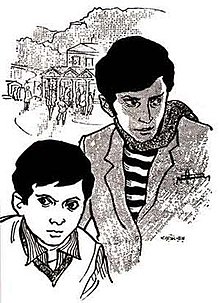
Tales of Crime and Detection
In the same book, ‘Ek Dojon Goppo,’ nestled at its conclusion were a couple of short stories: ‘Feludar Goendagiri’ (The Investigation by My Elder Brother Felu) and ‘Kailash Chowdhurir Pathor’ (The Gems of Kailash Choudhury), which whisked me away into a captivating universe of detective tales.
Enter ‘Felu,’ a detective extraordinaire, accompanied by his trusty cousin and sidekick, delving into a myriad of mysteries, each more intriguing than the last. These tales, so uniquely crafted, were bound to astonish any reader of my tender age. Thus began my enchantment with this universe, fuelling a relentless quest for Feluda books across bookshops, libraries, and even within the confines of relatives’ homes. And never once was I left disappointed, for ‘Feluda’ was a name omnipresent on the Bengali bookshelves, an iconic figure etched into the collective consciousness of every Bengali. Fortunately, a school friend, already steeped in the delights of this literature, graciously aided me in my quest, generously sharing volumes penned by this esteemed author. It’s worth noting that this friend of mine possessed a remarkable talent for storytelling, effortlessly weaving narratives that held us spellbound during our free periods. As the monitor of our class, I now realize, it served him twofold – honing his storytelling prowess while simultaneously diverting attention away from classroom duties. Soon, our circle of friends caught the fever, engaging in book swaps and animated discussions fuelled by the gripping adventures of Feluda.
Continuing with the same method outlined in the previous section, I embarked on my quest for the treasures of Feluda, the iconic fictional detective. Pouring over magazines and newspapers, I eagerly purchased and devoured books dedicated to him in rapid succession. Titles like ‘Feluda one, Feluda two’, ‘Feluda and Co.’, ‘Badshahi Angti’ (The Ring of the Emperor), ‘Baksho Rohossyo’ (The Mystery of the Suitcase), and many more swiftly found their place on my bookshelf, filling it with an ever-growing collection.
The dynamic chemistry between the trio who belong to different age groups – Feluda, his cousin Topse, and his humorous friend Lalmohanbabu – proved to be exceptional. It is this chemistry that makes revisiting these books a delight. Sometimes, I daresay, the camaraderie between them surpasses even that of Sherlock Holmes and Watson.
Much like the majority of the author’s other tales, Feluda narratives, frequently lacking in female presence, deftly entwine moral themes amidst their exhilarating plots. Isn’t it rather curious? The absence of women in Feluda tales – is simplicity the key to less complication? Though one might raise an eyebrow at the notion of a crime thriller sans complexity, I dare say this author was a virtuoso in such matters! His narratives, akin to a well-orchestrated symphony, subtly unveil moral motifs amidst the pulse-pounding intrigue. However, though told simply, some stories feature female characters and are given a noirish treatment, such as ‘Chinnamastar Abhishap’ (The Curse of Goddess Chinnamasta) and ‘Doctor Munshi-r Diary’ (The Diary of Doctor Munshi), reminiscent of Raymond Chandler, showcasing moral dilemmas and values subtly. In ‘Baksho Rahassya’ (The Mystery of the Suitcase), Feluda opts to let the antagonist go due to a lack of evidence for a courtroom conviction. However, when the same story is adapted into a screenplay by the author, Feluda harshly punishes the antagonist, labelling him a ‘thief’ in front of others. Perhaps the author aimed to underscore the importance of ‘values’ when presenting the story in a visual format.
One of my favourite Feluda tales, ‘Joto Kando Kathmandu Te’, was later remade as ‘Kissa Kathmandu Mein’ (The Trouble at Kathmandu) for television, targeting a national audience. Though I’m uncertain if any version of it exists online today, the adaptation featured Shashi Kapoor as Feluda, Alankar as Topshe, and Mohan Agashe as Lalmohan Babu.

Cinematic Revival: Rediscovering Masterpieces
A few days after enchanting me with his literary prowess, the author was bestowed with Oscars for his monumental contributions to world cinema before departing for his heavenly abode.
During that period, ‘Doordarshan’, the Indian Television Network, aired movies directed by him. I revisited ‘Panther Panchali’ with renewed reverence for the director, followed by the delightful ‘Goopy Gayen Bagha Bayen’ (Adventures of Goopy and Bagha), which I savoured thoroughly. Finally, a Feluda tale, ‘Sonar Kella’ (The Golden Fortress), captured my attention. I recall the television host summarizing the story before its airing, describing it as the tale of Mukul, who could recall his past life and claimed to have resided in a fort in Rajasthan. Pressured by the revelation of valuable stones in his past home, Mukul becomes the target of nefarious individuals. His father seeks the aid of a private investigator. As a kid, I distinctly recall a twinge of disappointment towards the television host as she casually mentioned Feluda (who, in my eyes as well as those of many Bengalis, had already attained an iconic status) as a ‘private detective.’

Deep Focus on the author as a filmmaker
After his Oscar-winning triumph and subsequent passing away, the media was flooded with articles delving into his life and work. Immersed in these pieces, I uncovered a deeper understanding of the man and his keen eye for detail, his cinematic philosophy, and his fusion of art and science. Concurrently, I delved into his literary repertoire. His eclectic interests permeated his writings, from the adventures of detective Feluda to his captivating science fantasy tales. Yes, I purposefully employ the term ‘fantasy’ because these narratives transcend the bounds of scientific certainty, inviting readers to imagine what science might one day substantiate.
The Professor Shonku stories, in particular, transported me to a realm where viruses inhabit spherical worlds, trees thrive on human cognition, and an enigmatic pistol has the power to make beings and objects vanish from existence. In the past, depictions of robots, that are mentioned in such stories, mimicking human behaviour, seemed utterly fantastical. These days, with the rise of artificial intelligence, one is left in awe of the prescient nature of the author’s works and wonders if such portrayals may eventually blur the lines of reality.
I embarked on my journey of maturation alongside this multi-talented artist, who excelled as a director, author, and illustrator, revelling in his imaginative works. Subsequently, post-college, I had the opportunity to revisit some of his cinematic masterpieces when they were reissued in theatres. Films like ‘Arannyer Din Ratri’ (Days and Nights of the Forest) and ‘Pratidwandi’ (The Adversary) captivated me anew, allowing me to rekindle my admiration for his boundless creativity.

The Author and Wodehouse: A Meeting of Literary Minds
My fascination with P.G. Wodehouse was initially nurtured within my family circle, but his novels and stories significantly bolstered my admiration for the beloved author. I stumbled upon an article mentioning his affinity for Wodehouse, and as I matured, I discerned a striking resemblance between his works and those of the maestro himself. Whether through the sharp repartee in his films or the witty banter within his stories, his writing exudes a similar charm. Just as Feluda and Shonku have their own series, he crafted a distinct collection centered around ‘Tarini Khuro’ (Uncle Tarini), reminiscent of Wodehouse’s ‘Mulliner’ tales. While Tarini’s narratives occasionally veer into the supernatural or delve into emotional depths, the essence remains consistent. Moreover, the ‘Tarini Khuro’ stories serve as a masterclass in the art of storytelling, showcasing the creator’s versatility and prowess. One can truly grasp the breadth of his talent by delving into his literary oeuvre alone.
Feluda, the ingenious detective crafted by the author, to me, bears a striking resemblance to Psmith in his poised demeanour amid crises. Much like Feluda, who confronts his nemesis Maganlal Meghraj with remarkable calmness, Psmith maintains his cool in challenging circumstances. In ‘Joy Baba Felunath’ (The Elephant God), Feluda faces off against the formidable Maganlal Meghraj, yet his serene and collected demeanour never falters. Similarly, in P.G. Wodehouse’s tales, Psmith confronts adversaries with a suave approach and an unflappable attitude.
In the story ‘Bombaiyer Bombete’ (The Bandits of Mumbai), the author weaves a narrative where the Bengali iconic sleuth Feluda steps forward to assist his friend and companion, Lalmohanbabu. This action surely evokes memories of Wodehouse’s character Bertie Wooster, who, to aid his friends, frequently finds himself in perilous situations. The only divergence here is that Feluda must don both the Berite and Jeeves hats simultaneously to unravel the mystery.
Another story that I can remember at the moment is ‘Ghurghutiar Ghotona’ (The Trouble at Ghurghutiya) wherein, like Wodehouse’s stories, problem-solving involved misunderstandings and witty dialogues.
In ‘Shonku-r Shonir Dosha’ (Prof. Shonku in Dread Problem) we find, much like Wodehouse, characters resorting to mistaken identities and getting entangled in difficult situations.
P. G. Wodehouse is best known as a humourist. However, he had also dabbled in crime fiction, perhaps a rub-off of his having been an admirer of Sir Arthur Conan Doyle and Agatha Christie. Crime had found its way into some of his own writing, including into some of his Jeeves and Wooster and Blandings Castle stories. The range of misdemeanours depicted therein comprises thefts, bank heists, and airgun shootings, and even blackmail. In Wodehouse’s venture, ‘Death at the Excelsior’, he endeavours to concoct a crime thriller with a meticulously arranged sequence of events. Yet, at the close of the day, it leaves one with the impression of a light-hearted tale, with ‘murder’ serving as the solitary sombre element, a departure from his usual literary escapades.
While I’m fully aware that my stance might provoke the ire of passionate readers and discerning critics, let’s just say the comparison here is akin to trying to fit a square peg into a round hole. Allow me to elaborate. In the whimsical world of Wodehouse, these predicaments are served up with a generous dollop of humour and charm, akin to a delightful soufflé rising in the oven. On the other hand, our novel protagonists find themselves grappling with these challenges in the midst of murky criminal investigations, where the stakes are higher than a giraffe’s necktie. So, you see, it’s a bit like comparing apples to oranges – both fruit, but with vastly different flavours and textures!
Unveiling Wisdom: Exploring the Depths of Knowledge Through Timeless Tales
These stories are not only exciting and mysterious but also teach us new things. For example, I learned what galoshes are from reading the story ‘Neel Atanka’, even though the internet didn’t exist then! The description was so clear and vivid that I could picture them in my mind, even though I had never seen them before.
Since many of the stories about Feluda, Shonku, and Tarini Khuro are also about travel, they not only make us want to visit new placesbut also to learn more about them.
Also, I learned the meaning of the word incredible in a really easy way from the story ‘Feludar Goendagiri.’ In the story, Topse, Feluda’s cousin, helper narrator of the story, is sitting in a Darjeeling mall and overhears two old people talking about something, and the word incredible comes up. Topse knew the meaning of the word and since he’s telling the story, he explains it to the readers. Later, Feluda uses his amazing skills like Sherlock Holmes to figure out which side of the mall Topse was sitting on just by looking at his face! Topse is surprised and thinks of the word incredible in his mind. This is the easiest way to learn new words in school: first know the word, then know the meaning, and finally use it. But this story teaches us the same thing without making it feel like we’re being taught something!
From ‘Bankubabur Bondhu,’ I got a glimpse into the fascinating world of piranhas, those creatures of the depths with their sharp teeth. I also learned about the curious penguins that live in faraway lands.
There are many other such tales that I could share, but I do not wish to overwhelm you with my discoveries. Instead, I encourage you to read these wonderful writings for yourselves and embark on your own journey of knowledge.
Although the author is renowned as a director, his writings first stirred my soul. This inspired me to seek out his films, which I found equally endearing.
I may not have delved deeply into his cinematic endeavours here, for I believe the same have already been meticulously analysed by countless critics with a keen understanding of the art far surpassing my own.

Homage to the Maestro: Celebrating the Legacy of Satyajit Ray
On the auspicious occasion of his 103rd birth anniversary, I humbly acknowledge his creative genius. I offer my reverence to the individual who, alongside my parents, has steered me on my path of this lifetime, and undoubtedly will continue to do so in the days ahead.
Incidentally, throughout the entire article, I realize that I have not once mentioned his name. Yet, for the sake of thoroughness, it’s worth noting – his name, in case you are still twiddling your thumbs, is Satyajit Ray.
(All illustrations courtesy the world wide web)
Related Posts:
Chiaroscuro: Guest Post courtesy Talk the Walk
Posted in The Magic of Movies!, tagged Art, Black and White, Bollywood, Chiaroscuro, Cinematography, Movies on April 1, 2024| Leave a Comment »
Ten of my favourite Helen songs: Guest Post by Dustedoff
Posted in The Magic of Movies!, tagged Bollywood, Dances, Helen, Movies on November 22, 2023| Leave a Comment »
Madhumati and Salil Choudhury: Guest Post by Krishna Kumar
Posted in The Magic of Movies!, tagged Lyrics, Movies, Music, P G Wodehouse, Salil Choudhury, Shailendra on September 4, 2023| Leave a Comment »
A whiff of Hollywood
Posted in The Magic of Movies!, tagged California, Grand Canyon, Hollywood, Las Vegas, Los Angeles, Movies, P G Wodehouse, USA on August 31, 2023| 4 Comments »

For someone like me who has been brought up on a healthy diet of movies since my tender years, it is not easy to visit a new place and the mind not veering off to recollect a movie which the place reminds me of. Besides, anything connected with movies in any way – be it a Walk of Fame, a theatre where the prestigious Oscar awards get presented, or even a drive past either Sunset Boulevard or Rodeo Drive and Beverly Hills – acts as a strong magnet, drawing me to it the way a moth would be captivated by a candle. Luckily, the analogy stops there, since, unlike a hapless moth, I do not perish. On the contrary, I live to tell the tale, merely in the spirit of sharing my experiences with those who are likewise besotted by the science and art of moving images.
Recently, an opportunity came up whereby I could visit the South-Western part of the United States of America. Here are some of my experiences.
The Grand Canyon
Irrespective of the viewing point one decides to visit, the stark beauty of raw nature here holds you mesmerized. Just like the many fjords in Norway, these unique rock formations would have taken millions of years to take their present shape. As one reads about the aboriginals who inhabited this area, believing in the forces of nature which protect them and guarding over the famous gold deposits which ended up sounding their death knell when those who consider themselves as ‘civilised’ ended up suppressing their rights, one wonders if there would ever be an end to human greed and avarice.


As the sun continued its journey in the clear blue sky above and the shadows of peaks falling on the opposite side of a narrow valley, my mind went back to Mackenna’s Gold (1969), with Gregory Peck and Omar Sharif chasing a pillar’s shadow to find the gold.

Meeting Some Orcas
A visit to Sea World, a large aquarium-cum-amusement park in San Diego, enabled me to have a close look at a herd of pink flamingos, some sea lions, penguins, besides other sea creatures like orcas.


The last mentioned may be baby whales, but their immense size does not fail to impress. As they glide past you with effortless ease, making some sounds which normal human beings like me would not be able to interpret, the awe and admiration which follows holds you in thrall for a long time. I was recalling the movie Free Willy (1993) which showcased the bond which develops between Willy and Jesse.

It Happens Only in Las Vegas
The ‘Sin City’ is famous for its unique tourist attractions. An ode to many European cities such as Paris and Venice, it even boasts of a small volcano which displays the fury of fire and red-hot lava when a show takes place. A shopping mall which is designed to make you feel as if you are in Venice, what with a meandering canal on which you could enjoy a gondola ride and a blue sky above with white clouds flitting by.


Many other attractions dot the landscape, including a yet-to-be-commissioned Sphere which is said to be an auditorium with a seating capacity of 16,000 persons, equipped with the latest audio systems. The external surface of this structure offers enchanting displays which often leave one mesmerized at night.
The musical fountain outside Hotel Bellagio ended up reminding me of the series of Ocean’s Eleven (2001 onwards) movies.

The Dolby Theatre
The Dolby Theatre (formerly known as the Kodak Theatre) is a live-performance auditorium in the Ovation Hollywood shopping mall and entertainment complex, on Hollywood Boulevard and Highland Avenue. This is where the annual Academy Awards ceremony takes place.


The Hollywood Walk of Fame
One may not expect to run into either Julie Andrews or Anne Hathaway here but walking over more than 2,700 five-pointed terrazzo and brass stars embedded in the sidewalks along 15 blocks of Hollywood Boulevard and three blocks of Vine Street in Hollywood, California leaves one in awe of the kind of multi-faceted talent nurtured and showcased in Hollywood offerings over the decades. It is a motley mix of actors, directors, producers, musicians, theatrical/musical groups, fictional characters, and others. Of course, it is a challenge to see many of these clearly, partly due to the sheer length of the walk, and owing to the jostling crowds which tread over these with gay abandon.


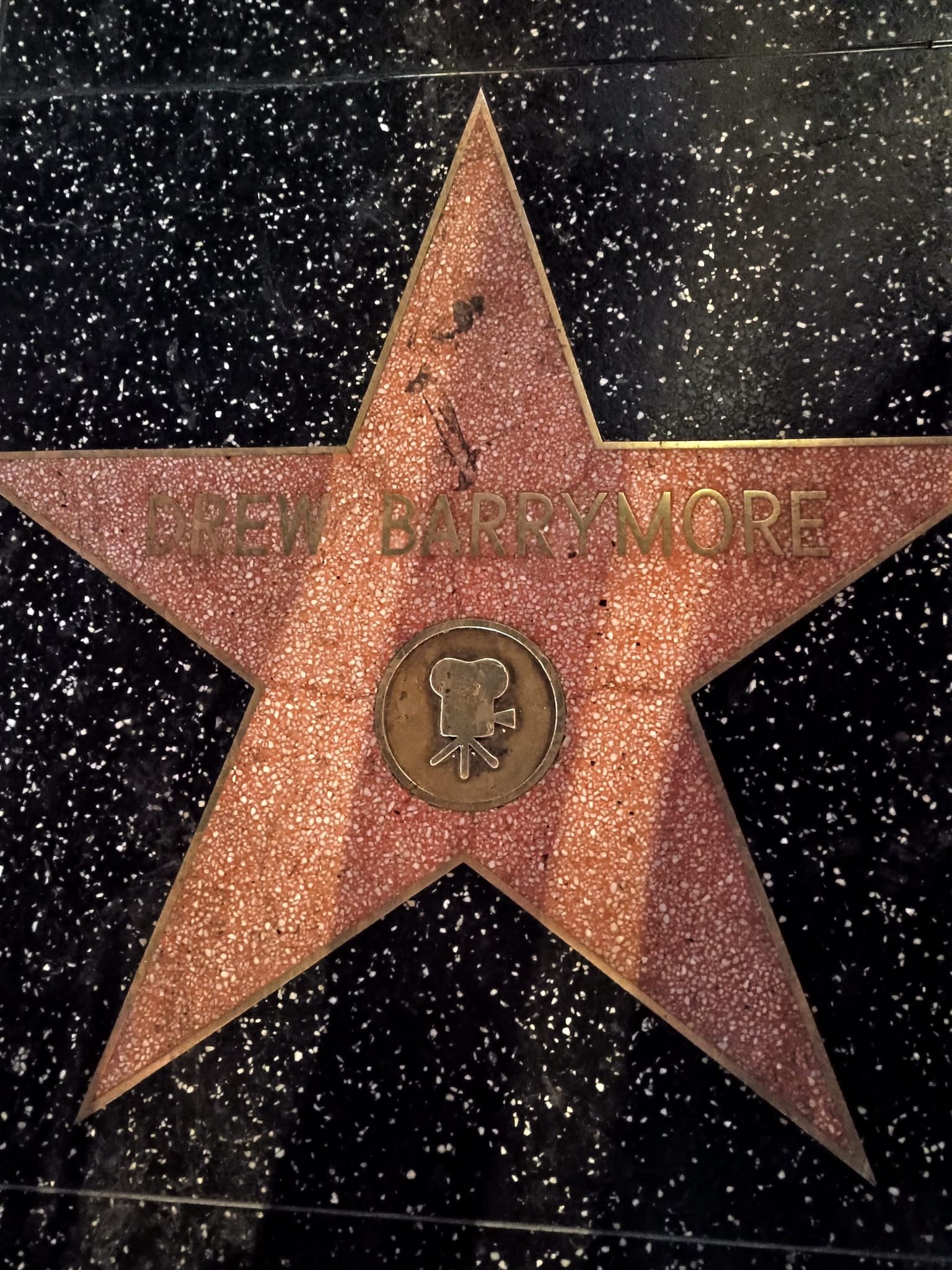










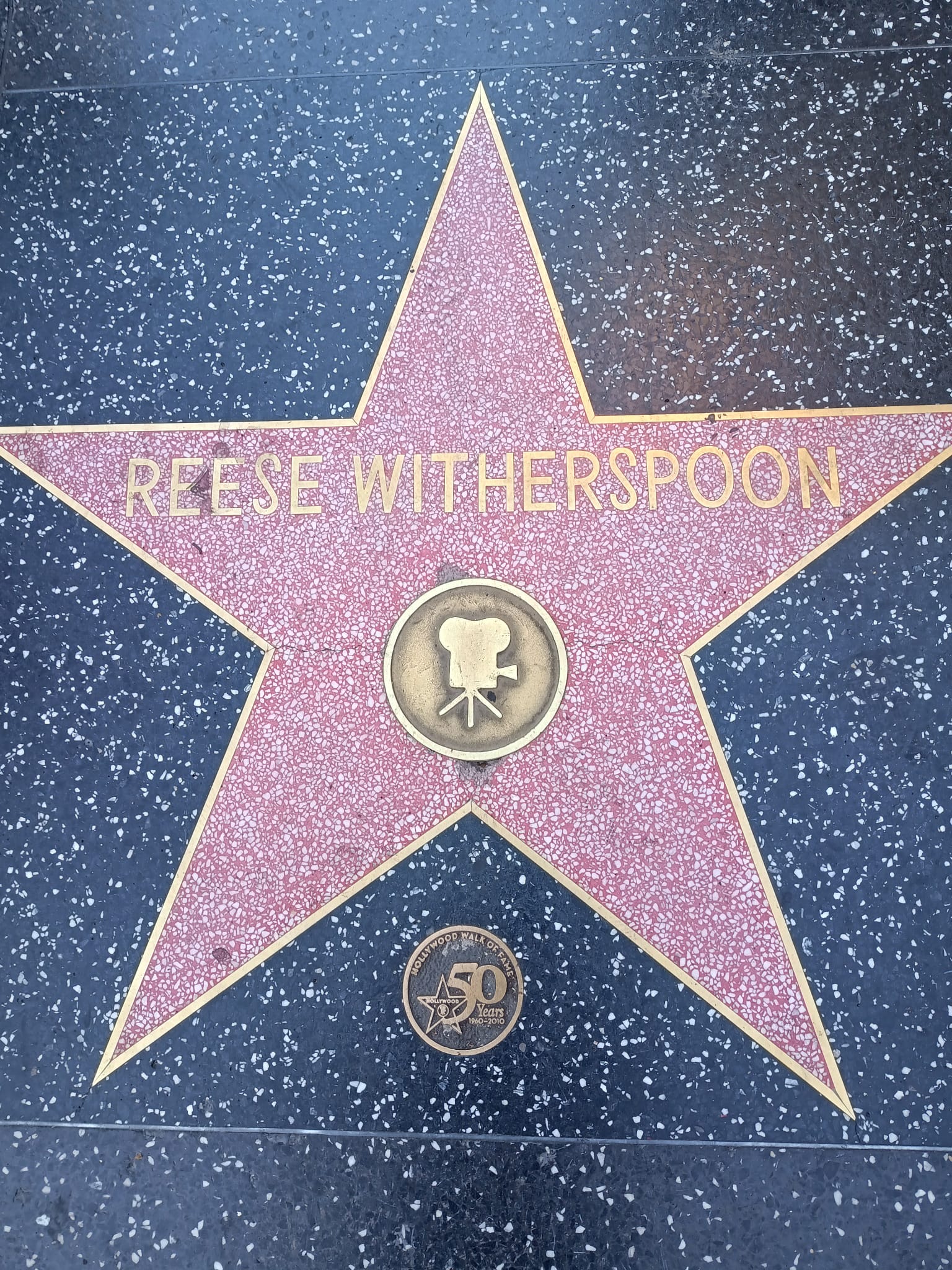

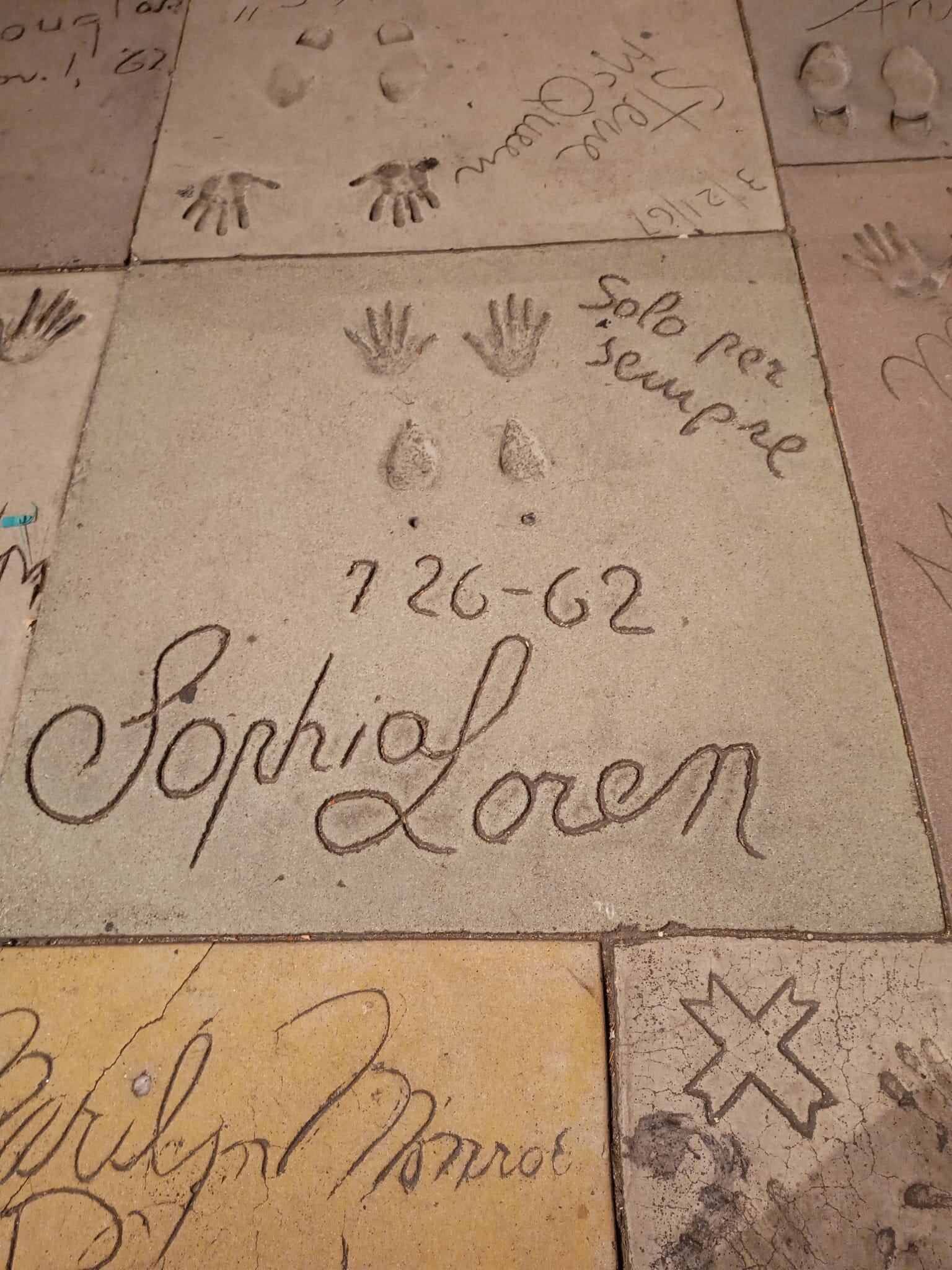
There is also a separate portion next to the Chinese Theatre where concrete slabs carrying either the signatures or the handprints of such yesteryear celebrities as Peter Sellers, Sophia Loren, Marilyn Monroe, Dean Martin, Tom Hanks, Susan Sarandon, and many others can be seen.



Hollywood and P G Wodehouse
Fans of P G Wodehouse are well aware that he had used Hollywood as a setting for some of his novels and short stories. He wrote a series of Broadway musical comedies during and after the First World War, together with Guy Bolton and Jerome Kern, which played an important part in the development of the American musical. Sometime during the 1930s, he began writing for MGM in Hollywood.
One may be disappointed to not to either find the offices of Perfecto-Zizzbaum Corporation or run into Montrose Mulliner and Rosalie Beamish in Hollywood. One may merely surmise that the couple might be quietly enjoying a peaceful time somewhere in Loas Angeles these days, listening to the prattle of the feet of their many grandchildren who are forever eager to sit around them and listen to them recounting the details of their marriage in a gorilla’s cage.
Likewise, Wilmot Mulliner, having retired as a manager of the affairs of a famous Hollywood celebrity, may be entertaining his grandchildren with some bird calls, at times fondly remembering Mabel Potter.
Wannabe starlets struggling to catch the eye of producers and studio owners would still be learning a few lessons from the case of Minna Nordstrom.
I did not come across any swamp of alcohol during my travels. In any case, running into Sister Lora Luella Stott, the woman who is supposed to be leading California out of the swamp of alcohol, was not on the agenda.

Some Lifelong Memories to Cherish
Travel is highly educational, said Jeeves. It is also a source of happiness, one may add. It is about experiencing the sights and sounds of a place. There is the sheer pleasure of soaking in its ambience.
When one passes by Hollywood, one feels having had a platonic brush with the many talented celebrities who, over the decades, have added all the glitz and glamour for which it is known.
(Visuals edited by Suman)
Some Hindi Movies Which Celebrate Friendship
Posted in The Magic of Movies!, tagged Bollywood, Female, Freindship, Hindi, Male, Movies, Women Empowerment on June 12, 2023| 7 Comments »
Friendship is one of the main condiments which spices up our lives. It helps us to face the harsh slings and arrows of life. Whether formed during our student days, or while pursuing our career goals and even during the sunset years of our lives, we develop relationships based on matching personality traits, common interests, mutual trust and quite a few other factors. Often, the bonds which get forged turn out to be strong and resilient. Bonds which are like underground cable connections – dormant, but in place, ready to be reactivated as and when necessary.
Friendship is a theme which is regularly harvested by our dream merchants to enrich their offerings and evoke emotions amongst their audience. If scenes of goofing around with pals make us happy, misunderstandings act like villains, making us sad.
In the post here, I have attempted to mention some movies which, I believe, have friendship as one of the main planks of their theme. Love and revenge are almost always around, but often occupy a back seat in the overall scheme of things.
However, I have avoided movies where the relationship between friends ends up becoming a love triangle of sorts. So, you may find such movies as Sangam (1964), Muqaddar Ka Sikandar (1978), Saajan (1991), Mujhse Dosti Karoge (2002), Kal Ho Na Ho (2003), and many others missing from the list below. Likewise, I have given a miss to the ones wherein friendships fall in the LGBTQ category, of which there is no dearth these days. Thus, series like Anokhi Daastaans (Episode: Geeli Pucchi: 2021), Modern Love, Mumbai (Episode: Baai: 2022) and movies like Maja Ma (2022) have been given a skip.
Seema (1955)
Director: Amiya Chakrabarty
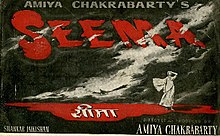
The chemistry between Nutan and Shubha Khote in the surroundings of an orphanage stood out. Some of you may remember the long cycle ride undertaken by the latter towards the climax of the movie.

Dosti (1964)
Director: Satyen Bose
Circumstances and love for music brings together a blind person and a handicapped one. Trust Rajshri Productions to keep regaling us with family-oriented themes which tug at our heart strings.

Anand (1971)
Director: Hrishikesh Mukherjee
An unusual bond develops between an idealistic doctor and a terminal cancer patient who comes to stay with him during the last few months of his life. The frustration of a doctor at not being able to alleviate the suffering of his new-found friend was etched out so very poignantly.

Victoria No. 203 (1972)
Director: Brij
Two old golden-hearted crooks get released from jail and wish to spend the rest of their lives as good, respected men. The plan is short lived when they willy-nilly find themselves on the trail of some stolen diamonds.
Director: Hrishikesh Mukherjee
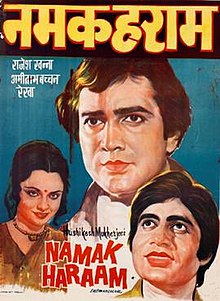
An industrialist who does not care much about maintaining harmonious relations with his labour force ends up being confronted by a close friend who empathizes with the travails of the workers and evolves into a trade union leader of sorts.
Sholay (1975)
Director: Ramesh Sippy
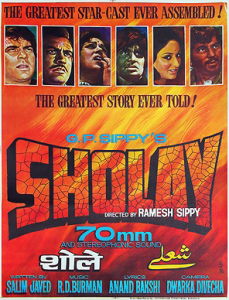
Even though the main theme was all about revenge with romantic sub-plots thrown in, the friendship between Jai and Veeru went on to become the stuff of cinematic legends.

Hera Pheri (1976)
Director: Prakash Mehra
Two small-time crooks loot other rich ‘respected’ but criminal-minded people for a living. Misunderstandings arise between them, but eventually get cleared up and the friendship between them gets reestablished.

Chashme Baddoor (1981)
Director: Sai Paranjape
Three friends who live together run into a young lady from the neighbourhood. The studious one ends up winning her heart. Out of jealousy, the other two try to complicate the relationship between the couple. A grandmother ends up clearing the mists, reuniting the couple.
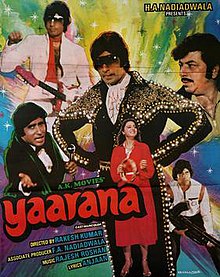
Yaarana (1981)
Director: Raakesh Kumar
If one friend goes out of his way to promote the singing career of a childhood friend, the other, upon becoming famous and rich, reciprocates the gesture by donating the proceeds of his earnings and consequent record deals in order to rid his friend of his many mortgages and to reunite his family. When one gets admitted into a lunatic asylum, the other one manages to sneak in and restore his sanity.

Andaaz Apna Apna (1994)
Director: Rajkumar Santoshi
Two daydreamers come up with a get-rich-quick scheme by pursuing a millionaire’s daughter. Once they meet each other, they form a competitive bond and land up at the daughter’s place under some false pretexts. Diamonds, mafia dons and jealous uncles play a role. Eventually, they play saviours to the daughter, her secretary, and the family, thereby achieving their goals.

Dil Chahta Hai (2001)
Director: Farhan Akhtar
Three close friends pursue a different career path after passing out of college. Love blossoms for each one, though differently. They go on a road trip together. Misunderstandings between them get cleared in the end.

Filhaal (2002)
Director: Meghna Gulzar
One of the rare movies which portrayed a strong bond of friendship between two inseparable friends. During a fencing session, a freak accident leaves one of the friends injured, rendering her unable to conceive later in life. The other one offers to be a surrogate mother for the couple. Complications arise in the relationship, though the story eventually ends up on a positive note.

Rang de Basanti (2006)
Director: Rakeysh Omprakash Mehra
When a British student decides to make a film on pre-independence freedom fighters from India, contemporary reality meets history, forcing the viewers to introspect as to where we are headed as a country. The bond between the friends stood out for its empathic and realistic portrayal.
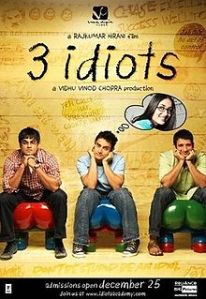
3 Idiots (2009)
Director: Rajkumar Hirani
The friendship between three classmates withstands the test of time. Ten years down the road, their common antagonist also joins in when they decide to search for one of the missing friends. The central message of the movie was to decide one’s career moves based not on parental or popular expectations but on one’s inner passion.

Zindagi Na Milegi Dobara (2011)
Director: Zoya Akhtar
Three friends undertake a joint trip so as to experience different facets of life. Their plan is that during the road trip each of them will pick a surprise adventure sport in which they all have to participate together. They complete the event successfully, bonding better with each other and gaining a renewed sense of purpose in life.

Kai Po Che (2013)
Director: Abhishek Kapoor
Three friends spot a talented boy who is good at cricket and decide to groom him. A love affair leads to misunderstandings arising between them. The 2001 earthquake in Gujarat and the riots of 2002 also pose many challenges to their bond of friendship.

Dedh Ishquia (2014)
Director: Abhishek Chaubey
Two partners in crime run into a pair of scheming ladies who have ideas of their own. The latter end up cocking a snook at the former by selling a necklace stolen by them, buying a property from the proceeds, and settling down there to start a dance school for young girls – a scheme the two friends had hatched between themselves.

Parched (2015)
Director: Leena Yadav
Four women in a desert village of Gujarat, India, forge a strong bond of friendship between themselves while facing social evils, age-old traditions and practices of patriarchy, child marriage, dowry, marital rapes, and physical and mental abuse.

Double XL (2022)
Director: Satramm Ramani
A common challenge of being overweight results into a bond of friendship developing between two young ladies. They decide to work together and demonstrate the perks of obesity to the world, ridiculing the current craze for Size Zero and unrealistic norms of beauty peddled by fashionistas and the media.
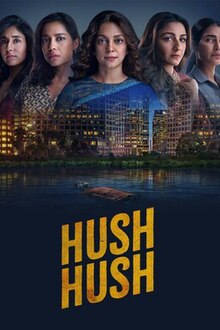
Hush Hush (2022, Series)
Director: Tanuja Chandra
A taut thriller where one of the four close friends dies in mysteriously circumstances. The other three ladies eventually uncover the real reason for the death of their friend, while battling the challenges in their own lives.

Uunchai (2022)
Director: Sooraj Barjatya
When a close friend suddenly dies, three friends decide to honour his last wish – that of visiting the Himalayas. Despite health challenges, they undertake a hiking trip to the Everest base camp. They manage to scatter the ashes of their departed friend there. The perilous journey makes them realize that each one of them has heights within which are waiting to be scaled, bringing home the key message of striving to realize our fullest potential in life.
Why Are Women Short-changed?
There may be many more friendship-based movies which I would have missed out here. However, one thing that strikes is that of a serious shortage of movies on friendships between women. Is it that those hailing from the tribe of the delicately nurtured do not have friends?
The underlying cause could perhaps be that a major chunk of our society thrives on a patriarchal mindset; while males enjoy their friendships for a very long time, females often get a raw deal on this front because family commitments reign supreme, often to the exclusion of all else. With hardly any personal space and a minimal availability of ‘Me Time’, the bonds of female friendship, if any, do not enjoy the kind of continuity that male friendship does.
We need to encourage and empower the women in our lives to keep their own embers of friendship aglow, alive and kicking!
Related Posts:
My First Experience of Watching a Movie: Guest Post by Suryamouli Datta
Posted in What ho!, tagged Filmitis, Humour, Movies, Obsession, P G Wodehouse, Serialitis on June 6, 2023| Leave a Comment »

Ahoy there, my dear readers, gather around and let me regale you with the tale of my first encounter with the bewitching world of cinema. It was a sweltering summer day, the kind where even your sweat sweats, and I found myself being herded by my good mother into a dark hall which reeked of human sweat and stale tobacco. A set of noisily whirring wall-mounted fans were unsuccessfully trying to dispel the stuffy ambience inside. I was but a wee lad of about five summers then, not yet ready to face the world on my own, and so, like many other youths of my age and station, I clung to my parent’s skirts for dear life.
As we plopped ourselves down onto our seats, my imagination ran wild with thoughts of dashing heroes and fair maidens in distress, of swashbuckling adventure and sizzling romance. And what did we get? A paltry provincial flick that was as perplexing for a five-year-old as someone studying in the 5th standard trying to grasp the laws of quantum physics.
It purportedly bore some resemblance to the tale of Romeo and Juliet, although I can confidently declare that the Bard himself would have been scratching his head trying to figure out what the hullabaloo was about. From what I could gather, the movie was an incomprehensible cacophony of adults bawling in some alien tongue. And yet, a few scenes still stick in my noggin to this day.
For instance, there was one where the protagonist (or at least, I think he was ‘the one’) was getting pummeled by a bunch of goons, crying like a banshee. I couldn’t help but wonder why the fella didn’t just give them a good thrashing like a bona fide English gentleman – and then it dawned on me that he was probably too busy wailing like a newborn babe to do anything else. He would have done well to undergo a crash course in martial arts under someone like Roderick Spode.
Then came another scene where the leading lady was being implored to partake in some grub, and exasperated with the incessant pestering, she chucked the plate across the room like a discus thrower. I must admit, even at my tender age, I was mightily impressed by her spunk in the face of such adversity. She sounded like Minna Nordstrom throwing tantrums and insisting upon being offered some meatier roles on the screen in the days to come.
Needless to say, the film might as well have been the first production of the Perfecto-Zizz-baum Corporation, the leading movie studio headed by Mr. Schnellenhamer, envisaged at a time when he might have been having an odd disagreeable feeling, caused by what Roget’s Thesaurus would describe as agitation, fury, violent anger, wrath and similar emotions listed under the heading ‘Rage’, that too of an impotent kind. Discussions with his team of directors, script writers, music composers, yes-persons, deputy yes-persons, junior yes-persons, nodders, and trainee nodders might have led to a rather patchy outline of the movie.
What was on offer was a mere collection of moving images on a screen. However, despite my befuddlement and general indifference, I maintained a stiff upper lip and remained mum throughout the entire affair – a feat that earned me many a pat on the head and back from those around me. I suppose I had already honed my cinema etiquette from my prior dalliances with the proverbial idiot box, where I had already been spending quite a few jolly hours watching Mickey Mouse and Donald Duck.
But fret not, my companions, for the yarn doesn’t conclude just there. As soon as the film rolled to a halt and the lights flickered on, my dear old ma and I trudged along the sunny byways of Kolkata in search of refreshment for our weary souls. And lo and behold, we chanced upon a confectionery – Kamola Sweets, it was named – that promised to satiate our whims.
Picture my rapture, dear chums, when I first laid eyes upon the wondrous delicacies being served at this place. There were samosas as colossal as my noggin, chock-full of spiced potatoes and peas and dripping with oil – the kind of fare that’s more precarious than a boomerang sharpened to a razor’s edge. And then, there were the gulab jamuns, those pillowy globes of khoya (highly condensed milk) soaked in syrup and served piping hot – a dessert worthy of gods alone.
Needless to say, I was smitten with those toothsome delights, and I fancy that my ardour for cinema would have been just as fervent if only that rascal of a movie had been a tad more intelligible. But that’s life for you, my dearest bosom pals – brimming with twists and turns and the occasional sweet surprise.
In any case, it was like love at first sight. This is how my enchantment with movies began. As the lights dim and the images start rolling on the silver screen, I would sit wide-eyed, lapping up the juicy goings on with a single-minded devotion which would have put someone like Chaitanya Mahaprabhu to shame. The thrill of a car chase, the sheer pleasure of listening to some uplifting lyrics set to soulful music, the excitement of seeing a villain and his sidekicks getting brow-beaten by a smart hero, the gravity-defying stunts which would make someone like Newton squirm in his grave, and the rush of hormones when a comely heroine eventually fell into the arms of a dashing hero!
As the couple walked hand in hand into a sunset and the credits started rolling by, one had no other option but to snap out of yet another phase of escapism. The thoughts quickly turned to satiating the needs of a stomach which suddenly started demanding its quota of nourishment.
I can go on and on, dear comrades, but have no intentions of boring you any further with the apparent frivolity of my first cinematic encounter which led to a lifetime bondage of sorts.
(Reviewed and somewhat spruced up by yours truly!)
Related Posts:
Of Filmitis and Serialitis
Posted in The Magic of Movies!, tagged Addiction., Facebook, Humour, Movies, OTT, Serials, The Reviewer Collective on May 2, 2023| 8 Comments »

The foundations of our civilization are quivering. Homo sapiens are faced with a mental health crisis of gigantic proportions. There is widespread concern about the pace at which the twin epidemics of Filmitis and Serialitis are spreading across countries and continents. Medical researchers of all hues are twiddling their thumbs, trying to figure out a cure for these afflictions which happen to be not only highly addictive but also pleasurable.
These afflictions affect all human beings, irrespective of their age, sex, cast, creed, or ethnicity. Post-2020, when a pandemic struck humanity, the spread of these virulent challenges has posed a serious challenge to humanity. These are said to be highly contagious. A word of mouth is all that is required to lead one to contract it. Even an inane post on a social media platform in a Facebook group like The Reviewer Collective could nudge one to start watching a movie or an OTT series and then get hooked to it. Often, a long period of bondage ensues. Frequent viewers of the delightfully diverse content on the OTT platforms gladden the hearts of many a producer-director duo. The shareholders of such platforms can be seen laughing all the way to their banks.
To put it simply, once the germs of Filimitis and Serialitis have managed to find a foothold in any neuro-system, one’s fate is sealed.
Most people suffer from Serialitis these days. The OTT platform throws an infectious suggestion. We decide to check it out. We get sucked in. The directors and the scriptwriters ensure we never get to leave the confines of their alt universe. We get stuck with it. At night, we shudder to think of what may happen next. ‘Filmitis’ is far more tolerable. Whatever happens, it gets wound up in around 120 minutes.
Often, we worry about kids spending too much time on their screens. When a kid starts believing that he/she has super-powers like those possessed by either Batman or Spiderman, our brows get furrowed. However, when it comes to addictions like Filmitis and Serialitis, we, the so-called adults, are no less.
The Symptoms
These ailments manifest themselves in many ways. A mood of apathy towards one’s near and dear ones sets in. Public interactions are often given a skip, unless mandated otherwise by an overbearing spouse. One develops a strong tendency to compare on-screen characters to those one comes across in real life. At work, haughty bosses get likened to such villains as Gabbar Singh (Sholay) and Mogambo (Mr. India).
A perpetual state of intoxication envelops one. Meticulous notes get made of the varied recommendations which keep pouring in from all sides. Lists showing the yet-to-be-watched offerings by our dream merchants get updated regularly. A pitiless analysis of the scintillating characters on the screen gets done. Wikipedia gets searched for more offerings featuring a favourite actor on the screen. Speculations get made as to what would have happened if they had responded to a situation differently.
Even lay viewers suddenly evolve into seasoned reviewers, offering insights into such aspects as acting proficiency, script writing, cinematography, music, lyrics, editing, and the like. I, for one, upon coming across an offering which sound exciting to me, would be in the transient grip of a ‘Eureka’ moment, rushing to share the information with aficionados who may devour it with much glee. Archimedes would surely be squirming in his grave.
The most serious symptom happens to be the disinclination of all those suffering from Filmitis and Serialitis to seek a cure for these maladies. Once contracted, one is apt to remain happy and contented to continue in a state of perennial addiction. Medical fraternity is yet to find a solution to this unique kind of viral resistance.

Three Stages
There are three stages of these diseases which have been identified and catalogued so far.
Stage 1
In the first stage, one displays occasional signs of having any of the symptoms described above.
Stage 2
In the second stage, one shows grave signs of many of these symptoms, but is still considered treatable by a heavy dose of socializing. Quite a few in this category practice detachment and can leave a series mid-way, without any feelings of remorse or any desire to get back to it, ever. Lord Krishna, were He to come to know of such souls, would be pleased for them to have acquired this spiritual trait.
Stage 3
The third stage is the most critical one, with no cure in sight as of now. Medicos continue to be baffled. In this stage, one is obsessed with all facets of the production of the collages of moving images, much to the exclusion of every other kind of arts. In every situation of life, a streak of one of the narratives is invariably noticed.
All relatives, friends, seniors, colleagues, and juniors get identified with one or the other characters created on the screen. Lawyers sound like either Mickey Haller (The Lincoln Lawyer) or Woo Young-woo (Extraordinary Lawyer Woo). When visiting a hospital, female doctors get likened to Meredith Grey (Grey’s Anatomy). Nurses who go out of their way to assist us sound like Amy Loughren (The Good Nurse). When visiting a shopping mall, mumbling managers get likened to Glenn and smart salesgirls to Amy (Superstore) fame.
A person suffering from the last stage of these disorders often complain of a stifling sensation. Nothing else in life appeals any longer. The allure of catching up on the latest on-screen fate of the characters often makes one lose sleep. Binge-watching becomes the norm. During days, when life really happens, one goes about the mundane affairs of life like a zombie with frayed nerves, bleary-eyed, and lost in one’s own thoughts.

Weaponizing these maladies
Do we need de-addiction centres to counter these viruses of Filmitis and Serialitis? Do we wish our medical research honchos to come up with a vaccine to keep the foundations of our civilization from quivering incessantly? Not necessarily. Instead, an innovative deployment of these viruses would help humanity in more ways than one.
The day is not far off when governments the world over may end up weaponizing these diseases.
Tackling obdurate enemies
Leaders as well as soldiers of armies wanting to attack a country could be easily lulled into a sense of complacency and inaction if facilitated by the border area networks offering free streaming of OTT content dished out by the country under attack. Wars would then be a thing of the past. Money being spent on arms of all kinds would eventually get deployed to eradicate poverty and illiteracy across all our continents.
Improving internal security
A similar treatment, if meted out to criminals, terrorist groups and internet warriors who keep spreading fake news, would ensure peace and harmony in the society. Crime rates would nosedive.
Providing joyful healthcare
Seriously ill patients awaiting a surgery while lying on a hospital bed, if fed with such stuff as Wagle Ki Duniya and Happy Family…Conditions Apply, would happily wait for their turn to come up, thereby improving the billings of private hospitals and nursing homes.
Building a chivalrous society
If such movies as Ghar, Chhoti Si Baat, and Veer Zara get promoted aggressively by our Movie Mughals, members of the so-called sterner sex would end up being more chivalrous, thereby minimizing misdemeanours directed at the delicately nurtured. Divorce rates would plummet. Loving husbands would be more likely to follow the example of Dr Anand (Silsila), ensuring that the doves of peace keep their wings flapping over their humble abodes. Parents who are brought up on a healthy diet of such movies as Gunjan Saxena and Babli Bouncer may give up their patriarchal mindsets and encourage their daughters to scale newer heights in their lives and careers.
Improving political discourse
Politicos in power might keep the opposition leaders similarly engaged, thereby reducing their propensity to keep making defamatory speeches or hurling choicest abuses upon them. Those cooling their heels in jail, if shown an offering like Dasvi, may even get motivated to improve upon their academic record. A general improvement in the quality of political discourse may thereby ensue. Better degree of sanity may prevail around election time.
Population control
Health ministers who are having sleepless nights worrying about their country’s galloping birth rates may consider targeting their denizens in the reproductive age group with such offerings as Basic Instinct, The Dirty Picture and Lady Chatterley’s Lover, thus keeping them distracted from their amorous impulses.
Cocking a snook at the First World countries

When meeting the leaders of countries which keep showing their disdain towards an emerging economy, the premier of such a country merely needs to present his/her hosts with video recordings of such serials as Scandal, The Designated Survivor and The Diplomat.
By an innovative and clever deployment of these afflictions, the score of Gross National Happiness of all countries may improve drastically.
In other words, disorders like Filmitis and Serialitis need neither be contained nor cured. On the contrary, these need to be spread as quickly as may be possible. This would ensure that we continue devouring inane as well as cerebral stuff on our screens while slouching in our sofas, flowers are forever in bloom, God continues to be in heaven, and all remains well with the world.
Related Posts:
Some Music-themed Hindi Movies
Posted in The Magic of Movies!, tagged Bollywood, Dance, Hindi, Movies, Music, Rivalry, Success on April 28, 2023| Leave a Comment »
Music is the backbone of Hindi movies and OTT series, whether by way of songs and dances, or in the form of the background variety. However, there are very few offerings dished out by our Dream Merchants which are devoted to the subject of music itself, where the life of most of the characters revolves around the practice of music. Such human emotions as love, hatred, animosity, jealousy, pride, prejudices are all there, but music forms the central theme. The key characters get success after a great deal of practice. In the interim, they often taste heart-breaking failures. But spurred on by their immense talent, ardent passion, and sometimes by either a teacher or a muse, they persevere in their efforts and eventually achieve the recognition they deserve.
The idea here is not to recall and list movies which may be termed as musicals. Nor would I like to mention the ones which have provided uplifting music. In the list that follows, you will not find the ones where either music merely serves the purpose of entertainment or even where the main characters may be music teachers.
Thus, movies such as Dholak (1951), Phagun (1958), Jahan Ara and Chitralekha (1964), Heer Ranjha (1970), Pakeezah (1972), and Umrao Jaan (1981), do not appear here.
I have instead tried to focus here on the movies where music forms a core part of the script. Many of these depict the trials and tribulations of an artist who is enthusiastic about this form of fine arts. Many others capture the gravitational force exerted by music in making a relationship either blossom or wither.
Consider the following movies which are music-based offerings from our dream merchants.
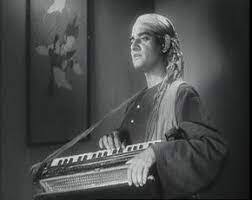
Street Singer
(1938)
Direction: Phani Majumdar
Music: R. C. Boral
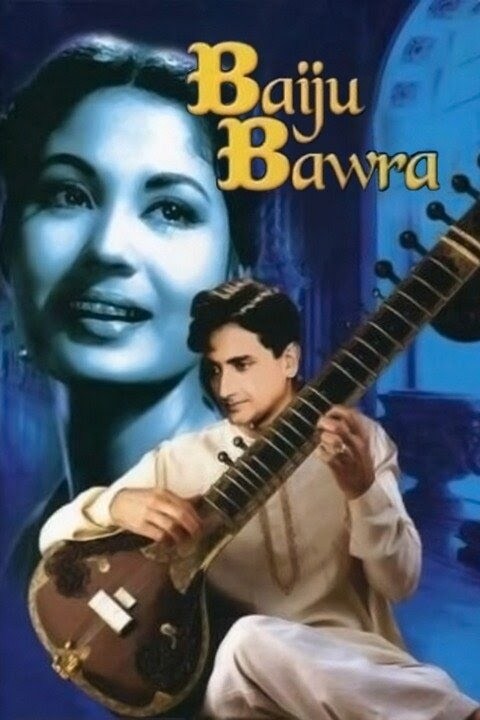
Baiju Bawra
(1952)
Direction: Vijay Bhatt
Music: Naushad
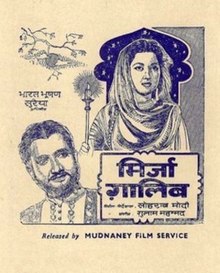
Mirza Ghalib
(1954)
Direction: Sohrab Modi
Music: Ghulam Mohammed

Shabab
(1954)
Direction: M. Sadiq
Music: Naushad
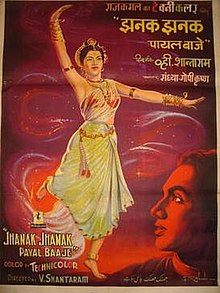
Jhanak Jhanak Payal Baje
(1955)
Direction: V. Shantaram
Music: Vasant Desai

Basant Bahar
(1956)
Direction: Raja Nawathe
Music: Shankar–Jaikishan

Phagun
(1958)
Direction: Bibhuti Mitra
Music: O. P. Nayyar
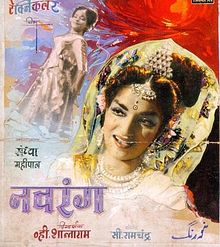
Navrang
(1959)
Direction: V. Shantaram
Music: C. Ramachandra
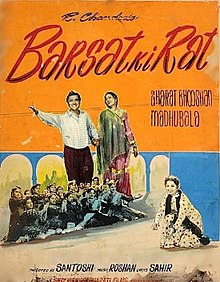
Barsaat ki Raat
(1960)
Direction: P. L. Santoshi
Music: Roshan

Sangeet Samrat Tansen
(1962)
Direction and Music: S. N. Tripathi

Meri Surat Teri Ankhen
(1963)
Direction: R. K. Rakhan
Music: S. D. Burman
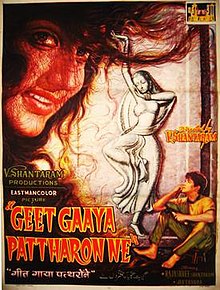
Geet Gaya Pattharon Ne
(1964)
Director: V. Shantaram
Music: Ramlal

Geet
(1970)
Direction: Ramanand Sagar
Music: Kalyanji–Anandji

Jal Bin Machhli Nritya Bin Bijli
(1971)
Direction: V. Shantaram
Music: Laxmikant–Pyarelal
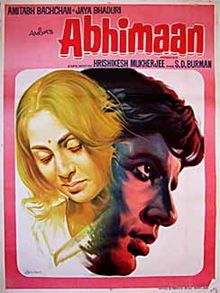
Abhimaan
(1973)
Direction: Hrishikesh Mukherjee
Music: S. D. Burman
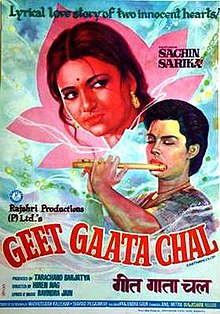
Geet Gata Chal
(1975)
Direction: Hiren Nag
Music: Ravindra Jain

Alaap
(1977)
Direction: Hrishikesh Mukherjee
Music: Jaidev
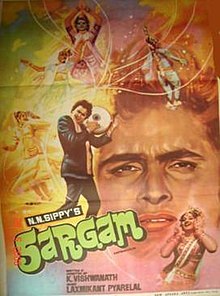
Sargam
(1979)
Direction: K. Viswanath
Music: Laxmikant-Pyarelal

Kalaakaar
(1983)
Direction: P. Sambasiva Rao
Music: Kalyanji–Anandji

Sur Sangam
(1985)
Direction: K. Viswanath
Music: Laxmikant–Pyarelal

Naache Mayuri
(1986)
Direction: N. T. Rama Rao
Music: Laxmikant–Pyarelal
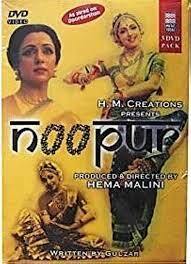
Noopur
(1990 TV series on Doordarshan)
Direction: Hema Malini

Sangeet
(1992)
Direction: K. Vishwanath
Music: Anand Milind
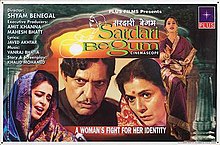
Sardari Begum
(1996)
Direction: Shyam Benegal
Music: Vanraj Bhatia

Taal
(1997)
Direction: Subhash Ghai
Music: A. R. Rahman

Dil To Pagal Hai
(1997)
Direction: Yash Chopra
Music: Uttam Singh

Saaz
(1998)
Direction: Sai Paranjpye
Music: Yashwant Deo, Bhupen Hazarika, Zakir Hussain, Raj Kamal

Sur – The Melody of Life
(2002)
Direction: Tanuja Chandra
Music: M. M. Keeravani
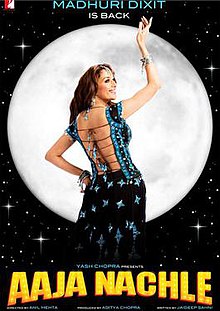
Aaja Nachle
(2007)
Direction: Anil Mehta
Music: Salim–Sulaiman
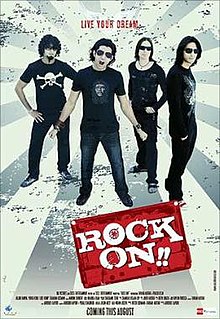
Rock on!
(2008)
Direction: Abhishek Kapoor
Music: Shankar–Ehsaan–Loy

Rockstar
(2011)
Direction: Imtiaz Ali
Music: A. R. Rahman
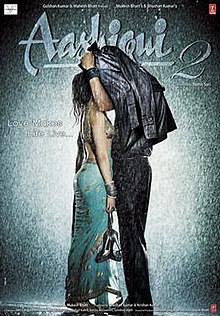
Aashiqui 2
(2013)
Direction: Mohit Suri
Songs: Jeet Gannguli, Mithoon, Ankit Tiwari
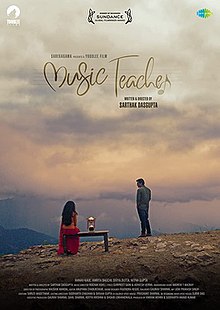
Music Teacher
(2019)
Direction: Sarthak Dasgupta
Music Original Composition: R.D. Burman
Music Re-created by: Rochak Kohli
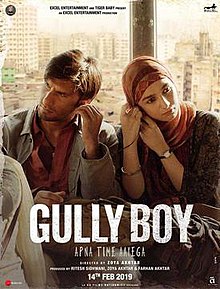
Gully Boy
(2019)
Direction: Zoya Akhtar
Music: The 18-song soundtrack, involving an estimated 54 contributors, was supervised by Ankur Tiwari

Bandish Bandits
(2020; Amazon Prime Video)
Direction: Anand Tiwari
Music: Shankar–Ehsaan–Loy,

Qala
(2022)
Direction: Anvita Dutt
Music: Amit Trivedi
I am reasonably certain that there are many more which I might have missed out here. However, as the listing shows, over time, as Hindi cinema has moved away to modern settings, India’s rich cultural heritage is perhaps no longer getting the attention it deserves. That is how, a series like Bandish Bandits and a movie like Qala come like a whiff of fresh air in our turbulent times.
The price one pays for success
Some of these movies, like Saaz and Qala, depict the kind of competitive spirit which prevails in the field of music. A character even ends up jeopardizing the career of another, resulting in overpowering guilt. Such movies also capture the kind of cunning, guile and nerves of chilled steel needed to achieve success in a highly competitive world. Perhaps many of the famous artists we know of might have passed through quite a few such phases in their careers.
Like any other profession, the world of music is also replete with rivalry. It would be naïve to assume that success comes cheap. Often, the price it extracts from an artist’s inner being, especially in terms of a compromise on one’s ethics, beliefs, and values, is heavy.
For us, the audience, music is indeed an enriching food for the soul. However, the soul of an artist may carry a few scars, not known to us. But ignorance is bliss, as they say!
Note:
Inputs from Purva Agarwala, Dileep Raina, Madhulika Liddle, Avantika Nirupama, Sunil Jain, and a few others are gratefully acknowledged.
Related Posts:
-
Recent Posts
Buy the Book

buy the book
Categories
-
cc
Tags
Art Bertie Wooster Bhagavad Gita Bingo Little Birthday Blake Mouton Grid Blogging Bollywood Book Campus Life CEO Chivalry Consciousness Coronavirus Corruption Edwin Empress of Blandings English Ethics Feminism Happiness Health Hindi Hollywood Human Values Humour India Jeeves Kalidasa KIds Leadership linkedin Literature Lord Emsworth Love Lyrics Mahabharata Mahatma Gandhi Management Movies Music Norway Paintings Panjab University People P G Wodehouse Politics Pondicherry Portugal Psmith Puducherry Rabindranath Tagore Ramayana Ritusamhara R K Laxman Romance Rosie M Banks Rupert Psmith Seasons Shakespeare Social Media Something Fresh Songs SPANDAN Spirituality SQ Sri Aurobindo Stephen Covey Switzerland Tatas Thos UBS Values Wodehousitis WomenArchives
- March 2026 (1)
- February 2026 (5)
- January 2026 (2)
- December 2025 (1)
- November 2025 (2)
- October 2025 (2)
- September 2025 (3)
- August 2025 (3)
- July 2025 (2)
- June 2025 (2)
- May 2025 (4)
- April 2025 (5)
- March 2025 (5)
- February 2025 (4)
- January 2025 (4)
- December 2024 (6)
- November 2024 (6)
- October 2024 (6)
- September 2024 (5)
- August 2024 (5)
- July 2024 (4)
- June 2024 (4)
- May 2024 (5)
- April 2024 (5)
- March 2024 (3)
- February 2024 (1)
- January 2024 (4)
- December 2023 (2)
- November 2023 (3)
- October 2023 (3)
- September 2023 (3)
- August 2023 (5)
- July 2023 (5)
- June 2023 (7)
- May 2023 (6)
- April 2023 (6)
- March 2023 (8)
- February 2023 (8)
- January 2023 (7)
- December 2022 (6)
- November 2022 (5)
- October 2022 (8)
- September 2022 (5)
- August 2022 (6)
- July 2022 (6)
- June 2022 (8)
- May 2022 (7)
- April 2022 (8)
- March 2022 (7)
- February 2022 (3)
- January 2022 (7)
- December 2021 (4)
- November 2021 (8)
- October 2021 (7)
- September 2021 (6)
- August 2021 (7)
- July 2021 (7)
- June 2021 (9)
- May 2021 (8)
- April 2021 (9)
- March 2021 (10)
- February 2021 (8)
- January 2021 (8)
- December 2020 (7)
- November 2020 (6)
- October 2020 (5)
- September 2020 (9)
- August 2020 (9)
- July 2020 (8)
- June 2020 (8)
- May 2020 (6)
- April 2020 (5)
- March 2020 (7)
- February 2020 (4)
- January 2020 (7)
- December 2019 (12)
- November 2019 (10)
- October 2019 (5)
- September 2019 (9)
- August 2019 (10)
- July 2019 (9)
- June 2019 (14)
- May 2019 (13)
- April 2019 (14)
- March 2019 (11)
- February 2019 (11)
- January 2019 (14)
- December 2018 (12)
- November 2018 (12)
- October 2018 (14)
- September 2018 (9)
- August 2018 (10)
- July 2018 (10)
- June 2018 (8)
- May 2018 (11)
- April 2018 (11)
- March 2018 (6)
- February 2018 (9)
- January 2018 (10)
- December 2017 (10)
- November 2017 (9)
- October 2017 (8)
- September 2017 (11)
- August 2017 (10)
- July 2017 (10)
- June 2017 (11)
- May 2017 (9)
- April 2017 (7)
- March 2017 (7)
- February 2017 (8)
- January 2017 (10)
- December 2016 (9)
- November 2016 (11)
- October 2016 (10)
- September 2016 (10)
- August 2016 (9)
- July 2016 (6)
- June 2016 (10)
- May 2016 (10)
- April 2016 (10)
- March 2016 (10)
- February 2016 (12)
- January 2016 (10)
- December 2015 (11)
- November 2015 (11)
- October 2015 (10)
- September 2015 (10)
- August 2015 (10)
- July 2015 (10)
- June 2015 (10)
- May 2015 (10)
- April 2015 (10)
- March 2015 (9)
- February 2015 (10)
- January 2015 (8)
- December 2014 (9)
- November 2014 (8)
- October 2014 (8)
- September 2014 (7)
- August 2014 (7)
- July 2014 (7)
- June 2014 (7)
- May 2014 (7)
- April 2014 (7)
- March 2014 (7)
- February 2014 (6)
- January 2014 (7)
- December 2013 (6)
- November 2013 (6)
- October 2013 (6)
- September 2013 (6)
- August 2013 (6)
- July 2013 (6)
- June 2013 (6)
- May 2013 (6)
- April 2013 (6)
- March 2013 (6)
- February 2013 (6)
- January 2013 (6)
- December 2012 (4)
- November 2012 (4)
- October 2012 (3)
- September 2012 (2)
- August 2012 (4)
- July 2012 (2)
- June 2012 (2)
- May 2012 (2)
- April 2012 (2)
- March 2012 (2)
- February 2012 (3)
- December 2011 (3)
- November 2011 (1)
- October 2011 (2)
- September 2011 (2)
- August 2011 (2)
- July 2011 (2)
- June 2011 (3)

 ashokbhatia