One of the compensations for leaving behind the phase of adolescence is a wholesome optimism that envelopes us in our youth. Yes, it does take the fine edge off the series of infatuations and whatever semi-romantic triumphs of a transient nature may have come our way in our formative years. But it has the admirable effect of making us believe that our Guardian Angels are working overtime to ensure that our cup is overflowing with hopes for a brighter future, whether professionally or personally. We are in an exuberant state of mind where the sun will always keep shining, the grass will always be green, flowers will forever be in bloom, and God will continue to be in heaven.
Our dream merchants have often showcased this state of affairs. Our heroes and heroines can be found admiring nature while belting out a melodious song, duly backed by a well-equipped orchestra amid the wilderness. In some cases, they are shown to realise that life is nothing but a journey, comprising ups and downs and twists and turns. A few are introspective, exemplifying the bliss of solitude, whereas some dream of a great career ahead.
Given the penchant of Bollywood to keep spinning romantic yarns, most of such solos showcase the inner yearning to run into a potential soul mate. One waits for a Cupid’s arrow to strike one sooner rather than later. A sinister restlessness creeps in and the unfulfilled desire for heartfelt companionship governs one’s behaviour. The latent wish to identify The Chosen One who will soon be swaying us off our feet gets expressed with gay abandon. A romantic spring is in the offing. Of interest here are songs wherein the party of the first part has dreams in his/her eyes and is seeking love, wandering around as a sole atom. The party of the second part is yet to appear on the horizon.
Here is a random sample of some such songs from Hindi movies.
A Communion with Mother Nature
Against a captivating landscape, our heroes and heroines cannot be blamed for feeling overawed and expressing their love for lush green mountains, sparkling lakes, roaring waterfalls, and the gentle rustle of water in a rivulet nearby.
Suhana safar aur ye mausam haseen
Movie: Madhumati (1958)
Music: Salil Chowdhury
Lyrics: Shailendra
Singer: Mukesh
Ye kaun chitrakar hai
Movie: Boond Jo Ban Gayi Moti (1967)
Music: Satish Bhatia
Lyrics: Bharat Vyas
Singer: Mukesh
Dil ye chota sa
Movie: Roja (1992)
Music: A.R. Rahman
Lyrics: P. K. Mishra
Singer: Minmini
Barso re
Movie: Guru (2007)
Music: A.R. Rahman
Lyrics: Gulzar
Singer: Shreya Ghoshal
Music: Food for the Soul
Occasionally, we get gently reminded of the unique power of music. The main protagonist finds music in whatever is happening in the environment. Mundane occurrences generate mellifluous notes which act like a balm for our frayed nerves.
Aawara bhanwre
Sapney (1997)
Music: A R Rahman
Lyricist: Javed Akhtar
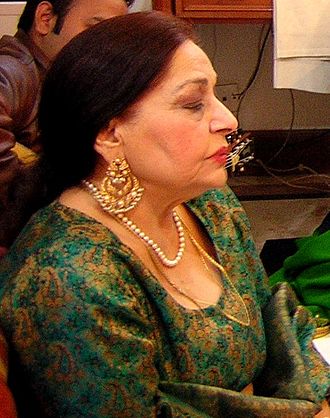
Singer: Hema Sardesai
Sunne wale sun lete hain
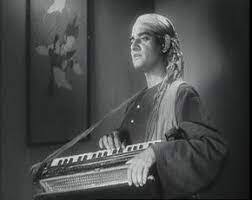
Movie: Saaz (1998)
Music: Zakir Hussain, Bhupen Hazarika, Raj Kamal, Yashwant Dev
Whether steering a vehicle on a busy road, relishing an introspective saunter in wooded hills, or riding a horse-driven carriage through a rural setting, reflecting on the purpose of life, these songs tug at our heartstrings.
Le chala jidhar ye dil nikal padey
Movie: Miss Bombay (1957)
Music: Hansraj Behl
Lyrics: Prem Dhawan
Singer: Mohd. Rafi
Kuchch dil ne kaha
Movie: Anupama (1966)
Music: Hemant Kumar
Lyrics: Kaifi Azmi
Singer: Lata Mangeshkar
Musafir hoon yaaron
Movie: Parichay (1972)
Music: R D Burman
Lyrics: Gulzar
Singer: Kishore Kumar
Jhooti mooti mitwa
Movie: Rudaali (1993)
Singer: Lata Mangeshkar
Lyrics: Gulzar
Music: Bhupen Hazarika
Celebrating freedom
Oh, the sheer joy of having freed oneself from the shackles of life and dreaming of soaring high in the sky!
Most of the time, we come across characters who wander hither and thither. They are keenly looking forward to an intense phase of courtship and, hopefully, an eventual walk down the aisle. The search for The Chosen One has begun in right earnest.
Hum hain rahi pyar ke
Movie: Nau Do Gyarah (1957)
Music: S.D. Burman
Lyrics: Majrooh Sultanpuri
Singer: Kishore Kumar
Ban ke panchi
Movie: Anari (1959)
Music: Shankar – Jaikishan
Lyrics: Hasrat Jaipuri
Singer: Lata Mangeshkar
Lakhon hain nigah mein
Movie: Phir Wohi Dil Laya Hoon (1963)
Music: O. P. Nayyar
Lyrics: Majrooh Sultanpuri
Singer: Mohd. Rafi
Kahin na kahin dil lagana padega
Movie: Kashmir Ki Kali (1964)
Music: O. P. Nayyar
Lyrics: S. H. Bihari
Singer: Mohd. Rafi
Pukarta chala hoon main
Movie: Mere Sanam (1965)
Music: O. P. Nayyar
Lyricist: Majrooh Sultanpuri
Singer: Mohd. Rafi
Ye samaan, samaan hai ye pyar ka
Movie: Jab Jab Phool Khile (1965)
Music: Kalyanji Anandji
Lyrics: Anand Bakshi
Singer: Lata Mangeshkar
Ye dil na hota bechara
Movie: Jewel Thief (1967)
Music: S. D. Burman
Lyrics: Majrooh Sultanpuri
Singer: Kishore Kumar
Bhai battoor
Movie: Padosan (1968)
Music: R.D. Burman
Lyrics: Rajendra Krishan
Singer: Lata Mangeshkar
Mere sapnon ki rani
Movie: Aradhana (1969)
Music: S. D. Burman
Lyrics: Anand Bakshi
Singer: Kishore Kumar
O ghata saanwari
Movie: Abhinetri (1970)
Music: Laxmikant Pyarelal
Lyrics: Majrooh Sultanpuri
Singer: Lata Mangeshkar
Aaj unse pehli mulaquat hogi
Movie: Paraya Dhan (1971)
Music: R. D. Burman
Lyrics: Anand Bakshi
Singer: Kishore Kumar
Mausam hai ashiquana
Movie: Pakeezah (1971)
Music: Ghulam Mohammed
Lyrics: Kamal Amrohi
Singer: Lata Mangeshkar
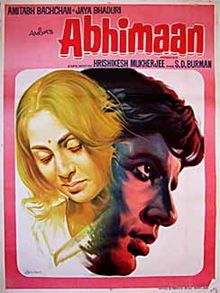
Meet na mila re man ka
Movie: Abhimaan (1973)
Music: S. D. Burman
Lyrics: Majrooh Sultanpuri
Singer: Kishore Kumar
Ek raasta hai zindagi
Movie: Kaala Patthar (1979)
Music: Rajesh Roshan
Lyrics: Sahir Ludhianvi
Singers: Kishore Kumar, Lata Mangeshkar
Papa kehte hain
Movie: Qayamat se Qayamat Tak (1988)
Music: Anand Milind
Lyrics: Majrooh Sultanpuri
Singer: Udit Narayan
Mere khwabon mein jo aaye
Movie: Dilwale Dulhaniya Le Jayenge (1995)
Music: Jatin – Lalit
Lyrics: Anand Bakshi
Singer: Lata Mangeshkar
Bholi si surat
Movie: Dil To Pagal Hai (1997)
Music: Uttam Singh
Lyrics: Anand Bakshi
Singers: Lata Mangeshkar, Udit Narayan
Kyon Hawa
Movie: Veer-Zara (2004)
Music: Late Madan Mohan
Music Recreated by: Sanjeev Kohli
Lyrics: Javed Akhtar
Voices: Yash Chopra, Lata Mangeshkar, Sonu Nigam
Challa
Movie: Jab Tak Hai Jaan (2012)
Music: A. R. Rahman
Lyrics: Gulzar
Singer: Rabbi Shergill
It is not that Bollywood does not believe in gender parity. Whether it is admiring the innate beauty of nature, realising the link between nature and music, soaring high like Jonathan Livingston Seagull and enjoying freedom, relishing the bliss of solitude, or looking out for The Chosen One, Bollywood does not discriminate between genders, ethnicity, caste, and religion.
As to the dashers who are like lonely wanderers, they often express their desire to be hit by an arrow of Cupid’s without any hesitation. Once a soul mate has been identified, a hectic phase of wooing dawns, wherein both parties can be seen cooing to each other like turtle doves. Love blossoms. Parental opposition is overcome. Nasty interference by a villain gets neutralised — eventually, love triumphs. Just before The End sign rolls up, the couple can be spotted rushing off to a honeymoon in a garishly decorated limousine, with the legend Just Married prominently adorning its boot.
The audience breathes easy, grateful that the movie has finally ended. However, they are blissfully unaware if the sheen of perfection that had enveloped the party of the other part so far might have a limited shelf life. Sometime after the couple walks down the aisle, scales could fall from their eyes, eventually mummifying the corpse of love.
Bhagavad Gita, one of the most revered scriptures from India, is rather esoteric in nature. Many of us dread wading into its deep waters to understand the profound truths it mentions. If we were to overcome our hesitation, we are apt to find ways that could enable us to lead happier and more fulfilling lives.
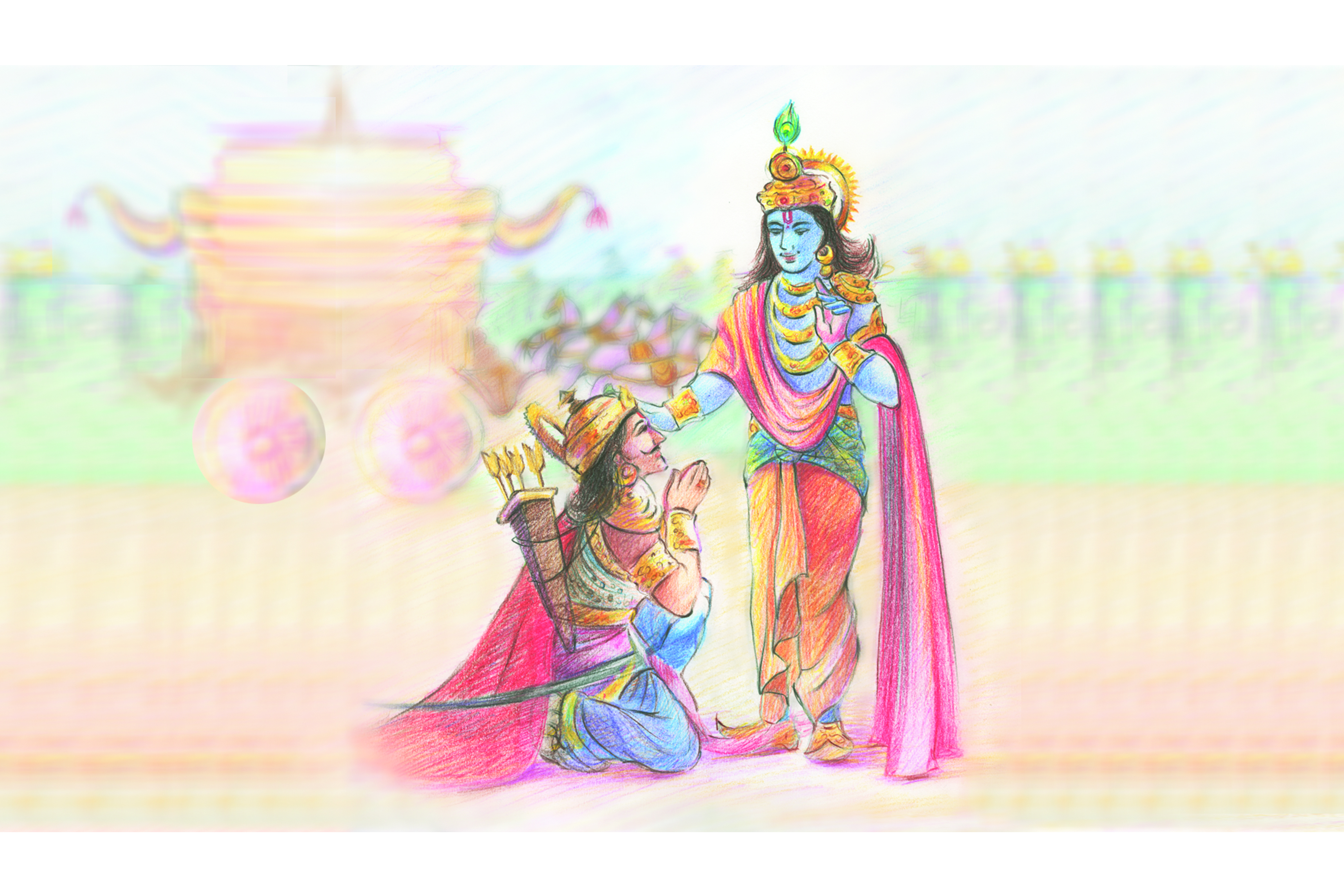
Bhagavad Gita is a great manual of motivation. At its beginning, we find a confused and despondent Arjuna who wants to abandon his duties as a warrior and wonders how he could kill his family seniors, teachers, and cousins. A friendly dialogue between him and Lord Krishna follows. We learn of the immortality of the soul. We understand the virtues of equanimity. We are briefed on the nuances of Karma Yoga, Gyan Yoga, and Bhakti Yoga. The need to rein in our ego, desires, anger, and senses gets highlighted. So does the importance of practicing detachment from the rewards of any work or action taken. We are advised to always live in the present. We understand the role of free will and destiny in our lives. In essence, we learn how to live a happier and contented life.
By the end of the seven hundred verses, we find a mentally rejuvenated and motivated Arjuna, willing to stand up for the rights of himself and his brothers and fight a war that would uphold dharma, the path of righteousness.
Bollywood has no dearth of poets who keep churning out soul-stirring lyrics, some of which connect us to what Bhagavad Gita says. Movie songs are meant for mass entertainment and contain messages in simple words, whereas the lessons from the scripture happen to be rather complex. Even though a perfect match is not possible, it is instructive to see if the underlying thoughts of these two diverse streams match to some extent.
Here is a random selection of Hindi movie songs that, I believe, could help us grasp a bit of some of the key lessons that the scripture offers.
Despondency
Almost all of us have passed through quite a few depressing phases in our lives. Times when things looked hopeless. Occasions when we thought of running away from it all. We could not see things clearly. Confusion prevailed.
Aye mere dil kahin aur chal…
Movie: Daag (1952)
Singer: Talat Mahmood
Music: Shankar Jaikishan
Lyrics: Shailendra
Teri duniya mein jeene se…
Movie: House No. 44 (1955)
Singer: Hemant Kumar
Music: S. D. Burman
Lyrics: Sahir Ludhianvi
Ye duniya agar mil bhi jaaye…
Movie: Pyaasa (1957)
Singer: Mohd. Rafi
Music: S. D. Burman
Lyrics: Sahir Ludhianvi
Immortality
Movie songs which speak of this facet of our souls invariably have a love-based background. However, the underlying sentiment remains the same.
Sau baar janam lenge…
Movie: Ustadon Ke Ustad (1963)
Singer: Mohd. Rafi
Music: Ravi
Lyrics: Asad Bhopali
Janam janam ka saath hai…
Movie: Tumse Achcha Kaun Hai (1969)
Singer: Mohd. Rafi
Music: Shankar Jaikishan
Lyrics: Hasrat Jaipuri
Janam Janam ka saath hai…
Movie: Bheegi Palkein (1982)
Singers: Mohd. Rafi, Lata Mangeshkar
Music: Jugal Kishore–Tilak Raj
Lyrics: M. G. Hashmat
Equanimity
Not getting unduly elated when something positive happens, and not getting overly sad when something negative happens – well, it is not easy to reach a mental state of that kind. But we can surely take inspiration from some of our heroes who speak about it.
Mein zindagi ka saath nibhata chala gaya…
Movie: Hum Dono (1961)
Singer: Mohd. Rafi
Music: Jaidev
Lyrics: Sahir Ludhianvi
Ye jeevan hai…
Movie: Piya Ka Ghar (1972)
Singer: Kishore Kumar
Music: Laxmikant Pyarelal
Lyrics: Anand Bakshi
Ye jeena hai angoor ka daana…
Movie: Khatta Meetha (1978)
Singers: Kishore Kumar, Usha Mangeshkar
Music: Rajesh Roshan
Lyrics: Gulzar
Duty
Performing our duty to the best of our ability is what Bhagavad Gita recommends. In fact, it emphasises that our right is only to do work, not to its reward. As mortal beings, we have no other option but to keep working.
Suraj re jalte rehna…
Movie: Harishchandra Taramati (1963)
Singer: Hemant Kumar
Music: Laxmikant Pyarelal
Lyrics: Pradeep
Nadiya chale chale ye dhara…
Movie: Safar (1970)
Singer: Manna Dey
Music: Kalyanji Anandji
Lyrics: Indeevar
Ruk jaana nahin…
Movie: Imtihan (1974)
Singer: Kishore Kumar
Music: Laxmikant Pyarelal
Lyrics: Majrooh Sultanpuri
Knowledge
Acquiring knowledge need not always be a boring part of our lives. Learning is not necessarily about the tyranny of a classroom. It can also be fun.
Eechak dana, beechak dana…
Movie: Shri 420 (1955)
Singers: Lata Mangeshkar, Mukesh
Music: Shankar Jaikishan
Lyrics: Hasrat Jaipuri
Bum bum bole…
Movie: Taare zameen par (2007)
Singers: Shaan, Armaan Malik, Aamir Khan
Music: Shankar-Ehsaan-Loy
Lyrics: Prasoon Joshi
Khol de par…
Movie: Hichki (2018)
Singer: Arijit Singh
Music: Jasleen Royal
Lyrics: Raj Shekhar
Devotion
To be in a state of constant remembrance of the divine is to enjoy unalloyed bliss. Surrender to a higher power follows.
Ae malik tere bande hum…
Movie: Do Aankhen Barah Haath (1957)
Singer: Lata Mangeshkar
Music: Vasant Desai
Lyrics: Bharat Vyas
Ye kaun chitrakaar hai…
Movie: Boond Jo Ban Gayi Moti (1967)
Singer: Mukesh
Music: Satish Bhatia
Lyrics: Bharat Vyas
Khwaja mere khwaja…
Movie: Jodha Akbar (2008)
Singer and Composer: A. R. Rahman
Lyrics: Kashif
Detachment
We love being in our comfort zones. We place a higher premium on relationships the true worth of which is known only when we face a disaster in our lives. A realisation dawns that we should be grateful for whatever support we are receiving. After all, no one will die along with us. Attachment leads to disillusionment and disappointment. However, by remaining detached from rewards, relationships, and situations, we can lead a happier life.
Man re tu kaahe na dheer dhare…
Movie: Chitralekha (1964)
Singer: Mohd. Rafi
Music: Roshan
Lyrics: Sahir Ludhianvi
Yahan kaun hai tera, musafir…
Movie: Guide (1965)
Singer/Composer: S. D. Burman
Lyrics: Shailendra
Ek din bik jayega mati ke mol…
Movie: Dharam Karam (1975)
Singer: Mukesh
Music: R. D. Burman
Lyrics: Majrooh Sultanpuri
Reining in our desires
The Western concept of boosting economies is rooted in the concept of creating and fulfilling desires. However, Bhagavad Gita exhorts us to limit our desires, so as to attain a state of contentment and happiness.
Kai bar yuhin dekha hai…
Movie: Rajnigandha (1974)
Singer: Mukesh
Music: Salil Chowdhury
Lyrics: Yogesh
Aye dil-e-nadaan…
Movie: Razia Sultan (1983)
Singer: Lata Mangeshkar
Music: Khayyam
Lyrics: Jan Nisar Akhtar
Hazaaron khwahishen aisi…
TV Series: Mirza Ghalib (1988)
Singer and Composer: Jagjit Singh
Destiny and Free Will
According to Bhagavad Gita, our past and present actions shape our destiny. It is within this paradigm that we exercise our so-called free will. Time exerts a mighty influence on the course of our lives.
Waqt ne kiya kya haseen sitam…
Movie : Kaagaz Ke Phool (1959)
Singer: Geeta Dutt
Music: S.D. Burman
Lyrics: Kaifi Azmi
Waqt se din aur raat…
Movie: Waqt (1965)
Singer: Mohd. Rafi
Music Director: Ravi
Lyrics: Sahir Ludhianvi
Haathon ki chand lakeeron ka…
Movie: Vidhaata (1982)
Singer: Suresh Wadkar
Music Director: Kalyanji Anandji
Lyrics by: Anand Bakshi
Three kinds of attributes
Lord Krishna speaks of three gunas that are present in different proportions in all things and beings in the world. The interplay of these determines our character and governs our thoughts, our utterances, and our actions, thereby determining the progress of our lives.
Sattva denotes benevolence, calmness, goodness, and harmony. Rajas represents passion, activity, and movement. Tamas captures ignorance, inertia, malevolence, and laziness. The songs below follow in the same order.
Kisiki muskurahaton pe ho nisaar…
Movie: Anari (1959)
Singer: Mukesh
Music Director: Shankar Jaikishan
Lyrics: Shailendra
Kandhon se milte hain kandhe…
Movie: Lakshya (2004)
Singers: Shankar Mahadevan, Sonu Nigam, Hariharan, Roop Kumar Rathod, Kunal Ganjawala and Vijay Prakash
Music: Shankar Ehsaan Loy
Lyrics: Javed Akhtar
Husn ke lakhon rang…
Movie: Johny Mera Naam (1970)
Singer: Asha Bhosle
Music: Kalyanji Anandji
Lyricist: Indeevar
Living in the present
There is no point in regretting what happened in the past. Nor is there any sense in worrying about what may happen in the future. By learning to remain in the present, we can live happier lives.
Aage bhi jaane na tu…
Movie: Waqt (1965)
Singer: Asha Bhosle
Music: Ravi
Lyrics: Sahir Ludhianvi
Aane wala pal jaane wala hai…
Movie: Golmaal (1979)
Singer: Kishore Kumar
Music: R. D. Burman
Lyrics: Gulzar
Ye lamha filhaal jeene de…
Movie: Filhaal (2002)
Singer: Asha Bhosle
Music: Anu Malik
Lyrics: Gulzar
Values and ethics
A life lived without values and ethics is like a rudderless boat adrift on the high seas. A compass of fairness and justice can help us to navigate the choppy waters better.
Insaaf ki dagar pe…
Movie: Gunga Jamuna (1961)
Singer: Hemant Kumar
Music: Naushad
Lyrics: Shakeel Badayuni
Hothon pe sachchai rehti hai…
Movie: Jis Desh Mein Ganga Behati Hai (1961)
Singer: Mukesh
Music: Shankar Jaikishan
Lyrics: Shailendra
Sajan re jhoot mat bolo…
Movie: Teesri Kasam (1966)
Singer: Mukesh
Music: Shankar Jaikishan
Lyrics: Shailendra
Constant Remembrance
The yearning of a soul to get united with the Supreme gets captured rather poignantly in these compositions.
O re manjhi…
Movie: Bandini (1963)
Singer and Composer: S. D. Burman
Lyrics: Shailendra
Laga chunri mein daag…
Movie: Dil Hi To Hai (1963)
Singer: Manna Dey
Music: Roshan and Omi Sonik
Lyrics : Sahir Ludhianvi
How does one achieve this goal? Lord Krishna reveals to Arjuna the way He can be attained. Anyone who remains in a state of constant remembrance, even while engaged in worldly duties, can do so. Consider verse 56 from Chapter 18:
सर्वकर्माण्यपि सदा कुर्वाणो मद्व्यपाश्रय: | मत्प्रसादादवाप्नोति शाश्वतं पदमव्ययम् || 18.56||
sarva-karmāṇy api sadā kurvāṇo mad-vyapāśhrayaḥ mat-prasādād avāpnoti śhāśhvataṁ padam avyayam
Even performing all actions always taking refuge in Me, he attains through My grace, the eternal and immutable destination. (18.56)
Moving ahead
One of the unique features of the dialogue between Lord Krishna and Arjuna is that whereas rich lessons are imparted by the teacher, there is no pressure on the disciple to follow the advice rendered. The decision is left to the disciple. He chooses to move ahead in life with renewed gusto and enthusiasm.
Saathi haath badhana…
Movie: Naya Daur (1957)
Singers: Mohd. Rafi, Asha Bhosle
Music: O. P. Nayyar
Lyrics: Sahir Ludhianvi
Aaj phir jeene ki tamanna hai…
Movie: Guide (1965)
Singer: Lata Mangeshkar
Music: S. D. Burman
Lyrics: Shailendra
Thaan liya…
Movie: Dasvi (2022)
Singers: Sukhwinder Singh & Tanishkaa Sanghvi
Music: Sachin-Jigar
Lyrics: Ashish Pandit
The Transient Nature of Name and Fame
Main pal do pal ka shayar hoon…
Movie: Kabhi Kabhie
Singer: Mukesh
Music: Khayyam
Lyrics: Sahir Ludhianvi
Some key takeaways
Bhagavad Gita has a unique depth of thought. It paints a wide canvas of concepts. It not only puts the onus of living a fulfilling life on an aspirant but also offers an assurance by Lord Krishna. He commits Himself to the overall welfare of common folk. He promises that whenever there is a loss of dharma, He would return to the mortal world to destroy the negative forces.
Here is a composition rendered by Jagjit Singh which is worthy of our attention.
To sum up
Having gone through this blog post, some of you may take a jaundiced view and hold it to be a frivolous attempt which denigrates the Bhagavad Gita. Far from it. Instead, the idea here is to celebrate this unique scripture which explains the true reality of life. When these truths get conveyed in a simpler language, through the lyrics of Hindi movie songs, they become easier to grasp and brood upon.
Hopefully, this humble endeavour of mine would prompt you to pick up the original scripture itself and wade into its pristine waters which contain countless gems of wisdom.
Notes:
The Krishna-Arjuna illustration is reproduced with permission from the illustrator, Arati Shedde, and Heartfulness Magazine – www.heartfulnessmagazine.com.)
Thanks are due to Mr. Prakash Kanungo and Mr. S. G. Maheshwari for having suggested this topic. The idea came up during a get-together over a cup of tea some time during 2023.
Inputs from Mr. H. C. Verma are gratefully acknowledged.
Translation of Gita verse 18.56 courtesy Mr. Ashok Narain.
Music is the backbone of Hindi movies and OTT series, whether by way of songs and dances, or in the form of the background variety. However, there are very few offerings dished out by our Dream Merchants which are devoted to the subject of music itself, where the life of most of the characters revolves around the practice of music. Such human emotions as love, hatred, animosity, jealousy, pride, prejudices are all there, but music forms the central theme. The key characters get success after a great deal of practice. In the interim, they often taste heart-breaking failures. But spurred on by their immense talent, ardent passion, and sometimes by either a teacher or a muse, they persevere in their efforts and eventually achieve the recognition they deserve.
The idea here is not to recall and list movies which may be termed as musicals. Nor would I like to mention the ones which have provided uplifting music. In the list that follows, you will not find the ones where either music merely serves the purpose of entertainment or even where the main characters may be music teachers.
Thus, movies such as Dholak (1951), Phagun (1958), Jahan Ara and Chitralekha (1964), Heer Ranjha (1970), Pakeezah (1972), and Umrao Jaan (1981), do not appear here.
I have instead tried to focus here on the movies where music forms a core part of the script. Many of these depict the trials and tribulations of an artist who is enthusiastic about this form of fine arts. Many others capture the gravitational force exerted by music in making a relationship either blossom or wither.
Consider the following movies which are music-based offerings from our dream merchants.
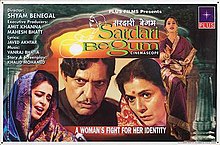
Music: Yashwant Deo, Bhupen Hazarika, Zakir Hussain, Raj Kamal
Sur – The Melody of Life
(2002)
Direction: Tanuja Chandra
Music: M. M. Keeravani
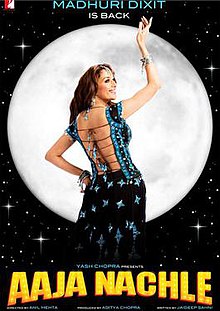
Aaja Nachle
(2007)
Direction: Anil Mehta
Music: Salim–Sulaiman
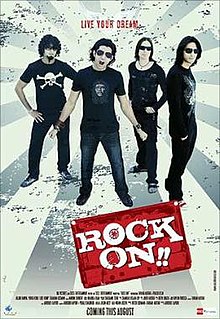
Rock on!
(2008)
Direction: Abhishek Kapoor
Music: Shankar–Ehsaan–Loy
Rockstar
(2011)
Direction: Imtiaz Ali
Music: A. R. Rahman
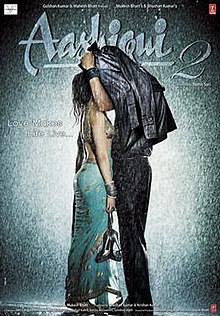
Aashiqui 2
(2013)
Direction: Mohit Suri
Songs: Jeet Gannguli, Mithoon, Ankit Tiwari
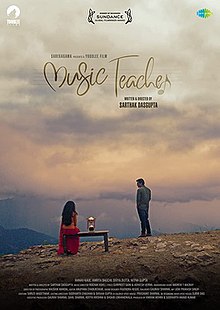
Music Teacher
(2019)
Direction: Sarthak Dasgupta
Music Original Composition: R.D. Burman
Music Re-created by: Rochak Kohli
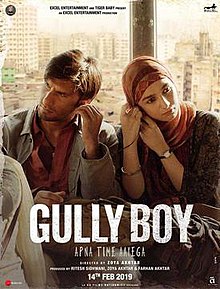
Gully Boy
(2019)
Direction: Zoya Akhtar
Music: The 18-song soundtrack, involving an estimated 54 contributors, was supervised by Ankur Tiwari
Bandish Bandits
(2020; Amazon Prime Video)
Direction: Anand Tiwari
Music: Shankar–Ehsaan–Loy,
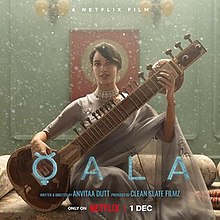
Qala
(2022)
Direction: Anvita Dutt
Music: Amit Trivedi
I am reasonably certain that there are many more which I might have missed out here. However, as the listing shows, over time, as Hindi cinema has moved away to modern settings, India’s rich cultural heritage is perhaps no longer getting the attention it deserves. That is how, a series like Bandish Bandits and a movie like Qala come like a whiff of fresh air in our turbulent times.
The price one pays for success
Some of these movies, like Saaz and Qala, depict the kind of competitive spirit which prevails in the field of music. A character even ends up jeopardizing the career of another, resulting in overpowering guilt. Such movies also capture the kind of cunning, guile and nerves of chilled steel needed to achieve success in a highly competitive world. Perhaps many of the famous artists we know of might have passed through quite a few such phases in their careers.
Like any other profession, the world of music is also replete with rivalry. It would be naïve to assume that success comes cheap. Often, the price it extracts from an artist’s inner being, especially in terms of a compromise on one’s ethics, beliefs, and values, is heavy.
For us, the audience, music is indeed an enriching food for the soul. However, the soul of an artist may carry a few scars, not known to us. But ignorance is bliss, as they say!
Note:
Inputs from Purva Agarwala, Dileep Raina, Madhulika Liddle, Avantika Nirupama, Sunil Jain, and a few others are gratefully acknowledged.
Charles Darwin, were he to be around in the exciting times that we live in these days, and if commissioned by a prominent Hollywood studio to study the manner in which Hindi movies have evolved over time, might have come up with some unique insights into the matter!
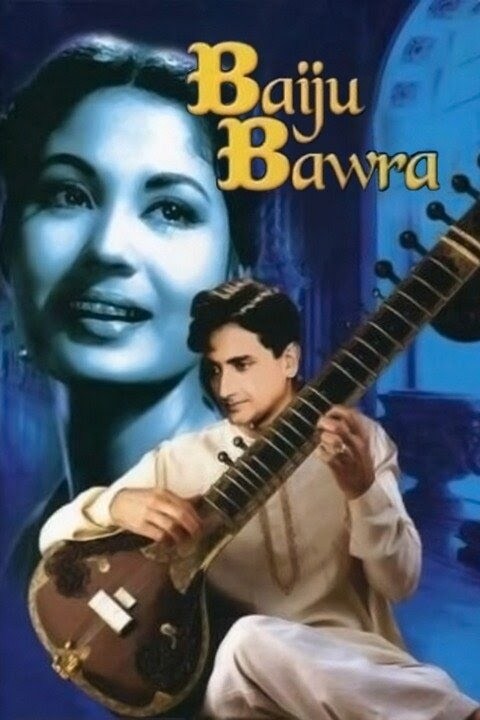
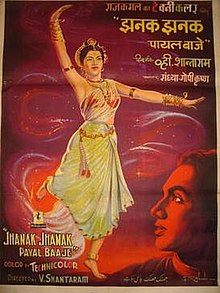
Perhaps, he might have proposed that movies do change over time, that new movies often pop up from some of the pre-existing ones, and that all movies share two common ancestors – an Adam who keeps providing the producers with healthy returns on their investment and an Eve who keeps nourishing wide-eyed-and-glued-to-their-seats kind of denizens with wholesome entertainment. He might have proposed that the concept of entertainment itself has undergone a major transformation. If the audience in the past used to get entertained by movies based on classical music and dance forms – like Baiju Bawra (1952) and Jhanak Jhanak Payal Baaje (1955), the flavour of the season now is that of item numbers, say, something on the lines of ‘Laila o Laila…’ in Raees (2017), which are meant for momentary gratification only, soon to be forgotten.
Recently, Bandish Bandits (2020) came as a whiff of fresh air.
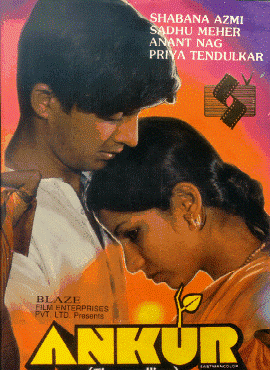
He might have pointed out that there are indeed movies which try to convey a social message as well, but these belong to a different genre/species. When it comes to caste-based prejudices, we have had Sujata (1959), Masaan (2015) and Article 15 (2019). A movie like Jhund (2022) showcases the everyday struggles of vagabond Dalit youngsters, haunted by the humiliating gaze of society. Speak of the disadvantaged and we are apt to think of Ankur (1974), Akrosh (1980), Chakra (1981) and Nil Battey Sannata (2015). Think of the angst of the educated unemployed and we discover Albert Pinto Ko Gussa Kyoon Aata Hai (1980) and Rang De Basanti (2006). Speak of sex workers and movies like Chandni Bar (2001), Chameli (2003) and Gangubai Kathiawadi (2022) pop up in our minds.
He might have even concluded that there is no universally applicable formula for whipping up a blockbuster, that past success does not guarantee future conquest, that such formulae have a rather short shelf-life, and that one must factor in the then prevailing social mores, the economic condition of the target audience and the impact of disruptive technology which has its own pace of evolution. If a delectable mix of sex and violence worked at a time, and if star power was the magnet which kept the box office aflame, content, acting prowess and slick editing work the magic now.
He might have pointed out that each genre/species has its own unique characteristics, that each one has its own path of evolution, and that the onset of the multiplex phase, followed by the OTT-era, has enabled our dream merchants to climb newer heights of imagination. Those of us who have loved such series as Gullak (2019-2022) and Panchayat (2020 onwards) might concur with this thought.
Specifically, he may have made a few general observations about the evolution of our Hindi movies over time:
Some Tectonic Shifts
In the pre-partition days, the audience lapped up offerings which were based on values, patriotism, mythology, or religious beliefs. Raja Harishchandra (1913), Bhakt Vidur (1921), and Amar Jyoti (1936) can be mentioned in this context. Kismet (1943) was a different cup of tea altogether.
In the years followed by India’s independence, hopes for a new country ran high. Besides romantic ones, idealistic movies steeped in socialistic thinking – like Awara (1951), Boot Polish (1954), Jagte Raho (1956), Do Aankhen Barah Haath (1957), Mother India (1957), Pyaasa (1957), and Phir Subah Hogi (1958) – came up. Mythologicals like Sampoorna Ramayan (1958) and Mahabharat (1965) also kept the audience engaged. A primarily agrarian economy liked such offerings as Do Bigha Zamin (1953).
In the next decade, we loved seeing movies like Mughal-E-Azam (1960), Hum Dono (1961), Sangam (1964), Guide (1965), and Aradhana (1969).
During the 1970s, the angst of the common man was identified by our dream merchants to be a key point of attraction. Movies like Deewaar (1975) and Sholay (1975) came to rule our collective psyche. Thanks to the likes of Shyam Benegal, Govind Nihalani and others, the parallel cinema stream catered to the tastes of the intelligentsia. We also had some Hollywood-style movies with a taut script, such as Ittefaq (1969) and Achanak (1973). The critics loved these, but not the non-discerning audience sold on cheap melodrama.
Thereafter, many of us would remember Tezaab (1988), Chaalbaaz (1989), DDLJ (1995), Lagan (2001), and Bunty aur Babli (2005). Somewhere down the road, cheap, low budget movies aimed at the front benchers also flooded the market. Many of these were South Indian productions made on tight budgets starring the likes of Jeetendra etc. in this phase, the production sources were dubious, and films were tasteless and crass. Over time, the upper classes withdrew from cinema halls and started devouring movies on VCRs.
Thanks to economic liberalization, we started becoming Westernised to an unrecognisable extent. Consumerism started blooming. The joint family system started disintegrating. Individualistic themes gained prominence. Gradually, we found ourselves faced with the reality of living not only in ‘Bharat’ but also in ‘India.’ The former was catered to by single-screen theatres. However, thanks to upward mobility, rising incomes, and ready availability of international merchandise, the culture of shopping malls and multiplexes sprouted. The multiplex phenomenon opened the doors for shorter and crisper flicks, based mostly on urban-centric themes. The cinematic landscape changed, offering ultra-commercial masala fare dished out by the likes of Subhash Ghai and Sanjay Leela Bhasali to the ultra-niche cinema of Vishal Bhardwaj, R Balki, Anurag Kashyap and Madhur Bhandarkar.
Over time, internet became easily available and then OTT followed. We, the audience, exposed as we were to international media offerings, became choosier. Now, our critical eye looks at a wider range of the cinematic offerings – its genre, storyline, acting prowess of the characters, music, camera movements, technical excellence, and so forth.
The Yin and Yang Balance
Most of you who have examined the phenomenon of falling in love would agree that in the earlier days of Bollywood, those belonging to the tribe of the so-called sterner sex happened to be the dashers and the knights in shining armours who could do nothing wrong. All the hero had to do was to flex his muscles, and a coy member of the tribe of the so-called delicately nurtured would swoon and fall in his arms. Most of the times, the females would not be dashers but merely dormice, exerting their soft power occasionally. Only once in a blue moon, when pushed with their backs to a wall, did they strike back.
Cut to the present. The heroes are no longer diffident about shedding their macho image and reveal their softer side on the screen. The heroines have now become far more decisive and assertive. They resist amorous advances. They call the shots. They continue to be as beautiful as ever but have become far bolder. Now, they come into their own out of sheer free will, revealing the inner strength they possess.
Even though the fight against a deeply entrenched patriarchal mindset is far from being over, the Yin-Yang balance has tilted in favour of the females. They rule the roost. On the other hand, the males are no longer shy about showing their vulnerabilities. The male rabbit often gets attracted by a female dasher. He no longer has the luxury of concentrating on some mild, gentle dormouse with whom he could settle down peacefully and nibble lettuce. In the past, we had Arth (1982) where the heroine chooses to lead a life independent of either her well-wisher or her ex-husband. Of late, we have had such movies as Astitva (2000), Aitraaz (2004), Wake-Up Sid (2009), Inkaar (2013), Queen (2013), Dedh Ishqia (2014), Ki and Ka (2016), English Vinglish (2012), Thappad (2020), and Jugg Jugg Jiyo (2022), which speak of women empowerment. On the OTT platforms, we have had Delhi Crime (2019), Bombay Begums (2021), Modern Love Mumbai (2022), and Modern Love Hyderabad (2022).
Not to forget such stand-alone female-centric movies as Kahaani (2012), Gulaab Gang (2014), Mardaani (2014), Parched (2015), Nil Battey Sannata (2015), Jai Gangaajal (2016), Neerja (2015), and Gunjan Saxena (2020), where males play either a supplementary or a villainous role.
Of late, script-backed roles for heroines have gained better traction. The effeminate side of males has garnered better prominence. Heady days are here!
Mamma Mia!
The image of the Indian mother has got a 180-degree makeover.
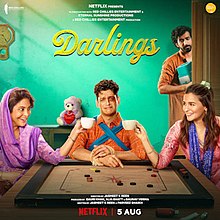
From a weepy, sacrificing Sulochana (Dil Deke Dekho, 1959) and Nirupa Roy (Do Bigha Zamin, 1953) to a dictatorial Dina Pathak (Khoobsurat, 1980) and Supriya Pathak (Goliyon Ki Rasleela Ram-Leela, 2013), we have seen her role metamorphosing over the decades. Now, we even have a mother who hatches a plan to torture/murder an abusive son-in-law, a la Shefali Shah (Darlings, 2022)!
Yes, we have always had the morally upright mother who goes to an extreme to restrain her errant son, like Nargis (Mother India, 1957) or Reema Lagoo (Vaastav, 1999).
Sex Education
No more flowers swaying in a gentle breeze touching other flowers. We are not only beautiful; we are also bold. Steamy scenes are now an essential part of a movie/series. Several movies use the services of an ‘Intimacy Director’ to manage the delicacy of such scenes, when getting shot. Teenagers no longer need to necessarily depend upon unreliable sources to learn the nuances of love making.
Consider the 1953 version of Parineeta (Ashok Kumar, Meena Kumari) wherein the mere act of garlanding signifies a matrimonial alliance. However, in the 2015 version (Saif Ali Khan, Vidya Balan), the level of intimacy between the couple goes to a different level altogether.
LGBT relationships are out of the closet and no longer make us raise our eyebrows, like Fire (1996) managed to do in the past. Whether it is a series like The Fame Game (2022) or movies like Badhai Do (2022) or Maja Ma (2022), such affairs are now out in the open.
Technology Rules
No more dacoits on real horses. Thanks to our new-found sensitivity towards other species, most scenes depicting animals depend on technology, which has made things easier. Compare the magnificent battle scenes of Mughal-E-Azam (1960) with those of Samrat Prithviraj (2022). In the latter, whole battalions of soldiers can be seen marching ahead in perfect unison, putting our brave soldiers who participate in the Indian Republic Day parade each year to shame. The absurdity and the sheer artificiality of the scene made me laugh out aloud, prompting my multiplex co-viewers look at me with scorn, their shapely highbrows raised more than an inch.
‘Dishoom-dishoom’ scenes have all but vanished. Instead, what we have now are gravity-defying stunts which would be leaving Sir Isaac Newton shaking his head in disbelief and perhaps even squirming in his grave.
The day is not far off when AI-backed tools will be churning out innovative scripts, screenplays, and lyrics, leaving many of the Bollywood writers and lyricists crying all the way to their respective banks.
The Diminishing Returns of Tragedies
One of the side-effects of the arrival of economic liberalization has been the reduction in the audience’s appetite for outright tragedies. When the aspirational upwardly class is obsessed with chasing economic goals, there is a greater need for positive narratives and happy endings. Tragedies like Andaz (1949) and Sahib, Bibi aur Gulam (1962), featuring such actors as Dilip Kumar and Meena Kumari, gradually become passe. While feel-good and revenge-oriented themes continue to be popular, movies like Matto Ki Saikil (2022), which depict the harsh realities of life, receive critical acclaim but meet with open disdain at the box office.
Many Shades of Grey
Gone are the days when we would be shuddering in our seats in a theatre while listening to Amrish Puri saying ‘Mogambo khush hua…’ while drumming his heavily ring-infested fingers on one of the arms of his throne, or Gabbar Singh calling out ‘Arre o Sambha, kitne aadmi they…?’ while prowling around menacingly with a pistol aimed at three of his terrified cronies, or Prem Chora pouncing upon a damsel in distress with clear intentions of outraging her modesty while mouthing such dialogues as ‘Prem naam hai mera, Prem Chopra’.
If Pran was a suave but scheming villain unleashing his vicious plans on a hapless couple, Ajit, duly attired in a white coat and even wearing white-coloured shoes, sent quite a few shivers down our spines. In each story, there was a good guy and a bad guy. When the ‘angry young man’ happened, the hero’s character itself took on an unapologetic black shade.
If Sholay set a new benchmark in the action sequences, directors like Vidhu Rahul Rawail, Vinod Chopra, and Ram Gopal Verma gave us gut-wrenching fights and dreaded villains in such movies as Arjun (1985), Parinda (1989), Satya (1998), Shool (1999), and Shiva (2006). These showcasedraw cycle chain and knuckle duster fights.
The advent of characters with negative shades has further accentuated this transformation; think of Shahrukh Khan in Baazigar (1993) and Darr (1993), Kajol in Gupt (1997), Aishwarya Rai in Khakee (2004), and Aamir Khan in Fanaa (2006), just to name a few.
I am skipping flicks in the horror genre here because I have never watched any of these.
Once liberalization happened, nobody had the nerve to lash out at a rich guy. Wealth ceased to be a liability; instead, it became a desirable goal and a badge to be unabashedly worn on one’s sleeve. Blacks and whites disappeared from our screens, and shades of grey became predominant. Movies moved closer to the real world and ceased to be pure fantasies.
The brain started kicking on all its six cylinders and eventually started ruling over brawn. In the past, cerebral offerings such as Jewel Thief (1967) were few and far between. Now, we have the likes of Kahaani (2012), Andhadhun (2018), Raat Akeli Hai (2020) and Drishyam (2013, 2022) keeping us biting our nails and twiddling our thumbs trying to figure out what will hit us next.
This trend gained further traction owing to a seminal change brought about by OTT. Think of Abhishek Bachchan playing Bob Biswas in Breathe: Into the Shadows (2020) series.
The original script of one of our epics, Ramayana, is still there. But the shades of the hero and the villain have evolved. Achieving the goal has become supreme; means be damned. Just like the characters in Mahabharata, different shades of grey prevail.
Lingua Franca
Given the delightfully rich diversity of Indian languages and dialects, movie makers obviously do a smart thing by resorting to the local dialect when presenting different characters on the screen. For example, Aamir Khan mouthed dialogues in what is alluded to as the tapori dialect of Mumbai (Rangeela, 1995). Tamannah Bhatia aped the Haryanvi dialect in Babli Bouncer (2022).
But when the characters start using cuss words, things go a bit too far, especially in movies which are meant for general viewing. Take the case of Vidya Balan in Ishqia (2010) or Rani Mukherji in No One Killed Jessica (2011).
However, with the plethora of movies and serials which capture the endeavours of northern hinterland warlords inundating our screens of late, this appears to have become a trend. The warlords wait till the end to jump into the fray directly. They let their henchmen do the dirty work, while they enjoy a public life which is as pure as freshly driven snow.
Likewise, urban-themed offerings now ape the American way, routinely using such words as sh*t, fu*k, and the like. This is the new normal.
Consider Gangs of Wasseypur (2012), Jamtara – Sabka Number Ayega (2020), Masaba Masaba (2020), and Hush Hush (2022) for instance.
The Loo Mania
Relieving oneself in open is rather common in India. However, to have it depicted on our screens, is rather nauseating and appalling. By doing so, the message given out is that it is perfectly normal to do so.
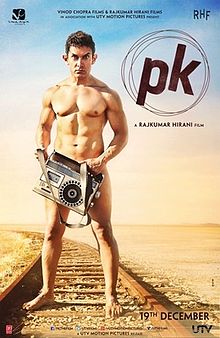
Even our top-notch actors have not shied away from performing such acts. Many of us would remember Akshay Kumar gleefully doing it in Singh is Kinng (2008), Madhavan and Sharman Joshi in 3 Idiots (2009), Ranbir Kapoor in Besharam (2013) and Yeh Jawaani Hai Diwaani (2013), Aamir Khan in PK (2014), and Anupam Kher in Baby (2015).
The fact that a tactic of this kind needs to be resorted to merely to improve the Comic Quotient of a movie goes on to show our directors and script writers to be woefully short of imagination at times.
The Sounds of Music
Over the decades, the music in Hindi movies has evolved in more ways than one.
Mother Nature Gets a Short Shrift
Elements of nature (moon, rains, lakes, rivers, seasons, clouds…) have gone missing. High rises, cityscapes, interpersonal relations take the front seat. So do emotions, feelings, and the like.
Songs like ‘‘Ye raat ye chandni phir kahaan…’ (Jaal, 1952), ‘Aaja sanam Madhur chandni mein hum…’ (Chori Chori, 1956), ‘Ye raatein ye mausam…’ (Dilli Ka Thug, 1958), ‘O sajana, barkha bahaar aayi’ (Parakh; 1960) and ‘Chalo dildaar chalo, chaand ke paar chalo…’ (Pakeezah, 1972) have almost vanished from the silver screen. Once in a while, we get treated to such songs as ‘Suraj hua maddham’ (Kabhi Khushi Kabhi Gham; 2001), ‘Barso re…’ (Guru, 2007) and ‘Hawaayein…’ (Jab Harry Met Sejal, 2017).
Visual Appeal Elbows Out Our Ears and Minds
Gradually, the orchestra and the sound have elbowed out the lyrics somewhat. Songs which appealed to the audience not only for their deep layered meaning but also for their soulful music have become part of a rare breed. Philosophical truths of life have got relegated to the background. Thus, we have become used to getting entertained by offerings which accord a higher priority to our ears than to our minds.
Moreover, with the new-found zeal for quick cuts, adroit camera work and the razzle-dazzle of a heightened visual appeal, we have virtually stopped hearing songs and have willy-nilly become reconciled to seeing them. Cinematography rules. Locations keep changing in quick succession. Even before we have had the chance to savour one, the next one pops up. The camera has become obtrusive. Even if a patriotic song like ‘Teri mitti mein mil jaawan…’ (Kesari, 2019) comes up, we are exposed to a visual world which is in the fast forward mode. Since our eyes are constantly being bombarded with visual information, the hapless ear often has no other option but to take the back seat.
Actors no longer need to worry much about their lip-synching abilities. Most songs get relegated to the background.
Cabarets have metamorphosed into ‘item numbers’.
Lullabies Lose Out to Screen Time for Kids!
No longer do we have scripts with room for any lullabies. Remember ‘Aa ja ri aa, nindiya tu aa…’ (Do Bigha Zamin, 1953), ‘Mein gaoon tum so jaao…’ (Brahmachari, 1968) and ‘Pyara sa gaon…’ (Zubeida, 2001)? Of late, the only lullaby we got treated to was ‘Jo tum saath ho…’ (Salaam Venky, 2022).
Kids are smarter these days. They need only their technical gizmos to get to sleep. Parents may rest easy. Inspired by ‘Mere buddy…’ (Bhootnath, 2008), grandparents of all hues, sizes and shapes are busy honing their dancing skills!
Like real-life kids, reel-like kids have also become far more intelligent, often mouthing dialogues which would leave us twiddling our thumbs trying to figure out their real age. Gone are the day of innocence epitomized by Baby Naaz, Daisy Irani and Baby Farida.
Species Which Have Become Extinct
Besides vamps and villains, poor comedians have also become mostly extinct. Though we still have the likes of Raghuvir Yadav and Rajpal Yadav entertaining us, the separate comedy tracks have all but vanished from our screens. Such roles have been usurped by mainstream heroes and heroines.
The comic timing of such talented artists as Sridevi (Chandni, o meri Chandni…Chandni, 1989) and Akshay Kumar (Hera Pheri, 2000 onwards) has consigned the parallel comedy track in which we earlier had such character artists as Johnny Walker, Mehmood, Mukri, Agha, Tuntun, Aruna Irani, Manorama et al, to the dustbins of history. In the past, even some villains had tried their hands at comedy, and successfully, at that. I refer to Amjad Khan in such movies as Qurbani (1980) and Chameli Ki Shaadi (1986).
An interesting phase was that of the Wodehousian comedy of a subtle kind, presented to us by such artists as Om Prakash, Utpal Dutt, and David in such movies as Chupke Chupke (1975), Golmaal (1979) and Baaton Baaton Mein (1979).
Even the golden hearted house help, popularly known as ‘Ramu Kaka’,has all but vanished.
Of Political Headwinds
Our politicos have never shied away from influencing the kind of messages which need to be conveyed to the hoi polloi through the powerful medium of cinema. Our dream merchants have also been sensitive to the political thinking of the day, coming up with movies which are relevant to the theme of the times.
The first Chinese aggression in 1962 prompted Chetan Anand to come up with Haqeeqat (1964) which tugged at our heartstrings.
Naunihal (1967), directed by Raj Marbros, was about Raju, an orphan, who believes that his only surviving relative is Chacha Nehru. The film’s music was composed by Madan Mohan, with lyrics by Kaifi Azmi, including the song ‘Meri Aawaz Suno, Pyar ka Raaz Suno’, sung by Mohammad Rafi. The song captured not only the funeral procession of the first Prime Minister of India, Jawahar Lal Nehru but also his study and his office; a loving tribute, indeed, to a towering personality then.
Much later, in 1988, one of his seminal works, The Discovery of India (1946), was presented by Shyam Benegal in the form of a television serial, labelled as Bharat Ek Khoj.
Rewind back to 1965, when Pakistan attacked India. Mr Lal Bahadur Shastri, the then Prime Minister, came up with the slogan ‘Jai Jawan Jai Kisan’. He is said to have persuaded Manoj Kumar to come up with a movie based on the slogan. That is how we got to see Upkar (1967).
Assassination of Prime Minister Indira Gandhi in 1984 led to riots in Delhi and elsewhere. The same were covered in the recent movie Jogi (2022) and were also briefly touched upon in Laal Singh Chadha (2022).
Mani Ratnam gave us Bombay (1995), based on the riots which took place in the city between December 1992 and January 1993 after the demolition of the Babri Masjid led to religious tensions between Hindu and Muslim communities. Gujarat riots in 2002 led to movies like Parzania (2005) and Firaaq (2008).
In the recent past, many of us have been swayed by the political headwinds and movies with a jingoistic nationalism have caught our imagination. A movie like Kashmir Files (2022) which shows a minority community in a negative light has been openly promoted by the present ruling dispensation. Another one, Samrat Prithviraj (2022), went a step further and highlighted the bravery and sense of nationalism of the majority community. The Accidental Prime Minister (2019) attempted to show the previous Prime Minister in a negative light, and now we wait for Emergency (2023).
Come to think of it, the worlds of movies and politics have several common traits. Dream merchants thrive in both. So does star power. Funding and returns on investment are fundamental concerns. Eventually, the onus of sifting the wheat from the chaff obviously falls on the common public.
A Rich Cultural Heritage Getting Lost?
It may not be out of context to mention here that in the days of yore, the kings used to consciously nurture fine arts and culture by patronizing poets, musicians and dancers. However, the way successive governments are turning a blind eye to the essential task of preserving our cinematic heritage, and even gradually withdrawing support to creative cinema, while continuing to gobble up the revenue generated by this industry, is a travesty of justice and common sense. Remember the outfit known as the National Finance Development Corporation, which gave us a stream of gems in the past – Ankur (1974), Manthan (1976), Mirch Masala (1987), Ek Din Achanak (1989), Train to Pakistan (1998), Mammo (1994), and the like? The future looks bleak on this front.
Acting Prowess and Content: The Ultimate Winners
Even though star-power, presentation and packaging continue to be important, content has now come to rule the roost. Acting is also back on its throne, where it rightfully belongs.
Now, if we root for a blockbuster like Pathaan, we also love an actor-driven movie like Laal Singh Chadha. If we like to see the trials and tribulations of the heroine in Gangubai Kathiawadi, we also empathize with the dilemmas faced by an elderly couple in Vadh, besides appreciating such off-beat offerings as Doctor G and Kantara.
As we sit bleary-eyed in front of our smart TVs, we now have the best of both the worlds – glamour, duly backed by razzmatazz, as well as the depth of genuine art.
(Some inputs from a few members of the Best of Cinema and OTT group on Facebook are gratefully acknowledged.)

























 ashokbhatia