Posts Tagged ‘Nurses’
How P. G. Wodehouse helped yours truly to undergo a medical procedure
Posted in What ho!, tagged Absent Treatment, Aunts Aren't Gentlemen, Autobiographical, Bachelors Anonymous, Cardiac Blues, Charlie's Angels, Do Butlers Burgle Banks?, Doctors, Humour, Medical Tourism, Mission Impossible, Nurses, P G Wodehouse, Public Hospitals, Something Fresh on March 7, 2025| Leave a Comment »
How P. G. Wodehouse helped yours truly to undergo a medical procedure
Posted in What ho!, tagged Absent Treatment, Aunts Aren't Gentlemen, Autobiographical, Bachelors Anonymous, Cardiac Blues, Charlie's Angels, Do Butlers Burgle Banks?, Doctors, Humour, Medical Tourism, Mission Impossible, Nurses, P G Wodehouse, Public Hospitals, Something Fresh, The Little Nugget on June 2, 2022| 9 Comments »

One of the several challenges of advancing age is the kind of vague pessimism which starts creeping upon us. The soul awakens us to some deeper realities of life. The mind takes a jaundiced view of Fate bearing gifts. The body, an old creaky jalopy that it becomes, needs to undergo more frequent bouts of denting and servicing.
Different body parts, of which we were blissfully unaware so far, start giving up their life long silence and start a ‘Me-Too’ kind of a campaign, demanding exclusive attention. The engine starts firing only on four out of its six cylinders. The fuel pump starts developing blockages. The carburettor needs cleaning more often. The radiator starts leaking. The battery charge keeps getting depleted faster. The nervous circuitry starts letting us down. The lining of the stomach starts registering a protest as and when greed takes over prudence on the dining table; no longer can it match the relative youth of one’s taste buds which keep making one drool over deep fried stuff and gorging upon it with gay abandon.
Every 3 to 5 years, a new pill has to be popped up, adding to the existing array of pills and capsules of different hues to be put down the hatch at regular intervals.
But howsoever dark the clouds may be, P. G. Wodehouse is there to help us to maintain a chin-up attitude!
A Cardiac Challenge
Fifteen years after I had undergone a cardiac bye pass surgery, a condition of gradually unstable angina again caught up with me recently. I would spare the hapless reader of this piece from the medical and technical details of what exactly transpired. Suffice it to say that a complex array of cardiac tests were done using menacingly hissing gigantic equipment which made one feel sympathetic towards the character played by Tom Cruise in the Mission Impossible series of flicks. After some of these tests, one was put on a drip, wired to a noisily beeping monitor and left to reflect on one’s life. The adventurous trauma finally ended with an angioplasty when a doctor with a stiff upper lip announced having sneaked in two stents inside the heart.
The process left one feeling like a much-punctured and deflated balloon, devoid of all vitality. In any case, at the best of times, one enters a hospital with a sense of deep trepidation. The fear of the unknown gnaws at one’s insides, leaving one wondering if someone sinister like Roderick Spode had eventually succeeded in turning one inside out and had then gleefully jumped upon the innards with hob-nailed boots.
But the adventure was not without its perks. Since one is willy-nilly forced to surrender to higher powers, one tends to become more spiritual. One learns to be more ‘patient’. One also runs into a delightful array of doctors, nurses and patients, almost all of different hues, ranks, sizes, shapes and temperament.
Some Doctors That I Ran Into
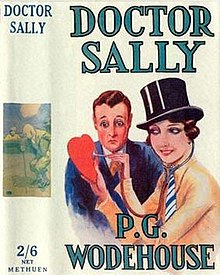
One of the doctors I ran into was built along the lines of Doctor E. Jimpson Murgatroyd of Aunts Aren’t Gentlemen fame. His looks could easily send one’s spirits down in the basement. He had sad and brooding eyes and looked like someone who had been looking on the dark side of life since he was a toddler. Nevertheless, his advice was sane, frank and honest, though brutal.
Yet another I came across sounded more like Doctor George Mulliner. He was a caring and compassionate doctor whose brow was perennially worried about his patients. Whether consulting or doing a procedure, he would intermittently flash a reassuring smile, arresting a sudden spike in the adrenaline coursing through the veins of the hapless patient. He gave an impression of someone who would be thinking beautiful thoughts while in bed but only after having read aloud a kids’ story from the oeuvre of someone like P. G. Wodehouse to his younger ones.
I also met Doctor Sally Smith who was not a generalist in this case but a junior cardiac specialist. I found her to be calm, empathic and fair. She placed a premium on understanding the psychology of the patient and genuinely tried to understand his/her concerns and address these to the best of her ability. When something critical was pointed out to her, her shapely eyebrows did not flicker even a fraction of an inch, making one remind of Reginald Jeeves. I am reasonably certain that during childhood, her doting mother had fed her with ample supply of salmon. She was a living proof of the fact that a woman cardiac specialist need not of necessity be an ugly duckling with steel-rimmed spectacles and a wash-leather complexion. In fact, she reminded one of Drew Barrymore of Charlie’s Angels fame, radiating charming competence of a high order.
Initially, I also ran into someone like Emerald Stoker. She was one of those soothing, sympathetic kind of doctors you can take your troubles to, confident of having your hand held and your head patted. She was quite young but there was a sort of motherliness about her which one found comforting and restful. One could ask her any question about the impending procedure and she would answer it with empathy and patience. When one left her cabin, the sagging spirits had soared and the brow was not as burrowed as before; the soul was no longer in as much of a torment as it happened to be in earlier.
The Nursing Angels
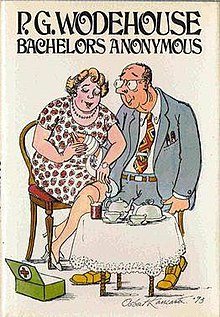
Some of you may remember Amelia Bingham of Bachelors Anonymous fame. She had fussed over Mr. Ivor Llewellyn, head of the Superba-Llewellyn studio of Hollywood, so very well that the latter ended up proposing to her, much against his own resolve to cease and desist from making impulsive marriage proposals.
Luckily, unlike Mr. Ivor Llewellyn, I do not head any Hollywood studio. Nor do I have a track record of having suffered through as many as five divorces. I am merely a widower. So, if any of you suspect my having fallen for one of the many nurses I ran into while in the process of getting an angioplasty done, you could not be more off the mark. One has one’s code, you see: The Code of the Bhatias!
If one of the nursing angels was like a Florence Nightingale who ensured that I kept getting adequate nourishment during my stay at the hospital, another was like Aunt Agatha who took sadistic pleasure in pricking the hands at all the wrong spots, eventually finding an appropriate vein in the forearms where a cannula had to be put. All of them had their own methods of removing the cannula and other sticky plasters. Some preferred to zip up the proceedings by doing it in a flash of a second, leaving one all shaken and stirred, ruing the painful loss of some body hair. Others went about it gradually, in slow motion as it were, making the proceedings somewhat painful, though for a longer duration.
However, in some aspects, their behaviour was pretty consistent. All of them kept treating me like an errant school kid who needs to be cautioned to have all his medications on time. When it came to checking blood sugar levels, all of them insisted upon puncturing one of the tender fingers. My repeated pleas to draw instead a sample from the cannula fell on deaf ears.
Patient care and comfort was, of course, their first priority. This included an ever-smiling visage as and when they entered the enclosure allotted to me. Some of them resorted to small talk, making decent and unobtrusive enquiries about one’s family members. When leaning over across the body to attach some leads, they would often apologize.
Some were cast in the mould of Mary Anthony of Absent Treatment fame. They were tall, had a ton and a half of red-gold hair, grey/blue eyes, and one of those determined chins. Few showed signs of superior intelligence, capable of such feats as supporting a team in burgling banks, like Jill Willard of Do Butlers Burgle Banks? One, with a lissom and willowy profile, came across as Audrey Blake (The Little Nugget), who could have aroused romantic thoughts in the hearts of some of her patients.
The Common Thread
For all medicos, the patient comes first and foremost. When working in a public hospital, the pressure of revenue generation is singularly absent. Their exposure to a large number of patients with a wide spectrum of ailments makes them hotter at their jobs. Their professionalism only grows and matures over time, benefiting humanity at large. They facilitate the process of longevity and make us happy in the process. Their methods may be rough at times, but, as Jeeves says, one has to break a few eggs to make an omelette.
It may be noted that there was a specific reason I did not carry any book of P. G. Wodehouse while being in the hospital. With all the tubes and monitors one was often connected to, one did not wish to add to medical complications by bringing about bouts of uncontrollable mirth. Guffawing, laughing out loudly and falling out of beds allotted to one would have raised many an eyebrow. Mere memories of his works and the delightful range of eccentric characters and goofy situations he has unleashed upon us are enough to help one to face the harsh slings and arrows of Fate.
I confess I underwent the traumatic experience only thanks to the support received from my family and owing to Plum’s works. He has left behind for all of us a world which is so very soothing and comforting that one could undergo any difficult experience in life and yet experience happiness.
After all, in Something Fresh, he has himself said that:
As we grow older and realize more clearly the limitations of human happiness, we come to see that the only real and abiding pleasure in life is to give pleasure to other people.
Sure enough, he delivers on his promise!
(Allusions to nurses are courtesy Neil Midkiff; Caricature of yours truly is courtesy Suvarna Sanyal)
Related Posts:
Doctors and Nurses – The Bollywood Version
Posted in The Magic of Movies!, tagged 3 Idiots, Achanak, Aman, Anand, Anuradha, Bollywood, Coma, Dil Ek Mandir, Doctors, Dostana, Dr. Kotnis Ki Amar Kahani, Erin Brockovich, Guzaarish, Healthcare challenges in India, Khamoshi, Khushboo, Maine Pyar Kyun Kiya, Munnabhai MBBS, Nurses, Pa, Safar, Satte Pe Satta, Silsila, Strong Medicine, Summer 2007, Tere Mere Sapne, Virus on July 7, 2013| 3 Comments »
In a majority of movies churned out by Bollywood, doctors and nurses have only been on the fringes of the narrative. But there are some which have highlighted the professional trials and tribulations faced by our healers. Few have even commented upon the complex challenges of poverty, malnutrition and scarce resources faced by doctors and nurses in a developing country like India.
Keeping in tune with the times, the depiction has also undergone a major transformation. As our society has become more self-centered, so has the general character of the doctors and nurses shown in the Bollywood flicks. The self-sacrificing doctors of yesteryears have slowly but steadily given way to glamorous ones playing second fiddle to a mostly romantic script at hand.
Risking Their Own Lives
In the pre-independence era prior to 1947, we had self-sacrificing doctors who rendered their services in alien lands, serving the 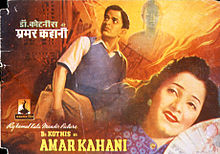 people affected by war and plague. Old timers may remember Dr. Kotnis Ki Amar Kahani (1946, V. Shantaram, ‘The Immortal Saga of Dr. Kotnis’) which was based on the true life-story of Dr. Dwarakanath Kotnis who was sent to China during World War II. Dr. Kotnis helps the people of China during the Japanese invasion. Rendering a selfless service, he marries and settles down there itself but eventually dies of plague.
Post-independence, we had Dil Ek Mandir (1963, C. V. Sridhar, ‘Heart is a Temple’), where the doctor performs a successful surgery but ends up collapsing due to the tireless effort he puts in preparing for the same. Aman (1967, Mohan Kumar, ‘Peace’) was inspired by the story of Dr. Kotnis. The hero gets inspired to serve humanity after meeting Sir Bertrand Russell and goes to Japan to serve the victims of nuclear holocaust.
In Selfless Service
In movies like Anuradha (1960, Hrishikesh Mukherjee) and Khushboo (1975, Gulazar, ‘The Fragrance’), the heroes are doctors 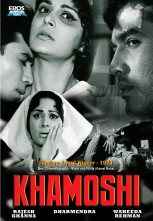 who decide to serve poor villagers in the interiors of India. Risking their own health and welfare, they keep busy with their work and neglect their family and personal lives. In Anuradha, the wife eventually ends up sacrificing her urbane musical ambitions to support the husband. In Khushboo, the wife does so but not before she has questioned his lack of initiative in inviting her to live with him. Both movies had finely chiseled performances by the lead actors – Balraj Sahni, Leela Naidu, Jeetendra and Hema Malini.
Khamoshi (1969, Asit Sen, ‘Silence’) had the inimitable Waheeda Rehman playing a nurse in a mental asylum. She falls in love with a patient who gets well and moves out without reciprocating her sentiments. Impressed by her success, the doctor-in-charge entrusts yet another patient to her care. She falls in love with him as well but loses her own mental balance when he is cured. The moral of the story: a medical professional should not get personally involved with a patient. Easier said than done!
Battling the Big C
In the 1970s, Bollywood came out with several movies which had a medical problem as the cornerstone. In quite a few movies, cancer took over from TB as the real villain. Most of these movies tugged at our heartstrings. One, there was the inevitability of death. Two, the sheer helplessness of a doctor made the narration even more poignant. Audiences loved them nevertheless and often came out of theatres with drenched handkerchiefs.
Safar (1970, Asit Sen, ‘The Journey’) had a doctor facing the charge of intentionally killing someone dear to her. The story was 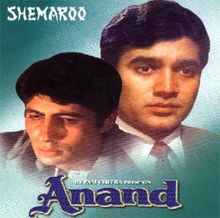 essentially a love triangle. The underlying theme was that of jealousy of the doctor’s husband, guilt of the doctor wife and reconciliation with the fact of impending death by the wife’s close friend who is afflicted with cancer.
Anand (1971, Hrishikesh Mukherjee, ‘Bliss’) was a landmark film which touched upon several facets of a doctor’s life. Indian health care system’s discrimination between the haves and the have-nots of the society was one of the facets. Yet another was the transformation of an atheist doctor into someone who starts believing in the power of prayer to heal. The need to have a positive attitude towards life, howsoever short it may be, was the basic message of the movie.
Commercial and Legal Dilemmas
Tere Mere Sapne (1971, Vijay Anand, ‘Your Dreams, My Dreams’) narrated the story of a doctor who migrates to a city after  having suffered professional as well as personal setbacks in a rural setting. His transformation into a money spinning professional in an urban environment is well captured. Eventually, he migrates back to the village and regains his sense of good values and ethical practices in healthcare.
Achanak (1973, Gulzar, ‘All of a sudden’) posed an interesting dilemma faced by a doctor at times. Does it make sense for a doctor to strive hard to save the life of a convict who is to be sent to the gallows? The movie answers this question in the affirmative.
The Fringe Benefits of Healthcare
In Silsila, we had a hapless doctor (Sanjeev Kumar) trying to figure out how to handle the post-marital affair of his wife (Rekha). In Satte Pe Satta, we had the heroine (Hema Malini) playing a gutsy nurse, though only in the first few reels. Salman Khan in Maine Pyar Kyun Kiya, Abhishek Bacchhan in Dostana, Kareena Kapoor in 3 Idiots, Vidya Balan in Pa and Aishwarya Rai in Guzaarish were all glitzy characters playing to the gallery, with their medical talents appearing only on the fringes of the main narrative.
Healthcare with Bear Hugs
Munna Bhai MBBS (2003, Rajkumar Hirani) was a hilarious take on the medical profession. It touched upon the mixed up  priorities in hospitals where patients lack a personal healing touch and where procedures take precedence over urgent medical issues. Quite a few of our aspiring and practicing doctors would have drawn inspiration from the movie to improve the healthcare system by according better priority to compassion, empathy and liveliness in treating patients!
Summer 2007 (2008, Suhail Tatari) raised the issue of lack of awareness amongst medicos about the social ills and absence of any healthcare delivery service in India’s rural areas. Greedy moneylenders and power-hungry politicians rule the roost. A group of medical interns attempts to cope with the daunting challenges facing villagers.
Waiting for Medical Blockbusters!
The wide variety of healthcare related issues touched upon in these movies is commendable. However, one still waits for an in-depth  treatment of the field of medicine at the hands of Bollywood. There is immense scope for medical thrillers based on patent rights of gene based therapies, moral dilemmas raised by the new frontiers of medicine, whistle blowers exposing corrupt practices in the pharmaceutical industry, shortages of critical vaccines and contemporary challenges on providing universal healthcare services in India.
In the last decade, Bollywood has demonstrated its capacity to make shorter movies based on innovative themes. Hopefully, the field of medicine would also get better attention with script-writers and directors coming out with a Coma, a Strong Medicine, a Virus and, possibly, even an Erin Brockovich in not too distant a future!
Of Doctors, Nurses, Patients and Attendants
Posted in A Vibrant Life!, tagged Attendants, Doctor's Day, Doctors, Googlitis, Nurse's Day, Nurses, Patient's Rights Day, Patients on June 30, 2013| Leave a Comment »
As we celebrate this year’s Doctor’s Day, one’s thoughts inevitably turn to the string of doctors who have treated oneself as also near and dear ones at some point of time or the other. A word of gratitude is surely in order. For these are the people who show us light when we are enveloped by the darkness of ill-health. They give us hope when we need it the most. They have the capacity to ease our minds, make us worry less about our sickness and do their very best to lessen our pain and suffering.
They have to necessarily cope with patients of all sizes, shapes and temperaments whose income and curiosity levels also vary. Some patients are content with merely following instructions, whereas others who believe in self-medication and suffer from ‘Googlitis’ merely come to see a doctor to get a confirmation of the sickness they already believe they are suffering from. If the doctor comes up with an unfamiliar name of illness, orders a new test or prescribes a hitherto unheard of medicine, such patients go back quite convinced that the doctor is a ‘good’ one!
If one has a complaint, it is only that they work too hard, often neglecting their own well-being in the process. One silently admires their chin-up attitude; despite remaining surrounded by human misery in possibly its worst form, they continue to smile and keep their focus on the task at hand. The poor souls have family responsibilities just like all of us. However, for a vast majority of them, patients are always the first priority, virtually 24X7.
The Angels in White
Same can be said of the nurses, technicians and other para-medics who are eternally vigilant in taking care of the patients under their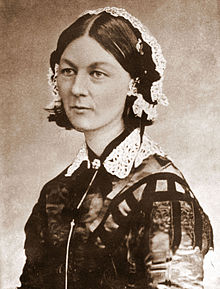 charge. The angels in white uniforms ensure that the right medicines are being taken at the right time. They also grapple with issues facing several patients at any point in time, coordinating with each of the doctors concerned and ensuring that relevant instructions are rigorously followed.
Nurses play an important role in maintaining the morale of the patients as well as the relatives at an appropriate level. Often, they have to bear with patients who have a foul temper. A caring and compassionate nature, coupled with a high Emotional Quotient, helps them to handle their complex task.
The Patient Patients
It is rather baffling that while we celebrate a Doctor’s Day (July 1 in India, March 30 in US) as also a Nurse’s Day (May 12 internationally), we do not spare a thought for the hapless patients. Their contribution to the field of medical science is no less; the entire medical fraternity owes its existence to patients! Moreover, besides being sick, they have to show remarkable patience while undergoing the trauma of getting treated – in getting an appointment with the doctor, endlessly waiting in queues to see one, pushing around to get all kinds of diagnostic tests done, rushing back to the doctor to get medicines prescribed and then going through the whole treatment.
In case a surgery becomes necessary, the immediate family gets involved. In these days of nuclear families, the support of the family’s social network becomes critical. The fear of impending surgery gnaws at the inner being of the patient, whose energy gets all the more depleted in the process. The fact that the he/she is causing so much trouble to all near and dear ones goes on to add to his/her agony. Post-surgery, pain and trauma have to be faced to which all others can only be mere spectators. Back home, an endless routine of visitors starts, with some of them making uncharitable and insensitive comments which make the poor patient suffer even more mental anguish.
The Silent Sufferers – Attendants
And what about the hapless attendants? They have to practice multi-tasking no end. Answering calls from anxious but distant relatives while procuring medicines is only one facet of the challenge. Organizing food which strikes a delicate balance between what is wanted and what is needed by the patient is another one. If admitted to a hospital, lot of formalities and paper work may become necessary. Round-the-clock surveillance becomes necessary. Skills in house-keeping come in handy, because prior to the scheduled visit of the doctors on rounds, the nurse with a stiff upper lip keeps nagging the attendant till the time the patient is in a ‘presentable’ condition and the room is tidy and orderly. Naturally, the fairer of the species fit into such roles with much ease!
For an attendant, PR skills are a sine qua non, because an endless stream of visitors has to be managed. In most cases, patients treat the number of visitors as a clear measure of their personal popularity index. Nothing would cheer them up more than to keep a tally of the kind of fruits and goodies brought in by various visitors, so the favor may be returned at some future date in a proportionate manner. On their part, some of the visitors leave the hospital in a cheerful mood, thanking the Divine for not putting them in the patient’s predicament.
One would propose that as a caring society, we seriously consider declaring days earmarked to celebrate a World Patient Day as well as a World Attendant Day. The European Union has already taken a lead in this direction, with May 15 being observed as a Patient’s Rights Day. One sincerely hopes that other forward-looking countries would not only declare Patient Days but also honor the nameless attendants who silently slog and bring some relief and succour to the ailing patients. This would ensure an equitable treatment to all those who play a crucial role in the well-being of Homo sapiens!
Medicine-related blogs on this site:
- 1. ‘A First Hand Experience in Medical Tourism’, published December 14, 2012
- 2. ‘The Miracle of Alternative Therapies’, published March 31, 2012
-
Recent Posts
Buy the Book

buy the book
Categories
-
cc
Tags
Art Bertie Wooster Bhagavad Gita Bingo Little Birthday Blake Mouton Grid Blogging Bollywood Book Campus Life CEO Chivalry Consciousness Coronavirus Corruption Edwin Empress of Blandings English Ethics Feminism Happiness Health Hindi Hollywood Human Values Humour India Jeeves Kalidasa KIds Leadership linkedin Literature Lord Emsworth Love Lyrics Mahabharata Mahatma Gandhi Management Movies Music Norway Paintings Panjab University People P G Wodehouse Politics Pondicherry Portugal Psmith Puducherry Rabindranath Tagore Ramayana Ritusamhara R K Laxman Romance Rosie M Banks Rupert Psmith Seasons Shakespeare Social Media Something Fresh Songs SPANDAN Spirituality SQ Sri Aurobindo Stephen Covey Switzerland Tatas Thos UBS Values Wodehousitis WomenArchives
- March 2026 (1)
- February 2026 (5)
- January 2026 (2)
- December 2025 (1)
- November 2025 (2)
- October 2025 (2)
- September 2025 (3)
- August 2025 (3)
- July 2025 (2)
- June 2025 (2)
- May 2025 (4)
- April 2025 (5)
- March 2025 (5)
- February 2025 (4)
- January 2025 (4)
- December 2024 (6)
- November 2024 (6)
- October 2024 (6)
- September 2024 (5)
- August 2024 (5)
- July 2024 (4)
- June 2024 (4)
- May 2024 (5)
- April 2024 (5)
- March 2024 (3)
- February 2024 (1)
- January 2024 (4)
- December 2023 (2)
- November 2023 (3)
- October 2023 (3)
- September 2023 (3)
- August 2023 (5)
- July 2023 (5)
- June 2023 (7)
- May 2023 (6)
- April 2023 (6)
- March 2023 (8)
- February 2023 (8)
- January 2023 (7)
- December 2022 (6)
- November 2022 (5)
- October 2022 (8)
- September 2022 (5)
- August 2022 (6)
- July 2022 (6)
- June 2022 (8)
- May 2022 (7)
- April 2022 (8)
- March 2022 (7)
- February 2022 (3)
- January 2022 (7)
- December 2021 (4)
- November 2021 (8)
- October 2021 (7)
- September 2021 (6)
- August 2021 (7)
- July 2021 (7)
- June 2021 (9)
- May 2021 (8)
- April 2021 (9)
- March 2021 (10)
- February 2021 (8)
- January 2021 (8)
- December 2020 (7)
- November 2020 (6)
- October 2020 (5)
- September 2020 (9)
- August 2020 (9)
- July 2020 (8)
- June 2020 (8)
- May 2020 (6)
- April 2020 (5)
- March 2020 (7)
- February 2020 (4)
- January 2020 (7)
- December 2019 (12)
- November 2019 (10)
- October 2019 (5)
- September 2019 (9)
- August 2019 (10)
- July 2019 (9)
- June 2019 (14)
- May 2019 (13)
- April 2019 (14)
- March 2019 (11)
- February 2019 (11)
- January 2019 (14)
- December 2018 (12)
- November 2018 (12)
- October 2018 (14)
- September 2018 (9)
- August 2018 (10)
- July 2018 (10)
- June 2018 (8)
- May 2018 (11)
- April 2018 (11)
- March 2018 (6)
- February 2018 (9)
- January 2018 (10)
- December 2017 (10)
- November 2017 (9)
- October 2017 (8)
- September 2017 (11)
- August 2017 (10)
- July 2017 (10)
- June 2017 (11)
- May 2017 (9)
- April 2017 (7)
- March 2017 (7)
- February 2017 (8)
- January 2017 (10)
- December 2016 (9)
- November 2016 (11)
- October 2016 (10)
- September 2016 (10)
- August 2016 (9)
- July 2016 (6)
- June 2016 (10)
- May 2016 (10)
- April 2016 (10)
- March 2016 (10)
- February 2016 (12)
- January 2016 (10)
- December 2015 (11)
- November 2015 (11)
- October 2015 (10)
- September 2015 (10)
- August 2015 (10)
- July 2015 (10)
- June 2015 (10)
- May 2015 (10)
- April 2015 (10)
- March 2015 (9)
- February 2015 (10)
- January 2015 (8)
- December 2014 (9)
- November 2014 (8)
- October 2014 (8)
- September 2014 (7)
- August 2014 (7)
- July 2014 (7)
- June 2014 (7)
- May 2014 (7)
- April 2014 (7)
- March 2014 (7)
- February 2014 (6)
- January 2014 (7)
- December 2013 (6)
- November 2013 (6)
- October 2013 (6)
- September 2013 (6)
- August 2013 (6)
- July 2013 (6)
- June 2013 (6)
- May 2013 (6)
- April 2013 (6)
- March 2013 (6)
- February 2013 (6)
- January 2013 (6)
- December 2012 (4)
- November 2012 (4)
- October 2012 (3)
- September 2012 (2)
- August 2012 (4)
- July 2012 (2)
- June 2012 (2)
- May 2012 (2)
- April 2012 (2)
- March 2012 (2)
- February 2012 (3)
- December 2011 (3)
- November 2011 (1)
- October 2011 (2)
- September 2011 (2)
- August 2011 (2)
- July 2011 (2)
- June 2011 (3)

 ashokbhatia