Posts Tagged ‘Obesity’
The Travails of an Air Passenger
Posted in What ho!, tagged Air Travel, Humour, Obesity, Overcrowding, P G Wodehouse, Travails on September 11, 2025| Leave a Comment »
Fall in love if you want to lose weight: Guest Post by Asokan Ponnusamy
Posted in What ho!, tagged A Damsel in Distress, Humour, Leave it to Psmith, Love, Martin's Restaurant, Obesity, P G Wodehouse, Rupert Psmith, Strand Cinema on November 13, 2023| Leave a Comment »
The Travails of an Air Passenger
Posted in What ho!, tagged Air Travel, Humour, Obesity, Overcrowding, P G Wodehouse, Travails on August 7, 2023| 8 Comments »
All kinds of studies done by brainy coves the world over keep telling us that our well-heeled denizens are gradually becoming even-better-heeled with each passing year. Thanks to the capitalistic theories propounded by such experts as Milton Friedman, the concentration of wealth appears to be going up for a tiny segment of the society.
One of the off shoots of the increasing concentration of money power is that of air travel becoming more popular by the day. Manufacturers of commercial airliners, overjoyed at receiving bulk orders for delivery of shimmering new aircraft, are laughing all the way to their banks. New airlines are springing up at a rate which would put many a mushroom-growing enthusiast to well-justified shame.
But it is the hapless customer who appears to be getting increasingly short-changed over time. Here are some of the typical blues which she faces while daring to travel by air.
Pre-flight Stress
For first-time flyers, or even infrequent flyers, the challenge starts right from the time they start twiddling their thumbs trying to squeeze in whatever they desire to carry while keeping a sharp eye on the dimensions as well as the weight of their bulging suitcases. With each passing year, following the advice dished out by their finance honchos, airlines keep reducing the baggage allowances, bringing in additional charges while offering apparently juicy deals for cheaper tickets. While the algorithms of our search engines keep highlighting airlines offering the best deals, the overall cost of travel keeps galloping at a pace which would make Potato Chip (of Aunts Aren’t Gentlemen fame) sit up and take notice.
Some countries like Japan and Switzerland have already kick-started campaigns to persuade travellers to pack less and reduce the airlines’ carbon footprints. Skiing gear, helmets, insulated wear, caps, snow goggles and many other mountaineering-related items are now available for rent upon arrival at major airports. Many airlines have already reduced their check-in baggage allowance from 32 kgs to 23 kgs, leaving many a passenger from countries like India carrying a year’s supply of toys, garments, spices, pickles, and other items of daily consumption fretting and fuming over the changes. Many airlines have already started charging for cabin baggage as well. Very soon, there could be additional cuts in allowances and handsome rewards for passengers who practice a size-zero policy for the baggage they carry.
Luckily for customers, many airlines are yet to wake up to the revenue-boosting potential of charging higher fares based on the gross weight of the passenger herself. Air New Zealand appears to have already started this practice. I suspect the day is not far off when many airlines across the world would start following a similar practice.
All clouds have a silver lining, and the practice of linking fares being charged linked to a passenger’s Body Mass Index could usher in a new craze of Homo sapiens’ desire to be leaner and fitter. World Health Organization would have us believe that by 2021, worldwide obesity had nearly tripled since 1975. Well-endowed passengers would start sweating it out merely to ensure that they do not get overcharged for travelling by air. Fitness experts like Ashe Marson (Something Fresh) and gym-owners like Chimp Twist (Money for Nothing) would surely enjoy higher levels of prosperity.

The Triathlon at the Airport
The Challenge of Checking-in
The requirements for online check-in vary not only from airline to airline but even from airport to airport, leaving many a flyer baffled, bewildered, confused, disoriented, fogged, flummoxed, mystified, nonplussed, perplexed, and puzzled.
With a rapid increase in those wishing to take to the skies, the challenges of navigating through milling crowds at the airport merely to reach a check-in counter could leave a passenger disgruntled, disappointed and dejected. The earlier norm of reporting at least three hours prior to the departure of one’s flight is no longer valid. Cost-saving measures introduced by many airlines have apparently ensured a drastic cut in the number of ground staff operating the check-in counters. These days, just to reach one, it could take up to two hours.
Upon reaching the counter, you may get greeted by someone cast in the mould of Florence Craye. While you may be trying to check out her willowy profile sideways, her sharp eyes would already be checking out your baggage profile and weight. Anything exceeding the limits prescribed, and she will pounce on you to extract an extra pound of flesh. She may or may not extoll the virtues of the Types of Ethical Overloading but is bound to demand some extra money you have to part with.
Gone are the heady days when one could keep the check-in baggage within the stipulated limits but could carry overloaded cabin baggage, hoping that the smartly dressed ground staff will indulge the hapless passengers and turn a blind eye to bulging hand-carried items. You will be asked to insert the cabin baggage into a super-tight metal box, and should you fail in doing so, or get noticed for overly exerting yourself to somehow shove it into the size-zero box, monetary consequences will need to be faced. Ukridge would have surely come up with a betting racket linked to whether a certain passenger would get away with an oversized baggage. Shylock himself would do well to undergo a crash refresher course conducted by ground staff of this kind.
Of Security Blues
The security guys and gals leave no stone turned to further fray the nerves of a passenger. If milk being carried for bonny babies gets thrown into a dustbin, so do some objects as small scissors and any precious gifts made of such material as wax, etc. Some kind of footwear and accessories invite a jaundiced eye, leaving the passenger praying for mercy. The process of taking off one’s belts hastily wound around by someone who faces Pear Pressure in office has left many a passenger de-trousered, shocking the on-lookers.
If your cabin baggage gets singled out for a detailed scrutiny, that too at the hands of someone of the stature of Roderick Spode, you feel as if you have just been found pinching an umbrella belonging to him. You only hope that he does not wish to jump on you with size eleven boots and see the colour of your insides. Too many traditional medicines carried by the elderly in bulk could arouse the worst suspicions. Even a silver-coated set of spoons and forks purchased by you for a loved one may have to be parted with.

Emigration and Boarding
Another long queue awaits you next at the emigration counter. Someone in the mould of Madam Bassett will ask you a perfunctory set of questions and then only do you get to hear the loud but reassuring noise of her having stamped your passport.
When you land up at the boarding gate, you often realize with sudden horror that the boarding is not through an aerobridge. Instead, you have to trudge down a flight of stairs, take a bus, brave the elements, and then huff and puff back up the aircraft boarding stairs. This is what management experts allude to as a win-win situation. Your heart gets some well-deserved exercise, whereas the airline saves the cost of engaging an aerobridge at the airport.
Long queues at the boarding gates are now a norm. Some airlines in the USA practice a policy of laissez faire, helping the flyers to maintain a high level of physical agility and fitness. The moment the gates get thrown open, a race down the aerobridge to grab the best possible seats begins, putting many an Olympian sprinter to shame. All those who, like Bingo Little, have allowed their sporting spirits to drive them to the races at Ascot and have keenly watched the winning tactics of racing horses stand a far better chance of securing seats of their choice.
Of course, you can have a seat of choice as well, provided you are prepared to shell out some more green stuff for the privilege.
When Reality Hits One
Finally, the passenger heaves a sigh of relief, squeezes herself into the narrow seat, fastens her seat belt, and looks forward to a time of rest and repose. But wait, some more excitement is on its way.
When she looks around, she starts feeling empathetic towards the sardines which get mercilessly compressed into a tiny tin/aluminium box. A realization soon dawns that the seats have been designed by expert ergonomists who have squeezed every square inch of the carpet area of the aircraft.
A Sudden Jump in the Blood Pressure
The security drill starts. She suddenly realizes that she is destined to travel by an aircraft which happens to be a Boeing 737 Max. She shudders to think of all the 346 passengers who had lost their lives many years back while travelling in the same model. Her blood pressure suddenly shoots up a few notches. She silently prays to one’s Guardian Angels that the same fate may not await her during the flight. She starts wondering if she had, like Aunt Dahlia, ever committed the sin of breaking a few infant Samuel figurines at a nephew’s lair, and Fate was now sneaking up from the back with a lead pipe in hand.
Of Tissue Restoratives and On-board-meals
Thanks to the over-zealous Chief Financial Officers (CFOs) of airlines who keep advising their managements on how to keep cutting down the operating costs and boosting the inflow of the green stuff, no initiative is good enough.
Forget the midair supply of such benign tissue restoratives as tea or coffee, even plain drinking water gets served with a flourish, only to be followed by a much-dreaded card payment gadget. Forget also the juicy and not-so-juicy meals which used to be part of the airfare many years back. There are no free lunches anymore. Be prepared for being not served any nourishment even after having made an online booking for the same.
The days are not far off when one would even be charged for using the washrooms aboard the aircraft, fundamental rights guaranteed by the constitutions of many countries be damned.
The Short-haul Sprints
The question of getting served anything on a short-haul flight does not even arise. By the time the seatbelt sign gets switched off and one starts soaking in the glory of nature while marvelling at the white cushion of fluffy clouds below, a short opportunity of getting a cup of tea/coffee may present itself. However, even before one has sipped half the cup that supposedly cheers one, the aircraft is already preparing to land at your destination, leaving one feeling cheated and disgruntled.
In the days to come, passengers may even be allowed a hefty discount on short-haul flights provided they consent to travel in a standing position, holding a velvet-covered handrail above, while being duly strapped to a safety belt dropping down upon one from above, duly herded like a flock of subservient sheep into a separate bay at the back of the plane. We may find them behind the privileged and seated passengers who would perhaps be enjoying their bouts of snootiness, casting supercilious glances at those having a standing ride, much like the kind they themselves are made to suffer at the hands of business class passengers!

The Horrors of Long Marathons in the Sky
Even the trauma suffered by those who travel on a long-haul flight is bound to increase in the days to come.
The Stiff-Upper-Lip Passengers
I wonder why and how airlines keep attracting passengers who follow a strict stiff-upper-lip policy while interacting with their co-passengers. Their faces and their body language carry an invisible ‘Do Not Disturb’ sign. Forget a tentative smile. Abandon the thought of a handshake. Eye contact, if any were to happen, may take place only when the guy in the window seat has to visit the rest room and expects one to get up and make way for him to attend to the nature’s call.
Those from the emerging economies who are always used to a friendly exchange of notes with the person seated next to them on, say, an eleven-hour flight across the pond, are left disgruntled at the singular absence of a human interaction, howsoever inane it may be. A wee bit of ‘What-ho’-ing is summarily ruled out, curdling whatever little milk of human kindness may still be coursing through one’s veins. This is one of the many perils faced when one undertakes a long journey on an airliner. Ashe Marson had a similar experience while traveling with Joan Valentine from London to Blandings in Something Fresh. The latter had held a magazine before her as a protection, so as to avoid making any conversation. Thanks to Covid, in-flight magazines have all but disappeared from the seat pockets in front of us. Thus, the modern woman today cannot be blamed for being found riveted to a screen in front of her.
There is a limit to studying the safety instruction card, the menu on offer, and the inflight purchases you can indulge in. Pretty soon, the only option left is that of perusing either a book or a downloaded movie or two or latching on to the movies/series on offer on the screen in front of one. Of course, the last mentioned would work only if you are willing to pay for the earphones you would need.
The Absence of Beauty and Amiability
It seems incredible that in this age of progress steps have not been taken to either improve the standard of looks among air travellers or even attracting those who have an amiable nature. Time after time I step on board, full of optimism and feeling that this trip at any rate my fellow-passengers will be at least semi-human, if not human. And every time I stagger back with a hand over my eyes, shaking my head in disbelief.
Perhaps, a reserved kind of nature is taken as a sign of maturity and wisdom. As to looks, I accept that it is not their fault that most of them look like what either Webster or Augustus might have dragged on to the plane. You see an exhausted looking aged lady devouring a literary tome in her wrinkled hands, peering through her horn-rimmed spectacles, and wearing a ghastly necklace of artificial pearls. Across the aisle, you notice a pot-bellied business honcho feverishly working on the tablet in his hands, ostensibly preparing plans to persuade his customers to part with some green stuff while buying whatever product/service his company may be offering. A sudden commotion draws your attention to a bunch of noisy and weepy tiny tots, with a much-wearied mom who has given up all hopes of reining in the noise pollution.
There is no beating the game. When the aircraft hits a stretch of turbulence, the seat belt sign gets promptly switched on, making you give up your brief saunter down the aisle and rush to your assigned seat.
The Invisible ‘Do Not Disturb’ Signs
Even if you have the good fortune to be seated next to some moderately attractive passengers, the ‘Do Not Disturb’ sign is invariably switched on for the entire duration of the flight. The charm, if any, starts waning soon after the crew starts its in-flight service.
Hope of a friendly chit-chat, if any, in your bosom, starts evaporating like water would in the vast Sahara Desert. Within the first hour of the journey, if I had imagined that someone would look over at me in a not unkindly spirit and say to herself “Ah! Jolly old Bhatia, the fan of P. G. Wodehouse, eh, what? Capital!”, I would be proven to be wrong.
By the end of the second hour, she feels that she may have seen me before somewhere and that I am not nearly the thing of engage-worthy intellect she had imagined me to be. My fascination begins to wane.
By the end of the third hour, a sort of nervous irritation floods over her as I sink into my seat and start going through a book of Plum’s. Half unconsciously, she begins to wonder if, like Bertie Wooster, I happen to be mentally negligible. She starts marvelling at the weird parental affection which kept my father and mother from drowning me in a bucket as a child. My rapidly balding head gleams at her in the overhead reading light, prompting her to wonder if I happen to be a distant cousin of Sir Roderick Glossop whose head is said to resemble the dome of St. Paul’s. More and more does she resent the vacant stare of my infernal eyes behind their spectacles. The way in which I shove some nourishment down the hatch seems to her proof of a diseased soul.
After an interminable stretch of time, when the eleventh hour finally arrives, the sheer relief at the prospect of release from a confinement in a metal tube cruising at an altitude of 35,000 feet above the ground, imposed upon me by a stern-looking beak, ends up inducing a sort of grisly geniality. However, it gets partially reciprocated only by the crew at the time of exiting from the aircraft.
The journey does end up boosting my respect for Albert Einstein who had postulated something somewhere about the speed of time slowing down when we approach the speed of light, even though the speed at which an aircraft travels is but a mere fraction of the speed of light. He surely knew his stuff.
A Censor Board for Air Passengers?
To return to the matter of improving the standard of personal beauty and amiability amongst air travellers.
The Role That Governments Can Play
Governments the world over would do well to start screening the passport applications presented to them to weed out those whose looks do not meet prescribed norms for beauty as well amiability. Since decades, the authorities have been insisting on non-smiling and morose-looking photos from the hapless applicants. This, I daresay, has eliminated the sheer pleasure of international travel and made all of us look like carrying the burden of the Homo sapiens on our slender shoulders. In fact, they should hand over such delicate tasks to their respective Ministries of Happiness, if any. The screening personnel should be ardent fans of someone like Plum, encouraging people to look good and smile when they get themselves clicked for a passport application.
Whereas the assignment may be easier for those screening applicants from the tribe of the delicately nurtured, there would be severe challenges while attempting to screen those from the tribe of the so-called sterner sex. Other than spotting three chins and a visage which reminds one of Stilton Cheesewright, those wearing horn-rimmed spectacles may have to be shown the door. Ears that stuck out at right angles would surely earn a black mark and would have to be made up for by singular beauty in the nose and mouth. There would be a standard measurement for foreheads, and it would be easier for a rich man to pass through the eye of a camel than for a gold tooth to win its way across the aerobridge when the passenger has trudged his/her way up to the boarding gate.
In any case, it would be fatal if the Board of Censors contained men and women of hasty and impulsive judgment. They would need to be cool, canny persons, with educated eyes. They would be people who would have nerves of chilled steel and who can peer at a face and brood over it for some time before hitting the delete button on their computer monitors.
So, all the authorities need to do is simply to take a firm line and refuse passports to all whose photographs fail to pass a Board of Censors specially created for the purpose of dealing with this matter. After all, we have many censors – formal as well as informal ones – these days. When I publish my thoughtful blog post on Management Lessons from Kama Sutra, those who follow me on social media lose no time in registering a strong protest, making me withdraw an excellent scholarly piece from circulation, thereby depriving a part of humanity from improving their intellect.
Some of the members of this screening board should be disciples of Sir Roderick Glossop, who can summarily reject applications of those whose Looniness Quotient does not match the requisite standards, and instead encourage those who have a very high HQ (Happiness Quotient, for the uninitiated) to acquire a well-deserved passport. Such denizens, whichever country they travel to, will be sure to spread some light and sweetness there, at least partially dispelling the gloomy darkness the local citizenry may be exposed to. Such persons would be the true brand ambassadors for their country of origin. The Happiness Index of countries which have the most exotic tourist destinations to offer would soon register an uptick, thereby keeping the government-backed public relations agencies busy.
What Airlines Can Do
Airlines could also pitch in and join this crusade. Those revealing a toothy grin on their passports could be offered discounts on air fare, besides some other privileges like priority in boarding, free water, and tissue restoratives, and the like. On long-haul flights, some group activities and competitions could be organized, so friendships have a chance to blossom and even some browsing and sluicing could take place.
The CFOs of airlines need not lose their beauty sleep over proposals of this kind. I am certain that the losses incurred would be more than offset by the jump in airlines’ revenues when passengers start coughing up fares which are linked to their body weights. Being an astute observer, the reader may already know that obesity levels are only going up the world over.
A Global Initiative
The International League of Happiness would do well to incentivise countries which aggressively promote humour amongst their denizens and prioritize passport applicants with happy and smiling faces affixed on their travel documents.

All is Well that Ends Well
After a long and gruelling flight, if you are entering a highbrow developed country which suffers from delusions of grandeur, the immigration process is designed to keep your nerves in a high state of entropy. A stern-looking officer cast in the mould of Dr Doctor E. Jimpson Murgatroyd who has sad, brooding eyes and long whiskers, welcomes you. His resemblance to a frog which has been looking on the dark side since it was a slip of a tadpole is apt to send your spirits right down into the basement. He is bound to give you a censorious look and ask you all sorts of unpalatable questions. After an interrogation which would be akin to a Scotland Yard detective enquiring into your life, you will sigh with relief only when you are excused for having disturbed the detective’s time to relax and unwind and are finally ‘accepted’ into the country.
Much elated, you then rush to meet your friends or relatives waiting for you outside. Whatever the nature of trauma suffered by a hapless passenger, it gets forgotten. Till, of course, it is time to return to your base camp!
Notes
- Illustrations for representative purposes only; courtesy Esther Robles.
- Inputs from Suryamouli Datta are gratefully acknowledged.
Related Links
Fall in love if you want to lose weight: Guest Post by Asokan Ponnusamy
Posted in What ho!, tagged A Damsel in Distress, Humour, Leave it to Psmith, Love, Martin's Restaurant, Obesity, P G Wodehouse, Rupert Psmith, Strand Cinema, To Sir With Love on May 30, 2022| Leave a Comment »

Elango was not your ordinary sailor. He was fat; too fat for his seniors from Leading Telegraphists (Rank in the navy) to the Captain not to lecture him on getting his weight reduced to a decent level. He was not bothered too much about his resembling a rotund duck that had drunk all the water around it. Indeed, drink, particularly beer – never a single bottle – was the primary reason for Elango’s ever increasing girth.
He would grin sheepishly at anyone speaking on his expanding body. It is not that he did not try to get himself into shape; he ran, sweated it out with thimbles, swam but just could not stop drinking.
One day, five of us friends went to see a matinee show in the Strand Cinema in Colaba: To Sir with Love, a film that would find a place in anybody’s best movies’ list. The sky had been overcast when we went in to the theatre. When we came out after the movie, it was drizzling. We had to stand somewhere under the shade to escape the rain. What better place than Martin’s Restaurant opposite the cinema?
I do not know now but 45 years ago, you were guaranteed a fulfilling evening snack in the place. Elango was particularly fond of the pork vindaloo you got there. We ordered it along with some steamed rice. When it arrived, we pounced upon it with our hands rather than using the spoon and fork the gentleman in the restaurant had put on the table. As it turned out, that was the last time that Elango was going to taste the meat; in fact, any meat.
There was a girl with an old woman sitting two tables away from us. Beautiful was not the word that would have crossed your mind on beholding her; she was not that. There was, however, something about her that made you steal a second glance at her. Elango was sitting on the chair right opposite her. She was eating whatever she was eating with gusto.
We were only about ten minutes into clearing the plate of its contents by gobbling up what there was when the girl got up, paid her bill and went out to join her companion who had already exited and was standing under the sunshade of one of the row of shops in the street. There was no way they could venture out in the rain.
For one thing, the woman was old and frail and looked as if she would catch a cold and follow it up with high temperature if she as much as caught a single raindrop on her head which only had thinning strands of hair. Even a more compelling reason for them not to walk into the rain was the girl’s dress. It was too skin-fitting to get wet all over. She would not dare do that. Not all men are decent. Some can cause more harm with their eyes than with any physical activity.
I am not too sure if Rupert Psmith had ever given Elango some tips on the art and science of courtship. Taking a leaf out of Leave it to Psmith, Elango lost no time to take in the scene, told us to wait, ran out into the falling rain and disappeared. I went out and saw him turning the corner though I did not know where he was headed. The girl could not stop laughing at the fat boy whose limbs were doing dance steps of their own when he ran.
Within a very short time, Elango was running towards us as fast as he could which was not really fast. I saw that he had an umbrella with him. He slowed down as he approached us and without a word, offered the umbrella to the girl. The girl was taken aback and did not know what to do or say.
The old woman obviously believed in making hay while the sun shined; or to put it in context, grabbing an umbrella when it rained. She almost snatched the umbrella from Elango’s hand, stepped out on the road before nudging the girl to follow her even as she was opening the umbrella.
The girl gave Elango a smile and ran a step or two to catch up with the old woman. We noted that they went south towards the Radio Bhuvan. Elango gave them 10 seconds, followed them, stopped at the corner and watched. The two women jostling each other under the umbrella indeed went into the Radio Bhuvan.
Elango stood there in the rain, thought for a while and returned to us. We departed and walked towards Lion Gate. The rain-washed buildings lining the road on either side were not very different from the stately mansions on the streets of London we just saw in the movie. The grey clouds were getting darker in the evening sky and the buildings were glowing, bathed in the light emanating from the lamps all around.
Within a week Elango enrolled himself in the Radio Bhuvan for a telex operator course. Was there any need to do that? Absolutely not. But, why not? Wasn’t Gilda studying at the institute?
In what you can safely call a miracle, Elango shed his weight in a record time. He gave up meat, fish and eggs and shunned everything that could be called alcohol. What the chidings, mockery and his own determination could not achieve, love did. Easily. Such is the power of love. He visibly bloomed into a dashing hero in the mould of someone like Dean Martin, as handsome a man as you could imagine. Rupert Psmith would have heartily approved of his conduct in the matter.
Those of you who run into Geoffrey Raymond of A Damsel in Distress fame – the one who had acquired not only wealth but also a highly obese physical frame and a triple-chin visage – might want to tap him on the shoulder and quote to him the real life example of Elango. For all you know, scales may fall from his eyes and he might eventually end up winning the heart of someone in the mould of Lady Maud Marsh.
The duration of the short course was sufficient for Elango to woo the Eva/Maud of his life. Woo he did and went steady with her. They made a fine young couple.
As of now, those of you who happen to visit Goa might as well find them relaxing in a luxuriously furnished family room, relishing their favourite tissue restorative and enjoying the prattle of the tender feet of their grandchildren around them.
About the author:
Asokan Ponnusamy joined the navy at the tender age of 16. Had it not been for the libraries on board the ships, he would not have read books in the English language which woke up the writer in him. Simultaneously, he was enamored by rock music which he got to hear on the ships. Some fifteen years back, he wrote a book ‘500 Popping Questions, Rocking Answers’ on rock, pop, country and folk music. In 2019, he wrote his second book ‘The Funnyman Who Was Also A Sailor’. Besides unleashing his creative outpourings upon unsuspecting people like us, he also undertakes freelance and ghost writing occasionally.
His permission to blog this piece here is gratefully acknowledged. Yours truly confesses to have taken some liberties with the original text provided by him.
Related Posts:
Diabetes encourages you to be a monk and to sell your Ferrari
Posted in A Vibrant Life!, tagged Blood Sugar, Diabetes, Exercise, Fasting, HbA1C, Health, Hypertension, Insulin, Jeeves, Lifestyle Diseases, Obesity, Pancreas on September 23, 2021| Leave a Comment »

Lifestyle diseases like diabetes and hypertension have a tendency to quietly enter the house of our physical bodies, much like unbidden and unwelcome guests. In most of the cases, repeated attempts to entice these to depart and scour around for some greener pastures are unsuccessful. After the first stage of shock and denial has passed, a state of active acceptance comes about. The basic principle of a peaceful coexistence eventually gets followed.
Diabetes is labelled as a silent killer. This unwelcome guest has a tendency to 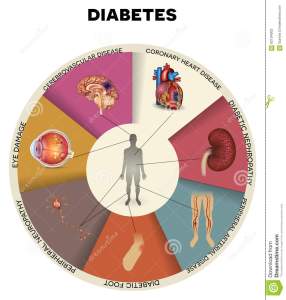 enfeeble almost all the organs of the body. Its special affection gets directed towards ones which are already in a state of disrepair. These could be our heart, eyes, kidneys, feet or any other organ or limb which catches its fancy. Nerve endings get compromised. Initially, some tingling sensations may be there, more bothersome at night. Over time, sensations may be lost completely, leading…
View original post 1,651 more words
Diabetes encourages you to be a monk and to sell your Ferrari
Posted in A Vibrant Life!, tagged Blood Sugar, Diabetes, Exercise, Fasting, HbA1C, Health, Hypertension, Insulin, Jeeves, Lifestyle Diseases, Obesity, Pancreas, PP on June 15, 2018| 1 Comment »
Lifestyle diseases like diabetes and hypertension have a tendency to quietly enter the house of our physical bodies, much like unbidden and unwelcome guests. In most of the cases, repeated attempts to entice these to depart and scour around for some greener pastures are unsuccessful. After the first stage of shock and denial has passed, a state of active acceptance comes about. The basic principle of a peaceful coexistence eventually gets followed.
Diabetes is labelled as a silent killer. This unwelcome guest has a tendency to  enfeeble almost all the organs of the body. Its special affection gets directed towards ones which are already in a state of disrepair. These could be our heart, eyes, kidneys, feet or any other organ or limb which catches its fancy. Nerve endings get compromised. Initially, some tingling sensations may be there, more bothersome at night. Over time, sensations may be lost completely, leading to problems which do not even get felt.
Excessive thirst and frequent urination are the well-known symptoms of diabetes. These could easily get ignored and we could chug along in our lives, blissfully ignorant of the arrival of this unbidden guest amidst us. With urine, the body also ends up ejecting some minerals. The disease leaves one feeling tired and exhausted.
The alpha and beta of diabetes
At the core of this affliction is an organ known as the pancreas. Due to genetic reasons or owing to prolonged abuse, there are times when it refuses to behave like an alpha male. It ceases to run on all its twelve cylinders. It does not produce enough insulin, the hormone which controls blood sugar levels in the body.
The beta cells in our pancreas not only produce insulin but also govern the sugar level fluctuations in the body. So, the higher the level of blood sugar, the higher is the fluctuation of sugar levels in general. The fact that South Asian genes happen to be more susceptible to attracting this disease does not really comfort someone who is actually suffering from diabetes.
There are those in whose case the cells that produce insulin are selectively lost. They would qualify to be suffering from Type 1 diabetes.
The body surely needs sugar to keep active and kicking. But when the sugar intake is more than what it can handle, insulin production lags behind its demand. The pancreas is unable to keep pace. Those whose pancreas has started losing its efficacy over a period of time get categorized as having Type 2 diabetes. Often, obesity rules. The battle of the bulge gets lost. Pear pressure kicks in.
Then there is a portion of humanity which shows signs of an imminent onset of diabetes. These could be called pre-diabetics. Surely, there is some hope for them, provided they adopt an active lifestyle, change their diet pattern, and do not allow diabetes to walk in.
The delicately nurtured amongst our species, when they happen to be in the family way, face the risk of gestational diabetes. Though it is a temporary condition, they end up having a higher predisposition towards Type 2 diabetes.
Sharing some key observations
Yours truly is neither a physician nor a person even remotely connected with the field of medicine. Nevertheless, here is a summary of what one has learnt so far. Some of you might find these of use. These observations pertain to Type 2 diabetes.
Blood sugar levels are a function of the following major factors:
- Stress: The higher the stress levels, the higher the blood sugar levels. A prolonged challenging situation – whether on the home front or on the office front – could reduce the immunity levels of the body and increase the sugar levels.
Laughing things off helps, so does the company of those who exude positivity. Building up inner resilience reduces the impact of external circumstances, and thereby helps in controlling sugar levels better.
- Physical activity is a basic factor. Be a couch potato or a chair tiger and repent at leisure. Regular brisk walks and light exercises help. But these produce results only after about six weeks, by which time the body forms a habit and starts demanding its daily dose of whatever physical regime you decide to follow.
Pottering about in the garden or in the kitchen and doing household chores provides some protection. Climbing up stairs and not using an elevator helps. Living life with lesser dependence on your favourite Ferrari helps.
But nothing to beat the efficacy of either cycling or a brisk walk, which is closer to the way a soldier would typically walk. Sweating it out is a key factor. It also helps with heart-related issues.
Much like a tube light needs an initial surge of additional power to get going, the body also needs an initial impetus of will power to walk the first 500 meters. Thereafter, once it has warmed up, a brisk walk often sounds more like a cake walk.
- Medication cannot be taken lightly. It needs to be taken regularly, on time. This implies that meals required to keep the body and soul together also need to be taken on time, day after day.
Oral medication is convenient. At times, if it is unable to bring blood sugar levels within control (fasting values in the range of 70-100 and other values being in the range of 120-200), the physician may prescribe insulin injections.
Insulin has a singular advantage of the necessary hormone reaching the blood stream directly. But the flip side of using insulin, or any other anti-diabetic agent, is the risk of blood sugar dropping down to such dangerous levels as 60 or below. Symptoms could be tiredness, giddiness, excess sweating, palpitation and even coma and other complications. This could even prove to be fatal.
To avoid such complications, a bar of chocolate, some dry fruits and biscuits should always be kept handy. Sugar cubes could also help. A glucometer needs to be used to immediately check the blood sugar levels and the incident reported to one’s doctor.
- Diet is a crucial factor in managing diabetes. Our scriptures often extol
 the virtues of leading the life of an ascetic or a monk. Diabetes propels us towards such lofty goals in life. Controlling our taste buds is a serious challenge and needs nerves of chilled steel. When a piping hot junk food item like a ‘samosa’ comes up in front of us, or when a ‘rasgulla’ gets lovingly offered by an otherwise well-meaning friend, the deep reserves of our tenacity have to be marshalled to refuse these and instead pick on a green salad.

Even fruits like mangoes and bananas are harmless, if taken in moderation and if in the absence of any other item on our plate.
Some tests and parameters
- Regular checks on blood sugar levels (fasting as well as postprandial, PP) are highly recommended.
For fasting level to be correctly ascertained, during the previous night, except for plain water, nothing else should be consumed after 10 PM. Medicines to be taken after the test. Normal breakfast can be had after about 30 minutes.
For PP, a reading would need to be taken two hours after breakfast, with nothing else being consumed in the meanwhile. Any deviation from this procedure can be brought to the notice of one’s physician.
- Once in six months, our physician may recommend a test known as HbA1C. This one tells us the weighted average of our sugar levels over a period of the past three months, thereby indicating the extent of control we have exercised over ourselves during that period. A value below 7 would normally indicate a fair amount of control, though the exact value is best decided between the doctor and the patient.
- Frequent eye and feet check-ups are necessary. Once in a year, functioning of the kidney needs to be reviewed by means of appropriate tests.
When prolonged tension leads to hypertension
Yet another lifestyle disease which creeps up on one is that of high blood pressure. If left unattended, this could result in the hardening of arteries, cardiac problems and an increase in one’s intraocular pressure in the eyes. Keeping this on a strict watch is in some ways even more crucial than regular monitoring of blood sugar levels.
Of doctors and miracle cures
The role of a doctor in managing diabetes is more akin to that of a guide. The hapless physician has no clue as to what our daily meals comprise and the amount of liquors and desserts we gobble up at social events.
Often, we may come across miracle cures made by those who are proficient in alternative streams of medicine, claiming to get us rid of diabetes in a short period of time. If followed, these could achieve good results in the short run, but could do more harm to the body in the long run. The reason is simple – these are not sustainable. In a controlled environment, these cures could really work. But when we are back in the civilization, living our routine lives and facing all the harsh slings and arrows of Fate, the short-term benefits could simply evaporate. However, there is a general belief that some medicines from alternative streams do work as supplements, somewhat nullifying the side effects of allopathic medicines.
A helping hand from the government
One has no statistical evidence, but there is no doubt that those suffering  from this lifestyle disease do end up suppressing the economic growth of the country they inhabit.
Revenue-hungry governments world over could think of imposing a hefty ‘sin tax’ on all things sweet. Tax breaks can be offered to those who suffer from a lifestyle disease. The delivery of public health services can be strengthened.
The civic authorities would do well to ensure that there are adequate provisions for bicycle tracks and for taking brisk walks in open spaces for its denizens. Public transporters could pitch in by ensuring availability of diabetic diets to those who might be in need of the same.
The trick of managing a lifestyle disease
The real control of diabetes and other lifestyle diseases rests in our own hands. Guided by a competent physician, management of these is no rocket science.
Basically, the trick lies in holding our chin up, looking ahead to a joyful life with clear eyes, and marching on with our lives, wearing this affliction as a badge of honour on our sleeves, aspiring to evolve spiritually, with nary a wrinkle on our forehead.
Bertie Wooster and Jeeves would heartily approve of a sunny disposition of this nature. So would Ashe Marson of the ‘Something Fresh’ fame.
(Inputs from Dr B S Suryanarayana, Additional Professor, Department of Medicine, JIPMER, Pondicherry, are gratefully acknowledged)
(Illustrations courtesy www)
(Related Posts:
https://ashokbhatia.wordpress.com/2013/05/05/o-my-beloved-when-would-you-depart
https://ashokbhatia.wordpress.com/2013/08/04/getting-india-in-the-pink-of-health
https://ashokbhatia.wordpress.com/2014/10/06/handling-the-diabetes-tsunami-in-india
https://ashokbhatia.wordpress.com/2015/07/01/how-diabetes-helps-us-to-improve-our-sq)
The Pear Pressure faced by CEOs
Posted in Management Lessons, tagged BMI, CEO, Decision Making, Humour, Management, Obesity, Peter Principle on April 27, 2018| Leave a Comment »
CEOs lead a challenging life. Apart from making and meeting long-term business goals, they face a relentless  pressure, living from one quarter to the next. Customers have to be handled with kid gloves. Suppliers have to be kept in good humour. People have to be kept motivated at all times. Interpersonal conflicts between team members have to be sorted out. A lonely life has to be lived.
Unlike their juniors who invariably face Peer Pressure, CEOs face Pear Pressure. Some call it signs of prosperity. Some refer to it as a Battle of the Bulge. Others label it as flab around the waist.
The Battle of the Bulge
A CEO in possession of a portly disposition projects an image of a soul which has finally attained salvation and has become a super-hero of the species generally alluded to as managers. Walk into any gathering of the top dogs across most…
View original post 779 more words
The Pear Pressure faced by CEOs
Posted in Management Lessons, tagged BMI, CEO, Decision Making, Humour, Management, Obesity, Peter Principle on November 15, 2015| 1 Comment »
CEOs lead a challenging life. Apart from making and meeting long-term business goals, they face a relentless  pressure, living from one quarter to the next. Customers have to be handled with kid gloves. Suppliers have to be kept in good humour. People have to be kept motivated at all times. Interpersonal conflicts between team members have to be sorted out. A lonely life has to be lived.
Unlike their juniors who invariably face Peer Pressure, CEOs face Pear Pressure. Some call it signs of prosperity. Some refer to it as a Battle of the Bulge. Others label it as flab around the waist.
The Battle of the Bulge
A CEO in possession of a portly disposition projects an image of a soul which has finally attained salvation and has become a super-hero of the species generally alluded to as managers. Walk into any gathering of the top dogs across most professions and one would be convinced that bosses are generally more portly than their bossed-over managers.
The smarter the top boss, the more he is likely to make his team members run around achieving targets. In the process, the juniors end up getting flatter tummies, a much-coveted attribute. In turn, hard-working subordinates often end up making their bosses lazier, with the latter ending up with convex-shaped protrusions in their midriffs.
Over 1.9 billion adults worldwide are overweight. Of these, some 600 million are further classified as obese. How does this come about? Lack of exercise is said to be the main culprit. Stress is yet another. Genetic factors take a part of the blame. Long working hours leading to lesser workouts get blamed.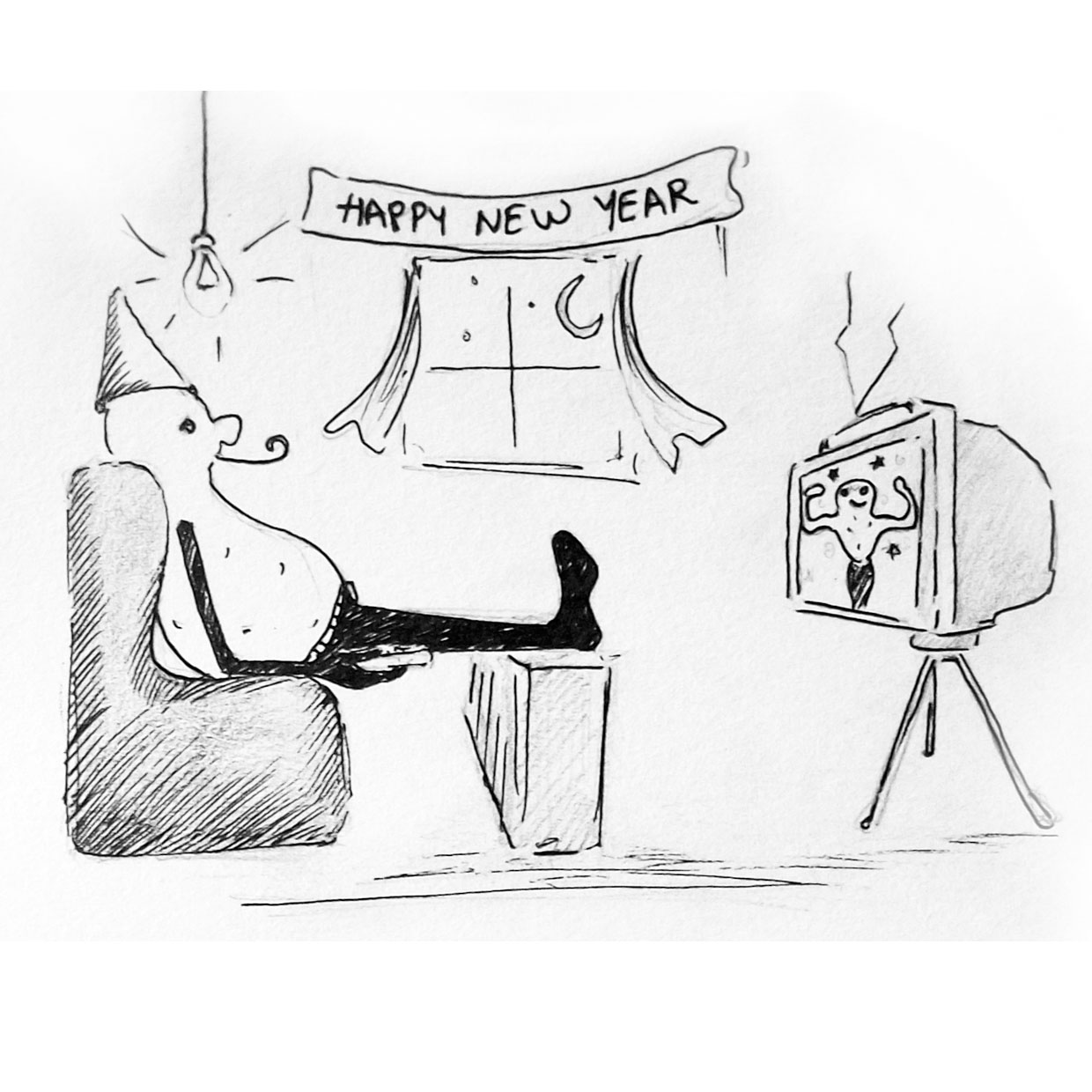
Of decision-making and waistlines
Recently, a study by Australian universities has ended up linking decision-making to higher Body Mass Index.
According to researchers, people whose work days require constant decision-making are at greater risk of expanded waistlines. Conversely, workers who exercise control by regularly applying their skills to their jobs — known as skill discretion — were found to have lower Body Mass Index and a smaller waist size.
In other words, the researchers conclude that it is skinny people who are most often good at what they do and enjoy using their skills. However, those who have the power to make decisions are distinctly wider around the middle.
This justifies the derisive term Fat Cats often used to refer to those who control the levers of business. Admittedly, larger waistlines are perhaps a consequence of the CEOs’ sedentary job requirements instead of being the reason for their elevation to decision-making levels.
Perhaps further studies may reveal that weighty decisions need personal countervailing ballast in order to be balanced. It sounds as if power ends up making business leaders more expansive.
Beyond the Peter Principle
Concerned CEOs may wish further research to be designed in such a way as to establish the veracity of some  principles of the following kind:
1. A manager’s waistline is directly proportional to his position in any decision-making hierarchy.
2. According to the Peter Principle, in any organization, employees rise to their level of incompetence. Further studies could confirm if their rise is also linked to the propensity of their bodies to achieve the maximum girth permitted by their constitution.
3. Depending upon their Body Mass Index and the waistline, successful CEOs could be classified into three categories.
Potato CEOs: Those who have dazzled with their performance in the good old days. They have outgrown the stage of feeling Pear Pressure.
Pear CEOs: Those who are currently guiding teams and delivering reasonably good results. The hapless souls are yet to come to terms with their pear-shaped midriffs.
Banana CEOs: Those who are good at planning as well as execution. They aspire to attain the status of Peer CEOs, without their bariatric blues.
4. For Potato CEOs, Pear CEOs are objects of envy. Likewise, Pear CEOs, howsoever reassured they might sound, secretly aspire to be like Banana CEOs, with concave-shaped bellies.
5. A hypothesis that can be put to test would be if the rate of rise in a hierarchy determines the rate of increase in waistlines.
6. All these propositions need to be cross-validated across different cultures and societies.
Such studies would enrich the science of Hierarchiology. These would be highly useful for head hunters as well as for Human Resource professionals. The insights gained thus would enable managers of all sizes and shapes to improve their quality of life.
Pear Pressure in organizations
Ironically, what is true of individual CEOs is also true of organizations.
The very successful and dynamic ones indulge in frequent bariatric surgeries and ensure that their midriffs remain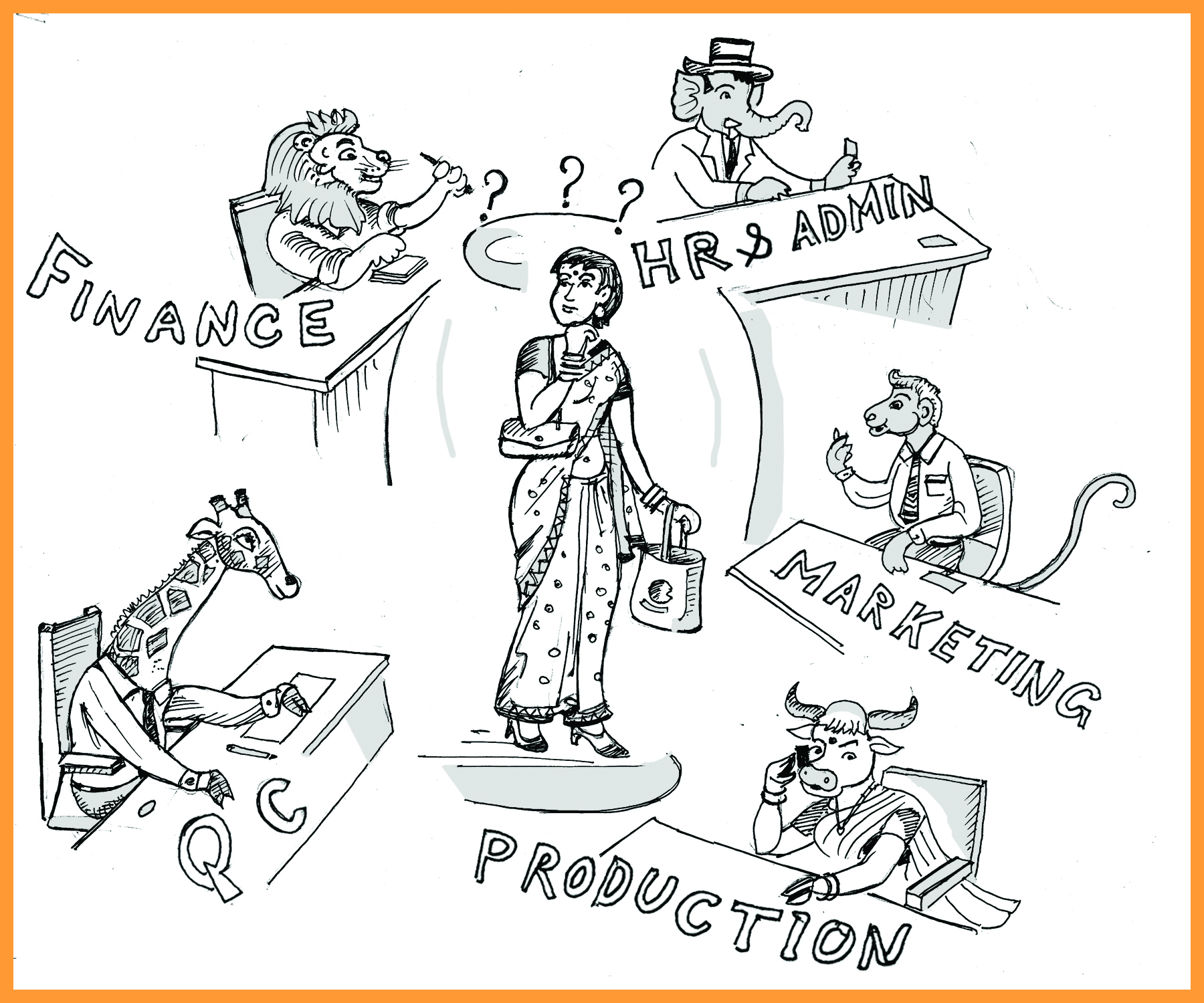 under strict control. They are acutely aware of Pear Pressure and have checks and balances in place to avoid carrying excessive flab.
The mediocre ones end up accumulating flab in the middle. At every success, they end up hiring more people than is necessary. At every failure, they undergo a liposuction procedure. They have learnt the art of managing Pear Pressure.
The not-so-successful organizations have the highest Body Mass Index. They are replete with massive layers in their hierarchies. Their processes are bogged down with archaic procedures. Most public sector undertakings are shining examples of this kind.
This is THE challenge all CEOs need to fight single-handedly. They have to wage a relentless war on adipose tissue of all kinds. Unless they decide to take the matter in their own hands, literally as well as metaphorically, the excess belly fat – whether on their own personas or in their organizations – would refuse to melt away.
(Reference: http://www.theweek.in/news/sci-tech/how-your-job-could-be-influencing-your-waistline-study.html)
GETTING INDIA IN THE PINK OF HEALTH!
Posted in For India, With Love!, tagged BMI, Diabetes, Gross Happiness Product, Hypertension, Jogging, Lifestyle Diseases in India, Lure of gold, Obesity, Sedantary Lifestyle, Tax Planning, Walking on August 4, 2013| 2 Comments »
The conscientious ones amongst the mandarins in the Indian Health Ministry cannot really be blamed for having sleepless nights. The epidemic of such lifestyle diseases as obesity, diabetes, hypertension and cardiovascular abnormalities is leaving them a wee bit clueless. The need of the hour is to come up with a scheme which nudges Indians of all sizes and shapes to start living slimmer and healthier lives.
Take obesity, for instance. As many as 60 million Indians – roughly 5% of the population – are considered obese. With more than 50 million suffering from high blood sugar, India is a nation headed for a health tsunami the devastation caused by which would be anything but sweet. This is a grave threat to our vision of the country reaping a hefty demographic dividend in the years to come.
How do we motivate the Indian couch potatoes to switch off their TV sets and go out for a jog or a brisk walk? What is it that makes Indians tick?
One, all Indians have a great passion for gold. We are quite happy gobbling up around 900 tonnes of the yellow metal every year. Walk into any jewelry store and the rush there would make you wonder if someone inside is dishing out freebies. You would be excused for mistaking it for a fish market, albeit with an odorless soothing ambience where the sales people smell of perfume but are too busy to attend to your needs immediately. One thing we have surely learnt from our Gulf friends is to build multi-storied malls where a dazzling variety of bangles, rings, pendants, chains and other accessories are on display, each on an exclusive floor of its own. After all, aeons back, India was known as a ‘bird of gold’!
Two, like many of our brethren elsewhere on this planet, we despise paying taxes. In a country of 120 billions, where automakers face a slump but luxury cars still sell like hot cakes, less than 3% pay any tax on their incomes. Of these, merely 1.3% report an income exceeding Rs. 2 millions per annum. A Pareto’s Law is in operation here as well – these 1.3% alone make up for about 63% of the taxes collected! Come budget time, and our collective BP levels go up. The hapless salaried class, a sitting duck in any case, hopes for a tweaking of Section 80C etc. The businessmen keep improvising their art of fudging expenses year after year and still suffer from indigestion and insomnia. Corporates have a battery of professionally qualified people assisting them in tax planning, a euphemism for tax evasion being portrayed as tax avoidance.
The Government of India would do well to capitalize on these widespread weaknesses of Indians and launch a slew of incentives and schemes which nudge Indians of all hues to start living healthier lives. Dubai has already shown the way by deciding to lure its citizens to lose weight in kilograms and gain ounces of gold. India can improve upon the scheme and link weight loss of its citizens to tax savings as well. A carrot and stick approach based on a single health parameter which is easily measurable (like Body Mass Index, or BMI in short, for example) could be an instant hit with the masses.
The scheme can reward people whose BMI is in the normal range. They can hope to get 5 gms of gold plus a rebate of 10% on the taxes payable each financial year. Those who have a BMI in the obese or super-obese range can be made to pay a 10% surcharge on their taxes. Those who are underweight can be given extra rations in the proposed Food Security Bill. A scheme of this kind would surely motivate Indian citizens to start jogging, walking and refusing to become couch potatoes. Those who sustain fitness for longer periods can merit extra incentives. If they do not provide fitness certificates annually for a period of 5 years, there could be an obligation to return the gold thus earned. This would ensure that having pocketed their new-found wealth, the beneficiaries would not start piling up their pounds of flesh once again.
The spin-offs of such a scheme are many. Students, if given grace marks for being healthier, would certainly switch their lunch preferences in favor of salads, nuts and fruits, giving up on burgers and pizzas. Those opting for fitness-based careers would find their employment prospects brightening up. Our armed forces would no longer have to face a shortage of officers wanting to join its ranks. The additional supply of sports persons shall improve the country’s medal tally prospects in Olympics. Engineers and professionals of all kinds would start refusing white collar jobs, providing much-needed manpower for blue collared assignments. Medicos will start taking careers in public health more seriously.
Most of our denizens who have been happier staying out of the tax net would voluntarily start filing returns. The IT Department may soon need to beef up its facilities to cope with the mad rush of filing returns, what with the humble paan-waalahs, the washermen and the milk delivery men also jumping onto the bandwagon. The rush for gym equipment, health monitoring accessories and healthy foods would increase manifold, bringing in fresh investments, thereby giving a much needed fillip to the ailing manufacturing sector. Bollywood stars who are already egging us on to remain in good shape would get a fresh lease of life. The just-to-be-married maidens who are fighting the battle of the bulge and chasing their size ‘zero’ dreams would soon start earning a part of their own dowry.
Politicians who remain cocooned in their climate controlled environs may soon decide to visit their constituencies more often, losing weight while walking through the heat and dust of the countryside. A healthy body houses a healthy mind. Soon, the citizens could expect a major improvement in the functioning of our parliamentary institutions. Bureaucrats would soon follow the healthier lifestyles of their leaders, thereby revitalizing a crucial part of our vibrant democracy.
Where is the infrastructure to implement a scheme of this nature, you might well ask. With inclusive banking just round the corner, post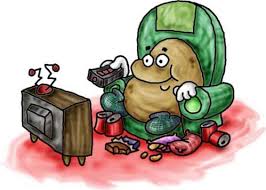 offices, banks and hospitals of repute can certify the BMI levels of our citizens. P&T staff members who are twiddling their thumbs in the post-telegram era can be trained and used in the scheme. The excess outflow of foreign exchange on account of spurt in gold imports would be easily offset by the higher productivity of the working population of India. This in turn would give a boost to the much sought after GDP numbers, besides inching us conceptually closer to a Gross Happiness Product.
Overall, a win-win situation for all concerned. For all you know, India could prove to be the healthiest country on the planet in the near future!
(Realted Post: https://ashokbhatia.wordpress.com/2015/01/01/a-new-year-resolution-for-couch-potatoes)
-
Recent Posts
Buy the Book
buy the book
Categories
-
cc
Tags
Art Bertie Wooster Bhagavad Gita Bingo Little Birthday Blake Mouton Grid Blogging Bollywood Book Campus Life CEO Chivalry Consciousness Coronavirus Corruption Edwin Empress of Blandings English Ethics Feminism Happiness Health Hindi Hollywood Human Values Humour India Jeeves Kalidasa KIds Leadership linkedin Literature Lord Emsworth Love Lyrics Mahabharata Mahatma Gandhi Management Movies Music Norway Paintings Panjab University People P G Wodehouse Politics Pondicherry Portugal Psmith Puducherry Rabindranath Tagore Ramayana Ritusamhara R K Laxman Romance Rosie M Banks Rupert Psmith Seasons Shakespeare Social Media Something Fresh Songs SPANDAN Spirituality SQ Sri Aurobindo Stephen Covey Switzerland Tatas Thos UBS Values Wodehousitis WomenArchives
- March 2026 (1)
- February 2026 (5)
- January 2026 (2)
- December 2025 (1)
- November 2025 (2)
- October 2025 (2)
- September 2025 (3)
- August 2025 (3)
- July 2025 (2)
- June 2025 (2)
- May 2025 (4)
- April 2025 (5)
- March 2025 (5)
- February 2025 (4)
- January 2025 (4)
- December 2024 (6)
- November 2024 (6)
- October 2024 (6)
- September 2024 (5)
- August 2024 (5)
- July 2024 (4)
- June 2024 (4)
- May 2024 (5)
- April 2024 (5)
- March 2024 (3)
- February 2024 (1)
- January 2024 (4)
- December 2023 (2)
- November 2023 (3)
- October 2023 (3)
- September 2023 (3)
- August 2023 (5)
- July 2023 (5)
- June 2023 (7)
- May 2023 (6)
- April 2023 (6)
- March 2023 (8)
- February 2023 (8)
- January 2023 (7)
- December 2022 (6)
- November 2022 (5)
- October 2022 (8)
- September 2022 (5)
- August 2022 (6)
- July 2022 (6)
- June 2022 (8)
- May 2022 (7)
- April 2022 (8)
- March 2022 (7)
- February 2022 (3)
- January 2022 (7)
- December 2021 (4)
- November 2021 (8)
- October 2021 (7)
- September 2021 (6)
- August 2021 (7)
- July 2021 (7)
- June 2021 (9)
- May 2021 (8)
- April 2021 (9)
- March 2021 (10)
- February 2021 (8)
- January 2021 (8)
- December 2020 (7)
- November 2020 (6)
- October 2020 (5)
- September 2020 (9)
- August 2020 (9)
- July 2020 (8)
- June 2020 (8)
- May 2020 (6)
- April 2020 (5)
- March 2020 (7)
- February 2020 (4)
- January 2020 (7)
- December 2019 (12)
- November 2019 (10)
- October 2019 (5)
- September 2019 (9)
- August 2019 (10)
- July 2019 (9)
- June 2019 (14)
- May 2019 (13)
- April 2019 (14)
- March 2019 (11)
- February 2019 (11)
- January 2019 (14)
- December 2018 (12)
- November 2018 (12)
- October 2018 (14)
- September 2018 (9)
- August 2018 (10)
- July 2018 (10)
- June 2018 (8)
- May 2018 (11)
- April 2018 (11)
- March 2018 (6)
- February 2018 (9)
- January 2018 (10)
- December 2017 (10)
- November 2017 (9)
- October 2017 (8)
- September 2017 (11)
- August 2017 (10)
- July 2017 (10)
- June 2017 (11)
- May 2017 (9)
- April 2017 (7)
- March 2017 (7)
- February 2017 (8)
- January 2017 (10)
- December 2016 (9)
- November 2016 (11)
- October 2016 (10)
- September 2016 (10)
- August 2016 (9)
- July 2016 (6)
- June 2016 (10)
- May 2016 (10)
- April 2016 (10)
- March 2016 (10)
- February 2016 (12)
- January 2016 (10)
- December 2015 (11)
- November 2015 (11)
- October 2015 (10)
- September 2015 (10)
- August 2015 (10)
- July 2015 (10)
- June 2015 (10)
- May 2015 (10)
- April 2015 (10)
- March 2015 (9)
- February 2015 (10)
- January 2015 (8)
- December 2014 (9)
- November 2014 (8)
- October 2014 (8)
- September 2014 (7)
- August 2014 (7)
- July 2014 (7)
- June 2014 (7)
- May 2014 (7)
- April 2014 (7)
- March 2014 (7)
- February 2014 (6)
- January 2014 (7)
- December 2013 (6)
- November 2013 (6)
- October 2013 (6)
- September 2013 (6)
- August 2013 (6)
- July 2013 (6)
- June 2013 (6)
- May 2013 (6)
- April 2013 (6)
- March 2013 (6)
- February 2013 (6)
- January 2013 (6)
- December 2012 (4)
- November 2012 (4)
- October 2012 (3)
- September 2012 (2)
- August 2012 (4)
- July 2012 (2)
- June 2012 (2)
- May 2012 (2)
- April 2012 (2)
- March 2012 (2)
- February 2012 (3)
- December 2011 (3)
- November 2011 (1)
- October 2011 (2)
- September 2011 (2)
- August 2011 (2)
- July 2011 (2)
- June 2011 (3)

 ashokbhatia