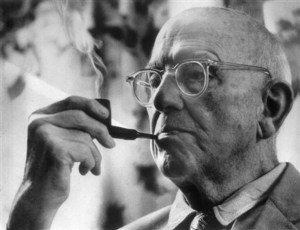
P. G. Wodehouse, the British humourist, did not intend his books and stories to impart management lessons of any kind. However, his keen observation skills, his detailed characterization, and certain traits he endows on some of his characters could be used by CEOs and managers of all kinds to achieve greater success in their careers, enabling them to face challenges with a chin-up attitude. Decision making while facing such disruptive situations as that of a pandemic could then be achieved with a jaunty sang-froid.
Management and Humour?!
Those of you who are from the realm of management and are dimly aware of the existence of a British humourist known as P. G. Wodehouse would by now be shaking your heads in disbelief wondering how something dished out by way of making one chuckle, guffaw and laugh could have anything to do with the stiff-upper-lip discipline of management.
Seriousness vs. Humour
I believe that seriousness and humour are two sides of the same coin. Consider the fact that humour is serious business indeed. It is bound to make us feel lighter but cannot be taken lightly. In fact, humour is a good lubricant which could be deployed to communicate serious messages more effectively.
The deeper reality is that we value seriousness and tragedy over humour and laughter. Our minds boss over our hearts. Most of the times, anything humorous is treated by us as being frivolous and perhaps fit to be scoffed at on the intellectual plane. On campuses of high-brow seats of learning, it is easy for us to visualize absent-minded professors going about with a heavy tome or two clutched in their hands, with a morose look on their faces, as if they were just being led by an invisible hand to the gallows. At management seminars and conclaves, serious talks get applauded, whereas a speaker conveying a plain vanilla message coated in delectable humour is ridiculed for playing to the gallery. In companies, at board meetings, detailed power point presentations of a serious kind get appreciated, whereas anything said in a lighter vein runs the risk of being viewed with a jaundiced eye.
One admires such management thinkers as C. Northcote Parkinson, Sharu Rangnekar and Laurence J. Peter who have broken this glass ceiling and given us rich management lessons in a humorous manner. All those who have worked in a large bureaucracy revere Parkinson’s Law which postulates that ‘work expands so as to fill the time available for its completion’. Some of you may be familiar with Rangnekar’s The Wonderland of Indian Managers, an uproariously funny account of how things really work in organizations. Those who have missed out on a coveted promotion would be twiddling their thumbs to figure out if they have attained their level of incompetence, a la The Peter Principle.
In their book Humour, Seriously, Naomi Bagdonas and Jennifer Aaker debunk the myth that humour has no place at the workplace. In an interview, Jennifer Aaker opines that leaders with a sense of humour are seen as 27% more motivating; their teams are more than likely twice as likely to solve a creativity challenge. When leaders use humour in their interactions with their team members, they signal humility and humanity, thereby reducing the status barrier between themselves and their audience. The goal of humour at the workplace is not merely to make others laugh; it is to put people at ease, thereby enabling them to be more open and candid in sharing their opinions.

Of Humour and Brands
Consider the innovative way humour gets deployed by a few brands of repute to keep their images shining bright.
Since 1946, the Air India Maharajah has been representing India with charm and dignity, making the company more visible to its customers all over the world. Created by Bobby Kooka along with Umesh Rao of J. Walter Thompson, the advertising agency, it has kept pace with the times – as a lover boy in Paris, a sumo wrestler in Tokyo, a Romeo in Rome and even a guru of transcendental meditation in Rishikesh.
Likewise, we have the case of the Amul girl. The mascot was created as a response to Amul’s rival brand Polson’s butter-girl. The idea was conceived in 1967 once ASP (Advertising, Sales and Promotion) clinched the brand portfolio from the previous agency FCB Ulka. It was executed by Mr. Sylvester Da Cunha, the owner of the agency and his art director Eustace Fernandes on hoardings, painted bus panels and posters in Mumbai. The mascot, since then, has been mobilized to comment on many events of national and political importance.
Not to forget some of our politicos who rose from the ranks after having been successful comedians, motivating their denizens to stand up to bullying by oversized neighbours waging wars so as to widen their own sphere of influence.
Wodehouse and Management
If a lay manager were to pick up such books by P. G. Wodehouse as Psmith in the City, Blandings Castle and Elsewhere and Something Fresh and put them under a managerial lens, she is surely apt to discover a treasure trove of precious lessons in such diverse fields like marketing, human resources, entrepreneurship, operations, systems and procedures, human resources, and the like.
When it comes to the art and science of managing bosses, Rupert Psmith, Reginald Jeeves, and Ashe Marson offer quite a few templates for a manager to follow. Then there are precious lessons in administration, time management and quite a few other areas in management.
Wodehouse and the Evolution of Management Thought
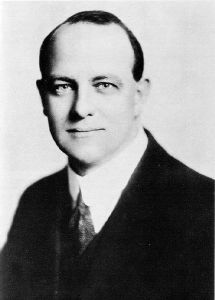
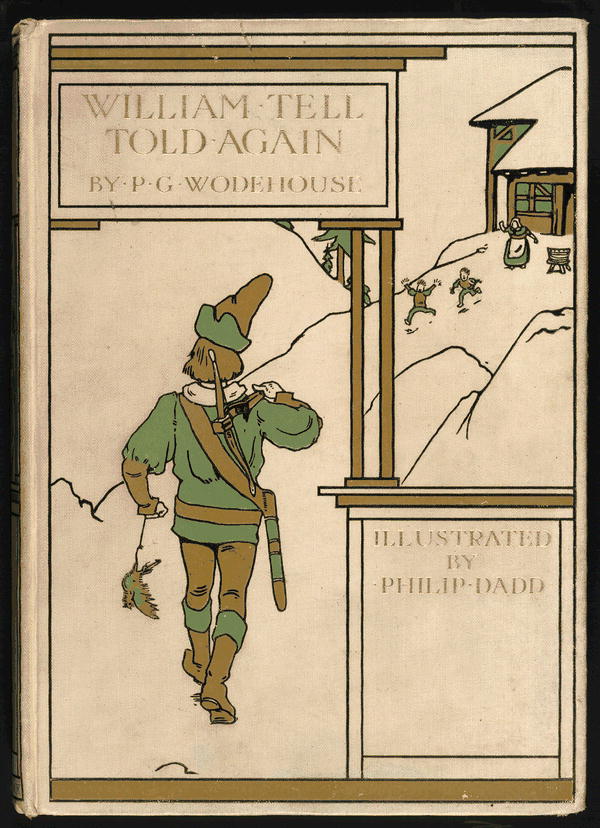
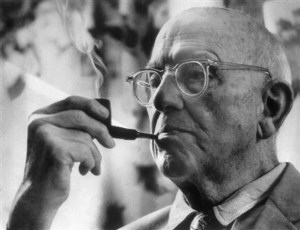
P. G. Wodehouse (1881-1975), fondly referred to as Plum, dished out his narratives in an era which one could allude to as the sunrise era of the science and art of management. He was a prolific writer. Between 1902 and 1974, he wrote just under 100 books in total, of which about 70 were novels; about 20 were short story collections (with a further 100 short stories not appearing in book form); four were semi-autobiographical works (including Not George Washington); one was a children’s story, one, a book of essays and another a book based on a newspaper column.
He used a mixture of Edwardian slang, quotations from and allusions to numerous literary figures, and several other literary techniques to produce a prose style that has been compared to comic poetry and musical comedy. One of the qualities of his oeuvre is its wonderful consistency of quality, tone, wit, and wisdom.
The Early Years
When Wodehouse arrived on the literary scene, Max Weber (1864-1920) was speaking of different forms of authority – charismatic, traditional, and rational-legal, while Henri Fayol (1841-1925) was working on his twelve principles of management.
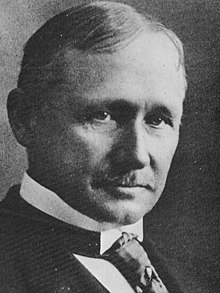
While Wodehouse was busy honing his unique skills as an author, Frederick Winslow Taylor (1856–1915) was preoccupied with a new approach to management. In 1909, Taylor published The Principles of Scientific Management. In the same year, Wodehouse had come up with The Swoop and Mike. Much like a management executive, Mike happens to be a solid, reliable character with a strong sense of fair play; he also has an appetite for excitement.
I believe that Plum’s works effectively capture many of the concepts of management propounded at the beginning of the twentieth century by these thinkers: Authority, Power, Delegation, Span of Control, Responsibility, Decision Making, Goals, Organizing, Division of Labour, Chain of Command, to name a few.
Think of rich uncles who exercise authority over the fortunes as well as the matrimonial prospects of their nieces and nephews. Jeeves exerts his soft power over Bertie Wooster and many others by virtue of his superior knowledge and keen intelligence. Roberta Wickham, Stephanie Byng, Rosie M. Banks, and scores of others are equally adept at exercising their soft power to get things done. In The Code of the Woosters, Aunt Dahlia delegates to Bertie the task of going to an antique shop on Brompton Road, sneer at a silver cow creamer and register scorn. The highly regimented life of those below the stairs, as portrayed in Something Fresh, brings home to a lay manager such concepts as organizing, division of labour, and chain of command.
By 1910, Wodehouse had published Psmith in the City, offering us insights into the working of a bank, and hinting as to how one could manage bosses. The Little Nugget came up in 1913, introducing us to Ogden Ford, someone who, like a bright and upright executive, can manipulate his distracters with much aplomb and even stand up to and tick off his stepfather. During December 1913, Henry Ford had installed the first moving assembly line for the mass production of automobiles. His innovation had then reduced the time it took to build a car from more than 12 hours to one hour and 33 minutes.
The Delicately Nurtured
While Wodehouse was busy introducing us to such emancipated females steeped in entrepreneurial enthusiasm as Joan Valentine, Jill Mariner and Sally Nicholas, Mary Parker Follett was having a profound impact on the development of management thought. She was active in the 1920s and 1930s, a time when women occupied few executive positions in business, government, or education. Her audience was small but devoted. Her remarkable work can be found in the volume Mary Parker Follett – Prophet of Management, published in 1995 by Harvard Business School Press.
During 1940, Wodehouse published Quick Service, outlining the risks involved in stealing portraits, thereby touching upon the realm of decision making under uncertainty. Meanwhile, Alfred Pritchard Sloan Jr. (1875 – 1966) was busy steering General Motors on a highway of high growth. From the 1920s through the 1950s, he brought in such concepts as an annual model change, brand architecture, industrial engineering, styling and planned obsolescence.
The Post World War Years
Traces of Peter Drucker in Plum’s Works
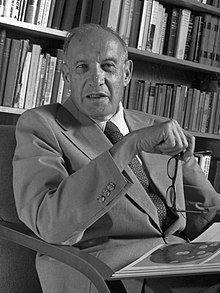
Most of the modern management post-second World War and great depression has been influenced by the thoughts of Peter Ferdinand Drucker (1909-2005) on management principles and practices. He enlarged our vision of the realm of management. Functions like Marketing, Production, Finance, Supply Chain Management, Systems and Human Resources emerged. Almost all of the works of Wodehouse touch upon some of these areas, as we shall shortly see.
Some of the basic principles of management according to Drucker are:
• Management is about human beings. Its task is to make people capable of joint performance, to make their strengths effective and their weaknesses irrelevant.
• Because management deals with the integration of people in a common venture, it is deeply embedded in culture.
• Every enterprise requires commitment to common goals and shared values. Without such commitment, there is no enterprise.
Jeeves instead highlights the importance of ‘the psychology of the individual’ to get desired results. Aunt Dahlia demonstrates the criticality of formulating a strategy as well as that of teamwork in The Code of the Woosters. When Roderick Spode keeps threatening Bertie Wooster and Gussie Fink-Nottle repeatedly, she comes up with the strategy of checkmating him by getting Jeeves to dig up any secret of his. With help from the Junior Ganymede club book, Bertie learns the word ‘Eulalie’, and tells Spode that he knows all about it. Spode, who does not want his followers to learn about his career as a designer of ladies’ lingerie, gets effectively persuaded to not to bother Bertie or Gussie any further.
• Every enterprise is a learning and teaching institution. Training and development must be built into it on all levels— training and development that never stop.
• Every enterprise is composed of people with different skills and knowledge doing many different kinds of work. It must be built on communication and on individual responsibility. The single most important thing to remember about any enterprise is that results exist only on the outside. The result of a business is a satisfied customer.
Consider Something Fresh which brings into sharp focus the life of those below the stairs who keep serving the inhabitants, guests, and impostors at Blandings Castle with alacrity and panache. Under the directions of Mr. Sebastian Beach and Mrs. Twemlow, things are always done properly at the Castle, with the right solemnity. And let us not forget the contribution of kitchen maids, scullery maids, chauffeurs, footmen, under-butlers, pantry boys, hall boys, stillroom maids, housemaids, nursery maids, secretaries, pig-keepers, and head gardeners like Angus McAllister.
• In 1966, Drucker brought in the concept of The Effective Executive. In 1964-65, Plum offered us Galahad at Blandings which showcased the unique abilities of Galahad to sort things out satisfactorily at Blandings Castle, which as usual is overrun with overbearing sisters, super-efficient secretaries, and the love struck, threatening to put an end to Lord Emsworth’s peaceful, pig-loving existence. Just like Jeeves resolves complicated issues with ease, Galahad is also a good example of an executive who happens to be effective when it comes to delivering results.

Philip Kotler and Plum’s Works
Philip Kotler (born 1931) further expanded the Marketing horizon by conceptualizing the 4 Ps – Product, Place, Pricing and Promotion. He published Marketing Management: Analysis, Planning and Control, which forever changed the way we look at marketing.
In Plum’s works, precious lessons can be learnt in marketing and salesmanship from someone like Frederick Threepwood (Freddie) who appears in many of the Blandings stories. He is normally a somewhat simple-minded youth who invites a jaundiced eye of the kind the British aristocracy is apt to cast upon its younger sons. In The Go-Getter, we come to appreciate Freddie’s perseverance in peddling the product he represents for his American father-in-law, the patriarch of the Donaldson’s Dog Biscuits empire. Like a true-blue marketing honcho, Freddie stops at nothing to achieve his objective. Besides extolling the virtues of the product, he even plans to get a cousin of his married to the owner of a chain of stores, so the distribution network expands.
Thus, of the four Ps mentioned by Philip Kotler, at least three are covered in Plum’s works – Product, Place and Promotion. Understandably, the element of Price is missing from these.
An Ever-evolving Field of Thought
Much after Wodehouse had kicked the bucket in 1975, Tom Peters and Robert Waterman gave us In Search of Excellence (1982). In 1989, Stephen R. Covey offered his unique managerial insights through 7 Habits of Highly Effective People. Many other experts have since contributed – and shall continue to do so – newer concepts to the realm of management.
A unique characteristic of management professionals is that they seem to have a very short attention span for concepts. Their craving for novelty in management concepts is never satiated. Give them Statistical Quality Control and Just-in-time and they lap it up with the kind of enthusiasm a cat shows on being offered a fish slice. Show them the potential of Six Sigma and Lean Manufacturing and they embrace it with all gusto. They are enamoured by a concept only until a new buzzword comes along. Thus, management thinkers and writers have a unique challenge – that of marketing even old ideas in a flashy new language. In order to maintain their status as a management guru, the hapless guys/gals have to not only keep coming up with newer concepts but also to keep recycling the older wines and offering the same in dazzling new bottles.
Like all other realms of knowledge, management continues to be an ever-evolving field, in tandem with the evolution of our economies. With rapid advances in technology, all segments of this knowledge are undergoing major changes. There is a dire need for futuristic business leaders in the mould of Rupert Psmith who can achieve goals in a sustainable manner, backed not only by hard core analytical prowess but also by such soft skills as compassion, empathy, and equanimity. A street-smart approach, backed by an ability to think on one’s feet and deploy one’s intuitive faculties to deliver results is the sine qua non for one to keep occupying that much sought after icon of power – the corner office.
Leading business institutes are increasingly depending on literature and fine arts to groom aspiring managers whose heads are screwed on right, thereby giving them a better chance at tackling the rise in the entropy of the business environment.
Some Common Features
Despite an evolution of managerial thought, over the last century, the fundamentals of organization management and leadership have remained the same, even if the delivery of those concepts has been reshaped to service the needs of a new economy. Rigid hierarchies have slowly given way to flexible organizations. With the advent of a work-from-home mode, many organizations have become dispersed in space and time.
In a similar vein, Plum’s works remain frozen in time, using the eccentricities of the British aristocracy as a fodder. All over the world, his fans keep churning out pastiches, thereby keeping his works alive. The underlying messages in his works continue to be relevant in our contemporary times. However, their timelessness lies in keeping our CEOs and managers away from getting depressed while facing the harsh slings and arrows of fate.
Wodehouse’s Works Under A Contemporary Lens
Having looked at the links between Plum’s novels and stories and the management tenets proposed by reputed experts over the last century, let us now try and put his works under a more contemporary managerial lens. We may consider focusing on such functional areas as Marketing, Human Resources/Organizational Behaviour, Entrepreneurship, Operations (Production of goods and services, Materials/Supply Chains/Logistics) Finance/Banking/Insurance, Systems/Procedures/IT, Administration, and Business Ethics. Formulating strategies is a macro-level area of importance.
In Plum’s oeuvre, one is apt to find references to almost all the functional areas of management. Whether one goes through the Bertie and Jeeves books, the Blandings Castle’s saga, the Ukridges, the Uncle Freds, or the Mulliner chronicles, one is apt to keep running into one or another facet of management.
The endeavour here is to delve a little deeper into the areas of Marketing and Human Resources/Organizational Behaviour, as also to briefly touch upon the other functions as these can be traced in many of Plum’s narratives.

Marketing
Let us see how Freddie goes about securing the patronage of his target customers for Donaldson’s Dog-Joy biscuits.
Identifying a Prospect
In The Go-Getter, he is quick to spot Aunt Georgina who owns four Pekingese, two Poms, a Yorkshire terrier, five Sealyhams, a Borzoi, and an Airedale. She is a woman who has a sound reputation in dog-loving circles.
Influencing the Prospect
First, Freddie gives an hour’s talk to Aunt Georgina on such virtues of the product as wholesomeness, richness in essential vitamins, and its bone-forming properties. Then he showers her with product brochures. He shows samples. He even offers a fortnight’s free trial.
If an order does not get placed, he does not lose hope. He perseveres in his efforts. He attempts to give a live demonstration by chewing a dog biscuit himself, thereby trying to establish that it is so superbly wholesome as to be fit even for human consumption.
When he chokes and business does not result, he borrows Bottles, Rev. Rupert Bingham’s pet, which has a robust constitution, thanks to its being fed by the product being promoted. Somehow, in an initial brawl with a Pekingese belonging to Aunt Georgina, Bottles fails to establish its superiority.
Down, But Never Out
Donaldson’s Inc. grooms its vice-presidents rather well. They may be down, but they are never out. They are trained to think like lightning. It is seldom that they are baffled for more than about a minute and a quarter. Freddie then thinks of demonstrating Bottles’ superior skills at handling rats. However, this proposal is vetoed by the audience.
Eventually, Bottles ends up proving his mettle in a fight with Aunt Georgina’s Airedale. A timely intervention by Bingham saves the day, prompting Gertrude, Aunt Georgina’s daughter, to fall back into his arms, thereby pleasing Aunt Georgina. She places an initial trial order of two tons!
Boosting Distribution by Facilitating Matrimonial Alliances
In Full Moon, Freddie is keen on a matrimonial alliance fructifying between his cousin Veronica and the man who owns the controlling interest in Tipton’s Stores. Veronica would obviously influence her would-be husband to promote the interests of Donaldson’s Dog-Joy biscuits. If Freddie can swing the deal and secure for Donaldson’s an exclusive dog-biscuit concession throughout Tipton’s chain of stores, he believes it would be the biggest thing he would have ever pulled off.
When approached, Tipton Plimsoll gleefully accepts the suggestion. The merger and acquisition takes place, as envisaged. Expansion of the distribution network of Donaldson’s Dog-Joy biscuits is assured.
Berating the Competition
Freddie does not shy away from berating the competition. In Full Moon, Peterson’s Pup Food, a competing brand, is held to be a product lacking in vitamins, causing the hounds to get rickets, rheumatism, sciatica, anaemia, and stomach trouble, whereas:
‘…dogs raised on Donaldson’s Dog-Joy become fine, strong, upstanding dogs who go about with their chins up and both feet on the ground and look the world in the eye. Get your dog thinking the Donaldson way! Let Donaldson make your spaniel a super-spaniel! Place your Irish setter’s paws on the broad Donaldson highroad and watch him scamper away to health, happiness, the clear eye, the cold nose, and the ever-wagging tail!
Even Small Orders Count
In the same narrative, we meet Lady Dora Garland who happens to command two spaniels and an Irish setter. Her being a small prospect does not deter our go-getter. He believes that every little bit added to what one has makes just a little more.
Allowing, say, twenty biscuits per day per spaniel and the same or possibly more per day per Irish setter, her custom per year per complete menagerie would be quite well worth securing.
Networking as a Tool
In Full Moon, Freddie also keeps in touch with Sir Rupert Brackenbury, the Master of Fox Hounds. His subtle sales talks have already won him over as a customer. He believes that those who join a satisfied customer like him for a hunt from nearby counties are likely to be told that the pack keeps ‘tucking into Donaldson’s Dog-Joy all the time, a bone-forming product peculiarly rich in Vitamins A, B, and C.’
Marketing professionals of all hues, sizes, and shapes would surely approve of the strategy and tactics used by Freddie to market his company’s product.
Promotion
Wilfred Mulliner is also our go-to guy when promoting newly invented products.
Mulliner’s Buck-U-Uppo speaks of Buck-U-Uppo which acts directly on the red corpuscles. If type A is required for human invalids, type B is purely for circulation in the animal kingdom and was invented to fill a long-felt want throughout India. Maharajas could use it to cause even a timid elephant to trumpet loudly and charge the fiercest tiger without a qualm.
A Slice of Life promotes the case of Mulliner’s Raven Gypsy Face Cream which is to be applied nightly with a small sponge before retiring to rest, leading to satisfactory results from numerous members of the aristocracy.
The same story advises nobility to use Mulliner’s Reduc-O, thereby eliminating the need for one to stew in Turkish Baths:
Mulliner’s Reduc-o, which contains no injurious chemicals, but is compounded purely of health-giving herbs, is guaranteed to remove excess weight, steadily and without weakening after-effects, at the rate of two pounds a week.

Human Resources/Organizational Behaviour
I think the richest harvest a CEO could reap from Plum’s works is in the realm of managing Human Resources. Many of his propositions are universal in nature and could be used by managers in any kind of organizational setting.
Psychology of the Individual
A critical input from Plum is in the form of the emphasis that Jeeves lays on the ‘psychology of the individual’.
Consider the way Jeeves manages to keep his career prospects intact by using tact and resource. His methods may be rough at times, but the neat results obtained do provide satisfaction to all concerned. He believes that one needs to break a few eggs to make an omelette. He registers dissent in a diplomatic manner. He is a respectful and dignified listener, speaking only when necessary. He leads others while appearing to be a devout follower.
The effectiveness of positive interpersonal relationships at work can never be over-emphasized. The efficiency as well as the effectiveness of CEOs and managers depends on the same. Whether managing bosses of different kinds or motivating colleagues and team members, an understanding of what makes each one tick surely helps.
The Art of Managing Bosses
Plum presents us with a wide spectrum of bosses. From the rather stiff-necked Mr. Peters of Something Fresh to a pliable one like Bertie Wooster, he offers us bosses with temperaments as varied as the colours in a rainbow.
Plum makes us appreciate the starkly different ways by which bosses get ‘managed’ by their respective juniors. Of all the alternative choices available, there are at least three which deserve a deeper consideration. I allude to Reginald Jeeves, Ashe Marson, and Rupert Psmith.
Jeeves is the inimitable valet of Bertie Wooster. Ashe Marson is the hero of Something Fresh. Psmith is the suave monocle-sporting Etonian. Each one has his own style of managing a boss.
Managing the Boss: The Jeeves Style
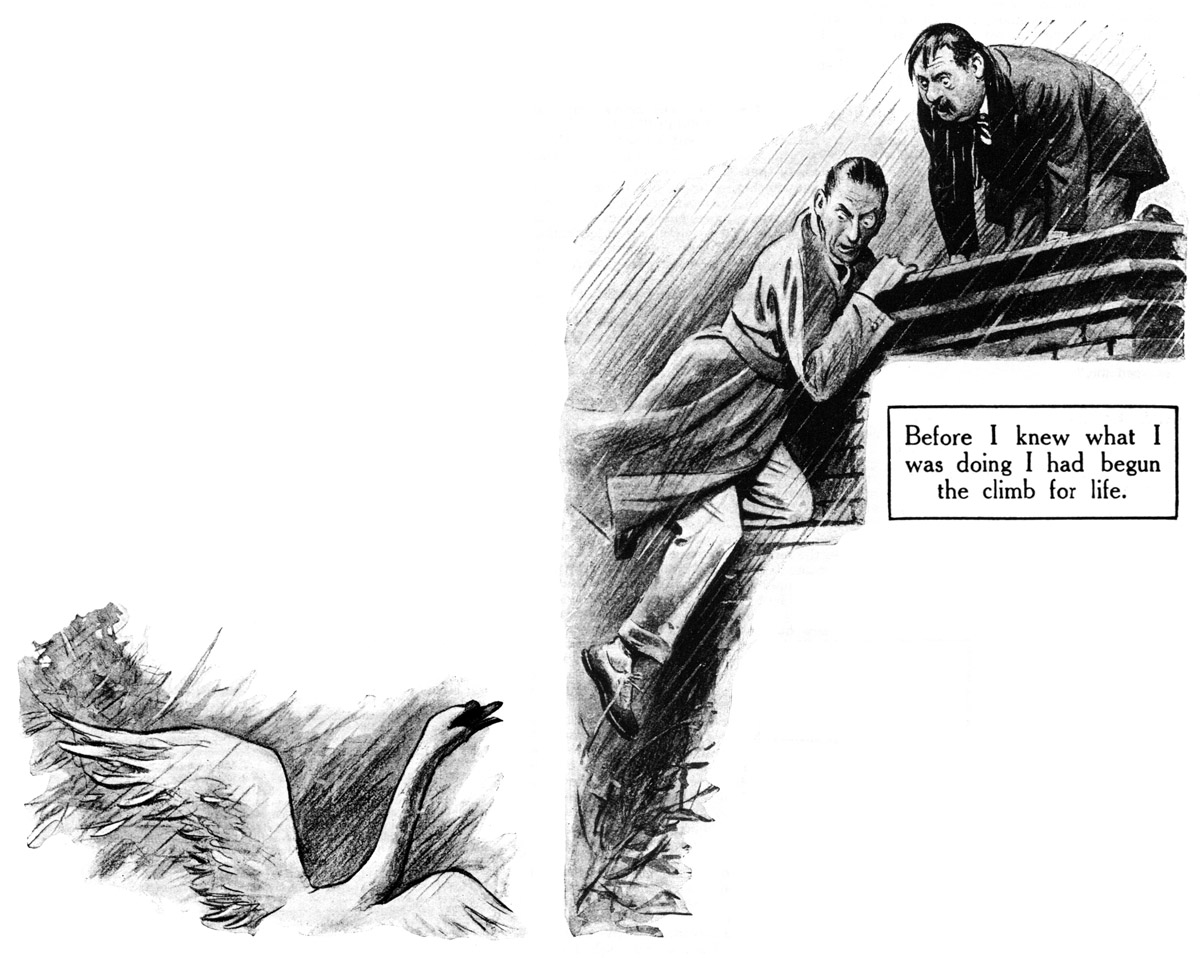
It is difficult to sum up in a few words the kind of tactics Jeeves uses to manage the affairs of Bertie Wooster and many others in the canon. Sending Bertie off on a midnight cycle ride through a forest, making him take the rap for setting a boat adrift resulting in an angry swan attacking the Right Honourable A. B. Filmer, and allowing some cats to be present just when Sir Roderick is coming for lunch are but some of his ways to make Bertie’s life smoother.
- Tact and Resource
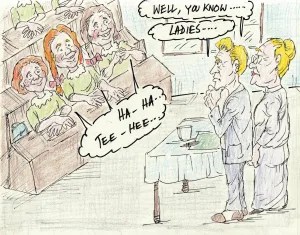
In ‘Bertie Changes His Mind’ (Carry On, Jeeves), Jeeves sees a crisis which requires adroit handling. Simply by managing Bertie to deliver a talk to some giggling and staring schoolgirls, he manages to change Bertie’s mind when it comes to having the prattle of kids’ feet around him. He concludes thus:
Employers are like horses. They want managing. Some of us have the knack of managing them, some haven’t. I, I am happy to say, have no cause for complaint.
- Decision Making Under Uncertainty
Mr. Wooster is a young gentleman with practically every desirable quality except one. I do not mean brains, for in an employer brains are not desirable. The quality to which I allude is hard to define, but perhaps I might call it the gift of dealing with the Unusual Situation.
What Jeeves prescribed almost a century back continues to be valid even today, especially in the mundane life of a CEO; even more so in the post Covid-phase of our operations. Those who have this unique gift of dealing with an unusual situation fare much better!

Managing the Boss: The Ashe Marson Style
In Something Fresh, Ashe Marson loves confronting his boss and challenges him to give up his sedentary habits. Looking the boss in the eye and giving it back to him occasionally ends up helping the boss. The diet-exercise regime unleashed upon the boss to cure his dyspepsia gradually starts showing results. The employer-employee relationship here has a dash of disobedience on part of the latter, but it does get results.
‘You’re a wonder,’ said Mr. Peters. ‘You’re sassy and you have no respect for your elders and betters, but you deliver the goods. That’s the point. Why, I am beginning to feel great.’
After the scarab is restored and the assignment at hand is over, Mr. Peter is impressed enough to offer him a career in watching over his health. He graciously accepts the offer to shift base to America, along with Joan Valentine, the love of his life. We are already aware that Ashe is conscious that a future in which Joan did not figure would not be such as to bear considering.
Alas, much like Psmith and Eve of the Leave it to Psmith fame, both are never heard of again anywhere else in the canon.

The Rupert Psmith Style
In Leave it to Psmith, when Rupert Baxter, the secretary of Lord Emsworth, is given his marching orders, Psmith skilfully manages to charm Lord Emsworth into hiring him instead.
In Psmith in the City, we meet a tough cookie named John Bickersdyke, manager of the London branch of the New Asiatic Bank. Psmith provides us with quite a few invaluable insights into the art of boss management.
- The Induction Process
For a new entrant, the induction phase in an organization plays a crucial role. Psmith offers some tips on the process of settling down in a company.
- The Friendly Native
Networking and social skills play an important role here. One needs to secure the cooperation of a friendly native. He is the one who knows the ropes and is aware of the personality traits and personal hobbies of the superiors who matter. Comrade Bannister is identified as the friendly native. In a casual chat, Bannister informs Psmith and Mike about Rossiter’s interest in football.
- Winning Over Superiors
Armed with this intelligence, Psmith’s task of endearing himself to Rossiter, his immediate superior and the head of the Postal Department, becomes easy.
If the way to an immediate superior’s mind is good performance on the job, then the way to his heart is through either a hobby of his or an area of mutual interest.
- Entente Cordiale
Psmith advocates the use of patience – the chief quality of a successful general. The haunting of the hapless target of one’s attention – the boss – is a gradual process. It works better if one’s performance on the core job remains without a blemish.
Background information about an area of interest, when imparted to and discussed with the superior over a period of time, speeds up the progress of entente cordiale.
Once goodwill of the immediate boss has been earned, feedback reaching the top boss regarding a new recruit’s capabilities and potential is invariably positive.
Managing the Top Boss
However, Psmith’s approach to managing the top boss is different. Here, he achieves success by taking a confrontational approach. But he does so only after having proven his performance and having achieved success in his efforts to ingratiate himself with the immediate boss. Once he has found his feet, he is ready to take a leap of faith.
He achieves his objective in two phases.
- The Reform Phase
The first one involves reforming the top boss by opening a dialogue with him at his club and then going on to challenge him openly, whether at a public meeting or at a spa.
When the bank manager Mr. Bickersdyke addresses a meeting at the Kenningford Town Hall to fulfil his political ambitions, the audience listens intently. Having said some nasty things about Free Trade and the Alien Immigrant, he turns to the Needs of the Navy and the necessity of increasing the fleet at all costs.
‘This is no time for half-measures,’ he said. ’We must do our utmost. We must burn our boats—’
‘Excuse me,’ said a gentle voice.
Mr Bickersdyke broke off. In the centre of the hall a tall figure had risen. Mr. Bickersdyke found himself looking at a gleaming eye-glass which the speaker had just polished and inserted in his eye.
‘How,’ asked Psmith, ’do you propose to strengthen the Navy by burning boats?’
The inanity of the question enraged even the pleasure-seekers at the back.
‘Order! Order!’ cried the earnest contingent.
Psmith claims that all his efforts are directed towards making a decent man of his boss; to establish that he is his truest friend.
- The Blackmail Phase
The second phase is to ignore the boss’ threats to dismiss him for insolence and get him to do his bidding by even resorting to blackmail, if necessary.
When Mike’s career in the bank is in jeopardy, Psmith resorts to it. He leverages the political ambitions of the top boss to pull Mike out of the soup. He digs up some old speeches made by Comrade Bickersdyke when he was a bulwark of the Tulse Hill Parliament. If published, these would adversely affect Bickersdyke’s chances of getting in as the Unionist candidate at Kenningford.
This is what Psmith tells Mike:
‘I have some little influence with Comrade Bickersdyke. Wrongly, perhaps,’ added Psmith modestly, ’he thinks somewhat highly of my judgement. If he sees that I am opposed to this step, he may possibly reconsider it. What Psmith thinks today, is his motto, I shall think tomorrow. However, we shall see.’
The top boss weighs his options and eventually relents. While Mike gets off the hook, Comrade Bickersdyke goes on to become a Member of Parliament.
Management is all about getting results. Psmith shows us how to get a superior to do his bidding.
The Perils of Having Yes-persons Around
The Nodder introduces us to Mr. Schnellenhamer, the head of the Perfecto-Zizzbaum Corporation, a film studio in Hollywood. He is not a person who brooks dissent. When he expresses his opinion on any subject, a respectful silence prevails. He looks about him expectantly. This is a cue for the senior Yes-Sheep to say yes. He is followed by the middle-rung Yes-Sheep and then the junior Yes-Sheep. Then the turn of all the Nodder-Dormices comes. They simply nod, one after the other. A dash of sycophancy keeps their employment prospects bright.
This may work for owners of small and modest sized businesses. However, management professionals in senior positions seldom realize that having a bevy of Yes-persons around could be harmful to their long-term career prospects. Encouraging dissenters is a sine qua non for a leader’s success in any field of human endeavour.
In Money in the Bank, Jeff describes Mrs. Cork, a brutal taskmaster, being in the same league as that of Simon Legree.
Building Bridges with Colleagues
Most organization charts hide more than they reveal. An organization really runs in an informal fashion where official proclamations are never as effective as informal ones. Goals get achieved faster and better by resorting to one’s interpersonal relationships. Building bridges with colleagues is the way to go.
One of the traits of an effective executive is the ability to get along with people of all temperaments and also looking at things from their view points.
By way of an example, consider Mike. He is not a snob. But he simply does not have the ability to be at his ease with people in another class from his own. He did not know what to talk to them about, unless they were cricket professionals. With them he was never at a loss.
However, Psmith is different. He could get on with anyone. He seems to have the gift of entering into their minds and seeing things from their point of view. Building bridges with others does help him in delivering results.
Being a Student of Human Nature Helps
While trying to console Mike, Rupert Psmith points out to him that a man of Comrade Bickersdyke’s warm-hearted type is apt to say in the heat of the moment a great deal more than he really means.
Men of his impulsive character cannot help expressing themselves in times of stress with a certain generous strength which those who do not understand them are inclined to take a little too seriously.
Chasing one’s Passion
Mike experiences the exhilaration of bursting the bonds with the New Asiatic Bank when he decides to return to cricket. Psmith, on the other hand, deserts his responsibilities to pursue a career in law.
‘This can’t go on,’ he said to himself. ’This life of commerce is too great a strain. One is practically a hunted hare.’
It needs wisdom to understand one’s strengths and weaknesses. If a leap of faith gets made to pursue one’s passion in life, happiness cannot be far behind.
The Art of Becoming Indispensable
Proficiency in On-the-job Skills
In The Custody of the Pumpkin, Lord Emsworth has to eat humble pie and beg Angus McAllister to rejoin his services. He approaches McAllister humbly and offers to double his salary if he returns to the castle. This alone ensures that his precious pumpkin ‘The Hope of Blandings’ ends up winning the coveted first prize at the Shrewsbury Show.
Rendering Perfect Services
In The Inimitable Jeeves, we are treated to a scenario where Bertie has made up his mind to sack Jeeves. To quote a delectable passage from the memoirs:
‘I buzzed into the flat like an east wind…and there was the box of cigarettes on the small table and the illustrated weekly papers on the big table and my slippers on the floor, and every dashed thing so bally right, if you know what I mean, that I started to calm down in the first two seconds. …. Softened, I mean to say. That is the word I want. I was softened.’
Needless to say, Jeeves stays put!
God’s Gift to Our Gastric Juices
Anatole, the supremely skilled French chef of Aunt Dahlia at her country house Brinkley Court, is much sought after by other employers. Those who try and lure him away from the Travers household include Mr. Anstruther in The Love that Purifies Sir Watkyn Bassett in The Code of the Woosters and Mrs. Trotter in Jeeves and the Feudal Spirit. He keeps Tom Travers’ lining of the stomach in the pink of health.
His is a fine example of such highly skilled professionals whose reputation travels far and wide, making potential employers keep a tab on their career moves with keen interest.
In The Story of Cedric, we meet Miss Myrtle Watling who assists Cedric Mulliner so very proficiently that he ends up marrying her.
All of them achieve a high degree of invincibility in their careers by acquiring relevant knowledge, cultivating appropriate skills which happen to be invaluable to the organization. Also, by having a positive attitude and a value system which matches with that of their employers.

Business Administration
Some Traits of a Bureaucratic Organization
The organizational behaviour of large bureaucracies is unique in many ways. Plum does not disappoint us in capturing this facet of management.
In Frozen Assets, Jerry, while reporting a missing wallet to a sergeant in a police station in Paris, realizes that he is up against French red tape, compared to which that of Great Britain and America is only pinkish.
In Psmith in the City, Plum gives us a sneak peek into the way a large bureaucratic organization works.
A Healthier Work–Life Balance
Then there was no doubt that it was an interesting little community, that of the New Asiatic Bank. The curiously amateurish nature of the institution lent a certain air of light-heartedness to the place. It was not like one of those banks whose London office is their main office, where stern business is everything and a man becomes a mere machine for getting through a certain amount of routine work. The employees of the New Asiatic Bank, having plenty of time on their hands, were able to retain their individuality. They had leisure to think of other things besides their work. Indeed, they had so much leisure that it is a wonder they thought of their work at all.
The Boredom Quotient of a Routine Job
Upon joining the bank, Mike realizes that except for Saturdays and Sundays, and the ten days’ holiday each year, he would have to face the drudgery of daily coming in at ten and leaving at five o’clock. The monotony of the prospect appalled him.
It is this monotony which makes the daily lunch a highlight of the day.
Few workers in the City do regard lunch as a trivial affair. It is the keynote of their day. It is an oasis in a desert of ink and ledgers. Conversation in city office deals, in the morning, with what one is going to have for lunch, and in the afternoon with what one has had for lunch.
For employees who believe in being proactive, it is difficult to shake off the caged feeling, often making them feel restless. Sooner or later, they start looking out for more exciting pastures.
The Concept of a Mistake-Clerk
How do we handle a disgruntled customer’s complaint? How do we assuage the feelings of a customer who is seething with fury?
According to Psmith in the City, there happens to be a regular post in American companies, called a mistake-clerk. His Key Responsibility Area is to receive all the flak when customers complain. He is hauled into the presence of the foaming customer, cursed, and sacked. The customer goes away appeased. The mistake-clerk, if the cursing has been unusually energetic, applies for a rise of salary.
Being the ‘fall guy/gal’ is no one’s idea of fun. However, there are indeed situations which need managers to willingly face the firing squad, howsoever despicable the prospect may be!
The Enthusiasm of Being a Cog in the Wheel
When Psmith joins the New Asiatic Bank, he believes that he, as an individual, ceases to exist. Instead, he becomes a cog in the wheel and a link in the bank’s chain. He makes his superiors believe that he, the Worker, shall not spare himself; that he shall toil with all the accumulated energy at his disposal.
Whose is that form sitting on the steps of the bank in the morning, waiting eagerly for the place to open? It is the form of Psmith, the Worker. Whose is that haggard, drawn face which bends over a ledger long after the other toilers have sped blithely westwards to dine at Lyons’ Popular Cafe? It is the face of Psmith, the Worker.
Discipline is the key to smoother operations. Painful duties cannot be shirked. In any case, Peter F. Drucker recommends focusing on one’s performance, rather than being concerned about one’s happiness.

Secretaries
Once upon a time, behind every successful senior manager or CEO, there used to be a secretary. Without a secretary fussing over them, the best of bosses would collapse. Their performance ratings would drop. Meetings, appointments, conference calls, travel plans, grapevine management, appointments, appraisals, promotions – there was virtually no activity in a company which fell outside the circle of influence of this omniscient and omnipotent tribe. Lesser mortals would invariably strive to always remain in the good books of the members of this species.
Over time, this species appears to have joined the ranks of such endangered ones as those of tigers, rhinos, and panthers. The smart ones have managed to get kicked upwards and have assumed operational roles. The not-so-smart ones have gravitated towards the unalloyed bliss of handling some mundane chores. The dull ones have simply been asked to pack their bags and seek greener pastures elsewhere.
In Plumsville too, secretaries keep the affairs in the lives of their bosses going on smoothly.
Lord Emsworth has employed a series of secretaries, most notable among them the ever-suspicious Rupert Baxter, the highly efficient young man who never seems to be able to keep away from Blandings, despite his boss’ increasingly low opinion of his sanity. He is succeeded in the post by Reginald Psmith, and later by the likes of Hugo Carmody and Monty Bodkin. The castle’s splendid library was catalogued, for the first time since 1885, by Eve Halliday.
When in the company of Lord Marshmoreton, we meet Alice Faraday. Julia Ukridge has a secretary by the name of Dora Mason. Aunt Agatha’s plans to get Bertie Wooster to take up the role of a secretary to the Cabinet Minister, A. B. Filmer, get thwarted by the acts of an angry swan.
Of course, the most outstanding secretary was Miss Myrtle Watling who made herself so very indispensable to Cedric Mulliner that he ended up marrying her!

Entrepreneurship
A Risk-Taking Ability
When it comes to stoking entrepreneurial ambitions and improving one’s propensity to take risks, Joan Valentine, the heroine of Something Fresh, exhorts us as follows:
Don’t get into a groove. Be an adventurer. Snatch at the next chance, whatever it is.
She makes us appreciate that the ideal adventurer needs a certain lively inquisitiveness. She has a sense of enterprise which keeps her moving on in life.
A Dash of Optimism
Elsewhere in the canon, we meet Stanley Featherstonehaugh Ukridge, a charismatic opportunist who will do anything to increase his capital – except, of course, work. He believes in the adage that unless one speculates, one does not accumulate. He keeps coming up with get-rich-quick schemes and failing in his ventures with a remarkable degree of consistency. But his buoyant optimism never deserts him.
We find him setting up a Dog College where dogs can get trained to perform at a music hall. We also find him setting up an Accident Syndicate so insurance claims could be split up. He also supports sailors in the boxing ring. Elsewhere, we find that he is not averse to splitting a real estate commission earned during the sale of an English country house. In Love Among the Chickens, we find him setting up a chicken farm which also fails. But his buoyant optimism never deserts him. He starts visualizing starting up a duck farm!
Ukridge makes for an interesting case study on how not to set up and run a business. Lofty sales projections, an over-dependence on credit from suppliers, and lack of risk planning to overcome unforeseen setbacks ensure a failure of his ventures. Moreover, most of his ideas are of an immoral kind and are not sustainable.
Luck By Chance
The role that a chance occurrence plays in the life of an entrepreneur is brought out in Uncle Fred in the Springtime. Lord Ickenham tells Pongo of the policeman who accosted his aunt Brenda and said that her dog ought to be wearing a muzzle. When the aunt whipped her lorgnette from its holster and looked sternly at the man, he was never the same again. He left the Force, and eventually drifted into the grocery business.
And that is how Sir Thomas Lipton got his start.

Production/Operations
In Plumsville, we do not run into any operations of a manufacturing kind. But rendering a service is what keeps many of the characters busy.
In Plumsville, besides Anatole, we also run into other cooks who are adored by their respective employers. In Jeeves Exerts the Old Cerebellum, we come across the example of Miss Watson whom Mr. Mortimer Little, uncle of Bingo Little, intends to marry.
Discipline for Rendering Impeccable Services
Something Fresh touches upon the kind of discipline required to render impeccable services at Blandings Castle. It takes a bevy of servants to keep things running in an orderly fashion at the Castle.
Besides the ever-present butler Beach, with eighteen years’ service at the castle under his ample belt, it employs a number of footmen, such as Charles, Thomas, Stokes, James and Alfred. The chauffeurs Slingsby and Alfred Voules drive the castle’s stately Hispano-Suiza. Scottish head gardeners Thorne and Angus McAllister tend the grounds while George Cyril Wellbeloved, James Pirbright and the Amazonian Monica Simmons take turns to look after the needs of Empress of Blandings.
There is a rigid hierarchy here, backed by customs and rituals which need to be scrupulously observed. There are strict rules of precedence among the servants. A public rebuke from the butler is the worst fate that can befall a defaulting member of this tribe.
Kitchen maids and scullery maids eat in the kitchen. Chauffeurs, footmen, under-butlers, pantry boys, hall boy, odd man and steward’s-room footman take their meals in the servants’ hall, waited on by the hall boy. The stillroom maids have breakfast and tea in the stillroom, and dinner and supper in the hall. The housemaids and nursery maids have breakfast and tea in the housemaid’s sitting-room, and dinner and supper in the hall. The head housemaid ranks next to the head stillroom maid. The laundry maids have a place of their own near the laundry, and the head laundry maid ranks above the head housemaid. The chef has his meals in a room of his own near the kitchen.
All this may sound similar to running a five-star property in the hospitality segment. Also, behaviourally speaking, there is not much difference between our corporate citizens and those who work below the stairs. Both love discussing the idiosyncrasies of those above them.
Materials/Supply Chain/Logistics
When the dove of matrimonial peace keeps flapping its wings over the abode of a happily married couple – like that of Rosie M. Banks and Bingo Little – it is apparent that the household and the kitchen never run short of any critical item. Since Rosie keeps travelling often, one may safely assume that the credit of managing the supply chain management on the household front would mainly go to Bingo Little.
Another example of an efficient ‘no-stock-out’ system would surely be that of Jeeves, the resourceful valet of Bertie Wooster. He never runs out of critical items at his master’s lair, even managing the needs of surprise visitors who descended on the Mayflair flat at a short notice. A ready supply of tissue restoratives and pick-me-ups is always available.
In Episode of the Dog McIntosh, the successful and timely restoration of the custody of the dog McIntosh to Aunt Agatha demonstrates the importance of following the Just-in-Time dictum.
This is how Bertie says he procured aniseed powder, widely used in the dog-stealing industry:
I don’t know what the record is for popping out and buying aniseed, but I should think I hold it. The thought of Aunt Agatha getting nearer and nearer to the Metropolis every minute induced a rare burst of speed. I was back at the flat so quick that I nearly met myself coming out.

Finance/Banking/Insurance
Ukridge is of the view that ‘If you do not speculate, you do not accumulate.’ Those who dabble in the stock market would heartily approve of this sentiment.
Plum’s works do not offer any solace to those burning the proverbial midnight oil preparing cash flow and funds flow statements, though balancing of ledgers does figure sporadically in Psmith in the City. But he offers unique insights into the realm of finance, banking and insurance.
Of Insolvent Banks and Non-Performing Assets
In Do Butlers Burgle Banks? we meet Horace Appleby who looks and acts like a butler but is, in reality, part of a gang which is after jewels and precious objects. In nearby Mallow Hall lives Mike Bond, who has recently succeeded his late uncle as owner of the house and Bond’s Bank. He employs secretary Ada Cootes, and lives with his aunt Isobel Bond, who is confined to her room with a broken leg and has a nurse, Jill Willard.
Jill eavesdrops on a conversation between Mike and the bank trustees, General Sir Frederick Featherstone and Augustus “Gussie” Mortlake. The bank is insolvent by a hundred thousand pounds. Originally the amount was even greater, but Mike gambled with the depositors’ money to bring the amount down; he will go to prison if this is discovered.
Mike wishes someone would rob the bank to hide the truth. Jill suggests to Ada, who knows the combination to the bank’s large safe, that they rob the bank. They do so and after many twists and turns in the story, the police are on to Mike who fears he will go to prison if he keeps the suitcase, but the bank will fail if he returns it. Horace and the gang use their savings to finance the bank, saving Mike.
Making Insurance Companies Spiritual and Avoiding Stop Payment of Cheques
In Anselm Gets A Chance, we run into Myrtle Jellaby, niece of Sir Leopold Jellaby, the local squire, who happens to be a millionaire philatelist. Some of us would fondly recall the managerial abilities of Myrtle, who is in love with Anselm, the curate of the parish of Rising Mattock in Hampshire. Anselm cannot inform her uncle of the position of affairs because all he has to marry on is his meagre stipend.
Anselm benefits by an unexpected legacy – a stamp album which is insured for a sum of no less than five thousand pounds. Sir Jellaby pulls a fast one and declares the collection to be virtually worthless.
Myrtle brings in Joe Beamish who has served about sixteen prison sentences and has a sound reputation amongst burglars. Her idea is to get Joe to ‘steal’ the album so Anselm may claim the insurance money. But Anselm gets cold feet when it comes to lodging a claim.
Myrtle has definite views about insurance companies. Backed by her woman’s intuition, she goes to the root of the matter and touches a spot.
“What do you mean, you wonder? Of course we collect. Shoot the claim in to the insurance people without a moment’s delay.”
“But have you reflected, dearest?
“It doesn’t matter whether a thing’s valuable or not. The point is what you insure it for. And it isn’t as if it’s going to hurt these Mutual Aid and Benefit birds to brass up. It’s sinful the amount of money those insurance companies have. Must be jolly bad for them, if you ask me.”
Myrtle believes that insurance companies have too much money and would be better, finer, more spiritual insurance companies if they were made to cough up high value claims. Persuaded by her, Anselm realizes that it was not only a pleasure, but a duty, to nick the London and Midland Counties Mutual Aid and Benefit Association for five thousand pounds. It might prove the turning-point in the lives of its Board of Directors.
The fact that Myrtle herself has engineered the theft leaves Anselm shaken to the core. Of course, love prevails over ethical considerations.
But the situation undergoes a sea change when Anselm delivers a moving Sermon on Brotherly Love. Joe Beamish hands back the inherited stamp collection to him, thereby rendering a claim null and void. Sir Leopald Jellaby is found sobbing and expresses himself thus:
“Mulliner,” said Sir Leopold Jellaby, “you find me in tears. And why am I in tears? Because, my dear Mulliner, I am still overwhelmed by that wonderful sermon of yours on Brotherly Love and our duty to our neighbours.
“I wish to write you a cheque for ten thousand pounds for that stamp collection of yours.
“But your sermon to-night has made me see that there is something higher and nobler than a code of business ethics. Shall I cross the cheque?”
Having received a cheque, Myrtle does not waste time. She persuades Anselm to endorse it and give it to her, so she may motor to London that very night in her two-seater. This way, she would be at the bank the moment it opens and deposit it.
“You see, I know Uncle Leopold. He might take it into his head, after he had slept on it and that sermon had worn off a bit, to ‘phone and stop payment. You know how he feels about business precautions. This way we shall avoid all rannygazoo.”
There is nothing that so heartens a man in a crisis as the feeling that he has a woman of strong executive qualities at his side. Anselm kisses her fondly.
“You think of everything, dearest,” he said. “How right you are. One does so wish, does one not, to avoid rannygazoo.”

Systems and procedures
Regrettably, Wodehouse did not live long enough to witness the era of Information Technology. Around the time he handed in his dinner pail in 1975, this field was in its embryonic stage. Hence, this facet of management missed out on his humorous take on the digital world.
However, in the age of snail mail, telegrams, cyclostyle machines, telexes, fax machines, and large organizations with rigid hierarchies, Standard Operating Procedures drafted by glum looking internal auditors ruled. In Plumsville, one is apt to find rozzers and detectives who had their own set of procedures to be followed rigorously.
The Conscientious Rozzers
Take the case of rozzers who are over-zealous about protecting the property of the Crown. Use of their bicycles to impart riding lessons to young lasses gets resented. While tracking down criminals, they spare no effort. It is their upright and proper conduct which upholds the might of the Law. They are invariably meticulous in their approach. They show due respect to the gentler sex, unless they have direct evidence to the contrary. Even defaulters of the canine kind do not escape their fury.
Constable Ernest Dobbs (The Mating Season), Colonel Aubrey Wyvern (Ring for Jeeves), Eustace Oates (The Code of the Woosters) and Stilton Cheesewright (Joy in the Morning) are a few of the characters which pop up in one’s mind.
Detectives
Detectives of the benign kind solve many a problem for themselves and for their clients. In our challenging times, they no longer wear disguises. These days, besides tracking unfaithful spouses, they assist their companies in protecting their data against unethical hackers. Scotland Yard may still not be looking for their services, but many others are slowly recognizing the value of hiring digital detectives.
The Perks of Having a Sinister Smile
In The Smile That Wins, Adrian Mulliner, a private detective, falls in love with Lady Millicent Shipton-Bellinger, the daughter of the fifth Earl of Brangbolton who dislikes detectives. The father insists that Millicent must marry Sir Jasper Addleton, the financier.
Heartbroken, Adrian has a bad attack of dyspepsia and a doctor advises him that the best cure for it is to smile. Adrian has a sinister-looking smile that seems to say ‘I know all’ and causes a great deal of nervousness amongst people with something to hide. When invited to a Baronet’s country home he unleashes his smile on Sir Jasper Addleton who, guilty like all financiers, hands him a cheque for a hundred thousand pounds.
With the hundred thousand pounds in hand, and the unfortunate effect of the smile on the Earl just as the Earl was cheating at cards, Adrian gets the Earl’s blessing to marry Millicent.
Joining the Beloved’s Profession
In Bill the Bloodhound, we run into Henry Pitfield Rice, a young man employed in a detective bureau who has fallen in love with chorus girl Alice Weston. He proposes to her, but she refuses. She is fond of him but wants to marry someone in her profession. Henry tries to get a job on the stage but fails since he cannot sing or dance. Henry is sent by his employer to follow the touring company performing The Girl from Brighton, which Alice is part of, since a woman wants her husband shadowed and he is an actor in the show. Henry follows the company from town to town, using different disguises.
The touring company realizes that Henry is a detective. People there call him Bill the Bloodhound. They are holding a sweepstake on who he is investigating. The show has been successful, so he gets asked to join them as a mascot. Henry agrees, but refuses to reveal who he is following. During the next show, Henry proposes to Alice just before she goes on stage. Eventually, Henry joins the company, and becomes a part of the same profession as that of Alice.
Others
Investigators also include R. Jones of Something Fresh fame and Miss Putnam of Hot Water fame who plays a detective disguised as a secretary.
Many companies do not encourage romantic relationships between their employees. However, hormones often overpower hierarchies.

Ethics
We run into many ethical dilemmas faced by some of the characters in Plum’s narratives. Admittedly, there are no easy solutions to these.
In Clustering Round Young Bingo, Aunt Dahlia commissions the famous valet to somehow persuade the temperamental French cook Anatole to join her staff, so that Uncle Tom’s lining of the stomach remains in the pink of health. Bingo, Anatole’s current employer, is aghast to hear this.
‘What! Is that – that buzzard trying to pinch our cook?’
‘Yes, sir.’
‘After eating our bread and salt, dammit?’
‘I fear, sir,’ sighed Jeeves, ‘that when it comes to a matter of cooks, ladies have but a rudimentary sense of morality.’
Many a times, Bertie Wooster is blackmailed by Aunt Dahlia who is bent upon getting her work done. The threat she holds out is that of banishing him from Brinkley Manor, her lair, where Anatole, God’s gift to the gastric juices, serves his delectable spreads.
In Something Fresh, the absent-minded Lord Emsworth ends up pocketing a prized scarab from the collection of American millionaire J. Preston Peters. Even though Peters suspects Lord Emsworth, he hesitates from directly confronting him on the issue, since his daughter Aline Peters is engaged to be married to Lord Emsworth’s son. He gets Ashe Marson to recover the scarab.
All managers face ethical and moral dilemmas in their career. Some are upright and uncompromising; many others allow practical considerations to prevail over principles.

Lessons of a General Kind
When the volume of the milk of human kindness coursing through an executive’s veins exceeds a certain critical level, peril lurks.
Voluntarily Seeking a Cut in the Paycheck
To Avoid a Saunter Down the Aisle
In The Episode of the Landlady’s Daughter, we run into Roland Bleke, an ordinary young man. He is a clerk in a seed-merchant’s office. Roland inadvertently gets engaged to his landlady’s daughter, Muriel Coppin, and does not want to marry her. He is supposed to marry her when his salary is large enough, so he asks his boss Mr. Fineberg to reduce his salary, which surprises Mr. Fineberg.
“Please, sir, it’s about my salary.”
“Salary?” he cried. “What about it? What’s the matter with it? You get it, don’t you?”
“Yes, sir, but it’s too much.”
Mr. Fineberg’s brain reeled.
“Say that again,” he said.
“If you could see your way to reduce it, sir——”
It occurred to Mr. Fineberg for one instant that his subordinate was endeavoring to be humorous, but a glance at Roland’s face dispelled that idea.
“Why do you want it reduced?”
“Please, sir, I am to be married when my salary reaches a hundred and fifty, sir. And it’s a hundred and forty now, so if you could see your way to knocking off ten pounds——”
For the Good of the Organization
In The Nodder, Mr. Mulliner tries to explain the role of a Nodder in a Hollywood motion picture organization thus:
‘Putting it as briefly as possible, a Nodder is something like a Yes-Man, only lower in the social scale. A Yes-Man’s duty is to attend conferences and say ‘Yes.” A Nodder’s, as the name implies, is to nod. The chief executive throws out some statement of opinion, and looks about him expectantly. This is the cue for the senior Yes-Man to say yes. He is followed, in order of precedence, by the second Yes-Man – or Vice-Yesser, as he is sometimes called – and the junior Yes-Man. Only when all the Yes-Men have yessed, do the Nodders begin to function. They nod.’
Wilmot Mulliner is one such. He is quiet, respectful, deferential, and obsequious.
Once he gets promoted to the rank of executive, starts getting his love reciprocated and is in receipt of a most satisfactory salary, he feels that the happy ending has arrived. He gets filled with the utmost benevolence and goodwill towards all humanity.
When the boss, Mr. Schnellenhamer, points out to him that the company is facing difficulties and needs to cut expenses, he proposes his own salary to be sliced by as much as eighty percent!
‘About how much were you thinking of?’
‘Well, you’re getting fifteen hundred a week.’
‘I know, I know,’ said Wilmot. ‘It’s a lot of money.’
‘I thought if we said seven hundred and fifty from now on …’
‘It’s an awkward sort of sum,’ said Wilmot dubiously. ‘Not round, if you follow me. I would suggest five hundred.’
‘Or four?’
‘Four, if you prefer it.’
‘Very well,’ said Mr. Schnellenhamer. ‘Then from now on we’ll put you on the books as three. It’s a more convenient sum than four,’ he explained.
‘Makes less book-keeping.’
‘Of course,’ said Wilmot. ‘Of course. What a perfectly lovely day it is, is it not? I was thinking as I came along here that I had never seen the sun shining more brightly. One just wanted to be out and about, doing lots of good on every side. Well, I’m delighted if I have been able to do anything in my humble way to make things easier for you, Chief. It has been a real pleasure.’
Employers simply love employees with this kind of a feudal and benevolent approach towards the organization!
Developing the Executive Abilities of Lady Macbeth
Dolly is the brassy, golden-haired shoplifting wife of Soapy, the brains of the couple. Unlike her husband, she is a firm believer in direct action. in Money in the Bank, Jeff Miller considers her to have the executive abilities of Lady Macbeth.
Justifying Being Late
Many of us have invented several excuses for landing up late in the office. In Quick Service, Joss Weatherby gives us a unique perspective.
When he walks into the offices of Duff and Trotter several hours later than expected, the following exchange takes place between him and Mr. Duff:
“You’re late!” he boomed.
“Not really,” said Joss.
“What the devil do you mean, not really?”
“A man like me always seems to be later than he is. That is because people sit yearning for him. They get all tense, listening for his footstep, and every minute seems an hour…”

Grooming Future-ready CEOs and Managers
By no stretch of imagination can this essay be taken to be an exhaustive one. It is merely a very thin slice of the delectable cake that Plum has left behind for managers to savour. The realm of management is a very wide one; so is the sheer range of Plum’s works. The attempt here is to not only connect some of the dots between the realms of management to some of his works but also to check if his oeuvre is relevant to navigate the choppy waters that our managers face in a high-entropy business environment.
His works continue to be an effective balm for many a weary and wounded soul. When it comes to shrugging off those blues, these act like the pick-me-ups whipped up by Jeeves and make one rise over one’s dead self to higher things in life.
Plum’s works not only entertain us. These also carry invaluable lessons for mankind in general and for CEOs and managers in particular. The more the disruptions caused by advances in technology, the higher the risk of human alienation. The higher the level of alienation, the wider the prevalence of depression and psychosomatic illnesses. His works are based on the psychology of the individual and act as effective anti-depressants. This is the basic reason his works have a very long shelf life.
I am not a management academician, but I do believe that his works, if converted into case studies and brought into the regular syllabi of management institutes, can surely help us in grooming future-ready CEOs and managers.
Enlightened owners and CEOs, while rewarding good work, can consider presenting a set of Plum’s books to their star performers, so as to entertain, enthuse and educate their managers better.
Harvard Business School (HBS) was set up in 1908, when Plum was barely 27 years of age and was just warming up to his future career as an illustrious humourist. But if he had ever attended a management course at HBS, his characters might have been etched out differently.
Roberta Wickham would have been a marketing head at a FMCG conglomerate, coming up with such goofy schemes as getting management trainees to puncture the hot-water bottles of competing companies’ CEOs. Bingo Little would have been deploying his sporting spirits to educate people on investing in equities. Madeline Bassett would have been the dreamy Creative Head of an advertising agency. Roderick Spode would have been the Chairman and Design Head of Eulalie Secrets Ltd.
Florence Craye would have been dishing out such best-selling tomes as ‘A Managerial Spin to Our Drifting Times’. Pauline Stoker would have been the head of an event management company of repute. Jeeves would have been running an academy offering specialized courses in managing bosses. Bertie Wooster would have been delivering talks to a bunch of giggling management students on ‘Decision Making: Lessons from The Cat Chap’ and perhaps even working on a series of articles entitled ‘What the Well-Dressed CEO is Wearing’ for the Harvard Business Review.
Galahad and Psmith would have been found managing large multinational businesses, steering those strategically and handling their operations with quiet efficiency and effectiveness.
The possibilities are endless. The mind boggles.
Had this been the case, management academicians would have readily incorporated his works in textbooks and even whipped up relevant case studies, thereby benefitting wannabe managers.
Management by Milk of Human Kindness
In an interesting article (https://hbr.org/2014/07/managements-three-eras-a-brief-history), Rita Gunther McGrath identifies three eras of the process of evolution of management thought. According to her, if the first era pertained to execution – with an emphasis on creating scale – the second one focused on expertise. During the second era, professionals were focused on providing advanced services. Now, many are looking to organizations to create conscious and meaningful experiences. Though she argues that management has entered a new era of empathy, I would rather say that we have entered an era of consciousness, wherein managements are being increasingly called upon to act responsibly towards the planet which supports their sustenance.
Subconsciously, we have already entered an era of management thought wherein the basic credo is the Milk of Human Kindness, a term borrowed by Plum from Macbeth more than a century back. Empathy has indeed become important, making businesses aware of larger issues besides shareholder returns. Triple-line bottom accounting is gaining traction. ESG (Environment, Society, and Governance) norms are being applied by investors before they decide to loosen their purse strings. Blockchain is being deployed to offer a transparent deal to the customer, who continues to rule the roost. Employees are increasingly showing a preference for employers whose transactions are equitable, fair, and transparent.
As we march into the future, a Wodehousean approach to Management could help organizations in more ways than one.
Notes:
- Illustration on Secretaries by Mario Miranda; Caricature of P G Wodehouse courtesy Suvarna Sanyal.
- Inputs from Anustup Datta, Chakravarti Madhusudana, Elin Woodger, Prof Satish Kapoor, and Tomas Prenkert are gratefully acknowledged.
Related Posts:
When Jeeves Takes Charge: 2.0




















 ashokbhatia