(Some autobiographical notes from a member of the canine species; based on true incidents; inspired by ‘The Mixer’, a story written by P G Wodehouse; I confess having fallen into the temptation of shamelessly borrowing some parts of the original story, for which I seek advance forgiveness.)
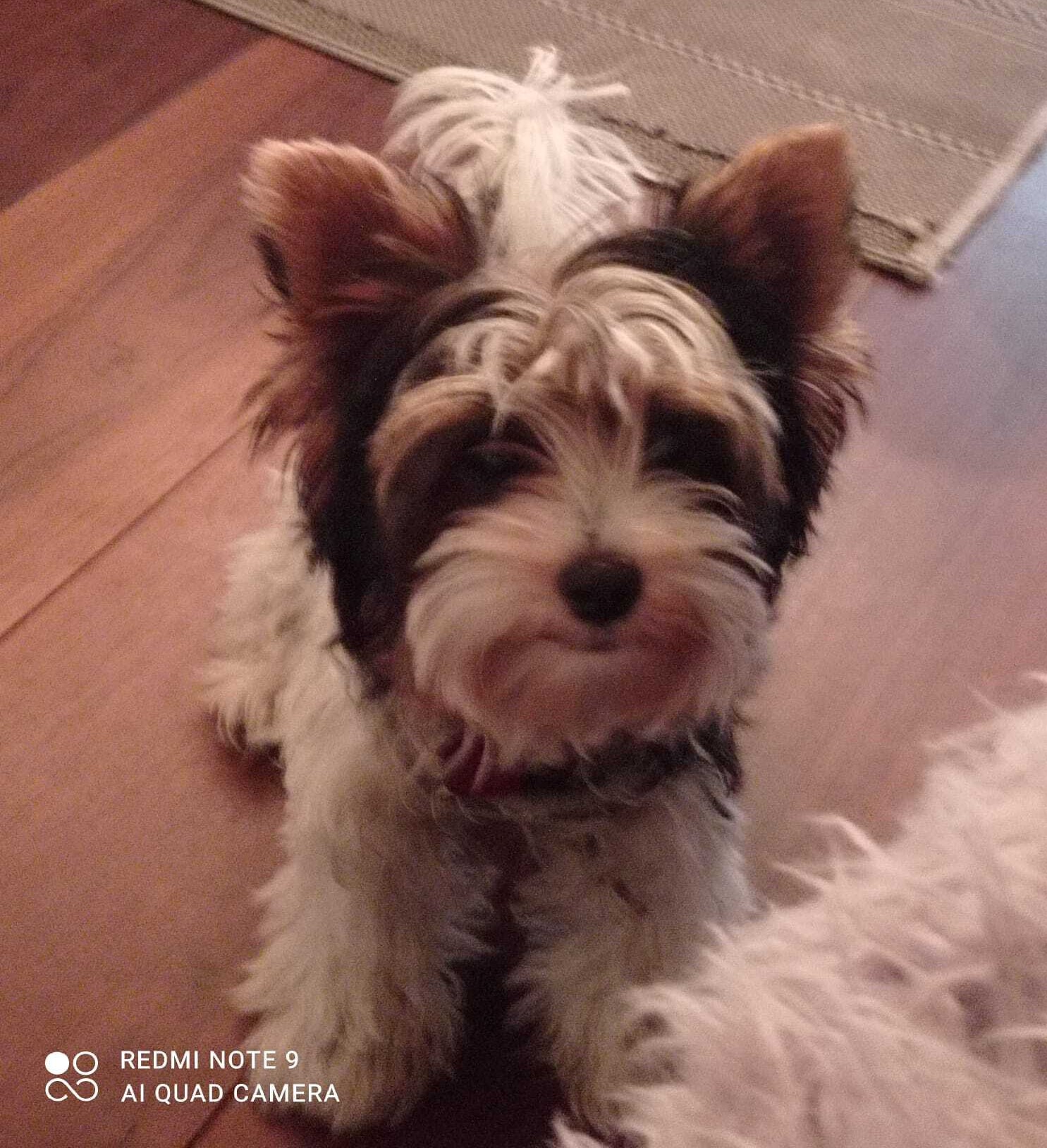
Looking back at my life, I always consider that my career as a dog proper really started when I was bought over by a lovely – and loving – family. That event marked the end of my puppyhood.
I was pleasantly surprised to know that they paid a princely sum to acquire an ugly and thin pup like me. Suddenly, I realized that I was worth something in life. Moreover, the knowledge that I was considered worthy of the love of a family filled me with a sense of pride and new responsibilities. It also sobered me because howsoever interesting life may be at the small ken in a chalet up above the hills in a beautiful country where I was born and I used to live, it is only when you go out into the world that you really broaden your outlook and begin to see things. You get an opportunity to learn many new aspects of life. You come to know what refinement, manners and true culture means. The whole world becomes an oyster, as a brainy cove whose name I forget now said once upon a time. All you got to do is to sniff at it, lick it, prise it open, and savour it to your heart’s content.
Within its limitations, my life till then had been singularly full and vivid. I was born, as I say, in a ken occupied by my doting Mother and a few playful and goofy set of brothers and sisters. I have heard that my then Master was a breeder of the canine species. I therefore suspect that my extended family may include several stepfathers, uncles, aunts, cousins, nieces, and nephews.
There was plenty of excitement. Before I was six weeks old, I had upset three visitors to the Master who inhabited the chalet by getting between their legs when they came round to the side-door, thinking they had heard suspicious noises; and I can still recall the interesting sensation of being chased twelve times round the yard with a broom-handle after a well-planned and completely successful raid on the flower beds so lovingly maintained by Master. I do not really blame him, because much like Lord Emsworth of Blandings Castle fame, he used to love flowers and would often be found pottering about in his garden while wearing a not-so-tidy pair of trousers.
When I separated from Mother, she barked advice, telling me to be a credit to the family. Of course, I was then too excited to listen to her. But I did carry the thought in my bosom.
About Me
I believe that I am a Yorkshire terrier, perhaps not of a Scottish origin but of a sub-breed which subsequently originated in Germany. I say this with some confidence because I am not particularly fond of chasing and catching rats. I have a long bushy tail which I can wag rather well. My hair is fluffy. My eyes are brown but can hardly be seen because of being covered by a mass of hair. My skin is white, though with large patches of black. My head has a golden-brown hue to it.
I have never disguised it from myself, and nobody has ever disguised it from me, that I am not a handsome dog. Even Mother never thought me beautiful. You may call me a European-cheese-hound if you like. No offence will be taken. As they say, beauty is only skin deep.
Like all those belonging to my breed, I believe I have far more strength than I really possess. I am playful and energetic. I like to make friends. While on a walk outside, if I run into another dog, I try my best to make it a point to exchange greetings in the finest tradition of our species – that of sniffing at each other’s snouts and so-called private parts. In case the perception is positive, we part with feelings of mutual acceptance and admiration. If either one feels threatened by the party of the other part, we bark at each other, our tails high up in the air. If hostilities ensue, our respective owners are bound to take prompt action and disentangle us. Then we go off our separate ways.
Just like humans, dogs also behave differently. If some suffer from an inferiority complex, there are many others who behave as if they are God’s gift to the universe. I am not fond of dogs who cast supercilious glances at me, simply ignore me and go on, holding their heads high in a haughty manner. Nor do I like the large ones who are not democratic in nature and start barking even before the first greetings have been exchanged. Mother always said: “A dog without influence or private means, if he is to make his way in the world, must have either good looks or amiability.” Since I have followed her advice and have cultivated an amiable disposition, I wish even my detractors well in their lives. By harbouring any anger against them, I know I shall be hurting myself more, even while they might continue to be blissfully unaware of my feelings towards them.

The Psychology of a Dog
We, the dogs, tend to be philosophical by nature. We soon forget such setbacks. We forgive. We do not waste time regretting what might have been. Nor do we worry ourselves sick thinking about what the morrow may bring. We live in the present. We relish it fully. Our idea is to simply enjoy our lives as much as we can. Our Intelligence Quotient levels may not be much to write home about. But our Emotional and Spiritual Quotients are rather high.
We are quick to understand the vibes of different persons and readily empathize with them. When they are in an uplifted mood, we also play around, often jumping with joy, wagging our tails, and licking their toes. When their brow is furrowed owing to a setback in life, we try to cheer them up by curling up near their feet and looking at them with soulful eyes. We are no match to Jeeves, but, like him, when we realize that our company is no longer desired, we respectfully slink away from point A to point B and reappear only when necessary.
We may not be able to deliver intellect-rich lessons from the Bhagavad Gita, the much-revered Indian scripture. But anyone observing us keenly will readily see how we could teach a thing or two to humans when it comes to living a happy and contented life. As Mother used to say, “Don’t bother your head about what doesn’t concern you. The only thing a dog need concern himself with is the quality of care and food he gets.” In some ways, Mother’s was a narrow outlook, but she was never hesitant to dish out some sane advice based on unalloyed common sense.
My Parentage
Mother prided herself on being the best watchdog in the entire township. I hear that in her younger days, she had been a popular local belle with a good deal of sex-appeal. As to the question of my paternity, only she may be able to comment on it. I merely suspect that my father might have been one of the several stud-dogs who would have become enamoured of her charms over her long reproductive career. Otherwise, those who understand genealogy and are familiar with the concept of DNA tests might be able to throw some light on the subject.
Many of the Homo sapiens are keen on forging what they label as matrimonial alliances. I am happy to see that over time, they are learning something from my species and living a free life, leaving owners of labs specializing in DNA and related tests laughing all the way to their banks.
Since my puppyhood days, I have been restless, unable to settle down in one place and anxious to get on to the next thing. This may be either due to a nomadic strain in my ancestry or owing to my artistic temperament which makes me love nature. Perhaps, I acquired this temperament from a great grandfather who had been trained to perform in an orchestra at the famous Ukridge Academy of Performing Arts for Canines.
I owe the fullness and variety of my earlier life to this initial phase of restlessness of mine. However, I confess, I feel ‘settled’ now after having become a member of a doting Family. I keep learning the usefulness of family values from all its members. I no longer wish to move out of my newly acquired home to follow some perfect stranger who might mistreat me.
The Family
The Family which has adopted me has many interesting characters.
There is a trim-and-slim father who is an upcoming entrepreneur. I hear that he is highly educated and has previously held senior management positions in companies in different European countries. He is an amiable and compassionate gentleman. He is fondly referred to as Ba.
Then there is a mother who is highly skilled at home making and fawns over her two kids and, of course, me. When it comes to cooking, she could easily beat Anatole hollow. Her Bollywood dancing classes are also very popular. She is known as Mumma.
The couple has an intelligent, cute, and loving daughter who is not only good at studies but also in drawing and story-writing. They also have a dashing son who is equally intelligent and physically active. He cuddles me fondly, though, at times, he punches me in the ribs in an unfriendly fashion. But, like all other dogs, I can always take the rough with the smooth.
The Family has named me Chicco.
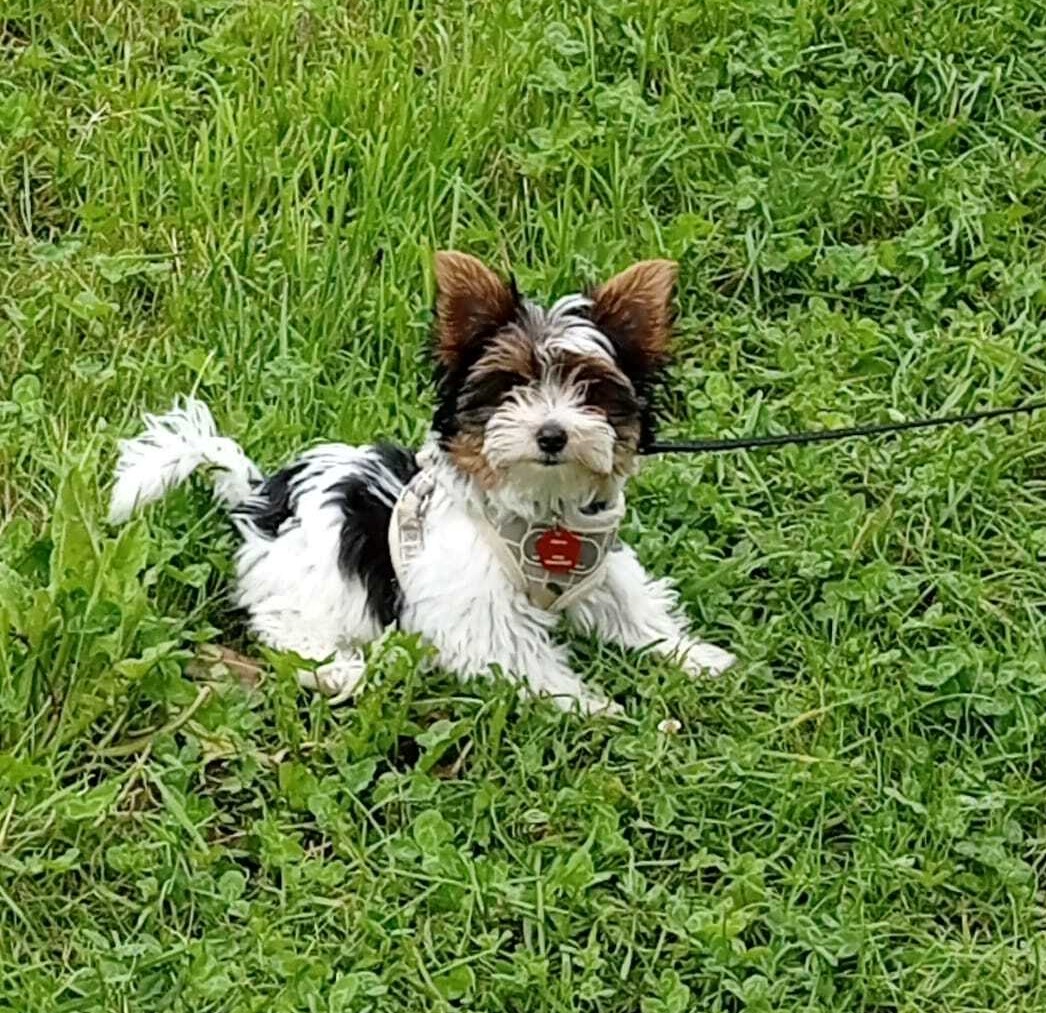
The Family has relatives living not too far off. All the three families keep visiting each other frequently, making me feel responsible for the safety and security of all of them. Then there are family seniors who come visiting us occasionally. I am always pally with them, especially with those who fondle me, tickle me behind my ears, and take me out for regular walks. These ensure that I keep my muscles agile and rippling. Walks outside also help me to avoid soiling their homes. Besides, there are many perks of breathing in pristine air, and soaking in the beautiful scenery this unique country dotted with mountains and lakes offers. I love lolling about in lush green grass and hunt for some worms; this helps me to easily fulfil my daily quota of consuming around 200 calories.
Another reason of my liking a saunter in the great open spaces is that I often run into my cousin Mailo. He has also been adopted by a loving family in the neighbourhood. Whenever we run into each other, we goof around quite a bit, vigorously sniffing and licking each other.
In general, being of an amiable nature, I like humans. The smell of their feet, footwear, lower garment, and speech appeal to me. When they look me in the eye and address me, my spirits get uplifted, and I express my gratitude by wagging my bushy tail. I am rather unlike Bartholomew, a pet of Stiffy Byng’s, who is to be watched closely if he gets near anyone’s ankles, for he biteth like a serpent and stingeth like an adder.
We also get many visitors. Those who are the regular ones, I welcome them warmly. When the family praises me endlessly to any of the visitors, I blush and feel elated. At others, I bark, trying to frighten them out of their wits. There are indeed times when I behave like the dachshund Poppet who charges at people with the apparent intention of seeing the colour of their insides but, closer to destination, he merely rises like a rocket and licks people on the chin. My feudal spirit prompts me to use my vocal cords and my body language effectively, so the family and its members remain safe. No harm should ever come their way.
Well, I ask you, I ask any dog, what else would you do in my place? Ever since I was old enough to listen, Mother had told me repeatedly what I must do in a case like this. It is the A.B.C. of a dog’s education. “If you are in a room, and you hear anyone trying to get in,” Mother used to say, “bark. It may be someone who has business there, or it may not. Bark first and inquire afterwards. Dogs were made to be heard and not seen. Your bark must always be worse than your bite.”
Whenever imposters, intruders or unknown people pay us a visit, I simply lift my head and yell. I have a good, deep, and throaty voice, possibly due to the hound strain in my pedigree. I also have strong lungs. Back at the chalet, when there was a full moon and I yelled because I thought something was amiss, I had often had the Master come rushing out to investigate what was wrong. On such occasions, I felt an inner glow of satisfaction, knowing that I had done my job well.
Some Adventures
I am happy that I have never had the experience of dog McIntosh who had to be extracted from a hotel room using aniseed powder which is popular in the dog-stealing industry. But I have lived through quite a few harsh slings and arrows of Fate. By practising equanimity, I have not only managed to survive these but have also added to my knowledge bank about various aspects of life.
Whenever I became restless and went on about wanting to go out into the world and see life, Mother often used to say, “You’ll be sorry when you do. The world isn’t all bones and liver.” On a few rare occasions, life has made me realize how right she was.
Learning About Gravity

On a fine day in summer, Family had decided to spend some time at a swimming club. Since dogs were not allowed near the main facility, they decided to smuggle me in, over a wire-net boundary, parking themselves in a remote corner of the vast lawns, quite some distance away from the main pool. The idea of not leaving me behind all alone in the house was indeed very appealing to me. All went well and I thoroughly enjoyed the open spaces, though I was not free to chase the birds and squirrels visiting the place and giving me envious looks owing to the kind of high-quality food I was consuming intermittently.
While being smuggled back outside, I was hauled back over the boundary, with one person each on either side of the fence. That is when disaster struck. I slipped from the hand of one of the persons, leaving me mid-air, struggling to find my feet. A traumatic experience it was. However, it lasted a few seconds only and I was safely hauled back into the loving hands of the daughter. It reminded me of Sam Goldwyn who had likewise got into the loving arms of Corky once.
It’s a funny thing, but it seems as if it always happens that, when you are feeling most miserable, you end up learning something new in life. This brief experience taught me about the forces of gravity which pull all things down to the ground. Some brainy cove known as Newton had apparently discovered this force long time back, when, while sitting under an apple tree, he saw an apple fall on to the ground. If you ever get to see Newton, you can tell him that he is an ass. If I had been in his place, I would have rushed to put that apple down the hatch, rather than exercising my grey cells about the laws of nature.
Causing A Highway Blockade

You never know what kind of adventure life hurls at you on any given day. Family had to go out to an amusement park quite far off and decided to leave me behind in the care of a neighbour of ours, who lives next door.
Mumma had apparently forgotten something, and she returned home soon for a brief visit to pick up the stuff. I could sense her presence from within the neighbour’s flat. Finding the door open, I ran out to tell her how lonely I was feeling. However, before I could reach her, she sped off in her car, on to the highway next to our community.
Dogs have an innate sense of direction, coupled with basic intelligence, ingenuity, and a sense of enterprise. I am no exception. To crawl beneath the fence and rush on to the highway was with me the work of a moment. But this was an unnerving experience, what with all the trucks and cars zipping past, making all kinds of threatening noises and spewing some poisonous fumes.
But drivers in my country need to be praised for their sense of decency and respect for life. Traffic came to a halt. A long queue soon piled up, blocking the highway. Shaking out of fear from the tip of my snout till the end of my tail, I ran underneath the chassis of the first car which had screeched to a halt near me. I felt more secure there. Luckily, the owner turned out to be an Air Force vet who somehow managed to entice me into his loving hands and put me in his car.
I am lucky the traffic police did not come over, sirens blaring, to arrest me for a patent illegality. I do hope that their chief gets awarded the highest civilian honour by the local government for his ethical and humane treatment of a member of the canine species; much like Eustace Mulliner, who excelled in his performance at the British Embassy in Berne and upon whom the Swiss government had conferred the Order of the Crimson Edelweiss, Third Class, with crossed cuckoo-clocks, carrying with it the right to yodel in the presence of the Vice-President.
The friendly Air Force officer took me to his home some 90 kms away. Unlike humans, dogs do not really mind when it comes to getting tagged and living in a surveillance state. The officer could easily identify the Family. He contacted them, and assured them that all was well, and that he would return me after a week or so, when he was due to come back for a visit to the area that the Family lives in.
He also found me a little skinny for my age and advised them about some changes in my diet. While with him, I got some sumptuous meals, rich in fat soluble vitamins, nutrients, and minerals of all kinds. After my return, the Family put me on an improved dietary regime.
I soon felt like a dog raised on Donaldson’s Dog-Joy biscuits and went on to become one of those fine, strong, upstanding dogs who go about with their chins up and both feet on the ground and look the world in the eye. If Freddie ever comes to know of me, he could feature me in one of his company advertisements. In the process, I could earn something for the Family.
Of Love, Care and Affection
Circumstances and incidents often alter our perception of life. We realize how our Guardian Angels ensure that we get all the love and care that we deserve.
Out on a biking expedition, I was sprinting behind Ba and the son when disaster struck yet again. One of my feet somehow came under the back wheel of one of the bikes. A painful fracture followed. Since the local vet was busy, I was rushed over to another one, some 75 kms away. A plaster was put, and I had to laze about on my comfortable bed in the house for a six-week period of rest and recuperation. It was great initially but soon became rather boring.
What stood out was the gentle care and affection the entire Family showered on me during the whole episode. They made a great fuss over me, pampering me with my favourite dishes, often making me forget the pain I had undergone. In about six weeks’ time normalcy returned to my life.
Family Values
By now, you might have noticed the kind of rich lessons I have learnt so far in my life. The virtues of practising forgiveness and equanimity. The perks of living in the present. Handling the harsh slings of arrows of fate with a chin-up attitude. Being amiable. Standing up to bullies. Judging people wisely. Cultivating a feudal spirit.
Given my introspective nature, I am sure many more will follow, broadening my outlook in life. For a dog, nothing could be more fulfilling. Flowers are in bloom, God is in heaven, and all is well with the world.
Families are all about caring and sharing. I hope, wish, and pray that all other puppies in the world are as lucky as I have been in getting adopted by a loving family.
A hearty woof, woof!
(Illustration of Highway Blockade by Shalini)
Related Posts:







 ashokbhatia