{Here is a transcript of the Key Note Address delivered by Reginald Jeeves at the recently held Annual General Meeting of the Society for Prevention of Internet Narcissism (SPIN)}
Ladies and Gentlemen,
Allow me to thank your esteemed Society for having bestowed upon me the honour of sharing some of my thoughts on the issue of remaining happier and safer in these challenging times.
I take the liberty of calling our present as a challenging one not only because of the pandemic we collectively face these days. I also do so because we all suffer from another pandemic – that of the so-called social media spreading mistrust, misinformation and misgovernance.
Values which are vanishing like Indian Fakirs
I believe that truth and reality have taken a back seat. We live in an illusory world of our own where reality is nothing but a simulation. A handful of smart and…
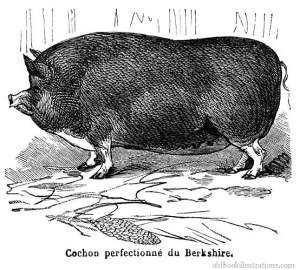
I learn from reliable sources that some time back, David Bennett, a resident of the USA, has had his ailing human heart replaced by a porcine one.
Of course, I wish David all the very best. May he remain in the pink of health for a long time to come and keep vanquishing any cardiac Goliath he comes across. May he even develop such traits as having an insatiable appetite and a penchant for rollicking in the mud. May he relish his moments as a Pig-hearted person of eminence and remain a metaphor for medical triumph amongst the Homo sapiens.
Some of you may know that the kidneys of my species have already been transplanted amongst humans, thereby enabling them to live a wee bit longer. Few others may recall that the first insulin used to treat a diabetic patient was derived from one amongst us. Assorted chemicals used in vaccines and medicines are formulated from different organs of ours. Speak of items ranging from gelatin and anti-coagulants to digestive supplements, and you will find us contributing to the general well being of all humans.
Those who do not mind their stomachs being treated as a graveyard of the animal kingdom would be aware that my species yields ham, bacon, spar ribs, loins, sides, shoulders, trotters and even heads. We add a unique allure to the pleasures of the table, something which can only be overcome by those who have nerves of chilled steel.
But the latest development is worrisome. Given the innate greed of humans, the time is not far off when an entrepreneur in the mould of Ukridge would start pig farming in a big way, specializing in supplying genetically modified pigs which would be ready-to-use for the heart transplant industry.
I accept that our hearts are more readily acceptable by the human frame. Also, that we are easy to raise since we happen to be open to devouring all kinds of nourishment. Besides, we have a rather healthy litter size and lesser gestation periods. But the prospect of being reared in bulk in a genetically modified mode merely for our organs to be harvested so the human race may lead a happier life leaves me shaken from my snout to my tail.
This is the nightmare which is making me lose my sleep these days. Soon, I intend to follow the fine example set by Mahatma Gandhi and start refusing my daily quota of 57,800 calories. This time, I am determined not to get swayed by a call of ‘pig-hoo-o-o-o-ey’ and give up my protest. Pepping me up without addressing my genuine concerns on the subject of xenotransplantism, the art and science of using animal organs for human purposes, will just not work.
I do hope Lord Emsworth would rise to the occasion and order Rupert Baxter to start an intense campaign on social media against any such onslaught on me and my kind. The Shropshire Agricultural Show is just coming up and I am certain he would like me to win a prize without fail.
If this does not happen, the development has to be faced by those of the porcine species with an upper stiff lip. I wonder why we can’t have wings.
(PS: Am sorry to note that David survived only two months after his surgery. RIP.)
Yet another medical practitioner who wishes to remain anonymous specializes in the realm of diet and nutrition. Like all good doctors, he advises those who have been disappointed in love to eat frugally. Fail to do this, and the result is as inevitable as the climax of a Greek tragedy. No man, however gifted his gastric juices, can go on indefinitely brooding over a lost love and sailing into the starchy foods simultaneously. If so, indigestion grips him soon enough, making him consult a physician like the one alluded to here.
His solutions to cure a soul in torment may sound drastic, but are invariably effective. He is apt to put one on a diet comprising nothing else but the juice of an orange.
He may advise the patient thus: ‘Precisely. Take your orange. Divide it into two equal parts. Squeeze on a squeezer. Pour into a…
The World Health Organisation, as the directing and coordinating authority on international health within the United Nations system, adheres to the UN values of integrity, professionalism and respect for diversity. It upholds such values as human rights, universality and equity established not only in WHO’s Constitution but also in its ethical standards.
In order to further strengthen the team of medical as well as paramedical professionals associated with us, we are hereby pleased to announce the immediate empanelment of the following experts drawn from Plumsville.
Sir Roderick Glossop
The high-priced loony doctor, with a bald head resembling the dome of St. Paul’s cathedral and two ferocious eyebrows which give his eyes a piercing look, has a pleasant baritone voice. He is expected to counsel all those who happen to be in quarantine to make creative use of their time while curbing their tendency to indulge in gambling, getting otherwise…
To the best of my knowledge and belief, P. G. Wodehouse never set foot on Indian soil. But he has often alluded to its exotic temples, its wildlife, its royalty, its fakirs and mystics with magical powers, and even its love lyrics. Many times he has vividly captured facets of my beautiful country, serving up a delectable curry spiced with uniquely Indian condiments.
In the essay under reference, the reader will find a random sample of references to India in Wodehouse’s novels and short stories. Such references are found across all his narratives, whether he is writing a Jeeves and Bertie story, a tale of Blandings, or a stand-alone novel. What I present here is merely a synopsis.
The Indian Curry: A Brief
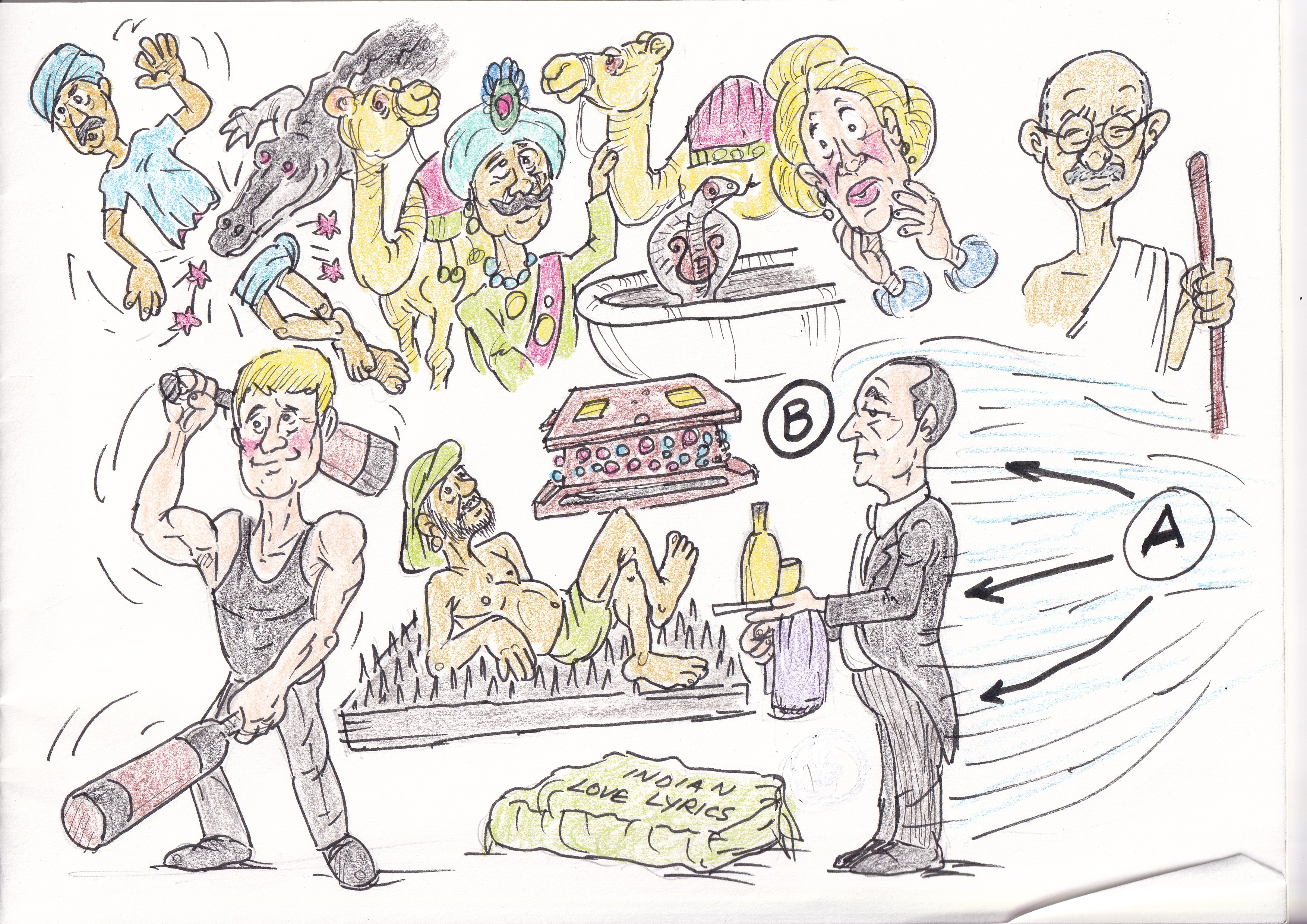
In some of his novels, jewels associated with idols of gods in Indian temples get stolen, with overzealous priests chasing the villains.
Indian fauna such as spiders, scorpions, cobras, elephants, tigers, cheetahs and lions regale the reader across many of Plum’s narratives. Walking butlers like Beach get described as elephants sauntering through an Indian jungle. Princes and maharajas of yore also find a mention occasionally.
Plum suggests a link between the Indian Civil Disobedience movement and the dietary and fasting habits of Mahatma Gandhi. Bertie Wooster motivates Tuppy Glossop to forsake pleasures of the table by quoting Mahatma’s example. The Cawnpore (now Kanpur) Mutiny gets referred to in at least two places.
Military men who had served in India as part of their duties tell us interesting anecdotes about that distant land, including about their time in the North Western Frontier Province. Some of you may recall that the latter was a province of British India from 1901 to 1947, when it was ceded to Pakistan.
When Bobby Wickham takes umbrage, she ticks off Kipper like a typhoon on the Indian Ocean. Elsewhere, to impress a heart throb, the hero claims to have used a Boy Scout pocket knife to teach the sharks there a lesson or two.
Indian scriptures often use the Sanskrit term ‘siddhi’ to signify either a remarkable accomplishment or a singular proficiency attained by an aspirant. These could be material, paranormal, supernatural or magical in nature, attained by such practices as meditation, yoga and intense ‘tapas’ (austere practices).
Like much else, this facet of India is also used by Plum to amuse, elevate and entertain his readers. Jeeves, for instance, gets repeatedly portrayed as someone who possesses the property of a gas floating from Spot A to Spot B without much ado. Some characters undergo an experience akin to that of curling up on spikes while others are found contemplating the infinite.
Wherever Plum is, love cannot be far behind. India has gifted the world with the Kama Sutra, but it is not surprising that Plum never alludes to this unique treatise, because he never used sex as a ploy to popularize his narratives. All of his male characters are steeped in chivalry, strictly bound by Victorian norms.
In his narratives, Wodehouse appears to have instead based his observations on The Garden of Kama, a collection of lyrical poetry of Indian origin published in 1901, which makes liberal use of imagery and symbols from the poets of the North-West Frontier of India and the Sufi poets of Persia (Iran). The poems, written by Laurence Hope, a pseudonym of Violet Nicholson, are typically about unrequited love and loss. One of her famous compositions, known as a ‘Kashmiri Song’, appears in at least two of Plum’s narratives.
India rubber is one name for the natural rubber that comes from the sap of certain trees. Rubber trees that grow in South America and India produce the majority of India rubber. Plum uses its properties of agility, elasticity, flexibility and robustness to cover a wide range of physical endeavours of the characters in many of his narratives.
Some characters have a fetish for remaining as fit as a fiddle. One of the instruments which they happen to depend upon to do so is a pair of Indian clubs.
Some of his characters have either visited India or plan to do so. While Lady Malvern whips up a book relating to Indians, Crispin Blakeney goes off there to deliver a series of lectures. Some of us may recall that in ‘Bertie Changes His Mind’, Carry On, Jeeves, Bertie Wooster tells Jeeves that he has a sister in India.
Indian handicrafts come up for a mention. So does Taj Mahal. Gurudev Rabindranath Tagore’s dietary habits get commented upon. Some behavioural traits of Indians get covered. The age old sordid custom of ‘sati’ gets touched upon, as do the Indian Civil Services. Stilton Cheesewright has the unique distinction of having come under the spell of Buddhism briefly.
The Luck Stone, a concoction whipped up by Plum under the pseudonym Basil Windham, was serialized in a magazine known as ‘Chums: An Illustrated Paper for Boys’ during 1908-1909. It touches upon Indian Vedas, mythology and superstitions.
Some Missing Ingredients
Plum’s works surely throw up several references to India. But if he had wanted to, he could have used a number of other Indian resources to further enrich his narratives.
Alas, we do not find any mention of such literary figures as Kalidasa, besides Aryabhata or Ramanuja, the famous mathematicians. The Vedas do find a solitary mention but any other references to India’s soft power comprising such aspects as spirituality, its multi-layered scriptures and various dance forms are sadly missing.
Above all, the mind-numbing diversity of the spirit of India is missing. Its wide spectrum of ethnicities, languages, beliefs, practices and cuisines is nowhere to be found. These are facets of India which have missed out on his wit and wisdom. It is indeed a delectable irony of sorts that this write up is labelled as The Indian Curry Dished Out by P G Wodehouse, even though it has not thrown up even a single reference to any specifically Indian dish!
As to a liberal use of many other resources of an Indian origin, imagine a distraught Gussie Fink-Nottle pining for Madeline Bassett and sending messages to her through clouds passing overhead, a la ‘Meghadut’, the classic poem penned by Kalidasa. Poets like Ralston McTodd would have been found drawing some inspiration from the creative outpourings of Tagore. To improve Bertie’s intellect, all Florence Craye had to do was to insist that he peruse at least one of the chapters of the ‘Bhagavad Gita’. Laura Pyke could have drawn some inspiration from the science of ‘Ayurveda’, the healthy-lifestyle system that people in India have used for more than 5,000 years. Anatole could have been found whipping up ‘chhole-bhature’ or ‘dosa’s!
Yoga could have helped someone like Ashe Marson to treat his clients suffering from acute dyspepsia to heal faster and better. Sir Roderick Glossop could have gone about advising his loonier patients to make meditation an essential part of their mundane lives. Vicars could have lived a happier Thos-infested life while brooding on spiritual tenets dished out by Indian scriptures, thereby becoming hotter at their jobs. George Bevan, while working on one of his next musical comedies, could have been drawing inspiration from the ‘Natya Shastra’ of Bharata Muni. Gentlemen aspiring for India rubber legs could have been practising such dance forms as ‘Kathak’ or ‘Bharatnatyam.’
The possibilities are endless. The mind boggles. But one would do well not to be concerned with what might have been. Instead, the focus needs to be on the rich legacy Plum has left behind for us to rejoice in.
In fact, it is befitting that quite a few of his works have been translated into some other languages – like Bengali, Kannada, Telugu and Sanskrit – forming a pale parabola of subtle humour across India.
Consistent Depiction, Despite 1947
The India that Plum would refer to belongs to an era which is long since bygone. India gained independence in 1947, but his works published during the period from 1947 (Joy in the Morning) till 1974 (Aunts Aren’t Gentlemen) do not reveal much change in his imagination. Astral bodies, scorpions and cobras continue to rule the roost.
From a global perspective, the devastation caused by the Second World War (1939–45) was then the main area of concern, rather than the fact of India gaining independence on 15 August 1947. Plum had personally suffered in his life owing to political developments then and had relocated from Europe to USA during April 1947, never to visit Europe again. Owing to his preoccupation with other matters then, perhaps the last thing on his mind would have been the British (or American) reaction to the events unfolding in India. Hence his storylines and characters never touched upon the emergence of an independent India.
Love sans Borders
The love for Plum’s oeuvre in the Indian subcontinent transcends any political considerations. Moreover, Plum sets a gold standard of pristine humour not only in English but also in many other languages into which his works have been translated, including in many regional ones in India.
Plum dished out his narratives in a pre-Internet era, when access to information was severely restricted. It is amazing that based mostly on secondary data, so to say, he could leave behind for us a spicy Indian curry, making India shine through in so many ways through a vast array of his novels and stories.
Here is an uplifting piece from the stable of Plumtopia which transports one to the idyllic world left behind for us by Plum! The Yuletide spirit prevails at Blandings, perhaps also because Lady Constance Keeble is not there!!
After a crisp, clear day, the sun was beginning to set and a tranquil calm descended upon the Castle and its inhabitants. Beach the Butler was in his pantry, enjoying a special drop of port, which he had been saving for the occasion. Lord Emsworth was dozing in a favourite armchair with Whiffle’s ‘Care of the Pig‘ across his lap.
Somewhere outside, amongst the evergreen shrubberies – or perhaps the kitchen garden, where bare fruit trees created a romantic silhouette in the fading light – an assignation between lovers was taking place. And in the warmth of her sty, the Empress of Blandings lay in contented majesty after feasting on her Christmas provisions.
Off in the distance, the twinkling lights of Market Blandings had begun to flicker, and a hum of woozled carolling from the Beetle and Wedge drifted upon the…
The day was mildly cold, so fair, so magically a thing of sunshine and greyish-blue skies and bird-song that anyone acquainted with Clarence, the ninth Earl of Emsworth, and aware of his liking for fine weather, would have pictured him pottering about his terraced garden on a December morning with a beaming smile and an uplifted heart.
Instead, prompted by the Countess of Emsworth, he was being the genial host, ensuring that all the guests and a sole imposter present could lay their hands on their favourite tissue restoratives, of which a wide range was available in abundant supply, Plum wine being only one of the many.
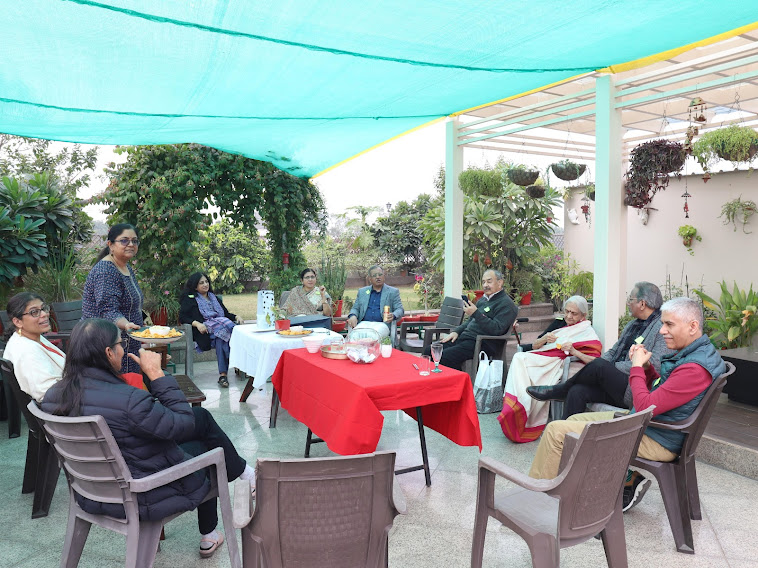
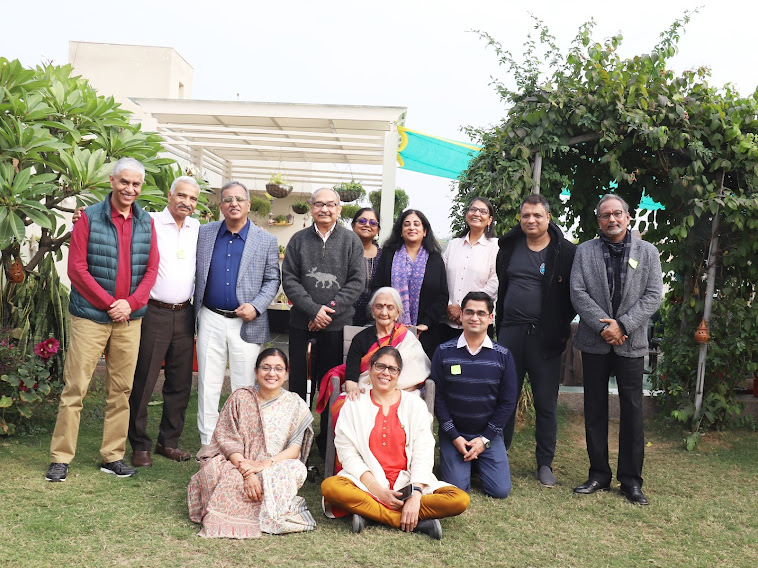
On the lavish lawns of Blandings Castle, around fifteen of Plum fans had assembled. Flowers were in full bloom. The birds had ceased twittering and were looking askance at the mirthful peals of uncontrollable laughter emanating from the group.
Once the introductions had been made, the proceedings were kicked off by recalling the Yeoman’s Wedding Song and then a playback of Sonny Boy.
A quiz followed, leaving many a brainy cove stumped and gasping for fresh air. A dumb charade came up next, regaling all those present.
Personal reminences were shared. Many of the characters created by Plum came in for a loving mention. The conversation in the group often touched a high level and feasts of Reason and flows of Soul occurred.
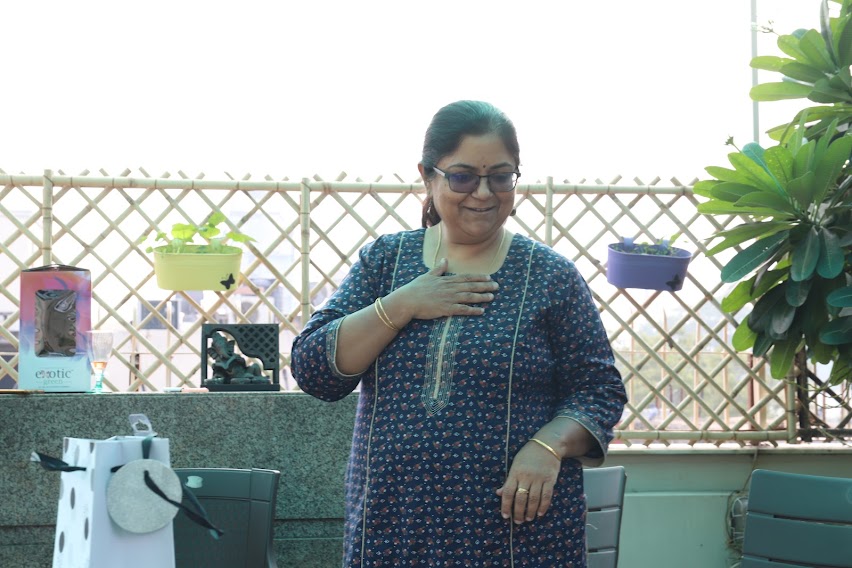
The eldest known fan, Mrs. Sushama Varma, was felicitated on the occasion. She rendered a soul-stirring ghazal in her sweet and melodius voice. She also released the hard copy version of ‘The Indian Curry Dished Out by P. G. Wodehouse.’
In the absence of Angus McAllister, flowers and plants were freely offered by the genial host. Regrettably, the Empress of Blandings was missing in action, having been whisked off to a secret location. Thus, pig-napping was ruled out.
With the assistance of Gerturde, Beach, Miss Twemlow and other maids, the Countess of Emsworth had organized a lavish spread which could well have been the envy of Anatole. Sweets and savouries were plentiful. Cakes beseeching the participants to tuck them in kept pouring in even after the gig was over.
Overall, a grand rollicking time was had by all those assembled. Fun-filled, blissful and overflowing with sublime joy. The Plum wine was intoxicating indeed. The true spirit of fan following was in evidence. Those who ventured to attend left beaming from ear to ear, carrying with them the sweet memories of the fun, warmth and laughter that normally gets uncorked when a bunch of Plum’s fans gets together.
Mr Schnellenhamer, the head of the Perfecto-Zizz-baum Corporation, the leading movie studio, is reported to be having an odd disagreeable feeling these days. Perhaps, it is caused by what Roget’s Thesaurus would describe as agitation, fury, violent anger, wrath and similar emotions listed under the heading ‘Rage’, that too of an impotent kind.
Having struck a deal with Coronavirus Global Corp (CGC in short) to unleash upon the public a movie based on the current pandemic, he believes things to be moving a tad sluggishly. He is not able to gather enough goofy ideas to add a sparkle to the script. Discussions with his team of directors, script-writers, music composers, yes-persons, deputy yes-persons, junior yes-persons, nodders and trainee nodders have led to finalization of the basic outlines of the movie. But he feels much more could be done. CGC had mandated that the movie should get released before any…
Of all the reading that I have done, I have never ever had so much fun,
Than whilst perusing Wodehouse, Laughing to burst out of my blouse.
That Bertie Wooster is so British, such a jolly good fellow,
Can erupt like a volcano at times, yet is disarmingly mellow,
Ample bosomed Aunt Agatha et al bully him into the ground,
Bertie would be lost if Jeeves, that paragon wasn’t around.
The aunts make mincemeat of Bertie without so much as a by your leave,
If it wasn’t for Jeeves the saviour, we’d weep for Bertie and for him grieve,
The Wooster name would fall into ruin, rust corrode their noble family crest,
Sans Jeeves to keep a vigilant eye and shoo away both aunt and other pest.
Bertie Wooster is so upper class, so stiff upper lip, simply so very English, He belongs to the right club, yet tormented by…
The big and fat weddings which keep taking place all across the length and breadth of India are well known. These are occasions on which gullible parents, overjoyed by the prospect of finally getting rid of their respective wards, loosen their purse strings, showcasing their wealth, power and pelf.
Ostentatious decorations, lavish dinner spreads which could make Anatole raise his eyebrows a fraction of an inch, sumptuous upholstering of those in attendance and a chain of rituals which keep the hapless bride and the groom on their toes – all of these create an ambience which befits the social status of the well-heeled parents, making many others green with envy. It is another matter that such display of wealth often makes our tax sleuths sit up and take notice. The Bartholomews under their supervision promptly start sniffing around, their bare teeth on full display. Unless prompt steps are taken through…
















 ashokbhatia