Posts Tagged ‘P G Wodehouse’
St. Bernard Dogs: Some Plummy Quotes
Posted in What ho!, tagged Alps, Humour, Italy, P G Wodehouse, St Bernard Dogs, Switzerland on August 21, 2025| Leave a Comment »
The Myriad Challenges Faced by Publishers and Editors in Plumsville (Summary)
Posted in What ho!, tagged Books, Challenges, Editors, Humour, Owners, P G Wodehouse, Publishers, Writing on August 1, 2025| Leave a Comment »
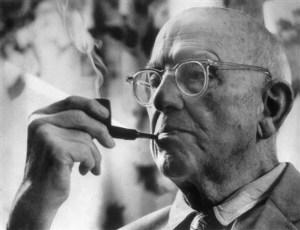
Wodehouse’s fiction, though celebrated chiefly for its whimsical aristocrats and shambolic bachelors, also furnishes a surprisingly detailed anatomy of the Edwardian and inter-war publishing world. He uses owners, publishers, and editors not merely as comic foils, but also nudges us towards a broader meditation on responsibility, power, and vocation. Through a kaleidoscope of characters—from absentee proprietors who think of their periodicals only while pronging a kippered herring on their plate with a gloomy fork, to editors who sacrifice sleep, dignity, and occasionally their trousers—Wodehouse rehearses the perennial tensions between commerce, conscience, and creativity.
Three Types of Owners
Wodehouse distinguishes three archetypes. The “absentee capitalist,” embodied by Mr Benjamin Scobell in The Prince and Betty, treats a publication as an elegant bauble within a far wider portfolio. The “romantic acquirer,” who buys a journal under the influence of either Cupid or a literary crush and sheds it as soon as the passion cools. Finally, we have the “hands-on mogul,” typified by Lord Tilbury of the Mammoth Publishing Company, who prowls city streets incognito lest aspiring scribblers hurl unsolicited manuscripts through omnibus windows. Lord Tilbury’s hunger for “juicy memoirs” and his ruthless eye on circulation figures epitomise the hard-nosed side of media ownership, reminding readers that even genteel magazines are ultimately businesses subject to profit and loss.
Editors: The Lion Kings
However, the slender shoulders on which the burden of keeping the publishing activity alive and kicking falls invariably happen to be those of the editors. They are the eager beavers who keep a sharp eye on the circulation figures and decide the nature and form of the content that gets routinely unleashed upon hapless readers like us. They happen to be industrious little creatures who work hard and shrink from the public gaze. They are the lion kings of their publishing fiefdom and are the masters of all they survey. Bosses love them when circulation figures show an upward trend. Yet, they are hated by authors whose manuscripts they keep throwing into the nearest dustbin in their office. In Plum’s world, alluded to above as Plumsville, editorial life is equal parts chess match and boxing bout; success demands both strategic foresight and literary prowess.
No case illustrates editorial resilience better than Aunt Dahlia Travers and her chronically unprofitable women’s weekly, Milady’s Boudoir. She marshals fox‑hunting grit, occasional grand larceny (commandeering a painting for a scoop), and the incomparable cuisine of Anatole to keep the presses rolling. Her magazine’s survival hinges not only on high finance but on familial diplomacy—extracting cheques from her dyspeptic husband, Uncle Tom, trading serial rights to pay printers, and manipulating Bertie Wooster into sartorial columns. Thus, Plum applauds tenacity while exposing the precarious economics of niche publishing.
Conversely, Cosy Moments—the ostensibly saccharine “journal for the home”—demonstrates how editorial ethos can metamorphose a title’s fortunes (Psmith, Journalist). When the fatigued Mr Wilberfloss departs for a rest cure, deputy Billy Windsor, aided and abetted by the restless Psmith, transforms the paper into a crusading watchdog. Exposés on New York tenement squalor replace homely recipes. A “fighting editor” is recruited to deter mob intimidation. Circulation soars, advertising revenue floods in, and Cosy Moments becomes “red‑hot stuff.” We discover the perils of mission-driven journalism: bribery, kidnapping, and street‑corner brawls lurk behind every righteous paragraph. Plum thus warns that social crusades, however noble, exact a steep personal price.
Hiring and firing supply further comic ammunition. Lord Tilbury, ever allergic to falling readership, sacks Monty Bodkin from Tiny Tots for peppering copy with whisky bottles and betting jargon, then dismisses Jerry Finch of Society Spice for failing to match Percy Pilbeam’s flair for fashionable scandal (Frozen Assets).
By contrast, editors like Joseph Kyrke of The Mayfair Gazette and Alexander Tudway of the Piccadilly Weekly (“The Kind-Hearted Editor”) discover that excessive kindness breeds calamity. Kyrke inherits the wreckage of predecessors who indulged amateur contributors; Tudway, having “improved” the dreadful manuscripts of Aubrey Jerningham and clan, ends up enslaved to an entire family of mediocre wannabe authors after marrying one to soothe her tears. Through these narratives, Plum demonstrates how editorial milk of human kindness could become a long-term liability.
A recurrent motif is the pursuit of sensational memoirs. Lord Tilbury’s frantic chase for the Hon’ble Galahad Threepwood’s reminiscences (Heavy Weather) and Florence Craye’s demand that Bertie incinerate Uncle Willoughby’s scandal-laden Recollections of a Long Life (“Jeeves Takes Charge”) dramatise both the cash value and moral hazard of exposé literature. Editors and owners salivate over sales figures, yet risk libel suits, family ruptures, and even the gobbling up of a manuscript by the Empress of Blandings.
Legal jeopardy surfaces again when Kipper Herring’s blistering anonymous review of Reverend Upjohn’s prep‑school history in the Thursday Review provokes threatened litigation (Jeeves in the Offing). Jeeves’s diplomatic ingenuity averts the writ, but the incident underscores an editor’s obligation to balance candour with accuracy.
Advertising masquerading as editorial content offers another ethical minefield. In “Healthward Ho,” quack doctors flood multiple periodicals with letters questioning the modern diet while discreetly touting their Spartan cure. Overworked editors struggle to distinguish between covert marketing and genuine debate, revealing how commercial pressures can erode editorial independence. Here, Plum, decades ahead of today’s “native advertising,” warns against blurred boundaries that compromise reader trust.
Romantic entanglements complicate these professional dilemmas. Editors woo rejected contributors to soften disappointment (“The Kind‑Hearted Editor”), propose marriage to avoid publishing dire stories, or, like Egbert Mulliner, fall in love only to discover their muse has begun penning bestselling fiction that traps them in promotional drudgery (“Best Seller”, the Mulliner version). We get to realise that the heart and the column space can conflict irreconcilably.
Sudden success in love enables Sippy, the editor of Mayfair Gazette, to stand up to his old headmaster. (“The Inferiority Complex of Old Sippy”)
Plum also cautions lovers about the perils of taking the romantic tips dished out by such columns as Doctor Cupid at face value. If so, much chaos, heartache, and hilarity could ensue (“When Doctors Disagree”).
Humour Laced with Social Conscience
Behind the laughter runs a social conscience. While Plum rarely preaches, the transformation of Cosy Moments and the tenement crusade reveal a genuine sympathy for the urban poor. He demonstrates that a periodical can transcend mere entertainment to serve as an agent of civic improvement, provided its guardians possess courage, networking prowess (even with underworld figures), and an unwavering purpose. The narrative demonstrates that there is indeed a socialistic streak in Plum, rebutting claims that he wrote solely for and about the idle rich.
Plum makes us realise that media, like all institutions, depend on people who must reconcile personal values with systemic demands. His brilliance lies in revealing that reconciliation as an endlessly inventive dance—sometimes dignified, often chaotic, always instructive.
More to be pitied than censured?
Having considered some of the journalistic escapades of quite a few of Plum’s characters, one may safely conclude that they are more to be pitied than censured.
When it comes to those who keep the giant wheels of the publishing universe spinning, Plum paints a broad canvas of the kind of constraints they work under. Financial pressures. A rigorous scrutiny of the content they decide to publish. Hiring the right talent and firing the deadwood is an area of concern. Interpersonal and legal challenges must be faced with a chin-up attitude. Ethical issues need to be tackled with aplomb. Relationships with authors and other stakeholders deserve to be managed with empathy and firmness. Cosying up to celebrity authors. If a major social concern is to be addressed, networking with the underworld and strongmen becomes crucial for achieving success.
Plum’s light-hearted depictions of publishing contain a rich commentary on leadership, ethics, and resilience. Owners personify strategic intent, whereas editors incarnate operational reality. He demonstrates that humane stewardship—anchored in empathy, clarity, and principled resolve—can turn the perilous art of publishing into an enduring public good.
While capturing the nuances of professional hazards faced by doctors, lawyers, bank managers, dog-biscuit marketeers, rozzers, detectives, principals, politicians, movie magnates, actors, musicians, artists, painters, accountants, secretaries, valets, butlers, cooks, gardeners, pig-keepers, et al, Plum’s sharp eye does not miss much. Likewise, when it comes to describing a journalistic life, he does not disappoint.
Note
- Inputs from Neil Midkiff, Eulalie (https://madameulalie.org/index.html), and Suryamouli Datta are gratefully acknowledged.
- The original article can be accessed at https://ashokbhatia.me/2025/02/19/the-myriad-challenges-faced-by-publishers-and-editors-in-plumsville.
Some Plumsville Kids and their Hapless Teachers
Posted in What ho!, tagged Humour, KIds, P G Wodehouse, Plumsville, Teachers on July 20, 2025| Leave a Comment »
P G Wodehouse at Lucerne in Switzerland
Posted in What ho!, tagged Anglo Swiss Club Lucerne, Lucerne, P G Wodehouse, Presentation, Switzerland on July 10, 2025| Leave a Comment »
The Wide-Ranging Scope of ‘A Damsel in Distress’: Guest Post by Tony Ring
Posted in What ho!, tagged A Damsel in Distress, Humour, P G Wodehouse, The Wodehouse Society in Sweden, Tony Ring on June 22, 2025| Leave a Comment »
Long live Wodehousitis!
Posted in What ho!, tagged David, Humour, Lenses, Madonna, Michelangelo, P G Wodehouse, Pieta, Wodehousitis on May 30, 2025| Leave a Comment »
P G Wodehouse’s Russian Salad: Masha Lebedeva (Part 2)
Posted in What ho!, tagged Anton Chekov, Humour, Leo Tolstoy, Masha Lebedeva, P G Wodehouse, Russia, The Russian Salad on May 12, 2025| Leave a Comment »
P G Wodehouse’s Russian Salad: Masha Lebedeva (Part 1)
Posted in What ho!, tagged Humour, Masha Lebedeva, P G Wodehouse, Russia, Russian Ballet, The Russian Salad on May 6, 2025| Leave a Comment »
A Basketful of Plums: Guest Post by Shiva Kumar
Posted in What ho!, tagged Death Anniversary, Humour, P G Wodehouse, Tribute, Valentines Day on April 29, 2025| Leave a Comment »
The Spy and the Gentleman – Ian Fleming meets P. G. Wodehouse: Guest Post by Peter Nieuwenhuizen
Posted in Uncategorized, What ho!, tagged Bertie Wooster, Casino Royale, Ian Fleming, James Bond, Jeeves, Le Touquet, P G Wodehouse on April 22, 2025| 3 Comments »
This is an abridged version of the talk that Peter Nieuwenhuizen, president of the Dutch P. G. Wodehouse Society, gave on 15 March 2024 at Wodehouse at the UK Conference ‘Wodehouse in the Springtime’ in Bath, in which he explained some of the links between the two authors and revealed the truth about an ‘unknown’ plaque.

The author Ian Lancaster Fleming (1908–64) wrote 14 novels about the British MI6 secret agent James Bond, 007. Fleming’s wartime service (he helped plan several naval operations) and his postwar career as a journalist for the Sunday Times provided much of the background for his Bond stories. Fleming, a keen birdwatcher, especially during his sojourns at his holiday home in Jamaica, took the name of his spy hero from that of the ornithologist James Bond, whose book Birds of the West Indies was an indispensable guide for the budding thriller writer. As for the character of 007, the model was said to be master spy Sidney George Reilly (1873–1925).
P. G. Wodehouse also used a familiar name, of course, for one of his most famous fictional creations: the name of Bertie Wooster’s inimitable valet was inspired by professional cricketer Percy Jeeves. In 2016, 100 years after he was killed at the Battle of the Somme, a commemorative blue plaque donated by The Wodehouse Society was installed in Manuel Street, Goole, Yorkshire, where Percy Jeeves lived before he joined Warwickshire County Cricket Club.
Fleming lived in London in the 1930s and was very familiar with the streets and squares of Mayfair that we know from the Wodehouse novels. He visited several of the gentlemen’s clubs, where he might have met Wodehouse, although there is no record of it. Fleming’s home at Belgravia’s 22B Ebury Street was, coincidentally, once the address of Oswald Mosley, leader of the British Union of Fascists, on whom Wodehouse modelled Roderick Spode. There is a blue plaque in Ebury Street commemorating Fleming’s residential connections.
When Fleming sold the film rights to his immensely popular Bond novels in 1961 to EON Productions, he hoped that the lead role might be given to David Niven, but it was given to the “overgrown stuntman” (Fleming’s words!) Sean Connery. However, one of the two Bond films not produced by EON, the 1967 Casino Royale, did cast Niven as 007 – which leads to another Wodehouse link. Niven had previously appeared as Bertie Wooster in the film Thank You, Jeeves! (1936), and as Frederick Altamont Cornwallis Twistleton, fifth Earl of Ickenham, in Uncle Fred Flits By (1955), an episode of the American network television series Four Star Playhouse. So, the Spy and the Gentleman united in one person.
Fleming knew his Wodehouse canon and included a few references to him in his Bond stories. In From Russia with Love (1957), Fleming describes the muscular agent Donovan Grant, a German-Irish psychopath who had defected to Russia and had become the head executioner for SMERSH. Grant, having learned Russian, maintains his knowledge of the English language by reading Wodehouse – in the first chapter, he is reading “The Little Nugget – an old P. G. Wodehouse”. In chapter 13 of The Man with the Golden Gun (1965), Bond is faced with the villain Scaramanga and says to himself “that he must increase the other man’s unawareness, his casual certitude, his lack of caution. He must be the P. G. Wodehouse Englishman, the limey of the cartoons. He must play easy to take.”
Both Fleming and Wodehouse had stories published in Playboy magazine. One issue, April 1965, contained both the first chapter of The Man with the Golden Gun and PGW’s short story ‘Stylish Stouts’, which would be incorporated in the anthology Plum Pie a year later.
Let us turn now to Le Touquet, the French seaside town within easy reach of Paris and close to the south coast of England. In the 1930s, Le Touquet became accessible by air when the local airport was built, and this led to a rise in the popularity of the resort as a holiday location for the well-to-do amongst English society. Fleming, a member of this ‘smart set’, frequented Le Touquet both before and after the war, and in 1952 started writing his first Bond novel, Casino Royale. The eponymous gambling house is based on the Casino de la Fôret in Le Touquet, and the town is mentioned several times in the book. Fleming was based at the Mirrlees family villa, close to the golf course. More on this a little later!
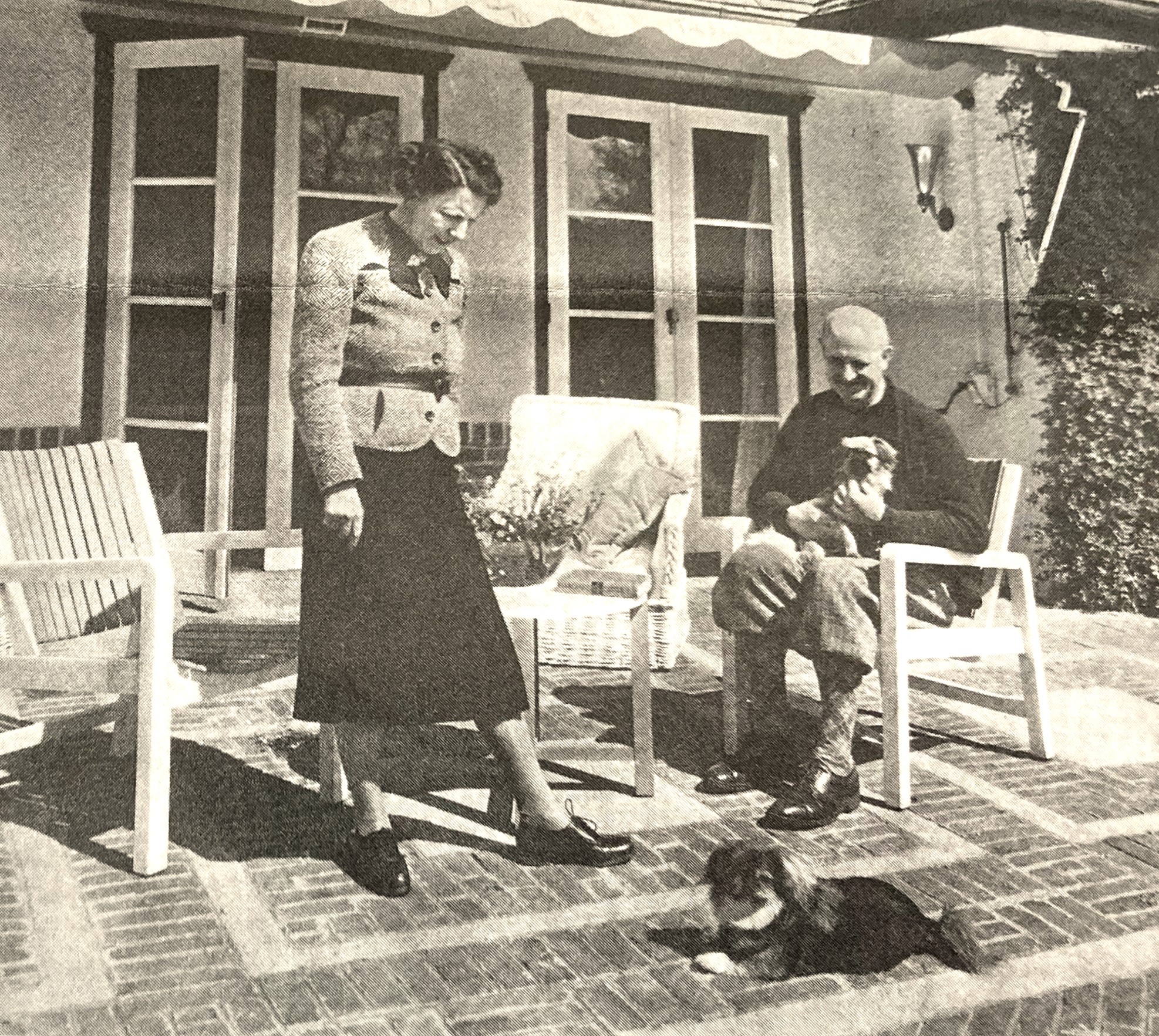
By the time Fleming became a regular visitor to Le Touquet, Wodehouse and his wife, Ethel, had made their home there, having spent many years enjoying a somewhat nomadic life in France, to escape his conflict with the British and American tax authorities. They had spent some time on the Riviera, where their neighbours included H. G. Wells and E. Phillips Oppenheim. They had also tried living in Paris, but Wodehouse had quickly realised that the quieter atmosphere of the coastal resort suited his working life better. Furthermore, there were two good golf courses, plenty of tennis for Leonora on her visits from England, and a local casino that Ethel enjoyed patronising.
Wodehouse had mentioned Le Touquet long before he moved there. In Carry On, Jeeves (1925), the story ‘Clustering Round Young Bingo’ included a sartorial discussion between Bertie and Jeeves, in which the former argued his case thus: “It may interest you to learn that when I was at Le Touquet the Prince of Wales buzzed into the Casino one night with soft silk shirt complete.”
In November 1934, the Wodehouses rented Low Wood, an Anglo-Norman style villa next to the golf course at Le Touquet. The house, and particularly the garden, suited them so well that six months later they bought the property. Here, PGW’s creativity flourished. Having struggled with a lack of plots, he now invented a new character for his stories, Uncle Fred, who made his debut in ‘Uncle Fred Flits By’ (1935). In 1936, Wodehouse wrote Laughing Gas, which was serialised in Pearson’s magazine. The following year he started on a new novel, The Silver Cow, which later transformed into the masterpiece The Code of the Woosters. And Wodehouse then produced Uncle Fred in the Springtime (1939), in which Le Touquet played a role.
After their enforced wartime absence from Low Wood, the Wodehouses returned to inspect the house and found it had been looted and was now in a ruinous state. Renovation was deemed too expensive, and so in 1948 they sold the remains of the villa and emigrated to the USA.
The present owner of Low Wood, Philippe Cotrel, former mayor of Le Touquet, bought the property in 1995, to save it from demolition. The roof and all the windows were renewed or replaced, and an extra wing was added to the house.

The Mirrlees family villa (mentioned earlier) was built in 1936 as a summer residence for Major-General William (‘Reay’) Mirrlees and his second wife, Frances Lalanne, after whom the house was named Villa Les Lambins-Lalanne. Her son from her first marriage took his stepfather’s name and was known as Robin Mirrlees (1925–2012). He led a flamboyant life, during which he became a friend of Fleming and invited him to work in the family villa.
Robin Mirrlees was also a source of information for Norman Murphy, who refers in his A Wodehouse Handbook Vol. 1 (2006) to a Wodehouse plaque in Le Touquet.
Murphy: I am indebted to Robin Mirrlees for the information that, on the back wall of his Villa Lambins-Lalanne, Les Lambins, Avenue de Trepied, Le Touquet, is a black marble plaque to P.G. Wodehouse. The house which, Mr Mirrlees told me, is the only one in Le Touquet still in English hands since before the war, stands next door to the Wodehouse’s villa, and the plaque was erected to commemorate his stay there.
I believe that Murphy never actually saw this plaque himself, and my research suggests that there has been no picture of it published anywhere – until now, that is!
In 2023, I decided to investigate, and after much laborious research I discovered the Mirlees villa to be at a completely different address from the one Murphy referenced: not Avenue de Trepied, but 520 Avenue Allen Stoneham (the same road that gives access to the back garden of Low Wood – now called Low Wood Manor – whose actual address is 1965 Avenue du Golf). I wrote a letter to the owner of the villa, asking for permission to visit. No answer. After a few months my letter came back to The Netherlands, unopened.
On 25th of August 2023, I went to Le Touquet and found Villa Lambins-Lalanne at the newly discovered location. The house looked dilapidated, and there was a sign ‘Attention au chien’ – almost the setting of the Wodehouse story ‘The Level Business Head’, I thought. There was no letterbox at the front of the house, and I presumed any mail was simply stuck in the wooden fence and left there open to all weather conditions or simply not delivered but returned to sender, as mine had been. The unkempt garden contained some rusting metal chairs. The house was clearly empty and appeared to have been uninhabited for many years.
Nevertheless, there it was in the shining sun, I thought – the villa where Ian Fleming started writing his first James Bond novel in 1952!

The stairs to the front entrance of the villa were ankle-deep in leaves and pine needles as, with some trepidation, I approached the door. To my delight, I espied a copper plaque, mounted on a wooden background, that read:
Cette maison fut batie en 1936 par le Général Reay Mirrlees et Madame de La Lanne-Mirrlees pour le plaisir de leurs Amis. Ils y ont reçus des Personnages distingués parmi lesquels les Ecrivains célébres P.G. Wodehouse et Ian Fleming.
(This house was built in 1936 by General Reay Mirrlees and Madame de La Lanne-Mirrlees for the pleasure of their friends. They received distinguished people including the famous writers P.G. Wodehouse and Ian Fleming.)
Wodehouse and Fleming both mentioned on this plaque! There it was – the riddle solved! But was it? Robin Mirrlees mentioned a “black marble plaque” in his report to Norman Murphy. So, I continued my quest.

I entered the wilderness of the backyard, where I was able to take a look at the terrace and the rear of the villa. Rusting sunbeds made me imagine famous authors lounging in the sun, but the whole area still exuded a sad desolation. And then I noticed it – a black marble plaque with the same text as on the copper plaque at the front, in which Wodehouse and Fleming are commemorated together. The golden lettering was clearly legible. I had solved the mystery of the ‘unknown’ plaque – and discovered a duplicate of it as a bonus.
Clearly, Wodehouse must have been a guest at this villa in the 1930s. With the back garden of Low Wood only 100 yards away from the front garden of Villa Les Lambins-Lalanne, he could have reached the path to the villa via a rear exit. When Fleming stayed with the Mirrlees family in 1952, Wodehouse was already living in America, of course, so it seems unlikely that the two authors actually met at Villa Lambins-Lalanne. But at least they are both commemorated for posterity at this location.
It is a pity that the villa is in such a dilapidated state. There are plenty of potential buyers who would like to live near the golf course and cherish these plaques, but the Mirrlees family apparently does not want to sell the villa for the time being, and so it remains in English hands, as Murphy noted.

On the 7th of September 2024, the Dutch P. G. Wodehouse Society, together with The Drones Club of Belgium, honoured Low Wood with a new plaque. So, if you have plans to visit Le Touquet, you will soon be able to admire three plaques commemorating the great P. G. Wodehouse, two of which contain the names of the Spy and the Gentleman.
Notes
- This article first appeared in the June 2024 issue of Wooster Sauce, the journal of the P. G. Wodehouse Society (UK).
- The author’s consent to publish it here is gratefully acknowledged.
Related Posts
-
Recent Posts
Buy the Book

buy the book
Categories
-
cc
Tags
Art Bertie Wooster Bhagavad Gita Bingo Little Birthday Blake Mouton Grid Blogging Bollywood Book Campus Life CEO Chivalry Consciousness Coronavirus Corruption Edwin Empress of Blandings English Ethics Feminism Happiness Health Hindi Hollywood Human Values Humour India Jeeves Kalidasa KIds Leadership linkedin Literature Lord Emsworth Love Lyrics Mahabharata Mahatma Gandhi Management Movies Music Norway Paintings Panjab University People P G Wodehouse Politics Pondicherry Portugal Psmith Puducherry Rabindranath Tagore Ramayana Ritusamhara R K Laxman Romance Rosie M Banks Rupert Psmith Seasons Shakespeare Social Media Something Fresh Songs SPANDAN Spirituality SQ Sri Aurobindo Stephen Covey Switzerland Tatas Thos UBS Values Wodehousitis WomenArchives
- March 2026 (1)
- February 2026 (5)
- January 2026 (2)
- December 2025 (1)
- November 2025 (2)
- October 2025 (2)
- September 2025 (3)
- August 2025 (3)
- July 2025 (2)
- June 2025 (2)
- May 2025 (4)
- April 2025 (5)
- March 2025 (5)
- February 2025 (4)
- January 2025 (4)
- December 2024 (6)
- November 2024 (6)
- October 2024 (6)
- September 2024 (5)
- August 2024 (5)
- July 2024 (4)
- June 2024 (4)
- May 2024 (5)
- April 2024 (5)
- March 2024 (3)
- February 2024 (1)
- January 2024 (4)
- December 2023 (2)
- November 2023 (3)
- October 2023 (3)
- September 2023 (3)
- August 2023 (5)
- July 2023 (5)
- June 2023 (7)
- May 2023 (6)
- April 2023 (6)
- March 2023 (8)
- February 2023 (8)
- January 2023 (7)
- December 2022 (6)
- November 2022 (5)
- October 2022 (8)
- September 2022 (5)
- August 2022 (6)
- July 2022 (6)
- June 2022 (8)
- May 2022 (7)
- April 2022 (8)
- March 2022 (7)
- February 2022 (3)
- January 2022 (7)
- December 2021 (4)
- November 2021 (8)
- October 2021 (7)
- September 2021 (6)
- August 2021 (7)
- July 2021 (7)
- June 2021 (9)
- May 2021 (8)
- April 2021 (9)
- March 2021 (10)
- February 2021 (8)
- January 2021 (8)
- December 2020 (7)
- November 2020 (6)
- October 2020 (5)
- September 2020 (9)
- August 2020 (9)
- July 2020 (8)
- June 2020 (8)
- May 2020 (6)
- April 2020 (5)
- March 2020 (7)
- February 2020 (4)
- January 2020 (7)
- December 2019 (12)
- November 2019 (10)
- October 2019 (5)
- September 2019 (9)
- August 2019 (10)
- July 2019 (9)
- June 2019 (14)
- May 2019 (13)
- April 2019 (14)
- March 2019 (11)
- February 2019 (11)
- January 2019 (14)
- December 2018 (12)
- November 2018 (12)
- October 2018 (14)
- September 2018 (9)
- August 2018 (10)
- July 2018 (10)
- June 2018 (8)
- May 2018 (11)
- April 2018 (11)
- March 2018 (6)
- February 2018 (9)
- January 2018 (10)
- December 2017 (10)
- November 2017 (9)
- October 2017 (8)
- September 2017 (11)
- August 2017 (10)
- July 2017 (10)
- June 2017 (11)
- May 2017 (9)
- April 2017 (7)
- March 2017 (7)
- February 2017 (8)
- January 2017 (10)
- December 2016 (9)
- November 2016 (11)
- October 2016 (10)
- September 2016 (10)
- August 2016 (9)
- July 2016 (6)
- June 2016 (10)
- May 2016 (10)
- April 2016 (10)
- March 2016 (10)
- February 2016 (12)
- January 2016 (10)
- December 2015 (11)
- November 2015 (11)
- October 2015 (10)
- September 2015 (10)
- August 2015 (10)
- July 2015 (10)
- June 2015 (10)
- May 2015 (10)
- April 2015 (10)
- March 2015 (9)
- February 2015 (10)
- January 2015 (8)
- December 2014 (9)
- November 2014 (8)
- October 2014 (8)
- September 2014 (7)
- August 2014 (7)
- July 2014 (7)
- June 2014 (7)
- May 2014 (7)
- April 2014 (7)
- March 2014 (7)
- February 2014 (6)
- January 2014 (7)
- December 2013 (6)
- November 2013 (6)
- October 2013 (6)
- September 2013 (6)
- August 2013 (6)
- July 2013 (6)
- June 2013 (6)
- May 2013 (6)
- April 2013 (6)
- March 2013 (6)
- February 2013 (6)
- January 2013 (6)
- December 2012 (4)
- November 2012 (4)
- October 2012 (3)
- September 2012 (2)
- August 2012 (4)
- July 2012 (2)
- June 2012 (2)
- May 2012 (2)
- April 2012 (2)
- March 2012 (2)
- February 2012 (3)
- December 2011 (3)
- November 2011 (1)
- October 2011 (2)
- September 2011 (2)
- August 2011 (2)
- July 2011 (2)
- June 2011 (3)

 ashokbhatia