Posts Tagged ‘P G Wodehouse’
BORING! : Guest post by Suresh Subrahmanyan
Posted in What ho!, tagged Bore, Boredom. Jerome K Jerome, Humour, P G Wodehouse on April 17, 2025| Leave a Comment »
“What a queer thing Life is! So unlike anything else, don’t you know, if you see what I mean.” – Blythe & Bold
Posted in What ho!, tagged Creative Juices, Humour, P G Wodehouse on March 31, 2025| Leave a Comment »
P. G. Wodehouse and the Evolution of Management Thought
Posted in What ho!, tagged C Northcote Parkinson, Frederick Winslow Taylor, Henry Ford, Humour, Management, Mary Parker Follett, Max Weber, P G Wodehouse, Philip Kotler, Stephen Covey on March 17, 2025| Leave a Comment »
How P. G. Wodehouse helped yours truly to undergo a medical procedure
Posted in What ho!, tagged Absent Treatment, Aunts Aren't Gentlemen, Autobiographical, Bachelors Anonymous, Cardiac Blues, Charlie's Angels, Do Butlers Burgle Banks?, Doctors, Humour, Medical Tourism, Mission Impossible, Nurses, P G Wodehouse, Public Hospitals, Something Fresh on March 7, 2025| Leave a Comment »
Writing Tip – The Importance of Humour – JPC Allen Writes
Posted in What ho!, tagged Humour, P G Wodehouse, Writing on March 2, 2025| 1 Comment »
The myriad challenges faced by publishers and editors in Plumsville
Posted in What ho!, tagged Authors, Book Review, Books, Editors, Fiction, Humour, Journalism, Owners, P G Wodehouse, Publishers, Publishing, Writing on February 19, 2025| 1 Comment »

P. G. Wodehouse was a prolific author. Thus, it comes as no surprise that many of his books and stories provide us with an insightful take on the lives of owners, publishers, and editors.
In the publishing world, owners are often perceived to be the hands-off kind of entities who have invested their surplus funds into a journal which is supposed to serve a loftier goal of either reforming its target audience or keeping it amused, entertained, and informed. Over time, any journal could become an insignificant part of their portfolio, and they might think of it only while pronging a kippered herring on their plate with a gloomy fork. One case of an absentee owner is that of Mr Benjamin Scobell in The Prince and Betty.
Occasionally, we find owners who have bought a publishing business based on either a transient passion for the written word or a nudge from Cupid. Once the interest nosedives or the romance has drifted off like a meditative ring of smoke, they take prompt steps through proper channels to hive off the business to someone else.
But P. G. Wodehouse also introduces us to many publishers and editors who take their professional commitments with due alacrity, diligence, and seriousness.
Think of Lord Tilbury, founder and proprietor of that vast factory of popular literature known as the Mammoth Publishing Company, who often gets noticed rushing off on a busy street in disguise, ostensibly to avoid any manuscripts being hurled at him by aspiring authors from the windows of a passing bus. He detests missing out on juicy memoirs which could boost the topline of his business empire. He does not like editors who end up losing him subscribers.
Or, consider the case of Mr John Hamilton Potter, founder, and proprietor of the well-known New York publishing house of J. H. Potter, Inc. Imagine the hapless owner gazing dreamily across the green lawns and gleaming flower beds at Skeldings Hall, duly basking in the pleasant June sunshine. God, it seems to Mr. Potter, is in his heaven and all is right with the world. But a publisher is never free. He is on vacation, but his office has sent across a manuscript – Ethics of Suicide – which he has to go through in otherwise heavenly surroundings and decide if it is worth publishing. (“Mr. Potter Takes a Rest Cure”)
It is also not too difficult for us to understand why Aunt Dahlia often keeps thinking up brainy schemes to retain the services of Anatole. His absence would inevitably mean a weakening of the lining of Uncle Tom’s stomach. In turn, this would dry up the funds for keeping Milady’s Boudoir afloat and running.
Editors: The backbone of publications
However, the slender shoulders on which the burden of keeping the publishing activity alive and kicking falls invariably happen to be those of the editors. They are the eager beavers who keep a sharp eye on the circulation figures and decide the nature and form of the content that gets routinely unleashed upon hapless readers like us. They happen to be industrious little creatures who work hard and shrink from the public gaze, except when they are called upon to socially hobnob with the powers that be, or to pick up an occasional award in journalistic excellence at a public forum. They exercise unparalleled authority over all matters. They are the lion kings of their publishing fiefdom and are the masters of all they survey. Bosses love them when circulation figures show an upward trend. Yet, they are hated by authors whose manuscripts they keep throwing into the nearest dustbin in their office.
But this does not imply that their jobs are without any challenges. Their conscience may or may not permit the publication of either an item or a book, but they routinely face pressure from all corners to go ahead with the same. Remaining objective and balancing conflicting needs in such matters makes them lose their daily quota of beauty sleep. Whether to grant a raise to someone critical to the operations often leads to dark circles under their eyes. Keeping a sharp eye on the top stories of the day, verifying their authenticity, and being fleet-footed when keeping a libel suit at bay takes its toll. Some of them even offer their hearts to unsuccessful female authors when unable to offer them any column space, regretting the decision for the rest of their lives. If they decide to take up a social cause, they need to marshal the support of gang lords and pugilists, who are then known as ‘fighting editors.’
The books and stories dished out by P G Wodehouse are replete with cases of hapless publishers and editors who face the harsh slings and arrows of fate. Even if we ignore the kind of roadblocks they face while pursuing their romantic goals, we are often left overwhelmed by the kind of challenges they face in the discharge of their duties while keeping the rag with which they happen to be associated alive and kicking.

The challenge of keeping Milady’s Boudoir afloat
Aunt Dahlia’s example could inspire many owners and editors to keep their rags alive and kicking, even if only for a few years.
Readers would recall that Milady’s Boudoir is a weekly newspaper for women, of which Aunt Dahlia is the proprietor. According to her, there is a short story in each issue, adding that “in seventy per cent of those short stories the hero won the heroine’s heart by saving her dog or her cat or whatever foul animal she happened to possess.”
According to Bertie, each issue costs sixpence. Its office is in “one of those rummy streets in the Covent Garden neighbourhood”.
Uncle Tom’s support
Milady’s Boudoir never sold well and only stayed in business because Tom Travers reluctantly paid the bills.
In Right Ho, Jeeves, Dahlia loses the money to pay her magazine’s printers at baccarat and has Bertie and Jeeves help her get more money from her husband. In Jeeves and the Feudal Spirit, she temporarily pawns her pearl necklace to buy a serial from Daphne Dolores Morehead to help sell the Milady’s Boudoir to the newspaper magnate Mr. Trotter.
A sharp eye for content
Aunt Dahlia surely uses the hunting experience gained in her younger days to spot content which would keep regaling her readers. It is common knowledge that during her youth, she had spent quite a few years with such fox-hunting packs as the Quorn and the Pytchley.
In “Jeeves Makes an Omelette“, a story that takes place before the sale of her magazine, she asks Bertie to steal a painting so she can get a story for its use.
Here are some of the better-known persons who have contributed towards making Milady’s Boudoir an interesting magazine:
- Bertie Wooster contributed an article, titled “What the Well-Dressed Man Is Wearing”, and proudly mentions it in other stories. (“Clustering Round Young Bingo”)
- Lady Bablockhythe contributed her “Frank Recollections of a Long Life” as a serial. (“Clustering Round Young Bingo”)
- Pomona Grindle was commissioned to contribute a serial. (The Code of the Woosters)
- Cornelia Fothergill contributed her latest romance novel as a serial. (“Jeeves Makes an Omelette”)
- Daphne Dolores Morehead, the famous novelist, was commissioned to write a serial. (Jeeves and the Feudal Spirit)
- Blair Eggleston wrote a series of articles on The Modern Girl. (“Jeeves and the Greasy Bird”)
When the husband’s digestive troubles score
Unfortunately, wifely concerns about Uncle Tom’s lining of the stomach end up depriving the magazine’s readers of devouring a juicy piece “How I Keep the Love of my Husband-Baby”, written by Rosie M. Banks. Bingo, of course, is much relieved but has to pay a heavy price by sacrificing the services of Anatole, God’s gift to our gastric juices. (“Clustering Round Young Bingo”).
Much to the credit of the homemaker in Mrs Bingo, she had identified and employed Anatole. However, she made a bloomer by inviting Uncle Tom and Aunt Dahlia over for dinner. A combination of consommé pâté d’Italie, paupiettes de sole à la princesse, and caneton Aylesbury à la brocheconsommé pate d’Italie, ends up reviving Uncle Tom like a watered flower.
Aunt Dahlia gets Jeeves to somehow persuade Anatole to join her. Jeeves manages to pull off this feat. A breach of cordial relations between the two ladies ensues. Mrs Little declines to contribute the ghastly article for Aunt Dahlia’s rag. Matrimonial peace prevails.
The fact that she managed to launch and keep Milady’s Boudoir afloat for many years despite her onerous social responsibilities deserves to be applauded. She has a significant role to play as a Governor of Market Snodsbury Grammar School. She must keep a strict vigil on Tuppy Glossop who loses interest in Angela, her daughter, on at least three occasions. Bertie has to be often persuaded to undertake such delicate assignments as sneering at a cow creamer, pinching a painting, and kidnapping a cat which is a favourite of Potato Chip, the racehorse. Sir Roderick Glossop, the loony doctor, is to be roped in as a butler at Brinkley Court to investigate the sanity of a man courting her goddaughter Phyllis Mills.

A keen eye for Family Memoirs
Who does not want to read some juicy details of the younger days of the high and mighty? When memoirs overflowing with scandalous stories about people one knows to be the essence of propriety today, but who seem to have behaved, when they were in their twenties, in a wild manner, editors of publications which thrive on society gossip make a beeline for the same. They are always eager to lap up such manuscripts and often go to great lengths to secure these.
In Heavy Weather, when the Hon. Galahad’s reminiscences are withdrawn from the market, Lord Tilbury is anxious to get hold of the manuscript. Lord Tilbury had looked at the thing from a different angle. He knows that there is big money in that type of literature. The circulation of his nasty little paper, Society Spice, proved that. It seemed to him that Galahad’s memoirs could not fail to be the succès de scandale of the year. He goes to great lengths to lay his hands on the manuscript but, as luck would have it, the Empress of Blandings ends up gobbling it, depriving the Mammoth Publishing Company of an opportunity to earn sackfuls of the green stuff.
In “Jeeves Takes Charge”, Bertie’s Uncle Willoughby has whipped up his memoirs which contain scandalous stories, many of which involve himself and Lord Worplesdon, the father of Lady Florence Craye, to whom Bertie is engaged at the time. Florence is appalled and expects Bertie to destroy the manuscript of ‘Recollections of a Long Life.’
Thanks to Jeeves’ ingenuity, the manuscript eventually lands at the offices of Messrs. Riggs & Ballinger, the publishers, who had earlier published Lady Carnaby’s “Memories of Eighty Interesting Years.”
While Mr. Riggs is delighted to confirm to Uncle Willoughby that he has received the manuscript, he is blissfully unaware of the consequences of his confirmation. Florence breaks her engagement to Bertie. Bertie sacks Jeeves. However, having slept over the matter, Bertie realises that he has been saved from a walk down the aisle with the lady who had kept egging him on to improve his intellect by reading ‘Types of Ethical Theory.’ Jeeves gets rehired.

Facing the pressure to hire someone
In Heavy Weather, Lady Julia Fish, a handsome middle-aged woman of the large blonde type, and of a personality both breezy and commanding, decides to pay a visit to Lord Tilbury. She hopes to secure a job for her son Ronnie Fish who is trying to marry a chorus girl. It seems to her that if Ronnie were safe at Tilbury House, inking his nose and getting bustled about by editors and people, it might take his mind off the tender passion. Lord Tilbury hastens to clarify that his company publishes newspapers, magazines, and weekly journals. It is not a Home for the Lovelorn. He refuses to permit Ronnie Fish to punch the clock at his company.
He is already seething within for having earlier accepted a recommendation to hire Monty Bodkin, who happens to be the assistant editor of Tiny Tots which is otherwise ably edited by that well-known writer of tales for the young, the Rev. Aubrey Sellick. Since the latter is off on a vacation, Monty is holding the fort. Perusing an editorial which speaks of mugs, betting, and whisky bottles, Lord Tilbury imagines the publication to have already lost close to ten thousand subscribers. Monty gets a prompt sack.

When an editor’s output lacks zip and ginger
Among the numerous publications which had their being in Tilbury House was that popular weekly, Society Spice, a paper devoted to the exploitation of the seedier side of British life and edited by one whom the proprietor of the Mammoth had long looked on as the brightest and most promising of his young men – Percy Pilbeam.
When it comes to ferreting out juicy gossip from amongst the high and mighty of the city’s society, Percy never had any scruples. Talk of ethics and values in journalism, and one is apt to draw a blank. His focus is on boosting circulation figures, something which is highly appreciated by Lord Tilbury. To him, Percy had set a gold standard in editorial conduct. Under his guidance, the publication had reached a high pitch of excellence, with a new scandal featured almost every week.
When Jerry wriggles his way into the offices of Society Spice, he finds it difficult to perform as brightly as his predecessor. He finds it to be a loathsome rag, full of glamour girls and scandal. He hates his assignment. Tilbury House never believed in paying its minor editors large salaries, and the dinginess of the room which is allotted to him merely testifies to the limitations of Jerry’s means. The cubbyhole’s ink-stained furniture, cheap carpeting, and stuffiness invariably lowered his spirits. In such dismal surroundings, designed to send an editor’s spirits down in the basement, it was not easy for Jerry to concentrate on uncongenial work.
His friend, Biff, who is soon likely to inherit a massive sum from a recently departed uncle across the pond, assures him that when he is rich, he will buy the intellectual Thursday Review and make Jerry its editor.
Since Jerry falls short in the way of dishing the dirt, his work lacks zip and ginger. Lord Tilbury fires him.
By the end of the narrative, it indeed looks possible that Biff would end up inheriting millions. The reader hopes that he makes good on his promise of buying Thursday Review, giving Jerry his dream job.
(Frozen Assets; Biffen’s Millions)

The art of soothing irate contributors
We do not know much about the kind of challenges that Mr. Matthew Wrenn faced in his editorial capacity. However, we do know that he is a brainy cove. After all, during his off-duty hours, he plays chess with one of his friends. Moreover, someone who could manage to work with a boss of Napoleonic dispensation – like Lord Tilbury – for a long duration and could rise to become the editor of that same Pyke’s Home Companion of which he had once been the mere representative, surely deserves our respect and admiration.
In actual years, Matthew Wrenn was on the right side of fifty, but as editors of papers like Pyke’s Home Companion are apt to do, he looked older than he really was. He was a man of mild and dreamy qualities and was respected by all who knew him.
Sam Shotter, recommended by his uncle, worms his way into Tilbury House and charms Lord Tilbury into attaching himself to Wrenn’s team. He is a great admirer of the stuff that Pyke’s Home Companion keeps unleashing upon its readers. It keeps spreading sweetness and light. It includes such serials as Hearts Aflame, by Cordelia Blair, and a regular feature by Aunt Ysobel which he takes off the hands of the editor who used to hate having to write it.
To many of the rag’s devout followers, Aunt Ysobel was indeed like a wise pilot, gently steering her fellow men and women through the shoals and sunken rocks of the ocean of life.
A weakness Mr. Wrenn has is his inability to face a woman novelist who is all upset. There are indeed times when he wishes that he could edit some paper like Tiny Tots or Our Feathered Chums, where the aggrieved contributors would not come charging in. Mr. Wrenn was much persecuted by female contributors who called with grievances at the offices of Pyke’s Home Companion; and of all these gifted creatures, Miss Cordelia Blair was the one he feared most. The role of soothing such contributors was soon taken over by Sam.
Eventually, one thing leads to another and Lord Tilbury, when found by Sam in a trouser-less situation, loses no time in sacking him.
(Sam the Sudden)

The perils of refusing a raise
Mr. Hebblethwaite, editor of Ladies’ Sphere, protects his privacy by employing door-hounds like George Mellon, who sits in the anteroom at the offices of the publication and keeps people from seeing the editor. He looks fierce but George plans to look him in the eye and ask him for a raise with all the fortitude at his command.
On a fateful day, he takes the plunge but gets rudely rejected. When he is sulking at his failure, Mrs. Hebblethwaite walks in. George does not allow her to enter the sanctum sanctorum without a prior appointment and she leaves in a huff. The very next day, he gets called in by the hassled editor for questioning. Goerge clarifies that he had refused her entry because he is sincere about not permitting anyone without an appointment to disturb him. The editor asks him why he wants a raise. He clarifies that he wishes to marry Rosie. The editor then scribbles something on a bit of paper, which happens to be a note to the cashier for quite a decent raise.
(“The Spring Suit”; Saturday Evening Post; Illustration courtesy Charles D Mitchell)

When the passion for football ends an editorial career
Between Henry’s House and the School House there had existed for some time a feud, the intensity of which fluctuated over time. Scott, of the School House, spots a void in the unofficial newspapers being dished out at St. Austin’s. For some terms, a publication entitled The Glow-Worm had been appearing. It simply aimed at being a readable version of the dull Austinian, the official organ of the school. It chronicled school events in a snappy way, but it never libelled anyone. Scotts’ brainchild, which he called The Rapier, never did anything else. Moreover, it was presented free, not sold. Secondly, it was many degrees more scandalous. Scott virtually dictated it to Pillingshot, the so-called editor.
Scott was someone who would get easily bored with a thing, especially if a counterattraction presented itself. In his case, he wished to excel at football. He was soon cornered by the incoming captain of the football team, suggesting that a short notice be put in the journal’s third edition, due the next day, announcing that owing to the pressure of his journalistic work, he would be unable to play for the first fifteen against Daleby. Immediately, Scott has second thoughts. He wonders if the sedentary style of a journalistic life would be in his line, football being much healthier.
Thus ended the short editorial career of Pillingshot.
(“Pillingshot’s Paper”: The Captain)

Keeping libel suits at bay
Before going to Brinkley Court, Bertie learns that Reginald (Kipper) Herring, the chap with a cauliflower ear, is on the staff of the Thursday Review, a weekly paper. He had recently been tasked with reviewing a slim book authored by Rev. Aubrey Upjohn, giving an enthusiastic buildup to the Preparatory School. This brought back such nausea-inducing memories as the receipt of six of the juiciest from a cane that used to bite like a serpent and sting like an adder, the sausages on Sunday, and the boiled mutton with caper sauce. Normally, a book like that would get a line and a half in the Other Recent Publications column, but Kipper, driven by righteous fury, gave it six hundred words of impassioned prose. Anonymously, of course.
Upjohn eventually becomes aware that Kipper wrote the scathing review. He intends to sue Kipper’s paper for libel. He also refuses to stay in the same house. It takes some ingenuity from Jeeves and Bobbie Wickham to get Upjohn to withdraw the idea of filing a libel suit, thereby eliminating the risk of Kipper losing his job.
(Jeeves in the Offing)

Watching out for latent advertising
Conscientious editors are often bombarded with self-promoting doctors who boast of making New Men for Old. In the letters to the editors of different publications, they claim to do wonders for those who are out of shape. These letters have creatively crafted headings such as
THE STRAIN OF MODERN LIFE
DO WE EAT TOO MUCH?
SHOULD THE CHAPERONE BE RESTORED?
A hapless overworked editor could hardly be blamed for not being able to spot that all of these letters to them, cleverly spread across different major publications, are authored by the same gentleman, offering health-restoration residential programs to the gullible denizens who wished to be in the pink of health.
Once they report to the establishment, they are first made to part with the green stuff in sackfuls, covering the entire program duration. They are then subjected to sessions of skipping ropes, performing unpleasantness-inducing bending, and stretching exercises, holding their hands above their heads, and swinging painfully from what one may loosely term their waists. Subsequently, invigorating cold baths and rubdowns are unleashed upon them. Spartan meals are served, comprising a lean mutton chop apiece, with green vegetables and dry toast, accompanied by water. A spot of port is ruled out, as is consumption of tobacco in any form.
(“Healthward Ho”; Money for Nothing)

Of Doctor Cupid and the Heart Specialist
One of the more interesting features editors offer to their readers is by way of a column which addresses personal issues of a romantic kind. Just like Aunt Ysobel (of Pyke’s Home Companion fame in Sam the Sudden) whose advice is taken very seriously by her assiduous followers, publications like the Fireside Chat and Home Moments also take up complicated personal matters which cannot be left to amateurs. They offer sagacious advice under such pseudonyms as Doctor Cupid or Heart Specialist. It is not difficult to guess that the burden of burning the midnight oil to answer readers’ queries addressed to such experts falls inevitably on the editorial staff.
But what happens when such doctors or specialists offer contradictory advice to their respective followers? Well, much chaos, heartache, and hilarity ensue.
Arthur Welch is a barber at the Hotel Belvoir. He is engaged to Maud Peters, who is a manicurist at the same hotel. While she takes care of her customers’ hands, Maud thinks, as part of her profession, that she must chat gaily with them. Arthur, who is extremely jealous, thinks otherwise. One day he no longer seems jealous, which at first makes Maud happy though she soon worries he no longer cares about her.
She decides to take advice from Doctor Cupid, who answers questions on Matters of the Heart in the weekly magazine Fireside Chat. Dr Cupid advises her to try to pique her fiancé. And this is what she does with a bold young American pugilist, known as “Skipper” Shute. But surprisingly, Arthur does not appear to mind, leaving Maud further disheartened.
One evening, Arthur and Mr Shute get into a shuffle in the city but get interrupted by a constable who asks the contestants to stop creating trouble on the street. While they move away, Maud confesses to Arthur that Dr Cupid had advised her that when jealousy flew out of the window indifference came in at the door and that she must exhibit pleasure in the society of other gentlemen and mark his demeanour.
Arthur then shows Maud a paper clipping, from the magazine Home Moments, where, in answer to his request, the Heart Specialist has written that Arthur should show no resentment to her fiancée, whenever he sees her flirting with other men!
The couple gets fully reconciled with each other.
(“When Doctors Disagree”; Success; Illustration courtesy W D Rahn)

A happy riddance!
Roland Bleke, who has recently earned good money in a theatrical venture, meets a pretty young girl crying in the park. Trying to comfort her, he learns that she has lost her job as editor of the Woman’s Page of Squibs magazine. His chivalry stirred, he thinks of buying the paper.
Visiting the offices, he meets the vibrant young chief editor, Mr. Aubrey Petheram, who is full of ideas for boosting the circulation of the paper. The infusion of capital by Roland into the business acts upon him like a powerful stimulant. Roland not only buys the paper but also restores the girl to her position, but he soon finds that she has a clear affection for her boss.
Frustrated by yet another problematic venture, Roland goes to Paris for a month. Returning to London, he finds the place overrun with bizarre advertising stunts for the paper. The police even arrest six persons for disturbing the peace by parading the Strand in the undress of Zulu warriors, shouting in unison the words “Wah! Wah! Wah! Buy ‘Squibs.’” Confronting the editor, he finds that the sales are up, thanks to the campaigns and a new scandal page, which shocks him.
When the editor is hospitalised, Roland asks the girl to prepare the rest of the paper, while he volunteers to write the scandal page himself. He writes a provocative piece about Mr Windelbird and the financier’s morals. A week later he is approached with an offer to buy the paper. Happy to be rid of it, he nevertheless names a high price, which he is surprised to find accepted without quibble. He learns that the buyer is none other than his old friend, Mr Geoffrey Windelbird.
(A Man of Means: The Episode of the Live Weekly; In collaboration with CH Bovill)

Encouraging a best-selling author
Egbert Mulliner disliked female novelists. The reason was not difficult to understand. In his capacity as an assistant editor, attached to the staff of The Weekly Booklover, a literary weekly, he had to listen to female novelists talking about Art and their Ideals every week. The strain had taken its toll. He had been advised to visit a quiet seaside village for a rest cure. What he needed was to augment the red corpuscles in his bloodstream.
While there, the supply of red corpuscles suddenly makes a quantum jump when he is strongly attracted to a female he meets at a picnic. He feels that without her, life would not be worth living. He thinks of proposing to her. But before proposing, he must make certain that there is no danger of her suddenly producing a manuscript fastened in the top left corner with pink silk and asking his candid opinion of the same. He is assured that is not the case, thereby sowing the seed of a relationship between the couple.
The very next day, whereas Egbert goes on to play golf, Evangeline Pembury starts writing a novel of her own. When she confides in him and starts reading it out to him, Egbert feels that he has plumbed the lowest depths of misery and anguish. Evangeline, he tells himself, has fallen from the pedestal on which he had set her. She has revealed herself as a secret novel writer. He is also appalled to find that quite a few of the real-life interactions between them have become a part of her offering. He does not think highly of her work, and a rift of sorts arises between them.
But her guardian angels happen to be in a benevolent mood. Thanks to the boredom induced by an overdose of sex, the discerning public suddenly discovers that it has had enough of it. Instead, what it yearns for now is good, sweet, wholesome, tender tales of the pure love of a man for a housekeeper. “Parted Ways” ends up becoming a best seller. Publishers started queuing up at the door, fighting to secure the rights to her next manuscript. Mainprice and Peabody soon come up with a contract which obliges her to dish out as many articles and stories as she can.
When a ‘Chat with Evangeline Pembury’ is needed for the big Christmas Special Number, it is of Egbert that his editor thinks first. But upon landing for the occasion, Egbert is surprised to find her in a highly depressed frame of mind. She greets him accompanied by a Niagara of tears. And, on the instant, Egbert Mulliner’s adamantine reserve collapses. He dives for the sofa. He clasps her hand. He strokes her hair. He squeezes her waist. He pats her shoulder. He massages her spine. Pretty soon, he has committed himself to about two thousand words of a nature calculated to send Mainprice and Peabody screaming with joy about their office.
Before he had become an assistant editor, he, too, had been an author, and he understands. “It is not being paid money in advance that jars the sensitive artist: it is having to work.”
He proposes to her, assuring her that, once married, he will endow all his worldly possessions upon her. These will include three novels he was never able to kid a publisher into printing, and at least twenty short stories no editor would accept.
“I give them to you freely. You can have the first of the novels tonight, and we will sit back and watch Mainprice and Peabody sell half a million copies.”
(“Best Seller”, the Mulliner version)

How a romantic success leads to editorial authority
Bertie Wooster thinks that when Sipperley used to be a freelancer, bunging in a story here and a set of verses there, he used to be a cheery cove, full of happy laughter. However, after six months as an editor at The Mayfair Gazette, he looks careworn and burnt out. Haggard. Drawn face. Circles under the eyes.
Standing up to an old headmaster
The Mayfair Gazette is supposed to be a paper devoted to the lighter interests of Society. However, Waterbury, the headmaster of Sippy’s old school, an important-looking bird with penetrating eyes, a Roman nose, and high cheekbones, is putting undue pressure on him to publish such of his scholarly articles as “Landmarks of Old Tuscany.” As to the latest one, which is about Elizabethan dramatists, he also wants Sippy to give it a prominent position in the rag.
He shares his dilemma with Bertie.
“You must be firm, Sippy; firm, old thing.”
“How can I, when the sight of him makes me feel like a piece of chewed blotting paper?”
However, on his next call, Waterbury faces a transformed man. Bubbling over with self-confidence. Radiating. Old Sippy refuses to publish his latest article. He reaches out and pats him in a paternal manner on the back. He suggests that Waterbury would do well to try having a dash at a light, breezy article on pet dogs.
“If you do not require my paper on the Elizabethan Dramatists, I shall no doubt be able to find another editor whose tastes are more in accord with my work.”
“The right spirit absolutely, Waterbury,” said Sippy cordially. “Never give in. Perseverance brings home the gravy. If you get an article accepted, send another article to that editor. If you get an article refused, send that article to another editor.”
“Thank you,” said the bloke Waterbury bitterly. “This expert advice should prove most useful.”
The headmaster leaves in a huff, banging the door behind him.
Developing a spine of chilled steel
Earlier, Sippy had confided in Bertie his unspoken love for Miss Gwendolen Moon. But, in her presence, he feels like a worm.
“She is so far above me.”
“Tall girl?”
“Spiritually. She is all soul. And what am I? Earthy.”
Bertie mentions the problem to Jeeves, who is always known for his sagacity. Bertie eventually discovers that he is also quite capable of strong-arm work. Unbeknown to him, Jeeves had called Sippy over to Bertie’s lair and struck a sharp blow on his head with one of Bertie’s golf clubs. A phone call to Miss Moon ensured that she came rushing to the aid of the stricken hero. The pair had become engaged. Sippy’s inferiority complex had evaporated.
(“The Inferiority Complex of Old Sippy”)

It does not always pay to be kind-hearted
When Joseph Kyrke, the newly appointed editor of the Mayfair Gazette decides to encourage budding talent and give young authors a start, he learns of the kind of trauma another editor had to face owing to an excessive supply of the milk of editorial kindness coursing through his veins.
Being a kind-hearted editor had not suited Alexander Tudway, the editor of the Piccadilly Weekly. Rather than rejecting the inane contributions from one Mr. Aubrey Jerningham, he went on to recast the same. He would not only cut out the first thousand words, but write in fifteen hundred of his own, put the end of the story in the middle and the middle at the end, alter the murder to a croquet party, make a character the hero instead of the villain, and send it to the printer. When the author expressed his disappointment at the payment received, an additional amount was promptly sent to him, duly accompanied by an apology. Pretty soon, contributions of dubious merit started pouring in from brothers, cousins, and other members of the Jerningham family. Piccadilly Weekly ceased to be an exclusive journal carrying scintillating pieces from authors of established merit. Instead, it became quite a family affair, a Jerningham family affair. At the end of Tudway’s first year as editor, no fewer than seven Jerninghams were contributing regularly, and the amount of extra work he had to put in was appalling. However, his proprietor congratulated him on discovering such a bevy of geniuses.
“Imitators of your work, Tudway. Their style is singularly like yours in parts. But they could have no better model, my dear Tudway, no better model!”
And Tudway would thank him with a ghastly grin.
The risk of offering one’s heart but no column space
On a fateful day, a visibly upset lady from the Jerningham clan calls upon him to discuss the rejection of the story “Gracie’s Hero.” She whips out a pocket handkerchief and bursts into a flood of tears. Tudway’s dilemma is now painful. He cannot print “Gracie’s Hero.” No amount of doctoring would make any impression on that masterpiece of inept writing. On the other hand, he does wish to soothe his visitor somehow. Then he remembers that an option available to a kind-hearted editor, confronted with a similar situation, is to offer his heart where he cannot give his columns. Must he follow editorial etiquette? He has no desire to marry. Indeed, the prospect appals him. No.
However, just as he decides to be firm, his visitor’s heels begin to drum upon the floor. He waits no longer. Two minutes later he becomes an engaged man, and soon afterwards a married one.
Tudway continues to be the editor of the Piccadilly Weekly. He supports by his own exertions the entire family of Jerninghams, who are most prolific contributors. His wife writes a story every month. The strain of making these efforts readable has made him haggard, prematurely old, and bent. And all because he let his determination to be kind to the Young Author get the better of his judgment.
(“The Kind-Hearted Editor”; The Throne and Country)

How to win celebrity authors and secure your job back
When a rejection leads to a green slip
Upon becoming the editor of Wee Tots, Bingo Little perfected the art of rejecting articles that came his way from a few chums of his.
However, the rejection of Bella Mae Jobson’s literary outpourings proved to be his nemesis. The American author had for some years past been holding American childhood spellbound with her tales of Willie Walrus, Charlie Chipmunk, and other fauna. Purkiss, the proprietor of Wee Tots, met her on the boat while returning from New York. He thought that hers was the circulation-building stuff well-suited for his journal, and he entered into tentative negotiations for her whole output, asking her on arriving in London to look in at the office and fix things up with his editor – viz., Bingo.
However, Bingo gave her his customary brush off when she called upon him. A subsequent meeting with Purkiss made him realise his folly. It dawned upon him that Jobson was not a run-of-the-mill author. She was someone who had to be sucked up to, given the old oil and made to feel that she was among friends and admirers. Purkiss lost no time in handing him the pink slip.
Cosying up to a celebrity author
But Bingo was made of sterner stuff. He uses his spare time to fuss over Jobson, showing her around, without, of course, declaring his true identity. He takes her to the London Zoo, the Tower of London, Madame Tussaud’s, five matinees, seven lunches and four dinners. He also gives her a bunch of white heather, several packets of cigarettes, eleven lots of roses and a signed photograph. A day before Jobson is to sail back across the pond, she decides to throw a party to which, besides Bingo, Mrs Bingo and Purkiss and his wife are also invited.
Meanwhile, Purkiss, in his enthusiasm to soften up the author, has taken her to the National Gallery, the British Museum, and a matinee at Sadler’s Wells. And then, seeing that she was weakening, he gifts her a Pekinese which is the apple of the eyes of his spouse. This has created a domestic crisis, and he is keen on Bingo helping him to somehow stop his wife from attending the luncheon, where she is sure to recognise the dog and proceed to make enquiries which would stir the stoutest soul. Bingo, having already heard from his wife that she was cancelling her luncheon with Jobson to console Mrs Purkiss at the sudden loss of her favourite canine, gracefully accepts the task of ensuring matrimonial peace in the Purkiss household. Prompt negotiations follow between the proprietor and the editor, whereby the latter gets his job back, at double the salary.
(“The Editor Regrets”)

How the character of Cosy Moments gets changed
When the overworked and burnt-out Mr. J. Fillken Wilberfloss, editor-in-chief of Cosy Moments magazine, is forced to go away to the mountains for ten weeks of rest, leaving his subordinate Billy Windsor in charge, little does he know how the magazine’s character will undergo a major change in his absence.
Cosy Moments is a journal for the home. It is the sort of paper which the father is expected to take home from his office and read aloud to the kids at bedtime. Psmith and Mike happen to be across the pond. While Mike is busy with his cricket tournaments, Psmith is finding life a bit dull. He volunteers to act as an unpaid subeditor and ends up suggesting a different strategy. He outlines his vision for the magazine thus:
“Cosy Moments should become red-hot stuff. I could wish its tone to be such that the public will wonder why we do not print it on asbestos. We must chronicle all the live events of the day, murders, fires, and the like in a manner which will make our readers’ spines thrill. Above all, we must be the guardians of the People’s rights. We must be a search-light, showing up the dark spot in the souls of those who would endeavour in any way to do the PEOPLE in the eye. We must detect the wrong-doer, and deliver him such a series of resentful buffs that he will abandon his little games and become a model citizen.”
This is how Psmith goes about rebuilding the paper and making it more exciting for its readers.
- Sacking all the existing contributors.
- Befriending Bat Jarvis, a local gang leader by restoring to him his favourite cat which had gone astray.
- Visiting “Pleasant Street”, a slum neighbourhood. Upset by the poverty and the living conditions, Psmith resolves to dedicate the energies of Cosy Moments to the issue. In this tenement business, he had touched the realities. He felt that here was something worth fighting for. His lot had been cast in pleasant places, and the sight of actual raw misery had come home to him with an added force from that circumstance. He was fully aware of the risks that he must run. It was a fight without the gloves, and to a finish at that. But he meant to see it through. Somehow or other those tenement houses had got to be cleaned up. If it meant trouble, as it undoubtedly did, that trouble would have to be faced.
- Earning the gratitude of Kid Brady, who has been complaining to Windsor that he cannot get a fair chance in the crooked world of New York boxing; they resolve to use the magazine to boost his career. He has his first big fight and wins handsomely. After the fight, the Cosy Moments team hires Brady as “fighting editor”, to protect them. This helps them as and when they get dragged into unsavoury street fights.
- Thanks to a series of articles on the conditions in “Pleasant Street,” a large new readership springs up and keeps growing every week. Advertisements come trooping in. Cosy Moments, in short, experiences an era of prosperity undreamed of in its history.
- Highlighting the issues faced by tenement dwellers also draws the attention of an unsavoury kind. Bribes get offered and promptly refused. Death threats loom large.
- Finding the paper’s distribution hit by thugs, Psmith realises they must up their game. He plans to use the tenement’s rent collector to track the owner.
- After another skirmish gets successfully tackled, Windsor gets the rent collector to divulge a name, that of Stewart Waring, a candidate for city Alderman and former Commissioner of Buildings.
- Kid Brady goes off for a round of fights, while Windsor gets picked up by the police. Psmith gets kidnapped in broad daylight but, thanks to Kid Brady, manages to escape.
- Bat Jarvis and his henchman Long Otto are persuaded to stand guard at the Cosy Moments office the following day. Some gang members burst in but are chased off with a warning from Jarvis to leave the magazine alone.
- Wilberfloss returns with the old contributors, enraged at the changes in the paper; he threatens to contact the owner, but Psmith reveals that he owns the paper, having bought it a month previously. Mr. Wilberfloss is deeply disturbed. Editorships of the kind which he aspired to are not easy to get. If he were to be removed from Cosy Moments, he would find it hard to place himself anywhere else. “Editors, like manuscripts, are rejected from want of space.”
- Waring appears. He walks into the room with the air of one who would never apologise for existing. There are some men who seem to fill any room in which they may be. Mr. Waring was one of these. He threatens Psmith but is forced to give him $5,000 to improve the tenements, plus three to replace his hat which had got damaged in one of the untoward instances.
- Psmith restores Wilberfloss and the staff of Cosy Moments to their positions, Billy Windsor having been offered his previous job at another paper at a fine salary.
- A few months later, back in rainy Cambridge, Psmith hears that Waring lost his election. Still, he has one consolation. He owns what, when the improvements are completed, will be the finest and most commodious tenement houses in New York. Also, Kid Brady has won his chance at a title fight, while Mr Wilberfloss has regained the paper’s old subscribers.
To bring about the desired transformation, Psmith stands up to external pressure. He does not allow the magazine to get muzzled. Such are the perils of journalistic life.
(Note: There are quite a few differences between Psmith, Journalist and The Prince and Betty. However, both have a similar storyline, leading us to similar lessons from a journalistic life. Thus, the latter has not been covered here.)
A socialistic streak
Plum is often said to concentrate more on the aristocracy and the eccentricities of the upper echelons of British society. However, to be fair to him, he is an author who is concerned not only about the classes but also about the masses. If Something Fresh takes a detailed look at life below the stairs, Psmith, Journalist also reveals a socialistic streak by dwelling at length on the plight of those who live in Big Apple’s slums, and the courage shown by Psmith to serve them in some way.
More to be pitied than censured?
Having had a cursory look at the journalistic escapades of quite a few of Plum’s characters who have an abiding passion for the written word, one may safely conclude that they are more to be pitied than censured.
To sum up some of the challenges they face:
- Being always on the lookout for revenue-yielding memoirs, juicy gossip, and current affairs of interest to the general public.
- Correcting a manuscript while maintaining the sanctity of the voice of the author. Being kind-hearted has its own perils.
- Having to face pressure from seniors in the hierarchy and from those who happen to be the pushy/dominating kind. Developing spines made of chilled steel helps.
- At times, facing the guilt of having rejected a manuscript which eventually goes on to be a roaring success at the hands of another publisher.
- The stress of having to interact with authors whose manuscripts have been found to have little merit.
- Hiring those who come armed with references; firing those who end up losing subscribers.
When it comes to those who keep the giant wheels of the publishing universe spinning, Plum paints a wide canvas of the kind of constraints they work under. They face financial pressures. Keeping readers in a positive frame of mind implies a strict scrutiny of the content they decide to publish. Hiring the right talent and firing the deadwood is an area of concern. Interpersonal and legal challenges must be faced with a chin-up attitude. Ethical issues need to be tackled with aplomb. Relationships with authors and other stakeholders deserve to be managed with empathy and firmness. If a major concern of a social nature is to be taken up, networking with the underworld and strongmen becomes crucial for attaining success.
While capturing the nuances of professional hazards faced by doctors, lawyers, bank managers, dog-biscuit marketeers, detectives, rozzers, principals, politicians, movie magnates, actors, musicians, artists, painters, accountants, secretaries, valets, butlers, cooks, gardeners, pig-keepers, et al, Plum’s sharp eye does not miss much. Likewise, when it comes to describing a journalistic life, he does not disappoint.
Note
- Inputs from Neil Midkiff, Eulalie (https://madameulalie.org/index.html), and Suryamouli Datta are gratefully acknowledged.
- This article can also be accessed at https://consciousenterprisenetwork.blogspot.com/2025/03/the-myriad-challenges-faced-by.html
Related Post
From Heartache to Hilarity: Why Wodehouse Is the Ultimate Breakup Guru: Guest Post by Suryamouli Datta
Posted in What ho!, tagged Breakups, Humour, Love, mental-health, P G Wodehouse, personal-development, Rejection, Relationships, Shakespeare on February 14, 2025| Leave a Comment »

The youth today live in technology-infested times which run closer to the speed of thought. Besides performing well at their jobs in accordance with their business leaders’ exhortations to work ninety hours a week, they have to cope with such delicate matters of the heart as maintaining relationships, situationships, and even mini-micro alliances, sans a commitment of any kind. If some are lucky to reach their romantic goals, there are many others who fail. They get up in the middle of the night to check if their current heartthrob has answered their latest missive on WhatsApp. In the absence of one or realising that their number itself has been blocked by the party of the other part, a sense of gloom envelopes them. A state of despondency follows. Some of them feel as if life has come to a dead end. A sense of lack of self-worth follows. Rejection stares them in the face.
The Sting of Rejection
Rejection is said to be a universal experience, but few words capture its sting better than Mirza Ghalib’s timeless couplet:
‘Nikalna khuld se Adam ka sunte aaye hain lekin,
Bade beabru ho kar tere kuche se hum nikle.’
Which translates to (according to my humble sense of English):
“We have heard of Adam’s fall from Eden’s gate,
But I was cast from your street in a far worse fate.”
This poignant verse reminds us that rejection feels deeply personal, like being cast out of paradise itself. For many, the road to recovery feels arduous. But as you journey through this article, you will see that rejection, though painful, is not the end. By the end of this journey, you might even find yourself humming a tune of resilience and joy.
It has been immortalised in poetry, literature, and song, proving that unrequited love is as old as humanity itself. Shakespeare, with his knack for articulating the ineffable, said it best in Twelfth Night:
“If music be the food of love, play on,
Give me excess of it; that, surfeiting,
The appetite may sicken, and so die.”
In other words, even the Bard himself recognised the bittersweet ache of rejection.
Yet, rejection is not a closed door; it is merely a redirection. As Robert Burns mused in A Red, Red Rose, love’s pain is as much a part of the human condition as its joys. While rejection spares no one, this article shines a light on the unique challenges men face, from societal pressures to emotional expectations. It offers a humorous yet empathetic lens to navigate this universal experience.
But before diving into the tales of resilience and humour, let us first unravel the many reasons behind romantic rejections.
Why Rejections Happen
Romantic rejection is a dance as old as time, its steps often clumsy and fraught with miscommunication. Why does it happen? The reasons are many. Sometimes, it is a simple lack of compatibility—a collision of two worlds that fail to align. At other times, it is the timing: meeting the right person at the wrong time or vice versa. Social conventions, family expectations, or even the mysterious workings of the human heart often create barriers.
In a world of ever-shifting expectations and instant communication, misunderstandings and mismatched desires are common culprits in any episode of romantic rejection. Yet, understanding these dynamics can help demystify the pain and bring clarity to the situation. Often, rejection is less about the person being rejected and more about circumstances, timing, incompatible goals, or a stark mismatch between the value systems of two souls.
Consider Kipling’s words in his poem If:
“If you can meet with Triumph and Disaster
And treat those two impostors just the same…”
For all its inevitability in the course of life, rejection is not without its sting. It is a curious mix of bruised ego and wounded hope, a moment that can leave even the most self-assured feeling disheartened. To pretend it does not hurt would be a folly. While the rainstorm may feel unwelcome, it clears the air for brighter days. Rejection, too, serves as a temporary squall, one that will pass, leaving behind a wiser and stronger self.
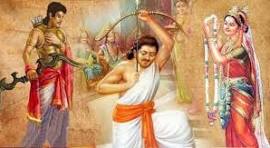
Tales from the Epics: Lessons in Rejection
Rejection is an ancient theme, and even the heroes of great epics have faced it. These stories demonstrate that being turned down, though painful, often becomes a defining moment in a person’s journey, shaping their character and decisions. However, they also serve as cautionary tales of how unresolved rejection can spiral into bitterness or tragedy.
Consider the story of Karna from the Mahabharata. During Draupadi’s swayamvara, Karna, a warrior of unmatched skill and bravery, is rejected outright when Draupadi declares she will not marry someone of uncertain lineage. Publicly humiliated, Karna’s bitterness festers and influences his alliances and decisions, leading to devastating consequences during the Kurukshetra war. His story is a powerful reminder of how unaddressed emotions from rejection can ripple destructively through one’s life.
Similarly, in The Iliad, Achilles feels slighted when Briseis, his war prize, is taken from him. Though not a romantic rejection, the perceived insult plunges him into a spiral of rage and withdrawal. His refusal to fight leads to the death of his close friend, Patroclus, a tragedy that forces Achilles to confront the cost of his wounded pride.
In the Odyssey, Odysseus’s encounters with rejection are more symbolic, but they highlight the importance of perseverance in the face of adversity. His unwavering determination to return to his wife, Penelope, and reclaim his kingdom reflects how resilience can prevent rejection from devolving into despair or destructive behaviour.
In modern contexts, such unresolved emotions can have equally dire consequences. Many tragic stories emerge from individuals who, unable to process rejection, spiral into harmful behaviours—hurting themselves or others. From violent outbursts to long-lasting emotional scars, unaddressed rejection can take a dangerous toll. It underscores the critical need to develop emotional resilience and seek healthy outlets for processing these experiences.
These stories, spanning cultures and eras, echo a universal truth: rejection is a part of life’s fabric. What matters is how we respond—whether we let it define us or use it as a catalyst for growth, wisdom, and a deeper understanding of our place in the world.

Modern-Day Tales of Rejection
From digital ghosting to public embarrassments, rejection wears many faces in today’s world, and here is how some navigated through it.
- The Coffee Refund Request
In Sydney, a man requested a refund for a coffee he purchased on a date that did not meet his expectations. After the woman expressed disinterest, he sent her a payment request for $6. This unusual reaction garnered attention online and sparked debates about entitlement in dating. - Astrological Overshare
Chloe Ferrari shared an embarrassing personal story where, after being rejected, she coped by excessively discussing astrology and tarot readings with her friends. While harmless, the incident left her cringing at her own over-analysis of the rejection. - Public Humiliation at a School Dance
A teenager’s rejection at a school dance became a public ordeal when the girl’s friends repeatedly relayed her disinterest throughout the day. The boy’s embarrassment served as a harsh reminder of how peer dynamics can amplify rejection. - Digital Ghosting
In the age of online dating, ghosting has become an ordinary form of rejection. One Reddit user recounted how an intense emotional connection developed over weeks disappeared without explanation, leaving them questioning their self-worth. - The Entitled Ex
A man who was rejected after a brief romantic encounter became infamous online for his persistence in trying to rekindle the relationship. His entitled behaviour was widely criticised as an inability to accept rejection gracefully. - Cultural Mismatches
Cultural differences often contribute to romantic rejections. One story highlighted a relationship that ended due to family pressures and differing cultural expectations, leaving both individuals feeling torn between personal desires and societal norms. - Extreme Responses
A tragic case involved Antonio Wilson, who reacted violently after being rejected by a woman he had recently met. This devastating incident underscored the importance of emotional regulation and the dangers of taking rejection too personally. - Rejection Leading to Growth
Many stories online feature individuals who used rejection as a catalyst for personal growth. One individual shared how a painful breakup inspired them to pursue a long-dormant passion for art, eventually leading to a career change. - Social Media Missteps
Rejection through social media miscommunications is increasingly common. In one instance, a person’s message to a potential partner was misconstrued, leading to a rejection that could have been avoided with clearer communication. - Violent Reprisals: In deeply patriarchal societies like those of India, we keep hearing about cases where rejection could result in either an acid attack or even death for the female who is supposed to have meekly accepted a proposal.
Rejection: A nudge from the universe?
But why linger in the shadow of rejection when the world offers an abundance of opportunities to move forward? But while some rejections sting, others, when seen in a rear-view mirror, can be downright amusing. Perhaps this is the perfect moment to sign up for that art class you have been eyeing or to rediscover an old hobby. Each new endeavour not only serves as a distraction but as a gateway to fresh connections and experiences. Let rejection be the beginning of something exciting—a new chapter in your story, one that is brimming with promise.
Let us consider another angle—what if rejection was not a loss but a rescue mission in disguise? Sometimes, the very person whose approval you were seeking might not have been the best fit for your life. Imagine being tied to someone who critiques your choice of socks or insists that pineapple belongs on pizza (the horror!). Rejection, in such cases, is not a rejection of you, but a quiet nudge from the universe saying, “You are dodging a bullet here, mate.”
So, the next time you feel the sting of rejection, think of it as a form of celestial quality control—a chance to wait for someone whose quirks and kindness complement yours, rather than someone who sees you as a “project” to be fixed. After all, is freedom not better than being saddled with someone who might have made your life a continuous “series of unfortunate events”?

Finding Comfort in Wodehouse’s World
Not everyone reacts to rejection the same way. While some graciously accept their fate, others let rejection gnaw at them—brooding over imagined slights, raging against rivals, or sinking into self-pity. Then there are some, like Psmith (Leave it to Psmith), who refuse to take a no as an answer and even go to the extent of lying through their teeth to win over the party of the other part amid a boat ride. Also consider the case of Sam Shotter (Sam the Sudden) who does not get stupefied when his first impulsive kiss ends up offending Kay Derrick. He persists. He even gets injured while trying to rescue Kay’s cat from atop a tree, eventually tilting the scales in his favour.
For those who feel rejection is the end of the road, P. G. Wodehouse’s works might help by showing that every setback carries the potential for laughter and growth. His stories transport us to a world where heartbreak is tinged with hilarity and optimism is always just around the corner. Wodehouse’s characters endure romantic calamities, yet they emerge unscathed—often better off.
Wodehouse’s characters showcase a wide spectrum of responses:
- The Diplomatic Resigner (Henry in Frozen Assets): When rejected by Kay, he quietly accepts it, shrugs, and exits stage left.
- The Jealous Brooder (Arthur Welsh in When Doctors Disagree): Turns suspicious and miserable but does not refrain from jousting like a knight in shining armour.
- The Misunderstood Optimist (Bertie Wooster) – Laughs it off and moves on, seeing rejection as just another twist in life’s comedy. He is often misunderstood, even while planting a brotherly kiss on the cheeks of a lady with whom he might have been engaged at some point of time in the past. Many of his misguided rivals call him a snake in the grass.
- The Persistent Wooer (like Psmith and Sam, as above, and George Emerson, a Hong Kong Police Officer (Something Fresh) who eventually succeeds in convincing Aline to elope with him.
- The Rejection Technocrat (Bobby Wickham) who has perfected the art of engineering rejections in her favour, as in Mr. Potter Takes a Rest Cure, and in Jeeves in the Offing.
- The Sulker, like the Nodder, who, when rejected, turns to food for comfort.
At its heart, Wodehouse’s world suggests the best way to handle rejection – with humour. His characters may falter, but they never let rejection define them—they dust themselves off, find something (or someone) else to amuse them and carry on.
Wodehouse’s genius lies not just in his comic prose but also in his ability to show that every setback is a setup for a delightful comeback. His characters stumble, falter, and fall, but they rise with an unwavering sense of humour that is nothing short of inspiring. They pick up the fragments of their crushed souls, reassemble them together with the glue of equanimity, and march on to greener pastures. In their resilience, readers find a comforting reminder that no setback is insurmountable. His wisdom lies in showing us that rejection is never the end but a bend in the road, often leading to a brighter future. This is how Rudyard Kipling puts it:
“If you can keep your head when all about you
Are losing theirs…
Yours is the Earth and everything that’s in it…”
Wodehouse himself often revels in the relief his characters feel after narrowly escaping unsuitable matches. Bertie Wooster, for instance, pops champagne every time he wriggles free from Madeline Bassett’s dreamy clutches. In the grand scheme of things, rejection may simply be a way of sparing you from a relationship that might have been, let us say, less of a romantic comedy and more of a psychological thriller.
Rejection is often mistakenly seen as a judgment of one’s character or worth, but this could not be farther from the truth. Much like Bertie Wooster, who never allows a broken engagement to dampen his unshakable spirit, you too can rise above the moment. Your value is intrinsic, unshaken by external opinions.
Often, it is others who can see your brilliance when you are blinded by the fog of rejection. Let this be a reminder that your self-worth is untouchable, regardless of any romantic setback.
If handling rejections is an art, then Bertie Wooster, ably assisted by Jeeves, is its Picasso.

The Pale Parabola of Rejection in Wodehouse’s World
When the world seems bleak and rejection has you questioning your charms, there is no better balm than the tales of P. G. Wodehouse. His stories remind us that life’s hiccups, including romantic rejections, can often be blessings in disguise, served by the universe with a generous dash of humour. Let us delve into some of his timeless works where even the downtrodden and rejected find their way to a jolly good resolution!
1. Jeeves in the Offing
- Synopsis: Bertie Wooster is surprised to find from an announcement in The Times that he has willy-nilly become engaged to Roberta “Bobbie” Wickham. The latter’s motive is to put a pressure on her mother to instead approve of her plans to walk down the aisle with Reginald “Kipper” Herring. With Jeeves’s assistance, the engagement is amicably dissolved, and Bobbie gets engaged to Kipper, allowing Bertie to return to his bachelor life.
- Best for: Individuals entangled in unintended romantic commitments seeking a graceful exit.
- Quote to Recharge: “You would not enjoy Nietzsche, sir. He is fundamentally unsound.”
2. The Rummy Affair of Old Biffy
- Synopsis: Biffy Biffen becomes engaged to Honoria Glossop but realizes they are incompatible. Despite initial despair, he eventually finds happiness elsewhere, illustrating that initial rejections can lead to better outcomes.
- Best for: Those mourning the end of a mismatched relationship, seeking hope for future compatibility.
- Quote to Recharge: “The voice of Love seemed to call to me, but it was a wrong number.”
3. The Story of Webster
- Synopsis: Bingo Little’s affection for Mary Burgess is unreciprocated. He finds solace in the companionship of Webster, highlighting the comfort pets can provide during emotional lows.
- Best for: Individuals experiencing unrequited love, seeking comfort in non-human companionship.
- Quote to Recharge: “It is a good rule in life never to apologise. The right sort of people do not want apologies, and the wrong sort take a mean advantage of them.”
4. The Metropolitan Touch
- Synopsis: Bertie Wooster attempts to assist his friend Tuppy Glossop in winning the affections of a girl, but their efforts lead to humorous failures. The tale emphasises the unpredictability of romantic pursuits and the importance of humour in facing rejection.
- Best for: Individuals who have faced repeated romantic setbacks and need a reminder to find humour in the situation.
- Quote to Recharge: “Chumps always make the best husbands. When all is said and done, someone has to sit opposite you at the breakfast table.”
5. The Delayed Exit of Claude and Eustace
- Synopsis: Bertie’s cousins, Claude and Eustace, face romantic rejections but soon move on to new adventures, demonstrating the transient nature of such setbacks.
- Best for: Individuals struggling to move past a recent rejection, needing encouragement to embrace new opportunities.
- Quote to Recharge: “There is no surer foundation for a beautiful friendship than a mutual taste in literature.”
6. The Inferiority Complex of Old Sippy
- Synopsis: Sippy Sipperley, feeling inadequate after a romantic disappointment, rediscovers his confidence through writing, highlighting the therapeutic power of creative pursuits.
- Best for: Those whose self-esteem has been affected by rejection, seeking to rebuild confidence through personal achievements.
- Quote to Recharge: “The only cure for grey hair is the guillotine.”
7. Jeeves and the Yuletide Spirit
- Synopsis: Bertie’s plans to win over a love interest during Christmas go awry, but he finds contentment in the festive spirit and companionship, suggesting that joy can be found beyond romantic pursuits.
- Best for: Individuals feeling the sting of rejection during festive seasons, seeking solace in other aspects of life.
- Quote to Recharge: “I had not the heart to touch my breakfast. I told Jeeves to drink it himself.”
8. A Damsel in Distress
- Synopsis: In this delightful tale, George Bevan, a composer, falls for Maud Marshmoreton, only to find himself caught in a series of misunderstandings. Though initially rejected, George learns to take setbacks in his stride and remains steadfast in his pursuit of happiness. Eventually, owing to Maud’s strong dislike of obese gentlemen with triple chins, he scores.
- Best for: Those grappling with misunderstandings in romantic pursuits, seeking encouragement to approach the situation with optimism.
- Quote to Recharge: “She had the look of one who had drunk the cup of life and found a dead beetle at the bottom.”
9. Fate (from Young Men in Spats)
- Synopsis: Freddie Widgeon, perpetually unlucky in love, faces yet another romantic disappointment. However, through a series of comedic events, he realises that life’s twists and turns often lead to unexpected joy.
- Best for: Those feeling that rejection is a recurring pattern in their lives, needing a reminder that fate has its own plans.
- Quote to Recharge: “It is never difficult to distinguish between a Scotsman with a grievance and a ray of sunshine.”
10. The Man Upstairs
- Synopsis: Annette Brougham, an artist, initially rejects the advances of her upstairs neighbour, a struggling composer. Through shared interests and persistence, the story unfolds into a lesson about patience and timing in love.
- Best for: Those who feel disheartened by initial rejections, reminding them that persistence, when respectful, can sometimes lead to success.
- Quote to Recharge: “She had an eye that could open an oyster at sixty paces.”
11. Uncle Fred Flits By
- Synopsis: In this tale, Uncle Fred intervenes in a romantic mix-up involving his nephew. The story is a whirlwind of wit and absurdity, showing how humour and boldness can transform awkward situations.
- Best for: Those seeking to laugh at the absurdities of life and approach rejection with audacious humour.
- Quote to Recharge: “Some minds are like soup in a poor restaurant—better left unstirred.”
12. The Ordeal of Young Tuppy
- Synopsis: Tuppy Glossop falls for the athletic Miss Dalgleish, a dog lover. To win over her affections, he endures a rough match of rugby football, only to discover that she had instead preferred to go to the city to check on a water spaniel. He returns to the fold of Angela, thereby fulfilling the wishes of Aunt Dahlia.
- Best for: Those who have exaggerated their interests to impress a romantic interest, only to be caught in an uncomfortable situation.
- Quote to Recharge: “The sky darkened, birds stopped singing in the trees, and a great hush seemed to fall upon nature as young Tuppy came to grips with his fate.”
13. Frozen Assets
- Synopsis: Henry, convinced that his fiancé Kay is the love of his life, is devastated when she chooses Jerry Shoesmith over him. However, in a rare moment of self-awareness, he realises that her departure is a blessing in disguise. Instead of wallowing in sorrow, he gracefully moves on, content in the knowledge that an incompatible relationship has been averted.
- Best for: Those who, in retrospect, recognise that rejection saved them from an ill-suited relationship.
- Quote to Recharge: “He felt he had had an escape. He was a man who liked an orderly existence. Kay, whatever her superficial charms, was manifestly a girl who preferred her existences disorderly.”
14. Bingo Little: A Serial Romantic’s Journey
Synopsis: In his pre-nuptial phase, Bingo Little’s romantic escapades are nothing short of legendary. His affections shift between a waitress named Mabel, the formidable Honoria Glossop, revolutionary Charlotte Corday Rowbotham, and several others. However, after each failed affair, Bingo does not sulk—he simply realises that his latest flame was never meant to be, and his “true soulmate” is still out there waiting. Eventually, he finds lasting love with Rosie M. Banks, a romance novelist whose sentimental outlook aligns with his own.
Best for: Those who fall in love too quickly and end up subjecting many of those from the tribe of the delicately nurtured to bouts of rejection, can yet believe that fate would be kind to them and the best match could just be round the corner.
Quote to Recharge:
“Bingo, like so many of the population of the world, had had love in his life before and had thought each time that it was the real thing.”
15. The Juice of an Orange
Synopsis: Wilmot Mulliner is devastated when his beloved, Mabel, rejects him. Instead of rebounding gracefully, he takes solace in food—only to find himself plagued by indigestion. A doctor prescribes a strict diet of orange juice, and miraculously, this new regimen transforms not just his digestion but his entire personality. From a timid nodder, he evolves into a man who asserts himself, speaking up to authority and reclaiming control over his life.
Best for: Those who need a post-breakup confidence boost through a healthier diet.
Quote to Recharge:
“There is no surer foundation for a beautiful friendship than a mutual taste in literature.”
16. Mr Potter Takes a Cure: An Engineered Rejection
Synopsis: Not all rejections are inflicted by the party of the other part; sometimes, they are cleverly orchestrated by the party of the first part itself. Bobbie Wickham, ever the mischief-maker, finds herself beset with Clifford Gandle, a member of Parliament. Her mother believes he would be a steadying influence on her and, thus, the right match. She concocts an elaborate scheme that leads her mother to believe that Clifford is eccentric, making her forbid Bobby to dream of marrying him.
Best for: Those looking for creative ways to shoo off imposed suitors without breaking hearts outright.
Quote to Recharge: “Bobbie is one of those girls you can’t say no to. And the trouble is, she knows it.”
17. Pongo Twistleton in “Uncle Fred in the Springtime”
Synopsis: Pongo Twistleton often finds himself ensnared in romantic entanglements thanks to his uncle’s schemes. In one instance, he is pursued by a woman who ultimately rejects him upon realising he is not as wealthy as she assumed. Pongo is secretly thrilled, as he has no real interest in the relationship.
Best for: Those who have ever been pursued for the wrong reasons, only to be freed by rejection.
Quote to Recharge: “There are few things in life so agreeable as being rejected by someone you had no intention of proposing to in the first place.”
18. Monty Bodkin in “Heavy Weather”
Synopsis: Monty Bodkin, a charming but somewhat directionless young man, is briefly involved with a woman who ultimately rejects him, deciding he lacks ambition. Rather than sulking, Monty rejoices—he had no desire for a life filled with excessive responsibilities anyway.
Best for: Those who prefer living on their own terms rather than meeting someone else’s expectations.
Quote to Recharge: “There is a certain serene joy in realising you have been spared from a lifetime of unnecessary hard work.”
19. Eustace Mulliner in “Open House”
Synopsis: The idea of his joining the British Embassy in Switzerland had never appealed to Eustace. However, he changed his mind when an argument arose between his girlfriend and his aunt as to who should whack him first with the heaviest parasol at hand. He went on to being awarded the Order of the Crimson Edelweiss, Third Class, with crossed cuckoo-clocks, carrying with it the right to yodel in the presence of the Vice-President.
Best for: Those who are flexible when it comes to making career choices.
Quote to Recharge: “Women, he knew, in moments of mental stress, are always apt to spray the blame a good deal.”
Wodehouse – A Breakup Guru
Well, of the many things that Wodehouse has taught us, one stands out. It is that rejection may not always be a tragedy, making one plumb new depths of despondency and wallow in self-pity. On the contrary, it is sometimes the universe handing you a lucky escape on a plate with a watercress around it. After all, who would not breathe easier knowing they have narrowly avoided drawing a father-in-law like Pop Bassett, whose disapproving stare could crack granite? Or a mother-in-law like Lady Wickham who could turn a casual conversation into an inquisition? Worse still, imagine being shackled for life to someone like Aunt Agatha, a woman with all the warmth of an overzealous prison warden.
So, the next time life hands you a romantic “no,” take a leaf out of Wodehouse’s world—laugh it off, see the humour in it, and move forward with the light-hearted wisdom of a true Wodehousean. Some escapes, as Bertie Wooster would tell you, are worth celebrating with a stiff w. and s., though, in his case, he is adequately supported in such matters by Jeeves.
Transforming Rejection into Resilience
The lessons gleaned from Wodehouse’s characters offer a roadmap for handling rejection with humour and grace, proving that resilience is not just about moving on or surviving – it is about thriving.
Rejection is as inevitable as the rising sun, but how we respond to it defines us. With the right perspective, even the most painful rejection can be an opportunity for growth, self-reflection, and, dare we say, humour. Some find solace in intellectual pursuits, others in sheer determination—but the key lies in embracing rejection as a moment of transformation rather than defeat. And nowhere is this lesson better embodied than in the resilience of great minds, from history to literature. And who better than P.G. Wodehouse to provide that shift? His characters, forever tumbling from one disaster to the next, show us that even rejection can be an art form—if approached with the right mix of wit and nonchalance.
And if rejection does rear its head again, do not let it be a tragedy. Down the road, when you look back at that experience, you might be thanking the universe for nudging you in a better direction in life. Picture yourself recounting the moment with all the theatrical flair of a Shakespearean soliloquy or the dry wit of a Wodehouse character. Turn it into an anecdote to laugh over with friends, one that garners chuckles rather than sympathy. Remember, life is far too short to dwell on the rejections of yesterday. As the ever-optimistic Bertie might say,
“A short while ago, the air was congested with V-shaped depressions, but now one looks north, south, east, and west and descries not a single cloud on the horizon – except the fact that Gussie’s wedding is still off, and that cannot be helped. Well, this should certainly teach us, should it not, never to repine, never to despair, never to allow the upper lip to unstiffen, but always to remember that, no matter how dark the skies may be, the sun is shining somewhere and will eventually come smiling through.”
How Wodehouse Can Help
Wodehouse is not just about dodging doomed engagements or bouncing back from rejection—he is the literary equivalent of a well-brewed cup of tea on a rainy day, served with some hors d’oeuvres dished out by Anatole. His words have a way of making life’s messiest moments feel like harmless inconveniences. In a world full of serious literature, Wodehouse reminds us that it is perfectly fine to laugh at ourselves.
Reading Wodehouse is an intellectual exercise wrapped in laughter. His clever wordplay and unexpected twists distract you from sadness and pull you into a world where the grandiosity of life’s troubles is reduced to a ‘well-being.’

The Fermat Analogy
Some people nurse heartbreak by drowning in sorrow; others tackle their misfortunes with distraction. There is a story about a man so devastated by a romantic rejection that he became obsessed with solving Fermat’s Last Theorem—and in doing so, forgot all about his heartbreak.
This is not unlike the effect of reading Wodehouse. Much like a mathematician tackling an impossible proof, a Wodehouse reader gets caught up in his intricate wordplay, precise comedic setups, and masterful use of logic and absurdity. By the time you have unravelled his sentences, the sadness has vanished, replaced by a deep appreciation for the precision of comedy.
Reading Wodehouse is, in many ways, like solving an elegant mathematical problem—it is structured, logical, and immensely satisfying. He sets up his premises like a scientist forming a hypothesis, leads us through an unexpected middle like an experiment gone amusingly wrong, and lands at a conclusion so inevitable yet surprising that it feels like Q.E.D.
Take, for instance, Wodehouse’s approach to comic miscommunication. His ability to create farcical situations often follows the patterns of logical paradoxes and probability problems, where each new event is an unintended consequence of the previous one, creating a feedback loop of hilarity.
One of the best examples of this is in Right Ho, Jeeves, where Bertie Wooster, in an attempt to help his friend Gussie Fink-Nottle confess his love to Madeline Bassett, inadvertently sets off a chain reaction of disasters. Bertie helps Gussie, a lifelong teetotaller, to consume alcohol for courage before proposing. However, Gussie overindulges, leading to an entirely unforeseen series of events—offending dinner guests, delivering an embarrassing speech, and mistakenly proposing to the wrong woman, Angela Travers.
This setup mirrors a logical paradox—where each action taken to resolve a problem only amplifies it, leading to an absurd yet inevitable conclusion. Just as mathematical paradoxes create seemingly contradictory truths, Wodehouse’s miscommunications turn simple conversations into elaborate webs of confusion, proving that even the most calculated plans can unravel in the most delightful ways.
If Fermat’s Last Theorem captivated mathematicians for centuries, Wodehouse’s writing does the same for the humourist’s mind. His works are a masterclass in comedic mechanics, sentence precision, and intricate plotting—qualities that should delight any scientist, mathematician, or logician who enjoys a perfectly constructed problem and its delightful resolution.
Whether you are a romantic or a rationalist, a mathematician, or a misfit, one thing is clear – losing yourself in Wodehouse is the best possible distraction from heartbreak.

A Song to End the Journey
Before we bid adieu, let us celebrate the spirit of resilience and light-heartedness—values that Wodehouse championed, and that life often demands of us. Rejection, as we have seen, is not the end of the story—it is merely a plot twist. What begins in sorrow can transform into joy with the right perspective.
As Ghalib reminds us of the sting of heartbreak, he also hints at better times ahead:
“Unke dekhe se jo aa jate hain munh pe raunaq,
Woh samajhte hain ke beemar ka haal achcha hain.”
(“My face is flushed with joy upon seeing my beloved,
Beloved mistakes my sickness to be a sign of good health.”)
Also, this philosophy is captured beautifully in a timeless Bollywood song from the Hindi movie Hum Dono (1961). In this film, the hero, a happy-go-lucky man, approaches his beloved’s father to ask for her hand in marriage. In his enthusiasm, he prioritises the meeting over an important job interview, hoping love will triumph. But reality strikes hard—the father, unimpressed, rejects him outright, citing his irresponsibility and lack of financial stability. Instead of despairing, the hero takes this rejection as a challenge and enlists in the army, proving that setbacks can be stepping stones.
The song Main Zindagi Ka Saath Nibhata Chala Gaya, written by the legendary lyricist Sahir Ludhianvi, composed by Jaidev, and sung by the inimitable Mohammad Rafi from the same film, seconds the opinion that setbacks can be stepping stones and that one must take them sportingly. It echoes the very essence of Wodehouse’s world—where setbacks are met with a smile, and where a light heart can weather any storm. It is a melody of acceptance, resilience, and moving forward with indefatigable enthusiasm.
As the lyrics remind us, life is best lived with a smile, a touch of humour, and an unwavering faith that brighter days always lie ahead.
References
- https://www.theguardian.com/lifeandstyle/2022/sep/07/man-demands-refund-after-unsuccessful-coffee-date
- https://www.bbc.com/lifestyle/articles-astrology-and-heartbreak
- https://www.teenvogue.com/story/teen-rejected-at-dance-personal-essay
- https://www.nytimes.com/modern-dating-ghosting
- https://www.buzzfeed.com/article-entitled-ex-boyfriend-viral-rejection-story
- https://timesofindia.indiatimes.com/lifestyle/culture-based-breakups
- https://www.cnn.com/news/tragic-rejection-response
- https://medium.com/how-rejection-transformed-my-life
- https://www.huffpost.com/miscommunication-in-modern-dating
- https://www.psychologytoday.com/relationship-miscommunications
Related Posts:
The Indian Curry Dished Out by P. G. Wodehouse
Posted in What ho!, tagged Army, Behavioural Traits, British Raj, Buddhism, Civil Disobedience, Civil Services, Conversations, Customs, English, Fakirs, Fauna, Handicrafts, Hindus, Humour, Hunting, Idols, Independence, India, India Rubber, Indian Clubs, Indian Ocean, Love Calls, Men In Uniform, Mutinies, Mystic Powers, Mythology, NWFP, P G Wodehouse, Partition, Priests, Rabindranath Tagore, Regional Languages, Royalty, Superstitions, Taj Mahal, Temples, Translations, Travel on February 10, 2025| Leave a Comment »
Of politicos, with a dash of humour!
Posted in What ho!, tagged Humour, P G Wodehouse, Politicos, Politics, R K Laxman, Sudhir Dar on February 4, 2025| Leave a Comment »
-
Recent Posts
Buy the Book

buy the book
Categories
-
cc
Tags
Art Bertie Wooster Bhagavad Gita Bingo Little Birthday Blake Mouton Grid Blogging Bollywood Book Campus Life CEO Chivalry Consciousness Coronavirus Corruption Edwin Empress of Blandings English Ethics Feminism Happiness Health Hindi Hollywood Human Values Humour India Jeeves Kalidasa KIds Leadership linkedin Literature Lord Emsworth Love Lyrics Mahabharata Mahatma Gandhi Management Movies Music Norway Paintings Panjab University People P G Wodehouse Politics Pondicherry Portugal Psmith Puducherry Rabindranath Tagore Ramayana Ritusamhara R K Laxman Romance Rosie M Banks Rupert Psmith Seasons Shakespeare Social Media Something Fresh Songs SPANDAN Spirituality SQ Sri Aurobindo Stephen Covey Switzerland Tatas Thos UBS Values Wodehousitis WomenArchives
- March 2026 (1)
- February 2026 (5)
- January 2026 (2)
- December 2025 (1)
- November 2025 (2)
- October 2025 (2)
- September 2025 (3)
- August 2025 (3)
- July 2025 (2)
- June 2025 (2)
- May 2025 (4)
- April 2025 (5)
- March 2025 (5)
- February 2025 (4)
- January 2025 (4)
- December 2024 (6)
- November 2024 (6)
- October 2024 (6)
- September 2024 (5)
- August 2024 (5)
- July 2024 (4)
- June 2024 (4)
- May 2024 (5)
- April 2024 (5)
- March 2024 (3)
- February 2024 (1)
- January 2024 (4)
- December 2023 (2)
- November 2023 (3)
- October 2023 (3)
- September 2023 (3)
- August 2023 (5)
- July 2023 (5)
- June 2023 (7)
- May 2023 (6)
- April 2023 (6)
- March 2023 (8)
- February 2023 (8)
- January 2023 (7)
- December 2022 (6)
- November 2022 (5)
- October 2022 (8)
- September 2022 (5)
- August 2022 (6)
- July 2022 (6)
- June 2022 (8)
- May 2022 (7)
- April 2022 (8)
- March 2022 (7)
- February 2022 (3)
- January 2022 (7)
- December 2021 (4)
- November 2021 (8)
- October 2021 (7)
- September 2021 (6)
- August 2021 (7)
- July 2021 (7)
- June 2021 (9)
- May 2021 (8)
- April 2021 (9)
- March 2021 (10)
- February 2021 (8)
- January 2021 (8)
- December 2020 (7)
- November 2020 (6)
- October 2020 (5)
- September 2020 (9)
- August 2020 (9)
- July 2020 (8)
- June 2020 (8)
- May 2020 (6)
- April 2020 (5)
- March 2020 (7)
- February 2020 (4)
- January 2020 (7)
- December 2019 (12)
- November 2019 (10)
- October 2019 (5)
- September 2019 (9)
- August 2019 (10)
- July 2019 (9)
- June 2019 (14)
- May 2019 (13)
- April 2019 (14)
- March 2019 (11)
- February 2019 (11)
- January 2019 (14)
- December 2018 (12)
- November 2018 (12)
- October 2018 (14)
- September 2018 (9)
- August 2018 (10)
- July 2018 (10)
- June 2018 (8)
- May 2018 (11)
- April 2018 (11)
- March 2018 (6)
- February 2018 (9)
- January 2018 (10)
- December 2017 (10)
- November 2017 (9)
- October 2017 (8)
- September 2017 (11)
- August 2017 (10)
- July 2017 (10)
- June 2017 (11)
- May 2017 (9)
- April 2017 (7)
- March 2017 (7)
- February 2017 (8)
- January 2017 (10)
- December 2016 (9)
- November 2016 (11)
- October 2016 (10)
- September 2016 (10)
- August 2016 (9)
- July 2016 (6)
- June 2016 (10)
- May 2016 (10)
- April 2016 (10)
- March 2016 (10)
- February 2016 (12)
- January 2016 (10)
- December 2015 (11)
- November 2015 (11)
- October 2015 (10)
- September 2015 (10)
- August 2015 (10)
- July 2015 (10)
- June 2015 (10)
- May 2015 (10)
- April 2015 (10)
- March 2015 (9)
- February 2015 (10)
- January 2015 (8)
- December 2014 (9)
- November 2014 (8)
- October 2014 (8)
- September 2014 (7)
- August 2014 (7)
- July 2014 (7)
- June 2014 (7)
- May 2014 (7)
- April 2014 (7)
- March 2014 (7)
- February 2014 (6)
- January 2014 (7)
- December 2013 (6)
- November 2013 (6)
- October 2013 (6)
- September 2013 (6)
- August 2013 (6)
- July 2013 (6)
- June 2013 (6)
- May 2013 (6)
- April 2013 (6)
- March 2013 (6)
- February 2013 (6)
- January 2013 (6)
- December 2012 (4)
- November 2012 (4)
- October 2012 (3)
- September 2012 (2)
- August 2012 (4)
- July 2012 (2)
- June 2012 (2)
- May 2012 (2)
- April 2012 (2)
- March 2012 (2)
- February 2012 (3)
- December 2011 (3)
- November 2011 (1)
- October 2011 (2)
- September 2011 (2)
- August 2011 (2)
- July 2011 (2)
- June 2011 (3)

 ashokbhatia