Much like all the mothers on this planet, my mother also thought me intelligent.
However, I suspect I might have become mentally arrested at an early age, dishing out the sort of articles and books which people, not knowing the facts, assume to be the work of a cheerful, if dense, young fellow of about thirty-five.
My readers, God bless their souls, perhaps tell one another that they might do well to lend an ear to what this youngster has to say. Get the aspiring generation’s point of view, and all that. Some of them, unable to contain their enthusiasm, occasionally manage to persuade the authorities to invite me over to their educational institute and share a few words of wisdom.
However, when the day finally dawns, they are in for a rude shock. Contrary to what they imagined, they find a septuagenarian with a stooping back whose bald pate is shining in the overhead lights. When invited, they are aghast at finding him tottering up the stairs to the stage. His face often sports a permanently worried expression, making the onlookers wonder if he happens to be one of the honorary Vice Presidents of the Global Morons’ Association.
A collective gasp of disbelief and disappointment emanates from the audience. Such was indeed the fate of a motley crowd of young ladies on a recent occasion.
Like many authors, I am content to remain in my own bubble of thoughts, ideas and words. Solitude is what I crave.
Public speaking for me is a tortuous experience. I detest the fact that whereas I need to work hard on preparing for a talk, the audience merely needs to troop in, listen to the sagacious wisdom being imparted in a nonchalant manner, often paying more attention to the birds twittering outside the windows of the auditorium. And if the audience were to comprise young ladies who have perfected the art of unnerving the speaker by either staring at the poor fellow, or simply giggling when something serious is being said, you can well imagine the rapidity with which the butterflies inside my abdomen start flapping their wings.
I have had the occasion to study the methods of some of the more popular public speakers. Other than excellent oratorial skills, they possess a quality which is not easy to define. Let me say that they appear to have undergone a crash course in Decision Making Under Uncertainty. They have what I might call the gift of dealing with the Unusual Situation. The staring and giggling technique adopted by my audience, though, queers the pitch.
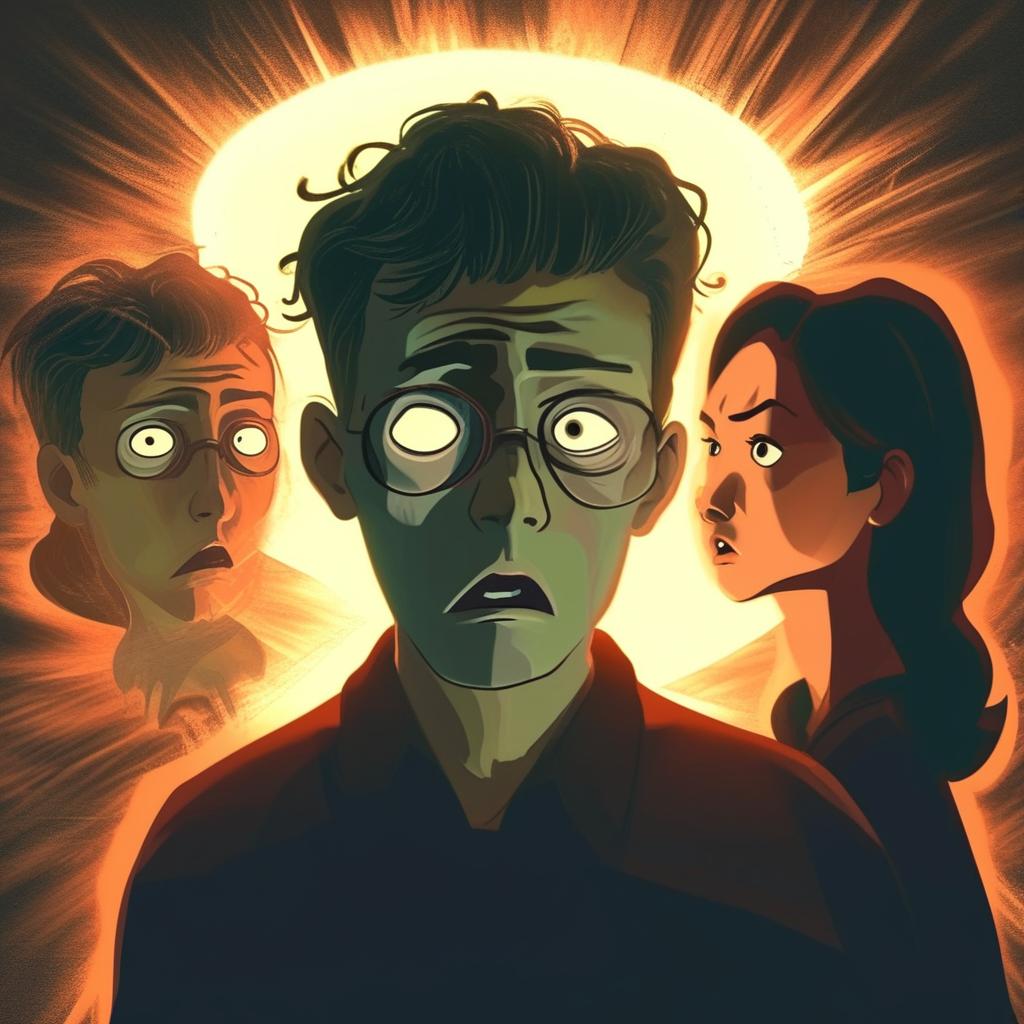
In the presence of the Unusual, I am rather prone to smile weakly and allow my eyes to protrude. Perhaps, I lack Pluck and Presence. Thus, it proves to be an ordeal which knocks all the stuffing out of me right from the start. I look at the young ladies and find each one staring at me with an unwavering gaze. I blink, then begin picking feebly at my coat sleeve.
Most lectures I get invited to follow a similar blueprint. Somebody gets up and introduces the chairperson and the speaker of the evening. Both amble up the stage. The chairperson on this occasion was built along the lines of Mother Abbess of The Sound of Music fame. She does not croon an invigorating melody like Climb every mountain. Instead, she mumbles a few words designed to cheer up the speaker, to allay his anxiety as to whether the audience is carrying any supplies of rotten eggs, potatoes, and tomatoes which may come in handy in case they do not receive his words of wisdom in the right spirit.
She concludes by making a few sympathetic observations about the subject at hand. Later, while the talk is being delivered, she can be seen making brief notes on a scrap of paper in a studious manner. Later, she uses these to wrap up the proceedings as quickly as the norms of society, the dictates of behavioural sciences and the standards of politeness would allow.
As a distinguished speaker of the evening, I am invariably dressed in an impeccable corporate style. This is merely to mask the inner shivering I happen to be experiencing at the prospect of facing a firing squad comprising close to seventy-odd students. Externally, I exude confidence. Internally, I am all of a twitter. I regret not having been prescient enough to help myself to generous helpings of a strong tissue restorative prior to arriving at the venue to deliver a speech.
True to form, once the introductions are made, an uproarious bout of clapping comes about, and an air of expectancy falls upon the hall. I gulp, mop my brow, and take a tentative sip from the glass of water in front of me. Then, after having fortified myself with a deep breath, I totter forward.
“Well, you know——” I said.
Then it strikes me that this opening lacks the proper formal dignity.
“Ladies——”
A silvery peal of laughter from the front row stops me again.
I then summon all the courage at my command, take another deep breath, and go on to describe at great length what I think of the scandalous way the tyranny of the classroom gets unleashed upon unsuspecting students. I highlight to them the benefits of taking their studies seriously, to be better prepared to face the harsh slings and arrows of life. I even go on to exhort them to get rid of their addiction to smartphones.
While I try my best to convey a few messages of the serious kind, I also attempt to induct some humour into the otherwise drab, listless, and sombre proceedings. This helps me to sugarcoat the otherwise dull and boring content of my talk.
The audience upon which my verbosity is getting unleashed listens in a state of polite resignation, often suppressing a yawn or two. With an eye on the wristwatch and a nose trying to detect the faint aroma of snacks and coffee being served outside the lecture hall, it is not difficult to discern that they are merely biding their time, hoping for the ordeal to end soon.
Then comes the time to face the firing squad, so to say. A few in the audience take turns to rise and ask carefully phrased questions which are perhaps meant less to gain a better understanding of the subject but more to impress the faculty members present. When a question gets asked in the pure spirit of proving to the assembled group that the questioner is smarter than the questioned, I decide to assert myself by saying haughtily that I can find her arguments but cannot find her brains.
Occasionally, I need to do a mental foxtrot, sidestep a question of an obnoxious kind, and instead narrate a joke, thereby leaving the audience in a confused yet pleasant frame of mind. I find that it is always a good trick to occasionally lace one’s answers with high-sounding words and complex ideas. One of the golden rules to be followed is that an audience that is bewildered and clueless about what is being said would be less prone to raising penetrating queries.
I consider myself lucky that the meeting has not turned boisterous; had that happened, the audience would surely have had more fun, but yours truly a good deal less.
As the discussion teeters on the edge of chaos, the chairperson swiftly steps in, perhaps noticing that I am just moments away from starting to twiddle my thumbs. She rushes in to conclude the affair, thereby bringing joy and relief all around. As a speaker, I am delighted that I was rescued just in time. I look upon the chair much like a typhoon survivor would look upon the US Marines when they arrive to rescue him from a disastrous situation.
Someone from the institute’s side quickly offers a vote of thanks to all and sundry, lest I might change my mind and go on to depress the audience any further. Mother Abbess hands over a ghastly-looking trophy by way of a token of appreciation and gratitude, duly accompanied by a round of applause from the audience, who are obviously delighted that their trauma is finally over. They rush out to grab the vitamins laid outside the hall, not only to keep their body and souls together but also to overcome the state of depression induced by my talk.
The organisers breathe easy, having saved their reputation as well as the furniture and other items from any damage.
The pleasant surprise is that while gobbling up the refreshments served, some of the eager beavers surround me and question me on several topics of contemporary interest. I confess this works like a soothing balm to an otherwise bruised soul. A gentle glow of inner satisfaction, howsoever transient in nature, suffuses the mortal frame. However, this is not to say that one looks forward to repeating a public speaking appearance in the future.
Anyhow, it can be safely stated that a smoothly conducted lecture meeting is one of our civilisation’s most delightful indoor games. The speaker gets to build on his brand equity and indirectly promote the inane stuff he keeps dishing out. His ego gets a boost. Surrounded by youthful energy and waves of curiosity, he ends up expanding his canvas of knowledge. If it is instead a congregation of business magnates, his circle of influence gets enlarged. The possibility of landing a consultancy assignment improves.
What is the moral of the story, you might well ask.
Well, accept any such invitation to deliver a lecture at a public forum only at your own risk and peril. Do a cost-benefit analysis before accepting the invitation. Have pluck. Have the capacity to handle the Unusual Situation. Be cautious that such an experience could end up smothering your ego. The poor thing could not be blamed for feeling as if it were getting pummelled with size twelve hobnailed army boots. If the audience comprises young students who might have perfected the art of unnerving speakers by alternately staring and giggling, develop nerves of chilled steel before heading to the venue.
Non-statutory warning: This post is not about mountaineering. Nor is it about either global warming or the pollution of the Himalayas. It is about different shades of narcissism.
A vast majority of those I come across happen to have an ‘I-am-OK-but-you-are-not-OK’ disposition towards their fellow beings. Like Thomas ‘Thos’ Gregson, the fiend in human shape, they cast supercilious glances at others, often treating them like the dust beneath their chariot wheels. Talk to them on any subject, and they puff up their chests and play a game of one-upmanship, trying to prove their superior knowledge on the subject at hand. They come in many forms, sizes, and shapes. They pop up as relatives, friends, acquaintances, superiors, colleagues, or even subordinates.
Some of them have perfected the art of first gaining your attention and then peeping deep into your lives, asking all kinds of inane questions, much like Aunt Agatha. Often, they leave you convinced that you are an utterly-butterly useless person, a mere parasite eking out an existence while cornering some valuable resources of the planet. Ferreting out some unknown part/incident of your life and then subsequently using it to ridicule you is the work of a moment for them. When it comes to the fine art of seeking details about your finances, sleuths from the Income Tax department could learn a lot from them.
At social gatherings, they monopolise the conversation. They simply love hearing their own voice. When they narrate a joke, they expect all others to guffaw, that too in an appreciative manner. If they get requested to belt out a song like Sonny Boy, they, believing that their skill level at singing is superior to that of Cora Bellinger of The Song of Songs fame, consent to do so only after throwing some tantrums. At the end of the performance, they expect to be lustily applauded.
A few others excel at gaslighting, raising queries that leave you shaken from the base of your feet to the top of your head. Remember Dame Daphne Winkworth of The Mating Season fame? In the company of such people, you can be forgiven for feeling baffled, befuddled, bewildered, confounded, confused, fazed, flummoxed, mystified, perplexed, puzzled, and stumped, all at the same time. You are left twiddling your thumbs trying to figure out if your life is going in the right direction.
Such people believe that they happen to be perched atop the Mount Everest. Whichever way they look, they only find other mountains that are not as high as they happen to be stationed on. They suffer from what yours truly would allude to as The Everest Syndrome. Let me hasten to add that I do not refer here to the genial souls who offer constructive criticism and help me to improve myself.
Do you have a career issue? They will tell you how they would manage the same better. A health challenge? They would pounce upon you with an exotic treatment that has already given them superior results. A diet plan? They would invariably have a better one up their sleeves. Putting a morsel of food down the hatch in their presence? Be prepared for it to turn into ashes in your mouth when told of the innumerable unhealthy constituents it may hold. It is another matter that when the evening dawns, they could be found chomping on a samosa or some other deep-fried stuff with much glee.
A moody and obdurate teenager at home? They would make it a point to counsel you and point out where you are at fault. An elaborate lecture on kid management will soon follow. A prompt comparison will be made between you and another family member, proving you are deficient in your teen management skills. Their own family members could not be smarter and more successful. Their affairs are always in perfect order. They themselves could do nothing wrong.
Oh, you just got back from a trip to Norway? Great. But you missed seeing the Northern Lights? What a pity! Could you at least visit the spiral tunnel in Drammen? Oh, you missed that, too? A wasted trip! A comment of this kind, accompanied by a condescending glance, makes them sound like Doctor E. Jimpson Murgatroyd. You may recall that he has sad, brooding eyes and long whiskers, and his resemblance to a frog which has been looking on the dark side since it was a slip of a tadpole is apt to send your spirits right down into the basement.
Simply put, they happen to be omniscient, having expertise in all knowledge domains, be it astrology, astronomy, gastronomy, medicine and its myriad branches, meditation, nature cure, reiki, regression therapy, spirituality, and yoga. They are the lord and master of all that they survey. Wherever they go, they need to have the last word. They believe themselves to be God’s gift to humanity. Judging others is what they do with great enthusiasm and aplomb.
Unlike Sir P. G. Wodehouse, whose works spread light, joy, and sweetness, any interaction with these descendants of Sir Edmund Hillary leaves you a wee bit depressed and glum, diluting your self-confidence and making you wonder why you are not as smart as they pose themselves to be. Contrary to being ‘sources’ of wisdom, joy, and comfort, they tend to be ‘sinks.’ If you happen to be one of those over-sensitive types, you will need to develop nerves of chilled steel, so they do not end up sapping your energy.
On the mere mention of such people, you could be excused for giving in to trembling your knees a trifle. The thought of being confronted with such a solid bunch of detractors who otherwise wear the masks of a well-wisher is unnerving.
If Jeeves were to be consulted on the matter, he would surely provide a few insights on the psychology of such persons.
One, they could be inwardly jealous of your multi-faceted achievements. They could thus be behaving like Aunt Agatha, trying to hide their own embarrassment at having temporarily lost a pearl necklace, thereby trying to overcome their own inferiority complex while in your company.
Two, they might be living in a bubble of superciliousness and simply enjoying the game of psychologically putting down all those whom they meet. In other words, it is a personality trait which is deeply ingrained in them. Thus, they might deserve more to be pitied than censured.
Three, they happen to be deficient in such behavioural traits as empathy, generosity, humility, and sincerity. Expressing gratitude and acknowledging the value others bring to their lives does not occur to them. Honest communication is not their forte. As a result, they often lack adaptability and fail to grow themselves, blissfully unaware of what they are missing in life.
Without a doubt, they have shades of what could be alluded to as a narcissistic personality. They exaggerate their achievements and talents and disregard others’ feelings. They have perfected the art of blaming others for all their problems, and unabashedly play the victim card.
How does one handle such people? Consider the following.
Reminding ourselves that in this life it is not such people that matter but the courage with which one maintains a sang froid in their company. Our lives are our own responsibility. We cannot live as per the opinion of others about us. Often, we waste much time in our lives worrying about what others would say about our decisions and actions. But if we act as per our conscience and if our moral/value compass is functional, the only thing we need to watch out for are the karmic consequences of our actions. This, in turn, needs deep reservoirs of resilience, a stiff-upper-lip attitude in general, and a higher level of self-confidence.
Let us cut through the mists of our own prejudices and try and sift the grain and the chaff. There could indeed be some merit in what such persons say. It can help if we were to first judge if such people happen to be genuine well-wishers; and if they are sincere. If so, their feedback could be given some weightage, paving the way for us to improve our lives.
We can of course decide to go on the offensive. Lives are seldom perfect. Pointing out a few flaws in their own scheme of things could be tried, though subject to the boundaries prescribed by the norms of civilised society, the dictates of behavioural sciences, and the standards of politeness. Occasionally, a back-handed compliment could stop them in their tracks, not unlike Roderick Spode when the word Eulalie is mentioned to him. A joke can lead to a light-hearted banter, designed to make them sit up and take notice. In any case, arguing with them on some point or the other might as well turn out to be an exercise in futility.
We also have the option to laugh it off and not take such people seriously. Any feedback from them could be brushed off nonchalantly, much like Bertie Wooster would tick off a dust particle from his coat sleeves. In other words, try and develop a Teflon-coated skin which repels any water that may happen to fall on it.
All of us have distinctive personalities. All of us have a set of unique circumstances under which we operate. Our responses to similar situations are as varied as the colours of a rainbow. The universe created us to enjoy our lives and strive towards achieving a state of bliss, harmony, and perfection. Those of us who happen to be steeped in consciousness seek purity and unity of thought, words, and deeds. Do we have a right to judge others? Do others have a right to judge us? I doubt.
However, as long as we are in the company of those who suffer from The Everest Syndrome, we are apt to find that the air is congested with V-shaped depressions. Consequently, while standing atop the K-2 that we infest, we look north, south, east, and west and discover quite a few clouds on the horizon.
But Bertie Wooster would tell us never to repine, never to despair, never to allow the upper lip to unstiffen, but always to remember that, no matter how dark the skies may be, the sun is shining somewhere and will eventually come smiling through.
In general, we would do well to pull ourselves together, have a chin-up attitude, and march on with our lives. If we were to gear ourselves up to scale the world’s tallest mountain, let the mountain be defined as that of our aspirations in life, whether material or spiritual. We can care better for our fellow beings and our environment. We can focus on reining in our ego, desires, anger, jealousy, avarice, and greed. We can be grateful for what we have. We need not allow others to treat us as a doormat. We can elevate our level of consciousness.
Notes:
Illustrations courtesy www.
Inputs from Suryamouli Datta and Rajeev Verma are gratefully acknowledged.
Allow me to share with you how his creative genius has exercised his soft power on a lesser mortal like me.
My earliest interactions with the master of Indian Cinema
I shall not delve into an analysis of his writing or filmmaking style here. Instead, allow me to recount my enduring fascination with this individual, a fascination that has only grown over the years despite conceding to certain critics who possess a profound understanding of the art of cinema and literature. My initial encounter with this luminary was through his debut film, ‘Panther Panchali (Verses of the Road).’
Back then, in the third grade, I was enthralled by action-packed movies and witty dialogues, the kind that resonated with my young mind. To me, Spiderman, Superman, and He-Man held more allure than any film of that era. I would eagerly watch the screen, whether on television or at the cinema, during fight scenes, shootouts, or comedic moments. It was during this time that I first encountered ‘Verses of the Road.’ Watching it alongside my younger cousin, who was two years my junior, I experienced a newfound appreciation for storytelling. Unlike the captivating action sequences, my interest in this film stemmed not from its technical aspects, which was perhaps too much to expect from me at that time, but rather from its narrative, which evoked the storytelling style of my elders.
Then, a film called ‘Shakha Proshakha’ (‘The Branches of a Tree’) was aired on television. Despite being by the same director, it failed to captivate me, save for a few clever lines delivered by a young child actor who amusingly mimicked phrases like ‘Batman’ and ‘Superman’. His familiar gestures, like darting into a thicket with a toy gun, alone resonated with me deeply.
As I followed his journey, other films like ‘Apur Sansar’ (The World of Apu) and ‘Mohapurush’ (The God Man) caught my attention, yet failed to resonate, perhaps because I was too young to grasp their significance back then.
Back in my fifth-grade days, I harboured a fervent desire to emulate him – a film director, you see. It stemmed from my own struggles with academic achievements of any kind, a trait that he shares with me. I recall stumbling upon his stories in books or magazines and catching a glimpse of him on TV. Looking back, I cannot help but chuckle at my youthful naivety. As I’ve matured, both physically and mentally, I’ve come to understand that he occupies a pedestal beyond my reach. Critics may nitpick, and there may have been filmmakers of greater acclaim before and after him, but none hold a candle to the place he holds in my heart. He serves as a guiding light, steering me towards a deep appreciation for the world of film and literature.
Immersed in the legend’s Literary Palette: An Anthology of Wonder
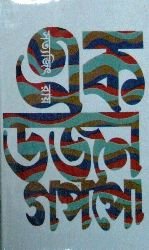
In the 5th grade, amidst one of my summer breaks, I stumbled upon a book from my mother’s collection titled ‘Ek Dojon Goppo’ (‘An Anthology of a Dozen Stories’). The initial tale, ‘Septopus-er Khide’ (‘The Hungry Septopus’), depicted a carnivorous plant resembling an octopus, bringing peril to its owner. At the time, while I found some scenes thrilling, overall, the story failed to captivate me.
Following this was ‘Bankubabu-r Bandhu’ (‘Banku’s Friend’), narrating the story of an innocent village schoolmaster teased by peers and students until encountering an alien named ‘Ang,’ subsequently altering his life. Interestingly, I had already watched a televised adaptation of this story, featuring Sadhu Meher as Banku. Having also seen ‘E.T.’ by then, the narrative felt somewhat familiar. Controversy arose when the author, also a filmmaker, envisioned earlier adapting the tale into a Hollywood collaboration film named ‘Alien,’ encountering similarities with ‘E.T.’ Yet, irrespective of the debate, the story failed to resonate with me at the time, likely due to my prior exposure to its audio-visual renditions.
First Realization: Indigo Terror
As I delved into the pages of the book ‘Ek Dojon Goppo,’ initially sceptical of its worth, one particular short story, ‘Neel Atanka’ (The Indigo Terror), captured my attention entirely. Aniruddha Bose, a 29-year-old employee of a prestigious multinational corporation, embarks on a journey to Dumka, near Bolpur, Shantiniketan, in his own car. Along the way, he encounters a series of mishaps—his car’s tires bursting at regular intervals, forcing him to rely on only one replacement. With no other recourse, he seeks refuge in a nearby house overseen by a caretaker, a narrative device that may have subsequently inspired the Ramsay Brothers, albeit uncredited (wink!). Exhausted, Aniruddha resigns himself to rest for the night. However, in the dead of night, he awakens to find himself transformed into the former owner of the house, a European indigo planter from long ago. The story unfolds with Aniruddha grappling with his new identity and the events that follow.
Long before the film ‘Bhool Bhulaiyaa,’ this narrative evoked the eerie atmosphere of a psychological horror tale. Moreover, being a short story, it left unresolved whether Aniruddha was possessed or was merely grappling with a psychological affliction that fateful night. Much like Tagore’s ‘The Hungry Stones,’ this tale masterfully navigated a complex plot with deceptive simplicity.
How The Indigo Terror Brought Out The Creator In Me
Let me share more reflections on this story, particularly the profound impact it had on me. Aniruddha, in my perception, embodied the essence of a western cowboy, albeit without the guns and horses. He exuded a down-to-earth demeanour, living life on his own terms. Even when faced with the peculiar experience in the former European indigo planter’s house, he approached it with remarkable nonchalance, almost as if it were just another day. This aspect deeply resonated with me. By no stretch of imagination can I be held to be an expert in the craft of dishing out screenplays. However, such was the grip of the narrative that I found myself compelled to draft my own screenplay. Let me recount a few memorable elements from my envisioned screenplay:
FADE IN:
EXT. HIGHWAY – DAY
Aniruddha drives his Ambassador car at full speed on a highway, flanked by trucks and lorries. Tense and escalating background music sets the mood.
CUT TO:
INT. AMBASSADOR CAR – DAY
Close up on Aniruddha, his face filled with determination as he drives with full concentration. The camera shifts focus to three tyres – one on the driver’s side and two at the back.
CUT TO:
EXT. HIGHWAY – DAY
The right tyre at the back bursts suddenly, startling Aniruddha. He grips the steering wheel tightly, his irritation evident. The camera quickly moves outside to show the car stopped in a peculiar position on the side of the road.
CUT TO:
EXT. HIGHWAY – DAY
Aniruddha steps out of the car, frustration evident in his movements. He begins working on replacing the burst tyre, his hands moving swiftly. The camera blacks out from a top view, only the sharp sound of metal is heard.
CUT TO:
EXT. HIGHWAY – DAY
The camera lights up, revealing Aniruddha having completed his mission. His shirt clings to his body due to sweat, but his expression is one of determination and accomplishment.
—
End of Scene.
In the narrative, I recollect the scene vividly, perhaps the most haunting sequence I experienced at that time. Aniruddha gradually comes to the realization that he has transformed into someone else. His slumber is abruptly interrupted by the howling of a hound. Aniruddha casually attempts to check his watch, an automatic timepiece that was quite in vogue when the tale was penned, only to discover it missing. With a sense of dread creeping over him, he turns around to reach for his torch, only to find it absent as well! Gripped by fear, he wonders if he has been pilfered during the night in this unfamiliar locale. Springing out of bed, he rushes to inspect his luggage, only to find it gone too!
I recall envisioning myself directing this scene with a not-so-well-defined screenplay in my mind.
**FADE OUT.**
**INT. ANIRUDDHA’S BEDROOM – NIGHT**
Aniruddha’s POV: Darkness envelops the room. Moonlight spills in through the window, casting eerie shadows.
SOUND: Howling of the hound continues, distant yet haunting.
Camera captures Aniruddha’s left hand, indicating he was trying to look at his watch, finding it bare. Panic flickers in the darkness.
SOUND: A muffled gasp, barely audible.
Camera captures Aniruddha’s other hand that darts to the other side of the bed, finding emptiness where the torch should be.
SOUND: Howling of the hound intensifies, heightening the tension.
Aniruddha’s body lurches forward, the camera capturing the movement as he dives under the bed.
SOUND: Silence, broken only by the faint howling of the hound.
The camera captures the floor under the bed which looks clean and empty.
SOUND: The rustle of fabric, as Aniruddha’s hand brushes against the floor.
**FADE OUT.**
**THE END.**
DiscoveringMore of his Literature
The narrative left such an indelible mark upon me that I eagerly delved into the next tale, ‘Anathbabur Bhoy’ (The Fear of Anathbabu), with heightened anticipation. Even on a sweltering, sun-drenched afternoon, I recall vividly the lingering sense of unease that enveloped me after reading it. The enchantment, it seems, lies in the seamless integration of the supernatural, depicted with such casual and natural flair that its presence lingers long after the story concludes.
The next story I delved into was ‘Badur Bibhishika’ (The Terror of the Bat) – a tale infused with a werewolf or vampire undertone. The protagonist, also serving as the narrator, harbours a degree of chiroptophobia. Encountering a stranger named Jagdish Parcival Mukherjee in a local graveyard in Siuri, the situation takes a peculiar turn for the protagonist. He begins to suspect that Jagdish possesses the ability to transform into a bat! Undoubtedly, I found the story intriguing and maintained my curiosity into the following one – ‘Bipin Choudhury-r Smritibhram’ (Bipin Choudhury’s Amnesia). Here, Bipin Choudhury, the central character, encounters a stranger named Parimal Ghosh in a bookstore, who asserts a past connection with Bipin in Ranchi. Bipin is taken aback as he has never set foot in Ranchi before. As the narrative unfolds, Bipin confides in his close friends and realizes that indeed he visited Ranchi, yet cannot recollect the memories. The climax of the story hinges on what transpires with him. While this story adopts a thriller format, it inherently delves into the matter of values. It offers a unique fusion of values with the thriller genre. However, I must note that this narrative was adapted into a Netflix web series titled ‘Forget Me Not,’ which failed to captivate me. After revisiting ‘Bipin Choudhury-r Smritibhram,’ I revisited the stories that initially left me unimpressed, only to now find them intriguing. Thus, I found myself developing what one might dub ‘an acquired taste’ for the author’s oeuvre.
Exploring the World of a Master Storyteller: A Journey of Passion and Persistence
Following a series of articles in various newspapers and magazines, I found myself gradually developing a profound interest in the author behind these captivating stories. With each piece I read, my curiosity deepened. I started grasping the remarkable genius underlying his diverse range of writings, films, and unique filmmaking approach, including his interactions with actors. Intrigued by his distinctive style, I embarked on a quest for more knowledge.
In those days, devoid of internet access, my pursuit led me to rely solely on the insights garnered from magazines and newspapers to uncover the next book to delve into. I vividly recall spending countless hours in local bookshops, yearning to simply touch and feel the pages of his works, knowing my limited financial resources barred me from purchasing them outright. Determined to acquire his books, I meticulously saved every penny, whether gifted to me on birthdays or in recognition of other achievements. My maternal aunt played a pivotal role in assisting me in obtaining these literary treasures.
Titles like ‘Aro Ek Dojon’ (One More Dozen), ‘Aro Baro’(Twelve More), ‘Ebaro Baro’ (Twelve Again This Time), and ‘Eker pithe dui’ (One Tenths and Two) proudly adorned my book rack, marking the beginning of a cherished collection. Moreover, delving into crime thrillers penned by this author became a thrilling adventure that I eagerly looked forward to with a keen sense of anticipation.
Simultaneously, my cinematic journey continued as I immersed myself in his films, gradually developing an acquired taste for his distinct storytelling prowess.
Tales of Crime and Detection
In the same book, ‘Ek Dojon Goppo,’ nestled at its conclusion were a couple of short stories: ‘Feludar Goendagiri’ (The Investigation by My Elder Brother Felu) and ‘Kailash Chowdhurir Pathor’ (The Gems of Kailash Choudhury), which whisked me away into a captivating universe of detective tales.
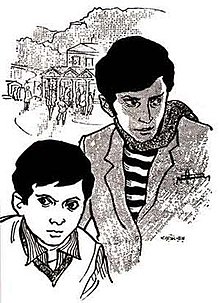
Enter ‘Felu,’ a detective extraordinaire, accompanied by his trusty cousin and sidekick, delving into a myriad of mysteries, each more intriguing than the last. These tales, so uniquely crafted, were bound to astonish any reader of my tender age. Thus began my enchantment with this universe, fuelling a relentless quest for Feluda books across bookshops, libraries, and even within the confines of relatives’ homes. And never once was I left disappointed, for ‘Feluda’ was a name omnipresent on the Bengali bookshelves, an iconic figure etched into the collective consciousness of every Bengali. Fortunately, a school friend, already steeped in the delights of this literature, graciously aided me in my quest, generously sharing volumes penned by this esteemed author. It’s worth noting that this friend of mine possessed a remarkable talent for storytelling, effortlessly weaving narratives that held us spellbound during our free periods. As the monitor of our class, I now realize, it served him twofold – honing his storytelling prowess while simultaneously diverting attention away from classroom duties. Soon, our circle of friends caught the fever, engaging in book swaps and animated discussions fuelled by the gripping adventures of Feluda.
Continuing with the same method outlined in the previous section, I embarked on my quest for the treasures of Feluda, the iconic fictional detective. Pouring over magazines and newspapers, I eagerly purchased and devoured books dedicated to him in rapid succession. Titles like ‘Feluda one, Feluda two’, ‘Feluda and Co.’, ‘Badshahi Angti’ (The Ring of the Emperor), ‘Baksho Rohossyo’ (The Mystery of the Suitcase), and many more swiftly found their place on my bookshelf, filling it with an ever-growing collection.
The dynamic chemistry between the trio who belong to different age groups – Feluda, his cousin Topse, and his humorous friend Lalmohanbabu – proved to be exceptional. It is this chemistry that makes revisiting these books a delight. Sometimes, I daresay, the camaraderie between them surpasses even that of Sherlock Holmes and Watson.
Much like the majority of the author’s other tales, Feluda narratives, frequently lacking in female presence, deftly entwine moral themes amidst their exhilarating plots. Isn’t it rather curious? The absence of women in Feluda tales – is simplicity the key to less complication? Though one might raise an eyebrow at the notion of a crime thriller sans complexity, I dare say this author was a virtuoso in such matters! His narratives, akin to a well-orchestrated symphony, subtly unveil moral motifs amidst the pulse-pounding intrigue. However, though told simply, some stories feature female characters and are given a noirish treatment, such as ‘Chinnamastar Abhishap’ (The Curse of Goddess Chinnamasta) and ‘Doctor Munshi-r Diary’ (The Diary of Doctor Munshi), reminiscent of Raymond Chandler, showcasing moral dilemmas and values subtly. In ‘Baksho Rahassya’ (The Mystery of the Suitcase), Feluda opts to let the antagonist go due to a lack of evidence for a courtroom conviction. However, when the same story is adapted into a screenplay by the author, Feluda harshly punishes the antagonist, labelling him a ‘thief’ in front of others. Perhaps the author aimed to underscore the importance of ‘values’ when presenting the story in a visual format.
One of my favourite Feluda tales, ‘Joto Kando Kathmandu Te’, was later remade as ‘Kissa Kathmandu Mein’ (The Trouble at Kathmandu) for television, targeting a national audience. Though I’m uncertain if any version of it exists online today, the adaptation featured Shashi Kapoor as Feluda, Alankar as Topshe, and Mohan Agashe as Lalmohan Babu.
Cinematic Revival: Rediscovering Masterpieces
A few days after enchanting me with his literary prowess, the author was bestowed with Oscars for his monumental contributions to world cinema before departing for his heavenly abode.
During that period, ‘Doordarshan’, the Indian Television Network, aired movies directed by him. I revisited ‘Panther Panchali’ with renewed reverence for the director, followed by the delightful ‘Goopy Gayen Bagha Bayen’ (Adventures of Goopy and Bagha), which I savoured thoroughly. Finally, a Feluda tale, ‘Sonar Kella’ (The Golden Fortress), captured my attention. I recall the television host summarizing the story before its airing, describing it as the tale of Mukul, who could recall his past life and claimed to have resided in a fort in Rajasthan. Pressured by the revelation of valuable stones in his past home, Mukul becomes the target of nefarious individuals. His father seeks the aid of a private investigator. As a kid, I distinctly recall a twinge of disappointment towards the television host as she casually mentioned Feluda (who, in my eyes as well as those of many Bengalis, had already attained an iconic status) as a ‘private detective.’
Deep Focus on the author as a filmmaker
After his Oscar-winning triumph and subsequent passing away, the media was flooded with articles delving into his life and work. Immersed in these pieces, I uncovered a deeper understanding of the man and his keen eye for detail, his cinematic philosophy, and his fusion of art and science. Concurrently, I delved into his literary repertoire. His eclectic interests permeated his writings, from the adventures of detective Feluda to his captivating science fantasy tales. Yes, I purposefully employ the term ‘fantasy’ because these narratives transcend the bounds of scientific certainty, inviting readers to imagine what science might one day substantiate.
The Professor Shonku stories, in particular, transported me to a realm where viruses inhabit spherical worlds, trees thrive on human cognition, and an enigmatic pistol has the power to make beings and objects vanish from existence. In the past, depictions of robots, that are mentioned in such stories, mimicking human behaviour, seemed utterly fantastical. These days, with the rise of artificial intelligence, one is left in awe of the prescient nature of the author’s works and wonders if such portrayals may eventually blur the lines of reality.
I embarked on my journey of maturation alongside this multi-talented artist, who excelled as a director, author, and illustrator, revelling in his imaginative works. Subsequently, post-college, I had the opportunity to revisit some of his cinematic masterpieces when they were reissued in theatres. Films like ‘Arannyer Din Ratri’ (Days and Nights of the Forest) and ‘Pratidwandi’ (The Adversary) captivated me anew, allowing me to rekindle my admiration for his boundless creativity.
The Author and Wodehouse: A Meeting of Literary Minds
My fascination with P.G. Wodehouse was initially nurtured within my family circle, but his novels and stories significantly bolstered my admiration for the beloved author. I stumbled upon an article mentioning his affinity for Wodehouse, and as I matured, I discerned a striking resemblance between his works and those of the maestro himself. Whether through the sharp repartee in his films or the witty banter within his stories, his writing exudes a similar charm. Just as Feluda and Shonku have their own series, he crafted a distinct collection centered around ‘Tarini Khuro’ (Uncle Tarini), reminiscent of Wodehouse’s ‘Mulliner’ tales. While Tarini’s narratives occasionally veer into the supernatural or delve into emotional depths, the essence remains consistent. Moreover, the ‘Tarini Khuro’ stories serve as a masterclass in the art of storytelling, showcasing the creator’s versatility and prowess. One can truly grasp the breadth of his talent by delving into his literary oeuvre alone.
Feluda, the ingenious detective crafted by the author, to me, bears a striking resemblance to Psmith in his poised demeanour amid crises. Much like Feluda, who confronts his nemesis Maganlal Meghraj with remarkable calmness, Psmith maintains his cool in challenging circumstances. In ‘Joy Baba Felunath’ (The Elephant God), Feluda faces off against the formidable Maganlal Meghraj, yet his serene and collected demeanour never falters. Similarly, in P.G. Wodehouse’s tales, Psmith confronts adversaries with a suave approach and an unflappable attitude.
In the story ‘Bombaiyer Bombete’ (The Bandits of Mumbai), the author weaves a narrative where the Bengali iconic sleuth Feluda steps forward to assist his friend and companion, Lalmohanbabu. This action surely evokes memories of Wodehouse’s character Bertie Wooster, who, to aid his friends, frequently finds himself in perilous situations. The only divergence here is that Feluda must don both the Berite and Jeeves hats simultaneously to unravel the mystery.
Another story that I can remember at the moment is ‘Ghurghutiar Ghotona’ (The Trouble at Ghurghutiya) wherein, like Wodehouse’s stories, problem-solving involved misunderstandings and witty dialogues.
In ‘Shonku-r Shonir Dosha’ (Prof. Shonku in Dread Problem) we find, much like Wodehouse, characters resorting to mistaken identities and getting entangled in difficult situations.
P. G. Wodehouse is best known as a humourist. However, he had also dabbled in crime fiction, perhaps a rub-off of his having been an admirer of Sir Arthur Conan Doyle and Agatha Christie. Crime had found its way into some of his own writing, including into some of his Jeeves and Wooster and Blandings Castle stories. The range of misdemeanours depicted therein comprises thefts, bank heists, and airgun shootings, and even blackmail. In Wodehouse’s venture, ‘Death at the Excelsior’, he endeavours to concoct a crime thriller with a meticulously arranged sequence of events. Yet, at the close of the day, it leaves one with the impression of a light-hearted tale, with ‘murder’ serving as the solitary sombre element, a departure from his usual literary escapades.
While I’m fully aware that my stance might provoke the ire of passionate readers and discerning critics, let’s just say the comparison here is akin to trying to fit a square peg into a round hole. Allow me to elaborate. In the whimsical world of Wodehouse, these predicaments are served up with a generous dollop of humour and charm, akin to a delightful soufflé rising in the oven. On the other hand, our novel protagonists find themselves grappling with these challenges in the midst of murky criminal investigations, where the stakes are higher than a giraffe’s necktie. So, you see, it’s a bit like comparing apples to oranges – both fruit, but with vastly different flavours and textures!
Unveiling Wisdom: Exploring the Depths of Knowledge Through Timeless Tales
These stories are not only exciting and mysterious but also teach us new things. For example, I learned what galoshes are from reading the story ‘Neel Atanka’, even though the internet didn’t exist then! The description was so clear and vivid that I could picture them in my mind, even though I had never seen them before.
Since many of the stories about Feluda, Shonku, and Tarini Khuro are also about travel, they not only make us want to visit new placesbut also to learn more about them.
Also, I learned the meaning of the word incredible in a really easy way from the story ‘Feludar Goendagiri.’ In the story, Topse, Feluda’s cousin, helper narrator of the story, is sitting in a Darjeeling mall and overhears two old people talking about something, and the word incredible comes up. Topse knew the meaning of the word and since he’s telling the story, he explains it to the readers. Later, Feluda uses his amazing skills like Sherlock Holmes to figure out which side of the mall Topse was sitting on just by looking at his face! Topse is surprised and thinks of the word incredible in his mind. This is the easiest way to learn new words in school: first know the word, then know the meaning, and finally use it. But this story teaches us the same thing without making it feel like we’re being taught something!
From ‘Bankubabur Bondhu,’ I got a glimpse into the fascinating world of piranhas, those creatures of the depths with their sharp teeth. I also learned about the curious penguins that live in faraway lands.
There are many other such tales that I could share, but I do not wish to overwhelm you with my discoveries. Instead, I encourage you to read these wonderful writings for yourselves and embark on your own journey of knowledge.
Although the author is renowned as a director, his writings first stirred my soul. This inspired me to seek out his films, which I found equally endearing.
I may not have delved deeply into his cinematic endeavours here, for I believe the same have already been meticulously analysed by countless critics with a keen understanding of the art far surpassing my own.
Homage to the Maestro: Celebrating the Legacy of Satyajit Ray
On the auspicious occasion of his 103rd birth anniversary, I humbly acknowledge his creative genius. I offer my reverence to the individual who, alongside my parents, has steered me on my path of this lifetime, and undoubtedly will continue to do so in the days ahead.
Incidentally, throughout the entire article, I realize that I have not once mentioned his name. Yet, for the sake of thoroughness, it’s worth noting – his name, in case you are still twiddling your thumbs, is Satyajit Ray.
The teachings of Swami Vivekananda are highly motivational and convey some deep truths of life in a spiritual manner. Plum, as we know, also has an undercurrent of spiritual messages in his stories and books. Superficially speaking, both may sound as different as chalk and cheese. One, an expert in spirituality. Another, an expert in humour.
However, scratch below the surface and one is apt to find that there is much similarity in what Swami Vivekananda preaches and what quite a few of Plum’s characters practice. If Vivekananda’s words awaken us spiritually, Plum’s works, though insanely humorous on the surface, keep soothing our souls in many ways. Let us see if these two thought streams have a resonance that we might be blissfully unaware of.
Take the case of Lord Emsworth who discovers that Gladys has not had any nourishment on the day of the Parva School Treat. He sees to it that Beach feeds her well. Moreover, even a basket of goodies gets handed over for her brother Ern. And when she wants to have some ‘flarze’ from the garden and McAllister comes running at a speed of forty-five miles per hour or so, what does Lord Emsworth do? Well, he is firm in protecting his girlfriend. He stands up to him, living up to the lofty standards set up by his ancestors. His basic desire is to help someone who is good and is in distress. (Lord Emsworth and the Girl Friend)
Likewise, some of us may consider Bertie Wooster as being mentally negligible, but there is no denying that he has a heart of gold. To help a pal, he often goes to ridiculous lengths. He even takes a rap for something he has never been involved in anyway. When Stiffy holds him to be superior to Sidney Carton, she is not much off the mark. (The Code of the Woosters)
Also consider the case of Psmith, to whom ends are more important than the means. When Eve is in distress across the road, he merely pinches an umbrella from the cloak room of The Senior Conservative Club and offers it to her with a smooth dignity. (Leave it to Psmith)
All of them go out of their way to help a fellow being who faces a challenge of some kind. Now, this is a sentiment that Vivekananda would heartily approve of.
A Primer on Swami Vivekananda
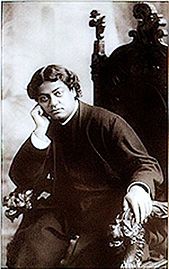
For the uninitiated amongst us, Swami Vivekananda (1863 – 1902), was an Indian monk, philosopher, author, and religious teacher. He was a key figure in the introduction of Vedanta and Yoga to the Western world. His attempt was to raise interfaith awareness and bring Hinduism to the status of a major world religion.
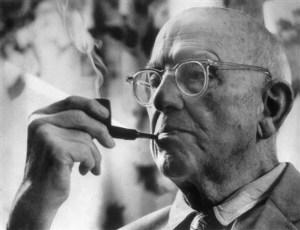
Many of us already know that he became a popular figure after the 1893 Parliament of Religions in Chicago at which he delivered his famous speech beginning with the words: “Sisters and brothers of America…”. While doing so, I am certain that unlike Gussie Fink-Nottle, he was not intoxicated, oiled, boiled, fried, plastered, whiffled, sozzled, or blotto. Rather than pouring scorn on many others present on the occasion, as Gussie did during his speech, he went on to introduce Hinduism to Americans.
After remarkable success at the Parliament, in the subsequent years, Vivekananda delivered hundreds of lectures across the United States, England and Europe, disseminating the core tenets of Hindu philosophy. He founded the Vedanta Society of New York and the Vedanta Society of San Francisco (now Vedanta Society of Northern California) both of which became the foundations for Vedanta Societies in the West. In India, Vivekananda founded the Ramakrishna Math, which provides spiritual training for monastics and householder devotees, and the Ramakrishna Mission, which provides charity, social work, and education.
Vivekananda and Plum: A Timeline
Plum was born in 1881, so he was eighteen years junior to Vivekananda. Luckily, he lived to a ripe age of ninety- four, whereas Vivekananda kicked the bucket at thirty- nine itself, in 1902.
By 1902, Plum had already taken a leap of faith and decided to leave the Hongkong and Shanghai Bank and turned to writing full time. At around the same time his first novel was published—a school story called The Pothunters, serialized incomplete in Public School Magazine in early 1902, and issued in full in hardback in September. He resigned from the bank that month to devote himself to writing full-time.
To the best of my knowledge and belief, the two had never met. Even though Plum’s works do carry an undercurrent of the kind of spiritual propositions Vivekananda makes, the name of the fearless monk from India does not pop up in any of Plum’s narratives.
What Vivekananda Stood For
To sum up what the saint from India stood for:
He stressed the importance of individual development.
He believed that three things are necessary to make every man great, every nation great, namely conviction of the powers of goodness; absence of jealousy and suspicion; and helping all who are trying to be and do good.
Working unitedly for others.
Having courage, patience, and perseverance to overcome all obstacles.
Having a strong mind and a strong body.
Women’s empowerment.
Detachment.
Let us now consider these, one by one.
Individual Development
When it comes to pushing the envelope and learning new things, Plum’s characters are always game. Some of them teach us how to evolve into better human beings, office executives, and husbands.
When Bertie Wooster joins an institution designed to teach the aristocracy to fend for itself, the course he decides to take involves boot-cleaning, sock-darning, bed-making and primary grade cooking. His finances are quite sound, but he feels that it is wise to be prepared for a future when the social revolution sets in with even greater severity. (Ring for Jeeves)
Take the case of Psmith. When he joins the New Asiatic Bank, he does not lose much time as an intern to figure out how to develop into a popular person. He identifies a friendly native and makes enquiries about the likes and dislikes of his immediate boss. Armed with this intelligence, he endears himself to Rossiter, his immediate superior and the head of the Postal Department. His next mission is to cozy up to the top boss and tackle him suitably. By the end of Psmith in the City, when Mike’s career in the bank is at risk, we find Psmith resorting to extortion. He leverages the political ambitions of the top boss to pull Mike out of the soup. He digs up some old speeches made by Comrade Bickersdyke at the Tulse Hill Parliament. If published, these would adversely affect the boss’ chances of getting in as the Unionist candidate at Kenningford. Mike gets off the hook.
Yet another example of development is presented to us by Bingo Little. We are aware of his romantic nature. Like a butterfly, he keeps hopping from one object of his affection to the next. But after each failed affair, Bingo does not necessarily sulk. The scales fall from his eyes, and he suddenly realizes that the next girl alone is his true soul mate. After many failed affairs, Bingo ends up marrying the romance novelist Rosie M. Banks. In the post-matrimony phase, we find a Bingo Little who is completely transformed. He is singularly devoted to his wife. Maintaining matrimonial peace and harmony is the sole purpose of his life. When it comes to keeping his lady-love happy and contented, there is little that he leaves to chance, which includes ensuring that the lady of the house gets her afternoon cup of tea. His reverse transformation – from a butterfly to a caterpillar – is complete. One is certain that this fact never came to the notice of Charles Darwin, who handed in his dinner pail during 1882 itself. If so, we might have noticed him rushing to his publishers, a revised manuscript of the Theory of Evolution tucked under his arms.
If Swami Vivekananda highlights the importance of individual development in his inimitable stiff-upper-lip manner, Plum deploys his wit and humour and gets some of his characters to set a high standard on the same count.
Conviction of the Powers of Goodness
Many of Plum’s characters have an abundant supply of the milk of human kindness coursing through their veins. Their belief in the power of goodness never wavers. When it comes to following a code, they never disappoint us. Bertie follows the family code of never letting a pal down. Captain Biggar sticks to a code that one should not propose to a female unless one’s own finances are in order. Chuffy refuses to propose to Pauline Stoker unless a deal to sell Chuffnell Hall materializes.
Chivalry is a sentiment which finds a place of prominence in Plum’s works. Bertie persuades Gussie Fink Nottle not to prod Stiffy between her legs to look for a missing diary. (The Code of the Woosters)
To save Uncle Tom from digestive troubles in the absence of Anatole, God’s gift to our gastric juices, he offers to undergo a sentence of thirty days. His only demand? A sumptuous fare dished out by Anatole at the end of his impending ordeal. (The Code of the Woosters)
Lord Emsworth, when caught picking up flowers from Kensington Gardens, seeks help from a recently sacked McAllister to identify himself to the police. His faith in the supremacy of goodness is touching, indeed. (The Custody of a Pumpkin)
While driving back from Brighton, Bertie and Jeeves offer Peggy Mainwaring a lift. Goodness prevails, though Bertie eventually realises the perils of delivering a talk to a bunch of girls who keep giggling and staring at him. (Bertie Changes His Mind)
Of Suspicion and Jealousy
Like all of us, Plum’s characters often suffer pangs of suspicion and jealousy. However, it does not take them much time to wriggle out of such negative emotions and live a happier life.
Think of Freddie who never suspects R Jones of any mischief. It takes a word of caution from someone like Ashe Marson for him to start seeing the truth for what it is. (Something Fresh)
Rupert Baxter earns his living by suspecting everything and everyone. If it means skipping a few nights’ sleep, so be it. (Something Fresh)
Roderick Spode suspects the intentions of anyone securing the affinity of Madeliene Bassett. (The Code of the Woosters)
Gussie Fink-Nottle experiences the perils of jealousy when he mistakenly thinks Bertie Wooster is competing for Madeline Bassett’s affection. (Right Ho, Jeeves). The same fate befalls Chuffy when he suspects Bertie of harbouring romantic thoughts about Pauline Stoker, whom he intends to marry. (Thank You, Jeeves). Madeleine suffers when she sees Gussie Fink-Nottle taking a fly out of Stiffy’s eye. (The Code of the Woosters).
Consider the emotions of Ronnie Fish when he finds Sue Brown dining with Percy Pilbeam.
The crust of calm detachment from all humanemotion, built up by years of Eton and Cambridge, cracked abruptly, and there peeped forth a primitiveRonald Overbury Fish. […] His fists clenched. Eton was forgotten, Cambridge not even a memory. He inhaledso sharply that a man at the next table who was eating a mousse of chicken stabbed himself in the chin with his fork.
(Summer Lightning)
In most cases, explanations get called for and offered. Eventually, Reason returns to its throne. Sanity prevails. However, a spiritual purist like Swami Vivekananda would take a jaundiced view of such proceedings.
Helping All Who Are Trying to Be and Do Good
When Bobbie Wickham ends up gifting Aunt Agatha’s pet McIntosh to Kid Blumenfeld, a sense of Noblesse oblige restrains Bertie from dashing off to the Savoy and demanding the pet back. As always, Jeeves comes up with a solution – a look-alike replacement is arranged for the kid, whereas Bertie rescues McIntosh after sprinkling his trousers with aniseed powder. Aniseed has an aroma which appears to speak straight to the deeps of the terrier’s soul. The scheme works. Harmony rules. (Episode of the Dog McIntosh)
Many of us would recall that Perfecto-Zizzbaum is the company which Wilmot works for. When the studio is said to be facing rough weather, Wilmot meets the top boss and readily accepts a salary reduction, down from fifteen hundred to three hundred dollars a week.
His parting dialogue to the boss goes thus:
What a perfectly lovely day it is, is it not? I was thinking as I came along here that I had never seen the sun shining more brightly. One just wanted to be out and about, doing lots of good on every side. Well,I’m delighted if I have been able to do anything in my humble way to make things easier for you, Chief. It has been a real pleasure.
Quite understandably, his engagement to Mabel Potter gets terminated soon after. (The Juice of an Orange)
Just like good people must be helped, those who are a menace to society in general also need to be restrained and neutralized. When Roderick Spode becomes a raging hippopotamus, Aunt Dahlia gets Jeeves to dig up some dirt on him. The secret of Eulalie gets discovered. Bertie uses it with much success.
Pure intentions underlying an act matter as much to Swami Vivekananda as they do to many of Plum’s characters.
Working Unitedly for Others
Many of Plum’s characters have a streak of selflessness about them. Despite their professional and personal concerns, they try to do something for others who happen to be in distress.
They might do it single-handedly, or, like Bertie and Jeeves, form a team to help others. In The Mating Season, the duo ends up uniting as many as six couples, providing priceless clues to our IT whizz kids who design dating apps these days!
Uncle Fred is quite focused on his mission of spreading sweetness and light everywhere he goes. Gally is another person whose conduct is quite selfless. Both help others in need, of course with hilarious consequences.
Sally is also selfless. One of her actions is to nurse an elderly resident of her boarding house through his case of the Spanish flu. (Adventures of Sally)
Take the case of Stilton Cheesewright whose head is said to be comparable to a pumpkin. Florence Craye talks socialism to him and persuades him to read Karl Marx. When at Oxford, someone had temporarily converted him to Buddhism which preaches compassion to all fellow beings. (Joy in the Morning)
All of them take the help of others, wherever needed, to support others.
That is precisely the kind of public-spirited attitude Vivekananda would like many of us to have.
Of Courage, Patience, and Perseverance
Elsewhere in the canon, we meet Ukridge, an opportunist who will do anything to increase his capital – except, of course, work. He believes in the adage that unless one speculates, one does not accumulate. He keeps coming up with get-rich-quick schemes and failing in his ventures with a remarkable degree of consistency. But his optimism never deserts him. He shows remarkable courage and keeps working on.
We find him setting up a Dog College where dogs can get trained to perform at a music hall. We then find him setting up an Accident Syndicate so insurance claims could be split up. He also supports sailors in the boxing ring. Elsewhere, we find that he is not averse to splitting a real estate commission earned during the sale of an English country house. In Love Among the Chickens, we find him setting up a chicken farm which also fails. But his buoyant optimism never deserts him. He starts visualizing starting up a duck farm!
Another good example is that of Joan Valentine’s, our feisty heroine from Something Fresh. After she falls on tough times, she does theatre, works in a shop, becomes a lady’s maid, and takes up many other odd jobs that can help her to keep the wolf away from the door. When she sees an opportunity, she just grabs it.
Don’t get into a groove. Be an adventurer. Snatch at the next chance, whatever it is.
She makes us appreciate that the ideal adventurer needs a certain lively inquisitiveness. She has a sense of enterprise which keeps her moving on in life.
Such characters truly practice what Swami Vivekananda preaches.
Mind, Body, and Well-being
Vivekananda emphasized the importance of a strong mind and body. He said:
Whatever you think, that you will be. If you think yourselves weak, weak you will be; if you think yourselves strong, strong you will be.
Plum highlights the importance of mental well-being through the actions of Sir Roderick Glossop, the loony doctor. We resent his not being able to fully enjoy his meal at Bertie’s flat where some cats also happened to be present. But we are secretly relieved when he decides to cancel Bertie’s fixture with Honoria Glossop, thereby saving our favourite hero from taking a saunter down the aisle with someone who reduces you to pulp with sixteen sets of tennis and a few rounds of golf and then comes down to dinner as fresh as a daisy, expecting you to take an intelligent interest in Freud. (Carry On, Jeeves)
In fact, if Vivekananda motivates us to develop nerves of chilled steel, Plum’s works enable us to go through life’s myriad challenges with a jauntiness which would put an elephant fed on Mulliner’s Buck-U-Uppo to shame. Both help us to have a strong mind.
When it comes to physical fitness, we look up to the prescription dished out by Ashe Marson – Larsen Exercises (all twenty-nine of these), scientific deep breathing, cold baths, brisk walks, and strict diet control. He also recommends plenty of fresh air and no cigars. (Something Fresh)
Coming to the subject of diet control, who could argue with Laura Pyke as to the importance of fat-soluble vitamins and the negation of all kinds of tissue restoratives? (Jeeves and the Old School Chum)
Women’s Empowerment
Vivekananda often spoke about educating women and empowering them to shape their own destinies.
The great Aryans, Buddha, among the rest, have always put women in an equal position with men.
Plum had his own way of putting across a similar message. This is what Joan Valentine says to Ashe Marson when he offers to steal the scarab in her place:
That’s simply your old-fashioned masculine attitude toward the female, Mr. Marson. You look on woman as a weak creature, to be shielded and petted. We aren’t anything of the sort. We’re terrors! We’re as hard as nails. We’re awful creatures. You mustn’t let my sexinterfere with your trying to get this reward. Think of me as though I were another man. We’re up against each other in a fair fight, and I don’t want any specialprivileges. If you don’t do your best from now onward, I shall never forgive you.
(Something Fresh)
Vivekananda said:
Women will work out their destinies – much better, too, than men can ever do for them. All the mischief towomen has come because men undertook to shape the destiny of women.
Plum has commented:
At the age of eleven or thereabouts women acquire a poise and an ability to handle difficult situations which a man, if he is lucky, manages to achieve somewhere in the later seventies.
It is easy to see that both have remarkably similar views about emancipation of women.
The Perks of Detachment
How does one face the harsh slings and arrows of fate? Vivekananda recommended a spirit of detachment. He emphasized the need to remain unperturbed by the difficulties in life.
Quite a few of Plum’s characters practice this. When they fail, they do not sulk. They move on.
Consider the case of Freddie when he tries to sell Donaldson’s Dog-Joy biscuits to Aunt Georgina (The Go- Getter). He is clear about his goal and faces challenges with a spirit of detachment. First, he briefs her on the product’s wholesomeness, richness in essential vitamins, and its bone-forming properties. Then he showers her with product brochures. He shows samples. He even offers a fortnight’s free trial. When he fails to enthuse her, he attempts to give a live demonstration by chewing a dog biscuit himself.
When he chokes and business does not result, he uses Bottles to demonstrate the superiority of his product. He fails, yet again. But it is seldom that he is baffled for more than about a minute and a quarter. He then walks in with a sack full of rats. However, this proposal is vetoed by the audience.
Eventually, Bottles ends up proving his mettle in a fight with Aunt Georgina’s Airedale. A timely intervention by Bingham saves the day, prompting Gertrude, Aunt Georgina’s daughter, to fall back into his arms. This pleases Aunt Georgina. She places an initial trial order of two tons!
Vivekananda encouraged individuals to face challenges with resilience, courage, and a smile. In the unique world created by Plum, Bertie Wooster displays an unwavering cheerfulness even in the face of perplexing situations.
How does Bertie feel when, prodded by Jeeves and Stiffy, he agrees to go and tell Pop Bassett that he plans to marry Stiffy?
It has been well said of Bertram Wooster by those who know him best that there is a certain resilience in his nature that enables him as a general rule to rise on stepping-stones of his dead self in the mostunfavourable circumstances. It isn’t often that I fail to keep the chin up and the eye sparkling.
The Common Spiritual Code of Vivekananda and Wodehouse
Both Vivekananda and Wodehouse believed in the power of humour as a remedy for life’s hardships. They acknowledged the innate absurdity of the human condition and advocated for finding humour even in the darkest moments. Vivekananda himself had a good sense of humour. His diary has several self-deprecatory references, which reveal the sunnier side of his personality. If he advocated some stark spiritual practices, many of Plum’s characters exemplify the same by the way they behave in the kind of situations they face.
The methods used by them to convey some spiritual messages are poles apart. Plum conveys it through the wit and comedy contained in his charming works. Swami Vivekananda does it through his sombre teachings. Both speak of the power of optimism and unwavering resolve in the face of life’s challenges. Plum conveys to us the bitter reality of life by first dunking them in a chocolate syrup of amusement, joy, and mirth. Vivekananda offers the same in a youthful and uplifting manner which makes us sit up and take notice of the importance of what he is saying.
By exploring their writings, we discover the parallel between these two extraordinary thinkers. Both exhort us to always have a positive frame of mind, as Jeeves says somewhere in the canon. Both put a premium on tenacity, resilience, perseverance, and a capacity to embrace change and use it as a stepping stone to higher things in life.
Conclusion
Plum is not necessarily about escapism in the guise of farcical butlers, spoiled nephews, and nosy and overbearing aunts. His works also contain philosophical insights and hidden truths of life. Subtly hidden in the works of Plum is the philosophy which is remarkably in tune with the teachings of Swami Vivekananda. His characters are blissfully unaware of the way they intrinsically follow what Vivekananda preaches – drinking deep from the cup of life, that too with a light- heartedness that mirrors Vivekananda’s call for joyous detachment.
We can consider taking a leaf out of Wodehouse’s comedy and Vivekananda’s spirituality. Embrace challenges with the infectious optimism of a Bertie Wooster and face the world with the dignified detachment of a Jeeves. In this curious amalgamation of humour and enlightenment, we might just discover that, much like in a Wodehouse novel, life is best approached with a twinkle in the eye and a chin up attitude.
(Inputs from Suryamouli Datta are gratefully acknowledged.)











 ashokbhatia