If you ask a Wodehouse fan to quote the funniest situations in his works, he/she would have a tough time in choosing, because there are so many of them. Let me cite a few that come to my mind right now. (I am quoting purely from memory):
The exchange of telegrams between Bertie and Aunt Dahlia in the early part of ‘Right Ho, Jeeves’. Those from the favorite aunt, although full of the choicest derogatory language that can be used against an irritating nephew, always end with the word ‘Love’.
In the same novel, Tuppy glossop, overcome by hunger in the middle of the night (because he had returned the dishes at dinner, on Bertie’s advice, in order to impress his estranged fiance, Angela) goes to the kitchen, takes out whatever there is in the fridge and starts eating. His host, Tom Travers, his wife Dahlia, and their daughter, Angela, roused by the sound made by Tuppy, come into the kitchen and see him. Angela makes a pointed reference to a python.
In the same novel again, the fully sozzled Gussie Fink Nottle, when the Head Master (the bearded bloke) first mis-pronounces Gussie’s name and after being corrected, says “I should say Mr Fink Nottle”, says “Of course you should, you silly ass ” and is loudly cheered. The author says ‘that someone should be public spirited enough to call their Head Master a silly ass went straight into the simple hearts of the scholars of the Market Snodsbury grammar school.’
Towards the end of his famous speech on the occasion, Gussie notices Bertie standing in the back row and starts attacking him for being a pessimist and having tried to stop him (Gussie) from coming here to distribute the prizes, lest his trousers split at the back when he bends to give the prize. As the embarrassed Bertie tries to leave, a freckled kid in the row in front of him turns round and asks for his autograph.
In ‘Summer lightning ‘, the Private Investigator, Percy Pilbeam, is all smiles after receiving a telegram about ‘big robbery’ at Blandings Castle. However, after Lord Emsworth’s secretary, Hugo Carmody, calls on him a little later to inform him about his services being required to investigate a pig robbery, not only is the bubble burst but the detective feels it an affront to his dignity that he, Pilbeam, should be called upon to be on a case like this! He tells Carmody so in no uncertain terms.
In the same novel, Lord Emsworth’s younger brother, the dapper and sprightly Galahad Threepwood,(who has no right to be in the pink of health that he is in , in his fifties, after the type of life that he has led) tells Sue Brown (whom he looks upon as his own daughter) about how he hates tea, which he calls poisonous stuff, he himself being a life-long advocate of alcohol. He speaks of a friend of his “I told him with tears in my eyes not to drink it (tea) but he did not listen. He died within the year (run over by a hansom cab )”!
In the same novel again, Hugo Carmody and Lord Emsworth’s niece, Millicent, who were out on the grounds in the evening are caught in a sudden rain and take shelter in the game keeper’s cottage that was at hand. It soon grows dark. After some time, the frightened girl says “There is someone here. He spoke in German”. Later it turns out that the sound Millicent had heard had been made by Lord Emsworth’s prize pig, the Empress of Blandings, which was hidden in the cottage by Ronnie Fish, Emsworth’s nephew.
In ‘Heavy Weather’ (sequel to ‘Summer Lightning’), when it was discovered that the manuscript of Galahad’s memoirs, pilfered by Pilbeam and hidden by him in a cottage, had been eaten by the Empress of Blandings who was in the cottage unknown to Pilbeam, Lord Emsworth, instead of feeling sorry for the loss of his brother’s literary labour, feels worried about the effect of the ink on the Empress’s health.
In ‘Money in the Bank’, the cross examination of Lionel Green by his former school mate, Jeff Miller, the young lawyer, in a case where Green is a witness for the prosecution and Jeff is the defence lawyer, Jeff asks “Is it not a fact that we used to call you stinky at school and on the day you took bath, a half holiday was declared for the school?” When the judge asks Jeff what relevance all this has with the case, he says he wants to shake the reliability of the witness.
In the same novel, the eccentric peer, Lord Uffenham, asks Jeff “Do you know how you can tell the temperature ?” “Look at a thermometer?” “Simpler than that. Count the number of chirps a grasshopper makes in fourteen seconds, and add forty”‘.
In the golf story ‘The Clicking of Cuthbert’, the celebrated Russian novelist, whom the members of the local literary club have been fawning upon, expressing his opinion: “Tolstoy and Wodehouse not bad; not good but not bad. I am the only novelist that counts.”
The effect of Mulliner’s Buck-u-Uppo on the frail and timid young curate. It was actually meant for taming elephants in India but his aunt sends it to him by mistake and the effect on him after he imbibes one single does is nothing short of spectacular.
About the Author
Mr. Subbaraman is not unlike the ‘Oldest Member’ in Plum’s golf stories. He has already clocked 94 circumambulations around the sun. However, the dark clouds of wholsesome pessimism which often engulf a person at an advanced age are yet to hover upon him. He has been reading Wodehouse from his school days. Thirty-three years of slogging it out in the Archaeological Survey of India by assiduously tending to such world-famous artworks and monuments as the mural paintings of Ajanta, Lepakshi (A.P.), Brihadeeshwara Temple, Thanjavur (Tamil Nadu), Bamiyan Budha statues, Angora Wat of Cambodia etc., has failed to dull his passion for the works of the Master Wordsmith of our times. He has lived in Rome for nearly a year, studying art restoration. He has travelled in Europe. He has also studied in British Museum Research Laboratory, London. During 2023, he was honoured by the Government of India by a Padmashree award. His permission to publish this compilation of his here is gratefully acknowledged.
Esteemed patrons, you may recall that Father’s Day gets celebrated on the third Sunday of every month of June. It manifests as a sporadic event that, to the detriment of fathers, does not adequately recognize their rightful place in our lives. Perhaps, this terrible reality stems from the fathers themselves, who, misguided by their own inadequacies, fail to embrace their pivotal role in their offspring’s lives. This woeful state of affairs tragically relegates countless fathers to a rather unjust oblivion, depriving them of the heartfelt admiration that they so richly deserve.On this propitious occasion, I invite you to join me in honouring the esteemed progenitors of our race by embarking upon a transcendental sojourn among the multidimensional fatherly exemplars who grace the literary canon that I happen to be somewhat familiar with.
In Our Vernacular
Allow me to commence with the riches of my mother tongue: literary jewels on paternal relationships in Bengali literature.
1. Firstly, dear readers, let me draw your attention to Rabindranath Tagore’s “Kabuliwala,” for it masterfully celebrates the profound bond between a father and daughter. Rahmat, the protagonist, is estranged from his daughter because of his professional commitments, but he gradually finds solace in Mini, a young Indian girl he encounters. Through its tender narration, “Kabuliwala” deftly explores Rahmat’s connection with Mini, as documented (in first person) by Mini’s biological father.
2. Another Tagore masterpiece that deserves mention is “Khokababur Protyabartan,” (“The Return of the Kid”) which tells the tale of a father’s sacrifice in replacing his child as his master’s son after the latter drowned in water. He does so out of his tremendous sense of duty and loyalty towards his master
3. “Yoggeshwarer Yagna,” (“The Offerings of Yoggeshwar”) is another literary gem from Tagore’s treasury. It delves into a father’s anxiety regarding his daughter’s marriage and the eventual resolution of his tribulations.
4. Furthermore, it would be remiss of me not to mention Sarat Chandra Chattopadhyay’s “Mahesh,” which beautifully presents the tender connection shared between a father and his daughter, although the story primarily revolves around the bond between a human and an animal.
5. Lastly, one should not forget Upendrakishore Roychowdhury’s “Adventures of Goopy and Bagha,” where a subtle fatherly figure emerges in the form of the ghost king. Though the story does not explicitly delve into the father-ward relationship, the king of ghosts offers unwavering support to the protagonists, embodying the essence of a father – to proffer guidance, care, and love during times when it is most imperative.
I confess that what I have covered here is but a minuscule fragment from the vast oceanic expanse of Bengali literature which beautifully bestows accolades upon the patriarchs who are undoubtedly the quintessential protagonists of any narrative.
In English Language
English literature, too, sketches out numerous father-ward relationships deserving of exploration on Father’s Day. Countless literary works illustrate the profound bond between a father and his ward showcased ingeniously by their creators.
Some of the noteworthy examples, my discerning readers, include:
1. The venerable Shakespeare’s opus magnum, Hamlet, lends itself to a peculiar intergenerational dynamic in the familial sphere, where the titular ‘Prince of Denmark’ attains the realisation that the passing of his father was an act of corporeal malevolence, perpetrated by his own mother and dear uncle. Fuelled by an unbridled sense of filial devotion to his patriarch, he makes a covenant to exact just retribution. One of my innumerable preferences is when the knightly Hamlet emits the immortal line – “He was a man. Take him for all in all, I shall not look upon his like again”.
2. Jane Austen’s “Pride and Prejudice” portrays the paternal figure of Mr. Bennet exuding an endearing tenderness towards his family, particularly his daughters, effectively representing the epitome of a responsible father within any household.
3. Upon perusing P.G. Wodehouse’s sagacious and witty “Blandings Castle” chronicles, one cannot help but admire the touching rapport between Freddy and his paternal figure– none other than the woolly-headed Lord Emsworth. Though at first, his lordship’s distaste for his offspring may seem unjustified, an explanation, documented in Wodehouse’s literary oeuvre, lays bare the reasoning thus:
Unlike the male codfish which, suddenly finding itself the parent of three million five hundred thousand little codfish, cheerfully resolves to love them all, the British aristocracy is apt to look with a somewhat jaundiced eye on its younger sons.
Nevertheless, in a display of magnanimous character, the nobleman strives zealously to extricate Freddy from the ramifications of his follies.
Wodehouse presents to us a wide range of paternal figures. Bingo Little feels proud when Algernon Aubrey Little tops a bonny baby contest. Blumenfeld Senior depends upon his kid to vet his upcoming theatrical productions before unleashing them upon the unsuspecting public. At the other end of the spectrum, we find a hapless Sir Roderick Glossop who, upon refusing to part with a sum of ten shillings by way of protection money to his soon-to-be stepson Seabury, gets treated to a tumble down a staircase duly covered with butter. To Mr. Pett, never at his ease with boys, Ogden Ford is a constant irritant. He dislikes his stepson’s personality, and he more than suspects him of stealing his cigarettes. He is frustrated at his own inability to be able to catch him in the act.
4. The literary figment by the great Margaret Mitchell, in her monumental masterpiece ‘Gone With The Wind’: a character of singular fortitude and paternal instinct, Gerald O’ Hara, an Irishman of rough-hewn exterior, loud of voice and manner, with a penchant for tippling and carousing, yet despite his brusque proclivities, provides a glimpse into the tenderest of fathers, as he moulds his daughter Scarlet into a force to be reckoned with, a lioness amongst men. Truly, Mitchell’s creation of Gerald is a nuanced and complex portrayal of an individual who, despite his faults, remains a loveable figure, endearing himself to the readers as he enchants his daughter with tales and kisses her goodnight.
5. In “The Godfather,” Mario Puzo masterfully depicts the intricate father-son bond of Vito Corleone and his four children. Vito lavishes his love on his eldest, Sonny, imparting his business know-how with hopes of a successful succession. He dutifully protects his other sons – Freddy and Michael – with equal fervour. He approves of Michael’s pursuit of education which aligns with his own lifelong aspiration. Vito also cares deeply for his daughter Connie, readily coming to her aid. As family head, Vito staunchly defends his children whenever they are in peril.
6. The creation of Harper Lee, ‘To Kill a Mockingbird’, chronicles the life of a patriarch who sets an arduous benchmark for fatherhood. The eminent Atticus Finch, with his lofty principles, intrepid spirits, august demeanour, staunch fidelity, and altruistic benevolence, stands tall as an embodiment of the ideal father figure, capable of instilling awe and admiration in any progeny. Indeed, he epitomizes what every child could possibly fantasize about their dream daddy.
7. In Alistair MacLean’s “Fear is the Key,” Talbot, the father, tormented by the untimely death of his son, embarks on a vengeful quest against those responsible.
8. Robin Cook’s “Fever” chronicles Charles Martel’s desperate struggle to save his daughter from the clutches of acute leukaemia, vividly capturing the depth of their relationship.
By no stretch of imagination can these honourable mentions considered to be exhaustive. As is the case with all the languages of the world, the Anglo-Saxon dialect affords innumerable variants in its portrayal of paternal figures. One bows in reverence to all the literary geniuses who have immortalized fathers by depicting them empathically for posterity.
In Other Languages
Whilst one may contend that this is perhaps not the most suitable juncture, I am strongly compelled to discuss yet another aspect of a father’s impact on his offspring’s life and offer a word of caution.
My understanding of foreign literature (excluding English) is limited. However, I find a remarkable book that explores a troubled father-son relationship.
Henrik Ibsen’s Norwegian play “Ghosts”, written in 1881, shows how a father can negatively affect his son’s life. In the story, Oswald suffers because of his father’s past mistakes, which lead to bad consequences.
Honestly, I have not read much foreign literature besides English works. But I do aspire to change that and explore more of the many amazing books available to us. Like the stories mentioned before, we are bound to find innumerable tales of brave fathers that would keep inspiring future generations for a long time.
Fathers in Indian Epics
In the vast and rich tapestry of the Indian literary tradition, the two epics that stand out like sparkling jewels are the Ramayana and the Mahabharata. These ancient works of art are not only a testament to the prodigious creative imagination of the Indian psyche but also a poignant portrayal of the sublime bonds between family members.
1. If I am to think of the Ramayana, my consciousness about father’s agony for his child is prominent with the image of Dasharatha, the father of Rama, whose life was plunged into an abyss of sorrow and despair when his own transgressions resulted in the exile of his beloved son. The heartrending portrayal of Dasharatha’s plight, as he withers away in unceasing agony, is a testament to the towering genius of Valmiki.
2. In a similar vein, the Mahabharata is a sublime exposition of familial relations. One of the main characters is that of Dhritarashtra, the blind king, whose blind love for his own sons leads to disastrous consequences not only for the Kuru clan but also for the society at large. When crushed by the weight of his unutterable grief arising out of the loss of all his sons in the ill-fated war between the Pandavas and the Kauravas, he intends to crush his nephew Bheema with his bare hands. Lord Krishna, however, manages to save the day by letting him instead crush an iron statue of the nephew. This is a vivid portrayal that invokes both pity and admiration for the old king.
Yet another key character, Arjuna, the mighty warrior, laments the death of his teenage son Abhimanyu by a group of cunning warriors on the Kauravas’ side. Overcome by grief, he vows either to kill Jayadrath by the time the sun sets the next day, or, if unsuccessful, to immolate himself thereafter. Here also, Lord Krishna intervenes by means of a celestial trick, thereby saving Arjuna’s life and avoiding an eventual loss in the war for the Pandavas.
Henceforth, it can be declared with utmost conviction that the oeuvres of literature not only eulogize sundry acts of valour and divinity but do so with great intensity, capturing a father’s unmistakable predilection towards his offspring.
To Conclude
To most of us, fathers happen to be role models. When they are emotionally present, we, the kids, become more resilient and confident. When they listen to our woes and setbacks with affirmation and empathy, we get an inner resilience. When they apologize, they show us the value of humility, courage, and emotional accountability. A hug, irrespective of how grown up we are, boosts our morale no end.
In summation, fathers, my splendid patrons, shoulder the weight of numerous literary masterpieces. On a day exclusively dedicated to celebrating fathers, let us extend our warmest admiration to all of them anywhere on this planet. Let us unreservedly acknowledge their invaluable contributions to the lives of their beloved children, thus affirming their truly splendid and invaluable roles.
(Reviewed and somewhat spruced up by yours truly!)
Ahoy there, my dear readers, gather around and let me regale you with the tale of my first encounter with the bewitching world of cinema. It was a sweltering summer day, the kind where even your sweat sweats, and I found myself being herded by my good mother into a dark hall which reeked of human sweat and stale tobacco. A set of noisily whirring wall-mounted fans were unsuccessfully trying to dispel the stuffy ambience inside. I was but a wee lad of about five summers then, not yet ready to face the world on my own, and so, like many other youths of my age and station, I clung to my parent’s skirts for dear life.
As we plopped ourselves down onto our seats, my imagination ran wild with thoughts of dashing heroes and fair maidens in distress, of swashbuckling adventure and sizzling romance. And what did we get? A paltry provincial flick that was as perplexing for a five-year-old as someone studying in the 5th standard trying to grasp the laws of quantum physics.
It purportedly bore some resemblance to the tale of Romeo and Juliet, although I can confidently declare that the Bard himself would have been scratching his head trying to figure out what the hullabaloo was about. From what I could gather, the movie was an incomprehensible cacophony of adults bawling in some alien tongue. And yet, a few scenes still stick in my noggin to this day.
For instance, there was one where the protagonist (or at least, I think he was ‘the one’) was getting pummeled by a bunch of goons, crying like a banshee. I couldn’t help but wonder why the fella didn’t just give them a good thrashing like a bona fide English gentleman – and then it dawned on me that he was probably too busy wailing like a newborn babe to do anything else. He would have done well to undergo a crash course in martial arts under someone like Roderick Spode.
Then came another scene where the leading lady was being implored to partake in some grub, and exasperated with the incessant pestering, she chucked the plate across the room like a discus thrower. I must admit, even at my tender age, I was mightily impressed by her spunk in the face of such adversity. She sounded like Minna Nordstrom throwing tantrums and insisting upon being offered some meatier roles on the screen in the days to come.
Needless to say, the film might as well have been the first production of the Perfecto-Zizz-baum Corporation, the leading movie studio headed by Mr. Schnellenhamer, envisaged at a time when he might have been having an odd disagreeable feeling, caused by what Roget’s Thesaurus would describe as agitation, fury, violent anger, wrath and similar emotions listed under the heading ‘Rage’, that too of an impotent kind. Discussions with his team of directors, script writers, music composers, yes-persons, deputy yes-persons, junior yes-persons, nodders, and trainee nodders might have led to a rather patchy outline of the movie.
What was on offer was a mere collection of moving images on a screen. However, despite my befuddlement and general indifference, I maintained a stiff upper lip and remained mum throughout the entire affair – a feat that earned me many a pat on the head and back from those around me. I suppose I had already honed my cinema etiquette from my prior dalliances with the proverbial idiot box, where I had already been spending quite a few jolly hours watching Mickey Mouse and Donald Duck.
But fret not, my companions, for the yarn doesn’t conclude just there. As soon as the film rolled to a halt and the lights flickered on, my dear old ma and I trudged along the sunny byways of Kolkata in search of refreshment for our weary souls. And lo and behold, we chanced upon a confectionery – Kamola Sweets, it was named – that promised to satiate our whims.
Picture my rapture, dear chums, when I first laid eyes upon the wondrous delicacies being served at this place. There were samosas as colossal as my noggin, chock-full of spiced potatoes and peas and dripping with oil – the kind of fare that’s more precarious than a boomerang sharpened to a razor’s edge. And then, there were the gulab jamuns, those pillowy globes of khoya (highly condensed milk) soaked in syrup and served piping hot – a dessert worthy of gods alone.
Needless to say, I was smitten with those toothsome delights, and I fancy that my ardour for cinema would have been just as fervent if only that rascal of a movie had been a tad more intelligible. But that’s life for you, my dearest bosom pals – brimming with twists and turns and the occasional sweet surprise.
In any case, it was like love at first sight. This is how my enchantment with movies began. As the lights dim and the images start rolling on the silver screen, I would sit wide-eyed, lapping up the juicy goings on with a single-minded devotion which would have put someone like Chaitanya Mahaprabhu to shame. The thrill of a car chase, the sheer pleasure of listening to some uplifting lyrics set to soulful music, the excitement of seeing a villain and his sidekicks getting brow-beaten by a smart hero, the gravity-defying stunts which would make someone like Newton squirm in his grave, and the rush of hormones when a comely heroine eventually fell into the arms of a dashing hero!
As the couple walked hand in hand into a sunset and the credits started rolling by, one had no other option but to snap out of yet another phase of escapism. The thoughts quickly turned to satiating the needs of a stomach which suddenly started demanding its quota of nourishment.
I can go on and on, dear comrades, but have no intentions of boring you any further with the apparent frivolity of my first cinematic encounter which led to a lifetime bondage of sorts.
(Reviewed and somewhat spruced up by yours truly!)
(This article first appeared in the Khaleej Times, Saturday, May 13, 2023)
Wodehouse wrote 95 books, and authored more than 30 plays and musical comedies, and more than 20 film scripts. His impact on the English language was considerable.
Those who follow my literary life are aware of my boundless admiration for P.G.Wodehouse (1881-1975), the great British comic novelist, playwright and lyricist, whom I consider to be an absolutely unrivalled craftsman of English prose. But since this column is not about literature, I will refrain from sharing with you the many examples of Wodehousean style and technique that justify my judgement. Instead, since our column is about language, I will just confine myself to some of the words the Master invented, or brought into circulation (a habit he shared with William Shakespeare, no less), to our endless delight. Of course, it’s much more fun to encounter these words in his novels, but this is just to whet your appetite!
Wodehouse wrote 95 books, and authored more than 30 plays and musical comedies, and more than 20 film scripts. His impact on the English language was considerable. The Oxford English Dictionary, for example, contains 1,756 quotations from Wodehouse to explain word usage. It confirms he invented multiple common expressions, like the word “cuppa” (as in “Come and have a cuppa”, Sam the Sudden, 1925) and “fifty-fifty” (“Let’s go fifty-fifty”, Little Nugget, 1913). And his famous character Jeeves, the super-smart valet to the feckless Bertie Wooster, is entered in the dictionary as a generic noun. A “Jeeves” means “a valet or butler especially of model behaviour.”
The most-quoted Wodehouse invention must be gruntled. It’s from his brilliant The Code of the Woosters (1938): ‘He spoke with a certain what-is-it in his voice, and I could see that, if not actually disgruntled, he was far from being gruntled.’ Now the word ‘disgruntled’ never had an antonym before, but here’s a mock-serious adjective meaning ‘satisfied’ or ‘contented’.
Wodehouse’s upper-class idlers, members of the Drones Club, were all steeped in alcohol, but the author did not describe them merely as inebriated. In his 1927 book Meet Mr Mulliner, Wodehouse had already anticipated new words for ‘drunk’: ‘Intoxicated? The word did not express it by a mile. He was oiled, boiled, fried … whiffled, sozzled, and blotto.’ His characters’ lexicon for those who have consumed too much fire-liquid also included: awash; lathered; illuminated; ossified; pie-eyed; polluted; primed; scrooched; stinko; squiffy; tanked; and woozled.
And, as befits a master of comic-hall theatre, Wodehouse had a great ear for onomatopoeia. At the age of 22 he published a story which used a new word for the sound of a cricket ball hitting a bat: ‘There was a beautiful, musical plonk, and the ball soared to the very opposite quarter of the field.’ (From Tales of St. Austin’s, 1903).
The same talent is evident in this description from Blandings Castle (1935) of a pig eating: ‘A sort of gulpy, gurgly, plobby, squishy, wofflesome sound, like a thousand eager men drinking soup in a foreign restaurant.’ Neither “plobby” nor “wofflesome” will be found in your home dictionary, but they marvellously convey a greedy and ill-mannered creature tucking in. Apply it to some of your acquaintances at their next meal?
When someone speaks sharply, it’s hard to think of a more original way of describing it than this, from the 1930 novel Very Good, Jeeves: ‘When not pleased Aunt Dahlia, having spent most of her youth in the hunting-field, has a crispish way of expressing herself.’ Also in Very Good, Jeeves, came a new way of saying things were ‘all right’ or ‘fine’: ‘“All you have to do,” I said, “is to carry on here for a few weeks more, and everything will be oojah-cum-spiff.”’
The Oxford English Dictionary includes at least one Wodehousean invention that didn’t last: “snooter”, meaning to ‘harass’ or to ‘snub’, (“My Aunt Agatha wouldn’t be on hand to snooter me for at least another six weeks”, The Inimitable Jeeves, 1923) never really caught on and is listed in OED with the parenthesis ‘Only in P. G. Wodehouse.’ But some Wodehousiana seems very contemporary. Zing, for instance, inserted to convey ‘the sudden advent of a new situation or emotion’, as the OED puts it, could work today but actually appeared in the 1919 book Damsel in Distress: ‘The generous blood of the Belphers boiled over, and then—zing. They jerked him off to Vine Street [police station].’
(Inspired by parts of Right Ho, Jeeves, The Code of the Woosters, and Clustering Around Young Bingo)
I had barely crossed the threshold of the dining room when I perceived Aunt Dahlia at the table, morosely tucking into salmon mayonnaise.
Being a keen observer, I could make out that she was in a sorrowful mood. A pall of despondency hung over her. It was as if she had been handed out a harsh sentence of thirty days without the option by a stern-looking beak.
She gave me a sharp look of the kind a person gulping down her last bit of coffee would give to a dead beetle at the bottom of her cup. She sighed and waved a depressed fork at me.
‘Hullo, Bertie, howsoever sad the circumstances, I thought I would never find you far away from the food. Try some of this salmon.’
‘Anatole’s?’ I queried.
‘No. I do not know why he has suddenly gone AWOL. Missing in action since the past two weeks, leaving all of us twiddling our thumbs. Poor Thomas, his digestion has already gone for a toss. I was so desperate to touch him for some vitamin M for Milady’s Boudoir. But I have had to put that proposal on hold.’
Well, Uncle Thomas, when his gastric juices have been giving him the elbow, is not his genial and benevolent self. To touch him for some funds then would be akin to waking a lion from its slumber.
‘Somehow, the new kitchen maid has struck an inspired streak. It suddenly seems to have come home to her that she isn’t catering for a covey of buzzards in the Sahara Desert, and she has put out something quite fit for human consumption.’
‘You never know with these temperamental French cooks,’ I chipped in on a sympathetic note, while mouthing a forkful of the salmon on offer.
‘Of late, he did seem a bit moody. Luckily, he left at a time when the new kitchen maid was just about to arrive. We are somehow…’
She broke off. The door had opened, and we were plus a butler.
‘Hullo, Seppings,’ said Aunt Dahlia. ‘Was there something you wanted to see me about?’
‘Yes, madam. It is with reference to Monsieur Anatole. He is on a video call on your laptop. He is desirous of having a word with you.’
‘Yoicks! Tally Ho!!’, she exclaimed excitedly.
I had never suspected her of being capable of the magnificent burst of speed which she now displayed. She rose like a rocketing pheasant and was out of her seat and the room making for the instrument which was bracing itself for an acrimonious exchange of views between a hunting field expert and the typical Queen’s language laced with liberal doses of French which the God’s gift to our gastric juices deployed. And feeling that my place was by her side, I put down my plate and hastened after her, Seppings following at a loping gallop.
‘Hello, hello…’
Anatole’s round face popped up on the screen and one could discern a noisy air-conditioner growling in the background.
‘Where are you calling from?’, Aunt Dahlia bellowed.
‘From India, Ma’am’.
‘What? India? What made you go to that God forsaken country?’
‘Sacre bleue! This is one pretty place – I am in Pondicherry, of which Madame is aware, I doubt myself.’
‘Pondicherry? Where the hell is that?’
‘Name of a dog, Madame! You don’t say! You are not serious! You haven’t heard of Pondicherry? It was a French colony years before.’
‘What are you doing there?’
‘I am ze most famous chef, Madame – know this! Even ze Indians know me. Several hotels here gave me jobs on ze platter.’
There was one of those long silences. Pregnant, I believe, is what they’re generally called. Aunt looked at butler. Butler looked at aunt. I looked at both of them. An eerie stillness seemed to envelop the room like a bubble pack for a silver cow creamer in transit.
‘But how can you leave us suddenly? It would have been nice if you could have at least told us about your plans,’ she said with as much politeness as she could muster. I couldn’t have believed that her robust voice could sink to such an absolute coo. More like a turtle dove calling to its mate than anything else.
‘Je suis vraiment désolé, Madame .’
‘It’s quite all right. What are you doing there?’
‘Listen. Make some attention a little. I bring my recipes. I add many new French dishes for a premier hotel here.’
‘New dishes? Introducing French cuisine for some hotel?’
Anatole perked up a bit. His soup-strainer kind of a moustache was quivering a bit. Like an artist’s who is showing his first ever painting to a connoisseur of art.
‘They already have places where you can find pastries and breads like the French baguette, croissants, pains au chocolat, pains aux amandes, macarons, crèmes caramel, etc. You pay little attention? I tell what I introduce here.’
‘Sure, I will, Monsieur Anatole, I will,’ cooed the aged relative.
He then went on to rattle off several of his culinary achievements.
‘I introduce ze Boeuf bourguignon, Steak-frites, Poulet rôti, Ratatouille, Soupe à l’oignon, Bouillabaisse, Croque-Monsieur, Croque-Madame, Crêpe, Quiche Lorraine, to say a few. And, of course, many of which they never hear before, like Veloute auxfleurs de courgette, Consomme aux Pommes d’Amour, Sylphides a la Cremes d’ecrivesses, Mignonette de poulet Petit Duc, Pointes d’asperges a la Mistinguette, Supreme de foie gras au champagne, Neige aux Perles des Alpes, Timbale de ris de veau Toulousaine, Salade d’endive et de celery, Le Plum Pudding, L’Etoile au Berger, Bombe Nero, Friandises, and Diablotins.’
Of course, all this made me drool like never before. I imagined the lavish spread Aunt Dahlia and I had discussed while we were at Totleigh Towers quite some time back. I had then graciously offered to undergo thirty days in the second division in lieu of Anatole’s services being transferred to Pop Bassett. Luckily, I had been dismissed without a stain on my character.
I went weak in my knees, imagining putting down the hatch some of the delicacies mentioned by him.
The irony of the situation also hit me hard. God’s gift to our gastric juices whisked off by a Third World country from right under our noses. The wizard of the cooking stove cocking a snook at us? My sister in Calcutta once did mention to me that this century belonged to countries like India and China, but I never took her seriously. If all our valets, butlers, chefs, and parlourmaids decided to migrate to one of the emerging economies, what would the harvest be? The British upper classes will be left behind twiddling their thumbs trying to figure out how to lead their lives. God save the Empire was the thought which I was ruminating upon, while Aunt Dahlia came direct to the nub of the matter.
‘That sounds great. When do you think we could sample these dishes here at Brinkley Manor?’
‘All in time desired. For the instant, I am content here. It is the beautiful life here. They give me big house with glass pyramid on top. I have a car with an Indian chauffeur. The beach is at distance of march from my house. It is just like Côte d’Azur. It is a place to make dream.’
‘You must be exaggerating – surely the place can’t be as beautiful as Brighton?’
‘Au contraire, Madame! There is a beautiful promenade with a tall statue of an old man walking with a stick in hand – Gandhi is his name, I think. Listen and take note – full moon evenings are magnifique here. You should make one visit here. In the evenings, lovely demoiselles in silk dress with gold jewels and fleurs de jasmin in their lustrous hair come for walk. Good heavens, do I give them company? You bet your last dime no. Hélas, I am too busy with my work. Me, I am French – work is sacré for me.’
‘Oh, so you are quite comfortable there, are you?’
‘Eh bien oui, Madame. I have a lady colleague – she teach me many South Indian dishes with strange names: dosa, idli, sambhar, rasam, vadai…Cest incroyable – they have amazing variety of plates in India. Like what, to each county her cuisine.’
‘The perfect life, eh, Anatole?’
‘I take some rough with some smooth, Madame. Behold and lo, in each man’s life, some rain must fall. The weather is hot and humid here. Often, intolerable. However, late afternoon onwards, sea breeze starts blowing in, bringing some comfort. Also, the place has very many people. A noisy city.’
When it comes to milk of human kindness, there are indeed times when Aunt Dahlia’s kindly overtures do leave me, as Roget would put it, amazed, astonished, astounded, blown-away, dumbfounded, flabbergasted, jolted, and rendered speechless.
‘Is there anything you need from here?’
‘Kind of you to ask, Madame. Le soleil ici est très dur. Could you manage to send across one of my favourite chapeaux? Seppings can find one in my room. I shall let him know the address and the care taker’s phone number which he may need.’
‘Monsieur Anatole, thy will shall be done.’
While leaving, Aunt Dahlia cast a venomous look at the laptop, much like an Indian resident would eye a cobra, had she found it nestling in her bathtub. Seppings took over the dialogue, as we retired to the dining room. The pall of gloom had deepened considerably. My aged relative was fanning herself with a reproachful fork. She appeared to have aged a lot.
‘What do we do now?’, she looked at me enquiringly.
Before I could respond, there was a sound in the background like a distant sheep coughing gently on a mountainside. Jeeves had materialized, much like an Indian fakir.
‘Jeeves, do you know of the calamity that has befallen us?’, I asked.
‘Perhaps you allude to the prolonged absence of Monsieur Anatole from our midst, sir?’, he responded, unflappable as ever.
‘Tetigisti nub materiae, Jeeves. What do you suggest?’
Aunt Dahlia gave him a reverential look, pleading with her mute eyes.
‘Allow me some time to give the matter some thought, sir.’
‘Sure, Jeeves. Have as much fish as you need. A crisis has arisen in the affairs of Brinkley Manor. We need to come to the aid of the party.’
‘Indeed, sir,’ he bowed respectfully and withdrew.
Life at Aunt Dahlia’s lair would have become a tad boring had it not been for the sudden arrival of my cousin Angela from one of her trips to Cannes. We spent a good deal of time together in the open spaces, she lampooning Tuppy Glossop’s conduct at Cannes in no uncertain terms, while all I had to do was to make sympathetic noises in the interim.
Funny thing, talking to females, if you know what I mean. You need to utter only one sentence, switch over to a silent mode, and start thinking some beautiful thoughts of your own. You merely hear the party of the other part, without necessarily listening to it blowing off steam on whatever issue happens to be tormenting it at the time. More of a monologue kind of a thing. Bringing anything sideways into the so-called dialogue is as perilous as offering a juicy lamb sandwich to an enraged tigress.
Meanwhile, Aunt Dahlia went about her daily routine in a listless, morose, and disgruntled manner. Uncle Tom kept complaining about the lining of his stomach registering frequent protests of a rather strong kind.
But the mood of our Guardian Angels suddenly turned benign. A miracle of sorts happened on the sixth day. A taxi pulled up, and, lo and behold, Anatole was amongst us! Back home. Duly tanned and dulled, possibly by the excessive heat and humidity braved by him while at Pondicherry. There were dark circles below the eyes. The moustache was drooping, Sure enough, his soul was bruised.
When told of the return of the prodigal chef, Aunt Dahlia perked up like a member of the canine species being offered a fish slice. However, one glance at Anatole’s visage led her to steady herself against the sideboard. She spoke in a low, husky voice:
‘Are you fine, Monsieur Anatole?’
‘I do not think so, Madame.’
‘Why? What happened?’
‘I told you I was put up in a house with a glass pyramid on top.’
‘Oh, kind of a skylight?’
‘Yes. Honest to God, I liked it a lot. I used to look up at it and take in the moonlight sipping my post-dinner port.’
‘So, what went wrong?’
‘One night, I saw someone making faces at me through the glass pyramid.’
‘You mean someone was sitting on the roof?’
‘Oh là-là. You can say that. There was a walkway around the pyramid. This horrible man was standing on it, I guess. And I say, this is not true – jolly well no. But he kept staring at me making some faces. His eyes were bulging, and his mouth was open and tongue sticking out. Did it upset me? By Jove, you bet it upset me like anything. He looked like some rare fish in an aquarium.’
I must say that he had the complete attention and sympathies of the audience. Review the facts, I mean to say. There he had been, relishing his late-night snifter, thinking idly of whatever French cooks do think about when in an easy chair, hoping to look at the moon, and suddenly becoming aware of a frightful face menacingly peering at them. A thing to jar the sturdiest soul.
While I stood musing thus, Aunt Dahlia, in her practical way, was coming straight to the point:
‘When did this happen?’
Anatole did a sort of Swedish exercise, starting at the base of the spine, carrying on through the shoulder-blades and finishing up among the back hair.
‘Just two days after I spoke to you. Me, I am about to hit the hay, and presently I look up, and there is one who make faces against me through the dashed glass pyramid. Was that a pretty affair? Was that convenient? If you think I like it, you jolly well mistake yourself. I was so mad as a wet hen. And why not? I was an honoured guest there, isn’t it? I was at the place given to me, what-what, not a house for some apes? Then for what do blighters peer at me so cool as a few cucumbers, making some faces?’
‘Must have been very upsetting,’ said Aunt Dahlia.
Anatole clutched his drooping moustache and gave it a tug.
‘Wait yet a little. I am not finish. I say I see this type on the glass pyramid on top of the house, making a few faces. But what then? Does he buzz off when I shout a cry, and leave me peaceable? Not on your life. He remained planted there, not giving any damns, and stood regarding me like a cat watching a duck. Was this amusing for me? You think I liked it? I am not content with such folly. I think the poor mutt’s loony. Je me fiche de ce type infect. C’est idiot de faire comme ça l’oiseau… Allez-vous-en, louffier….’
‘Did you not complain to your hosts?’
‘Immédiatement. They said it is all right – they will check in the morning. What a heap of trash – blistering barnacles – I am like some cat on hot bricks – and they say it is all right. Forsooth!”
Aunt Dahlia laid a quivering hand on his shoulder.
‘That was very inhospitable on their part, I say. You must be shaken.’
‘All right? Nom d’un nom d’un nom! The hell they say it’s all right! Of what use to pull stuff like that? Wait one half-moment. Not yet quite so quick, my old sport. It is by no means all right. See yet again a little. It is some very different dishes of fish. I can take a few smooths with a rough, it is true, but I do not find it agreeable when one play larks against me on my windows. That cannot do. A nice thing, no. I am a serious man. If such rannygazoo is to arrive, I do not remain any longer in that house no more. I buzz off and do not stay planted.’
‘Of course. Those crazy loons!’, cried Aunt Dahlia, in that ringing voice of hers which had once caused nervous members of the Quorn to lose stirrups and take tosses from the saddle.
‘I tell them to make an immediate return booking. I collect all moneys due to me. Then I buzz off from that wretched place.’
‘You did the right thing’, cooed the aged relative. ‘I thought Indians believed in the principle that a guest is like God. What is the expression I am looking for, Jeeves?’
‘Perhaps you allude to a phrase in Sanskrit, Ma’am. Atithi devo bhavah.’
But Anatole went on, uttering such words as ‘marmiton de Domange’, ‘pignouf’, ‘hurluberlu’, and ‘roustisseur’. Lost on me, of course, because, though I sweated a bit at the Gallic language during my last Cannes visit, I’m still more or less an illiterate in that means of communication. I regretted this, for these words somehow sounded juicy.
Frenchmen are surely made of sterner stuff. Pretty soon, Anatole had regained his composure and got back to displaying his proficiency at the cooking stove, surpassing himself.
I am not a man who speaks hastily in these matters. I weigh my words. And I say again that Anatole had surpassed himself. The exotic fare dished out by him revived Uncle Thomas like a watered flower.
As we sat down to a sumptuous dinner, he was saying some things about the Government which they wouldn’t have cared to hear. With the soupe à l’oignon, he said but what could you expect nowadays? With the boeuf bourguignonde, he admitted rather decently that the Government couldn’t be held responsible for the rotten weather, anyway. And shortly after the quiche Lorraine, he was practically giving the lads the benefit of his whole-hearted support.
The dining table was yet again a lively place. Light-hearted family banter had once again become the norm. Aunt Dahlia was back to being a suave and genial host, presiding over the dinner-table on most nights. Often, the conversation in the group touched a high level and feasts of Reason and flows of Soul occurred. Angela and Tuppy had buried their hatchet and were no longer arguing whether a shark had indeed bitten Angela while she was swimming at Cannes.
In other words, love and domestic peace had regained its throne. Flowers were in full bloom. Birds were twittering merrily. God was in heaven, and all was well at Brinkley Manor.
A day dawned when Jeeves and I were getting ready to drive back to the city. There was something troubling me within and I thought it fit to mention it to Jeeves.
‘Jeeves, I say, rummy all this, what? I mean Anatole popping back so very soon?’
‘Indeed sir. Most gratifying.’
‘Well, I suspect you had played some role there.’
‘Kind of you to say so, sir. I was somewhat baffled for a while, I must confess, sir. Then I was materially assisted by a fortunate opportunity that came up and I merely seized it.’
‘What opportunity?’
‘You may recall that some time back, Monsieur Anatole was very upset when Gussie Fink Nottle had made faces at him through the skylight of his bedroom.’
‘Yes. A chapter in the annals of Brinkley Manor which is not easy to forget.’
‘Since Anatole had given the contact particulars of the caretaker in Pondicherry to Seppings, it was not difficult for me to reach out to him. I explained the state of affairs at this end and he kindly accepted to help us out. He hired someone local to go on top of the house and deliver the goods, so to say, sir.’
‘Jeeves,’ I said, ‘this is genius of a high order.’
‘It is very good of you to say so, sir.’
‘What did Aunt Dahlia say about it?’
‘Details are not known to her, but she appeared gratified at the outcome, sir.’
‘To go into sordid figures, did she—’
‘Yes, sir. Two hundred pounds.’
‘Uncle Thomas?’
‘Yes, sir. He also behaved most handsomely, quite independently of Mrs Travers. Another two hundred and fifty pounds.
‘Good Lord, Jeeves! You’ve been coining the stuff!’
‘But, sir, I confess I owe one hundred pounds to the caretaker of the house where Anatole was staying while in Pondicherry.’
I gaped at the fellow.
‘Oh, for the services rendered?’
‘Indeed sir. There are no free lunches in life, as those across the pond say, sir.’
‘Well, I would hate to see you incurring a cost of that magnitude for benefitting a beloved aunt of mine. I suppose I had better pitch in and support you on that count.’
‘Why, thank you, sir. This is extremely generous of you.’
Notes:
Inputs from Anand Pakiam, C G Suresh, Dominique Conterno, and Chakravarti Madhusudana are gratefully acknowledged.
My dear friends, permit me to share with you the tale of my very first catch at a cricket match, an event that shall forever remain etched on the fabric of my memory.
I confess I am not as proficient in the game of cricket as, say, someone like Mike Jackson. Some of you may recall that he was a scion of a cricket clan, a distinction which I cannot claim. Nor do I have such a love for the outdoors as to think of ‘popping off’ a well-paying corporate assignment to play for my country. Anyhow, the sheer thrill of one’s first catch is not easy to forget.
So, grab a cuppa of your favourite tissue restorative and let me describe to you the sequence of events.
It was a bright and warm afternoon. The birds were chirping. The flowers were in full bloom, swaying in a gentle breeze. The bees and the butterflies were flitting about doing whatever they do. The sun, after a day’s hard work, was preparing to call it a day. I was standing at the infamous gully position during a school cricket match, determined to protect my team’s honour. I could not have fathomed the sequence of events that would soon conspire to change my destiny. Now, do not get me wrong, I am a fan of cricket, but I had never really been the one to actively participate in the game. I was more of a sideline spectator, cheering on my team with whatever degree of vibrancy I could muster.
On that ‘fateful day’ (the nearest phrase that I can think of at the moment), I remember how I wished to be an invisible entity, to disappear into thin air from the sight of my teammates, who looked at me with high expectations and aspirations. A keen observer might have noticed that my brow was furrowed. The stress of the mighty responsibility on my shoulders revealed itself in the profuse perspiration which adorned my not-so-handsome visage.
But as fate would have it, there was no escaping the inevitable. The ball, that red-colored round object that has the power to enchant and torment, came hurtling towards me with all its vim and vigour. It was like a thunderbolt, a messenger of the gods, which, if not dealt with, would bring upon calamity and chaos.
I did what any sane human being would do. I put out my open palm in a desperate attempt to shield myself from the oncoming danger. What were the odds that the ball would land in my hand? I must say, the chances were as slim as a hair on my by-now bald pate.
But lo and behold! The ball, in all its infinite wisdom, decided to fall in love with my palm and take some well-deserved rest there. Yes, you heard it right. It chose to stay there, to find solace and comfort in the warmth of my hand. It was a moment of ecstasy and of pure unadulterated joy. Words fail to describe that feel of the weight of the ball in my hands. It was like the loving caress of a specimen of the tribe of the delicately nurtured who had put her faith in my palm, much like Gladys putting her hands in those of Lord Emsworth, reposing her trust in him to protect her from the wrath of an irate Irish gardener charging at them at the speed of forty-five miles per hour. It was like the first-ever tender but electrifying touch of someone from the opposite sex, if you know what I mean.
Oh, the thrill of that moment! My heart was beating faster than a cheetah on a sprint! My breath was caught in my throat as I looked down at that precious ball, safely resting in my palm. The cheers (though not much but whatever my grey cells could register at the time) of my teammates and the people around me were music to my ears! It was as if I had conquered Mount Everest itself!
In that moment, I felt a sense of accomplishment that I had never felt before. I had done it! I had caught the ball, in just the right spot and at just the right time. I had made my team proud. Oh, what a feeling that was! It was as if I was suddenly swept away in a wave of euphoria, a wave that carried me higher and higher until I was sure that I would touch the very heavens, if only I dared to reach out!
And that, my dear followers, is how I felt when I took my first catch in a cricket match. It was a moment of magic, of beauty, of grace and of overwhelming joy! A moment that I will hold dear to my heart for all the days to come!
Mike Jackson would have been proud of me.
(Reviewed and somewhat spruced up by yours truly. Illustration courtesy the World Wide Web)
I re-read Something New by P G Wodehouse (PGW) for the umpteenth time recently. With a little digging, I found out that this novel had been first published in the USA on 3rd September 1915 and published in the UK as Something Fresh on 16th September 1915. Though there are some differences between the two, it is basically the same story. For the record, Lord Emsworth, Blandings Castle and its staff are introduced for the first time in this book. They would feature more prominently in PGW’s later novels and short stories.
Savouring Something New in its Kindle avatar last month, I was left in awe and admiration of PGW’s extraordinary ability to conjure up vivid word pictures of not just characters and situations but also locations and the processes at work. Secondly, PGW surprises you every now and then with his keen sense of observation and…
It is in his unique use of English that Plum’s genius hits us most fiercely, albeit pleasurably. Whether he uses words to describe a character or a setting, or to narrate the goofy goings on, or to simply make us laugh and unstiffen our upper lips, he simply excels. It is not for nothing that many of us consider him to be the Master Wordsmith of our times.
One of the devices he uses frequently is that of a Transferred Epithet. Consider this quote from Right Ho, Jeeves:
‘…twiddling a thoughtful steering wheel’
This is how Neil Midkiff of Madame Eulalie fame explains the concept of the transferred epithet in greater detail:
An excellent example of one of Wodehouse’s favourite literary devices, the transferred epithet, in which a descriptive word or phrase is moved from its expected grammatical position to another part of the sentence, and perhaps even converted to another part of speech. Here one would expect Bertie to twiddle the steering wheel thoughtfully (adverb); part of the charm of the usage is that he modestly appears to avoid attributing this quality to himself and instead applies it as an adjective to an inanimate object.
The formal name in Greek for this rhetorical device is hypallage, but most Wodehouse commentators follow Robert A. Hall Jr. (“The Transferred Epithet in P. G. Wodehouse,” Linguistic Inquiry v.4, no.1 [Winter 1973], 92–94) in using the English phrase. Bertie prongs a moody forkful of eggs and b. in “Jeeves and the Impending Doom” in Very Good, Jeeves. Several Wodehouse characters smoke meditative cigarettes; one of my favourite examples is the opening of Jeeves and the Feudal Spirit in which Bertie sits in the bathtub, “soaping a meditative foot.”
Raghunath Kandella, a fan of Plum’s, has gone to great lengths to compile a set of transferred epithets. He has been kind enough to permit me to share this unique collection of his here:
Blandings Castle and Elsewhere
…after a thoughtful sip of his hot Scotch and lemon
Lady Constance…threw a futile cushion
The authors had wielded a plausible pen
Summer Lightning
In the Billiard Room, Hugo was practicing pensive cannons
Beach raised a respectful eyebrow
Galahad raked the hall with a conspiratorial monocle
He was prodding the bunk with a dubious forefinger
He blew a reserved smoke ring
The Hon. Galahad turned to watch the procession with a surprised monocle
Waggling a reproachful gun at his late employee
Galahad at Blandings
Col. Wedge offered him a hospitable cucumber sandwich
Uncle Fred in Springtime
Pongo (Twistleton) lit a reverent cigarette
Lord Ickenham ate a thoughtful cheese straw
Full Moon
….causing him to prod her in the small of her back with an austere umbrella
….having followed his retreating form with a perplexed monocle
Heavy Weather
The butler’s message found Sir Gregory enjoying a restful cigarette
Monty waved a pacific hand
Sunset at Blandings
It was with a gloomy fork that he pronged the kippered herring on his plate
Leave it to Psmith
Psmith, enjoying a meditative cigarette…
Jeeves in the Offing
His eyes widened, and an astonished piece of toast fell from his grasp
She….ate a moody piece of crumpet
Very Good, Jeeves
He uncovered fragrant eggs and bacon, and I pronged a moody forkful
Much Obliged, Jeeves
I waved an impatient cigarette holder
He proceeded to prod Jeeves in the lower ribs with an uncouth forefinger
Carry on, Jeeves
After I sucked down a thoughtful cup of tea
I was leaning back in the chair smoking a peaceful cigarette
Stiff Upper Lip, Jeeves
….blowing a despondent smoke ring
I took an astonished sip of coffee
I drained my glass and lit a depressed gasper
Jeeves and the Feudal Spirit
As I sat in the bathtub, soaping a meditative foot and singing….
I lit a nonchalant cigarette, calm and collected to the eyebrows
I was enjoying a reflective smoke
She took a reserved mouthful of kipper
He (Tom Travers) waved a concerned cigar
She accepted the rebuke with a moody nod
….digging a bewildered fork into a sausage
Right Ho, Jeeves
Someone had opened a tentative window or two
She flushed again and took a rather strained forkful of sausage
I wandered out into the garden, smoking a tortured gasper
The Code of the Woosters
She massaged the dog’s spine with a pensive foot
I lighted a feverish cigarette
The Mating Season
I lit a thoughtful cigarette
I whooshed out a remorseful puff of smoke
….splitting a sociable milk and biscuit
He (Jeeves) was having a meditative beer
I lit a rather pleased cigarette
I had provided him with a hospitable whiskey
I swallowed a sombre chunk toast and marmalade
I whooshed a remorseful puff of smoke
Splitting a sociable milk and biscuit at the interval
Joy in the Morning
‘Right ho’, I said, and took a meditative departure
I balanced a thoughtful lump of sugar on the teaspoon
Young Men in Spats
Lighting a carefree cigarette, he embarked upon the narrative
The Girl in Blue
…. practising moody cannons
Mulliner Nights
He sipped a moody spoonful of soup
Big Money
Smoking a friendly cigarette with his next door neighbour
Up and down, smoking an agitated cigarette, paced Godfrey
He’s an actor and ….I hope….to fling a hearty egg at him
The Small Bachelor
How would it be if we…..thrashed the whole thing out quietly over a thoughtful steak or something
He sipped a moody spoonful or two of soup
….smoking a thoughtful cigarette
…he set about the soup with a willing spoon
Money in the Bank
He threw a moody banana skin at the loudest of the sparrows
Uncle Dynamite
Smoking a sombre pipe
Ice in the Bedroom
Leila York blew a meditative smoke ring
She swallowed it with a moody gulp
Plum Pie
I started to pick at a dejected fried egg
Hot Water
Mr. George threw a resentful champagne cork at a passing couple
Piccadilly Jim
He placed a noiseless sovereign on the table
Spring Fever
He approached the safe and prodded it with an experimental forefinger
Clicking of Cuthbert
The sage cast a meditative eye upon the infant
Eggs, Beans and Crupmets
Bingo, chewing a thoughtful lip, stood pondering…
Ukridge had fifteen bob for lunch and general expenses, and a thoughtful ten bob to do bit of betting with
Quick Service
Chibnall blew an airy smoke ring
Seated himself after dishing out a moody portion of scrambled eggs
Service with a Smile
….pointing a reverent finger…
he slipped a remorseful five-pound note into the other’s hand
It is well known that Plum deployed figures of speech extensively. He regaled us with not only similies (Bicky rocked, like a jelly in a high wind) and metaphors (Ice formed on the butler’s upper slopes), but also with Transferred Epithets.
Note:
I am grateful to Raghunath Kendella and R M Singha for their contribution towards this collection, and to Neil Midkiff (https://www.madameulalie.org/index.html) for his comments.
The Indian branch of PBC, the Plum Broadcasting Corporation, has now released the transcript of a recent interview by the new Prime Minister of India, who happens to be a great admirer of the works of Sir P. G. Wodehouse.
Q. Sir, congratulations for the thumping majority with which you and your party has won the last General Election. May we know how you are feeling?
A. Chuffed, honoured, and humbled, I say. The credit goes to people who have brought home the gravy, so to say. They have placed their trust in us, and we must reciprocate it by delivering satisfaction.
We take over the reins of our diverse country at a time when the foundations of our historic civilization have been quivering for some time. Our peaceful denizens have quietly suffered in the recent past owing to high inflation, rampant corruption, leap-frogging unemployment rates, increasing disparities in income, flawed economic policies, crony capitalism, raging pandemics, suppression of free speech, a biased media, persecution of minorities, and, above all, a weakening of the democratic, secular, and federal structure of our great nation. Under the command of a right-wing party, the nation appears to have put itself on a trajectory which is not envisaged by our constituion; we ride on a wave of pseudo-nationalism and majoritarianism. We have built physical roads but have also created mental roads across communities. Milk of human kindness often appears to have got evaporated.
All this is not to claim that no decent work has got done. In any case, it is not our intention to blame the previous regimes for the state of the nation today, but corrective steps do need to be taken promptly through proper channels to restore communal harmony and usher in an era where joy, light, peace, and sweetness prevail. We need to give up our obsession with notching up GDP numbers and instead start focusing on boosting our Gross National Happiness numbers.
Q. These are big objectives. Just how do you plan to achieve all this?
A. To begin with, I have requested Lord Emsworth, the Hon’ble President, to play a more active role in protecting our great constitution. He has very graciously consented to take some time off from pottering about in the Mughal Gardens, standing up to Agnus McAllister, and closely monitoring the wellbeing of the Empress of Rashtrapati Bhavan. With the assistance of the ever-suspicious Rupert Baxter, several statutory bodies like the Election Commission, the Enforcement Directorate, the Central Bureau of Investigation, the Comptroller and Auditor General of India, and the office of the Lok Pal shall henceforth be guided by his office. He will henceforth also play a role in appointments to the higher judiciary. We have also brought back the Right to Information Act with more teeth, putting it under the President’s direct control.
Under him, a committee headed by Sir Watkyn Bassett, a prominent beak and the Chief Justice of India, is already working on steps to be taken to protect our constitution from being marginalized by the brute majority of a ruling dispensation in future. An appropriate amendment bill will thereafter by moved through the Parliament, so concerned citizens may breathe easy.
Q. But will this not make managing the day-to-day affairs of the country more challenging for your own government?
A. I believe that harsh slings and arrows of governance need to be faced with a stiff-upper-lip and a liberal dash of the milk of human kindness. As politicos, our first duty is to be accountable and responsible for our actions, open to constructive criticism from all quarters. This is what democracy is all about.
Q. So, you wish to usher in some political reforms?
A. Indeed. Gradually, we wish to launch an Indian Political Service, which would bring in more educated people into our legislative bodies, ruling out those from business houses and with criminal backgrounds from polluting the environs of the temples of our democracy. We have already announced that all political funding shall henceforth be transparent, so the quid-pro-quo between the government and its donors and contributors is in the public domain.
Q. You appear to have set a tough path for yourself. The results of such changes may come about in a decade’s time, though you will face an electoral challenge much earlier.
A. Comrade, if the people appreciate the work that we do, and if it is communicated appropriately, we are willing to take our chances. What we need for India is to have a clear strategic goal for the year 2047, when we shall be completing a century as an independent country. The kind of strategic challenges we face often leave many of us baffled, bewildered, bemused, boggled, perplexed, puzzled, nonplussed, and mystified, as Roget would put it.
Q. Could you kindly elaborate on this, please?
A. I allude to such concerns as global warming and the resultant displacement of our citizens who live in coastal areas, corruption in public places, converting the red-tape mentality of our civil servants to a green-tape one, and meeting the challenges of such technological advances as Artificial Intelligence and Machine Learning while ensuring their fair and impartial use. Besides, the present task of creating a harmonious social fabric which is conducive to economic advancement, innovation, and industrial growth. Then we have obnoxious neighbours who keep on playing Chinese Checkers with us. None of these happen to be low hanging fruits. But we cannot afford to get distracted by myopic considerations and remain focused only on winning elections, irrespective of the means deployed.
It is essentially to address such strategic concerns that we have decided to revive the Planning Commission which is headed by an eminent economist like Lavender Briggs (of Service with a Smile fame), a distinguished graduate of the London School of Economics, with an impeccable track record.
Q. What about the role of the Prime Minister’s Office (PMO)? And the fifty-eight ministries and the ninety-three departments that you have?
A. I strongly believe in empowering my team members to manage their respective portfolios with much aplomb. Hence, the PMO is already being downsized, if you know what I mean. Likewise, we plan to reduce the number of ministries and departments in the government by at least 25% by this year end. At present, an empowered inter-ministerial group is hammering out a detailed proposal in this regard, before it gets unleashed upon our denizens.
Q. Please tell us something about your team members, as you prefer to call them.
A. Reginald Jeeves now heads the Home Ministry. Using his vast knowledge, tact, and resource, he is resolving quite a few of the internal issues that we face. His priority is to ensure that inter-faith harmony is restored as well as maintained without further delay. He has advised courts to take suo moto cognizance of all hate speeches and nip the problem in the bud. Thus, hate speeches have already become a thing of the past. He is using his famous technique of studying the psychology of the individual to usher in major reforms, designed to improve the morale of the police force, and the effectiveness of our intelligence agencies. An image makeover for our rozzers is being rolled out, so lay citizens see them as facilitators and helpers-in-distress rather than being a source of fear and doubt.
Aunt Agatha, you know the one with a beaky nose, an eagle eye, and a lot of grey hair, now heads the Defence Ministry, ensuring that our irate neighbours keep their territorial ambitions under check. Two persons, Roderick Spode, and Roberta Wickham ably assist her.
Spode keeps crushing all attempts by terrorists and anti-nationals working at the behest of some neighbouring countries under his size eleven boots. As you know, he loves seeing the colour of their insides and jumping on the remains with his hob-nailed boots. Unbeknown to many, he has built his own brigade of red shorts who keep conducting tit-for-tat surgical strikes in the enemy’s territories, often with gratifying results. To ensure that his reputation remains blemish-free, he has sold off the Eulalie Soares brand to an international fashion brand of repute.
Roberta Wickham, who otherwise heads the Department of Goofy Technologies as well, deploys her own band of femme fatales who carry laser-guided and AI-enabled needles which they often use to puncture the hot water bottles of the global leaders and their obnoxious deputies who keep playing anti-India games and keep threatening the country with nuclear attacks.
Peter Patt (the financier of Piccadily Jim fame), now steers the Finance Ministry, keeping a strict check on our debt levels, budgetary deficits and is forever busy juggling the demands from diverse sources which keep coming his way for financial succour. Given the buoyancy in our direct and indirect tax revenues, the wizened old bean-counter ensures that dues to states are cleared swiftly. He may soon introduce a scheme to boost the quality of health care and education across the country. Unlike in the past, we do not wish to abdicate our responsibility to the citizens of India on these two crucial aspects of their lives and livelihoods. In his maiden budget, he has also announced liberal incentives for citizens in the 65+ year bracket, besides an upkeep allowance for all whose annual income falls below the poverty level.
John Bickersdyke (of Psmith in the City fame) now heads the Reserve Bank of India, keeping a keen eye on inflation, forex balances, non-performing assets, and senior level appointments at large public sector banks.
Aunt Dahlia has taken over the reins of the External Affairs Ministry, playing with fire and ice and performing the delicate dance of manners and protocol. Her humanity, sporting qualities, and general good-eggishness help her in this delicate assignment. When she gets into her Quorn and Pytchley mode and starts a conversation with either ‘Yoicks’ or ‘Tally Ho!,’ leaders and diplomats are apt to sit up and take notice. She is very busy calling on all the important world leaders and presenting them with copies of not only a few books of the Master Wordsmith of our times but also some copies of her quarterly journal which has interesting articles on topics of interest to the high and mighty, including one which speaks of ‘What the Well-dressed Global Leaders are Wearing’, written by Bertie Wooster, her famous nephew.
Ashe Marson (of Something Fresh fame), the Wellbeing Minister, and his team is focused not only on fighting the Covid pandemic but also the increasingly high incidence of such silent killers as diabetes, hypertension, and cardiac failures in the country, even amongst the younger lot. All the government clinics across the country are getting spruced up and flying squads have been formed to keep a tab on the operational condition of these. Trained experts in Larsen Exercises are being made available in a phased manner. Importance of brisk walks, cold baths, and strict diet control is being highlighted. Fast food chains, railways, train stations, bus stands and street food vendors at other public places are being incentivised to offer healthier eating options to the lay public, like fruit juices, millet-based non-fried snacks, and sugarless savouries.
Since the incidence of mental illnesses is rising rapidly and because reporting these generally carries a social stigma for Indians, Sir Roderick Glossop is assisting the minister in rolling out schemes to reduce the Looniness Quotient of the people, thereby enabling the citizens of the country to lead stress-free and happier lives.
As an Education Minister, Miss Tomlinson, who has this indefinable air of being reluctant to stand any nonsense, is burning the proverbial midnight oil to ensure that our coming generations lead lives full of joy and happiness, facing the myriad challenges of life with a jaunty sangfroid. Experts are revamping the education system to imbibe such values in the students as secularism, love for the other, civic sense, and the milk of human kindness. Books by P. G. Wodehouse have been made mandatory from the middle level school onwards, so the wards develop a sense of humour in their formative years. In many institutions, ‘Sonny Boy’ has become the morning prayer favourite. Teams of linguists have been tasked with translating Plum’s works in all the major languages of India. Teachers are being counselled to drastically reduce the tyranny of the classroom, slowly giving way to laughter and light-hearted banter in the classrooms. Things are perking up in general. Enrolment levels have improved. Children no longer cry or throw tantrums when being escorted to schools; rather, they insist on not missing their classes, making the working parents breathe easier. Engineering and management institutions are prompting their faculty members to develop academic literature and case studies based on his books and stories, thereby promoting the use of the Milk of Human Kindness in handling managerial challenges.
Our Commerce and Industries Minister, Joan Valentine, is a girl of action; a girl whom life has made both reckless and wary of friendly advances, reckless when there was a venture afoot. She is busy facilitating business houses to pour more money into the system, so additional employment opportunities may get created for the youth. She is deeply concerned about crony capitalism and the rise of oligopoly where select few businesses corner most of the market opportunities, often at the cost of MSMEs and SSI units, and to the obvious disadvantage of the customer. She is consciously encouraging relatively smaller businesses to start growing faster, so the market offers a level playing field and the end customer gets better value for money. Businesses which deal in such precious objects and collectibles as antique jewellery, precious stones and scarabs are her favourites. She is being supported by Gussie Fink-Nottle who is busy rolling out schemes to boost the employment prospects of youth by encouraging the newt-rearing industry.
The brainy and athletic Honoria Glossop, who has an assertive personality and a forceful voice, handles the Youth and Sports Ministry. She is busy devising schemes to motivate more of our youth to take up competitive sports, thereby improving upon our performance at international events. To assist women facing harassment of any kind, she has set up a direct hotline for registering complaints and gets the same objectively and empathically address the same promptly through proper channels.
Sally Nicholas, who heads the Ministry of Skill Development and Entrepreneurship, takes her role very seriously. Hers is a democratic soul who dislikes pomposity; instead, she believes in true merit. Given her diverse experience in New York, first as a taxi dancer and then as a promoter of theatre, makes her well equipped to guide unemployed youth in the country to realize their full potential.
We have rechristened the Ministry of Women Development as the Ministry of Chivalry instead. Bertie Wooster heads it. With the support of various members of the Drones Club, he has set up branches of the Institute of Chivalry in all higher education institutions in the country. Besides conducting self-defence classes for the members of the tribe of the delicately nurtured, these institutes have training programs designed to teach those belonging to the so-called sterner sex skills in managing such household work as socks mending, cooking, vacuuming, dish washing, and baby-sitting. Dr Sally Smith supports him in all health-related matters for women of all age brackets. Laura Pyke has already designed special diets comprising fat-soluble vitamins to address the challenge of malnutrition amongst kids and women.
Rupert Psmith heads the Ministry of Information & Broadcasting. Given his exposure to the field of journalism, he is keen on promoting media houses which can set higher standards of investigation and unbiased reporting from the field. He has already started a popular TV and radio show entitled Dil Ki Baat which tries to bring together youngsters who happen to like the narratives dished out by Plum. We believe that if some of them were to decide to walk the aisle together, the progeny is quite likely to inherit the pleasurable affliction of Wodehousitis. This would mean that the nurses, the baby-sitters, the child caretakers, the private-school masters, and the public-school heads who will take on the responsibility of looking after such rare specimen of humanity who represent a delectable blend of the genes of their parents, would be relieved.
Hon. Galahad Threepwood oversees the Ministry of Happiness, whereas Pauline Stoker takes care of the Sports Ministry. Ministry of Tourism is headed by Angela Travers who is developing dolphin-watching sites and shark-sighting cruises through the 7,500 kms long coastline of the country. Captain Cuthbert Gervase ‘Bwana’ Brabazon-Biggar takes care of the Ministry of Forests and Wildlife.
Department of Science, Technology and Innovation is headed by Wilfred Mulliner, the famous inventor of such products as Mulliner’s Buck-U-Uppo, Raven Gypsy Face Cream, and Reduc-O.
Florence Craye is steering Literature and Fine Arts. George Bevan takes care of Culture and Theatre.
Q. What is your opinion about the Bretton Woods Institutions like the World Bank and the United Nations?
A. I strongly believe that their approach to international affairs needs to be recalibrated. You will agree that the present model of capitalism has merely resulted in a steep rise in the income disparities between the haves and the have-nots across the world. An institution like the World Bank could be coming up with proposals for a new model of developmental economics which would address this issue. Likewise, the UN can consider declaring a Charter of Global Happiness and take initiatives designed to spread cheer and happiness amongst all the citizens of our planet. Ideally, what we need now is an International League of Happiness instead, where aggressors do not end up controlling the future of militarily weaker countries. Global Peace Keeping Forces can be trained in Wodehousean skills and redeployed to monitor and promote laughter and mirth in strife torn areas.
Q. In your maiden speech from the ramparts of the Red Fort today, you mentioned introducing some new civilian awards. Would you care to elaborate, please?
A. We wish to promote Plum’s philosophy of living a happier life in a big way. To this end, we have framed several proposals to institute awards for those who follow the values espoused by him through his books and stories. But we are still receiving feedback from different stakeholders. I shall soon come back to you with further details.
Q. Thank you for your precious time. Allow me to say that there are indeed times when you sound like a specific dream-rabbit.
A. Thank you. My team and I do intend to give satisfaction to the citizens of this great country of ours. The basic idea is to turn India into a jolly good place full of vim and vigour, where all are free to pursue their dreams and have a jolly good time doing it and where people can gaze at the future with a chin-up attitude!
To put it simply, to endeavour to realize the sentiments expressed by Gurudev Rabindranath Tagore so very eloquently in his composition ‘Where the mind is without fear….’
Notes:
Inputs from Chakravarti Madhusudana and Suryamouli Datta are gratefully acknowledged.Caricature of Plum courtesy Suvarna Sanyal. PBC logo courtesy Shalini Bhatia.
This is a work of pure fiction, merely meant to spread some cheer, light and sweetness amongst those who take a jaundiced view of the situation in India. It has been written without any malice towards anyone. Any resemblance to either a living/dead person or any situation is purely imaginary and false.
No animals, trees, or forests were harmed during the writing of his piece, if piece is indeed the word the author wants.
In most biographies and essays in papers P. G. Wodehouse is regarded as naïve. He is politically ignorant and not interested. This fact in some way explains the great mistake of his life when speaking in the German radio 1941 to his readers in USA, which Goebbels later retransmitted to Britain. He has been compared with Lord Emsworth as he himself described him in Something Fresh 1915:
“Other people worried about all sorts of things – strikes, wars, suffragettes, diminishing birth rates, the growing materialism of the age, and a score of similar objects. Worrying indeed, seemed to be the twentieth century´s speciality. Lord Emsworth never worried.”
This comparison is very unfair. Already in the above number of problems Wodehouse is mentioning you notice his awareness of actual problems. My aim with the following analysis is to show how Wodehouse kept himself well informed politically if you read his stories…


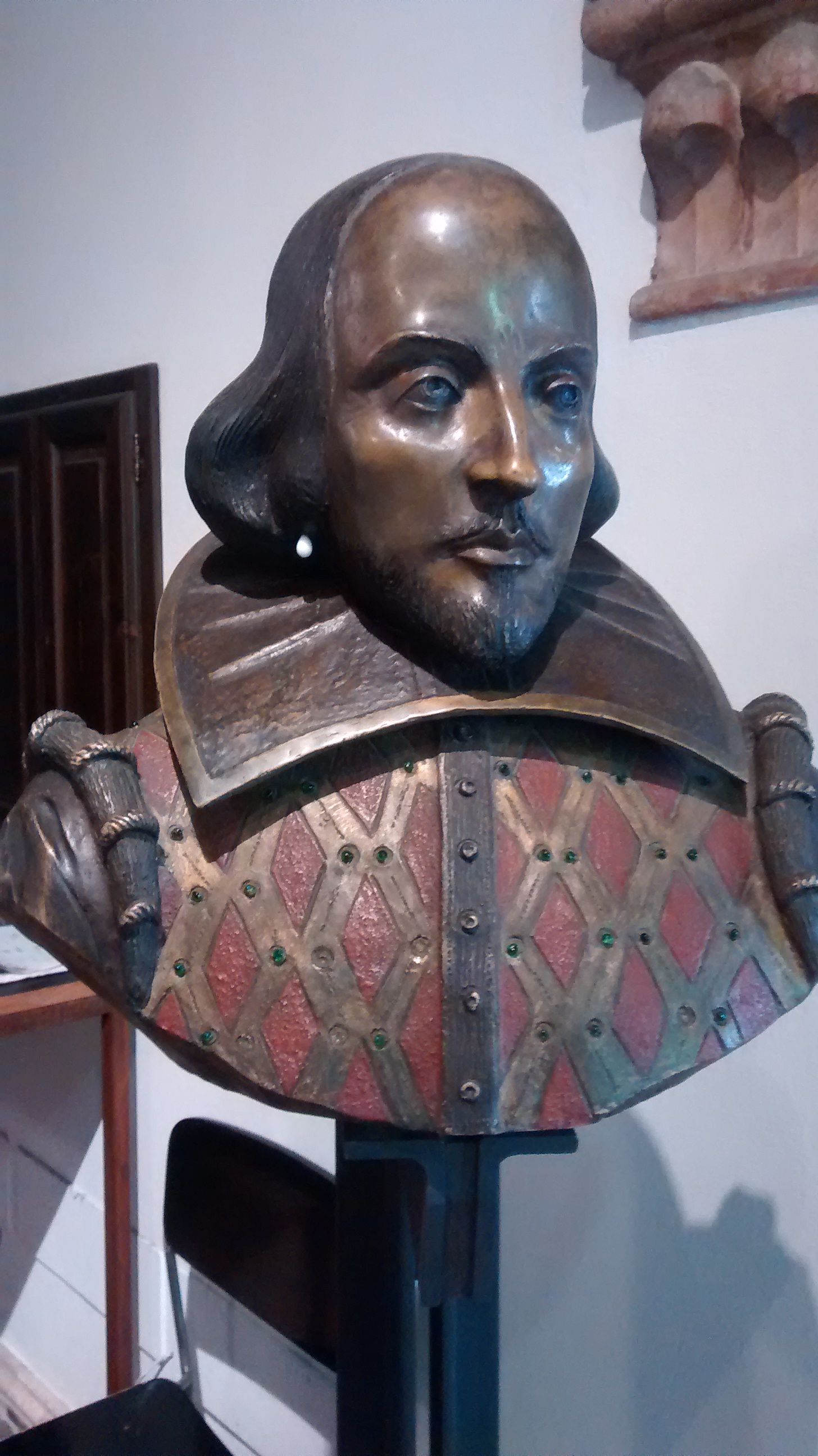







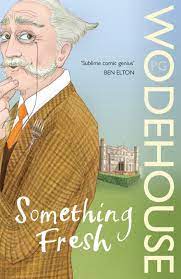

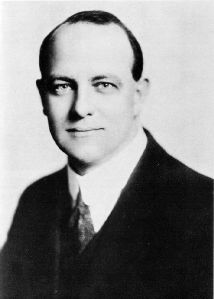
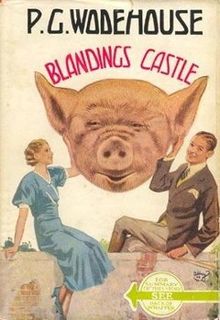

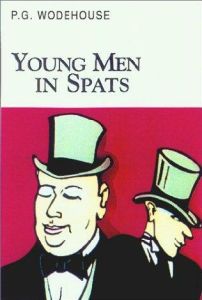


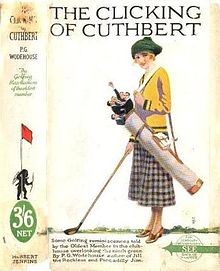


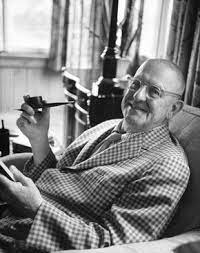


 ashokbhatia