Posts Tagged ‘Poetry’
अभी तुमने क्या देखा है? (हर्षिता वाजपेयी द्वारा रचित एक कविता)
Posted in A Vibrant Life!, tagged Hindi, Poetry on December 17, 2024| Leave a Comment »
Mirza Ghalib, the Timeless Voice of Urdu Poetry, and The Moonlit Square!
Posted in A Vibrant Life!, tagged Ballimaran, Bollywood, British Rule, Chandni Chowk, Chitra Singh, Gulzar, Hindi, Jagjit Singh, Mahatma Gandhi, Mirza Ghalib, Mughal Dynasty, Naseeruddin Shah, Poetry, Shayari, Urdu on September 26, 2024| 9 Comments »
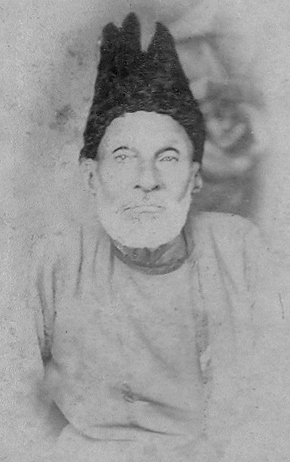
Mirza Asadullah Baig Khan, known popularly as Mirza Ghalib, was not just a poet but a literary phenomenon whose works have transcended time and space. He lived during the turbulent period from 1797 to 1869. He ended up being a chronicler of the chaotic times faced by the country during the 1857 revolt when many of the markets and localities in Delhi vanished. The mansions of his friends were razed to the ground. He wrote that Delhi had become a desert. Water was scarce. The city had turned into “a military camp”. It was the end of the feudal elite to which Ghalib had belonged. He wrote:
है मौजज़न इक क़ुल्ज़ुम-ए-ख़ूँ काश यही हो
आता है अभी देखिए क्या क्या मिरे आगे
An ocean of blood churns around me – Alas! Was this all?
The future will show what more remains for me to see.
Having settled down in the Chandni Chowk area of Delhi, he experienced first-hand the demise of the Mughal dynasty and the rise of the British Empire in India. Within a few months of his death in 1869, Mahatma Gandhi, who eventually led India to its independence in 1947, was born, though far away in Gujarat.
Why Chandni Chowk? I guess it would have been a posh area of the walled city known as Shahajahanabad then. Proximity to the Mughal court might have also weighed on his mind. The ease of shopping might have been another consideration.
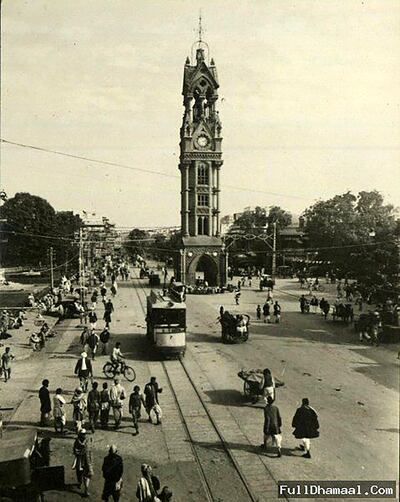
The Moonlit Square in Delhi
History buffs may recall that Chandni Chowk was built in 1650 by the Mughal Emperor Shah Jahan, and designed by his daughter, Jahanara. The market was once divided by a shallow water channel (now closed) fed by water from the river Yamuna. It would reflect moonlight. Hence its name.
There were roads and shops on either side of the channel. Ladies from the royal family are said to have ventured out of the Red Fort to shop for jewellery, clothes, and accessories. The place continues to be a shoppers’ paradise and has also become the biggest wholesale market in North India.
Shakeel Badayuni, the poet and lyricist, beautifully captures the image of this shoppers’ paradise thus in one of his nazms, ‘Tasaadum’:
वो बाज़ार की ख़ुशनुमा जगमगाहट
वो गोश–आश्ना चलने फिरने की आहट
वो हर तरफ़ बिजलियों की बहारें
दुकानात की थी दुरबिया कतारें
That blissful glow of the market
That hustle-bustle of wide-eyed shoppers
A veritable spring of well-lit places
The endless rows of jewellery shops.
The range of products available is truly mind-boggling. Electrical goods, lamps and light fixtures, medical essentials and related products, silver and gold jewellery, trophies, shields, mementoes, and related items, metallic and wooden statues, sculptures, bells, handicrafts, stationery, books, paper and decorative materials, greeting and wedding cards, plumbing and sanitary ware, hardware and hotel kitchen equipment, all kinds of spices, dried fruits, nuts, herbs, grains, lentils, pickles and preserves/murabbas, industrial chemicals, home furnishing fabrics, including ready-made items as well as design services.
As to the mouth-watering sweets, savouries, and street food available in Chandni Chowk, right from the crispy jalebies of Dariba Kalan to the spicy chhole-chawal of Gol Hatti at Fatehpuri, full-length books alone may suffice.
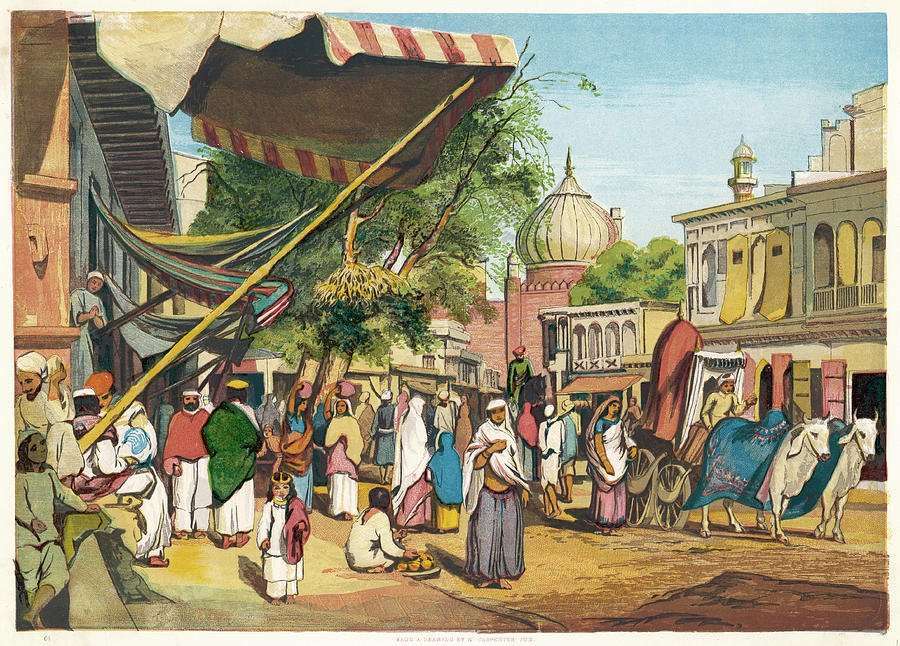
Kuchas, katras, and havelis
The road now called Chandni Chowk has several streets running off it which are called kuchas(streets/wings). Each kucha usually had several katras (cul de sac or guild houses), which, in turn, had several havelis.
Typically, a kucha would have houses whose owners shared some common attributes, usually their occupation. Hence the names Kucha Maaliwara (the gardeners’ street) and Kucha Ballimaran (the oarsmen’s street).
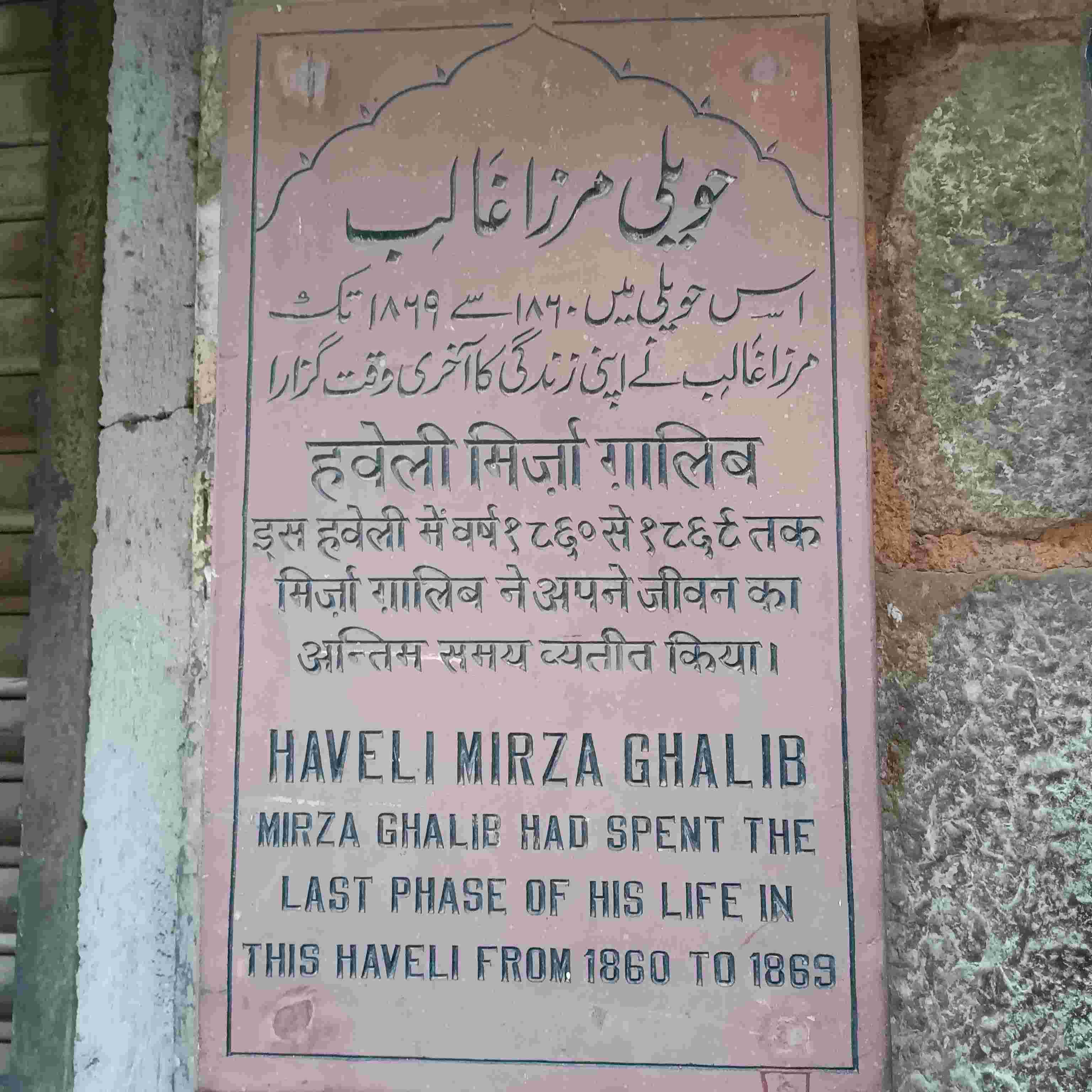
All this is not to say that there are no aspects of Chandni Chowk which one does not despise. One loathes its jostling crowds, its smells, its noises, its congested lanes, the mind-boggling variety of vehicles on its roads, its endless traffic snarls, its highly polluted air, its beggars trying to persuade perfect strangers to bear the burden of their maintenance with an optimistic vim, and its crowded pavements with aggressive sellers pouncing upon one to peddle their stuff. But if one has nerves of chilled steel and can manage all these with a chin-up attitude, one could eventually find one’s way to Ghalib ki Haveli, located in Gali Qasim Jan of Kucha Ballimaran.
As to Ghalib’s choice to live in Kucha Ballimaran, an area where oarsmen used to reside, one may merely surmise that as a creative genius of the literary world, he believed himself to be an oarsman, guiding his catamaran through the choppy waters of life!
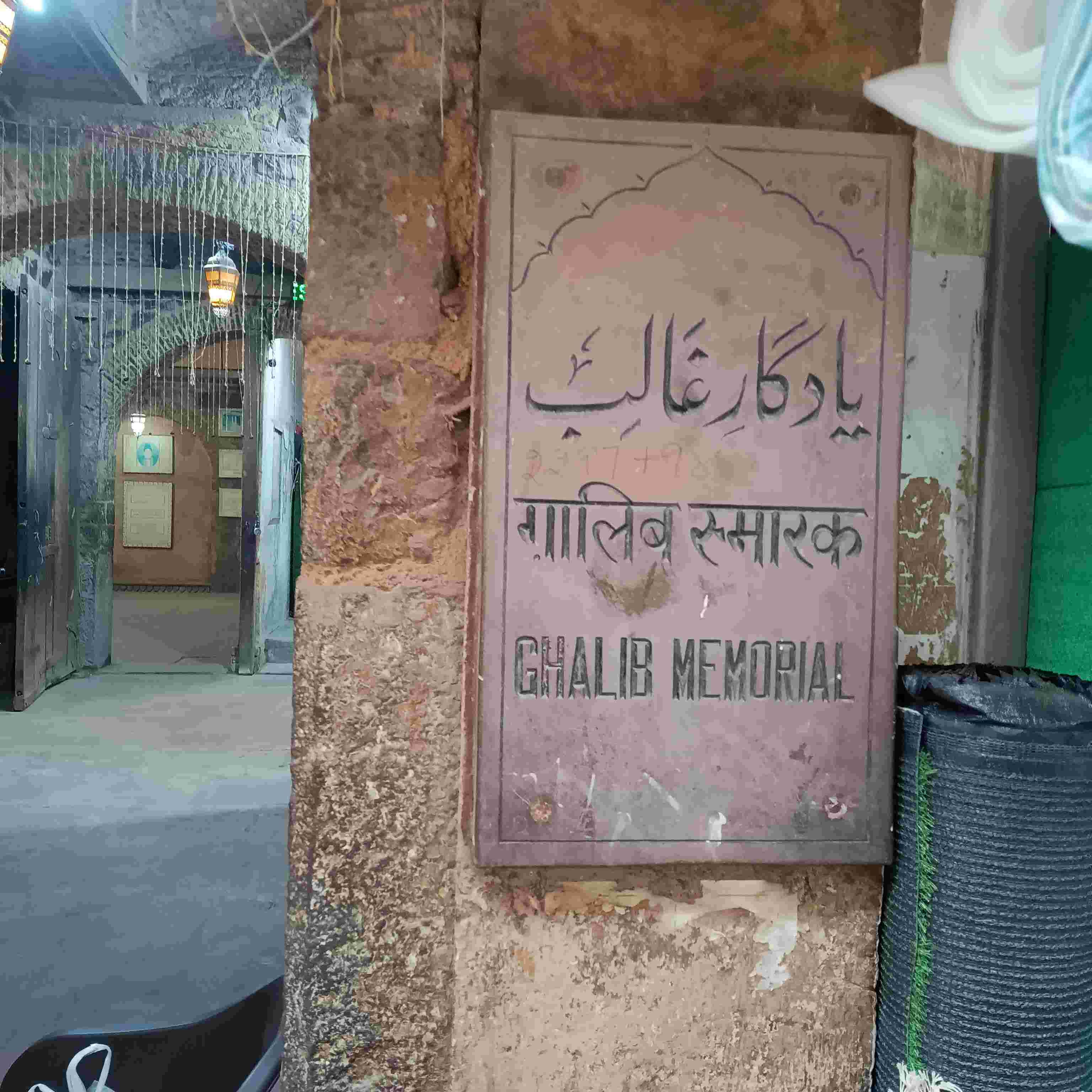
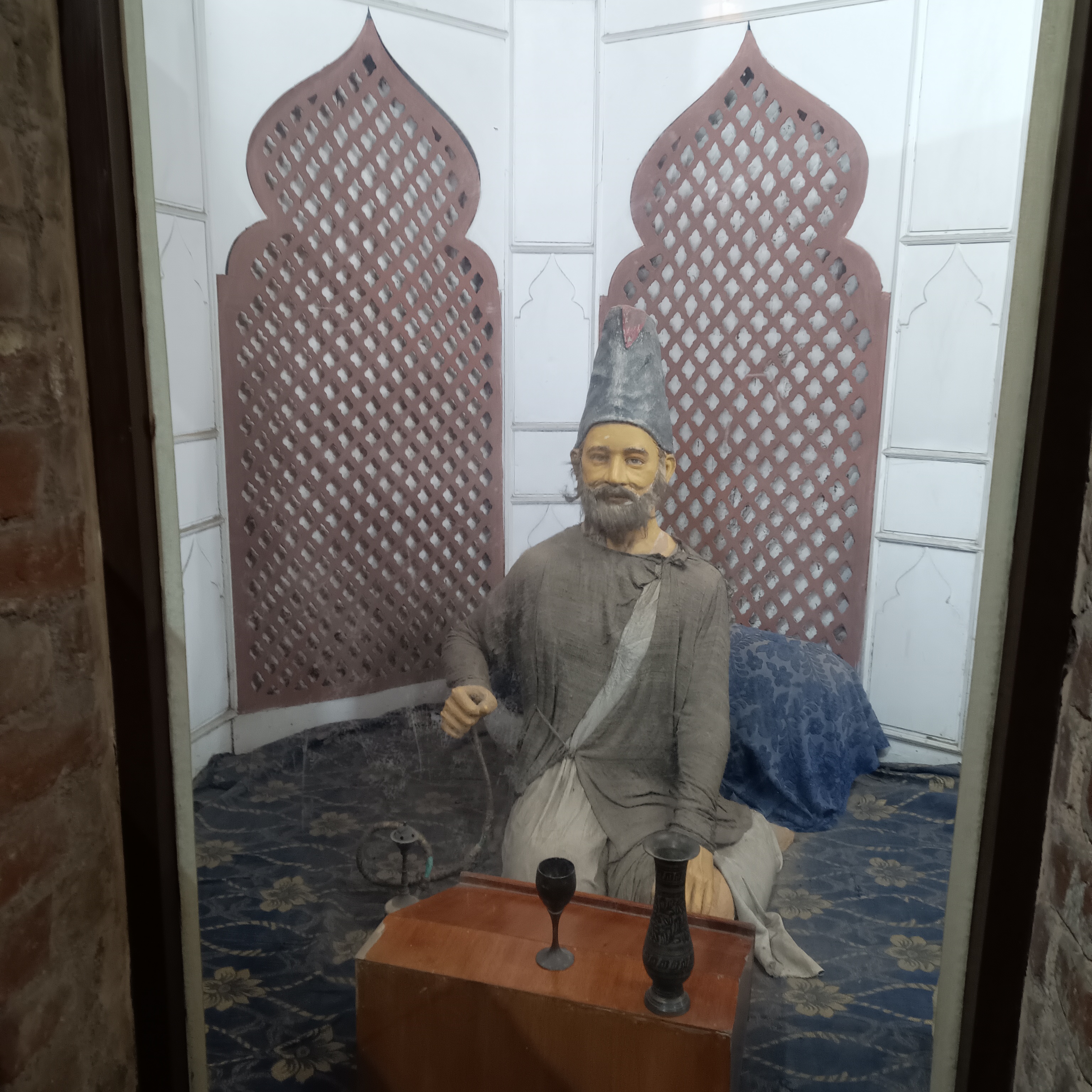
This place, where he lived from 1860 to 1869, till the time he breathed his last, has now been converted into a small museum of sorts. The main bust of Ghalib’s on display here has been gifted by Gulzar.
Mirza Ghalib
Born on December 27, 1797, in Agra, India, Ghalib’s life was marked by personal tragedies, political upheavals, and cultural transitions, all of which deeply influenced his poetic expression. Today, more than a century after his death, Ghalib remains one of the most celebrated poets in the Urdu and Persian literary traditions. His verses, rich with layers of meaning, continue to resonate with readers and scholars alike, offering insights into the human condition, love, pain, and the complexities of life.
Early Life and Personal Struggles
Ghalib was born into a family of Turkish aristocrats who had settled in India during the Mughal era. His father, Abdullah Beg Khan, was an officer in the army, but he died when Ghalib was just five years old. This left young Ghalib under the care of his uncle, Nasrullah Beg Khan, who also passed away a few years later. The early loss of his parents had a profound impact on Ghalib, and themes of loss, loneliness, and existential inquiry are recurrent in his poetry.
At the age of thirteen, Ghalib was married to Umrao Begum, a match arranged by his family. However, the marriage did not bring him the solace one might expect. Ghalib’s domestic life was fraught with tensions, and he found little happiness in it. None of his seven children survived beyond infancy. His financial struggles added to his woes, as he never held a stable job and relied on royal patronage, which was inconsistent at best.
The idea that life is one continuous painful struggle that can end only when life itself ends, is a recurring theme in his poetry. Consider this:
जब ज़िंदगी की क़ैद और ग़म का बन्धन एक ही है तो…
मरने से पहले आदमी ग़म से निजात पाए क्यूँ ?
The prison of life and the bondage of sorrow are the same,
Why should man be free of sorrow before dying?

Ghalib’s Literary Genius
Despite his personal hardships, Ghalib’s intellectual and poetic prowess blossomed. He was a polyglot, proficient in Urdu, Persian, and Turkish, and his poetry is a testament to his erudition. Ghalib’s work in Persian is extensive, but it is his Urdu poetry that has earned him eternal fame.
Ghalib’s ghazals are celebrated for their depth and complexity. A ghazal is a poetic form consisting of rhyming couplets and a refrain, with each line sharing the same meter. Ghalib mastered this form, infusing his verses with profound philosophical reflections, emotional intensity, and linguistic ingenuity. His poetry often grapples with the paradoxes of existence, the transience of life, and the elusive nature of love.
In keeping with the conventions of the classical ghazal, in most of Ghalib’s verses, the identity and the gender of the beloved are indeterminate. The critic/poet/writer Shamsur Rahman Faruqui explains that the convention of having the “idea” of a lover or beloved instead of an actual lover/beloved freed the poet-protagonist-lover from the demands of realism.
In one of my personal favourites on the tender emotion of love, he says:
उनके देखे से जो आ जाती है मुहं पर रौनक,
वो समझते हैं की बीमार का हाल अच्छा है.
My face is flushed with joy upon seeing my beloved,
Beloved mistakes my sickness to be a sign of good health.
One of the most remarkable aspects of Ghalib’s poetry is his exploration of the self. He delves into the intricacies of human identity, the soul’s relationship with the divine, and the quest for meaning in an indifferent world. For instance, in one of his famous couplets, Ghalib writes:
हज़ारों ख्वाहिशें ऐसी के हर ख्वाहिश पर दम निकले,
बहुत निकले मेरे अरमान फिर भी कम निकले
Thousands of desires, each worth dying for,
Many of them I have realised… yet I yearn for more.
This couplet reflects the insatiable nature of human desires, a theme that recurs throughout Ghalib’s poetry. His verses often portray a deep sense of melancholy, rooted in the understanding that the fulfilment of worldly desires is fleeting, and the ultimate truth lies beyond the material realm.
In many ways, the core of Ghalib’s poetry is not too far off from what Indian scriptures speak of.

The Philosophical Depth of Ghalib’s Poetry
Beyond his commentary on the socio-political changes of his time, Ghalib’s poetry delves into the philosophical. He was influenced by Sufism, a mystical Islamic belief system that emphasises the inward search for God and the personal experience of the divine. Sufi themes of love, union with the divine, and the eternal quest for truth permeate his poetry. However, Ghalib’s relationship with Sufism was complex. While he was drawn to its ideals, he also maintained a rational scepticism, often questioning established religious norms and dogmas. In one of his compositions, he mocks the hypocrisy of the preachers of Islam thus:
कहाँ मय-ख़ाने का दरवाज़ा ‘ग़ालिब’ और कहाँ वाइ’ज़
पर इतना जानते हैं कल वो जाता था कि हम निकले
What is the relation between the Preacher and the door of the tavern,
But believe me, Ghalib, I am sure I saw him slip in as I departed.
Ghalib’s poetry is also notable for its exploration of existential themes. He frequently contemplates the nature of reality, the impermanence of life, and the mysteries of the cosmos. His verses suggest a deep awareness of human knowledge’s limitations and the unknown’s vastness. In this sense, Ghalib can be seen as a precursor to modern existentialist thinkers, who similarly grappled with existence’s uncertainties.
Legacy and Influence
Ghalib passed away on February 15, 1869, in Delhi, but his legacy has only grown stronger with time. His poetry has been translated into numerous languages and continues to be studied, recited, and cherished by people across the world. Ghalib’s influence extends beyond literature; he has inspired musicians, filmmakers, and artists who have drawn upon his work to create new forms of artistic expression.
In India, Pakistan and elsewhere, Ghalib is not just a literary figure but a cultural icon. His ghazals are an integral part of the classical music tradition, and his life has been the subject of numerous plays, films, and television series.

Way back in 1954, Sohrab Modi gave us the movie Mirza Ghalib. Likewise, in 1961, Ataullah Hashmi of Pakistan gave us a movie on him.

In 1988, Gulzar came up with his television series which featured ghazals sung and composed by Jagjit Singh and Chitra Singh.
Various ghazal maestros like Mehdi Hassan, Iqbal Bano, Abida Parveen, Farida Khanum, Tina Sani, Noor Jehan, Suraiya, K L Saigal, Mohammed Rafi, Asha Bhosle, Begum Akhtar, Ghulam Ali, Lata Mangeshkar, Nusrat Fateh Ali Khan, and Rahat Fateh Ali Khan have sung his ghazals.
Low on The Richter Scale of Comprehension
Modern-day communication thrives on simplicity. Complex ideas are conveyed in a language that the masses understand. In other words, verses which would rate extremely high on the Richter Scale of Comprehension. However, it appears that most of our famous poets and literary figures perfected the art which is just the opposite. Simple ideas couched in high-profile and complex language, which only those at the top of the Language Proficiency Pyramid might fathom. Perhaps such literary geniuses wish to differentiate themselves from the hoi polloi.
When it comes to this particular trait, Ghalib has good company. In Urdu poetry, he is not always easy to understand. The poems dished out by him are often tough to understand, enriched as they happen to be with words drawn from the Persian language. In Hindi, the poetry of Jai Shankar Prasad comes to my mind. In Sanskrit, Kalidasa often keeps a lay reader guessing. In English, Shakespeare always leaves me baffled.
Quite some time back, I had luckily invested in a book of his poems which has not only the Urdu versions but also the corresponding translations in English and Hindi. As and when the ambience is right, I would play one of the renderings of Jagjit Singh, but only after having spotted the poem in the book. With lights dimmed, and one’s favourite tissue restorative perched on the table nearby, I get to feel the intensity of his words and end up experiencing a bliss which cannot be described in words!
Mirza Ghalib’s poetry is a treasure trove of wisdom, beauty, and emotional depth. His verses transcend the boundaries of time, language, and culture, speaking to the universal human experience. Ghalib’s ability to articulate the complexities of life with such eloquence and grace makes him a timeless poet, one whose work will continue to inspire generations to come. His legacy, like his poetry, is eternal—a shining beacon in the vast ocean of literary history.
For all lovers of Urdu poetry, visiting Ghalib’s haveli is a pilgrimage of sorts.
Notes:
- Vignettes of Chandni Chowk and movie/series posters courtesy of the World Wide Web.
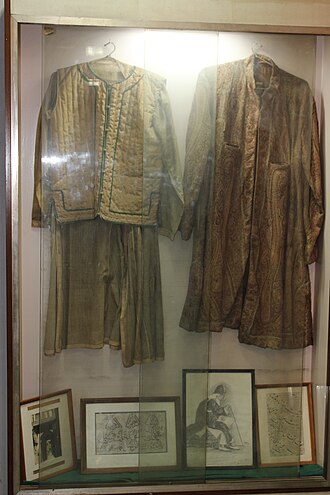
- Museum snaps taken by yours truly during a recent visit to the place.
- Inputs received from Colonel Vivek Prakash Singh (Retired), a renowned poet in Urdu and Hindi, are gratefully acknowledged.
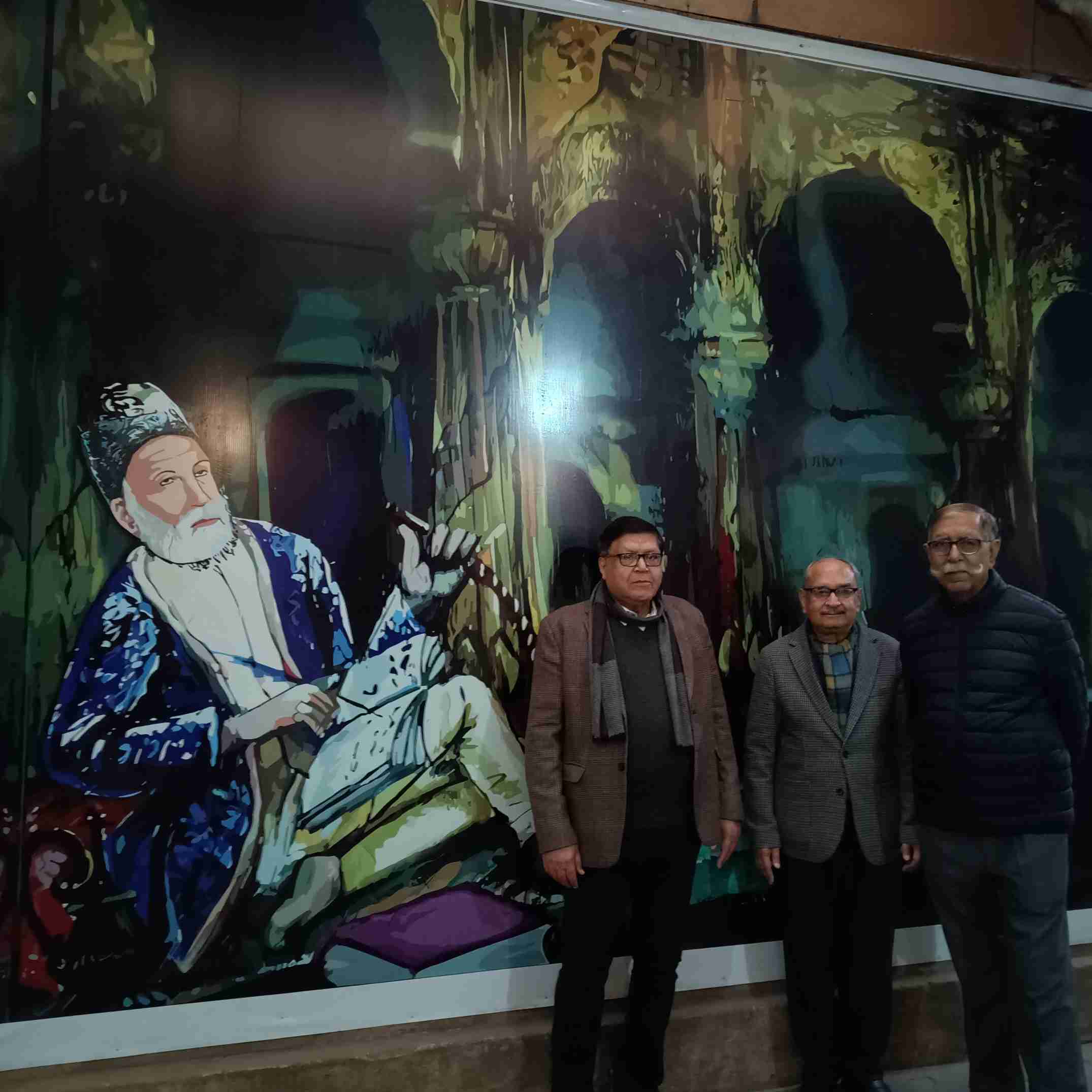
- Thanks are due to Sanjay Bhatia and Ashok Kalra who enabled this visit!
Related Posts:
P.G. Wodehouse in Poets’ Corner, Westminster Abbey — Plumtopia
Posted in What ho!, tagged P G Wodehouse, Poetry, Westminster Abbey on September 23, 2019| 2 Comments »

P.G. Wodehouse fans are celebrating the wonderful news from Westminster Abbey, where a memorial stone in Poet’s Corner has been dedicated to the beloved author. You can read more about it here: Westminster Abbey Honours P G Wodehouse (Westminster Abbey) PG Wodehouse has plum spot in Westminster Abbey (Patrick Kidd, The Times) PG Wodehouse commemorated […]
via P.G. Wodehouse in Poets’ Corner, Westminster Abbey — Plumtopia
Norway: Where the head is held high
Posted in The European Diaries, tagged Freedom, Inclusivity, India, Norway, Poetry, Rabindranath Tagore, Values, Work Culture on May 16, 2019| Leave a Comment »


Here is a country where the mind is without fear
And the head is held high
Where knowledge to children and youth is virtually free
And those distressed by the world are welcomed with open arms;
Where the definition of nationalism implies inclusivity
Fine arts of all countries and cultures are welcome
If narrow domestic walls exist, these are only to protect national interests
Where respect for the law of the land reigns supreme;
Where gender equity and diversity is not a mere slogan
The care offered to the elderly is exemplary
Some wish the taxes to be lower but realize the money is well spent
In many ways does it serve and comfort the citizens;
Where human endeavour aims to attain perfection
Words come out from an inner conviction
Gentle, helpful, physically active and resilient
Following a work culture which deserves to be aped;
Where one can encounter the true…
View original post 51 more words
Norway: Where the head is held high
Posted in The European Diaries, tagged Freedom, Inclusivity, India, Norway, Poetry, Rabindranath Tagore, Values, Work Culture on August 22, 2018| 2 Comments »

Here is a country where the mind is without fear
And the head is held high
Where knowledge to children and youth is virtually free
And those distressed by the world are welcomed with open arms;
Where the definition of nationalism implies inclusivity
Fine arts of all countries and cultures are welcome
If narrow domestic walls exist, these are only to protect national interests
Where respect for the law of the land reigns supreme;
Where gender equity and diversity is not a mere slogan
The care offered to the elderly is exemplary
Some wish the taxes to be lower but realize the money is well spent
In many ways does it serve and comfort the citizens;
Where human endeavour aims to attain perfection
Words come out from an inner conviction
Gentle, helpful, physically active and resilient
Following a work culture which deserves to be aped;
Where one can encounter the true gifts of nature
Clean air, pristine water, lakes and streams
One amongst which is the clear stream of reason
Leading to ever-widening thought and action;
Into this heaven of freedom, I wish this country to remain.
(Inspired by the famous poem ‘Where the mind is without fear…’ by Gurudev Rabindranath Tagore)
The six seasons of Kalidasa in Bollywood: Spring (Vasanta)
Posted in The Magic of Movies!, tagged Bollywood, Holi, Kalidasa, Lyrics, Music, Poetry, Ritusamhara, Seasons, Songs, Spring, Vasant on March 11, 2017| 5 Comments »
With the advent of spring, the fancy of our young ones would lightly turn to thoughts of love. Mother Nature would wholly approve. In the upper reaches, snow would have just started melting. Plants and shrubs would have started springing back to life. Green shoots would have started becoming visible. Flowers would be in full bloom. Birds and bees would be going about their daily chores. Sun would be shining through, albeit a little gently. A pleasant breeze laced with the sweet fragrance of flowers would be caressing our physical frames. Streams would be flowing with their gentle murmur. God may or not be in Heaven but a clear sky would be providing a perfect backdrop for the couples who happen to be in love.
In Ritusamhara, Kalidasa mentions that during this season, women are more enchanting. Sandal paste and other substances are often used to contain the spring…
View original post 1,035 more words
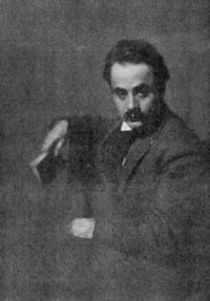
“On the Children” by Khalil Gibran
Posted in A Vibrant Life!, tagged Children, Khalil Gibran, Poetry on July 22, 2016| 1 Comment »
The more I read this poem, the more I admire the wisdom contained in its short but crisp composition!
Your children are not your children.
They are the sons and daughters of Life’s longing for itself.
They come through you but not from you,
And though they are with you, yet they belong not to you.
You may give them your love but not your thoughts.
For they have their own thoughts.
You may house their bodies but not their souls,
For their souls dwell in the house of tomorrow,
which you cannot visit, not even in your dreams.
You may strive to be like them, but seek not to make them like you.
For life goes not backward nor tarries with yesterday.
You are the bows from which your children as living arrows are sent forth.
The archer sees the mark upon the path of the infinite,
and He bends you with His might that His arrows may go swift and far.
Let your bending in the archer’s…
View original post 24 more words
The six seasons of Kalidasa in Bollywood: Spring (Vasanta)
Posted in The Magic of Movies!, tagged Bollywood, Holi, Kalidasa, Lyrics, Music, Poetry, Ritusamhara, Seasons, Songs, Spring, Vasant on June 11, 2016| 5 Comments »
With the advent of spring, the fancy of our young ones would lightly turn to thoughts of love. Mother Nature would wholly approve. In the upper reaches, snow would have just started melting. Plants and shrubs would have started springing back to life. Green shoots would have started becoming visible. Flowers would be in full bloom. Birds and bees would be going about their daily chores. Sun would be shining through, albeit a little gently. A pleasant breeze laced with the sweet fragrance of flowers would be caressing our physical frames. Streams would be flowing with their gentle murmur. God may or not be in Heaven but a clear sky would be providing a perfect backdrop for the couples who happen to be in love.
In Ritusamhara, Kalidasa mentions that during this season, women are more enchanting. Sandal paste and other substances are often used to contain the spring fever. The earth shines like a well decked bride in a red bridal costume. Those who happen to be lonely suffer the most in this pitiless season, as they happen to be missing the company of their beloved.
Bollywood celebrates the spring season with much ado and fervour. Dashing heroes, on their way to a new destination, would be soaking in the grandeur of nature. Sprightly heroines would be becoming aware of their own flawless beauty, often comparing it to different elements of nature.
Madhumati (1958, Bimal Roy)
Shagird (1967, Samir Ganguly)
Elsewhere, lissome heroines would be getting wooed by ardent heroes who would be praising their charms no end. Lovers would be teasing each other, running around trees and shrubs. Couples would be busy romancing in lush green valleys and gardens.
Suraj (1966, T Prakash Rao)
Buddha Mil Gaya (1971, Hrishikesh Mukherjee)
Aap Aaye Bahaar Aayee (1971, Mohan Kumar)
Here are some couplets from the Sixth Canto of Ritusamhara, and some Bollywood songs which these remind us of.
“Oh, dear, vernal trees are full with flowers, waters filled with lotuses, breezes loaded with their fragrances blowing agreeably, thereby both the eventides and daytimes are pleasant with those fragrant breezes, whereby the women are with concupiscence, and thus everything is highly pleasing now. [6-2]
Mamta (1966, Asit Sen)
Aradhana (1969 Shakti Samanta)
Abhinetri (1970, Subodh Mukherjee)
Kuch Kuch Hota Hai (1998, Karan Johar)
“The impassioned male koel, black singing bird, gladdened on savouring the invigorative essence of just grown mango flowers is now kissing his love passionately; so also this honeybee, abiding in lotuses savouring their nectar, is passionately mating with his love to her complaisance, sequestered in the petals of lotuses. [6-14]
Jewel Thief (1967, Vijay Anand)
Ghar (1978, Manik Chatterjee)
Chashme Baddoor (1981, Sai Paranjpye)
Chandni (1989, Yash Chopra)
“Passion is surging out in male kokila -s, singing birds, as they obtained jollity in this springtime on chewing mango flowers, thus they are singing inexplicably; honeybees, when drunk with the flowery nectar of those flowers, they are also droning hums murmuringly as their drinking song; with these hums and drones the hearts of new brides are flustered in a trice, even if they are in the service of their in-laws, where certain docility and prudishness are in demand. [6-21]
Jhanak Jhanak Payal Baaje (1955, V Shantaram)
Guide (1965, Vijay Anand)
Chupke Chupke (1975, Hrishikesh Mukherjee)
Hum Aapke Hain Kaun…! (1994, Sooraj Barjatya)
“These days the pleasure gardens are brightened up with whitely jasmines similar to the toothy grins of sprightly brides, and hence they are heart-stealing even for saints or sages that have neutralised their materialistic indulgences long back; as such, these gardens must have stolen the hearts of youths that are already tainted with seasonal sensualities. [6-23]
Teesri Manzil (1966, Vijay Anand)
Bobby (1973, Raj Kapoor)
Mausam (1975, Gulzar)
Chitchor (1976, Basu Chatterjee)
“On seeing a flowered mango tree, the frame of mind of any itinerant is overly woebegone, for he is dissociated with his ladylove; thus he shuts his eyes unable to behold that ladylike mango tree with her hairdo overlaid with flowers; obstructs his nose, for the fragrance of this ladylike mango tree is akin to that of his ladylove; thus he goes into a state of woefulness, and even he bewails and shrieks loudly… thus pitiless is this season, vasanta , spring, for singletons. [6-26]
Saranga (1961, Dhirubhai Desai)
Mere Mehboob (1963, H S Rawail)
Mehbooba (1976, Shakti Samanta)
Filhaal (2002, Meghna Gulzar)
“Delightful is this flowery month with the racketing of lusty honeybees and kokila-s around; with flowered mango trees that fruit sweet mangos; with karniakra flowers; each of which is becoming as though an acute of arrow of Love god, that ecstasies and even cleaves the hearts of self-respectful women, who cannot explicitly explain their pangs for love, nor can suffer them, implicitly… [6-27]
Akhri Khat (1966, Chetan Anand)
Sahib Biwi Aur Ghulam (1962, Abrar Alvi)
Anand (1971, Hrishikesh Mukherjee)
Khushboo (1975, Gulzar)
Just before the spring season ends, Holi, the delightful festival of colours, comes about and heralds the onset of summer. Kalidasa does not speak of this, but Bollywood loses no opportunity of showcasing this festival. Here are some of the ways in which it depicts the playful splash of colours.
Mother India (1957, Mehboob Khan)
Silsila (1981, Yash Chopra)
Darr (1993, Yash Chopra)
Baghban (2003, Ravi Chopra)
There is no doubt as to the evocative manner in which the poet has captured the affairs of the heart across all seasons. The manner in which he has captured the beauty of nature in all of his works, let alone in Ritusamhara, is exemplary.
Our dream merchants also follow the romantic affairs of love birds with equal alacrity. However, over the past few decades, the importance attached to nature has declined. Just as the social mores have changed, our lyricists have tried to keep pace with the commercial demands placed on them. The role of poetry has regrettably declined, leading to soulless and inane songs which have limited shelf life.
Hopefully, this is part of a cyclical phenomenon, just like all our seasons happen to be. A renaissance of sorts and a meaningful evolution is what one looks forward to.
Post Script:
Throughout this series of posts on Kalidasa, movie buffs could be excused for lamenting the overbearing presence of old songs and a relative absence of recent songs. This has possibly come about because of the manner in which the presentation techniques of our directors and cinematographers have evolved over the years.
In the older songs, the camera used to be relatively stable and the whole song presented against the backdrop of a single season. At the most, the dresses worn by the main protagonists would keep changing from one scene/stanza to the next.
In recent times, with crisper editing and a far more dynamic camera, the hero and the heroine often get captured in different seasons and at different locations in a single song, thereby making the task of identifying a song with a single season rather challenging.
[Note: Translation of ‘Ritusamhara’ courtesy Mr. Desiraju Hanumanta Rao: http://www.sanskritdocuments.org/sites/giirvaani/giirvaani/rs/rs_6.htm]
(Related Posts:
https://ashokbhatia.wordpress.com/2016/05/14/the-six-seasons-of-kalidasa-in-bollywood
https://ashokbhatia.wordpress.com/2016/05/15/the-six-seasons-of-kalidasa-in-bollywood-summer
https://ashokbhatia.wordpress.com/2016/05/20/the-six-seasons-of-kalidasa-in-bollywood-monsoon
https://ashokbhatia.wordpress.com/2016/05/27/the-six-seasons-of-kalidasa-in-bollywood-autumn
“On the Children” by Khalil Gibran
Posted in A Vibrant Life!, tagged Children, Khalil Gibran, Poetry on August 31, 2015| 7 Comments »

Your children are not your children.
They are the sons and daughters of Life’s longing for itself.
They come through you but not from you,
And though they are with you, yet they belong not to you.
You may give them your love but not your thoughts.
For they have their own thoughts.
You may house their bodies but not their souls,
For their souls dwell in the house of tomorrow,
which you cannot visit, not even in your dreams.
You may strive to be like them, but seek not to make them like you.
For life goes not backward nor tarries with yesterday.
You are the bows from which your children as living arrows are sent forth.
The archer sees the mark upon the path of the infinite,
and He bends you with His might that His arrows may go swift and far.
Let your bending in the archer’s hand be for gladness;
For even as He loves the arrow that flies,
so He loves also the bow that is stable.
(Khalil Gibran)
-
Recent Posts
Buy the Book

buy the book
Categories
-
cc
Tags
Art Bertie Wooster Bhagavad Gita Bingo Little Birthday Blake Mouton Grid Blogging Bollywood Book Campus Life CEO Chivalry Consciousness Coronavirus Corruption Edwin Empress of Blandings English Ethics Feminism Happiness Health Hindi Hollywood Human Values Humour India Jeeves Kalidasa KIds Leadership linkedin Literature Lord Emsworth Love Lyrics Mahabharata Mahatma Gandhi Management Movies Music Norway Paintings Panjab University People P G Wodehouse Politics Pondicherry Portugal Psmith Puducherry Rabindranath Tagore Ramayana Ritusamhara R K Laxman Romance Rosie M Banks Rupert Psmith Seasons Shakespeare Social Media Something Fresh Songs SPANDAN Spirituality SQ Sri Aurobindo Stephen Covey Switzerland Tatas Thos UBS Values Wodehousitis WomenArchives
- March 2026 (1)
- February 2026 (5)
- January 2026 (2)
- December 2025 (1)
- November 2025 (2)
- October 2025 (2)
- September 2025 (3)
- August 2025 (3)
- July 2025 (2)
- June 2025 (2)
- May 2025 (4)
- April 2025 (5)
- March 2025 (5)
- February 2025 (4)
- January 2025 (4)
- December 2024 (6)
- November 2024 (6)
- October 2024 (6)
- September 2024 (5)
- August 2024 (5)
- July 2024 (4)
- June 2024 (4)
- May 2024 (5)
- April 2024 (5)
- March 2024 (3)
- February 2024 (1)
- January 2024 (4)
- December 2023 (2)
- November 2023 (3)
- October 2023 (3)
- September 2023 (3)
- August 2023 (5)
- July 2023 (5)
- June 2023 (7)
- May 2023 (6)
- April 2023 (6)
- March 2023 (8)
- February 2023 (8)
- January 2023 (7)
- December 2022 (6)
- November 2022 (5)
- October 2022 (8)
- September 2022 (5)
- August 2022 (6)
- July 2022 (6)
- June 2022 (8)
- May 2022 (7)
- April 2022 (8)
- March 2022 (7)
- February 2022 (3)
- January 2022 (7)
- December 2021 (4)
- November 2021 (8)
- October 2021 (7)
- September 2021 (6)
- August 2021 (7)
- July 2021 (7)
- June 2021 (9)
- May 2021 (8)
- April 2021 (9)
- March 2021 (10)
- February 2021 (8)
- January 2021 (8)
- December 2020 (7)
- November 2020 (6)
- October 2020 (5)
- September 2020 (9)
- August 2020 (9)
- July 2020 (8)
- June 2020 (8)
- May 2020 (6)
- April 2020 (5)
- March 2020 (7)
- February 2020 (4)
- January 2020 (7)
- December 2019 (12)
- November 2019 (10)
- October 2019 (5)
- September 2019 (9)
- August 2019 (10)
- July 2019 (9)
- June 2019 (14)
- May 2019 (13)
- April 2019 (14)
- March 2019 (11)
- February 2019 (11)
- January 2019 (14)
- December 2018 (12)
- November 2018 (12)
- October 2018 (14)
- September 2018 (9)
- August 2018 (10)
- July 2018 (10)
- June 2018 (8)
- May 2018 (11)
- April 2018 (11)
- March 2018 (6)
- February 2018 (9)
- January 2018 (10)
- December 2017 (10)
- November 2017 (9)
- October 2017 (8)
- September 2017 (11)
- August 2017 (10)
- July 2017 (10)
- June 2017 (11)
- May 2017 (9)
- April 2017 (7)
- March 2017 (7)
- February 2017 (8)
- January 2017 (10)
- December 2016 (9)
- November 2016 (11)
- October 2016 (10)
- September 2016 (10)
- August 2016 (9)
- July 2016 (6)
- June 2016 (10)
- May 2016 (10)
- April 2016 (10)
- March 2016 (10)
- February 2016 (12)
- January 2016 (10)
- December 2015 (11)
- November 2015 (11)
- October 2015 (10)
- September 2015 (10)
- August 2015 (10)
- July 2015 (10)
- June 2015 (10)
- May 2015 (10)
- April 2015 (10)
- March 2015 (9)
- February 2015 (10)
- January 2015 (8)
- December 2014 (9)
- November 2014 (8)
- October 2014 (8)
- September 2014 (7)
- August 2014 (7)
- July 2014 (7)
- June 2014 (7)
- May 2014 (7)
- April 2014 (7)
- March 2014 (7)
- February 2014 (6)
- January 2014 (7)
- December 2013 (6)
- November 2013 (6)
- October 2013 (6)
- September 2013 (6)
- August 2013 (6)
- July 2013 (6)
- June 2013 (6)
- May 2013 (6)
- April 2013 (6)
- March 2013 (6)
- February 2013 (6)
- January 2013 (6)
- December 2012 (4)
- November 2012 (4)
- October 2012 (3)
- September 2012 (2)
- August 2012 (4)
- July 2012 (2)
- June 2012 (2)
- May 2012 (2)
- April 2012 (2)
- March 2012 (2)
- February 2012 (3)
- December 2011 (3)
- November 2011 (1)
- October 2011 (2)
- September 2011 (2)
- August 2011 (2)
- July 2011 (2)
- June 2011 (3)

 ashokbhatia