Posts Tagged ‘Politics’
Of politicos, with a dash of humour!
Posted in What ho!, tagged Humour, P G Wodehouse, Politicos, Politics, R K Laxman, Sudhir Dar on February 4, 2025| Leave a Comment »
When a Plum fan becomes the Prime Minister of India…
Posted in What ho!, tagged Humour, India, P G Wodehouse, Politics, Prime Minister on August 15, 2024| Leave a Comment »
Scratch and Sniff unravel Democracy: Guest Post by Suresh Subrahmanyan
Posted in For India, With Love!, tagged BJP, Congress, General Elections, Humour, India, India Alliance, NDA, Politics on June 11, 2024| 2 Comments »

Two elderly gentlemen were taking their early morning stroll at our nearby park. Their topic of conversation, unsurprisingly, was the final results of our General Elections. For want of a better option let us call them Scratch and Sniff.
‘I say Sniff, I am trying to get my head around the election results. What exactly happened? Which side won, by which I also mean which side lost?’
‘Good question, Scratch. From what I have been able to gather from the forest of numbers being thrown at us by the Election Commission, the ruling party, NDA, has earned the right to form the government. Just about.’
‘Just about? But the INDI Alliance claims they are the moral victors, whatever that means, and that the PM should put in his papers. Is it not a straightforward question of who won the maximum number of seats? I am perplexed in the extreme, Sniff.’
‘Like Othello.’
‘Who?’
‘Never mind, Scratch. Forget about Othello. The point I was making was that both sides are claiming victory which, to my knowledge, is a first of its kind in our political history.’
‘Look Sniff, I did not find the time to read the papers this morning and I do not watch television. Am I to understand that there was a tie and that both the sides bagged exactly the same number of seats? Amazing.’
‘You have such a sweet, simple mind, Scratch. No, no. No tie involved. Let me try and lay it out for you in terms even a 10-year-old will follow. The NDA won but the BJP did not. Clear so far?’
‘Then how come Mr. Modi talks about taking the oath of office for a record third term, if the BJP did not win.’
‘Dear oh dear, this is going to take all day. Look Scratch, pin your ears back and listen carefully. The BJP needed 272 seats for a simple majority to form the government on their own. They only got 240 seats. So, they had to depend on the Telugu Desam Party (TDP) and the Janata Dal United (JDU), with whom they had formed a pre-poll alliance, to bail them out and get them over the line. That is the long and short of it.’
‘Wow Sniff, you seem to know so much. In other words, it was only a Pyrrhic victory for the BJP. Cold comfort.’
‘There you go again, why don’t you speak in plain English?’
‘Sorry Sniff. One last question. How come the INDI Alliance are shouting from the rooftops that they will form the government if they don’t have the numbers?’
‘Ah, now we enter the dark world of skullduggery. A bit of body snatching, some behind-the-scenes chicanery, plenty of blandishments on offer – anything can happen. Both sides are at it.’
‘I cannot figure out anything you are saying, Sniff. Are you telling me that neither side won the elections? I can feel a headache coming on. For the last time, tell me who won the 2024 General Elections?’
‘Democracy.’
Notes:
- Illustration courtesy Suvarna Sanyal.
- A version of this article has already appeared recently in The Deccan Herald.
- Permission to blog this piece here is gratefully acknowledged.
Related Posts:
When a Plum fan becomes the Prime Minister of India…
Posted in What ho!, tagged Humour, India, P G Wodehouse, Politics, Prime Minister on April 10, 2023| 6 Comments »

The Indian branch of PBC, the Plum Broadcasting Corporation, has now released the transcript of a recent interview by the new Prime Minister of India, who happens to be a great admirer of the works of Sir P. G. Wodehouse.
Q. Sir, congratulations for the thumping majority with which you and your party has won the last General Election. May we know how you are feeling?
A. Chuffed, honoured, and humbled, I say. The credit goes to people who have brought home the gravy, so to say. They have placed their trust in us, and we must reciprocate it by delivering satisfaction.
We take over the reins of our diverse country at a time when the foundations of our historic civilization have been quivering for some time. Our peaceful denizens have quietly suffered in the recent past owing to high inflation, rampant corruption, leap-frogging unemployment rates, increasing disparities in income, flawed economic policies, crony capitalism, raging pandemics, suppression of free speech, a biased media, persecution of minorities, and, above all, a weakening of the democratic, secular, and federal structure of our great nation. Under the command of a right-wing party, the nation appears to have put itself on a trajectory which is not envisaged by our constituion; we ride on a wave of pseudo-nationalism and majoritarianism. We have built physical roads but have also created mental roads across communities. Milk of human kindness often appears to have got evaporated.
All this is not to claim that no decent work has got done. In any case, it is not our intention to blame the previous regimes for the state of the nation today, but corrective steps do need to be taken promptly through proper channels to restore communal harmony and usher in an era where joy, light, peace, and sweetness prevail. We need to give up our obsession with notching up GDP numbers and instead start focusing on boosting our Gross National Happiness numbers.
Q. These are big objectives. Just how do you plan to achieve all this?
A. To begin with, I have requested Lord Emsworth, the Hon’ble President, to play a more active role in protecting our great constitution. He has very graciously consented to take some time off from pottering about in the Mughal Gardens, standing up to Agnus McAllister, and closely monitoring the wellbeing of the Empress of Rashtrapati Bhavan. With the assistance of the ever-suspicious Rupert Baxter, several statutory bodies like the Election Commission, the Enforcement Directorate, the Central Bureau of Investigation, the Comptroller and Auditor General of India, and the office of the Lok Pal shall henceforth be guided by his office. He will henceforth also play a role in appointments to the higher judiciary. We have also brought back the Right to Information Act with more teeth, putting it under the President’s direct control.
Under him, a committee headed by Sir Watkyn Bassett, a prominent beak and the Chief Justice of India, is already working on steps to be taken to protect our constitution from being marginalized by the brute majority of a ruling dispensation in future. An appropriate amendment bill will thereafter by moved through the Parliament, so concerned citizens may breathe easy.
Q. But will this not make managing the day-to-day affairs of the country more challenging for your own government?
A. I believe that harsh slings and arrows of governance need to be faced with a stiff-upper-lip and a liberal dash of the milk of human kindness. As politicos, our first duty is to be accountable and responsible for our actions, open to constructive criticism from all quarters. This is what democracy is all about.
Q. So, you wish to usher in some political reforms?
A. Indeed. Gradually, we wish to launch an Indian Political Service, which would bring in more educated people into our legislative bodies, ruling out those from business houses and with criminal backgrounds from polluting the environs of the temples of our democracy. We have already announced that all political funding shall henceforth be transparent, so the quid-pro-quo between the government and its donors and contributors is in the public domain.
Q. You appear to have set a tough path for yourself. The results of such changes may come about in a decade’s time, though you will face an electoral challenge much earlier.
A. Comrade, if the people appreciate the work that we do, and if it is communicated appropriately, we are willing to take our chances. What we need for India is to have a clear strategic goal for the year 2047, when we shall be completing a century as an independent country. The kind of strategic challenges we face often leave many of us baffled, bewildered, bemused, boggled, perplexed, puzzled, nonplussed, and mystified, as Roget would put it.
Q. Could you kindly elaborate on this, please?
A. I allude to such concerns as global warming and the resultant displacement of our citizens who live in coastal areas, corruption in public places, converting the red-tape mentality of our civil servants to a green-tape one, and meeting the challenges of such technological advances as Artificial Intelligence and Machine Learning while ensuring their fair and impartial use. Besides, the present task of creating a harmonious social fabric which is conducive to economic advancement, innovation, and industrial growth. Then we have obnoxious neighbours who keep on playing Chinese Checkers with us. None of these happen to be low hanging fruits. But we cannot afford to get distracted by myopic considerations and remain focused only on winning elections, irrespective of the means deployed.
It is essentially to address such strategic concerns that we have decided to revive the Planning Commission which is headed by an eminent economist like Lavender Briggs (of Service with a Smile fame), a distinguished graduate of the London School of Economics, with an impeccable track record.
Q. What about the role of the Prime Minister’s Office (PMO)? And the fifty-eight ministries and the ninety-three departments that you have?
A. I strongly believe in empowering my team members to manage their respective portfolios with much aplomb. Hence, the PMO is already being downsized, if you know what I mean. Likewise, we plan to reduce the number of ministries and departments in the government by at least 25% by this year end. At present, an empowered inter-ministerial group is hammering out a detailed proposal in this regard, before it gets unleashed upon our denizens.
Q. Please tell us something about your team members, as you prefer to call them.
A. Reginald Jeeves now heads the Home Ministry. Using his vast knowledge, tact, and resource, he is resolving quite a few of the internal issues that we face. His priority is to ensure that inter-faith harmony is restored as well as maintained without further delay. He has advised courts to take suo moto cognizance of all hate speeches and nip the problem in the bud. Thus, hate speeches have already become a thing of the past. He is using his famous technique of studying the psychology of the individual to usher in major reforms, designed to improve the morale of the police force, and the effectiveness of our intelligence agencies. An image makeover for our rozzers is being rolled out, so lay citizens see them as facilitators and helpers-in-distress rather than being a source of fear and doubt.
Aunt Agatha, you know the one with a beaky nose, an eagle eye, and a lot of grey hair, now heads the Defence Ministry, ensuring that our irate neighbours keep their territorial ambitions under check. Two persons, Roderick Spode, and Roberta Wickham ably assist her.
Spode keeps crushing all attempts by terrorists and anti-nationals working at the behest of some neighbouring countries under his size eleven boots. As you know, he loves seeing the colour of their insides and jumping on the remains with his hob-nailed boots. Unbeknown to many, he has built his own brigade of red shorts who keep conducting tit-for-tat surgical strikes in the enemy’s territories, often with gratifying results. To ensure that his reputation remains blemish-free, he has sold off the Eulalie Soares brand to an international fashion brand of repute.
Roberta Wickham, who otherwise heads the Department of Goofy Technologies as well, deploys her own band of femme fatales who carry laser-guided and AI-enabled needles which they often use to puncture the hot water bottles of the global leaders and their obnoxious deputies who keep playing anti-India games and keep threatening the country with nuclear attacks.
Peter Patt (the financier of Piccadily Jim fame), now steers the Finance Ministry, keeping a strict check on our debt levels, budgetary deficits and is forever busy juggling the demands from diverse sources which keep coming his way for financial succour. Given the buoyancy in our direct and indirect tax revenues, the wizened old bean-counter ensures that dues to states are cleared swiftly. He may soon introduce a scheme to boost the quality of health care and education across the country. Unlike in the past, we do not wish to abdicate our responsibility to the citizens of India on these two crucial aspects of their lives and livelihoods. In his maiden budget, he has also announced liberal incentives for citizens in the 65+ year bracket, besides an upkeep allowance for all whose annual income falls below the poverty level.
John Bickersdyke (of Psmith in the City fame) now heads the Reserve Bank of India, keeping a keen eye on inflation, forex balances, non-performing assets, and senior level appointments at large public sector banks.
Aunt Dahlia has taken over the reins of the External Affairs Ministry, playing with fire and ice and performing the delicate dance of manners and protocol. Her humanity, sporting qualities, and general good-eggishness help her in this delicate assignment. When she gets into her Quorn and Pytchley mode and starts a conversation with either ‘Yoicks’ or ‘Tally Ho!,’ leaders and diplomats are apt to sit up and take notice. She is very busy calling on all the important world leaders and presenting them with copies of not only a few books of the Master Wordsmith of our times but also some copies of her quarterly journal which has interesting articles on topics of interest to the high and mighty, including one which speaks of ‘What the Well-dressed Global Leaders are Wearing’, written by Bertie Wooster, her famous nephew.
Ashe Marson (of Something Fresh fame), the Wellbeing Minister, and his team is focused not only on fighting the Covid pandemic but also the increasingly high incidence of such silent killers as diabetes, hypertension, and cardiac failures in the country, even amongst the younger lot. All the government clinics across the country are getting spruced up and flying squads have been formed to keep a tab on the operational condition of these. Trained experts in Larsen Exercises are being made available in a phased manner. Importance of brisk walks, cold baths, and strict diet control is being highlighted. Fast food chains, railways, train stations, bus stands and street food vendors at other public places are being incentivised to offer healthier eating options to the lay public, like fruit juices, millet-based non-fried snacks, and sugarless savouries.
Since the incidence of mental illnesses is rising rapidly and because reporting these generally carries a social stigma for Indians, Sir Roderick Glossop is assisting the minister in rolling out schemes to reduce the Looniness Quotient of the people, thereby enabling the citizens of the country to lead stress-free and happier lives.
As an Education Minister, Miss Tomlinson, who has this indefinable air of being reluctant to stand any nonsense, is burning the proverbial midnight oil to ensure that our coming generations lead lives full of joy and happiness, facing the myriad challenges of life with a jaunty sangfroid. Experts are revamping the education system to imbibe such values in the students as secularism, love for the other, civic sense, and the milk of human kindness. Books by P. G. Wodehouse have been made mandatory from the middle level school onwards, so the wards develop a sense of humour in their formative years. In many institutions, ‘Sonny Boy’ has become the morning prayer favourite. Teams of linguists have been tasked with translating Plum’s works in all the major languages of India. Teachers are being counselled to drastically reduce the tyranny of the classroom, slowly giving way to laughter and light-hearted banter in the classrooms. Things are perking up in general. Enrolment levels have improved. Children no longer cry or throw tantrums when being escorted to schools; rather, they insist on not missing their classes, making the working parents breathe easier. Engineering and management institutions are prompting their faculty members to develop academic literature and case studies based on his books and stories, thereby promoting the use of the Milk of Human Kindness in handling managerial challenges.
Our Commerce and Industries Minister, Joan Valentine, is a girl of action; a girl whom life has made both reckless and wary of friendly advances, reckless when there was a venture afoot. She is busy facilitating business houses to pour more money into the system, so additional employment opportunities may get created for the youth. She is deeply concerned about crony capitalism and the rise of oligopoly where select few businesses corner most of the market opportunities, often at the cost of MSMEs and SSI units, and to the obvious disadvantage of the customer. She is consciously encouraging relatively smaller businesses to start growing faster, so the market offers a level playing field and the end customer gets better value for money. Businesses which deal in such precious objects and collectibles as antique jewellery, precious stones and scarabs are her favourites. She is being supported by Gussie Fink-Nottle who is busy rolling out schemes to boost the employment prospects of youth by encouraging the newt-rearing industry.
The brainy and athletic Honoria Glossop, who has an assertive personality and a forceful voice, handles the Youth and Sports Ministry. She is busy devising schemes to motivate more of our youth to take up competitive sports, thereby improving upon our performance at international events. To assist women facing harassment of any kind, she has set up a direct hotline for registering complaints and gets the same objectively and empathically address the same promptly through proper channels.
Sally Nicholas, who heads the Ministry of Skill Development and Entrepreneurship, takes her role very seriously. Hers is a democratic soul who dislikes pomposity; instead, she believes in true merit. Given her diverse experience in New York, first as a taxi dancer and then as a promoter of theatre, makes her well equipped to guide unemployed youth in the country to realize their full potential.
We have rechristened the Ministry of Women Development as the Ministry of Chivalry instead. Bertie Wooster heads it. With the support of various members of the Drones Club, he has set up branches of the Institute of Chivalry in all higher education institutions in the country. Besides conducting self-defence classes for the members of the tribe of the delicately nurtured, these institutes have training programs designed to teach those belonging to the so-called sterner sex skills in managing such household work as socks mending, cooking, vacuuming, dish washing, and baby-sitting. Dr Sally Smith supports him in all health-related matters for women of all age brackets. Laura Pyke has already designed special diets comprising fat-soluble vitamins to address the challenge of malnutrition amongst kids and women.
Rupert Psmith heads the Ministry of Information & Broadcasting. Given his exposure to the field of journalism, he is keen on promoting media houses which can set higher standards of investigation and unbiased reporting from the field. He has already started a popular TV and radio show entitled Dil Ki Baat which tries to bring together youngsters who happen to like the narratives dished out by Plum. We believe that if some of them were to decide to walk the aisle together, the progeny is quite likely to inherit the pleasurable affliction of Wodehousitis. This would mean that the nurses, the baby-sitters, the child caretakers, the private-school masters, and the public-school heads who will take on the responsibility of looking after such rare specimen of humanity who represent a delectable blend of the genes of their parents, would be relieved.
Hon. Galahad Threepwood oversees the Ministry of Happiness, whereas Pauline Stoker takes care of the Sports Ministry. Ministry of Tourism is headed by Angela Travers who is developing dolphin-watching sites and shark-sighting cruises through the 7,500 kms long coastline of the country. Captain Cuthbert Gervase ‘Bwana’ Brabazon-Biggar takes care of the Ministry of Forests and Wildlife.
Department of Science, Technology and Innovation is headed by Wilfred Mulliner, the famous inventor of such products as Mulliner’s Buck-U-Uppo, Raven Gypsy Face Cream, and Reduc-O.
Florence Craye is steering Literature and Fine Arts. George Bevan takes care of Culture and Theatre.

Q. What is your opinion about the Bretton Woods Institutions like the World Bank and the United Nations?
A. I strongly believe that their approach to international affairs needs to be recalibrated. You will agree that the present model of capitalism has merely resulted in a steep rise in the income disparities between the haves and the have-nots across the world. An institution like the World Bank could be coming up with proposals for a new model of developmental economics which would address this issue. Likewise, the UN can consider declaring a Charter of Global Happiness and take initiatives designed to spread cheer and happiness amongst all the citizens of our planet. Ideally, what we need now is an International League of Happiness instead, where aggressors do not end up controlling the future of militarily weaker countries. Global Peace Keeping Forces can be trained in Wodehousean skills and redeployed to monitor and promote laughter and mirth in strife torn areas.
Q. In your maiden speech from the ramparts of the Red Fort today, you mentioned introducing some new civilian awards. Would you care to elaborate, please?
A. We wish to promote Plum’s philosophy of living a happier life in a big way. To this end, we have framed several proposals to institute awards for those who follow the values espoused by him through his books and stories. But we are still receiving feedback from different stakeholders. I shall soon come back to you with further details.
Q. Thank you for your precious time. Allow me to say that there are indeed times when you sound like a specific dream-rabbit.
A. Thank you. My team and I do intend to give satisfaction to the citizens of this great country of ours. The basic idea is to turn India into a jolly good place full of vim and vigour, where all are free to pursue their dreams and have a jolly good time doing it and where people can gaze at the future with a chin-up attitude!
To put it simply, to endeavour to realize the sentiments expressed by Gurudev Rabindranath Tagore so very eloquently in his composition ‘Where the mind is without fear….’
Notes:
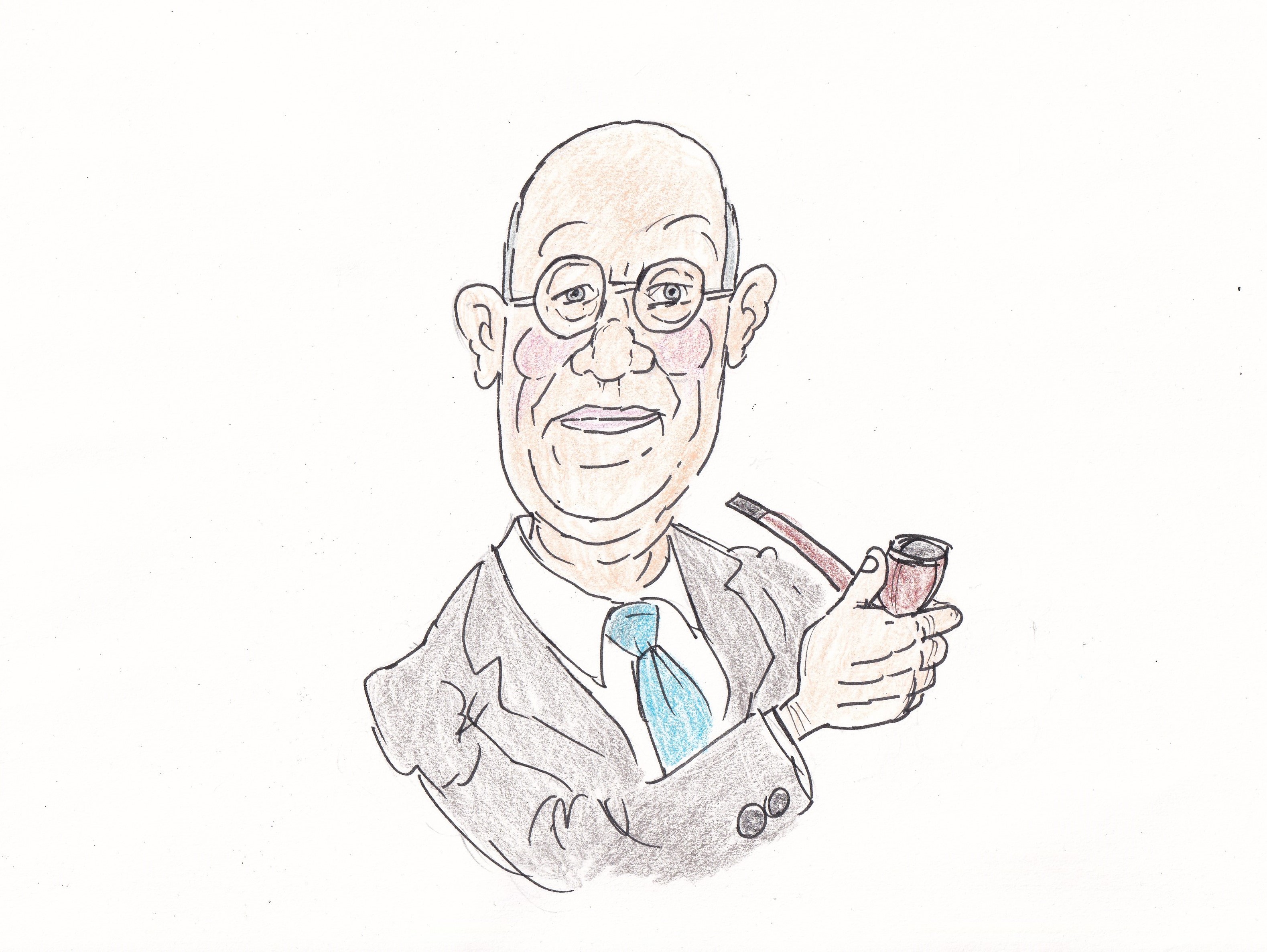
- Inputs from Chakravarti Madhusudana and Suryamouli Datta are gratefully acknowledged. Caricature of Plum courtesy Suvarna Sanyal. PBC logo courtesy Shalini Bhatia.
- This is a work of pure fiction, merely meant to spread some cheer, light and sweetness amongst those who take a jaundiced view of the situation in India. It has been written without any malice towards anyone. Any resemblance to either a living/dead person or any situation is purely imaginary and false.
- No animals, trees, or forests were harmed during the writing of his piece, if piece is indeed the word the author wants.
Related Posts:
The Political P.G. Wodehouse: Guest Post by Bengt Malmberg
Posted in What ho!, tagged Germany, Humour, P G Wodehouse, Politics, Russia, UK, World War II on April 7, 2023| Leave a Comment »

In most biographies and essays in papers P. G. Wodehouse is regarded as naïve. He is politically ignorant and not interested. This fact in some way explains the great mistake of his life when speaking in the German radio 1941 to his readers in USA, which Goebbels later retransmitted to Britain. He has been compared with Lord Emsworth as he himself described him in Something Fresh 1915:
“Other people worried about all sorts of things – strikes, wars, suffragettes, diminishing birth rates, the growing materialism of the age, and a score of similar objects. Worrying indeed, seemed to be the twentieth century´s speciality. Lord Emsworth never worried.”
This comparison is very unfair. Already in the above number of problems Wodehouse is mentioning you notice his awareness of actual problems. My aim with the following analysis is to show how Wodehouse kept himself well informed politically if you read his stories…
View original post 3,452 more words
The Indian Curry Dished Out by P. G. Wodehouse (Part 8 of 9)
Posted in What ho!, tagged 1947, Humour, India, Malcolm Muggeridge, Missing Ingredients, P G Wodehouse, Partition, Politics, Rudyard Kipling, Shashi Tharoor, UK, USA, Values on August 11, 2021| 2 Comments »
(Continued)
Some Missing Ingredients in the Curry
In Plum’s narratives, we encounter American millionaires, French cooks, Russian peasants, Italian waiters, Spanish ladies and white hunters and huntresses who keep popping up in Africa. We also get to meet well-endowed American ladies who are on the lookout for castles which are owned by impecunious English gentlemen.
When it comes to India, we get introduced to military men, royals and others who narrate some juicy details or the other about that exotic land. He also gives us a sneak peek into the civil disobedience movement of Mahatma Gandhi, the Father of the Nation of India. Rabindranath Tagore’s dietary habits, like those of Mahatma Gandhi, get commented upon. Taj Mahal finds a mention.
Some of his characters are even desirous of trooping down to India to study its social conditions while some emulate the mystics contemplating on the infinite in caves in Himalayas or elsewhere. We come to know of some cities as well.

To Plum’s credit, he even quotes Rudyard Kipling, the India-born author whose works were inspired by his country of birth:
‘I’ve said it before, and I’ll say it again – girls are rummy. Old Pop Kipling never said a truer word than when he made that crack about the f. of the s. being d. than the m.’ (Right Ho, Jeeves)
But if he had wanted to, Plum could have used a number of other Indian resources to further enrich his narratives.
Alas, we do not find any mention of such literary figures as Kalidasa, besides Aryabhata or Ramanuja, the famous mathematicians. The four Vedas are nowhere to be found. References to India’s soft power comprising such aspects as spirituality, its multi-layered scriptures and various dance forms are sadly missing.
Above all, the mind-numbing diversity of the spirit of India is missing. Its wide spectrum of ethnicities, languages, beliefs, practices and cuisines is nowhere to be found. These are facets of India which have missed out on his wit and wisdom. It is indeed a delectable irony of sorts that this write up is labelled as The Indian Curry Dished Out by P G Wodehouse, even though it has not thrown up even a single reference to any Indian dish!
Imagine a distraught Gussie Fink-Nottle pining for Madeline Bassett and sending messages to her through clouds passing overhead, a la ‘Meghadut’, the classic poem penned by Kalidasa. Poets like Ralston McTodd would have been found drawing some inspiration from the creative outpourings of Tagore. Personalities like Indian scientists and mathematicians would have helped some sleepless guardians of the peace – like Constable Oates – to improve their methods of investigation, improving the prospects of their being noticed by Scotland Yard. To improve Bertie’s intellect, all Florence Craye had to do was to insist that he peruse at least one of the chapters of the ‘Bhagavad Gita’. Laura Pyke could have drawn some inspiration from the science of ‘Ayurveda’, the healthy-lifestyle system that people in India have used for more than 5,000 years. Anatole could have been found whipping up ‘chhole bhature’ or ‘dosa’s!
Yoga could have helped someone like Ashe Marson to treat his clients suffering from acute dyspepsia to heal faster and better. Sir Roderick Glossop could have gone about advising his loonier patients to make meditation an essential part of their mundane lives. Vicars could have lived a happier Thos-infested life while brooding on spiritual tenets dished out by Indian scriptures, thereby becoming hotter at their jobs. George Bevan, while working on one of his next musical comedies, could have been drawing inspiration from the ‘Natya Shastra’ of Bharata Muni. Gentlemen aspiring for India rubber legs could have been practising such dance forms as ‘Kathak’ or ‘Bharatnatyam.’
The possibilities are endless. The mind boggles. But one would do well not to be concerned with what might have been. Instead, the focus needs to be on the rich legacy Plum left behind for us to rejoice in.
A Consistent Depiction, Despite 1947
The India that Plum would refer to belongs to an era which is long since bygone. India gained independence in 1947, but his works published during the period from 1947 (Joy in the Morning) till 1974 (Aunts Aren’t Gentlemen) do not reveal much change in his imagination. If one were to compare allusions to India based on Wodehouse’s works published before and after 1947, one notices a singular consistency. Astral bodies, scorpions and cobras continue to rule the roost.
The insignificance of the year of India gaining independence from the British Raj in Plum’s works has its own merits. Much like the relationship between Bertie Wooster and Tuppy Glossop, which soured for some time when the former was forced to take a dip in the water even when suitably attired, a friendly spirit of joie de vivre appears to have prevailed and both countries have moved on.

Malcolm Muggeridge, who was an editor of Punch, had spent two extended periods in India, once during 1923-26, as a lecturer in English at a college in Kerala, and then during the early 1930s as an assistant editor of the Statesman. According to Ruskin Bond, he is reported to have said that ‘the only real Englishmen to be found in the world were to be found in India.’
Many enlightened Indians who take a broad view of things, or those who were born much after 1947 and have not suffered the birth pangs of their country, admire the Crown rule for having left behind a rich legacy in terms of a legal framework, a bureaucracy, a railway network, partial linguistic proficiency in English and a fine army with its own traditions. The genesis for such a legacy to have come about could have been rooted in stark commercialism and a stiff-upper-lip-type control over the people, but that need not distract us from the fine institutions created and left behind by the British in 1947.
But many others, especially those who have been exposed to the personal trauma of partition which ended up displacing an estimated 10 to 20 million people along religious lines, or their descendants who have heard the horror stories of those trying times, and many others, would speak of the manner in which Indians of yore were exploited by the British. They would lament the decline of their country’s share in the global Gross Domestic Product from roughly 27 percent in the 1700s to roughly 3 percent in 1947. (Sources: Wikipedia and a talk by Dr. Shashi Tharoor, a famous fan of Plum’s and a Member of Parliament of India, https://www.youtube.com/watch?v=OB5ykS-_-CI)
In the present scenario, both the countries, the erstwhile rulers as well as the ruled, enjoy a healthy and vibrant relationship. Even during the two World Wars in the 1900s, Indian soldiers had made the supreme sacrifice, supporting the British/Allied forces. Over time, close to 150,000 soldiers are said to have died while supporting the wars fought by the Empire. A private sector steel company in India had produced rails much to the satisfaction of the rulers. Sure enough, there were mutinies, internal skirmishes and episodes of non-violent civil disobedience, but there were clear signs of good collaboration between the two even prior to 1947.
In any case, it should come as no surprise that Plum maintains consistency throughout his canon while using Indian condiments for the curry he serves. During 1947, the Indian subcontinent was undergoing some major changes. But these did not register on the Plumsville radar.
From a global perspective, the devastation caused by the Second World War (1939–45) was then the main area of concern, rather than the fact of India gaining independence on 15 August 1947. Plum had personally suffered in his life owing to political developments then and had relocated from Europe to USA during April 1947, never to visit Europe again. One believes that the press in the USA had then covered the fact of India gaining independence rather prominently, probably because it was the first significant nation to have gained independence from the British after the USA, which had achieved the feat some 171 years earlier, in 1776. However, due to his preoccupation with other matters then, perhaps the last thing on his mind would have been the British (or American) reaction to the events unfolding in India. Hence his storylines and characters never touched upon the emergence of an independent India.
Even though his works do not offer any commentary on the politics of the day, at times he does not refrain from deploying the communist ideology to amuse and entertain his readers. Psmith brims over with socialist ideas. George Cyril Wellbeloved has strongly communistic views. At one stage, even Bingo Little becomes a member of the ‘Red Dawn’. Roderick Spode happens to be a born crusader and revolutionary. Vanessa Cook leads protest marches and appears to be gravitating towards politics by chance. Stilton Cheesewright, who is otherwise content being a vigilant guardian of peace at Steeple Bumpleigh, gets egged on by Florence Craye to pursue a career in politics.
(Continued)
Notes:
The inspiration for this essay comes from the scholarly work done by Ms. Masha Lebedeva, who had earlier whipped up a research paper entitled The Russian Salad by P. G. Wodehouse.
The author expresses his sincere gratitude to an eminent expert on Plummy matters for having spared the time to go through a part of this composition and provide insightful suggestions. Some fans of P. G. Wodehouse have also suggested improvements in its contents.
Thanks are also due to Mr. Suvarna Sanyal for dishing out the main illustration in Part 1; also, to Ms. Sneha Shoney, who has edited the text.
Those of you who wish to cruise through this essay in its entirety may kindly write to akb_usha@rediffmail.com for a PDF version of the complete document to be mailed to them.
Related Post:
The Indian Curry Dished Out by P. G. Wodehouse (Part 7 of 9)
A few things which make me angry these days!
Posted in A Vibrant Life!, tagged Association for Democratic Reforms, Autobiographical, Business, CBEC, CEN, Conscious Leaders, Constitutional Reforms, Corruption, Democracy, Dictatorship, Dissent, Economic Growth, Ethics, Female Empowerment, Gender Bias, Hari Shankar Parsai, Human Values, Humour, Inequality, Leadership, Mahatma Gandhi, Management, Media, Oxfam, P G Wodehouse, Patriarchy, Politics, Samudra Manthan, Satire, Shakti Leadership, Silence, Social Harmony, Social Media, Soft Power, SPANDAN, Vales, Vasudhaiv kutumbukam, WEF, WWC, Zombies on February 21, 2021| 5 Comments »
(Non-statutory warning: Reading the article below could be injurious to readers’ mental health and leave them a wee bit depressed. Caution is advised.
The author is reasonably certain that this article is not an outcome of the kind of wholesome pessimism which is believed to envelope one in advancing age.)
There is a mood of despondency which descends upon my frail grey cells once in a while. Dark clouds which have gathered upon me are accompanied by sinister rumblings. Lightning streaks of a menacing kind keep lighting up the sky, duly followed by thunderous howls which pierce my ears. One peers into the future and one shudders to think of the kind of world one would leave behind for our progeny to live in. Tectonic plates of our society appear to be shifting, causing major upheavals.
No, one does not allude to the pandemic stalking us these days. Nor does one refer to such universal problems like global warming, economic disparities, widespread poverty and illiteracy etc. Instead, one refers here to tectonic plates of a different kind – the ones which impact our value systems, human values, social harmony, honesty, fairness and justice, norms of democracy, absence of truthful and factual information, materialistic progress, and the like.
Consider what is happening around us these days.
Some Ground Realities
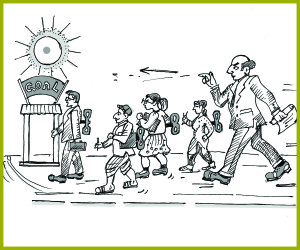
The Lack of a Conscious Approach to Business Goals
Businesses continue to be driven by greed and avarice alone. Hapless CEOs have no other option but to keep delivering results from one quarter to the next.
There are no guarantees that Volkswagen will not soon come up with yet another technical trick to befool the regulators and its customers. Boeing may yet again secure approvals for launching a model which might put air passengers’ lives at risk. Financial scams will keep tumbling out of corporate closets at a standard frequency which might put an atomic clock to shame.
Think of rising inequalities. Consider a report presented by Oxfam at the January 2021 World Economic Forum’s Davos Agenda, titled ‘The Inequality Virus’. It says that the 1,000 richest people on the planet recouped their Covid-19 losses within just nine months of 2020, whereas the world’s poorest could take up to a decade to recover from the pandemic induced setback. I am certain that philanthropic initiatives of the richest have not suddenly seen a proportionately higher uptick.
So, every crisis that humanity faces turns out to be an opportunity for the well endowed to amass greater wealth. Is this the kind of Materialistic and Unconscious Business model that we wish to continue following? Our answer would of course depend based on whether we are from the ‘haves’ side or the ‘have-nots’ side of the society.
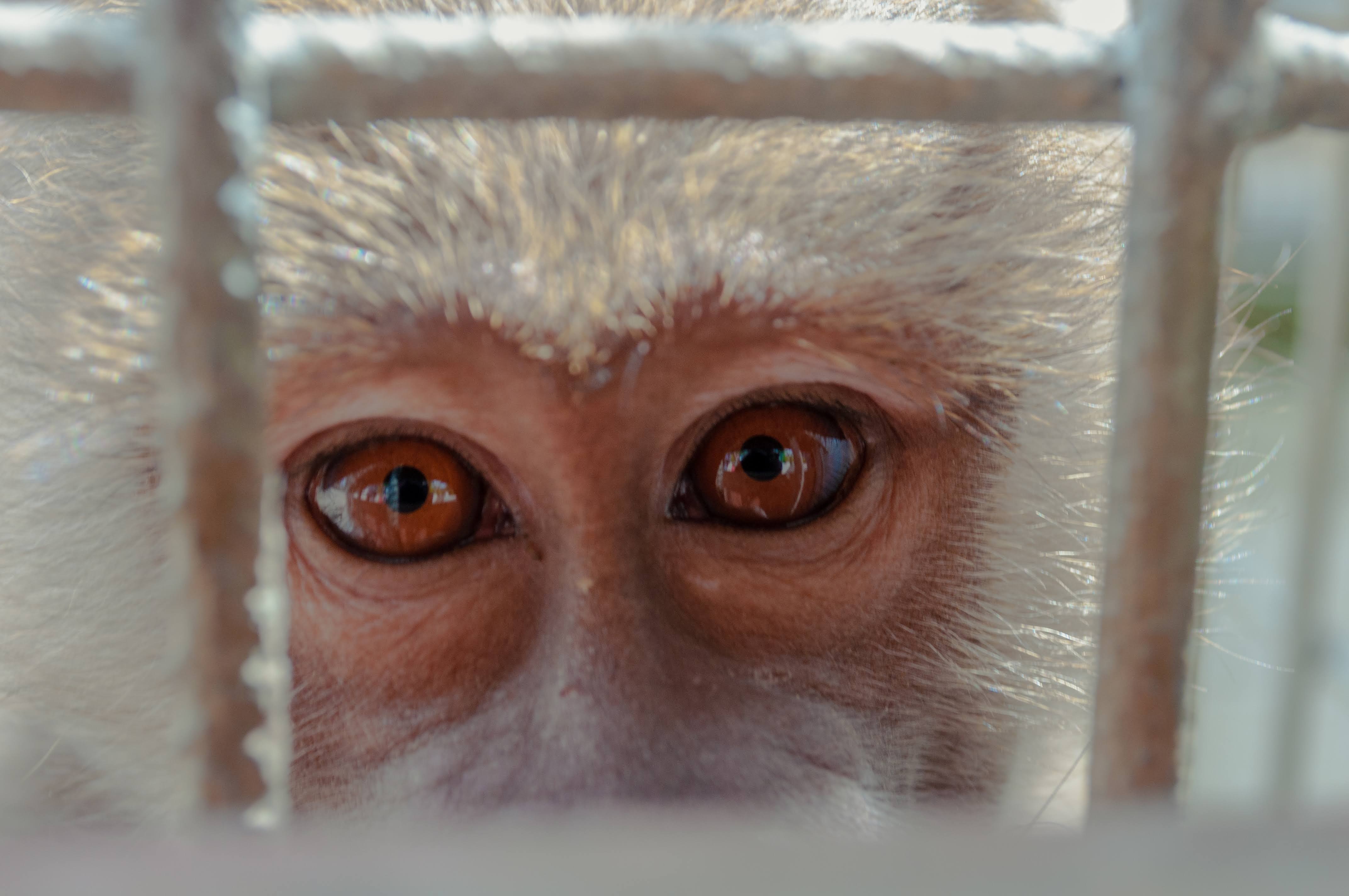
The Monkey Business Called Politics
Probity and decency in the public life of our leaders is long since buried. Gone are the days when vibrant democracies needed a strong opposition to thrive. These days, even the President of a country can himself turn against the hallowed portals of democracy and send rampaging mobs braying for the blood of those out to declare him defeated in an election. In other words, it is one of those promotional offers – you vote in a President and get another one for free!
The aforesaid top boss’ term has revealed enormous gaps between the ideals of American democracy and the reality. Even before he exhorted his followers to attack the Capitol and the legislative branch of government, he ignored watchdog rulings and constitutional safeguards, pressed to overturn the outcome of an election, and pardoned those who covered for him, all the while funneling taxpayer dollars to his family business.
In yet another country, the main adversary runs the risk of not only being poisoned but also getting imprisoned on some ground or the other, while those in power brutally suppress dissent marked by men’s underwear and gold-painted toilet cleaning brushes.
World over, there is no dearth of leaders who have dictatorial ambitions but mask these well with democratic credentials. Speak of transparent political funding and all one gets is the silence of a tomb.
In yet another country, lies, obfuscation of facts and clever data management seem to have become a norm. Photo-ops, positive optics and feel-good media feed by devout followers keep the entire nation in thrall. Attempts to stifle dissent and to paint anyone not toeing the rulers’ line as unpatriotic continue unchecked. Getting offended by comments made by those living thousands of miles away appears to have become a national pastime. When a stand-up comedian speaks up, our clairvoyant nature allows us to guess what offending remark he is yet to make. Prompt legal action gets taken, nipping the intended mischief in the bud.
Building physical infrastructure is simply great. So is the drive to embrace technology to make life of a common man simpler. But when this comes at the cost of demolishing social harmony and making a democratic country free of any kind of opposition worth its while, the long term price of a ‘progress’ of this kind is rather high. I am not an economist, but I wonder if an economy can grow while the society itself is getting fragmented.
World over, quite a few governments have even used the pandemic as a cover to suppress dissent and cut short processes to introduce laws of an unpopular kind. In the process, their soft power is bound to dive down.
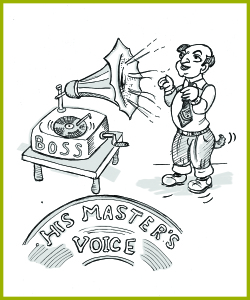
The Rudderless Social (and Anti-Social) Media
During 2020, in India, when our northern neighbour had encroached upon our land, and when the media should have been doling out useful health tips for people to stay safe in the midst of a pandemic, the only ‘breaking news’ was the suspected suicide of a Bollywood actor and the activities of his girl friend.
Social media, duly backed by smart algorithms, Artificial Intelligence and Machine Learning, keeps shaping our thought processes, our choices, our preferences, our perceptions and our beliefs. We are already living in a fish bowl where the law makers as well as the private players are hands in glove to sell detailed information about us to the highest bidder. Privacy concerns and personal liberties be damned. Pretty soon, it may happen that government support is available only to those who have a pro-government presence on various media platforms.
The whole idea is perhaps to help a lay person evolve into a dumb chum of the first order, unable to use his own judgement in matters of public importance; essentially, to numb the person’s grey cells. In other words, we all become zombies (or jack asses, if you prefer) of the first order.
Little do we realize that there are no free lunches in life. Any service available to us free of cost over the world-wide-web we have spun around ourselves only means that ‘We, the People’ are the product on sale!
If our social media czars do not come up with a realistic code of conduct for themselves soon enough, governments, to salvage their public image, may soon have to start dishing out harsher laws.
Perhaps, one of the czars will soon set up an academy to groom many of our whizz kids into becoming ethical hackers and algorithm developers.

Neglecting Half of the Homo Sapiens
If they stay at home, their contribution to society is never even acknowledged. Rather, it is taken for granted. If they venture out of their home and hearth, lustful gazes disrobe them mentally. If they get violated, they only have to take the rap. In war zones, they are the instruments used to inflict deep wounds on the psyche of the other.
Yes, I refer to the tribe of the so-called delicately nurtured. They are the ones upon whom Mother Nature has conferred the unique capacity of keeping our civilization alive and ticking. They may be as tough as nails and proving themselves to be better than the so-called sterner sex in all fields of human endeavour. A fact which was reinforced yet again when a deadly pandemic arrived at our doorsteps. In public, they may get put on a pedestal and revered. But in private, they often get treated like a doormat, treated as mere objects, only to be used and abused.
Doting lover boys, upon metamorphosing into husbands, often shed their chivalrous masks and start behaving like dictators. If a family breaks up owing to mistreatment, ridicule, abuse and violence at the hands of their husbands, it is the lady of the house alone who gets the entire blame – for being obstinate and uncompromising. The general view is that she is a gold digger of sorts.
Such a patriarchal mindset is not an exclusive prerogative of the poor alone. Nor does it respect geographical boundaries. Education levels also do not make much of a difference. Take couples across different countries, economic status and education level and one is apt to find this to be a universal phenomenon. The Chivalry Quotient may vary across all these parameters, but a singular shortage of preux chevaliers is felt all over our planet. Religious beliefs and even some spiritual tenets reinforce such derogatory views.
In respect of the legal framework, our experience in India has been a mixed one. The females have learnt the art of terrorizing their husbands and their families by foisting cases of imagined harassment, with the sole aim of securing better settlements while seeking divorce. Surely, the training in chivalry truly begins at home – either in the kitchen or at the dining table. Laws can play only a limited role.
The tectonic shift taking place here is that of divorce rates going up and couples preferring to remain friends with perks. Upwardly mobile wives who can stand on their own feet detest drawing husbands who refuse to wear skirts and help out with domestic chores. Once the family structure crumbles, there is a higher probability of the value system of the next generation going for a toss.
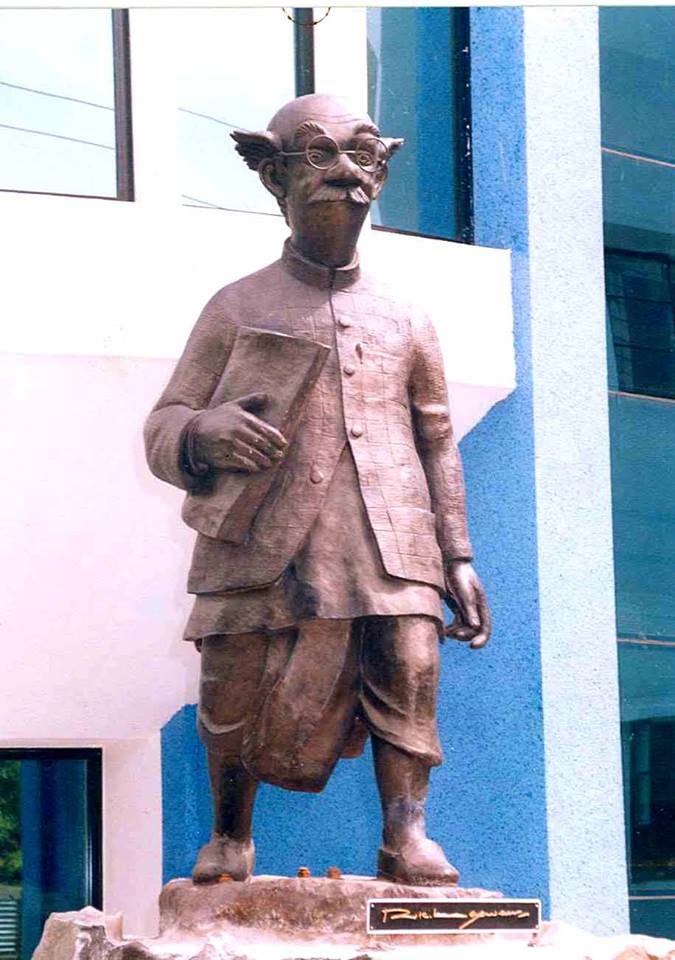
The Silence of the Lambs
In many of the issues brought out above, are we ourselves not responsible for the mess that we are in? The silence of our intellectuals, the self-centredness and public apathy of the middle class which more or less upholds values in society and the mute surrender of the common man – are these not some of the factors which have enabled this situation to have come about?
Many years back, I vaguely recall having read a satirical story in Hindi, written by a well known humourist in the language, Hari Shankar Parsai. A herd of lambs is made to believe that few wily foxes alone can solve all their problems. Pretty soon, foxes get voted in. One fine day, a ruling comes that to save the ruling foxes, some sheep should voluntarily surrender to be sacrificed each day so the patriotic fervour is kept alive and the nation is run effectively!
I am not a political science buff. Thus, I am not qualified to say if democracy as a model of governance is failing us. But one of its enabling factors is the presence of conscious leaders who are not shameless and still have traces of humility, empathy, decency and a concern for genuine overall good.
With No Malice towards Anyone
Educated youth who have no means of earning a living, will they not have a raw anger simmering within them? Will the poorer lot not take a jaundiced view of grand government schemes the benefits of which do not reach them?
Perhaps there is a feeling of helplessness within them. Perhaps they have dollops of patience. May be they realize that they are too small to bring about any change and feel it is better to accept things as they are and continue wallowing in misery and self-pity, blaming God for all their troubles.
But is a meek acceptance of murkier developments in the world around us a better approach? Can we not dissipate the seething anger within by at least saying what we find to be reproachable? Can we not break our silence of the lambs and speak up?
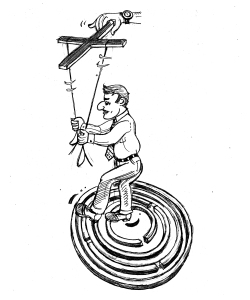
With Whom Does the Buck Stop?!
Are we ourselves not a part of the problem? Why have we, reasonably educated and rather wise people, decided to outsource our thinking processes and have instead opted to become zombies?!
Do we not keep patronizing companies even when we know that they have been cheating in the past? Are we not the ones who get swayed by propaganda and cast a vote for a particular party or a particular leader? Do we ever boycott a media outlet which acts as a mouth piece of those in power?
If we are addicted to, say, WhatsApp or Facebook, can we really blame their inventors for the issues that we face? Don’t we find it convenient to remain in touch with our friends and family members through these platforms?
When we notice a female being harassed, are we not likely to look the other way? Is the onus of ‘adjusting’ not always put on the female? Can we take a pause before we make a victim the facilitator of a crime?
Overall, by remaining a mute spectator and witness to acts of corruption, misinformation, lies and half-truths, do we not become accomplices to such misdeeds?
It is not wise to altogether point a finger at others only. A knife kind of a tool is given to us. Let us use it to prepare a juicy dish and not to hurt someone. The choice of usage is with us.
Our endeavour therefore should be to stand up, be courageous and outspoken. This alone can get us counted. Even if there is one sane voice amongst all the noise and din, it would resonate with other like-minded individuals out there.
Our salute needs to reach out not only to those who are already raising their voices but also to the decision makers who might eventually get around to listening to us.

Some Silver Linings
All this is not to say that there are no silver linings in the dark clouds hovering above us. As P G Wodehouse puts it, even when the air is pregnant with V or W-shaped depressions, there are always silver linings on the clouds. We shall do well never to repine, never to despair, but to work upon our own selves and on others in our sphere of influence. It is good to remember that, no matter how dark the skies may be, the sun is shining somewhere and will eventually come smiling through.
There are business houses which keep following good values and ethics in their day to day operations. There are leaders who respond well to challenges like social disharmony and stalking pandemics with a dash of human values. They treat dissent as a valuable input for their decision making processes. We also have very few social media and gig economy barons who are being forced by their own employees to either shape up or ship out.
Lawmakers and pressure groups in USA are already reported to be thinking of ways to bring in a wide-ranging overhaul of ethics, laws, the likes of which have not been seen since the post-Watergate era.
Perhaps, eminent legal eagles in India can also take a leaf out of the USA experience. As a country, we had experienced suppression of dissent even during the 1970s, when an emergency was declared. Can some more constitutional safeguards be brought in so that a popular mandate does not give the executive the right to ride rough shod over other arms of the government, thereby increasing the probability of the country being taken in a direction which is not the same as what our founding fathers had envisioned?
Above all, it is the man on the street, busy keeping his body and soul together, eking out a living for his family and even helping others in distress. When the scales from his eyes fall and he wakes up to a life threatening situation at hand, he reacts. The farmers in India are already showing their resolve following the strategy of peaceful protests and civic disobedience used by Mahatma Gandhi many decades ago.
Then we have lone wolf professional bodies. World Without Corruption in Belgium gives businesses a voice in fighting corrupt practices. The Conscious Enterprises Network in UK speaks of conscious leaders leading their enterprises in a holistic value-based manner in all spheres of human enterprise. The Center for Business Ethics & Compliance in Russia is focused on best practices in the realm of ethics and compliance.
Likewise, in India, Spandan Foundation is passionate about human values in organizations and even plans to set up a centre dedicated to the cause. Shakti Leadership highlights the importance of using feminine traits like empathy and compassion in decision making and assists individuals and organizations in their quest for conscious evolution. The Association for Democratic Reforms keeps relevant political issues alive and kicking in public eye.
I am sure there are many others scattered over other continents. Their attempt is to bring like-minded people together and keep the embers of a pious fire aglow, focused on values and ethics.
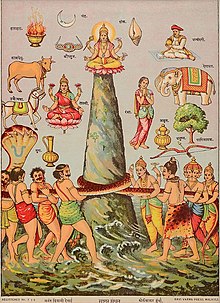
The Mighty Churning
The society is always in a flux. These days, it appears to be undergoing a mightier churning which reminds one of the episode of Samudra Manthan (The Churning of the Sea) in Indian scriptures. The churning throws up poison as well as the nectar which grants immortality. Those who believe in following the path of righteousness end up securing the latter.
It is easy to see that we have a leadership crisis on our hands. Since a situation also produces a leader, one hopes that more and more conscious leaders keep emerging, nudging us in the right direction.
Admittedly, the silver linings appear to be like a pale parabola of joy, to borrow an expression from P G Wodehouse. This will remain so till the time a bevy of conscious leaders – whether in business or in politics – do not appear on the scene and convert this into a shimmering parabola of bliss.
The solution is not to keep sweeping issues like hunger, poverty, economic non-inclusion, global warming and prejudicial animosity under the carpet. Nor is it to raise the existing walls, whether political, commercial, attitudinal or religious. It lies instead in a truly global view based on the concept of Vasudhaiva Kutumbukam: The World is One Family.

Being a born optimist who believes in having a chin-up attitude, I do hope that some of these tectonic shifts can at least get retarded, if not altogether reversed, in the years to come.
(Related Posts:
https://ashokbhatia.wordpress.com/2020/11/23/jeeves-and-the-social-media-challenge
https://ashokbhatia.wordpress.com/2016/09/23/bertie-jeeves-and-the-internet-of-things
https://ashokbhatia.wordpress.com/2014/12/08/bertie-social-media-and-blogging-blues
https://ashokbhatia.wordpress.com/2018/01/10/jeeves-seeks-a-placement)
ATAL LEADERSHIP THEORY for INDIA: Guest post by Ms Karuna Gopal
Posted in Management Lessons, tagged Atal Bihari Vajpayee, Karuna Gopal, Kautilya, Leadership, Management, Politics on January 4, 2021| 2 Comments »
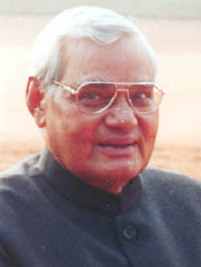
A deluge of homage thru editorials, articles, opinions, blog posts poured in after Shri Atal Bihari Vajpayee left his mortal coil. The electronic media was abuzz with discussions on the tallest leader that India has ever produced. After those exhaustive and emotional encomia showered by everyone, the opposition included, what else is there to write? After every paean has been sung what is left for me to say?
But it is believed that a tribute is truly paid only when you emulate the leader and walk his path. For doing that one has to understand Atalji’s exemplary leadership style.
Despite many thousands of empirical studies, leadership remains a tantalizing enigma for many – me included. Is it possible to annotate Atalji’s actions? Is it at all possible to codify the colossus called Atal Bihari Vajpayee?
To fit his great persona into a frame, to capture his myriad methods and to titrate his thoughts would greatly tax even a scholarly brain – but the practical value of that exercise will be invaluable for the country. Therefore I will make an attempt.
His Leadership Style – Elusive yet Effective
All the leadership theories espoused by the west are inadequate to describe Atalji’s style. His style straddles the oldest to the latest western theories effortlessly – but the core of his unique leadership style is completely elusive. Not much has been understood about the guiding ‘force’ behind his style.
When Atalji addressed the ISKON meeting on Ram Navami 5th April 1998, he said “I am all in favor of globalization of the message of the Gita and messages of all the sacred books of the world with which the message of Gita bears close conformity” – This openness expressed by him would have been categorized at best as a collaborative or an inclusive style by the Western theories but ‘NITI Shastra‘ of Kautilya would elevate the same to a higher level of ideological depth – ‘Which country, which faith is foreign to a man of True Learning?’ it says.
After the 1999 Pakistan coup, Prime Minister Atalji had to deal with the crafty general Musharraf. Atalji persisted with his offer of friendship but when that was resisted by Musharraf, he made another attempt at Agra which also failed. But three years later, it was Musharraf who made the long walk at the SAARC Summit in Islamabad to greet him. He made a commitment then not to allow any territory under Pakistan’s control to be used for terrorist activities against India!
No western style, however contemporary, explains this persistence and patience of Atalji.
However, the eastern tradition of TAOism highlights this kind of engagement. “The leader who is centered and grounded can work with erratic people and critical groups without experiencing harm. The wise leader is like the water that can YIELD yet LEAD!”
A RAJARISHI Leads the Coalition
Atalji was the great harmonizer. He aligned different coalition partners and managed to drive major reforms during his tenure as the Prime Minister. He was the great unifier who built bridges between different ideologies, political parties and countries.
What made the Coalition partners align with Atalji? Why was he was fondly referred to as the ‘Gentle Giant’and ‘Ajatahshatru’ (someone who has no enemies)?
According to Kautilya, a leader will turn into a ‘Rajarishi-a King Sage’ through purity of speech, of the mind, of heart and of the senses – all these can be acquired only through ‘Indriyajayah’ – control over the senses- lust, anger, pride, arrogance and fool hardiness.
The traditional philosophies Taoism and Buddhism also explain how leaders deal with the complex dilemmas of the real world. Taoism explains this craft beautifully – “Because the leader does not push, the group does not resent or resist: A moderate ego demonstrates wisdom: remain open and receptive, no matter what issues arise: Learn to lead without coercion. Both praise and criticism should not excite – Interestingly Indian scriptures too praise ‘Sthitaprajna (to remain stable through intellect) as a great leadership trait !
Atalji was known for long spells of silence and contemplation. The Tao principle, ‘Wu-wei’ generally translated as non-action or non-doing is the most powerful of all. Paradoxically it’s not about inaction but is about ‘Action without Effort’. All the tenets of Tao resonate with our very own ancient prayer to the universe “Samastha Lokaha Sukhino Bhavantu” (May everyone in all the worlds be happy).
No wonder Atalji the Rajarishi could lead the largest coalition effortlessly.
His style was HARMONY in WAR
Atalji’s biggest success in foreign affairs was in bringing relations with the US back from the brink after the US imposed sanctions on India– This cannot be explained effectively by any theory, only AIKIDO can.
AIKIDO, a Japanese martial art, is where practitioners defend themselves while protecting their attacker from injury. The tactic of blending with an attacker’s movements for the purpose of controlling their actions resembles a dance rather than a fight. How Atalji restrained the US to protect India, yet rallied support for the US later by controlling China’s nuclear aggression, is but the skill of an AIKIDO Master!
His style is BEYOND THEORY
No theory spoke about how ‘silence’ can silence the enemy or how ‘contemplation’ can control the situation. No leadership theory spoke about poetry paving pathways into people’s hearts. No theory praised a dignified ‘retreat from public life’ as a laudable leadership trait.
ALT is the key for India
His leadership style, call it the ‘Mother Leadership’ that is intuitive and all giving or the ‘Mother of Leadership’ styles that straddles all existing theories is the key for India’s progress.
The exercise to codify his leadership style will have far reaching implications for the country’s progress. For patriots it should be a blueprint to follow. For people in power it should be taught as a refresher course and for the newly elected politicians, it should be introduced at the orientation training.
ALT – Atal Leadership Theory – is as much about ALT key of change as it is about Altruism– it is a theory about Impact, Influence and Inspiration. A Master Class on leadership paradoxes- for ALT, WHEN I GIVE MYSELF I BECOME MORE is but the MOMENT OF TRUTH !
Karuna Gopal
President, Futuristic Cities
Global Thought Leader, Advisor on Smart Cities, Governance & Policy
Published on 22-Aug-2018
The Hans India
(Note: Sh Atal Bihari Vajpayee was the 10th Prime Minister of India from 1998 to 2004)
(Permission from the author to blog this piece here is gratefully acknowledged. Details about her work can be seen at http://www.karunagopal.com)
Corona Virus and Social Harmony
Posted in A Vibrant Life!, tagged Badri Narayan, Caste Prejudices, Coronavirus, Credit Suisse, Disharmony, Economy, Harmony, Inclusivity, Leadership, Management, Neelkanth Mishra, Politics, Quarantine, Resilience, Rutger Bergman, Society, Walter Scheidel on September 18, 2020| 2 Comments »

The year 2020 is turning out to be an extraordinary challenge for individuals, families and businesses. Coronavirus has spread several other viruses – those of fear, uncertainty, hunger, jobs, lack of physical interactions in education as well as in life, and the like.
The pandemic has left traditional business models in a shambles. Supply chains have got disrupted. Businesses have shut shops. Industries with some core strengths have diversified into newer markets and products. The first priority happens to be that of servicing the critical requirements of customers while shielding the employees to the extent possible.
Economies the world over have taken a severe beating. For a vast majority, sources of income have simply vanished overnight. The virus has exposed, yet again, the fault-lines in our health, social and economic infrastructure.
The Innate Goodness in Humanity
Many amongst us have already turned cynical towards a proposition of this kind and believe that human beings are selfish. Being bombarded relentlessly by the propaganda mills run by shameless politicians, a TRP-chasing media and movie directors who keep churning out dark and depressing flicks, we often end up taking a jaundiced view of people and events around us.
Rutger Bregman, the popular Dutch historian, in his book Humankind, argues otherwise. He points out that there is a spontaneous coming together of people immediately after any natural disaster. He says that ‘cooperation has been more important in our evolution as a species than competition. What we assume in other people is what we get.’
Walter Scheidel, in his book, The Great Leveler, argues that throughout human history, the following four kinds of disasters have led to economic equality: wars, revolutions, pandemic and state collapse. Each of these, he proposes, results in excess mortality, thereby creating a shortage of working hands and, as a consequence, a general rise in incomes.
A ‘X’ Shaped Recovery?!
However, the proposition is arguable. Take the case of the pandemic stalking us at present. It is true that it strikes all and sundry. But to say that the loss of livelihoods and economic hardships faced is the same across different income levels and business verticals would be wrong. Social biases, disparity in access to quality education, health and networking and a non-level playing field for small businesses to cash in on newer opportunities in the environment – all these play spoilsports. With each disaster faced by humanity, the inbuilt inequalities and fault lines only end up getting reinforced. The plight of the millions of Indian migrant labourers who travelled long distances on foot to reach their homes during April and June 2020 cannot be erased from our collective memory easily.
Credit Suisse economist Neelkanth Mishra speaks of four classes in the society: government, wage earners, informal enterprises and formal firms. For 2020-21, he has attempted to examine which group bears how much of the overall GDP loss. In these computations, 50% of loss is borne by the government, 25% by the wage earners and 10% each by informal and formal firms. Looking beyond 2020-21, a growth slowdown will be unequally distributed between these groups.
Recovery in the economy would not be as rapid as the slowdown has been. From the computation done by Mishra, it appears that it would neither be a ‘V’ or a ‘W’ shaped one. Perhaps, a ‘X’ shaped recovery is in the offing.
A Silver Lining in the Corona Virus Cloud
Broad sweeping generalizations of a situation could also hide some silver linings in an otherwise gloomy-looking cloud. According to a study done by Badri Narayan, a social historian and cultural anthropologist and, Director, GB Pant Social Science Institute, major challenges also tend to bring out the innate goodness in human beings.
He has interviewed 215 quarantined rural migrants in the Indian states of Uttar Pradesh and Bihar. The respondents were from a diverse set of castes like dalits, other backward classes and upper castes.
By way of a conclusion, he states that ‘Caste is deeply ingrained in our social system….. but an emergency like a pandemic gives jolts and shocks to it.’
In other words, when it comes to handling overwhelming challenges, caste considerations normally take a back seat. This indicates a possibility of the pandemic facilitating better social unity and cohesion, an idea which deserves to be explored further. This proposition fits in well with the views of Rutger Bregman.
The underlying need is to build resilience and inclusivity across the vast socio-economic spectrum of our society. Our politicos, economists and social activists appear to be missing a road map to counter a strategic challenge of this kind.
(Part 4 of a series of articles on Corona virus and Leadership)
(Inputs from Prof G P Rao are gratefully acknowledged.)
(Image courtesy https://medium.com/@brca.iitdelhi/social-harmony-e7cbacc76287)
(Related Posts:
https://ashokbhatia.wordpress.com/2020/09/08/corona-virus-leadership-traits-and-human-values
https://ashokbhatia.wordpress.com/2020/09/14/corona-virus-some-lessons-from-bhagavad-gita)
-
Recent Posts
Buy the Book

buy the book
Categories
-
cc
Tags
Art Bertie Wooster Bhagavad Gita Bingo Little Birthday Blake Mouton Grid Blogging Bollywood Book Campus Life CEO Chivalry Consciousness Coronavirus Corruption Edwin Empress of Blandings English Ethics Feminism Happiness Health Hindi Hollywood Human Values Humour India Jeeves Kalidasa KIds Leadership linkedin Literature Lord Emsworth Love Lyrics Mahabharata Mahatma Gandhi Management Movies Music Norway Paintings Panjab University People P G Wodehouse Politics Pondicherry Portugal Psmith Puducherry Rabindranath Tagore Ramayana Ritusamhara R K Laxman Romance Rosie M Banks Rupert Psmith Seasons Shakespeare Social Media Something Fresh Songs SPANDAN Spirituality SQ Sri Aurobindo Stephen Covey Switzerland Tatas Thos UBS Values Wodehousitis WomenArchives
- February 2026 (1)
- January 2026 (2)
- December 2025 (1)
- November 2025 (2)
- October 2025 (2)
- September 2025 (3)
- August 2025 (3)
- July 2025 (2)
- June 2025 (2)
- May 2025 (4)
- April 2025 (5)
- March 2025 (5)
- February 2025 (4)
- January 2025 (4)
- December 2024 (6)
- November 2024 (6)
- October 2024 (6)
- September 2024 (5)
- August 2024 (5)
- July 2024 (4)
- June 2024 (4)
- May 2024 (5)
- April 2024 (5)
- March 2024 (3)
- February 2024 (1)
- January 2024 (4)
- December 2023 (2)
- November 2023 (3)
- October 2023 (3)
- September 2023 (3)
- August 2023 (5)
- July 2023 (5)
- June 2023 (7)
- May 2023 (6)
- April 2023 (6)
- March 2023 (8)
- February 2023 (8)
- January 2023 (7)
- December 2022 (6)
- November 2022 (5)
- October 2022 (8)
- September 2022 (5)
- August 2022 (6)
- July 2022 (6)
- June 2022 (8)
- May 2022 (7)
- April 2022 (8)
- March 2022 (7)
- February 2022 (3)
- January 2022 (7)
- December 2021 (4)
- November 2021 (8)
- October 2021 (7)
- September 2021 (6)
- August 2021 (7)
- July 2021 (7)
- June 2021 (9)
- May 2021 (8)
- April 2021 (9)
- March 2021 (10)
- February 2021 (8)
- January 2021 (8)
- December 2020 (7)
- November 2020 (6)
- October 2020 (5)
- September 2020 (9)
- August 2020 (9)
- July 2020 (8)
- June 2020 (8)
- May 2020 (6)
- April 2020 (5)
- March 2020 (7)
- February 2020 (4)
- January 2020 (7)
- December 2019 (12)
- November 2019 (10)
- October 2019 (5)
- September 2019 (9)
- August 2019 (10)
- July 2019 (9)
- June 2019 (14)
- May 2019 (13)
- April 2019 (14)
- March 2019 (11)
- February 2019 (11)
- January 2019 (14)
- December 2018 (12)
- November 2018 (12)
- October 2018 (14)
- September 2018 (9)
- August 2018 (10)
- July 2018 (10)
- June 2018 (8)
- May 2018 (11)
- April 2018 (11)
- March 2018 (6)
- February 2018 (9)
- January 2018 (10)
- December 2017 (10)
- November 2017 (9)
- October 2017 (8)
- September 2017 (11)
- August 2017 (10)
- July 2017 (10)
- June 2017 (11)
- May 2017 (9)
- April 2017 (7)
- March 2017 (7)
- February 2017 (8)
- January 2017 (10)
- December 2016 (9)
- November 2016 (11)
- October 2016 (10)
- September 2016 (10)
- August 2016 (9)
- July 2016 (6)
- June 2016 (10)
- May 2016 (10)
- April 2016 (10)
- March 2016 (10)
- February 2016 (12)
- January 2016 (10)
- December 2015 (11)
- November 2015 (11)
- October 2015 (10)
- September 2015 (10)
- August 2015 (10)
- July 2015 (10)
- June 2015 (10)
- May 2015 (10)
- April 2015 (10)
- March 2015 (9)
- February 2015 (10)
- January 2015 (8)
- December 2014 (9)
- November 2014 (8)
- October 2014 (8)
- September 2014 (7)
- August 2014 (7)
- July 2014 (7)
- June 2014 (7)
- May 2014 (7)
- April 2014 (7)
- March 2014 (7)
- February 2014 (6)
- January 2014 (7)
- December 2013 (6)
- November 2013 (6)
- October 2013 (6)
- September 2013 (6)
- August 2013 (6)
- July 2013 (6)
- June 2013 (6)
- May 2013 (6)
- April 2013 (6)
- March 2013 (6)
- February 2013 (6)
- January 2013 (6)
- December 2012 (4)
- November 2012 (4)
- October 2012 (3)
- September 2012 (2)
- August 2012 (4)
- July 2012 (2)
- June 2012 (2)
- May 2012 (2)
- April 2012 (2)
- March 2012 (2)
- February 2012 (3)
- December 2011 (3)
- November 2011 (1)
- October 2011 (2)
- September 2011 (2)
- August 2011 (2)
- July 2011 (2)
- June 2011 (3)

 ashokbhatia