Just in case you ever feel that you have evolved into a headless chicken and have ended becoming a zombie chasing deadlines and goals with not even time to breathe, try coming over to Pondicherry.
For many of us, our lives are so much filled with stimuli, not to speak of the onerous responsibilities we carry on our slender shoulders. It is not possible for us to sit still and do nothing, much less relax, even for a few minutes. We have no time for meditation. Nor do we have time for some simple yoga exercises. We are always doing something or the other. How proud we feel in telling someone that we do not have time for this or that. Our fragile ego gets a much-needed boost. In place of being ‘human beings’, we have become ‘human doings’.
Often, relatives from distant parts of the world call up to…
(Inspired by parts of Right Ho, Jeeves, The Code of the Woosters, and Clustering Around Young Bingo)
I had barely crossed the threshold of the dining room when I perceived Aunt Dahlia at the table, morosely tucking into salmon mayonnaise.
Being a keen observer, I could make out that she was in a sorrowful mood. A pall of despondency hung over her. It was as if she had been handed out a harsh sentence of thirty days without the option by a stern-looking beak.
She gave me a sharp look of the kind a person gulping down her last bit of coffee would give to a dead beetle at the bottom of her cup. She sighed and waved a depressed fork at me.
‘Hullo, Bertie, howsoever sad the circumstances, I thought I would never find you far away from the food. Try some of this salmon.’
‘Anatole’s?’ I queried.
‘No. I do not know why he has suddenly gone AWOL. Missing in action since the past two weeks, leaving all of us twiddling our thumbs. Poor Thomas, his digestion has already gone for a toss. I was so desperate to touch him for some vitamin M for Milady’s Boudoir. But I have had to put that proposal on hold.’
Well, Uncle Thomas, when his gastric juices have been giving him the elbow, is not his genial and benevolent self. To touch him for some funds then would be akin to waking a lion from its slumber.
‘Somehow, the new kitchen maid has struck an inspired streak. It suddenly seems to have come home to her that she isn’t catering for a covey of buzzards in the Sahara Desert, and she has put out something quite fit for human consumption.’
‘You never know with these temperamental French cooks,’ I chipped in on a sympathetic note, while mouthing a forkful of the salmon on offer.
‘Of late, he did seem a bit moody. Luckily, he left at a time when the new kitchen maid was just about to arrive. We are somehow…’
She broke off. The door had opened, and we were plus a butler.
‘Hullo, Seppings,’ said Aunt Dahlia. ‘Was there something you wanted to see me about?’
‘Yes, madam. It is with reference to Monsieur Anatole. He is on a video call on your laptop. He is desirous of having a word with you.’
‘Yoicks! Tally Ho!!’, she exclaimed excitedly.
I had never suspected her of being capable of the magnificent burst of speed which she now displayed. She rose like a rocketing pheasant and was out of her seat and the room making for the instrument which was bracing itself for an acrimonious exchange of views between a hunting field expert and the typical Queen’s language laced with liberal doses of French which the God’s gift to our gastric juices deployed. And feeling that my place was by her side, I put down my plate and hastened after her, Seppings following at a loping gallop.
‘Hello, hello…’
Anatole’s round face popped up on the screen and one could discern a noisy air-conditioner growling in the background.
‘Where are you calling from?’, Aunt Dahlia bellowed.
‘From India, Ma’am’.
‘What? India? What made you go to that God forsaken country?’
‘Sacre bleue! This is one pretty place – I am in Pondicherry, of which Madame is aware, I doubt myself.’
‘Pondicherry? Where the hell is that?’
‘Name of a dog, Madame! You don’t say! You are not serious! You haven’t heard of Pondicherry? It was a French colony years before.’
‘What are you doing there?’
‘I am ze most famous chef, Madame – know this! Even ze Indians know me. Several hotels here gave me jobs on ze platter.’
There was one of those long silences. Pregnant, I believe, is what they’re generally called. Aunt looked at butler. Butler looked at aunt. I looked at both of them. An eerie stillness seemed to envelop the room like a bubble pack for a silver cow creamer in transit.
‘But how can you leave us suddenly? It would have been nice if you could have at least told us about your plans,’ she said with as much politeness as she could muster. I couldn’t have believed that her robust voice could sink to such an absolute coo. More like a turtle dove calling to its mate than anything else.
‘Je suis vraiment désolé, Madame .’
‘It’s quite all right. What are you doing there?’
‘Listen. Make some attention a little. I bring my recipes. I add many new French dishes for a premier hotel here.’
‘New dishes? Introducing French cuisine for some hotel?’
Anatole perked up a bit. His soup-strainer kind of a moustache was quivering a bit. Like an artist’s who is showing his first ever painting to a connoisseur of art.
‘They already have places where you can find pastries and breads like the French baguette, croissants, pains au chocolat, pains aux amandes, macarons, crèmes caramel, etc. You pay little attention? I tell what I introduce here.’
‘Sure, I will, Monsieur Anatole, I will,’ cooed the aged relative.
He then went on to rattle off several of his culinary achievements.
‘I introduce ze Boeuf bourguignon, Steak-frites, Poulet rôti, Ratatouille, Soupe à l’oignon, Bouillabaisse, Croque-Monsieur, Croque-Madame, Crêpe, Quiche Lorraine, to say a few. And, of course, many of which they never hear before, like Veloute auxfleurs de courgette, Consomme aux Pommes d’Amour, Sylphides a la Cremes d’ecrivesses, Mignonette de poulet Petit Duc, Pointes d’asperges a la Mistinguette, Supreme de foie gras au champagne, Neige aux Perles des Alpes, Timbale de ris de veau Toulousaine, Salade d’endive et de celery, Le Plum Pudding, L’Etoile au Berger, Bombe Nero, Friandises, and Diablotins.’
Of course, all this made me drool like never before. I imagined the lavish spread Aunt Dahlia and I had discussed while we were at Totleigh Towers quite some time back. I had then graciously offered to undergo thirty days in the second division in lieu of Anatole’s services being transferred to Pop Bassett. Luckily, I had been dismissed without a stain on my character.
I went weak in my knees, imagining putting down the hatch some of the delicacies mentioned by him.
The irony of the situation also hit me hard. God’s gift to our gastric juices whisked off by a Third World country from right under our noses. The wizard of the cooking stove cocking a snook at us? My sister in Calcutta once did mention to me that this century belonged to countries like India and China, but I never took her seriously. If all our valets, butlers, chefs, and parlourmaids decided to migrate to one of the emerging economies, what would the harvest be? The British upper classes will be left behind twiddling their thumbs trying to figure out how to lead their lives. God save the Empire was the thought which I was ruminating upon, while Aunt Dahlia came direct to the nub of the matter.
‘That sounds great. When do you think we could sample these dishes here at Brinkley Manor?’
‘All in time desired. For the instant, I am content here. It is the beautiful life here. They give me big house with glass pyramid on top. I have a car with an Indian chauffeur. The beach is at distance of march from my house. It is just like Côte d’Azur. It is a place to make dream.’
‘You must be exaggerating – surely the place can’t be as beautiful as Brighton?’
‘Au contraire, Madame! There is a beautiful promenade with a tall statue of an old man walking with a stick in hand – Gandhi is his name, I think. Listen and take note – full moon evenings are magnifique here. You should make one visit here. In the evenings, lovely demoiselles in silk dress with gold jewels and fleurs de jasmin in their lustrous hair come for walk. Good heavens, do I give them company? You bet your last dime no. Hélas, I am too busy with my work. Me, I am French – work is sacré for me.’
‘Oh, so you are quite comfortable there, are you?’
‘Eh bien oui, Madame. I have a lady colleague – she teach me many South Indian dishes with strange names: dosa, idli, sambhar, rasam, vadai…Cest incroyable – they have amazing variety of plates in India. Like what, to each county her cuisine.’
‘The perfect life, eh, Anatole?’
‘I take some rough with some smooth, Madame. Behold and lo, in each man’s life, some rain must fall. The weather is hot and humid here. Often, intolerable. However, late afternoon onwards, sea breeze starts blowing in, bringing some comfort. Also, the place has very many people. A noisy city.’
When it comes to milk of human kindness, there are indeed times when Aunt Dahlia’s kindly overtures do leave me, as Roget would put it, amazed, astonished, astounded, blown-away, dumbfounded, flabbergasted, jolted, and rendered speechless.
‘Is there anything you need from here?’
‘Kind of you to ask, Madame. Le soleil ici est très dur. Could you manage to send across one of my favourite chapeaux? Seppings can find one in my room. I shall let him know the address and the care taker’s phone number which he may need.’
‘Monsieur Anatole, thy will shall be done.’
While leaving, Aunt Dahlia cast a venomous look at the laptop, much like an Indian resident would eye a cobra, had she found it nestling in her bathtub. Seppings took over the dialogue, as we retired to the dining room. The pall of gloom had deepened considerably. My aged relative was fanning herself with a reproachful fork. She appeared to have aged a lot.
‘What do we do now?’, she looked at me enquiringly.
Before I could respond, there was a sound in the background like a distant sheep coughing gently on a mountainside. Jeeves had materialized, much like an Indian fakir.
‘Jeeves, do you know of the calamity that has befallen us?’, I asked.
‘Perhaps you allude to the prolonged absence of Monsieur Anatole from our midst, sir?’, he responded, unflappable as ever.
‘Tetigisti nub materiae, Jeeves. What do you suggest?’
Aunt Dahlia gave him a reverential look, pleading with her mute eyes.
‘Allow me some time to give the matter some thought, sir.’
‘Sure, Jeeves. Have as much fish as you need. A crisis has arisen in the affairs of Brinkley Manor. We need to come to the aid of the party.’
‘Indeed, sir,’ he bowed respectfully and withdrew.
Life at Aunt Dahlia’s lair would have become a tad boring had it not been for the sudden arrival of my cousin Angela from one of her trips to Cannes. We spent a good deal of time together in the open spaces, she lampooning Tuppy Glossop’s conduct at Cannes in no uncertain terms, while all I had to do was to make sympathetic noises in the interim.
Funny thing, talking to females, if you know what I mean. You need to utter only one sentence, switch over to a silent mode, and start thinking some beautiful thoughts of your own. You merely hear the party of the other part, without necessarily listening to it blowing off steam on whatever issue happens to be tormenting it at the time. More of a monologue kind of a thing. Bringing anything sideways into the so-called dialogue is as perilous as offering a juicy lamb sandwich to an enraged tigress.
Meanwhile, Aunt Dahlia went about her daily routine in a listless, morose, and disgruntled manner. Uncle Tom kept complaining about the lining of his stomach registering frequent protests of a rather strong kind.
But the mood of our Guardian Angels suddenly turned benign. A miracle of sorts happened on the sixth day. A taxi pulled up, and, lo and behold, Anatole was amongst us! Back home. Duly tanned and dulled, possibly by the excessive heat and humidity braved by him while at Pondicherry. There were dark circles below the eyes. The moustache was drooping, Sure enough, his soul was bruised.
When told of the return of the prodigal chef, Aunt Dahlia perked up like a member of the canine species being offered a fish slice. However, one glance at Anatole’s visage led her to steady herself against the sideboard. She spoke in a low, husky voice:
‘Are you fine, Monsieur Anatole?’
‘I do not think so, Madame.’
‘Why? What happened?’
‘I told you I was put up in a house with a glass pyramid on top.’
‘Oh, kind of a skylight?’
‘Yes. Honest to God, I liked it a lot. I used to look up at it and take in the moonlight sipping my post-dinner port.’
‘So, what went wrong?’
‘One night, I saw someone making faces at me through the glass pyramid.’
‘You mean someone was sitting on the roof?’
‘Oh là-là. You can say that. There was a walkway around the pyramid. This horrible man was standing on it, I guess. And I say, this is not true – jolly well no. But he kept staring at me making some faces. His eyes were bulging, and his mouth was open and tongue sticking out. Did it upset me? By Jove, you bet it upset me like anything. He looked like some rare fish in an aquarium.’
I must say that he had the complete attention and sympathies of the audience. Review the facts, I mean to say. There he had been, relishing his late-night snifter, thinking idly of whatever French cooks do think about when in an easy chair, hoping to look at the moon, and suddenly becoming aware of a frightful face menacingly peering at them. A thing to jar the sturdiest soul.
While I stood musing thus, Aunt Dahlia, in her practical way, was coming straight to the point:
‘When did this happen?’
Anatole did a sort of Swedish exercise, starting at the base of the spine, carrying on through the shoulder-blades and finishing up among the back hair.
‘Just two days after I spoke to you. Me, I am about to hit the hay, and presently I look up, and there is one who make faces against me through the dashed glass pyramid. Was that a pretty affair? Was that convenient? If you think I like it, you jolly well mistake yourself. I was so mad as a wet hen. And why not? I was an honoured guest there, isn’t it? I was at the place given to me, what-what, not a house for some apes? Then for what do blighters peer at me so cool as a few cucumbers, making some faces?’
‘Must have been very upsetting,’ said Aunt Dahlia.
Anatole clutched his drooping moustache and gave it a tug.
‘Wait yet a little. I am not finish. I say I see this type on the glass pyramid on top of the house, making a few faces. But what then? Does he buzz off when I shout a cry, and leave me peaceable? Not on your life. He remained planted there, not giving any damns, and stood regarding me like a cat watching a duck. Was this amusing for me? You think I liked it? I am not content with such folly. I think the poor mutt’s loony. Je me fiche de ce type infect. C’est idiot de faire comme ça l’oiseau… Allez-vous-en, louffier….’
‘Did you not complain to your hosts?’
‘Immédiatement. They said it is all right – they will check in the morning. What a heap of trash – blistering barnacles – I am like some cat on hot bricks – and they say it is all right. Forsooth!”
Aunt Dahlia laid a quivering hand on his shoulder.
‘That was very inhospitable on their part, I say. You must be shaken.’
‘All right? Nom d’un nom d’un nom! The hell they say it’s all right! Of what use to pull stuff like that? Wait one half-moment. Not yet quite so quick, my old sport. It is by no means all right. See yet again a little. It is some very different dishes of fish. I can take a few smooths with a rough, it is true, but I do not find it agreeable when one play larks against me on my windows. That cannot do. A nice thing, no. I am a serious man. If such rannygazoo is to arrive, I do not remain any longer in that house no more. I buzz off and do not stay planted.’
‘Of course. Those crazy loons!’, cried Aunt Dahlia, in that ringing voice of hers which had once caused nervous members of the Quorn to lose stirrups and take tosses from the saddle.
‘I tell them to make an immediate return booking. I collect all moneys due to me. Then I buzz off from that wretched place.’
‘You did the right thing’, cooed the aged relative. ‘I thought Indians believed in the principle that a guest is like God. What is the expression I am looking for, Jeeves?’
‘Perhaps you allude to a phrase in Sanskrit, Ma’am. Atithi devo bhavah.’
But Anatole went on, uttering such words as ‘marmiton de Domange’, ‘pignouf’, ‘hurluberlu’, and ‘roustisseur’. Lost on me, of course, because, though I sweated a bit at the Gallic language during my last Cannes visit, I’m still more or less an illiterate in that means of communication. I regretted this, for these words somehow sounded juicy.
Frenchmen are surely made of sterner stuff. Pretty soon, Anatole had regained his composure and got back to displaying his proficiency at the cooking stove, surpassing himself.
I am not a man who speaks hastily in these matters. I weigh my words. And I say again that Anatole had surpassed himself. The exotic fare dished out by him revived Uncle Thomas like a watered flower.
As we sat down to a sumptuous dinner, he was saying some things about the Government which they wouldn’t have cared to hear. With the soupe à l’oignon, he said but what could you expect nowadays? With the boeuf bourguignonde, he admitted rather decently that the Government couldn’t be held responsible for the rotten weather, anyway. And shortly after the quiche Lorraine, he was practically giving the lads the benefit of his whole-hearted support.
The dining table was yet again a lively place. Light-hearted family banter had once again become the norm. Aunt Dahlia was back to being a suave and genial host, presiding over the dinner-table on most nights. Often, the conversation in the group touched a high level and feasts of Reason and flows of Soul occurred. Angela and Tuppy had buried their hatchet and were no longer arguing whether a shark had indeed bitten Angela while she was swimming at Cannes.
In other words, love and domestic peace had regained its throne. Flowers were in full bloom. Birds were twittering merrily. God was in heaven, and all was well at Brinkley Manor.
A day dawned when Jeeves and I were getting ready to drive back to the city. There was something troubling me within and I thought it fit to mention it to Jeeves.
‘Jeeves, I say, rummy all this, what? I mean Anatole popping back so very soon?’
‘Indeed sir. Most gratifying.’
‘Well, I suspect you had played some role there.’
‘Kind of you to say so, sir. I was somewhat baffled for a while, I must confess, sir. Then I was materially assisted by a fortunate opportunity that came up and I merely seized it.’
‘What opportunity?’
‘You may recall that some time back, Monsieur Anatole was very upset when Gussie Fink Nottle had made faces at him through the skylight of his bedroom.’
‘Yes. A chapter in the annals of Brinkley Manor which is not easy to forget.’
‘Since Anatole had given the contact particulars of the caretaker in Pondicherry to Seppings, it was not difficult for me to reach out to him. I explained the state of affairs at this end and he kindly accepted to help us out. He hired someone local to go on top of the house and deliver the goods, so to say, sir.’
‘Jeeves,’ I said, ‘this is genius of a high order.’
‘It is very good of you to say so, sir.’
‘What did Aunt Dahlia say about it?’
‘Details are not known to her, but she appeared gratified at the outcome, sir.’
‘To go into sordid figures, did she—’
‘Yes, sir. Two hundred pounds.’
‘Uncle Thomas?’
‘Yes, sir. He also behaved most handsomely, quite independently of Mrs Travers. Another two hundred and fifty pounds.
‘Good Lord, Jeeves! You’ve been coining the stuff!’
‘But, sir, I confess I owe one hundred pounds to the caretaker of the house where Anatole was staying while in Pondicherry.’
I gaped at the fellow.
‘Oh, for the services rendered?’
‘Indeed sir. There are no free lunches in life, as those across the pond say, sir.’
‘Well, I would hate to see you incurring a cost of that magnitude for benefitting a beloved aunt of mine. I suppose I had better pitch in and support you on that count.’
‘Why, thank you, sir. This is extremely generous of you.’
Notes:
Inputs from Anand Pakiam, C G Suresh, Dominique Conterno, and Chakravarti Madhusudana are gratefully acknowledged.
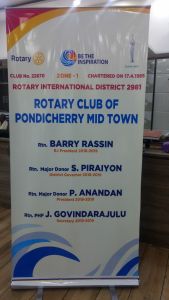
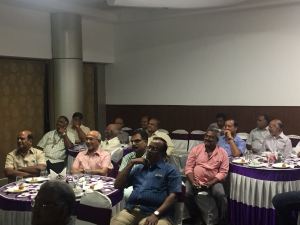
Recently, your truly had the privilege of addressing members of the Rotary Club of Pondicherry Mid Town. Business lessons from some of the cartoons created by the inimitable R K Laxman and Mario Miranda were presented.
Since the orange juice served before the talk was not laced with an appropriate tissue restorative, yours truly was all of a twitter. At such occasions, one tends to get tongue-tied, much like a Gussie Fink Nottle when he runs into a Madeline Bassett. Nevertheless, the Wooster policy of a chin-up attitude comes to one’s rescue. Services of one’s nerves of chilled steel have to be called upon. It also helps not to have any giggling girls in the audience.
This is how yours truly was introduced to the audience.
“Mr Bhatia is a management guy by profession and a romantic at heart. He did his MBA in what he labels as the pre-Jurassic period…
There are indeed times when one is feeling rather chuffed and believing that God is in heaven and all is right with the world, and it is precisely at times such as these that life plays a cruel joke on one. Residents of Plumsville would agree that it quietly sneaks up behind one and strikes at the not-at-all-bulging-at-the-back head of one with a hollow lead pipe, duly stuffed with cast iron pellets.
A straight forward person like yours truly would never aspire to walk in the footsteps of someone like Soapy Molloy or Sid Marks. But life recently played a prank and made me come very close to such an experience.
I had just returned to my home and hearth in Pondicherry, India, from a lovely trip to Europe, full of sweet memories of the time spent with my children and grandchildren who inhabit that part of the world. The…
The 24th of March, 2020 dawned upon us as any other normal day. Denizens of India were going about their daily chores with as much zombiness as they could muster. Flowers were in bloom. Birds and bees were going about doing whatever they normally do. Trees were swaying in the gentle breeze coming in from the Bay of Bengal. In other words, God was in heaven and all was well with the world.
However, by 2030 hours in the evening, our world had turned upside down. The Indian government imposed a comprehensive lockdown across a country comprising 1.3 billion persons. The Prime Minister himself appeared on our TV screens and announced this decision. By the time he finished, a mere three and a half hours were remaining for the decision to take effect.
This sudden whammy left all of us twiddling our thumbs trying to figure out as to…
In this series, we have tried to look at some movies through the spiritual lens of 12 personality traits mentioned by The Mother of Sri Aurobindo Ashram at Pondicherry in India.
Part 1 had covered the traits of Sincerity and Humility. Part 2 had looked at movies which touch upon such traits as Gratitude, Perseverance, Aspiration and Receptivity. In Part 3, we had checked out some movies which could be held to be representing the following personality traits: Progress, Courage, Goodness and Generosity.
Here is the concluding part, which covers the remaining two traits, namely Equality and Peace.
Thank you for joining me in this exploratory journey!
Equality
Here is a rare virtue, seldom practiced, whether at an individual level or in a society. Walls of race, caste, colour, creed, gender and financial well-being keep going up. The notion of ‘I’ takes precedence over that of ‘We’. Deriding ‘the other’ often satisfies our ego more readily. In many parts of the world, even some professions get looked down upon.
Boot Polish (1954) brought home the point that one’s self-respect is paramount, that polishing shoes is better than begging and also that work of any kind is dignified.
Shree 420 (1955) showed us how Ponzi schemes trick ordinary people into parting with their hard earned money. The stark contrast between the haves and the have-nots of the society formed the backdrop of the movie.
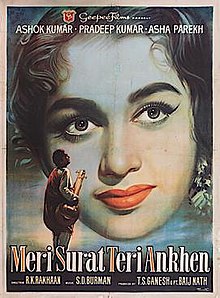
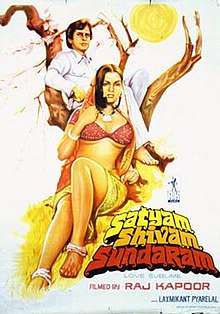
Meri Surat Teri Ankhen (1963) and Satyam Shivam Sundaram (1978) both highlighted the need for giving more importance to inner beauty rather than the external appearance of a person.
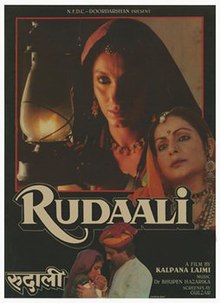
Rudaali (1993) touched upon the plight of social discrimination, based as it was on the tribe of women of a lower caste who are invited as professional mourners when a person from higher caste passes away.
Philadelphia (1993) covered the trials and tribulations of someone who suffers from AIDS and is a homosexual. He is sacked by the legal firm he works for on made-up work-related grounds but fights for his dignity and his rights.
Article 15 (2019) is a telling commentary on the perils of the caste system prevalent in the Indian society.
Several movies have touched upon the issue of racial prejudices. Schindler’s List (1993) and Munich (2005) are some examples.
When it comes to gender equality, our dream merchants appear to have kept the issue under focus for a long time, much before the #MeToo campaign gained popularity.
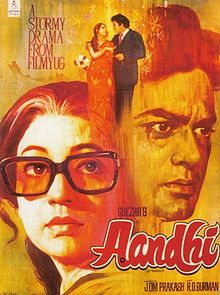
In Aandhi (1975), we meet a couple who get reunited after a long time, but decide to keep pursuing their different career paths.
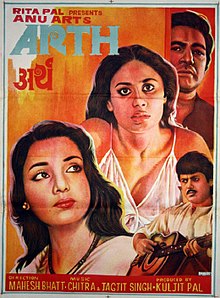
Arth (1982) and Luck By Chance (2009) had the heroines walking off from a relationship.
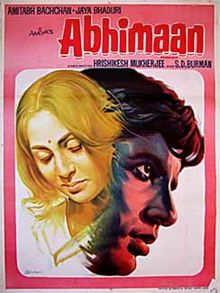
If Abhimaan (1973) touched upon the balance of power between a couple, Ki and Ka (2016) showcased a role reversal between the husband and the wife.
Parched (2015) narrated the story of four women breaking through the shackles of rigid practices of patriarchy. Thappad (2020) highlighted the issue of patriarchal attitudes and the lack of gender equality within the ambit of marriage.
Peace
Many movies depict the gory details of a war to highlight its futility. Here is but a random sample of the ones which drive home the importance of peace in our lives.
Life Is Beautiful (1997) made us feel not only the pangs of separation of a couple but also the blossoming of a special bond between a father and his son when they are held in confinement in a concentration camp. When the war gets over, the son, unaware that his father has met his death, excitedly tells his mother about how he had ‘won’ a tank, just as his father had promised if he played the game between them right.
Mr. and Mrs. Iyer (2002) was a poignant tale of the kind of affection which develops between two strangers in the midst of chaos and uncertainty caused by communal riots.
Veer Zara (2004) narrated the travails of star-crossed lovers. The Indian Air Force officer Veer (Shah Rukh Khan) sacrifices his freedom to protect the honour of the Pakistani heroine’s family. The latter, Zara (Priety Zinta), after a failed marriage, decides to support his elderly parents in India. Both get reunited, thanks to the efforts of a lawyer (Rani Mukherji). Not a single bullet gets fired. Nowhere does a prisoner get tortured. Yet, the message of peace between two warring nations gets delivered.
Life Is A Miracle (2004) had the backdrop of the Bosnia-Serbia conflict. When the hostilities break out, Luka’s wife goes away and love blossoms between him and Sabaha. His son is conscripted in the army and is then taken a prisoner of war. The dilemma faced by Luka is that of an exchange between Sabaha and his son Milos. Family gets reunited in the end.
From Heartless to Heartful
The movies mentioned here were not necessarily made for any spiritual purposes. These appear here simply because a part of theirs touches upon the 12 personality traits under discussion. In fact, some of these – like Saving Private Ryan and Lakshmi – have graphic violence which often creates revulsion and intellectual indigestion. Perhaps these are designed to hasten our progress from practicing heartlessness to heartfulness!
Almost all of these have an underlying streak of spirituality. These affirm the positivity of life, hold human beings as sacred rather than expendable, depict the practice (or otherwise) of human values and encourage the audience to ponder over their existence more deeply than they would in the course of their day-to-day routines.
Another common trait of these movies is that these do not promote a sectarian or religious worldview. Rather, the focus is on highlighting what, in essence, our scriptures and spiritual masters tell us.
Movies with a streak of spirituality stand in sharp contrast to the kind of inane ones which win popular appeal by using item songs, soft porn, obscenity, graphic violence, sadism and torture for sport. This virus, to be dreaded more than the current pandemic, has already spread into video games, kids’ cartoons and gaming applications, polluting the minds of the coming generations and promoting a shoot-first-think-later culture.
We also get hooked by the car chase/big explosion flicks like Fast & the Furious series; high-tech gadget movies like the Mission Impossible franchise; nationalistic movies like Independence Day; heist-based movies and web-series like Ocean’s 11 etc, Money Heist and Jamtaara which do not feel shy of using cuss words; and high school sex-obsessed, gross-out films like the AmericanPie franchise. Thrillers like Sholay, Khaki, Kahaani and Mom also keep us glued to our seats. But so do such movies with socially relevant themes as Gulaab Gang, Padman and Toilet – Ek Prem Katha.
Perhaps there is an emotional disconnect between Mother Earth and its denizens. Perhaps we are bringing up a bunch of bleary eyed kids glued to their screens – oblivious of the joys of human interface; in the process, dehumanizing them.
Rays of Hope
But we can find some solace in the fact that movies with a dash of spirituality do keep turning up. These keep illuminating the world outside and within us, restoring our faith in the basic goodness of Homo sapiens. Even though these may be few and far between, our producers, directors and script writers have a sharp eye for public tastes. The fact that these are getting made is a positive sign in the first place. There is hope.
Moreover, there must be several others which do not boast of popular stars. We would have never heard of the same. All these, in regional and other languages, must be out there, waiting to be discovered by a receptive audience.
Different approaches to spirituality could lead us to yet another set of movies. But the challenge of choosing the right movies on one of the media platforms we subscribe to would always remain. More so in times which are highly uncertain and when the fear of contracting a disease keeps nagging us from within.
To change and enrich our taste of movies – from heartless to heartful, from mindless to mindful, from hopeless to hopeful, from gory to glory and from demonic to angelic – may not be that easy, unless our own mindset changes. When that happens, our craving for a deeper meaning in our movies would get a leg up. Producers and directors would then offer juicier flicks. Once a ‘critical mass’ is achieved, our collective consciousness shall start changing its contours.
This could be our own humble contribution to some desirable changes in the society at large.
(This series of posts is dedicated to Ms Usha Bhatia, my late wife. Inputs from Mr Sanjay Mohan and Ms Gargi Banerjee are gratefully acknowledged)
In this series, we consider some more movies through the spiritual lens of 12 personality traits mentioned by The Mother of Sri Aurobindo Ashram at Pondicherry in India.
Part 1 had covered the traits of Sincerity and Humility. Part 2 had looked at movies which touch upon such traits as Gratitude, Perseverance, Aspiration and Receptivity.
In Part 3, we cover the following personality traits: Progress, Courage, Goodness and Generosity.
Progress
This could be of several kinds – material, spiritual and social. Most of us keep chasing materialistic goals in our lives. Some who feel a nagging emptiness within despite outstanding success on the material plane get awakened to the possibility of a spiritual growth. Few others try and work on such social ills as corruption and hygiene.
Guide (1965) showed us the transformation of an ambitious Raju (Dev Anand) from being an ordinary tourist guide to a successful businessman, thanks to a talented dancer Rosie (Waheeda Rehman). What followed was a web of commerce and misuse of funds, leading to a jail term for Raju. Eventually, upon nearing death, he experiences an awakening of the soul.
Invictus (2009) captures the manner in which Nelson Mandela endeavours to overcome racial prejudices not only in his team of personal assistants but also in his country, using the unlikely sport of rugby to make progress. The movie sets an inspiring example of achieving social harmony by dismantling apartheid through a spot of out-of-box thinking.
When it comes to progress on the social front, several movies have touched upon the issues of corruption, regressive attitudes and sexual exploitation.
Jaane Bhi Do Yaaron (1983) and Well Done Abba (2009) addressed the issue of corruption with dollops of humour.
Toilet – Ek Prem Katha (2017) and Padman (2018) championed the cause of hygiene.
Gulaab Gang (2014) spoke of various ills plaguing the Indian society.
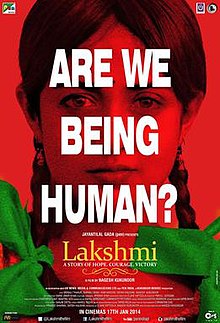
Mardaani (2014) and Lakshmi (2014) were both hard-hitting but highlighted the challenges one faces while battling human trafficking and child prostitution.
Movies which focus on social attitudes are often preachy and negative. But these serve a useful purpose by telling us where we are going wrong, thereby hampering our own progress.
Courage
The hero who shows courage by bashing up a bunch of goons to save the honour of his beloved on the silver screen gets lauded enthusiastically by a cheering audience. But here we shall touch upon the courage which manifests in many other ways, mostly utilized to achieve a higher goal in life.
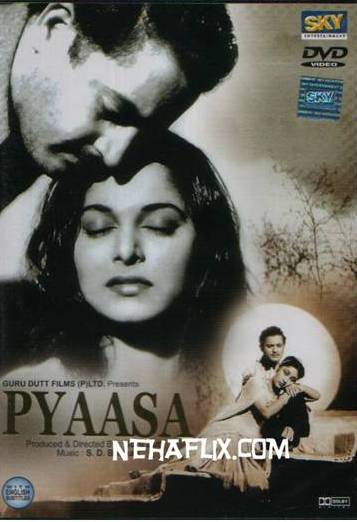
Pyaasa (1957) depicted the courage of a poet Vijay (Guru Dutt) to denounce a corrupt and materialistic world. Unable to tolerate the hypocrisy in the society, he decides to start a new life with Gulabo (Waheeda Rehman), the woman in his life.
Lakshya (2004) takes us on an inner journey of a happy go lucky but aimless Karan Shergill (Hrithik Roshan) who joins the army during the Kargil conflict between India and Pakistan. Death of a close friend leads him to discover his aim – that of capturing Point 5179, a strategic mountain peak on the border by ascending a 1000 feet high rocky vertical cliff.
A Wednesday (2008) shows the extent to which a common man (Naseeruddin Shah) can go to meticulously avenge all the terrorist attacks some people had helped carry out in Mumbai and other major cities of India, specifically the 2006 Mumbai train bombings.
Life of Pi (2012) shows the kind of courage it takes to survive and do well in life. The search for an identity becomes a voyage extraordinaire. The movie has a touch of sentimental spirituality. Pi survives his great adventure of crossing an ocean in the company of an adult Bengal tiger!
Neerja (2016) is a tribute to Neerja Bhanot (played by Sonam Kapoor) who laid down her life while protecting passengers on a hijacked Pan Am flight 73. The film ends with a tribute to Neerja, who was eventually honoured posthumously with the Ashoka Chakra, India’s highest military decoration awarded for peacetime valor, courageous action or self-sacrifice.
Goodness
When we overcome our greed and our prejudices, and when we learn to radiate love and display concern and empathy, we practice goodness.
Parakh (1960) was about an award from an anonymous donor of Rupees 5,00,000 to any resident of a particular village who will use it for the benefit of the entire village. Villagers decide to use democratic methods and favour an election where the winner gets the money. Each candidate tries to woo the villagers by being sympathetic and by becoming a cheerful giver to all by offering various sops. Goodness, however superficial, prevails. Eventually, the decision comes from the benefactor who lives in the village in disguise. At a deeper level, the movie highlighted the limitations of the concept of democracy.
Satyakam (1969) introduced us to Satyapriya (Dharmendra) who tries to live a truthful, honest and good life. Even in great adversity he doesn’t let go of his ideals. A fatal illness leads to his death and the grandfather (Ashok Kumar) who had sworn him to a path of righteousness realizes that even though he has spent his whole life studying religious scriptures and philosophical books as well as practising many rituals, he still had much to learn about the nature of truth. He overcomes his moral prejudices and vows to take care of his daughter-in-law (Sharmila Tagore) and the grand kid.
Raincoat (2004), based on O. Henry’s short story ‘The Gift of the Magi’, brings together two ex-lovers Mannu (Ajay Devgun) and Neeru (Aishwarya Rai). The former is unemployed and has limited means. The latter is now a housewife leading a frugal life. Each boasts to the other about their successful life but realize the hollowness of the other’s claims. Mannu ends up paying Neeru’s overdue rent for many months whereas she slips in two of her gold bangles into the pocket of a raincoat he has borrowed from her.
Patch Adams (1998) was all about the importance of laughter, empathy and concern for patients who are often treated in a soulless and mechanical manner in the medical world. The hero’s conviction of his own approach never waivers, except when his companion dies in unfortunate circumstances. But he soon recovers and reverts to his practice of goodness, dedicating his work to her memory.
Generosity
Many of us have occasionally had a helping hand from someone who went out of the way to offer support when it was badly needed. Those who are kind, empathic and compassionate could be said to be of a generous disposition. Somehow, life always gifts them with generous bonuses – whether financial or in terms of a cult status.
Schindler’s List (1993) portrayed the efforts of Oskar Schindler, a German industrialist, who saves the lives of more than a thousand Polish-Jewish people from the Holocaust. When World War II is declared to be over, the workers give Schindler a signed statement attesting to his role in saving Jewish lives and present him with a ring engraved with a Talmudic quotation: “Whoever saves one life saves the world entire.” Schindler is touched but also ashamed, as he feels he should have done even more. In a scene which is deeply touching, he breaks down sobbing, and is comforted by the workers.
Erin Brockovich (2000) was all about a legal clerk motivating a group of sufferers to stand up against a large company and get suitable compensation awarded by a court of law. Her identification with the cause and her perseverance – both are worth emulating. She does not expect any personal benefit in return, though she does get suitably rewarded for her services at the end of the movie.
The generosity showcased in these movies is neither feigned nor artificial. Both are based on actual incidents, restoring our faith in the innate goodness in people.
(This series of posts is dedicated to Ms Usha Bhatia, my late wife. Inputs from Mr Sanjay Mohan and Ms Gargi Banerjee are gratefully acknowledged)
In this series, we consider some movies through the spiritual lens of 12 personality traits mentioned by The Mother of Sri Aurobindo Ashram at Pondicherry in India.
Part 1 had covered the traits of Sincerity and Humility. In this post, we consider movies which touch upon such traits as Gratitude, Perseverance, Aspiration and Receptivity.
Gratitude
In the pre-independence era prior to 1947, we had self-sacrificing doctors who rendered their services in alien lands, serving the people affected by war and plague. Old timers may remember Dr. Kotnis Ki Amar Kahani (1946), which was based on the true life-story of Dr. Dwarakanath Kotnis who was sent to China during World War II. Dr. Kotnis had helped the people of China during the Japanese invasion. His selfless service makes us remember people like him with profound gratitude. He had married and settled down there itself but had eventually died of plague.
Our hearts get filled with gratitude when we think of either the Corona Warriors or the soldiers who guard our borders.
Jaagte Raho (1956) takes us through a night in the life of a poor peasant (Raj Kapoor) who enters a multi-storied building in Mumbai looking for some water to drink. After witnessing the shady deals of the high and mighty of the society, he is shocked but is not able to find water. Eventually, he finds a young lady (Nargis) watering the plants in a temple nearby who helps him to quench his thirst. The look of gratitude on his face says it all.
Saving Private Ryan (1998) is based on the profound sense of gratitude an army feels towards its soldiers and their families. It is set against the backdrop of World War II and the Normandy Invasion. General George Marshall learns that three of the four sons of the Ryan family have got killed in action and that the only remaining son, James Francis Ryan, is with the 101st Airborne Division somewhere in Normandy. Inspired by Abraham Lincoln’s Bixby letter, he orders Ryan to be brought home and to be reunited with his mother.
Perseverance
Many of us have a bulldog-like quality in us; of not giving up on the goals that we desire to achieve in our lives. Irrespective of the kind of difficulties we face and the obstacles we come across, we keep working on a particular project till the objective is met. If we have made a sincere promise to someone, we go out of our way to fulfill it.
The Shawshank Redemption (1994) is one of the several movies which showcase the indomitable spirit of human beings. A prison life replete with all its obnoxiousness does not dim the flame of hope inside. If a tunnel takes 19 years to build, so be it. Life has to be lived, not thrown away just because odds happen to be stacked against us. A promise made needs to be fulfilled.
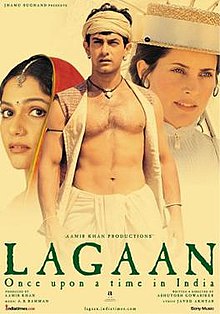
Almost all the sport-themed movies focus on this quality. Think of Lagan (2001), Iqbal (2005), Bhaag Milkha Bhaag (2013), Mary Kom (2014), Dangal (2016) and M S Dhoni: The Untold Story (2016).
Then there are movies of individual resolve which uplift your spirits by highlighting the kind of travails the characters go through to achieve what they want; Rocket Singh: Salesman of the Year (2009), Nil Battey Sannata (2015) and Secret Superstar (2017), to name a few.
Erin Brockovich (2000) is another good example of this personality trait. We shall return to it soon enough.
Aspiration
Rolling stones gather no moss, as the wise men say. Life is but another name for the inner motivation we have when we aspire for higher things. The aim could be a basket of materialistic desires or a wide spectrum of spiritual progress. When we aspire for it, perseverance propels us towards our chosen goal.
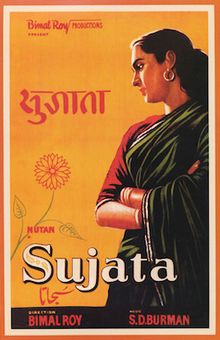
Sujata (1959) was about an untouchable girl (Nutan) brought up by an upper caste couple. It is only when a young man (Sunil Dutt) walks into her life that she awakens to her aspiration to lead a normal life.
In Swades (2004) we get to meet Mohan Bhargava (Shah Rukh Khan), a NASA scientist who wants to return to his roots in India, with an aspiration to solve the problems of local villagers using modern technology.
Aaja Nachle (2007) had a gutsy US-based choreographer Radha (Madhuri Dixit) desirous of saving Ajanta, an old open air theatre planned to be demolished to make way for a shopping mall in her home town in India. The difficulties faced by her in keeping an old cultural tradition alive in the face of strong forces of so-called modernization formed the crux of the script.
Despite outward signs of success, many of us feel lost, confused and searching for what we really want in our lives. Elizabeth Gilbert (Julia Roberts) shows us a way out of this misery in Eat, Pray and Love (2010). She steps out of her comfort zone and embarks on a journey of self-discovery. She cherishes nourishment for the body in Italy and for the soul in India. Finally, and unexpectedly, she finds the inner peace and balance of true love in Indonesia.
In Udaan (2010), we meet a 17-year old youngster who wants to be free of the overriding discipline of his father at home. How he overcomes his low self-esteem and picks up the courage to aspire for a life free of humiliation and abuse is the central theme.
Hindi Medium (2017) showcases the aspirations of a young couple to ensure that their son willy-nilly gets admitted to a good English medium school. The movie ends on a positive note and captures the potential of refurbished public schools which could give a healthy competition to so called elite schools. It was based on a successful experiment conducted by the Delhi government in its public schools a few years back.
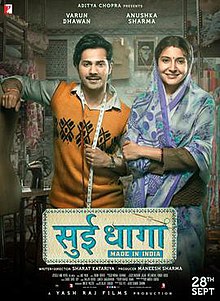
Sui Dhaaga (2018) introduces us to Mauji (Varun Dhawan) and his wife Mamta (Anushka Sharma) who, when humiliated and cheated by the company where they work as tailors, become entrepreneurs and make their venture a success despite severe odds.
In all these cases, the settings and the aspirations are quite different. But the central message is clear – that we need to work hard to realize our dreams.
Receptivity
This is a unique quality of those with an open mind, capable of receiving and taking in knowledge and new ideas and then acting upon the same, if necessary and prudent.
Take the character of Uma (Sharmila Tagore) in Anupama (1966). She is extremely shy, diffident and introverted. She has been brought up by a father who blames her for the death of his wife during childbirth. She falls in love with Ashok (Dharmendra) who is disliked by her father. A close friend of hers gives her a dressing down and awakens her to the possibility of a happier life in Ashok’s company. She picks up the courage to stand up to her father, obtains his hesitant consent and joins her beloved.
Taare Zameen Par (2007), based on the challenges faced by a young boy suffering from dyslexia, brings in the character of Ram Shankar Nikumbh (Amir Khan), a cheerful and optimistic art instructor. After meeting the boy’s parents, the perceptive teacher is able to diagnose the illness from which Ishaan (Darsheel Safary) suffers. He also finds the boy’s hidden talent for art and takes him under his wings, enabling him to start living a near-normal life.
Avatar (2009) happens to be a movie which pitches for sustainability and care for environment. Set in 2154 AD, it calls upon all of us to be receptive to the fragility of nature and limited resources of our planet. One of the unique concepts brought up by the script is that of the sacred Tree of Souls.
In a way, such movies exhort us to be receptive to changes happening all around us and revising our basic priorities in life. Perhaps the Covid virus is also nudging all of us in the same direction.
(This series of posts is dedicated to Ms Usha Bhatia, my late wife. Inputs from Mr Sanjay Mohan and Ms Gargi Banerjee are gratefully acknowledged)
These days, as a pandemic stalks us, people are hooked to movies of all kinds, even while supposedly working from home. The cumulative effect of using high-definition gadgets, lockdown ennui, death tolls and binge-watching movies is that of a higher level of stress. The lack of freedom to venture out on long drives further compounds the problem.
To avoid landing up in a loony bin, we could cut off our daily diet of depressing news. We could ensure interacting only with those who radiate positive vibes. We could also think of consciously changing our movie-watching palette so as to start appreciating flicks which have a deeper layer in their themes.
In this series, we consider some movies through the spiritual lens of 12 personality traits mentioned by The Mother of Sri Aurobindo Ashram at Pondicherry in India.
Introduction
When the upright good guy defeats the morally deficient bad guy, we cheer. Think of the James Bond franchise, courtesy Hollywood.
When a movie ends on a positive note, we applaud. Imagine any movie from Bollywood where the hero and the heroine finally walk into the sunset on a sandy beach, with a romantic song playing in the background. The unstated assumption is that the couple lived happily ever after.
When the outcome is negative but the movie is well crafted, we may sulk but still carry a favourable impression of it. Go back to either Titanic or Mughal-e-Azam. Both were tragedies but mounted lavishly, with excellence in almost all the departments of film making.
But once in a while comes along a movie which touches us somewhere deep inside. The script may carry a key message. Or, it may showcase certain values which we cherish ourselves, thereby creating a deep resonance within. We experience love. We feel hopeful and uplifted in a somewhat deeper manner. The soul gets awakened.
If we were to muse upon the theme much afterwards, we could say that such movies had been conceptualized with a dash of spirituality. These are movies which inspire us to live through and face difficult situations in our lives. We could think of classifying these in the genre of what we could refer to as Conscious (or Soulful) Entertainment.
Of a Spiritual Streak
Think of such movies as Shawshank Redemption, Avatar, Contact, Gladiator, Schindler’s List, The Sound of Music, Lagaan, Jagte Raho, Swades, Guide, Abhimaan, Mr. and Mrs. Iyer, Veer Zara and many others of a similar ilk. What do all these have in common? Yes, most of these are big hits. Yes, they have A category stars. Yes, all are well made. But these are not their most important features.
When we go back to the first time we watched one of these, most of us would recall having felt uplifted and hopeful. We would have felt compassion and love for the entire humanity. Our hearts would have felt much enlarged. Much like the short sequence from Mera Naam Joker where the hero’s heart goes on expanding and no one has a clue as to how to solve the problem!
We would have felt like living much longer, drinking deep from the rivulets of unalloyed joy that life offers. These films are but a few in the genre of ‘Conscious’ or ‘Soulful’ films which have the potential to change lives, inspire choices, and elevate human consciousness.
One of the spiritual lenses available to us to view such movies has been offered to us by The Mother of Sri Aurobindo Ashram at Pondicherry in India. She has mentioned the following twelve traits which are essential for the spiritual progress of an aspirant:
The sincerity with which an individual takes up a challenging task and executes it well, even while risking his or her own welfare, generates a swell of positive emotions within the viewer and sets an example of achieving perfection in the discharge of one’s professional duties.
Do Aankhen Baarah Haath (1957) which captured the valiant efforts of a jail warden Adinath (V Shantaram) to rehabilitate six dangerous prisoners released on parole to persons of virtue in an open jail experiment. Besides demonstrating how concentration, perseverance and hard work can make one realize one’s goals in life, the movie also drives home the point that if people focus their energy on a worthy cause in a sincere manner, success is easy to come by.
Maria (Julie Andrews) who is a free-spirited person lacking in self-discipline and self-confidence assumes the role of a governess for the seven children of Captain Georg von Trapp (Christopher Plummer) and ends up winning the hearts of the entire family in The Sound of Music (1965).
In Khamoshi (1970), we meet nurse Radha (Waheeda Rehman) who loses her own mental balance by being so sincere in discharging her duties as a professional as to neglect her own emotions of love towards two of her successive patients, Dev Kumar (Dharmendra) and Arun Choudury (Rajesh Khanna). A key lesson underlying the storyline is that of cultivating a sense of detachment in one’s profession, as highlighted in the Bhagavad Gita as well.
Think of Debaraj Sahai (Amitabh Bachchan) mentoring Michelle (Rani Mukherji) in Black (2005). The movie was inspired by The Miracle Worker (1962).
Humility
Here is a quality which covers such personality traits as purity, charity and obedience.
Gladiator (2000) captures the saga of General Maximus Decimus Meridius (Russel Crowe) who is devoted to Emperor Marcus Aurelius and works throughout his life to keep the Roman Empire safe. When offered the throne, he declines the offer, preferring instead to return to his village. Before he dies, he asks for political reforms, for his gladiator allies to be freed, and for Senator Gracchus to be reinstated. Maximus’s friends and allies honor him as “a soldier of Rome”. His character represents not only the purity of his intentions and loyalty to the empire, but also humility.
When denizens of planet Earth soar into space, they have this humbling experience of realizing how infinitesimal Homo sapiens happen to be in the overall scheme of a vast universe. We may be rooted in our prejudices and may be overly busy, what with our ego-skirmishes with others over petty matters and a relentless chase of the materialistic goals in our lives; yet, we are merely a fraction of a speck in the divine arrangement.
Watching movies like Apollo 13 (1995), Gravity (2013), and many others leaves us humbled in more ways than one.
(This series of posts is dedicated to Ms Usha Bhatia, my late wife. Inputs from Mr Sanjay Mohan and Ms Gargi Banerjee are gratefully acknowledged)
The 24th of March, 2020 dawned upon us as any other normal day. Denizens of India were going about their daily chores with as much zombiness as they could muster. Flowers were in bloom. Birds and bees were going about doing whatever they normally do. Trees were swaying in the gentle breeze coming in from the Bay of Bengal. In other words, God was in heaven and all was well with the world.
However, by 2030 hours in the evening, our world had turned upside down. The Indian government imposed a comprehensive lockdown across a country comprising 1.3 billion persons. The Prime Minister himself appeared on our TV screens and announced this decision. By the time he finished, a mere three and a half hours were remaining for the decision to take effect.
This sudden whammy left all of us twiddling our thumbs trying to figure out as to how to survive the depressing phase staring us in the face. This was one of the harsher slings and arrows of fate which had hit us. Initially, a sense of shock and awe prevailed. Gradually, reason started reoccupying its throne. Travel plans had to be junked. Medical issues came to the forefront. For the digitally illiterate, banking transactions went for a toss. Gadgets at home needing urgent repairs were left in a limbo. Some missed their daily dose of morning newspapers. Our hearts might have bled realizing the plight of migrants, but we took a jaundiced view of the humble house maid coming in to earn a living. Many other challenges tested our grey matter no end.
Even today, the virus continues to offer a unique experience to most of us, whether by way of making us fearful of its ferocity or by snatching away many of the degrees of freedom we have always taken for granted.
The Guardian Angels
It is not that yours truly has been very brave or wise in handling the depressing effect of virus-induced extended lockdowns so far. Much like the V-shaped and W-shaped depressions which plague many of our economies – developed or otherwise – these days, the dark forces of depressing thoughts have been frequently snapping at my heels.
As a loner whose cooking abilities are limited to boiling milk and eggs, and whose procurement related negotiation skills are outdated, life only got tougher in the post-lockdown phase. The horizon of mundane challenges expanded to include sourcing of fruits, vegetables, groceries and medicines. For someone like me who is battered by multiple health risks and is rather shy and diffident, especially in the presence of the members of the fairer sex, the challenge is even mightier.
Luckily, my Guardian Angels who, I am told, go around these days with their fancy i-Pads keeping a track of their favoured ones, noticed my name flashing in a deep red colour on their screens and decided to pitch in. Gradually, a host of characters straight out of the many narratives of P G Wodehouse started popping up around me, making me smile – even laugh occasionally – assisting me in keeping my body and soul together, besides keeping me emotionally afloat and cheerful. Thanks to the virus, a transient family came into existence, with the tantalizing possibility of lingering bonds of friendship which may survive the vagaries of time.
Some Supporting Characters
Here are some of the honourable mentions in this context:
Aunt Dahlia and Uncle Tom, my next door neighbours, who keep offering delicious lunches in a routine manner. Their large house is surely not a patch on Brinkley Court. Nor do they have Anatole around. The lavish spreads are an outcome of the culinary skills of Aunt Dahlia, who only calls me a blot on the landscape if she finds me not tucking in enough of the lavish spreads she whips up.
Uncle Tom, besides worrying about taxation blues, could share a great deal of spiritual knowledge. One of his tips to invite a state of happiness is to sing one of his favourite songs at least three times a day without worrying about the reaction of either the humans or the asses around.
At their doorstep, one is apt to find Augustus catching up on its beauty sleep. If awake, his supercilious body language does not encourage one to endeavour to tickle it behind the ears.
Piggy and Maudie, who take care of my pangs of hunger at dinner time, ensure that their dinner spreads are full of nutrients and soluble vitamins, a sentiment that would meet a hearty approval of Laura Pyke.
Piggy happens to share my passion for poetry, books, movies and general affairs, and a personal meeting with him never fails to uplift my spirits. Likewise, a brief session with Maudie on spiritual matters is invariably enriching.
When it comes to being woolly headed, I could offer competition to Lord Emsworth. But I have neither a big castle nor a large estate to take care of. Nor do I have the need to hire a bevy of supporting staff to take care of my affairs. However, someone cast in the mould of Beach the butler, my Man Friday, takes care of mundane upkeep of my modest abode. On this angel falls the burden of ferrying my dinner from Piggy and Maudie’s home every night. How he dodges the ‘oh’s and ‘ho’s of cops enroute in these locked up days and manages to bring home the bacon, so to say, is praiseworthy.
Emerald Stoker, a long time friend and a tough cookie on some days, is otherwise one of those soothing and sympathetic ladies you can take your troubles to, confident of having your hand held and your head patted. She keeps calling me up frequently, not only to check if I am still alive and kicking but also if I happen to be under the grip of any depressive thoughts and need to see Sir Roderick Glossop. I have reason to believe that she keeps a distant track on my emotional peaks and troughs, often directing Guardian Angels in my immediate vicinity to ensure that I remain in a cheerful state of mind.
An architect by profession, she also happens to be a passionate cook. On several occasions, she has shared with me the exotic vegan stuff whipped up by her for the day. All this support from her comes even as she battles severe problems in her personal life.
Jeeves in my life during this phase happens to be a movie maker. He also wears many other hats. His driving and networking skills are exemplary. A globe trotter, he, like all others on this list, suffers from an abundance of the Milk of Human Kindness.
He has the knack of ferreting out sensible movies from the many online streaming options which are in vogue these days. When he shimmers in with a cup of his spiced tea or lays out a lavish breakfast spread, one would need to have a ready supply of tissue papers handy so as to keep one’s drooling under control. Whenever the Guardian Angels are in a celebratory mood, he ensures a ready supply of tissue restoratives.
Angela and Tuppy Glossop
At the start of the lockdown, Jeeves introduced me to Angela, a sprightly spinster who popped up in Pondicherry to soak in its unique ambience, but got stuck due to severe mobility restrictions imposed then. The same fate befell Tuppy Glossop, a friend of hers and a space scientist to boot. My house was blessed by their presence.
Besides a sense of decency and an ample supply of the Milk of Human Kindness coursing through their veins, their sincere efforts at dishing out something which I would find to be palatable endeared my heart. They took over the procurement as well as the household management functions rapidly, the result being that one never had to miss one’s vitamins.
As someone who relishes the pleasures of the table and also aspires to be a sous-chef, Tuppy, in one of his finer culinary experiments, even succeeded in making a ‘perfect circle’ puffed-up chapatti. Angela was quick on the uptake and sharpened her skills at cooking delicious lentils and kheer (a kind of pudding popular in India).
Both have been going out for beach walks together but I am not aware if any dispute concerning Angela having spotted a shark in the waters ever arose between them. Perhaps the credit goes to the sharks which avoid being in shallow sea waters around Pondicherry.
Pauline Stoker, a fashion designer, a marketer and a fitness enthusiast, keeps popping up with her home-cooked stuff on several days, brightening up the evenings with her effervescence and charm. Often accompanied by her well-mannered Kid Clementina who is sorely missing opportunities to put sherbet in ink pots these days and is invariably struggling to complete her home work online.
Captain Biggar and Galahad happen to be neighbours who pitch in occasionally to spice up the proceedings. One ensures a ready supply of several works of P G Wodehouse borrowed by him from a library nearby. Another offers a fresh perspective on current affairs over a steaming hot cup of tea. He has even ensured home delivery of farm fresh milk, duly sourced from contented cows.
All this is not to say that my immediate family, stationed about 8,000 kms away, does not bring in emotional succour by ardent enquiries made almost every other day. Each interaction with them is akin to a tiny drop of the elixir of inner bliss. Then there are relatives, friends and cousins who are keeping in touch, sharing their experiences during the lockdowns.
Meditation and Spiritual Upliftment
Twice a week, the group gathers for a spot of meditation at my place, thereby retaining the members’ sanity and equipoise.
The positive spin-offs of the virus are many. Lesser noise pollution. Minimal traffic. Greener environment. Virtual meetings. A unique time to relook at ourselves and our priorities in life closely. Better sharing and caring between neighbours. A hastening of the onset of Industrial Revolution 4.0.
On the flip side, at least three friends have so far handed in their dinner pails during the 90-day period under reference. For yours truly, some fresh challenges have popped up on the health front. I shall be deceiving the public if I were to say that such incidents do not dampen my spirits. However, help is at hand to pull me out of a deep emotional pit whenever necessary.
The eventual result is a kind of spiritual upliftment, perhaps of the kind that vicars experience when someone like Thos happens to be around.
An Abundance of the Milk of Human Kindness
To sum up, the Guardian Angels are keeping loneliness, depression and negativity at bay. An openness in making new friends, a tendency to help others nearby in whatever way one can and a positive frame of mind facilitate a healthy dose of laughter, mirth and joy. All efforts are being made to keep the body and soul together, so there is no shortage of feel-good hormones in one’s system.
As we gear ourselves to getting used to a long term presence of the virus, or its subsequent off-shoots which it plans to unleash upon us in the days to come, we would do well not to forget that it is here to teach us a rich lesson: that true happiness lies not in material comforts but in sharing a part of what we have with others who, at that point in time, may be in dire need of. Of being able to put ourselves into others’ shoes, anticipating their needs and trying to address the same. Adjusting to what is and not repenting what is not; accepting that life is never perfect. Cultivating a sense of gratitude.
To put it simply, keeping human values on the top of our dealings with those who deserve the same; being humane. As one of my professors would put it, by adopting the Spandan (heartbeat) approach to life.
(Allusions to characters from the works of Wodehouse are purely imaginary; depending upon some personality traits of the real persons alluded to here. No offence is meant to either of the two categories.)
(Illustrations courtesy Mr Sanjay Mohan and the world wide web)




















































 ashokbhatia