Posts Tagged ‘Ramayana’
Would ‘Ram Rajya’ forever remain a Utopian concept?
Posted in For India, With Love!, tagged Ethics, Lord Rama, Ram Rajya, Ramayana, Values on January 22, 2024| Leave a Comment »
The Challenge of Defining Consciousness
Posted in Management Lessons, tagged Consciousness, Danah Zohar, Daniel Goleman, Defining, Global Consciousness Project, Ian Marshall, Jack Beauregard, Jeffrey Deckman, King Janaka, Leadership, Management, Rajarshi Leadership, Ramayana, Roy Woodhead, S K Chaktaborty, SACAR, Spirituality, Sri Aurobindo, Stephan Karbaron on July 12, 2021| Leave a Comment »

Defining Consciousness is akin to the case of seven blind men trying to describe an elephant. People have different perspectives. So, when it comes to saying what it really is, the descriptions are often as different as chalk and cheese.
The reason for a wide spectrum of ways in which we understand this concept is what one could label as the Yin and Yang factor. Many of us use our brains to explain what we understand it to be. Many others use our hearts to do so. Perhaps this concept is rather profound. It is beyond the sensory limitations of the human mind, which has an uncanny ability to divide and analyze things. This is what eventually leads to the phenomenon called Analysis Paralysis in management. Our hapless hearts are rooted in what Daniel Goleman refers to as Emotional Intelligence. A solely emotional perspective has its own limitations.
But the situation is not as challenging as it appears to be. The common denominator underlying the entire spectrum is that of the collective good. An integrated view of the concept is surely possible, provided we move on to the level of what Danah Zohar and Ian Marshall, in their book Spiritual Wealth: Wealth We Can Live By, allude to as Spiritual Intelligence.
However, before we move further, let us consider some of the perspectives which one normally comes across.
What is Consciousness?
The Five Maxims
Ask Jeffrey Deckman, and he is apt to say that it is imperative for a Conscious Leader to play the following roles:
- Being a ‘healer’, who calms, comforts and connects those around him.
- Of being an ‘elder’, by practicing wisdom, empathy and patience.
- Acting as a ‘steward’, nurturing talent and creating conditions for growth just like a gardener would act.
- Doffing the hat of a ‘navigator’, envisioning challenges and opportunities, defining broad goals and guiding others.
- Being a ‘facilitator’, acting like the conductor of an orchestra, ensuring harmony, encouraging open discussions and aligning by voting and not by consensus.
Of Gallant Knights
Danah Zohar and Ian Marshall speak of Knights, the leaders who choose to embark on a spiritual path. Having sensed something fundamentally sacred underlying human life, they embed this reality in their actions and in their life’s work.
In both life and work, the knight abides by five principles:
- There is something sacred, some deeper, shared consciousness, unfolding in this universe and providing a baseline for every aspect of life.
- Life and all its enterprises are interconnected.
- All human endeavour, including business, is part of the larger and richer fabric of the whole universe.
- The relationship of the healthy individual to the world is one of engagement and responsibility.
- Service conveys deep sense of humility and gratitude.
A Triple Bottom Line Approach
Stephen Karbaron exhorts businesses to embrace an approach of profiting from a purpose driven, triple bottom line paradigm. To him, this is what defines a conscious business strategy approach. He emphasizes the need to be innovative, adaptable and prepared for change, whilst being aware of all stakeholder needs. He keeps sharing live examples of businesses which follow this approach.
Of Philosopher Kings
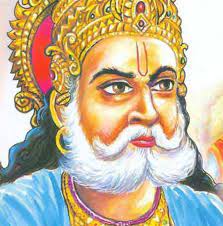
Dr Roy Woodhead is of the opinion that the very words ‘conscious enterprise’ imply some sense of an ‘enlightened enterprise’. In one of his thought provoking articles, he says that Plato put forward the idea of ‘philosopher kings’ to lead us. They would not be allowed material gains but would be well looked after; their economic neutrality and lack of vested interests were seen as very important for effective government by the philosopher kings.
Ramayana, one of the revered Hindu scriptures, speaks of King Janaka, the foster father of Sita, the heroine of the epic story. He is said to be a ‘philosopher king’. He is revered as being an ideal example of non-attachment to material possessions. He not only administers his country but also invites sages and intellectuals to spiritual discourses in his assembly. His interactions with sages and seekers such as Ashtavakra and Sulabha are recorded in ancient texts and are illuminating treatises on spiritual principles.
In their book ‘Rajarshi Leadership’, authors S. K. Chakraborty and Debangshu Chakraborty espouse the cause of spiritual leadership. This is a concept which sums up a key lesson from India’s tryst with spirituality: that of first discovering the divinity within, and then to manifest it without. Such conscious leadership is blissful to oneself and to others.
A Holistic View of Affairs
Jack Beauregard is of the opinion that it is about one connecting with the wholeness and the process of creation. A higher level of consciousness opens one’s life to one’s inner cores, thereby allowing the creativity of the universe to flow into one’s life. This enables one to find innovative solutions for solving the numerous challenges that one faces. He believes that a higher level of consciousness also creates a spiritual perspective. It allows one to view one’s life, other people, our work organizations, technology, the planet earth, and the universe from a sacred point of view.
Jack Beauregard opines that one can help create a new, harmonious world in which to live by taking responsibility for transforming one’s own consciousness. When enough people choose to develop, act, and do business from a balanced, wholistic paradigm, this will automatically have a positive influence on the consciousness of our planet. We can help co–evolve with the intelligent creative process of the universe. When a critical mass is reached, we will then create a positive alternative to the negative actions and beliefs of today’s world.
Our species will evolve to its rightful inheritance when we realize that human consciousness is a smaller part of the larger consciousness of the universe, and our individual lives, and the human species in general, are small parts of the vast web of life and just one manifestation of the mystery of creation.

The Realm of Creativity
Hindu and other scriptures speak of one reaching a state when one’s consciousness becomes one with that of the universe, often leading to an exalted phase of creativity. Our physical body then acts as an antenna, translating signals from the universe into something human beings would comprehend. When someone like Mozart composes music, he merely writes what he hears. When a humourist like P. G. Wodehouse creates his unique characters and weaves them into a dramatic plot, he acts more like a celestial author who enables lesser mortals like us to notice a humorous strain in all things around us.
When Science Steps In
When humanity gropes for the source or the definition of Consciousness, our scientists do not disappoint.
Consider The Global Consciousness Project which is an international, multidisciplinary collaboration of scientists, engineers, artists, and others. Their goal is to examine subtle correlations that may reflect the presence and activity of consciousness in the world. Their researchers predict structure in what should be random data, associated with major global events. Their contention is that when millions of people share intentions and emotions, their data show meaningful departures from expectation. This is an area where science appears to establish the reality of a global consciousness.
A materialistic scientist would tell us that our brains consist of neurons made of atoms. These process our external experiences. At times, our neural processes lead us to recognize a higher meaning in things. According to them, our 40 Hz oscillations happen to be the neural basis for consciousness in the brain.

A Spiritual Insight
More than a century ago, this is how Sri Aurobindo, a highly revered spiritual master and a visionary from India, described his concept of Consciousnessthus:
Consciousness is a fundamental thing, the fundamental thing in existence; it is the energy, the motion, the movement of consciousness that creates the universe and all that is in it not only the macrocosm but the microcosm is nothing but consciousness arranging itself. For instance, when consciousness in its movement or rather a certain stress of movement forgets itself in the action it becomes an apparently unconscious energy; when it forgets itself in the form it becomes the electron, the atom, the material object. In reality it is still consciousness that works in the energy and determines the form and the evolution of form. When it wants to liberate itself, slowly, evolutionarily, out of Matter, but still in the form, it emerges as life, as animal, as man and it can go on evolving itself still farther out of its involution and become something more than mere man.
— Sri Aurobindo, The Life Divine, pp. 236-7.
Consciousness is usually identified with mind, but mental consciousness is only the human range which no more exhausts all the possible ranges of consciousness than human sight exhausts all the gradations of colour or human hearing all the gradations of sound — for there is much above or below that is to man invisible and inaudible. So there are ranges of consciousness above and below the human range, with which the normal human [consciousness] has no contact and they seem to it unconscious….
— Sri Aurobindo, The Life Divine, p.233.
In a way, what he appears to be pointing out is that understanding Consciousness is akin to realizing the difference between a physical body which is alive and one which is dead. It is like the sole element which is missing from a dead body.
By providing us with a very wide canvas to understand the term Consciousness, Sri Aurobindo is also indicating that organizations which are conscious are most likely to have the following characteristics embedded in their culture:
- An attitude of humility and devotion which enables people to operate – individually as well as in teams – at a higher level of productivity;
- A flatter hierarchy which redefines the relationship between those who lead and those who are led; in other words, a Theory Y approach to human relations, a higher diversity of cross-departmental teams, a premium on gender diversity, and an optimum gap between the packages and perks of the highest and the lowest paid people;
- A harmonious engagement with diverse stakeholders.
(Notes:
- Inputs from Dr Ananda Reddy of the Sri Aurobindo Centre for Advanced Research (SACAR), Pondicherry, India, are gratefully acknowledged. Illustrations courtesy www and Huta, Sri Aurobindo Ashram, Pondicherry, India.
2. Inputs from Dominique Conterno and Esther Robles, co-founders of Consciousness Enterprises Network (https://www.consciousenterprises.net), are also gratefully acknowledged.)
Related Posts:
Values: Their Sources and Learning
Posted in A Vibrant Life!, tagged Autobiographical, Bonobos, Consciousness, EQ, Family, Genes, Grooming, IQ, Learning, Lord Krishna, Lord Rama, Mahabharata, Ramayana, Sources, SQ, Teaching, Values on March 2, 2021| Leave a Comment »
My audience may by now be losing its patience, thinking as to why I keep harping on the term ‘values’ so very often!
The Road to Happiness
Well, it would not need a Sherlock Holmes to figure out what is happening here. Besides being an occasional author, a speaker, a regular blogger and content creator on such topics as Management, P G Wodehouse, Bollywood and life in general, yours truly has undergone several juicy experiences in life – some sweet and some sour. Based on my 35 years+ experience in the corporate world, I have become aware and conscious of the need for high values and ethics in business. Some of you may recall my having worked across the two opposite ends of the Value Spectrum.
Add to this the enriching experience I have had while our planet has been busy spinning on its axis and completing 68 odd rounds around the sun since I have been around and the plot gets even thicker. Those of you who have had the misfortune of trudging through my articles and books would have already sensed an underlying current highlighting this very theme. In me, they would have discovered a fierce critic of any kind of compromises on this front.
My belief is that business ships (and lives too) which are built on a keel of sound values end up not only having a better brand equity but also yield better returns. When we are broad minded and give back to the society at large, we serve a higher purpose in life. Purpose brings inner happiness. Happiness is what we all seek.
Where Do Our Values Come From?
All this may have left my audience wondering as to from where our value systems come from. This would surely need the keen eye of Sherlock Holmes to explore.
Our Genes
After years of research on bonobos – intelligent apes closely related to us, homo-sapiens – Frans de Waal argues that human morality is not imposed from above but comes from within us. In his path-breaking book entitled The Bonobo and the Atheist, he proposes that moral behavior does not begin and end with religion. It appears that our values and ethics are instead a product of evolution and cultural response. All of us strive to be good within ourselves, in our own eyes. This explains our trait of innate goodness.
A cat or a dog may not think through the process so thoroughly, but bonobos surely appear to be aware of the nuances of social norms. They have a developed sense of reciprocity and fairness. They are even known to intervene in a fight between two tribe members so as to maintain peace and harmony!
Ancient apes, whales and dolphins deserve our gratitude for several qualities that we possess – our sensitivity to others, our concern for fairness, love of harmony and other just forms of societal behavior. If religion or spirituality attracts us, it is because that is how Mother Nature has made us. These present to us a template of good conduct; these touch a chord somewhere deep within us.
We, a Cocktail of ‘Gunas’
However, there is no guarantee that all of us follow the template of good conduct alone. As per Bhagavad Gita, each one of us has a unique mix of the three kinds of traits (gunas): Sattwic, Rajasic and Tamasic.
Spiritual texts tell us that both the good as well as the evil are manifestations of the Divine. When Lord Krishna manifests his all-pervasive and all-inclusive Vishwarupa form in the midst of his sermon to Arjuna, he reveals the negative side of the Divine as well.
Conception, Upbringing and Our Role Models
The thoughts of our parents when we were conceived, the manner in which we are brought up and the role models we have in our lives are perhaps some of the other factors which shape our inner value systems.
In childhood, when I picked up some money lying on the road outside my home, with gleeful thoughts of treating myself and my friends to an ice cream or two later, I had no other option but to be guided by the moral compass of my parents. I was made to donate the money to a beggar outside a temple we visited in the evening that day. In many other instances, a straight and narrow path of righteousness was laid out.
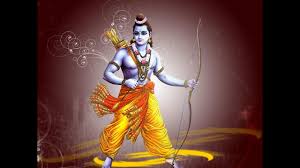
It was a common practice for my paternal grandmother to read a few pages of Ramcharitmanas almost every evening. Likewise, my maternal grandmother was a follower of the principles of Mahatma Gandhi, Vinoba Bhave and Swami Vivekananda. Stories from Panchatantra et al defined the nature of books and comics available to us in our childhood.
The rich legacy left behind by my parents and other family seniors comprises the kind of values they cherished. Never to brag about one’s accomplishments. To listen to all, but to do only what one’s inner voice holds to be right. Be truthful and honest, but not to hurt anyone in the process. Do not easily promise anything; once promised, just do it. Treat others in the way you yourself wish to be treated. Be punctual; you have no right to waste another’s time. Eat healthy. Exercise regularly. Be good to others, but protect yourself first. Be always courteous to members of the tribe of the delicately nurtured. Judge people only by their inner qualities; not by their external appearance. As to your future plans, share these only on a need to know basis.
In addition to the immediate family members, there were a bevy of uncles, aunts and cousins passing by the household, some benign and a few others not so. Their feedback and their comments also shaped up our thoughts.
Those were simpler days when the radio was the only means of entertainment. The power supply would often play hide and seek. At bed time, while watching the twinkling stars high above, one could learn much from the stories of various achievements of our ancestors narrated by someone senior.

Lord Rama and Lord Krishna
Mahabharata was yet another epic which influenced me. Arising out of an age-old belief that a copy kept in the house could lead to conflicts between siblings, I could read it only when I was in college. Some traits of Lord Krishna – a friendly disposition, fleet-footedness, detachment, helping those who are on the path of righteousness, strategic thinking, treating ends more important than the means, etc – are endearing and relevant to this day.
Both the godheads present a slightly different template of good conduct. Both exhort us lesser mortals to follow the path of righteousness, or dharma. But their methods vary. If Lord Rama is an epitome of virtue and is to be kept on a high pedestal and revered, Lord Krishna is less bound by notions of morality. He is a true friend, philosopher and guide. If a villain in our story is troubling us too much, one could frankly confide in Krishna and request him to ensure that the fellow be somehow banished from Earth and packed off to Mars on a one-way ticket. This is the kind of liberty we just cannot take with Rama who would surely take a jaundiced view of a request of this kind!
Much later in life, in the corporate world, I learnt the practice of ethical values at two of the companies I worked with. Tax planning and tax avoidance was fine, tax evasion was not. Creative interpretation of laws was fine; laxity in following the norms of governance was not. Payment of bribes was ruled out.
In one instance, while in the employment of one of these companies, I was invited by a management institute to be a part of their curriculum finalization team. A token remuneration was offered by the institute and accepted by me. As per company policy, the amount was gifted to a charity rather than used by me personally.
Learning from the Younger Ones
Bring in a leader of high values in an organization and see for yourself the manner in which ethical practices percolate down to all the levels. Given support from the very top, businesses then get run by striking a judicial balance between the commercial interests and the society’s welfare. A culture of encouraging Conscience Keepers and discouraging neither dissent nor whistle-blowing permeates such organizations.
In a way, we can learn much from our younger generation which does not feel shy in calling on its employers to either shape up or ship out. Uber experienced this recently, when it came to dealing with reports of harassment by its drivers of some of its female passengers. Likewise, producers of the 2020 movie, The Social Dilemma, deserve a hearty round of applause for giving us a peek into the way we get manipulated by the social media giants.
Values: Teaching and Learning
I have no academic credentials to say this, but I believe that values can not only be learnt but can also be taught. Learning comes from within whereas teaching is an external stimulus. One moves as if on a spiral, imbibing things within while also absorbing inputs from outside.
If our inner consciousness is awakened, so to say, we may be more open to learning good values. But if we have somehow evolved into dense, obstinate and shameless beings, believing ourselves to be the epitome of perfection, life’s harsher slings and arrows alone may be able to teach us quite a few things. All of us are like sponges which readily absorb the kind of cultural liquid which surrounds us. That is how, keeping the right ‘company’ is so very crucial in our lives!
In-house orientation programs, backed by relevant case studies and real-time experiences shared from across different verticals of the organization can help. The credibility of the resource person often plays a crucial role.
Grooming Spiritually Inclined Leaders
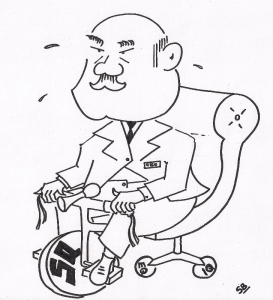
Businesses (and many of our governments too!) need to consciously groom leaders who rate high not only on their Intelligence and Emotional Quotients, but also on their Moral or Spiritual Quotient, bringing in to the work place a set of healthy values and ethical practices.
This, I believe, is the basic need of our times.
(SQ Illustration courtesy Sanket; other images courtesy www)
(Related Posts:
https://ashokbhatia.wordpress.com/2021/02/21/a-few-things-which-make-me-angry-these-days
https://ashokbhatia.wordpress.com/2018/11/27/values-the-real-soul-of-organizations-2
https://ashokbhatia.wordpress.com/2017/04/28/ethics-and-values
https://ashokbhatia.wordpress.com/2015/06/01/towards-sq
https://ashokbhatia.wordpress.com/2013/08/01/the-beauty-inside-bonobos-and-management)
Of Chicago, Swami Vivekananda, Indian Scriptures and Management
Posted in Management Lessons, tagged Chicago, Ethics, Indian Scriptures, ISOL, Management, Ramayana, Swami Vivekananda, Values, Vedas on September 11, 2020| 2 Comments »


In order to commemorate 125 years of the Chicago address of Swami Vivekananda, Integrating Spirituality and Organisational Leadership (ISOL Foundation) had recently organised a World Congress on Vedic Foundations of Management Science.

Several luminaries and experts in diverse fields addressed the gathering, which was inaugurated on the 11th of September at the Breasted Hall, The Oriental Institute, The University of Chicago. Distinguished Trinity and ISOL Awards were presented on the day. The event concluded on the 13th of September, 2018.

The Inaugural Session started with a Welcome Address by Dr J L Raina, Chairman of ISOL Foundation. Vedic Mantras were chanted by Mr Ashok Vyas, followed by a Welcome Song penned by Mr D V Shastry.
Prof Sunita Singh Sengupta, Founder ISOL Foundation, welcomed the delegates and presented a Background Paper.
The Inaugural Addresses were delivered by the following:
- Ms Neeta Bhushan, Consul General of India in Chicago
- Dr Larry…
View original post 298 more words
What CEOs can learn from ‘Ravana’
Posted in Management Lessons, tagged Leadership, Lord Rama, Management, Ramayana, Ravana, Sita, Values on October 6, 2019| Leave a Comment »
Ravana, an ardent devotee of Lord Shiva, was not only a great scholar but also a capable ruler. He had a great taste in music and had mastered the veena. He is said to have been an expert in astrology and political science. He is also believed to have written a treatise on Siddha medicine.

He is described as having ten heads which are said to represent his knowledge of the six shastras and the four Vedas. Folklore has it that even while lying on his deathbed, he imparted valuable wisdom to Lord Rama and Lakshmana.
Much like powerful CEOs of large corporate bodies, Ravana had the necessary knowledge and skills to steer his kingdom to great heights. But his sheer pride, arrogance and a tendency of stifling dissent did him in. His obstinacy, and intolerance towards dissent, eventually led to his fall from grace.
The fact that…
View original post 596 more words
Management Lessons from ‘Mahabharata’
Posted in Management Lessons, tagged Alertness, Arrogance, Attachment, Cadbury, Cafe Coffee Day, Coca Cola, Commitment, Competence, Concentration, Deepak Parekh, Diageo, Domino's, Ethics in Business, Excelllence, Execution, Failure, Followership, G M Rao, GE, Gender Balance, Governance, Humility, Impartiality, Infosys, Inner Voice, KFC, Knowledge, Leadership, Loyalty, Mahabharata, Management Lessons, McDonald's, Merit, Moral Compass, Mukeeta Jhaveri, N R Narayana Murthy, Nestle, Perseverance, Pizza Hut, Promises, Ramayana, Stephen Covey, Strategy, Tatas, The Eighth Habit, Virtue, Yang, Yin on June 22, 2019| Leave a Comment »
Just like ‘Ramayana’, the epic of ‘Mahabharata’ also has many management lessons for the present day business leaders and managers. Greed, jealousy, quest for power, trying to achieve goals irrespective of the fairness of the means deployed – all these contradictions in life are very poignantly brought out.
Here are some lessons which could be drawn from the epic.
- Merit over Birth
When it comes to announcing a successor to his vast kingdom, King Bharata does not choose any of his own sons. Instead, he names Bhumanyu whom he considers more capable to manage the affairs of his kingdom. In a dynastic rule, seeds of democracy are thus sown.
In India Inc’s power rankings, professional CEOs are on the rise. Three of the top ten in the 2013 edition of ‘India Inc’s Most Powerful CEOs’ are professionals. Five years back, K V Kamath was the only professional in the top…
View original post 3,052 more words
Would ‘Ram Rajya’ forever remain a Utopian concept?
Posted in A Vibrant Life!, tagged Blockchain, Ram Rajya, Ramayana, RamQuest, Truth, Utopia on January 1, 2019| 3 Comments »
(Lord Rama, hero of the iconic Indian epic ‘Ramayana’, is an epitome of virtue. His reign, referred to as ‘Ram Rajya’, is held to be an ideal in governance, wherein the citizens are contented and happy. They experience unparalleled prosperity and peace. Justice prevails. Here is a reality check in the current context.)
Shri Ram Chandra ji, were He to visit India one of these days, would be simply annoyed at finding His name being used for reasons of political expediency and for polarization of society, rather than for promoting high values, communal harmony, peace and an equitable treatment to all citizens of the country.
In case He decides to visit Thailand instead, He might be received with due honours by King Vajiralongkorn, who carries the title King Rama X. While being escorted through the ruins of Ayutthaya, He would be told of its 2,00,000 people and 4,000 Buddhist temples which were looted and destroyed by an invading Burmese army more than 200 years back. Also, about the Chakkri dynasty which restored the city and built the resplendent Buddhist temple which happens to be a major tourist attraction today.
If He were to visit one of the Western countries, He might be pleased to find a relatively better adherence to the standards of governance set by His ‘Ram Rajya’ in the days of yore. With lower crime rates, speedier justice delivery, better security, more efficient delivery of public services, higher respect for women and innovative welfare measures, the developed countries score much higher. Above all, the citizen’s respect for due process of law and a tendency to not only demand rights but also to acknowledge attendant responsibilities would likely meet His approval.
Yet another feature He would appreciate would be the attempt by some of His true followers to hold aloft the high ideals He stood for and to continue to spread the same through publication of scholarly works, holding of meaningful seminars and conferences, and by spreading the message of His unique life amongst the youth of today.
The relevance of Ramayana in the present context
It goes without saying that the story of Lord Ram transcends the vagaries of time and space. The lessons one can learn from any version of Ramayana remain as relevant today as they were eons ago. Respect for elders is one such lesson. Assisting the needy and the underprivileged is another. Showing due reverence to the environment and to members of different species is yet another. Vanquishing the evil amongst us, according top priority to one’s duty in life, sticking to one’s commitments, respecting women, keeping an open mind towards acquiring new knowledge, being proficient in statecraft, addressing concerns of common folks – these are some others which readily spring to one’s mind.
The impeccable manner in which He conducted himself sets the bar for today’s governments and rulers very high. Not for Him the kind of barriers – political, economic, social, attitudinal or otherwise – that we see rising most of the times. Not for Him the kind of back-stabbing, lip service and rampant corruption we notice in high places these days. Neither would He have approved of the absence of an inclusive and equitable society, leading to a meteoric rise of hit-and-run terrorism and communal clashes. Nor would He be happy looking at the kind of treatment meted out to the women folk.
Would ‘Ram Rajya’ remain a Utopia?
The questions that are topmost on the minds of some of us are simply these: Will ‘Ram Rajya’ forever remain a Utopian concept? Will a day ever dawn when the average person on the street would be able to savour the fruits of good governance?
The advent of Industrial Revolution 4.0, backed by rapid advances in technology, provides a faint glimmer of hope, though not without riders. We have witnessed not only an Arab Spring but also the power of social media to sway public opinion. If governments start adopting Blockchain technologies, Truth would stand a better chance to prevail.
As technologies become super-efficient, these could eventually bring about a humbling equality among all human beings, propelling us into an era where the principles of Liberty, Equality and Fraternity get really followed. But since a technology is as good as the intention behind its use, much depends on the intentions of our leaders who wield the resources to use it.
One might sound a little pessimist, but the answer to the question remains in the negative, at least in the foreseeable future. But we have hope. Hindu scriptures speak of the endless cycles of four different kinds. The end of Kala Yuga is likely to herald the advent of a Sata Yuga, followed by another Treta Yuga, which would then see the emergence of yet another ‘Ram Rajya’.
However, for Homo sapiens, this cannot be a cause for celebration and complacency. As long as Lord Ram is around, Ravana would not be far behind. The fight between the good and the evil would continue unabated. This fight exists not only in the external world but also in our internal thought processes. By purifying our thoughts and acting on the same, we can initiate a change which could eventually transform the society.
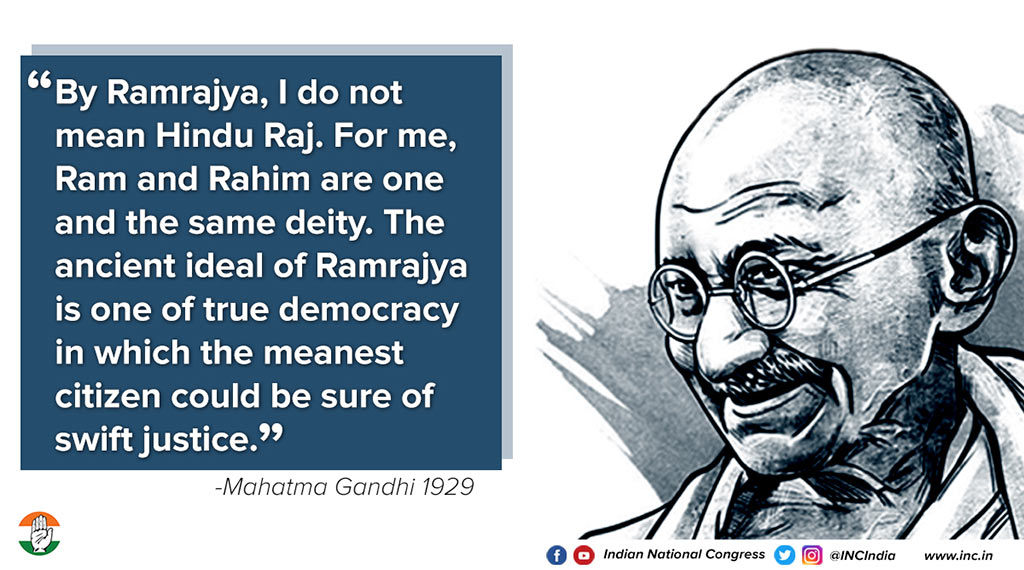
Ramayana sets an example of perfection which we all need to aspire for. It exhorts us to keep fighting the demons within and without us. It touches the innate divinity and goodness we carry within ourselves. Herein lies the secret of its enduring appeal.
Notes:
- This is an article accepted for publication by RamQuest, a scholarly
journal which explores various facets of Ramayana. It is one of the
publications brought out by Prof Omprakash K Gupta, Professor in
Management at the University of Houston-Downtown, USA. - Here is a link to an International Conference on Ramayana which is taking place at Jaipur in India shortly: http://www.ramcharit.org/irc2.
(Related Posts:
https://ashokbhatia.wordpress.com/2013/05/27/management-lessons-from-ramayana
https://ashokbhatia.wordpress.com/2017/09/29/what-ceos-can-learn-from-ravana)
Of Chicago, Swami Vivekananda, Indian Scriptures and Management
Posted in Management Lessons, tagged Chicago, Ethics, Indian Scriptures, ISOL, Management, Ramayana, Swami Vivekananda, Values, Vedas on September 26, 2018| 5 Comments »
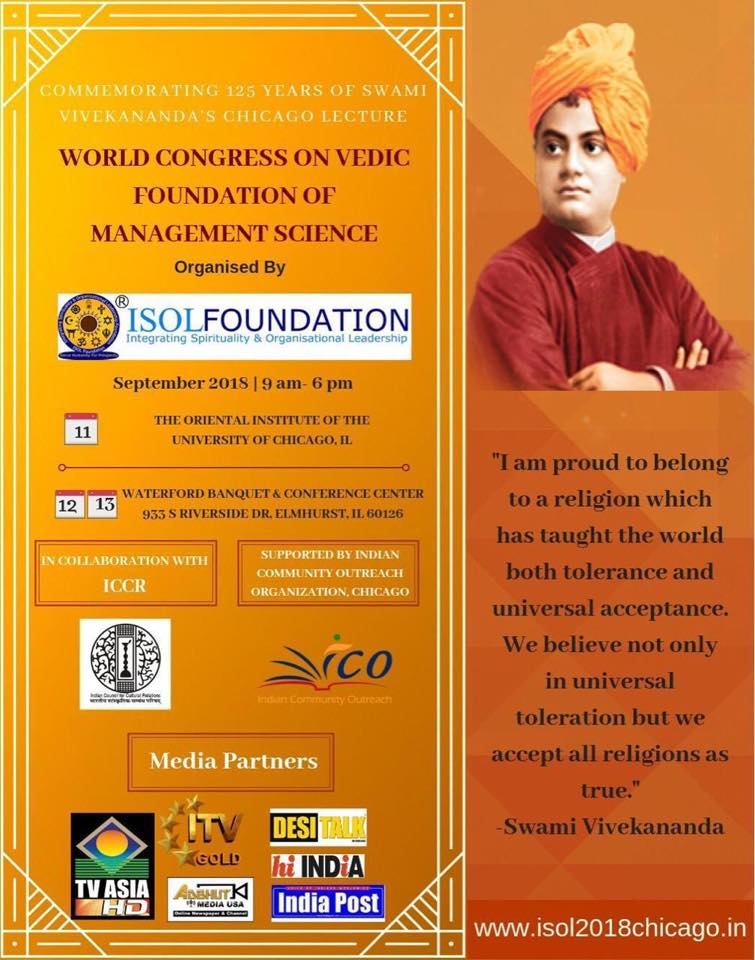
In order to commemorate 125 years of the Chicago address of Swami Vivekananda, Integrating Spirituality and Organisational Leadership (ISOL Foundation) had recently organised a World Congress on Vedic Foundations of Management Science.

Several luminaries and experts in diverse fields addressed the gathering, which was inaugurated on the 11th of September at the Breasted Hall, The Oriental Institute, The University of Chicago. Distinguished Trinity and ISOL Awards were presented on the day. The event concluded on the 13th of September, 2018.

The Inaugural Session started with a Welcome Address by Dr J L Raina, Chairman of ISOL Foundation. Vedic Mantras were chanted by Mr Ashok Vyas, followed by a Welcome Song penned by Mr D V Shastry.
Prof Sunita Singh Sengupta, Founder ISOL Foundation, welcomed the delegates and presented a Background Paper.
The Inaugural Addresses were delivered by the following:
- Ms Neeta Bhushan, Consul General of India in Chicago
- Dr Larry Greenfield, Executive Director, Parliament of the World Religions
- Prof Bala Srinivasan, Vice President, Strategy and Global Initiatives, University of Chicago
- Prof Sunaina Singh, Vice Chancellor, Nalanda University
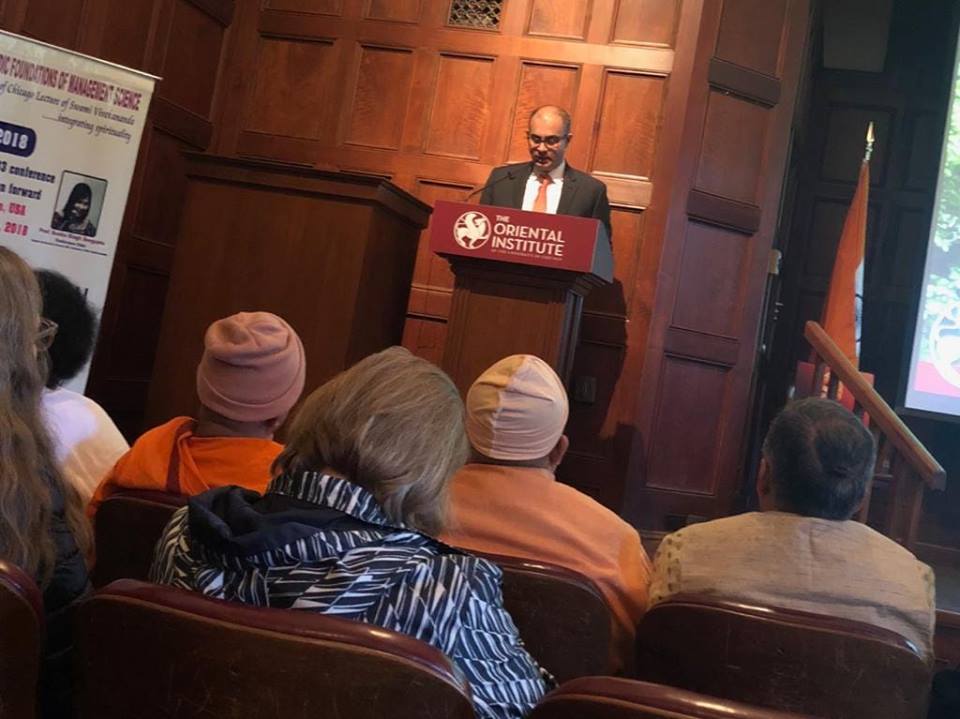
Rich tributes were paid to Swami Vivekananda by:
- Prof Dinesh Singh, Former Vice Chancellor, University of Delhi and Chancellor, K R Mangalam University
- Dr Bharat Rai, Oncologist in Chicago
- Dr H P Kanoria, Founder, Shristi Corporation, SREI Infrastructure Finance Limited and SREI Foundation
- Swami Yatidharmananda, Managing Tustee, Swami Chidananda Sevashram

The following tracks were covered at the three-day event.
- Sri Ramakrishna, Ma Sarada and Swami Vivekananda
- Education in Ancient India
- Women Empowerment
- Contemporary Themes on Spirituality, Ethics and Management
- Global climate change and Eco System Management: Insights from Vedas
- Ancient Indian Mathematics and Astronomy: Its Contemporary Relevance
- Ayurveda, Yoga and Meditation for Modern Health Care
- Ancient Indian Architecture, Sculpture and Art
- Exploring Sustainability through Spirituality
- Contemporary Themes on Scriptures, Ethics and Management
- Vedic Foundations of Management

The last mentioned session was chaired by Prof Neal McGregor.
- Prof N Ravichandran shared ‘Managerial Insights from Panchtantra Stories’
- Prof Omprakash K Gupta elaborated upon his passion for ‘Simplifying and Summarising Sanatana Dharma Scriptures for our Youth’
- Prof Kisholoy Gupta spoke of ‘Vedantic Wisdom in Contemporary Management’
- Dr Ravi Subramaniam presented ‘A Qualitative Examination of Leadership Traits of Ram from Shrimad Valmiki Ramayan’
- Yours truly presented a paper on ‘Ramayana – Some Management Lessons’.

Here is the PPT which might be of interest to some of you.
Ramayana Management_Lessons Chicago PPT

Distinguished Valedictory Lecture was delivered by Lucy Forster-Smith, Senior Associate Pastor for Leadership Development, Fourth Presbyterian Church, Chicago.

Dr J L Raina and Prof Sunita Singh Sengupta summed up the proceedings of the commemoration event.
(Thanks are due to several persons who added value to my presentation and gave a final shape to it.)
Some Management Lessons from India
Posted in Management Lessons, tagged Bhagavad Gita, Chanakya, India, Mahabharata, Management, Ramayana, Sages, Scriptures, SQ, Sri Aurobindo, Stephen Covey, Thiruvalluvar, Values on June 25, 2018| Leave a Comment »
After the 2008 economic meltdown, the management world has discovered that CEOs need to follow not only a Business Compass but also a Moral Compass to steer the enterprises they happen to head. Improving one’s Spiritual Quotient is now a sheer business necessity, and shall be more so in the decades to come.
It is here that Indian scriptures and sages provide a ready template for managers of all sizes and shapes. Let us consider a few facets of some of the pearls of Indian wisdom which find ready application in the realm of management.
Some pearls of Indian wisdom
Ramayana
- The entire narrative highlights the importance of values in our lives.
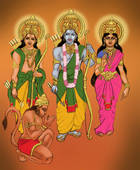 Businesses which follow a policy of righteousness and conduct their operations in an ethical manner enjoy tremendous brand equity in the market. This rubs off on their products as well as on their employees.
 - Lord Rama decides to…
View original post 1,739 more words
What CEOs can learn from ‘Ravana’
Posted in Management Lessons, tagged Leadership, Lord Rama, Management, Ramayana, Ravana, Sita on September 29, 2017| 5 Comments »
Ravana, an ardent devotee of Lord Shiva, was not only a great scholar but also a capable ruler. He had a great taste in music and had mastered the veena. He is said to have been an expert in astrology and political science. He is also believed to have written a treatise on Siddha medicine.

He is described as having ten heads which are said to represent his knowledge of the six shastras and the four Vedas. Folklore has it that even while lying on his deathbed, he imparted valuable wisdom to Lord Rama and Lakshmana.
Much like powerful CEOs of large corporate bodies, Ravana had the necessary knowledge and skills to steer his kingdom to great heights. But his sheer pride, arrogance and a tendency of stifling dissent did him in. His obstinacy, and intolerance towards dissent, eventually led to his fall from grace.
The fact that he coveted a woman who was someone else’s soul mate also led to his ruin. Popular belief takes a jaundiced view of his character since he had abducted Sita and had held her in captivity, thereby inviting the wrath of Lord Rama. His wife, Mandodari, brother Vibheeshana and grandfather Malyavaan – all advise him to return Sita to Rama. Instead, he chose to listen to his courtiers who played on his ego and pride and advised him not to do so.
Learning from Ravana
If CEOs of today were to take a leaf out of Ravana’s life, they would avoid becoming proud and arrogant. They would learn to be more tolerant and open-minded to views which do not match their own. They would run their fiefdoms with much greater finesse and grace, ensuring sustainable prosperity for all stakeholders to their business.
Getting rid of one’s ego does not necessarily mean that the CEO becomes a doormat. Or that he allows his team members to exploit the system and take advantage of his good intentions and decent behaviour. It simply means that he cultivates an ability to see the other person’s perspective before arriving at a decision; that a consultative and collaborative approach to decision making gets followed; that those who happen to be shy in a meeting are drawn out so he may check if they have something valuable to add to the issue on the table.
Consciously letting go of his pride is another quality they can cultivate. Privileges which go with a corner office can be readily forsaken. Exclusive car parking spaces can be given up. Preferential treatment in the common food court for employees can be politely declined. The barriers between himself and others can be lowered to the barest minimum. In all official proclamations, an ‘I’ can give way to a ‘We’.
Arrogance can get avoided. Instead, feigned anger can get used as a tool, either to defuse a tricky situation or to gently put in place a team member whose behaviour crosses the limits of decency.
Discouraging yes-men amongst their team members is yet another critical quality a CEO needs to develop. Encouraging healthy and objective dissent goes a long way in enjoying success in all spheres of life.
Respecting women in the workforce is another trait which is essential. Promoting a culture of zero tolerance towards harassment of the opposite sex helps a company to shore up its productivity and improve employee morale. Top achievers in the team cannot be allowed to act upon their amorous instincts at the work place.
Several qualities of Ravana are worth emulating by CEOs of today. Always striving to learn something new. Forever looking for new markets and new customers, much like Ravana harboured an ambition to conquer dev-loka, the heavens beyond. Tirelessly seeking different ways to achieve a goal. Adopting new technologies and cultivating an innovative mindset. Developing hobbies and interests which would help to keep a sense of balance in their lives.
The real victory is within us
This year, too, on the day of Vijayadashmi, we shall witness the burning of Ravana’s effigies and believe it to be the victory of good over evil. But would we stop for a moment to introspect and try to get rid of our own king-size egos? Would we resolve to let go of our arrogance and become good listeners, especially when someone like Vibheeshana is trying to tell us an unpalatable truth?
The day a CEO starts doing this would indeed be the true Vijayadashmi day for him!
(Related Posts:
https://ashokbhatia.wordpress.com/2013/05/27/management-lessons-from-ramayana
https://ashokbhatia.wordpress.com/2016/06/07/some-management-lessons-from-india
https://ashokbhatia.wordpress.com/2016/04/04/super-leaders-the-near-perfect-ceos)
-
Recent Posts
Buy the Book

buy the book
Categories
-
cc
Tags
Art Bertie Wooster Bhagavad Gita Bingo Little Birthday Blake Mouton Grid Blogging Bollywood Book Campus Life CEO Chivalry Consciousness Coronavirus Corruption Edwin Empress of Blandings English Ethics Feminism Happiness Health Hindi Hollywood Human Values Humour India Jeeves Kalidasa KIds Leadership linkedin Literature Lord Emsworth Love Lyrics Mahabharata Mahatma Gandhi Management Movies Music Norway Paintings Panjab University People P G Wodehouse Politics Pondicherry Portugal Psmith Puducherry Rabindranath Tagore Ramayana Ritusamhara R K Laxman Romance Rosie M Banks Rupert Psmith Seasons Shakespeare Social Media Something Fresh Songs SPANDAN Spirituality SQ Sri Aurobindo Stephen Covey Switzerland Tatas Thos UBS Values Wodehousitis WomenArchives
- March 2026 (1)
- February 2026 (5)
- January 2026 (2)
- December 2025 (1)
- November 2025 (2)
- October 2025 (2)
- September 2025 (3)
- August 2025 (3)
- July 2025 (2)
- June 2025 (2)
- May 2025 (4)
- April 2025 (5)
- March 2025 (5)
- February 2025 (4)
- January 2025 (4)
- December 2024 (6)
- November 2024 (6)
- October 2024 (6)
- September 2024 (5)
- August 2024 (5)
- July 2024 (4)
- June 2024 (4)
- May 2024 (5)
- April 2024 (5)
- March 2024 (3)
- February 2024 (1)
- January 2024 (4)
- December 2023 (2)
- November 2023 (3)
- October 2023 (3)
- September 2023 (3)
- August 2023 (5)
- July 2023 (5)
- June 2023 (7)
- May 2023 (6)
- April 2023 (6)
- March 2023 (8)
- February 2023 (8)
- January 2023 (7)
- December 2022 (6)
- November 2022 (5)
- October 2022 (8)
- September 2022 (5)
- August 2022 (6)
- July 2022 (6)
- June 2022 (8)
- May 2022 (7)
- April 2022 (8)
- March 2022 (7)
- February 2022 (3)
- January 2022 (7)
- December 2021 (4)
- November 2021 (8)
- October 2021 (7)
- September 2021 (6)
- August 2021 (7)
- July 2021 (7)
- June 2021 (9)
- May 2021 (8)
- April 2021 (9)
- March 2021 (10)
- February 2021 (8)
- January 2021 (8)
- December 2020 (7)
- November 2020 (6)
- October 2020 (5)
- September 2020 (9)
- August 2020 (9)
- July 2020 (8)
- June 2020 (8)
- May 2020 (6)
- April 2020 (5)
- March 2020 (7)
- February 2020 (4)
- January 2020 (7)
- December 2019 (12)
- November 2019 (10)
- October 2019 (5)
- September 2019 (9)
- August 2019 (10)
- July 2019 (9)
- June 2019 (14)
- May 2019 (13)
- April 2019 (14)
- March 2019 (11)
- February 2019 (11)
- January 2019 (14)
- December 2018 (12)
- November 2018 (12)
- October 2018 (14)
- September 2018 (9)
- August 2018 (10)
- July 2018 (10)
- June 2018 (8)
- May 2018 (11)
- April 2018 (11)
- March 2018 (6)
- February 2018 (9)
- January 2018 (10)
- December 2017 (10)
- November 2017 (9)
- October 2017 (8)
- September 2017 (11)
- August 2017 (10)
- July 2017 (10)
- June 2017 (11)
- May 2017 (9)
- April 2017 (7)
- March 2017 (7)
- February 2017 (8)
- January 2017 (10)
- December 2016 (9)
- November 2016 (11)
- October 2016 (10)
- September 2016 (10)
- August 2016 (9)
- July 2016 (6)
- June 2016 (10)
- May 2016 (10)
- April 2016 (10)
- March 2016 (10)
- February 2016 (12)
- January 2016 (10)
- December 2015 (11)
- November 2015 (11)
- October 2015 (10)
- September 2015 (10)
- August 2015 (10)
- July 2015 (10)
- June 2015 (10)
- May 2015 (10)
- April 2015 (10)
- March 2015 (9)
- February 2015 (10)
- January 2015 (8)
- December 2014 (9)
- November 2014 (8)
- October 2014 (8)
- September 2014 (7)
- August 2014 (7)
- July 2014 (7)
- June 2014 (7)
- May 2014 (7)
- April 2014 (7)
- March 2014 (7)
- February 2014 (6)
- January 2014 (7)
- December 2013 (6)
- November 2013 (6)
- October 2013 (6)
- September 2013 (6)
- August 2013 (6)
- July 2013 (6)
- June 2013 (6)
- May 2013 (6)
- April 2013 (6)
- March 2013 (6)
- February 2013 (6)
- January 2013 (6)
- December 2012 (4)
- November 2012 (4)
- October 2012 (3)
- September 2012 (2)
- August 2012 (4)
- July 2012 (2)
- June 2012 (2)
- May 2012 (2)
- April 2012 (2)
- March 2012 (2)
- February 2012 (3)
- December 2011 (3)
- November 2011 (1)
- October 2011 (2)
- September 2011 (2)
- August 2011 (2)
- July 2011 (2)
- June 2011 (3)

 ashokbhatia