Feeds:
Posts
Comments

Posts Tagged ‘Roderick Spode’

To suggest that P. G. Wodehouse championed the cause of any kind of socialist thought appears, at first glance, wholly implausible, if not mildly absurd. He is the laureate of ethereality, spreading joy, light, and sweetness through his innumerable narratives. He is a painter whose canvas comprises country houses, gentlemen’s clubs, seaside hotels, and film studios. He is the creator of characters who not only amuse and educate but also entertain us. These could be earls with wayward nieces, lordships with unique eccentricities, amiable Drone Club bachelors in doubtful engagements, obdurate aunts, and the occasional lively interloper — be it a alimony-collector, bookie, detective, insurance agent, valet, and village policeman who knows far more than the gentry imagine. Plumsville, his world, is replete with comic complications that restore themselves at the end, more or less as they began. In the bright sunshine of Plum’s subtle humour, quietly incisive wit, could an esoteric concept like social consciousness really exist?

Having devoured and admired his narratives repeatedly over the past few decades, I am often left wondering about this facet of his wordcraft; how delicately he handles questions of power, status, labour, and value. Wherever he does so, it is with kid gloves. Plum is not an in-your-face political analyst. Neither does he advance economic blueprints, nor does he sermonise about statecraft. In many of his narratives, one is apt to notice that there does exist an undercurrent of empathy for the less privileged. Seldom does he showcase the perks of following thoughts steeped in the pristine and rather idealistic stream of socialism. As a Pierre-Auguste Renoir of language, he uses pastel shades of many kinds to present to his readers a pale parabola of social consciousness.

When it comes to exposing the faultlines in the characters of the wealthy, he does not shy away. Most of his stories elevate competence above birth, applauding work that delivers satisfaction, and presenting us with small communities organised less by dominance than by a pally accommodation. Admittedly, these are not the characteristics of conventional political socialism. Instead, he comes out as a champion of egalitarian thought. Underlying most of his narratives is the conviction that title and monetary resources do not necessarily align with merit; that hierarchies can be negated and overcome by intelligence, diplomacy, and an occasional dash of cunning; and that a happy life rests more upon decency and reciprocity than upon accumulation. And if that unveils a streak of social consciousness in his works, it merits a gentle airing.

The Classes as well as the Masses

His admirers as well as critics aver that he concentrates more on the aristocracy and the eccentricities of the upper echelons of British society. However, to be fair to him, he is an author who is concerned not only about the classes but also about the masses. For instance, while Something Fresh takes a detailed look at life below the stairs, Psmith, Journalist dwells at length on the plight of those who live in the Big Apple’s slums, and the courage shown by Psmith to serve them in some way. Elsewhere, romantic alliances take place across the class divide. Or, consider the case of Bertie Wooster, who, we are told, has gone to a school that teaches the aristocracy to fend for itself in case he faces impecunious circumstances (Ring for Jeeves). In narratives like Aunts Aren’t Gentlemen and Plum Pie, denizens protest government policies. In The Inimitable Jeeves, small groups which despise the wealthy and do not mind being seen running around streets with knives dripping with their blood are brought to our notice. Fiery speeches get made, lampooning the idle rich.

I believe Rupert Psmith is the one character created by Plum who could qualify to be alluded to as a socialist in the classical mould. Note his comment on the sartorial choices of a colleague:

Why, Comrade Bristow sneaks off and buys a sort of woollen sunset. I tell you I was shaken. It is the suddenness of that waistcoat which hits you. It’s discouraging, this sort of thing. I try always to think well of my fellow man. As an energetic Socialist, I do my best to see the good that is in him, but it’s hard. Comrade Bristow’s is the most striking argument against the equality of man I’ve ever come across (Psmith in the City).

There are quite a few other characters as well who could be said to be wearing a badge of socialism on their sleeves.

We run into Syd Price (If I Were You), who is a socialist barber. He is part of a mix-up involving the aristocratic Anthony, 5th Earl of Droitwich, with whom he was accidentally swapped at birth. The plot centres on a complicated inheritance scheme involving the two men. 

We also get introduced to true-blue socialist politicians who argue against the British military system of ranks in The Swoop! and against the House of Lords in ‘Fate.’

Then we have Miss Trimble in Piccadilly Jim, a “Sogelist” in her clenched-teeth speech; Archibald Mulliner, a temporary Socialist in ‘Archibald and the Masses;’ a newspaper cartoonist referred to in The Small Bachelor; and a Socialistic schoolmistress in ‘Feet of Clay.’

Legislation of a socialistic kind gets decried in ‘Came the Dawn,’ Right Ho, Jeeves, and Jeeves and the Feudal Spirit.

Here are the main aspects to consider when examining the theme of social consciousness in his works.

A Gentle and Kindly Rebuke to Inherited Authority

Plum’s most enduring proposition is that the upper classes are not fit to rule. In the Jeeves stories, his superior intellect keeps pulling Bertie Wooster and his pals out of the kind of scrapes they keep getting into. The valet’s cool and quiet competence eventually saves the day. The plots may be exquisitely repetitive, but their social meaning is clear. Knowledge, judgement, and sheer common sense come out with flying colours. The psychology of the individual reigns supreme. Birth and inheritance may have conferred upon Bertie a large allowance, a formidable address book, and memberships in exclusive clubs, but he is often perceived as someone who is mentally negligible. If ever he decides to exert his own cerebellum to solve a problem for a pal of his, he ends up tying himself in knots and eventually needs the support of his valet to extricate himself from the mess he creates for himself and those around him. When solutions are needed, they are designed and executed by a professional whose head bulges at the back. We get to realise that each of the narratives is a gentle and kindly rebuke to inherited authority. Plum drives home his point more as a comedy rather than an ideology. The joke lands because we, the readers, instinctively recognise the underlying strains of justice.

The Blandings series paints the same theme over a broader canvas. Lord Emsworth’s endearing forgetfulness, his obsession with a pumpkin and the Empress of Blandings, and the disruptive behaviour of his relatives form the backdrop against which his suspicious secretaries, moody gardeners, conscientious pig-keepers, unwelcome guests, and impostors of all sizes and shapes keep waltzing in and out. The worth of a person is neither a title nor wealth; it is steadiness of service, the pomp and show with which it gets delivered in a methodical manner, and the gift of getting such things done as locating the master’s glasses or making a newly bought telescope yield satisfactory results. Plum may be merciless when capturing the self-importance of the aimless rich, but never mean-spirited about them as people. His satirical treatment remains humane.
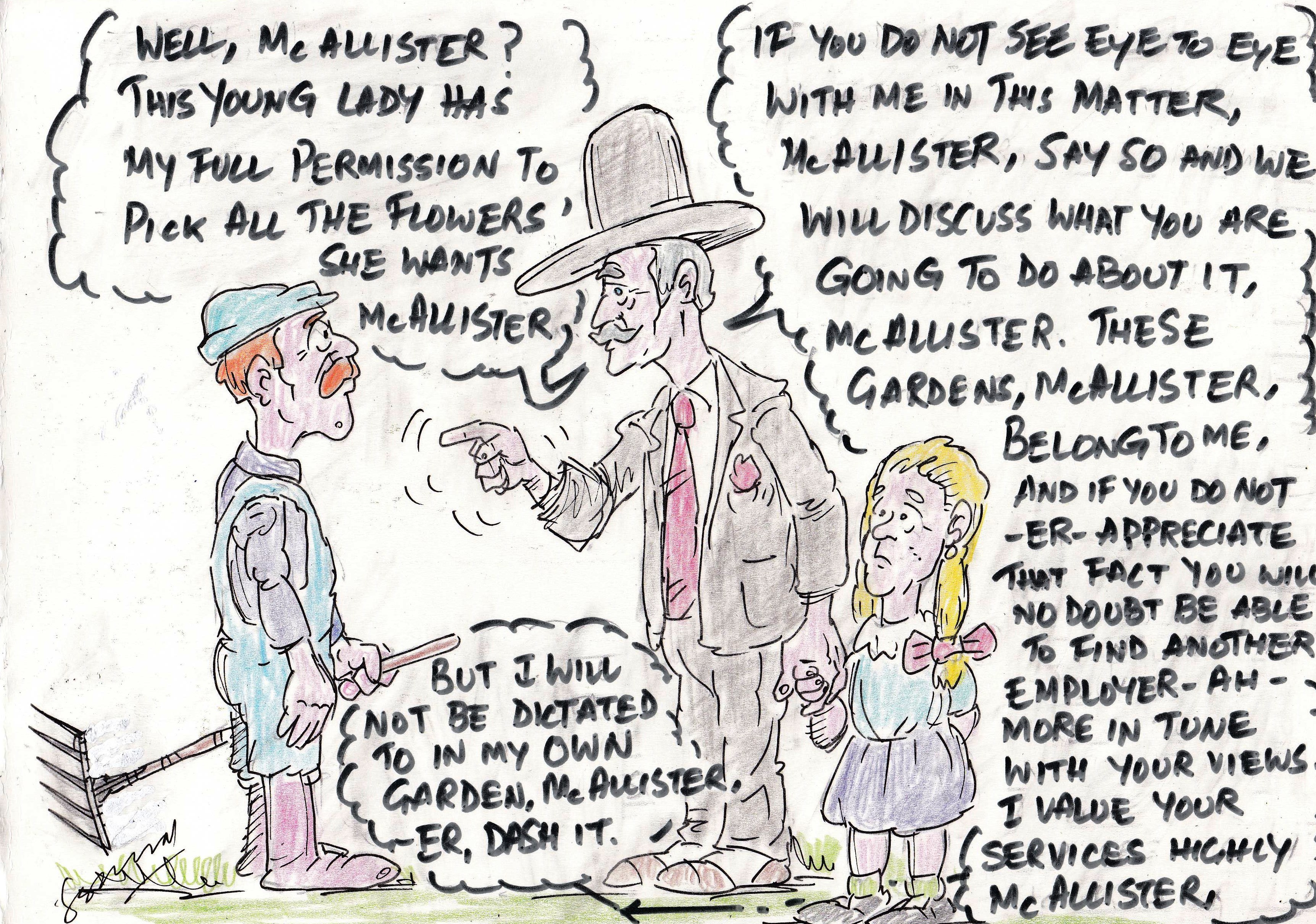
Lord Emsworth might hate visiting London, but respects Gladys and her brother Ern as city-bred insouciant kids reared among the tin cans and cabbage stalks of Drury Lane and Clare Market. They could hurl stones at his Scottish gardener and even stand up to his obdurate sister. When Gladys slips one of her tiny hot hands into his, seeking protection from Angus McAllister advancing at a speed of forty-five miles per hour, he develops a spine of chilled steel. He wishes to be worthy of the lofty standards of employee discipline and servility enforced by his ancestors.

‘This young lady,’ said Lord Emsworth, ‘has my full permission to pick all the flowers she wants, McAllister. If you do not see eye to eye with me in this matter, McAllister, say so and we will discuss what you are going to do about it, McAllister. These gardens, McAllister, belong to me, and if you do not – er – appreciate that fact you will, no doubt, be able to find another employer – ah – more in tune with your views. I value your services highly, McAllister, but I will not be dictated to in my own garden, McAllister. Er – dash it,’ added his lordship, spoiling the whole effect.

One laughs, then one notices the underlying theme touching upon a socialist stream of thought (“Lord Emsworth and the Girl Friend”, Blandings and Elsewhere).

Competence as Moral Capital

Much like Jeeves, there are a host of characters who, whilst brimming with charm, occupy a morally higher ground. They are not only carriers of wisdom, but also more conscientious in the discharge of their duties. These are qualities which their superiors lack. Club stewards, rozzers, head gardeners, secretaries, and nurses reveal their steadfast characters while pushing the plot along. They deliver satisfactory results.

Consider rozzers who invariably refuse nourishment of any kind while on duty. An open display of emotions does not sit well with them. Inwardly, they squirm when told by a Justice of the Peace to lay off someone who violates the law. However, they know when to eat humble pie and quietly follow their orders.

In The Mating Season, Corky loves Esmond but will not marry him until he stands up to his domineering aunts, who disapprove of Corky because she is an actress. When the dog Sam Goldwyn is arrested by Constable Dobbs, Corky, the resourceful owner, charms Gussie Fink-Nottle into extracting him from confinement. Constable Dobbs assumes it was Catsmeat who stole the dog. Since Catsmeat happens to be his fiancée Corky’s brother, Esmond Haddock, a Justice of Peace, decides to assert himself, protect his romantic interests, and make Dobbs drop the case. He points out the slender evidence he has against the alleged accused, while dismissing Dobbs without a stain on his character.

Likewise, in Joy in the Morning, Stilton Cheesewright accuses Bertie of pinching his uniform to be able to participate in a fancy dress ball. Uncle Percy, a Justice of Peace, needs Bertie’s support in standing up to his formidable spouse, Aunt Agatha, to provide an alibi for him to have spent a night away from his living quarters at Steeple Bumpleigh. Uncle Percy refuses to sign the warrant against Bertie. In fact, he goes a step further in ticking off the cop. He laments a despicable spirit creeping into the Force – that of forgetting their sacred obligations and bringing up wild and irresponsible accusations in a selfish desire to secure promotion.

Thus, whereas aristocratic characters are frequently paralysed by pride, a feudal spirit, embarrassment, or romantic affiliations, working professionals act. They take a stand. They take responsibility. On a moral scale, they rank higher than their seniors. In Plumsville, it is their feudal spirit which often saves the day. Their loyalty to their masters scores over the latter’s wealth or inheritance.

Coming back to Blandings Castle, one finds that it takes a bevy of servants to keep things running in an orderly fashion. Below the stairs, we discover a rigid hierarchy, backed by customs and rituals which need to be scrupulously observed. Under the auspices of Mr Beach and Mrs Twemlow, things are always done properly at the Castle, with the right solemnity. There are strict rules of precedence among the servants. A public rebuke from the butler is the worst fate that can befall a defaulting member of this tribe.

When it comes to passing judgement on the state of affairs in society, they have their own mind. For example, when the matter of breach of promise cases comes up, Beach holds the following view:

And in any case, Miss Simpson,” he said solemnly, “with things come to the pass they have come to, and the juries–drawn from the lower classes–in the nasty mood they’re in, it don’t seem hardly necessary in these affairs for there to have been any definite promise of marriage. What with all this socialism rampant, they seem so happy at the idea of being able to do one of us an injury that they give heavy damages without it. A few ardent expressions, and that’s enough for them. You recollect the Havant case, and when young Lord Mount Anville was sued? What it comes to is that anarchy is getting the upper hand, and the lower classes are getting above themselves. It’s all these here cheap newspapers that does it. They tempt the lower classes to get above themselves (Something Fresh).

Plum’s narratives have a clear undercurrent: down the stairs for genuine perspiration and up the stairs for feigned inspiration. This scheme of things debunks the notion that hierarchies are justified by birth.

Comrade Psmith and the Whiff of Reform

In Psmith, Journalist, the monthly journal Cosy Moments undergoes a transformation when the suave and unflappable Rupert Psmith takes over as a voluntary subeditor. Cosy Moments is a journal for the home. It is the sort of paper which the father is expected to take home from his office and read aloud to the kids at bedtime. Its circulation is nothing to write home about. Psmith suggests a different strategy. He outlines his vision for the magazine thus:

Cosy Moments should become red-hot stuff. I could wish its tone to be such that the public will wonder why we do not print it on asbestos. We must chronicle all the live events of the day, murders, fires, and the like in a manner which will make our readers’ spines thrill. Above all, we must be the guardians of the People’s rights. We must be a search-light, showing up the dark spot in the souls of those who would endeavour in any way to do the PEOPLE in the eye. We must detect the wrong-doer, and deliver him such a series of resentful buffs that he will abandon his little games and become a model citizen.

Eventually, Psmith decides to help impecunious dwellers of poorly maintained tenements. He ends up dealing with New York’s slum landlords and crooked bosses. The tone of the narrative is airy, but the targets are not. Psmith uses Cosy Moments, the magazine he runs, to expose exploitation, cheer on reform, and defend the powerless. The satire in this narrative is not merely of the weak points in his adversaries, which he exploits with aplomb; it is of systemic injustice. Plum does not allow the narrative to curdle into earnestness, yet he reveals an unmistakable sympathy for the urban poor and a hatred of the sharp practice of those who profit from misery.
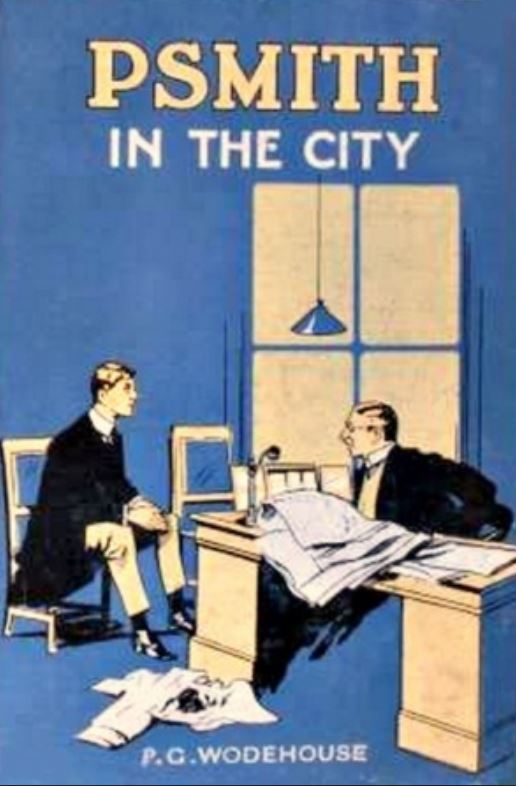
Likewise, Psmith in the City gives us a ringside view of the soul-tormenting processes of routine banking, highlighting the underlying spiritual drudgery. Rigid procedures rule, so does hierarchy. One experiences soul-deadening routine, petty tyrannies, the suffocation of youthful promise by a gigantic machine that puts a premium on conformity over talent. Tea breaks and lunch breaks are the only occasions which break the monotony. In any case, the atmosphere chimes with a wider early twentieth-century suspicion of bureaucratised capitalism. Plum can be imagined to be more amused than angry, but he is not insensitive.
Flirtations with the Left

A highly diluted version of what political purists might mistakenly allude to as socialism not only appears occasionally but is also an integral part of Plum’s cultural landscape. It is not an alien menace which deserves to be despised and discarded outright. Plum treats it as a place where excitable but good-hearted people congregate, make speeches, even if under the transient spell cast upon them by the party of the other part. He does flirt with the Left, though his trademark subtle humour arises from a kind of recognition: the Left is not monstrous, merely dramatic, and susceptible to the same follies as everyone else.

There are also moments when Plum plays directly with socialist imagery.

Bertie Wooster always seems to stumble into chaos, and protests are no exception. One day, he gets stuck in a London traffic snarl caused by an angry crowd, only to spot his former fiancée, Vanessa Cook, leading the march (Aunts Aren’t Gentlemen).

His friend Bingo Little is not much different — he once grew a beard and joined a radical group just to impress a fiery revolutionary, even going as far as to insult Bertie as an idler, a non-producer, a prowler, a trifler, and a bloodsucker. Bingo even goes on to call out his own uncle Lord Bittlesham in a speech:

And the fat one!” proceeded the chappie. “Don’t miss him. Do you know who that is? That’s Lord Bittlesham! One of the worst. What has he ever done except eat four square meals a day? His god is his belly, and he sacrifices burnt-offerings to it till his eyes bubble. If you opened that man now you would find enough lunch to support ten working-class families for a week,” he claims (‘Comrade Bingo’, The Inimitable Jeeves).

Later, while working as an editor of Wee Tots, Bingo gets dragged into another protest by a red-haired girl named Mabel, who sits down in Trafalgar Square to make headlines for her anti-bomb campaign. Bingo reluctantly joins her, gets arrested, lands in the papers, and ends up in trouble with his wife — though, as always, things somehow work out in the end (‘Bingo Bans the Bomb’, Plum Pie).

Of Hollywood, Movie and Publishing Moguls

Plum’s forays into Hollywood and publishing are perhaps among his sharpest class critiques. His narratives dispel the mystique of aristocracy associated with them and often bring into focus the raw power of capital. Megalomaniac studio bosses, slick agents, and moguls obsessed with formulas for profit become his new earls and aunts.

When a fluffy-minded Lord Emsworth pockets a fork at the Senior Conservative Club, Adams happens to check him. Aunt Dahlia may threaten to ban Bertie from her dining table, which offers lavish spreads by Anatole, if he does not do her bidding.

Likewise, an aspiring wannabe heroine Vera Prebble proves to have better negotiating skills when she outwits three studio chiefs and secures her future as a movie star. Their weakness? Well, they desperately need liquor during prohibition days for a party they are hosting at one of their places. Lord Tilbury keeps missing his former star editor, Percy Pilbeam, whose seedy society gossip had ensured soaring business for Society Spice, one of the journals published by the Mammoth Publishing Company (‘The Rise of Minna Nordstrom’, Blandings Castle and Elsewhere; Frozen Assets).

To his credit, he honours craft and talent above everything else – the proficient writer, the adaptable actor, the competent fixer. Again, his target is not wealth per se, but the worship of money as the sole metric of value. When a character is reduced to a “nodder”, whose primary role is to agree with the boss, Plum is presenting to us an organisational pathology that corrodes judgement and humiliates labour (‘The Nodder’, Blandings Castle and Elsewhere).

In no way does his approach differ much from the one he adopts in Psmith in the City (Chapter 21), while introducing us to the concept of a “mistake-clerk” whose duty it is to get squarely blamed when a fuming customer trots in to register a complaint. He is hauled into the presence of the foaming customer, cursed, and sacked. The bank gets a satisfied customer. The mistake-clerk, if the showdown has indeed been traumatic, promptly applies for a jump in his salary.

One might as well consider this to be a notably democratic instinct. Plum sides with people who take pride in their work and who want to be treated as grown-ups. He lampoons gigantic corporate machines, which often treat their most crucial asset – the people – as mere nuts and bolts. His works highlight an ethical respect for the dignity of labour.

Money, Inheritance, and the Comedy of Redistribution

It is amazing to see how often Plum’s plots are driven by inheritances, allowances, trust funds, and the conditions attached to them. In Plumsville, money has high viscosity. It moves, albeit hesitantly. It is socially consequential. It shapes marriages, motivates impostures, and invites moral tests. Fortunes are threatened, allowances are cut, dowries are reconsidered; pearls, pigs, and even French cooks who happen to be “God’s gift to our gastric juices” can function as mobile capital that could reshape relationships. The whole scheme is designed to behave like a comic model of redistribution, orchestrated by Jeeves-like planners who understand how to reallocate resources so that the largest number of people can chug along in their lives with ease.

It is tempting to over-emphasise this. Plum’s interest in money is not economic but only theatrical. His narratives invariably tie money to emotional well-being and social status, thereby demystifying it. Even death becomes a cause for celebration, often conferring wealth and social status upon the inheritors. Money is not portrayed as a demon. It is merely presented as a tool that can be used to produce human flourishing or human misery, depending on the wisdom of those who control it. Thus, he chooses to write about wealth in a deeply mature way. It is sympathetic to a social democratic ethic that treats the economy as a servant of life rather than its master. Perhaps Plum indirectly nudges us to live our lives while remaining somewhat detached from wealth, worldly possessions, titles, fame, and all other trappings of power and pelf – things which are essentially transient in nature.

Of Alliances across the Social Divide  

When it comes to Cupid’s machinations, age, caste, creed, profession, and social status do not really matter. Even time ceases to matter. Love may remain dormant for a long time but can get revived in a moment – much like Psyche getting revived by Cupid’s kiss!

Uncle George’s plans to saunter down the aisle with a girl from the lower middle classes face a serious glitch – that of a stout disapproval from Aunt Agatha. After all, family honour is at stake. She promptly gives a blank cheque to Bertie, who is expected to rally around and pay off the girl to secure a ‘release’ for Uncle George.

The family remembers that years ago, long before this uncle came into the title, he had had a dash at a romantic alliance. The woman in question at that time had been a barmaid at the Criterion. Her name was Maudie. To her went the credit of addressing Uncle George as Piggy. He loved her dearly, but the family would brook no such nonsense. Eventually, she was paid off and the family honour protected.

It transpires that Maudie happens to be the aunt of the girl who appears to have cast a spell over Piggy in the present situation. When Piggy and Maudie come face-to-face after many years, the chemistry between them is found to be intact. Admittedly, time has extracted its toll. Concerns about the lining of the stomach end up acting as a catalyst to bring the two souls together (‘Indian Summer of an Uncle’, Very Good, Jeeves!).

A similar theme unfolds in the matter of Joe Danby and Bertie’s Aunt Julia Mannering-Phipps (‘Extricating Young Gussie’, The Man with Two Left Feet).

Bingo Little depends on his uncle, Mr Mortimer Little, for an allowance, and fears Mr Little will not approve of Bingo marrying a waitress. By way of a solution, Jeeves suggests books by the romance novelist Rosie M. Banks, which portray inter-class marriage as not only possible but noble. Bertie tells Mr Little that Bingo wants to marry a waitress, and Mr Little, moved by the books, approves. When Bertie asks him to raise Bingo’s allowance, however, Mr Little refuses, saying it would not be fair to the woman he soon intends to marry, his cook, Miss Watson (‘No Wedding Bells for Bingo’, The Inimitable Jeeves).

George Bevan’s friend and colleague Billie Dore, a chorus girl, visits Belpher Castle and bonds with Lord Marshmoreton over their shared love of roses. Eventually, Lord Marshmoreton and Billie get married, whereas his daughter, Lady Patricia Maud Marsh, agrees to walk down the aisle with George Bevan (A Damsel in Distress).

In Frozen Assets, Gwendoline Gibbs is secretary to Gerald ‘Jerry’ Shoesmith’s formidable employer, Lord Tilbury, who owns and runs the Mammoth Publishing Company. She saves his employer from many an embarrassing situation, and the two get engaged.

Through all these narratives, Plum goes on to assert the precedence of the emotion of love over such social considerations as one’s socio-economic status in life and the class to which one belongs. Enter Cupid, and class differences simply melt away. A long-forgotten relationship might get revived, with the lining of the stomach playing the role of a catalyst. An alliance could also be formed based on the fulfilment of a basic need. In any case, there is a limit to which a family can attempt to maintain the purity of its so-called blue blood and protect its genealogy. Here again, Plum highlights the importance of embracing the concept of a society built on egalitarian values and norms.

The Village and Its Ethical Ecosystem

Much of Plum’s comedy unfolds in rural or semi-rural settings where custom and negotiation score over sheer coercion. Village fêtes, church halls, conduct of local constables, and family retainers create an ecosystem of mutual respect and recognition. Debts of honour matter. Kindnesses are remembered with gratitude. A spirit of quid pro quo prevails. The law, when it appears, is comically lenient. The wheels of justice do move, though not always along predictable lines.

For instance, in The Girl in Blue, when Chippendale, a butler, gets in trouble with a cop for using his bicycle to teach a girl to ride, his employer refuses to help. Feeling stuck, Chippendale sulks — until Barney Clayborne, a lady he knows, steps in, and pushes the cop into a brook where he usually cools his feet at the end of a day. The cop decides to drop the complaint.

Magistrates, such as the one at the Vinton Street police court (Jeeves and the Feudal Spirit), often portray the less lovable qualities of a senior officer of the Spanish Inquisition. However, considering Bertie’s youth, he shows leniency. Instead of a long stretch in the chokey, he merely slaps a fine of ten pounds for having assaulted an officer of the law and obstructing him in his duties. Justice feels more like restoration than retribution. Problems are solved by dialogue, apology, and by clever offers of mundane incentives, which make life smoother.

Human values prevail. So does the milk of human kindness. A treatment of this kind proves to be a soothing balm for our wounded souls, endearing Plum to all those who come across his narratives.

Characters in Plumsville frequently rely on each other for support and assistance, regardless of their social standing. This theme can be seen as a nod to the idea of collective effort and mutual aid, which are central to the concept of a society which has a conscience that is alive and kicking.

Here again, Plum does not offer a manifesto. Rather, the basic premise is that people have an innate goodness in them, are willing to improve themselves, and that communities can be steered better by humour, patience, and good sense. Plum’s tendency to showcase social life as a web of relationships, not an arena of domination, is deeply compatible with the communitarian strand of the British way of life. It puts a premium on collaboration over competition, preferring reconciliation to victory.
A Stark Difference in Upbringing

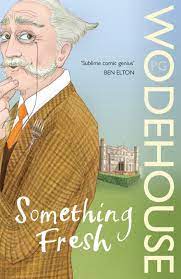
Plum says that one of the compensations life offers to those whom it has handled roughly is that they can take a jaundiced view of the petty troubles of the sheltered. He posits that just like beauty, trouble is in the eyes of the beholder. Aline Peters, the daughter of an American millionaire, may not be able to endure with fortitude the loss of even a brooch, whereas Joan Valentine, who is forever struggling to keep the wolf away from her door, must cope with situations which often mean the difference between having just enough to eat or starving. For the reward of a thousand pounds, Joan finds it worth her while to accompany Aline to Blandings Castle as a lady’s maid.

This is Plum’s subtle way of heightening our level of awareness about the contrast between the haves and the have-nots of society. We realise the stark difference between the upbringings of Peters and Valentine. It is not difficult to fathom why their attitudes towards life are distinct (Something Fresh).

A Libertarian Temperament

There is one major caveat. Plum despised sectarianism of any kind. In Roderick Spode, he presents to us the immortal profile of a would-be dictator in black shorts. However, what he presents to us is not an argument for any kind of socialism – whether of a stiff-upper-lip kind or a super-soft version of it. Instead, it is a cautionary message against handing power over to people with swollen heads and shrunken hearts. Instinctively, he distrusts those who consider human beings as personal chattel and follow the use-and-throw practice popularised by the corporate world. If one takes socialism to mean a politics of doctrinal certainty, Plum offers nothing of the kind. His temperament is essentially libertarian. He wishes people to be left alone to grope their way towards their personal vision of happiness. If one rules over them, one does it by being compassionate and by introducing measures and policies which enable them to live more contented lives.

It is easy to see that his fiction aligns more naturally with an egalitarian ecosystem than with a hierarchical one. He lampoons the eccentricities and vulnerabilities of the privileged but celebrates the intelligence and perseverance of workers. He proposes that real satisfaction can be derived in the doing, not the owning.  His narratives paint a world in which social peace is built by courtesy, patience, and practical knowledge, not by authoritative decrees. These are the building blocks of a humane and even-handed society.

His brand of socialism is not so in a doctrinal sense. However, the depiction of his characters and the way they handle challenges coming their way rhymes well with the core ideology.
The Innate Goodness of Homo sapiens

Plum refuses to sneer. Nor is he a champion of the underdogs. Adams, the head steward at the Senior Conservative Club, is quick to identify Lord Emsworth when he comes in for a spot of lunch. Plum paints a positive picture of the man when he says that:

It was Adams’ mission in life to flit to and fro, hauling would-be lunchers to their destinations, as a St. Bernard dog hauls travellers out of Alpine snowdrifts.

Having finished his lunch, Lord Emsworth leaves Adam in a euphoric state of mind. After all, on that day, he had found the Lord in full form when it came to his absent-mindedness. He is imagining the newfound jokes he can narrate to his wife and to the guests that evening while entertaining them at his lair (Something Fresh).

Even his roguish characters are handled with a delicacy that suggests an underlying belief that they have the potential to do better tomorrow. He does not compartmentalise people into categories. He captures detail, cultivates sympathy, and prizes forgiveness. In the end, his comedy’s most persistent message is that people – all sorts of people – can be nudged gently towards right action.

Plum wants us to develop the capacity to laugh at our errors and to imagine our way back into a community of like-minded people.

What Plum is Not

It would be improper and unkind to label Plum as a writer in the same league as, say, George Bernard Shaw or George Orwell. The political economy, the state, or the machinery of welfare do not attract his attention. He is comfortable writing about small groups where affection and ingenuity can solve problems without recourse to law or revolution. Nowhere does he present labour as collective action. Instead, he puts a premium on the agency of gifted individuals. The concluding scenarios in his narratives typically restore the social order, albeit with some improvements. If there is redistribution, it is along ethical lines before it is material: people learn a lesson, they apologise, and they decide to reform themselves.

He is, however, allergic to arrogance and pretension, sensitive to exploitation, and appreciates the dignity of competence wherever it appears. The milk of human kindness courses through the veins of most of his characters. It is surely not socialism in a doctrinal sense, but it resonates well with the core ideology.

Why the Question Matters

Many a time I get asked as to why one should bother about the presence of social consciousness in Plum’s works. I believe that humour is one of culture’s stealthiest instructors. When combined with a dash of wit and wisdom, it softens the rigidity inherent in hierarchies. It also goes on to celebrate the triumph of skill over status. Even before one may argue, it helps readers instinctively realise that a just society is one in which intelligence, patience, and a tendency to help others prevail over swagger and birthright. Here is something profound Plum says about happiness:

As we grow older and realise more clearly the limitations of human happiness, we come to see that the only real and abiding pleasure in life is to give pleasure to other people.

Like many other truths of life embedded in his narratives, Plum imparts similar lessons effectively. A reader who has learned to appreciate the quiet brilliance of a valet has already taken one step away from worshipping one’s inheritance.

Results for the Greater Good

Such lessons could find a final resonance here for leaders of any persuasion. Plum repeatedly demonstrates that leadership is service delivered to obtain results which are meant not for individual gain but for the greater good. Of course, this involves deep preparation, genuine care for human foibles, and a bias for solutions that allow everyone to save face. If one is looking for a parable of humane, non-authoritarian authority, Jeeves comes through as a prime example. He listens. He observes. His cunning knows no bounds. Using intelligence, tact, and resource, he designs paths through challenging circumstances that leave communities in a happy state of mind. To put it simply, he delivers satisfaction. His character represents a vision that fits well into the gentler aspirations of an ethical society and the broader ideals of a conscious, empathetic, and collaborative civic life.

The undercurrent of social conscience which runs across the oeuvre of Plum is a facet of his works that deserves to be explored and popularised further, to sensitise people to the benefits which could accrue to everyone. In his inimitable style, he gently raises our level of social consciousness. He does so by satirising privilege, showcasing competence as moral capital, demonstrating how a journal could be used as a means to bring about social reform, occasionally flirting with the left, giving us a peek into the world of movie and publishing moguls, presenting to us a comedy of redistribution of wealth, forging alliances between the classes and the masses, delineating the rural ethical ecosystem, and highlighting the stark differences in our attitude towards life based on our upbringing. Such are the hues that comprise the pale parabola of social conscience dished out by him.

Towards a Softer Egalitarianism

One may well ask if Plum has a socialist streak. Not in the sense that would satisfy either a politician or a political scientist. However, when it comes to gut instincts, his comic universe is indeed egalitarian. He dissolves the mystical aura of privilege, redistributes honour to those who earn it, and imagines communities patched together by kindness and craft rather than command. The politics is sotto voce, but the music is audible. If one listens carefully, amid the musical laughter, latent are many a whisper: people matter more than positions, competence outranks pedigree, and the best societies are those in which everyone, whatever their station, is allowed to be intelligently, decently useful.
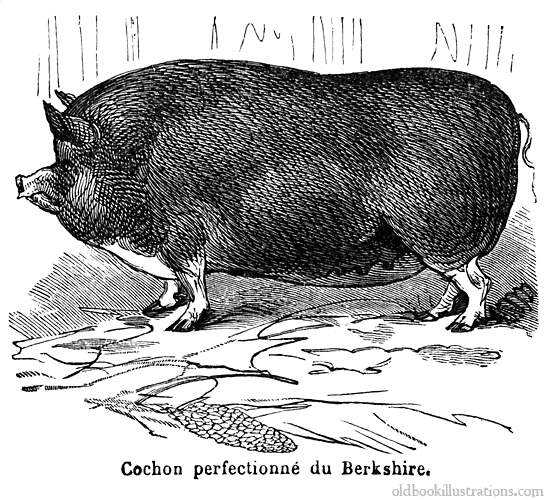
Call it a social consciousness if you like; call it, perhaps more accurately, either a civilised sense of fairness or a conscious way to live our lives. Either way, the pale parabola is there, peeping through his narratives, much like diffused sunlight descending upon Blandings Castle, gently lighting up its ivied walls, its rolling parks and gardens, its moss-covered Yew Alley, lake, outhouses, its inhabitants, and, of course, the Empress’ den.

Reference

If I Were You — Annotated’, Madame Eulalie: The Annotated P. G. Wodehouse, available at: https://madameulalie.org/annots/pgwbooks/pgwiiwy1.html#socialist

Notes

  1. Inputs from Tony Ring and Neil Midkiff are gratefully acknowledged.
  2. Likewise, support received from Dominique Conterno, Co-founder of Conscious Enterprises Network (https://www.consciousenterprises.net)

Related Posts

Read Full Post »

ashokbhatia's avatarashokbhatia

I confess I have never had the chance of listening to the prattle of tender feet around me. However, this does not mean that I do not observe kids. I do so, with all the shrewdness at my command. When they giggle and stare at public speakers, the latter are all of a twitter. When they seek protection money from their wannabe step fathers, the soul cringes. When they use paraffin wax to douse fires, one sickens in horror. When they decide to extract a revenge of sorts from cabinet ministers who have reported their smoking endeavours in the shrubberies, one draws appropriate conclusions. When they celebrate their birthdays by either putting sherbet in ink pots or by going AWOL to enjoy a dinner and a movie, one gets overawed with the kind of courage they have.

Having suffered at the hands of such obnoxious kids as Thos, Seabury, Edwin…

View original post 1,696 more words

Read Full Post »

ashokbhatia's avatarashokbhatia

Fans of P G Wodehouse (Plum) often wonder as to why their favourite author of sublime humour is often found missing on the high table of English literature.

Comparisons are odious, but let us take the case of The Bard, considered one of the literary geniuses of our times. If he has dished out narratives rooted in such human emotions as greed, revenge, jealousy and love, so has Plum. Many of their characters are as quirky as they come. Both have contributed in so small measure to the enrichment of English. To the current generation, both sound a trifle outdated and, by and large, incomprehensible.

The Incomprehensibility Quotient

Perhaps, the reason I find The Bard’s works relatively unfit for human consumption can be traced back to their high level of Incomprehensibility Quotient.

Is there really any fun in picking up a book where, after each sentence, one has to consult…

View original post 1,027 more words

Read Full Post »

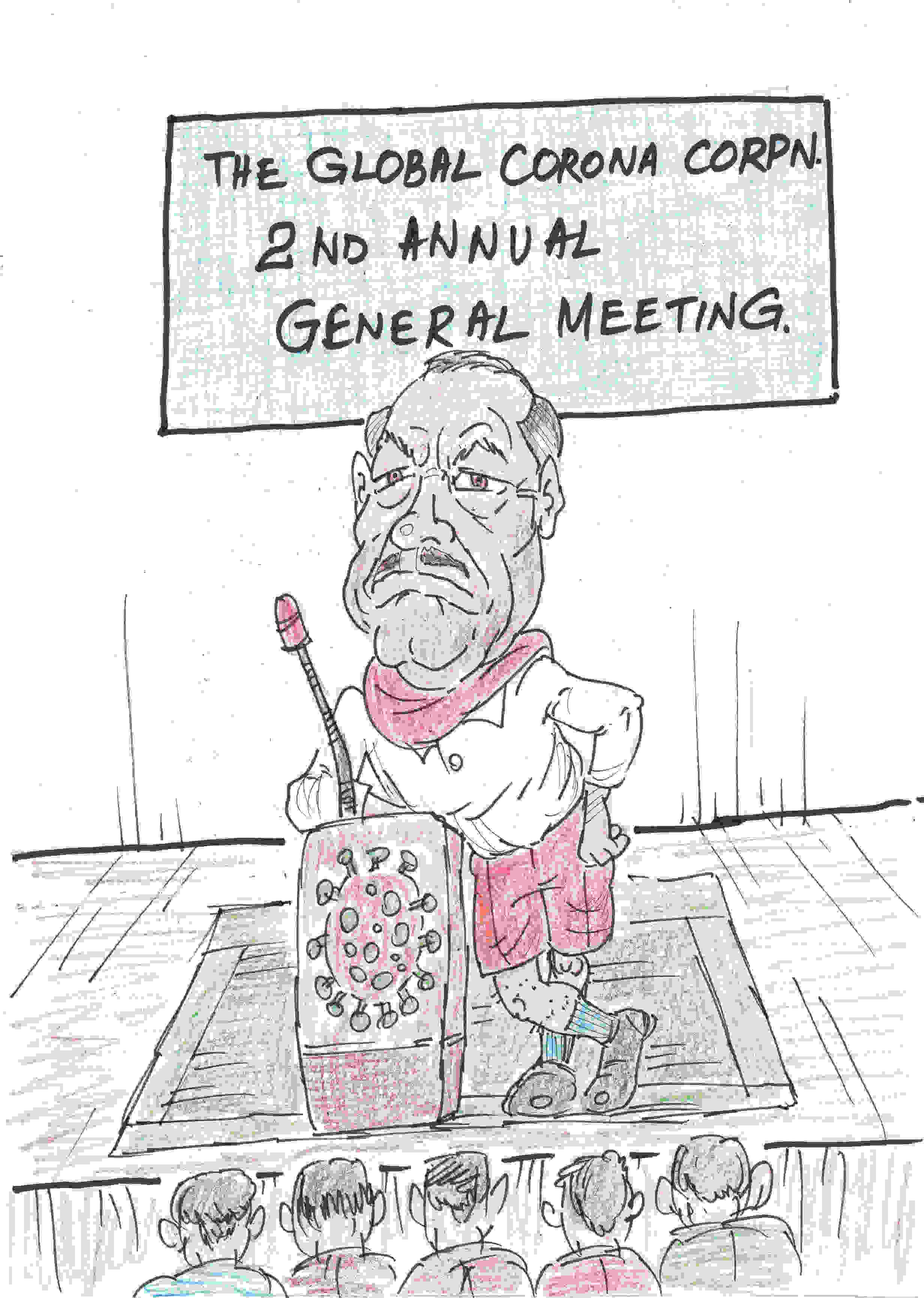
At the 2nd Annual General Meeting of the shareholders of the Global Corona Corporation (GCC), Roderick Spode, the Vice President (Operations) of the company, presented his Annual Report for the period from April 2020 to March 2021.

Here are some of the salient features of his report.

  1. Due to the aggressive marketing policies followed by GCC, brand Covid has captured a major share of the market during the year under reference. As of now, close to 136 million people have suffered from this onslaught, while as many as 2.94 million have kicked the bucket. This has reduced the pressure on the limited resources of our planet.
  2. If the world population is taken to be 7.8 billion, during the last year, GCC has touched a mere 0.02% of human beings. This shows the immense market potential which lies untapped for the products and services of GCC in the times to come. We have already trained an army of Red Shorts volunteering to help us expand our footprints across all the continents. The Honourable Frederick Threepwood, the famous marketing guru who is an expert at selling Donaldson’s Dog Joy biscuits, is already on our panel of distinguished advisors.
  3. Enthused by our success so far and its future potential,  several mutants of the virus have also got launched in quick succession, keeping the Homo sapiens in a continuous state of fear and stress, twiddling their thumbs trying to figure out ways and means of countering the pandemic.
  4. This has spurred a faster transformation to digital ways of handling transactions and led to a faster evolution of Industrial Revolution 4.0. Aunt Dahlia, who had always thrived on communicating by means of telegraphic means, is delighted at the simple life she lives now. Aunt Agatha now resorts to using video calls to give a piece of her mind to her errant nephew, Bertie Wooster.
  5. Reduction of Global CO2 emissions, leading to a cleaner environment, promoting healthier flora and fauna, making Lord Emsworth a happy man.
  6. Fault lines in managing economies have been exposed and the severe limitations of capitalism brought back in focus. Billionaires world over have improved their personal wealth by 54% during the period, while the poor are struggling to keep their body and souls together. Perhaps they followed what Ukridge preached that one accumulates only when one speculates. Those who believe in get-rich-quick schemes based on the stock market are also quickly learning to live with get-poor-quick outcomes instead. Office bearers of the Senior Conservative Club are appalled at the number of nouveau riche billionaires on their waiting list seeking membership.
  7. Globally, politicos heading the so-called democratic countries have been successfully nudged to shed their sheep-wool clothing and instead reveal their wolf-like dictatorial ambitions. Truth has been revealed for the greater good, though human rights and journalistic freedoms have been trampled upon ruthlessly. Taking a leaf out of my own outrage when a prized silver cow creamer goes missing, opposition leaders and intellectuals have been beaten into a jelly. One salutes such leaders who have nerves of chilled steel and would not mind either getting hit by a potato in the eye at election rallies or having to kiss babies dribbling at their mouths at Bonny Baby contests.
  8. Many countries have quickly learnt the art of covering up deficiencies in their economic growth and health infrastructure, keeping their statisticians busy perfecting their models of exponential smoothening. We live in an increasingly macho and muscle-flexing world, aided and abetted by our social media giants, devoid of noisy and argumentative democracies and led by leaders who decide policies based on window-dressed data submitted by Yes-persons around them. The prospects for an unbridled growth of GCC’s operations are indeed brighter.
  9. Companies in several sectors and specialists of hues, sizes and shapes are laughing all the way to their banks: pharmaceuticals, personal hygiene, immunity boosters, physical fitness, motivators, loony doctors, yoga-gurus-turned-business-honchos, management experts, mentors, internet service providers and online streaming platforms launched by the likes of Perfecto-Zizzbaum Corporation, to name only a few.
  10. A massive restructuring of jobs, highlighting the following needs of the businesses: (a) getting rid of the deadwood, (b) rapid re-skilling and (c) downsizing physical infrastructure while encouraging work-from-home. Mike Jackson has already helped organizations to go in for such changes.
  11. In turn, husbands reluctant to learn such home making skills as cooking, cleaning dishes, changing diapers and doing the laundry are mending their ways. They are realizing the true meaning of chivalry, as recommended by Bertie Wooster. Homemakers, overwhelmed by the continuous presence of a dominating spouse and naughty children at home are queuing up for consultations with such loony doctors as Sir Roderick Glossop.   
  12. Getting business owners and CEOs to hone their skills of Decision Making in Extreme Uncertainty, thereby making them hotter on their jobs. In turn, they enrich the syllabi of premier management institutes the world over. Rupert Psmith is now a much sought after consultant on the subject, even helping CEOs to respect values and ethics in their decision making, identify the core purpose of their businesses and thus making their organizations evolve into conscious ones.
  13. Improving the resilience of the hoi polloi who had so far been unable to handle the harsh slings and arrows of Fate with equanimity and aplomb. Reginald Jeeves is conducting some useful workshops to attend to this segment of our operations.
  14. Cupid is busy with his e-initiatives. Betrothed couples keep postponing a walk down the aisle, thereby keeping the tender flame of love alive. This has helped many of them to live through an extended period of intense romance, delaying the mummification of the corpse of love which often takes place after a marriage gets sanctified.
  15. Highlighting the effectiveness of the following anti-depressants: quality time with loved ones, an abundance of the milk of human kindness, literature, fine arts, uplifting movies and humour as effective anti-depressants.
  16. Promoting a healthier lifestyle amongst the couch potatoes by promoting Larsen Exercises, walking, cycling, partaking nourishment which would meet with the approval of Laura Pyke and feasting on tissue restoratives with such ingredients as turmeric, basil and the like.
  17. Spiritual evolution of the human species by allowing them adequate time to connect with their inner selves and practice meditation as well as introspection.

The Annual General Meeting was followed by a world premiere of the award winning movie The Corona Gladiators, presented by Mr Schnellenhamer, the head of the Perfecto-Zizzbaum Corporation.

The premiere was followed by a lavish spread dished out by Anatole, God’s gift to our gastric juices.

On the occasion, all the shareholders also received gift coupons of Eulalie Soeurs, the premium brand of ladies’ lingerie. 

(The GCC grapevine would make us believe that Roderick Spode could soon be promoted to head the company as its Chief Executive Officer.)

(Illustration courtesy Mr Suvarna Sanyal)

(https://ashokbhatia.wordpress.com/2020/07/25/the-corona-gladiators-proposal-for-a-plummy-movie

Read Full Post »

Fans of P G Wodehouse (Plum) often wonder as to why their favourite author of sublime humour is often found missing on the high table of English literature.

Comparisons are odious, but let us take the case of The Bard, considered one of the literary geniuses of our times. If he has dished out narratives rooted in such human emotions as greed, revenge, jealousy and love, so has Plum. Many of their characters are as quirky as they come. Both have contributed in so small measure to the enrichment of English. To the current generation, both sound a trifle outdated and, by and large, incomprehensible.

The Incomprehensibility Quotient

Perhaps, the reason I find The Bard’s works relatively unfit for human consumption can be traced back to their high level of Incomprehensibility Quotient.

Is there really any fun in picking up a book where, after each sentence, one has to consult a dictionary? The whole experience becomes very stiff-upper-lip-ish, if you know what I mean. Serious tomes which need super-intelligent persons to pop up in public spaces like libraries where they may enjoy their solitude, dig deeper into the contents and try and fathom the depths of the language are best avoided, I would say. Leaves the nerves a bit overburdened, don’t you think?

On the other hand, gliding through the works of Plum is sheer delight. The contrast is that reading Plum’s books in buses, trains and parks is fraught with risks. These are best devoured in private spaces, so those around, seeing one guffawing and shaking with uncontrollable mirth , do not start searching for the contact details of a loony doctor in the same class as that of Sir Roderick Glossop.

But what all this comes to is a deeper reality. The tendency of Homo sapiens to value seriousness and tragedy over humour and laughter. Anything humorous is treated by us as being frivolous and fit to be scoffed at. At management seminars and conclaves, serious talks get appreciated, but a speaker conveying the same message coated in humour is blamed for playing to the gallery. In companies, at board meetings, detailed power point presentations of a serious kind get appreciated, whereas anything said in a lighter vein is greeted by scorn.

A Premium on Intellect and Seriousness

Martin Amis, in his new novel Inside Story, blames our tendency to put serious tomes and tragedies on “the intellectual glamour of gloom… the idea that sullen pessimism is a mark of high seriousness”.

Brainy coves are invariably in awe of intellectual gravitas, even if the narratives are pale, dark and authoritative. What appeals to them better is a stiff upper lip approach. This segment of the population is apt to cast a supercilious glance at lesser mortals who thrive on reading fluffy stuff which makes them keep falling off beds and sofas, making their insurers uneasy.

Award winning works are an output of as much intelligence as is essential to dishing out juicier works which mask equally serious messages about handling life’s harsh slings and arrows. In fact, the sugar coating of delectable humour makes the underlying message more palatable.

If the spectrum of human emotions were to be examined in some detail, seriousness may form one of its ends and humour the other one. This might give an impression that the two are opposites of each other. Not necessarily. My own knowledge of literature is very shallow, but I am sure there are authors out there who strike a balance between the two. Perhaps, therein lies the origin of satire.

In one of her scintillating posts, Honoria Glossop of Plumtopia fame speaks of the book ‘Bestsellers’ by Clive Bloom. To quote her:

‘Bloom tracks the development of ‘the bestseller’ alongside increasing literacy levels in Britain, showing how new literature classifications emerged (high-brow and low-brow) to keep class distinctions alive in literature, once the lower classes were no longer illiterate. He exposes ‘literary fiction’ as little more than snobbery, suggesting that serious literature is made purposefully unfathomable and dire to ensure it remains the province of an expensively-educated elite.’

Plum’s Messages Couched in Pristine Humour

When it comes to Plum, a master wordsmith in his own right, we often miss the underlying messages of a spiritual, economic and managerial kind. Simply because these are hidden beneath layers of what sound like inane and repetitive narratives.

Whosoever deals with goofy kids like Thos, Seabury, Edwin the Scout and others experiences a spiritual enlightenment of sorts. When Bertie Wooster tries to solve a problem single handedly, he messes things up and starts practicing detachment. He lets go of his favourite piece of apparel. He abandons his ego and decides to give up his initial resistance to a proposal made by Jeeves to go off on a cruise, thereby escaping the wrath of Aunt Agatha. Many other characters elsewhere tackle their defeats with a healthy attitude of surrender, much like Roderick Spode when confronted with the Eulalie affair.

Take the example of ‘Something Fresh.’  It covers a wide span of issues – health and fitness, perils of ageing, gender parity, economic disparities, class distinctions, the spirit of enterprise, the subtle art of delegation, importance of comforter friends in one’s life, to name just a few.

Consider the character of Reginald Jeeves. Notice the way he manages to keep his career prospects intact by using tact and resource. He maintains that bosses are like horses. They need to be managed. His methods may be rough at times, but the neat results obtained do provide satisfaction to all concerned. He believes that one needs to break a few eggs to make an omelette. He registers dissent in a diplomatic manner. He is a respectful and dignified listener, speaking only when necessary. He leads others while appearing to be a devout follower.

Dishing Out Comical Stuff

Above all, one is left awestruck with the kind of complicated plots Plum comes up with. He handles tiffs between many couples at the same time, while bringing in obdurate aunts, sulking uncles, temperamental chefs, American millionaires and their sisters and daughters, moody creatures of a canine and feline kind, and even horses and pigs. Painting a narrative on such a wide canvas obviously needs hard work – a fertile imagination, lateral thinking, a thorough knowledge of such diverse subjects as scarabs, scriptures, literature, psychology, French resorts, movie making, et al, besides and what not. Characters often get swept in a swirl of madness and mayhem, forcing a lay reader to at least chuckle and suppress a smile. When it comes to either pulling off a gag or unleashing a comical situation, the author is always a step ahead of the reader.

In other words, humour, even though appearing to be farcical and classified as escapist, is serious business indeed!

We would do well to consciously cultivate our capacity to take a lighter view of things and learn to laugh at ourselves. Many more awards along the lines of Bollinger Everyman Wodehouse Prize deserve to be instituted.

(Related post:

https://ashokbhatia.wordpress.com/2014/10/24/wodehouse-misremembered

https://ashokbhatia.wordpress.com/2017/06/26/the-perils-of-not-suffering-from-shakespearitis

https://ashokbhatia.wordpress.com/2017/07/17/the-enduring-appeal-of-pg-wodehouse-if-you-think-its-just-farcical-butlers-and-upper-class-twits-think-again)

Read Full Post »

In fond memory of Eduardo Garcia who handed in his dinner pail recently.

ashokbhatia's avatarashokbhatia

(Disclaimer : This composition is not by Ralston McTodd. But poets are, after all, also God’s creatures…)

I wish I could be Bertie, and let Jeeves do all the thinking
Whilst avoiding hard work – about it having no inkling,
I worship Ickenham’s horror of convention
And yet, often, am prevailed upon to avoid contention;

I yearn to saunter between tailor, bootmaker and hatter 
Rather than dentist and supermarket – whilst enduring boring chatter,
I dream of living in Blandings, superbly waited on by Beach
Unconcerned about rules I daily feel inclined to breach;

But, alas, one cannot live other’s lives – that’s our lot
And however irksome one’s existence, of it one cannot be shot,
So one must find solace in laughter, fellowship and books
To escape – however briefly – boredom’s nasty hooks;

And there is a place to go, unlike any other one
Which uplifting powers are…

View original post 213 more words

Read Full Post »

I confess I have never had the chance of listening to the prattle of tender feet around me. However, this does not mean that I do not observe kids. I do so, with all the shrewdness at my command. When they giggle and stare at public speakers, the latter are all of a twitter. When they seek protection money from their wannabe step fathers, the soul cringes. When they use paraffin wax to douse fires, one sickens in horror. When they decide to extract a revenge of sorts from cabinet ministers who have reported their smoking endeavours in the shrubberies, one draws appropriate conclusions. When they celebrate their birthdays by either putting sherbet in ink pots or by going AWOL to enjoy a dinner and a movie, one gets overawed with the kind of courage they have.

Having suffered at the hands of such obnoxious kids as Thos, Seabury, Edwin the Scout, Kid Blumenfeld, Peggy Mainwaring and Kid Clementina, I have willy-nilly come to the conclusion that these kids need not be derided and mocked at. Rather, they deserve to be treated as role models for most other kids who would infest our planet in the decades to come.

Their parents need not be pitied and censured. On the contrary, they need to be applauded for the unique contribution they have made to the society at large. One, they have delivered roguish kids who are totally self-centered and can tackle the harsh realities of life with a chin up attitude. Two, they have demonstrated the kind of nerves of chilled steel they have by bringing up kids with such modern values as hatred, disdain, habit of questioning authority, strong faith in falsehoods and fake information, bullying and knowing which side their bread is buttered on. Those weaker than themselves get trampled upon and squished like crawling insects under a pair of size 11 boots. As to stronger bullies, they analyze their psychology, bury their egos and become submissive ‘nodders’. Social recognition, a rapid rise in a rigid hierarchy and accumulation of wealth is bound to follow them in due course.

A Set of Futuristic Values

What I am driving at is simply this. To prepare kids for a glorious future, we need to revamp our education policies. Parents –whether of the present or the aspiring kind – need to be clear as to the set of values which would serve their offspring better in the times to come.

Besides teaching them the virtues of the likes of Jesus, Rama, Krishna and Mahatma Gandhi, kids also need to be told of the sterling qualities of such figures as Satan, Ravana, Kansa, Duryodhana and Dushasana. Villains such as Sher Khan (The Jungle Book), Scar (The Lion King) and Tai Lung (Kung Fu Panda) could see them surviving the harsh slings and arrows of life with aplomb.

They need to be imparted skills as to how to thrive in an environment of hate, untruth, dishonesty, skulduggery, bullying and hoodwinking the weak and the vulnerable while sucking up to those who happen to be in power. A high degree of proficiency in hypocrisy is what they need to be egged on to achieve.

Hating the ‘Other’

Armed with a hateful attitude, they would prod the not-so-blessed kids into achieving perfection.  In any case, concepts like empathy, harmony and compassion are already passé. To teach them to love their neighbours no longer makes sense. Best opportunities come up for those who are selfish and have deep reserves of hatred towards the ‘other’. These could be people of a different race, religion, caste, creed, skin colour and economic wherewithal. Children need to be groomed to operate in an ecosystem of hate.

The Perks of Lying

Being glib liars, they would waltz through their lives in a smoother manner. The market share for truth is shrinking with each passing year. The market for falsehood, misleading data and fake news is zooming. By adopting a value system along these lines, explaining one’s conduct to either an aggressive boss or a nagging spouse would be far easier. Many of our leaders who have the unenviable task of governing countries have already perfected this art.

The Art of Cheating

A related core life skill is that of cheating. Fraud is a global industry which is recession proof. Companies do it all the time. Governments routinely resort to it so as to protect their public image. One is never too sure of the quality of data being unleashed upon the gullible public, whether regarding economic progress or public health. Reneging on sovereign guarantees by invoking a force majeure clause is set to become a norm.

Even when faced with a raging pandemic, human ingenuity in ripping off hapless patients has never been found wanting. Many healthcare professionals are capitalizing on the fear of the pandemic and laughing all the way to their banks.

Civic Disobedience

With a questioning mindset, innovations would rule the roost, propelling our civilization faster on the path of evolution.  The merits of standing up to those in power need to be driven home in a ruthless manner. In fact, with youth unrest spurting in many countries, we already have an inkling of the shape of things to come. All such protests produce a younger generation of leaders who would improve the delivery of services to a lay citizen. Homo sapiens will make mighty strides in all their endeavours.

Bullying and Nodding

The meek do not inherit the earth, so to say. One cannot be like my friend Gussie Fink Nottle who is tongue-tied when it comes to proposing to a female he feels attracted to. One has to be groomed to be a dasher. If one’s Dashiness Quotient is high, one can hope to achieve goals better and faster. Bullying and pushing others are habits which help one at all stages of one’s life.

But when it comes to those stronger than us, and those who are in power, one has to kowtow to their mighty egos. Becoming a professional ‘nodder’ and a thorough Yes-person is bound to bring home the bacon.

Proficiency in Hypocrisy

Scriptures impart our kids moral lessons which are much past their expiry date. Some of you may recall my having won a Scripture Prize while at school. But you may not be able to point out how that knowledge had ever helped me to wriggle out of the prospect of a saunter down the aisle. Invariably, it was Jeeves who always came to my rescue.

The guy who said that our thoughts, our words and our actions should be aligned was surely an ass of the first order. What works these days is exactly the opposite. Let us say you hate your government or your boss. If you say so openly, you could either be found cooling your heals in a jail – without the option, of course – or keep missing some juicy promotions in your career. If Bingo Little were to confess to having blown up his allowances on some sporting endeavour, the dove of matrimonial peace would hastily pack its bags and abandon his home and hearth.

Enabling a Faster Spiritual Evolution

Kids armed with such futuristic values would play an important role – that of hastening the process of spiritual evolution of our species.

Someone, whose name I forget, spoke of survival of the fittest. What I propose here, if followed by conscientious parents and our education policies, will surely lead us to nurture kids who would not only survive but also do well in the times to come.

If this were to happen, one could safely peer into the future and grunt in satisfaction in much the same manner as one would after having put down the hatch one of the lavish spreads dished out by Anatole. The soul, weighed down by current anxieties, would get revived.

Couples in the reproductive age bracket, whose unions get blessed with roguish kids, will be assured of a very bright future for their coming generations. By inheriting the combined loopiness of their parents, such kids would ensure a rapid spiritual growth of all those around them – the aunts, the uncles, the nurses, the governesses, the headmasters, the teachers, the priests, the sports coaches, the drivers, the liftmen, the gardeners and many others.

Some of you are already raising kids who are disobedient and undisciplined at home. Outside, they happen to be gun toting monsters. You deserve to be richly complimented for the many sacrifices you make for your progeny. Your decision to expose tender minds to inane television shows, inappropriate content on social media and violent cartoon shows is obviously helping.

Making Kids Hotter  

Even those amongst you who are convinced that I happen to be mentally negligible would agree with me that all kids need to be groomed into becoming ideal citizens of their respective nations and make a positive contribution to society through their ability to hate, lie, cheat, bully the weak and by learning the refined art of sycophancy, cozying up to those in power. They need to use resource and tact to break their eggs and whip up sumptuous omelettes for themselves and their near and dear ones.

Kids these days are already hot stuff. We need to take immediate steps through proper channels to make them hotter in the decades to come.  Bringing up losers is surely not your idea of having fun in life. Scripture knowledge has limitations. Character development centered on such values as love, respect, humility, compassion and empathy takes bright kids on a negative trajectory.

Who Can Bell the Cat?

Who can bring about this change in our thinking? Perhaps not our political leaders, many of whom hide their dictatorial ambitions behind a thin veneer of democratic principles. Our mandarins thrive on opacity and an innovative capacity to come up with roadblocks to whatever is proposed. When combined together, both love an obedient, subservient, meek and complaint public. For them, a vibrant, independently thinking and questioning citizen is a highly undesirable commodity.

Closer home, Lord Sidcup may not approve of the idea but deserves to be sounded out on this fruity scheme. I believe it is safe to interact with him over internet these days. I would not run the risk of being torn from limb to limb.

Perhaps Rosie M Banks and Bingo Little can be persuaded to spearhead a revolution of this kind.

Another possibility could be someone like Stiffy Byng or Roberta Wickham taking up the cudgels. When it comes to propagating values of the kind being proposed by me, their credibility is bound to be much higher. A promotional drive by them, directed at parents, would strengthen the foundations of our civilization no end. Education ministers and mandarins across different countries who do not pay heed will run the risk of either their hot water bottles being punctured or cell phones getting pinched.

Would you have any suggestions?!

(Inputs from Mr Satish Pande, an ardent fan of P G Wodehouse, are gratefully acknowledged)


(Related Post:  https://ashokbhatia.wordpress.com/2015/07/05/the-gallery-of-rogue-kids-in-plumsville)  


Read Full Post »

(Disclaimer : This composition is not by Ralston McTodd. But poets are, after all, also God’s creatures…)


I wish I could be Bertie, and let Jeeves do all the thinking
Whilst avoiding hard work – about it having no inkling,
I worship Ickenham’s horror of convention
And yet, often, am prevailed upon to avoid contention;

I yearn to saunter between tailor, bootmaker and hatter 
Rather than dentist and supermarket – whilst enduring boring chatter,
I dream of living in Blandings, superbly waited on by Beach
Unconcerned about rules I daily feel inclined to breach;

But, alas, one cannot live other’s lives – that’s our lot
And however irksome one’s existence, of it one cannot be shot,
So one must find solace in laughter, fellowship and books
To escape – however briefly – boredom’s nasty hooks;

And there is a place to go, unlike any other one
Which uplifting powers are huge, and cannot be undone,
Stemming not from order or discipline but, rather, farce and disaster
Recounted and made supremely enjoyable by the art of The Master;

So here’s to you, my fellow members of this most noble institution
Stalwarts of culture, wit, joy and laughter – genteel forms of revolution,
Where the burdens and anxieties are shed as one mocks
Spode’s brutality or even, say, one’s “less understated” socks…;

Unlike our Dover Street heroes we do spin and, indeed, must toil
But here, like them, we find peace and sanctuary – and can uncoil,
So I state with the utmost certainty, never having to recant or atone
That one of the greatest boons of life is this: being a Drone!


(Eduardo Garcia is a fuddy-duddy human salad, having been born in Rio, received an anglicized education and lived in the UK, Spain, Central Asia and Portugal. To complicate matters further, he is married to an American citizen – whose stepfather was a Dutchman – of Brazilian, English, U.S. and Greek extraction and his son lives and works in Denmark. This does not explain his liking for P.G Wodehouse, but may well have to do with his behaviour being often associated to some of the Master’s less mentally stable characters.)

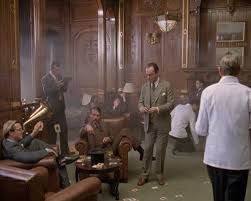
(Visual courtesy Wikipedia)

Read Full Post »


Psmith put his smart phone away. A sigh escaped him.

“Nothing makes sense”, he muttered.

For the space of about twenty-five seconds, Mike, sitting across a small table on a sunlit balcony in Mumbai, India, sat in silence.

“What is wrong with you?” asked Mike, with a concerned look on his face.

Some time back, Psmith and Mike had returned to the Mumbai branch of the New Asiatic Bank for a short audit spree. It had again taken them some time to get used to the hustle bustle of the metropolis, which they found much noisier than during their last stay, what with elections in India just round the corner.

They were put up in a guest house of the bank located at Worli in one of the high-rise buildings overlooking the Arabian Sea. Being a Sunday, both were in a relaxed state of mind.

“It is a pity to see the hapless denizens of most countries getting bombarded with all kinds of inane propaganda around election time. The level of allegations and counter-allegations leave them totally aghast, wondering if there is any sense of decency left in the world. I am sure they are clueless about being able to separate the wheat from the chaff, especially when it comes to deciding who to vote for”, said Psmith, looking somber and grave.

“Yes. Perhaps, they would end up voting for those who have greater lung power, both in the physical and in the virtual world!” said Mike.

“Elections will come and go. But, frankly, I do not really see any hope for the millions who have put their faith in the concept of democracy without realizing the kind of chaos and confusion it so very often amounts to.”

Mike eyed Psmith with grave concern.

“What gives? I have never seen you so very pessimistic about things.”

“In general, I feel that politicians of all hues have failed the public at large. People should start using the None Of The Above option more aggressively!” said Psmith ruefully.

“Why do you think so?” asked Mike, picking up his cup of tea from the table separating the two.

“One, I do not see any party speaking of issues which really matter. Talk of global warming and the threat people face from rising sea levels is nowhere to be heard. We have come to a stage where we need kids like Greta Thunberg to remind us of our obligations to Mother Earth. World over, use of land is a question which never gets raised, even though instances of urban flooding keep popping up every once in a while. Another crisis which looms large is that of the acute shortage of potable water, but our politicos appear to be behaving like well-fed ostriches on all these counts.

“Two, the basic needs, like providing for affordable healthcare, an education which makes the young employable, and an ecosystem which enables the people to make a decent living, are only touched upon obliquely and never addressed in a meaningful way. We are already well into Industrial Revolution 4.0. Requirement of skill-sets is changing rapidly, creating a new set of haves and have-nots. But I do not see any politician talking about this grave challenge.

”Three, many of the founders of modern democracies had vowed to create a just society. They seem to be nowhere near the goal that their founding fathers had set. Not to talk of either Millennium Development Goals or a gradual shift to Gross National Happiness Index for measuring progress.”

Psmith paused and looked at the seagulls flapping their wings over the Arabian Sea.

“Yes, I understand your anguish”, said Mike. “But this is true for many of our politicians in many countries. They are essentially dream merchants, with an eye on their own seat of power. Lofty promises get made at election time, mostly to be forgotten thereafter. The execution part is left to poor mandarins who sit in their ivory towers and keep swaying like wild grass on a sea coast to the likes and dislikes of different political masters from time to time.

“We live in times of volatile politics and general insecurity. We are just getting used to some stunning and illogical triumphs. Over the past few years, we have seen it in France, Italy, USA, India and elsewhere. A wave of isolationism appears to be washing down upon us. So is a phase of de-globalization.”

“Let us not lose heart, Comrade Jackson. The world follows its own cycles. Pretty soon, the tide could turn again. The omissions and commissions of those who look invincible today may soon return to haunt them. But what amuses me is that rather than focusing on long term key issues, our politicians just keep goading the ordinary person into making a choice between a brand of hyper-nationalism and a secular and liberal outlook. They sound much like our corporate honchos who live from one quarter to the next, dishing out guideline values!”

“We are lucky that elections keep popping up every once in a while. Some work gets done, at least!” quipped Mike, a chuckle adorning his visage. “Also, you ignore the fact that poor politicians have a tough job on hand”, he added.

“Oh, and what makes you say that?” asked Psmith.

“You see, they have to cope with diametrically opposite demands from different sections of the public. They have to persevere. They have to be fleet-footed and switch sides when it suits them. You may recall the case of John Bickersdyke who switched over from being a Liberal to a Unionist!

“Much like the Hon’ble A B Filmer and Roderick Spode, they have to be a model of respectability; their past should bear the strictest investigation. Their misdemeanours – financial, social or entrepreneurial – have to be kept hidden from the public view. Their encounters with angry swans have to be kept under wraps. Hell hounds of media have to be kept off the scent of any Eulalie-type endeavours.

“At all times, when commenting on something, they have to be politically correct. Very frequently, they have to make speeches full of empty rhetoric, a task which could leave many in a befuddled state of mind. Often, they have to listen to addresses of welcome in stuffy halls through the better part of a night. They must kiss babies, even if they happen to be dribbling by the sides of their mouths.

“They even have to undertake arduous journeys to far off villages, sit on the ground and have meals with their sympathizers, and even sleep in cottages with minimal facilities. They have to keep smiling while hugging world leaders who are otherwise sworn enemies of the state. Surely, they are more to be pitied than to be censured, don’t you think?”

“Well, all professions come with their own perks and perils” remarked Psmith philosophically. “And what about political funding, Comrade Jackson, what do you think of it? Would that not be effective in reining in corruption and in keeping the parallel economy in better check?” enquired Psmith.

“Well, some countries have given it a respectable name like lobbying. But the fact remains that a quid pro quo exists between private players and politicos. Surely, private players know how to extract their pound of flesh from whosoever makes it to the seat of power.”

“Hmm. But if political funding is made transparent, the voters would know exactly who stands to eventually benefit from their votes, even if these be such obnoxious businesses as those dealing in arms.”

Mike frowned.

“Yes, but there are so many other subterfuges a government in power can resort to, so as to quietly favour the businesses of their choice!” he added.

“Such as….?” Psmith enquired, raising an eyebrow a fraction of an inch.

“A pliant central bank can come in handy and get treated like a cash cow. In emerging economies, it can simply tinker with the way Non Performing Assets get classified. It can use forward swaps to enable private players to dip into the forex reserves. May be, there are several other ways which lesser mortals like us would be blissfully unaware of!” said Mike.

“Spoken like a true banker, Comrade Jackson! And the tab gets picked up by the common man!!”

“But if the businesses are worried about adverse reprisals when and if the opposite party makes it to the seat of power, and if the politicos do not wish to go to the public in a transparent manner, what do you think can be done?”

“I think power has to be truly secured back by the people!”

“Oh, so you mean riots, civil disobedience and all that stuff? Or, are you saying people should return to a dictatorship model?” Mike said in a surprised tone.

“No, no. I am not a social scientist. I can’t say if the democratic model is at fault here. It fails when those in power do not engage with the dissenters. Dictatorship is not necessarily a solution. God forbid if someone like Roderick Spode ends up controlling the affairs of a nation!”

“On the contrary, he could be very popular with the masses. If he announces plans of giving each citizen at birth a bicycle and an umbrella, a swanky tablet to all students who enter an institution of higher learning, a cooking stove, a pressure cooker and a kitchen cabinet to all those getting married, building world-class infrastructure, and even compulsory, scientific measurement of all male knees, he would romp home with a thumping majority. People just love elections for the kind of freebies these bestow upon an otherwise deprived population.”

“Yes, I have vaguely heard of some politicians from the southern parts of India who have perfected this art”, said Psmith.

“Not to forget the hard cash, occasional meals and a sumptuous supply of tissue restoratives during elections. But we digress. You were mentioning civil disobedience.”

“In fact, days when most Indians were starving and could register their protest by resorting to civil disobedience are long since past. Hunger inevitably leads to a seething anger within, and someone like Mahatma Gandhi who is smart enough to channelize it properly brings home the bacon, so to say. This tactic can now only be used by those at the bottom of the pyramid.

“As to all the others, it might only yield results if the delicately nurtured in their families follow the example of Wilmot Mulliner and go on a crash slimming spree by shifting to a diet based only on the juice of an orange. Pretty soon, their natures would become warped, and they will start spewing off the resultant venom on the men around them. Gradually, the men would undergo a transformation in their characters. From being ewe lambs, they would become crouching tigers, ready to pounce upon anyone who they believe is dishing out injustice to them and their families.

“Or, something more imaginative has to be done in the case of the well-endowed classes.”

“Like what?” asked Mike.

“For one, I think we need professionals from the fine arts side to come up with a sustained campaign to keep the key issues alive and kicking. Not-For-Profit entities can pitch in and so can intellectuals. Above all, we need a band of committed comedians, the stand-up kind or otherwise, who can churn out shows over social media to convey the importance of such issues which are critical to the survival of our race. A silence would willy-nilly imply either a state of resignation and disinterest, or quiet acquiescence. The coming generations would never forgive us otherwise.”

“Interesting” said Mike. “Perhaps you take a leaf out of Ukraine where Vlodymyr Selenskiy, an anti-establishment comedian, has played a role in elections! But who will fund the kind of activities mentioned by you? One would not like this to remain an open-ended challenge,” said Mike.

“Crowd-funding could work. Also, there is no shortage of well meaning people who wish to do something good. But the real challenge is to identify a leader who would be committed to a cause of this nature and magnitude, despite opposition.”

“Opposition will of course be there. I read somewhere recently that eminent lion-tamers like Rev Aubrey Upjohn, Miss Mapleton and Miss Tomlinson have appealed to students the world over to give up their tirade regarding global warming and instead focus on their studies. On the contrary, I thought they would be feeling proud that they have tutored their pupils rather well.”

“Oh. One person who could possibly be consulted on the issue is Jacinda Ardern, the present Prime Minister of New Zealand, who has demonstrated exceptional leadership qualities recently.”

“Perhaps you should then seek an audience with her. But wait, this merely goes on to show that a situation produces a leader. So, if the steps outlined by you are taken and sustained for a long time, one can hope for an enigmatic leader to emerge from such peaceful protests, right?”

“I do believe so.”

Mike rose from his chair and stretched his arms. His gaze drifted off to a couple of fishing boats bouncing up and down on the bluish-green waters of the Arabian Sea. The rays of a setting sun were waltzing over the waves.

“These are deep waters, indeed. I wonder why we are discussing such matters on a lazy Sunday evening! I rather think I’ll nip down to the beach at Santa Cruz and take some fresh air into my lungs,” said he. “You couldn’t come too, I suppose?”

“On the contrary,’ said Psmith, ‘I could, and will. A stroll will just restore those tissues which our intense discussion of the last half-hour has wasted away. It is a fearful strain, this political quagmire. Let us trickle towards the place mentioned by you. Comrade Jackson, lead me to this picturesque beach of yours of which I have heard so much.”

(Related Posts:

https://ashokbhatia.wordpress.com/2015/10/10/politicos-in-plumsville-part-1

https://ashokbhatia.wordpress.com/2015/10/12/politicos-in-plumsville-part-2

https://ashokbhatia.wordpress.com/2015/10/18/how-about-promoting-election-tourism)

Read Full Post »