Feeds:
Posts
Comments

Posts Tagged ‘Seasons’

Wodehouse

P. G. Wodehouse is essentially a romantic at heart. Matters of the heart play a vital role in almost all the narratives dished out by him.

Bertie Wooster keeps avoiding a walk down the aisle, thanks to the support he gets from Jeeves. Yet, at the end of The Mating Season, we find him basking in the glow of satisfaction at having been instrumental in putting the affairs of quite a few couples in order.

In the Blandings saga, we meet a morose Gertrude who is pining for Beefy Bingham, her lover. She spreads depression in the house and, worse still, tries to be “helpful” to Lord Emsworth by tidying his study.

Mr. Mulliner keeps recounting love stories of various nephews and nieces of his. Ukridge may try and run a chicken farm, but the subplot of the love affair between Jeremy Garnet and Phyllis runs throughout the narrative. The spell of a quiet summer evening prompts Jeremy to confide his love to Phyllis.

The Literary Parabola of Seasons

It is hard to think of romance without thinking about the seasons. Whether it is the first warmth of spring pulling us out of hibernation or the quiet reflection that comes with autumn, there is an innate connection between the rhythm of nature and the emotional lives we lead. Wodehouse, of course, recognises this. He does not just use the seasons as convenient backdrops for romantic entanglements; he weaves them into the very fabric of his characters’ emotional journeys. Like that feeling of optimism you get on the first sunny day after months of grey skies, Wodehouse’s characters are often moved by the weather in ways they barely recognize themselves. It is this subtlety—this almost imperceptible nudge from nature—that aligns him with the great literary tradition of using the external world to reflect inner states.

The motif of seasons is deeply embedded in literature, symbolising various emotional and psychological states of characters. Many English literary experts have skilfully employed seasons to reflect inner turmoil, personal growth, and other emotional shifts.

In Sonnet 18 (“Shall I compare thee to a summer’s day?”), Shakespeare compares the beloved to a summer’s day, symbolising beauty, and vitality, while also lamenting the fleeting nature of summer and, by extension, life, and youth. In The Winter’s Tale, the season of winter represents both the coldness of jealousy and tyranny as seen in King Leontes’ irrational behaviour, whereas spring (in the later acts) symbolises rebirth, redemption, and forgiveness.

In his poem To Autumn, John Keats captures the beauty and melancholy of autumn, a season of maturity and ripeness and goes on to meditate on the bittersweetness of life’s temporality.

Tess of the d’Urbervilles by Thomas Hardy aligns Tess’s emotional journey with the changing seasons. The novel starts in spring, symbolising Tess’s innocence, and moves through summer and autumn, reflecting her growing despair and tragedy. Winter, in the end, represents death and loss.

In A Christmas Carol, Charles Dickens uses winter as a backdrop to explore themes of coldness, isolation, and redemption. The harsh, biting cold reflects Ebenezer Scrooge’s miserly, frozen heart. Yet, through transformation, the holiday spirit (and warming of his heart) mirrors a kind of internal spring-like rejuvenation.

Robert Frost, in Stopping by Woods on a Snowy Evening, depicts winter as representing solitude, contemplation, and the pull of death. The character’s momentary pause in a quiet, snow-covered wood suggests the allure of rest and surrender, while the journey he must continue reflects the mundane obligations of life.

These writers masterfully intertwined the natural cycle of seasons with human emotions, adding symbolic depth to their character’s emotional and psychological experiences. The ever-changing seasons become metaphors for the ups and downs of human life, making them a timeless tool in literary exploration.

The USP of Wodehouse

What sets Wodehouse apart is his imaginative use of Cupid’s machinations during different seasons. Cupid is indubitably one of the author’s most important comrade-in-arms. But the freedom to strike at will does not come without its attendant responsibilities. Love is in the air. Devotion is permitted. But physical intimacy is a taboo. Aphrodite has limited access to the goings-on. Eroticism is denied entry. An occasional occurrence which could amount to mild titillation alone is allowed. Across the oeuvre, Cupid is subject to strict Victorian norms of behaviour.

However, all this does not lessen his ingenuity in bringing lovers together. There are occasions on which even a member of either the feline or the canine species facilitates the development of a bond. Behind the frivolity and farcical events of Wodehouse’s narratives, Cupid ensures an almost imperceptible use of natural elements to influence the lives of the author’s characters. While stuck together on a rock by the seaside, a high tide in Mr. Wilton’s Holiday leads to a reconciliation between Jack and Mary.

Cupid even goes on to use different seasons as arrows in his quiver to smoothen the way to new relationships blossoming. In many of the relationships between two love birds, seasons provide a perfect backdrop. While the seasons may appear incidental to the plot, these not only embody the emotional states of the characters but also serve as invisible matchmakers.

Seasons become mere puppets in the deft hands of Cupid in a few cases. These play a key role in nudging Wodehouse’s characters toward romantic resolutions. Spring, summer, autumn, and winter often serve as metaphorical agents of Cupid, facilitating encounters, softening hearts, and reuniting sundered hearts. In fact, in such cases, seasons don the hat of an active participant in the narrative, behaving like key actors involved in the act.

Let us consider a few examples to see how Cupid assists Wodehouse in propelling the romantic chemistry between his characters by using various seasons as either a backdrop or a catalyst.

Spring: The Season of Blossoming Love

In Wodehouse’s fiction, spring invariably represents renewal, hope, and the blossoming of love. The imagery of spring, with its vibrant colours, warming temperatures, and burgeoning life, mirrors the rekindling or the birth of romantic feelings among characters. Wodehouse takes advantage of spring’s association with new beginnings to nudge his characters towards forging romantic affiliations, often underlining the season’s role as Cupid’s chief lieutenant.

Bertie Wooster takes some inspiration from Tennyson when he says:

“In the spring, Jeeves, a livelier iris gleams upon the burnish’d dove.”

He even imagines a charming girl to come up to him and seek his assistance in saving her from assassins.

“I don’t know if you know that sort of feeling you get on these days around the end of April and the beginning of May, when the sky’s a light blue, with cotton-wool clouds, and there’s a bit of a breeze blowing from the west? Kind of uplifted feeling. Romantic, if you know what I mean. I’m not much of a ladies’ man, but on this particular morning it seemed to me that what I really wanted was some charming girl to buzz up and ask me to save her from assassins or something.”

Similarly, in No Wedding Bells for Bingo, Cupid assists Wodehouse in explicitly tying romantic developments to the season. Bertie Wooster’s bumbling friends, eager to woo their respective partners, often find their romantic aspirations coming to fruition as spring blooms. Wodehouse seems to imply that the very air of spring carries romance, infecting even the most hopeless of suitors with renewed vigour and enthusiasm. Even Jeeves, who, when surprised, raises his eyebrows merely a fraction of an inch, is affected by spring fever. Towards the end of the story, we find that Bertie tells Bingo Little’s uncle that Bingo wants to marry Mabel, a waiter, and he, moved by the books read out to him, approves. Uncle declares that he plans to marry his cook, in whom Jeeves had shown interest earlier. However, Jeeves has already scratched the fixture and instead has another engagement of sorts with another girl, Mabel, the waiter whom Bingo had wanted to marry!

In Something Fresh, the sunshine of a fair spring morning incites a feeling of novel jauntiness amongst the residents of London. This is followed by the scene where Ashe Marson and Joan Valentine discover each other, and the seeds of romance get planted.

It is not that Cupid’s arrows prove to be effective in all the cases.

The spring motif continues with novels like Uncle Fred in the Springtime wherein the affair between Valerie and Horace comes to a satisfactory conclusion. However, Cupid’s arrows fail in the case of Polly and Gilpin. In Spring Fever too, Terry, who is initially wary of Mike due to his overwhelming good looks, warms up to him when she sees his battered face after a failed burglary attempt. Stanwood and Eileen also get together. But Mrs Punter runs off with Augustus Robb, leaving Shorty and Spink ruing their loss in love.

In the short story The Custody of the Pumpkin, the annual Spring Flower Show provides the backdrop for a classic Wodehouse romance. Lord Emsworth, obsessed with his prized pumpkin, is blissfully unaware that his son, Freddie Threepwood, is using the occasion to court a gardener’s daughter. The setting, with its blossoming flowers, is emblematic of the unanticipated flourishing of romance. While Lord Emsworth is preoccupied with his vegetables, spring’s inherent charm works on Freddie and his love interest, quietly orchestrating their courtship. Spring’s effect here is subtle but inevitable, as the characters seem unable to resist its influence.

Spring is also often a time for transformation in Wodehouse’s world. Characters who, during winter, might have been cynical, brooding, or emotionally distant, find themselves rejuvenated as the warmer weather arrives. When the ogre of winter is around, the characters’ instincts for self-preservation often dominate their tender thoughts of love. But once the winter is gone, the seasonal change from gloom to joie de vivre affects not only flora and fauna but also causes an emotional thawing amongst the Homo sapiens. Cupid assists Wodehouse in using this to show characters moving from a state of emotional hibernation to one of action and, eventually, romantic fulfilment.

Summer: Love in Full Bloom

If spring is the season of new beginnings, then summer in Wodehouse’s works represents the full bloom of love. It is as if Cupid decides to deploy the season at full throttle, its quiver operating on all its six cylinders. The warmth of the sun, long days, outdoor events such as garden parties and village fairs, a quick swim in a lake, and occasional bouts of rain create ideal conditions for love to grow further, often leading to a cementing of romantic affiliations. The languid pace of summer reflects the unhurried nature of developing affections, where flirtations deepen, and scales fall from couples’ eyes as they realise their love for each other.

Summer is the time when you can hear a snail clear its throat a mile away. When the sun is finishing its obligations for the day and rushing to a well-earned night of rest and repose, gnats and many other kinds of insects start fooling about all over the place.

In Right Ho, Jeeves, Bertie tells us it is July twenty-fifth when he returns from a trip to Cannes looking bronzed and fit. While at Cannes, a crisis arises in the matter of Tuppy Glossop and Angela Travers. They fall out due to Angela saying that Tuppy was getting fat and Tuppy not believing that a shark attacked her while at Cannes. Gussie Fink-Nottle is besotted with Madeline Bassett but does not have the courage to express his love to her. Eventually, it takes a dangerous midnight cycle ride by Bertie for Angela and Tuppy to reconcile their differences and for Madeline and Gussie to make up.

In The Mating Season, Madeline is yet again convinced that Bertie is secretly pining for her when he catches a 2.45 AM Milk Train and hides in the shrubbery, aiming to intercept the morning post which carries a letter from Gussie scratching the fixture with Madeline, thereby throwing a spanner in his plans to retain his bachelorhood. By the time the narrative ends, we find that Madeline and Gussie are reunited, Esmond Haddock has defied his aunts and is engaged to Corky, Constable Dobbs is reconciled with Queenie, and Gertrude has eloped with Catsmeat. Bertie’s bachelor status remains protected.

Cupid’s Benign Arrows

Cupid’s quiver contains many kinds of arrows. Other than the normal ones directed at consenting adults, on a few occasions, he also shoots the benign kind which are devoid of amorous intentions of any kind. Instead, these uplift the Spiritual Quotient of the ones at the receiving end. Or the kind that make one live up to the expectations of someone who is much younger in age, thereby also proving oneself worthy of one’s glorious ancestors.

In The Love that Purifies, we come across boys of a tender age who happen to be infatuated with Hollywood divas. We have Thos, who is besotted with Greta Garbo. We have Bonzo, who is in awe of Lilian Gish. Then, we have Sebastian Moon, whose affections are focused on Clara Bow. How these infatuations transform the behaviour of young boys is the nub or crux of the story. We are reminded that even menaces to society, in general, assume a saintly disposition when under the influence of the charms of their transient heartthrobs.

In Lord Emsworth and the Girl Friend, we discover that the lordship detests wearing stiff collars and making speeches. However, on the Parva School Treat Day, coinciding with the August Bank Holiday, when Blandings Castle becomes, in his lordship’s opinion, a miniature Inferno, he has little option but to fall in line with the command of Lady Constance Keeble. But that does not come in the way of his developing a respectful devotion towards Gladys. When she desires to have some flarze and gets spotted by Angus McAllister when doing so, the latter comes out of the potting shed at forty-five miles per hour. Gladys is quick to seek protection. She not only clutches the tails of Lord Emsworth’s coat but also slips her small, hot hand into his. It is a mute vote of confidence, and Lord Emsworth intends to be worthy of it. He stands up to the gardener and even defies his sister by refusing to deliver a speech.

The experience of Esmond Haddock and Lord Emsworth shows us that when Cupid strikes, even spines made of cottage cheese get transformed into those made of chilled steel!

When Rain Gods Assist Cupid 

In Summer Lightning, Hugo Carmody is surprised to find that it has been raining and decides to rush to the cottage nearby.

Ho! for the cottage, felt Hugo, and headed for it at a gallop. He had just reached the door, when it was flung open. There was a noise rather like that made by a rising pheasant, and the next moment something white had flung itself into his arms and was weeping emotionally on his chest.

The ‘something white’ is Millicent, Lord Emsworth’s niece, frightened by the Empress stashed in the gamekeeper’s cottage.

In Leave it to Psmith, the hero’s first encounter with Eve comes about when she is caught in a sudden spell of rain beneath the awning of Messers Thorpe & Briscoe. Even though he says he is above softer emotions in general, Eve, who is sumptuously upholstered at the time, stirs a chord within him. Chivalry comes into play. Stealing the best umbrella available in the cloakroom of the club and rushing out to offer it to her is the work of a moment for him. Had Cupid not been assisted by the Rain Gods at the time, his machinations might have been in vain.

Summer’s role as Cupid’s agent is also evident in the way characters often find themselves outdoors during the warm months, in situations that lend themselves to romantic misunderstandings and reconciliations. Wodehouse’s characters often attend tennis matches, picnics, and boating excursions during the summer, all of which provide opportunities for private conversations, furtive glances, and sudden declarations of love. The idyllic natural settings serve as romantic catalysts, drawing characters together under the spell of the summer sun.

Moreover, summer’s association with heat and intensity often mirrors the emotional heat of Wodehouse’s love stories. The heightened emotions of characters — whether it is the confusion of unspoken feelings, jealousy, or the passion of newfound love — often come to a head during this season.
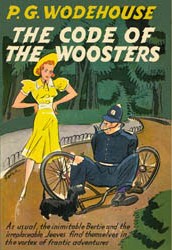
Autumn: The Season of Mists and Mellow Fruitfulness

Autumn, with its falling leaves and cooling air, often signals a time of reflection in Wodehouse’s works. This season is less about the exuberance of new love and more about characters realizing their feelings, coming to terms with past mistakes, or making decisions about their romantic futures. In many ways, autumn represents a transitional phase in the romantic arc of Wodehouse’s characters — a period of contemplation before the final act of a romantic resolve. Cupid, perhaps tired of the hectic time he has had in the previous two seasons – spring and summer – does a bit of introspection, reviewing the progress of the arrows shot earlier on whatever technical gizmo he uses to keep a track of things, and deciding the future course of action in each case.  

In The Code of the Woosters, Jeeves tells Bertie that autumn is a season of mists and mellow fruitfulness.

One of the reasons for Bertie visiting Totleigh Towers is to heal a rift between Gussie Fink-Nottle and Madeline, Sir Watkyn’s daughter. Madeline incorrectly believes Bertie to be in love with her, and she has promised to marry him if her engagement should ever fail. To avoid this calamity to befall him, Bertie persuades Madeline to invite him down, but he learns upon arriving that Gussie and Madeline have already reconciled. A parallel romantic track is that of Stiffy Byng and Harold Pinker. A silver cow creamer, a notebook of Gussie’s which insults the host, Sir Watkyn Bassett, a policeman’s helmet, and the Eulalie effect on Roderick Spode – all take turns to play a spoilsport. Eventually, Cupid succeeds in his mission and both the couples get united.

In Jeeves and the Old School Chum, when a carefully packed lunch basket goes missing at the Lakenham Races, and the car carrying Rosie M Banks and her old school friend Laura Pyke runs out of fuel in the middle of nowhere, a fight ensues between the two friends. Bingo Little wins an intense argument with the owner of a house nearby and ensures that his wife gets her afternoon cup of tea. The romance between the couple is back on its throne.

She turned for an instant to Bingo, and there was a look in her eyes that one of those damsels in distress might have given the knight as he shot his cuffs and turned away from the dead dragon. It was a look of adoration, of almost reverent respect. Just the sort of look, in fact, that a husband likes to see.

“Darling!” she said.

“Darling!” said Bingo.

“Angel!” said Mrs Bingo.

“Precious!” said Bingo.

Cupid is thus successful in rekindling the romance between the wife and the husband, which had earlier come under strain owing to a clash between Bingo’s dietary habits and Laura Pyke’s strict diet regime based only on fat-soluble vitamins.

The Indian Summer

Many of Wodehouse’s fans are aware of his evocative use of the term Indian Summer, which is said to be a period of unseasonably warm, dry weather that sometimes occurs in autumn in temperate regions of the northern hemisphere. The UK Met Office Meteorological Glossary published in 1916 defines an Indian summer “a warm, calm spell of weather occurring in autumn, especially in October and November”.

In Indian Summer of an Uncle, Wodehouse touches upon yet another facet of love – that of a more mature variety. When Uncle Goerge starts planning a walk down the aisle with a much younger Rhoda Platt, Jeeves explains the phenomenon as follows:

“One must remember, however, that it is not unusual to find gentlemen of a certain age yielding to what might be described as a sentimental urge. They appear to experience what I may term a sort of Indian summer, a kind of temporarily renewed youth.”

For those in an advanced age, holding hands and physical intimacy gets relegated to the background. Instead, common ailments and related medications and therapies rule the roost. At times, the lining of the stomach paves the way for a couple to start sharing the trials and tribulations of life with each other. When Piggy and Maudie, the latter being the aunt of Rhoda Platt, happen to meet after a gap of many years, Cupid is quick to seize the initiative and ensures that their romance gets rekindled.

While autumn may lack the vibrancy of spring and summer, its quiet beauty is essential to Wodehouse’s romantic narratives. It allows characters the space to reflect, reconsider, and eventually take action to secure their happy endings. In this way, autumn becomes an integral agent of Cupid, providing the emotional clarity needed for love to succeed.

Autumn’s natural imagery — with its sudden riot of beige, yellow and brown colours, and the promise of winter’s chill and its eventual strokes of brilliant white on the landscape — often evokes a sense of urgency in Wodehouse’s characters. As the days grow shorter, characters are compelled to make decisions about their romantic futures. Cupid can be seen using this season to build tension, pushing characters toward decisive action. The cooling air of autumn can often be seen as a metaphor for the characters’ cooling patience, forcing them to act before it is too late.
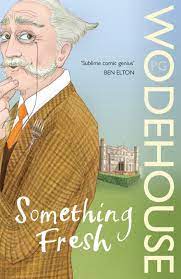
Winter: Love Amidst the Chill

Though less frequently employed in Wodehouse’s works, winter nonetheless plays a significant role in his romantic comedies. The cold, stark landscape of winter can serve as a powerful contrast to the warmth of human affection. In some of his stories, the challenges of winter — whether it be physical cold, isolation, or the dormant state of nature — underscore the importance of companionship and love as a source of warmth and vitality.

In The Ordeal of Young Tuppy, the latter and Angela have again had the proverbial lover’s tiff. While on a rebound, Tuppy starts flirting with an athletic girl named Miss Dalgleish who lives near Bleaching. The girl is fond of dogs; Bertie supposes Tuppy wants an Irish water-spaniel to give her as a Christmas gift. To impress the girl, Tuppy participates in a local game of football, where he performs well but is sad to find out later that the girl was not present on the occasion, having rushed off to London looking for an Irish water-spaniel. A fake telegram imploring Tuppy to rush to the aid of an ailing Angela lands up, restoring the relationship between the two.

In Something Fresh, a concatenation of circumstances leads to Ashe Marson travelling in an open cart from Market Blandings to the Castle in biting cold. Wodehouse describes cold as an ogre that drives all beautiful things into hiding.

Below the surface of a frost-bound garden there lurk hidden bulbs, which are only biding their time to burst forth in a riot of laughing colour; but shivering Nature dare not put forth her flowers until the ogre has gone. Not otherwise does cold suppress love. A man in an open cart on an English Spring night may continue to be in love; but love is not the emotion uppermost in his bosom. It shrinks within him and waits for better times.

In The Knightly Quest of Mervyn, Mervyn Mulliner wants to marry Clarice Mallaby. She thinks he is a chump and does not consent to marry him. Mervyn wants to prove himself and asks her to give him a quest, like the knights of old. It is December, and she has always wanted to eat strawberries in the middle of winter, so she tells Mervyn that she will reconsider his proposal of marriage if he acquires a basket of strawberries for her before the end of the month. After having had many setbacks in his knightly mission, he lands up at Clarice’s house and intercepts a package which has strawberries for her from Oofy Posser in whom Mervyn had earlier confided. He gets an idea and calls out to Clarice that he brought her strawberries. However, by the time she reaches the room, he has absent-mindedly eaten all the strawberries. Clarice throws him out in the chilly weather, not even allowing him to retrieve his hat. Cupid fails yet again, though Mr Mulliner concludes the story to his companions at Angler’s Rest thus:

“So there the matter rests. The whole thing has been a great blow to my cousin’s son, for he considers — and rightly, I suppose — that, if you really come down to it, he failed in his quest. Nevertheless, I think that we must give him credit for the possession of the old knightly spirit to which our friend here was alluding just now.

He meant well. He did his best. And even of a Mulliner more cannot be said than that.”

In A Damsel in Distress, Maud is shocked to see how fat Geoffrey has become since the one year they met in Wales. Though he has inherited a great deal of money, he now sports a triple chin and talks only of food. Winter forms a backdrop when Geoffery speaks of his having lived on a yacht during the previous winter.

Upon discovering that the party of the other part is now close to thirty pounds overweight, the tender emotion of love in Maud’s bosom evaporates. She realises her mistake. She rushes to the nearest phone, gets George on the line, and asks if he has gained any weight in the last year and if he has ever been to Florida during winter and relished a fish called pompano! When George replies in the negative, Cupid’s endeavours succeed, and their romantic affiliation is sealed.

Winter’s challenges — both literal and metaphorical — often lead characters to realise the value of love as a source of comfort and joy in an otherwise cold world. The season’s emphasis on survival and endurance mirrors the perseverance required for love to thrive despite obstacles. In many ways, Cupid uses the season of winter as a test of true love, as couples must navigate the season’s difficulties to find warmth and happiness in each other’s company.

Though less romantic on the surface than spring or summer, winter provides Wodehouse with opportunities to explore the depth and resilience of romantic relationships. It is a season where love tries to prove its worth by enduring hardship and by a conduct which is not only chivalrous but also knightly. Seeds of love may occasionally lie dormant in the frozen soil, ready to sprout as and when the season of spring kicks in.

The Six Seasons of Kalidasa

Yet another literary figure who, like Wodehouse, has captured different seasons with highly insightful narratives is Kalidasa.

Kalidasa, said to be born in India in the fourth century AD, is widely regarded as the greatest poet and dramatist in the Sanskrit language. His evocative portrayal of female beauty, an enthusiastic depiction of the affairs of the heart, and the diverse ways in which ladies dress up for a romantic encounter with their beloved in each of the six seasons typical of a tropical country would have surely attracted Cupid’s attention.

In one of his seminal works, Ritusamhara (Medley of Seasons), Kalidasa describes six seasons in his inimitable style: Spring (Vasanta), Summer (Greeshma), Monsoon (Varsha), Autumn (Sharad/Patjhad), Pre-winter (Hemant), and Winter (Shishir). Each one is dealt with evocative descriptions of the elements of nature. The seasons form a backdrop for the affairs of the heart and the sensuous pleasures of the skin.

In Harmony with Mother Nature

In the works of P.G. Wodehouse, the seasons play a subtle yet significant role in shaping the romantic lives of his characters. Spring brings new beginnings and the promise of love, summer sees romance in full bloom, autumn provides space for reflection and realisation, and winter challenges love to survive amidst the cold. Each season, with its unique qualities, acts as an agent of Cupid, quietly orchestrating the romantic entanglements and resolutions that define Wodehouse’s timeless comedies.

All of us have occasionally experienced that curious, unexplainable surge of nostalgia that comes with a crisp autumn breeze or a sudden downpour in summer. An often-overlooked slice of his literary brilliance is how he grounds quite a few exaggerated situations in something so universal — the changing seasons. We have all watched relationships blossom in spring, only to weather the storms of winter. Wodehouse reminds us, with a wink and a smile, that love, like the seasons, goes through its cycles. And while his characters might find themselves tangled in knots, he trusts that much like nature itself, things have a way of sorting themselves out in time. In a world that so often feels chaotic, it is this quiet reassurance that keeps us coming back to his stories, much like the comfort of the seasons returning year after year.

By aligning the emotional journeys of his characters with the changing seasons, Wodehouse creates a world where love is not only a matter of human interaction but also a natural phenomenon, influenced by the rhythms of the earth itself. The seasons, in their silent and invisible way, become crucial agents in the hands of Cupid to stage the grand drama of attraction, affection, desire, infatuation, and love.

After all, he is supposed to be the son of the love goddess Venus and the god of war Mars. His role in nudging Wodehouse’s characters towards a conclusion of their affairs of the heart deserves to be appreciated and applauded.

Notes:

  1. This article is inspired by Plumtopia’s blog post ‘The Four Seasons of Wodehouse’ (link below).
  2. Inputs from a Wodehouse expert and Suryamouli Datta are gratefully acknowledged.
  3. Plum’s caricature courtesy Suvarna Sanyal.
  4. A version of this article appears in the March 2025 issue of Wooster Sauce, quarterly journal of the P G Wodehouse Society (UK).

Related Posts:

Read Full Post »

Read Full Post »

ashokbhatia's avatarashokbhatia

KalidasaKalidasa, said to be born in the 4th century AD, is widely regarded as the greatest poet and dramatist in the Sanskrit language.  Had he been alive today, he would have been a very busy man, possibly assisted by a huge team of research assistants, dishing out scripts, dialogues and lyrics for a vast majority of our dream merchants in Bollywood.

His emphasis on capturing the innate beauty of nature might not have enthused many of our present day producers and directors. However, his evocative portrayal of female beauty and the passionate depiction of the affairs of the heart would have surely had the Bollywood movie makers in enthrall.

In his ‘Ritusamhara’ (Medley of Seasons), Kalidasa describes six seasons in his inimitable style: Summer (Greeshma), Monsoon (Varsha), Autumn (Sharad/Patjhad), Pre-winter (Hemant), Winter (Shishir) and Spring (Vasanta). Each one is dealt with evocative descriptions of the elements of…

View original post 586 more words

Read Full Post »

ashokbhatia's avatarashokbhatia

After a long spell of a harsh summer, the monsoon ushers in a season of joy and relief. The aroma of the scorched earth touched by the first torrent of rains is intoxicating. Birds and beasts are equally delighted. The whole nature changes its texture.

This is indeed the season where Bollywood outdoes itself. Farmers rejoice. Those who are lonely go about dancing in the rain, hoping that a beloved would be discovered soon enough. Lissome heroines prance about in their fully drenched attires, performing dance steps which could put an Olympic gymnast to shame. When it gets pitch dark, lightning helps young ladies to locate their lovers.

Courtship reaches a higher level of intensity. Hormones run amok. Sounds of thunder make the heroine cling closer to the hero. Those who have lost their beloveds to the harsh workings of Fate fondly recollect their lady-love in this season. Perched on…

View original post 875 more words

Read Full Post »

ashokbhatia's avatarashokbhatia

With the advent of spring, the fancy of our young ones would lightly turn to thoughts of love. Mother Nature would wholly approve. In the upper reaches, snow would have just started melting. Plants and shrubs would have started springing back to life. Green shoots would have started becoming visible. Flowers would be in full bloom. Birds and bees would be going about their daily chores. Sun would be shining through, albeit a little gently. A pleasant breeze laced with the sweet fragrance of flowers would be caressing our physical frames. Streams would be flowing with their gentle murmur. God may or not be in Heaven but a clear sky would be providing a perfect backdrop for the couples who happen to be in love.

In Ritusamhara, Kalidasa mentions that during this season, women are more enchanting. Sandal paste and other substances are often used to contain the spring…

View original post 1,035 more words

Read Full Post »

With the advent of spring, the fancy of our young ones would lightly turn to thoughts of love. Mother Nature would wholly approve. In the upper reaches, snow would have just started melting. Plants and shrubs would have started springing back to life. Green shoots would have started becoming visible. Flowers would be in full bloom. Birds and bees would be going about their daily chores. Sun would be shining through, albeit a little gently. A pleasant breeze laced with the sweet fragrance of flowers would be caressing our physical frames. Streams would be flowing with their gentle murmur. God may or not be in Heaven but a clear sky would be providing a perfect backdrop for the couples who happen to be in love.

In Ritusamhara, Kalidasa mentions that during this season, women are more enchanting. Sandal paste and other substances are often used to contain the spring fever. The earth shines like a well decked bride in a red bridal costume. Those who happen to be lonely suffer the most in this pitiless season, as they happen to be missing the company of their beloved.

Bollywood celebrates the spring season with much ado and fervour. Dashing heroes, on their way to a new destination, would be soaking in the grandeur of nature. Sprightly heroines would be becoming aware of their own flawless beauty, often comparing it to different elements of nature. 

Madhumati (1958, Bimal Roy)

Shagird (1967, Samir Ganguly) 

Elsewhere, lissome heroines would be getting wooed by ardent heroes who would be praising their charms no end. Lovers would be teasing each other, running around trees and shrubs. Couples would be busy romancing in lush green valleys and gardens.

Suraj (1966, T Prakash Rao)

Buddha Mil Gaya (1971, Hrishikesh Mukherjee)

Aap Aaye Bahaar Aayee (1971, Mohan Kumar)

Here are some couplets from the Sixth Canto of Ritusamhara, and some Bollywood songs which these remind us of.

“Oh, dear, vernal trees are full with flowers, waters filled with lotuses, breezes loaded with their fragrances blowing agreeably, thereby both the eventides and daytimes are pleasant with those fragrant breezes, whereby the women are with concupiscence, and thus everything is highly pleasing now. [6-2]

Mamta (1966, Asit Sen)

Aradhana  (1969 Shakti Samanta)

Abhinetri (1970, Subodh Mukherjee)

Kuch Kuch Hota Hai (1998, Karan Johar)

“The impassioned male koel, black singing bird, gladdened on savouring the invigorative essence of just grown mango flowers is now kissing his love passionately; so also this honeybee, abiding in lotuses savouring their nectar, is passionately mating with his love to her complaisance, sequestered in the petals of lotuses. [6-14]

Jewel Thief (1967, Vijay Anand)

Ghar (1978, Manik Chatterjee)

Chashme Baddoor (1981, Sai Paranjpye)

Chandni (1989, Yash Chopra)

“Passion is surging out in male kokila -s, singing birds, as they obtained jollity in this springtime on chewing mango flowers, thus they are singing inexplicably; honeybees, when drunk with the flowery nectar of those flowers, they are also droning hums murmuringly as their drinking song; with these hums and drones the hearts of new brides are flustered in a trice, even if they are in the service of their in-laws, where certain docility and prudishness are in demand.  [6-21]

Jhanak Jhanak Payal Baaje (1955, V Shantaram)

Guide (1965, Vijay Anand)

Chupke Chupke (1975, Hrishikesh Mukherjee)

Hum Aapke Hain Kaun…! (1994, Sooraj Barjatya)

“These days the pleasure gardens are brightened up with whitely jasmines similar to the toothy grins of sprightly brides, and hence they are heart-stealing even for saints or sages that have neutralised their materialistic indulgences long back; as such, these gardens must have stolen the hearts of youths that are already tainted with seasonal sensualities. [6-23]

Teesri Manzil (1966, Vijay Anand)

Bobby (1973, Raj Kapoor)

Mausam (1975, Gulzar)

Chitchor (1976, Basu Chatterjee)


“On seeing a flowered mango tree, the frame of mind of any itinerant is overly woebegone, for he is dissociated with his ladylove; thus he shuts his eyes unable to behold that ladylike mango tree with her hairdo overlaid with flowers; obstructs his nose, for the fragrance of this ladylike mango tree is akin to that of his ladylove; thus he goes into a state of woefulness, and even he bewails and shrieks loudly… thus pitiless is this season, vasanta , spring, for singletons. [6-26]

Saranga (1961, Dhirubhai Desai)

Mere Mehboob (1963, H S Rawail)

Mehbooba (1976, Shakti Samanta)

Filhaal (2002, Meghna Gulzar)


“Delightful is this flowery month with the racketing of lusty honeybees and kokila-s around; with flowered mango trees that fruit sweet mangos; with karniakra flowers; each of which is becoming as though an acute of arrow of Love god, that ecstasies and even cleaves the hearts of self-respectful women, who cannot explicitly explain their pangs for love, nor can suffer them, implicitly… [6-27]

Akhri Khat (1966, Chetan Anand)

Sahib Biwi Aur Ghulam (1962, Abrar Alvi)

Anand (1971, Hrishikesh Mukherjee)

Khushboo (1975, Gulzar)


Just before the spring season ends, Holi, the delightful festival of colours, comes about and heralds the onset of summer. Kalidasa does not speak of this, but Bollywood loses no opportunity of showcasing this festival. Here are some of the ways in which it depicts the playful splash of colours.

Mother India (1957, Mehboob Khan)

Silsila (1981, Yash Chopra)

Darr (1993, Yash Chopra)

Baghban (2003, Ravi Chopra)


There is no doubt as to the evocative manner in which the poet has captured the affairs of the heart across all seasons. The manner in which he has captured the beauty of nature in all of his works, let alone in Ritusamhara, is exemplary.

Our dream merchants also follow the romantic affairs of love birds with equal alacrity. However, over the past few decades, the importance attached to nature has declined. Just as the social mores have changed, our lyricists have tried to keep pace with the commercial demands placed on them. The role of poetry has regrettably declined, leading to soulless and inane songs which have limited shelf life.

Hopefully, this is part of a cyclical phenomenon, just like all our seasons happen to be. A renaissance of sorts and a meaningful evolution is what one looks forward to.

Post Script: 

Throughout this series of posts on Kalidasa, movie buffs could be excused for lamenting the overbearing presence of old songs and a relative absence of recent songs. This has possibly come about because of the manner in which the presentation techniques of our directors and cinematographers have evolved over the years.

In the older songs, the camera used to be relatively stable and the whole song presented against the backdrop of a single season. At the most, the dresses worn by the main protagonists would keep changing from one scene/stanza to the next.

In recent times, with crisper editing and a far more dynamic camera, the hero and the heroine often get captured in different seasons and at different locations in a single song, thereby making the task of identifying a song with a single season rather challenging.

[Note: Translation of ‘Ritusamhara’ courtesy Mr. Desiraju Hanumanta Rao: http://www.sanskritdocuments.org/sites/giirvaani/giirvaani/rs/rs_6.htm]


(Related Posts:

https://ashokbhatia.wordpress.com/2016/05/14/the-six-seasons-of-kalidasa-in-bollywood

https://ashokbhatia.wordpress.com/2016/05/15/the-six-seasons-of-kalidasa-in-bollywood-summer

https://ashokbhatia.wordpress.com/2016/05/20/the-six-seasons-of-kalidasa-in-bollywood-monsoon

https://ashokbhatia.wordpress.com/2016/05/27/the-six-seasons-of-kalidasa-in-bollywood-autumn

https://ashokbhatia.wordpress.com/2016/06/01/the-six-seasons-of-kalidasa-in-bollywood-pre-winter-hemanta

https://ashokbhatia.wordpress.com/2016/06/04/the-six-seasons-of-kalidasa-in-bollywood-winter-shishira)

Read Full Post »

In Ritusamhara, Kalidasa uses the season of winter to give his readers a sneak peek into the inner chambers of houses where couples are eager to get reunited. Given his flair for romance, he does not disappoint. He touches upon the use of intoxicants and the amorous intentions of women of age. He speaks of the agony of the air trapped between intimate body parts of a couple who are in a tight embrace. He talks of the dressing behavior of women in the mornings after they have experienced intense love-making during the preceding night.

Bollywood is not far behind in giving its viewers a sneak peek into the private moments of a couple. In fact, with each passing year, the envelope only gets pushed further and bedroom scenes become bolder and steamier. But to do so, our dream merchants do not necessarily depend upon the winter season alone. For them, any season is good enough for passionate love-making. In fact, they capitalize on the winter season by capturing the scintillating outdoors on celluloid. A vast snow-covered landscape forms the perfect backdrop for a scantily clad heroine and a well-groomed hero to profess their love for each other.

Here are some of the couplets from Canto Five of Ritusamhara, followed by few songs which come to one’s mind.


“Sandal-paste cool like moonbeams, building tops pleasant with immaculate moonshine, or sleet chilled dense breezes…  presently none of them is delightful for the people. [5-3]

Aman (1967, Mohan Kumar)

Aa Gale Lag Jaa (1973, Manmohan Desai)

Phir Kab Milogi (1974, Hrishikesh Mukherjee)

Roja (1992, Mani Ratnam)


“Taking betel leaves and their enclosing material like lime, areca-nut parings, and other fragrant material for chewing, besides handling body creams and tassels of flowers, for it is cool to wear them on, women folk with their lotus-like faces that are fragranced with delightful recreational drinks are enthusiastically entering their bedchambers that are desirably fragranced with the fumigation of aloe vera resin. [5-5]

Geet Gaya Pattharon Ne (1964, V Shantaram)

Chandni (1989, Yash Chopra)

Parineeta (2005, Pradeep Sarkar)


“On entering bedchambers seen are the irritant husbands irritating for the arrival of their wives; but these husbands were at fault once for which they were daunted repeatedly earlier, for which they are now wavery as hesitation ciphered their hearts; on looking at such husbands who are now longing for lovemaking, the lustful women overlooking their faults are joining them, lest time and opportunity fritters away… thus this season unites couples, though they are at loggerheads… [5-6]

Suhagan (1964, K S Gopalakrishnan)

Anubhav (1971, Basu Bhattacharya)

Mausam (1975, Gulzar)

Darr (1993, Yash Chopra)


“With their discoid faces just cleansed with water looking more like golden lotuses, on which wide and medially whitish eyes whose edges touch the edges of ears, and with just cleansed hair dangling and clasping their shoulders, those women of age that are snugly in the heart of their houses in these days, appear to be many a personified prosperity, goddess Lakshmis, amidst her golden lotuses. [5-13]

An Evening in Paris (1967, Shakti Samanta)

Saudagar (1973, Sudhendu Roy)

Dilwale Dulhaniya Le Jayenge (1995, Aditya Chopra)

Fanaa (2006, Kunal Kohli)


“In this season, new sugar-candies and their modified sweetmeats will be abundant, new rice relishable, new sugar-cane juice delightful, disport of lovemaking intensified for the hauteur of Love God occasions anew, but this season alone will be the cause for scorching the hearts of those that are devoid of their loved ones; however, let this winter season be always bring propitiousness to you all.  [5-16]

Junglee (1961, Subodh Mukherjee)

Sangam (1964, Raj Kapoor)

Maachis (1996, Gulzar)

Veer-Zaara (2004, Yash Chopra)


Here is a medley of Bollywood winter songs entitled ‘Bollywood’s Winter Wonderland’ which some of you may like.

Writers and poets enjoy much greater degrees of freedom in expression when they decide to depict romantic affairs. Their vision can touch intimate spaces where even sun rays cannot aspire to reach.

Kalidasa is often referred to as the supreme poet of the senses and of aesthetic beauty, and rightly so.

Over the past few decades, Bollywood has willy-nilly evolved into a money-making arena, where style often rules over substance, where glamour invariably overrides content, where a loud orchestra often dominates inane lyrics and where raw displays of an erotic nature mostly take precedence over a depiction of refined sensuousness. The ‘success’ of a movie is now measured in terms of money and not in terms of either its content or its artistic orientation. Once in a while, one does come across some sensible and exceptional movies, but these remain mere exceptions.

One hopes that Bollywood would soon come out of this phase of its thematic and lyrical winter and enter into an exciting new spring of fresh ideas, richer content, soulful lyrics and soothing music.


(Note: Translation of ‘Ritusamhara’ courtesy Mr. Desiraju Hanumanta Rao:http://www.sanskritdocuments.org/sites/giirvaani/giirvaani/rs/rs_5.htm)


(Related Posts:

https://ashokbhatia.wordpress.com/2016/05/14/the-six-seasons-of-kalidasa-in-bollywood

https://ashokbhatia.wordpress.com/2016/05/15/the-six-seasons-of-kalidasa-in-bollywood-summer

https://ashokbhatia.wordpress.com/2016/05/20/the-six-seasons-of-kalidasa-in-bollywood-monsoon

https://ashokbhatia.wordpress.com/2016/05/27/the-six-seasons-of-kalidasa-in-bollywood-autumn

https://ashokbhatia.wordpress.com/2016/06/01/the-six-seasons-of-kalidasa-in-bollywood-pre-winter-hemanta)

Read Full Post »

In Ritusamhara, Kalidasa paints a highly romantic picture of the pre-winter season. Given the lower temperatures, metallic embellishments get avoided by the delicately nurtured. The fabric chosen for clothing undergoes a subtle change. The pastes and lotions to be applied to the body are different. Liquors come into play. Passions get aroused by the sheer promise of the winter season which is yet to arrive.

When it comes to capturing different shades of passion and putting across suggestions of love-making, Bollywood is never found wanting. Snow-covered mountains, gently murmuring rivulets, enchanting lakes, flying birds and lotuses in bloom form the perfect backdrop for romantic songs. Heroes can be seen aggressively pursuing lissome heroines clad in figure-enhancing dresses.

Here are some of the couplets from Canto Four of Ritusamhara and the kind of songs which could possibly do some justice to the poet’s evocative portrayal of nature and romance.

“Delightful are trees and fields with the outgrowth of new tender-leaves and crops; Lodhra trees are with their blossomy flowers, crops of rice are completely ripened, but now lotuses are on their surcease by far, for the dewdrops are falling. Hence, this is the time of pre-winter that drew nigh. [4-1]

Hamraaz (1967, B R Chopra)

Jewel Thief (1967, Vijay Anand)

Silsila (1981, Yash Chopra)

Veer-Zaara (2004, Yash Chopra)

“Unbearable is the touch of metallic circlets on wrists and bicep-lets on upper-arms of the couple of arms of vivacious women, or the touch of new silk cloths on the discoid of their waistline, or fine fabric on their robust breasts. [4-4]

Madhumati (1958, Bimal Roy)

Bees Saal Baad (1962, Biren Nag)

Chandni (1989, Yash Chopra)

“Overspread with abundant rice crops and ornamented with herds of she-deer, and delightfully reverberated by the ruddy geese, with their calls and counter-calls, the complacent corridors of confines are captivating hearts. [4-8]

Dharti Kahe Pukar Ke (1969, Dulal Guha)

Aradhana (1969, Shakti Samanta)

Prem Pujari (1970, Dev Anand)

Saathiya (2002, Shaad Ali)


“Now the lakes are adorned with fully blossomed black-lotuses, and elaborated with swan-like water fowls in their excitement, and sheeted with considerably coldish waters that are depurated, thus these lakes are stealing the hearts of men, for men look up to them as the visages of women that are with black-lotus-like hairdo, with swan like eyes, and whose bodies are cold, wanting a warm hug. [4-9]

Hum Dono (1961, Amarjeet, Vijay Anand)

Ek Musafir Ek Hasina (1962, Raj Khosla)

 Tere Ghar Ke Samne (1963, Biren Nag, Vijay Anand)

Who Kaun Thi? (1964, Raj Khosla)

Sangam (1964, Raj Kapoor)

Kabhie Kabhie (1976, Yash Chopra)


“Oh, dear, the Priyangu plants that give fragrant seeds are ripened by the snow caused coldness, and they are frequently wobbled by the snowy winds, and they now appear like the fragrant and frisky women gone into paleness and wobbliness by their dissociation from their lovers. [4-10]

Jab Jab Phool Khile (1965, Suraj Prakash)

Prem Pujari (1970, Dev Anand)

Aandhi (1975, Gulzar)

“Let this season hemanta, dew fall, pleasant with many an attribute, a stealer of the hearts of women, fields of villages abundantly overspread with rice-crop, sky overlaid with garlands of ruddy geese flights, and which always is a heart-pleasing season, endow comfort to all of you passionate people. [4-18]

Waqt (1965, Yash Chopra)

Dil To Pagal Hai (1997, Yash Chopra)

Saathiya (2002, Shaad Ali)

Veer Zara (2004, Yash Chopra)

Lakshya (2004, Farhan Akhtar)


During this season, the sky is a clear blue, the water is sparkling clean and the trees are lush green. Flowers are in full bloom and fields are about to deliver a bountiful harvest to humanity. Snow has just started reminding us that winter is not too far away.

Kalidasa captures the pre-winter season in all its glory, interspersed with some details of passionate love-making. Bollywood strives hard to catch up with the poet and, quite understandably, leaves much to the imagination of the viewers. Poets obviously enjoy certain degrees of freedom which our dream merchants lack, though they often make up for it by bringing in lewd lyrics and suggestive body gyrations in what are euphemistically referred to as ‘item numbers.’

[Note: Translation of ‘Ritusamhara’ courtesy Mr. Desiraju Hanumanta Rao:http://www.sanskritdocuments.org/sites/giirvaani/giirvaani/rs/rs_4.htm]


(Related Posts:

https://ashokbhatia.wordpress.com/2016/05/14/the-six-seasons-of-kalidasa-in-bollywood

https://ashokbhatia.wordpress.com/2016/05/15/the-six-seasons-of-kalidasa-in-bollywood-summer

https://ashokbhatia.wordpress.com/2016/05/20/the-six-seasons-of-kalidasa-in-bollywood-monsoon

https://ashokbhatia.wordpress.com/2016/05/27/the-six-seasons-of-kalidasa-in-bollywood-autumn)


Read Full Post »

The departure of the rainy season leaves us with a weather which is hot and humid. The sky is a clean blue. The sun tends to get merciless yet again but is unable to catch up with the ferocity it displays during summers. Rivers and lakes are full to the brim, but are relatively quieter.

In ‘Ritusamhara’, Kalidasa captures this season as evocatively as he does all others. All the natural features of autumn get compared to either some activity or some ornament of the delicately nurtured. Immaculate moonshine is often said to be veiled by clouds. Twinkling stars get alluded to as jewellery of the autumnal night. Affairs of the heart invariably take centre stage.

Bollywood does not refrain from showing us the beauty of this season in all its glory while the hero and the heroine profess their love for each other. But there is a difference. Whereas the attention of the poet is invariably on nature, ornamentation and courtship, Bollywood goes a step further. It uses the season of autumn to also depict hearts which are steeped in a sense of melancholy. The spectacle of dry yellow leaves getting crushed beneath the feet of separated lovers singing soulful songs is common place. The hero and the heroine suffer the pangs of loneliness, laying the blame at the door of a harsh Fate. Their faces are invariably downcast. A sense of despondency prevails.

Consider these couplets from Canto Three of this work of the poet and some of the songs which spring to one’s mind.

“Presently the rivers are journeying slowly with a strutting of prideful lovely girls, for the rising and falling fish in the rivers seem to be the delightful sets of strings at the waistlines of rivers, like the sets of girdle-strings on the waists of girls, and the ranges of white waterfowls on riverbanks seem to be the whitish pearly pendants of rivers, like the pearly pendants around the bosoms of prideful girls, more so the broad sand-dunes at edges of those rivers appear to be the roundish fundaments of those rivers like that of those girls. [3-3]

Baiju Bawra (1952, Vijay Bhatt)

Mujhe Jeene Do (1963, Moni Bhattacharjee)

Kashmir Ki Kali (1964, Shakti Samanta)

Safar (1970, Asit Sen)


“A girl burgeons as a damsel day by day, so the autumnal night is lengthening its night-time day by day, and as a damsel wears shiny jewellery on her nubility, this damsel, called the autumnal night, is wearing clusters of twinkling stars as her jewellery, as the veil of a damsel will be unveiled frequently presenting her face, these veils called clouds on the sky scape are now being unveiled to present the moon like face of this autumnal damsel, and a damsel starts to wear raiment with unblemished whiteness at her pubescence, so also, this autumnal damsel’s wraparound is the immaculate moonshine. [2-7]

Chaudavin Ka Chand (1960, Mohammed Sadiq)

Ganga Jamuna (1961, Nitin Bose)

Bandini (1963, Bimal Roy)

Chandni (1989, Yash Chopra)

“These days the moon is an eye-festival and heart-stealing with his profuse moonbeams, and he is the real gladdener for he is the sprinkler of fresh and coolant dewdrops through those moonbeams, but nowadays he alone is becoming an inflamer, for he is burning the bodies of the women, who are already felled by the arrow of Love-god, which arrow is daubed with the venom, which venom is nothing but their own lusting after their itinerant husbands, that are now separated from them. [3-9]

Jhumroo (1961, Shankar Mukherjee)

Kohinoor (1960, S U Sunny)

Maya (1961, D D Kashyap)


“The fragrance of flowers of white-flower trees is heart-stealing, and nowadays birds are not scorched by the sun, thus they are there in fine fettle, and they are calling each other reciprocally, thus those birds and their callings are heart-stealing, and the eyes of she-deer that are abiding all over there are like black-lotuses, thus with all them the woodlands and their fringes beyond ken, are ecstasizing the hearts of men. [3-14]

Anupama (1966, Hrishikesh Mukherjee)

Black Mail (1973, Vijay Anand)

Kabhi Alvida Na Kehna (2006, Karan Johar)

“These days the vault of heaven smiles with the vast of earth in their forms of exalted splendour. On the earth the lakes are bejewelled with emeraldine waters; similar is the sky with somewhat emeraldine hue. Such water is overspread with white-lotuses, similar is the cloudless sky overlaid with stars. These waters are overprotective to kingly swans, similarly the vault of cloudless heaven is holding out the moon, the king of the nights. [3-21]

Jhanak Jhanak Payal Baaje (1955, V Shantaram)

Rajkumar (1964, K Shankar)

Aandhi (1975, Gulzar)


Autumnal blues

Bollywood has a marked preference for using the autumn season as a backdrop for melancholic songs of separation and for depicting the yearning for the beloved. Even though Kalidasa refrains from painting this aspect of the season, it may be worth our while to look at some songs which fall in this category.

Dulaari (1949, A R Kardar)

Awaara (1951, Raj Kapoor)

Baiju Bawra (1952, Vijay Bhatt)

Chaudvin Ka Chaand (1960, Mohammed Sadiq)

Baaton Baaton Mein (1979, Basu Chatterjee)


When it comes to capturing the beauty of nature and describing the affairs of the heart, Kalidasa reigns supreme. His knowledge of the geography as well as the topography of India is even more commendable, given the fact that he lived in times when maps, modern navigation tools, internet and global positioning systems did not exist.

[Note: Translation of ‘Ritusamhara’ courtesy Mr. Desiraju Hanumanta Rao: http://www.sanskritdocuments.org/sites/giirvaani/giirvaani/rs/rs_3.htm]


(Related Posts:

https://ashokbhatia.wordpress.com/2016/05/14/the-six-seasons-of-kalidasa-in-bollywood

https://ashokbhatia.wordpress.com/2016/05/15/the-six-seasons-of-kalidasa-in-bollywood-summer

https://ashokbhatia.wordpress.com/2016/05/20/the-six-seasons-of-kalidasa-in-bollywood-monsoon)


Read Full Post »

After a long spell of a harsh summer, the monsoon ushers in a season of joy and relief. The aroma of the scorched earth touched by the first torrent of rains is intoxicating. Birds and beasts are equally delighted. The whole nature changes its texture.

This is indeed the season where Bollywood outdoes itself. Farmers rejoice. Those who are lonely go about dancing in the rain, hoping that a beloved would be discovered soon enough. Lissome heroines prance about in their fully drenched attires, performing dance steps which could put an Olympic gymnast to shame. When it gets pitch dark, lightning helps young ladies to locate their lovers.

Courtship reaches a higher level of intensity. Hormones run amok. Sounds of thunder make the heroine cling closer to the hero. Those who have lost their beloveds to the harsh workings of Fate fondly recollect their lady-love in this season. Perched on their mighty swings, groups of young ones indulge in much playfulness.

Kalidasa holds monsoon to be the king of all seasons and draws a parallel between sweaty elephants and dark water-laden clouds. The copious rains these bring are even compared to the elixir of life on the lips of offspring: mother’s milk. Peacocks dance in gay abandon. Rainbows get linked to the waistline ornaments of young ladies. Rivers in spate get compared with damsels who flirt with their lovers with gay abandon. In doing so, both are reckless about their own kith and kin. The season unites a separated couple. It also brings about separation between lovers.

Consider some of the couplets from Canto Two of Ritusamhara and few Bollywood songs which come to one’s mind.

“Oh, dear, now the kingly monsoon radiantly shining like a king is arriving with a convoy of rainy clouds as its ruttish elephants; lighting flashes as its pennants and buntings; percussive thunder-claps as its drum beats… welcome it for it is the delight of voluptuous people… [2-1]

Do Bigha Zameen (1953, Bimal Roy)

Chhalia (1960, Manmohan Desai)

Dil To Pagal Hai (1997, Yash Chopra)

“Oh, dear, sheeny are the faces of the deer with their swiftly zipping eyes, which are akin to black-lotuses and to your eyes as well, and they the deer and you, zip your eyes more and more, when there is a thunder or a rumble, then you run into my embrace, as they run to overcrowd the white sand-beds amidst lushly thickets of forests, and this gorgeous beauty of forests and the graceful beauty of yours, all this is promptly rendering the heart highly ecstatic… [2-9]

Chalti Ka Naam Gaadi (1958, Satyen Bose)

1942: A Love Story (1994, Vidhu Vinod Chopra)

Koi Mil Gaya (2003, Rakesh Roshan)

Hum Tum (2004, Kunal Kohli) 2004

“Though the cloud-cover rendered the nights as pitch-dark, and though thundering is thunderous, and though the pathways on ground are indiscernible for it is pitch-black, even in such nights the lover-seeking women are making haste on those paths, that are indiscernibly shown by the flashes of torch-lights, called the flashes of lightning, for they are impassioned to meet their lovers, to all intents and purposes… [2-10]

Kala Bazar (1960, Vijay Anand)

Barsaat Ki Raat (1960, P L Santoshi)

Mera Naam Joker (1972, Raj Kapoor)

“Well decorated are the water-bearing blackish clouds with the wiry flashes of lightning and with rainbows, and they are flashily dangling down with the weight of water, likewise the jewelly ear-hangings and waist-strings of the womenfolk are dangling down that flashily, thus even those vivacious women are instantly stealing the hearts of sojourners, for these exotic women are reminiscent of the lady loves of those sojourners… [2-19]

Parakh (1960, Bimal Roy)

Jeevan Mrityu (1970, Satyen Bose)

Guru (2007, Mani Ratnam)

“These days the women are not applying sandal-paste that is mixed with yellow camphor etc., for it will be too coolant, and hence their limbs are quietly bedaubed with the powder of aloe vera and sandal-paste as bodily scents, and with flowers bedecked as ear-hangings at hairslides, their plaited hairdo is rendered fragrant with these flowers and shampoos, such as they are, they are in the service of their in-laws in their chambers, but on hearing the rumbles of clouds, they are hastening themselves to their own bedchambers, where their men are in long wait, though the nightfall has not fallen that deep…[2-21]

Barsaat (1949, Raj Kapoor)

Milan (1967, Adurthi Subba Rao)

Fanaa (2006, Kunal Kohli)

“In this rainy season when congeries of clouds have showered enough, plethoric is the flowery blossom, hence the womenfolk embed their hairdos with the tassels of Maalati flowers together with Vakula flowers, and with other new blossomy flowers, and the tassels of new buds of Kadamba flowers are pinned and pensile like their ear-hangings, and this has all the hallmarks of lovers, that decorate the hairdos of their lady loves, themselves with their own hands… [2-24]

Chandni (1989, Yash Chopra)

Lamhe (1991, Yash Chopra)

Rudaali (1993, Kalpana Lajmi)

Bollywood uses rains to depict not only the hopes and aspirations of spinsters and the blossoming of romantic affairs of ardent lovers. Once in a while, it also uses the rainy season to capture the moods of separation and melancholy. Some of the compositions and their settings in a movie are quite innovative, and are based on pure classical music, like this one:

Saaz (1997, Sai Paranjpye) 

In Ritusamhara, Kalidasa captures different shades of the rainy season so very eloquently. Luckily for us, he lived and worked in a tropical country and thus included this season in his classic work.

Our dream merchants also do a fine job, armed as they happen to be with a medium which is visual and has a greater potential for engrossing the senses. However, Bollywood songs often lack the emotional depth and societal context which the poet captures in some detail.

[Notes:

  1. Translations of ‘Ritusamhara’ courtesy Mr. Desiraju Hanumanta Rao:

http://www.sanskritdocuments.org/sites/giirvaani/giirvaani/rs/rs_2.htm

  1. Movie buffs might be surprised at not finding the iconic song from Shri 420 ‘Pyaar hua iqrar hua…’ here. Since it has already been covered in the opening post, one did not wish to repeat it here as well.]

(Related Posts: https://ashokbhatia.wordpress.com/2016/05/14/the-six-seasons-of-kalidasa-in-bollywood

https://ashokbhatia.wordpress.com/2016/05/15/the-six-seasons-of-kalidasa-in-bollywood-summer)


Read Full Post »

Older Posts »