Posts Tagged ‘Soft Power’
The Confessions of an Embarrassed Indian Abroad
Posted in What ho!, tagged Bertie Wooster, Canada, Civic INfrastructure, Civic Sense, Denmark, Finland, France, Germany, Heritage, India, Jeeves, Netherlands, Norway, Soft Power, Sweden, Switzerland, USA on January 9, 2023| 14 Comments »

There are indeed instances in one’s life which leave one shaken and stirred. Scales fall from one’s eyes. Like Bertie Wooster, one feels befuddled, bewildered, fazed, flummoxed, and perplexed. The reality of one of the several facets of life gets revealed, much like a mountain making a reappearance once the fog has vanished and the sun has come out in all its glory.
While travelling in a local train in Switzerland recently, I had a rather unpleasant experience when a gentleman of Swiss origin ridiculed me for being an Indian.
It happened on the 1st of January 2023. The family had boarded a train to Lucerne to enjoy the fireworks display in the evening hours. Few stops before Lucerne, very many people boarded the train. We are used to overcrowding in trains in India, but this was a new experience for me – to see this happening in one of the advanced countries. I was already sitting on one of the few spring-back chairs available.
A gentleman, surely cast in the mould of Roderick Spode, had just come in along with many others. He looked at me sternly and asked me to get up. I got up and enquired if the gentleman wanted to occupy the seat. The gentleman clarified that he had asked me to stand up so that there is more space for others to squeeze in. So far, so good. But then he went on to give me a supercilious look and added rudely that such things happen only in India.
The basic message from the gentleman was right, but the rude and insulting way he said it hurt all of us. The fact that he insulted my country really hit hard. My daughter-in-law and my son intervened to say that he could have discussed this cordially, rather than being abrasive about it. But he went on arguing about it, claiming that he had spent a good deal of time in India and knew about how things worked there. Other passengers nearby kept telling us to avoid listening to his comments.
To give him a benefit of doubt, perhaps he had had a fight with his wife before leaving home that evening. However, a realization also dawned – that beneath a veneer of polite manners and sweet smiles, quite a few people in other countries may carry some deep-seated prejudices against those of Indian origin.
Jeeves would concur with me if I were to say that our psychology is such that when we love something, we somehow feel entitled to criticize it and make fun of it. But when someone else does it, we take offence! We are left twiddling our thumbs. I confess this is what happened to me on the day. I felt deeply embarrassed and wondered what I had done to deserve a treatment of this kind.
I admit I am a bit fluffy headed and forgetful, but by no stretch of imagination can I match the high standards set by Lord Emsworth in that department. I found it very difficult to forget this incident. On the contrary, it made me recollect many earlier instances when I did not have a satisfactory response to some meaningful and thought-provoking questions asked about India by those living abroad.
- A cabbie in New York asking me as to why the government in the country was against Muslims and Christians.
- A tourist from Canada who had just returned from India asking why the cab drivers in most parts of the country tended to either overcharge or harass customers. I wonder if she had ever lapped up the book ‘India and the Indians’, written by Lady Malvern who had spent some time in India.
- A young lady in Norway enquiring whether it was safe for her to travel to India alone. She quoted frequently reported rape and murder cases in the country she had read about.
- Another lady in Sweden checking as to why Indians have a practice of shaming the victim in a rape case rather than putting the spotlight on the perpetrator of the crime.
- A person of German origin asking if our metro cities did not have enough storm drains to ensure that periodic flooding did not take place.
- A movie enthusiast of French origin enquiring why, despite the presence of a film certification body, people kept calling for boycotts of some movies. She wondered how Indians have become so intolerant, especially when they pride themselves on being an ancient civilization and have really demonstrated how to be a multi-ethnic society.
- A teenager from Denmark asking why Indian households do not segregate their domestic waste and why the country lacks enough capacity to handle such waste.
- A person from Denmark who asked me why India was so noisy.
- A group of businesspersons from Finland wondering why it was far easier to deal with businesses in the west and the south of India than with those in the north of the country. Some of them said they had been cheated by the latter.
What I quote above happen to be snippets of conversations with lay citizens of different countries, spread over the past few years. Those of us who believe we have already acquired the status of a Vishwa Guru – A Global Teacher – and who are swayed by the nationalistic fervour so very fashionable in India these days, may immediately jump to enquire who gave the rights to people in advanced countries to judge India and Indians. They might even suspect and allege a global conspiracy to defame India.
It is no one’s case that our First World countries happen to be perfect. Of course, these suffer from many ills. Graffiti in public spaces is a common sight. So are cigarette butts in otherwise pristine public gardens.
But the point here is that if we Indians can ape the west in terms of fashion, social relationships and in so many other ways, why can’t we do something about the kind of courtesy we show to tourists and fellow citizens in public spaces? Why do we need a Prime Minister to tell us to improve our levels of hygiene and keep our public spaces spick and span? Why can’t we respect the law, rather than priding ourselves in breaking it? Why do our political parties depend on criminals to win over the voters? Why do justices of our Supreme Court have to get involved in ensuring that road safety standards improve across the entire country? Why are we worried about elections and inane internal issues when an enemy is gleefully usurping our territory on our borders? The mind boggles.
We live in a multipolar world where interdependence between countries is an essential fact. Yes, as a country, India remains a work-in-progress. But we have tremendous soft power, whether in terms of our ancient scriptures, rich culture, music, dance, movies and the like. The diverse cuisine we have is popular across all countries. When it comes to frugal engineering, we shine on the global stage. The manpower we offer to the world is unique in many ways.
It is surely not wrong to be proud of our heritage. Nor is it improper to demand respect from others. But to remain blissfully unaware of our weaknesses and to do nothing to address the same will simply go on to ensure that chinks in the Brand India armour continue to fester.
A sister of Bertie Wooster’s lives in India. It follows that he would be gravely concerned about this situation. Perhaps, he may seek Jeeves’ advice on the issue. If so, I wonder if Jeeves would recommend a public relation campaign to improve India’s brand image worldwide. He may also suggest a mass communication drive within the country and ways to make a genuine effort to improve our civic infrastructure. Someone like Rupert Psmith may get one of his rich uncles to buy out a premier media house in a western country.
But the nub of the matter is that we, the Indians, need to indulge in a bout of introspection, and work upon improving our own civic habits and our behaviour towards others. The buck stops at us!
(Illustration courtesy R K Laxman)
Related posts:
The Soft Power of Softer Brands
Posted in Management Lessons, tagged Bertie Wooster, Countries, Directors, Jeeves, Literature, Meiringen, Movies, P G Wodehouse, Sherlock Holmes, Sir Arthur Conan Doyle, Soft Brands, Soft Power, Switzerland on March 22, 2021| 2 Comments »
Branding is a term which originates in the realm of marketing management but is generally applicable to any product, service, entity or person which stands out amongst the crowd and calls out for any Unique Selling Proposition of its. It could be applied to countries, movie directors and even to some fictional characters from literature!
Here are some examples which demonstrate this point better.
Countries

After the Trump era (2016-20), studies have popped up claiming that the USA has slid down significantly on its soft power in the world. Same is said to be the case with many other countries where brutal suppression of dissent has become a way of life and where human rights have been trampled upon.
China keeps expanding its soft power by promoting movies out of Hollywood exposing the world to its culture. India offers spirituality and its own culture to the world.
The movie Eat, Pray, Love (2010) illustrates the point rather well. A heart-broken heroine travels through different countries. She discovers the true pleasures of the table in Italy, the soothing power of payer in India and the inner peace and balance of love in Indonesia!
Movie Directors

Apart from other celebrities, those who wield the megaphone in the movie industry often exude soft power.
I confess I am a movie buff. Quite early in life, I discovered that a movie should be selected for viewing not based on its cast but based on its director. Each director has a distinctive perspective on life, and the manner in which he/she presents a theme is as unique as, say, one´s finger prints. Admittedly, the core brilliance of a movie is determined by the producer-director duo. But the unmistakable stamp on the narrative is that of the director. The script, the screenplay, the music, the camera work, the background score, the sets, the costumes, the editing, all these transport us to a different realm for a limited time.
To put it simply, if you sit down to watch a movie by either Steven Spielberg or Gulzar saheb, you know what to expect. Seeing a movie which is directed by, say, David Lean, is as much enriching an experience as seeing one directed by either Hrishikesh Mukherji or Basu Chatterji.
Over a period of time, a movie director builds up a brand equity for himself. It comes from the uniqueness of his style, the choice of his scripts, consistency in quality of his directorial ventures and sheer attention to detail in all the departments of movie making. This earns a well-deserved respect from the discerning viewers, crowned by some degree of commercial success.
The CEO of a Dream Merchandise Factory

A director’s role in shaping a movie would perhaps be comparable to that of either the CEO of a company or the conductor of an orchestra. A CEO’s mindset determines the business strategy of a company. His style of functioning and his value system permeates across all levels of the company. Likewise, the conductor of an orchestra blends the notes of stringed, percussion and other instruments, creating a symphony which is unique. Like a CEO guiding a company or a conductor presenting a symphony, the director also balances the strengths and weaknesses of his team members and comes up with a movie which is entertaining – and possibly educative – in the social context.
A director surely knows how to touch our heart-strings in a meaningful way. In the process, he delivers deep messages, whether social, political, economical or the spiritual kind.
Some Literary Brands
Those of us who have admired the exploits of Sherlock Holmes and Reginald Jeeves are occasionally overawed by the kind of popularity these literary figures enjoy. Both may be fictional, but the influence they exert on our consciousness is exemplary. One would not be wrong in perceiving both of them to be brands in their own right.
Sherlock Holmes: An Honorary Citizen of Meiringen
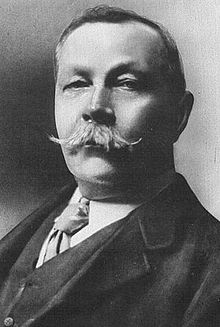
Ever heard of the charming Alpine town of Meiringen in Switzerland? It is a municipality in the Interlaken-Oberhasli administrative district in the canton of Bern in Switzerland. Ringed in by snow-covered peaks, it is located on one of the most important trade routes through the Alps for centuries.
One of Meiringen’s attractions is the Sherlock Holmes Museum which recreates the detective’s abode at 221A, Baker Street in London, besides Victorian era memorabilia. The nearby Reichenbach Falls are where, in The Final Problem, Sir Arthur Conan Doyle made his hero suffer a premature death at the hands of his adversary Dr Moriarty, only to resurrect him later in The Adventure of the Empty House on persistent demands from the detective’s fans. Well, quite some time back, it had granted an honorary citizenship to Sherlock Holmes.
It stands to reason that the town had granted an honorary citizenship to Sherlock Holmes. A certificate to this effect is displayed in the museum. Also, at the base of the falls, there is a rock inscription to this effect!
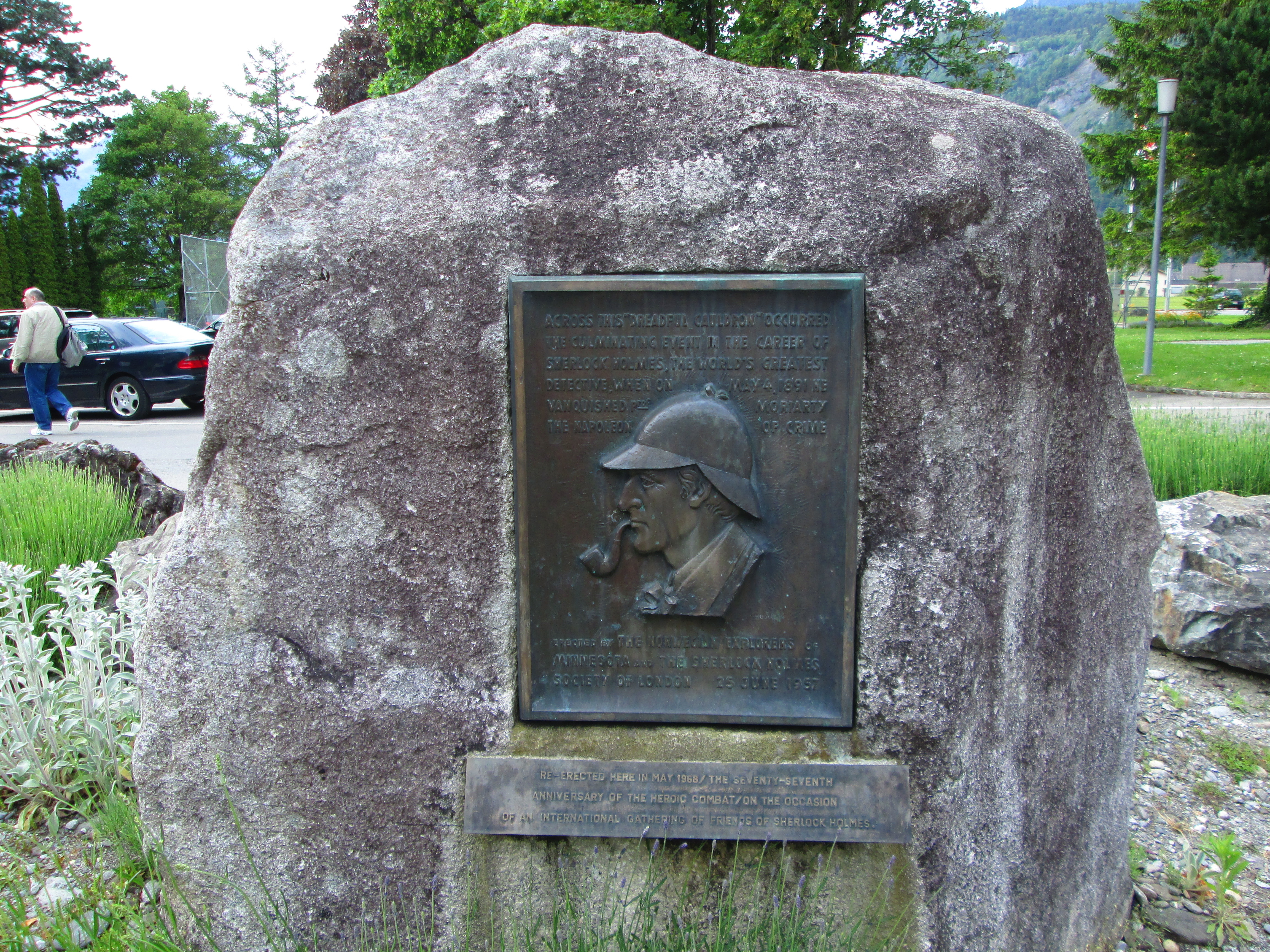
When one picks up a Sherlock Holmes story, one is assured of good value for one`s time and effort. Backed by hard-nosed judgment, insightful observations and above-par analytical skills, he delivers. Go to him with a mystery and he demystifies it. His methods and skills have provided clues to investigators in many countries. He is utterly reliable. He delivers. These are the very attributes which go on to build up a brand.
Gentlemen’s Personal Gentleman
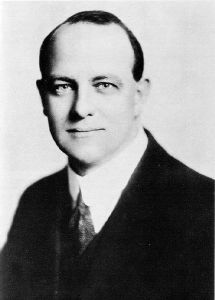
Likewise, Jeeves, created by P G Wodehouse, stands for impeccable service and a capacity to deliver results beyond the expectations of the bosses. The manner in which he helps his boss Bertie Wooster retain his bachelor status is a sterling example of his feudal spirit as also an inner cunning. His methods are often rough, but there is no doubt as to his capacity to deliver satisfactory results. He believes that bosses are like wild horses; they need to be managed with tact and resource.
In the United Kingdom, one is apt to run into laundry and other services which bear his brand name.
Many examples can be quoted from literature, fine arts and other creative fields of human endeavour.
In an earlier post, we had considered the perks of building and sustaining a shimmering brand in the market place. The focus there was on companies and individuals. Examples cited above go on to reveal to us the kind of hard work, consistency of effort and persistence which enable a softer brand to emerge. The essential principles underlying the creation and sustenance of a brand remain the same.
(Related Posts:
https://ashokbhatia.wordpress.com/2021/03/15/the-perks-of-a-shimmering-brand-equity
https://ashokbhatia.wordpress.com/2017/12/13/a-brand-called-jeeves
https://ashokbhatia.wordpress.com/2012/08/11/hats-off-to-these-movie-directors)
A few things which make me angry these days!
Posted in A Vibrant Life!, tagged Association for Democratic Reforms, Autobiographical, Business, CBEC, CEN, Conscious Leaders, Constitutional Reforms, Corruption, Democracy, Dictatorship, Dissent, Economic Growth, Ethics, Female Empowerment, Gender Bias, Hari Shankar Parsai, Human Values, Humour, Inequality, Leadership, Mahatma Gandhi, Management, Media, Oxfam, P G Wodehouse, Patriarchy, Politics, Samudra Manthan, Satire, Shakti Leadership, Silence, Social Harmony, Social Media, Soft Power, SPANDAN, Vales, Vasudhaiv kutumbukam, WEF, WWC, Zombies on February 21, 2021| 5 Comments »
(Non-statutory warning: Reading the article below could be injurious to readers’ mental health and leave them a wee bit depressed. Caution is advised.
The author is reasonably certain that this article is not an outcome of the kind of wholesome pessimism which is believed to envelope one in advancing age.)
There is a mood of despondency which descends upon my frail grey cells once in a while. Dark clouds which have gathered upon me are accompanied by sinister rumblings. Lightning streaks of a menacing kind keep lighting up the sky, duly followed by thunderous howls which pierce my ears. One peers into the future and one shudders to think of the kind of world one would leave behind for our progeny to live in. Tectonic plates of our society appear to be shifting, causing major upheavals.
No, one does not allude to the pandemic stalking us these days. Nor does one refer to such universal problems like global warming, economic disparities, widespread poverty and illiteracy etc. Instead, one refers here to tectonic plates of a different kind – the ones which impact our value systems, human values, social harmony, honesty, fairness and justice, norms of democracy, absence of truthful and factual information, materialistic progress, and the like.
Consider what is happening around us these days.
Some Ground Realities
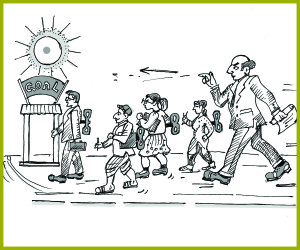
The Lack of a Conscious Approach to Business Goals
Businesses continue to be driven by greed and avarice alone. Hapless CEOs have no other option but to keep delivering results from one quarter to the next.
There are no guarantees that Volkswagen will not soon come up with yet another technical trick to befool the regulators and its customers. Boeing may yet again secure approvals for launching a model which might put air passengers’ lives at risk. Financial scams will keep tumbling out of corporate closets at a standard frequency which might put an atomic clock to shame.
Think of rising inequalities. Consider a report presented by Oxfam at the January 2021 World Economic Forum’s Davos Agenda, titled ‘The Inequality Virus’. It says that the 1,000 richest people on the planet recouped their Covid-19 losses within just nine months of 2020, whereas the world’s poorest could take up to a decade to recover from the pandemic induced setback. I am certain that philanthropic initiatives of the richest have not suddenly seen a proportionately higher uptick.
So, every crisis that humanity faces turns out to be an opportunity for the well endowed to amass greater wealth. Is this the kind of Materialistic and Unconscious Business model that we wish to continue following? Our answer would of course depend based on whether we are from the ‘haves’ side or the ‘have-nots’ side of the society.
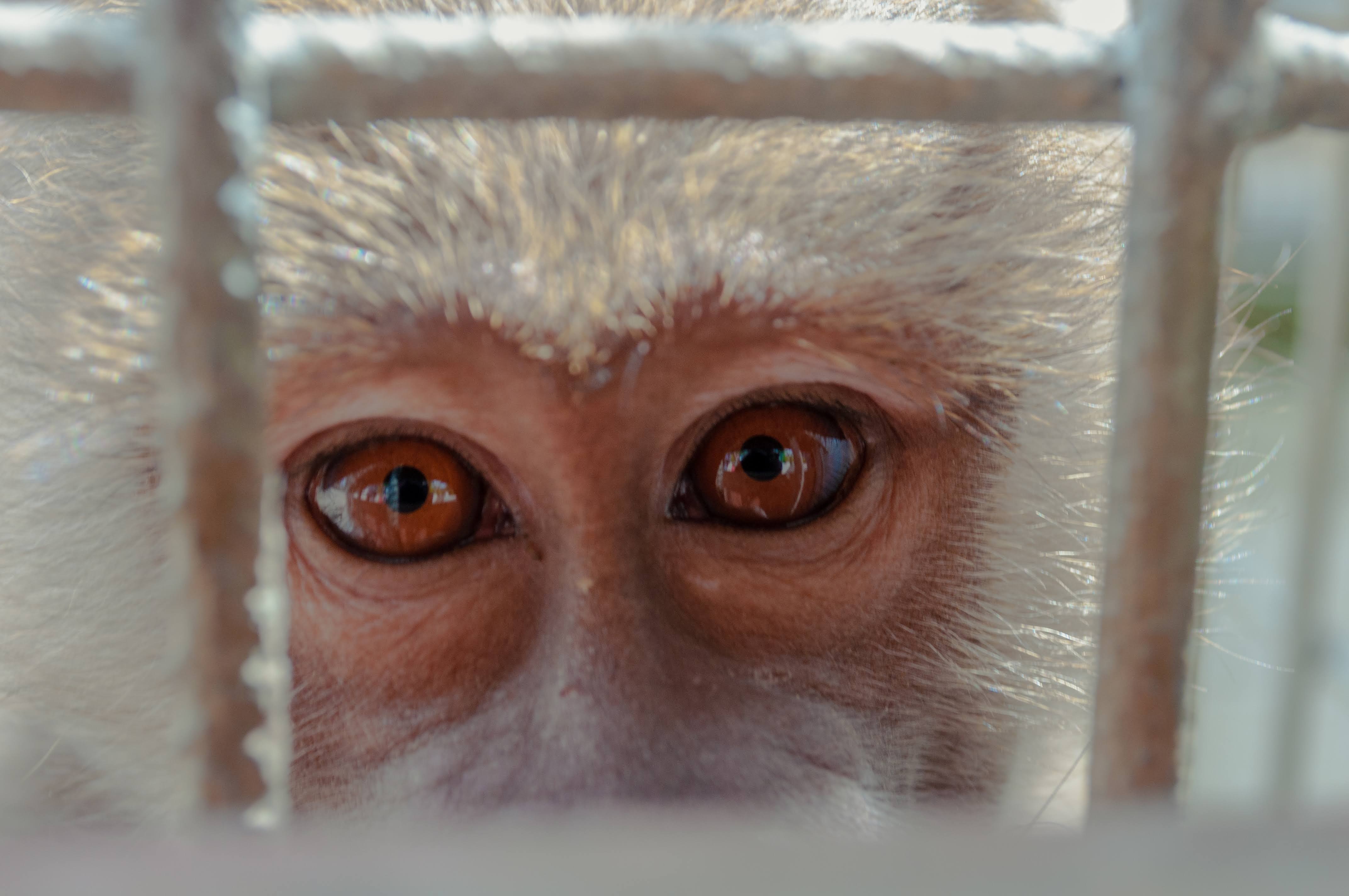
The Monkey Business Called Politics
Probity and decency in the public life of our leaders is long since buried. Gone are the days when vibrant democracies needed a strong opposition to thrive. These days, even the President of a country can himself turn against the hallowed portals of democracy and send rampaging mobs braying for the blood of those out to declare him defeated in an election. In other words, it is one of those promotional offers – you vote in a President and get another one for free!
The aforesaid top boss’ term has revealed enormous gaps between the ideals of American democracy and the reality. Even before he exhorted his followers to attack the Capitol and the legislative branch of government, he ignored watchdog rulings and constitutional safeguards, pressed to overturn the outcome of an election, and pardoned those who covered for him, all the while funneling taxpayer dollars to his family business.
In yet another country, the main adversary runs the risk of not only being poisoned but also getting imprisoned on some ground or the other, while those in power brutally suppress dissent marked by men’s underwear and gold-painted toilet cleaning brushes.
World over, there is no dearth of leaders who have dictatorial ambitions but mask these well with democratic credentials. Speak of transparent political funding and all one gets is the silence of a tomb.
In yet another country, lies, obfuscation of facts and clever data management seem to have become a norm. Photo-ops, positive optics and feel-good media feed by devout followers keep the entire nation in thrall. Attempts to stifle dissent and to paint anyone not toeing the rulers’ line as unpatriotic continue unchecked. Getting offended by comments made by those living thousands of miles away appears to have become a national pastime. When a stand-up comedian speaks up, our clairvoyant nature allows us to guess what offending remark he is yet to make. Prompt legal action gets taken, nipping the intended mischief in the bud.
Building physical infrastructure is simply great. So is the drive to embrace technology to make life of a common man simpler. But when this comes at the cost of demolishing social harmony and making a democratic country free of any kind of opposition worth its while, the long term price of a ‘progress’ of this kind is rather high. I am not an economist, but I wonder if an economy can grow while the society itself is getting fragmented.
World over, quite a few governments have even used the pandemic as a cover to suppress dissent and cut short processes to introduce laws of an unpopular kind. In the process, their soft power is bound to dive down.

The Rudderless Social (and Anti-Social) Media
During 2020, in India, when our northern neighbour had encroached upon our land, and when the media should have been doling out useful health tips for people to stay safe in the midst of a pandemic, the only ‘breaking news’ was the suspected suicide of a Bollywood actor and the activities of his girl friend.
Social media, duly backed by smart algorithms, Artificial Intelligence and Machine Learning, keeps shaping our thought processes, our choices, our preferences, our perceptions and our beliefs. We are already living in a fish bowl where the law makers as well as the private players are hands in glove to sell detailed information about us to the highest bidder. Privacy concerns and personal liberties be damned. Pretty soon, it may happen that government support is available only to those who have a pro-government presence on various media platforms.
The whole idea is perhaps to help a lay person evolve into a dumb chum of the first order, unable to use his own judgement in matters of public importance; essentially, to numb the person’s grey cells. In other words, we all become zombies (or jack asses, if you prefer) of the first order.
Little do we realize that there are no free lunches in life. Any service available to us free of cost over the world-wide-web we have spun around ourselves only means that ‘We, the People’ are the product on sale!
If our social media czars do not come up with a realistic code of conduct for themselves soon enough, governments, to salvage their public image, may soon have to start dishing out harsher laws.
Perhaps, one of the czars will soon set up an academy to groom many of our whizz kids into becoming ethical hackers and algorithm developers.

Neglecting Half of the Homo Sapiens
If they stay at home, their contribution to society is never even acknowledged. Rather, it is taken for granted. If they venture out of their home and hearth, lustful gazes disrobe them mentally. If they get violated, they only have to take the rap. In war zones, they are the instruments used to inflict deep wounds on the psyche of the other.
Yes, I refer to the tribe of the so-called delicately nurtured. They are the ones upon whom Mother Nature has conferred the unique capacity of keeping our civilization alive and ticking. They may be as tough as nails and proving themselves to be better than the so-called sterner sex in all fields of human endeavour. A fact which was reinforced yet again when a deadly pandemic arrived at our doorsteps. In public, they may get put on a pedestal and revered. But in private, they often get treated like a doormat, treated as mere objects, only to be used and abused.
Doting lover boys, upon metamorphosing into husbands, often shed their chivalrous masks and start behaving like dictators. If a family breaks up owing to mistreatment, ridicule, abuse and violence at the hands of their husbands, it is the lady of the house alone who gets the entire blame – for being obstinate and uncompromising. The general view is that she is a gold digger of sorts.
Such a patriarchal mindset is not an exclusive prerogative of the poor alone. Nor does it respect geographical boundaries. Education levels also do not make much of a difference. Take couples across different countries, economic status and education level and one is apt to find this to be a universal phenomenon. The Chivalry Quotient may vary across all these parameters, but a singular shortage of preux chevaliers is felt all over our planet. Religious beliefs and even some spiritual tenets reinforce such derogatory views.
In respect of the legal framework, our experience in India has been a mixed one. The females have learnt the art of terrorizing their husbands and their families by foisting cases of imagined harassment, with the sole aim of securing better settlements while seeking divorce. Surely, the training in chivalry truly begins at home – either in the kitchen or at the dining table. Laws can play only a limited role.
The tectonic shift taking place here is that of divorce rates going up and couples preferring to remain friends with perks. Upwardly mobile wives who can stand on their own feet detest drawing husbands who refuse to wear skirts and help out with domestic chores. Once the family structure crumbles, there is a higher probability of the value system of the next generation going for a toss.
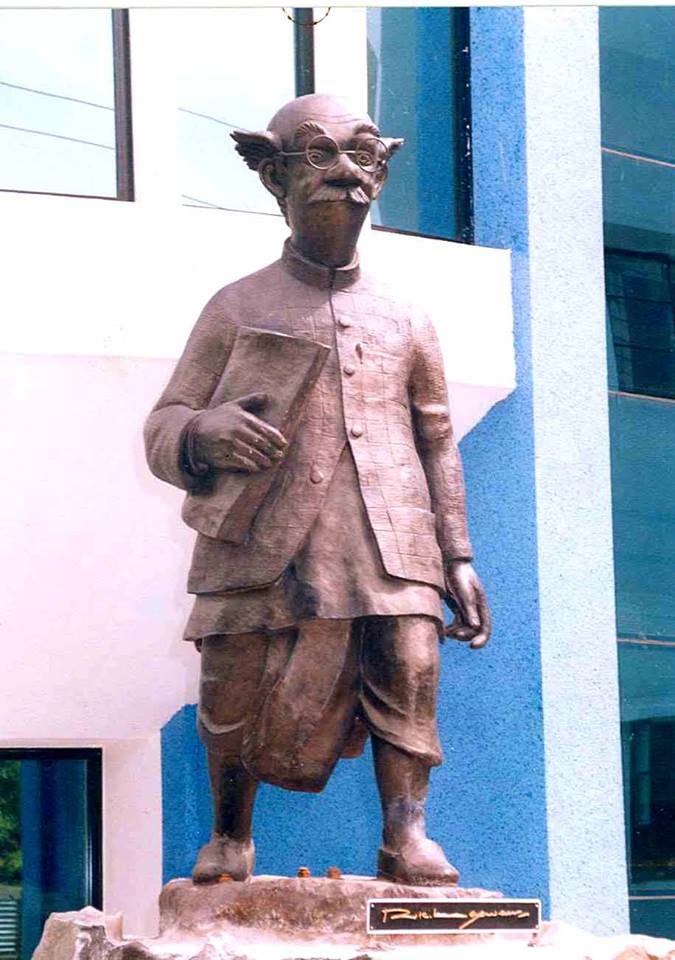
The Silence of the Lambs
In many of the issues brought out above, are we ourselves not responsible for the mess that we are in? The silence of our intellectuals, the self-centredness and public apathy of the middle class which more or less upholds values in society and the mute surrender of the common man – are these not some of the factors which have enabled this situation to have come about?
Many years back, I vaguely recall having read a satirical story in Hindi, written by a well known humourist in the language, Hari Shankar Parsai. A herd of lambs is made to believe that few wily foxes alone can solve all their problems. Pretty soon, foxes get voted in. One fine day, a ruling comes that to save the ruling foxes, some sheep should voluntarily surrender to be sacrificed each day so the patriotic fervour is kept alive and the nation is run effectively!
I am not a political science buff. Thus, I am not qualified to say if democracy as a model of governance is failing us. But one of its enabling factors is the presence of conscious leaders who are not shameless and still have traces of humility, empathy, decency and a concern for genuine overall good.
With No Malice towards Anyone
Educated youth who have no means of earning a living, will they not have a raw anger simmering within them? Will the poorer lot not take a jaundiced view of grand government schemes the benefits of which do not reach them?
Perhaps there is a feeling of helplessness within them. Perhaps they have dollops of patience. May be they realize that they are too small to bring about any change and feel it is better to accept things as they are and continue wallowing in misery and self-pity, blaming God for all their troubles.
But is a meek acceptance of murkier developments in the world around us a better approach? Can we not dissipate the seething anger within by at least saying what we find to be reproachable? Can we not break our silence of the lambs and speak up?
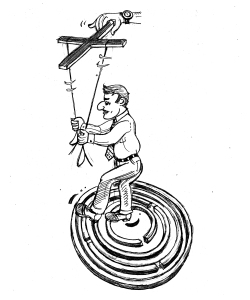
With Whom Does the Buck Stop?!
Are we ourselves not a part of the problem? Why have we, reasonably educated and rather wise people, decided to outsource our thinking processes and have instead opted to become zombies?!
Do we not keep patronizing companies even when we know that they have been cheating in the past? Are we not the ones who get swayed by propaganda and cast a vote for a particular party or a particular leader? Do we ever boycott a media outlet which acts as a mouth piece of those in power?
If we are addicted to, say, WhatsApp or Facebook, can we really blame their inventors for the issues that we face? Don’t we find it convenient to remain in touch with our friends and family members through these platforms?
When we notice a female being harassed, are we not likely to look the other way? Is the onus of ‘adjusting’ not always put on the female? Can we take a pause before we make a victim the facilitator of a crime?
Overall, by remaining a mute spectator and witness to acts of corruption, misinformation, lies and half-truths, do we not become accomplices to such misdeeds?
It is not wise to altogether point a finger at others only. A knife kind of a tool is given to us. Let us use it to prepare a juicy dish and not to hurt someone. The choice of usage is with us.
Our endeavour therefore should be to stand up, be courageous and outspoken. This alone can get us counted. Even if there is one sane voice amongst all the noise and din, it would resonate with other like-minded individuals out there.
Our salute needs to reach out not only to those who are already raising their voices but also to the decision makers who might eventually get around to listening to us.

Some Silver Linings
All this is not to say that there are no silver linings in the dark clouds hovering above us. As P G Wodehouse puts it, even when the air is pregnant with V or W-shaped depressions, there are always silver linings on the clouds. We shall do well never to repine, never to despair, but to work upon our own selves and on others in our sphere of influence. It is good to remember that, no matter how dark the skies may be, the sun is shining somewhere and will eventually come smiling through.
There are business houses which keep following good values and ethics in their day to day operations. There are leaders who respond well to challenges like social disharmony and stalking pandemics with a dash of human values. They treat dissent as a valuable input for their decision making processes. We also have very few social media and gig economy barons who are being forced by their own employees to either shape up or ship out.
Lawmakers and pressure groups in USA are already reported to be thinking of ways to bring in a wide-ranging overhaul of ethics, laws, the likes of which have not been seen since the post-Watergate era.
Perhaps, eminent legal eagles in India can also take a leaf out of the USA experience. As a country, we had experienced suppression of dissent even during the 1970s, when an emergency was declared. Can some more constitutional safeguards be brought in so that a popular mandate does not give the executive the right to ride rough shod over other arms of the government, thereby increasing the probability of the country being taken in a direction which is not the same as what our founding fathers had envisioned?
Above all, it is the man on the street, busy keeping his body and soul together, eking out a living for his family and even helping others in distress. When the scales from his eyes fall and he wakes up to a life threatening situation at hand, he reacts. The farmers in India are already showing their resolve following the strategy of peaceful protests and civic disobedience used by Mahatma Gandhi many decades ago.
Then we have lone wolf professional bodies. World Without Corruption in Belgium gives businesses a voice in fighting corrupt practices. The Conscious Enterprises Network in UK speaks of conscious leaders leading their enterprises in a holistic value-based manner in all spheres of human enterprise. The Center for Business Ethics & Compliance in Russia is focused on best practices in the realm of ethics and compliance.
Likewise, in India, Spandan Foundation is passionate about human values in organizations and even plans to set up a centre dedicated to the cause. Shakti Leadership highlights the importance of using feminine traits like empathy and compassion in decision making and assists individuals and organizations in their quest for conscious evolution. The Association for Democratic Reforms keeps relevant political issues alive and kicking in public eye.
I am sure there are many others scattered over other continents. Their attempt is to bring like-minded people together and keep the embers of a pious fire aglow, focused on values and ethics.
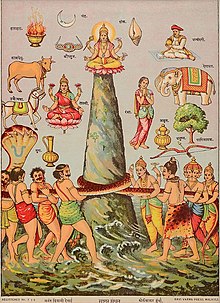
The Mighty Churning
The society is always in a flux. These days, it appears to be undergoing a mightier churning which reminds one of the episode of Samudra Manthan (The Churning of the Sea) in Indian scriptures. The churning throws up poison as well as the nectar which grants immortality. Those who believe in following the path of righteousness end up securing the latter.
It is easy to see that we have a leadership crisis on our hands. Since a situation also produces a leader, one hopes that more and more conscious leaders keep emerging, nudging us in the right direction.
Admittedly, the silver linings appear to be like a pale parabola of joy, to borrow an expression from P G Wodehouse. This will remain so till the time a bevy of conscious leaders – whether in business or in politics – do not appear on the scene and convert this into a shimmering parabola of bliss.
The solution is not to keep sweeping issues like hunger, poverty, economic non-inclusion, global warming and prejudicial animosity under the carpet. Nor is it to raise the existing walls, whether political, commercial, attitudinal or religious. It lies instead in a truly global view based on the concept of Vasudhaiva Kutumbukam: The World is One Family.

Being a born optimist who believes in having a chin-up attitude, I do hope that some of these tectonic shifts can at least get retarded, if not altogether reversed, in the years to come.
(Related Posts:
https://ashokbhatia.wordpress.com/2020/11/23/jeeves-and-the-social-media-challenge
https://ashokbhatia.wordpress.com/2016/09/23/bertie-jeeves-and-the-internet-of-things
https://ashokbhatia.wordpress.com/2014/12/08/bertie-social-media-and-blogging-blues
https://ashokbhatia.wordpress.com/2018/01/10/jeeves-seeks-a-placement)
THE POSITIVE POWER OF BOLLYWOOD
Posted in The Magic of Movies!, tagged Bollywood, India, Movies, Social Responsibility, Soft Power on July 31, 2016| 2 Comments »
The soft power of India is well known. Spirituality. Arts. Culture. Movies.
Here is a great post on the soft power of Bollywood.
Enjoy!

By
Sharada Iyer
The recently released film ‘Talvar’ by Meghna Gulzar has created such a buzz that not only did the Honourable President of India, Shri Pranab Mukherjee contact the director’s office and express his desire to see the film, but an online campaign has also been started on social media with a plea to the Chief Justice of India to re-open the case.
 (image source-Bombay Times)
The film has managed to create quite a stir both in the media as well as the public as it brings to light the unbelievable callousness of the investigating police officers involved which resulted in a lot of precious evidence being lost forever. The ego clashes of the two CBI groups have been laid bare for the public to ponder upon thus raising many questions regarding the hurried closure and judgement of the case.
It is indeed remarkable for a Bollywood film…
View original post 2,110 more words
-
Recent Posts
Buy the Book

buy the book
Categories
-
cc
Tags
Art Bertie Wooster Bhagavad Gita Bingo Little Birthday Blake Mouton Grid Blogging Bollywood Book Campus Life CEO Chivalry Consciousness Coronavirus Corruption Edwin Empress of Blandings English Ethics Feminism Happiness Health Hindi Hollywood Human Values Humour India Jeeves Kalidasa KIds Leadership linkedin Literature Lord Emsworth Love Lyrics Mahabharata Mahatma Gandhi Management Movies Music Norway Paintings Panjab University People P G Wodehouse Politics Pondicherry Portugal Psmith Puducherry Rabindranath Tagore Ramayana Ritusamhara R K Laxman Romance Rosie M Banks Rupert Psmith Seasons Shakespeare Social Media Something Fresh Songs SPANDAN Spirituality SQ Sri Aurobindo Stephen Covey Switzerland Tatas Thos UBS Values Wodehousitis WomenArchives
- March 2026 (1)
- February 2026 (5)
- January 2026 (2)
- December 2025 (1)
- November 2025 (2)
- October 2025 (2)
- September 2025 (3)
- August 2025 (3)
- July 2025 (2)
- June 2025 (2)
- May 2025 (4)
- April 2025 (5)
- March 2025 (5)
- February 2025 (4)
- January 2025 (4)
- December 2024 (6)
- November 2024 (6)
- October 2024 (6)
- September 2024 (5)
- August 2024 (5)
- July 2024 (4)
- June 2024 (4)
- May 2024 (5)
- April 2024 (5)
- March 2024 (3)
- February 2024 (1)
- January 2024 (4)
- December 2023 (2)
- November 2023 (3)
- October 2023 (3)
- September 2023 (3)
- August 2023 (5)
- July 2023 (5)
- June 2023 (7)
- May 2023 (6)
- April 2023 (6)
- March 2023 (8)
- February 2023 (8)
- January 2023 (7)
- December 2022 (6)
- November 2022 (5)
- October 2022 (8)
- September 2022 (5)
- August 2022 (6)
- July 2022 (6)
- June 2022 (8)
- May 2022 (7)
- April 2022 (8)
- March 2022 (7)
- February 2022 (3)
- January 2022 (7)
- December 2021 (4)
- November 2021 (8)
- October 2021 (7)
- September 2021 (6)
- August 2021 (7)
- July 2021 (7)
- June 2021 (9)
- May 2021 (8)
- April 2021 (9)
- March 2021 (10)
- February 2021 (8)
- January 2021 (8)
- December 2020 (7)
- November 2020 (6)
- October 2020 (5)
- September 2020 (9)
- August 2020 (9)
- July 2020 (8)
- June 2020 (8)
- May 2020 (6)
- April 2020 (5)
- March 2020 (7)
- February 2020 (4)
- January 2020 (7)
- December 2019 (12)
- November 2019 (10)
- October 2019 (5)
- September 2019 (9)
- August 2019 (10)
- July 2019 (9)
- June 2019 (14)
- May 2019 (13)
- April 2019 (14)
- March 2019 (11)
- February 2019 (11)
- January 2019 (14)
- December 2018 (12)
- November 2018 (12)
- October 2018 (14)
- September 2018 (9)
- August 2018 (10)
- July 2018 (10)
- June 2018 (8)
- May 2018 (11)
- April 2018 (11)
- March 2018 (6)
- February 2018 (9)
- January 2018 (10)
- December 2017 (10)
- November 2017 (9)
- October 2017 (8)
- September 2017 (11)
- August 2017 (10)
- July 2017 (10)
- June 2017 (11)
- May 2017 (9)
- April 2017 (7)
- March 2017 (7)
- February 2017 (8)
- January 2017 (10)
- December 2016 (9)
- November 2016 (11)
- October 2016 (10)
- September 2016 (10)
- August 2016 (9)
- July 2016 (6)
- June 2016 (10)
- May 2016 (10)
- April 2016 (10)
- March 2016 (10)
- February 2016 (12)
- January 2016 (10)
- December 2015 (11)
- November 2015 (11)
- October 2015 (10)
- September 2015 (10)
- August 2015 (10)
- July 2015 (10)
- June 2015 (10)
- May 2015 (10)
- April 2015 (10)
- March 2015 (9)
- February 2015 (10)
- January 2015 (8)
- December 2014 (9)
- November 2014 (8)
- October 2014 (8)
- September 2014 (7)
- August 2014 (7)
- July 2014 (7)
- June 2014 (7)
- May 2014 (7)
- April 2014 (7)
- March 2014 (7)
- February 2014 (6)
- January 2014 (7)
- December 2013 (6)
- November 2013 (6)
- October 2013 (6)
- September 2013 (6)
- August 2013 (6)
- July 2013 (6)
- June 2013 (6)
- May 2013 (6)
- April 2013 (6)
- March 2013 (6)
- February 2013 (6)
- January 2013 (6)
- December 2012 (4)
- November 2012 (4)
- October 2012 (3)
- September 2012 (2)
- August 2012 (4)
- July 2012 (2)
- June 2012 (2)
- May 2012 (2)
- April 2012 (2)
- March 2012 (2)
- February 2012 (3)
- December 2011 (3)
- November 2011 (1)
- October 2011 (2)
- September 2011 (2)
- August 2011 (2)
- July 2011 (2)
- June 2011 (3)

 ashokbhatia