Now, what could be common between a 5,500-year-old scripture and the art and science of management as we practice it today? After all, while on the battlefield at the beginning of the Great War, Arjuna was facing a dilemma – to fight or not to fight. Surely, the poor fellow could not have then opened his smartphone and ask AI or ChatGPT as to what to do. He could not have expected a blockchain app to come up with a strategy to defeat the 11 divisions of the Kaurava army while using only the 7 divisions of the Pandava army.
Luckily, he had Lord Krishna acting as a friend, philosopher, and guide to assist him in the matter. The Lord patiently removes all his doubts, much like a friendly mathematics teacher would. Towards the end of the 18th chapter, he does not say what Arjuna should do in that situation. Rather, having motivated him to do his duty, He leaves the choice to Arjuna, who decides to fight the war.
Humanity is thus gifted with what I would refer to as the ultimate Manual of Motivation. It provides us with a template of inner transformation. It tells us how to live our lives to be more contented, joyful, and happy.
I confess that Gita is not easy to understand. Most of us believe that it is something a reading of which should be deferred to our post-retirement days, in our sunset years on this planet.
Far from it. The earlier one starts grasping the philosophical thoughts of Gita in life, the better it would be.
When looked at from the jaundiced glasses of either a CEO or a management executive, it offers rich lessons in navigating the corporate jungle. It provides a moral and ethical compass which we can use to handle real-life situations.
It does not provide a band-aid kind of two-minute solutions to the daily challenges we face. Instead, it does a root cause analysis and offers a long-term perspective on life and the googlies it throws at us from time to time.
Could we, ordinary people like us, even aspire to become an Arjuna? He had the capability to fight. He was facing a dilemma. Above all, he had options.
In a business situation, a brand could have been going downhill. Could it be reaching the end of its product life cycle? If so, would you recommend to the management to scrap it altogether and consider newer product options? Consider what Gita says:
Therefore, remaining unattached, go on doing action worthy of performance. Engaging in action, truly unattached, man attains the supreme.
Lord Krishna suggests that we detach ourselves from one of our favourite brands and try to look at it objectively. We could then see the writing on the wall and sense that it may soon be taken over by another product based on advanced technology. He expects us to focus on preparing the plans for designing such a product, test-market it without delay, and then proceed to launch it.
Likewise, there are many situations in our careers where Gita can help.
The soon-to-be-released book Bhagavad Gita’s Guide to Corporate Dharma may help one to grasp the nuances of this unique scripture.
Once a week, I shall endeavour to keep you posted.
The Gita is one of the clearest and most comprehensive summaries of the Perennial Philosophy ever to have been done.
Aldous Huxley
The Gita is a bouquet composed of the beautiful flowers of spiritual truths collected from the Upanishads.
Swami Vivekananda
My last prayer to everyone, therefore, is that one should not fail to thoroughly understand this ancient science of the life of a householder, or of worldly life, as early as possible in one’s life.
Lokmanya Tilak
The Gita is a book that has worn extraordinarily well, and it is almost as fresh and still in its real substance quite as new, because always renewable in experience, as when it first appeared in or was written into the frame of the Mahabharata.
Sri Aurobindo
When disappointment stares me in the face and all alone, I see not one ray of light, I go back to the Bhagavad Gita. I find a verse here and a verse there, and I immediately begin to smile in the midst of overwhelming tragedies – and if they have left no visible, no indelible scare on me, I owe it all to the teaching of Bhagavad Gita.
Mahatma Gandhi
The teaching of the ancient battlefield gives guidance in all later days, and trains the aspiring soul in treading the steep and thorny path that leads to peace.
Dr Annie Besant
To my knowledge, there is no book in the whole range of the world’s literature so high above all as the Bhagavad Geeta which is treasure-house of Dharma not only for Hindus but for all mankind.
So, you think that P G Wodehouse is only about farcical butlers, upper-class twits, domineering aunts, goofy females, rogue kids, dogs with supercilious gazes, cats that wear snootiness on their sleeves, horses that are fond of cats, and pigs which need their daily quota of 57,800 calories?
Think again, I would say! For, deep within the juicy narratives dished out by the Master Humourist of our times lie buried many lessons of a spiritual kind. These are latent nuggets of wisdom that, if adopted, could enable one to lead a spirited life, facing its ups and downs with a jaunty sang froid.
Baffled, bewildered, confounded, confused, flummoxed, mystified, perplexed, and puzzled?
Allow me to elucidate.
A Journey of Self-Discovery: Embracing the ‘Me First’ Mindset
Any spiritual quest begins with an inner journey of self-discovery. Like Bertie Wooster, one has to be a keen observer of the inner workings of one’s mindset. One should know when to slide down a pipe and when to board a cruise ship to avoid an impending encounter of an unpleasant kind. Self-preservation serves one well. To put it simply, one must have a ‘Me First’ approach to life.
Take my own case. Well, I must say, I happen to be a prime candidate for the “Me First” award, if ever one is instituted by the concerned authorities. You see, I’ve got this knack of putting my own pleasure and happiness on the pedestal, leaving others hanging like a wet sock in the wind.
It’s like that old saying about chasing the rainbow – the closer you get, the further it slips away. So, here I am, with my long face like a dropped pie, whinging about my sorry lot in life. And let me tell you, it’s not a pretty sight.
If I were watching myself on the telly, I’d hand that grumpy old git the remote control and tell him to skip to the next channel, pronto! Because, my friends, a moaner, and a whinger, is about as popular as a caterpillar discovered at the bottom of a bowl of salad.
My dears, we humans are like archers, shooting our arrows of hope into the void, never sure if they’ll hit their mark. I’ve tried everything under the sun, from meditation to listening to hot-air speeches. And let me tell you, spirituality is a tough nut to crack. It’s like trying to peel a banana with oven mitts!
Finding Light in the Darkest Moments: Unravelling the Tapestry of Adversity
Now, I know this is the path to freedom from my woes, but here’s the rub: I can’t seem to figure out the ‘how-to’ manual. It’s like trying to find Waldo in a crowd of walruses. Frustrating, isn’t it? But fear not, for I’m blessed with nerves of chilled steel and am not one to give up easily. I continue my quest, armed with a magnifying glass that remains duly focused on the works of the Master.
My dear compatriots, the pursuit of spirituality proved to be a meandering journey through the labyrinth of existence, a perplexing conundrum that tested the limits of my mortal soul. Alas, in the face of such a formidable challenge, we resilient humans are wont to seek out solutions that may not blaze a trail to perfection, but rather offer a semblance of respite in the stormy seas of life.
As fortune would have it, amidst my quest for spiritual enlightenment, I stumbled upon a veritable treasure trove – the timeless works of Sir Pelham Grenville Wodehouse. Ah, the sheer delight and solace that his writings brought to my weary heart in times of dire need! My lineage, bless their souls, had been perusing his literary masterpieces for generations, paving the way for my own delectable encounter with this literary luminary.
One of the things that captivates me most was the uncanny comportment of Wodehouse’s characters in the face of adversity. Take for instance the indomitable Psmith in “Psmith Journalist”, who maintains an air of nonchalance even when confronted by kidnappers.
Such a profound sense of detachment amidst chaos brings to mind the teachings of the Bhagavad Gita, does it not? Indeed, could we not consider this delightful escapade into the world of Wodehouse as a form of modern-day spirituality? My friends, the parallels are as intriguing as they are enlightening.
The Perks of Forgetfulness and Living in the Present
Ah, Lord Emsworth! A man with an asset so heart-warming that it could melt the frigid polar ice caps – forgetfulness, leading to a habit of living in the present!
In the annals of history, great minds have extolled the virtues of forgetting. Our scriptures enjoin us to live in the present. It’s like dusting off the cobwebs in your attic – why cling to the dusty remnants of the past when you could embrace the sparkling potential of the future?
Lord Emsworth’s forgetfulness is a veritable cornucopia of blessings. It allows him to shed the heavy cloak of past grievances, like an absent-minded hiker shedding a backpack filled with regrets. And behold, he emerges anew, lighter, brighter, and infinitely more lovable to those who grace his presence.
Perhaps the saints of yore sought solace in this blessed amnesia, freeing their spirits to soar among the celestial heights. For in forgetting, we find not only liberation from the shackles of the past but also an uncanny ability to charm the socks off those around us. Thoughts of future encounters with a belligerent sister never fill us with a sense of dread.
In the realm of the spirit, or that which offers me a sense of tranquillity, I find that Wodehouse has bestowed upon me a profound lesson. Lord Emsworth stands as a beacon of hope in this respect. His forgetfulness of past events allows him to embrace the present with an unencumbered mind. Unburdened by the weight of memory, he revels in his solitude, finding pleasure in his own company. As Plum so aptly puts it,
‘Lord Emsworth sat and smoked, and sipped and smoked again, at peace with all the world. His mind was as nearly a blank as it is possible for the human mind to be. The hand that had not the task of holding the cigar was at rest in his trousers pocket. The fingers of it fumbled idly with a small, hard object.’
When he finds a scarab in his pocket, does he not simply conclude that it must have been gifted to him by the American millionaire? Once he starts focusing on the Empress of Blandings, does he ever worry about the pumpkin? He surely practices the delicate art of detachment, spoken of so very highly in our scriptures.
From Being a Self-doubting Thomas to an Opportunity-Grabber
In my annals of domestic disputation, I recall a particular clash with my bitter half. She, with her fervent tongue, extolled the valour of a dear friend who had summoned the intrepidity to pen a social media missive, heedless of any sinister implications. And I, rather than question her judgment, was exhorted to contemplate my own measly progress in the realm of social media.
The aftermath of this matrimonial contretemps was, as one might surmise, somewhat perplexing. I found myself in an odd state of accordance with her sentiments, heaping further ignominy upon my own head. For though my pen may have faltered, I had hitherto cherished the notion that the contemplation of others’ creations and the articulation of my own preferences constituted an inherent privilege.
Yet now, as if by some cruel twist of fate, I could conjure no words for my own use. Unlike some prodigies, blessed with an inexhaustible reservoir of ideas, I had no such celestial aid. Suffice it to say, my aspirations of literary heroism faded before my wife’s eyes, leaving me a mere buffoon engaging in a pathetic display of self-sabotage.
And as I spiralled further into this abyss of self-reproach, a voice whispered through the labyrinth of my mind, a voice I recognized from Joy in the Morning:
‘It was one of those cases where you approve the broad, general principle of an idea but can’t help being in a bit of a twitter at the prospect of putting it into practical effect. I explained this to Jeeves, and he said much the same thing had bothered Hamlet.’
Dear readers, lend an ear to these words that wrought a profound transformation within me. Like a veil lifted from my vision, I beheld the absurdity of my former self-chastisement. A chuckle escaped me, a gentle mockery of the charade that had held sway over my existence.
And so, I cast off the shackles of self-criticism and chose a path of liberation. This, my friends, is spirituality in its purest form—not a celestial embrace or mystical communion, but a triumph over the prison of my self-limiting beliefs. For, in embracing the folly of self-doubt, we find true freedom and the boundless expansiveness of the human spirit.
Though not directly akin to the realm of the spirit, dear reader, I often find solace in the words of P. G. Wodehouse’s The Small Bachelor. When the weight of life’s trials weighs heavy upon my mind, I turn to these lines, finding therein a gentle balm that soothes my troubled heart.
‘That’s the way to get on in the world – by grabbing your opportunities. Why, what’s Big Ben but a wristwatch that saw its chance and made good?’
By Jove, friends! When I hear such stirring words, my very essence is transformed. I feel a surge of vigour coursing through my veins, aided and abetted by a burning desire to embrace uncharted territories. The shackles of doubt and hesitation fall away, replaced by a boundless sense of possibility. Trust me, friends, such words are the catalyst that ignite the flame of adventure within me! So, dear readers, let us raise a toast to such characters as Lord Emsworth, the master of forgetting, Bertie, the epitome of chivalry, and Jeeves, whose sage counsel is akin to the teachings of Bhagavat Gita.
Different Facets of Life and the Transformative Power of Wodehouse
Overcoming Road Rage
Picture yourself on a bustling Monday morning as you prepare to embark on your daily pilgrimage to the office – the place where your purpose perhaps lies. You find yourself surrounded by a sea of cars, all honking impatiently, and scowling faces in desperate search of an outlet for their irritation. In that moment, your motivation wanes, the world around you darkens, and you feel like you are trapped in a never-ending episode of the Twilight Zone.
But then, like a bolt from the blue, something changes. The darkness dissipates, and you find yourself grinning in the face of this adversity when you get reminded of the following quote, all of a sudden!
‘The best method of getting to the Highfield is by the Subway. To see the Subway in its most characteristic mood one must travel on it during the rush-hour, when its patrons are packed into the carriages in one solid jam by muscular guards and policemen, shoving in a manner reminiscent of a Rugby football scrum.’
Now, as a mere neophyte in the realm of spirituality, I hesitate to delve deeper into this phenomenon. Yet I can’t help but wonder – does spirituality possess the power to transform our outlook so swiftly, like a magician pulling a rabbit out of a hat? The mysterious ways of the author P. G. Wodehouse never cease to amaze me, dear reader!
Meeting Theatrical Challenges with a Chin-up Attitude
Coming to the dreaded stage fright, my fellow thespians! When all eyes are peeled upon you, like a banana waiting to be devoured, your mind races at a million miles per second, a veritable rollercoaster of emotions. You fear deviation from the script, like a wayward sailor lost at sea. And let us not forget the dreaded missiles from the audience. No, I do not allude here to rotten potatoes, tomatoes or eggs. I mean words that can sting like bees, leaving you with a swollen performance.
In these trying times, performers seek solace in a tonic, a shot of confidence to carry them through the ordeal. And may I suggest that this tonic be none other than Plum’s following lines:
‘To an outside spectator he would have seemed rather like a very well-dressed Daniel introduced into a den of singularly irritable lions.’
Upon getting reminded of these words, a surge of tranquillity washes over the performer. They gaze upon themselves from a newfound perspective, an indifferent platform. A sterling performance comes about, followed by a burst of applause which could be heard across many a busy street outside the auditorium.
Tackling Lion Bosses at Office
When life’s a right ol’ cacophony, with your boss booming like a bassoon, your missus harping on you like a broken trumpet, and your pals piping up with their well-intentioned but ear-splitting advice, I find solace in the quotes delivered by this fellow who is fondly referred to as Plum.
By Jove, my dear readers, have you ever felt as though you’ve been thrown into a spin cycle by your boss? Like a tie caught in a washing machine, I find myself being mercilessly zipped and tumbled around when summoned for a “little chat.”
As I stand before my superior, shuffling my feet, my tongue resembling a malfunctioning typewriter, I utter the fateful words, “I, er… well, I went into the call and told, er…”
“Spare me the details, my boy,” he interrupts with the subtlety of a charging rhinoceros. “Let’s cut to the chase and unscrew this mess.”
Oh, the irony! My boss, the man with the power to “screw” me over, is demanding a “solution” to the screw-up I was being “screwed” for. It is enough to make me feel like a human pretzel.
For those who have trodden the path of such encounters, the subsequent unfolding is a familiar script. But for the uninitiated, allow me to veil the scene in the obscurity reminiscent of the ancient Greek plays where violence was shown. The tumultuous emotions surging within me after such an encounter were weighty enough to prompt contemplation of departure from my current vocation.
But then, as if a bolt of lightning has struck my brain, I recall these wise words from the pages of P G Wodehouse:
‘The fact is, uncle—’
‘Never mind the facts. I know them! What I require is an explanation.’
In that instant, like a light bulb illuminating a dusty attic, the missing pieces of my explanation miraculously reappear. The scales fall from my eyes. I can finally see a way out of this corporate labyrinth.
My spirits, as I said before, were as low as a politician’s poll ratings after a particularly scathing dressing-down from the discerning public. It was a veritable downpour of negativity, threatening to drench my career aspirations and send them scurrying for cover. But the words from the maestro, in their infinite wisdom, have a rather amusing trick up their sleeves.
As the day wore on, a queer thing happened. I caught a glimpse of my reflection in the office window and, lo and behold, the thunderous frown that had been etched upon my visage had mysteriously evaporated, replaced by a glow as radiant as a summer sunset. As if on cue, the sun broke through the clouds, casting its golden rays upon the scene like a celestial stand-up comedian.
And then I realized it. My boss, who had hitherto been as dour as Bingo Little who has just been ridiculed by Laura Pyke for gorging on food like a python, now bore an uncanny resemblance to Sir Thomas, while I, your humble narrator, took on the unmistakable air of the legendary Lord Dreever, a man known for his wit and indomitable spirit. The realization was like a tonic, lifting my spirits and rendering the boss’s earlier admonishments as mere comedic fodder.
Indeed, I believe that if I had dared to venture into the restroom, I would have encountered a mirror that reflected not the glum visage of a man on the brink of despair, but a veritable symphony of smiles, as if the entire universe was conspiring to cheer me up. And so, my friends, I leave you with this profound observation: even in the darkest of times, Wodehouse has a way of finding its place, painting a smile upon our souls, and reminding us that life, like a good joke, is often more amusing than it first appears.
Depression comes in all sizes and shapes. But irrespective of whether it is U-shaped, V-shaped, or W-shaped, we would do well to remember this advice from Bertie Wooster.
‘A short while ago, the air was congested with V-shaped depressions, but now one looks north, south, east and west and descries not a single cloud on the horizon – except the fact that Gussie’s wedding is still off, and that can’t be helped. Well, this should certainly teach us, should it not, never to repine, never to despair, never to allow the upper lip to unstiffen, but always to remember that, no matter how dark the skies may be, the sun is shining somewhere and will eventually come smiling through.’
Marriage Melee: A Battle of Wits and Wiles
Now, the trials and tribulations of married life! The constant struggle for supremacy between husband and wife can often lead to heated arguments. I remember one particular instance when my bitter half uttered a particularly sharp remark, causing me to contemplate throwing in the towel altogether.
Indulge me in the whimsical ramblings of a man ensnared in married life’s merry-go-round of mishaps. Picture the daily drudgery: the perpetual hide-and-seek with misplaced keys, the ceaseless battle against the despotic alarm clock – each a farcical subplot in the grand theatrical spectacle of existence. Yet, amidst the cacophony of chaos, I find refuge in the absurdity, relishing the comedic undertones of my predicaments. Armed with naught but a wry grin and a dollop of fortitude, I gallantly press forward, for in the face of adversity, it’s not the weight of our burdens that defines us, but the panache with which we pirouette through the harsh slings and arrows of life.
Measuring Up: Dealing with Matrimonial Blues
Growing up in a typical Indian household, I was no stranger to the dreaded act of comparison. Whether it was with the neighbour’s kid, my cousins, or my school chums, I was always being held up against others to highlight my shortcomings. These never-ending comparisons turned even the sweetest successes sour, casting a shadow of self-doubt over my young existence.
When I finally graduated from college and landed a job, I thought I had escaped the torment of comparison, once and for all. Alas, fate had other plans in store for me, as I soon found myself walking down the aisle and entering the realm of marriage. To my dismay, the comparisons from my youth had simply taken on a new form – instead of being measured against other youngsters, I was now being pitted against other fellow husbands.
Despite the familiar pang of depression that accompanies these regular comparisons, I find solace in the wise words of the great author. Remembering his following lines helps me to shake off the gloom and face the day with renewed vigour:
‘Chumps always make the best husbands. When you marry, Sally, grab a chump. Tap his head first, and if it rings solid, don’t hesitate. All unhappy marriages come from husbands having brains. What good are brains to a man? They only unsettle him.’
It is said that indifference is the key to true enlightenment. Perhaps that is why this quote also enters my mind upon meeting my wife’s friends. After all, they are a minefield of potential misunderstandings, where every word uttered can be met with laughter… or judgment. The joys of married life indeed!
Dinner Dynamics: A Delicate Dance of Drollery and Discretion
In this age of dual toilers, the dining hour has become our cherished trysting place. Yet, for some hapless souls like mine, it brings nought but tribulation.
For, the myriad oddities I perpetrate throughout the day come under my beloved’s scrutiny at this nocturnal tribunal. The evaluation process is akin to a relentless gauntlet, where each gaffe is met with a withering gaze and each feeble defence checkmated with a dismissive sigh.
To endure such a scenario demands the courage of a martyr and the willingness to face the unvarnished truth about oneself. And woe betide those who would dare to argue, for their fate is to be cornered and outmanoeuvred with surgical precision.
Well, I found myself in a bit of a pickle the other day. I wasn’t paying proper attention to my bitter half’s chatter, and it wasn’t long before her dulcet tones turned into something akin to a vinegar factory. In a moment of weakness, I surrendered to my plate much like a hungry squirrel would to a nut.
But alas, my hopes for a swift meal were dashed, for when one is in a spot of bother, even the most basic of tasks seem to conspire against one. The words of humiliation flowed from my wife as freely as water over Victoria Falls, and I found myself longing for the respite that only a finished meal could provide. But as we all know, when we most need something, it inevitably eludes us, and so I was forced to endure the verbal onslaught, my own loquacity proving no match for her linguistic torrent.
Terribly wounded by the slings and arrows of outrageous fortune, my dear readers, I sought refuge in yonder privy, a sanctuary most welcome after such a verbal tempest. Upon reflection, however, I found myself dishing out a double dose of censure to my ears, for my assailants’ barbs had stung me less sharply than my inner dialogue. Indeed, I resembled the legendary Ratnakar the Bandit (later known as Valmiki – the esteemed composer of that epic tale, the ‘Ramayana‘), when his kith and kin turned a cold shoulder upon discovering the slightly unsavoury nature of his profession.
Perhaps the following limerick might better explain my predicament:
There once was me so vain,
My ego could cause quite a strain.
I felt humiliated,
My pride, agitated,
Frowning at myself was his bane!
Well, my word, I was right down in the dumps, looking for a celestial lifebuoy, only to be greeted by a chorus of proverbs that made my predicament look as clear as a bottle of brown ale. Allow me to enlighten you with their profound wisdom:
‘He had just about enough intelligence to open his mouth when he wanted to eat, but certainly no more.’
(On how I took my dinner while braving the crisis.)
‘He had the look of one who had drunk the cup of life and found a dead beetle at the bottom.’
(On my present disposition.)
‘I could see that, if not actually disgruntled, he was far from being gruntled.’
(On my present mental state.)
‘I’m not absolutely certain of the facts, but I rather fancy it’s Shakespeare who says that it’s always just when a fellow is feeling particularly braced with things in general that Fate sneaks up behind him with the bit of lead piping.’
(On my fate.)
Well, bless my buttons, as I sat there in the midst of all that gloom, a flicker of mirth gently tickled my lips. My addled noggin, after a spot of sulking, decided to drag its weary feet from the doldrums and amble towards the sunny uplands!
Stakeholder Strife: Navigating the Minefield of Marred Joys and Spousal Scrutiny
The joys of childhood! Such innocent days were tarnished only by the looming spectre of criticism from the dreaded external stakeholders. The lion-tamers at the school, who, when annoyed at a group of boisterous and noisy backbenchers, flash their canes, leaving the tender spots on one’s backside throbbing as if hit by electric jolts. Neighbours, those ever-watchful guardians of politeness, who never failed to report any deviation in my behaviour to my dear mother. Oh, the horrors that ensued! One might think that growing older would bring respite from such sinister critiques, but, alas, fate had other plans.
Enter marriage, that venerable institution where the list of stakeholders expands faster than rabbits in spring. And the criticism? It descends upon me with the relentless persistence of British rain, every deviation dissected with the meticulousness of a tax inspector. My once-dreaded mother’s interventions have faded into mere historical footnotes, overtaken by the ever-vigilant gaze of my beloved wife. It feels as though I am trapped in an endless cycle of scrutiny, with no escape from those eager to critique my every move.
In this bleak landscape, I am often reminded of the haunting lines from W.H. Auden’s The Unknown Citizen:
‘Was he free? Was he happy? The question is absurd:
Had anything been wrong, we should certainly have heard.’
So you see, my friends, the feeling of emptiness and how it impacts my mental well-being at times?
Indeed, the struggle is real. Yet, in moments of solitude, when the weight of the world threatens to crush my spirit, I find solace in the words of P. G. Wodehouse:
‘Marriage is not a process for prolonging the life of love, sir. It merely mummifies its corpse.’
Wodehouse! His wit and wisdom are like a tonic for the soul, lifting my spirits and infusing me with the courage to face whatever life may throw my way. And so, armed with the sagacity of Jeeves and the indomitable spirit of Bertie Wooster, I march forward, ready to take on whatever stakeholder challenges lie ahead.
Friends – The Good, The Bad, and The Ugly
Friends, like the delectable variety of cheese, come in all shapes and sizes. You’ve got the brie-lliant ones who lift you like a hot air balloon when you’ve plummeted into a pit of despair, and then the tangy Swiss kinds who puncture your ego with holes of different sizes using harsh words as soon as you confess your blunders.
On paper, the latter may seem like a blessing, especially when it comes to spiritual enlightenment. However, my heart belongs to the feta-tastic crew who know the art of providing a shoulder to cry on rather than dishing out a lecture. These friends are as rare as a unicorn riding a unicycle, and their absence can be as painful as an ingrown toenail.
Now, dear listeners, I shall not bore you with the details of my recent blunder (let us just say that I’m still learning the difference between ‘brake’ and ‘accelerator’), but as one of my well-meaning friends was giving me a verbal scolding that could have curdled milk, I heard the screeching of tires. And like a magic skipping rope, those words from the wise P. G. Wodehouse unravelled the knot in my mind, leaving me laughing at my own misfortune.
‘…she turned away, and the lift bore her aloft. Its machinery badly needed a drop of oil, and it emitted, as it went, a low wailing sound that seemed to John like a commentary on the whole situation.’
My dear astute readers, while I eschew the mantle of a pontificator, I must confess that spirituality for me is like a tête-à-tête with oneself, a tête-à-tête that, as the aforementioned anecdotes so eloquently attest, has the miraculous power to vanquish external woes like a magician making a rabbit disappear.
The Ambivalence of Aid: To Help or Not to Help?
As certain well-intentioned individuals may perceive me, I am eternally grateful for their estimation of my character, particularly their belief in my inherent propensity to extend assistance to those in need and remain steadfast in times of adversity. However, in all humility, I regret to disappoint them.
Indeed, there have been numerous occasions when I have grappled with the profound internal struggle ‘To help or not to help’. The nagging fear that my actions might lead to calamitous consequences, akin to those suffered by Corky Corcoran in his ill-fated attempts to aid Ukridge, has repeatedly paralyzed me. Thus, I have likely squandered countless opportunities to transcend my mortal coil and attain the ethereal heights of a Bertie Wooster, who unflinchingly sacrifices his own well-being for the sake of his companions.
One particularly vivid literary example that haunts my consciousness is P. G. Wodehouse’s timeless masterpiece, The Code of the Woosters. In its pages, we witness the indomitable Bertie willingly leaping into the abyss to rescue his beleaguered friend Gussie. Bertie’s unwavering loyalty is an exemplar of selfless love and unwavering friendship.
Moreover, Bertie’s compassion knows no bounds. To safeguard the delicate health of his esteemed Uncle Tom, he willingly embraces the ignominy of incarceration, all to ensure that the culinary artistry of the inimitable Anatole would continue to nourish the elderly gentleman.
‘You were actually contemplating giving up Anatole for my sake?’ I gasped.
‘Of course.’
‘Of course jolly well not! I would not hear of such a thing.’
‘But you can’t go to prison.’
‘I certainly can, if my going means that that supreme maestro will continue working at the old stand. Don’t dream of meeting old Bassett’s demands.’
‘Bertie! Do you mean this?’
‘I should say so. What’s a mere thirty days in the second division? A bagatelle. I can do it on my head. Let Bassett do his worst. And,’ I added in a softer voice, ‘when my time is up and I come out into the world once more a free man, let Anatole do his best. A month of bread and water or skilly or whatever they feed you in these establishments, will give me a rare appetite. On the night when I emerge, I shall expect a dinner that will live in legend and song.’
‘You shall have it.’
In contemplating Bertie’s unwavering moral compass, I am forced to confront my own shortcomings. I lament the realization that I fall woefully short of the spiritual ideal espoused by Wodehouse, who believed that true happiness lies in the selflessness of bringing joy to others.
Lessons from Literary Luminaries: Rajanikant Sen and the Art of Spiritual Affection
Dear friends, the memory of the celebrated Bengali poetaster Rajanikanta Sen dances upon my fancy like a sprite! For, through his enchanting melodies, he has instructed us in the art of coalescing prayer and affection for the Great Architect of the Cosmos. Indeed, a certain passage from his oeuvre brings to mind my own peculiar connection with the wordsmith Wodehouse. It is a bond forged in the crucible of admiration, tinged with a soupçon of jovial banter, akin to that between Jeeves and his beloved Wooster.
In the grand tapestry of literary artistry, where words are spun like silken threads to weave tales that captivate and inspire, I raise my voice in a resounding ode to the master wordsmith. Like the legendary Rajanikanta, whose words danced with such grace and power, I offer my humble tribute to the one who wields the magical power of lifting my spirits to the highest level with unmatched skill.
‘… You try to embrace me, with bonds so tight,
Through myriad ties, freedoms take flight.
Thoughts of parting, but I turn to see,
Not a step you’ve taken away from me.’
Wodehouse: The Divine Comic Conductor of My Life’s Soothing Symphony
Now, let us ponder, dear readers, who it is that has been my spiritual confidante? Why, none other than the literary luminary P. G. Wodehouse! One of my superiors (not the previously mentioned one) once referred to Wodehouse as a saint. Even at the risk of being labelled a Yes-Man, I find myself in complete accord. In the tapestry of life, Wodehouse has been an unwavering presence, a steadfast companion through both the sunny meadows of joy and the murky depths of despair. Like a literary guardian angel, he has assumed the weighty burden of my well-being, leaving me free to frolic in the fields of fancy.
If I may indulge in a bit of literary wordplay, I might say that Wodehouse’s prose has been the balm that has soothed my troubled mind, the tonic that has invigorated my weary spirit, and the elixir that has granted me spiritual stamina. In short, my dear readers, P. G. Wodehouse is the holy grail of my spirited pilgrimage of life, the literary oracle who has guided me through the labyrinth of life with his wit, his wisdom, and his unforgettable characters who have made me laugh and reflect upon the human condition in all its splendid absurdity.
A Plummy Plan for My Celestial Departure
The curious customs of humanity! In the land of the sacred Ganges, where the earthly shed their mortal coils, a peculiar tradition persists. They furnish the departed with a copy of the Bhagawat Gita, believing it shall guide the soul through the ethereal realms, awakening it to the futility of earthly attachment.
As for myself, I confess to being a shameless opportunist, teetering between the realms of faith and scepticism. When the spectre of danger looms, I implore the divine, accusing Him of neglect and demanding succour as a matter of fraternal obligation. But when fortune smiles upon me, my atheism reasserts itself, and I become an artist extraordinaire.
Contemplating my own celestial departure, I ponder the tome I shall carry to enlighten me enroute to my heavenly abode. After much deliberation, I have come to a profound realization: it must be a work by the inimitable P.G. Wodehouse. For he, to me, in the words of the great Tagore, which I have translated with my limited knowledge, is:
‘My Lord divine, my treasure rare,
On every path, with me You fare.
In joy or sorrow, let me find,
In freedom’s call, no chains to bind,
In life’s sweet song, Your presence there.
Within my soul, Your essence gleams,
In love’s eternal, flowing streams.
Oh, universal, oh, my own,
In every heart, Your light be shone,
In endless dance, where beauty teems.’
With Wodehouse as my cosmic companion, I shall traverse the celestial planes with a knowing grin, revelling in the absurdity of existence and finding solace in the delightful follies of humanity.
Comrades, consider this to be my last wish. When I get around to kicking the proverbial bucket, I shall bid a hearty farewell to all mortal concerns! I shall breathe my last with a copy of Right Ho, Jeeves by my side. If Yamaraj, the Lord of Death, would allow me some time, I may even ask him if he has ever read Plum. If he replies in the negative, I could perhaps read a part of the speech delivered by Gussie Fink-Nottle to him, hopefully cheering up the hapless guy a wee bit in the midst of the kind of gloomy and obnoxious work he has been assigned by the celestial powers.
I shall then gaze at him brightly, bracing myself with the old Wooster grit. Up will come the chin, and back will go the shoulders.
‘Lead on,’ I shall say, and he will lead on.
As the flames consume my mortal remains, the jolly old fumes of Right Ho, Jeeves shall waft in the air, spreading joy, sweetness, and light all around. Roses shall then be in bloom, butterflies shall be merrily flapping their wings, birds and bees shall be happily going around doing whatever nature ordains them to do, God shall be in heaven, and all will be well with the world.
Thus only shall I embrace the celestial with a dash of wit and humour, and carry with me the indomitable spirit of P. G. Wodehouse.
Bhagavad Gita, one of the most revered scriptures from India, is rather esoteric in nature. Many of us dread wading into its deep waters to understand the profound truths it mentions. If we were to overcome our hesitation, we are apt to find ways that could enable us to lead happier and more fulfilling lives.
Bhagavad Gita is a great manual of motivation. At its beginning, we find a confused and despondent Arjuna who wants to abandon his duties as a warrior and wonders how he could kill his family seniors, teachers, and cousins. A friendly dialogue between him and Lord Krishna follows. We learn of the immortality of the soul. We understand the virtues of equanimity. We are briefed on the nuances of Karma Yoga, Gyan Yoga, and Bhakti Yoga. The need to rein in our ego, desires, anger, and senses gets highlighted. So does the importance of practicing detachment from the rewards of any work or action taken. We are advised to always live in the present. We understand the role of free will and destiny in our lives. In essence, we learn how to live a happier and contented life.
By the end of the seven hundred verses, we find a mentally rejuvenated and motivated Arjuna, willing to stand up for the rights of himself and his brothers and fight a war that would uphold dharma, the path of righteousness.
Bollywood has no dearth of poets who keep churning out soul-stirring lyrics, some of which connect us to what Bhagavad Gita says. Movie songs are meant for mass entertainment and contain messages in simple words, whereas the lessons from the scripture happen to be rather complex. Even though a perfect match is not possible, it is instructive to see if the underlying thoughts of these two diverse streams match to some extent.
Here is a random selection of Hindi movie songs that, I believe, could help us grasp a bit of some of the key lessons that the scripture offers.
Despondency
Almost all of us have passed through quite a few depressing phases in our lives. Times when things looked hopeless. Occasions when we thought of running away from it all. We could not see things clearly. Confusion prevailed.
Aye mere dil kahin aur chal…
Movie: Daag (1952)
Singer: Talat Mahmood
Music: Shankar Jaikishan
Lyrics: Shailendra
Teri duniya mein jeene se…
Movie: House No. 44 (1955)
Singer: Hemant Kumar
Music: S. D. Burman
Lyrics: Sahir Ludhianvi
Ye duniya agar mil bhi jaaye…
Movie: Pyaasa (1957)
Singer: Mohd. Rafi
Music: S. D. Burman
Lyrics: Sahir Ludhianvi
Immortality
Movie songs which speak of this facet of our souls invariably have a love-based background. However, the underlying sentiment remains the same.
Sau baar janam lenge…
Movie: Ustadon Ke Ustad (1963)
Singer: Mohd. Rafi
Music: Ravi
Lyrics: Asad Bhopali
Janam janam ka saath hai…
Movie: Tumse Achcha Kaun Hai (1969)
Singer: Mohd. Rafi
Music: Shankar Jaikishan
Lyrics: Hasrat Jaipuri
Janam Janam ka saath hai…
Movie: Bheegi Palkein (1982)
Singers: Mohd. Rafi, Lata Mangeshkar
Music: Jugal Kishore–Tilak Raj
Lyrics: M. G. Hashmat
Equanimity
Not getting unduly elated when something positive happens, and not getting overly sad when something negative happens – well, it is not easy to reach a mental state of that kind. But we can surely take inspiration from some of our heroes who speak about it.
Mein zindagi ka saath nibhata chala gaya…
Movie: Hum Dono (1961)
Singer: Mohd. Rafi
Music: Jaidev
Lyrics: Sahir Ludhianvi
Ye jeevan hai…
Movie: Piya Ka Ghar (1972)
Singer: Kishore Kumar
Music: Laxmikant Pyarelal
Lyrics: Anand Bakshi
Ye jeena hai angoor ka daana…
Movie: Khatta Meetha (1978)
Singers: Kishore Kumar, Usha Mangeshkar
Music: Rajesh Roshan
Lyrics: Gulzar
Duty
Performing our duty to the best of our ability is what Bhagavad Gita recommends. In fact, it emphasises that our right is only to do work, not to its reward. As mortal beings, we have no other option but to keep working.
Suraj re jalte rehna…
Movie: Harishchandra Taramati (1963)
Singer: Hemant Kumar
Music: Laxmikant Pyarelal
Lyrics: Pradeep
Nadiya chale chale ye dhara…
Movie: Safar (1970)
Singer: Manna Dey
Music: Kalyanji Anandji
Lyrics: Indeevar
Ruk jaana nahin…
Movie: Imtihan (1974)
Singer: Kishore Kumar
Music: Laxmikant Pyarelal
Lyrics: Majrooh Sultanpuri
Knowledge
Acquiring knowledge need not always be a boring part of our lives. Learning is not necessarily about the tyranny of a classroom. It can also be fun.
Eechak dana, beechak dana…
Movie: Shri 420 (1955)
Singers: Lata Mangeshkar, Mukesh
Music: Shankar Jaikishan
Lyrics: Hasrat Jaipuri
Bum bum bole…
Movie: Taare zameen par (2007)
Singers: Shaan, Armaan Malik, Aamir Khan
Music: Shankar-Ehsaan-Loy
Lyrics: Prasoon Joshi
Khol de par…
Movie: Hichki (2018)
Singer: Arijit Singh
Music: Jasleen Royal
Lyrics: Raj Shekhar
Devotion
To be in a state of constant remembrance of the divine is to enjoy unalloyed bliss. Surrender to a higher power follows.
Ae malik tere bande hum…
Movie: Do Aankhen Barah Haath (1957)
Singer: Lata Mangeshkar
Music: Vasant Desai
Lyrics: Bharat Vyas
Ye kaun chitrakaar hai…
Movie: Boond Jo Ban Gayi Moti (1967)
Singer: Mukesh
Music: Satish Bhatia
Lyrics: Bharat Vyas
Khwaja mere khwaja…
Movie: Jodha Akbar (2008)
Singer and Composer: A. R. Rahman
Lyrics: Kashif
Detachment
We love being in our comfort zones. We place a higher premium on relationships the true worth of which is known only when we face a disaster in our lives. A realisation dawns that we should be grateful for whatever support we are receiving. After all, no one will die along with us. Attachment leads to disillusionment and disappointment. However, by remaining detached from rewards, relationships, and situations, we can lead a happier life.
Man re tu kaahe na dheer dhare…
Movie: Chitralekha (1964)
Singer: Mohd. Rafi
Music: Roshan
Lyrics: Sahir Ludhianvi
Yahan kaun hai tera, musafir…
Movie: Guide (1965)
Singer/Composer: S. D. Burman
Lyrics: Shailendra
Ek din bik jayega mati ke mol…
Movie: Dharam Karam (1975)
Singer: Mukesh
Music: R. D. Burman
Lyrics: Majrooh Sultanpuri
Reining in our desires
The Western concept of boosting economies is rooted in the concept of creating and fulfilling desires. However, Bhagavad Gita exhorts us to limit our desires, so as to attain a state of contentment and happiness.
Kai bar yuhin dekha hai…
Movie: Rajnigandha (1974)
Singer: Mukesh
Music: Salil Chowdhury
Lyrics: Yogesh
Aye dil-e-nadaan…
Movie: Razia Sultan (1983)
Singer: Lata Mangeshkar
Music: Khayyam
Lyrics: Jan Nisar Akhtar
Hazaaron khwahishen aisi…
TV Series: Mirza Ghalib (1988)
Singer and Composer: Jagjit Singh
Destiny and Free Will
According to Bhagavad Gita, our past and present actions shape our destiny. It is within this paradigm that we exercise our so-called free will. Time exerts a mighty influence on the course of our lives.
Waqt ne kiya kya haseen sitam…
Movie : Kaagaz Ke Phool (1959)
Singer: Geeta Dutt
Music: S.D. Burman
Lyrics: Kaifi Azmi
Waqt se din aur raat…
Movie: Waqt (1965)
Singer: Mohd. Rafi
Music Director: Ravi
Lyrics: Sahir Ludhianvi
Haathon ki chand lakeeron ka…
Movie: Vidhaata (1982)
Singer: Suresh Wadkar
Music Director: Kalyanji Anandji
Lyrics by: Anand Bakshi
Three kinds of attributes
Lord Krishna speaks of three gunas that are present in different proportions in all things and beings in the world. The interplay of these determines our character and governs our thoughts, our utterances, and our actions, thereby determining the progress of our lives.
Sattva denotes benevolence, calmness, goodness, and harmony. Rajas represents passion, activity, and movement. Tamas captures ignorance, inertia, malevolence, and laziness. The songs below follow in the same order.
Kisiki muskurahaton pe ho nisaar…
Movie: Anari (1959)
Singer: Mukesh
Music Director: Shankar Jaikishan
Lyrics: Shailendra
Kandhon se milte hain kandhe…
Movie: Lakshya (2004)
Singers: Shankar Mahadevan, Sonu Nigam, Hariharan, Roop Kumar Rathod, Kunal Ganjawala and Vijay Prakash
Music: Shankar Ehsaan Loy
Lyrics: Javed Akhtar
Husn ke lakhon rang…
Movie: Johny Mera Naam (1970)
Singer: Asha Bhosle
Music: Kalyanji Anandji
Lyricist: Indeevar
Living in the present
There is no point in regretting what happened in the past. Nor is there any sense in worrying about what may happen in the future. By learning to remain in the present, we can live happier lives.
Aage bhi jaane na tu…
Movie: Waqt (1965)
Singer: Asha Bhosle
Music: Ravi
Lyrics: Sahir Ludhianvi
Aane wala pal jaane wala hai…
Movie: Golmaal (1979)
Singer: Kishore Kumar
Music: R. D. Burman
Lyrics: Gulzar
Ye lamha filhaal jeene de…
Movie: Filhaal (2002)
Singer: Asha Bhosle
Music: Anu Malik
Lyrics: Gulzar
Values and ethics
A life lived without values and ethics is like a rudderless boat adrift on the high seas. A compass of fairness and justice can help us to navigate the choppy waters better.
Insaaf ki dagar pe…
Movie: Gunga Jamuna (1961)
Singer: Hemant Kumar
Music: Naushad
Lyrics: Shakeel Badayuni
Hothon pe sachchai rehti hai…
Movie: Jis Desh Mein Ganga Behati Hai (1961)
Singer: Mukesh
Music: Shankar Jaikishan
Lyrics: Shailendra
Sajan re jhoot mat bolo…
Movie: Teesri Kasam (1966)
Singer: Mukesh
Music: Shankar Jaikishan
Lyrics: Shailendra
Constant Remembrance
The yearning of a soul to get united with the Supreme gets captured rather poignantly in these compositions.
O re manjhi…
Movie: Bandini (1963)
Singer and Composer: S. D. Burman
Lyrics: Shailendra
Laga chunri mein daag…
Movie: Dil Hi To Hai (1963)
Singer: Manna Dey
Music: Roshan and Omi Sonik
Lyrics : Sahir Ludhianvi
How does one achieve this goal? Lord Krishna reveals to Arjuna the way He can be attained. Anyone who remains in a state of constant remembrance, even while engaged in worldly duties, can do so. Consider verse 56 from Chapter 18:
सर्वकर्माण्यपि सदा कुर्वाणो मद्व्यपाश्रय: | मत्प्रसादादवाप्नोति शाश्वतं पदमव्ययम् || 18.56||
sarva-karmāṇy api sadā kurvāṇo mad-vyapāśhrayaḥ mat-prasādād avāpnoti śhāśhvataṁ padam avyayam
Even performing all actions always taking refuge in Me, he attains through My grace, the eternal and immutable destination. (18.56)
Moving ahead
One of the unique features of the dialogue between Lord Krishna and Arjuna is that whereas rich lessons are imparted by the teacher, there is no pressure on the disciple to follow the advice rendered. The decision is left to the disciple. He chooses to move ahead in life with renewed gusto and enthusiasm.
Saathi haath badhana…
Movie: Naya Daur (1957)
Singers: Mohd. Rafi, Asha Bhosle
Music: O. P. Nayyar
Lyrics: Sahir Ludhianvi
Aaj phir jeene ki tamanna hai…
Movie: Guide (1965)
Singer: Lata Mangeshkar
Music: S. D. Burman
Lyrics: Shailendra
Thaan liya…
Movie: Dasvi (2022)
Singers: Sukhwinder Singh & Tanishkaa Sanghvi
Music: Sachin-Jigar
Lyrics: Ashish Pandit
The Transient Nature of Name and Fame
Main pal do pal ka shayar hoon…
Movie: Kabhi Kabhie
Singer: Mukesh
Music: Khayyam
Lyrics: Sahir Ludhianvi
Some key takeaways
Bhagavad Gita has a unique depth of thought. It paints a wide canvas of concepts. It not only puts the onus of living a fulfilling life on an aspirant but also offers an assurance by Lord Krishna. He commits Himself to the overall welfare of common folk. He promises that whenever there is a loss of dharma, He would return to the mortal world to destroy the negative forces.
Here is a composition rendered by Jagjit Singh which is worthy of our attention.
To sum up
Having gone through this blog post, some of you may take a jaundiced view and hold it to be a frivolous attempt which denigrates the Bhagavad Gita. Far from it. Instead, the idea here is to celebrate this unique scripture which explains the true reality of life. When these truths get conveyed in a simpler language, through the lyrics of Hindi movie songs, they become easier to grasp and brood upon.
Hopefully, this humble endeavour of mine would prompt you to pick up the original scripture itself and wade into its pristine waters which contain countless gems of wisdom.
Notes:
The Krishna-Arjuna illustration is reproduced with permission from the illustrator, Arati Shedde, and Heartfulness Magazine – www.heartfulnessmagazine.com.)
Thanks are due to Mr. Prakash Kanungo and Mr. S. G. Maheshwari for having suggested this topic. The idea came up during a get-together over a cup of tea some time during 2023.
Inputs from Mr. H. C. Verma are gratefully acknowledged.
Translation of Gita verse 18.56 courtesy Mr. Ashok Narain.
The teachings of Swami Vivekananda are highly motivational and convey some deep truths of life in a spiritual manner. Plum, as we know, also has an undercurrent of spiritual messages in his stories and books. Superficially speaking, both may sound as different as chalk and cheese. One, an expert in spirituality. Another, an expert in humour.
However, scratch below the surface and one is apt to find that there is much similarity in what Swami Vivekananda preaches and what quite a few of Plum’s characters practice. If Vivekananda’s words awaken us spiritually, Plum’s works, though insanely humorous on the surface, keep soothing our souls in many ways. Let us see if these two thought streams have a resonance that we might be blissfully unaware of.
Take the case of Lord Emsworth who discovers that Gladys has not had any nourishment on the day of the Parva School Treat. He sees to it that Beach feeds her well. Moreover, even a basket of goodies gets handed over for her brother Ern. And when she wants to have some ‘flarze’ from the garden and McAllister comes running at a speed of forty-five miles per hour or so, what does Lord Emsworth do? Well, he is firm in protecting his girlfriend. He stands up to him, living up to the lofty standards set up by his ancestors. His basic desire is to help someone who is good and is in distress. (Lord Emsworth and the Girl Friend)
Likewise, some of us may consider Bertie Wooster as being mentally negligible, but there is no denying that he has a heart of gold. To help a pal, he often goes to ridiculous lengths. He even takes a rap for something he has never been involved in anyway. When Stiffy holds him to be superior to Sidney Carton, she is not much off the mark. (The Code of the Woosters)
Also consider the case of Psmith, to whom ends are more important than the means. When Eve is in distress across the road, he merely pinches an umbrella from the cloak room of The Senior Conservative Club and offers it to her with a smooth dignity. (Leave it to Psmith)
All of them go out of their way to help a fellow being who faces a challenge of some kind. Now, this is a sentiment that Vivekananda would heartily approve of.
A Primer on Swami Vivekananda
For the uninitiated amongst us, Swami Vivekananda (1863 – 1902), was an Indian monk, philosopher, author, and religious teacher. He was a key figure in the introduction of Vedanta and Yoga to the Western world. His attempt was to raise interfaith awareness and bring Hinduism to the status of a major world religion.
Many of us already know that he became a popular figure after the 1893 Parliament of Religions in Chicago at which he delivered his famous speech beginning with the words: “Sisters and brothers of America…”. While doing so, I am certain that unlike Gussie Fink-Nottle, he was not intoxicated, oiled, boiled, fried, plastered, whiffled, sozzled, or blotto. Rather than pouring scorn on many others present on the occasion, as Gussie did during his speech, he went on to introduce Hinduism to Americans.
After remarkable success at the Parliament, in the subsequent years, Vivekananda delivered hundreds of lectures across the United States, England and Europe, disseminating the core tenets of Hindu philosophy. He founded the Vedanta Society of New York and the Vedanta Society of San Francisco (now Vedanta Society of Northern California) both of which became the foundations for Vedanta Societies in the West. In India, Vivekananda founded the Ramakrishna Math, which provides spiritual training for monastics and householder devotees, and the Ramakrishna Mission, which provides charity, social work, and education.
Vivekananda and Plum: A Timeline
Plum was born in 1881, so he was eighteen years junior to Vivekananda. Luckily, he lived to a ripe age of ninety- four, whereas Vivekananda kicked the bucket at thirty- nine itself, in 1902.
By 1902, Plum had already taken a leap of faith and decided to leave the Hongkong and Shanghai Bank and turned to writing full time. At around the same time his first novel was published—a school story called The Pothunters, serialized incomplete in Public School Magazine in early 1902, and issued in full in hardback in September. He resigned from the bank that month to devote himself to writing full-time.
To the best of my knowledge and belief, the two had never met. Even though Plum’s works do carry an undercurrent of the kind of spiritual propositions Vivekananda makes, the name of the fearless monk from India does not pop up in any of Plum’s narratives.
What Vivekananda Stood For
To sum up what the saint from India stood for:
He stressed the importance of individual development.
He believed that three things are necessary to make every man great, every nation great, namely conviction of the powers of goodness; absence of jealousy and suspicion; and helping all who are trying to be and do good.
Working unitedly for others.
Having courage, patience, and perseverance to overcome all obstacles.
Having a strong mind and a strong body.
Women’s empowerment.
Detachment.
Let us now consider these, one by one.
Individual Development
When it comes to pushing the envelope and learning new things, Plum’s characters are always game. Some of them teach us how to evolve into better human beings, office executives, and husbands.
When Bertie Wooster joins an institution designed to teach the aristocracy to fend for itself, the course he decides to take involves boot-cleaning, sock-darning, bed-making and primary grade cooking. His finances are quite sound, but he feels that it is wise to be prepared for a future when the social revolution sets in with even greater severity. (Ring for Jeeves)
Take the case of Psmith. When he joins the New Asiatic Bank, he does not lose much time as an intern to figure out how to develop into a popular person. He identifies a friendly native and makes enquiries about the likes and dislikes of his immediate boss. Armed with this intelligence, he endears himself to Rossiter, his immediate superior and the head of the Postal Department. His next mission is to cozy up to the top boss and tackle him suitably. By the end of Psmith in the City, when Mike’s career in the bank is at risk, we find Psmith resorting to extortion. He leverages the political ambitions of the top boss to pull Mike out of the soup. He digs up some old speeches made by Comrade Bickersdyke at the Tulse Hill Parliament. If published, these would adversely affect the boss’ chances of getting in as the Unionist candidate at Kenningford. Mike gets off the hook.
Yet another example of development is presented to us by Bingo Little. We are aware of his romantic nature. Like a butterfly, he keeps hopping from one object of his affection to the next. But after each failed affair, Bingo does not necessarily sulk. The scales fall from his eyes, and he suddenly realizes that the next girl alone is his true soul mate. After many failed affairs, Bingo ends up marrying the romance novelist Rosie M. Banks. In the post-matrimony phase, we find a Bingo Little who is completely transformed. He is singularly devoted to his wife. Maintaining matrimonial peace and harmony is the sole purpose of his life. When it comes to keeping his lady-love happy and contented, there is little that he leaves to chance, which includes ensuring that the lady of the house gets her afternoon cup of tea. His reverse transformation – from a butterfly to a caterpillar – is complete. One is certain that this fact never came to the notice of Charles Darwin, who handed in his dinner pail during 1882 itself. If so, we might have noticed him rushing to his publishers, a revised manuscript of the Theory of Evolution tucked under his arms.
If Swami Vivekananda highlights the importance of individual development in his inimitable stiff-upper-lip manner, Plum deploys his wit and humour and gets some of his characters to set a high standard on the same count.
Conviction of the Powers of Goodness
Many of Plum’s characters have an abundant supply of the milk of human kindness coursing through their veins. Their belief in the power of goodness never wavers. When it comes to following a code, they never disappoint us. Bertie follows the family code of never letting a pal down. Captain Biggar sticks to a code that one should not propose to a female unless one’s own finances are in order. Chuffy refuses to propose to Pauline Stoker unless a deal to sell Chuffnell Hall materializes.
Chivalry is a sentiment which finds a place of prominence in Plum’s works. Bertie persuades Gussie Fink Nottle not to prod Stiffy between her legs to look for a missing diary. (The Code of the Woosters)
To save Uncle Tom from digestive troubles in the absence of Anatole, God’s gift to our gastric juices, he offers to undergo a sentence of thirty days. His only demand? A sumptuous fare dished out by Anatole at the end of his impending ordeal. (The Code of the Woosters)
Lord Emsworth, when caught picking up flowers from Kensington Gardens, seeks help from a recently sacked McAllister to identify himself to the police. His faith in the supremacy of goodness is touching, indeed. (The Custody of a Pumpkin)
While driving back from Brighton, Bertie and Jeeves offer Peggy Mainwaring a lift. Goodness prevails, though Bertie eventually realises the perils of delivering a talk to a bunch of girls who keep giggling and staring at him. (Bertie Changes His Mind)
Of Suspicion and Jealousy
Like all of us, Plum’s characters often suffer pangs of suspicion and jealousy. However, it does not take them much time to wriggle out of such negative emotions and live a happier life.
Think of Freddie who never suspects R Jones of any mischief. It takes a word of caution from someone like Ashe Marson for him to start seeing the truth for what it is. (Something Fresh)
Rupert Baxter earns his living by suspecting everything and everyone. If it means skipping a few nights’ sleep, so be it. (Something Fresh)
Roderick Spode suspects the intentions of anyone securing the affinity of Madeliene Bassett. (The Code of the Woosters)
Gussie Fink-Nottle experiences the perils of jealousy when he mistakenly thinks Bertie Wooster is competing for Madeline Bassett’s affection. (Right Ho, Jeeves). The same fate befalls Chuffy when he suspects Bertie of harbouring romantic thoughts about Pauline Stoker, whom he intends to marry. (Thank You, Jeeves). Madeleine suffers when she sees Gussie Fink-Nottle taking a fly out of Stiffy’s eye. (The Code of the Woosters).
Consider the emotions of Ronnie Fish when he finds Sue Brown dining with Percy Pilbeam.
The crust of calm detachment from all humanemotion, built up by years of Eton and Cambridge, cracked abruptly, and there peeped forth a primitiveRonald Overbury Fish. […] His fists clenched. Eton was forgotten, Cambridge not even a memory. He inhaledso sharply that a man at the next table who was eating a mousse of chicken stabbed himself in the chin with his fork.
(Summer Lightning)
In most cases, explanations get called for and offered. Eventually, Reason returns to its throne. Sanity prevails. However, a spiritual purist like Swami Vivekananda would take a jaundiced view of such proceedings.
Helping All Who Are Trying to Be and Do Good
When Bobbie Wickham ends up gifting Aunt Agatha’s pet McIntosh to Kid Blumenfeld, a sense of Noblesse oblige restrains Bertie from dashing off to the Savoy and demanding the pet back. As always, Jeeves comes up with a solution – a look-alike replacement is arranged for the kid, whereas Bertie rescues McIntosh after sprinkling his trousers with aniseed powder. Aniseed has an aroma which appears to speak straight to the deeps of the terrier’s soul. The scheme works. Harmony rules. (Episode of the Dog McIntosh)
Many of us would recall that Perfecto-Zizzbaum is the company which Wilmot works for. When the studio is said to be facing rough weather, Wilmot meets the top boss and readily accepts a salary reduction, down from fifteen hundred to three hundred dollars a week.
His parting dialogue to the boss goes thus:
What a perfectly lovely day it is, is it not? I was thinking as I came along here that I had never seen the sun shining more brightly. One just wanted to be out and about, doing lots of good on every side. Well,I’m delighted if I have been able to do anything in my humble way to make things easier for you, Chief. It has been a real pleasure.
Quite understandably, his engagement to Mabel Potter gets terminated soon after. (The Juice of an Orange)
Just like good people must be helped, those who are a menace to society in general also need to be restrained and neutralized. When Roderick Spode becomes a raging hippopotamus, Aunt Dahlia gets Jeeves to dig up some dirt on him. The secret of Eulalie gets discovered. Bertie uses it with much success.
Pure intentions underlying an act matter as much to Swami Vivekananda as they do to many of Plum’s characters.
Working Unitedly for Others
Many of Plum’s characters have a streak of selflessness about them. Despite their professional and personal concerns, they try to do something for others who happen to be in distress.
They might do it single-handedly, or, like Bertie and Jeeves, form a team to help others. In The Mating Season, the duo ends up uniting as many as six couples, providing priceless clues to our IT whizz kids who design dating apps these days!
Uncle Fred is quite focused on his mission of spreading sweetness and light everywhere he goes. Gally is another person whose conduct is quite selfless. Both help others in need, of course with hilarious consequences.
Sally is also selfless. One of her actions is to nurse an elderly resident of her boarding house through his case of the Spanish flu. (Adventures of Sally)
Take the case of Stilton Cheesewright whose head is said to be comparable to a pumpkin. Florence Craye talks socialism to him and persuades him to read Karl Marx. When at Oxford, someone had temporarily converted him to Buddhism which preaches compassion to all fellow beings. (Joy in the Morning)
All of them take the help of others, wherever needed, to support others.
That is precisely the kind of public-spirited attitude Vivekananda would like many of us to have.
Of Courage, Patience, and Perseverance
Elsewhere in the canon, we meet Ukridge, an opportunist who will do anything to increase his capital – except, of course, work. He believes in the adage that unless one speculates, one does not accumulate. He keeps coming up with get-rich-quick schemes and failing in his ventures with a remarkable degree of consistency. But his optimism never deserts him. He shows remarkable courage and keeps working on.
We find him setting up a Dog College where dogs can get trained to perform at a music hall. We then find him setting up an Accident Syndicate so insurance claims could be split up. He also supports sailors in the boxing ring. Elsewhere, we find that he is not averse to splitting a real estate commission earned during the sale of an English country house. In Love Among the Chickens, we find him setting up a chicken farm which also fails. But his buoyant optimism never deserts him. He starts visualizing starting up a duck farm!
Another good example is that of Joan Valentine’s, our feisty heroine from Something Fresh. After she falls on tough times, she does theatre, works in a shop, becomes a lady’s maid, and takes up many other odd jobs that can help her to keep the wolf away from the door. When she sees an opportunity, she just grabs it.
Don’t get into a groove. Be an adventurer. Snatch at the next chance, whatever it is.
She makes us appreciate that the ideal adventurer needs a certain lively inquisitiveness. She has a sense of enterprise which keeps her moving on in life.
Such characters truly practice what Swami Vivekananda preaches.
Mind, Body, and Well-being
Vivekananda emphasized the importance of a strong mind and body. He said:
Whatever you think, that you will be. If you think yourselves weak, weak you will be; if you think yourselves strong, strong you will be.
Plum highlights the importance of mental well-being through the actions of Sir Roderick Glossop, the loony doctor. We resent his not being able to fully enjoy his meal at Bertie’s flat where some cats also happened to be present. But we are secretly relieved when he decides to cancel Bertie’s fixture with Honoria Glossop, thereby saving our favourite hero from taking a saunter down the aisle with someone who reduces you to pulp with sixteen sets of tennis and a few rounds of golf and then comes down to dinner as fresh as a daisy, expecting you to take an intelligent interest in Freud. (Carry On, Jeeves)
In fact, if Vivekananda motivates us to develop nerves of chilled steel, Plum’s works enable us to go through life’s myriad challenges with a jauntiness which would put an elephant fed on Mulliner’s Buck-U-Uppo to shame. Both help us to have a strong mind.
When it comes to physical fitness, we look up to the prescription dished out by Ashe Marson – Larsen Exercises (all twenty-nine of these), scientific deep breathing, cold baths, brisk walks, and strict diet control. He also recommends plenty of fresh air and no cigars. (Something Fresh)
Coming to the subject of diet control, who could argue with Laura Pyke as to the importance of fat-soluble vitamins and the negation of all kinds of tissue restoratives? (Jeeves and the Old School Chum)
Women’s Empowerment
Vivekananda often spoke about educating women and empowering them to shape their own destinies.
The great Aryans, Buddha, among the rest, have always put women in an equal position with men.
Plum had his own way of putting across a similar message. This is what Joan Valentine says to Ashe Marson when he offers to steal the scarab in her place:
That’s simply your old-fashioned masculine attitude toward the female, Mr. Marson. You look on woman as a weak creature, to be shielded and petted. We aren’t anything of the sort. We’re terrors! We’re as hard as nails. We’re awful creatures. You mustn’t let my sexinterfere with your trying to get this reward. Think of me as though I were another man. We’re up against each other in a fair fight, and I don’t want any specialprivileges. If you don’t do your best from now onward, I shall never forgive you.
(Something Fresh)
Vivekananda said:
Women will work out their destinies – much better, too, than men can ever do for them. All the mischief towomen has come because men undertook to shape the destiny of women.
Plum has commented:
At the age of eleven or thereabouts women acquire a poise and an ability to handle difficult situations which a man, if he is lucky, manages to achieve somewhere in the later seventies.
It is easy to see that both have remarkably similar views about emancipation of women.
The Perks of Detachment
How does one face the harsh slings and arrows of fate? Vivekananda recommended a spirit of detachment. He emphasized the need to remain unperturbed by the difficulties in life.
Quite a few of Plum’s characters practice this. When they fail, they do not sulk. They move on.
Consider the case of Freddie when he tries to sell Donaldson’s Dog-Joy biscuits to Aunt Georgina (The Go- Getter). He is clear about his goal and faces challenges with a spirit of detachment. First, he briefs her on the product’s wholesomeness, richness in essential vitamins, and its bone-forming properties. Then he showers her with product brochures. He shows samples. He even offers a fortnight’s free trial. When he fails to enthuse her, he attempts to give a live demonstration by chewing a dog biscuit himself.
When he chokes and business does not result, he uses Bottles to demonstrate the superiority of his product. He fails, yet again. But it is seldom that he is baffled for more than about a minute and a quarter. He then walks in with a sack full of rats. However, this proposal is vetoed by the audience.
Eventually, Bottles ends up proving his mettle in a fight with Aunt Georgina’s Airedale. A timely intervention by Bingham saves the day, prompting Gertrude, Aunt Georgina’s daughter, to fall back into his arms. This pleases Aunt Georgina. She places an initial trial order of two tons!
Vivekananda encouraged individuals to face challenges with resilience, courage, and a smile. In the unique world created by Plum, Bertie Wooster displays an unwavering cheerfulness even in the face of perplexing situations.
How does Bertie feel when, prodded by Jeeves and Stiffy, he agrees to go and tell Pop Bassett that he plans to marry Stiffy?
It has been well said of Bertram Wooster by those who know him best that there is a certain resilience in his nature that enables him as a general rule to rise on stepping-stones of his dead self in the mostunfavourable circumstances. It isn’t often that I fail to keep the chin up and the eye sparkling.
The Common Spiritual Code of Vivekananda and Wodehouse
Both Vivekananda and Wodehouse believed in the power of humour as a remedy for life’s hardships. They acknowledged the innate absurdity of the human condition and advocated for finding humour even in the darkest moments. Vivekananda himself had a good sense of humour. His diary has several self-deprecatory references, which reveal the sunnier side of his personality. If he advocated some stark spiritual practices, many of Plum’s characters exemplify the same by the way they behave in the kind of situations they face.
The methods used by them to convey some spiritual messages are poles apart. Plum conveys it through the wit and comedy contained in his charming works. Swami Vivekananda does it through his sombre teachings. Both speak of the power of optimism and unwavering resolve in the face of life’s challenges. Plum conveys to us the bitter reality of life by first dunking them in a chocolate syrup of amusement, joy, and mirth. Vivekananda offers the same in a youthful and uplifting manner which makes us sit up and take notice of the importance of what he is saying.
By exploring their writings, we discover the parallel between these two extraordinary thinkers. Both exhort us to always have a positive frame of mind, as Jeeves says somewhere in the canon. Both put a premium on tenacity, resilience, perseverance, and a capacity to embrace change and use it as a stepping stone to higher things in life.
Conclusion
Plum is not necessarily about escapism in the guise of farcical butlers, spoiled nephews, and nosy and overbearing aunts. His works also contain philosophical insights and hidden truths of life. Subtly hidden in the works of Plum is the philosophy which is remarkably in tune with the teachings of Swami Vivekananda. His characters are blissfully unaware of the way they intrinsically follow what Vivekananda preaches – drinking deep from the cup of life, that too with a light- heartedness that mirrors Vivekananda’s call for joyous detachment.
We can consider taking a leaf out of Wodehouse’s comedy and Vivekananda’s spirituality. Embrace challenges with the infectious optimism of a Bertie Wooster and face the world with the dignified detachment of a Jeeves. In this curious amalgamation of humour and enlightenment, we might just discover that, much like in a Wodehouse novel, life is best approached with a twinkle in the eye and a chin up attitude.
(Inputs from Suryamouli Datta are gratefully acknowledged.)
“In shattered gates, your radiant stride, proclaiming triumph’s song,
In the vast ascension from shadows, yours, the victory throng.
O triumphant soul, at life’s dawn anew,
In your grasp, the hopeful scythe, cutting bonds askew.
Through ancient woes, in desolation’s field, let freedom ring,
Come, O melancholy, come, O tranquil, yours, the victory spring.
Come, O unstained essence, come, O fearless breath,
In the morning sun’s arrival, midst storms, vanquish death.
The chariot of sorrow, in your path, resounds loud,
Awaken the dormant minds, in the heavens, be proud.
In the tapestry of life, weave melodies of joy,
Yours, the call of victory, that nothing can destroy.”
The translated lines above are from a song by Rabindranath Tagore. To me, they provide a clear description of the ‘Fearless Monk’ from India, which resonates with me and many others.
On His Birth Anniversary
As we commemorate Swami Vivekananda’s birth anniversary, it’s customary to applaud his spiritual wisdom and profound contributions. However, let us embark on a unique journey into an often-overlooked facet of his personality – his impeccable sense of humour, beautifully encapsulated in many of his writings, however, I want to highlight particularly the piece titled ‘Paribrajak’ or ‘Traveller’. Here, we get a glimpse into the witty and comical storytelling prowess of Swamiji, accompanied by his closest disciples, Brother Tu (Swami Turiyananda) and Sister Nivedita.
Lethargy and the Diary Debacle
Swamiji, in his typical playful style, initiates the narrative with a candid confession about his inability to maintain a daily journal of his travel experiences. Blaming it on his inherited Bengali lethargy (and of course, his ‘inability’ to remember dates), he humorously claims his intention to write daily but continuously postpones it to eternity due to various engagements. The struggles of a Bengali writer unfold comically, resonating with the perpetual promises to put pen to paper but succumbing to the irresistible allure of life’s myriad distractions. Call it a shade of procrastination if you will.
Sea Sickness and Lord Hanuman
The adventure at sea brings its fair share of amusement as Swamiji ponders whether Hanuman, Lord Rama’s devoted monkey disciple, also experienced sea sickness during his legendary leap to Lanka. Tongue-in-cheek, Swamiji suggests that Hanuman might have encountered some sickness when he accidentally stumbled upon a demon’s mouth. Comparing their voyage on a ship to Hanuman’s ‘heroic leap’, (apart from the ‘small detail’ that Lord Hanuman managed to accomplish through a mere leap, here we have Swamiji, an ‘ordinary person’ (?!), attempting to achieve the same feat by riding in a ship that sways with the whims of the waves!), Swamiji further jokes that their fellow travellers are no less than mischievous imps (who Lord Hanuman encountered upon arriving in Sri Lanka), but unfortunately, as Swamiji describes, he himself is stuck traveling with these imps who, according to Swamiji, are heavy meat eaters, solely fixated on using forks and knives for their meals. With a playful tone, Swamiji teases his beloved disciple, Brother Tu, for being afraid of being assaulted by these harmless items of cutlery. For, according to Swamiji, his disciple is quite traumatized about the fact that those imps who have taken the shape of travellers will be quite eager to have him (Brother Tu) as a snack!
Comic Description of the Sea and Rivers
In the realm of Kalidasa’s poetic tapestry, the sea unfurls its boundless expanse, merging seamlessly with the distant orbits of the wheel. Along the shores, dark blue illusions dance amidst rows of swaying palms, their rhythm mirroring the heartbeat of the forest. On the maritime horizon, where the earth meets the sky, a black line dissolves into the saline stream of the ocean, creating a mesmerizing spectacle.
Swamiji takes a jocular dig at the famed poet Kalidasa’s romanticized depiction of the sea in his work “Raghuvamsa”. He asserts that reality differs greatly from poetic imagination. From the ship’s wild swings to Britannias shouting slogans, Swamiji amusingly reveals how his disciple, Brother Tu, succumbs to seasickness, likening his troubled state to a desperate search for the first grain of rice consumed during a rice eating ceremony. He then dives into humorous descriptions of India’s rivers, adding a splash of laughter to the narrative.
A Satire on Caste and British Rule
Swamiji uses his unique sense of humour to shed light on the caste system prevalent in India during the British Raj. With a sarcastic tone, he applauds the British government for considering all Indians as mere “natives,” thereby eradicating the evil of caste discrimination.
Moving on, he mocks the Indians who attempted to disown undesirable aspects of Hinduism by claiming to be of Aryan descent and enlightened by British blood, only to find that the British government disagreed. Swamiji emphasizes the need to cherish and learn from the West rather than blindly imitate it.
Racism and the Loss of Homesickness
Condemning racism, Swamiji humorously compares the Western concept of maintaining a distance from natives to India’s caste system. He expresses how this realization, though bitter, temporarily erased his homesickness, as it mirrored the Indian belief of a caste getting corrupted when mingling with people of lower social standing.
Entertaining Tales of Forts, Businessmen, and Seasickness
Swamiji entertains readers with amusing stories of forts, businessmen, and the challenges faced by fellow travellers on their voyage to the west. The witty anecdotes and lively descriptions bring history and places to life, providing delightful storytelling and a fresh perspective.
A Humorous Take on Cultures and History
Swamiji, the master of wit, unveils a delightful indifference as he takes us on a journey through cultures and the histories of nations. With his clever and comical lines, he effortlessly breathes life into his writing, leaving us in stitches. Let me share with you one such gem that may leave you chuckling uncontrollably.
“The Europeans,” quips Swamiji, “believe it is scandalous to have bare feet, so they go to great lengths to cover them up, completely disregarding the exposure of any other body parts! And in this incredible land of India, women are expected to cover their heads with veils, seemingly unconcerned about which other body part is on display in the process.”
Swamiji’s light-hearted tone adds an extra layer of amusement and intrigue to his narrative, making it an enjoyable ride.
How Swamiji Channels His Inner Western Art: A Delightful Analysis
Being an ardent admirer of the great humourist P.G. Wodehouse (whom, I think, Swamiji had never met), I can’t help but spot the same brilliant wit in Swamiji’s works! Believe it or not, his clever observations about society, the history of any nation documented, his fellow companions, and even himself, bring back fond memories of Plum’s delightful creations. You simply must delve into this masterpiece (Traveller) to grasp the essence of my claim. But alas, I must offer my sincerest apologies to my dear readers, as my feeble attempts at capturing the same mirth in my humble language may do grave injustice to the brilliance of his original writings. But fear not, for Swamiji’s words are an absolute riot,
For example, in the realm of architectural contemplation, Swamiji’s astute reflections on the nuances of German and French architecture elicit a hearty guffaw. With a dash of wit as effervescent as a perfectly shaken cocktail, he wittily opines:
“Behold the robust and masculine visage of German Architecture, akin to a residence crafted for grand elephants or noble horses. Contrastingly, the French architectural symphony, tailored for our cherished animal companions, paints a tableau of celestial beings frolicking in ethereal realms!”
Surely, such ingenious observations offer a sneak peek into the kind of humour-laced glasses which Swamiji used to differentiate between two starkly different architectural styles.
In a similar vein, Wodehouse describes a street in London in his inimitable tongue-in-cheek manner as follows:
“In shape Arundell Street is exactly like one of those flat stone jars in which Italian wine of the cheaper sort isstored. The narrow neck that leads off Leicester Square opens abruptly into a small court. Hotels occupy two sides of this; the third is at present given up to rooming houses for the impecunious. These are always just going to be pulled down in the name of progress to make room for another hotel, but they never do meet with that fate; and as they stand now so will they in all probability stand for generations to come.“
(Something Fresh)
In Conclusion
This exploration of Swami Vivekananda’s humour unveils a side of him rarely discussed – his comic genius. By delving into his humorous travel writings, readers gain insight into the wit possessed by this esteemed Indian monk. Beyond being a spiritual leader, Swamiji emerges as a storyteller with a keen sense of humour, inviting everyone to dive into the hilarity and discover the “Indian Monk with a sense of humour” for themselves.
Cheers to the fearless monk who not only enlightened our minds and exhorted us to lead purposeful lives, but also tickled our funny bones!
If we look a little deeper, we are apt to find that lifestyle diseases not only represent a crisis in our lives. These also provide us an opportunity for a spiritual upliftment of sorts.
Take the case of a patient suffering from diabetes. The manner in which this affliction leads one to progress on the path of spirituality can be readily appreciated by considering what a hapless patient has to go through.
Surely, no one aspires to have a silent killer like diabetes as a part of the package of challenges life offers. But once known to be afflicted by it, it takes courage to accept the fact – internally as well as socially. One’s propensity to accept things in a courageous manner goes up.
Willingly having to forsake the pleasures of the palate, the patient learns the art of humility. Delectable sweets get banned from one’s dining table…
There are indeed times when the harsh slings and arrows of Life weigh one’s soul down with woe. The intensity of each succeeding sling shot becomes more acute. The frequency also registers an uptick. Life seems to be overtaken with a Thos-like propensity – to test the depth of one’s reserves of patience and fortitude. It appears as if each arrow is doused in paraffin and is being shot by an Edwin the Scout to douse an already raging fire in one’s cottage. One’s Guardian Angels appear to have gone off on a long vacation. The air is congested with a series of W-shaped depressions which keep hitting one at regular intervals. Even before one has had a chance to pull oneself out of the preceding episode, the next one follows, leaving one all of a twitter. The soul remains in a phase of perennial torment.
George Emerson is a persistent wooer. He is genuinely concerned about Aline getting thinner and paler since her arrival at the Castle, for which he holds her father responsible. The diet of the father of the wooed is his own problem, but for his daughter to support him by declining baked meats and restrict herself to some miserable vegetable dishes, is, he thinks, his problem. That is how he painstakingly assembles the tray which he intends to deliver at her doorstep late in the night. Unfortunately, laws of nature ensure that he collides with Ashe Marson on the staircase, rendering his efforts null and void, what with the cold tongue and its adjuncts getting strewn about the hall.
It never occurs to him that he is often offensively patronizing towards Aline. Supermen are made of a stern stuff of this kind.
As a neighbour, an impartial observer and a well-wisher of Auroville for close to twenty five years, let me share a few impressions I have of this ‘City of Dawn.’
In 1997, I had just joined a company in Pondicherry and the need arose of a couple of computers. Orders were duly placed. A friend of the owner of the business, based in Auroville and a technocrat by profession, not only organized the hardware and the software but also brought in intranet, helping us to exchange notes via emails sent and received over our monitors. At the time, the term ‘internet’ was not known to me!
That was my first realization that Auroville was indeed a Centre of Excellence in various fields – IT, solar power, wind power etc.
Visitors to Auroville, especially those who live in matchbox kind of flats in our urban concrete jungles, get bowled over by its greenery and its open spaces.
Background
The visionary concept of Auroville is that of a universal township“where men and women of all countries are able to live in peace and progressive harmony, above all creeds, all politics and all nationalities.”
“Auroville belongs to nobody in particular. Auroville belongs to humanity as a whole. But to live in Auroville, one must be a willing servitor of the Divine Consciousness.”
“Auroville will be the place of an unending education, of constant progress, a youth that never ages.” (Auroville Charter, 1968)
The Birth of Auroville
The township is a tangible manifestation of the spiritual collaboration between the Mother and Sri Aurobindo. After he passed away in 1950, it was the Mother who took on the task of bringing his idea of a “universal town” to fruition. Her guiding principles were Sri Aurobindo’s ideal of human unity, his emphasis on cultural collaboration and his vision of India as a spiritual leader of the world.
It is supposed to be a place which is like a crucible in a laboratory from where Homo sapiens of a higher consciousness would eventually emerge.
Born in 1878, Mother was over 90 when, on February 28, 1968, Auroville was inaugurated. She worked with architect Roger Anger to chalk out a blueprint for a city of 50,000 people. On the day of the inauguration, over 5,000 people from 124 countries, including India, had gathered.
To signify that the township belonged to none in particular but to humanity as a whole, these delegates also deposited a handful of their native soil into a marble-clad urn at the amphitheatre.
Government of India Steps In
The baby was born. But its growing challenges had just begun.
An enterprise like this one can almost only be built in difficult conditions. Without a maturity that arises from problems, on the level of those people who live the experience, it seems hard to conceive that the goal of Auroville and its message can be arrived at in a comprehensive manner…..What is important is not to build a city, it is to build a new humanity.
(Roger Anger, 1973)
In 1973, after the Mother’s death, a bitter conflict developed between the residents and the township’s ‘parent’ organisation, the Sri Aurobindo Society. The Society laid a claim to the land acquired by Auroville.
The matter went right up to the Supreme Court, which eventually decided in favour of Auroville.
Sensing a situation of continued tension between the sister organisations and to legally permit Auroville to own land, Government of India stepped in. In 1988, the Indian Parliament unanimously passed the Auroville Foundation Act to make the township a legal entity and safeguard its autonomy. Eventually, the Society transferred the land to Auroville.
Thanks to the tireless efforts of Mr. Kireet Joshi, a senior IAS officer, the township earned global recognition by UNESCO. In the Cold War era, it was considered a manifestation of India’s commitment to the cause of the Non Aligned Movement. Prominent persons like Mr. J R D Tata, Mr. Nani Palkhivala and HH the Dalai Lama have supported Auroville.
The Organisation
Auroville is managed by a three-tier structure.
International Advisory Board
Working Committee (comprising 9 members: 1 Secretary, 4 nominees of the Government of India, 4 nominees of Auroville)
Resident Assembly (comprising all the residents of Auroville, the decisions of which need unanimous approval)
Interestingly, nothing in Auroville is owned by any person there. Every single asset in the township is owned by the Auroville Foundation, which, in turn, is under the Government of India’s Ministry of Human Resource Development.
Achievements
Today, Auroville is home to over 3,200 people — architects, writers, artists, doctors, engineers, chefs, teachers, farmers, students etc — from over 60 countries, not to mention all regions of India. Thanks to its multi-faceted talent pool, the township has been a trail blazer in sustainable practices, environment-friendly operations, futuristic technologies, water resource management, alternate farming, to name a few. From ecology to economy and from education to entertainment, it offers a fulfilling life to its residents. Its expertise in different domains is sought by governments and other bodies from time to time.
Over the years, a massive forestation drive by residents and villagers has ensured a lush green campus, buildings which draw their energy needs primarily from the sun and houses which are not connected to power grid of Tamil Nadu but are solely dependent on wind/solar power.
Take the case of Buddha Garden which is a farm that experiments with sensor-based precision irrigation system — the first crop cycle saw an almost 80% drop in water consumption!
The Universe and its Centre
The layout of the township resembles that of a galaxy, with the magnificent Matri Mandir at its centre, considered the “soul of Auroville”. Over time, separate zones have evolved: for residences, for industrial units, for cultural events and for visitors.
Matri Mandir is an elaborate gold-plated sphere that took 37 years to see the light of day. The structure comprises 1,415 large gold discs and is suspended above 12 “petals” or themed mini concentration rooms, each of which is flanked by a themed garden. The main hall for concentration, known as the Inner Chamber, is a pristine white in colour, whereas each of the “petals” has a distinct colour to it.
The approach to the Inner Chamber has three levels through which one ascends, much like a spiritual aspirant would evolve through the three states of Aspiration, Rejection and Surrender, eventually reaching a state of realisation.
The global structure rests on four directional pillars: Mahakali (North), Maheshwari (South), Mahalakshmi (East) and Mahasaraswati (West).
Woods are Lovely….
Auroville presents to us an exemplary blend of India’s age old spiritual tenets on the one hand and futuristic thought in terms of sustainability and technology on the other.
The journey of evolution is surely not an easy one. Coordinating between various opinions and views is a mighty task. Recently, in respect of the implementation of the Master Plan, some differences have arisen between two groups of residents. There is no doubt that with compassion and a spirit of give and take, the same will get resolved amicably and Auroville will emerge stronger.
It is hoped that future developments would retain the township’s Unique Selling Proposition – greenery, low rise structures and open spaces.
Mother has never said this journey is going to be easy. She would typically discourage enthusiastic newcomers to join in. Her recommendation was that once we have made up our mind to join, we should go to the very end.
The journey of Auroville reminds me of the famous poem by Robert Frost where he says:
The woods are lovely, dark and deep.
But I have promises to keep, and miles to go before I sleep.
(Inputs from Mr Sanjay Mohan are gratefully acknowledged)
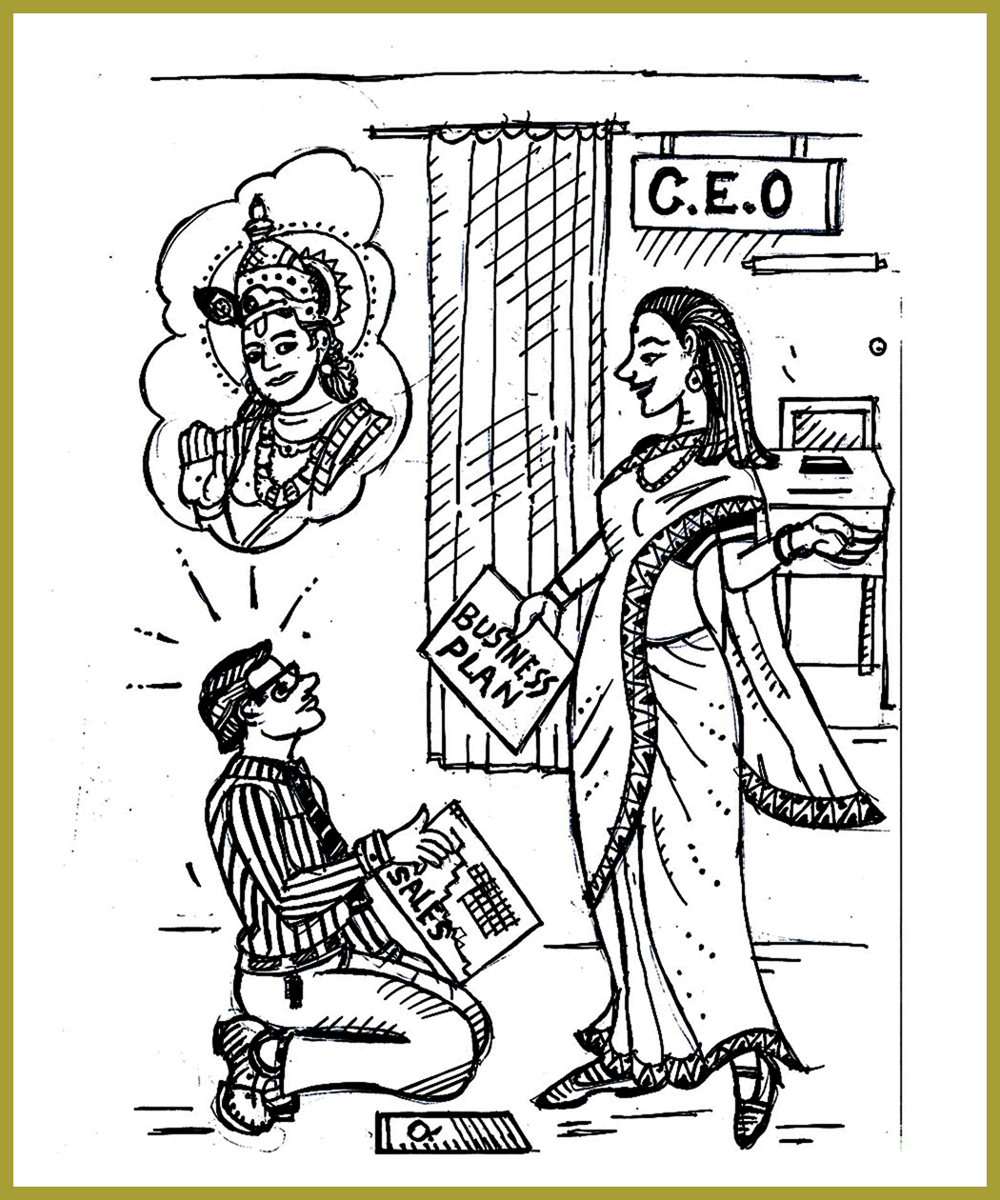
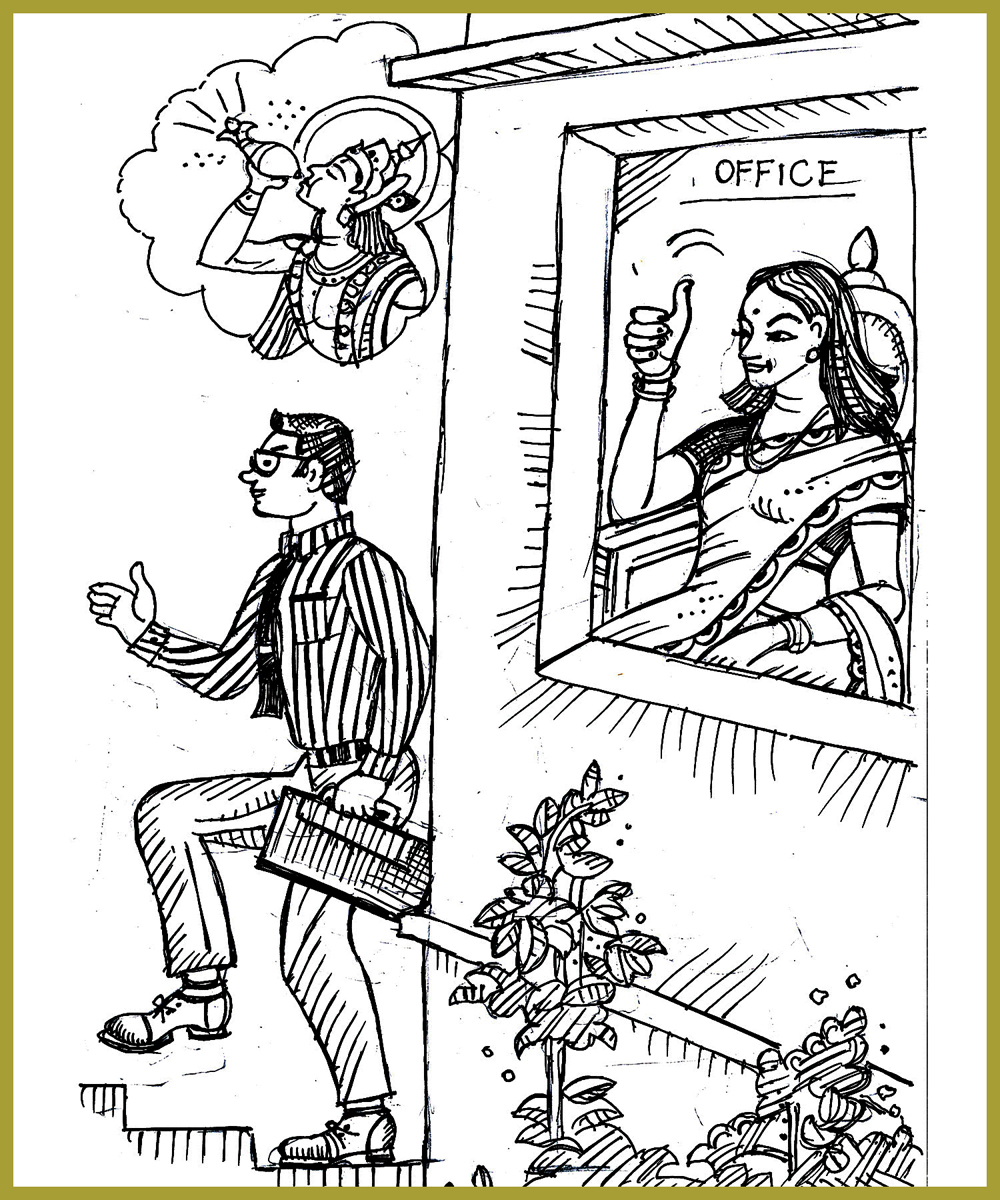
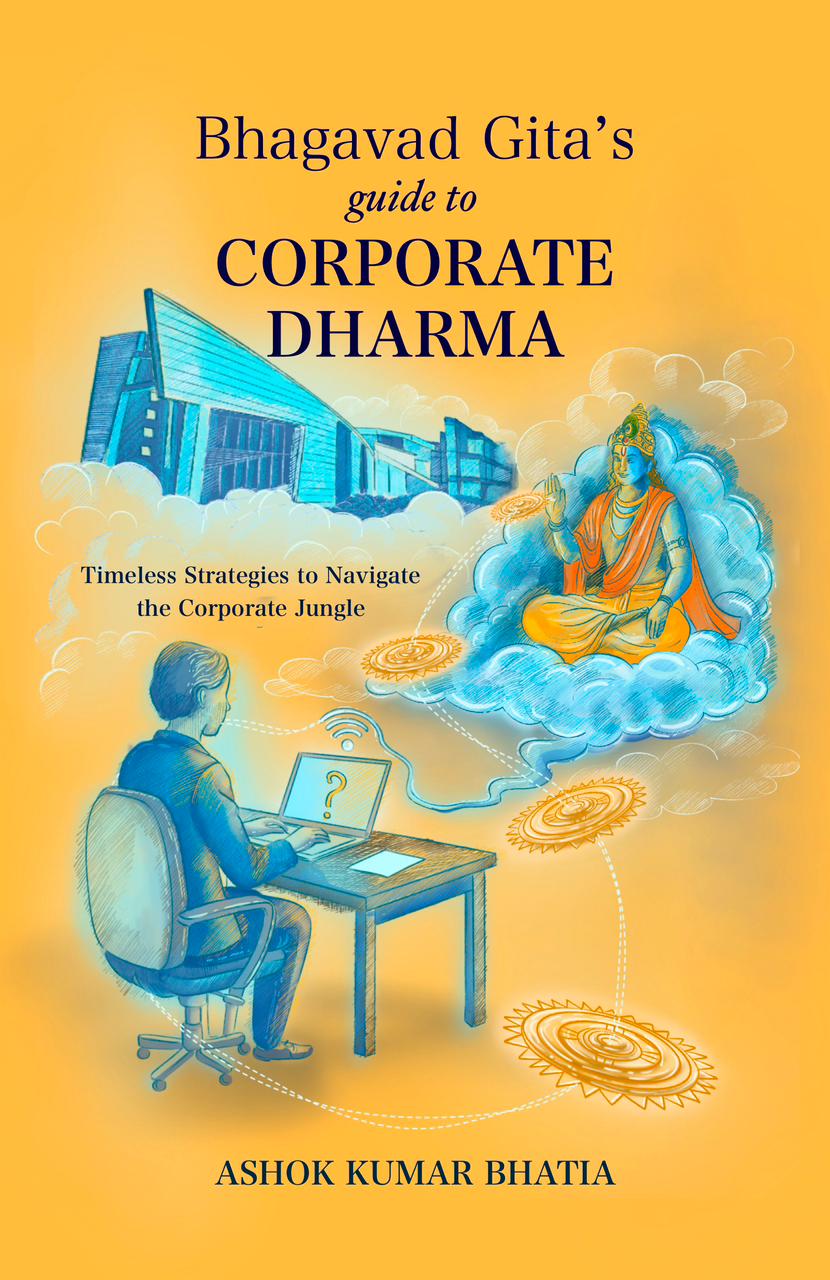






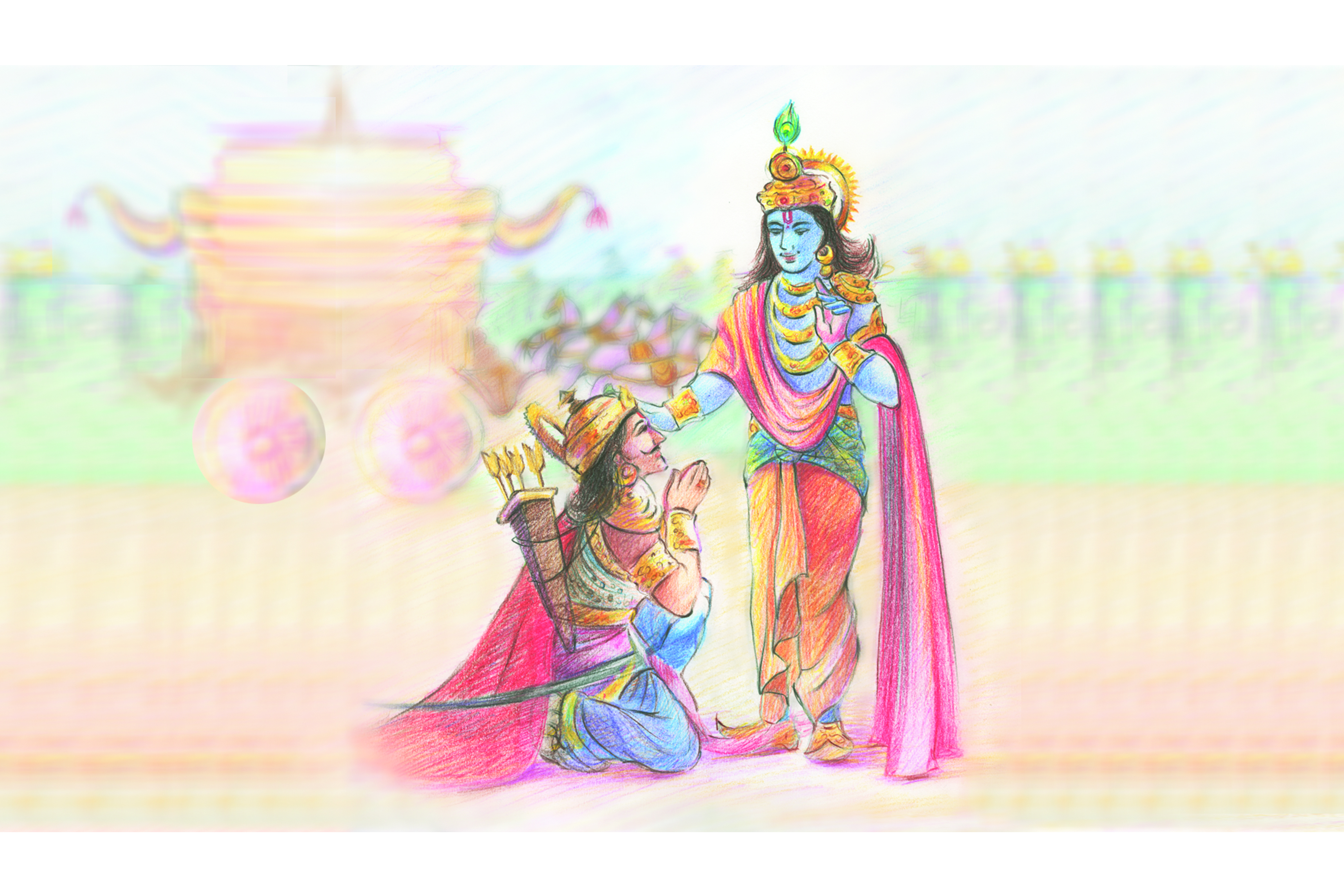
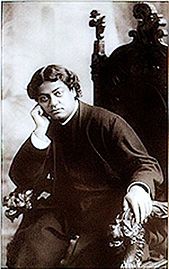











 ashokbhatia
Some Comments on the Bhagavad Gita
Posted in A Vibrant Life!, tagged Bhagavad Gita, Comments, Gita, hinduism, Krishna, Spirituality on December 11, 2024| Leave a Comment »
The Gita is one of the clearest and most comprehensive summaries of the Perennial Philosophy ever to have been done.
Aldous Huxley
The Gita is a bouquet composed of the beautiful flowers of spiritual truths collected from the Upanishads.
Swami Vivekananda
My last prayer to everyone, therefore, is that one should not fail to thoroughly understand this ancient science of the life of a householder, or of worldly life, as early as possible in one’s life.
Lokmanya Tilak
The Gita is a book that has worn extraordinarily well, and it is almost as fresh and still in its real substance quite as new, because always renewable in experience, as when it first appeared in or was written into the frame of the Mahabharata.
Sri Aurobindo
When disappointment stares me in the face and all alone, I see not one ray of light, I go back to the Bhagavad Gita. I find a verse here and a verse there, and I immediately begin to smile in the midst of overwhelming tragedies – and if they have left no visible, no indelible scare on me, I owe it all to the teaching of Bhagavad Gita.
Mahatma Gandhi
The teaching of the ancient battlefield gives guidance in all later days, and trains the aspiring soul in treading the steep and thorny path that leads to peace.
Dr Annie Besant
To my knowledge, there is no book in the whole range of the world’s literature so high above all as the Bhagavad Geeta which is treasure-house of Dharma not only for Hindus but for all mankind.
Madan Mohan Malviya
Related Posts:
Read Full Post »