Feeds:
Posts
Comments

Posts Tagged ‘Spirituality’

Lord Krishna, whose birthday will be celebrated tomorrow, happens to be one of the most revered and liked gods of the Hindu pantheon. Looked at from a management point of view, he is a leader par excellence. He manages events and people in such a manner that the end result is eventually positive and leads to a greater good.

Here are some facets of his personality which might be instructive for managers at all levels.

A friendly demeanour

When a devotee plans to seek a straight forward favour, like when a much-awaited promotion is due and hard workKrishna_holding_flute has indeed been put in for the purpose, Lord Rama is often the more sought after religious figure. But when a devious request has to be made, say when praying for the transfer of a CEO who keeps disturbing one’s mental peace, the attention invariably turns to Lord Krishna. After all, he is our friend, with whom we can be frank and open!
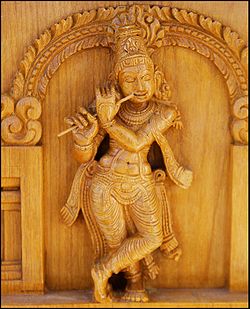
This is the kind of appeal Krishna has. The fact that he has been depicted as a playful child and teenager adds to his unique image. The manner in which he treats his friends like Arjuna and Sudama multiplies his allure as a great problem solver. His ready availability is his Unique Selling Proposition. This is a quality which many a manager would find good to imbibe.

Flexibility in Approach

When it becomes apparent that Jarasandh would not allow the kingdom of Mathura to enjoy uninterrupted peace as long as he and Balarama are there, Krishna does not hesitate to leave his comfort zone. In order to ensure that the denizens of the city remain safe, he decides to build a new capital at Dwarka and shift his operating headquarters there.

When market dynamics change, business leaders and their team members in FMCG companies do not hesitate to travel to the hinterland. This helps them to understand the customer psyche better, thereby improving their presence in diverse markets.

Examples abound of companies which did not keep pace with the changes in technology and the market place. They continue to remain alive in our memories only.

Accessibility

Whosoever happens to be facing a challenge can approach him. Whether it is Arjuna or Duryodhana, there is no hesitation in seeking his help. Yes, whether and how he decides to help depends on which side of ‘Dharma’ we happen to be on. Duryodhana gets the support of his entire army, whereas Arjuna ends up getting him as a personal charioteer.

The privilege of accessibility is granted even to those opposed to him. Sisupala has the liberty of abusing him publically. Admittedly, he has a quota which, when exceeded, results into his death.

True blue leaders are invariably accessible to their team members. When a sudden challenge pops up, anyone can reach out to them and seek guidance.

Adherence to ‘Dharma’ (Righteousness)

The values inherent in a corporate policy, the vision for the company, the mission of the organization – theseMahabharat Disrobing_of_Draupadi constitute the ‘Dharma’ of all leaders, CEOs and managers.

When Krishna gets invited to the palace of Duryodhana for a rich feast, he declines. Instead, he prefers to have simple food at Vidura’s place. When Draupadi gets disrobed in King Dhritarashtra’s court, he manages to protect her honour. When a war becomes inevitable, he sides with the Pandavas. Invariably, he sides with those who follow the path of righteousness.

Strategy and Vision

In a careful reading of the major turning events in the whole narrative of Mahabharata, Krishna emerges as an eminent strategist. He keeps Draupadi’s frustration under check. He knows that Kauravas would never agree to let Pandavas have their share of the kingdom in a peaceful manner. Yet, he himself goes to plead their cause so that peace is given a last chance.

In the battle that ensues, he virtually leads the 7 divisions of Pandavas’ army to a decisive win against the 11 divisions of Kauravas’ army.

All mighty warriors on the Kauaravas’ side fall with specific inputs from Krishna. In case of Bhishma, Arjuna attacks him standing behind Shikhandi. Dronacharya is misled to believe that his son Ashwatthama has fallen. When Duryodhana appears to be invincible in his mace fight with Bhima, Krishna gestures to the latter to hit the former below the navel, thereby incapacitating him. When Balarama gets upset with Bhima for having broken a cardinal principle in his final fight with Duryodhana, Krishna intervenes to pacify him by reminding him of the several injustices perpetrated by the Kauravas on Pandavas.

Detachment

The manner in which Krishna persuades a demoralized Arjuna to take up his arms by enunciating the basic principles Mahabharat Krishna Arjunaof life in the Bhagavad Gita is exemplary. The gospel of devotion to duty, without attachment or desire of reward, continues to show the way of life to all those who seek light in the dark problems of life.

Krishna not only preaches but also practices detachment. Consider the manner in which he decides to leave his home and hearth in Gokul and Vrindaban. To him, the call of duty, of restoring the kingdom of Mathura to King Ugrasena, a just and righteous monarch dethroned and imprisoned by his own son, Kansa, is supreme. The fact that Kansa happens to be his maternal uncle does not stand in the way of Krishna killing him to achieve his goal.

He does not entertain the thought of ruling over Mathura himself. He believes that in order to be a competent ruler, he first needs to complete his study of the Vedas, achieve proficiency in warfare and understand the nuances of governance.

What does a CEO do when business conditions warrant a manufacturing unit to be shut down, even though he himself had painstakingly set it up two decades back? What does a manager do when a much-liked junior commits an act of impropriety and has to be asked to leave the company? Or, when a plum assignment has to be given up due to compelling personal reasons? A sense of detachment comes in handy in all such situations. The higher the level of detachment, the more objective the decision is likely to be.

Unstinted Support

When Abhimanyu gets killed on the battle field, a grief-stricken Arjuna vows to slay the warrior responsible – Jayadratha – by next sunset, or end his own life. Krishna manages to save Arjuna’s honour, bringing much relief to the Pandavas.

To those who remain committed and loyal to them, leaders provide unstinted support.Krishna
The Many Masks

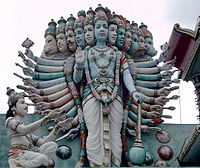
Krishna does not hesitate to reveal himself in his entirety in the midst of the battlefield. Arjuna is petrified to see the ‘Vishwa Roopa’ of someone he considers to be a close friend.

Leaders also wear several masks. They could be polite and gentle. They could be loving and compassionate. But if the situation demands it, they could also invoke dread and fear amongst their team members. Just like Krishna, they possess a multi-faceted personality.

The Inner Voice

One of the basic concepts enunciated by Krishna in the Bhagavad Gita is that of the everlasting nature of the soul. The concept of a soul now finds a resonance even in modern management literature. In ‘The 8th Habit’, Stephen Covey urges professionals to pay heed to their ‘inner voice’. While proposing the whole person paradigm, he speaks of the four dimensions of a person – spirit, body, heart and mind.

Intuition

Once the war gets over and all his sons have got killed, Dhritarashtra attempts to kill Bhima by crushing him in a close embrace. Krishna is able to read his mind and deftly pushes across a metal statue instead, thereby saving Bhima’s life.

Smart managers go beyond ‘analysis paralysis.’ They do use information, but they also rely on their intuition. A more balanced decision-making comes about.

Tenacity and Perseverance

When the disappearance of a valuable gem, the ‘syamantak mani’, is attributed to Krishna, he does not wallow in self-pity. With a chin-up attitude, he keeps working on the problem till the time it becomes clear that his conduct is as pure as the driven snow.

CEOs with a tenacity of purpose build up a unique team of followers. Perseverance is ingrained in their character. To give up does not come easily to them.

A Global MindsetMahabharat Draupadi_and_Pandavas

Personally, Krishna has little to gain from the great war. All his actions are directed towards the overall benefit of the society. Once Yudhishtira assumes the charge of the entire kingdom, peace prevails and development comes about.

Great business leaders share the same quality with Krishna. They try to give back to society in more ways than one. Sustainable business practices ensure that their companies’ operations do not cause irreparable damage to the eco-system.

Leading from Behind

Unlike Lord Rama, who leads an army from the front, Lord Krishna leads it from behind. The former leads an army of monkeys. The latter leads an army of illustrious people. Each one has great prowess, expertise and self-mastery. He also gets to handle people who are more shrewd and cunning.

In the initial phases of industrial revolution, when manufacturing was the primary activity, most of the leaders had to lead their teams from the front. In the services sector, as also in the emerging knowledge economy, leaders mostly manage from behind.

Depending upon the situation at hand, leaders switch from one mode to another. The style also varies from person to person.

A Tryst with Adversity

Krishna lives a unique life which is full of adverse circumstances. He is born in captivity. He is separated with hisKrishna birth parents immediately after his birth. Even as a child, he manages to survive attempts on his life. He leaves his foster home, never to return. He leaves the city of his birth and relocates to a far off place. He continues to be busy solving other’s problems throughout life. His whole clan gets destroyed in a bitter fight between its own members.

At no stage do we find Krishna blaming his circumstances. He is self-assured. He is confident. He is clear on what he wants to achieve. His methods may be rough at times, but they deliver.

Sure enough, like many a business leader, he pays a heavy price for upholding righteousness. With little time for family and children, the progeny is destined to remain unsung.

Tough situations bring out the best within managers. Life strives to chisel their character into a fine shape, much like a finely carved statue which is much admired by those who view it from the outside. Few realize the pain, suffering and sacrifice that the stone has undergone to achieve that exalted beauty and that state of perfection.Krishna_Arjuna_Gita

Krishna – A Spiritual Leader

Much like a business leader of modern times, Krishna displays vision, flexibility in approach, resourcefulness and an excellent capacity to command. The authority that he exercises over others is born more out of love and concern, not fear. He is the trouble-shooter par excellence who leads, inspires, guides and motivates. He sets a fine example for business leaders and managers to emulate.

Krishna is a role model for spiritually inclined leaders and managers. He demonstrates that being spiritual does not necessarily mean being soft. It only implies that one’s decisions and actions are rooted in stark pragmatism, backed by sound values and propelled by a desire to achieve the greater good.

(Related posts:

  1. https://ashokbhatia.wordpress.com/2013/05/27/management-lessons-from-ramayana
  2. https://ashokbhatia.wordpress.com/2013/07/12/management-lessons-from-mahabharata)

Read Full Post »

Caring Michelangelo's_Pieta

If we look a little deeper, we are apt to find that lifestyle diseases not only represent a crisis in our lives. These also provide us an opportunity for a spiritual upliftment of sorts.

Take the case of a patient suffering from diabetes. The manner in which this affliction leads one to progress on the path of spirituality can be readily appreciated by considering what a hapless patient has to go through.

Surely, no one aspires to have a silent killer like diabetes as a part of the package of challenges life offers. But once known to be afflicted by it, it takes courage to accept the fact – internally as well as socially. One’s propensity to accept things in a courageous manner goes up.

Willingly having to forsake the pleasures of the palate, the patient learns the art of humility. Delectable sweets get banned from one’s dining table. When attending a social function, nerves of chilled steel need to be deployed, so as to be able to refuse some juicy items which one sees being gobbled up with much relish by those around. One develops sincerity of purpose.

Our scriptures postulate that of the five senses which help us to get connected to the world around us, the most difficult one to rein in is that of taste. This self-control is precisely what a diabetic sets out to achieve. The clock governs the intake of nourishment. One learns to persevere.

With advice coming in from diverse sources about management of diabetes, the patient becomes more receptive. One is willing, even desperate, to try any cure that would rid one of this affliction. One ends up becoming more receptive and open-minded.

Running into a fellow diabetic, the milk of human kindness starts sloshing about within oneself. Goodness demands that while serving food or snacks to the hapless soul, principles of equality, fair play and natural justice get adhered to. To be really benevolent and generous to the other, a singular lack of generosity has to be demonstrated.

Gradually, one imbibes all these qualities in oneself – courage, humility, sincerity, perseverance, receptivity, goodness and generosity. Inner peace prevails. Progress comes about. One’s capacity to look at the broader picture and to empathize with fellow beings improves. One’s ego gets flattened.

All diabetics need to manage their lives by remaining confined within a triangle of three lakshman rekhas – diet, exercise and medication. One ends up living like an ascetic. Self control becomes the norm. Spiritual Quotient improves.

A diabetic who feels despondent could perhaps derive some solace from the spiritual potential of her affliction.

(Note: This blog post forms a part of an article which was published in the October 2015 issue of NAMAH, the journal of integral health:

http://www.namahjournal.com/doc/Actual/Of-hierarchies-attitudes-and-spiritual-potential-of-our-illnesses-vol-23-iss-3.html)

(Related Posts:

https://ashokbhatia.wordpress.com/2013/05/05/o-my-beloved-when-would-you-depart

https://ashokbhatia.wordpress.com/2014/10/06/handling-the-diabetes-tsunami-in-india)

Read Full Post »

Respected Madam,

As a pro-active Education Minister, you surely wish to leave a distinguished mark on the history of educational reforms in India. Permit me to share with you some broad areas which you may find relevant.

1. Re-engineering our education system 

India no longer needs to produce only administrators, followers and executors. She also needs innovators. She needsMay 2014 033 people who can think big. Those who can think out-of-the-box and can come up with novel solutions to her unique set of problems. She deserves a system which places less emphasis on rote and more on development of creative faculties.

2. Doing away with the ‘centum’ craze

We need to offer an eco-system which does away with the mind-numbing race to score higher and higher marks. These days, if a student manages to secure 99% either in languages or in any stream of humanities, we are led to wonder if the testing system itself is credible.

3. Excelling in research, avoiding re-search

Let the institutions of higher learning focus on teaching and research. An over-emphasis on organizing seminars and other extra-curricular activities is leading to a situation where the core job of faculty – teaching and research – is getting diluted. The fact that not a single Indian institution of higher learning figures in the list of top 200 universities prepared by The Times Higher Education Supplement makes one pause and think.

4. Credits are good, monochromatic mediocrity is not

The proposed Choice Based Credit System is commendable, but makes better sense at the post-graduate level. What we do not need is a monochromatic and mediocre spectrum of higher education which spoils the beauty that India innately is – diverse and federal. Let the autonomy remain and even be encouraged. Institutions of higher learning need to excel in their respective domains; to do so, they need autonomy. Standardization across the country is an idea which could be allowed to rest in peace.

Thiruvalluvar

Thiruvalluvar

5. Values, ethics and morals

We need citizens who not only demand rights but also respect and discharge their own obligations. One of the goals we need to have is to blend the material and the spiritual. Courses which propagate higher values, ethics and morals need to be designed and offered. Scriptures from various religions are a repository of great wisdom. Great seers and thinkers like Swami Vivekananda and Sri Aurobindo have left behind a rich legacy of concepts and thoughts. We need to encourage institutions which can translate and communicate these in a relevant and effective manner to the youth of today.

6. Educated in India

In an increasingly globalized world, the need is to attract Ivy League institutions and true blue academicians to India. Policies need to be announced to attract some of our best minds into teaching and research. Schemes need to be devised to ensure that our teachers are motivated better. An open-minded policy on foreign languages would help the youth connect better with the world. Much like our mission to ‘Make in India’, let us strive to create a brand ‘Educated in India’. Let India become the hub of higher learning in the Asian region yet again and regain its past glory.

7. Goals are found, means need to follow

As a percentage to GDP, India spends less than 3.5% on education. This will not do. Revamping the conceptual infrastructure of the education system is as critical to the long-term growth of India as the creation of physical infrastructure is. What we sow now, our coming generations shall reap. Objectives of our educational infrastructure cannot be fulfilled only by an increasing participation of the private sector. Funding for education deserves to be accorded a higher priority.

I submit the above with all humility at my command. I do hope these would get considered and a due diligence carried out by subject experts on your panel. Discussions with major stakeholders would ensure that a radically new education policy is announced soon. The future of India is in your capable hands.

Thank you so much for giving me an opportunity to participate in a discussion of this nature.

An ordinary citizen of India

(Related Posts:

https://ashokbhatia.wordpress.com/2013/04/26/enriching-our-management-education-further

https://ashokbhatia.wordpress.com/2013/05/15/degrees-of-separation)

Read Full Post »

SQIt would not be wrong to say that in today’s world, a relentless pursuit of wealth and material belongings has left a deep scar on our souls. Many of us are twiddling our thumbs trying to figure out either how to de-stress ourselves or how to keep fighting those depressive blues. There is a nagging emptiness within and the mind boggles as to why and how it has come about. Most of us have no clue as to what could be done about it.

Redefining ‘Success’ and ‘Happiness’

One way out of this dilemma is to perhaps redefine our concepts of ‘success’ and ‘happiness’. What do these terms really mean? When we dig deeper, we might find that these two are not really dependent on external factors. There is an inner connection somewhere.

Something very elaborate, say a long well-planned vacation, might not yield the emotional high that we expected. On the contrary, a post-dinner spontaneous outing for a late night ice cream binge could leave us elated.

Why do some things make us happy and others do not? We love beauty. We cherish humour. We like being appreciated and being loved. We love doing something ‘different’. Anything which connects us to our inner selves tends to make us happy. A movie or a work of fiction which we are able to relate to relaxes us. Exploring new frontiers and visiting new places often makes us happy. Perhaps the soul revels in its experience of exploration when we were cave-dwellers and hunters!

A paradigm shift could perhaps help. If ‘success’ ceases to be about the property we own, the social respect and fame we enjoy, and the high and mighty ‘connections’ we boast of, we might arrive at a different picture of ourselves. The quality of sleep we get. The inner glow of satisfaction we have when we leave our place of work for the day. The love we get when we get back home after a hard day’s work. A change in perspective brings about a stupendous transformation in how we think and feel. Our attitude becomes positive.

Materialism, Big Data and Perception Management

This is not to say that materialism is bad, per se. To satisfy one’s needs is a basic requirement of life. But we often end up over-doing it. Also, we fail to distinguish between our needs and our desires. Needs may be satiated easily. But desires have a tendency to regenerate and evolve, keeping us engaged. Desires keep making us run after an illusory rainbow which forever keeps drifting away from us.

Marketing professionals invariably target their products, services and communications at our desires. With the advent of Big Data, promotional campaigns are becoming far more segment-focused. We hear of ‘evidence-based decision making’ or ‘actionable information’. Even public policies are getting framed and aggressively communicated by governments to promote the feel good factor, whereas ground realities might show only a marginal improvement. Managing perceptions is essentially about catering to the desires of the average person. Fulfilling genuine needs can take a back seat.

Enter – Spiritual Quotient

Another way of striking a balance between materialism and spirituality is to become aware of our Spiritual Quotient; that is, our ability to understand and comprehend the spiritual aspects of life. In other words, moving on from the world of mind and heart to the realm of our inner selves.

When we move on from IQ to SQ, we move from the gross to the subtle, from the finite to the infinite, from tangible to the intangible.

Those who have a high SQ have this uncanny ability to be creative and insightful in their approach to problem solving. They build up their level of self-awareness and there intuitive faculties. They realize that there is a realm of intelligence which is beyond the five senses our bodies are endowed with.

IQ is what sees us through academic pursuits. EQ is what we gain by experiencing life. SQ is something of which we become aware a little later in our life.

IQ can be readily measured. EQ can also be estimated, though not with the same level of precision that IQ can be. However, SQ does not lend itself to easy measurement. All its attributes happen to be subjective in nature. By observing a person for a long time, one can perhaps estimate her SQ more realistically.

How relevant is SQ to a business?

SQ has several components: gratitude, self-esteem, self-awareness, consciousness, compassion, surrender, service and ego. Let us attempt to examine its relevance in the lives of individuals and business entities.

  • A sense of gratitude can make a practicing manager humble. She is able to see her own station in life/career more objectively. External factors or people who have played an important role in her career advancement become easily apparent. Team members, peers as well as superiors invariably end up liking her better. In turn, this fuels a better rate of career enrichment.
  • Self-esteem makes it easier for a manager to say a categorical ‘no’ when the situation demands so. It also leads to better levels of self-confidence. When negative news is to be conveyed to a team member who is not performing on all six cylinders, a manager with a higher degree of self-esteem can look her in the eye and tackle the situation head-on. Effectiveness improves.
  • Leaders and managers with a higher degree of self-awareness tend to be more successful. They are able to reprimand someone without letting it affect their own inner well-being. They are better at identifying appropriate moments to convey what they wish to communicate. They are better at radiating their sunny disposition to those around them, thereby improving morale and securing better results for the business.
  • A higher level of consciousness makes a manager connect better with others. The realization dawns that the team member or the stakeholder being addressed is yet another entity blessed with unique qualities and, hence, has to be treated at par. The challenge being faced by the other, as also the innate capacity of the person to handle it – both get factored in the line of action being suggested. Based on this approach, even large businesses can be shut down without much recrimination or hurt.
  • Compassion is a logical fall-out of a higher level of consciousness. A distributor or a supplier facing a financial crunch might feel repulsed at being pitied. But a compassionate gesture which addresses his immediate concerns can build a relationship rooted in mutual faith, loyalty and genuine respect. A manager who prevails upon his CFO and gets even a post-dated cheque issued to a hapless supplier ends up winning corporate loyalty. When Taj Hotel faces a terror attack, the whole company gears up to rehabilitate and reward the affected staff.
  • Surrender does not imply an abject abdication, but a well nuanced and calibrated acceptance of the reality at hand. A company which has nurtured an iconic brand over several decades may suddenly need to shift gears so as to match the change in its market demand. A new business vertical which utilizes a core competency of the group may need to be entered into. Flexibility and fleet-footedness in business is a sine qua non for long-term survival and growth.
  • A sense of service is what leads to sustainability. When an IT major like Infosys decides to compensate its carbon footprints by providing green products to rural households, it makes eminent sense. When a MNC like HUL decides to use a government scheme like MNREGA to create water potential for farmers in one of the most water-starved areas of India, it is servicing the society it draws its inputs from. When an Air Asia flight goes down killing all passengers on board, the CEO resorts to Twitter to keep the anxious relatives updated. When the Tata group sets up a Center of Performing Arts, as also institutions like TIFR, TISS and IIS, a value of giving back something to society becomes manifest.
  • Managing ego is at the core of the art of managing things. A manager who allows herself to be treated like a door-mat could disappear from a company’s landscape pretty soon. Another one who is forever having an ego clash with people around her would also not survive in the long run. What is required by a manager to be successful is a fine balance between the two extremes, buttressed by a strong sense of self-esteem.

Dr Ian Marshall and Danah Zohar, in their 2001 book, SQ: Connecting With Our Spiritual Intelligence, say that ‘while computers have IQ and animals can have EQ, it is essentially an SQ that sets human beings apart.’

It follows that to have a smooth ride in life, all three – IQ, EQ and SQ – have to be relied upon equally by all of us – whether in our personal lives or in our businesses.

A disruptive future

Technology is changing the way we live, think, behave and feel. The rate of change is only going to go up in future. Leaders, managers and even individuals with a high level of SQ are bound to have a better chance of tasting success in the decades to come.

It is time to still our brains, rein in our emotions and start building up our Spiritual Quotients!

(Caricature drawn by Sanket is gratefully acknowledged)

(Related posts:

Spirituality in Management

Grooming future Business Leaders – A Spiritual Approach (Part 1)

Read Full Post »

rainbow

O Divine,
I often dream of you,
I wrap these dreams in a soft illumined air,
Which lies in between the violet and the red colours.

Help me to make a colourful highway,
Connecting the Earth and the Heavens above,
Help me to plant seeds of the Infinite,
On this finite lump of dancing mass we call the Earth.

Over time these seeds would grow into powerful creepers,
Gently opening the new life’s doors of bright white hue,
Giving us a peek into a magnificent palace,
Of an ornamental roof and gleaming floors.

These dreams of a new race I do believe in,
With Your grace, these would surely manifest on Earth,
Eventually, these would become the living truth,
Making humanity experience unalloyed joy and infinite bliss.

(Contributed by Usha)

Read Full Post »

Learning from Failures

With a higher level of uncertainty, a leader’s chances of failure would also go up. A failure which results into pain and suffering can also be taken as a boon, as time often proves. If the right lessons are drawn, the chances of a failure repeating itself in future can be drastically brought down.

Consider these words of wisdom from Narad when he tries to explain to Savitri’s mother as to why she must marrya1 1 (11) Satyavan and suffer on the terrestrial plane.

‘Although the shaping god’s tremendous touch
Is torture unbearable to mortal nerves,
The fiery spirit grows within
And feels a joy in every titan pang.’
(Savitri, page 444)

Leaders wear their crowns of glory. But the crown does not come cheap. The cost they have to bear is that of the cross they have to carry.

‘Hard is the world-redeemer’s heavy task;
The world itself becomes his adversary,
Those he would save are his antagonists:
This world is in love with its own ignorance,
Its darkness turns away from the savior light,
It gives the cross in payment for the crown.’
(Savitri, page 448)

Management by Consent

In the times to come, the profile of the followers would also be different. Hierarchical authority is already proving difficult to manage change; there is no reason to believe this would not be even more so in the future. The followers would demand a higher degree of participation in the decision-making processes. Leaders who recognize this need of their followers and create a working environment which enables the same would achieve higher levels of efficiency and effectiveness in their business processes.

Creating a non-coercive environment in which employees and other stakeholders are clear about the corporate identity and the mission would be far more important than it is today. Reverse mentoring would be more a norm than an exception in the days to come.

Consider the all-powerful God of Death. When accosted by Savitri, he does not dictate terms. He allows a reasonableSavitri_Yama discussion on the subject. He keeps changing the line of his arguments, intent upon denying Savitri the life of her husband. He tries his best to dissuade her from changing one of the basic laws of nature. He even declares “I, Death, am the gate of immortality.”

Savitri is undaunted. She points out that if this creation has arisen out of a meaningless void, if matter can come forth from energy, and life from matter, and mind from life, and if soul can peep through the flesh, what is wrong in hoping that the imperfect man of today will someday transform himself into the perfection of God?

The God of Death eventually loses the argument, his authority and also his stature. But his greatness lies in the fact that he has the good grace to permit and then lose an argument to a person who looks like a mere mortal. Realizing her sincerity of purpose, he even grants her a boon.

In Ramayana, the villain is Ravana, a highly learned and accomplished person. One of the reasons for his downfall is to neglect the advice of nay-sayers. His wife, Mandodari, brother Vibheeshana and grandfather Malyavaan – all advise him to return Sita to Rama. Instead, he chooses to listen to his courtiers who play on his ego and pride and advise him not to do so.

A couplet in Sundara Kanda of Ramcharitmanasa clearly advises us to ignore the advice of a paid deputy, aRamayana 2 doctor and a teacher who speak positively out of either fear or expectation of a gain. A king who acts upon such motivated advice loses his kingdom, his body and his righteousness (dharma) as well.

When Lord Rama decides to accept Vibhishana in his fold, he does not simply order the same. He consults all seniors present before arriving at a decision.

Monsanto’s CEO, Robert Shapiro, had the ability to go against traditional hierarchy. He initiated strategy sessions with cross-sections of employees of different ranks, specialties and geographical perspectives and reaped rich dividends for his company.

The Moral Compass

Leaders who believe in sustainable businesses would not only use their commercial compass while determining the direction to take. Using a moral compass would be a valuable trait amongst the future leaders. A strong inner core, embedded with a value system which recognizes the needs of the society at large, would be a great quality to have. A pre-condition for employing key managers would be their endorsement and support of the core values of the business.

Sticking to some core values which are steeped in righteousness eventually leads to success. The main protagonist, Rama, is depicted in Ramayana as an epitome of virtue. He is an ideal king, an ideal son and a pragmatic person. He sets high ethical standards in warfare and invariably sides with dharma, or righteousness.Krishna_Arjuna_Gita

One of the basic concepts enunciated by Shri Krishna in the Bhagavad Gita is that of the everlasting nature of the soul. The concept of a soul now finds a resonance even in modern management literature. In ‘The 8th Habit’, Stephen Covey urges professionals to pay heed to their ‘inner voice’. While proposing the whole person paradigm, he speaks of the four dimensions of a person – spirit, body, heart and mind.

A random sample of all successful business houses which have been around for more than a century now – Siemens and Tatas, for instance – is ample proof that ethics in business do pay dividends in the long run. Names of such business houses enjoy tremendous brand equity in the market; understandably, that rubs off on their products as well.

When the likes of Siemens and Wal-Mart come clean on their misdemeanors, they set an excellent example of probity in the business world. When Mr. Ratan Tata, the Chairman Emeritus of India’s salt to software conglomerate, rues his inability to enter some fields of business because of the absence of a level playing field in India, his focus is on one of the core values of his business.

Indra Nooyi is charting a unique course for Pepsico globally, shedding traditional markets and going in for healthier food products instead.

Preparing Leaders for 2025!

In a careful reading of the major turning events in the Mahabharata, Krishna emerges as an eminent strategist. He keeps Draupadi’s frustration under check. He knows that Kauravas would never agree to let Pandavas have their share of the kingdom in a peaceful manner. Yet, he himself goes to plead their cause so that peace is given a last chance.

Eventually, all mighty warriors on the Kauaravas’ side fall with specific inputs from Krishna. In case of Bhishma,Krishna Arjuna attacks him standing behind Shikhandi. Dronacharya is misled to believe that his son Ashwatthama has fallen at the behest of Krishna. When Duryodhana appears to be invincible in his mace fight with Bhima, he gestures to the latter to hit the former below the navel, thereby incapacitating him. When Balarama gets upset with Bhima for having broken a cardinal principle in his final fight with Duryodhana, Krishna intervenes to pacify him by reminding him of the several injustices perpetrated by the Kauravas on Pandavas.

Much like a business leader of modern times, Krishna displays vision, flexibility in approach, resourcefulness and an excellent capacity to command. He is the trouble-shooter par excellence who leads, inspires, guides and motivates.

Captains of industry today can set a personal example by getting cross-functional teams in their organizations to come up with suggestions to face the challenges of future effectively. They can also emulate some of the traits, thereby leading to a trickle-down effect across the entire organization.

HR honchos can re-design their appraisal processes and re-assess training needs of key managers to address this issue.

Those in senior management positions can consciously plan to hone their skills in areas they find themselves deficient.

Management institutes can tweak their course content to ensure that those leaving their hallowed portals possess these traits, so as to improve their contribution towards the organizations they decide to either float or serve.

Indian scriptures are replete with instances which demonstrate the importance of good values and ethics.chanakya Ramayana speaks of righteousness to be upheld at any cost. Mahabharata tells us to limit our ambitions and desires and be reasonable in life, lest a fate worse than death may befall us. Bhagavad Gita – the song celestial – is like an ocean full of practical advice for managers young and old alike. Chanakya Neeti is full of pearls of wisdom. All these are waiting to be explored by those who are interested in being spiritual as well as practical in their approach to problem solving and leading people to their goals.

(Note: On matters spiritual, inputs from a subject expert, philosopher and guide are gratefully acknowledged.)

[Related Post: https://ashokbhatia.wordpress.com/2014/12/02/grooming-future-business-leaders-a-spiritual-approach-part-1%5D

Read Full Post »

Abstract
Can tenets from the realm of Spirituality help in grooming business leaders for the future? This two-part article attempts to answer this query. It first proposes the dominant characteristics of the business environment of the future. It then goes on to joining the dots between the apparently diverse fields of Management and Spirituality in respect of each such characteristic. An enhanced role for intuitive faculties, inner resilience, dynamism, a global and inclusive mindset, clarity of purpose, learning from failures, managing by consensus and cultivating a moral compass are some of the leadership traits discussed. Examples are drawn from the business world, as also from such Indian scriptures as Ramayana, Mahabharata and Sri Aurobindo’s ‘Savitri.’

Leadership is a much discussed virtue in management literature. However, like Peter Drucker says, there is no ideal LEADERStype of leader. “Leadership personality’, ‘leadership style’ and ‘leadership traits’ don’t exist”, he writes in The Leader of the Future. The emergence of a leader is the result of a complex interplay of two factors – personality traits of the leader and what needs to be done at a given point in time. The moment the two become congruent, a new leader could emerge on the scene and deliver the goods!

I am convinced that the leaders of tomorrow would need personality traits which would be qualitatively different from those of today. Here is my take on what business environment (say, circa 2025) would be like, and how our future business leaders would be tackling it.

2025 – A Likely Business Scenario

What would be the business environment like in 2025? Let us try to crystal-gaze and find out the kind of possibilities the future portends:
• Business leaders in 2025 shall be working against the backdrop of a world which would, in all likelihood, be a multi-polar one, with Asia, particularly China, exerting more influence on global events.
• It would be a world which would be more inter-connected, commercially and otherwise.
• Thanks to new communication means, the individual empowerment levels would have risen significantly. Social paradigms would have transformed further, with a more individualistic mindset. Hence, employee expectations would be qualitatively different from what managers typically face today.
• Also, it would be a more urbanized world. Thanks to the rise of a new global middle-class, society in general would internet image 1have reached a higher level of aspiration, resulting into a much higher demand for energy, food and water. On the flip side, income disparities would have risen substantially.
• Changes arising out of our climatic patterns would also pose a formidable challenge to the leaders of those times. Internet security concerns would perhaps be centre-stage.
• Disruptive changes are quite likely to overwhelm us. These changes could come in the form of impact of new technologies in the field of robotics, biotechnology, space sciences and communication. Increasingly, governments world over may start becoming enablers of entrepreneurship, faced as they will be with direct and intensive pressure from those they govern. We shall surely be seeing more entrepreneurs amongst our midst – whether in the commercial sector or in the societal sector.

A Business Leader in 2025

Beyond Analysis Paralysis

Since the level of entropy in the system would have gone up further by then, a business leader of circa 2025 would have to be adept at making decisions under a higher level of uncertainty. The abnormal today would be the new normal, and many a leader would be feeling more like experts at river rafting in our economic and statutory rapids, often being called upon to go against the current.

For those who are quantitatively inclined, advanced statistical tools would become more sophisticated. There will be an overdose of data as well as information available to a business leader then. However, ultimately, his/her intuitive abilities would prove to be more valuable. Even today, most innovators think ‘out-of-box’. Businessmen, when creating a new vertical, are apt to take a leap of faith, that is, decisions off-the-seat-of-their-pants/skirts/sarees and not on voluminous reports of an analytical nature.

Sir Colin Marshall, the ex-Chairman of British Airways, transformed his organization into one of the premier Mahabharat Draupadi_and_Pandavascustomer service kinds in the days of yore. The uncertainty he faced in the period of his association with BA was monumental and serves as an example to be followed by CEOs of future.

Jeff Bezos of Amazon came up with the concept of ‘predictive analytics’, paving the way for all of us to enjoy the convenience of shopping on-line.

A logical corollary of the above would be the need for a leader to be ahead of the curve. Those who have counter-intuitive responses and place a higher trust in their natural instincts would surely fare better.

In Mahabharata, after the war is over, Pandavas visit Dhritarashtra to offer their respects and condolences. By using his intuitive skills, Lord Krishna is able to save Bheema’s life. When the uncle proceeds to hold Bheema in a crushing embrace, a metallic statue of similar dimensions is offered to him instead.

Likewise, in Sri Aurobindo’s Savitri, Narada has the gift of fore-knowledge. He is not averse to Savitri marrying Satyavan whom he describes as ‘a marvel of the meeting of earth and heaven’ but adds:

Heaven’s greatness came, but was too great to stay.
Twelve swift-winged months were given to him and her;
This day returning Satyavan must die.
(Savitri, page 431)

Intuitive abilities of a manager typically arise from three distinctive domains – the cultural upbringing, experience in one’s formative years and one’s value system imbibed from elders and role models. Regular meditation and introspection also helps.

An Inner Resilience and Dynamism

There would be a strong need for a much higher degree of inner resilience, because this alone would enable them to keep their stress levels under control even in trying circumstances.

Dynamism will be yet another critical input. It would ensure that they are able to steer their businesses through thec1 (25) dense economic fog enveloping the business highways.

This is where tenets of spirituality can play a vital role. Take the example of the character of Savitri, as portrayed by Sri Aurobindo in his epic composition. She has fore-knowledge of the imminent death of Satyavan, her husband. Does she get scared? No. She faces the monumental task of facing the Lord of Death himself. She never gives up hope, displays exemplary courage and resilience and successfully reasons out the revival of her husband. She handles the whole situation all by herself, walking tall but lonely – as a true leader of humanity.

‘Whoever is too great must lonely live.
Adored he walks in the mighty solitude;
Vain is his labour to create his kind,
His only comrade is the Strength within.’
(Savitri, page 368)

As a seer extraordinaire, Sri Aurobindo brings to us in a very concise form the symbolic affirmation of life on earth. He did not compose Savitri as a management treatise. But like all other scriptures, the epic poem contains invaluable lessons for potential as well as practicing managers.

In the Ramayana, we see Lord Rama waging a war on Lanka with very limited resources, backed by an army whichRamayana 1 is pretty out-of-the-box or unconventional. It is an army which is highly motivated, expecting minimal facilities. The challenge of crossing the sea is also faced in a highly unconventional manner. Goes on to show the power of the dynamism of a true leader even when circumstances are highly unfavorable.

The World Economic Forum had proposed a theme centered on the twin traits of resilience and dynamism for 2013. Given that there are no risk free growth models available to leaders and CEOs of the future, one could not have agreed more with this proposition.

A good example of facing flak and not losing sight of one’s goals is that of Larry Page of Google. He continues to trust his instincts and doing what he thinks is best for his business.

A Global, Self-less and Inclusive Mindset

Given a much more inter-connected world, a business leader in the future would need to possess a vast knowledge of commercial, behavioral and societal norms followed in different parts of the world. A primary task would obviously be to ensure that his/her organization has world-class management processes. Only those institutionalizing best practices in strategic planning, marketing and human relations would be able to make their organization a successful one. The fact that a leader would, in all likelihood, be leading a multi-cultural team of followers would pose a challenge – irrespective of whether the situation demands a leadership which is ‘transactional’ or ‘transformational’.

A self-less and inclusive mindset would imply taking on board all stakeholders in a situation that warrants an Mahabharat Krishna Arjunaimportant decision to be made. A true business leader would work for the overall benefit of the society and environment at large.

When Lord Krishna delivers the message of Bhagavad Gita on the battle field, it is not for the narrow purpose of Pandava’s victory. It is the song celestial, delivered for the benefit of the entire humanity.

When Ashwapathy, the virtuous and noble King of Madra in Savitri, seeks a progeny, he does not behave like a sorrow-stricken childless King. He acts like a representative and true leader of humanity. He is engaged in a quest, but not for a personal gain like having a child. He is seeking that creative principle which has the power to end human frustrations, discontents and ills. He is doing so for the entire humanity. He recognizes the painful truth that neither science and technology, nor religion and art, have so far managed to free mankind from the clutches of ignorance, suffering and death. Is there a way the age-old aspiration of mankind seeking a union with its Creator could get realized? Can a higher power come down and help him achieve this goal for the sake of humanity? Aswapathy’s impassioned plea eventually wins the promise of grace from the Divine Mother.

In the Ramayana, we do not like Lord Rama banishing Sita to the forest merely because an ordinary citizen had cast aspersions on her character. But he acts like a true blue CEO who shows no mercy when upholding the path of righteousness even at a huge cost in terms of personal happiness and comfort.

When one considers the example of Compaq’s Eckard Pfeiffer, who was a leader in a race against himself, it becomes clear as to how organizational renewal can be brought about. “No matter what industry a company competes in”, he said, “it must live with one foot in the present and the other in the future….There is simply no other way to build world leadership”.

A Clarity of Purpose

When faced with higher levels of uncertainty, a calm mind and clarity of purpose become the sine qua non of success.
According to one version of the Ramayana, both Rama and Sita are committed to the welfare of the people. They are aware that by remaining confined to their palaces and royal trappings, they would not be able to serve the purpose for which they exist. Thus, when an opportunity presents itself in the form of Kaikeyi’s demands at the time of His coronation, they accept the fait accompli with equipoise and leave their comfort zone with a great clarity of purpose.

Note how Savitri declares the completion of her mission (to locate a soul-mate) to her father.a1 1 (13)

‘The son of Dyumatsena, Satyavan
I have met on the wild forest’s lonely verge.
My father, I have chosen. This is done.’
(Savitri, page 424)

Savitri’s supreme self-confidence is revealed when she convinces her mother about the need of not changing her decision, despite Sage Narad’s prophetic announcement that Satyavan has only one year to live.

‘Let Fate do with me what she will or can;
I am stronger than death and greater than my fate;
My love shall outlast the world, doom falls from me
Helpless against my immortality.’
(Savitri, page 432)

(Part 2 to follow)

Read Full Post »

We came and courted you for a brief time,

Keen to explore your many charms we were told you possess;

Your physical assets we could see we found irresistible,

Qualities of your kindly soul your helpful denizens made us assess.IMG_1194

The Eiffel Tower proved to be as magnificent as its pictures had made us believe,

We learned of its role in advancement of science and visited the underground bunkers vast;

We marvelled at its elaborate elevator mechanisms and the general attention to detail,

Enjoyed the view from the top, shivering in the strong chilled breeze blowing past. Paris Obélisque_de_la_Concorde

The hunchback at the Notre Dame de Paris we could not locate,

The inner precincts were sombre, the performers outside nimble and smart;

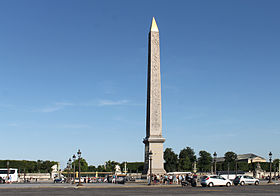
The Luxor Obelisk took us back in time by a couple of millennia,

La Madeline and other structures held us spellbound, their architectural grandeur playing an important part.

IMG_1243

The Louvre had us in enthrall as we waltzed through its corridors rich in cultural heritage,

Mona Lisa, Venus and a multitude of others conspired to keep us riveted, not to part;

The Egyptian Gallery left us simply awe-struck, the beauty of sculptures cast a spell,

Grateful to those who have had the vision to preserve such magnificent works of art.

 IMG_1190

The Arc de Triomphe reminded us of your brush with history,

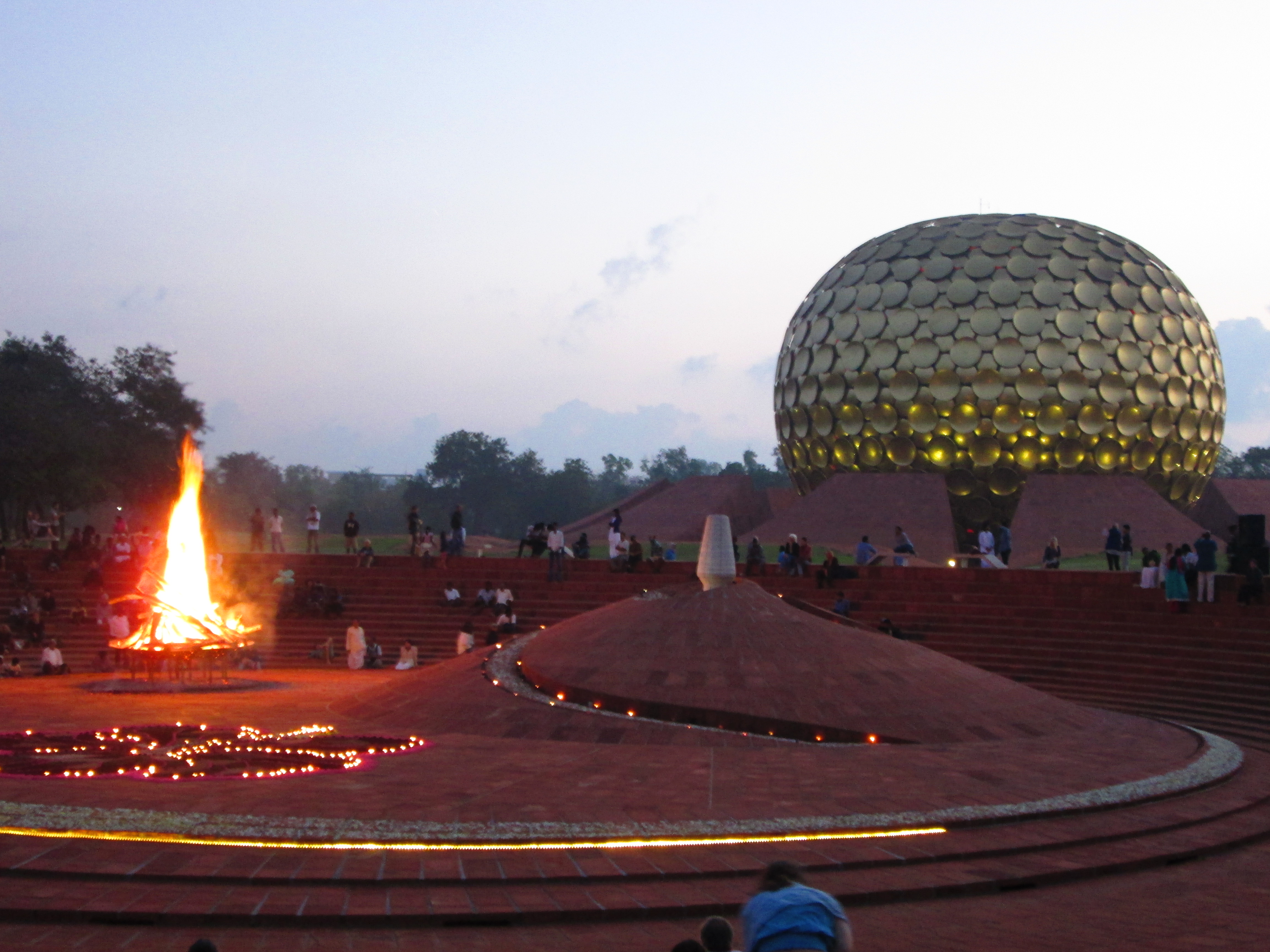
Reminding us of India Gate in New Delhi and the modest Aayi Mandapam at Pondicherry;

The Champs-Elysees showcased the best that you have on offer,

International brands, famous buildings, wide-eyed tourists not in a hurry.

 IMG_1142

The tree-lined avenues were charming, so was a cruise down the Seine,

Public conveniences we found in good shape, the multi-modal transport system we enjoyed too;

Our hearts went out to the much hassled drivers crawling through your congested roads,

Those in Pondicherry who practice the art of aggressive driving could perhaps teach them a trick or two.

IMG_0446

Visiting you only whetted our appetite to explore so many of your other attractions,

We wish you and your denizens a balanced and peaceful life, we do not grudge your modernity;

Even though you continue to revel in a materialistic life full of chutzpah and glamour,

You gifted Mother to us, spreading the message of universal brotherhood and spirituality.

Read Full Post »

One of the remarkable things about Blogsville is the magic of coming across a post which resonates with one of your own!

I just came across this clever post on the issue of sustainability: lovehappynotes.com/2014/06/21/as-i-peek-between-the-trees-i-see

It prompted me to re-blog this one of my own:

We, the Miracle

Hope you enjoy going through these!

Read Full Post »

Interested in the intricate connection between driving and the sense of detachment? Read on…!

Read Full Post »

« Newer Posts - Older Posts »