Posts Tagged ‘Stephen Covey’
Respecting the physical body – A managerial dilemma
Posted in A Vibrant Life!, tagged linkedin, Management, Stephen Covey, White-collar productivity, Work Life Balance, Yoga on April 14, 2025| Leave a Comment »
P. G. Wodehouse and the Evolution of Management Thought
Posted in What ho!, tagged C Northcote Parkinson, Frederick Winslow Taylor, Henry Ford, Humour, Management, Mary Parker Follett, Max Weber, P G Wodehouse, Philip Kotler, Stephen Covey on March 17, 2025| Leave a Comment »
P. G. Wodehouse and the Evolution of Management Thought
Posted in What ho!, tagged C Northcote Parkinson, Frederick Winslow Taylor, Henry Ford, Humour, Management, Mary Parker Follett, Max Weber, P G Wodehouse, Philip Kotler, Stephen Covey, The Peter Principle on June 20, 2022| Leave a Comment »
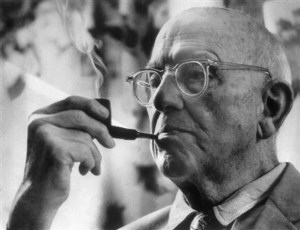
P. G. Wodehouse (1881-1975), fondly referred to as Plum, dished out his narratives in an era which one could allude to as the sunrise era of the science and art of management. He was a prolific writer, publishing more than ninety books, forty plays, two hundred short stories, several poems and other writings between 1902 and 1974.
He used a mixture of Edwardian slang, quotations from and allusions to numerous literary figures, and several other literary techniques to produce a prose style that has been compared to comic poetry and musical comedy. One of the qualities of his oeuvre is its wonderful consistency of quality, tone, wit and wisdom.
The Early Years

When Wodehouse arrived on the literary scene, Max Weber (1864-1920) was speaking of different forms of authority – charismatic, traditional and rational-legal, while Henri Fayol (1841-1925) was working on his twelve principles of management.
While Wodehouse, was busy honing his unique skills as an author, Frederick Winslow Taylor (1856–1915) was preoccupied with a new approach to management. In 1909, Taylor published The Principles of Scientific Management, highlighting the importance of organizational structures and a chain of command. In the same year, Wodehouse had come up with The Swoop and Mike. Much like a management executive, Mike happens to be a solid, reliable character with a strong sense of fair play; he also has an appetite for excitement.
By 1910, Wodehouse had published Psmith in the City, offering us insights into the working of a bank and hinting as to how one could manage bosses. The Little Nugget came up in 1913 introducing us to Ogden Ford, someone who, like a bright and upright executive, can manipulate his distracters with much aplomb and even stand up to and tick off his step father. During December 1913, Henry Ford had installed the first moving assembly line for the mass production of automobiles. His innovation had then reduced the time it took to build a car from more than 12 hours to one hour and 33 minutes.
The Delicately Nurtured

While Wodehouse was busy introducing us to such emancipated females steeped in entrepreneurial enthusiasm as Joan Valentine, Jill Mariner and Sally Nicholas, Mary Parker Follett was having a profound impact on the development of management thought. She was active in the 1920s and 1930s, a time when women occupied few executive positions in business, government or education. Her audience was small, but devoted. Her remarkable work can be found in the volume Mary Parker Follett – Prophet of Management, published in 1995 by Harvard Business School Press.
During 1940, Wodehouse published Quick Service, outlining the risks involved in stealing portraits, thereby touching upon the realm of decision making under uncertainty. In 1942, C. Northcote Parkinson came up with the adage that “work expands so as to fill the time available for its completion,” a useful concept to capture the growth of bureaucracy (The Parkinson’s Law). As to bureaucratic eccentricities, Wodehouse covers these in at least two of his works, Psmith in the City (1910) and Frozen Assets (1964).
One of the brands created by Plum, Reginald Jeeves, continues to stand for impeccable service. As long as such mentally negligible bosses like Bertie Wooster are around, it will never become obsolete. From the 1920s through the 1950s, Alfred Pritchard Sloan Jr. (1875 – 1966) was busy steering General Motors on a highway of high growth. He brought in such concepts as an annual model change, brand architecture, industrial engineering, styling and planned obsolescence.
Peter F. Drucker (1909-2005) subsequently enlarged our vision of the realm of management. Functions like Marketing, Production, Finance, Supply Chain Management, Systems and Human Resources emerged. In 1964-65, Plum offered us Galahad at Blandings which showcased the unique abilities of Galahad to sort things out satisfactorily at Blandings Castle, which as usual is overrun with overbearing sisters, super-efficient secretaries, and the love struck, threatening to put an end to Lord Emsworth’s peaceful, pig-loving existence. In 1966, Peter F. Drucker came up with The Effective Executive, highlighting traits not dissimilar to those of Galahad and Rupert Psmith.

Philip Kotler (born 1931) further expanded the Marketing horizon by conceptualizing the 4 Ps – Product, Place, Pricing and Promotion. Many other leading thinkers expanded and enriched our understanding of management and leadership processes in organizations while Plum was busy unleashing his brand of humour upon the unsuspecting public. Way back in 1935, in Blandings Castle and Elsewhere, he had captured Freddie Threepwood’s marketing endeavours to peddle Donaldson’s Dog-Joy biscuits. Come 1967 and he gave us ‘Company for Henry’ (The Purloined Paperweight) which spoke of the art of managing to purloin a paperweight, while Philip Kotler gifted us with Marketing Management: Analysis, Planning and Control.
During 1969-70, Wodehouse had published A Pelican at Blandings showcasing yet again the genius of Galahad to manage things effectively, establishing that he was yet to reach his level of incompetence. During 1969, Peter and Raymond Hull were publishing The Peter Principle.
Much after Wodehouse had handed in his dinner pail, Tom Peters and Robert Waterman gave us In Search of Excellence (1982). In 1989, Stephen R. Covey offered his unique managerial insights through 7 Habits of Highly Effective People.
The idea here is not to say that when it comes to the realm of management, Plum’s works were ahead of their times. It is merely to put both on a time scale and check if any pattern emerges. We can see from the above that while in some cases, he was still stuck in the classical models of management which were more of a command and control type, whereas in some other cases, he was indeed ahead of the curve of management thought.
An Ever-evolving Field of Thought
A unique characteristic of management professionals is that they seem to have a very short attention span for concepts. Their craving for novelty in management concepts is never satiated. Give them Statistical Quality Control and Just-in-time and they lap it up with the kind of enthusiasm a cat shows on being offered a fish slice. Show them the potential of Six Sigma and Lean Manufacturing and they embrace it with all gusto. They are enamoured by a concept only until a new buzzword comes along. Each buzzword has a limited shelf life as an effective intoxicant.
Thus, management thinkers and writers have a unique challenge – that of marketing even old ideas in a flashy new language. In order to maintain their status as a management guru, the hapless guys/gals have to not only keep coming up with newer tissue restoratives but also to keep recycling the older ones and offering the same in dazzling new bottles.
Like all other realms of knowledge, management continues to be an ever-evolving field, in tandem with the evolution of our economies. With rapid advances in technology, all segments of this knowledge are undergoing major changes. There is a dire need for futuristic business leaders who can achieve goals in a sustainable manner, backed not only by hard core analytical prowess but also by such soft skills as compassion, empathy and equanimity. Leading business institutes are increasingly depending on literature and fine arts to groom aspiring managers whose heads are screwed on right, thereby giving them a better chance at tackling the rise in the entropy of the business environment.
Despite an evolution of managerial thought, over the last century, the fundamentals of organization management and leadership have not changed much, though the delivery of those concepts has been reshaped to service the needs of a new economy. Rigid hierarchies have slowly given way to flexible organizations. With the advent of a work-from-home style, many organizations have become dispersed in space and time. In a similar vein, Plum’s works remain frozen in time, using the eccentricities of the British aristocracy as a fodder. All over the world, his fans keep churning out pastiches, thereby keeping his works alive. Several societies in different countries keep organizing various events, keeping the Wodehousean flame alive.
The underlying messages in his works continue to be relevant in our contemporary times. However, their timelessness lies in keeping the human race away from getting depressed while facing the harsh slings and arrows of fate.
(Inputs from Prof Satish Kapoor are gratefully acknowledged.)
A version of this article appears in a comprehensive essay, which can be found here:
Some Practical Lessons in Management: A Book Review
Posted in Management Lessons, tagged Book, Leadership, Management, Review, Stephen Covey on February 11, 2022| 2 Comments »
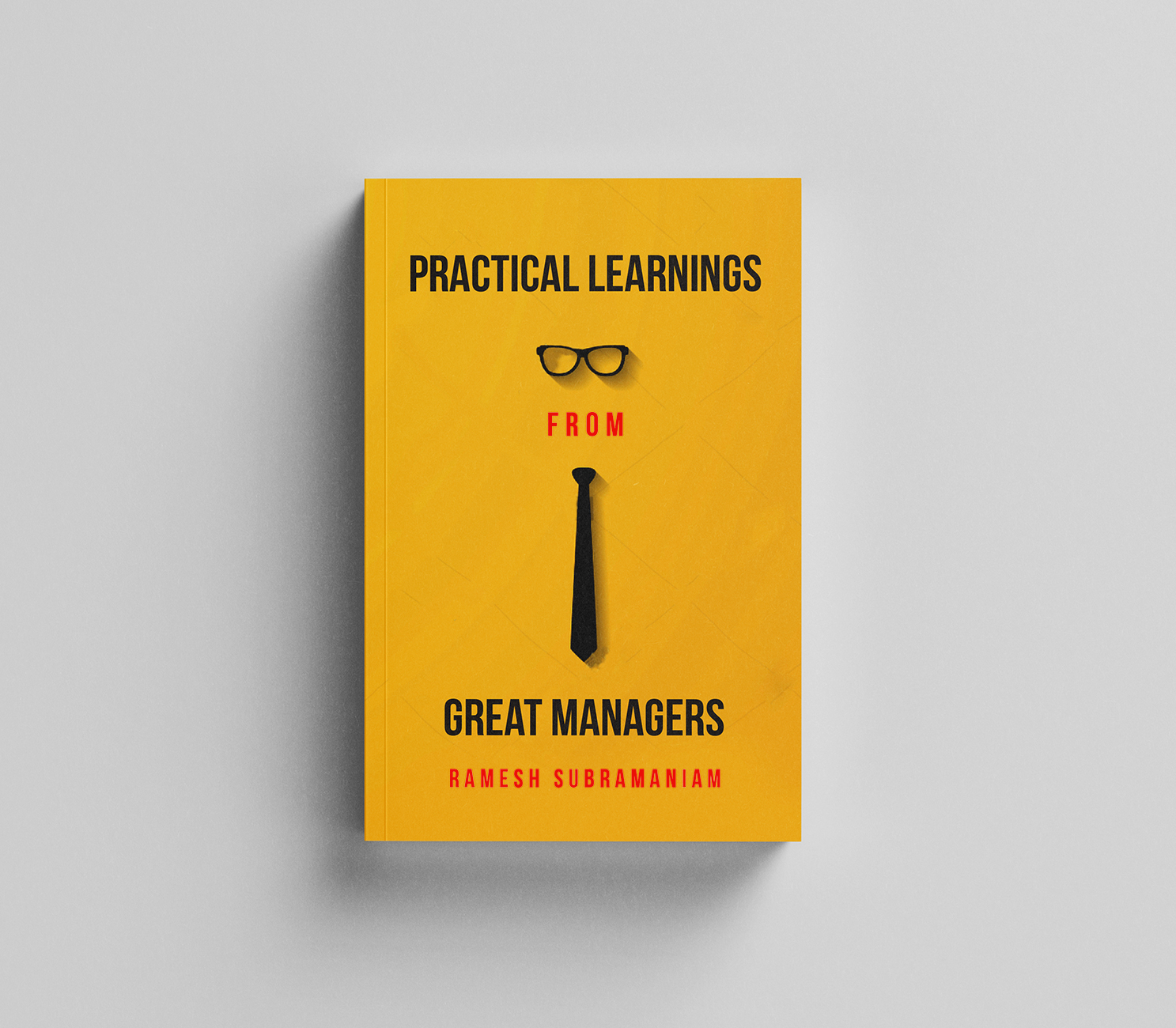
If you are looking for a book imparting management lessons backed by some shimmering jargon and quotes from famous experts in the field adorning its pages, this one is bound to disappoint you.
In case you have a researcher’s attitude and are hoping to unearth some new facts or discovering new management theories, you will find nothing here that may excite you or whet your appetite for a scholastic understanding of the science and art of management.
However, if you believe that the real world of management has lot of experiential learning to offer and that values and ethics play a crucial role in the sustained success of a business organization, you would be delighted to have come across this book, entitled Practical Lessons from Great Managers.
By the time you devour this plain vanilla offering, you would have realized that a formal management degree is but a launching pad of sorts. It is not essential to achieve success in one’s career. It may be merely desirable so as to advance your career prospects, especially given the corporate world’s preference for formal degrees.
The author of the book, Mr. Ramesh Subramaniam, offers keen insights into the practice of management. Based on his five decades long experience in the leather footwear industry and in industrial promotion, he shares his experiences in a very lucid manner. The narrative has an easy flow and touches upon various concepts, drawn from his observations about the kind of situations and challenges faced from time to time. The book is arranged in 14 chapters and runs into 104 odd pages. The presentation is not chronological in order. Rather, it takes up a concept and develops it across the entire span of his career.
Written to impart acquired knowledge, the book categorically deals with such facets of management like communication, strategy, integrity, customer relations, leadership, policies, innovation and the like. The underlying messages are very clear – the importance of training one’s mind, decision making based on sound values and cultivating a passion for continuous learning. This is akin to Stephen R. Covey, in his book The 7 Habits of Highly Effective People, exhorting managers to always keep their ‘saw sharpened.’
One of the typical practices which define a manufacturing mindset of yesteryears is brought out rather clearly in the book – that of employers taking a jaundiced view of employees taking leaves! Yet another is that of treating physical availability as a sign of higher productivity. In the current pandemic driven operations, where work-from-home has proved its value, albeit in other sectors of the economy, some of these notions may not be relevant.
I confess I had the good fortune of working with the author of the book for close to five years when we were together at the Footwear Division of Tata International. He was thorough in whatever he took up, was a good teacher and always encouraged me to maintain two diaries – one for routine work, another to keep a meticulous record of new things learnt on the job.
If you wish to learn creative problem-solving in such organizations as Bata, Tata, FDDI and Sri City, this is precisely the book you are looking for. If you are curious to know how such organizations follow ethics and values and how managers therein resolve the dilemmas inherent in such cases, it is a must-read.
Going through a pragmatic book of this kind, penned by a management veteran, is a pleasure. It would surely be a worthwhile journey for those who aspire to survive and excel in the corporate jungle!
(Amazon: https://www.amazon.in/dp/1636401961
Flipkart: https://www.flipkart.com/practical-lessons-great-managers/p/itmaf7071c6a6eb8?pid=9781636401966)
Management Lessons from ‘Mahabharata’
Posted in Management Lessons, tagged Alertness, Arrogance, Attachment, Cadbury, Cafe Coffee Day, Coca Cola, Commitment, Competence, Concentration, Deepak Parekh, Diageo, Domino's, Ethics in Business, Excelllence, Execution, Failure, Followership, G M Rao, GE, Gender Balance, Governance, Humility, Impartiality, Infosys, Inner Voice, KFC, Knowledge, Leadership, Loyalty, Mahabharata, Management Lessons, McDonald's, Merit, Moral Compass, Mukeeta Jhaveri, N R Narayana Murthy, Nestle, Perseverance, Pizza Hut, Promises, Ramayana, Stephen Covey, Strategy, Tatas, The Eighth Habit, Virtue, Yang, Yin on June 22, 2019| Leave a Comment »

Just like ‘Ramayana’, the epic of ‘Mahabharata’ also has many management lessons for the present day business leaders and managers. Greed, jealousy, quest for power, trying to achieve goals irrespective of the fairness of the means deployed – all these contradictions in life are very poignantly brought out.
Here are some lessons which could be drawn from the epic.
- Merit over Birth
When it comes to announcing a successor to his vast kingdom, King Bharata does not choose any of his own sons. Instead, he names Bhumanyu whom he considers more capable to manage the affairs of his kingdom. In a dynastic rule, seeds of democracy are thus sown.
In India Inc’s power rankings, professional CEOs are on the rise. Three of the top ten in the 2013 edition of ‘India Inc’s Most Powerful CEOs’ are professionals. Five years back, K V Kamath was the only professional in the top…
View original post 3,052 more words
Some Management Lessons from India
Posted in Management Lessons, tagged Bhagavad Gita, Chanakya, India, Mahabharata, Management, Ramayana, Sages, Scriptures, SQ, Sri Aurobindo, Stephen Covey, Thiruvalluvar, Values on June 25, 2018| Leave a Comment »
After the 2008 economic meltdown, the management world has discovered that CEOs need to follow not only a Business Compass but also a Moral Compass to steer the enterprises they happen to head. Improving one’s Spiritual Quotient is now a sheer business necessity, and shall be more so in the decades to come.
It is here that Indian scriptures and sages provide a ready template for managers of all sizes and shapes. Let us consider a few facets of some of the pearls of Indian wisdom which find ready application in the realm of management.
Some pearls of Indian wisdom
Ramayana
- The entire narrative highlights the importance of values in our lives.
 Businesses which follow a policy of righteousness and conduct their operations in an ethical manner enjoy tremendous brand equity in the market. This rubs off on their products as well as on their employees.
 - Lord Rama decides to…
View original post 1,739 more words
Some Management Lessons from India
Posted in Management Lessons, tagged Bhagavad Gita, Chanakya, India, Mahabharata, Management, Ramayana, Sages, Scriptures, SQ, Sri Aurobindo, Stephen Covey, Thiruvalluvar, Values on June 7, 2016| 1 Comment »
After the 2008 economic meltdown, the management world has discovered that CEOs need to follow not only a Business Compass but also a Moral Compass to steer the enterprises they happen to head. Improving one’s Spiritual Quotient is now a sheer business necessity, and shall be more so in the decades to come.
It is here that Indian scriptures and sages provide a ready template for managers of all sizes and shapes. Let us consider a few facets of some of the pearls of Indian wisdom which find ready application in the realm of management.
Some pearls of Indian wisdom
Ramayana
- The entire narrative highlights the importance of values in our lives.
 Businesses which follow a policy of righteousness and conduct their operations in an ethical manner enjoy tremendous brand equity in the market. This rubs off on their products as well as on their employees.
 - Lord Rama decides to leave his comfort zone for fourteen years and ends up connecting with lesser mortals better. Likewise, CEOs and marketing honchos of today who travel through the hinterland to get a better first-hand feel of the customer’s pulse do a far better job of servicing the market.
- An alliance with Sugreeva, coupled with an out-of-the-box unconventional army, eventually leads to Sita getting traced and Ravana getting vanquished. Mergers and alliances based on mutual respect and trust leads to better market share. Mighty objectives can be achieved even based on frugal resources.
- Beware of sycophants. A couplet in Sundara Kanda of Ramcharitmanasa clearly advises us to ignore the advice of a paid deputy, a doctor and a teacher who speak positively out of either fear or expectation of a gain. A king who acts upon such motivated advice loses his kingdom, his body and his righteousness (dharma) as well.
- When Sita gets banished from the kingdom, Rama’s role is not much different from that of a true-blue CEO whose loyalty to the company’s overall welfare is unflinching.
- CEOs and managers who entertain amorous intentions in respect of women team members and managements which look the other way just because they accord a higher priority to business goals than to the character of their top honchos could take a leaf out of Rama’s conduct.
Mahabharata
- The attachment of Dhritarashtra, the blind king, to his evil son,
 Duryodhana, proves to be highly destructive in nature. The entire Kuru clan gets eliminated. CEOs who promote their kith and kin without assessing the overall welfare of an organization get doomed likewise. Same holds true for many a political outfit.
 - Arjuna’s skills in archery are well-known. He achieves mighty feats based on his power of intense concentration on the job at hand. Multi-tasking, a misleading buzzword in current business parlance, has no place in his dictionary.
- The perseverance of Pandavas eventually pays off. Repeated setbacks do not deter them from seeking their share in the kingdom. War follows only when even a settlement with five villages only gets turned down by Duryodhana. The tenacity of bouncing back in the face of adversity that Pandavas display is worth emulating by MNCs which try to penetrate the Indian market.
- The unity of purpose amongst the five Pandava brothers is exemplary. Theirs is a unified and invincible family which goes through its trials and tribulations as a single unit. Likewise, large conglomerates like Tatas draw their strength from a set of core values. Each company within the group’s fold has a unique place in the market. The companies operate in fields as disparate as salt and software. Yet, all of them are connected by a common value system and a similar business philosophy.
- The manner in which Krishna persuades a demoralized Arjuna to take up his arms by enunciating the basic principles of life in the Bhagavad-Gita is exemplary.
Bhagavad-Gita
- One of the basic concepts enunciated by Krishna in the Bhagavad-
 Gita is that of the everlasting nature of the soul. The concept of a soul now finds a resonance even in modern management literature. In ‘The 8th Habit’, Stephen Covey urges professionals to pay heed to their ‘inner voice’. While proposing the whole person paradigm, he speaks of the four dimensions of a person – spirit, body, heart and mind.
 - Over its eighteen chapters, Krishna propounds the intricacies of different forms of Yoga, a philosophical system which treats all life as a management enterprise. It exhorts managers to be impartial, not favouring any one goal, any one mode any one or group of persons.
- A manager’s goal is the total overall good, in keeping with environmental necessities and societal requirements.
- He is not swayed by happiness or sorrow, ego or nepotism, greed or desire.
- He is not swayed by external temptations of tangible, material success and thus attains a state of happiness, peace and contentment. He radiates positivity and his decisions bring happiness sooner or later to maximum number of people.
- In other words, detachment is the key takeaway from Bhagavad-Gita. Detachment from the rewards of any work or action taken results into a neutral state of mind.
Thirukkural
This is a classic Tamil ‘sangam’ (3rd century BC to 4th century AD) literature

Thiruvalluvar
composition. It has 1,330 couplets or ‘kurals’. It was authored by the renowned poet Thiruvalluvar. It is replete with words of wisdom. It is simple and contains profound messages.
Thirukkural has 133 chapters, each containing 10 couplets. Broadly speaking, all the 133 chapters can be divided into three sections: Righteousness, Wealth and Love. Even though the contents are meant for kings of yore, many of the messages are equally relevant for CEOs of business world.
Consider these ‘kurals’:
- It is not good to forget the benefit received; but it is good to forget then and there the injury done by another. (108)
- Those who alienate friends by back-biting may have forgotten the art of making friends through suavity of speech. (187)
- Entering an assembly without sufficient knowledge is like playing at a dice board without its knowledge. (401)
- Men of foresight who guard themselves against coming events know no distress. (429)
- A king must act after measuring the strength of his plan, his own resources, the strength of the enemy and that of the ally. (471)
- Let men be chosen with deliberate care; when once the choice is made, let no suspicions crawl into your soul. (509)
- Strict enquiry and impartial justice mark the rule of a just monarch. (541)
- The greatness of a person is proportionate to the strength of his will power. (595)
- What you have clearly decided to do, do it without hesitation and delay. (668)
- An unfinished deed and an unfinished fight will, like a half-extinguished fire, cause ultimate harm. (674)
Each ‘kural’ is complete in itself. It deserves to be meditated upon, one at a time, and imbibed in our day-to-day lives. One wonders at the keen observations of the poet, his sagacity and the effort he has taken to collate and compile this beautiful work, replete with words of wisdom which continue to be as relevant today as they were in the days of yore.
Chanakya Neeti
Chanakya is a well-known Indian teacher, philosopher, economist, jurist and  royal advisor. He is said to have lived from 350-275 BCE. He authored the ancient Indian political treatise, the Arthshastra. He is considered a pioneer in the field of political science. He assisted the first Mauryan emperor, Chandragupta, in his rise to power. He is widely credited for having played an important role in the establishment of the Mauryan Empire.
One of his seminal works happens to be Chanakya Neeti, or Chanakya’s Aphorisms. It is a treasure trove of wisdom and speaks of the criteria to be used to judge people, the need for keeping one’s intentions confidential, the value of continued learning, situations wherein it pays to be a hypocrite, the supremacy of one’s duty, and the like.
He draws an interesting analogy between the animal kingdom and those who waste their time criticizing others. He holds such persons to be worse than the crows amongst birds and dogs amongst animals.
Sri Aurobindo
Profound thoughts of one of the prominent Indian seers of modern times, Sri Aurobindo, could be interpreted to propose a different paradigm of management. 
Whereas the Western model of management thought is based on such functions as Marketing, Finance, Production and People, the Eastern model, so to say, could be said to comprise four pillars of management: Perfection, Harmony, Power and Wisdom. Collectively, this paradigm could be called Integral Management.
Analyze the conduct of any business leader and one is apt to find the underlying presence of all these elements. It does not matter whether a manager handles marketing, finance, production or human resources.
- It is by striving for perfection that one achieves excellence in results. Being perfect implies putting our best foot forward and doing our best under the given circumstances. It is the striving for perfection which assumes significance.
When Apple launches a new product, the whole market is abuzz. The toil and hard work which goes into creating and launching a new product is exemplary indeed.
- A harmonious conduct with respect to all key stakeholders is essential for sustained success in business. Relations with financial institutions, regulatory authorities, customers, distributors, suppliers, staff and labour need to be based on a harmonious blend of business needs and the principles of natural justice.
The manner in which the Taj Hotel management responded after the 26/11 terror attack is a shining example of harmonious conduct of business.
- Use of power with a sense of responsibility, that too for the greater good, leads to higher brand equity for a business. Marketing prowess can influence customers’ decision making, and has to be directed at their needs and not wants. Financial strength can also be leveraged to do something useful for the society. Administrative authority comes with a great deal of responsibility.
The case of Dr Pachauri being shown the door by TERI in a sexual harassment case is just one of the several examples of how the high and mighty should not exercise the power at their command.
- Wisdom in decision-making leads to a sustainable business, which gives back to the society and the environment what it draws from the same.
In September 1898, Jamsetji Nusserwanji Tata decided to set aside half of his wealth as an endowment to establish a university of science. His donation was worth Rs. 30 lacs in those days. The other half he left for his two sons. The Indian Institute of Science eventually came up in 1911, paving the way for quality research and teaching in India.
This is the kind of unique learning which an aspiring manager receives in her formative years in the Eastern world.
Managers with a Western Mind and an Eastern Heart
Successful CEOs and managers of the future would need to be those who have a Western Mind and an Eastern Heart.
The success of the likes of Satya Nadella (currently the CEO of Microsoft) and Sundar Pichai (currently the CEO of Google Inc) goes on to show the growing importance of managers who are not only exposed to the Western models of management but also steeped in Eastern wisdom in the realm of management.
(Presented as a talk to the members of the Pondicherry Chapter of Madras Management Association during June 2016)
(Related Posts:
https://ashokbhatia.wordpress.com/2013/05/27/management-lessons-from-ramayana
https://ashokbhatia.wordpress.com/2013/07/12/management-lessons-from-mahabharata
https://ashokbhatia.wordpress.com/2015/09/04/management-lessons-from-the-life-of-lord-krishna
https://ashokbhatia.wordpress.com/2015/01/16/management-lessons-from-thirukkural
https://ashokbhatia.wordpress.com/2016/03/26/harmony-in-management-a-seminar-at-pondicherry-india)
A Portuguese connection
Posted in Management Lessons, tagged Book, CEO World, India, Peer Groups, Portugal, Stephen Covey, Vida Economica on April 9, 2016| Leave a Comment »
 An interview of your truly which appeared in Vida Economica in Portuguese some time back:
1. You are publishing your book in Portugal in March. What’s your relationship with Portugal? Why Portugal to publish your book?
It would be recalled that the relationship between our two countries goes back quite a few centuries.
At the personal level, I have several friends from Goa and Cochin in India, both of which were the seat of power for Portugal till the 1960s. I have always people from these areas to be highly committed but fun-loving at the same time.
At the professional level, having worked in the leather footwear industry for a long time, I had occasionally been in touch with some such businesses in North of Portugal.
Some time back, I came across CEO World, and felt connected to your lovely country.
Relationships evolve over a period of time. It is time to improve the engagement between our two countries. Traditional knowledge and management wisdom is just one facet of the possibilities. That is how, the thought of publishing a book here came up.
2. Amazon said recently that they will not fail to be a major player in India (as it happened in China). They will invest much more this time. How do you see the opportunities for Portuguese companies in India?
Against the gloomy backdrop of major economies, India happens to be a bright spot in the world today. The new government has grand plans for development and is taking steps to improve the ease of doing business in India. The potential in the semi-urban and rural pockets of India is great. Portuguese businesses have a unique opportunity now to enter into tie-ups with companies of Indian origin.
Globally, the largest pool of educated manpower willing to work hard is available in India. History has taught Indians to live harmoniously together, despite wide-ranging diversity in terms of religion, languages and castes. These are unique strengths which can be effectively leveraged by businesses in Portugal.
Companies which want to do business in India would do well to (a) Identify their key strengths which would be of relevance to India, whether in the field of infrastructure, renewable energy, farm productivity, leisure and tourism, etc, (b) Take the help of experts who can put them in touch with reliable business partners in India, and (c) Be clear and patient about the characteristics of the market segment they identify to cater to.
3. “Surviving in the Corporate Jungle” mixes humour with management. Why do you think it should be read by Portuguese managers?
Management concepts are universal in nature. When you wish to motivate your team members, it does not matter whether you are in Porto or in Mumbai. When you are down-sizing, the challenges are the same, irrespective of whether you are in Lisbon or in Delhi.
Portuguese managers who follow one of the effective habits popularized by Stephen R Covey – KEEP SHARPENING YOUR SAW – would greatly benefit from the managerial wisdom of India.
The messages conveyed in the book are serious in nature. Their packaging is not. Profound truths conveyed with a dash of humour, I believe, have a better chance of being effectively communicated.
I believe the upcoming book can help managers in Portugal and elsewhere become smarter, in other words, more effective.
4. Why did you decide to become a founding member of the Portuguese start-up CEO WORLD?
We live in times when the world is shrinking faster than ever. We are at the cusp of a new kind of ‘Industrial Revolution’ which is knowledge-driven. Call it a ‘Binary Revolution’, if you will. Technology is making information more democratic in nature.
Start-ups which enable sharing of management practices across the world serve a useful purpose in the society. Moreover, when we share challenges and discuss possible solutions on a global platform, we gain in terms of empathy and expand our consciousness. We are then making a small but significant contribution towards global harmony, much like a small group of violinists which is a part of a grand orchestra.
For example, one of the platforms CEO World offers is that of Peer Groups. Here, I get to share my current challenges with CEOs from all over the world on a video conference platform. There is no conflict of interest, there is accountability, and there are no travel costs involved. As and when one is visiting each other, one can take the discussion forward.
Peer Groups have been in operation since the last 60/70 years in such countries as the US, Canada, AU, NZ and UK. But the novel idea being practiced at CEO World is that of virtual peer groups which are global in nature. This is a disruptive concept led by a Portuguese start-up.
5. What are your plans for the future and how do you envision your relationship with Portugal?
As a person who suffers from ‘Professoritis’, the plans are for an enhanced level of engagement with the management institutes and associations in Portugal. Another book proposal is on the drawing board. Given support, I would love to do a book comparing the managerial styles of CEOs in Portugal and in India.
It would also be exciting to connect with Portuguese companies who want to have a better understanding of the Indian culture and market and vice versa. Perhaps I can make a modest contribution towards building more bridges between our two countries. This gets aligned with the mission of CEO WORLD: of decreasing the gap between cultures and bringing about a better understanding between the two populations.
(Source: Vida Economica, February 26, 2016)
You can buy the book here.
(Related Posts:
The book: Como Sobreviver Na Selva Empresarial – Guia prático 2.0
Posted in Management Lessons, tagged Book, C Northcote Parkinson, CEO World, Humour, J R D Tata, Laurence J Peter, Liberty Seguros, Management, Peter F Drucker, Philip Kotler, Portugal, Ratan Tata, Sharu Rangnekar, Stephen Covey, Vida Economica on February 28, 2016| Leave a Comment »
Surviving in the Corporate Jungle

This is in continuation of an earlier post, providing a short introduction to a book by yours truly. The Portugese version of the book is getting launched in Portugal shortly.
The launch event in Porto is planned on the 2nd of March, along with a talk on “Work Life Harmony” at the Catolica Porto Business School of Universidade Catolica do Porto.
The launch event in Lisbon is planned at Universidade Europeia on the 3rd of March, 2016, as part of an event titled ‘Passport to India.’
Why the reference to a jungle?
One, it is fashionable these days to talk about environment and sustainability. Two, in many ways, the type of organizations we work in and the kind of people we meet there, many parallels can be drawn.
I believe there are three kinds of organizations: the Circus kind, the Zoo kind and the Jungle kind.
Whatever the kind you work for, you get to see Lion King bosses who are the lords and masters of all they survey. Mentors who keep an eye on the quality of work that you do, much like a giraffe would.
Colleagues who are like enchanting deers, always willing to support you. Subordinates who are snakes in the grass, waiting for an opportunity to back-stab you. Customers who are as prickly as a porcupine. Suppliers who are as cunning as a fox.
Fed up with a company? Change over to another one. You would still find people there with similar traits. Only the names and the faces would change. In other words, there is no escaping the jungle!
Some bouquets
Those who deserve bouquets for what they have unwittingly contributed towards the conception as well as the delivery of this book:
My friends, philosophers and guides: They continued to egg me on to write a book of this kind – late Prof. S. P. Singh, Ashok Kalra, S. P. Krishnamurthy, Vipin Dewan, C. S. Dwivedi, Prof. R. P. Raya, and a few others.
Thought leaders, like Peter F. Drucker, Philip Kotler, J. R. D. Tata, C. Northcote Parkinson, Laurence J. Peter, Ratan Tata, Sharu Rangnekar, Stephen R. Covey and many others.
Hapless souls who have undergone the trauma of going through and commenting upon the rough portions of this book: Miguel Dias, Founder, CEO World, Jose Antonio de Sousa, President & CEO, Liberty Seguros, Jack Jacoby, Executive Chairman, Jacoby Consulting Group Pty Ltd, and a few others.
Those who have worked so very hard on the illustrations – thereby making the book a wee bit livelier.
Vida Economica, the publishers, who showed the courage to pick up a whacky manuscript from an unknown first-time author.
Quite a few others who have burnt the midnight oil, acted as proficient midwives and taken me through the labour pains of the editing and publishing process, ensuring that the baby got delivered.
The souls which play the role of my immediate family members in this life, without whose support this book would not have seen the light of the day.
Special thanks are due to my soul-mate and the very young ones, without whose support the book could have been finished in half the time it actually took to write.
Few brickbats
If any brickbats are to be hurled, those have to be unerringly directed at the author of the book. However, before flexing your muscles, please be so kind as to check if he is covered for such exigencies by any insurance policy issued by Liberty Seguros.
You can buy the book here.
(Related Post:
https://ashokbhatia.wordpress.com/2016/02/26/the-book-como-sobreviver-na-selva-empresarial-guia-pratico)
Grooming future Business Leaders – A Spiritual Approach (Part 2)
Posted in Management Lessons, tagged Chanakya Neeti, Gita, Leadership, Learning from Failures, Mahabharata, Management, Moral Compass, Peter Drucker, Ramayana, Ramcharitmanas by Tulasidas, Savitri, Spirituality, Sri Aurobindo, Stephen Covey, Yama on December 5, 2014| 2 Comments »
Learning from Failures
With a higher level of uncertainty, a leader’s chances of failure would also go up. A failure which results into pain and suffering can also be taken as a boon, as time often proves. If the right lessons are drawn, the chances of a failure repeating itself in future can be drastically brought down.
Consider these words of wisdom from Narad when he tries to explain to Savitri’s mother as to why she must marry Satyavan and suffer on the terrestrial plane.
‘Although the shaping god’s tremendous touch
Is torture unbearable to mortal nerves,
The fiery spirit grows within
And feels a joy in every titan pang.’
(Savitri, page 444)
Leaders wear their crowns of glory. But the crown does not come cheap. The cost they have to bear is that of the cross they have to carry.
‘Hard is the world-redeemer’s heavy task;
The world itself becomes his adversary,
Those he would save are his antagonists:
This world is in love with its own ignorance,
Its darkness turns away from the savior light,
It gives the cross in payment for the crown.’
(Savitri, page 448)
Management by Consent
In the times to come, the profile of the followers would also be different. Hierarchical authority is already proving difficult to manage change; there is no reason to believe this would not be even more so in the future. The followers would demand a higher degree of participation in the decision-making processes. Leaders who recognize this need of their followers and create a working environment which enables the same would achieve higher levels of efficiency and effectiveness in their business processes.
Creating a non-coercive environment in which employees and other stakeholders are clear about the corporate identity and the mission would be far more important than it is today. Reverse mentoring would be more a norm than an exception in the days to come.
Consider the all-powerful God of Death. When accosted by Savitri, he does not dictate terms. He allows a reasonable discussion on the subject. He keeps changing the line of his arguments, intent upon denying Savitri the life of her husband. He tries his best to dissuade her from changing one of the basic laws of nature. He even declares “I, Death, am the gate of immortality.”
Savitri is undaunted. She points out that if this creation has arisen out of a meaningless void, if matter can come forth from energy, and life from matter, and mind from life, and if soul can peep through the flesh, what is wrong in hoping that the imperfect man of today will someday transform himself into the perfection of God?
The God of Death eventually loses the argument, his authority and also his stature. But his greatness lies in the fact that he has the good grace to permit and then lose an argument to a person who looks like a mere mortal. Realizing her sincerity of purpose, he even grants her a boon.
In Ramayana, the villain is Ravana, a highly learned and accomplished person. One of the reasons for his downfall is to neglect the advice of nay-sayers. His wife, Mandodari, brother Vibheeshana and grandfather Malyavaan – all advise him to return Sita to Rama. Instead, he chooses to listen to his courtiers who play on his ego and pride and advise him not to do so.
A couplet in Sundara Kanda of Ramcharitmanasa clearly advises us to ignore the advice of a paid deputy, a doctor and a teacher who speak positively out of either fear or expectation of a gain. A king who acts upon such motivated advice loses his kingdom, his body and his righteousness (dharma) as well.
When Lord Rama decides to accept Vibhishana in his fold, he does not simply order the same. He consults all seniors present before arriving at a decision.
Monsanto’s CEO, Robert Shapiro, had the ability to go against traditional hierarchy. He initiated strategy sessions with cross-sections of employees of different ranks, specialties and geographical perspectives and reaped rich dividends for his company.
The Moral Compass
Leaders who believe in sustainable businesses would not only use their commercial compass while determining the direction to take. Using a moral compass would be a valuable trait amongst the future leaders. A strong inner core, embedded with a value system which recognizes the needs of the society at large, would be a great quality to have. A pre-condition for employing key managers would be their endorsement and support of the core values of the business.
Sticking to some core values which are steeped in righteousness eventually leads to success. The main protagonist, Rama, is depicted in Ramayana as an epitome of virtue. He is an ideal king, an ideal son and a pragmatic person. He sets high ethical standards in warfare and invariably sides with dharma, or righteousness.
One of the basic concepts enunciated by Shri Krishna in the Bhagavad Gita is that of the everlasting nature of the soul. The concept of a soul now finds a resonance even in modern management literature. In ‘The 8th Habit’, Stephen Covey urges professionals to pay heed to their ‘inner voice’. While proposing the whole person paradigm, he speaks of the four dimensions of a person – spirit, body, heart and mind.
A random sample of all successful business houses which have been around for more than a century now – Siemens and Tatas, for instance – is ample proof that ethics in business do pay dividends in the long run. Names of such business houses enjoy tremendous brand equity in the market; understandably, that rubs off on their products as well.
When the likes of Siemens and Wal-Mart come clean on their misdemeanors, they set an excellent example of probity in the business world. When Mr. Ratan Tata, the Chairman Emeritus of India’s salt to software conglomerate, rues his inability to enter some fields of business because of the absence of a level playing field in India, his focus is on one of the core values of his business.
Indra Nooyi is charting a unique course for Pepsico globally, shedding traditional markets and going in for healthier food products instead.
Preparing Leaders for 2025!
In a careful reading of the major turning events in the Mahabharata, Krishna emerges as an eminent strategist. He keeps Draupadi’s frustration under check. He knows that Kauravas would never agree to let Pandavas have their share of the kingdom in a peaceful manner. Yet, he himself goes to plead their cause so that peace is given a last chance.
Eventually, all mighty warriors on the Kauaravas’ side fall with specific inputs from Krishna. In case of Bhishma,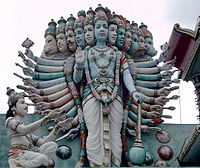 Arjuna attacks him standing behind Shikhandi. Dronacharya is misled to believe that his son Ashwatthama has fallen at the behest of Krishna. When Duryodhana appears to be invincible in his mace fight with Bhima, he gestures to the latter to hit the former below the navel, thereby incapacitating him. When Balarama gets upset with Bhima for having broken a cardinal principle in his final fight with Duryodhana, Krishna intervenes to pacify him by reminding him of the several injustices perpetrated by the Kauravas on Pandavas.
Much like a business leader of modern times, Krishna displays vision, flexibility in approach, resourcefulness and an excellent capacity to command. He is the trouble-shooter par excellence who leads, inspires, guides and motivates.
Captains of industry today can set a personal example by getting cross-functional teams in their organizations to come up with suggestions to face the challenges of future effectively. They can also emulate some of the traits, thereby leading to a trickle-down effect across the entire organization.
HR honchos can re-design their appraisal processes and re-assess training needs of key managers to address this issue.
Those in senior management positions can consciously plan to hone their skills in areas they find themselves deficient.
Management institutes can tweak their course content to ensure that those leaving their hallowed portals possess these traits, so as to improve their contribution towards the organizations they decide to either float or serve.
Indian scriptures are replete with instances which demonstrate the importance of good values and ethics. Ramayana speaks of righteousness to be upheld at any cost. Mahabharata tells us to limit our ambitions and desires and be reasonable in life, lest a fate worse than death may befall us. Bhagavad Gita – the song celestial – is like an ocean full of practical advice for managers young and old alike. Chanakya Neeti is full of pearls of wisdom. All these are waiting to be explored by those who are interested in being spiritual as well as practical in their approach to problem solving and leading people to their goals.
(Note: On matters spiritual, inputs from a subject expert, philosopher and guide are gratefully acknowledged.)
[Related Post: https://ashokbhatia.wordpress.com/2014/12/02/grooming-future-business-leaders-a-spiritual-approach-part-1%5D
-
Recent Posts
Buy the Book

buy the book
Categories
-
cc
Tags
Art Bertie Wooster Bhagavad Gita Bingo Little Birthday Blake Mouton Grid Blogging Bollywood Book Campus Life CEO Chivalry Consciousness Coronavirus Corruption Edwin Empress of Blandings English Ethics Feminism Happiness Health Hindi Hollywood Human Values Humour India Jeeves Kalidasa KIds Leadership linkedin Literature Lord Emsworth Love Lyrics Mahabharata Mahatma Gandhi Management Movies Music Norway Paintings Panjab University People P G Wodehouse Politics Pondicherry Portugal Psmith Puducherry Rabindranath Tagore Ramayana Ritusamhara R K Laxman Romance Rosie M Banks Rupert Psmith Seasons Shakespeare Social Media Something Fresh Songs SPANDAN Spirituality SQ Sri Aurobindo Stephen Covey Switzerland Tatas Thos UBS Values Wodehousitis WomenArchives
- March 2026 (1)
- February 2026 (5)
- January 2026 (2)
- December 2025 (1)
- November 2025 (2)
- October 2025 (2)
- September 2025 (3)
- August 2025 (3)
- July 2025 (2)
- June 2025 (2)
- May 2025 (4)
- April 2025 (5)
- March 2025 (5)
- February 2025 (4)
- January 2025 (4)
- December 2024 (6)
- November 2024 (6)
- October 2024 (6)
- September 2024 (5)
- August 2024 (5)
- July 2024 (4)
- June 2024 (4)
- May 2024 (5)
- April 2024 (5)
- March 2024 (3)
- February 2024 (1)
- January 2024 (4)
- December 2023 (2)
- November 2023 (3)
- October 2023 (3)
- September 2023 (3)
- August 2023 (5)
- July 2023 (5)
- June 2023 (7)
- May 2023 (6)
- April 2023 (6)
- March 2023 (8)
- February 2023 (8)
- January 2023 (7)
- December 2022 (6)
- November 2022 (5)
- October 2022 (8)
- September 2022 (5)
- August 2022 (6)
- July 2022 (6)
- June 2022 (8)
- May 2022 (7)
- April 2022 (8)
- March 2022 (7)
- February 2022 (3)
- January 2022 (7)
- December 2021 (4)
- November 2021 (8)
- October 2021 (7)
- September 2021 (6)
- August 2021 (7)
- July 2021 (7)
- June 2021 (9)
- May 2021 (8)
- April 2021 (9)
- March 2021 (10)
- February 2021 (8)
- January 2021 (8)
- December 2020 (7)
- November 2020 (6)
- October 2020 (5)
- September 2020 (9)
- August 2020 (9)
- July 2020 (8)
- June 2020 (8)
- May 2020 (6)
- April 2020 (5)
- March 2020 (7)
- February 2020 (4)
- January 2020 (7)
- December 2019 (12)
- November 2019 (10)
- October 2019 (5)
- September 2019 (9)
- August 2019 (10)
- July 2019 (9)
- June 2019 (14)
- May 2019 (13)
- April 2019 (14)
- March 2019 (11)
- February 2019 (11)
- January 2019 (14)
- December 2018 (12)
- November 2018 (12)
- October 2018 (14)
- September 2018 (9)
- August 2018 (10)
- July 2018 (10)
- June 2018 (8)
- May 2018 (11)
- April 2018 (11)
- March 2018 (6)
- February 2018 (9)
- January 2018 (10)
- December 2017 (10)
- November 2017 (9)
- October 2017 (8)
- September 2017 (11)
- August 2017 (10)
- July 2017 (10)
- June 2017 (11)
- May 2017 (9)
- April 2017 (7)
- March 2017 (7)
- February 2017 (8)
- January 2017 (10)
- December 2016 (9)
- November 2016 (11)
- October 2016 (10)
- September 2016 (10)
- August 2016 (9)
- July 2016 (6)
- June 2016 (10)
- May 2016 (10)
- April 2016 (10)
- March 2016 (10)
- February 2016 (12)
- January 2016 (10)
- December 2015 (11)
- November 2015 (11)
- October 2015 (10)
- September 2015 (10)
- August 2015 (10)
- July 2015 (10)
- June 2015 (10)
- May 2015 (10)
- April 2015 (10)
- March 2015 (9)
- February 2015 (10)
- January 2015 (8)
- December 2014 (9)
- November 2014 (8)
- October 2014 (8)
- September 2014 (7)
- August 2014 (7)
- July 2014 (7)
- June 2014 (7)
- May 2014 (7)
- April 2014 (7)
- March 2014 (7)
- February 2014 (6)
- January 2014 (7)
- December 2013 (6)
- November 2013 (6)
- October 2013 (6)
- September 2013 (6)
- August 2013 (6)
- July 2013 (6)
- June 2013 (6)
- May 2013 (6)
- April 2013 (6)
- March 2013 (6)
- February 2013 (6)
- January 2013 (6)
- December 2012 (4)
- November 2012 (4)
- October 2012 (3)
- September 2012 (2)
- August 2012 (4)
- July 2012 (2)
- June 2012 (2)
- May 2012 (2)
- April 2012 (2)
- March 2012 (2)
- February 2012 (3)
- December 2011 (3)
- November 2011 (1)
- October 2011 (2)
- September 2011 (2)
- August 2011 (2)
- July 2011 (2)
- June 2011 (3)

 ashokbhatia