Posts Tagged ‘WEF’
A few things which make me angry these days!
Posted in A Vibrant Life!, tagged Association for Democratic Reforms, Autobiographical, Business, CBEC, CEN, Conscious Leaders, Constitutional Reforms, Corruption, Democracy, Dictatorship, Dissent, Economic Growth, Ethics, Female Empowerment, Gender Bias, Hari Shankar Parsai, Human Values, Humour, Inequality, Leadership, Mahatma Gandhi, Management, Media, Oxfam, P G Wodehouse, Patriarchy, Politics, Samudra Manthan, Satire, Shakti Leadership, Silence, Social Harmony, Social Media, Soft Power, SPANDAN, Vales, Vasudhaiv kutumbukam, WEF, WWC, Zombies on February 21, 2021| 5 Comments »
(Non-statutory warning: Reading the article below could be injurious to readers’ mental health and leave them a wee bit depressed. Caution is advised.
The author is reasonably certain that this article is not an outcome of the kind of wholesome pessimism which is believed to envelope one in advancing age.)
There is a mood of despondency which descends upon my frail grey cells once in a while. Dark clouds which have gathered upon me are accompanied by sinister rumblings. Lightning streaks of a menacing kind keep lighting up the sky, duly followed by thunderous howls which pierce my ears. One peers into the future and one shudders to think of the kind of world one would leave behind for our progeny to live in. Tectonic plates of our society appear to be shifting, causing major upheavals.
No, one does not allude to the pandemic stalking us these days. Nor does one refer to such universal problems like global warming, economic disparities, widespread poverty and illiteracy etc. Instead, one refers here to tectonic plates of a different kind – the ones which impact our value systems, human values, social harmony, honesty, fairness and justice, norms of democracy, absence of truthful and factual information, materialistic progress, and the like.
Consider what is happening around us these days.
Some Ground Realities
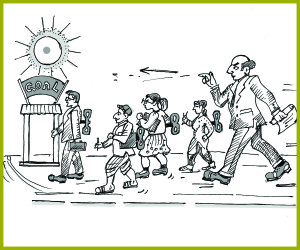
The Lack of a Conscious Approach to Business Goals
Businesses continue to be driven by greed and avarice alone. Hapless CEOs have no other option but to keep delivering results from one quarter to the next.
There are no guarantees that Volkswagen will not soon come up with yet another technical trick to befool the regulators and its customers. Boeing may yet again secure approvals for launching a model which might put air passengers’ lives at risk. Financial scams will keep tumbling out of corporate closets at a standard frequency which might put an atomic clock to shame.
Think of rising inequalities. Consider a report presented by Oxfam at the January 2021 World Economic Forum’s Davos Agenda, titled ‘The Inequality Virus’. It says that the 1,000 richest people on the planet recouped their Covid-19 losses within just nine months of 2020, whereas the world’s poorest could take up to a decade to recover from the pandemic induced setback. I am certain that philanthropic initiatives of the richest have not suddenly seen a proportionately higher uptick.
So, every crisis that humanity faces turns out to be an opportunity for the well endowed to amass greater wealth. Is this the kind of Materialistic and Unconscious Business model that we wish to continue following? Our answer would of course depend based on whether we are from the ‘haves’ side or the ‘have-nots’ side of the society.
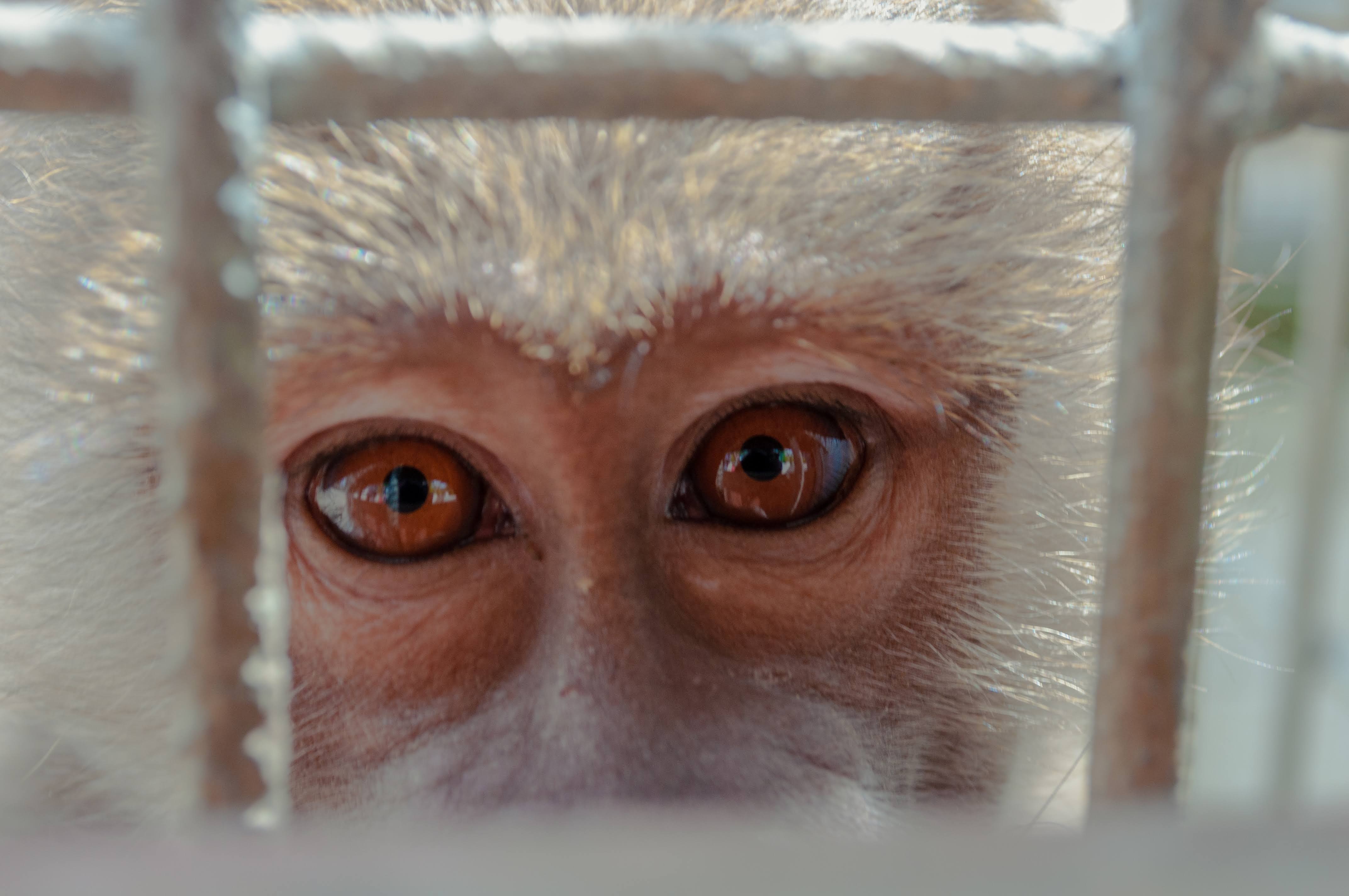
The Monkey Business Called Politics
Probity and decency in the public life of our leaders is long since buried. Gone are the days when vibrant democracies needed a strong opposition to thrive. These days, even the President of a country can himself turn against the hallowed portals of democracy and send rampaging mobs braying for the blood of those out to declare him defeated in an election. In other words, it is one of those promotional offers – you vote in a President and get another one for free!
The aforesaid top boss’ term has revealed enormous gaps between the ideals of American democracy and the reality. Even before he exhorted his followers to attack the Capitol and the legislative branch of government, he ignored watchdog rulings and constitutional safeguards, pressed to overturn the outcome of an election, and pardoned those who covered for him, all the while funneling taxpayer dollars to his family business.
In yet another country, the main adversary runs the risk of not only being poisoned but also getting imprisoned on some ground or the other, while those in power brutally suppress dissent marked by men’s underwear and gold-painted toilet cleaning brushes.
World over, there is no dearth of leaders who have dictatorial ambitions but mask these well with democratic credentials. Speak of transparent political funding and all one gets is the silence of a tomb.
In yet another country, lies, obfuscation of facts and clever data management seem to have become a norm. Photo-ops, positive optics and feel-good media feed by devout followers keep the entire nation in thrall. Attempts to stifle dissent and to paint anyone not toeing the rulers’ line as unpatriotic continue unchecked. Getting offended by comments made by those living thousands of miles away appears to have become a national pastime. When a stand-up comedian speaks up, our clairvoyant nature allows us to guess what offending remark he is yet to make. Prompt legal action gets taken, nipping the intended mischief in the bud.
Building physical infrastructure is simply great. So is the drive to embrace technology to make life of a common man simpler. But when this comes at the cost of demolishing social harmony and making a democratic country free of any kind of opposition worth its while, the long term price of a ‘progress’ of this kind is rather high. I am not an economist, but I wonder if an economy can grow while the society itself is getting fragmented.
World over, quite a few governments have even used the pandemic as a cover to suppress dissent and cut short processes to introduce laws of an unpopular kind. In the process, their soft power is bound to dive down.

The Rudderless Social (and Anti-Social) Media
During 2020, in India, when our northern neighbour had encroached upon our land, and when the media should have been doling out useful health tips for people to stay safe in the midst of a pandemic, the only ‘breaking news’ was the suspected suicide of a Bollywood actor and the activities of his girl friend.
Social media, duly backed by smart algorithms, Artificial Intelligence and Machine Learning, keeps shaping our thought processes, our choices, our preferences, our perceptions and our beliefs. We are already living in a fish bowl where the law makers as well as the private players are hands in glove to sell detailed information about us to the highest bidder. Privacy concerns and personal liberties be damned. Pretty soon, it may happen that government support is available only to those who have a pro-government presence on various media platforms.
The whole idea is perhaps to help a lay person evolve into a dumb chum of the first order, unable to use his own judgement in matters of public importance; essentially, to numb the person’s grey cells. In other words, we all become zombies (or jack asses, if you prefer) of the first order.
Little do we realize that there are no free lunches in life. Any service available to us free of cost over the world-wide-web we have spun around ourselves only means that ‘We, the People’ are the product on sale!
If our social media czars do not come up with a realistic code of conduct for themselves soon enough, governments, to salvage their public image, may soon have to start dishing out harsher laws.
Perhaps, one of the czars will soon set up an academy to groom many of our whizz kids into becoming ethical hackers and algorithm developers.

Neglecting Half of the Homo Sapiens
If they stay at home, their contribution to society is never even acknowledged. Rather, it is taken for granted. If they venture out of their home and hearth, lustful gazes disrobe them mentally. If they get violated, they only have to take the rap. In war zones, they are the instruments used to inflict deep wounds on the psyche of the other.
Yes, I refer to the tribe of the so-called delicately nurtured. They are the ones upon whom Mother Nature has conferred the unique capacity of keeping our civilization alive and ticking. They may be as tough as nails and proving themselves to be better than the so-called sterner sex in all fields of human endeavour. A fact which was reinforced yet again when a deadly pandemic arrived at our doorsteps. In public, they may get put on a pedestal and revered. But in private, they often get treated like a doormat, treated as mere objects, only to be used and abused.
Doting lover boys, upon metamorphosing into husbands, often shed their chivalrous masks and start behaving like dictators. If a family breaks up owing to mistreatment, ridicule, abuse and violence at the hands of their husbands, it is the lady of the house alone who gets the entire blame – for being obstinate and uncompromising. The general view is that she is a gold digger of sorts.
Such a patriarchal mindset is not an exclusive prerogative of the poor alone. Nor does it respect geographical boundaries. Education levels also do not make much of a difference. Take couples across different countries, economic status and education level and one is apt to find this to be a universal phenomenon. The Chivalry Quotient may vary across all these parameters, but a singular shortage of preux chevaliers is felt all over our planet. Religious beliefs and even some spiritual tenets reinforce such derogatory views.
In respect of the legal framework, our experience in India has been a mixed one. The females have learnt the art of terrorizing their husbands and their families by foisting cases of imagined harassment, with the sole aim of securing better settlements while seeking divorce. Surely, the training in chivalry truly begins at home – either in the kitchen or at the dining table. Laws can play only a limited role.
The tectonic shift taking place here is that of divorce rates going up and couples preferring to remain friends with perks. Upwardly mobile wives who can stand on their own feet detest drawing husbands who refuse to wear skirts and help out with domestic chores. Once the family structure crumbles, there is a higher probability of the value system of the next generation going for a toss.
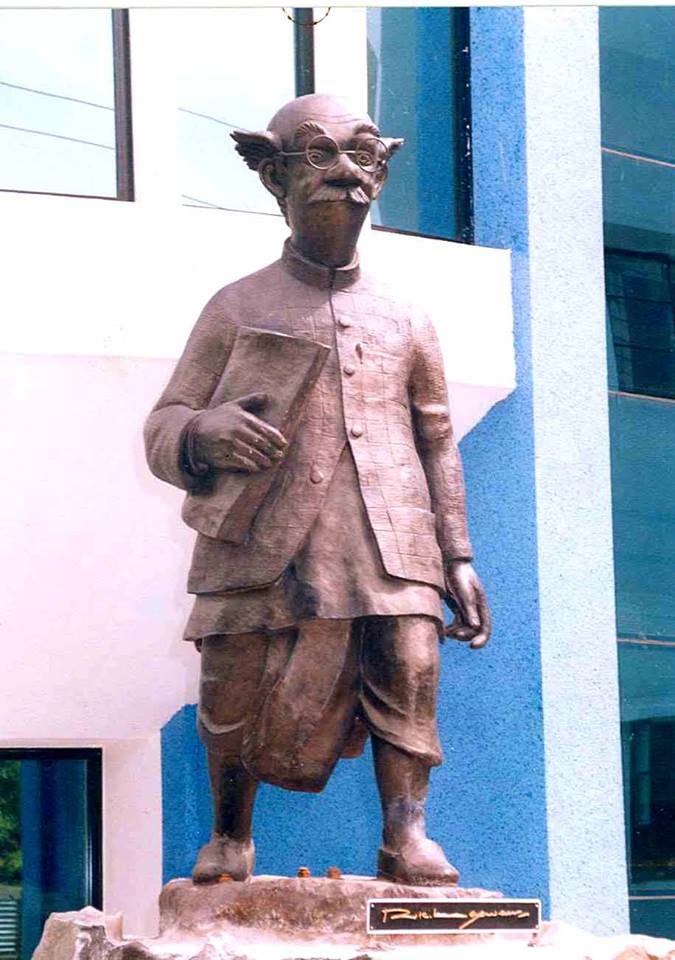
The Silence of the Lambs
In many of the issues brought out above, are we ourselves not responsible for the mess that we are in? The silence of our intellectuals, the self-centredness and public apathy of the middle class which more or less upholds values in society and the mute surrender of the common man – are these not some of the factors which have enabled this situation to have come about?
Many years back, I vaguely recall having read a satirical story in Hindi, written by a well known humourist in the language, Hari Shankar Parsai. A herd of lambs is made to believe that few wily foxes alone can solve all their problems. Pretty soon, foxes get voted in. One fine day, a ruling comes that to save the ruling foxes, some sheep should voluntarily surrender to be sacrificed each day so the patriotic fervour is kept alive and the nation is run effectively!
I am not a political science buff. Thus, I am not qualified to say if democracy as a model of governance is failing us. But one of its enabling factors is the presence of conscious leaders who are not shameless and still have traces of humility, empathy, decency and a concern for genuine overall good.
With No Malice towards Anyone
Educated youth who have no means of earning a living, will they not have a raw anger simmering within them? Will the poorer lot not take a jaundiced view of grand government schemes the benefits of which do not reach them?
Perhaps there is a feeling of helplessness within them. Perhaps they have dollops of patience. May be they realize that they are too small to bring about any change and feel it is better to accept things as they are and continue wallowing in misery and self-pity, blaming God for all their troubles.
But is a meek acceptance of murkier developments in the world around us a better approach? Can we not dissipate the seething anger within by at least saying what we find to be reproachable? Can we not break our silence of the lambs and speak up?
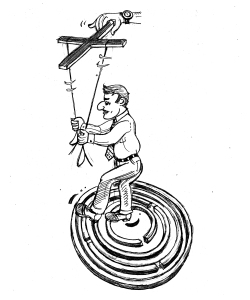
With Whom Does the Buck Stop?!
Are we ourselves not a part of the problem? Why have we, reasonably educated and rather wise people, decided to outsource our thinking processes and have instead opted to become zombies?!
Do we not keep patronizing companies even when we know that they have been cheating in the past? Are we not the ones who get swayed by propaganda and cast a vote for a particular party or a particular leader? Do we ever boycott a media outlet which acts as a mouth piece of those in power?
If we are addicted to, say, WhatsApp or Facebook, can we really blame their inventors for the issues that we face? Don’t we find it convenient to remain in touch with our friends and family members through these platforms?
When we notice a female being harassed, are we not likely to look the other way? Is the onus of ‘adjusting’ not always put on the female? Can we take a pause before we make a victim the facilitator of a crime?
Overall, by remaining a mute spectator and witness to acts of corruption, misinformation, lies and half-truths, do we not become accomplices to such misdeeds?
It is not wise to altogether point a finger at others only. A knife kind of a tool is given to us. Let us use it to prepare a juicy dish and not to hurt someone. The choice of usage is with us.
Our endeavour therefore should be to stand up, be courageous and outspoken. This alone can get us counted. Even if there is one sane voice amongst all the noise and din, it would resonate with other like-minded individuals out there.
Our salute needs to reach out not only to those who are already raising their voices but also to the decision makers who might eventually get around to listening to us.

Some Silver Linings
All this is not to say that there are no silver linings in the dark clouds hovering above us. As P G Wodehouse puts it, even when the air is pregnant with V or W-shaped depressions, there are always silver linings on the clouds. We shall do well never to repine, never to despair, but to work upon our own selves and on others in our sphere of influence. It is good to remember that, no matter how dark the skies may be, the sun is shining somewhere and will eventually come smiling through.
There are business houses which keep following good values and ethics in their day to day operations. There are leaders who respond well to challenges like social disharmony and stalking pandemics with a dash of human values. They treat dissent as a valuable input for their decision making processes. We also have very few social media and gig economy barons who are being forced by their own employees to either shape up or ship out.
Lawmakers and pressure groups in USA are already reported to be thinking of ways to bring in a wide-ranging overhaul of ethics, laws, the likes of which have not been seen since the post-Watergate era.
Perhaps, eminent legal eagles in India can also take a leaf out of the USA experience. As a country, we had experienced suppression of dissent even during the 1970s, when an emergency was declared. Can some more constitutional safeguards be brought in so that a popular mandate does not give the executive the right to ride rough shod over other arms of the government, thereby increasing the probability of the country being taken in a direction which is not the same as what our founding fathers had envisioned?
Above all, it is the man on the street, busy keeping his body and soul together, eking out a living for his family and even helping others in distress. When the scales from his eyes fall and he wakes up to a life threatening situation at hand, he reacts. The farmers in India are already showing their resolve following the strategy of peaceful protests and civic disobedience used by Mahatma Gandhi many decades ago.
Then we have lone wolf professional bodies. World Without Corruption in Belgium gives businesses a voice in fighting corrupt practices. The Conscious Enterprises Network in UK speaks of conscious leaders leading their enterprises in a holistic value-based manner in all spheres of human enterprise. The Center for Business Ethics & Compliance in Russia is focused on best practices in the realm of ethics and compliance.
Likewise, in India, Spandan Foundation is passionate about human values in organizations and even plans to set up a centre dedicated to the cause. Shakti Leadership highlights the importance of using feminine traits like empathy and compassion in decision making and assists individuals and organizations in their quest for conscious evolution. The Association for Democratic Reforms keeps relevant political issues alive and kicking in public eye.
I am sure there are many others scattered over other continents. Their attempt is to bring like-minded people together and keep the embers of a pious fire aglow, focused on values and ethics.
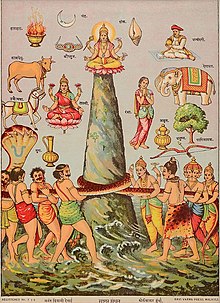
The Mighty Churning
The society is always in a flux. These days, it appears to be undergoing a mightier churning which reminds one of the episode of Samudra Manthan (The Churning of the Sea) in Indian scriptures. The churning throws up poison as well as the nectar which grants immortality. Those who believe in following the path of righteousness end up securing the latter.
It is easy to see that we have a leadership crisis on our hands. Since a situation also produces a leader, one hopes that more and more conscious leaders keep emerging, nudging us in the right direction.
Admittedly, the silver linings appear to be like a pale parabola of joy, to borrow an expression from P G Wodehouse. This will remain so till the time a bevy of conscious leaders – whether in business or in politics – do not appear on the scene and convert this into a shimmering parabola of bliss.
The solution is not to keep sweeping issues like hunger, poverty, economic non-inclusion, global warming and prejudicial animosity under the carpet. Nor is it to raise the existing walls, whether political, commercial, attitudinal or religious. It lies instead in a truly global view based on the concept of Vasudhaiva Kutumbukam: The World is One Family.

Being a born optimist who believes in having a chin-up attitude, I do hope that some of these tectonic shifts can at least get retarded, if not altogether reversed, in the years to come.
(Related Posts:
https://ashokbhatia.wordpress.com/2020/11/23/jeeves-and-the-social-media-challenge
https://ashokbhatia.wordpress.com/2016/09/23/bertie-jeeves-and-the-internet-of-things
https://ashokbhatia.wordpress.com/2014/12/08/bertie-social-media-and-blogging-blues
https://ashokbhatia.wordpress.com/2018/01/10/jeeves-seeks-a-placement)
Painting our ‘Bored-rooms’ a Deeper Pink
Posted in Management Lessons, tagged Angela Ahrendts, Annika Falkengren, Arundhati Bhattacharya, Chamaiporn Uerpairojkit, Chanda Kochhar, Di Humphries, Ellen Kullman, Falguni Nayar, Gender Diversity, Gender Parity, Ginni Rometty, Indra Nooyi, Ireena Vittal, Jonella Ligresti, Kalpana Morparia, Kiran Mazumdar Shaw, Lean In, Mallika Srinivasan, Management, Maria Asuncion Aramburuzabala, Marissa Mayer, Naina Lal Kidwai, Nonkululeko Nyembezi-Heita, Renuka Ramnath, Sheryl Sandberg, Shikha Sharma, Tatas, Veronica Johns, Vinita Bali, Vishakha Mulye, Wang Feng Ying, WEF, Women in Management on December 6, 2013| 3 Comments »
When a finer member of our species becomes the part of an all-men group, the results are obvious – better focus on the job at hand, a far more effective team, higher levels of decency and a groundswell of chivalrous overtures.

Chamaiporn Uerpairojkit
Better still, if she happens to be a CEO, we have a boardroom which is painted a deeper shade of pink, thereby driving away the boredom from the drab proceedings. We also have a crackling company which is more result-oriented and has better empathy while dealing with diverse stakeholders. We are also likely to get a greener and cleaner business entity which believes in corporate ethics and good governance.
In the Pink of Health
Several studies done in far-flung countries such as USA, France and Vietnam have shown that companies led by women deliver better financial results. A McKinsey study compared the top-quartile of companies in terms of share of women in executive committees against companies that have all-male executive committees. It found that the former companies exceeded the latter by 41% in return on equity and by 56% in operating results.
Two studies have shown that companies with significant numbers of top women managers do better when compared to competitors in the same sector. The improved performance is in both in terms of such organizational aspects as innovation and accountability as also in terms of profit.

Wang Feng Ying
The tipping point is the key: At three members of the board, the benefits of women start to make a real difference. It appears that with that critical mass, female board members are more likely to come up with challenging questions and encourage the entire group to arrive at a more inclusive and better decision.
There are also studies which negate this view. The Credit Suisse Research Institute, acknowledging that it is hard to make sense of the many confusing and contradictory findings, came up with its own analysis. The study suggested that better performance by companies with female board members does not necessarily suggest that the women led to the stronger performance; it could also mean that companies that are financially successful tend to be more inclusive. Nevertheless, the authors concluded that “more balance on the board brings less volatility and more balance through the cycle.”
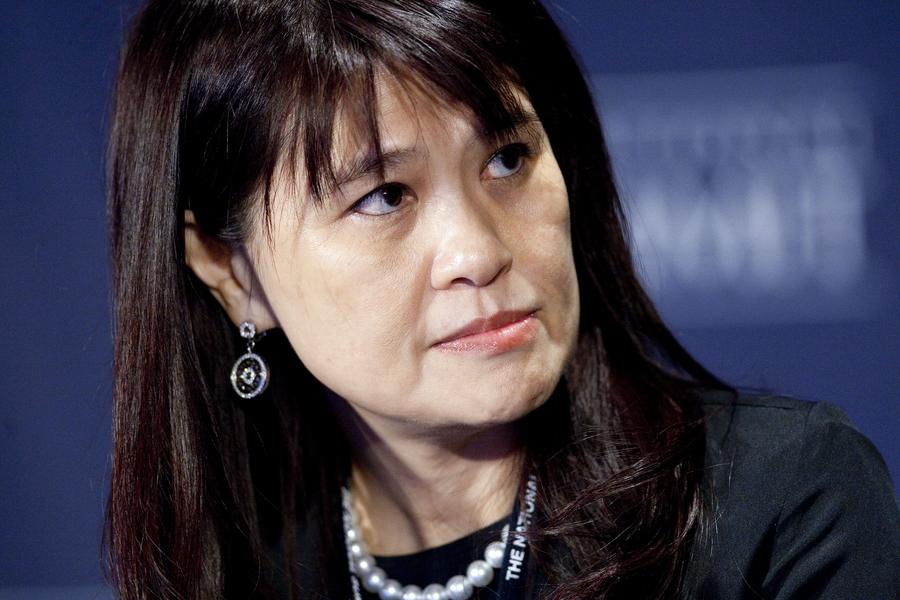
Eva Chen
The Global Scenario
A Grant Thornton International Business Report released earlier this year concluded that 49 per cent of CEOs in Thailand are women, which is the highest proportion in the world. The global ratio was reported to be 24 per cent of senior management roles filled by women, up from 21 per cent in 2012 and 20 per cent in 2011.
In general, ASEAN and the Asia-Pacific regions are ahead of the global average with 32 and 29 percent female proportions, respectively. Vietnam and the Philippines are in the top 10, with 37 per cent of senior posts in the Philippines being held by women, down by two percentage points from 2012.

Nonkululeko Nyembezi-Heita
The G-7 economies appeared at the bottom of the league table with just 21 per cent of senior roles occupied by women. This compares to 28 per cent in the BRIC economies and a remarkable 40 per cent in the Baltic countries.
Japan was the worst performer with just 7 per cent of senior roles occupied by women. UK (19 per cent) and the USA (20 per cent) were reported to be within the bottom eight countries for women in senior management. In contrast, top of the table for women in senior management – not only CEOs – is China, with 51 per cent.
The report also revealed that proportion of women in senior positions depends on the sector under consideration. More than double the number of positions in the global healthcare sector was occupied by women than in construction or mining. The most popular top management position for women was reported to be chief financial officer, while chief information officer was the least.
If Thailand has Chamaiporn Uerpairojkit as a President of Henkel, Australia has Veronica Johns heading Fiat Chrysler’s operations down under. Di Humphries takes care of Pumpkin Patch in New Zealand, whereas Wang Feng Ying looks after the Great Wall Motor Company in China.
Eva Chen is the CEO of Trend Micro of Japan. Nonkululeko Nyembezi-Heita oversees the operations of Arcelor Mittal South Africa Limited.

Maria Asuncion Aramburuzabala
Maria Asuncion Aramburuzabala fusses over Group Modelo in Mexico.
Women on Top
Globally, women have made it to the top in diverse sectors of businesses, ranging from IT, FMCG, chemicals, social media and banking. According to a Deloitte study, women comprise 12.5 percent of board directors on ASX 200 companies in Australia. Fortune lists an impressive array of powerful women, globally as also in USA. Think Ginni Rometty of IBM, Indra Nooyi of PepsiCo, Ellen Kullman of DuPont, Sheryl Sandberg of Facebook and Marissa Mayer of Yahoo and you get a part of the picture in USA alone.
The European Commission proposed new rules last year to require companies listed in EU countries with more than 250 workers to have 40 percent of women on their boards by 2020. But Germany and other EU countries resisted, arguing that rules should be set at the national level.

Ginni Rometty
According to German media reports, women currently hold about 12 percent of corporate board seats. Among the 30 largest DAX companies, women have 101 of the 488 board seats, or 22 percent, according to the DSW, Germany’s largest association of private investors. Coalition compulsions have now made the Angela Merkel government to introduce a legislation that will require German firms to allot 30 per cent of their non-executive board seats to women from 2016.
Norway, which is not an EU member, imposed a 40 per cent quota in 2003, a target reached in 2009. Norwegian companies can be liquidated if they fail to reach the target. However, a recent study by two University of Michigan professors shows that a government mandated quota led to younger and less experienced boards, thereby putting the businesses to higher risk.
In UK, the Cranfield report came up with the assertion that women hold more than one in five (21.8%) of non-executive FTSE 100 posts but still only account for little over one in 17 (5.8%) executive roles. That means there are just 18 women executive directors in Britain’s top boardrooms, against 292 men. Perhaps more alarming still, the Cranfield study found, among the broader top management tier at FTSE 100 firms – the key decision-making groups, known as executive committee members – the representation of women had fallen dramatically, down from 18.1% in 2009 to 15.3% today.

Indra Nooyi
Susan Vinnicombe, co-author of the Cranfield report, suggested this shrinking pool of top-flight women managers made it harder for progress to be made with chief executive and finance director appointments. “Despite women dominating the fields of human resources, law and marketing … [executive positions in the boardroom] are still going to men, who are being promoted internally over experienced female candidates.”
Annika Falkengren heads SEB, a Swedeish Bank. Angela Ahrendts takes care of Burberry in UK, while Jonella Ligresti oversees the operations of Fondiaria-SAI of Italy.
Wanted: Women Directors in India
In India, men make up 94.7 per cent of the boardroom. A survey conducted by the Association of Chartered Certified Accountants (ACCA) and the Commonwealth Business Council (CBC) earlier this year, across Commonwealth countries, found that India has one of the lowest percentiles of women in senior management positions, second only to Pakistan among the countries surveyed. In many cases, even when women are present in the board, they usually tend to be “sleeping partners”.

Kalpana Morparia
With the new Companies Act coming in force in India, mandating women’s representation on boards, companies are searching far and wide for good candidates. Naina Lal Kidwai of HSBC, Kalpana Morparia of JP Morgan and Renuka Ramnath of Multiples Alternate Asset Management are all busy running their own companies. It does not help that top women bankers like Chanda Kochhar and Shikha Sharma cannot be tapped because RBI rules do not allow bank CEOs to be on the boards of other companies except by rare special permission.
The first woman to head the SBI in its 206 year old history, Arundhati Bhattacharya, recently made headlines by joining the elite group of women who control banks and financial outfits in India.
Mallika Srinivasan is a well-known thought leader and strategist, heading TAFE. Vinita Bali heads Britannia, whereas Kiran Mazumdar-Shaw steers Biocon. Roshni Nadar takes care of HCL Corporation. Debjani Ghosh heads Intel’s operations in South Asia.

Chanda Kochhar
One of the highly respected business groups from India, Tatas, is already on a gender-diversity overdrive. Falugni Nayar, Vishakha Mulye and Ireena Vittal have recently joined select companies of the group.
A case in point is that of ICICI Bank where winds of a subtle change are blowing. Chanda Kochhar is making the company transform its work culture from a stress-ridden one to a more relaxed one. She has drawn an internal road-map to make the bank a service-led and not a distribution-led organization. One of the key challenges the bank is handling is to tone down aggression without losing its USP of being a dynamic and result-oriented organization.
According to information available in the public domain, out of India’s top 100 listed companies, 34 do not have any women directors. Demand for proven, independent women who are well experienced in board service, possess the required domain or functional skill experience and fit the culture of a company far outstrips supply.

Mallika Srinivasan
In India, gender diversity is more pronounced in the banking sector. By nature, men and women are not better bankers. The conditioning by society perhaps plays a more important role in shaping up women’s skills in money management. One, they carry the burden of balancing the household budget. Two, they tend to be thrifty because they have to manage the household affairs within the resources provided by the bread-winner of the family.
The Glass Ceiling of Corporate Frauds
A study reported in one of the recent issues of the American Sociological Review found that only 9 percent of people involved in high-level financial corporate conspiracies are women. The study also shows that female criminals stole less than their male counterparts. The study proposes that this could be happening because men see women as less criminally competent.
However, according to a survey of nearly 1400 global fraud cases from the Association of Certified Fraud Examiners, at the lower levels, women

Roshni Nadar Malhotra
made up 45 percent of the culprits. But at all levels, women steal less than their men counterparts. The difference lay in that women do it for a specific reason or purpose, whereas men tend to do it for longer periods, more as a habit of sorts. Women are brought up with an ‘ethic of care’ which means they are less likely to behave in a manner which hurts others.
Have Daughter, Be Gentler
In another study covering more than 10,000 Danish companies, a study done by Michael Dahl, Cristian Dezso and David Gaddis Ross found that CEOs paid lesser salaries to their staff after having had a son. But there was no reduction when they had a daughter! The hypothesis appears to be that daughters tend to make fathers more gentle and caring.
Studies led by Alice Eagly demonstrate that women tend to give more than their male counterparts in close relationships than men.
The Pink Shades of Philanthropy
Bill Gates believes that his mother Mary and wife Melinda are behind his philanthropic initiatives. At a wedding in 1993, Mary read out a letter she had written to Melinda: ‘From those to whom much is given, much is expected.’
It is quite likely that with more women at the helm of affairs, organizations may take their environmental and social responsibilities more seriously.
The Gender Bender
Women tend to be more balanced and meticulous in their approach. Giving care and offering empathy comes naturally to them. Look across various companies and one would notice that most HR departments are wo-manned.

Annika Falkengren
When it comes to the impact of women heading organizations, the jury is perhaps still out. Recently, professors at the Stanford University Graduate School of Business and the University of Edinburgh examined two thousand firms and found that larger companies with bigger boards were more likely to add women. In other words, better performance was not necessarily due to women power in the top echelons.
In India, the challenge is to keep up a continuous supply of leadership talent of the delicately nurtured. This can be met only by progressive HR policies of organizations which proactively offer a level playing field to women enabling them to break the corporate glass ceilings.
Just as the Norway example has shown, it is debatable whether introduction of a government mandated quota is a good move. Yes, it does force
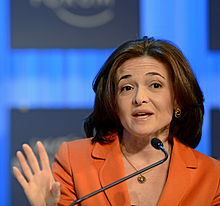
Sheryl Sandberg
companies to do some soul-searching and ensure better succession planning while placing greater emphasis on gender parity. A positive beginning gets made. Over the long run, such steps would surely improve corporate governance levels and possibly check the cancer of graft and corruption nibbling away at the roots of India’s vibrant democracy.
Gender bias is deep-rooted in our psyche. Cultural bias and stereotyping restrains women from realizing their full potential. With her book ‘Lean In: Women, Work and Will to Lead’, Sheryl Sandberg has recently brought back the agenda of gender inequality on the global conversation map.
From Capitalism to Idea-ism
We are rapidly moving from capitalism to ‘idea-ism’ where the definition of capital is getting enlarged with each passing decade. The term capital covers not only the material and financial resources but also its softer and gentler variety – intellectual resources. In a world of this nature, gender parity can bring in a hitherto latent capital. A more efficient use of the same would be a key driver of competitiveness in the days to come.
The moves to paint our ‘bored-rooms’ a deeper shade of pink are endeavors in the right direction. Howsoever long it takes to achieve gender parity in business circles, the journey has begun.
Combating the Cancer of Corruption
Posted in Management Lessons, tagged Bajaj Auto, Elaine Dezenski, Genpact, Godrej, India Inc, Infosys, Leadership, linkedin, M&M, Moral Compass, PACI, Ratan Tata, The Tata Group, UN, UN Convention Against Corruption, WEF, Wipro on April 14, 2013| 1 Comment »
Even though quite a few business houses from India had joined the World Economic Forum’s Initiative against Corruption in November 2012, not a single Indian company has so far become a signatory to the UN Convention against Corruption. This is deeply regrettable and projects the image of a corrupt business environment in India. It discourages foreign investments and erodes the brand value of Indian companies. In the absence of a level playing field, businesses shy away from potential opportunities. Mr. Ratan Tata’s lament on not having able to enter the field of aviation quite some time back is still fresh in our minds.
Companies can never be faulted for hiring Vice Presidents who are highly virtuous, law abiding and disciplined souls. Understandably, only those who follow high ethical standards and are in sync with the core values of the company would make the grade. However, in quite a few organizations, such qualities are merely necessary but not sufficient. When it comes to handling external agencies, incumbents who can either bend a few rules or interpret the fine print of law creatively to add to the bottom line of the company alone would be rated high and viewed with awe and reverence.
The Dr. Jekyll and Mr. Hyde Scenario
In other words, VPs should not only be ‘Virtue’ Presidents, but should also possess the flexibility of doubling up as ‘Vice’ Presidents while dealing with liaison matters. This stems from the core belief that businesses cannot be run successfully without back-stage dealing and wheeling, obviously with the aid of what many would euphemistically refer to as ‘appeasement initiatives’.
Appeasement of any kind is invariably geared towards either tweaking government policy to suit the ends of business, as also for specific time bound gains in the forms of large contracts, largesse, concessions and indirect favors. Organizations believe that advance knowledge of government plans, policies and rules is a great tool to deliver results to shareholders who not only look for long-term capital gains but also for better results quarter after quarter.
Sleeping with the enemy
If a professional gets stuck with an assignment which involves corrupt practices which do not match his or her personal core values, one option would be to escalate the issue. This would ensure that the matter is reviewed at a higher level in the organization.
If this option turns out to be impractical for some reasons – whether professional or personal – another one would be to start actively searching for career options with companies which value ethical practices in business!
A much better option, however, could be to work for a change from within the organization. This could be done either by presenting alternative business plans to management or by recommending an approach whereby the company could sidestep the issue by projecting its innate strengths in an aggressive manner. Let us consider some of the tactics in a professional’s arsenal which could be used to combat corruption in business deals.
Tackling Business Competition in the Market Place
The best strategy for a business to have is one which is based on avoiding government doles and concessions. By focusing on core competence and by fighting out the competition in the market place, the business can reduce its dependence on a wide section of the government policies. Surely this calls for rare qualities of leadership, statesmanship and openness. Inviting the government to play favorites and to resolve competitive business issues that are better dealt with in the market place could be a boon as well as a bane. However, this may not be possible in industries which are highly regulated.
Operating in an Unethical Environment
If one has absolutely no other option but to operate in an unethical business environment, the following steps might help to avoid corrupt practices.
- Building trust: An honest and humble approach, backed by a long relationship built on explaining the contribution of business can and does work. Investments made, employment opportunities offered and revenue generated are a few of the things that can be leveraged to secure favorable decisions without indulging in corruption.
- Reputation travels ahead: The fact that a business house does not stoop down to corrupt practice is generally well-known. It is a strategic advantage to have a squeaky clean image which ensures that a request from such an outfit is treated with the respect it deserves.
- Investing in underground cables: It never pays to flaunt one’s relationships. By keeping them underground, one not only wards off competition but also ensures that in case of a change of regime, the damage is minimal.
- Diversifying one’s liaison ‘assets’: One learns to be friendly with political opponents. In TN, one needs to be friendly with both the Dravidian parties. In WB, it is tough even if both CPM and TMC are one’s friends. In Maharashtra, Congress, NCP and both the variants of Sena must all like one for one’s business to make some headway. Business history teaches us the same lesson. In the pre-independence era, Tatas were funding Gokhale and engaging with the nationalist elements while British officers retired from ICS were being employed by the group. JRD had excellent personal rapport with Nehru. G D Birla had been corresponding with Winston Churchill for a long time. Churchill’s dislike for Mahatma Gandhi was well-known; even though he was being supported by Birlas. They gave a job to one of his sons. It is a fact that he was assassinated while staying as a guest at Birla House in Delhi.
- Be courteous, humble but firm: Most government officers take a dim view of business executives. Firstly, they are not viewed as being dependable. Secondly, they are thought to be paid exorbitantly high and generate a feeling of awe as well as jealousy in a public servant. Now, if one walks in with one’s latest cell phone and/or tablet in his office and starts showing off the latest Rolex watch, one would be surely shown the door promptly.
Setting the Moral Compass Right
The UN Convention against Corruption is a laudable initiative and deserves to be given a serious thought by our present day business leaders. It binds an organization to (a) reducing corruption risk in procurement and contracts, (b) engaging in competitive and transparent procurement processes and (c) disclosing all payments made in procurement deals. The global panel already has names such as Coca-Cola, Microsoft, Siemens and Accenture.
It is not that India does not have shining examples of groups which have demonstrated the strategic advantage of pursuing business goals while staying the ethical course. The Tata group has been at it for the past 120 years or so. Liberalization of the economy appears to have thrown up quite a few scams, but companies like Infosys keep our hopes alive. As per Elaine Dezenski, senior director at WEF and the head of PACI, Infosys, Godrej Industries, Bajaj Auto, Genpact, Wipro and M&M are already signatories to the initiative.
As argued in an earlier blog (Getting a Moral Compass Would be a Sound Business Strategy for India Inc, published on December 9, 2012), companies in India would do well to seize the opportunity to clean up their business deals. A beginning can be made by persuading major political parties to make their funding transparent. Those in real estate business can come out with a time bound plan to rationalize stamp duties all across India, thereby making their deals more transparent.
Hopefully, progressive companies in India would see the strategic benefits of committing themselves to such initiatives soon enough!
WHY I ADMIRE EUROPE!
Posted in The European Diaries, tagged CERN, EU, Euro, IMF, IPR, Nobel Prize, Patent Regime, Schengen, UN, WEF, WTO on February 27, 2013| 1 Comment »
When I say I admire Europe, I am not referring to the natural beauty it has on offer, right from the fjords in Norway to the Alps straddling Switzerland. Nor am I talking about the excellent civic infrastructure it has built up, backed by a deeply ingrained civic sense amongst a vast majority of its inhabitants.
I believe that Europe happens to be a great crucible of experimentation in the area of global governance, already practicing models which are likely to shape up the way humanity would control its global affairs in the times to come. Also, over the past few centuries, it has played a crucial role in a renaissance of sorts in the field of science and technology. It has done so by assimilating, enriching and disseminating major breakthroughs in science, making it accessible to the whole of humanity.
The European Union
The EU is an interesting organization. Of its 27 members, 22 have abolished passport controls under the Schengen pact. Only 17 share a common currency. They have a common market and work towards free movement of goods, services, capital and people and a common security policy. People cross over to Germany, splurge on goods there, claim a refund of excess VAT paid and drive back into Switzerland. There are a plethora of bureaucratic bodies which govern various aspects of a citizen’s life, while maintaining a distinct regional identity of their own. The continent also has nation-states like Luxemburg and Vatican City.
Recently, EU won the Nobel Peace Prize, indicating the potential an association of diverse nations has. Asia is already taking some baby steps towards aggregation, and one hopes a similar arrangement would pave the way for cessation of hostilities and for disabling the man-made borders in not so distant a future.
A Living Laboratory of the World
The future is the model of transnational cooperation that EU represents. Globalization is a process that enhances interdependence across the world. For such interdependence to produce in welfare but not chaos and frustration, the world needs governance structures that mediate this interdependence. As to how, guidance comes from EU’s myriad bureaucracies, apart from accepted transnational bodies such as the UN, the IMF and the WTO. Then we have the WEF, contributing to the thought processes aimed at improving governance globally.
Enriching Knowledge
In fact, scientists and thinkers in Europe borrowed key concepts from other civilizations of yore, built upon the same, and refined the way we look at the universe today.
The mathematical foundation of Western science is a gift from the Indians, Chinese, Arabs, Babylonians and the Mayans. Planetary astronomy also began with the Indians, developed further by the Chinese. Arabs built the first observatories. Five thousand years ago, the Sumerians said the earth was circular. In the sixth century, a Hindu astronomer established the reasons for the rising and setting of the sun.
Chinese alchemists realized that most physical substances were merely combinations of other substances, which could be mixed in different proportions. Islamic scholars are legendary for translating scientific texts of many languages into Arabic. Iron suspension bridges came from Kashmir, paper making from China, Tibet, India and Baghdad and printing from India, the Quechan Indians of Peru were the first to vulcanize rubber; Andean farmers were the first to freeze-dry potatoes.
European explorers depended heavily on Indian and Filipino shipbuilders, and collected sea-charts from Javanese and Arab merchants. The Mayans invented zero about the same time as the Indians, and practised a math and astronomy far beyond that of medieval Europe. Native Americans built pyramids and other structures which were larger than anything then in Europe.
Preserving and Propagating Knowledge
Europe has had a successful brush with Renaissance, which also covered the entire gamut of art and culture. State of art centers of learning came up, accompanied by libraries and research outfits. CERN is the latest feather in its cap. Above all, a patent regime got introduced. As someone who has dealt with intellectual property registrations the world over, in Europe I invariably dealt with a robust system of trademark laws. Most other countries have designed their own patent regimes based on the European system. This made our technical and scientific advances publically available, thereby ensuring that knowledge was not lost to humanity for posterity, like it happened in India where it got confined to limited circles.
Mighty Challenges Ahead
It would be naïve to believe that all is hunky-dory on the European front. Protectionism appears to be on the upswing. Whether it is immigration, transnational trade or environment, contentious issues are getting addressed only with restrictive policies. In quite a few countries – like in Greece, Italy, France, Spain, Austria and Denmark – right-wing sentiments appear to be on the rise. There is a clear tendency to discourage immigration, thereby accusing ‘outsiders’ of pinching jobs and being a ‘drain’ on the resources. UK is already at loggerheads with Romania and Bulgaria, and the issue may well land up at the doorstep of the European Commission.
The Euro’s roller coaster ride is another area of concern. Experts point out that for its long-term survival, a fiscal and banking union would be essential. However, without a more effective political union, this would not be possible. There could be two scenarios resulting into a heightened state of political engagement in the continent – either a visionary leadership with a statesman-like approach to problem solving, or a super-ordinate threat of some kind. As a well-wisher, one would like only the former possibility to fructify!
Real globalization lies in an interdependence which leads to a fundamental shift in our attitude towards fellow inhabitants of Mother Earth, recognizing each other’s equitable rights to the limited resources available to aggregate humanity. An equitable distribution also makes eminent economic sense, and that is what gives one hope of a truly globalized world order coming about sometime in the future.
In the immediate future, Scotland could soon be negotiating subsidiarity directly with the EU. So could Sindh and Chittagong in a South Asian confederation. By living out the pains of experimenting with transnational coordination, the EU leads the humanity’s quest for an effective governance of globalization.
-
Recent Posts
Buy the Book

buy the book

Categories
-
cc
Tags
Art Bertie Wooster Bhagavad Gita Bingo Little Birthday Blake Mouton Grid Blogging Bollywood Book Campus Life CEO Chivalry Consciousness Coronavirus Corruption Edwin Empress of Blandings English Ethics Feminism Happiness Health Hindi Hollywood Human Values Humour India Jeeves Kalidasa KIds Leadership linkedin Literature Lord Emsworth Love Lyrics Mahabharata Mahatma Gandhi Management Movies Music Norway Paintings Panjab University People P G Wodehouse Politics Pondicherry Portugal Psmith Puducherry Rabindranath Tagore Ramayana Ritusamhara R K Laxman Romance Rosie M Banks Rupert Psmith Seasons Shakespeare Social Media Something Fresh Songs SPANDAN Spirituality SQ Sri Aurobindo Stephen Covey Switzerland Tatas Thos UBS Values Wodehousitis WomenArchives
- March 2026 (1)
- February 2026 (5)
- January 2026 (2)
- December 2025 (1)
- November 2025 (2)
- October 2025 (2)
- September 2025 (3)
- August 2025 (3)
- July 2025 (2)
- June 2025 (2)
- May 2025 (4)
- April 2025 (5)
- March 2025 (5)
- February 2025 (4)
- January 2025 (4)
- December 2024 (6)
- November 2024 (6)
- October 2024 (6)
- September 2024 (5)
- August 2024 (5)
- July 2024 (4)
- June 2024 (4)
- May 2024 (5)
- April 2024 (5)
- March 2024 (3)
- February 2024 (1)
- January 2024 (4)
- December 2023 (2)
- November 2023 (3)
- October 2023 (3)
- September 2023 (3)
- August 2023 (5)
- July 2023 (5)
- June 2023 (7)
- May 2023 (6)
- April 2023 (6)
- March 2023 (8)
- February 2023 (8)
- January 2023 (7)
- December 2022 (6)
- November 2022 (5)
- October 2022 (8)
- September 2022 (5)
- August 2022 (6)
- July 2022 (6)
- June 2022 (8)
- May 2022 (7)
- April 2022 (8)
- March 2022 (7)
- February 2022 (3)
- January 2022 (7)
- December 2021 (4)
- November 2021 (8)
- October 2021 (7)
- September 2021 (6)
- August 2021 (7)
- July 2021 (7)
- June 2021 (9)
- May 2021 (8)
- April 2021 (9)
- March 2021 (10)
- February 2021 (8)
- January 2021 (8)
- December 2020 (7)
- November 2020 (6)
- October 2020 (5)
- September 2020 (9)
- August 2020 (9)
- July 2020 (8)
- June 2020 (8)
- May 2020 (6)
- April 2020 (5)
- March 2020 (7)
- February 2020 (4)
- January 2020 (7)
- December 2019 (12)
- November 2019 (10)
- October 2019 (5)
- September 2019 (9)
- August 2019 (10)
- July 2019 (9)
- June 2019 (14)
- May 2019 (13)
- April 2019 (14)
- March 2019 (11)
- February 2019 (11)
- January 2019 (14)
- December 2018 (12)
- November 2018 (12)
- October 2018 (14)
- September 2018 (9)
- August 2018 (10)
- July 2018 (10)
- June 2018 (8)
- May 2018 (11)
- April 2018 (11)
- March 2018 (6)
- February 2018 (9)
- January 2018 (10)
- December 2017 (10)
- November 2017 (9)
- October 2017 (8)
- September 2017 (11)
- August 2017 (10)
- July 2017 (10)
- June 2017 (11)
- May 2017 (9)
- April 2017 (7)
- March 2017 (7)
- February 2017 (8)
- January 2017 (10)
- December 2016 (9)
- November 2016 (11)
- October 2016 (10)
- September 2016 (10)
- August 2016 (9)
- July 2016 (6)
- June 2016 (10)
- May 2016 (10)
- April 2016 (10)
- March 2016 (10)
- February 2016 (12)
- January 2016 (10)
- December 2015 (11)
- November 2015 (11)
- October 2015 (10)
- September 2015 (10)
- August 2015 (10)
- July 2015 (10)
- June 2015 (10)
- May 2015 (10)
- April 2015 (10)
- March 2015 (9)
- February 2015 (10)
- January 2015 (8)
- December 2014 (9)
- November 2014 (8)
- October 2014 (8)
- September 2014 (7)
- August 2014 (7)
- July 2014 (7)
- June 2014 (7)
- May 2014 (7)
- April 2014 (7)
- March 2014 (7)
- February 2014 (6)
- January 2014 (7)
- December 2013 (6)
- November 2013 (6)
- October 2013 (6)
- September 2013 (6)
- August 2013 (6)
- July 2013 (6)
- June 2013 (6)
- May 2013 (6)
- April 2013 (6)
- March 2013 (6)
- February 2013 (6)
- January 2013 (6)
- December 2012 (4)
- November 2012 (4)
- October 2012 (3)
- September 2012 (2)
- August 2012 (4)
- July 2012 (2)
- June 2012 (2)
- May 2012 (2)
- April 2012 (2)
- March 2012 (2)
- February 2012 (3)
- December 2011 (3)
- November 2011 (1)
- October 2011 (2)
- September 2011 (2)
- August 2011 (2)
- July 2011 (2)
- June 2011 (3)

 ashokbhatia