Feeds:
Posts
Comments

Posts Tagged ‘Wisdom’

So, you think that P G Wodehouse is only about farcical butlers, upper-class twits, domineering aunts, goofy females, rogue kids, dogs with supercilious gazes, cats that wear snootiness on their sleeves, horses that are fond of cats, and pigs which need their daily quota of 57,800 calories?

Think again, I would say! For, deep within the juicy narratives dished out by the Master Humourist of our times lie buried many lessons of a spiritual kind. These are latent nuggets of wisdom that, if adopted, could enable one to lead a spirited life, facing its ups and downs with a jaunty sang froid

Baffled, bewildered, confounded, confused, flummoxed, mystified, perplexed, and puzzled?

Allow me to elucidate.

A Journey of Self-Discovery: Embracing the ‘Me First’ Mindset

Any spiritual quest begins with an inner journey of self-discovery. Like Bertie Wooster, one has to be a keen observer of the inner workings of one’s mindset. One should know when to slide down a pipe and when to board a cruise ship to avoid an impending encounter of an unpleasant kind. Self-preservation serves one well. To put it simply, one must have a ‘Me First’ approach to life.

Take my own case. Well, I must say, I happen to be a prime candidate for the “Me First” award, if ever one is instituted by the concerned authorities. You see, I’ve got this knack of putting my own pleasure and happiness on the pedestal, leaving others hanging like a wet sock in the wind.

It’s like that old saying about chasing the rainbow – the closer you get, the further it slips away. So, here I am, with my long face like a dropped pie, whinging about my sorry lot in life. And let me tell you, it’s not a pretty sight.

If I were watching myself on the telly, I’d hand that grumpy old git the remote control and tell him to skip to the next channel, pronto! Because, my friends, a moaner, and a whinger, is about as popular as a caterpillar discovered at the bottom of a bowl of salad.

My dears, we humans are like archers, shooting our arrows of hope into the void, never sure if they’ll hit their mark. I’ve tried everything under the sun, from meditation to listening to hot-air speeches. And let me tell you, spirituality is a tough nut to crack. It’s like trying to peel a banana with oven mitts!

Finding Light in the Darkest Moments: Unravelling the Tapestry of Adversity

Now, I know this is the path to freedom from my woes, but here’s the rub: I can’t seem to figure out the ‘how-to’ manual. It’s like trying to find Waldo in a crowd of walruses. Frustrating, isn’t it? But fear not, for I’m blessed with nerves of chilled steel and am not one to give up easily. I continue my quest, armed with a magnifying glass that remains duly focused on the works of the Master. 

My dear compatriots, the pursuit of spirituality proved to be a meandering journey through the labyrinth of existence, a perplexing conundrum that tested the limits of my mortal soul. Alas, in the face of such a formidable challenge, we resilient humans are wont to seek out solutions that may not blaze a trail to perfection, but rather offer a semblance of respite in the stormy seas of life.

As fortune would have it, amidst my quest for spiritual enlightenment, I stumbled upon a veritable treasure trove – the timeless works of Sir Pelham Grenville Wodehouse. Ah, the sheer delight and solace that his writings brought to my weary heart in times of dire need! My lineage, bless their souls, had been perusing his literary masterpieces for generations, paving the way for my own delectable encounter with this literary luminary.

One of the things that captivates me most was the uncanny comportment of Wodehouse’s characters in the face of adversity. Take for instance the indomitable Psmith in “Psmith Journalist”, who maintains an air of nonchalance even when confronted by kidnappers.

Such a profound sense of detachment amidst chaos brings to mind the teachings of the Bhagavad Gita, does it not? Indeed, could we not consider this delightful escapade into the world of Wodehouse as a form of modern-day spirituality? My friends, the parallels are as intriguing as they are enlightening. 

The Perks of Forgetfulness and Living in the Present

Ah, Lord Emsworth! A man with an asset so heart-warming that it could melt the frigid polar ice caps – forgetfulness, leading to a habit of living in the present!

In the annals of history, great minds have extolled the virtues of forgetting. Our scriptures enjoin us to live in the present. It’s like dusting off the cobwebs in your attic – why cling to the dusty remnants of the past when you could embrace the sparkling potential of the future?

Lord Emsworth’s forgetfulness is a veritable cornucopia of blessings. It allows him to shed the heavy cloak of past grievances, like an absent-minded hiker shedding a backpack filled with regrets. And behold, he emerges anew, lighter, brighter, and infinitely more lovable to those who grace his presence.

Perhaps the saints of yore sought solace in this blessed amnesia, freeing their spirits to soar among the celestial heights. For in forgetting, we find not only liberation from the shackles of the past but also an uncanny ability to charm the socks off those around us. Thoughts of future encounters with a belligerent sister never fill us with a sense of dread.

In the realm of the spirit, or that which offers me a sense of tranquillity, I find that Wodehouse has bestowed upon me a profound lesson. Lord Emsworth stands as a beacon of hope in this respect. His forgetfulness of past events allows him to embrace the present with an unencumbered mind. Unburdened by the weight of memory, he revels in his solitude, finding pleasure in his own company. As Plum so aptly puts it,

‘Lord Emsworth sat and smoked, and sipped and smoked again, at peace with all the world. His mind was as nearly a blank as it is possible for the human mind to be. The hand that had not the task of holding the cigar was at rest in his trousers pocket. The fingers of it fumbled idly with a small, hard object.’

When he finds a scarab in his pocket, does he not simply conclude that it must have been gifted to him by the American millionaire? Once he starts focusing on the Empress of Blandings, does he ever worry about the pumpkin? He surely practices the delicate art of detachment, spoken of so very highly in our scriptures.

From Being a Self-doubting Thomas to an Opportunity-Grabber

In my annals of domestic disputation, I recall a particular clash with my bitter half. She, with her fervent tongue, extolled the valour of a dear friend who had summoned the intrepidity to pen a social media missive, heedless of any sinister implications. And I, rather than question her judgment, was exhorted to contemplate my own measly progress in the realm of social media.

The aftermath of this matrimonial contretemps was, as one might surmise, somewhat perplexing. I found myself in an odd state of accordance with her sentiments, heaping further ignominy upon my own head. For though my pen may have faltered, I had hitherto cherished the notion that the contemplation of others’ creations and the articulation of my own preferences constituted an inherent privilege.

Yet now, as if by some cruel twist of fate, I could conjure no words for my own use. Unlike some prodigies, blessed with an inexhaustible reservoir of ideas, I had no such celestial aid. Suffice it to say, my aspirations of literary heroism faded before my wife’s eyes, leaving me a mere buffoon engaging in a pathetic display of self-sabotage.

And as I spiralled further into this abyss of self-reproach, a voice whispered through the labyrinth of my mind, a voice I recognized from Joy in the Morning

‘It was one of those cases where you approve the broad, general principle of an idea but can’t help being in a bit of a twitter at the prospect of putting it into practical effect. I explained this to Jeeves, and he said much the same thing had bothered Hamlet.’

Dear readers, lend an ear to these words that wrought a profound transformation within me. Like a veil lifted from my vision, I beheld the absurdity of my former self-chastisement. A chuckle escaped me, a gentle mockery of the charade that had held sway over my existence.

And so, I cast off the shackles of self-criticism and chose a path of liberation. This, my friends, is spirituality in its purest form—not a celestial embrace or mystical communion, but a triumph over the prison of my self-limiting beliefs. For, in embracing the folly of self-doubt, we find true freedom and the boundless expansiveness of the human spirit. 

Though not directly akin to the realm of the spirit, dear reader, I often find solace in the words of P. G. Wodehouse’s The Small Bachelor. When the weight of life’s trials weighs heavy upon my mind, I turn to these lines, finding therein a gentle balm that soothes my troubled heart. 

‘That’s the way to get on in the world – by grabbing your opportunities. Why, what’s Big Ben but a wristwatch that saw its chance and made good?’

By Jove, friends! When I hear such stirring words, my very essence is transformed. I feel a surge of vigour coursing through my veins, aided and abetted by a burning desire to embrace uncharted territories. The shackles of doubt and hesitation fall away, replaced by a boundless sense of possibility. Trust me, friends, such words are the catalyst that ignite the flame of adventure within me! So, dear readers, let us raise a toast to such characters as Lord Emsworth, the master of forgetting, Bertie, the epitome of chivalry, and Jeeves, whose sage counsel is akin to the teachings of Bhagavat Gita.

Different Facets of Life and the Transformative Power of Wodehouse

Overcoming Road Rage

Picture yourself on a bustling Monday morning as you prepare to embark on your daily pilgrimage to the office – the place where your purpose perhaps lies. You find yourself surrounded by a sea of cars, all honking impatiently, and scowling faces in desperate search of an outlet for their irritation. In that moment, your motivation wanes, the world around you darkens, and you feel like you are trapped in a never-ending episode of the Twilight Zone.

But then, like a bolt from the blue, something changes. The darkness dissipates, and you find yourself grinning in the face of this adversity when you get reminded of the following quote, all of a sudden!

‘The best method of getting to the Highfield is by the Subway. To see the Subway in its most characteristic mood one must travel on it during the rush-hour, when its patrons are packed into the carriages in one solid jam by muscular guards and policemen, shoving in a manner reminiscent of a Rugby football scrum.’

Now, as a mere neophyte in the realm of spirituality, I hesitate to delve deeper into this phenomenon. Yet I can’t help but wonder – does spirituality possess the power to transform our outlook so swiftly, like a magician pulling a rabbit out of a hat? The mysterious ways of the author P. G. Wodehouse never cease to amaze me, dear reader!

Meeting Theatrical Challenges with a Chin-up Attitude

Coming to the dreaded stage fright, my fellow thespians! When all eyes are peeled upon you, like a banana waiting to be devoured, your mind races at a million miles per second, a veritable rollercoaster of emotions. You fear deviation from the script, like a wayward sailor lost at sea. And let us not forget the dreaded missiles from the audience.  No, I do not allude here to rotten potatoes, tomatoes or eggs. I mean words that can sting like bees, leaving you with a swollen performance.

In these trying times, performers seek solace in a tonic, a shot of confidence to carry them through the ordeal. And may I suggest that this tonic be none other than Plum’s following lines:

‘To an outside spectator he would have seemed rather like a very well-dressed Daniel introduced into a den of singularly irritable lions.’

Upon getting reminded of these words, a surge of tranquillity washes over the performer. They gaze upon themselves from a newfound perspective, an indifferent platform. A sterling performance comes about, followed by a burst of applause which could be heard across many a busy street outside the auditorium.

Tackling Lion Bosses at Office

When life’s a right ol’ cacophony, with your boss booming like a bassoon, your missus harping on you like a broken trumpet, and your pals piping up with their well-intentioned but ear-splitting advice, I find solace in the quotes delivered by this fellow who is fondly referred to as Plum.

By Jove, my dear readers, have you ever felt as though you’ve been thrown into a spin cycle by your boss? Like a tie caught in a washing machine, I find myself being mercilessly zipped and tumbled around when summoned for a “little chat.”

As I stand before my superior, shuffling my feet, my tongue resembling a malfunctioning typewriter, I utter the fateful words, “I, er… well, I went into the call and told, er…”

“Spare me the details, my boy,” he interrupts with the subtlety of a charging rhinoceros. “Let’s cut to the chase and unscrew this mess.”

Oh, the irony! My boss, the man with the power to “screw” me over, is demanding a “solution” to the screw-up I was being “screwed” for. It is enough to make me feel like a human pretzel.

For those who have trodden the path of such encounters, the subsequent unfolding is a familiar script. But for the uninitiated, allow me to veil the scene in the obscurity reminiscent of the ancient Greek plays where violence was shown. The tumultuous emotions surging within me after such an encounter were weighty enough to prompt contemplation of departure from my current vocation.

But then, as if a bolt of lightning has struck my brain, I recall these wise words from the pages of P G Wodehouse:

‘The fact is, uncle—’

‘Never mind the facts. I know them! What I require is an explanation.’

In that instant, like a light bulb illuminating a dusty attic, the missing pieces of my explanation miraculously reappear. The scales fall from my eyes. I can finally see a way out of this corporate labyrinth.

My spirits, as I said before, were as low as a politician’s poll ratings after a particularly scathing dressing-down from the discerning public. It was a veritable downpour of negativity, threatening to drench my career aspirations and send them scurrying for cover. But the words from the maestro, in their infinite wisdom, have a rather amusing trick up their sleeves.

As the day wore on, a queer thing happened. I caught a glimpse of my reflection in the office window and, lo and behold, the thunderous frown that had been etched upon my visage had mysteriously evaporated, replaced by a glow as radiant as a summer sunset. As if on cue, the sun broke through the clouds, casting its golden rays upon the scene like a celestial stand-up comedian.

And then I realized it. My boss, who had hitherto been as dour as Bingo Little who has just been ridiculed by Laura Pyke for gorging on food like a python, now bore an uncanny resemblance to Sir Thomas, while I, your humble narrator, took on the unmistakable air of the legendary Lord Dreever, a man known for his wit and indomitable spirit. The realization was like a tonic, lifting my spirits and rendering the boss’s earlier admonishments as mere comedic fodder.

Indeed, I believe that if I had dared to venture into the restroom, I would have encountered a mirror that reflected not the glum visage of a man on the brink of despair, but a veritable symphony of smiles, as if the entire universe was conspiring to cheer me up. And so, my friends, I leave you with this profound observation: even in the darkest of times, Wodehouse has a way of finding its place, painting a smile upon our souls, and reminding us that life, like a good joke, is often more amusing than it first appears. 

Depression comes in all sizes and shapes. But irrespective of whether it is U-shaped, V-shaped, or W-shaped, we would do well to remember this advice from Bertie Wooster.

‘A short while ago, the air was congested with V-shaped depressions, but now one looks north, south, east and west and descries not a single cloud on the horizon – except the fact that Gussie’s wedding is still off, and that can’t be helped. Well, this should certainly teach us, should it not, never to repine, never to despair, never to allow the upper lip to unstiffen, but always to remember that, no matter how dark the skies may be, the sun is shining somewhere and will eventually come smiling through.’

Marriage Melee: A Battle of Wits and Wiles

Now, the trials and tribulations of married life! The constant struggle for supremacy between husband and wife can often lead to heated arguments. I remember one particular instance when my bitter half uttered a particularly sharp remark, causing me to contemplate throwing in the towel altogether.

Indulge me in the whimsical ramblings of a man ensnared in married life’s merry-go-round of mishaps. Picture the daily drudgery: the perpetual hide-and-seek with misplaced keys, the ceaseless battle against the despotic alarm clock – each a farcical subplot in the grand theatrical spectacle of existence. Yet, amidst the cacophony of chaos, I find refuge in the absurdity, relishing the comedic undertones of my predicaments. Armed with naught but a wry grin and a dollop of fortitude, I gallantly press forward, for in the face of adversity, it’s not the weight of our burdens that defines us, but the panache with which we pirouette through the harsh slings and arrows of life.

Measuring Up: Dealing with Matrimonial Blues

Growing up in a typical Indian household, I was no stranger to the dreaded act of comparison. Whether it was with the neighbour’s kid, my cousins, or my school chums, I was always being held up against others to highlight my shortcomings. These never-ending comparisons turned even the sweetest successes sour, casting a shadow of self-doubt over my young existence.

When I finally graduated from college and landed a job, I thought I had escaped the torment of comparison, once and for all. Alas, fate had other plans in store for me, as I soon found myself walking down the aisle and entering the realm of marriage. To my dismay, the comparisons from my youth had simply taken on a new form – instead of being measured against other youngsters, I was now being pitted against other fellow husbands.

Despite the familiar pang of depression that accompanies these regular comparisons, I find solace in the wise words of the great author. Remembering his following lines helps me to shake off the gloom and face the day with renewed vigour:

‘Chumps always make the best husbands. When you marry, Sally, grab a chump. Tap his head first, and if it rings solid, don’t hesitate. All unhappy marriages come from husbands having brains. What good are brains to a man? They only unsettle him.’

It is said that indifference is the key to true enlightenment. Perhaps that is why this quote also enters my mind upon meeting my wife’s friends. After all, they are a minefield of potential misunderstandings, where every word uttered can be met with laughter… or judgment. The joys of married life indeed!    

Dinner Dynamics: A Delicate Dance of Drollery and Discretion

In this age of dual toilers, the dining hour has become our cherished trysting place. Yet, for some hapless souls like mine, it brings nought but tribulation.

For, the myriad oddities I perpetrate throughout the day come under my beloved’s scrutiny at this nocturnal tribunal. The evaluation process is akin to a relentless gauntlet, where each gaffe is met with a withering gaze and each feeble defence checkmated with a dismissive sigh.

To endure such a scenario demands the courage of a martyr and the willingness to face the unvarnished truth about oneself. And woe betide those who would dare to argue, for their fate is to be cornered and outmanoeuvred with surgical precision. 

Well, I found myself in a bit of a pickle the other day. I wasn’t paying proper attention to my bitter half’s chatter, and it wasn’t long before her dulcet tones turned into something akin to a vinegar factory. In a moment of weakness, I surrendered to my plate much like a hungry squirrel would to a nut.

But alas, my hopes for a swift meal were dashed, for when one is in a spot of bother, even the most basic of tasks seem to conspire against one. The words of humiliation flowed from my wife as freely as water over Victoria Falls, and I found myself longing for the respite that only a finished meal could provide. But as we all know, when we most need something, it inevitably eludes us, and so I was forced to endure the verbal onslaught, my own loquacity proving no match for her linguistic torrent.

Terribly wounded by the slings and arrows of outrageous fortune, my dear readers, I sought refuge in yonder privy, a sanctuary most welcome after such a verbal tempest. Upon reflection, however, I found myself dishing out a double dose of censure to my ears, for my assailants’ barbs had stung me less sharply than my inner dialogue. Indeed, I resembled the legendary Ratnakar the Bandit (later known as Valmiki – the esteemed composer of that epic tale, the ‘Ramayana‘), when his kith and kin turned a cold shoulder upon discovering the slightly unsavoury nature of his profession.

Perhaps the following limerick might better explain my predicament:

There once was me so vain,

My ego could cause quite a strain.

I felt humiliated,

My pride, agitated,

Frowning at myself was his bane!

Well, my word, I was right down in the dumps, looking for a celestial lifebuoy, only to be greeted by a chorus of proverbs that made my predicament look as clear as a bottle of brown ale. Allow me to enlighten you with their profound wisdom:

‘He had just about enough intelligence to open his mouth when he wanted to eat, but certainly no more.’ 

(On how I took my dinner while braving the crisis.)

‘He had the look of one who had drunk the cup of life and found a dead beetle at the bottom.’ 

(On my present disposition.)

‘I could see that, if not actually disgruntled, he was far from being gruntled.’ 

(On my present mental state.)

‘I’m not absolutely certain of the facts, but I rather fancy it’s Shakespeare who says that it’s always just when a fellow is feeling particularly braced with things in general that Fate sneaks up behind him with the bit of lead piping.’

 (On my fate.)

Well, bless my buttons, as I sat there in the midst of all that gloom, a flicker of mirth gently tickled my lips. My addled noggin, after a spot of sulking, decided to drag its weary feet from the doldrums and amble towards the sunny uplands! 

Stakeholder Strife: Navigating the Minefield of Marred Joys and Spousal Scrutiny

The joys of childhood! Such innocent days were tarnished only by the looming spectre of criticism from the dreaded external stakeholders. The lion-tamers at the school, who, when annoyed at a group of boisterous and noisy backbenchers, flash their canes, leaving the tender spots on one’s backside throbbing as if hit by electric jolts. Neighbours, those ever-watchful guardians of politeness, who never failed to report any deviation in my behaviour to my dear mother. Oh, the horrors that ensued! One might think that growing older would bring respite from such sinister critiques, but, alas, fate had other plans.

Enter marriage, that venerable institution where the list of stakeholders expands faster than rabbits in spring. And the criticism? It descends upon me with the relentless persistence of British rain, every deviation dissected with the meticulousness of a tax inspector. My once-dreaded mother’s interventions have faded into mere historical footnotes, overtaken by the ever-vigilant gaze of my beloved wife. It feels as though I am trapped in an endless cycle of scrutiny, with no escape from those eager to critique my every move.

In this bleak landscape, I am often reminded of the haunting lines from W.H. Auden’s The Unknown Citizen:

‘Was he free? Was he happy? The question is absurd:

Had anything been wrong, we should certainly have heard.’

So you see, my friends, the feeling of emptiness and how it impacts my mental well-being at times?

Indeed, the struggle is real. Yet, in moments of solitude, when the weight of the world threatens to crush my spirit, I find solace in the words of P. G. Wodehouse:

Marriage is not a process for prolonging the life of love, sir. It merely mummifies its corpse.’

Wodehouse! His wit and wisdom are like a tonic for the soul, lifting my spirits and infusing me with the courage to face whatever life may throw my way. And so, armed with the sagacity of Jeeves and the indomitable spirit of Bertie Wooster, I march forward, ready to take on whatever stakeholder challenges lie ahead.

Friends – The Good, The Bad, and The Ugly

Friends, like the delectable variety of cheese, come in all shapes and sizes. You’ve got the brie-lliant ones who lift you like a hot air balloon when you’ve plummeted into a pit of despair, and then the tangy Swiss kinds who puncture your ego with holes of different sizes using harsh words as soon as you confess your blunders.

On paper, the latter may seem like a blessing, especially when it comes to spiritual enlightenment. However, my heart belongs to the feta-tastic crew who know the art of providing a shoulder to cry on rather than dishing out a lecture. These friends are as rare as a unicorn riding a unicycle, and their absence can be as painful as an ingrown toenail.

Now, dear listeners, I shall not bore you with the details of my recent blunder (let us just say that I’m still learning the difference between ‘brake’ and ‘accelerator’), but as one of my well-meaning friends was giving me a verbal scolding that could have curdled milk, I heard the screeching of tires. And like a magic skipping rope, those words from the wise P. G. Wodehouse unravelled the knot in my mind, leaving me laughing at my own misfortune.

‘…she turned away, and the lift bore her aloft. Its machinery badly needed a drop of oil, and it emitted, as it went, a low wailing sound that seemed to John like a commentary on the whole situation.’

My dear astute readers, while I eschew the mantle of a pontificator, I must confess that spirituality for me is like a tête-à-tête with oneself, a tête-à-tête that, as the aforementioned anecdotes so eloquently attest, has the miraculous power to vanquish external woes like a magician making a rabbit disappear.

The Ambivalence of Aid: To Help or Not to Help? 

As certain well-intentioned individuals may perceive me, I am eternally grateful for their estimation of my character, particularly their belief in my inherent propensity to extend assistance to those in need and remain steadfast in times of adversity. However, in all humility, I regret to disappoint them.

Indeed, there have been numerous occasions when I have grappled with the profound internal struggle ‘To help or not to help’. The nagging fear that my actions might lead to calamitous consequences, akin to those suffered by Corky Corcoran in his ill-fated attempts to aid Ukridge, has repeatedly paralyzed me. Thus, I have likely squandered countless opportunities to transcend my mortal coil and attain the ethereal heights of a Bertie Wooster, who unflinchingly sacrifices his own well-being for the sake of his companions.

One particularly vivid literary example that haunts my consciousness is P. G. Wodehouse’s timeless masterpiece, The Code of the Woosters. In its pages, we witness the indomitable Bertie willingly leaping into the abyss to rescue his beleaguered friend Gussie. Bertie’s unwavering loyalty is an exemplar of selfless love and unwavering friendship.

Moreover, Bertie’s compassion knows no bounds. To safeguard the delicate health of his esteemed Uncle Tom, he willingly embraces the ignominy of incarceration, all to ensure that the culinary artistry of the inimitable Anatole would continue to nourish the elderly gentleman.

‘You were actually contemplating giving up Anatole for my sake?’ I gasped.

‘Of course.’

‘Of course jolly well not! I would not hear of such a thing.’

‘But you can’t go to prison.’

‘I certainly can, if my going means that that supreme maestro will continue working at the old stand. Don’t dream of meeting old Bassett’s demands.’

‘Bertie! Do you mean this?’

‘I should say so. What’s a mere thirty days in the second division? A bagatelle. I can do it on my head. Let Bassett do his worst. And,’ I added in a softer voice, ‘when my time is up and I come out into the world once more a free man, let Anatole do his best. A month of bread and water or skilly or whatever they feed you in these establishments, will give me a rare appetite. On the night when I emerge, I shall expect a dinner that will live in legend and song.’

‘You shall have it.’

In contemplating Bertie’s unwavering moral compass, I am forced to confront my own shortcomings. I lament the realization that I fall woefully short of the spiritual ideal espoused by Wodehouse, who believed that true happiness lies in the selflessness of bringing joy to others.

Lessons from Literary Luminaries: Rajanikant Sen and the Art of Spiritual Affection

Dear friends, the memory of the celebrated Bengali poetaster Rajanikanta Sen dances upon my fancy like a sprite! For, through his enchanting melodies, he has instructed us in the art of coalescing prayer and affection for the Great Architect of the Cosmos. Indeed, a certain passage from his oeuvre brings to mind my own peculiar connection with the wordsmith Wodehouse. It is a bond forged in the crucible of admiration, tinged with a soupçon of jovial banter, akin to that between Jeeves and his beloved Wooster. 

In the grand tapestry of literary artistry, where words are spun like silken threads to weave tales that captivate and inspire, I raise my voice in a resounding ode to the master wordsmith. Like the legendary Rajanikanta, whose words danced with such grace and power, I offer my humble tribute to the one who wields the magical power of lifting my spirits to the highest level with unmatched skill.

‘… You try to embrace me, with bonds so tight,

Through myriad ties, freedoms take flight.

Thoughts of parting, but I turn to see,

Not a step you’ve taken away from me.’

Wodehouse: The Divine Comic Conductor of My Life’s Soothing Symphony

Now, let us ponder, dear readers, who it is that has been my spiritual confidante? Why, none other than the literary luminary P. G. Wodehouse! One of my superiors (not the previously mentioned one) once referred to Wodehouse as a saint. Even at the risk of being labelled a Yes-Man, I find myself in complete accord. In the tapestry of life, Wodehouse has been an unwavering presence, a steadfast companion through both the sunny meadows of joy and the murky depths of despair. Like a literary guardian angel, he has assumed the weighty burden of my well-being, leaving me free to frolic in the fields of fancy.

If I may indulge in a bit of literary wordplay, I might say that Wodehouse’s prose has been the balm that has soothed my troubled mind, the tonic that has invigorated my weary spirit, and the elixir that has granted me spiritual stamina. In short, my dear readers, P. G. Wodehouse is the holy grail of my spirited pilgrimage of life, the literary oracle who has guided me through the labyrinth of life with his wit, his wisdom, and his unforgettable characters who have made me laugh and reflect upon the human condition in all its splendid absurdity.

A Plummy Plan for My Celestial Departure 

The curious customs of humanity! In the land of the sacred Ganges, where the earthly shed their mortal coils, a peculiar tradition persists. They furnish the departed with a copy of the Bhagawat Gita, believing it shall guide the soul through the ethereal realms, awakening it to the futility of earthly attachment.

As for myself, I confess to being a shameless opportunist, teetering between the realms of faith and scepticism. When the spectre of danger looms, I implore the divine, accusing Him of neglect and demanding succour as a matter of fraternal obligation. But when fortune smiles upon me, my atheism reasserts itself, and I become an artist extraordinaire.

Contemplating my own celestial departure, I ponder the tome I shall carry to enlighten me enroute to my heavenly abode. After much deliberation, I have come to a profound realization: it must be a work by the inimitable P.G. Wodehouse. For he, to me, in the words of the great Tagore, which I have translated with my limited knowledge, is:

‘My Lord divine, my treasure rare,

On every path, with me You fare.

In joy or sorrow, let me find,

In freedom’s call, no chains to bind,

In life’s sweet song, Your presence there.

Within my soul, Your essence gleams,

In love’s eternal, flowing streams.

Oh, universal, oh, my own,

In every heart, Your light be shone,

In endless dance, where beauty teems.’

With Wodehouse as my cosmic companion, I shall traverse the celestial planes with a knowing grin, revelling in the absurdity of existence and finding solace in the delightful follies of humanity.

Comrades, consider this to be my last wish. When I get around to kicking the proverbial bucket, I shall bid a hearty farewell to all mortal concerns! I shall breathe my last with a copy of Right Ho, Jeeves by my side. If Yamaraj, the Lord of Death, would allow me some time, I may even ask him if he has ever read Plum. If he replies in the negative, I could perhaps read a part of the speech delivered by Gussie Fink-Nottle to him, hopefully cheering up the hapless guy a wee bit in the midst of the kind of gloomy and obnoxious work he has been assigned by the celestial powers.  

I shall then gaze at him brightly, bracing myself with the old Wooster grit. Up will come the chin, and back will go the shoulders.

‘Lead on,’ I shall say, and he will lead on.

As the flames consume my mortal remains, the jolly old fumes of Right Ho, Jeeves shall waft in the air, spreading joy, sweetness, and light all around. Roses shall then be in bloom, butterflies shall be merrily flapping their wings, birds and bees shall be happily going around doing whatever nature ordains them to do, God shall be in heaven, and all will be well with the world.  

Thus only shall I embrace the celestial with a dash of wit and humour, and carry with me the indomitable spirit of P. G. Wodehouse.

Related Posts:

https://ashokbhatia.wordpress.com/2023/09/21/the-travails-of-enacting-a-romantic-scene-on-stage-guest-post-by-suryamouli-datta

https://ashokbhatia.wordpress.com/2018/02/14/the-death-of-death-at-the-hands-of-p-g-wodehouse

https://ashokbhatia.wordpress.com/2014/10/30/of-bertie-goofy-females-and-the-wooster-clan

Read Full Post »


Life is not necessarily fair. Once in a while, when one’s Guardian Angels appear to have gone off on a long furlough, it appears to derive a sadistic pleasure in hurling huge rocks at one, leaving the clueless soul twiddling its thumbs trying to figure out as to what it has done to deserve the honour. ‘Why me’ is invariably the query which reverberates in one’s consciousness.

The encounter with an arm of the law described earlier was surely not the only nasty experience yours truly has had. There have been few other incidents as well which squarely fall in the category of a ‘harsh chiselling’ of mine. Many others would surely have undergone far more traumatic experiences. Yet, it is worthwhile to touch upon some of these here, so we may unravel the precious lessons each such experience brought in.

Some Once-in-a-Blue-Moon Experiences

A Low Point in the Career

While working in a company which was steadily going downhill due to very high overheads and also an unhealthy level of internal bickering and politics, a highly embarrassed moment had to be faced. In a meeting of all senior managers, yours truly was somehow singled out my boss and publicly lynched for much of what was going wrong with the operations. The unfairness of it, and that too delivered in wide public view, left me shaken to my core. Whereas all those who know me personally can vouchsafe for my chin-up attitude towards life, on this particular occasion, I confess that suicidal thoughts plagued my mind. Always appreciated for my work and sincerity, this was indeed the lowest point in my career.

Late evening, though, my boss offered his sincere apologies. Thoughts of a spiritual nature and a dash of equanimity helped me to regain my mental balance, so to say. A few months down the road, I moved on to a much better position in another outfit.

The Kidnapping Fiasco

While working in a very senior position with a company located in a small town in India, on one fateful night, I and my son were kidnapped by a gang of four and kept in captivity overnight. They were under the impression that I was the owner of the business I was employed by at the time. They had a ransom demand which I would never have been able to meet.

While held in captivity, I could imagine the sequence of events if they decided to bump me off and dump the body at a desolate location. Concerns about my son’s safety reigned supreme. But tact and imagination, coupled with a dash of faith in a higher power helped. Despite a language barrier, I could explain my financial constraints to them. We could eventually manage to get released without much physical harm by the time the next day dawned. No money was ever paid.

Swift police action followed. Based on my cell phone records, the miscreants were identified and nabbed. Support from the law enforcement agencies was timely and effective. But it took me a very long time to mentally recover from the trauma suffered. For quite a few weeks, I could not manage to sleep in my own home.

Some Deadly Glass Bottles

Due to financial and administrative reasons, a small factory within the ambit of a large business conglomerate had to be shut down. Some operators who were of a violent nature decided to vent their ire over me and a colleague of mine. An expatriate customer who had visited us on the previous day was treated with soft drinks. Some empty glass bottles in the office cabin came in handy for the agitated workers to beat us up mercilessly.

The company took prompt care but the personal trauma lasted a few months.

Confronting Jealousy

I was one of the better students throughout my academic forays. Teachers and lecturers invariably liked me. The result was perhaps a general feeling of jealousy amongst other students, something I realized very late in my life. I would often be the butt of jokes – theoretical as well as practical – in the class. On one occasion, I was even bashed up by a class fellow, for reasons unknown to me till date!

Some Precious Lessons

I confess that after each of these incidents, the brow was indeed furrowed. The heart was leaden. Chirpiness, if any, was missing. Shoulders were drooping a wee bit more. The usual spark in the eyes was sorely absent. At the time, one may easily have been appointed the Honorary President of a Global Morons’ Club.

But with the benefit of a 20/20 hindsight, one could subsequently analyze and identify the crucial lessons learnt from each of these experiences.

If the low point in career could be handled with the help of humility, equanimity and one’s own job knowledge, skills and attitude, the kidnapping incident could be overcome with faith, tact and resource. The importance of networking with law enforcement agencies was effectively brought home. As to the glass bottles episode, it brought home the point that consequences of all kinds need to be weighed in and pre-emptive steps taken before a crucial decision gets implemented. Not being humane in decision making could lead to adverse consequences.

If the first mentioned experience here went against the basic rule that one must praise in public and reprimand only in private, the glass bottles one highlighted the need to always put our people first in our managerial decision making processes. The last mentioned one could not be helped, but perhaps indicated the need to be humble, especially when being successful at something.

A Cat with Too Many Whiskers?!

Do not judge me by my success, judge me by how many times I fell down and got back up again,’ says Nelson Mandela.

Let me hasten to assure you that it is not that I have faced only negative situations in my life or career! Although some dark clouds may hover above us and some rain may fall in our lives, bright sunshine is sure to follow. But before we take the narrative in that direction and the author run the risk of being perceived to be blowing his own trumpet, let us consider a basic thread running through whatever he has shared so far.

The 2020 Corona Trauma

If Homo sapiens were astounded, shocked and awed during the first half of the year 2020 by the sudden arrival of this pandemic, hope was the key sentiment expressed by all and sundry by the time they hit 2021. Many jobs were lost. Many careers went for a toss. Many businesses went bust. But then there was a resurgence of positivity. Wheels of commerce started moving, howsoever grudgingly. Large businesses with deep pockets still laughed all the way to their banks. Pharmaceutical companies reactivated their corporate grey cells and saw an upsurge in their fortunes. Governments with a streak of dictatorship in their character pushed through unsavoury laws, clipping the wings of dissenters and ‘undesirable’ elements in the society.

The basic nature of human beings has this unique plasticity or resilience in it. Add to this the spirit of innovation and flexibility to adapt, and we get a winning situation at hand. We may be down for some time, but never out.

So, if I survived the harsh slings and arrows of life, there was nothing spectacular about it. It was true to form. Perhaps, in the process, I acquired some hard-earned wisdom!


(Related Post:

https://ashokbhatia.wordpress.com/2020/12/29/a-not-so-plummy-encounter-with-an-arm-of-the-law

https://ashokbhatia.wordpress.com/2020/06/20/of-lockdowns-p-g-wodehouse-and-the-milk-of-human-kindness)


Read Full Post »

Preamble

Hassled CEOs have no other option but to keep issuing guidelines from one quarter to the next without fail. Much in tandem, every quarter, a new corporate scam hits the headlines. The precise regularity with which skeletons keep tumbling out of corporate closets at frequent intervals would put the atomic clocks on our planet to shame.

When it comes to perpetrating a fraud on unsuspecting stakeholders, human ingenuity has never been found wanting. If America had Enron and Lehman Brothers, UK had Barclays. If Norway had Nortel, Portugal had Banco Espirito Santo. If Switzerland had UBS, Germany had Volkswagen. India has had Satyam and Punjab National Bank. She has also earned the dubious distinction of improving upon its Ease of Emigration rank for defaulting high net worth individuals in the recent past.

No industry could lay a specific claim on such man-made disasters. Be it banking, insurance, mining, automobiles, liquor, energy, commodities, IT or real estate, all have set examples of devious plans to deceive their stakeholders, whether of the gullible kind or the colluding kind.

Human greed and avarice are obviously the root cause. The sheer pleasure derived by a minority in making some extra gains at the cost of a silent majority apparently has a sense of gratification which surpasses all else.

A business environment of this nature needs leaders and managers who have nerves of chilled steel and a disposition backed by a high degree of inner resilience. A deep commitment to values and ethics in business. A premium on fairness and transparency in all kinds of deals. A long-term view of sustainable success, as opposed to a fly-by-night approach to decision-making. A constant connection with one’s inner self. In short, they need to have a high Spiritual Quotient.

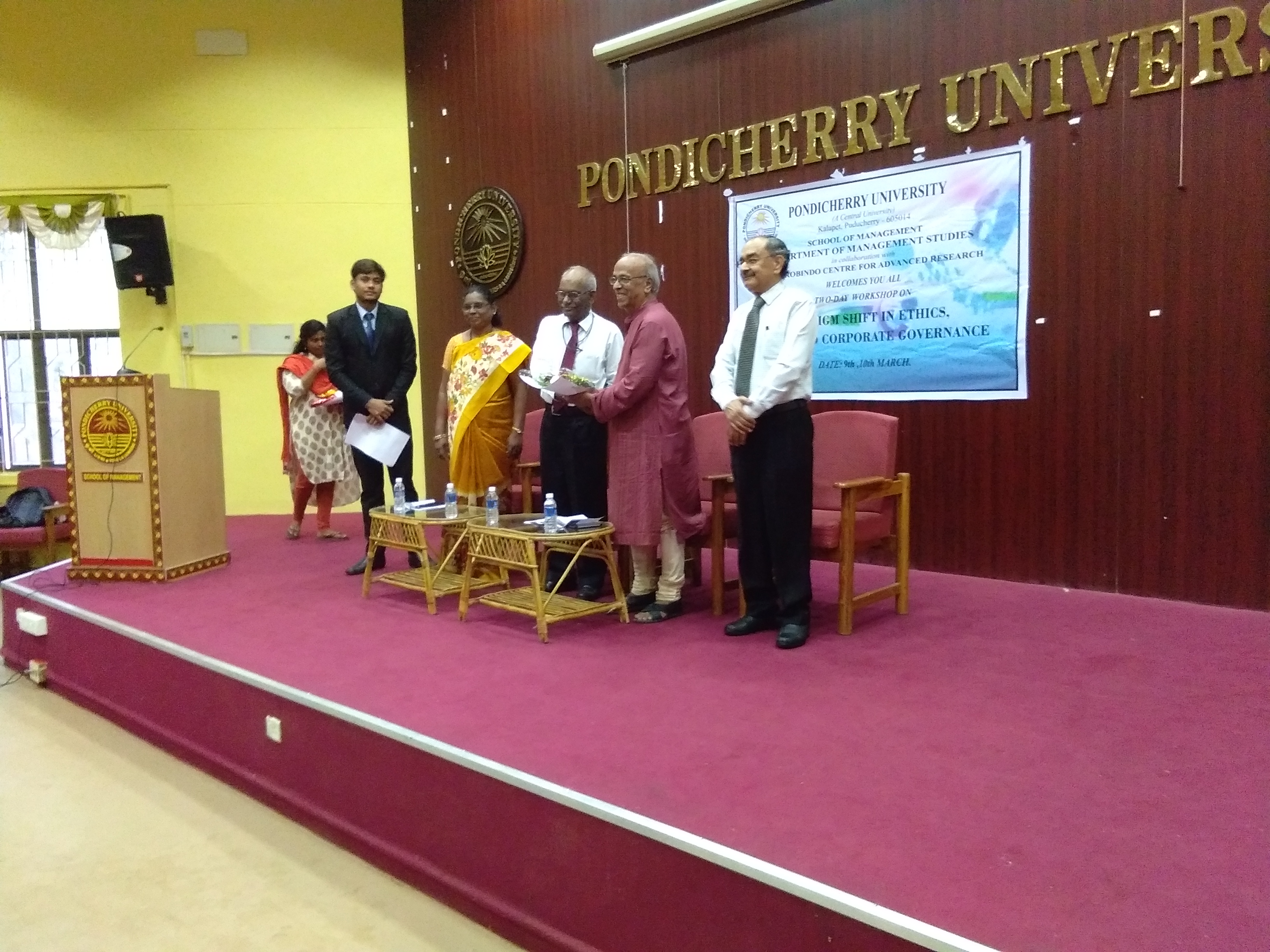
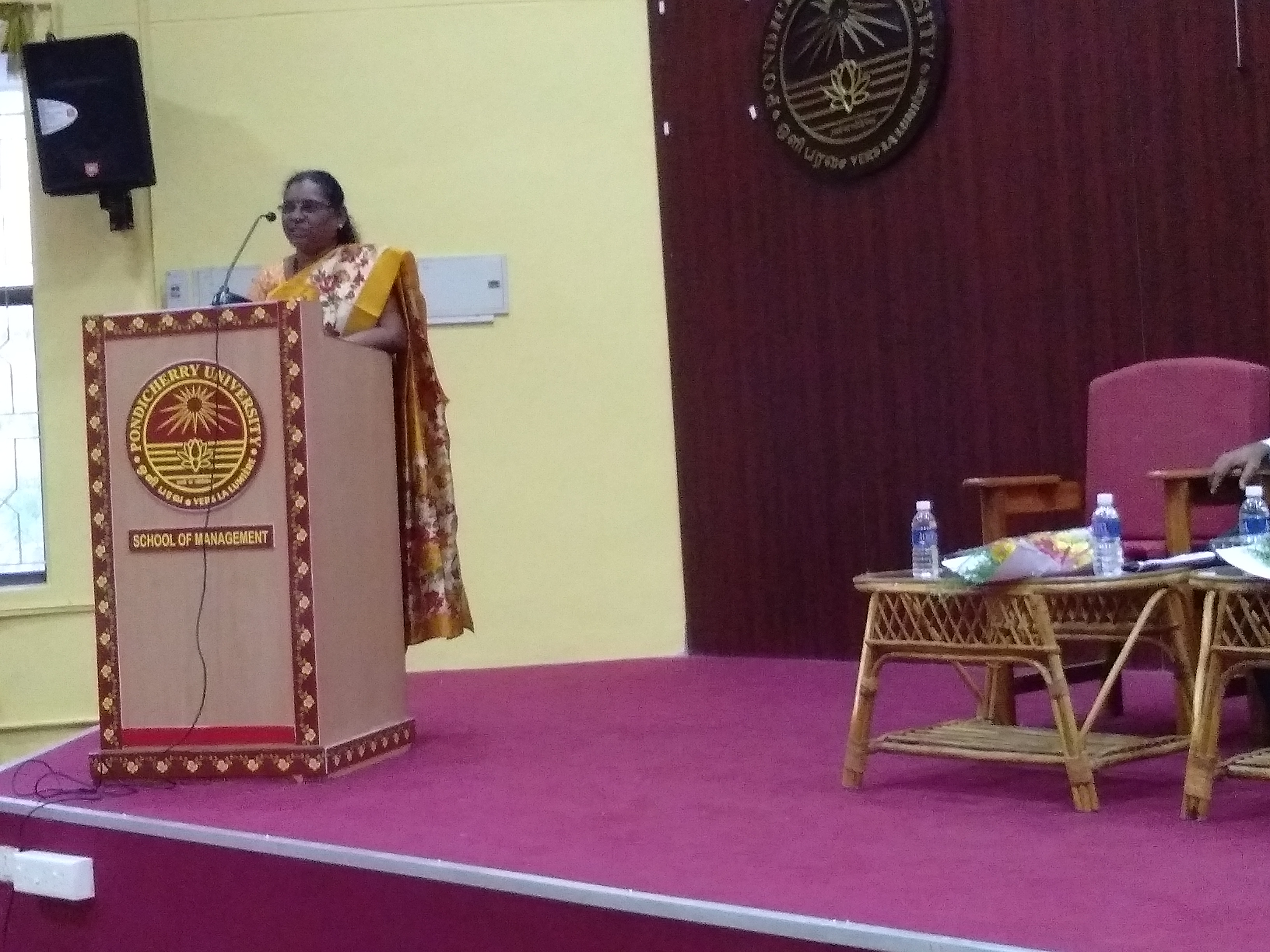
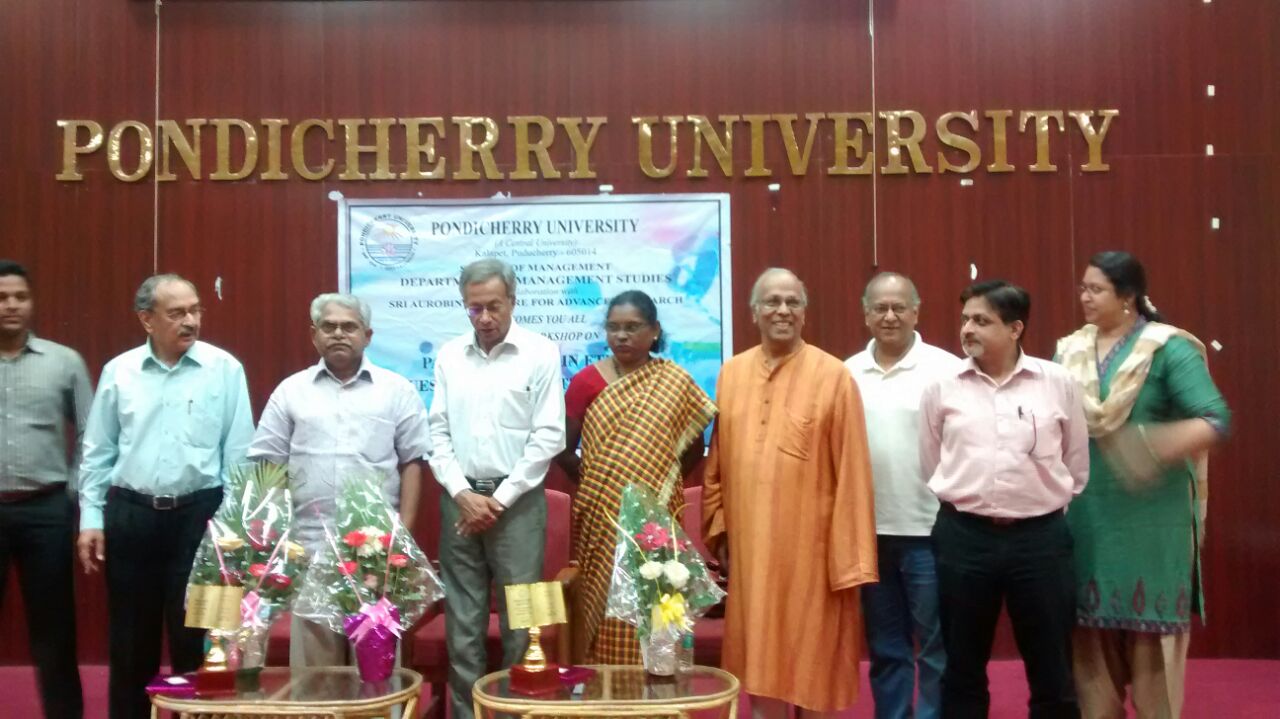
A two-day workshop at Pondicherry University

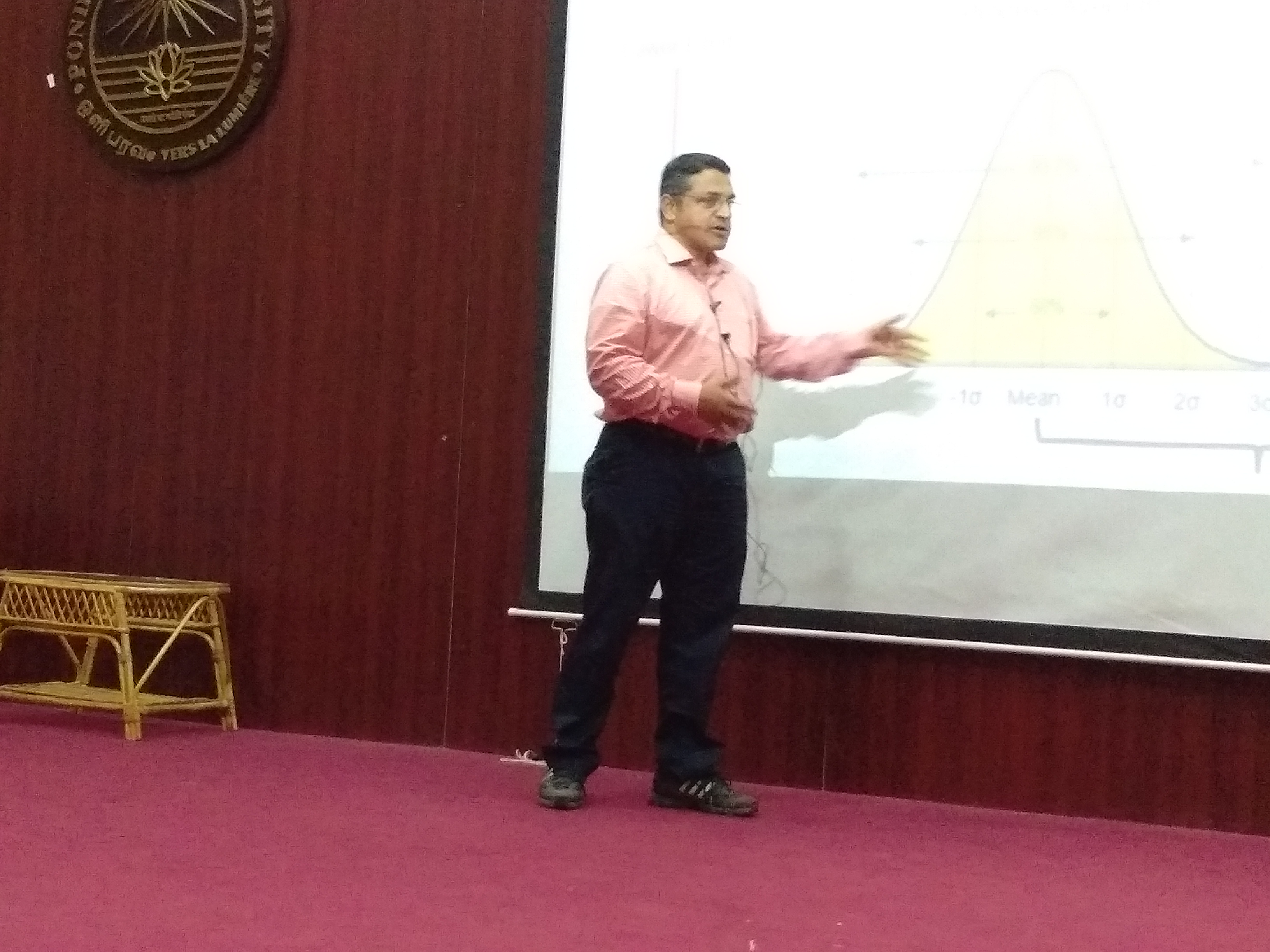
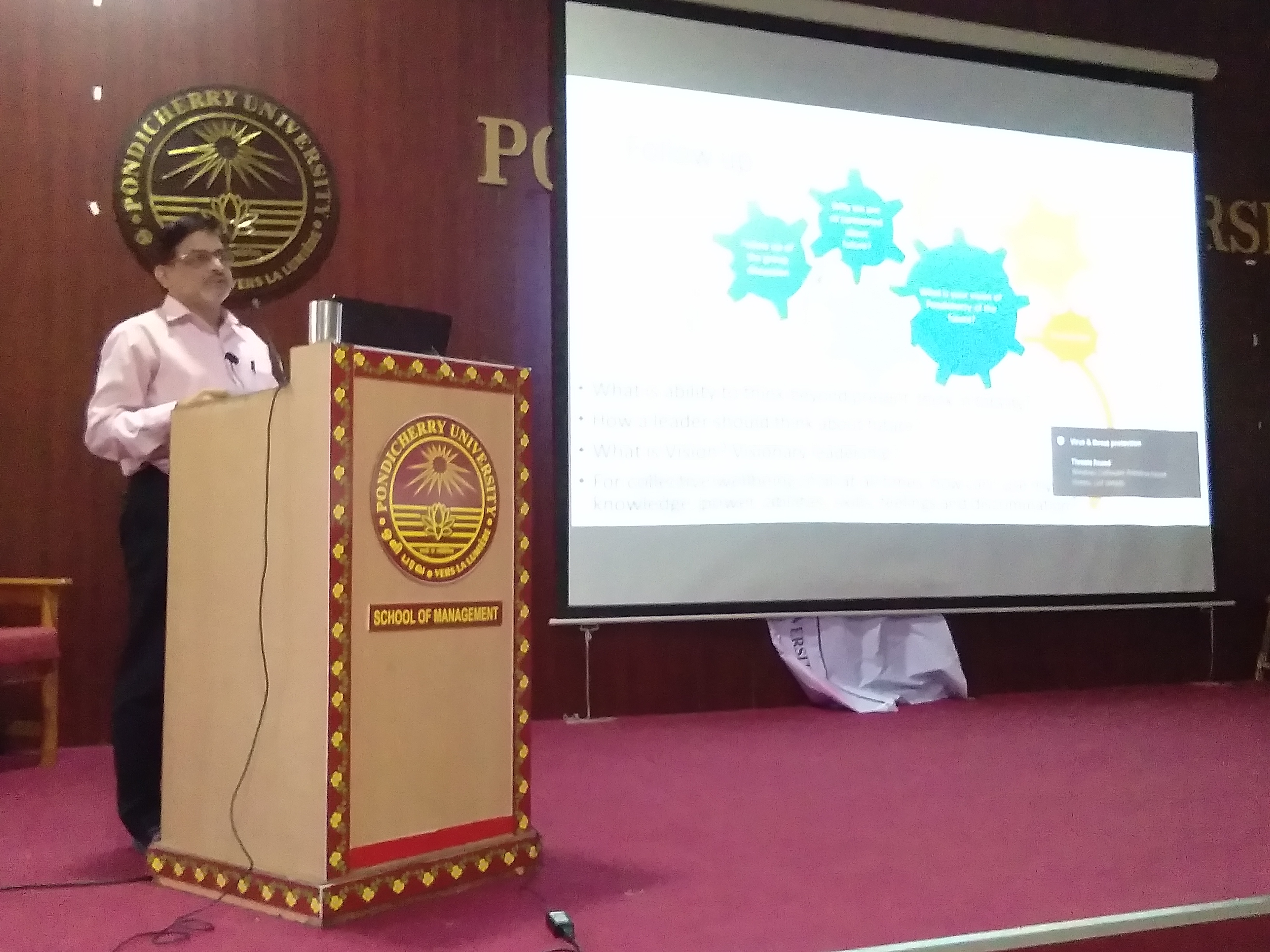
The Department of Management Studies of Pondicherry University, in collaboration with Sri Aurobindo Centre for Advanced Research (SACAR), recently conducted a two-day workshop, highlighting the manner in which aspiring managers can work on an inner transformation and achieve unparalleled satisfaction and growth in their careers, whether as professionals or as individuals.

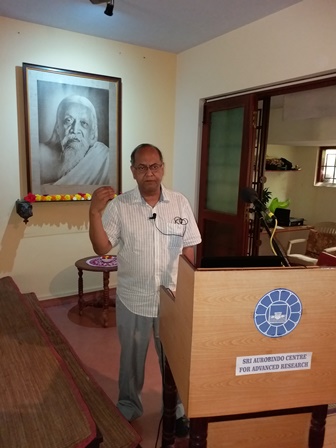
In his keynote address, Dr Ananda Reddy, Director, SACAR, highlighted the challenge the leaders and managers of today face: that of following values and ethics in business, of imbibing the principles of corporate governance in their decision-making, and the need for being aware of the potential of spiritual consciousness as a solution to the problems they face.

Organizations are made up of human beings. Thus, the mantle of transforming corporates falls squarely on the young and strong shoulders of individual leaders and managers. This alone can lead to a meaningful evolution in the manner in which organizations function. By being an important part of society at large, such organizations set high standards and spearhead social evolution.

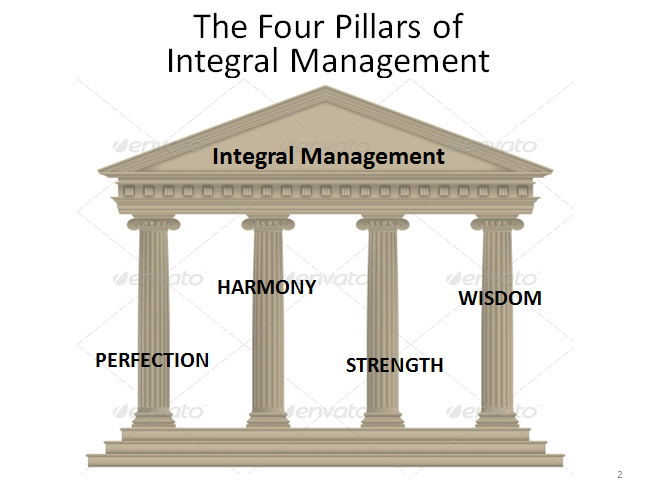
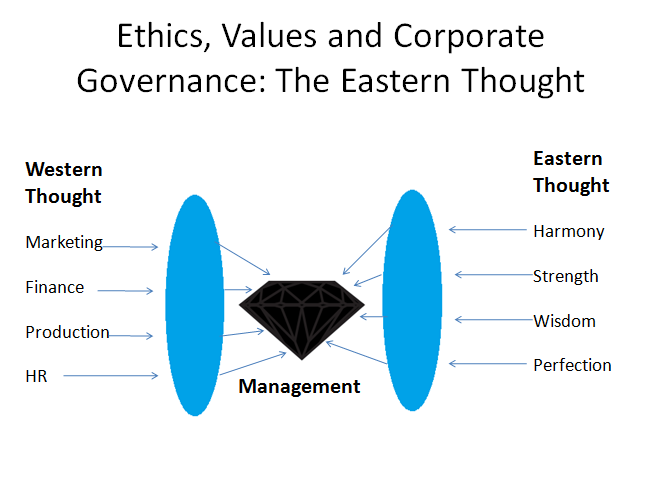
The need of the day is to view the management process through a new lens – that of the Four Pillars of Harmony, Strength, Perfection and Wisdom. This new paradigm of Management goes beyond the self-centred ‘I and Me’ approach of Western models. Rather, it focuses on the overall good, espousing a ‘We and Us’ approach, which is more holistic in nature. This new paradigm is based on ancient Indian wisdom and can help leaders and managers to deal with corporate affairs more effectively and efficiently.

The new paradigm of Integral Management

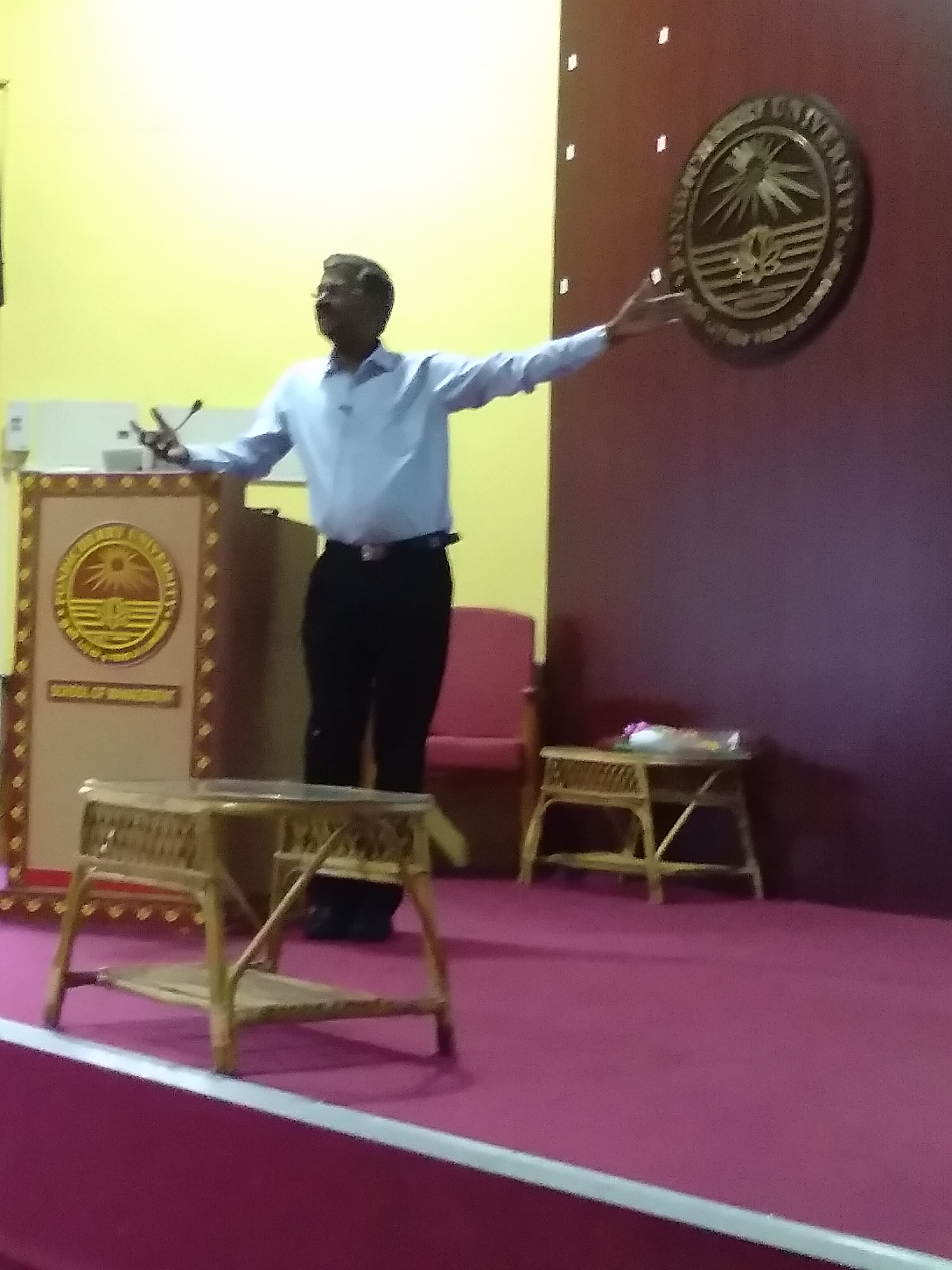
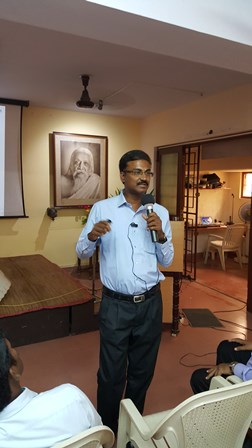
Yours truly provided to the participants an overview of the Four Pillars of Integral Management, backed by real life examples from the business world.

The challenges of maintaining Harmony were brought up, as also the need for a higher Spiritual Quotient. Use of planned disharmony in the market place, as evidenced by the disruptive entry of Reliance Jio in the telecom sector and that of Patanjali in the FMCG sector, was mentioned.

The need to deploy Strength for the overall good was substantiated by the case of Tata Trusts. The abuse of corporate muscle power was brought out by quoting the case of Erin Brockovich, who spearheaded the campaign to secure substantial relief for those who suffered at the hands of the Pacific Gas and Electric Company of California in 1993.

The development of hybrid cars and several product recalls were cited as examples of dynamic Wisdom in company’s policies. The need to build brand equity was discussed, so was the role of intuition in decision-making. The story of how the Indian Institute of Science at Bangalore came up based on the singular initiative of Sir Jamsetji Tata (1839-1904) was narrated.

Participants were exhorted to give up the culture of mediocrity and strive for Perfection in all their actions. Example of Apple products and Rolls Royce cars were cited.

Harmony and Collaboration

Professor Kisholoy Gupta, an accomplished international trainer in Management Sciences, based in Bangalore, invited the participants to play some games to demonstrate the role and importance of Harmony and to experience a freedom of expression, so one could feel free and happy, and therefore, work more productively.

Ms Padma Asokan, who manages Omeon Solutions, a global software company in Chennai, explained the need and mechanics of achieving Harmony in organizations.

The core of any organization being love and harmony, managers can improve their contribution by achieving a balance between their inner and outer selves.

Managements need to enable harmony at different levels. At the infrastructure level, care needs to be taken of tools, office layouts, work station design, and rest and recuperation facilities. The top person is the DNA of the company’s culture and thereby enables organizational harmony. Operational harmony is achieved through teams which aim to achieve success in whatever they choose to do. Smooth communication, whether vertical or horizontal, ensures better harmony across an organization. Treating employees with respect and dignity and innovative HR policies ensure a high degree of motivation at all levels.

Order and cleanliness attract all stakeholders to a business. Waste reduction, productivity improvement and minimal friction are the key benefits one derives.

The highest form of harmony results from conflict resolution of values across individuals, departments and profit centers. Managements keen to achieve a state of sustainable corporate harmony counsel their employees to cleanse their minds of such negative emotions as anger, hatred, passion, lust, delusion and pride.

The Strength of Self-belief

Professor Kisholoy Gupta conducted some practical exercises to make the participants aware of the importance of the Strength of being impartial and objective and “stepping-back” before taking any decision.

Mr Ganesh Babu, a strategic thinker and a coach extraordinaire based at Pondicherry, touched upon the importance of self perception, self-control and a belief in one’s own abilities. By quoting examples of several spiritual stalwarts in the fields of business as well as in spirituality, he demonstrated that it was their belief in themselves and their unique capabilities that led them to scale great heights and become the leading lights of humanity, inspiring one and all.

An individual manager’s values and beliefs shape his attitude. These, in turn, determine his feelings and behaviour, making him what he is. The power that he exercises is often derived from his beliefs. By reviewing one’s belief systems, one can enjoy greater power over one’s actions and circumstances, thereby enhancing one’s efficiency and effectiveness.

A manager can increase his Strength manifold by:

-Basing his decisions on empathy and respect towards others;

-Refusing to accept anything below standard, treating all tasks as Divine work and, thus, striving for perfection;

-Dealing with Materialistic Resources in a firm and polite manner.

Perfection in Management

Professor Kisholoy Gupta conducted a series of practical exercises of making quality products, thereby driving home the relevance of Perfection in management.

Dr Sridarshan Kaundinya, having had cross-functional experience in such companies as GE, Indus and TCS, and presently based in Bangalore, explained the manner in which Perfection gets practiced in the industry. The need to go for quality levels far beyond Six Sigma, like in aircraft engines where a failure could directly lead to loss of precious human lives, was touched upon.

Perfection is not only about having an intuitive power to accuracy but also about an unfailing attitude of fulfilling commitment, of being unscrupulous, unsleeping, indefatigable, and touching every detail, and of organizational execution and achieving an unfailing exactitude of result.

The Power of Wisdom in Values

By way of a warm-up exercise on Wisdom, participants were invited to describe the lines along which the city of Pondicherry should develop in another decade or so. Brighter minds at the workshop came up with some lofty and pragmatic goals for the city planners and administrators.

Dr Narendra Joshi, an eminent educationist from Mumbai, who has also worked on the interface between Artificial Intelligence and Spirituality, described Wisdom as comprising vision, wideness of understanding, and as a result, an endless compassion and patience for the time needed to effectuate and implement the intention of the Supreme in the manifestation.

He stated that it is not uncertainty alone that has paralyzed CEOs today. Many find it difficult to reinvent their corporations rapidly enough to cope with new technologies, demographic shifts, and consumption trends. They’re unable to develop truly global organizations that can operate effortlessly across borders. Above all, leaders find it tough to ensure that their people adhere to values and ethics.

The prevailing principles in business make employees ask, “What’s in it for me?” Missing are those that would make them think, “What’s good, right, and just for everyone?”

Practical wisdom, according to several studies, is experiential knowledge that enables people to make ethically sound judgements. It is similar to the Japanese concept of Toku—a virtue that leads a person to pursue the common good and moral excellence as a way of life. It is also akin to the Indian concept of Yukta, which connotes “just right” or “appropriate.”

One way of describing Wisdom is to have the ability to see the trees and the forest at the same time. With meditation and an inner connection with oneself, this can be cultivated.

Going beyond CSR

Mr. N Harihara Subramanian, a passionate Social Worker involving and supporting many Projects and a founder and promoter of the Indian Institute of Governance (IIG), Chennai, delivered the Valedictory Address.

He exhorted the participants to propel their organisations beyond traditional norms of Corporate Social Responsibility, and work for the overall benefit of the communities surrounding them.

Proceedings summarized

Dr Ananda Reddy, Director, SACAR, summed up the proceedings of the workshop. He reiterated the need to train young managers not only based on the Western models of management, but also to draw deeply from the wisdom contained in Indian scriptures. This alone could lead to businesses which work for the overall good of the society.

Workshop Design, Execution and Coordination

The workshop was designed to develop the inner capabilities of students as future managers in terms of the aforesaid Four Pillars of Harmony, Strength, Wisdom and Perfection.

The event was chaired by Dr. G. Anjaneyaswamy, Professor and Dean, School of Management, Pondicherry University. In his concluding remarks, he appreciated the unique contents of the workshop and expressed a hope that the Department of Management Studies may like to have the same incorporated into the formal syllabus of a regular MBA course at Pondicherry University.

The Inaugural Session was chaired by Professor K C S Rao, Head, Department of Banking Technology, School of Management, Pondicherry University.

The Convener of the workshop was Dr. R. Chitra Sivasubramanian, Professor & Head, Department of Management Studies (DMS), Pondicherry University.

The entire event was coordinated by Dr. B. Rajeswari, Assistant Professor, and Dr. R. Venkatesakumar, Assiociate Professor, DMS, School of Management, Pondicherry University. Dr Shruti Bidwaikar was the main coordinator from Sri Aurobindo Centre for Advanced Research (SACAR), Pondicherry.

The Road Ahead

Businesses with a futuristic vision need managers who are not only tech-savvy but also situation-savvy, adept at handling stressful challenges with ease and aplomb.

SACAR is open to the prospect of conducting similar workshops in commercial organizations as also at management institutes of repute, whether for the students or for the faculty.

For institutes interested in incorporating the content in their regular management courses, a draft syllabus has also been prepared under the guidance of Professor G P Rao, who, after retiring from Madurai Kamaraj University in 1997, has devoted himself to the mission of spreading human values in organizations, through his NGO, SPANDAN.

(Related Posts:

https://ashokbhatia.wordpress.com/2012/11/19/spirituality-in-management

https://ashokbhatia.wordpress.com/2015/10/06/managerial-perfection-notes-from-a-seminar-at-pondicherry-india

https://ashokbhatia.wordpress.com/2016/03/26/harmony-in-management-a-seminar-at-pondicherry-india

https://ashokbhatia.wordpress.com/2016/08/30/power-in-management-a-seminar-at-puducherry-india

https://ashokbhatia.wordpress.com/2017/04/04/the-element-of-wisdom-in-management-a-seminar-at-pondicherry)


Read Full Post »

When it comes to achieving the heights of Corporate Excellence, the element of Wisdom plays a crucial role. Look at any organization which enjoys a strong brand equity and one is apt to discover the wiser ways in which it conducts its operations. Its initiatives lead to a sustainable growth of the business, giving back to society in ways which are imaginative as well as pragmatic. The common thread running through all such initiatives is that of the element of Wisdom, one of the four pillars of Integral Management, the three other pillars being Perfection, Harmony and Strength/Power.

Sri Aurobindo Center for Advanced Research (SACAR) recently organized a one day seminar on the topic of ‘The Element of Wisdom in Management’. The event was a part of a series of seminars organized by SACAR over the past two years as a part of its endeavour to explore the relevance of some key spiritual tenets to the realm of management.

Wisdom in Organizations

A talk by yours truly covered the diverse ways in which Wisdom manifests itself in strategic as well as in tactical decision-making by organizations. It quoted real life examples of business houses using Wisdom in such managerial functions as Marketing, Finance, HR, and the like. Business houses like Tatas, Nestle India, HCL, Infosys and Wipro were covered.

Wisdom in managing People and Production

Mr. K. Nagaraja Kumar, Head-Marketing, L&T Corporate Technical, Chennai, explained the elements of Wisdom which can come in handy to managers responsible for handling people and production. With the help of light-hearted illustrations, he conveyed some profound messages to the participants. He presented a case study wherein a detailed road map was used to turn around the fortunes of an ailing manufacturing unit by engaging meaningfully with relevant stakeholders.

Balancing Intelligence and Intuition

Dr. Narendra Joshi, Principal, Agnel Technical College, Mumbai, highlighted the necessity of balancing intelligence and intuition in the realm of Product Life Cycle Management. He cited the examples of companies like Sony, Xerox, Matsushita and Nestle which introduced innovative products which were much ahead of their times. Analytical tools like Teboul’s model, Kano’s model and the Fritz approach were quoted by him. So was the necessity for a quiet mind for reaping the benefits of one’s intuitive powers.

The Age of the Spiritual Manager

Dr Ananda Reddy, Director, SACAR, spoke of the fact that Wisdom is far above and beyond the realm of the thinking mind. It is about understanding and effectively using the underlying algorithms which open up the vast vistas of miraculous knowledge and infinite possibilities for managements to decide long-term business strategies and frame policies which ensure profitable as well as sustainable operations. He shared his perception that the age of the Spiritual Manager is already upon us and management professionals would do well to equip themselves with spiritual tools to succeed in their career and life objectives.

The Wisdom of Human Values

Prof G P Rao, a doyen in the field of management education, spoke of SPANDAN, a NGO founded by him, which espouses the Wisdom of running business enterprises based on human values and ethics.

Empirical evidence of Integral Management

Prof Kisholoy Gupta, Acharya Institute of Business Management, Bangalore, presented the empirical results of an insightful study done by him to gauge the perception and reality of the Four Pillars of Integral Management – Perfection, Harmony, Strength and Wisdom – by practicing HR seniors in the Indian industry. The results showed that there is already some awareness of the constituents of Integral Management, though the nomenclature arouses a curiosity and a desire amongst management practitioners to understand and adopt this new paradigm in their day-to-day working.

Wisdom at the personal level

What does Wisdom mean to a practicing manager? Mr Ganesh Babu, Founder & CEO, Winning Minds Solutions, Puducherry, came up with a heart-warming presentation on the dimensions and utility of Wisdom in the mundane life of a working manager. The talk explored different dimensions of Wisdom in all spheres of one’s life – professional, social as well as personal.

Leaders with equanimity

Dr. Debabrata Sahani, Surgeon, Optholmologist, Bhuvaneshwar, touched upon the importance of an inner connection for business leaders. Wise are those who enjoy a tranquility and calmness within themselves. Their decision-making is based on balanced, well-considered and holistic view of the facts of the case. They do not manage crises in business with knee-jerk reactions. They deal with people according to their nature and with occurrences in the business environment according to their force and the truth or hard reality they represent. Impartial they are. Detached they are. Compassionate they happen to be, but never at the cost of their innate wisdom and truth.

Wisdom for an Indian citizenMr Hariharan Subramaniam, Director, Indian Institute of Governance, Chennai, touched upon the Wisdom of not only connecting to one’s inner self, but also the need for an Indian to contribute towards restoration of the old glory of her country. India has a special role to play in the comity of nations and the need of the hour is to train value-based politicians and administrators who would steer the country in the decades to come. He spoke of the vision of kick-starting his dream project, the Indian Institute of Governance, which would serve this purpose. His opinion was that one’s wisdom was directly proportional to one’s inner growth.

The seminar was well attended by practicing managers, management academicians and research scholars. Its conduct marked another milestone in SACAR’s efforts to propagate the concept of Integral Management, the Four Pillars of which happen to be Perfection, Harmony, Power and Wisdom.

The Age of the Spiritual Manager is already upon us. The time has come for management professionals to consider and adopt Integral Management – an Indian paradigm to understand and refine our managerial processes.

(Related Posts:

https://ashokbhatia.wordpress.com/2015/03/17/an-inner-approach-to-leadership-and-management-note-on-a-seminar

https://ashokbhatia.wordpress.com/2015/10/06/managerial-perfection-notes-from-a-seminar-at-pondicherry-india

https://ashokbhatia.wordpress.com/2016/03/26/harmony-in-management-a-seminar-at-pondicherry-india

https://ashokbhatia.wordpress.com/2016/08/30/power-in-management-a-seminar-at-puducherry-india)

Read Full Post »

Art SavitriThere is a deep link between art and our consciousness. Here is a post which explores this vital link and even celebrates it!

Christopher Chase's avatarCreative by Nature

“Developing mastery in an art influences how we think about challenges and see the world. Every one of us has the potential to be an artist, to harness and express our innate wisdom and creativity.”

VG1546-5-12-10

You’ve probably noticed how the most beautiful paintings, music and poetry evoke a sense of connection, peace and gratitude. Great works of art celebrate and express the beauty of Nature, that “the universe is full of magical things patiently waiting for our wits to grow sharper,” as Eden Phillpotts put it.

With the best art we are reminded that we live in a Creative Universe that is itself a work of art, filled with masterpieces of rivers, stars, mountains, children, clouds and flowers. The greatest artists, poets and musicians down through time (like Picasso, Walt Whitman, Mozart and Van Gogh) have tried to communicate this message to us. That art surrounds us everywhere.

They encouraged us to look carefully, and to develop our own creative potential. When…

View original post 2,141 more words

Read Full Post »

The Indian view of the discipline of management speaks of four pillars of Integral Management – Wisdom, Power, Harmony and Perfection. Of these, Power is a potent tool which, when harnessed judiciously, enables organizations and individual managers to scale greater heights.

Organizations wield tremendous power. They do so not only by virtue of their financial prowess but also by way of their brand equity, their size, their reach in the market and the kind of innovative products or services they offer. They exercise influence on the society – first, by identifying its latent desires, and then by serving the same.

Individuals who are part of organizations also wield tremendous power over its resources and its people. Arrogance and exploitation could easily follow.

However, if Power is understood as “strength and force, Shakti, which enables one to face all that can happen and to stand and overcome” difficulties connected with “men, events, circumstances, means”, then Power could be used for the overall good of humankind.

Thus, with power comes the attendant responsibility of using it wisely and equitably. Checks and balances need to be put in place to ensure that boundaries set by values and ethics do not get transcended. Keeping a strict control on arrogant behaviour is the sine qua non of long-term success in career.

Power needs to be used in a socially responsible manner. Using the power to share the gains of business with relevant stakeholders makes good sense. Deployment of power to benefit the society at large, that too in a manner which does not harm the environment, ensures that the business remains sustainable.

Managers also have a latent power – of their mind, their will, their ambition, their attitude, their passion and their soft skills. By channelizing the same appropriately, they could rise to greater heights and become more evolved persons, exercising greater influence on the events and people they are connected with.

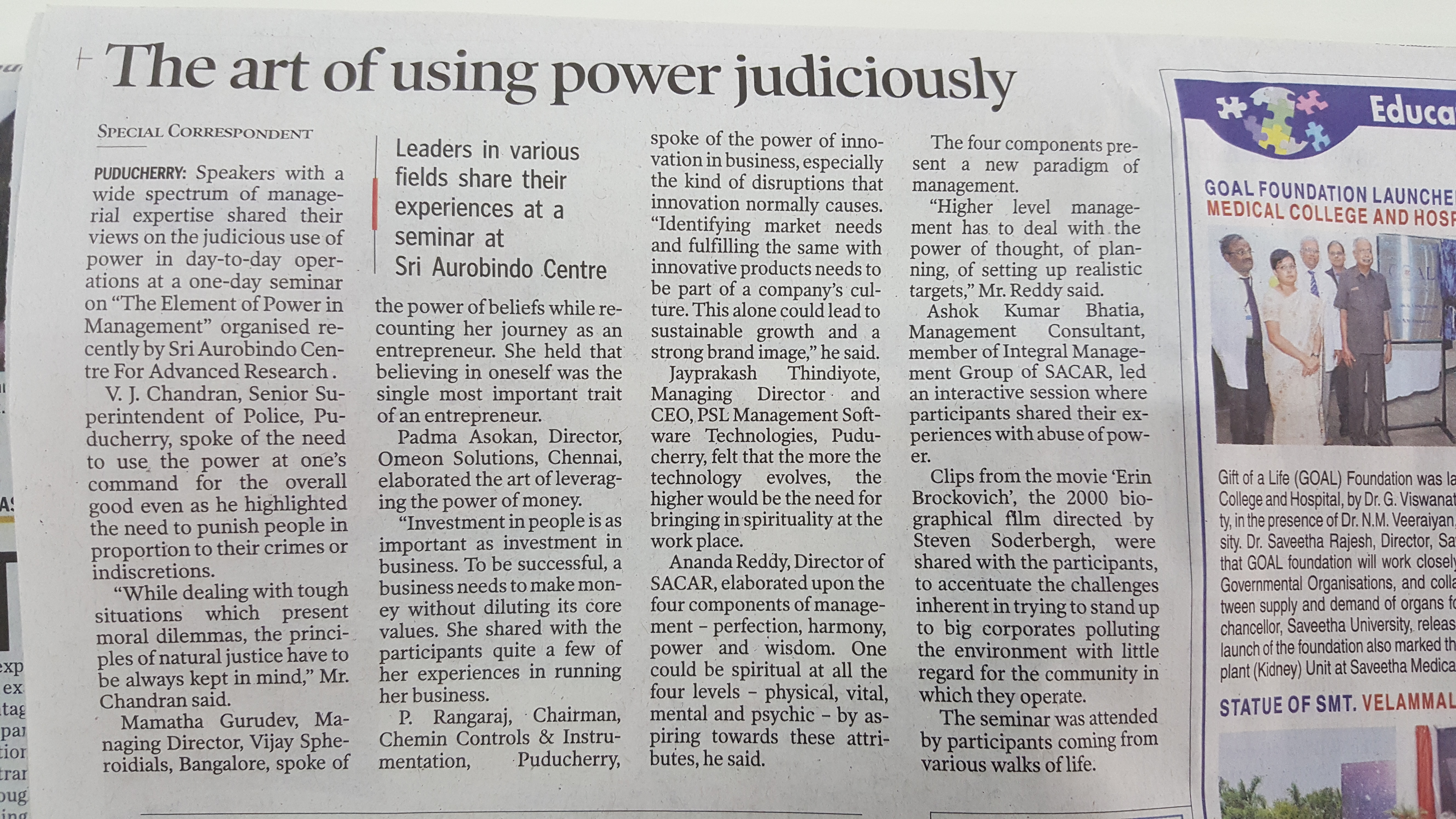
At a one-day seminar on “The Element of Power in Management” organized by SACAR on the 6th of August, 2016, speakers from a wide spectrum of managerial expertise shared their views on the judicious and responsible use of power in day-to-day operations.

SACAR Power Aug 2016 B

Dr. Ananda Reddy, the Director of SACAR, elaborated upon the four components of Management ― Perfection, Harmony, Power and Wisdom. He said that one could be spiritual at all the four levels – physical, vital, mental and psychic by aspiring towards what are called perfection, harmony, power and wisdom. These, he proposed, present a new paradigm of Management. On the level of thought, Power comes into play. Higher level management has to deal with the power of thought, of planning, of setting up realistic targets. He highlighted the importance of using power in a responsible and judicious manner.

SACAR Power Aug 2016 A

Dr. V. J. Chandran, IPS, SSP, Government of Puducherry, spoke of the need to use the power at one’s command in a spiritual manner – for the overall good. He highlighted the need to punish people in proportion to their crimes or indiscretions. While dealing with tough situations which present moral dilemmas, the Principles of Natural Justice have to be always kept in mind. Assuming responsibility and accountability is important. Improving upon one’s quality of work, one’s ability and one’s personal expertise alone helps. He shared with the participants certain instances where abuse of power led to severe complications for the society at large.

SACAR Power Aug 2016 3Ms. Mamatha Gurudev, Managing Director, Vijay Spheroidials, Bangalore, spoke of the power of beliefs while recounting her journey as an entrepreneur. She held that believing in oneself was the single most important trait of an entrepreneur. It makes sense to cultivate a habit of looking within and of being in touch with one’s own inner self. Trust reposed in one by others also empowers oneself. The focus should always be on the process, not on the person. She exhorted the participants to change their attitude from ‘I can’t do it yet’ to that of ‘I can do it’.

SACAR Power Aug 2016 4Ms. Padma Asokan, Director, Omeon Solutions, Chennai, elaborated the art of leveraging the power of money. Money needs constant activity and circulation. It should be used to increase wealth and prosperity. Wealth belongs to the divine and those who hold it are mere ‘’Trustees” and not “Possessors”. Investment in people is as important as investment in business. To be successful, a business needs to make money without diluting its core values. She shared with the participants quite a few of her experiences in running her business.

SACAR Power Aug 2016 5

As part of an interactive session, conducted by yours truly, participants spoke of the various ways in which they had experienced, and occasionally countered, the abuse of power. Clips from the movie ‘Erin Brockovich’ were shared with the participants, showcasing the challenges inherent in trying to stand up to big corporates polluting the environment with little regard for the community in which they operate.

SACAR Power Aug 2016 6

Mr. P. Rangaraj, Chairman, Chemin Controls & Instrumentation, Puducherry, spoke of the power of innovation in business. He touched upon some unique success stories and highlighted the need to make frugal engineering a routine habit. He described the kind of disruptions that innovation normally causes and explained the elements of perfection, harmony and wisdom which are necessary to upscale and market a new product or service.  Identifying market needs and fulfilling the same with innovative products needs to be part of a company’s culture. This alone could lead to sustainable growth and a strong brand image.

SACAR Power Aug 2016 7

Mr. Jayprakash Thindiyote, Managing Director and CEO, PSL Management Software Technologies, Puducherry, touched upon the power of technology. He spoke of rapid advances in the field of robotics and the advent of Artificial Intelligence. He felt that the more the technology evolves, the higher would be the need for bringing in spirituality at the work place. Having respect for alternative views, effective communication, genuine compassion and a creative approach to problem solving alone could help a business grow in future. He exhorted managers to be like an I-POD, that is, have an Inner Peace but be Outwardly Dynamic.

Mr. Ganesh Babu, Founder and CEO, Winning Minds Solutions, Puducherry, and Dr. Arvind Gupta, Assistant Director, Directorate of Distance Education, Pondicherry University, coordinated the entire event. Their back up support was invaluable in the planning as well as the hosting of the entire event.

Dr. Shruti Bidwaikar, Assistant Director, SACAR, summed up the proceedings and offered a vote of thanks.sacar-power-seminar-hindu

The seminar received an overwhelming response from participants coming from various walks of life, like government officials, management educationists, corporate executives, businessmen, Aurovillians, entrepreneurs and students.

The Integral Management Group of SACAR had already covered the facet of Perfection and Harmony in the past. The next event, focusing on the facet of Wisdom, is planned to be hosted during March, 2017.

(Link to a write up which appeared in The Hindu of September 13, 2016:

Best Regards

Read Full Post »

seagullHere are some gems of wisdom which can help you soar in your career:

  1. The more you analyse, the higher the state of inaction attained. Use intuition more often.
  2. Be unreasonable and deliver extraordinary business results.
  3. Always meet the boss halfway through.
  4. Call back yourself and be in for a surprise.
  5. Cultivate the art of Creative Dissatisfaction.
  6. Delegation without benchmarking and monitoring of targets amounts to abdication.
  7. Ethics and Values are important. Be smart. Steer your business using not only a Business Compass but also a Moral Compass.
  8. It always pays to have a credit balance in your interpersonal relationships.
  9. The only fire in the belly to be avoided is the one generated by ulcers and cysts.
  10. ‘Yes-men’ could be harmful to your career progression in the long run.
  11. Keep your learning batteries always charged up.
  12. Kiss frequently. The term ‘Kiss’ here stands for ‘Keep It Simple, Stupid’!
  13. Encourage dissenters to speak up; be a smart leader.
  14. While taking decisions, use your heart as well as your mind.
  15. Every five years, retire yourself. This would ensure you never get chucked out of a job.
  16. CEOs who succeed in the future would be the ones having a Western mind and an Eastern heart.
  17. Packages have a short shelf-life. Keep reinventing them.
  18. People are not spares of a machine, to be replaced once their utility is exhausted. Groom them for higher responsibilities, or out-place them.
  19. Always praise in public but reprimand in private.
  20. Keep your Propensity to Procrastinate under check.
  21. Being a ‘yes-man’ is a risky proposition. The higher you are in the pecking order, the higher the responsibility you carry on your shoulders – that of registering dissent.
  22. Keep your hormones under check. Love blossoming within the confines of office space can also turn into litigation and expensive lawsuits.
  23. A good way to kill an otherwise brilliant idea is to first convey it over mail.
  24. Pressure is an external stimulus. Stress is what we experience.
  25. Stress is inversely proportional to your inner resilience, which can be built up by forgiveness, a dash of humour, and meditation.
  26. Create a culture of observing, judging, and unleashing talent.
  27. Cultivate your underground cable connections. Things get done better when the informal organization gets going.
  28. Plan your vacations well. The absence of a good manager is never felt.
  29. It pays to build up and protect your own brand value.
  30. Strike the right balance between the following three: Concern for Production (read Results), Concern for People and Concern for Ethics.

(Picture courtesy Pixabay)

Read Full Post »

Here is an interesting post which cites words of wisdom from some of our famous authors.

MattAndJojang's avatarMattAndJojang's Blog

Photo: Getty Images Photo: Getty Images

Writing isn’t easy. In fact, it can be painfully difficult. Why? Because it’s thinking, but on paper. “To write well is to think clearly. That’s why it’s so hard,” said Pulitzer Prize-winning journalist and author David McCullough.

Many great writers, including Joan Didion and Don DeLillo, have said that their purpose for putting words on paper is to find clarity with their thoughts, and have described the process of writing as one of becoming familiar with their own minds.

“I find that by putting things in writing I can understand them and see them a little more objectively,” Hunter S. Thompson wrote in a 1958 letter. “For words are merely tools and if you use the right ones you can actually put even your life in order.”

If you’re a writer, then you’re likely both devoted to your craft and eternally frustrated by it —…

View original post 1,219 more words

Read Full Post »

Words of Wisdom

Stressed about stress management? Read this one!

Read Full Post »

Homo sapiens these days have a serious challenge on hand – that of being unable to ‘switch off.’ Connectivity has become omnipresent. Technology rules the mind and, to some extent, the heart. The result is a disconnect with the real world, steady deterioration in the quantum of quality time available with the near and dear ones, burn-outs, fatigue and an early onset of lifestyle related diseases. Increasingly, we appear to be becoming slaves to technology.  

The following antidotes might help those amongst us who happen to be a part of this rapidly growing tribe.

  •  Learning to Unplug: Out of the twenty-four hours we have in a day, we can surely carve out a time niche where we can just be ourselves. Heavens will not fall. Our business, or the companies we work for, would not collapse. If we set our mind to this, we can do it.
  • Renewing Ourselves: Setting aside a time for yoga, meditation, light exercises and simply pursuing aTechnology MEDITATION-ENTREPRENEUR-SUCCEED simple hobby would help. Being connected to the external world – watching TV, for example – would provide only temporary relief. Real relaxation would swell up from inside us – once we start doing something that makes us internally happy.
  • In-sourcing: One thing we cannot outsource to technology is mindfulness – being aware that we are aware of what we are doing and why we are doing it. Attempting an ‘in-sourcing’ of this kind has a great therapeutic effect on our system. Short bouts of meditation or deep breathing achieve precisely this.
  • Being Wiser: Every moment, we are flooded with data. Every day, we face a tsunami of information. Wisdom lies in sifting through this haze and differentiating between the important issues and the urgent ones. Nassin Taleb, author of The Black Swan, says: “Big data may mean more information, but it also means more false information.” Wisdom alone can ensure that we follow a balanced direction in life.
  • Thinking before Wishing: The option to remain connected 24 x 7 and the deluge of information available at the click of a mouse is making us lazy cats which have had an overdose of rich cream. We need to critically evaluate the wish-list of our lives and reset our priorities in a conscious manner. Chasing rainbows is fine, but the real challenge lies in deciding the colors of our individual rainbows.
  • Being Vigilant: Sci-fi spine chillers tumbling out of the Hollywood dream factory project a scary picture forTechnology smart Home_ipadandiphone us. Our lives could soon spin out of our own control. One threat – to our privacy – has already manifested itself. Another looming large on the horizon is that of our smart gadgets going beyond running our homes. These could soon start aspiring, conspiring and colluding to control our lives. Vigilance is highly recommended!

Life is much like a driving experience. The vehicle we drive and the gadgets at our disposal are becoming smarter with each passing year. We are trying to navigate our way on the autobahns of our lives through an enveloping fog of information which becomes denser with each passing milestone.   

The only way out is to have sharper responses, a stronger will power, an intuitive capability to forecast others’ behavior, a higher level of vigilance and a quiet time for ourselves. The bliss of switching off our gadgets and enjoying a real sunset over the lush green fields that whizz past us is simply waiting to be experienced. So is the joy of rolling up the car windows and listening to the soothing strains of a Beethoven symphony wafting out of the music system. As darkness falls, the fog lamps of wisdom enable us to drive our way through life safely and enjoyably.

As our gadgets become smarter, let us not get dumber. Let us not be slaves to technology!

Related post:  https://ashokbhatia.wordpress.com/2014/08/04/mirror-mirror-on-the-wall-who-is-the-smartest-of-them-all

(Images courtesy www)

Read Full Post »

Older Posts »