Often, we complain about the inane offerings of mainstream Bollywood cinema. We bemoan the fact that we are expected to spend our hard-earned money, leave our brains outside a cinema hall, give our common sense a commercial break, temporarily suspend our beliefs and just enjoy the proceedings on the silver screen.
Some scripts make us go through the romantic upheavals in the lives of the hero and the heroine. Few others offer us unique insights into the world of crime and gore. Others thrive on keeping us glued to our seats wondering as to what may happen next. The thrill of a car chase, a saga of revenge and dollops of suspense make the experience worthy of our time, cost and attention.
But there has always been a tiny segment of intellectually inclined directors who have kept regaling us with their unique insights on ills which plague our society as well as our economy. Call it the Parallel Cinema, the Consciousness Movement or the Cinema on the Fringes, if you will.
When Cinema on the Fringes becomes Meaningful

When it comes to caste-based prejudices, we have had Sujata (1959), Masaan (2015) and Article 15 (2019). A movie like Jhund (2022) showcases the everyday struggles of vagabond Dalit youngsters, haunted by the humiliating gaze of society. Speak of the disadvantaged and we are apt to think of Ankur (1974), Akrosh (1980), Chakra (1981) and Nil Battey Sannata (2015). Think of the angst of the educated unemployed and we discover Albert Pinto Ko Gussa Kyoon Aata Hai (1980) and Rang De Basanti (2006). Speak of sex workers and movies like Chandni Bar (2001), Chameli (2003) and Gangubhai Kathiawadi (2022) pop up in our minds.

When it came to our criminal justice system, movies such as Do Ankhen Barah Haath (1957), Kanoon (1960), Bandini (1963) and Achanak (1973) stood up for bold reforms. A cooperative movement leading to a resounding success in brand management inspired Manthan (1976). Difficulties faced by marginal farmers formed the central theme of such movies as Do Bigha Zameen (1953) and Heera Moti (1959). Challenges based on disabilities were poignantly captured in such movies as Koshish (1972), Black (2005) and Guzaarish (2010).

If the plight of rural migrants was showcased in Jagte Raho (1956), movies like Garm Hava (1973) and Pinjar (2003) brought home the trials and tribulations of those affected by Partition. Patriarchal maladies formed the crux of such movies as Sahib, Bibi aur Ghulam (1962). The plight of a widow moved us in Ek Chaadar Maili Si (1986). Swades (2004) spoke of using innovative frugal engineering solutions to the issues faced by villagers.
The Winds of Change

However, jingoistic nationalism, often camouflaged as patriotism, is the flavour of the season. In the past, movies like Haqeeqat (1964), Shaheed (1965), Lakshya (2004) and Mangal Pandey (2005) led to a rise in patriotic fervour amongst movie watchers. Upkar (1967) was all about ‘Jai Jawaan Jai Kisaan’. In the recent past, we have had Bajrangi Bhaijaan (2015), Raazi (2018) and Kesari (2019).
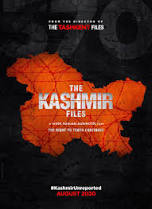
In tandem with the political headwinds, Islamic terrorism has come under a sharper focus. Gone are the days of such socials as Chaudvin Ka Chaand (1960), Mere Mehboob (1963), Mere Huzoor (1968) and Jodhaa Akbar (2008), wherein our composite Ganga-Yamuna ‘tehzeeb’ (culture) was lovingly portrayed. Instead, we now rejoice in people of a certain faith being portrayed as violent aggressors and anti-nationals. The recent successes of such movies as Padmaavat (2018) and The Kashmir Files (2022) form a part of this trend.

It is not that riots and genocides have not been captured by Bollywood before. A wonderful example which stands out is that of Mr. and Mrs. Iyer (2002). Movies like Mission Kashmir (2002), Parzania (2007) and Firaaq (2008) brought home the futility and tragedy of hatred. Some of these have attempted to uncover the inner turmoil experienced by the main protagonist. Many such movies have been banned. However, the focus now appears to have shifted on widening our social fissures rather than mending the same. Perhaps, a deeper cleaning of sorts of our social fabric is taking place.

The rise of OTT platforms, thanks partly to a pandemic, has broadened the scope of offerings. If Jalsa (2022) keeps us on tenterhooks, The Fame Game (2022) gives us a sneak peek into the lives of celebrities. If Bombay Begums (2021) captures the ambition of gutsy females wanting to break the proverbial glass ceiling, Panchayat (2020) took us back to the countryside and showed us the kind of challenges which rural folks face. Bandish Bandits (2020) was a brilliant ode to the prowess of classical music.

Even outside the traditional channels of cinema halls and OTT platforms, several talented directors keep coming up with offerings which show the day to day challenges faced by us in an inspiring mode. Those of you who have heard of Nirmal Anand Ki Puppy (2021) directed by Sandeep Mohan would heartily agree with me.
The line between conscious cinema and not-so-conscious cinema (in other words, ‘masala’ movies!) often gets blurred.
Of Creative Consciousness
Creative juices need several favourable conditions which enable these to spring forth and eventually reach their target audience. When it comes to the powerful medium of cinema, a good script, backed by proficient actors, lilting lyrics and music, adroit editing and good production values surely helps. We may call many of these as meaningful. But if a movie entertains, educates and even goes on to address our deeply embedded social concerns and prejudices, it plays a useful role in shaping the values which govern our society. Such movies originate from a higher level of consciousness. Personally, I would prefer to call these movies as being the real meaningful ones!

A question may be asked as to whether it is possible for producers and directors to churn out socially relevant movies even when commercial considerations rule the roost. In Awara (1951), Boot Polish (1954) and Shri 420 (1955) Raj Kapur showed us how. So did B. R. Chopra when he came up with Nikaah (1982), and Yash Chopra when he offered us Dharmputra (1961) and Veer Zara (2004)!
Eventually, it all boils down to the level of consciousness of the producer-director duo. Awareness, Care and Intent alone are the enabling factors. These alone act as catalysts of Creative Consciousness. Those who have the courage and conviction to offer such movies pay back to the society what they get from it.
Some Neglected Areas
There are three areas of strategic concern which appear to have been given the short shrift in the scheme of things.

What we lack is a vibrant children’s film movement. Movies like Aakhri Khat (1966), Makdee (2002), The Blue Umbrella (2005), Tare Zameen Par (2007) and Bumm Bumm Bole (2010) are few and far between. In the rat race of commercial considerations, this segment of the audience has lost its appeal. The outcome is that the age of innocence has got brutally cut short. The advent of internet and animation movies has further eroded the interest in child-friendly offerings. Children are losing the opportunity of imbibing rich values from such ancient texts as ‘Hitopadesha’ and ‘Panchatantra’. Poor souls are getting sucked into adult entertainment right away.
Secondly, state funding for socially relevant and meaningful cinema has all but vanished. Unlike countries such as France where state support ensures that movies steeped in consciousness keep getting made, the rulers of today turn a blind eye to their own soft power.

Thirdly, the interest in preserving the history of cinema for the sake of posterity is singularly absent. It is an irony that not even a single print of Alam Ara (1931), the first ‘talkies’ to be churned out by Bollywood, is available in our archives.
If such strategic issues are left to the manipulations of the private sector alone, Bollywood will keep marching ahead with bolder and bolder themes, wooing their audience with exotic locales, sex appeal and special effects which leave the viewers in a state of shock and awe. Return on investments alone would count. The movies it churns out may be entirely soulless, so to say. Viewer tastes will keep getting manipulated by our dream merchants.
Related Posts:


 ashokbhatia
A very good analysis. I agree with the views expressed above.
LikeLiked by 1 person
Thank you so much. Regards
LikeLike
Sir, you never fail to make me realize new things. Rgrds
LikeLiked by 1 person
Kind of you to say so!
LikeLike
Consciousness. That is truly what it boils down to. It is our consciousness that assigns meaning to any kind of experience – to nature, to an event, to a pursuit such as education or agriculture, to the art we create. The higher our consciousness, the more meaning we are capable of creating. This meaning is the essence of the spirituality we seek. In that sense, cinema (at least in my opinion) is a spiritual quest. I recently watched Gangubai Kathiawadi. Though the subject is not novel, it has a soul. The character has been extensively researched into; there is complexity to the character. Aliya’s talent came through; she assumed the emotional and behavioral complexity it took to express the personality of the character. The script lived up to the character. I couldn’t help thinking there is hope! Mr and Mrs Iyer was yet another movie that traversed the complex terrain it takes to create a beautiful work of art. Another movie I hold close to my heart is Guddi. Those filmmakers were so ahead of their times! Thank you for directing me to this. There are many movies I need to watch – I am sure your list here will be worth exploring!
LikeLiked by 1 person
Thank you for your detailed observations. To me, consciousness has three facilitators: Awareness, Care and Intent. The pitfall of our dream merchants is that their intent is focused mostly on the green stuff.
All the offerings of SLB are mounted on a grand scale. Alia of course shines in Gangubai; though the first 30 minutes is depressing, the rest of the movie is inspirational and leaves you in awe of a character who uses her bitterness as a weapon to fight for justice for the larger community. Likewise, Konkona excelled in Mr and Mrs Iyer, and Jaya ji in Guddi.
To bore you a wee bit more, let me share this series also with you: https://ashokbhatia.wordpress.com/2020/08/13/some-movies-with-a-dash-of-spirituality-part-1-of-4.
Regards
LikeLiked by 1 person
I would love to hear your thoughts on consciousness in more detail. I agree that the intent has the wrong focus. From where cinema producers would once ask for a good story, producers now ask for availability of superstars. What would it take to uplift a society from its mindlessness? I wonder.
LikeLiked by 1 person
I have myself been exploring the subject of consciousness and have published around 6 posts so far on the subject. In case you would like to read my thoughts, I could mail you some links. You may please send a test mail to akb_usha@rediffmail.com.
I think a 80:20 rule applies in case of movies! Out of 100, 80 are the inane kinds. In a way, it is a blessing in disguise. If these 80 were not to hit the screen, movie buffs like us may never appreciate the conscious 20 which hit the screens.
I also think that content on OTTs is more script driven. Suppose one likes classical music. Gone are the days of classic V Shantaram movies. Instead, we get treated to a sumptuous offering in the form of a Bandish Bandits!
LikeLiked by 1 person
You may like to check this out: https://ashokbhatia.wordpress.com/2022/05/14/the-cosmos-and-consciousness
LikeLiked by 1 person
P.S. I have much catching up to do. Your blog has so many posts on cinema. I am just so delighted 🙂
LikeLiked by 1 person
Thanks. Same here. I am sure you can point out some of the great movies in Malayalam, if available with English/Hindi subtitles.
You have made insightful comments elsewhere. Allow me a few days time to revert. Meanwhile, here is another post you may relish:
LikeLike
Thank you, Ashok. It is truly an honor to have run into you. It is unfortunate that the Malayalam film industry has not given much importance to subtitling it’s films, especially the older ones worth subtitling. I wish somebody would seriously look into this. Please feel free to respond at your convenience.
LikeLiked by 1 person
Oh. The pleasure is mutual. The only Malayalam movie I have heard of is Chemmeen.
LikeLiked by 1 person
Yes, that is a classic. There are other less known and less celebrated films that deserved a larger platform. I also feel the simple, ordinary elements of life are the most difficult to reproduce on screen. But the era of parallel cinema made the process look so simple!
LikeLiked by 1 person
In the past, directors like Hrishikesh Mukherjee, Basu Chatterjee and Sooraj Barjatya had perfected the art of capturing the simple, ordinary elemets of life on celluloid. Think of Chupke Chupke, Piya Ka Ghar, Chhoti Si Baat and HAHK!
LikeLiked by 1 person