Practising managers have had a look at it. Entrepreneurs – of the social as well as the anti-social kind – have gone through it. Management consultants have flipped through it. Eminent personalities have browsed through it. Academicians have devoured it.
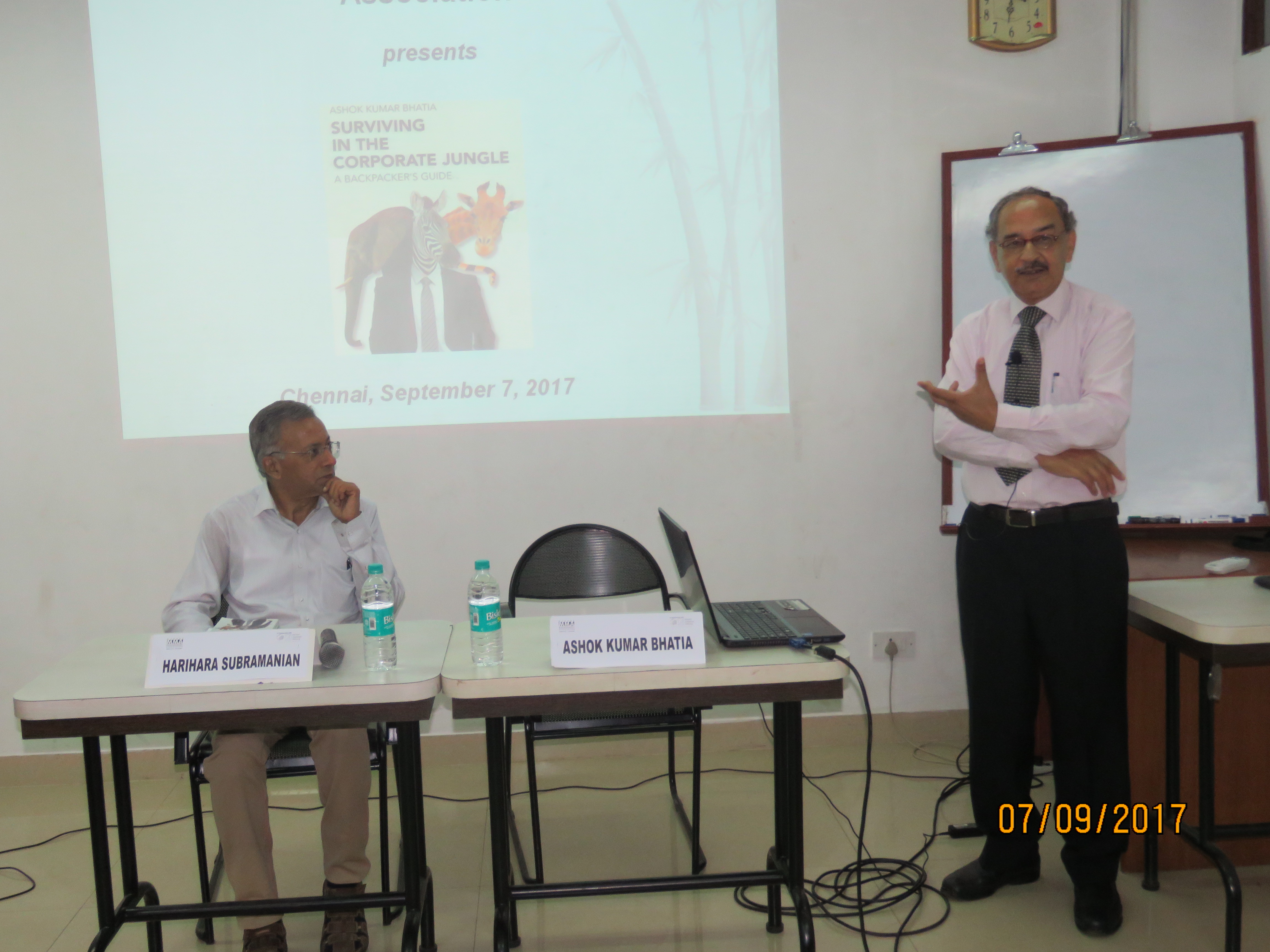
Here are some of the comments received so far in respect of the book ‘Surviving in the Corporate Jungle’.
“Behind the veil of humour and punch – there is a message. As the human drama unfolds itself in the corporate jungle, the best and worst of human natures battle for space. Sure enough, the early warnings in the book might help the hapless to survive and the smart to succeed. However, buried in the crevices of the chapters lies a deeper secret. The secret of an inner tuning – developing an inner compass based on personal values that not just protects you but also guides you towards happiness and fulfilment. Most importantly, it helps you to use the right lens to see reality and truth as such, cutting through a smoky screen.”
Mr K. V. Rao
Resident Director – ASEAN, Tata Sons Ltd , Singapore
(Excerpt from the Foreword to the English version of the book)
“Here we have another work with a series of teachings based on the vast experience of a manager and consultant from the distant antipodes, whose admirable curriculum can be consulted in the work that deserves to be widely disseminated in Portugal, and which satisfies us that it will be part of the library of technical management works and insurance and sales techniques whose introduction to the Portuguese publishing market Liberty Seguros has been supporting.
What really surprised me the most is that management is really a universal science. That is, the formula for success, whether in India or in Portugal, in terms of the main vectors on which business philosophy rests, it is similar.”
Mr José António de Sousa
President and CEO of Liberty Seguros, Portugal
(Excerpt from the Foreword to the Portuguese version of the book)
“Mr Bhatia’s book soothes the frayed nerves of a manager with fresh insight in challenging situations.”
Mr Sandip Choudhury
Regional Finance Shared Service Lead (VP) North America, Mylan Inc., Southpointe, PA, USA
“Ashok’s book makes one think, smile and reflect over our organizational lives taking us by the hand with delightful kindness into a realm of effectiveness….”
Prof Jose Fonseca
Dean, School of Business and Social Sciences of Universidade Europeia of Lisbon, Portugal
“For those who worry too much about the managerial challenges in their careers, here is a ready reckoner which will not only provide a fresh perspective but also bring a smile to their frown.”
Dr Paul Griffiths
Strategy and Knowledge Management expert; Director, Latin America at Lafferty Group; Partner, Corporate Edge, Chile
“Whether for entrepreneurs or for career oriented managers, the book shows a fast 360° way to navigate the choppy waters in which Homo Organizationum operate.”
Mr Marco Paulo Abrunhosa Cardoso
A wisdom seeker, Kotka, Finland
“It is impossible to not to finish the book in 1 or 2 days. Revisiting the book reminds us about simple principles that have a huge impact! All of this with a great humour!”
Mr Miguel Dias
Founder & CEO, CEO World, Portugal
“A lot of great wisdom here by Ashok who has based his perspectives on many years of relevant, and sometimes difficult, experience. Well done.”
Dr Jack Jacoby
Master Strategist, Director, Corporate Repair, Mentor, Facilitator, Motivator, Troubleshooter, Australia
“This book captures not only the strategic thinking but also the tactical skills required to navigate one’s way to success, inner satisfaction, happiness and most importantly – peace.”
Mr C S Dwivedi
Vice President – Manufacturing & Corporate Planning, HCL Infosystems Limited, India
“I found this book both entertaining and insightful. Lots of serious thoughts, couched in a somewhat light-hearted manner – this, and the succinct but sharp points, make it eminently readable. The format enables consumption in large doses, or even a few pages at a time: very useful in today’s time-stressed, short-attention-span world.”
Mr Kiran Karnik
Director, Reserve Bank of India; Chairman, Indraprastha Institute of Information Technology, Delhi; Former President, NASSCOM; Columnist and Author; His latest book is “Crooked Minds: Creating an Innovative Society”.
“The book is interesting. It is written in simple and lucid language and in a style of humour and fun. From time to time cartoons appear and make reading the book that much enjoyable.
The book is unusual because it undertakes at least two difficult tasks simultaneously. The first task is to link management arts with management science – which a typical academic knows how difficult it is. The second task is to connect theory with practice. Accordingly, many an instance contain relevant references and quotes.
The biggest contribution of the book, however, lies in how inconspicuously but effectively the messages of values are enmeshed in the given instances or topics. While knowledge and skills can be taught, attitudes and values however cannot and ‘should not’ in a traditional sense be ‘taught’. The moment a value is ‘taught’ (“Be honest”, for example), the learner stops listening and questions silently, ‘Who are you to teach me’, ‘Are YOU honest?’ Knowledge and Skills are like the rivers Ganga and Yamuna, which are visible. Attitudes and values are like river Saraswati, which is invisible. Leading by example is the only instrument, therefore, for a teacher to ‘teach’ value .”
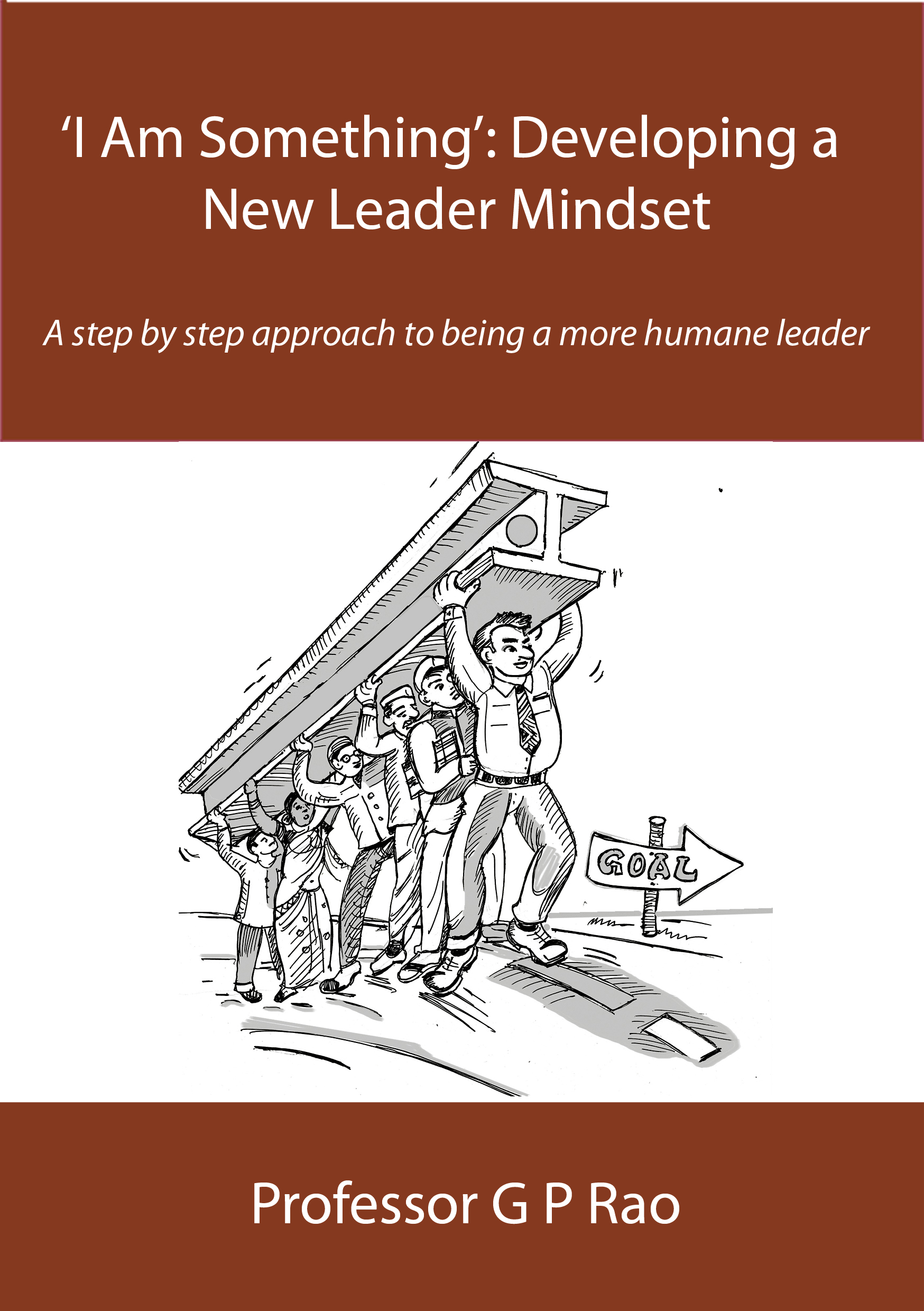
Prof G P Rao
Management Educationist, Founder Chairman (Honorary), SPANDAN Society, Hyderabad, India
“This is a unique book which covers a vast area of business management. In particular, it touches upon leadership, administration and refined concepts in the domain of human resources. The author deserves credit for having summed up his forty year long practical experience and present it in a crisp and humorous manner. One only wishes the language used was somewhat simpler in some parts, though.”
Mr R Mananathan
Chairman, Manatec Electronics, Puducherry, India
“Mr Bhatia’s book is replete with rich management lessons which would be useful to managers and business owners of all kinds. He also draws upon such of our ancient scriptures as Ramayana, Mahabharata and Thirukkural.”
Mr P Rangaraj
Chairman and Managing Director, Chemin Controls and Instrumentation, Puducherry, India
“I read this book through summer and liked it very much.”
Ms. Clara Nunes dos Santos
Ambassador of Portugal in Norway
“The book captures in light tone a very meaningful message for those in Management and Business. These days when people have “no time’, this book acts as a pill that awakens the dormant mind of the reader and gives him the needed gusto to face important issues in the day. It is a ready reckoner for the Management Leaders.”
Dr Ananda Reddy
Director, Sri Aurobindo Center for Advanced Research, Puducherry, India
“This one is a must read for all professionals, whether young or not-so-young. Beneath all the humour lies a deep spiritual connect. When the author speaks of values and ethics in business, he makes a profound statement. He also touches upon Circularity Leading To Sustainability, a concept which I, as a professional in the same field, strongly advocate myself. Gone are the days when managements could take an ostrich approach to such issues as global warming and environmental degradation. This book has multi-faceted messages. Those who read it are likely to feel as if they have just completed a distance education course in management.”
Mr Prakhar Goel
Manager, Peterson Projects B.V., Netherlands
“Ashok Bhatia’s compilation of gems of wisdom in the area of management comes as a pleasant surprise. As a seasoned meteorologist, I have survived many kinds of weathers in my own career and can readily identify with many of the thoughts expressed in his book. The youth of today can surely practice quite a few things mentioned in this book, as long as they ensure that their bosses have not had access to its contents!”
Mr Ashok Kalra
Chief Meteorologist, Indigo Airlines, Retired Wing Commander, IAF, NCR, India
“Great experience shared in simple but powerful way. I am really delighted AKB. All the best and I am sure readers will draw benefit.”
Prof Rammohan Pisharodi
Marketing Professor/Chief Editor, Alliance Journal of Business Research at Oakland University, USA
“The author has brought his rich corporate experience and wisdom in this book with simple messages. While most of the authors are serious while discussing the corporate practices with tons of do’ and don’t kind of advises, he presents the message with a sense of humor. I think he has covered almost all functions of management with the message to survive in the corporate jungle.”
Mr S Ganesh Babu
SME Business Transformation Consultant & Performance Coach, Pondicherry, India
“Few strengths of this book are short lessons, supporting pictures, quality references and unique solutions. If it is gifted in various programs in educational institutions to students, they will be prepared to enter the corporate jungle with a positive approach.
Self-evaluation, Enrichment, Discipline, Lessons learnt, Rights, Feedback, Training etc are some topics which can also be covered in the next edition.
A book worth reading and gifting to friends and students.”
Mr Dileep Bhatia
Nuclear Scientist turned Career and Values Counselor,
Rawatbhata, India
“Can teaching management to aspiring managers be also fun? Yes, thinks the author who sums up his four decade long experience in this delightful book. Capturing more than a hundred topics, often backed by appropriate illustrations, the book is easy on the nerves, even as it makes one exercise one’s grey cells in a meaningful manner. By highlighting the relevance of a manager’s Spiritual Quotient, it heralds the advent of a new age: The Age of the Spiritual Manager.”
Dr G Anjaneya Swamy
Dean, School of Management, Pondicherry University, Puducherry, India
“There are many hard-core management books written over the last five decades by logical die-hards, but not many from the kinder hearts.
One such in the recent past is this book. The beauty of this book is that it deals with every possible situation and topic that one is likely to come across while passing through the Corporate Jungle. The solutions provided are not in any copybook style but each one is distinct, much like Dhoni’s helicopter shots. These are quite breezy, short, and to the point. Some chapters get over just as you start in.
AKB’s experience of over four decades shows through the wisdom he conveys, often with a dose of subtle humour. The book is truly a light hearted reading in Management for all ages and races. May the Portuguese translation of this book be only the first of many translations to follow in other foreign languages.
Mr Hariharan Subramaniam
Industrialist, Author, Architect – Indian Institute of Governance, India.
“The short chapters make the reading quite easy and there are many insights shared by the author in such a small book. A lot of valuable points have been shared. The book is a treasure and I have no intentions of gifting it to someone I hate, as recommended by the author.
The chapters I liked the most: Consultants, Corporate Strategy, Interpersonal relationships and Promises.”
Mr Gowrishankar Sundararajan
Senior Director, Malaysia Blue Ocean Strategy Institute, Kuala Lampur, Malaysia.
“For those who eye the realm of management with a tinge of green hued envy, this book would be an eye opener, since it lays bare the kind of dirty tricks managers often play on each other. To those who are already a part of the crab basket phenomenon called management, it could provide some invaluable tips. Overall, a good read, with some profound lessons!”
Mr Sunil Jain
Chairman, Chemisynth, Gurugram, NCR, India
“I am so much enchanted (if that is the word I am searching for) with the wonderful piece of work mentioned below that I almost read it in a single go. Hence, it will be foolish of me to write a criticism of the book. What I can do is, boast my association with the author Mr. Ashok Kumar Bhatia through Facebook. A Plum fanatic (he loves to address himself as a person suffering from Wodehousitis) Ashok kept no stones unturned to describe, in a humorous way, “the modern tactics of dealing with corporate culture” with an uncanny talent of conveying the right message to the audience in minimum words. Thereby, making it an interesting read! Though the comparison with Peter Drucker is dangerous, I would prefer to risk it with him.”
Suryamouli Datta
Associate Consultant, Tata Consultancy Services, UK/India
“Thanks, sir for your wonderful piece of work! Hope to get more from you in the future. All the best!”
Priya Talwar
Founder, Editor’s Atelier
𝗘𝘃𝗲𝗿 𝗰𝗮𝘂𝗴𝗵𝘁 𝘆𝗼𝘂𝗿𝘀𝗲𝗹𝗳 𝘁𝗵𝗶𝗻𝗸𝗶𝗻𝗴, “𝗢𝗵 𝗴𝗿𝗲𝗮𝘁…𝗶𝘁’𝘀 𝗷𝘂𝘀𝘁 𝗮𝗻𝗼𝘁𝗵𝗲𝗿 𝗻𝗼𝗻𝗳𝗶𝗰𝘁𝗶𝗼𝗻 𝗯𝗼𝗼𝗸 𝗼𝗻 𝘁𝗵𝗮𝘁 𝘁𝗼𝗽𝗶𝗰”!
Yep, that’s when the author’s already lost you.
Good positioning isn’t about shouting the loudest or trying to be clever.
𝗜𝘁’𝘀 𝗮𝗯𝗼𝘂𝘁 𝘀𝗹𝗶𝗱𝗶𝗻𝗴 𝗶𝗻𝘁𝗼 𝗮 𝗰𝗼𝗻𝘃𝗲𝗿𝘀𝗮𝘁𝗶𝗼𝗻 𝘆𝗼𝘂𝗿 𝗿𝗲𝗮𝗱𝗲𝗿’𝘀 𝗮𝗹𝗿𝗲𝗮𝗱𝘆 𝗵𝗮𝘃𝗶𝗻𝗴 𝗶𝗻 𝘁𝗵𝗲𝗶𝗿 𝗵𝗲𝗮𝗱—
and getting them to pause just long enough to think, “Hmm… tell me more!”
That’s how I felt too when I stumbled on a mini army of books about corporate survival.
(This is how you can lay your hands on the Portuguese version of the book, launched in Portugal during March, 2016.)
Related Posts:
https://ashokbhatia.wordpress.com/2017/07/31/a-tale-of-two-countries-and-a-book-launch
https://ashokbhatia.wordpress.com/2021/04/20/surviving-in-the-corporate-jungle-a-book-review-by-inertiaspeaks/
Read Full Post »











 ashokbhatia
‘Surviving in the Corporate Jungle’ – Some comments
Posted in Management Lessons, tagged Comments, Endorsements, The Book on October 1, 2017| 5 Comments »
Practising managers have had a look at it. Entrepreneurs – of the social as well as the anti-social kind – have gone through it. Management consultants have flipped through it. Eminent personalities have browsed through it. Academicians have devoured it.
Here are some of the comments received so far in respect of the book ‘Surviving in the Corporate Jungle’.
“Behind the veil of humour and punch – there is a message. As the human drama unfolds itself in the corporate jungle, the best and worst of human natures battle for space. Sure enough, the early warnings in the book might help the hapless to survive and the smart to succeed. However, buried in the crevices of the chapters lies a deeper secret. The secret of an inner tuning – developing an inner compass based on personal values that not just protects you but also guides you towards happiness and fulfilment. Most importantly, it helps you to use the right lens to see reality and truth as such, cutting through a smoky screen.”
Mr K. V. Rao
Resident Director – ASEAN, Tata Sons Ltd , Singapore
(Excerpt from the Foreword to the English version of the book)
“Here we have another work with a series of teachings based on the vast experience of a manager and consultant from the distant antipodes, whose admirable curriculum can be consulted in the work that deserves to be widely disseminated in Portugal, and which satisfies us that it will be part of the library of technical management works and insurance and sales techniques whose introduction to the Portuguese publishing market Liberty Seguros has been supporting.
What really surprised me the most is that management is really a universal science. That is, the formula for success, whether in India or in Portugal, in terms of the main vectors on which business philosophy rests, it is similar.”
Mr José António de Sousa
President and CEO of Liberty Seguros, Portugal
(Excerpt from the Foreword to the Portuguese version of the book)
“Mr Bhatia’s book soothes the frayed nerves of a manager with fresh insight in challenging situations.”
Mr Sandip Choudhury
Regional Finance Shared Service Lead (VP) North America, Mylan Inc., Southpointe, PA, USA
“Ashok’s book makes one think, smile and reflect over our organizational lives taking us by the hand with delightful kindness into a realm of effectiveness….”
Prof Jose Fonseca
Dean, School of Business and Social Sciences of Universidade Europeia of Lisbon, Portugal
“For those who worry too much about the managerial challenges in their careers, here is a ready reckoner which will not only provide a fresh perspective but also bring a smile to their frown.”
Dr Paul Griffiths
Strategy and Knowledge Management expert; Director, Latin America at Lafferty Group; Partner, Corporate Edge, Chile
“Whether for entrepreneurs or for career oriented managers, the book shows a fast 360° way to navigate the choppy waters in which Homo Organizationum operate.”
Mr Marco Paulo Abrunhosa Cardoso
A wisdom seeker, Kotka, Finland
“It is impossible to not to finish the book in 1 or 2 days. Revisiting the book reminds us about simple principles that have a huge impact! All of this with a great humour!”
Mr Miguel Dias
Founder & CEO, CEO World, Portugal
“A lot of great wisdom here by Ashok who has based his perspectives on many years of relevant, and sometimes difficult, experience. Well done.”
Dr Jack Jacoby
Master Strategist, Director, Corporate Repair, Mentor, Facilitator, Motivator, Troubleshooter, Australia
“This book captures not only the strategic thinking but also the tactical skills required to navigate one’s way to success, inner satisfaction, happiness and most importantly – peace.”
Mr C S Dwivedi
Vice President – Manufacturing & Corporate Planning, HCL Infosystems Limited, India
“I found this book both entertaining and insightful. Lots of serious thoughts, couched in a somewhat light-hearted manner – this, and the succinct but sharp points, make it eminently readable. The format enables consumption in large doses, or even a few pages at a time: very useful in today’s time-stressed, short-attention-span world.”
Mr Kiran Karnik
Director, Reserve Bank of India; Chairman, Indraprastha Institute of Information Technology, Delhi; Former President, NASSCOM; Columnist and Author; His latest book is “Crooked Minds: Creating an Innovative Society”.
“The book is interesting. It is written in simple and lucid language and in a style of humour and fun. From time to time cartoons appear and make reading the book that much enjoyable.
The book is unusual because it undertakes at least two difficult tasks simultaneously. The first task is to link management arts with management science – which a typical academic knows how difficult it is. The second task is to connect theory with practice. Accordingly, many an instance contain relevant references and quotes.
The biggest contribution of the book, however, lies in how inconspicuously but effectively the messages of values are enmeshed in the given instances or topics. While knowledge and skills can be taught, attitudes and values however cannot and ‘should not’ in a traditional sense be ‘taught’. The moment a value is ‘taught’ (“Be honest”, for example), the learner stops listening and questions silently, ‘Who are you to teach me’, ‘Are YOU honest?’ Knowledge and Skills are like the rivers Ganga and Yamuna, which are visible. Attitudes and values are like river Saraswati, which is invisible. Leading by example is the only instrument, therefore, for a teacher to ‘teach’ value .”
Prof G P Rao
Management Educationist, Founder Chairman (Honorary), SPANDAN Society, Hyderabad, India
“This is a unique book which covers a vast area of business management. In particular, it touches upon leadership, administration and refined concepts in the domain of human resources. The author deserves credit for having summed up his forty year long practical experience and present it in a crisp and humorous manner. One only wishes the language used was somewhat simpler in some parts, though.”
Mr R Mananathan
Chairman, Manatec Electronics, Puducherry, India
“Mr Bhatia’s book is replete with rich management lessons which would be useful to managers and business owners of all kinds. He also draws upon such of our ancient scriptures as Ramayana, Mahabharata and Thirukkural.”
Mr P Rangaraj
Chairman and Managing Director, Chemin Controls and Instrumentation, Puducherry, India
“I read this book through summer and liked it very much.”
Ms. Clara Nunes dos Santos
Ambassador of Portugal in Norway
“The book captures in light tone a very meaningful message for those in Management and Business. These days when people have “no time’, this book acts as a pill that awakens the dormant mind of the reader and gives him the needed gusto to face important issues in the day. It is a ready reckoner for the Management Leaders.”
Dr Ananda Reddy
Director, Sri Aurobindo Center for Advanced Research, Puducherry, India
“This one is a must read for all professionals, whether young or not-so-young. Beneath all the humour lies a deep spiritual connect. When the author speaks of values and ethics in business, he makes a profound statement. He also touches upon Circularity Leading To Sustainability, a concept which I, as a professional in the same field, strongly advocate myself. Gone are the days when managements could take an ostrich approach to such issues as global warming and environmental degradation. This book has multi-faceted messages. Those who read it are likely to feel as if they have just completed a distance education course in management.”
Mr Prakhar Goel
Manager, Peterson Projects B.V., Netherlands
“Ashok Bhatia’s compilation of gems of wisdom in the area of management comes as a pleasant surprise. As a seasoned meteorologist, I have survived many kinds of weathers in my own career and can readily identify with many of the thoughts expressed in his book. The youth of today can surely practice quite a few things mentioned in this book, as long as they ensure that their bosses have not had access to its contents!”
Mr Ashok Kalra
Chief Meteorologist, Indigo Airlines, Retired Wing Commander, IAF, NCR, India
“Great experience shared in simple but powerful way. I am really delighted AKB. All the best and I am sure readers will draw benefit.”
Prof Rammohan Pisharodi
Marketing Professor/Chief Editor, Alliance Journal of Business Research at Oakland University, USA
“The author has brought his rich corporate experience and wisdom in this book with simple messages. While most of the authors are serious while discussing the corporate practices with tons of do’ and don’t kind of advises, he presents the message with a sense of humor. I think he has covered almost all functions of management with the message to survive in the corporate jungle.”
Mr S Ganesh Babu
SME Business Transformation Consultant & Performance Coach, Pondicherry, India
“Few strengths of this book are short lessons, supporting pictures, quality references and unique solutions. If it is gifted in various programs in educational institutions to students, they will be prepared to enter the corporate jungle with a positive approach.
Self-evaluation, Enrichment, Discipline, Lessons learnt, Rights, Feedback, Training etc are some topics which can also be covered in the next edition.
A book worth reading and gifting to friends and students.”
Mr Dileep Bhatia
Nuclear Scientist turned Career and Values Counselor,
Rawatbhata, India
“Can teaching management to aspiring managers be also fun? Yes, thinks the author who sums up his four decade long experience in this delightful book. Capturing more than a hundred topics, often backed by appropriate illustrations, the book is easy on the nerves, even as it makes one exercise one’s grey cells in a meaningful manner. By highlighting the relevance of a manager’s Spiritual Quotient, it heralds the advent of a new age: The Age of the Spiritual Manager.”
Dr G Anjaneya Swamy
Dean, School of Management, Pondicherry University, Puducherry, India
“There are many hard-core management books written over the last five decades by logical die-hards, but not many from the kinder hearts.
One such in the recent past is this book. The beauty of this book is that it deals with every possible situation and topic that one is likely to come across while passing through the Corporate Jungle. The solutions provided are not in any copybook style but each one is distinct, much like Dhoni’s helicopter shots. These are quite breezy, short, and to the point. Some chapters get over just as you start in.
AKB’s experience of over four decades shows through the wisdom he conveys, often with a dose of subtle humour. The book is truly a light hearted reading in Management for all ages and races. May the Portuguese translation of this book be only the first of many translations to follow in other foreign languages.
Mr Hariharan Subramaniam
Industrialist, Author, Architect – Indian Institute of Governance, India.
“The short chapters make the reading quite easy and there are many insights shared by the author in such a small book. A lot of valuable points have been shared. The book is a treasure and I have no intentions of gifting it to someone I hate, as recommended by the author.
The chapters I liked the most: Consultants, Corporate Strategy, Interpersonal relationships and Promises.”
Mr Gowrishankar Sundararajan
Senior Director, Malaysia Blue Ocean Strategy Institute, Kuala Lampur, Malaysia.
“For those who eye the realm of management with a tinge of green hued envy, this book would be an eye opener, since it lays bare the kind of dirty tricks managers often play on each other. To those who are already a part of the crab basket phenomenon called management, it could provide some invaluable tips. Overall, a good read, with some profound lessons!”
Mr Sunil Jain
Chairman, Chemisynth, Gurugram, NCR, India
“I am so much enchanted (if that is the word I am searching for) with the wonderful piece of work mentioned below that I almost read it in a single go. Hence, it will be foolish of me to write a criticism of the book. What I can do is, boast my association with the author Mr. Ashok Kumar Bhatia through Facebook. A Plum fanatic (he loves to address himself as a person suffering from Wodehousitis) Ashok kept no stones unturned to describe, in a humorous way, “the modern tactics of dealing with corporate culture” with an uncanny talent of conveying the right message to the audience in minimum words. Thereby, making it an interesting read! Though the comparison with Peter Drucker is dangerous, I would prefer to risk it with him.”
Suryamouli Datta
Associate Consultant, Tata Consultancy Services, UK/India
“Thanks, sir for your wonderful piece of work! Hope to get more from you in the future. All the best!”
Priya Talwar
Founder, Editor’s Atelier
𝗘𝘃𝗲𝗿 𝗰𝗮𝘂𝗴𝗵𝘁 𝘆𝗼𝘂𝗿𝘀𝗲𝗹𝗳 𝘁𝗵𝗶𝗻𝗸𝗶𝗻𝗴, “𝗢𝗵 𝗴𝗿𝗲𝗮𝘁…𝗶𝘁’𝘀 𝗷𝘂𝘀𝘁 𝗮𝗻𝗼𝘁𝗵𝗲𝗿 𝗻𝗼𝗻𝗳𝗶𝗰𝘁𝗶𝗼𝗻 𝗯𝗼𝗼𝗸 𝗼𝗻 𝘁𝗵𝗮𝘁 𝘁𝗼𝗽𝗶𝗰”!
Yep, that’s when the author’s already lost you.
Good positioning isn’t about shouting the loudest or trying to be clever.
𝗜𝘁’𝘀 𝗮𝗯𝗼𝘂𝘁 𝘀𝗹𝗶𝗱𝗶𝗻𝗴 𝗶𝗻𝘁𝗼 𝗮 𝗰𝗼𝗻𝘃𝗲𝗿𝘀𝗮𝘁𝗶𝗼𝗻 𝘆𝗼𝘂𝗿 𝗿𝗲𝗮𝗱𝗲𝗿’𝘀 𝗮𝗹𝗿𝗲𝗮𝗱𝘆 𝗵𝗮𝘃𝗶𝗻𝗴 𝗶𝗻 𝘁𝗵𝗲𝗶𝗿 𝗵𝗲𝗮𝗱—
and getting them to pause just long enough to think, “Hmm… tell me more!”
That’s how I felt too when I stumbled on a mini army of books about corporate survival.
(This is how you can lay your hands on the Portuguese version of the book, launched in Portugal during March, 2016.)
Related Posts:
https://ashokbhatia.wordpress.com/2017/07/31/a-tale-of-two-countries-and-a-book-launch
https://ashokbhatia.wordpress.com/2021/04/20/surviving-in-the-corporate-jungle-a-book-review-by-inertiaspeaks/
Read Full Post »