Feeds:
Posts
Comments

“Any serious meeting in the office today – looking very tense?” asked my wife while handing over the daily nourishment to me in a lunch box. “No”, I replied diffidently, slipping into the driver’s seat of my newly acquired hatchback. “It is the 90-minute drive to the office that is bugging me!”

My mind went back to the days when one could enjoy a peaceful cruise on the roads. Old world chivalry, basic decency and courtesy towards co-travelers were still alive those days. However, despite radical improvements in infrastructure of the metro I live in, driving has now become quite a nightmare. These days, it requires a unique combination of myriad skills and attitudes to navigate one’s way through the crowded roads. One’s ego has to be kept in suspended animation. Dexterity, flexibility, empathy, receptivity and humility have to be counter-balanced with aggressiveness and selective apathy. While on the road, one has to expect the unexpected. A penchant for predicting the behavior of others on the road has become a pre-requisite. Moreover, it has to be backed by a deep faith in the Divine without whose blessings one could not make it hassle-free to one’s destination!

It was with immense faith in the heart and a silent prayer on my lips that I drove out of the compound of the complex we lived in. Inside, my heart was all a-twitter, not knowing what was in store for me on the roads on this fateful day! I felt more like an Arjuna entering the battlefield of Kurukshetra, sans – of course – a benevolent guide like Krishna! As I summoned my courage and eased my car into the morning rush on the main road, a cacophony of sounds greeted me.

“Zoom…” came a sound and I was startled to find that a motorcycle rider had decided to overtake me in a hurry from the left hand side. At the very same time, I found another spirited rider overtaking me from the right hand side as well! I maneuvered the car in such a way as to not to harm either of them. Both, of course, sped off, with their truck-like horns blaring at full volume.

Finding a red traffic light ahead, I stopped. After two more changes from red to green, the car fellow behind me started tooting his horn impatiently. The horn became even more strident when the LED counter showed 15 seconds yet to go for the signal to turn green. I could empathize with him, but surely he could see that there was no way I could have helped him to speed up his journey? Unless, of course, our cars had wings!

Just as the traffic light turned green, a bunch of school kids decided to cross the road, leaving us waiting for an opportunity to resume our journey. Mean while, a cycle fellow scraped through the right side of my car, giving the car a nice bath of sambhar and rasam carried in a protruding lunch box. His wife would surely be unhappy to hear of this, I thought. While I was pitying him, he passed me by, looking at me with piercing eyes, daggers drawn, blaming me for all his travails!

After persevering with my journey at a snail’s pace for some more time, an auto rickshaw overflowing with students scraped violently through the left side of the car. Faced with the ferocity of the traffic coming from the other side, I had no room to shift the car to the right side.  In the process, I denied him the freedom to hurry off in an atmosphere of peaceful co-existence. The result was a big dent on both the left side doors. By the time I rolled down my glass window to lodge an ineffective protest, he yelled, hurled some invectives at me and sped off on his errand.

On one of the arterial roads, the audacity with which the bus driver in front of me kept swerving his vehicle from left to right left me quite befuddled. Surely, he aspired to drive a compact car instead! Unable to avoid an open manhole on the road, I could somehow step on the accelerator, thereby propelling the car across the abyss.

Every time I drive, I find a true manifestation of democracy on our roads. Other than the free-for-all that best espouses the cause of freedom of expression, changing lanes is deemed to be a fundamental right. To find either a cow or a buffalo in the center of a busy road, chewing their dose of nourishment with a soulful expression on their meditative countenance, is quite the norm. Pedestrians shooting across a busy road with an unwavering faith that God will take care of their safety is humbling, to say the least.

One of the most amazing transformations that I have noticed is when we sit behind a steering wheel. We believe we are invincible and a cut above the rest. We treat ourselves to illusions of grandeur by bestowing upon ourselves the right to be the first amongst equals, thereby jostling for space, changing lanes at free will, turning without proper signaling and generally behaving as if we are God’s gift to mankind.

We are obliged to show due respect to the buses and trucks pouncing upon us menacingly. We are also expected to be deferential in our treatment of those who prefer to walk across the road carelessly, as also of those on bicycles who show a sudden inclination to turn either way without any signal whatsoever. To those who drive with full headlights on even during day time, we had better show our goodness and concede space for them to pass us by. Even after following the protocol in a sincere manner, there are no guarantees that one’s vehicle would remain unharmed. Well, this is what Krishna taught us – to do our duty and not to get attached to the fruits of our action!

The Mother of Shri Aurobindo Ashram has listed the following twelve qualities which a spiritual aspirant should possess: Sincerity, Humility, Gratitude, Perseverance, Aspiration, Receptivity, Progress, Courage, Goodness, Generosity, Equality and Peace. One can readily see that almost all of these qualities come in handy when driving on our roads. This is what prompts me to conclude that regular driving on Indian roads leads one to faster spiritual growth in life!

Coming back to the day under reference, by the time I drove into the car park at the office, I was sweating and feeling drained of all energy. With a heavy heart, I inspected the damage the car had suffered. I felt grateful that it had helped me to survive another day of the war on the roads. As I got into the elevator looking forward to savoring the morning cup of tea in the office, I was wondering how that mighty warrior Arjuna would have fared in this war!

The other day, I was surprised to run into a friend of mine. He seemed to have suddenly advanced in age. With drooping shoulders, he offered a rather limp handshake, a far cry from his ebullient self and the firm grip I had experienced all along. We sat down to enjoy a cup of tea. It did not take me long to figure out that his long working hours, devoid of any relaxation and exercise, had possibly led to a gradual decline in his well-being. If urgent steps were not taken, he would be soon courting trouble with his heart, a contingency which is best avoided.

Some Corporate Maxims

In the rush of living life in the fast lane, most managers today hardly find time for themselves. A high-octane careerSTRESS would often demand very long working hours at the work place. This is especially true in India, where the feudal mindset still prevails. As per some of the popular corporate maxims prevalent in this part of the world:

(1)                          A manager’s efficiency and effectiveness on the job is directly proportional to the number of hours put in at the work station,

(2)                          Promotions depend upon one’s commitment to company’s goals, where the level of commitment is in reverse proportion to the amount of leave taken,

(3)                          The company culture is designed to enforce a check-in time in the office, but the check-out time is invariably left open. After all, there is a strong belief in the old adage that those who watch the clock merely remain the hands!

(4)                          The manager has no life outside the place of work. More odd the hours at which mails emanate from him, especially those between the stroke of midnight and till about 4 AM, the more committed he/she is!

For those in the senior echelons, the communication revolution has made the task of “switching off” even more challenging. Laptops and cell phones are invariably present, even though they may be supposedly on leave with their near and dear ones. It is fashionable to answer a critical mail while on a vacation. We now have an entire generation of managers and executives who have developed an addiction to the latest gizmos. 24 by 7 connectivity is the buzz word. If you are not in the e-rat race, you just do not count!

The path of Least Resistance

The result is an early burn-out for most managers. With no time to spend with the family, let alone any quality time,WORK-LIFE BALANCE stress builds up pretty fast. Hobbies and extra-curricular activities get relegated to the background. If at all any health issue crops up, there is no time to see a doctor. Finally, when the visit to a medical specialist does fructify, a brief spell of pill popping provides instant relief and, voila, the problem is solved! A wise doctor would always work on a mix of drugs, diet, relaxation and exercise. But, as a patient, a manager is happy to find his own path of least resistance – focusing only on drugs but totally neglecting diet, relaxation and exercise.  

As to physical exercise, a “busy” manager could not care less. The physical bodies are taken for granted. If a gym is joined, the work-out keeps getting deferred on one pretext or the other. After all, the body is a sturdy one, so why pay any attention to it? On a daily basis, it is imagined that one is doing one’s duty by performing the morning ablutions, by providing the run down body with nourishment which could well be junk food, and by allowing oneself some sleep, howsoever disturbed it might be.

Recharging our batteries

It is rightly said that we are what we eat. If alone we were to focus on developing correct eating habits, with a large dose of fruits and vegetables, good results would ensue. When we eat junk food, do we realize that the same amount of money would allow us to buy fruits which we would not be able to consume in one go? When we continue to flush our digestive system with acidic foods, we cause irreparable damage to our delicate organs. Meals could also be irregular, depending upon the pressure of work at hand. The result is heartburn, upset stomach, ulcer, pancreatic malfunction and, in extreme cases, even cancer.

Why do we detest physical activity? In some cases, sheer lethargy, lack of time management skills and an over-ridingYoga Dhanurasana_Yoga-Asana_Nina-Mel addiction to desk work prompts us to lead sedentary lifestyles. Diabetes, hypertension, cardiovascular diseases soon follow. Quite a few of us end up facing the surgeon’s scalpel, with dietary restrictions and exercising regimen which we are then forced to follow.

Undoubtedly, managers perform under tremendous pressure. But what is more important is as to how they take the pressure. For a thick-skinned manager, the going may be relatively easier; for a thin-skinned one, the same assignment could involve a high degree of stress. Possibly, the solution lies in transforming one from with-in, so as to change the way a manager perceives stress because of the circumstances with-out. Regular meditation, a healthy diet and a positive frame of mind could work wonders in the long run, keeping the manager always charged up!

Need for innovative HR policies

Far-sighted managements would surely take notice and fine tune their HR policies to ensure that a healthy work-life balance is maintained for all senior employees. In one of the evolved companies I happened to be associated with some time back, an annual master health check-up was made mandatory for all those above the age of 45. The top guy resolved not to disturb his team members on weekends, unless absolutely unavoidable. A planned annual leave of 15 continuous days was made compulsory – the experiment demonstrated that the company did not collapse during the 15 days’ period! Managers learnt to plan in advance and also delegate their tasks better. Every six months, an in-house yoga camp was held. Two years down the road, employee satisfaction levels had improved, and so had white-collar productivity!

To quote Stephen Covey from his much celebrated book “The Seven Habits of Highly Effective People”: The physical dimension involves caring effectively for our physical body – eating the right kinds of foods, getting sufficient rest and relaxation, and exercising on a regular basis. (7th Habit, page 289).

The Divine has granted us this life and given us a body to live it through. The soul strives to evolve by gaining newer experiences in this life time of ours. But it can do so only through the medium of our physical body. Should we not respect it, take care of it and remain physically fit? Just like our vehicles and household gadgets need preventive maintenance, our bodies also need to be looked after well, so as to fulfill their purpose – that of supporting our soul, the Divine presence within us, to experience what this wonderful gift of life has on offer for us.

Surely, we can summon our will power and plan as well as execute a plan to achieve this worthy goal?

(Related Posts:

https://ashokbhatia.wordpress.com/2014/08/22/of-offices-and-vacations

https://ashokbhatia.wordpress.com/2015/06/06/achieving-work-life-harmony)


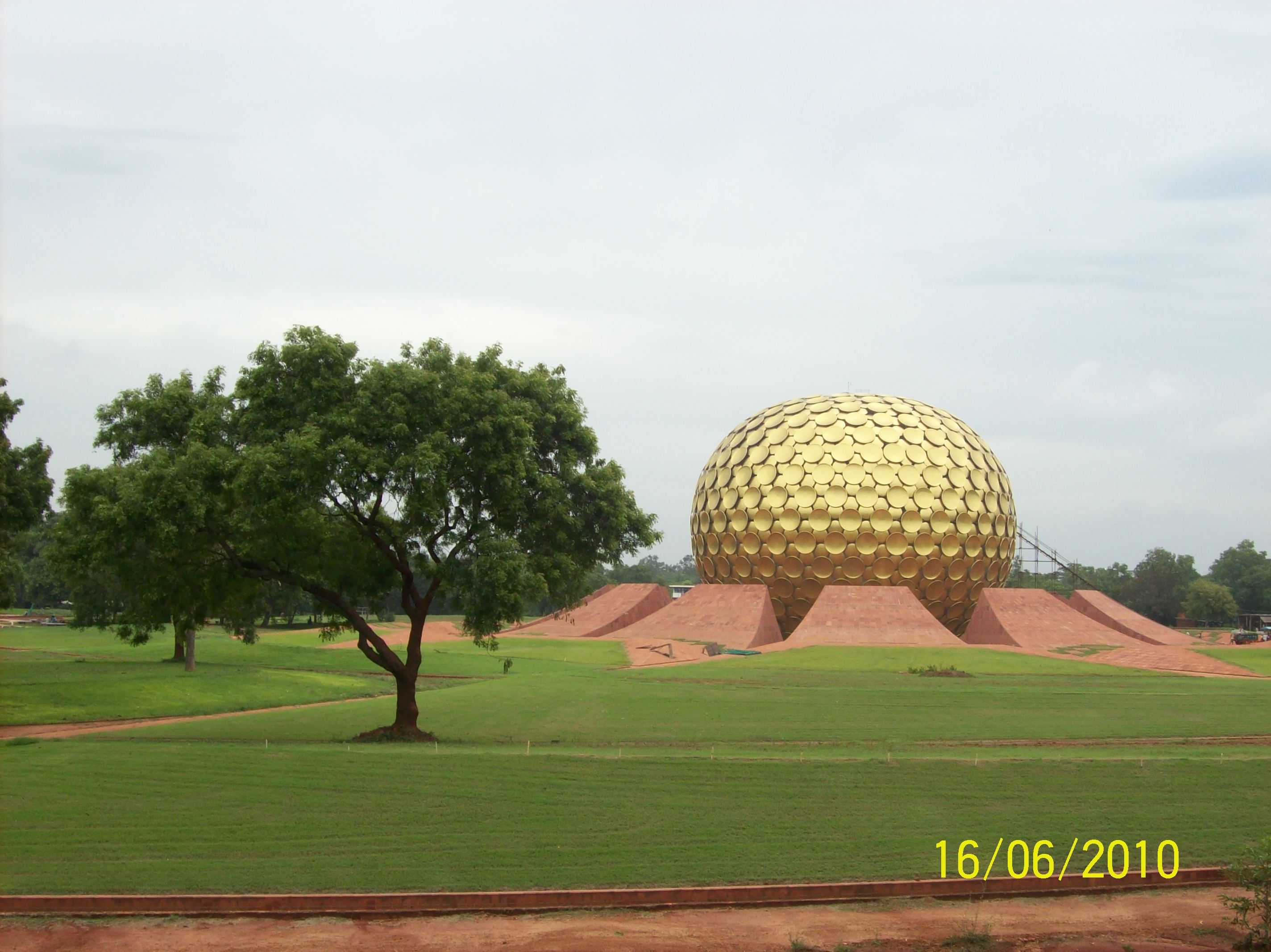
As the jetliner from Paris made its way to Puducherry, I turned nostalgic. When I had left it for greener pastures abroad, little had I June 2010 99imagined that it would take me close to twenty years to return to the town! I had left it as a semi-retired private sector honcho, and was now returning to my home base along with my wife Usha and grand-daughters Suman and Shalini. Looking out of the small window, I pointed out Matrimandir in the distance to Suman, who seemed pretty excited. The bluish-green waters of the Bay of Bengal below were shimmering in the setting sun, and a flock of pristine white seagulls was flapping along below us.

Once we landed, immigration and customs formalities got over pretty soon. The swank new international terminal looked like a smaller version of the Charles De Gaulle terminal in Paris. There were sign boards directing us to the metro station two levels below. We instead decided to take a cab into the town, so the family could get a better feel of the place.

As we settled down in the cab, the driver turned and asked if we wanted to take the toll road to town. “That would cost Rs. 750, sir”, he told us sheepishly. The normal route was also fine by him, he explained, but could take about 90 minutes to get to our place in town. We decided to take the toll road, and were delighted to be whisked off on an elevated road corridor. I could recognize JIPMER in the distance and realized that a host of elevated roads had come up in the town while I had been away.

One was a major ring road which, the cab driver explained, started off from the ECR near PIMS and ended up near Kanniakoil on the southern end of ECR. On the way, it was joined by radial elevated passages, connecting the town to the University, the new IIM, Auroville, Ousteri Lake, Chunnambar and to Arokiamedu. There were clear signboards on all the grade separators, and it was a sheer delight to cruise along the elevated motorways.

We reached our place in about 20 minutes, and were pleasantly surprised to see abundant greenery around even on smaller streets in the town. There were dedicated cycle paths all around the town. Only e-bikes and electric cars were visible on the roads. CNG buses were ferrying passengers. With a complete ban on pressure horns in force, the decibel levels were pretty low for a township of about 2.5 million people.  

In the evening, we went to the promenade. We were surprised to see a sandy stretch of about 50 meters beyond the Goubert Salai, with people and families of all kinds taking a leisurely stroll and enjoying the yellow moon which was just rising out of the sea. We could notice many safety kiosks spread all along the coast. Some skyscrapers had come up in the town, but the beach front had retained its original old world charm. It was very clean and dotted with French style wayside cafes.

In place of the old distillery, we found a multiplex, a science museum and a wine and champagne museum, the latter being the first of its kind in South Asia. Near the Kargil memorial, we found the entrance to an underwater aquarium which had been set up about five years back. A cultural performance was going on at the Gandhi Thidal. All along the beach road, near cafes, individual artists were playing musical instruments of various kinds, and the sound of music wafting through the air had an unwinding effect on all of us. From the jetty near the Park Guest House, we had the option of boarding a cruise ship, for a quiet moonlit dinner and a ride into the sea.  

Next day, I decided to take Suman and Shalini for a shopping spree. To my pleasant surprise, I found that only battery run vehicles were allowed to operate within the Boulevard area. Massive multi-level parking complexes had come up at all nodal points. Beneath each complex, there were shopping areas and food courts on the ground floor. From the basement, one could easily board a battery operated vehicle, either an exclusive one or a common one. A single voucher bought for the day allowed one to have as many hip-hop trips a day anywhere in the Boulevard area. The drivers were all well groomed and multi-lingual.

While crossing major junctions of J N Street and other roads like Anna Salai, M. G. Road, Mission Street and Ambour Salai, we noticed elevated train platforms, serviced by all-glass passenger cubicles. These were monorails, zipping across in both directions, carrying up to 20 passengers at a time. We were told that this novel mode of transportation was implemented recently with the help of foreign aid.

That night, our hosts told us about the severe smog problem faced by the town around 2015. Thereafter, the Government had taken vigorous steps to mitigate the problem of traffic congestion. Road tax on all motorized vehicles had been tripled. Parking meters had been installed and heavy charges were levied on all owners of private vehicles. The system of road usage fees had been computerized, thereby avoiding the possibility of any dilution in collections.

We were also told that to promote industries, a novel scheme had been worked out in tandem with the Tamil Nadu Government. Based on incentives granted by the latter, a 25 km wide belt around Puducherry had attracted massive investments, thereby tapping its commercial potential. Per capita income was three times the national average, and there was prosperity all around. All residents had smart cards, through which several benefits flowed to the beneficiaries. Government collected all its revenues through these cards, making the territory the first in India to do so. Crime detection and conviction rates had shot up and crime rate was the lowest in India.

The next day, we undertook a trip to Chunnambar Beach Resort where a permanent water sports facility had been created. We followed it up with trips to Arokiamedu, which had been spruced up to reflect the town’s historic links with the Roman empire. A replica of the age-old Ashram of Sage Agastya had been created, indicating the likely spot where Rama, Sita and Lakshmana would have come visiting long time back. A sound and light show at the site not only connected us back to Puducherry’s glorious past but also made our trip truly memorable.

Today is the 14th of July, 2025. We have visited Shri Aurobindo’s Samadhi in the forenoon and then made a trip to Auroville, which Jan 2010 01now boasts of being a green city, dependent only on solar and wind power. In the evening, we have boarded one of the Shatabdi trains connecting Puducherry to Chennai. Our journey takes us only 150 minutes. On the way, we look forward to enjoying fresh croissants and filter coffee from the pantry car.

As the train starts rolling out of Puducherry Railway Station, we bid adieu to the City Spiritual. The cherished memories of the trip shall forever be fresh in our minds. Surely, we shall motivate our friends abroad to visit Puducherry to enjoy its unique ambience.

(Related Post: https://ashokbhatia.wordpress.com/2015/04/13/reinventing-pondicherry)


During the course of the last decade, Indians appeared to have regained some of their pride and self-confidence as a nation which is the culmination of a 5,000 years old civilization steeped in values of tolerance, openness and adaptability. Right from the evolution of Zero to the genius of Ramanujam, from the profound concepts enumerated in the Vedas to the spiritual wisdom expounded by the likes of Swami Vivekananda and Shri Aurobindo, from the literary depth of Sage Vyasa to the artistic achievements of Gurudev Rabindranath Tagore, from the invincible arrows of Lord Rama to today’s Brahmos missiles, from the evocative poetry penned by Kalidasa to the genius of Satyajit Ray – our repertoire as a nation is pretty rich.  

There is absolutely no harm in enjoying the limelight and speaking high of our true strengths. If the world looks upon us for spiritual wisdom, we have an inexhaustible supply of it. If we offer a unique marketing opportunity of this century to the world at large, we might as well bask in the glory of the moment, derive maximum advantage of it and be better prepared to delight our customers.

But the risk is that of becoming complacent and leading ourselves into a lull, which could well boomerang and lead us into a phase of decadence. The need of the hour is to be objective about ourselves, plan our affairs accordingly and set our house in order.

The World Bank ranks India at the bottom of its list of countries in terms of ease of doing business. We can count on our finger tips the number of home-grown brands that have emerged out of India in the last sixty years or so. Admittedly, there are marketing innovations and truly home-grown solutions, but these are the exception and not the rule.

It is an open secret that as many as 70 percent of our so-called educated youth are not employable. Our prestigious management institutes continue aping management models adapted from the west. The wisdom contained in the words of our seers – like Chanakya, Tiruvalluvar and Mahatma Gandhi, to name a few – is equally applicable to the area of management. But it remains a neglected domain the time for which is yet to come.

Our cities are bursting at the seams. In terms of creation of fresh infrastructure, we not only lack vision and resources but also the will to implement schemes which could make them truly world-class. Garbage segregation at source, its effective treatment and handling remains a distant dream.

If we host a sports extravaganza of an international stature, thereby investing in our civic infrastructure, our corrupt ministers and babus ensure that their pockets get thickly lined up. Corruption is on everyone’s mind these days, so the lesser we talk about it, the better it might be. Gone are the days when a Minister would resign owning moral responsibility for a lapse in the area of his concern. The norm today is to cling on to one’s seat until one is proved guilty and is literally hounded out of office.

Our railways rarely run on time. There is not even a single railway station which can be called world-class. In place of Bullet trains, we boast of many Rajdhanis and Durontos. However, the sight of people defecating in the open on the side of our railway tracks is a very sobering one. Barring a few Metros that we have to show, public transport is in a shambles.

On the farm front, the long-term perspective is rather grim. Thousands of farmers have committed suicide. But we have still not woken up to the reality that the Green Revolution essentially favored rice and wheat, neglecting healthier millets, jowar and bajra. Ground water tables have plummeted all across, and our dependence on the south-west monsoon continues unabated.

At the end of the food chain, we now have an epidemic of sorts in place, with an exponential increase in lifestyle diseases like diabetes, hypertension and cardiac complications. With rising levels of affluence, incorrect eating habits and unhealthy life styles have become the norm; this alone threatens to retard our progress on the economic front.

As a country which aspires to make it to the top league in the decades to come, what we need to gift to ourselves is a vision and a will power. The government, the political class, the business houses and the society at large – all need to put their heads together and work towards achieving perfection in their respective fields. Being satisfied with the second or the third best would no longer do!

It is said that Mr. R. M. Lala, an editor, writer and publisher of repute, once commented to Mr. J. R. D. Tata that the latter believed in excellence. The great man is said to have retorted thus: “Not excellence. Perfection. You aim for perfection, you will attain excellence. If you aim for excellence, you will go lower.”

Rabindranath Tagore, in his Gitanjali, captures the same concept thus: “Where tireless striving stretches its arms towards perfection”. Even though “perfection” may not be attainable in reality, what matters is the “tireless striving”, which could well prove to be a reward in itself. “Perfection”, like happiness, need not be a station one arrives at, but a mode of travel, making the journey worthwhile.

As a country, we have a lot of positive developments and accomplishments to claim credit for. We now have an opportunity to build on the same by stretching our capabilities and by managing our limitations, with a clear vision to succeed in our mission. Our basic struggle is attitudinal – to adopt a Culture of Perfection and to give up the Culture of Mediocrity. Our collective chalta hai attitude is passé.

On the occasion of the upcoming Independence Day, let us rededicate ourselves to shun mediocrity. Let us demand perfection from ourselves and from those around us in all spheres of our lives.


If the streets of the most popular democracy – USA – are said to be paved with gold, the configuration of the most populated democracy of the world – India – offers a unique opportunity for a traveler to this part of the world to evolve into a truly spiritual soul. Any globe-trotter who is a keen learner can pick up valuable lessons in India – spiritual as well as managerial.

One thing that baffles the Western mind is the wide range of Hindu Gods that most Indians venerate. Going a little deeper, however, he realizes that there are Gods with specializations in resolving problems of a particular kind; that there is a near perfect division of work between the various Godheads. Eventually, the value of remaining focused and getting problems resolved through a higher level of intervention dawns upon the traveler.  This also gives him a precious clue as to how Indians cope up with the chaos all around them in almost all spheres of their lives.

Repeated visits to the local immigration department soon make him learn the value of patience, forbearance and equanimity – to not to get unduly perturbed over inordinate delays in getting things done. The long winding lines for any public facility offer an opportunity to learn the need to surrender to the Divine Will – things will happen only when they are destined to be!

The value of having unwavering faith is learnt by witnessing the absolute lack of either civic sense or discipline in public areas. Frequent power cuts soon motivate the weary traveler to remain in tune with Mother Nature, synchronizing his body clock with that of the solar system.

On days of local festivities, loudspeakers blaring during the dead of the night make the traveler learn the value of pro-active and aggressive communication, a talent without which any promotional campaign in the media would turn out to be a big flop.

The great Indian family system leads the visitor to understand and learn the true value of bonding. Those who are fond of wines and liquors soon realize the value of practicing zero tolerance to wastage, especially when they see their Indian hosts not resting till the last drop in a bottle has been used up.

All travelers are wonder struck when they see a puffed up chapatti. Also, they learn inventory management and multi-tasking by merely watching Indian housewives in action! There is seldom a stock out in the kitchens. With unconditional love and devotion to their husband and children, they offer the tourist an insight into practicing saintliness in their daily chores.

The Indian shopkeepers, the auto drivers and the traveling public are great educationists in their own right. The traveler is quickly made to learn some basic lessons in attentiveness and patience. If the traveler decides to instead go around the city on a self driven two-wheeler, he learns to manage uncertainty – by dodging the odd cyclist who crosses his path in a single-minded pursuit of attaining eternal bliss, by avoiding a polyethylene wrapper which comes out of the window of a car just upfront, or by giving way to a spittle from an uncaring passenger in the window seat of the bus ahead!

The Indian pedestrians who cross the road without looking at traffic heading their way demonstrate to the traveler their abiding faith in the Divine and the trust they repose in the vehicle driver’s skills. Not to be left behind, the Indian drivers keep overtaking vehicles from the wrong side, teaching the value of humility and empathy. Long distance bus and truck drivers  who nimbly maneuver their overloaded vehicles on our not so broad highways demonstrate the value of sincerity of purpose.

The Indian four-legged animals teach the wayfarer the value of forbearance and equal opportunity for all. Despite suffering ill-treatment daily in silence, they thrive on chewing whatever comes their way. These animals do not have any franchisee rights under our Constitution; nevertheless, they practice democracy, by demonstrating their equal rights on the Indian highways and roads.

A globe-trotter will surely not get a free lunch in India. However, he does get all this learning, absolutely free of charge!

As I get up after a leisurely sleep, I smell the faint aroma of filter coffee wafting in from the kitchen. The birds are merrily chirping outside. Gentle sunrays are streaming in from the window. I look out of the window and find the flowers in full bloom. The sky is a pristine azure, with a couple of cirrus clouds lazing about. A flock of parrots is making its way towards the beach nearby. It appears that God is in heaven and all is well with the world.

Having spent thirty five years in the private sector, I had recently taken a voluntary retirement. I wondered if I had really lived life in those thirty five years. Sure enough, it was a useful phase. It brought in not only material gains but also immense learning at all stages. But when did our children grow up and fly out of the nest? Did I get to truly enjoy their company? Did I share their pangs of growth? I wondered if I really spent much quality time with my family!

As to the better half, we have been married for close to thirty three years now. When I look back at those years, I realize the invaluable bond that we have built up between ourselves. The unspoken word often conveys what we want to say to each other. A mere gesture is enough to communicate. Through the crests and the troughs of life, we have sailed together, facing many challenges and pursuing our goals in life. This is not to say that we have not had our share of differences and quarrels. Possibly, that is how life got spiced up at frequent intervals!

Realization dawns that I have so far not cared much for my life partner. Work was always top priority. One was predisposed to bring into the home a lot of emotional baggage – one’s attitude, work habits, frustrations on the job and personality clashes. There was a ready explanation for all the cancelled vacations. As a business executive, one was always used to being waited upon, rather than being kept waiting. It was a birth right to get annoyed at a minor delay in food being served, or in case of any minor aberration in the conduct of domestic affairs.

For a parent teacher meeting to be attended at children’s school, it was clear who would volunteer. Right from caring for aging parents and looking after the needs of all family members, my wife had handled it all. Parties thrown by my friends could never be passed up. However, as to her friends, there was neither any mention nor any trace in all these years. She always ensured that there was never a stock out of tea leaves in the kitchen. If there is ever a MBA course mooted with specialization in multi-tasking, she would surely merit a gold medal!

The initial years were spent in understanding each other. In middle age, family concerns took over. Children’s education, parent’s health, stints abroad to beef up financial resources, creation of a modest assert base and such mundane concerns took centre stage. Eventually, parents passed on to their heavenly abode. Children got married off. Annual visits by them and our grand children are times we both now look forward to.

Sure enough, the past cannot be undone. Perhaps there is an opportunity now to make some amends and to rediscover each other? The future can surely be used to re-bond and to revisit our likes and dislikes. By spending some quality time with each other, we can start realizing the contours of our spirits and our inner beings.

Breaking my reverie, a gentle call emanates from the kitchen. I realize that I am being summoned to pick up the tray containing two steaming cups of coffee and some cookies. The day’s newspapers are already waiting in the front porch. I resolve to give her a surprise the next morning and get up earlier to make the morning coffee. Her happiness would be much more than worth the effort. With this resolution, I troop into the kitchen to do my bidding.  

Our spiritual honeymoon has just begun!


Ashok Kumar Bhatia

(akb_usha@rediffmail.com)

Gone are the days when India used to have illustrious intellectuals leading it from the front, shaping public opinion and carrying the masses with their line of thought. The stature of our leaders – whether spiritual or political – like Swami Vivekananda, Mahatma Gandhi, Jawaharlal Nehru and Sardar Patel, had left a deep impression on the public psyche. But the effect seems to have got completely obliterated from our collective conscience and memory.

It was Dr. Sarvapalli Radhakrishnan who had once coined the phrase “Crisis of Character”. As a common citizen of India, I think this is what we are facing today. Probity in public life is at its ebb. There is a vacuum at the top. On issues of corruption, we are not being proactive. Instead, we appear to be reacting to self proclaimed public activists and godmen. The last example of high standards in public life was possibly witnessed by us in 2004, when the President of the largest political party in India declared her intention of not assuming executive power. Today, we are a mute witness to a hapless Government conceding the demands put across by a section of the society, thereby compromising the fundamental principles on which our Constitution is based.

The root cause of some activists trying to usurp executive powers is the widespread public disenchantment with the lowering standards in public life. What is necessary at this juncture is the statesmanship of our top political leaders, including those who do not occupy the treasury benches. The opposition parties need not gloat over the recent turn of events – they would do well to set their own house in order and provide constructive support to the Government to clean up the mess.

Some basic steps which the powers-that-are may consider taking may sound utopic but make eminent sense.

Major political parties can come together and voluntarily declare their sources of donations and their expenditure pattern from 2011-12 onwards. Admittedly, there would be red faces all over in the short run, but a basic cleansing of the system will begin in right earnest.

Political parties would also do well to treat themselves like publically listed companies, thereby bringing them at par with private businesses, declaring their financial and corporate affairs to the Ministry of Corporate Affairs year after year.

Top political and business class can declare the assets and bank accounts held by them abroad, thereby giving a clear signal that probity in public life is a desirable trait. Even if a few selected top honchos take this initiative, the message will percolate down to the rank and file and bring in better transparency in our affairs.

The offer of the Swiss government to share information on the tax deducted on interest earned on deposits held in their banks must be purposed vigorously, thereby leading to realistic estimates of the money stashed abroad. Strictures against trading with countries which act as tax havens should get expedited.

Electoral reforms, specifically linked to disqualifying political aspirants who have criminal cases pending against them, are the need of the hour. So are judicial reforms, on which we only hear some lip service once in a while, but no concrete action on the ground in terms of fast tracking the disposal of cases.

By sending out an unambiguous message to the Indian public as also the world at large, the leadership today can ensure that our developmental plans gain momentum, we rekindle the interest in India as a favorite investment destination and we move towards a growth which is more inclusive in nature.

Would the political class rise to the occasion and seize this historic opportunity? Does it have the will to bring in radical changes in the way run this country and our lives?

Let us clean up the mess our individual and collective greed has led us into. Gurudev Rabindranath Tagore had exhorted us to hold our heads held high and having a mind without fear. Let us practice it. Let us demonstrate to the world that ours is a unique democracy, based on a spiritual paradigm which is millennia old. Let us rediscover ourselves and restore our national pride.