Feeds:
Posts
Comments

ashokbhatia's avatarashokbhatia

Smart managers are always keen to ‘sharpen their saw’. They always remain alert to new ideas from all sides. Movies are no exception. These provide valuable inputs to managers at all levels – from green-behind-the-ear beginners to CEOs and owners.

Here is an update on the key take away lessons from some of the movies I am aware of: some from Kollywood, some from Hollywood and many others from Bollywood.

ENTERING THE CORPORATE JUNGLE

  • Setting Realistic Goals (Manal Kayiru: A Rope/Thread of Sand)movieposter-_manal_kaiyru_2

Be Realistic, whether looking for a life partner or a job! The hero sets impossible conditions to be met while seeking a life partner. As a result, he gets conned into marrying a girl who is exactly the opposite.

In the arena of management, we work with customers, suppliers, employees, service providers and other stakeholders. It helps us to be realistic about what we want from…

View original post 2,156 more words

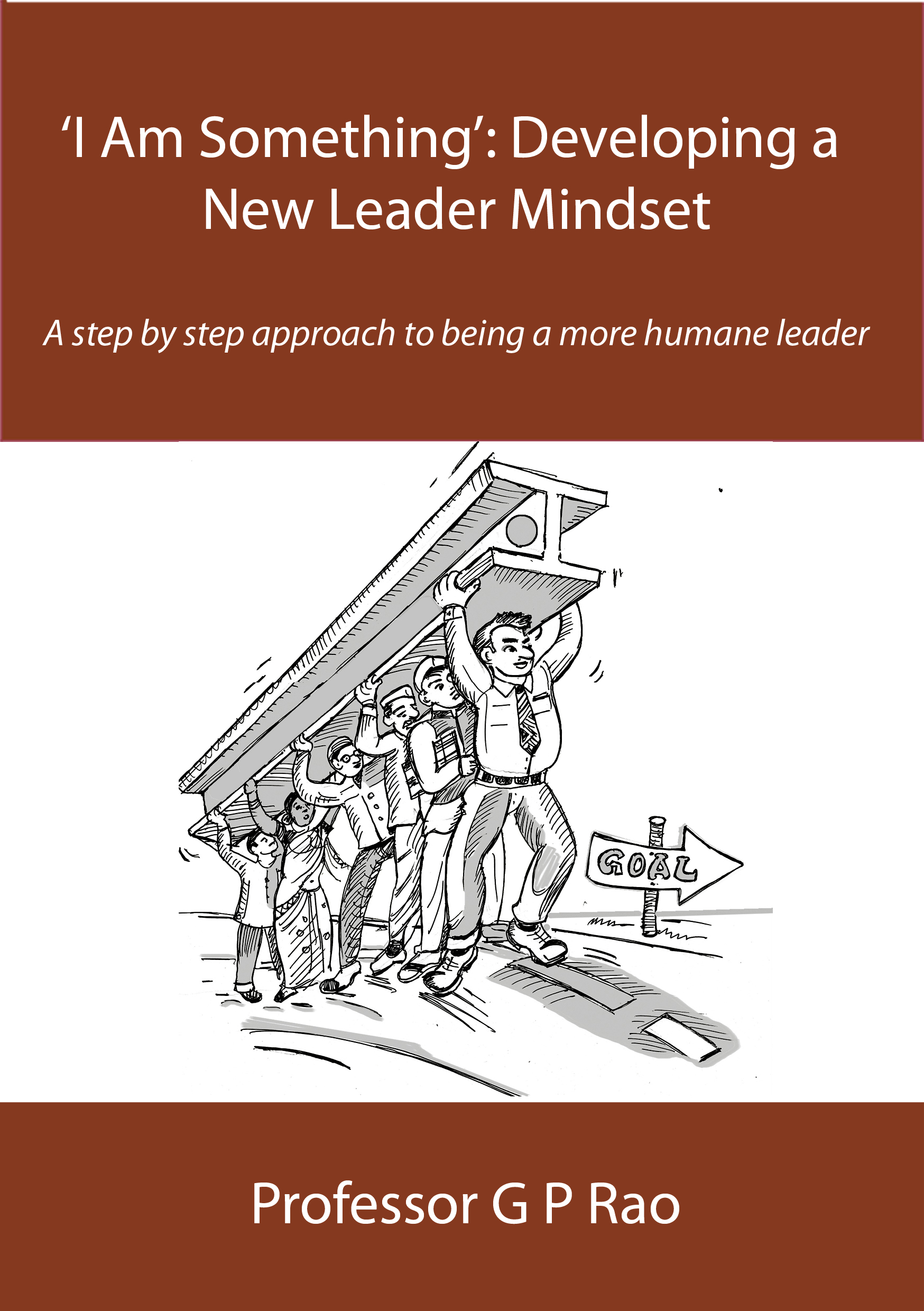
(The following is an abridged and modified excerpt from the book ‘I Am Something: Developing a New Leader Mindset’, authored by Prof G P Rao, founder of SPANDAN, yours truly and others.)

Advances in technology inevitably lead to more efficiencies, better products and improved lifestyles for people. But each leap of faith into the domain of a newer technology brings with it a set of newer challenges for mankind. As machines increasingly take over the drudgery of repetitive tasks and become more intelligent, human beings invariably need to re-skill themselves. This applies to business leaders as well as their followers.

The Fourth Industrial Revolution in the offing now builds on the Digital Revolution, representing new ways in which technology becomes embedded within societies and even the human body.

Skill-sets of the future

As per a World Economic Forum document titled ‘Future of Jobs Report’, employers are said to anticipate a significant shift in the division of labour between humans, machines and algorithms for the tasks of today.

The aforesaid report states that of the total task hours across the industries covered, on an average, 71% are currently performed by humans, whereas 29% are performed by machines or algorithms. By 2022, this average is expected to have shifted to 58% task hours performed by humans, and 42% by machines or algorithms. It can be readily appreciated that this signifies a very rapid pace of change, something for which leaders need to be better prepared.

The report goes on to project that skills related to analytical thinking, active learning, technology design and technology competency would grow in prominence. It also proposes that such ‘human’ skills as creativity, originality and initiative, critical thinking, persuasion and negotiation will either retain or increase their value, as will attention to detail, resilience, flexibility and complex problem-solving.

It follows that in the impending man-machine conflict, human beings are not likely to suffer the same fate as that of the non-avian dinosaurs which went extinct some sixty-five million years ago. But the writing on the wall is clear. They need to roll up their sleeves and get down to the task of sharpening their soft skills. A humane approach to handling team members needs to be consciously developed, especially when operating in a business environment characterized by a shortage of skilled workers. In turn, this would pre-suppose a higher Emotional Quotient and better service orientation. Even as the reliance on artificial intelligence grows for the analytical part of decision making, the role of intuition would become even more crucial.

A focus on the bottom line

Most employers would go in for innovating through technology if it makes business sense. It follows that technology would continue to remain a tool in the arsenal of the corporate world to squeeze more profits out of their operations, thereby making careers more fragile and impacting labour incomes adversely. With 24×7 connectivity, people are already working longer and enjoying lesser leisure time.

In a scenario of this kind, there is a grave risk that leaders would end up losing a connection with themselves even more than at present and hence end up de-humanizing the work place.
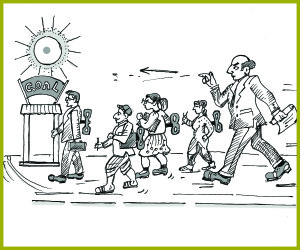
However, values remain indestructible. As an example, honesty and truthfulness in relationships is something which is bound to withstand the onslaught of newer technologies in the centuries to come. Same is the case with empathy, compassion, resilience and a flexible approach in problem solving.

Perhaps there is a need for governments the world over to anticipate newer moral and ethical dilemmas in a proactive manner and influence technological developments suitably, so human dignity and freedom is not compromised.

The perks and the perils

One may also surmise as to how the imminent advances in technology could throw up positive as well as negative factors which are likely to impact the man-machine equation in the times to come.

According to a 2014 report entitled ‘AI, Robotics, and the Future of Jobs’, published by Pew Research Centre, researchers Aaron Smith and Janna Anderson went to the extent of seeking feedback from as many as 1,896 experts. They found that when it came to the impact of advances in technology upon economic opportunity and employment, the opinion was deeply divided.

The optimists opined that technology would free us from day-to-day drudgery and end up redefining our relationship with ‘work’ in a more positive and socially beneficial manner. They felt that we shall adapt to these changes by inventing entirely new types of work and control our own destiny through the choices we make.

The pessimists amongst those who participated in the aforesaid study were of the opinion that the coming wave of innovation would mostly impact those involved in white-collar work. Whereas highly skilled workers will do better, many more might get pushed into lower paying jobs, and might even face permanent unemployment. They also felt that our educational, political and economic institutions are poorly equipped to handle the challenges which are likely to come up.

The aforesaid piece of research throws up instructive insights into how the future might shape up. Leaders and managers really need to think up some innovative ways in which they would handle a highly polarized workforce, comprising a disgruntled lot at one end and a highly skilled one at the other.

The challenge of creating happier workplaces

Unlike the earlier industrial revolutions, which first created and then changed the skill sets required by our blue collar workforce, the Fourth one promises to change the work profile of our white collar workers.

In his book, The Fourth Industrial Revolution, Professor Klaus Schwab, founder and executive chairman of the World Economic Forum, describes how this fourth revolution is fundamentally different from the previous three, which were characterized mainly by advances in technology. According to him, these technologies have great potential to continue to connect billions of more people to the web, drastically improve the efficiency of business and organizations and help regenerate the natural environment through better asset management.

As we grapple to understand the future direction of monumental changes in our socio-economic fabric owing to the next phase of technological evolution, few things stand clear.

One, that our educational institutions are nowhere near the task of training a workforce which would not learn analytical skills by rote but would grasp the importance of creativity, resilience and improve upon their Emotional Quotient.

Two, most of our governments are yet to devise ways and means of regulating issues of protecting individual privacy, executive burnouts arising out of a 24×7 connectivity and heightened civic strife due to growing inequalities. The next phase is bound to create a newer class of elite – those who are adept at newer technologies, leaving far behind those who are not.

Those in the first category could end up believing that they are all too powerful. Those who remain blissfully ignorant and continue to be disconnected to those who are reaping the benefits of newer technologies are likely to gravitate towards a belief that they have no place in the knowledge universe. With poor resources of material as well legal kind at their command, these new ‘have-nots’ of the society may be doomed to languish for a long time, till the governments of the day intervene, willfully or otherwise, and ensure implementation of economic policies which are more inclusive in nature.

The third kind, comprising those left in the middle of the normal distribution curve of technology dispersal, could end up having a balanced approach to issues. In fact, with advances in technology, this kind could well face a higher risk of extinction, paving the way for those who believe themselves to be all too powerful to rule the roost.

The same pattern may become apparent in the realm of management as well. Leaders and executives would need to increase their engagement not only with the society at large, but also with the governments of the day. A massive effort at re-skilling personnel would become a necessity.

A matter of trust and privacy

Infosys co-founder N R Narayana Murthy happens to be of the view that technology is a great leveller. He thinks that technology has improved transparency, conquered distance and class barriers. Also, that it has the potential to create a fair society and enhance the accountability of the rich, the powerful and the elite to the poor and disenfranchised in all societies.

One cannot dispute this. However, concerns regarding an increasing trust deficit remain. Denizens of many countries are feeling increasingly jittery over instances of data privacy. Moral policing, electoral pitching, rumour mongering – all these are fuelling this trust deficit.

One case in point is that of Facebook which is already armed with tools to dig deep into our lives, with the singular aim of moulding our thoughts and opinions about diverse aspects of our lives.

Employees in most organizations already resent living in a virtual fish bowl, where all their communications are suspected to be getting monitored. No one likes to be micro-managed, especially those who are capable and self-confident. Business enterprises have already started deploying tools to monitor employee productivity by collecting and analyzing their activity and inactivity levels.

In the long run, a work environment of this nature would end up impacting productivity, commitment and motivation levels adversely.

(Since 2020, the coronavirus has brought into focus the perils of techno-capitalism, dividing the society into those who can readily access technology and those who cannot. In an emerging economy like that of India, many school students have been left out of the formal learning loop because of their not having been able to access online classes. Rather than technology proving to be a leveller, it has instead proved itself to be a disruptor. Work-from-home has brought in behavioural changes amongst the knowledge workers, whereas migrant labourers have suffered from the trauma of displacement and loss of earnings.) 

The ever-increasing rate of change

One thing is certain. Change is not only a constant. With each passing year, the rate of change is also increasing. Much like Alice in Wonderland, Homo sapiens are discovering that they need to keep running faster and faster, with nary a respite in sight. Mankind is bound to evolve further much earlier than what was believed in the past. Alvin Toffler would perhaps heartily approve of this proposition.

Unlike thought so far, the man machine relationship shall become more integrated with each other in the near future. As a result, the combined force of processing of billions of data points for efficient decision making by machines, and contextual, emotional and intuitive aspects of decision making by human beings, would be, to that extent, higher and greater in their respective impacts – for good or bad.

What can be done to meet the challenge

– Employees, whether present or potential, can go beyond the formal education system and aggressively look for avenues to hone their skills, so as to remain employable. As Stephen R Covey has said, we need to keep our saws sharpened.

– Same applies to our business leaders, who would do well to improve upon their Emotional Quotient.

– The agenda for educationists and politicians is clear: To keep taking steps to facilitate the change already upon us; to anticipate the challenges of privacy and rumour mongering and to intervene to have appropriate safeguards embedded in upcoming technologies.

(References:
https://www.weforum.org/reports/the-future-of-jobs-report-2018
“Future of Jobs.” Pew Research Center, Washington, D.C. (December 11, 2014);
http://www.pewinternet.org/2014/08/06/future-of-jobs)

(Illustrations courtesy www)

Here is what my dream soul mate would sound like,
He may or may not be tall, dark and handsome;
While handling Life’s harsh slings and arrows,
I merely expect the young prune to be agile and lissome.

A blighter like Gussie Fink Nottle would surely not do,
A newt fancier and a teetotaler is bound to leave me cold;
A chappie like Freddie Threepwood would also put me off,
Someone like Spode I would stoutly detest, truth be told.

A lack of interest on my part in flowers, pumpkins and sows,
Rules out any dalliance with the ninth Earl of Emsworth;
A rugged and handsome Esmond Haddock may make the cut,
But his domineering aunts would vitiate matrimonial mirth.

Having a whack at any bloke’s millions is not my idea of fun,
An abundance of the milk of human kindness would do;
His frequent visits to an all-men’s club would be fine,
Enabling the embers of romance to act longer like a glue.

I would not expect him to open doors for me,
Nor hold any chair I may decide to use;
Such notions of chivalry are already outdated,
I can open jam cans myself and even mend a fuse.

He should pay heed to the needs of our times,
Believe in meaningful notions of chivalry instead;
Be a loving, loyal and devoted soul mate,
Helping with such household chores as making a bed.

Like Bingo Little, baby sitting should be his forte,
Not sulking when I invite over a friend of mine;
Ensuring that never do I miss my afternoon cup of tea,
Cosying up to me near the fireplace over a glass of wine.

As to tackling life’s myriad problems and challenges,
May he be like Jeeves, armed with superior intelligence;
Handling visiting aunts and distant cousins with aplomb,
Displaying a feudal spirit, resolving issues with elegance.

Let him be a dasher along the lines of someone like Psmith,
Handling life with perseverance, alacrity and grace;
Spreading love while riding the pale parabolas of joy,
Neutralizing mischief mongers without losing his own face.

Someone like Ashe Marson could also qualify,
Dishing out whodunits lapped up by the masses;
Open to adventurous escapades involving scarabs,
Handling his bosses well, conducting fitness classes.

Hitching my lot to someone like Galahad could be considered,
His gallantry is legendary, so is his wit and charm;
Oh, life would be real fun being with a person like him,
Things would be easier while I hold on to his arm.

I would not even mind a good pal like Bertie as a soul mate,
Whose heart would forever remain coated with gold;
Wrapping him around my dainty fingers would be easy,
Nice to have someone around whose intellect I could mould.

To have shades of all these coves in a single chap
Would be well-nigh difficult, truly an overwhelming task;
May be someone amongst you would refer a suitable blighter,
So I don’t have to walk down the aisle with a smiling mask.

Let the chappie at least be a true fan of P G Wodehouse,
So the progeny is assured of a great sense of humour;
Basking in the sunlit brilliance of the Master’s works,
Going through life with its chins up, wearing a blissful armour.


(Notes:

  1. A crisper version of this composition appears in ‘Wooster Sauce’, The Quarterly Journal of the P G Wodehouse Society (UK), in Issue Number 89, March 2019. 
  2. This post is inspired by
    https://honoriaplum.wordpress.com/2013/06/29/wodehouse-desirable-men
  3. Related posts: https://ashokbhatia.wordpress.com/2017/11/05/a-plummy-wish-for-a-bride-to-be, https://ashokbhatia.wordpress.com/2017/12/02/the-need-to-look-for-plummy-soul-mates
  4. Illustration courtesy www)

ashokbhatia's avatarashokbhatia

Movies reflect what is happening in the society. In some cases, like literature, they also hint at what could be in store for us in the days to come. They not only influence what happens in the society, but also take a harsh look at its ills – including their own! There are a number of spoofs, created by some of our best known dream merchants, which reveal the level of maturity the film industry has attained.

Somehow, movies examine only some segments of the society; that too, mostly along predictable lines. Politicians, cops, industrialists and others are mostly depicted in a stereotyped manner. Business and management have so far not merited much attention from our film makers.

If business has been captured, it has mostly been depicted to be ruthless. Catering to mass appeal, the film makers have propounded the belief that big money is invariably bad. The fact…

View original post 1,939 more words

ashokbhatia's avatarashokbhatia

The delicately nurtured amongst us occasionally bemoan the way they have been treated by the Master Wordsmith of our times – P GPGW JeevesInTheOffing Wodehouse. Admittedly, his narratives are replete with somewhat jaundiced references to the fairer sex. We could readily jump to the conclusion that his works have been written only for an exclusive boys’ club.

Consider these samples from ‘Jeeves in the Offing’:

Sample 1:

‘It just shows you what women are like. A frightful sex, Bertie. There ought to be a law. I hope to live to see the day when women are no longer allowed.’
‘That would rather put a stopper on keeping the human race going, wouldn’t it?’
‘Well, who wants to keep the human race going?’
‘I see what you mean. Yes, something in that, of course.’

Sample 2:

‘Why? You were crazy about the girl once.’
‘But no longer. The fever has…

View original post 2,115 more words

How do you solve a problem like Somaiya?

How do you catch a cloud and pin it down?

How do you find the word that means Somaiya?

A nay-sayer! A yeller! An obstinate clown!


Many in the family adore her,

Her superior intelligence could put a Jeeves to shame;

The psychology of any individual is an open book to her,

In a game of chess a victory she can easily claim.


She is often held to be an angel and a child,

A gentle soul, an eve lamb and a darling;

She makes others laugh and keeps them bemused,

Her imagination is never wanting, always on a wing.


Aspiring to swim like a fish and dance like a diva,

She is justifiably proud of her long and flowing mane;

Doing school work on an iPad she detests,

Watching teeny serials and a smart phone addiction is her bane.


She may look as flighty as a feather,

But has great strength in her bones;

Many a medal has she won while playing football,

She loves gorging on pizzas and ice cream cones.


But many others around her are often left confused,

They have no clue as to where exactly they stand;

Unpredictable as weather, with repeated bouts of anger,

In many a peril they suspect the sleight of her hand.


Often, their toothbrushes, combs and shoes could go missing,

She is taken as a headache and a riddle waiting to be solved;

Unlike Kid Clementina, adding sherbet to inkpots is passé,

Changing the settings of other’s smart phones keeps her involved.


A fine specimen of the female of our species,

Bobby Wickham is the one she apes, though her hair is black;

Getting invited to parties and movies she relishes,

In unleashing goofy schemes she is neither wanting nor slack.


She hastens the spiritual evolution of those around her,

Thos would surely be envious of her track record;

A chin-up attitude is necessary to deal with her,

With those who take her acts lightly she strikes a chord.


She is the lord and master of all she surveys,

All around her are expected to do her bidding;

From Seabury she would like to learn the art,

Of making butter slides for erring parents, no kidding!


When it comes to giving others a supercilious gaze,

Treating them as dust beneath her bicycle wheels;

She could teach a thing or two to Oswald Glossop,

Making them either jump in lakes or take to their heels.


She is someone who could try others’ patience no end,

She always knows which side of her bread is buttered;

Her toys and dolls are invariably left in a state of disarray,

Her room, drawers and shelves are always cluttered.


Dressing up and leaving for school is a chore she dislikes,

Washing her face does not come easy, also combing her hair;

But she loves the company of her friends there,

She waltzes inside her school and even whistles on the stair.


Many a thing you know you’d like to tell her,

Many a thing she ought to understand;

But how do you make her stay and listen to all you say,

How do you keep a wave upon the sand?


Oh, how do you solve a problem like Somaiya?

How do you hold the rays of moon in your hand?!


(Inspired by a song from the movie ‘The Sound of Music’)

ashokbhatia's avatarashokbhatia

CEOs and managers wanting to puncture the stress bubble these days have several options. Some can head to the nearest gym and burn away those blues. Some can simply switch off their technical gizmos and spend some quality time with their loved ones. Some can start learning yoga and meditation. Some can choose to put off the lights at home, put on some soothing music and relish their favourite tissue restorative, sans any distraction.

Others can pick up any work of P G Wodehouse or Terry Pratchett and recharge their batteries. Or, they can look up the delightful work of such eminent cartoonists as R K Laxman and Mario Miranda, both of whom have looked at managerial situations with the lens of sparkling wit and humour.

In Mario Miranda’s cartoons and illustrations, we come across the buxom but woolly headed secretary, Miss Fonseca. We also get to meet Mr. Godbole…

View original post 522 more words

Diwali, the Indian Festival of Lights, occupies a very prominent place in the minds of its citizens. Given the propensity of Bollywood producers and directors to cash in on events which touch the audience’s lives, one would presume that the festival would have had a major role to play in many of the flicks churned out by our dream merchants.

In quite a few story lines, Diwali does form the background of some events of major importance in the lives of the principal characters. The villain and his henchmen decide to massacre an entire family just when the latter happen to be celebrating the festival together. However, they willy-nilly leave behind a survivor who grows up with the single aim of identifying the villain and liquidating him even as the law enforcing authorities take their own sweet time to troop in.

But when one starts looking around for songs which are inspired by this magnificent festival, one is likely to be disappointed. These are few and far in between.

Here is a small collection which was recently brought to my attention by an elderly cousin who has a personal collection of movies and songs which could beat any museum professing to represent the best that Bollywood has to offer.

Aayi Diwali Deep Jala Ja: Pagdi (1948)


Deep Jale Ghar Ghar Mein: Lata: 1955


Deep Jalenge Deep Diwali Aayi: Paisa (1957)

Kaise Diwali Manayen Lala: Paigham (1959)


Mele Hein Chiragon Ke: Nazrana (1961)


And here is a famous song from the movie Guide (1965) where an entire stanza is devoted to Diwali.


Happy Diwali: Home Delivery (2005)

Perhaps, there are several reasons for Diwali songs being very few.

One could be that the joint family system has given way to unit families. Main protagonists in Bollywood movies have become more self-centred, pushing the broader family into the shadows. Over time, the importance attached to a family-focused festival like Diwali has gone down. We still get to see it, but merely as a backdrop to the small part of a song where the hero and the heroine are shaking their legs and limbs with much gusto.

Another could be the fact that Diwali was earlier considered a private family affair, with sweets getting distributed amongst neighbours after the traditional puja had been performed. But the current trend is that of a socializing event where those who could assist us in fulfilling our ambitions receive gifts much prior to the festival. In other words, if it was a single transaction between a family and the Goddess of Wealth in the past, it has now taken the shape of a multi-dimensional event of a transactional nature where one’s circle of influence plays a far more important role.

It is remarkable that Holi, the Festival of Colours, has found better attention from our film makers. Bollywood specializes in glorifying eve-teasing and this is one festival which provides ample scope for amorous advances to be showcased on the silver screen.

Here is wishing all of you a great Diwali!

(Note: Yours truly is grateful to the senior cousin who facilitated this post.)

ashokbhatia's avatarashokbhatia

Most of us love Bertram Wilberforce ‘Bertie’ Wooster. Unlike some goofy female characters who would not mind taking ‘a whack at the Wooster millions’, we do not love him for his money. We love him for his self-less attitude and simplicity.CodeOfTheWoosters

Some of us pity him for being ‘mentally negligible’. His tendency to keep getting into one soup or the other often makes us feel superior to him. Whenever he gets stuck, Jeeves rallies around. He keeps pulling him and his pals out of the kind of predicaments they keep facing from time to time. If ever Bertie’s pride gets hurt and he decides to untangle an issue all by himself, disaster lurks around the corner.

All through, Bertie’s actions are governed by The Code of the Woosters which is essentially about never letting a pal down. However, I do believe that there are several finer shades to it. Each…

View original post 1,403 more words

ashokbhatia's avatarashokbhatia

Howsoever irrational and demanding his pals, Bertie would never let them down. Show him a soul in torment and he would rush in to provide the healing touch. A couple whose union is threatened by either a parent or an uncle gets his unstinted support, even if it means his taking the rap for a misdemeanor he is not at all connected with.Code of the Woosters Cover 5

We see him rallying around when a member of the so-called sterner sex is incapable of expressing his tender feelings to a member of the tribe of the delicately nurtured. Often, we find him persuading a member of the opposite sex to end a bitter feud with a friend who has been returned to store on account of some misunderstanding.

At times, we find him charming his returned-to-store pals against running across the Atlantic. This ensures that they remain readily available for a speedy reconciliation between the…

View original post 1,243 more words