Feeds:
Posts
Comments

You are the main engine of economic growth,

Making global MNCs continue to fuss over you;

Splurging on goodies, traveling all over the world,

Your hard work yielding fruits which are your due.

You work very hard to secure a better future,

For yourself, for your progeny, and for your kith and kin;

The joint family system you appear to have given up,

Bringing up kids amidst the social media din.


You are the upholder of values and character,

Quietly paying your taxes, fulfilling social commitments;

A God-fearing and law-abiding citizenry of the country,

Balancing a scientific outlook with superstitious predicaments.


Great sacrifices you are also willing to make,

When making India stronger is your belief and view;

You do not mind spending hours in a queue,

Retrieving hard-earned cash which is due to you.


Government subsidies you are willing to give up,

So the poor and the needy may live a better life;

You live the life of a silent but true patriot,

Ignoring social unrest, mobocracy and strife.


Corruption in high places you do not like,

Petty bribes which save you time you do not mind;

Inefficient delivery of public services you hate,

To trains and buses running late you are often kind.


But much like the three monkeys of the Mahatma,

Unpleasant things you do not hear;

You remain blind and mute to many a thing,

Indignities which do not touch you directly, silently you bear.


You remain faithful to the concept of democracy,

Keeping the flame of our independence aglow;

Pushing the Indian nation on its path of glory,

Hoping for a better tomorrow, even if the progress is slow.


Perhaps a day would dawn when you would speak up,

Push also for social, judicial and political reforms;

Chasing not only GDP and per capita income numbers,

But also Gross National Happiness in its myriad forms.


Strive for India to excel in its Millennium Development Goals,

Contribute towards building up Gross National Character;

Refuse to let caste and religion determine vote banks,

Of the unfolding Indian drama, be the outspoken main actor.

(Related Post: https://ashokbhatia.wordpress.com/2015/05/13/the-perks-of-being-a-vip)

Quality

Hire a quality expert who is practical and does not live in an ivory tower, or else your billings may nosedive and your entire manufacturing team may end up doing only rework.

In the services sector, quality invariably means an extension of the core job being done. A shipping agent who keeps you updated of the status of a shipment at all times is a delight to work with; so is a dentist who sends you a discreet short message reminding you of your appointment that evening!

To quote Dr. Laurence J Peter and Raymond Hull: ‘…man cannot achieve his greatest fulfilment through seeking quantity for quantity’s sake; he will achieve it through improving the quality of life, in other words, through avoiding life-incompetence’.

(Excerpt from my book ‘Surviving in the Corporate Jungle’, the English version of which was released recently. The Portuguese version of the excerpt follows.)

QUALIDADE

Contrate um especialista em qualidade que seja pragmático e não viva numa torre de marfim; caso contrário, a sua faturação poderá cair a pique e toda a equipa de produção pode acabar a retrabalhar produtos e nada mais.

No setor dos serviços, a qualidade significa sempre uma extensão do trabalho principal que é feito. É um prazer trabalhar com uma transportadora que o mantém a todo o momento a par do estado de uma encomenda; tal como com
um dentista que lhe envia uma mensagem breve e discreta a lembrar-lhe que tem consulta nesse dia!

Para citar o Dr. Laurence J. Peter e Raymond Hull: “…um homem nunca estará realizado se procurar a quantidade por si só; realizar-se-á através da melhoria da qualidade de vida, ou seja, evitando as incompetências da vida”.

(This is how you can lay your hands on the Portuguese version of the book, launched in Portugal during March, 2016.)

Your every ping

Makes my heart sing


A chat a day

Keeps blues away


Through emoticon

The heart is won


Your status update

Could seal my fate


Your profile pix

Is a heady mix


Of hot and sweet

I follow your tweet


And WhatsApp too

I follow you


On the Facebook

It is no fluke


That (your) every post

I like the most


On mails we chat

Of this and that


Until at last

Oh! Meet we must


Then I awake

Your profiles fake!


And all your pings

Of sweet nothings


Went out en masse

Alack! Alas!


My pal, my bro, my boss, my dad!

All got them, we’ve all been had!


And if all this has taught something,

Never ever trust a BBM ping.

(Soumya Mukherjee is an alumnus of St Stephens College and Delhi School of Economics. He earns his daily bread by working for a PSU Insurance company, and lectures for peanuts. His other passions, family, friends, films, travel, food, trekking, wildlife, music, theater, and occasionally, writing. He has been published in many national newspapers of repute. He has published his first novel, Memories, a novella, hopefully, the first of his many books. He blogs as well.

His permission to re-post this composition is gratefully acknowledged. It can also be found at http://www.differenttruths.com/literature/poems/ode-to-social-media)


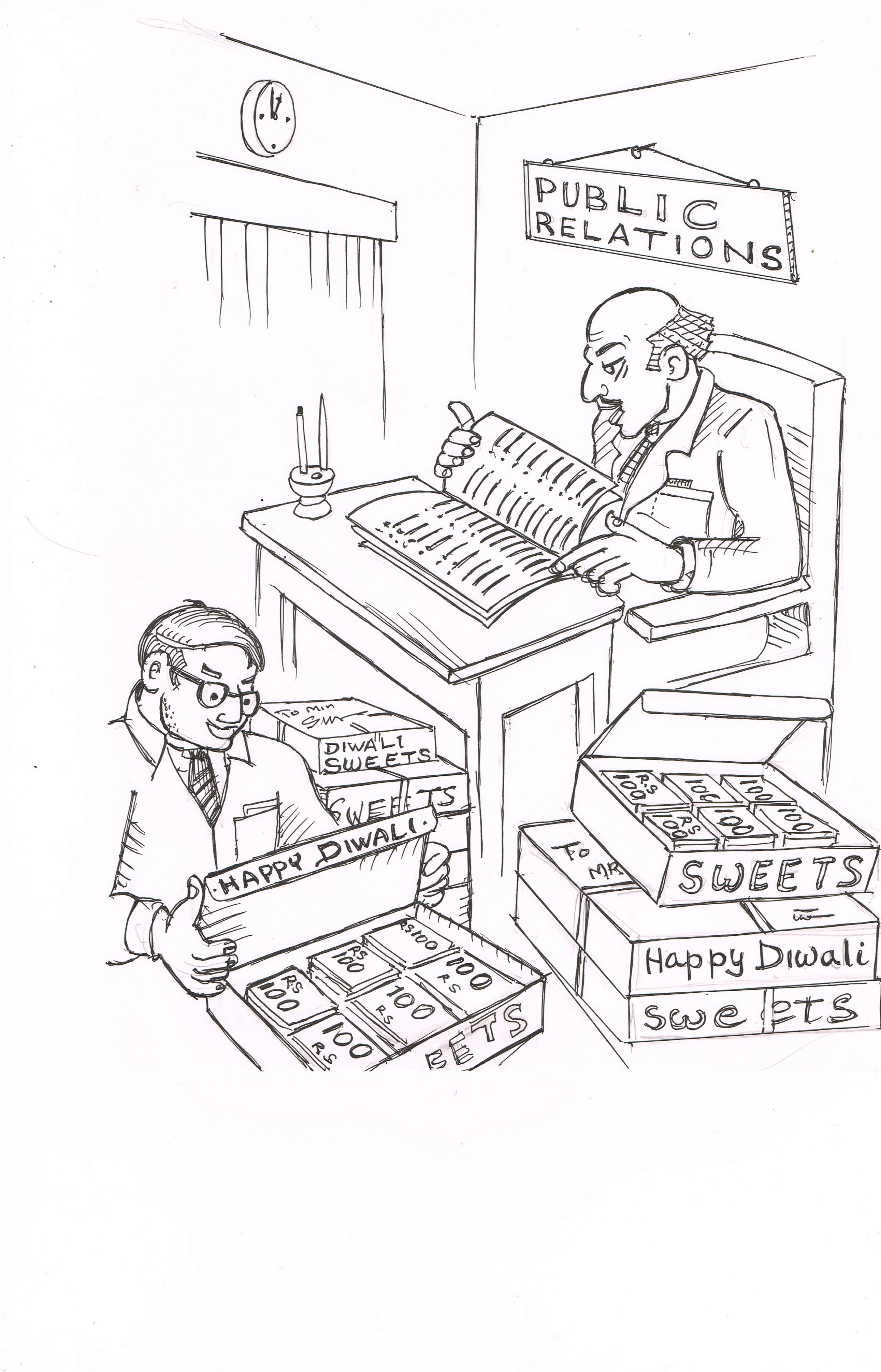
Public Relations

Good public relations could keep your business image bright and shining. With the advent of the Internet, it has become easier to be in the public eye. To ensure you remain so for the right reasons depends upon the quality of product/service on offer, the manner in which either customer complaints or labour issues are handled, and your corporate governance record.

In a large complex business, you may need to hire an expert to handle your public relations. Check the guy’s credentials and sign him on for a maximum period of two years at a time. Better still, get one of the smart secretaries to handle it in-house.

How does one handle bosses and secretaries? What are the scientific laws which govern interpersonal relations? What kind of management lessons can be drawn from Indian epics?

Launched in the Portuguese market in March 2016, the book ‘Surviving in the Corporate Jungle’ was recently unleashed upon unsuspecting business magnates and management honchos at Pondicherry in India.

The book, published by Partridge India, presents insightful lessons for managers at all levels – the aspiring kind, the practicing and the tired kind, and even the retired kind. For hassled business executives and entrepreneurs, relentlessly chasing goals and deadlines, the punchy prose – infused with a Wodehousean humour – should come as a relaxing and uplifting read.  

No connection with Vasco da Gama

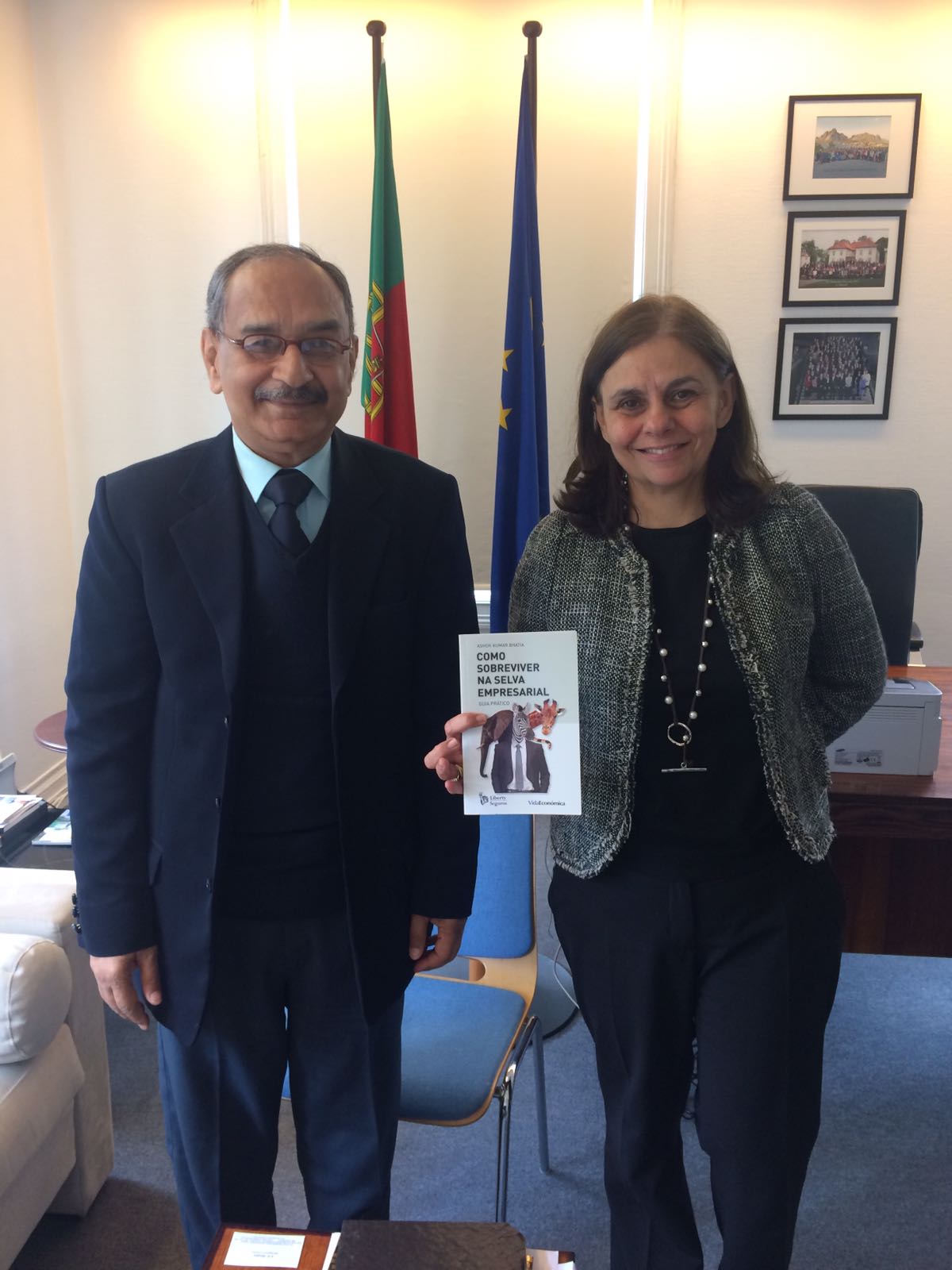
One does not claim to be a descendant of Vasco da Gama, but it so happened that the original manuscript, penned in English along the coast of the Bay of Bengal over the last three years, found its way to Porto, Portugal, on the Atlantic coast. CEO World, a unique start up there, managed to secure the support of Liberty Seguros. Vida Economica took it up for publication in Portuguese.

The Portuguese version, ‘Como Sobreviver Na Selva Empresarial’, has found its way to the office of the Hon’ble Prime Minister of Portugal, His Excellency, Mr. António Luís Santos da Costa, GCIH, who has roots in Goa.

It has also been presented to Ms. Clara Nunes dos Santos, the Ambassador of Portugal in Norway, and to Mr. José Manuel Castro Santiago, Minister – Counsellor at the Embassy of Portugal in Switzerland.

The book has also been discussed at IMiF (International Minds in Finland), a select group of entrepreneurs and intellectuals in Finland.

English version launched at Pondicherry, India

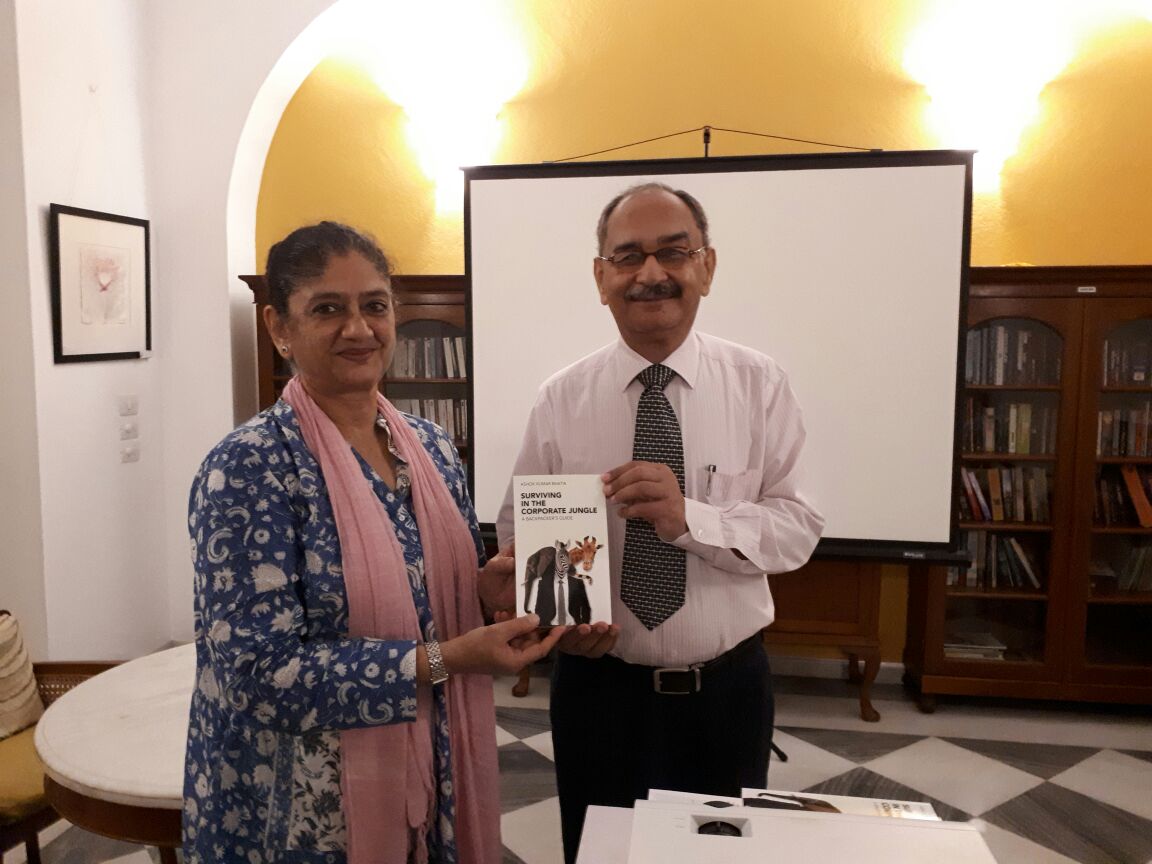
Recently, a book launch function was organized at Pondicherry, India, by People for Pondicherry Heritage (PPH), a group of individuals and NGOs who are passionate about protecting as well as showcasing the unique heritage of Pondicherry.

Ms. Sunaina Mandeen of PPH spoke of the need to preserve our values and our rich heritage, the latter including works of literary kind.

Ms. Sunaina Narang introduced the author to the audience.

While launching the upgraded English version of the book, Mr. R Mananathan, Chairman of Manatec Electronics Private Limited, spoke warmly of several topics covered in the book. He found it to be a unique book which covers a vast area of business management. In particular, it touches upon leadership, administration and refined concepts in the domain of human resources. He felt that I deserve credit for having summed up my forty year long practical experience and present it in a crisp and humorous manner. He wished that the language used could have been somewhat simpler in some parts, though.

Mr. P Rangaraj, Chairman and Managing Director, Chemin Controls and Instrumentation Private Limited, said that the book is replete with rich management lessons which would be useful to managers and business owners of all kinds. He was appreciative of the fact that the book also draws upon such Indian ancient scriptures as Ramayana, Mahabharata and Thirukkural.

The book presentation on the occasion touched upon some of the hundred odd topics covered in the book, like Meeting the Boss halfway through, Female Power and Stress, among others.

The presentation also brought into focus a new perspective on leadership by means of an upgraded Blake Mouton Grid, wherein a third dimension is proposed – that of the Concern for Ethics. It advocates the importance of developing not only one’s intelligence and emotional quotient, but also one’s spiritual quotient.

The book transports the reader back to an era when the instructive yet delightful works of such luminaries as C Northcote Parkinson, Lawrence J Peter and Sharu Rangnekar ruled the management book market.


The launch of the book in two countries is a reaffirmation of the fact that managerial knowledge and skills happen to be universal in nature. Books can act as bridges between two countries and two civilizations and bring these closer to each other for the purpose of forging mutually beneficial relationships.

Press coverage

Here is a press report covering the launch event: http://www.thehindu.com/news/cities/puducherry/the-art-and-science-of-management/article19338392.ece

Details

“Surviving in the Corporate Jungle”

By Ashok Kumar Bhatia

(http://www.amazon.in/Surviving-Corporate-Jungle-Ashok-Bhatia/dp/1482888505)

(This is how you can lay your hands on the Portuguese version of the book, launched in Portugal during March, 2016.)

(Related Posts:

https://ashokbhatia.wordpress.com/2016/02/26/the-book-como-sobreviver-na-selva-empresarial-guia-pratico

https://ashokbhatia.wordpress.com/2017/05/30/a-meeting-with-the-ambassador-of-portugal-in-norway

https://ashokbhatia.wordpress.com/2017/06/21/a-meeting-with-the-minister-counsellor-of-portugal-in-switzerland

https://ashokbhatia.wordpress.com/2017/05/23/an-interaction-with-senior-professionals-in-finland

https://ashokbhatia.wordpress.com/2017/09/14/a-book-presentation-session-at-madras-management-association-chennai-india)


Promotions

An effective tool in the management’s arsenal to reward and motivate guys who excel in their jobs.

There are two key challenges faced in case of promotions:

  1. Pressure for time-bound promotions

Everyone expects to get promoted after having slogged it out at a given level in the organization for a few years. The reason you find most organizations top-heavy today is because the management twenty years back did not pay attention to managing the aspirations of its people and instead went along with the philosophy of time-based promotions!

  1. Managing is different

Doing a job yourself is one thing. Getting it done through others is a different ball game altogether. To be a good manager, one needs to be a leader, bestowed with skills in team building, communication, delegation, and supervision. Often, two-thirds of the promotions in corporates are based on incumbents putting in an impressive show in their present role. Once promoted, the incumbent is left twiddling his thumbs, trying to figure out how to manage the same activity through others.

The solution possibly lies in building up a culture which rewards good performance but does not overlook the projected managerial talent of the promotee. Job rotation, counselling, and job enrichment are some of the tools which a wise Human Resource guy may use to manage the majority which deems a promotion as its birth-right, based only on the fourth dimension of our universe – time!

A populist approach like resorting to time-based promotions can also be practised, provided there is an aggressive scheme in place to enforce employee separations as well, that too in a time-bound manner!

(Excerpt from my book ‘Surviving in the Corporate Jungle’, the English version of which was released recently. The Portuguese version of the excerpt follows.)

PROMOÇÕES

Uma ferramenta eficaz no arsenal de gestão para premiar e motivar os indivíduos que se destacam nas suas funções.

As promoções levantam sobretudo duas dificuldades:

1. Pressão para ser promovido dentro de um determinado limite de tempo

Qualquer um espera vir a ser promovido depois de se ter arrastado num determinado nível da organização durante vários anos. A razão por que a maioria das organizações hoje em dia são tão pesadas é porque há  vinte anos as chefias não souberam gerir as aspirações dos seus subordinados e deixaram-se levar pela filosofia das promoções baseadas no tempo!

2. Ser chefe é diferente

Uma pessoa fazer um trabalho ela própria é uma coisa. Fazer com que esse trabalho seja feito por outros é uma coisa completamente diferente. Para ser um bom chefe, é preciso ser um líder, dotado de competênciasde
coordenação de equipas, comunicação, delegação e supervisão. Muitas vezes, dois terços das promoções das empresas baseiam-se no facto dos candidatos à
promoção ressaltarem de forma impressionante as suas funções atuais. Uma vez conseguida a promoção, o promovido fica a girar os polegares, a tentar descobrir como realizar as mesmas funções através dos outros.

A solução passa, possivelmente, por estabelecer uma cultura empresarial que recompense o bom desempenho, mas sem negligenciar o potencial talento de gestão dos promovidos. A rotação no trabalho, o aconselhamento e o enriquecimento das funções são algumas das ferramentas que um Diretor de Recursos Humanos sábio poderá usar para gerir a maioria dos colaboradores que estão convencidos que a promoção é um direito que lhes assiste desde
a nascença, com base apenas na quarta dimensão do nosso universo – o tempo!

Uma abordagem populista que recorra a promoções baseadas no tempo também pode ser praticada, desde que esteja igualmente implementado um sistema agressivo que permita distinguir os colaboradores, também de forma
limitada no tempo!

(This is how you can lay your hands on the Portuguese version of the book, launched in Portugal during March, 2016.)

Packages

packages

Packages are negotiable only at the entry stage; later on, they tend to lose their elasticity!

Bear in mind that packages are not necessarily related to the innate worth of an incumbent. These have more to do with the company’s corporate ego (read brand value), and also the comfort levels offered. Companies offering high-pressure assignments in high-entropy business environments tend to be more liberal with the packages they offer.

The rate of growth of packages outside the company would always be better than the jumps you get in-house. If you are willing to challenge yourself and move out of your present comfort zone, do not grumble for long; find another exciting opportunity and move on!

As postulated by the Motivation-Hygiene Theory of Herzberg, packages fall in the Hygiene category of rewards. To use a medical analogy, their presence does not necessarily make a person healthier; on the contrary, their absence can cause deterioration in health.

To put it simply, when it comes to individual motivation levels, packages have a rather short shelf life.

When it comes to chucking out the deadwood, organizations could come up with innovative severance packages!

(Excerpt from my book ‘Surviving in the Corporate Jungle’, the English version of which was released recently.)

Honoria Plum successfully investigates the ensemble of reasons which account for the enduring appeal of P G Wodehouse. Sherlock Holmes would heartily approve.

Read on to find out more.

Honoria Plum's avatarPlumtopia

In 2015, BBC radio presenter Kirsty Lang interviewed director Rob Ashford and writer Jeremy Sams about their stage musical adaptation of P.G. Wodehouse’s A Damsel in Distress. It’s one of Wodehouse’s many transatlantic tales, and delves into the world of musical theatre. The central character is an American composer of musical show tunes, and he manages to navigate life efficiently enough without the assistance of a manservant.

KIRSTY: Now Jeremy, it’s a very engaging production, but the story’ is very much of its time. How confident were you that it would work for a 21st Century audience?

JEREMY: Well you say it’s of its time. What I love about it is, the things that attracted me and my co-writer Robbie Hudson, are absolutely how we feel now about America and England, and actually about theatre and high art, if you like. And the ideas that musicals, which I…

View original post 1,409 more words

Uncle Fred and Shakespeare

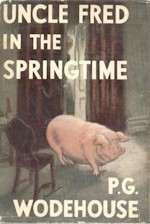
Yet another sterling example of Wodehouse’s use of Shakespeare is found in Uncle Fred in the Springtime (1939).

When Alaric, Duke of Dunstable decides to take Empress of Blandings away from her loving master and get her fit, Lord Emsworth calls in the services of the redoubtable Uncle Fred. Fred arrives full of the joys of spring, with nephew Pongo Twistleton and old friend Polly Pott in tow, and despite the efforts of the efficient Baxter, endeavours to scupper the Duke and bring together a variety of romantic couplings.

The perils of a financial obligation

‘Beginning by quoting from Polonius’s speech to Laertes, which a surprising number of people whom you would not have suspected of familiarity with the writings of Shakespeare seem to know, Mr Pott had gone on to say that lending money always made him feel as if he were rubbing velvet the wrong way, and that in any case he would not lend it to Pongo, because he valued his friendship too highly. The surest method of creating a rift between two pals, explained Mr Pott, was for one pal to place the other pal under a financial obligation.’

Of Hamlet and optimism

When Pongo Twistleton takes a pessimistic view of the plan hatched by Lord Ickenham, the latter consoles Polly thus.

‘I hope he isn’t frightening you, Polly.’
‘He is.’
‘Don’t let him. When you get to know Pongo better,’ said Lord Ickenham, ‘you will realize that he is always like this — moody, sombre, full of doubts and misgivings. Shakespeare drew Hamlet from him. You will feel better, my boy, when you have had a drink. Let us nip round to my club and get a swift one.’

Of poets being commercial

When Ricky tries to strike a deal with Duke, a comment on poets having a keen eye on royalty returns pops up.

‘Poets, as a class, are business men. Shakespeare describes the poet’s eye as rolling in a fine frenzy from heaven to earth, from earth to heaven, and giving to airy nothing a local habitation and a name, but in practice you will find that one corner of that eye is generally glued on the royalty returns. Ricky was no exception. Like all poets, he had his times of dreaminess, but an editor who sent him a cheque for a pound instead of the guinea which had been agreed upon as the price of his latest morceau was very little older before he found a sharp letter on his desk or felt his ear burning at what was coming over the telephone wire.’

The art of soliloquising

Of Aunts who soliloquise

Many of those who belong to the so-called sterner sex might appreciate the sentiment expressed here:

‘As far as the eye could reach, I found myself gazing on a surging sea of aunts. There were tall aunts, short aunts, stout aunts, thin aunts, and an aunt who was carrying on a conversation in a low voice to which no body seemed to be paying the slightest attention. I was to learn later that this was Miss Emmeline Deverill’s habitual practice, she being the aunt of whom Corky had spoken as the dotty one. From start to finish of every meal she soliloquised. Shakespeare would have liked her.’
[The Mating Season (1949)]

When smoking habits come under the lens

Lancelot Bingley, an upcoming young artist, is engaged to Gladys Wetherby, a poetess, who not only has great skill with the pen but also has the face and figure of a superior kind of pin-up girl. However, for them to be able to take a saunter down the aisle, financial support from Gladys’ Uncle Francis, an obese game hunter, is necessary.

Lancelot gets commissioned to paint a portrait of Uncle Francis, who is known to abhor tobacco in any form. However, Lancelot decides to smoke a quiet cigar in the garden when Uncle and her magnificent cook happen to come along. Hamlet gets invoked.

“That, or something like it, was what I said, and I dived into the shrubbery. The voices came nearer. Someone was approaching, or rather I should have said that two persons were approaching, for if there had been only one person approaching, he would hardly have been talking to himself. Though, of course, you do get that sort of thing in Shakespeare. Hamlet, to take but one instance, frequently soliloquised.”

[A good cigar is a smoke (Plum Pie, 1966)]

When hesitation takes over

In order to maintain matrimonial harmony, Bingo Little needs to establish an alibi which would undo the damage done since Rosie M Banks has discovered a photo of his in the Mirror, which shows him being led by a gruff policeman along with Miss Mabel Murgatroyd, a redhead of singular beauty.

Freddie Widgeon gets consulted at the Drones. The option of shoving his chin out and saying ‘So what?’ to the love of his life is ruled out. Freddie then reminds him of the old gag about ‘women being tough babies in the ordinary run of things but becoming ministering angels when pain and anguish wring the brow.’ An accident must come about. Getting hit by a cab is not favoured. An idea of a typewriter falling on Bingo’s toe then takes shape. Back in his Wee Tots office, Bingo attempts it.

When it comes to describing a state of hesitation, Shakespeare comes to one’s aid.

‘It really began to seem as if Freddie Widgeon’s typewriter-on-toe sequence was his only resource, and he stood for some time eyeing the substantial machine on which he was wont to turn out wholesome reading matter for the chicks. He even lifted it and held it for a moment poised. But he could not bring himself to let it fall. He hesitated and delayed. If Shakespeare had happened to come by with Ben Jonson, he would have nudged the latter in the ribs and whispered “See that fellow, rare Ben? He illustrates exactly what I was driving at when I wrote that stuff about letting ‘I dare not’ wait upon ‘I would’ like the poor cat in the adage.”

[Bingo bans the bomb (Plum Pie, 1966)]

Of Humour, Humourists and the Bard

Plum held the Bard in high esteem. He once said that “Shakespeare’s stuff is different from mine, but that is not to say that it is inferior.” The frequent use of Shakespearean phrases by Plum merely attests to the same.

Even when putting across a note on humour, Plum does not hesitate to quote the Bard.

“I only asked him how many crows can nest in a grocer’s jerkin. Just making conversation.”
“And what was his reply? Tinkling like a xylophone, he gave that awful cackling laugh of his and said ‘A full dozen at cockcrow, and something less under the dog star, by reason of the dew, which lies heavy on men taken with the scurvy’. Was that sense?”
“It was humour.”
“Who says so?”
“Shakespeare says so.”
“Who’s Shakespeare?”
“All right, George.”
“I never heard of any Shakespeare.”
“I said all right, George. Skip it.”
“Well, anyway, you can tell him from now on to keep his humour to himself, and if he hits me on the head just once more with that bladder of his, he does it at his own risk.”
[A Note on Humour (Plum Pie, 1966)]

How about a Plummy Kalidasa?!

Those familiar with the works of Kalidasa, a poet known for his delicately romantic works in the Sanskrit language, could justifiably rue the fact that Plum, a romantic at heart himself, never got around to quoting him. If a translation had been used by Plum, his fans would have had an even richer harvest to feast upon.

Imagine a distraught Gussie Fink Nottle pining for Madeline Bassett and sending messages to her through clouds passing by above, a la Meghadootam. An exchange of letters and telegrams would have no longer been necessary. Clouds would have acted as a means of communication – a prospect which the younger lot exposed to the Internet of Things and Cloud Computing these days would have thoroughly approved of.

Ritusamhara, a compendium of lover’s escapades across diverse seasons, would have made rich contributions to the lake side jaunts of Honoria Glossop with Bertie Wooster, what with the latter scheming to push her younger brother into the lake waters. With Kalidasa’s support, the description of a harsh winter evening in Something Fresh – when Ashe Marson is being escorted to Blandings Castle – would have got bolstered no end.

A Plummy Shakespeare

Die-hard fans of The Bard might not be too amused at the Plummy version of the ageless poet. Some linguistic purists might also register a protest, possibly composing a nasty e-mail or two even as you read this piece, if piece is indeed the word I want. But there shall never be a doubt as to the additional layer of rich Shakespearean icing dished out by P G Wodehouse on top of so many of his oh-so-delicious Plum cakes, adding to the delight of his fans worldwide.

(Notes:

  1. Inputs received from some ardent fans of Wodehouse are gratefully acknowledged.
  2. A scholarly perspective on the subject can be found here

Related Posts: 

https://ashokbhatia.wordpress.com/2017/07/01/presenting-a-plummy-shakespeare-part-1-of-3

https://ashokbhatia.wordpress.com/2017/07/08/presenting-a-plummy-shakespeare-part-2-of-3

https://ashokbhatia.wordpress.com/2017/06/26/the-perils-of-not-suffering-from-shakespearitis)

All ideas which sound revolutionary from a new incumbent fade exponentially over a period of time. The incumbent himself gets bored and a sense of fatalism sets in. A smart incumbent would call it quits before he reaches this state of vegetation.

Seniors who decide to overstay their welcome run the risk of being derided and hounded out. They do a great disservice to the organization and also end up lowering the morale of their would-be-successors who have to wait interminably for getting a shot at occupying the throne in the corner office.

A tired and exhausted lion can no longer afford to cling to his seat of power.

(Excerpt from my book ‘Surviving in the Corporate Jungle’, the English version of which was released recently. The Portuguese version of the excerpt follows.)