Feeds:
Posts
Comments

The Indian view of the discipline of management speaks of four pillars of Integral Management – Wisdom, Power, Harmony and Perfection. Of these, Harmony stands out as a key enabler for CEOs and business leaders to achieve their goals.

An individual manager can improve his/her effectiveness by ensuring harmony and balance within oneself – between his/her inner thoughts and outer actions and between the mind and soul.Technology MEDITATION-ENTREPRENEUR-SUCCEED

Large corporations and owners of the family businesses have to ensure that harmony prevails within the various arms of the organisation. The latter have to ensure that there is a clear succession plan in place, so that no disharmony is created at any stage. Maintaining a harmonious liaison with the financial institutions and the regulatory agencies is a key concern for many MSMEs.

Much like musicians in an orchestra, managers have to move in tandem with each other so as to create a symphony. A harmonious working inevitably leads to ‘synergy’, a term often used in the realm of management.

From a strategic point of view, operations have to be so conducted as to remain in harmony with the environment and the society at large.

A cordial relationship between the organization and its distributors allows a Marketing Manager to sleep peacefully.

A Finance Manager has to ensure the right balance between cost controls being implemented and the efficiency of departments which are affected by the same.

A Production Manager has to maintain harmony between his supervisors and workmen. He not only needs to deliver finished goods on a target date but also within the cost limits specified.

Harmony between management and employees is essential for a smooth run of the business. So is the harmony between employees at different levels of hierarchy and between employees of different age groups.

At the personal level, the owner of a family business has to ensure that a harmonious succession plan is in place. An individual manager can improve her effectiveness by ensuring there is harmony between her inner thoughts and outer actions.

At a one-day seminar on “Harmony in Management” organized by SACAR on the 20th of March, 2016, speakers from a wide spectrum of managerial expertise addressed the participants on the need for, and the ways to achieve, harmony in operations.SACAR Harmony 2
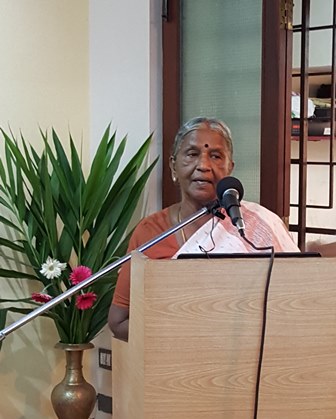
Dr. G. Natchiar, co-founder, Emeritus, Director Aravind Eye Hospital, Madurai, the chief guest, stressed upon the importance of the Vision and Mission of an organization. She not only spoke about the “Aravind Eye Model” but also shared with those present,the innovative HR policies of Aravind Eye Care. Dr. Natchiar highlighted the frugal aspect of her organization which enables it to continue to offer affordable eye care to people of India and bring about harmony in its operations. She detailed the steps taken to improve the productivity of doctors, thereby making the operations cost-effective and the institution becoming a role model for similar health care providers in other parts of the world.SACAR Harmony 1
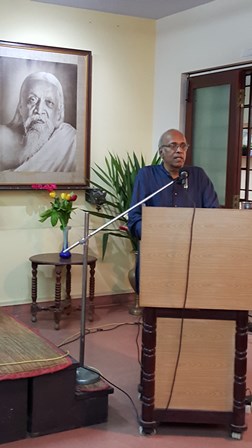
Dr. Ananda Reddy, the Director of SACAR, elaborated upon the four essential components of Harmony ― Collaboration, Goodwill, Benevolence and Tolerance. These alone enable organizations to work and progress smoothly. Management education in India needs to be re-engineered to impart training in these components as well, so as to make it more holistic and in tune with the times.SACAR Harmony 3

Mr. B. R. Babu, IAS, Secretary Welfare, Government of Puducherry, shared with the participants his experiences of bringing about industrial harmony in public sector undertakings. He highlighted the need for managers to take ownership of their tasks and fulfill those within the ambit of the law.SACAR Harmony 4
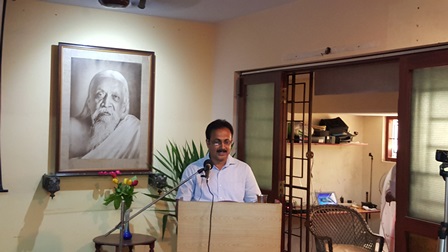
Prof. Sibnath Deb, Prof. of Psychology and Director Incharge of the Directorate of Distance Education, Pondicherry University, elaborated upon the psychological aspects of inter-personal relationships which alone contribute towards bringing about harmony and happiness in one’s personal life.SACAR Harmony 5

Yours truly spoke about ways of establishing harmony at work. I touched upon the manner in which challenges faced by managers from customers, suppliers, personnel, superiors, peers and subordinates could be successfully met.SACAR Harmony 6

Mr. Ganesh Babu, Director of “Winning Minds”, emphasized the importance of harmonizing oneself first. He stressed upon the fact that performance of CEOs is evaluated based on not only the results they achieve but also the quality of relationships they have with other stakeholders in their organizations.SACAR Harmony 7

Ms. Uma Prajapati, Director of Upasana, Auroville, spoke of the inner call of a professional designer and the satisfaction gained when serving the community around a business. She highlighted her singular achievement of creating Tsunamika, a tiny doll, which brought about a positive change in the lives of women affected by the 2004 tsunami.

Prof. Kisholoy Gupta conducted an interactive group discussion which led the participants to articulate their major takeaways from the day-long event and also imparted the value of appreciating others.SACAR Harmony 8
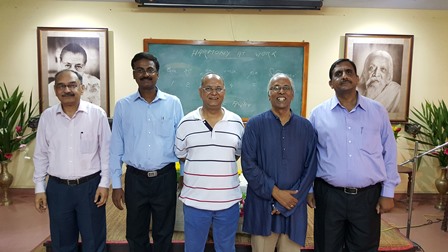
Dr. Arvind Gupta, Assistant Director, Directorate of Distance Education, Pondicherry University, coordinated the entire event. His back up support was invaluable in the planning as well as the hosting of the entire event.

Dr.Shruti Bidwaikar, Assistant Director, SACAR, summed up the proceedings and offered a vote of thanks.

The seminar received an overwhelming response from participants coming from various walks of life, like government officials, management educationists, corporate executives, businessmen, Aurovillians, entrepreneurs and students.

The Integral Management Group of SACAR had already covered the facet of Perfection during September 2015. The next event, focusing on the facet of Power, is planned to be hosted during August, 2016.

(http://www.bienveillance-entreprise.fr/entreprise-2/la-bienveillance-ou-lharmonie-dans-le-management-chez-les-dirigeants-indiens)

(Press coverage by The Hindu:

http://googleweblight.com/?lite_url=http://www.thehindu.com/news/cities/puducherry/harmony-in-management-builds-a-successful-team/article8408054.ece&ei=o_mBYHhC&lc=en-IN&s=1&m=225&host=www.google.co.in&ts=1459225799&sig=APY536zzDjXkqVeszf8Ya9EQqwJnWp7JFg)

(Related Posts:

https://ashokbhatia.wordpress.com/2015/10/06/managerial-perfection-notes-from-a-seminar-at-pondicherry-india

https://ashokbhatia.wordpress.com/2015/03/17/an-inner-approach-to-leadership-and-management-note-on-a-seminar)

Amongst the kinds of CEOs we have reviewed so far elsewhere, this kind happens to belong to a very rare species in the private sector. However, many public sector outfits, government departments and political outfits owing allegiance to some outdated doctrines could boast of a significant number of CEOs of this genre.

Concern for Output or for results is not their priority. Concern for People is their primary concern. Concern for Ethics is also uppermost in their minds. In terms of an upgraded Blake Mouton Grid, they rank at 1,9,9.X Y Z upgraded

Trade unions of all hues simply love them. Managements dread and despise them. To face an ardent believer who pounds his fists onto teak wood tables of conference rooms and demands strict compliance with labour and industrial laws of all kinds is a prospect which owners bestowed with nerves of chilled steel wish to avoid.

Those who happen to have an uncompromising attitude could willy-nilly end up damaging the very cause they wish to champion. Their vision about welfare of people is always myopic.

Few enlightened ones amongst this tribe care about norms of welfare in a more pragmatic fashion. They understand the need to move along with the times and have a healthy regard for the norms of productivity as well. They collaborate with managements in adopting newer technologies. They hammer out detailed re-skilling plans so their people can embrace change for the overall good of the organization.

Managements which are conscious of the disruptive change being brought about by Artificial Intelligence and Robotics could use such CEOs with great alacrity. Their utility lies in their pro-people attitude and their incorruptibility.

Note: Inputs from Ms Somali K Chakrabarti are gratefully acknowledged. She can be found at Scribble and Scrawl (https://prepforum.wordpress.com)

(Related Posts:

https://ashokbhatia.wordpress.com/2015/12/24/looking-for-ceos-inspired-by-the-yuletide-spirit

https://ashokbhatia.wordpress.com/2016/01/07/ceos-who-happen-to-be-charmless-charlies

https://ashokbhatia.wordpress.com/2016/01/14/ceos-who-end-up-becoming-road-rollers

https://ashokbhatia.wordpress.com/2016/01/22/the-sponge-comforter-ceos

https://ashokbhatia.wordpress.com/2016/01/28/ceos-who-are-arsonist-achievers

https://ashokbhatia.wordpress.com/2016/02/04/the-missionary-zealot-ceos

https://ashokbhatia.wordpress.com/2016/02/19/ceos-who-happen-to-be-crazy-conformists)

PGWodehouseWhen the chips are down, many amongst us turn to that eternal source of unalloyed bliss and a fountain-head of inspiration: the works of P G Wodehouse!

Reblogged on WordPress.com

Source: Wodehouse to the rescue again

As the 40th anniversary get together of the UBS batch of 1976 winds up at Panjab University located at Chandigarh today, it is time to refresh our umbilical cord with the Alma Mater!

ashokbhatia's avatarashokbhatia

       In our child-like innocence, we worshipped in you the light beautiful,

You goaded us, disciplined us, making us learn things awesome and wonderful;

Admiring and amazed, we were like wet clay in the hands of expert potters,

Clinging to you for mind’s nourishment and support, like your very own sons and daughters.

Part of 1969 batch, Central School, Mathura (UP) Part of 1969 batch, Central School, Mathura (UP)


In our coming of age phase, you taught us to enjoy our freedom with responsibility,

Made us crunch complicated aphorisms and equations, keeping up our mental agility;

You had a tireless step so difficult to keep up with, our nature weary of concepts too great,

Prisoners of our human limitations, searching for livelihood, theoretical equations we did hate.

1974 batch, Delhi University, Department of Physics 1974 batch, Delhi University, Department of Physics


As we blossomed further, we found you to be friends, philosophers and guides,

At times we misbehaved but you continued exhorting us…

View original post 171 more words

Yet another International Women’s Day might have passed on, but issues about the objectification of women in Bollywood movies remain.

ashokbhatia's avatarashokbhatia

Sixteen Shades of the Bollywood Eve

(Continued from Part 1)

  • ·         The Avenger

She is the one with a resilient spirit. She takes up an issue and brings it to a logical conclusion.movies nadira

Nadira started this trend in Hunterwaali(The Lady with a Whip) way back in 1935. Several others followed.Hema Malini played a role with negative shades in Laal Patthar(Red Stone, 1971). Rekha extracted a revenge in Khoon Bhari Maang (The Blood-filled Hair Parting, 1988). In Insaaf Ka Tarazu(Scale of Justice, 1980), Zeenat Amaan took a serial rapist to court. Mirch Masala(Spices, 1987) depicted a fiery Smita Patil who resists the amorous advances of a village headman. Zakhmi Aurat(Wounded Woman, 1988), had Dimple Kapadia avenging her rape by means of castrating the perpetrators of the crime.

Damini(Lightning, 1993) raised the issues involved in bringing a rapist to justice. In Bandit…

View original post 2,822 more words

ashokbhatia's avatarashokbhatia

Recently, a friend asked me what I thought of Katrina Kaif’s character in the just released Dhoom-3movies katrina(The Blast-3, 2013). Even at the risk of offending some of you, I confess I found it full of chutzpah and oomph but, alas, hollow otherwise. From this perspective, the script of Dhoom-2 perhaps etched the characters played by Aishwarya Rai and Bipasha Basu in somewhat greater detail.

This led me to think of the kaleidoscope of movies churned out by Bollywood and the wide spectrum of roles written for and played by women. It is also interesting to see how their roles have evolved over the past few decades, much in tune with two inter-related trends in the Indian society – a deeply patriotic fervor giving way to the rise of consumerism, and the outlook changing from a society-centric one to an individual-centric one. The first one has to do with…

View original post 2,365 more words

On the occasion of Women’s Day, here is a post which salutes some of those who have broken through the so-called glass ceiling in the management world!

ashokbhatia's avatarashokbhatia

When a finer member of our species becomes the part of an all-men group, the results are obvious – better focus on the job at hand, a far more effective team, higher levels of decency and a groundswell of chivalrous overtures.

Chamaiporn Uerpairojkit Chamaiporn Uerpairojkit

Better still, if she happens to be a CEO, we have a boardroom which is painted a deeper shade of pink, thereby driving away the boredom from the drab proceedings. We also have a crackling company which is more result-oriented and has better empathy while dealing with diverse stakeholders. We are also likely to get a greener and cleaner business entity which believes in corporate ethics and good governance.

In the Pink of Health

Several studies done in far-flung countries such as USA, France and Vietnam have shown that companies led by women deliver better financial results. A McKinsey study compared the top-quartile of companies in terms…

View original post 2,222 more words

Often, we get to see men portraying women in Bollywood movies. In the distant past, social compulsions led to such cases. In the recent past, such cases have proliferated based on the need to amuse the masses. Some were essayed in an artistic manner. Many others were crude attempts at entertaining the front benches in movie halls.

Here is an interesting post on the subject.

findshars's avatarMy Views On Bollywood

By Sharada Iyer   The heroine of Raja Harishchandra, the first full-length feature film of Indian Cinema, was a male actor Anna Salunke cast in the role of Queen Taramati. Acting was a profession …

Source: BOLLYWOOD’S ‘DRAG QUEEN’ ACTS

View original post

Surviving in the Corporate Jungle

BookFrontCover

This is in continuation of two earlier posts, providing a short introduction to a book by yours truly. The Portugese version of the book is getting launched in Portugal shortly.

The launch event  in Porto is planned on the 2nd of March, along with a talk on “Work Life Harmony” at the  Catolica Porto Business School  of  Universidade Catolica do Porto.

The launch event in Lisbon is planned at Universidade Europeia on the 3rd of March, 2016, as part of an event titled ‘Passport to India.’

What is the book about?

This book is a compilation of some tactics you can use to not only survive but also do well in the corporate jungle. It is intended to amuse, entertain, and educate. It is a light-hearted take on the art and science of management, from the jaundiced perspective of someone who is still learning it!

It offers quite a few gems of wisdom meant for managers and entrepreneurs of all hues, sizes, and shapes. They could be the aspiring kind, the practising and the tired kind, or the retired kind.

Glum Chief Executive Officers, hassled by the harsh slings and arrows of managing a business, upon leafing through some of its contents, might get motivated to look at the sunnier side of life.

Nail-biting aspiring managers may understand how to successfully navigate their way through the corporate jungle.

Entrepreneurs, whether of a social or an unsocial kind, could find some clue on getting out of the blunder-prone world they frequently find themselves in.

We live in exciting times. An information overload saps managers’ energies faster than the time it takes to gulp down a cup of their favourite tissue restorative. Thanks to rapid strides in technology, newer challenges keep popping up in all areas of management.

The rigors of corporate governance keep snapping at the Chief Executive Officer’s heels at a much faster pace. Issues of gender diversity keep giving Human Resource honchos sleepless nights. Hapless managements, pre-occupied as they are with their aim of delivering better value to their stakeholders quarter after quarter, continue to miss the woods for the trees.

How does one retain one’s sanity in such challenging times? Surviving in the Corporate Jungle (A Backpacker’s Guide) is an endeavour to present to you some basic secrets and techniques of managing a business successfully and happily. You will pick up some aphorisms, some in-depth analyses, and some tongue in cheek comments.

The format of the book is that of a ready reckoner, with topics arranged in alphabetical order. Each topic gets covered in a short and crisp write up. Each topic gets a page all its own, thereby making the book easy on your already frayed nerves.

About Liberty Seguros, S. A.

Liberty Seguros has over eight decades of experience in the insurance business. They rely on the dedication of each one of our 510 employees to find the best protection solutions for Portuguese households, individuals and for micro, small and medium-sized companies.

The company has 31 business offices, called Espaços Liberty Seguros, and 7 branch offices distributed across the whole of Portugal, that give support to the insurance agents, their strategic allies, through whom they offer a broad range of products and services designed to ensure their customers enjoy safer, better protected lives.

Liberty Seguros is governed by values of Solidarity, Team Spirit, Dedication, Work Commitment and Responsibility to the Community.

Introducing Vida Economica, the book publishers

Vida Economica is the best source of information for Portuguese companies and professionals. They have an experience of more than 80 years on delivering news that their readers can use. Vida Economica is the first business weekly in Portugal.

Their activities include special interest magazines covering most important subjects for business as books. Their book portofolio has more than 300 titles with some of the best-sellers on economy and management.

Statutory Warning

This book does not guarantee solving any of your problems. Yes, it could help you to gain a fresh perspective on the challenges you face in your career.

Mandatory Declaration

No animals were harmed during the writing of this book.

You can buy the book here

(Related Posts:
https://ashokbhatia.wordpress.com/2016/02/26/the-book-como-sobreviver-na-selva-empresarial-guia-pratico
https://ashokbhatia.wordpress.com/2016/02/28/the-book-como-sobreviver-na-selva-empresarial-guia-pratico-2-0)

Surviving in the Corporate Jungle
BookFrontCover

This is in continuation of an earlier post, providing a short introduction to a book by yours truly. The Portugese version of the book is getting launched in Portugal shortly.
The launch event  in Porto is planned on the 2nd of March, along with a talk on “Work Life Harmony” at the  Catolica Porto Business School  of  Universidade Catolica do Porto.
The launch event in Lisbon is planned at Universidade Europeia on the 3rd of March, 2016, as part of an event titled ‘Passport to India.’

Why the reference to a jungle?

One, it is fashionable these days to talk about environment and sustainability. Two, in many ways, the type of organizations we work in and the kind of people we meet there, many parallels can be drawn.

I believe there are three kinds of organizations: the Circus kind, the Zoo kind and the Jungle kind.

Whatever the kind you work for, you get to see Lion King bosses who are the lords and masters of all they survey. Mentors who keep an eye on the quality of work that you do, much like a giraffe would.

Colleagues who are like enchanting deers, always willing to support you. Subordinates who are snakes in the grass, waiting for an opportunity to back-stab you. Customers who are as prickly as a porcupine. Suppliers who are as cunning as a fox.

Fed up with a company? Change over to another one. You would still find people there with similar traits. Only the names and the faces would change. In other words, there is no escaping the jungle!

Some bouquets

Those who deserve bouquets for what they have unwittingly contributed towards the conception as well as the delivery of this book:

My friends, philosophers and guides: They continued to egg me on to write a book of this kind – late Prof. S. P. Singh, Ashok Kalra, S. P. Krishnamurthy, Vipin Dewan, C. S. Dwivedi, Prof. R. P. Raya, and a few others.

Thought leaders, like Peter F. Drucker, Philip Kotler, J. R. D. Tata, C. Northcote Parkinson, Laurence J. Peter, Ratan Tata, Sharu Rangnekar, Stephen R. Covey and many others.

Hapless souls who have undergone the trauma of going through and commenting upon the rough portions of this book: Miguel Dias, Founder, CEO World, Jose Antonio de Sousa, President & CEO, Liberty Seguros, Jack Jacoby, Executive Chairman, Jacoby Consulting Group Pty Ltd, and a few others.

Those who have worked so very hard on the illustrations – thereby making the book a wee bit livelier.

Vida Economica, the publishers, who showed the courage to pick up a whacky manuscript from an unknown first-time author.

Quite a few others who have burnt the midnight oil, acted as proficient midwives and taken me through the labour pains of the editing and publishing process, ensuring that the baby got delivered.

The souls which play the role of my immediate family members in this life, without whose support this book would not have seen the light of the day.

Special thanks are due to my soul-mate and the very young ones, without whose support the book could have been finished in half the time it actually took to write.

Few brickbats

If any brickbats are to be hurled, those have to be unerringly directed at the author of the book. However, before flexing your muscles, please be so kind as to check if he is covered for such exigencies by any insurance policy issued by Liberty Seguros.

You can buy the book here.

(Related Post:
https://ashokbhatia.wordpress.com/2016/02/26/the-book-como-sobreviver-na-selva-empresarial-guia-pratico)