Feeds:
Posts
Comments

Many amongst us chug along in life somewhat dissatisfied with our life partners. A neighbour’s wife always looks smarter. A friend’s husband sounds more dashing and practical. Our own spouse invariably sounds duller and listless in comparison. We are never quite satisfied with what we have. We often yearn for what we do not have.

What do we expect from a soul-mate? An unqualified acceptance by the party of the other part, perhaps? A companionship which comforts and soothes? A fulfillment of some of our basic needs?

At a deeper level, the illusory search for a perfect soul-mate, The One, begins with a realization that we cannot become more perfect all by ourselves. We need another person’s help to chisel ourselves better. To do so, we search for a person who is perfect in more ways than one.

Some Bollywood movies have dealt with this aspect of our relationships in a poignant manner. Here is a quick recapitulation of some such offerings which come to one’s mind.

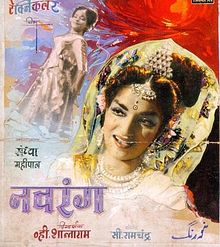
Navrang

Movie Navrang(1959, V. Shantaram)

A poet struggling for recognition starts fantasizing about a dancing diva cast in the mould of his own wife. Whereas the wife is busy with mundane affairs of life, the poet is happy to remain in an imaginary world inhabited by the make-believe seductress. The harsh slings and arrows of life eventually make him realize his folly and accept his wife whole-heartedly.

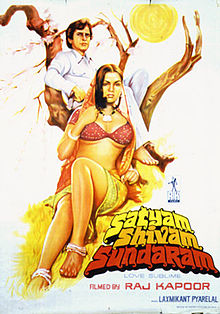
Satyam Shivam Sundaram

Movie Satyam_Shivam_Sundaram(1978, Raj Kapoor)

A young engineer who abhors ugliness falls in love with a vivacious young woman whose face is partially scarred. Besotted by her mellifluous voice and religiosity, he does not notice her facial disfigurement and marries her. Rejected by her husband, the woman keeps meeting him at nights, making him believe that he is spending time with a mistress instead. Eventually, events make him realize his folly. He gives up his shallow perception of beauty and understands the value of inner beauty in life.

Maya Memsaab

Movie Maya_Memsaab(1993, Ketan Mehta)

Based on Gustave Flaubert’s ‘Madame Bovary’, the film captures the quest of a perfect mate by a young, beautiful and intelligent woman. After a failed marriage with a busy doctor, affairs follow. Her search for The One remains elusive. She remains dissatisfied and eventually dies.

Rab Ne Bana Di Jodi

Movie Rab_Ne_Bana_Di_Jodi(2008, Aditya Chopra)

A diffident and introverted male ends up marrying a beautiful and vivacious young woman who claims her inability to love him. She loves the dashing heroes of Bollywood and enters a dancing competition, where she runs into a breezy character who is none other than her husband, duly remodeled by a friend of his. Romance blossoms. Eventually, she realizes the value of true love that her otherwise boring husband possesses for her.

7 Khoon Maaf

pondy movie 7 Khoon Maaf_poster_ver1(2011, Vishal Bhardwaj)

The film narrates the story of an Anglo-Indian woman who murders her seven husbands in an unending quest for love. Eventually, she finds true love and solace in Jesus – at Pondicherry. It is based on a short story by Ruskin Bond: “Susanna’s Seven Husbands”.

All these movies portray an important facet of life. Our quest for The One is all about the search for our own true self. The desire to search for a mate is not about finding the right person. It is about becoming the right person.

A perfect spouse cannot make us complete. He/she can only help us in discovering ourselves and in becoming the right person. The partners only supplement each other’s strengths and weaknesses and tackle the challenges of life together, as a team.

This realization is a humble new beginning and a part of our own process of perfection; our evolution to a higher plane of consciousness.

PS: If you liked this post, you may perhaps also like https://ashokbhatia.wordpress.com/2014/02/13/a-mature-shade-of-love-in-movies.

“First Crush”

Can we ever forget our First Crush?
Here is an interesting post from the Nomadic Adventurer.

Expedition Nomadic Adventurer's avatarExpedition Nomadic Adventures

In response to The Daily Post’s writing prompt: “First Crush.”

Who was your first childhood crush? What would you say to that person if you saw him/her again?

67e641507b09e4b9cab946aa8264e8d2

With a smile on my face, I recall those teenage years of wandering aimlessly with thoughts of a girl on my mind. I was too afraid to ask her out, so my dreams of dates to the movies, and football game parties never took place. I just walked around longing and dreaming.

My mother identified my condition as “Baby Bloomer Blues.” my friends called it a crush, I called it love.

Many years later I was able to tell the now woman of my crush I held for her during high school. We both laughed, and she explained she was never aware I was interested in her, but would have dated me if asked. After twenty-plus years, my heart skipped a beat…

View original post 212 more words

Wanted: A God of Internet

Can we identify a God who can be beseeched to preside over our Internet-ional GaneshaAffairs?

In Hinduism, for example, we are exposed to a mind-boggling variety of divine manifestations. Down the long corridors of time, since the dawn of history, the Hindu pantheon has evolved with a multitude of deities.

The deities offer an eclectic mix – some are highly specialized whereas others are all-purpose ones. Some are removers of any obstacles that a seeker may face in life. Some grant better learning abilities and wisdom. Some bestow immense wealth and prosperity. Then we have the generalist trinity – one is said to have crafted the creation, one runs it smoothly like a true blue CEO while another destroys and reconstructs. The latter two intervene in human affairs as and when they deem it necessary.Ravi_Varma-Lakshmi

In fact, there is no sphere of life which has not been touched by some Hindu God or the other. However, we are clueless as to who holds the portfolio of Internet Affairs. Someone, who ensures that irrespective of what happens, we always have connectivity. So, we do not suffer from frequent pangs of Noconnphobia (NoConnectivity-Phobia).

A deity for our Internet-ional Affairs

Without Internet, we are left utterly clueless. We are cut off from civilization. It is as if we are deprived of oxygen. A God who ensures that we have uninterrupted and seamless connectivity shall obviously earn our absolute devotion. Grand temples set up to commemorate him would get built, thereby boosting employment prospects and facilitating the use of black money which can surely do with a ‘fair-and-lovely’ treatment at the earliest. The largest temple thus built could even host a Root Server in a basementinternet image 1Garbh Griha’ (the sanctum sanctorum)!

The high priests appointed to take care of the Internet deity on a day-to-day basis would ensure a steady flow of hefty donations to all its temples. Governments world over shall pitch in with liberal grants. Since the only interest of all governments would be to govern better, global harmony would prevail.

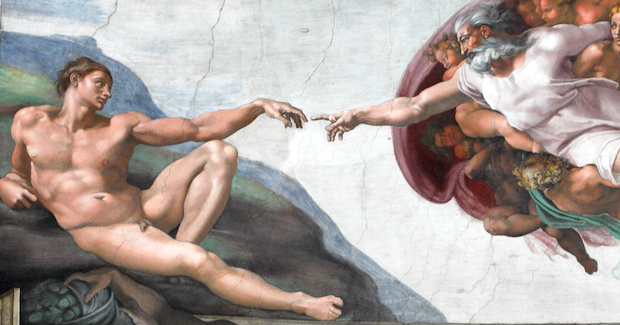
A new form of democratic capitalism would come in vogue. Benefits of growth shall be made to trickle down to the poorest of the poor. Reservations and quotas, if any, shall be linked to economic criteria and not to political vote banks determined by caste, creed, sex or religion. Terrorism would get banished. Peace would reign.Sistine-Chapel-God-and-Adam

Of checks and balances

A crack team of tech-savvy consorts of the deity would ensure that the principles of Net Neutrality get honoured; also, that hackers are no longer able to hack. Strict norms of privacy shall be stipulated and followed. With privacy assured, denizens of all countries would breathe easy. This would avoid a repeat of the Ashley Madison episode. Matrimonial harmony shall be a norm rather than an exception. Divorce rates would plummet. Children, whether born out of wedlock or otherwise, would be happier.

One of the Key Result Areas of the concerned deity shall be to manage affairs in such a way that the evolution of Internet never spins out of control. If ever Internet assumes a consciousness of its own, the role of the deity itself shall get subjugated by a higher power. Our civilization shall end up becoming a highly centralized system where all aspects of our lives get controlled. Homo sapiens would then run the risk of becoming truer slaves to technology. Values of fraternity, freedom and liberty shall get obliterated.

Who could possibly play this role?Hanuman_painted_by_Pahari_Painter

Are there gods in the Hindu pantheon who could handle a challenge of this magnitude?

One choice could be that of Lord Hanuman. After all, he is the son of the God of Air (Pavan Putra). He has sterling qualities of head and heart. He is a great executor. Whatever task is entrusted to him, it gets done without a glitch. All we have to do to appease him is to invoke the name of Lord Rama.

The other possibility is that of Lord Shiva; in particular, his form which represents ‘Ether’, one of the five elements of the universe. Aided by his wife, Goddess Parvati, and his two illustrious sons, we shall have the advantage of the whole family pitching in to take care of the Divine Ministry of Internet Affairs.

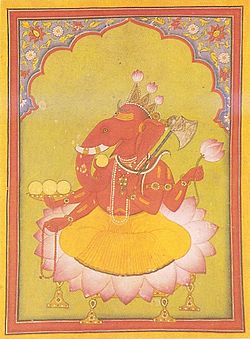
Yet another contender for this crucial portfolio could be Lord Ganesha. Given His expertise in removing obstacles,Shiva interruptions in connectivity would soon become a thing of the past. As the technology evolves, He would ensure that its progress is free of any disruptions. He is a patron of arts, sciences, intellect and wisdom – realms which are served by Internet. Mice, who fulfill His transportation needs, would refrain from biting any cables which might be carrying bits and bytes for our denizens.

However, all these options present some difficulties.

Lord Hanuman may not like to get involved because of His vow of celibacy. If He does consent, but insists on obnoxious things like Internet porn getting banished, many of His followers may be left in a torment.Ganesha_Basohli_miniature

As to Lord Shiva, He does not tolerate dissent in any form, whereas Internet is all about accommodating opposing viewpoints on any subject under the sun. Were He to ever decide to turn his Third Eye on a Twitteratti dissenter like Kama Deva, even if it is on Skype or Viber, the latter would run the grave risk of turning into ashes. An action of this kind could fuel a global uprising, thereby defeating our basic objective of attaining global peace and harmony through Internet.

With Lord Ganesha, the difficulty lies in the fact that He is to be worshipped before the commencement of a new project. An attempt to invoke His blessings belatedly might simply end up offending Him. One shudders to think of a prospect of that nature.

Are there any other candidates for the top job?Krishna_holding_flute

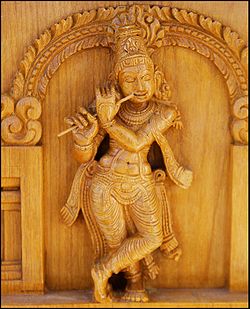
Let us also consider the candidature of Lord Krishna. His is a multi-faceted personality. Romance, which flourishes on Internet, comes to Him naturally. Those searching for soul-mates would breathe easy. Devising strategy and tactics is an area He excels in. Under His care, growth of Internet would continue unabated.

Those who indulge in hacking would fear swift retribution at His hands, much like the demons which were vanquished due to His timely interventions. Data security would no longer be a cause for concern. Moreover, He has already assured us in Bhagavad Gita that He will come whenever we face a problem. So, we already have an advance performance guarantee.

How about some gender parity?

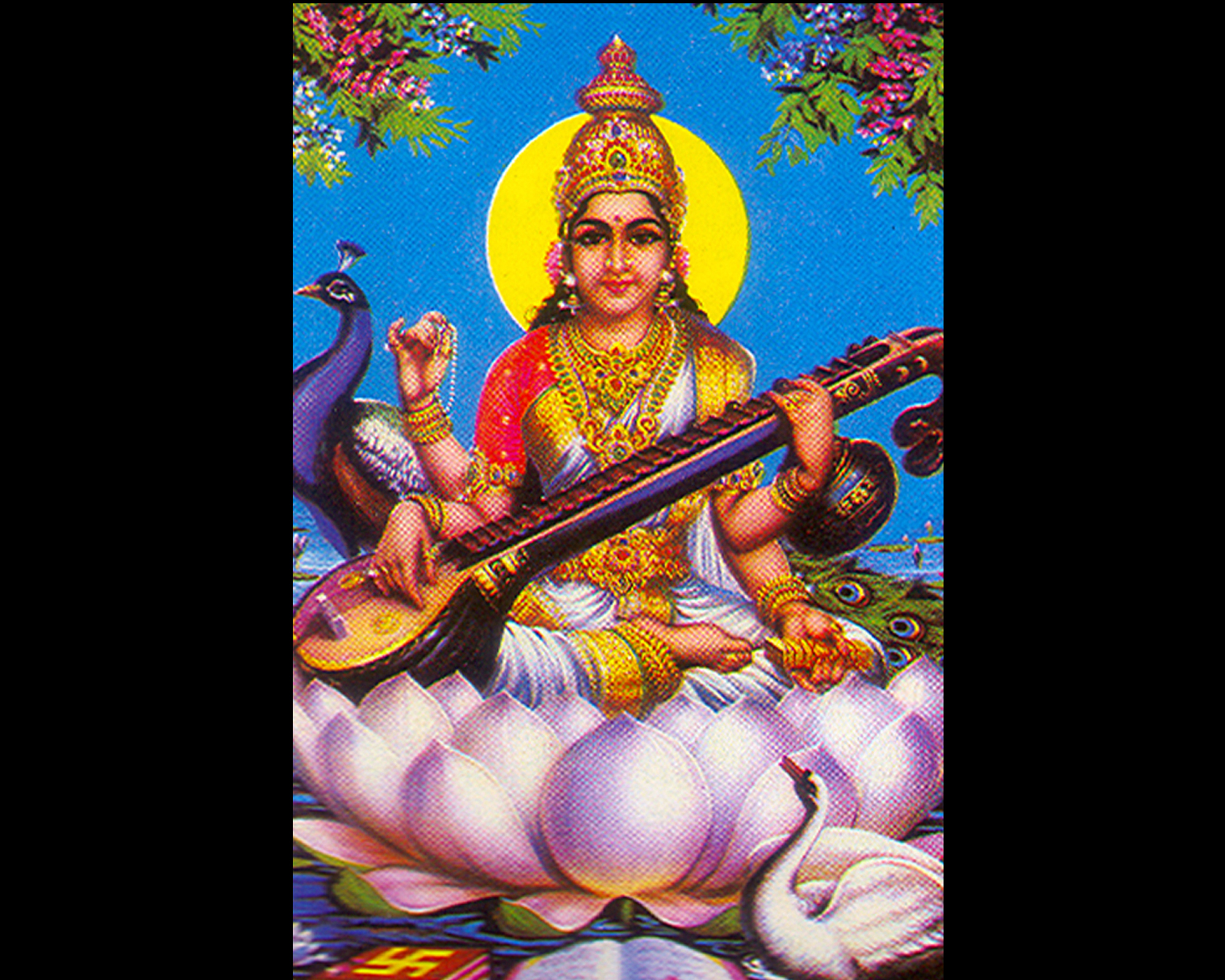
Hard-core feminists amongst us might wonder as to why none of our delicately nurtured goddesses can get considered for this coveted slot. Those running their e-commerce businesses would vote for Goddess Lakshmi. Those who disseminate knowledge using the world-wide-web shall be rooting for Goddess Saraswati.Saraswati 

Well, our innate sense of chivalry restrains us. The presence of pornographic content holds us back.

The time has come

The mind boggles to think of the consequences of a continued absence of a deity specifically assigned to take care of such net-ty issues. Our denizens shall continue to surf on narrow-band which smart companies would keep projecting as broad-band. Our Smart City plans would come unstuck. Our children shall remain deprived of knowledge and information.

The common man would continue to slip on the ladder of affordable connectivity and only get dumb and dumber. The noble cause of women’s emancipation and empowerment would receive a setback. Politicos and bureaucrats shall continue to twiddle their thumbs trying to figure out how to deliver results. Even the future of several governments could come under a cloud, obviously not of an e-kind.

Now is the time for our religious leaders and intellectuals to come to the aid of the common man. Those who follow different faiths around the world need to come up with brighter ideas as to who could handle this crucial portfolio for us.

Prompt steps need to be taken through the proper channels to identify and declare an appropriate deity to take care of Internet-ional issues.

This brooks no delay whatsoever.

(Note: Inputs from Captain Satish Pande are gratefully acknowledged)

TALAT_MAHMOOD

For those who continue to be enamoured of the velvet-like voice of the late Talat Mahmood, here is an article from Mr Raj Kanwar, an India-based author, freelance journalist and music lover.

His ‘quivering’ voice still a rage

One of Talat Mahmood’s most unforgettable songs is “Meri yaad mein tum na aansoo bahana,” rendered way back in 1951. Over the following two decades, Talat sang one hit ghazal after another and continued to cast a spell on legions of ghazal aficionados both in India and abroad.

Today 64 years later, the musicality and lyricism of these ghazals still haunt generations of his loyal fans.

However, it was not all hunky dory for Talat Mahmood as he had to compete with the likes of Mohammad Rafi, Kishore Kumar, Mukesh and Manna Dey.

It is, therefore, creditable that Talat was able to hold his own and remain the first choice for composers and lyricists alike when it came to singing ghazals for films.

Like many of his contemporaries, Talat too had his share of good luck. It took him little time in early the 1940s to establish himself as a ghazal singer of no mean merit in his hometown, Lucknow, with All India Radio becoming his launch pad. His first disc by HMV in 1941, “Sab Din Ek Samaan Nahin The” was hailed as a success. However, it was his next, “Tasveer Teri Dil Mera Behela Na Sakegi…” written by Faiyyaz Hashmi that turned out to be a chartbuster and brought him much accolade and national fame. Talat was just 16 then.
Talat Mahmood’s ghazals still find takers 17 years after his death. His death anniversary falls on May 9.

Calcutta – then the hub of both Hindi and Bengali movies – was his next destination. Taking on the pseudonym Tapan Kumar, Talat recorded numerous hit songs in Bengali. With his good looks, Talat also starred in three successful Bengali movies.

Bombay, however, was not so easy for Talat. He met one music director after another but they disapproved of the ‘quivering note’ or ‘kampan’ that characterised his voice. Though disappointed, Talat continued his rounds of music composers. His perseverance eventually paid off when he found an admiring mentor in the doyen Anil Biswas. Ironically, the very ‘kampan’ that other music directors had considered a flaw, fascinated Biswas no end. He had by then completed the music of ‘Arzoo.’ But so taken in was Biswas by that trademark quiver that he persuaded the director to add another song to the movie. The song was “Ae Dil Mujhe Aisi Jagha Le Chal Jahan Koi Na Ho…,” written by Majrooh Sultanpuri and picturised on Dilip Kumar. It became an instant rage.

Fortuitously, the Bombay film industry had by then become the Mecca for lyricists and poets such as Sahir Ludhyanvi, Majrooh Sultanpuri, Hasrat Jaipuri, Shakeel Badayuni, Mehdi Ali Khan, Kaifi Azmi and D.N. Madhok.

Their lyrics struck a chord with the listener and brought tears to his eyes when rendered in impeccable Urdu diction by Talat. No wonder then that some of these poets wrote lyrics specifically for Talat. Such was the magic of this Lucknow boy! And Khayyam always reserved a special place for Talat in his heart.

In a way, Talat’s first song “Ae Dil Mujhe..” in 1949, became the harbinger of the ghazal craze in the country, and Talat became the heart-throb of ghazal lovers.

Songs such as “Shaam e gham ki qasam..” (Footpath 1953), “Jayen to jayen kahan…” (Taxi Driver 1954), “Main dil hoon ek armaan bhara..” (Anhonee 1952), “Hain sabse madhur woh geet..” (Patita 1953), “Itna na mujhse tu pyar badha..” and “Aansoo samajh ke..” (Chhaya 1961) are timeless. These and many more such classics are still in demand, 17 years after his death, at music functions and soirees.

What further lent a sense of poignancy to many of Talat’s songs was their sensitive picturisations. “Jalte hain jiske liye..” (Sujata 1959), written by Majrooh Sultanpuri and set to music by S.D. Burman, is one such example. The song, picturised on Sunil Dutt and Nutan, was so tenderly done that it tugged at the heartstrings of those who watched the movie then.

Talat Mahmood sang 747 songs in 12 Indian languages and starred in 13 films thus becoming Hindi cinema’s biggest singing star next only to Kishore Kumar.

He also had the distinction of having sung duets with all the top female playback singers of his time. Not many will recalls easily but he sang with Shamshad Begum too, their duet “Milte hin aankhein dul dua” was a raging hit then.

Incidentally, he was the first Indian singer to have performed abroad when he visited East Africa in 1956. After that he toured several countries such as the U.S. and the U.K. His last tour abroad was to the Netherlands in 1991.

The ‘king of ghazal’ died on May 9, 1998.

Notes:

  1. The writer Mr Raj Kanwar can be reached at rkanwar_in@yahoo.co.uk.
  2. This article of his appeared in The Hindu of the 15th of May, 2015. Here is the link: http://www.thehindu.com/todays-paper/tp-features/tp-fridayreview/his-quivering-voice-still-a-rage/article7207045.ece.
  3. Permission from the author to re-publish it here is gratefully acknowledged.

One of the most arduous tasks a fan of P G Wodehouse can undertake is that of trying to prepare a list of her top five favourite works of the Master. The mind boggles. The heart flutters. The soul rebels.

Here is someone who has attempted the near-impossible and has come up with gratifying results.

zanyzigzag's avatarZanyzigzag's Blog

Greetings, dear readers! I have been away for almost the whole of August visiting family and friends back in the UK, so unfortunately I didn’t manage my usual monthly blogpost last month. Hopefully I can now get back on track with two posts in September.

I was thinking recently about my favourite Wodehouse books and decided to try and narrow my favourites down into a Top Five list. This includes two Jeeves books, one stand-alone, one Psmith book and the only full-length Ukridge book. I have not listed them in order of preference – that process would be too drawn-out and agonising – but I have composed a small summary for each one, detailing why I like that particular story and some of the stand-out moments in each book. I know this post will probably be much more interesting for my readers who also happen to be Wodehouse fans, however, I…

View original post 1,477 more words

Lord Krishna, whose birthday will be celebrated tomorrow, happens to be one of the most revered and liked gods of the Hindu pantheon. Looked at from a management point of view, he is a leader par excellence. He manages events and people in such a manner that the end result is eventually positive and leads to a greater good.

Here are some facets of his personality which might be instructive for managers at all levels.

A friendly demeanour

When a devotee plans to seek a straight forward favour, like when a much-awaited promotion is due and hard workKrishna_holding_flute has indeed been put in for the purpose, Lord Rama is often the more sought after religious figure. But when a devious request has to be made, say when praying for the transfer of a CEO who keeps disturbing one’s mental peace, the attention invariably turns to Lord Krishna. After all, he is our friend, with whom we can be frank and open!
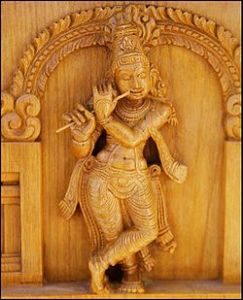
This is the kind of appeal Krishna has. The fact that he has been depicted as a playful child and teenager adds to his unique image. The manner in which he treats his friends like Arjuna and Sudama multiplies his allure as a great problem solver. His ready availability is his Unique Selling Proposition. This is a quality which many a manager would find good to imbibe.

Flexibility in Approach

When it becomes apparent that Jarasandh would not allow the kingdom of Mathura to enjoy uninterrupted peace as long as he and Balarama are there, Krishna does not hesitate to leave his comfort zone. In order to ensure that the denizens of the city remain safe, he decides to build a new capital at Dwarka and shift his operating headquarters there.

When market dynamics change, business leaders and their team members in FMCG companies do not hesitate to travel to the hinterland. This helps them to understand the customer psyche better, thereby improving their presence in diverse markets.

Examples abound of companies which did not keep pace with the changes in technology and the market place. They continue to remain alive in our memories only.

Accessibility

Whosoever happens to be facing a challenge can approach him. Whether it is Arjuna or Duryodhana, there is no hesitation in seeking his help. Yes, whether and how he decides to help depends on which side of ‘Dharma’ we happen to be on. Duryodhana gets the support of his entire army, whereas Arjuna ends up getting him as a personal charioteer.

The privilege of accessibility is granted even to those opposed to him. Sisupala has the liberty of abusing him publically. Admittedly, he has a quota which, when exceeded, results into his death.

True blue leaders are invariably accessible to their team members. When a sudden challenge pops up, anyone can reach out to them and seek guidance.

Adherence to ‘Dharma’ (Righteousness)

The values inherent in a corporate policy, the vision for the company, the mission of the organization – theseMahabharat Disrobing_of_Draupadi constitute the ‘Dharma’ of all leaders, CEOs and managers.
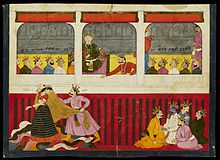
When Krishna gets invited to the palace of Duryodhana for a rich feast, he declines. Instead, he prefers to have simple food at Vidura’s place. When Draupadi gets disrobed in King Dhritarashtra’s court, he manages to protect her honour. When a war becomes inevitable, he sides with the Pandavas. Invariably, he sides with those who follow the path of righteousness.

Strategy and Vision

In a careful reading of the major turning events in the whole narrative of Mahabharata, Krishna emerges as an eminent strategist. He keeps Draupadi’s frustration under check. He knows that Kauravas would never agree to let Pandavas have their share of the kingdom in a peaceful manner. Yet, he himself goes to plead their cause so that peace is given a last chance.

In the battle that ensues, he virtually leads the 7 divisions of Pandavas’ army to a decisive win against the 11 divisions of Kauravas’ army.

All mighty warriors on the Kauaravas’ side fall with specific inputs from Krishna. In case of Bhishma, Arjuna attacks him standing behind Shikhandi. Dronacharya is misled to believe that his son Ashwatthama has fallen. When Duryodhana appears to be invincible in his mace fight with Bhima, Krishna gestures to the latter to hit the former below the navel, thereby incapacitating him. When Balarama gets upset with Bhima for having broken a cardinal principle in his final fight with Duryodhana, Krishna intervenes to pacify him by reminding him of the several injustices perpetrated by the Kauravas on Pandavas.

Detachment

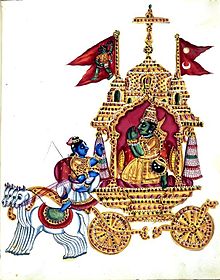
The manner in which Krishna persuades a demoralized Arjuna to take up his arms by enunciating the basic principles Mahabharat Krishna Arjunaof life in the Bhagavad Gita is exemplary. The gospel of devotion to duty, without attachment or desire of reward, continues to show the way of life to all those who seek light in the dark problems of life.

Krishna not only preaches but also practices detachment. Consider the manner in which he decides to leave his home and hearth in Gokul and Vrindaban. To him, the call of duty, of restoring the kingdom of Mathura to King Ugrasena, a just and righteous monarch dethroned and imprisoned by his own son, Kansa, is supreme. The fact that Kansa happens to be his maternal uncle does not stand in the way of Krishna killing him to achieve his goal.

He does not entertain the thought of ruling over Mathura himself. He believes that in order to be a competent ruler, he first needs to complete his study of the Vedas, achieve proficiency in warfare and understand the nuances of governance.

What does a CEO do when business conditions warrant a manufacturing unit to be shut down, even though he himself had painstakingly set it up two decades back? What does a manager do when a much-liked junior commits an act of impropriety and has to be asked to leave the company? Or, when a plum assignment has to be given up due to compelling personal reasons? A sense of detachment comes in handy in all such situations. The higher the level of detachment, the more objective the decision is likely to be.

Unstinted Support

When Abhimanyu gets killed on the battle field, a grief-stricken Arjuna vows to slay the warrior responsible – Jayadratha – by next sunset, or end his own life. Krishna manages to save Arjuna’s honour, bringing much relief to the Pandavas.

To those who remain committed and loyal to them, leaders provide unstinted support.Krishna

The Many Masks

Krishna does not hesitate to reveal himself in his entirety in the midst of the battlefield. Arjuna is petrified to see the ‘Vishwa Roopa’ of someone he considers to be a close friend.

Leaders also wear several masks. They could be polite and gentle. They could be loving and compassionate. But if the situation demands it, they could also invoke dread and fear amongst their team members. Just like Krishna, they possess a multi-faceted personality.

The Inner Voice

One of the basic concepts enunciated by Krishna in the Bhagavad Gita is that of the everlasting nature of the soul. The concept of a soul now finds a resonance even in modern management literature. In ‘The 8th Habit’, Stephen Covey urges professionals to pay heed to their ‘inner voice’. While proposing the whole person paradigm, he speaks of the four dimensions of a person – spirit, body, heart and mind.

Intuition

Once the war gets over and all his sons have got killed, Dhritarashtra attempts to kill Bhima by crushing him in a close embrace. Krishna is able to read his mind and deftly pushes across a metal statue instead, thereby saving Bhima’s life.

Smart managers go beyond ‘analysis paralysis.’ They do use information, but they also rely on their intuition. A more balanced decision-making comes about.

Tenacity and Perseverance

When the disappearance of a valuable gem, the ‘syamantak mani’, is attributed to Krishna, he does not wallow in self-pity. With a chin-up attitude, he keeps working on the problem till the time it becomes clear that his conduct is as pure as the driven snow.

CEOs with a tenacity of purpose build up a unique team of followers. Perseverance is ingrained in their character. To give up does not come easily to them.

A Global MindsetMahabharat Draupadi_and_Pandavas

Personally, Krishna has little to gain from the great war. All his actions are directed towards the overall benefit of the society. Once Yudhishtira assumes the charge of the entire kingdom, peace prevails and development comes about.

Great business leaders share the same quality with Krishna. They try to give back to society in more ways than one. Sustainable business practices ensure that their companies’ operations do not cause irreparable damage to the eco-system.

Leading from Behind

Unlike Lord Rama, who leads an army from the front, Lord Krishna leads it from behind. The former leads an army of monkeys. The latter leads an army of illustrious people. Each one has great prowess, expertise and self-mastery. He also gets to handle people who are more shrewd and cunning.

In the initial phases of industrial revolution, when manufacturing was the primary activity, most of the leaders had to lead their teams from the front. In the services sector, as also in the emerging knowledge economy, leaders mostly manage from behind.

Depending upon the situation at hand, leaders switch from one mode to another. The style also varies from person to person.

A Tryst with Adversity

Krishna lives a unique life which is full of adverse circumstances. He is born in captivity. He is separated with hisKrishna birth parents immediately after his birth. Even as a child, he manages to survive attempts on his life. He leaves his foster home, never to return. He leaves the city of his birth and relocates to a far off place. He continues to be busy solving other’s problems throughout life. His whole clan gets destroyed in a bitter fight between its own members.

At no stage do we find Krishna blaming his circumstances. He is self-assured. He is confident. He is clear on what he wants to achieve. His methods may be rough at times, but they deliver.

Sure enough, like many a business leader, he pays a heavy price for upholding righteousness. With little time for family and children, the progeny is destined to remain unsung.

Tough situations bring out the best within managers. Life strives to chisel their character into a fine shape, much like a finely carved statue which is much admired by those who view it from the outside. Few realize the pain, suffering and sacrifice that the stone has undergone to achieve that exalted beauty and that state of perfection.Krishna_Arjuna_Gita
Krishna – A Spiritual Leader

Much like a business leader of modern times, Krishna displays vision, flexibility in approach, resourcefulness and an excellent capacity to command. The authority that he exercises over others is born more out of love and concern, not fear. He is the trouble-shooter par excellence who leads, inspires, guides and motivates. He sets a fine example for business leaders and managers to emulate.

Krishna is a role model for spiritually inclined leaders and managers. He demonstrates that being spiritual does not necessarily mean being soft. It only implies that one’s decisions and actions are rooted in stark pragmatism, backed by sound values and propelled by a desire to achieve the greater good.

(Related posts:

  1. https://ashokbhatia.wordpress.com/2013/05/27/management-lessons-from-ramayana
  2. https://ashokbhatia.wordpress.com/2013/07/12/management-lessons-from-mahabharata)
Khalil_Gibran

Your children are not your children.
They are the sons and daughters of Life’s longing for itself.
They come through you but not from you,
And though they are with you, yet they belong not to you.

You may give them your love but not your thoughts.
For they have their own thoughts.
You may house their bodies but not their souls,
For their souls dwell in the house of tomorrow,
which you cannot visit, not even in your dreams.
You may strive to be like them, but seek not to make them like you.
For life goes not backward nor tarries with yesterday.

You are the bows from which your children as living arrows are sent forth.
The archer sees the mark upon the path of the infinite,
and He bends you with His might that His arrows may go swift and far.
Let your bending in the archer’s hand be for gladness;
For even as He loves the arrow that flies,
so He loves also the bow that is stable.

(Khalil Gibran)

Here is an inspiring narrative covering the Milk Revolution of India. When innovation meets conviction and guts, the society benefits.

In case you wish to read a brief on Amul, here is yet another utterly butterly delicious post that you may like:

http://life11.org/2015/05/08/amul-indias-beloved-brand.

Enjoy!

Wordsmith's avatarA Writer's Notebook.

Amul has instant recall in our minds – images of the cute Amul moppet girl, their priceless topical ads, Amul butter, Amul milk, Taste of India, all come instantly to our notice. We don’t quite realize the story within which would have images of – Dr. Verghese Kurien, White Revolution, Operation Flood, NDDB, GCMMF, milk co-operative movement, milk movie Manthan, etc.

The book (I too had a dream) is less of an autobiography – fleeting personal details are mentioned – but it is a great narrative of India’s milk revolution. From a country struggling with milk production and per capita consumption, a great journey has been covered wherein we are now the second largest milk producers in the world and have significantly improved on consumption per capita as well.

Dr. Kurien has set the narrative but it has been scribed by Ms. Gouri Salvi. It provides great insight into India’s…

View original post 752 more words

When members of the next generation of a family, born in First World countries like Norway and Switzerland, visit their roots in a Third World country like India, the poor souls are left clueless at times. Often, much hilarity ensues, as they try to cope with the realities of day-to-day life in such a delightful country as ours.

The best countries to be born in

Some time back, The Economic Intelligence Unit had compiled an index onEU Flag image the best places to be born in 2013. As many as 80 countries had been ranked on a scale of 0 to 10, with 10 standing for ideal living conditions. The rank took into account 11 indicators, like crime, trust in public institutions, health infrastructure, family life, besides fixed factors such as geography.

As per this reckoning, Switzerland was at the top, scoring 8.22. Norway was ranked number 3, scoring 8.09. Amongst the top 10 were not only Sweden (rank 4, score 8.02), Denmark (rank 5, score 8.01) and Netherlands (rank 8, score 7.94), but also Australia (rank 2, score 8.12), Singapore (rank 6, score 8.00), New Zealand (rank 7, score 7.95), Canada (rank 9, score 7.81) and Hong Kong (rank 10, score 7.80). Incidentally, India was then ranked 66, with a score of 5.67.

Hard core patriots in India may derive some comfort from the fact that Russia was ranked at 72 (score 5.54), Pakistan at 75 (score 5.17) and Bangladesh at 77 (score 5.07).

The side effects of a visit to India

What do such kids discover when they visit their roots in India?

First off, there are objects which invite wonderment.

A ceiling fan sounds like an alien object. A manually driven rickshaw is looked The horse carriages I saw in the museum were larger, grander version of this cycle rickshaw.at with unmasked curiosity. An auto rickshaw evokes a sense of novelty. A horse-driven Tonga comes in for ardent admiration. A bullock-cart gets viewed with wide-eyed wonder.

Insects and reptiles like cockroaches, lizards, ants, spiders, snails and worms of all sizes and shapes come in for close scrutiny. So do creatures of all kinds, whether bovine or porcine, especially when found exercising their democratic rights on Indian roads. Flying objects – whether unidentifiable or otherwise – get looked up to with a sense of awe and respect. Squirrels and chameleons generate much merriment.

A splash in the tropical rains uplifts the tender souls. Jumps into puddles on

Lakshmi

Lakshmi

the streets generate much excitement. The seagulls flapping about their sonorous wings leave them mesmerized. The wavering reflection of a pale yellow uprising moon on the pristine waters of the Bay of Bengal makes them attain a heavenly bliss.

Kolams outside homes arouse their curiosity. A classical dance performance leaves them spell-bound. Depending upon their own areas of interest, a keen desire to learn some form of fine art or a cultural activity gets enshrined.

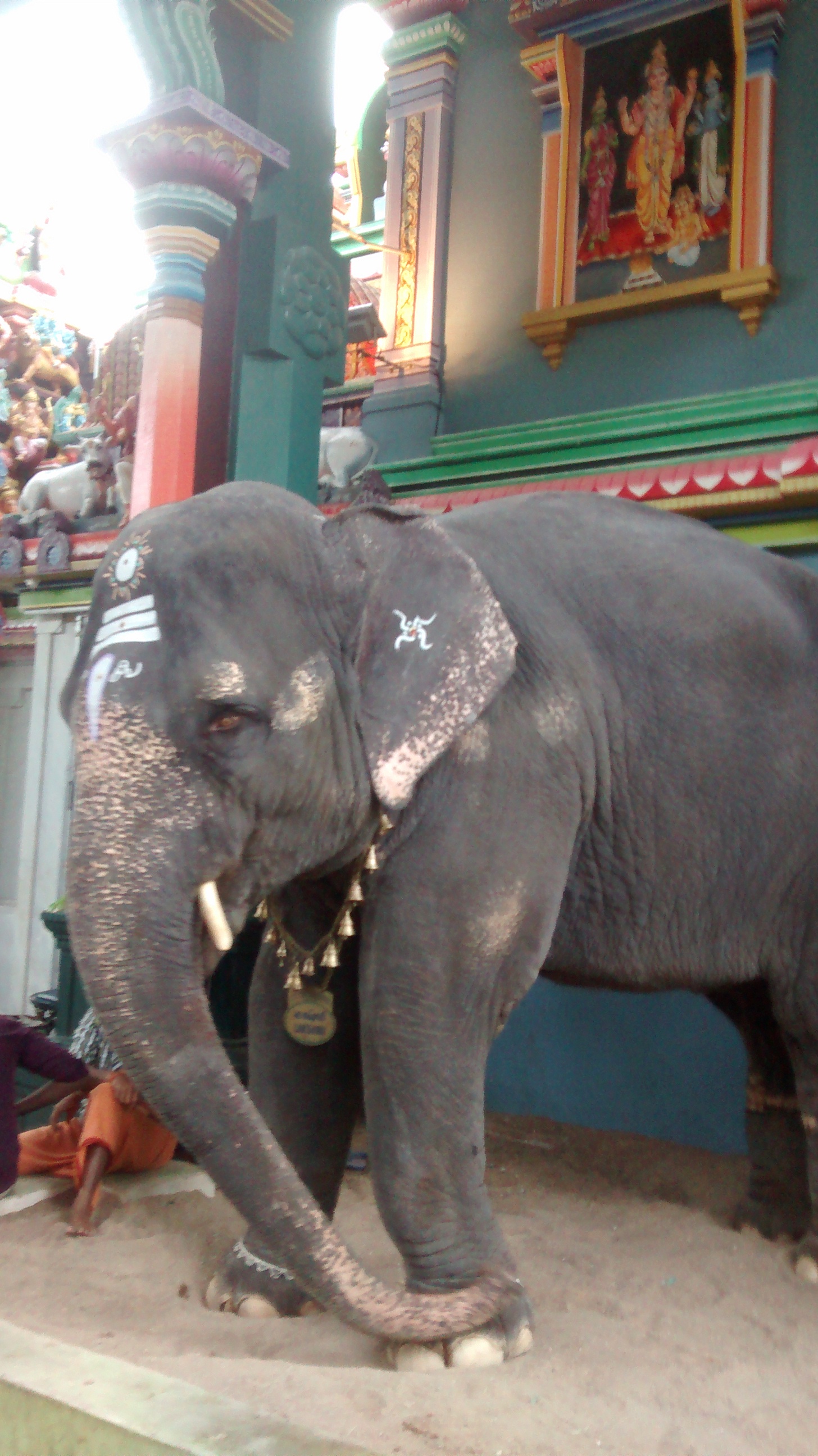
An encounter with Lakshmi, the famous temple elephant of Pondicherry, invigorates them no end. A dip in the sea comes about as a blissful experience. A visit to the Planetarium and the Science Centre proves to be highly instructive.

The Incredible India

Then there are things which invoke ridicule and pity.

A power cut which disrupts a Tom and Jerry show on TV invites a stridentPGW Tom and Jerry protest and needs to be explained. When a beggar gets sighted, or when the vehicle passes a hut by the road side, the parents get called upon to explain the rationale of peaceful co-existence of the ‘haves’ and the ‘have-nots’ of Indian society.

The absence of dustbins ready to receive the wrapper of a chocolate arouses curiosity. The garbage, as well as the generally poor civic sense, invites an adverse comment. Smelly trains and railway stations get negative rankings.

The absence of courtesy and discipline on the roads and the density of vehiclesKrishna_Arjuna_Gita on our roads, all come in for sharp criticism. To ensure parking space near a favourite ice cream joint, divine intervention is prayed for.

Crossing a road is a trying experience. Use of public toilets, if any are available, leaves their souls in torment. A rat feasting on a dead bird lying on the road side comes across as a traumatic sight, explained with great difficulty by an accompanying adult by invoking the teachings of Lord Krishna in the Bhagavad Gita.

Within the confines of a home, unquestioned obedience on part of the juniors in the family causes some surprise and amusement. The rights of the younger ones – to decide which flavour of ice cream to have for dinner – can simply not get curtailed. This is an experience which is quite alien to their value system.

Expansion of the family nucleus

Other than feasting on Indian delicacies, the pampering by all seniors theyRamayana 1 come in contact with leaves them assured and self-confident. A sense of belongingness comes about. Stories from scriptures fascinate them. Narrations of the lives of great men and women of the country leave them awestruck.

They also end up imbibing some values of a joint family system. Sharing, caring, a sense of responsibility towards juniors and a healthy regard for the elderly gets implanted in their thought processes.

The twin advantage

This generation has a unique twin advantage – that of having a Western mind and an Eastern heart. Their analytical abilities are getting nurtured in a more scientific environment, while their hearts carry the seeds of compassion, empathy and love. From their working parent, they imbibe a sense of professionalism in whatever they do. Through their folks back home, they understand the importance of togetherness and team work.

A truly balanced human being they are apt to make. Unknown to them, they take humanity further on its path of evolution.

(Photograph of cycle rickshaw courtesy http://www.shabnamphoto.wordpress.com; link: http://shabnamphoto.com/2014/10/28/pondicherry-a-certain-sense-of-gallic-glory-gone-by)

Habitually late for work? What are the excuses you normally come up with? Are there special tactics to be adopted to win over in a potentially embarrassing situation?

P G Wodehouse is not about humour alone. He also has tips on such mundane affairs.

Here is yet another delectable post from Plumtopia. Pray that your obnoxious boss does not get to read it.

Honoria Plum's avatarPlumtopia

PSmith In The CityAs he stood near the doorway, one or two panting figures rushed up the steps, and flung themselves at a large book which stood on the counter near the door. Mike was to come to know this book well.

Psmith in the City

One of the minor curses of my day-to-day existence is being habitually late for work — not through personal tardiness, I hasten to add. Mine is not the life of Joss Weatherby (Quick Service), who oversleeps after late nights at the gambling table, or Barmy Fotheringay-Phipps (Barmy in Wonderland) who goes on toots with Mervyn Potter. No, I go to bed at an early hour and rise regularly at 5.00am to write.

Dragging myself away from writing is a struggle — I sympathise with Nicholas Jules St Xavier Auguste, Marquis de Maufringneuse et Valerie-Moberanne (French Leave) who cannot drag himself from…

View original post 952 more words