Feeds:
Posts
Comments

Posts Tagged ‘CEN’

One of the lessons my Guardian Angels have taught me is that when one is overly critical of the task being done by someone else, they ensure that one willy-nilly ends up playing that very role for some time. Being in that person’s shoes (or sandals, if you prefer) helps one to realise exactly where the shoe pinches, literally as well as metaphorically. From being a critic, one turns up being a reluctant admirer of the art and craft of the task at hand. One develops empathy for the party of the other part. Scales fall from one’s eyes. It dawns upon one that the person performing the task in question is perhaps more to be pitied than censured.  

Take the case of a husband who occasionally takes a jaundiced view of the quality of cooking of his spouse. However, after a heated argument, when she decides to go off in a huff to her parents’ house, all hell breaks loose. Regularly gobbling down instant noodles and takeaway food from nearby joints soon loses its charm. Deciding to take the matter into his own hands, he enters the kitchen arena, much like a Roman Gladiator showing up at the Colosseum. Finding the right raw materials and other ingredients in the kitchen becomes a major challenge. Locating either the right pots and pans or an appropriate ladle for whatever is planned to be dished out sounds tougher than overpowering a lion which has been deprived of its quota of vitamins for many days. Sweating profusely while seated on the dining table and trying to put some semi-cooked stuff down the hatch, he starts appreciating the cooking skills of his spouse. The post-cooking clean-up in the kitchen leaves him gasping for breath. Pretty soon, he decides to bury the hatchet and rush off to his in-laws’ place to charm the wife into accompanying him back to their abode. The dove of matrimonial peace restarts flapping its wings at home.

But I digress. After I hung up my corporate boots and decided to become an author, I had come to view editors of all sizes, shapes, and hues with a thinly veiled contempt. Most of them believed in following the dictum that silence conveyed a polite rejection. Even if they were to accept a manuscript for scrutiny, there was seldom a commitment as to when it might crawl up to the top of the pile on their cluttered tables. And yes, I dreaded the day when I would receive their detailed feedback. By then, they would have poked so many holes in the manuscript that it might as well be compared to Swiss cheese. Of course, the most traumatic experience was when I was asked to reduce the word length by close to 30% of what it was. To an author, it is akin to asking someone to perform a delicate surgery on oneself, sans anaesthesia of any kind!                 

However, my Guardian Angels soon decided to intervene and change my perspective. Somehow, I ended up becoming part of a three-member editorial team that has pious intentions of publishing a philosophical tome comprising as many as fifteen essays from as many authors located in different parts of the world.

For me, a voracious reader, it is obviously a pleasure to go through varying perspectives on the same subject. One’s mind opens up, much like a sunflower trying to soak in as much Vitamin D as possible. One’s outlook broadens. Each author’s voice is unique. The frequency, the amplitude, and the tone and tenor of each composition are different. At a casual glance, all these might sound like a cacophony of sorts. But together, they all generate a symphony of sorts, presenting a harmonious blend of the key message of the anthology.

Empathising with Editors

Thus, the task of editing offers quite a few perks. But it also makes one face many challenges in the process. Here is an indicative list of some of these faced by the team so far.

  1. Ensuring that the content of any contribution fits into the overall purpose of the collection.
  2. Maintaining the originality of the author’s voice, while suggesting improvements which would connect the narrative better to the key objective of the anthology.
  3. To improve the readability of a paper, each one needs to be checked and ranked on a hypothetical Richter Scale of Comprehensibility. Those scoring higher than a threshold must be politely advised to tone down the narrative.   
  4. Having patience with contributors who are first-time authors. Supporting them to improve the general flow of the article. Assisting them in connecting disparate sections or paragraphs more smoothly.
  5. Even though all contributions may be in the same language, the sentence construction, the choice of words used, and the way of conveying an idea vary widely. This requires a type of verbal dexterity which could leave one fogged, nonplussed, and perplexed.
  6. Ensuring that a contributor is not trying to promote his/her own business interests through the paper submitted by them. One, that would be unethical. Two, if readers suspect that a commercial motive is embedded in any essay, our own credibility and brand image take a hit.
  7. In case an expert has contributed a paper on a subject which is not understood by any of the members of the editorial team, referring it to a domain expert for a peer review makes eminent sense. Coordinating between the author and the expert helps in bringing about a better balance in the paper.
  8. Since the idea is to deliver a book to our readers which does not leave them fretting and fuming over linguistic bloomers in the manuscript, the services of an external editor need to be hired. In many cases, this may entail a back-and-forth exchange of ideas between the author and the external editor.  If the author has chosen to quote references and mentioned a few weblinks to support the arguments being advanced, a rigorous check of the same could be handled by him/her.
  9. With advances in technology, a basic check to ascertain the AI-infestation level of any essay needs to be considered a sine qua non.   

It transpires that editors need to be made of sterner stuff. Overcoming our prejudices and being impartial does not come easily. A bulldog spirit is essential. Nerves of chilled steel are required for picking up something written by someone else and transforming it into the kind of stuff potential readers would gleefully lap up, much like your pet relishing a slice of fish.

Having undergone an instructive experience of this kind, one may safely conclude that editors are more to be pitied than censured.

In fact, it was this experience that prompted yours truly to publish a detailed blog post earlier, capturing the kind of challenges faced by the owners and editors of journals in the oeuvre of Sir P. G. Wodehouse.

Choosing a Title and Subtitle

Once the manuscript is almost ready, thoughts of the team obviously turned to the challenge of choosing an appropriate title and subtitle for the collection.

The snag we always come up against when deciding upon these can be summed up as an existential dilemma between two vastly different atmospheric levels – the troposphere, closer to the ground realities which are showcased by different articles, and the stratosphere, which denotes the loftier goals with which the anthology was conceptualised, to begin with. This deserves serious thought. Both must be catchy and readily comprehensible. It is something one does not want to go wrong about, because one false step and the whole compendium is sunk. If a lay reader, while searching for something fresh to devour, does not become curious about what a book is all about, and does not get a promise as to what precisely to expect, they could not be blamed for failing to get attracted to the offering. Their short attention span of a few seconds makes them move away to greener pastures. They simply walk out on one.

Thus, if the title represents the loftier goal of the anthology in a rather obtuse manner, the subtitle must hasten to clarify what it is all about and what it promises to deliver.  

So, one needs to put one’s thinking cap on, surf through the internet to locate the titles and subtitles of comparable works, if any, and then make a judicious call. The last thing one wants is to leave one’s public at a loss, simply raising their eyebrows, twiddling their thumbs, and trying to figure out what one is talking about.   

The Challenge of Whipping Up an Introduction

The existential dilemma mentioned above also pervades this aspect of the book. While crafting an introductory chapter to the collection of voices presented in the anthology, a balance needs to be struck between the stratospheric level of the high ideals which the book intends to convey to its readers and the tropospheric real-life situations reflected in the different papers presented therein. Not an easy task! Recalling that sordid experience, one could be forgiven for quivering like an aspen, if you know what I mean.

If one starts describing the contents of different papers in brief, one leaves the audience wondering where the collection is headed. Of course, one does it with the best of intentions, trying to provide a bird’s-eye view of the whole affair. But even the most conscientious readers could be left clueless as to what purpose will be served by their having to trudge through as many as fifteen odd essays, each having a different ‘intellectual density’, with few connecting points between them. They would miss the woods for the trees.  

On the other hand, if one takes too long to capture the beauty of the woods, create an atmosphere, and state the loftier goals which prompted one to curate a delectable collection of so many essays, many readers may simply call it a day and quietly walk out on one.

Perhaps wisdom lies in putting the salient facts as briefly as possible and linking them to the overall purpose of the book, prompting the reader to go ahead and start exploring different chapters, either sequentially or otherwise, one by one. It can be done the other way round as well. In any case, one needs to make sure that while going through the introductory chapter, one minimises the chances of letting readers’ attention wander even for a minute or two. By the time it ends, they need to be left curious enough to start their own journey by exploring the book in detail.   

We have miles to go before we sleep…

Well, finalising the manuscript is only the first 35% of the story. What follows is a far more arduous journey: getting it produced, marketing and promoting it, and the like.

As Robert Frost says: “The woods are lovely, dark and deep, But I have promises to keep, And miles to go before I sleep…”

Related Posts:
Read Full Post »

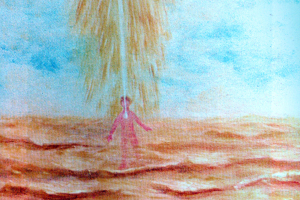
Trying to explain the concept of consciousness is not easy. Like the proverbial elephant and the seven blind men, each one of us has a different way of understanding and interpreting it. This note attempts to do it by using some of the properties which characterise one of the main energies of the universe, Light.

Being Invisible

Light makes us see the world around us. However, when traveling in a vacuum, it is invisible by itself. It is only when a ray of light encounters either dust particles or a surface which reflects it that we get to see an object. The object could be either organic, like a physical being, or inorganic, like a piece of rock.     

Likewise, consciousness is not visible by itself. It is only when we come across some acts of a benevolent kind, something which soothes and uplifts our conscience, that we notice its presence. Moreover, if there is something happening around us those troubles us within, we notice its absence.

Those who notice either its presence or absence are the ones whose antennae are tuned to receiving and relaying the waves of consciousness. The German Psychoanalyst Carl Jung led us to believe that such persons are the ones who are not afraid of looking within and facing their own souls.

There’s no coming to consciousness without pain. No tree, it is said, can grow to heaven unless its roots reach down to hell. One does not become enlightened by imagining figures of light, but by making the darkness conscious. People will do anything, no matter how absurd, in order to avoid facing their own souls.

Conscious Leadership manifests itself through people and organisations that act in a conscious manner – a manager handling her team member facing a personal crisis in an empathic manner, a leader who is selflessly striving for an overall improvement of her country, or a whistle-blower who makes us sit up and take notice of the environmental damage a purely profit-driven business is doing. Like light, consciousness pervades the universe. Most of us are not aware of its presence. We are like a fish swimming in a lake which, when asked if water exists, may give us a puzzled look, wag its fins, shake its head in wonderment, and simply swim away.

However, if our receptors and antennae are tuned right, we can receive signals of consciousness and even radiate these further to those in our circle of influence.   

The Visible and the Veiled Parts

Our senses have limitations. There is a range of wavelengths which alone is visible to the human eye. There is also a large part of the spectrum which remains veiled. A physicist would describe light as electromagnetic radiation. The latter is classified by wavelength into radio waves, microwaves, infrared, the visible part of the spectrum that we perceive as light, ultraviolet, X-rays, and gamma rays.

When scientists try to explain consciousness, they are usually looking at something which is a neurological phenomenon, occurring within the human brain. There are indeed times when our neural processes lead us to recognize a higher meaning in things. According to them, our 40 Hz oscillations happen to be the neural basis for consciousness in the brain.  Quantum physicists believe that the Integrated Information Theory may enable humanity to explore the concept of consciousness better.

However, consciousness is immeasurable and cannot be explained with complicated mathematical models. Moreover, it is something that also exists beyond the realm of our physical frame. After all, human consciousness is but a smaller part of the larger consciousness of the universe. Perhaps, if Mother Nature had not protected us by limiting our senses, a majority of us, unable to handle the vast grandeur of its intrinsic beauty, would have become permanent residents of a lunatic asylum!

Even if we were to look within, a major part of us remains veiled. Consider the concept of five Koshas (sheaths) of the human body, of which we are aware of only the physical form. According to the Taittiriya Upanishad, an ancient Tantric yoga text, the Koshas are considered the five layers of energy. These sheaths or coverings are said to encase the Pure Consciousness (Purusha) or Self (atman). In Sanskrit, these are called Annamaya Kosha (food sheath), Pranamaya Kosha (sheath of prana or life), Manomaya Kosha (mind sheath), Vijnanamaya Kosha (knowledge or wisdom sheath), and Anandamaya Kosha (bliss sheath).

Duality and Multiplicity

Thinking from the perspective of quantum physics, the dual nature of radiation as both particle and wave challenges our conventional understanding of reality. It suggests that the universe is inherently interconnected and dynamic. This duality has an interesting similarity in neurology, where consciousness oscillates between discrete neurological events and a continuous flow of cognition. Just as particles and waves exist in a superposition until observed, consciousness can be perceived as a series of individual neural firings and a seamless experiential continuum. This analogy highlights the profound interconnectedness of physical phenomena and the human mind, suggesting a deeper, unified field where the boundaries between the material and the mental blend, opening new possibilities for exploring the mysteries of existence.

In its particle form, consciousness could be thought of as a germ of an idea nestled deep within us which connects us to our innermost Self. In this form, it is like a seed that is waiting to sprout, when given the right conditions of soil, water, air, and exposure to sunlight. We may also visualise it as a flame of light within us.  

However, when an external occurrence becomes a catalyst, a wave of action gets initiated by us. This wave has a unique amplitude and frequency which is determined by our own personality. It travels to all those who happen to inhabit our circle of influence. Those who are receptive are impacted by it.

When many such persons with a matching frequency resonate with each other – driven by a common concern and a deep-seated desire to do something about it – come together, tribe comes into existence. Thus begins a change in the society’s attitudes and practices.

Yet another interesting perspective on the dual nature of things is provided by the Sankhya philosophy in Hinduism. It views reality as composed of two independent principles, Puruṣha (awareness) and Prakṛti (nature or matter, including the human mind and emotions).

Puruṣha is the witness-awareness. It is absolute, independent, free, beyond perception, above any experience by mind or senses, and is impossible to describe in words.

Prakriti is matter or nature. It is inactive, unconscious, and is a balance of the three guṇas (qualities or innate tendencies), namely sattva, rajas, and tamas.

Of Photons and Consciotons

The visible part of light is made up of photons. Likewise, one may surmise that the waves of consciousness comprise sub-atomic particles which, for the sake of convenience, we may call ‘consciotons’.

Since most of us have been brought up with an analytical mindset, we may find it difficult to either accept or visualise this. Perhaps we need to be patient and wait till the time a scientific study indicates the same!

The Components

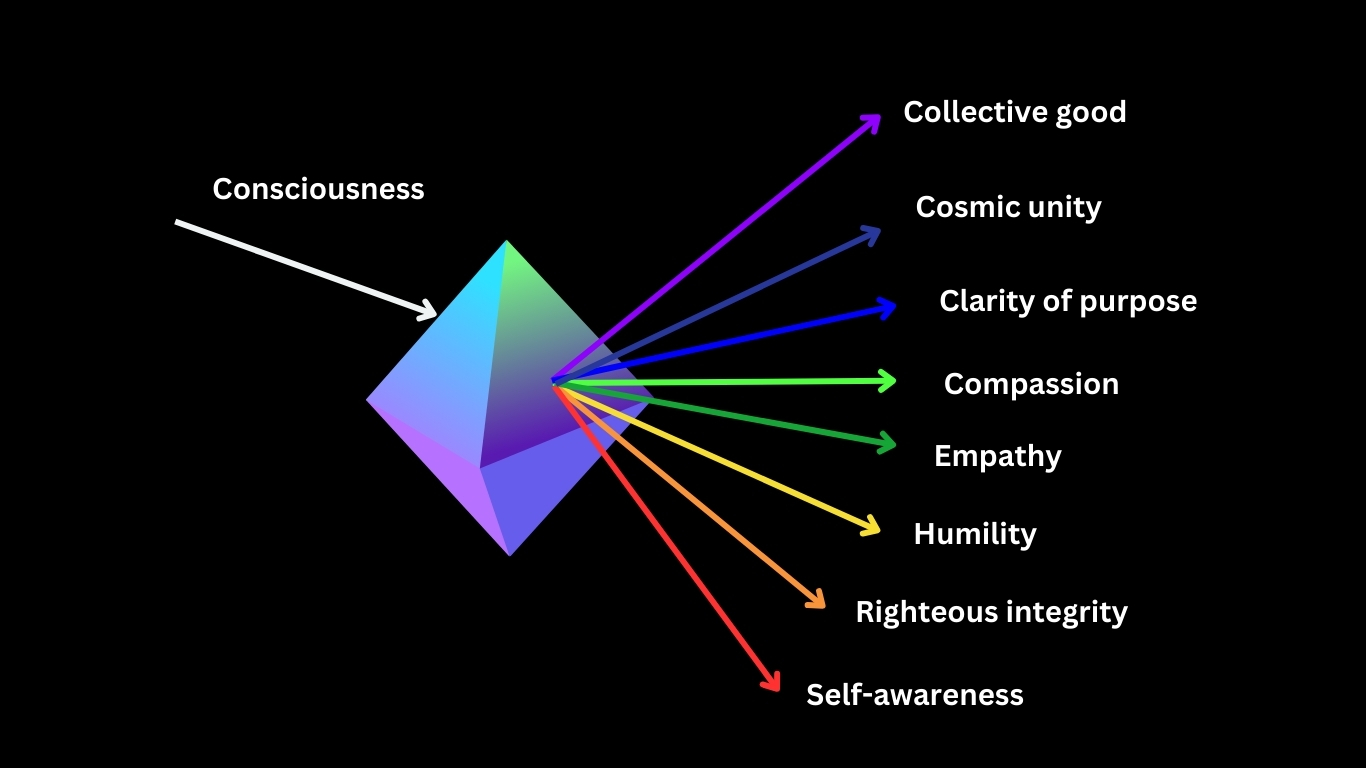
When we pass a ray of light through a prism, it reveals its seven components, or different colours, which comprise it. These colours are Violet, Indigo, Blue, Green, Yellow, Orange, and Red.  

Consciousness, under its humanly positive aspects, also has several components, many of which get revealed when it gets practised by an aspirant. Collective Good, Connection with the Universe, Clarity of Purpose, Compassion, Empathy, Humility and Righteous Integrity, and Self-awareness are some of these.  

Refraction and Diffraction

When a straw is half-submerged in a glass container containing a liquid, the straw looks crooked. The higher the density of the liquid, the more the crookedness of the straw.

In the context of consciousness, let us imagine the glass container to be an individual, whose personality makeup determines the density of the liquid. A person whose thoughts, actions, and deeds happen to be pure would be one with the least possible density. The higher the level of impurity in a person’s thoughts, etc, the higher the density. If we were to consider the straw to be an idea steeped in consciousness, it becomes apparent that it would look crooked to a person with a negative mindset.

The path of light is invariably a straight and narrow one. But when it encounters an obstacle, it tries to get around the corners, a phenomenon which is referred to as diffraction. One of the outcomes of diffraction happens to be the beautiful rainbows that regale us from time to time.

What happens when we encounter challenges in life? Each challenge, whether in the official or the personal part of our lives, tests our tenacity, resilience, and courage. Those of us who have a sunnier outlook and a chin-up attitude try to get around it. In the process, we discover our inner strengths and reveal to those around us the kind of properties our consciousness is made up of. Down the road, when we look back at that experience, we may realise that our relation to the overall consciousness has changed. We appreciate the different colours which comprise our personal rainbows.

The Speed of Light         

In the Newtonian world, the speed of light is treated as a universal constant. According to Einstein, when light rays pass nearby an object, these not only bend but even their speed gets reduced a bit. Quantum Physics also shows us how the speed of light may change under certain conditions. We have already seen how light travels at different speeds in different media, depending upon the density of the latter.

When a child is born, its heart is pure, sans any prejudices. It merely strives to seek adequate nourishment for the body. It lives in a higher state of consciousness. However, as the child grows, its personality starts shaping up, increasing the density of the medium, so to say. Depending upon the kind of nurturing it receives, the environment in which it grows, and the value eco-system it inherits, the speed at which it can either receive or radiate the waves of consciousness varies.   

Individuals have different levels of receptivity to conscious ideas. Our receptivity gets determined by the way our personalities have shaped up over time. It can be readily appreciated that our receptivity to waves of consciousness varies in inverse proportion to the density of our personalities. The higher the density of one’s personality, the lower would be the receptivity. Thus, there are some who would embrace conscious ideas enthusiastically, and perhaps even start acting along those lines at the speed of light. However, quite a few others would resist such ideas, thereby slowing down the spread of waves of consciousness.

Perhaps the highest stage of consciousness leads us to enlightenment. There could be instances when this comes about instantaneously, either owing to a sudden spurt of intuition or an external trigger. Scales fall from our mental eyes. The mist in our thinking melts away and we are suddenly able to see things very clearly. A deep state of meditation could lead to clarity on a complex challenge one may be handling at the time. This instantaneousness is what the speed of light represents.  

Lead, kindly light

As one of the essential elements of the universe, light brings joy, hope, and upliftment to our lives. The way it behaves helps us to understand yet another fundamental element of the universe, namely consciousness, better. The illusory absence of light results in darkness, depression, and hopelessness.  

When the darkness and gloom of global warming, environmental degradation, wars, corruption, absence of values and ethics, and lack of concern for our fellow beings surround us, a ray of light and hope is what we seek. Enlightenment is what many of us aim for. A dash of consciousness is what we crave for.

Perhaps, this is so because our inner self is configured to yearn for bliss. Intrinsically, it appreciates the wonder of life and the beauty of life.       

John H. Newman was not much off the mark when he said that:

Lead, kindly light, amid the encircling gloom

Lead thou me on

The night is dark, and I am far from home

Lead thou me on…

Likewise, we have an ancient Indian mantra which has been mentioned in the Bṛhadāraṇyaka Upaniṣad:

असतो मा सद्गमय ।

तमसो मा ज्योतिर्गमय ।

मृत्योर्माऽमृतं गमय ॥

Asato mā sadgamaya,

Tamaso mā jyotirgamaya,

Mṛtyormā’mṛtaṃ gamaya.

From illusion lead me to truth,

From darkness lead me to light,

From death lead me to immortality.

May the inner flame of consciousness flickering within each one of us manifest itself in all our actions and spread its divine light all around, enabling humanity to lead a happier and more fulfilling existence.

Notes:

  1. Inputs from Dominique Conterno and Anju Kulshreshtha are gratefully acknowledged.
  2. Illustration courtesy Esther Robles.
  3. Both Dominique Conterno and Esther Robles are Co-founders of Conscious Enterprises Network (https://www.consciousenterprises.net)

Related Posts:

https://ashokbhatia.wordpress.com/2021/07/06/the-three-rs-of-consciousness-in-enterprises

 https://ashokbhatia.wordpress.com/2021/09/02/towards-a-future-steeped-in-consciousness


Read Full Post »

Read Full Post »

ashokbhatia's avatarashokbhatia

Exploring the concept of Consciousness further, one may say that whereas a normal organization cares for Results alone, an organization steeped in Consciousnesswould provide an equal weight to all of its three ‘R’s – Results, Relationshipsand Righteousness – in its strategic and tactical thinking.

Results could be either of the financial kind, the market share kind, or a combination of the two.

Relationships would imply a positive working atmosphere where, besides harmonious relations, dissent is not suppressed; rather, it is encouraged. Following human values is an essential part of this attribute. So is respect and dignity towards people in general.

Righteousness would encompass such features as concern for sustainability, giving back to the society and running operations not only within the ambit of law but beyond it, wherever possible. Being pro-active, when it comes to corporate governance; taking care of the rights of the minority shareholders; ensuring that principles of…

View original post 838 more words

Read Full Post »

ashokbhatia's avatarashokbhatia

A culture which is rooted in Consciousness does not throw up hapless leaders who keep burning the proverbial midnight oil in their relentless pursuit of commercial goals only, while shoving concerns such as the environment, the society and human resources under the corporate carpet.   It does not merely mean that our marketing honchos are doing their best in servicing our customers effectively and efficiently; instead, it implies that they do so while ensuring that the product/service as well as its packaging is environment-friendly.

It means that those toiling on the operations side design the processes in such a way that the carbon footprints are at least neutral, if not positive; that our financial wizards keep nudging the organization towards maximizing returns to all its stakeholders; and the human resource executives keep burning the midnight oil to ensure that people and processes respect human values and dignity, while keeping the costs…

View original post 1,119 more words

Read Full Post »

In the preceding post, we brought in focus the fact that the first step in the process of evolution is the act of creation of information, followed by the emergence of energy and matter. Their interaction creates the Cosmic Mind and the Cosmic Consciousness, which also comprises such other subsets as a human consciousness, or an animal’s consciousness, and the like.

Having explored different facets of Consciousness, we realize how woefully short our present methods of running businesses are when compared to the ideal situation we at the Conscious Enterprises Network (CEN) are aiming for.

Admittedly, there are silver linings to this dark cloud. These are in the form of several individuals and groups of people who are aware of this deficiency and wish to do something about it. Right from environmental activists to business groups which follow Plan B and aim for a triple-bottom surplus from operations, there are many disparate attempts to nudge others in the direction of a heightened consciousness. 

The Challenge

The challenge here is three-fold. One aspect is that of identifying and grooming leaders who vibrate at the same frequency, despite their operating in diverse fields of business. A bevy of leaders such as these would be like an orchestra which plays out a mellifluous piece of music even though the instruments are as diverse as a cello, a clarinet, a trumpet or a piano.

The second one is that of creating a leaderless movement so as to avoid getting into ego traps of any kind. One way to do so could be to develop a common Charter of Consciousness which is voluntarily agreed upon by those who wish to come on board. This is likely to promote a better degree of interconnectedness between like-minded organizations, thereby ensuring that the Consciousness Virus becomes the next thing to grab the attention of Homo sapiens.

The third one is to create a credible and transparent forum which would not only keep the flame alive but also facilitate an exchange of ideas, techniques and practices. The collective learning opportunity such a forum would generate can be readily imagined. The forum would comprise individuals/organizations which have already set the bar high by demonstrating that businesses can be run successfully based on a twin compass, a commercial one and a conscious one. 

Rewiring the Leaders

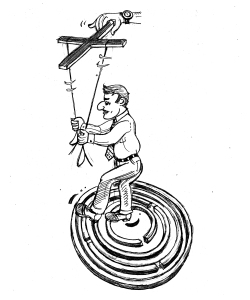
The task of inner rewiring of leaders can neither be abdicated nor delegated. Charity begins at home, as they say. The call for a transformation of this kind can only come from within. Unless this inner change takes place, those around cannot be expected to fall in line.  

Through the ages, our spiritual leaders have laid an emphasis on reengineering ourselves at the individual level. However, this does not get done by attending seminars and events; or, by reading up on the subject. These help us to receive good thoughts. But the challenge lies in applying these thoughts to our mundane lives, and then to act upon the same. The process at work here needs to follow the manasa-vaacha-karma process. In other words, the concept of Consciousness needs to seep into our thoughts, our words and then into our actions. It needs to become a way of living life; a way of being.

This is a long-term project, requiring tenacity and commitment.

Here are some tips which may help leaders achieve this objective:

  • Developing a circle of close friends and confidantes who happen to be virtuous souls; networking with like-minded persons/organizations on social media platforms.
  • Regular meditation, so as to remain connected with our inner selves.
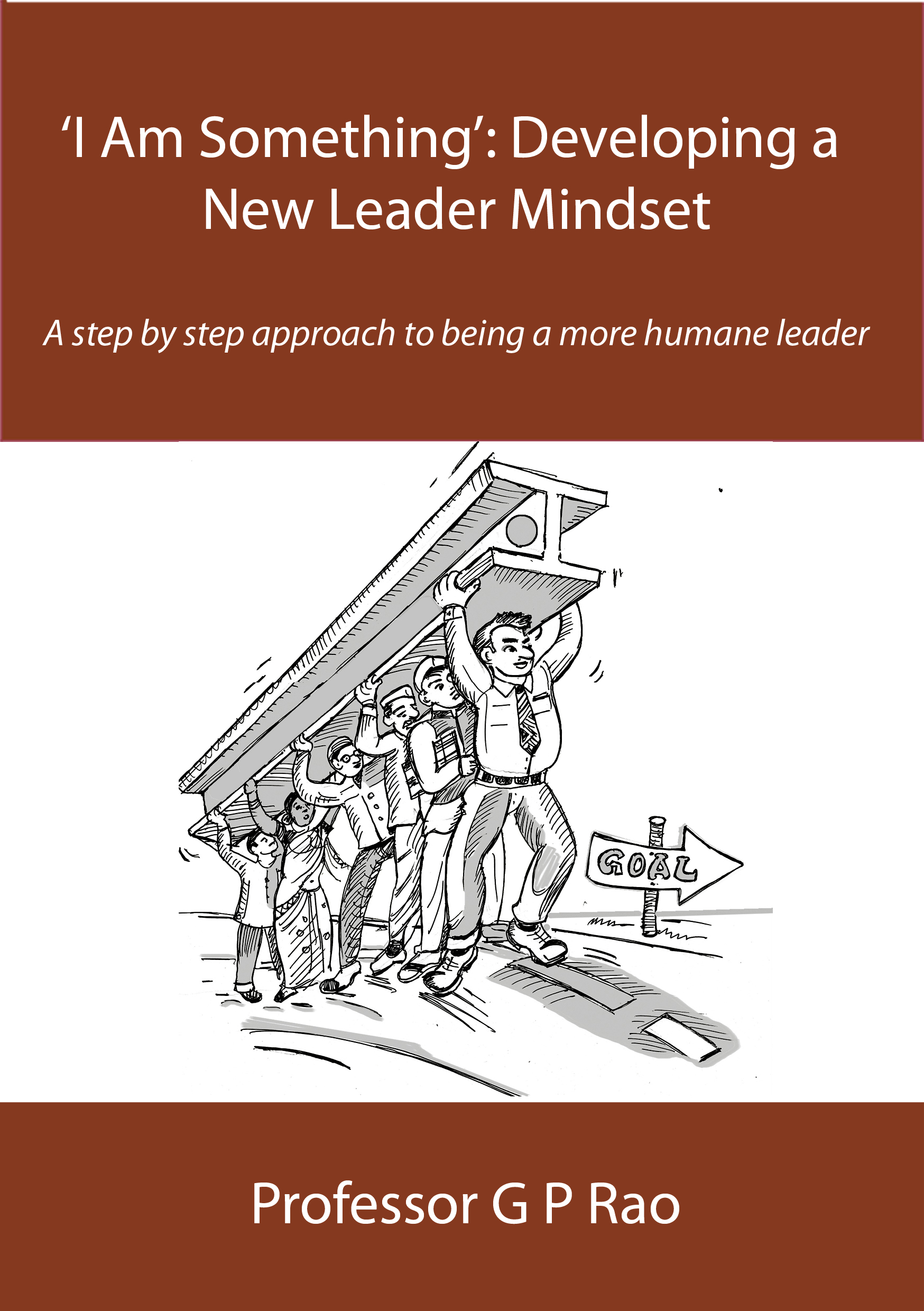
  • Shifting our attention from ‘me’ to ‘we’; adopting a mindset of ‘I Am Something’ instead of ‘I Am Everything’.
  • As we proceed further, our Consciousness expands to a still higher dimension, where the qualities of generosity of heart, humility, compassion and kindness reach their epitome.
  • We start engaging with our people more effectively, capitalizing better on our human capital.

Spreading the Consciousness Virus

Technology, if deployed with a benign intention, could go a long way in assisting us to spread this virus far and wide. The intention needs to be that of serving and facilitating rather than controlling. Advances labeled as Industrial Revolution 4.0 can assist us in propelling ideas such as consciousness more efficiently and, hopefully, even effectively.

Herein lies the primary challenge. Technology can merely be a tool. It is necessary, but not sufficient. What it needs is for humanity to wake up to its spiritual obligations. Our civilization’s present state is that of abject hedonism. This has led to a vast majority amongst us who have become slaves to technology. We have become zombies for whom checking the latest update on our technical gizmo is the first as well as the last act of the day. Virtual relationships have become more important than real relationships.   

The endeavour needs to be that of creating a number of tribes and networks which propagate such thoughts and motivate people and organizations to start making a transition to a higher plane of consciousness.

Tribes which are created to achieve a common purpose and believe in the same set of values would readily collaborate with each other and bring about a synergy. Different tribes may be at different levels of enlightenment/consciousness but if the values and the goals are the same, better results would be imminent.

Technical tools like Artificial Intelligence can help us to keep inside a firewall of sorts, keeping us shielded from distractions which retard our spiritual awakening/progress – the realization of the ultimate reality, that we all are one. It could give us the deeper private space which we need to grow inwardly and to realize that one of the most pleasurable things in life is to give succor to those who need it.  

This is why at CEN we believe that conscious leadership starts with the awakening of a leader to what he/she really is. The journey has to begin with a single aspiration – that of being a knight in shining armour who rides his/her nimble steed of technology to rescue the triad of hapless damsels best described by Plato over two thousand years ago as Truth, Goodness and Beauty. All three are in serious trouble and could do with a daring act of rescue.

Dear reader, are you game? If so, let us look forward to a book by one of CEN’s co-founders, Dominique Conterno, which goes into further details of the concepts we have touched upon briefly in this series of posts!

(Inputs from Dominiuqe Conterno and Esther Robles, co-founders of Consciousness Enterprises Network (https://www.consciousenterprises.net) are gratefully acknowledged)

Related Posts:

Read Full Post »

In the earlier part of this series of articles on Consciousness, we had covered the wide range of models which experts have used to define the concept of Consciousness, whether from management practitioners, scientists or those who repose their faith in either religion or spirituality.

We notice that most of the models used for explaining Consciousness have been centered on these four concepts:

  1. A physiological activity taking place in the human neo-cortex (human only).
  2. More generally, a physiological activity taking place in the whole brain (human and other animals to some degrees).
  3. An energy like phenomenon that uses the brain to manifest itself.
  4. A deeper phenomenon at the core of everything, eventually connecting us to a Universal Consciousness.

The CEN Perspective

The model that Conscious Enterprises Network believes in is related to some extent to point 4 above. The aspect we are investigating is information based and not just energy/vibration based. To us, energy is of secondary importance.

Of Evolutionary Forces

We believe that Nature (or, ‘The act of Informative Creation’) came about first, followed by matter/energy. Over millennia, driven by forces of natural evolution, we have been chiseled to a state we find ourselves in today.  We have repeatedly enjoyed biological benevolence and good fortune. From a single cell structure, we have today become a highly sophisticated machinery which willy-nilly is aware of its own existence.

In the interim, we have undergone repeated transformations. We have never been attached to a particular type, shape, color or size for too long. We first developed a liking for oxygen. We then frolicked about in the deep oceans, before trying to rule land in various forms. We bore our way underground and climbed on trees. We took wings and enjoyed the freedom of mobility, often backed by a highly effective GPS.

We assumed different forms, whether of the hissing or slithering kind or of the ferocious carnivorous kind. From bonobos and apes to Homo Sapiens has been a logical jump for us, and we know that we have indeed arrived.  

We now roam about all corners of the solar system. We keep messing up the fragile environment we have been gifted with. We have possibly come to believe that the journey of evolution is over. We think we can now rest on our laurels and remain content with inventing newer and better means to destroy ourselves. We need pandemics to come knocking to our doors to wake us up from this slumber and drive home the reality that we need to be more conscious of the inexorable forces of nature and respect its mandate.

The Importance of Information

Our physical bodies serve the unique purpose of facilitating the process of learning that we continue to undergo. It would not be wrong to say that our bodies are merely the tools provided to us by Nature. This helps us to keep amassing information-based wisdom – the wisdom of survival, the wisdom of living a happy, contented and fulfilling life.

Thus, information is the key input. The characteristics of information are as follows:

  • It is alive from the simplest form to the more complex form.
  • It brings about stability by having a self-organizing capability.
  • Self-learning helps it to expand in complexity.
  • Self-reflectivity enables a dynamic continuity.

Since information is the key, energy assumes a subservient role in our evolution. 

Another Take on Consciousness

In this model, we can readily explain Consciousness as a process belonging to the realm of information. Information, when backed by self-reflection, tends to get distilled and refined. Through this process of involution, we fulfill our purpose of self-learning.

As per this model, the source of everything could be called a Quantum Soup from which all possibilities and all potential creations of nature keep emerging and becoming extinct. The Quantum Soup is beyond the physical and the multidimensional universes, akin to the Vishwa-Roopam described by Lord Krishna in the Bhagavad Gita, an Indian scripture, some 5,500 years back.

What comes about is a timeless chain of procreation which, in turn, leads to an environment which, even though in a flux over time, gets established temporarily. We keep growing, duly propelled by a complex information structure.  

Consciousness is a process of singular information. With further information packages thrown in, it assumes a condensed form. Thus, it does not belong to its parts but to all of creation. It may appear as if it is confined merely to a specific situation, say, a human life. But that is just an illusion created from a perception created as we mentally travel back and forth between the past and the future. It is not a perception of an eternal present.

The Toltec/Shamanic Tradition

To absorb this concept better, let us consider the Toltec Shamanic tradition. For a Toltec Shaman (see work from Carlos Castaneda), when a living entity dies, it faces the “Eagle” that is generally explained by a mass of pure consciousness with a mass of information behind it.  This mass of consciousness absorbs the dead entity’s history with its consciousness too in its action. In other words, the “Eagle” devours even the awareness of the dead. We base our observations on the work done by Carlos Castaneda in this context.

Consciousness as a Process

Because of its functional aspect, consciousness is universal and does not belong to any portion of information. This is another important point as my consciousness, yours and anything that exists is fundamentally the same one.

Indeed, there are packets of consciousness, such as a human consciousness, a tiger’s consciousness, and the like. Owing to the self-organizing property of information, such packets lead to an apparent compartmentalization of consciousness.

Sure enough, it takes time and understanding for one to realize that our individual consciousness is actually the same as that of anyone else even though each entity’s physical sheath and history may be quite different. 

(Inputs from Dominiuqe Conterno and Esther Robles, co-founders of Consciousness Enterprises Network (https://www.consciousenterprises.net), are gratefully acknowledged; illustration courtesy the www)

Related Posts:

Read Full Post »

(Non-statutory warning: Reading the article below could be injurious to readers’ mental health and leave them a wee bit depressed. Caution is advised.

The author is reasonably certain that this article is not an outcome of the kind of wholesome pessimism which is believed to envelope one in advancing age.)

There is a mood of despondency which descends upon my frail grey cells once in a while. Dark clouds which have gathered upon me are accompanied by sinister rumblings. Lightning streaks of a menacing kind keep lighting up the sky, duly followed by thunderous howls which pierce my ears. One peers into the future and one shudders to think of the kind of world one would leave behind for our progeny to live in. Tectonic plates of our society appear to be shifting, causing major upheavals.

No, one does not allude to the pandemic stalking us these days. Nor does one refer to such universal problems like global warming, economic disparities, widespread poverty and illiteracy etc. Instead, one refers here to tectonic plates of a different kind – the ones which impact our value systems, human values, social harmony, honesty, fairness and justice, norms of democracy, absence of truthful and factual information, materialistic progress, and the like.

Consider what is happening around us these days.

Some Ground Realities

The Lack of a Conscious Approach to Business Goals

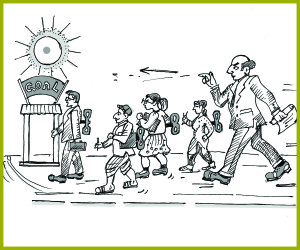
Businesses continue to be driven by greed and avarice alone. Hapless CEOs have no other option but to keep delivering results from one quarter to the next.

There are no guarantees that Volkswagen will not soon come up with yet another technical trick to befool the regulators and its customers. Boeing may yet again secure approvals for launching a model which might put air passengers’ lives at risk. Financial scams will keep tumbling out of corporate closets at a standard frequency which might put an atomic clock to shame.

Think of rising inequalities. Consider a report presented by Oxfam at the January 2021 World Economic Forum’s Davos Agenda, titled ‘The Inequality Virus’. It says that the 1,000 richest people on the planet recouped their Covid-19 losses within just nine months of 2020, whereas the world’s poorest could take up to a decade to recover from the pandemic induced setback. I am certain that philanthropic initiatives of the richest have not suddenly seen a proportionately higher uptick.

So, every crisis that humanity faces turns out to be an opportunity for the well endowed to amass greater wealth. Is this the kind of Materialistic and Unconscious Business model that we wish to continue following? Our answer would of course depend based on whether we are from the ‘haves’ side or the ‘have-nots’ side of the society.

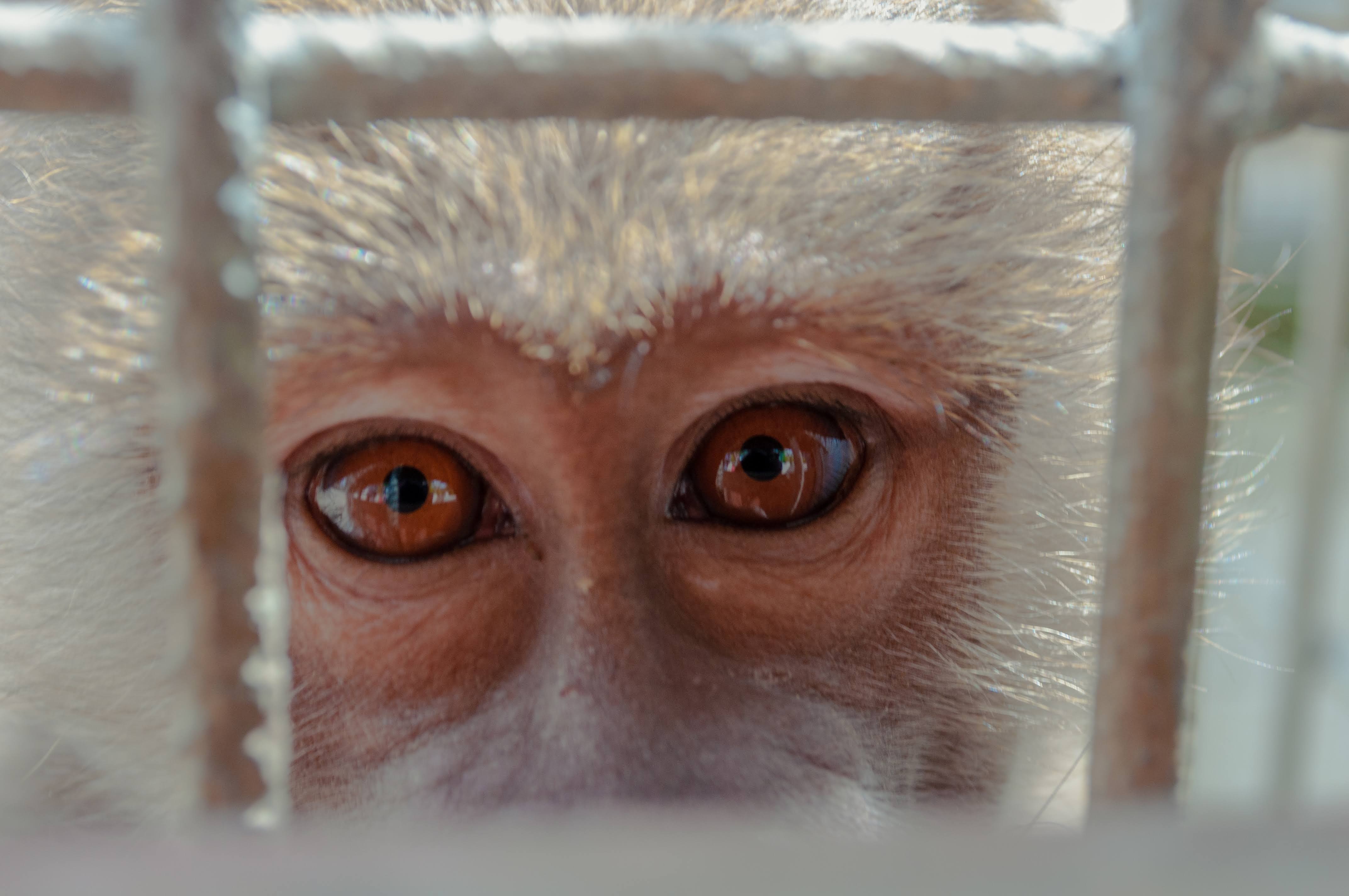
The Monkey Business Called Politics

Probity and decency in the public life of our leaders is long since buried. Gone are the days when vibrant democracies needed a strong opposition to thrive. These days, even the President of a country can himself turn against the hallowed portals of democracy and send rampaging mobs braying for the blood of those out to declare him defeated in an election. In other words, it is one of those promotional offers – you vote in a President and get another one for free!

The aforesaid top boss’ term has revealed enormous gaps between the ideals of American democracy and the reality. Even before he exhorted his followers to attack the Capitol and the legislative branch of government, he ignored watchdog rulings and constitutional safeguards, pressed to overturn the outcome of an election, and pardoned those who covered for him, all the while funneling taxpayer dollars to his family business.

In yet another country, the main adversary runs the risk of not only being poisoned but also getting imprisoned on some ground or the other, while those in power brutally suppress dissent marked by men’s underwear and gold-painted toilet cleaning brushes.

World over, there is no dearth of leaders who have dictatorial ambitions but mask these well with democratic credentials. Speak of transparent political funding and all one gets is the silence of a tomb.

In yet another country, lies, obfuscation of facts and clever data management seem to have become a norm. Photo-ops, positive optics and feel-good media feed by devout followers keep the entire nation in thrall. Attempts to stifle dissent and to paint anyone not toeing the rulers’ line as unpatriotic continue unchecked. Getting offended by comments made by those living thousands of miles away appears to have become a national pastime. When a stand-up comedian speaks up, our clairvoyant nature allows us to guess what offending remark he is yet to make. Prompt legal action gets taken, nipping the intended mischief in the bud.

Building physical infrastructure is simply great. So is the drive to embrace technology to make life of a common man simpler. But when this comes at the cost of demolishing social harmony and making a democratic country free of any kind of opposition worth its while, the long term price of a ‘progress’ of this kind is rather high. I am not an economist, but I wonder if an economy can grow while the society itself is getting fragmented.

World over, quite a few governments have even used the pandemic as a cover to suppress dissent and cut short processes to introduce laws of an unpopular kind. In the process, their soft power is bound to dive down.

The Rudderless Social (and Anti-Social) Media

During 2020, in India, when our northern neighbour had encroached upon our land, and when the media should have been doling out useful health tips for people to stay safe in the midst of a pandemic, the only ‘breaking news’ was the suspected suicide of a Bollywood actor and the activities of his girl friend.

Social media, duly backed by smart algorithms, Artificial Intelligence and Machine Learning, keeps shaping our thought processes, our choices, our preferences, our perceptions and our beliefs. We are already living in a fish bowl where the law makers as well as the private players are hands in glove to sell detailed information about us to the highest bidder. Privacy concerns and personal liberties be damned. Pretty soon, it may happen that government support is available only to those who have a pro-government presence on various media platforms.

The whole idea is perhaps to help a lay person evolve into a dumb chum of the first order, unable to use his own judgement in matters of public importance; essentially, to numb the person’s grey cells. In other words, we all become zombies (or jack asses, if you prefer) of the first order.

Little do we realize that there are no free lunches in life. Any service available to us free of cost over the world-wide-web we have spun around ourselves only means that ‘We, the People’ are the product on sale!

If our social media czars do not come up with a realistic code of conduct for themselves soon enough, governments, to salvage their public image, may soon have to start dishing out harsher laws.

Perhaps, one of the czars will soon set up an academy to groom many of our whizz kids into becoming ethical hackers and algorithm developers.

Neglecting Half of the Homo Sapiens

If they stay at home, their contribution to society is never even acknowledged. Rather, it is taken for granted. If they venture out of their home and hearth, lustful gazes disrobe them mentally. If they get violated, they only have to take the rap. In war zones, they are the instruments used to inflict deep wounds on the psyche of the other.

Yes, I refer to the tribe of the so-called delicately nurtured. They are the ones upon whom Mother Nature has conferred the unique capacity of keeping our civilization alive and ticking. They may be as tough as nails and proving themselves to be better than the so-called sterner sex in all fields of human endeavour. A fact which was reinforced yet again when a deadly pandemic arrived at our doorsteps. In public, they may get put on a pedestal and revered. But in private, they often get treated like a doormat, treated as mere objects, only to be used and abused.

Doting lover boys, upon metamorphosing into husbands, often shed their chivalrous masks and start behaving like dictators. If a family breaks up owing to mistreatment, ridicule, abuse and violence at the hands of their husbands, it is the lady of the house alone who gets the entire blame – for being obstinate and uncompromising. The general view is that she is a gold digger of sorts.

Such a patriarchal mindset is not an exclusive prerogative of the poor alone. Nor does it respect geographical boundaries. Education levels also do not make much of a difference. Take couples across different countries, economic status and education level and one is apt to find this to be a universal phenomenon. The Chivalry Quotient may vary across all these parameters, but a singular shortage of preux chevaliers is felt all over our planet. Religious beliefs and even some spiritual tenets reinforce such derogatory views.

In respect of the legal framework, our experience in India has been a mixed one. The females have learnt the art of terrorizing their husbands and their families by foisting cases of imagined harassment, with the sole aim of securing better settlements while seeking divorce. Surely, the training in chivalry truly begins at home – either in the kitchen or at the dining table. Laws can play only a limited role.

The tectonic shift taking place here is that of divorce rates going up and couples preferring to remain friends with perks. Upwardly mobile wives who can stand on their own feet detest drawing husbands who refuse to wear skirts and help out with domestic chores. Once the family structure crumbles, there is a higher probability of the value system of the next generation going for a toss.

The Silence of the Lambs

In many of the issues brought out above, are we ourselves not responsible for the mess that we are in? The silence of our intellectuals, the self-centredness and public apathy of the middle class which more or less upholds values in society and the mute surrender of the common man – are these not some of the factors which have enabled this situation to have come about?

Many years back, I vaguely recall having read a satirical story in Hindi, written by a well known humourist in the language, Hari Shankar Parsai. A herd of lambs is made to believe that few wily foxes alone can solve all their problems. Pretty soon, foxes get voted in. One fine day, a ruling comes that to save the ruling foxes, some sheep should voluntarily surrender to be sacrificed each day so the patriotic fervour is kept alive and the nation is run effectively!

I am not a political science buff. Thus, I am not qualified to say if democracy as a model of governance is failing us. But one of its enabling factors is the presence of conscious leaders who are not shameless and still have traces of humility, empathy, decency and a concern for genuine overall good.

With No Malice towards Anyone  

Educated youth who have no means of earning a living, will they not have a raw anger simmering within them? Will the poorer lot not take a jaundiced view of grand government schemes the benefits of which do not reach them?

Perhaps there is a feeling of helplessness within them. Perhaps they have dollops of patience.  May be they realize that they are too small to bring about any change and feel it is better to accept things as they are and continue wallowing in misery and self-pity, blaming God for all their troubles.

But is a meek acceptance of murkier developments in the world around us a better approach? Can we not dissipate the seething anger within by at least saying what we find to be reproachable? Can we not break our silence of the lambs and speak up?

With Whom Does the Buck Stop?!

Are we ourselves not a part of the problem? Why have we, reasonably educated and rather wise people, decided to outsource our thinking processes and have instead opted to become zombies?!

Do we not keep patronizing companies even when we know that they have been cheating in the past? Are we not the ones who get swayed by propaganda and cast a vote for a particular party or a particular leader? Do we ever boycott a media outlet which acts as a mouth piece of those in power?

If we are addicted to, say, WhatsApp or Facebook, can we really blame their inventors for the issues that we face? Don’t we find it convenient to remain in touch with our friends and family members through these platforms?

When we notice a female being harassed, are we not likely to look the other way? Is the onus of ‘adjusting’ not always put on the female? Can we take a pause before we make a victim the facilitator of a crime?

Overall, by remaining a mute spectator and witness to acts of corruption, misinformation, lies and half-truths, do we not become accomplices to such misdeeds?

It is not wise to altogether point a finger at others only. A knife kind of a tool is given to us. Let us use it to prepare a juicy dish and not to hurt someone. The choice of usage is with us.

Our endeavour therefore should be to stand up, be courageous and outspoken. This alone can get us counted. Even if there is one sane voice amongst all the noise and din, it would resonate with other like-minded individuals out there.

Our salute needs to reach out not only to those who are already raising their voices but also to the decision makers who might eventually get around to listening to us.

Some Silver Linings

All this is not to say that there are no silver linings in the dark clouds hovering above us. As P G Wodehouse puts it, even when the air is pregnant with V or W-shaped depressions, there are always silver linings on the clouds. We shall do well never to repine, never to despair, but to work upon our own selves and on others in our sphere of influence. It is good to remember that, no matter how dark the skies may be, the sun is shining somewhere and will eventually come smiling through.

There are business houses which keep following good values and ethics in their day to day operations. There are leaders who respond well to challenges like social disharmony and stalking pandemics with a dash of human values. They treat dissent as a valuable input for their decision making processes. We also have very few social media and gig economy barons who are being forced by their own employees to either shape up or ship out.

Lawmakers and pressure groups in USA are already reported to be thinking of ways to bring in a wide-ranging overhaul of ethics, laws, the likes of which have not been seen since the post-Watergate era.

Perhaps, eminent legal eagles in India can also take a leaf out of the USA experience. As a country, we had experienced suppression of dissent even during the 1970s, when an emergency was declared. Can some more constitutional safeguards be brought in so that a popular mandate does not give the executive the right to ride rough shod over other arms of the government, thereby increasing the probability of the country being taken in a direction which is not the same as what our founding fathers had envisioned?

Above all, it is the man on the street, busy keeping his body and soul together, eking out a living for his family and even helping others in distress. When the scales from his eyes fall and he wakes up to a life threatening situation at hand, he reacts. The farmers in India are already showing their resolve following the strategy of peaceful protests and civic disobedience used by Mahatma Gandhi many decades ago.

Then we have lone wolf professional bodies. World Without Corruption in Belgium gives businesses a voice in fighting corrupt practices. The Conscious Enterprises Network in UK speaks of conscious leaders leading their enterprises in a holistic value-based manner in all spheres of human enterprise. The Center for Business Ethics & Compliance in Russia is focused on best practices in the realm of ethics and compliance.

Likewise, in India, Spandan Foundation is passionate about human values in organizations and even plans to set up a centre dedicated to the cause. Shakti Leadership highlights the importance of using feminine traits like empathy and compassion in decision making and assists individuals and organizations in their quest for conscious evolution. The Association for Democratic Reforms keeps relevant political issues alive and kicking in public eye.

I am sure there are many others scattered over other continents. Their attempt is to bring like-minded people together and keep the embers of a pious fire aglow, focused on values and ethics.

The Mighty Churning

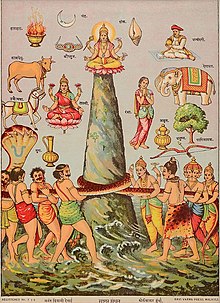
The society is always in a flux. These days, it appears to be undergoing a mightier churning which reminds one of the episode of Samudra Manthan (The Churning of the Sea) in Indian scriptures. The churning throws up poison as well as the nectar which grants immortality. Those who believe in following the path of righteousness end up securing the latter.

It is easy to see that we have a leadership crisis on our hands. Since a situation also produces a leader, one hopes that more and more conscious leaders keep emerging, nudging us in the right direction.

Admittedly, the silver linings appear to be like a pale parabola of joy, to borrow an expression from P G Wodehouse. This will remain so till the time a bevy of conscious leaders – whether in business or in politics – do not appear on the scene and convert this into a shimmering parabola of bliss.

The solution is not to keep sweeping issues like hunger, poverty, economic non-inclusion, global warming and prejudicial animosity under the carpet. Nor is it to raise the existing walls, whether political, commercial, attitudinal or religious. It lies instead in a truly global view based on the concept of Vasudhaiva Kutumbukam: The World is One Family.

Being a born optimist who believes in having a chin-up attitude, I do hope that some of these tectonic shifts can at least get retarded, if not altogether reversed, in the years to come.

(Related Posts:

https://ashokbhatia.wordpress.com/2020/06/17/why-the-wren-is-a-patriot-and-not-a-nationalist-guest-post-by-prof-badri-raina

https://ashokbhatia.wordpress.com/2020/11/23/jeeves-and-the-social-media-challenge

https://ashokbhatia.wordpress.com/2016/09/23/bertie-jeeves-and-the-internet-of-things

https://ashokbhatia.wordpress.com/2014/12/08/bertie-social-media-and-blogging-blues

https://ashokbhatia.wordpress.com/2018/01/10/jeeves-seeks-a-placement)


Read Full Post »