Feeds:
Posts
Comments

Posts Tagged ‘Leadership’

On the occasion of Women’s Day, here is a post which salutes some of those who have broken through the so-called glass ceiling in the management world!

ashokbhatia's avatarashokbhatia

When a finer member of our species becomes the part of an all-men group, the results are obvious – better focus on the job at hand, a far more effective team, higher levels of decency and a groundswell of chivalrous overtures.

Chamaiporn Uerpairojkit Chamaiporn Uerpairojkit

Better still, if she happens to be a CEO, we have a boardroom which is painted a deeper shade of pink, thereby driving away the boredom from the drab proceedings. We also have a crackling company which is more result-oriented and has better empathy while dealing with diverse stakeholders. We are also likely to get a greener and cleaner business entity which believes in corporate ethics and good governance.

In the Pink of Health

Several studies done in far-flung countries such as USA, France and Vietnam have shown that companies led by women deliver better financial results. A McKinsey study compared the top-quartile of companies in terms…

View original post 2,222 more words

Read Full Post »

Surviving in the Corporate Jungle

BookFrontCover

This is in continuation of two earlier posts, providing a short introduction to a book by yours truly. The Portugese version of the book is getting launched in Portugal shortly.

The launch event  in Porto is planned on the 2nd of March, along with a talk on “Work Life Harmony” at the  Catolica Porto Business School  of  Universidade Catolica do Porto.

The launch event in Lisbon is planned at Universidade Europeia on the 3rd of March, 2016, as part of an event titled ‘Passport to India.’

What is the book about?

This book is a compilation of some tactics you can use to not only survive but also do well in the corporate jungle. It is intended to amuse, entertain, and educate. It is a light-hearted take on the art and science of management, from the jaundiced perspective of someone who is still learning it!

It offers quite a few gems of wisdom meant for managers and entrepreneurs of all hues, sizes, and shapes. They could be the aspiring kind, the practising and the tired kind, or the retired kind.

Glum Chief Executive Officers, hassled by the harsh slings and arrows of managing a business, upon leafing through some of its contents, might get motivated to look at the sunnier side of life.

Nail-biting aspiring managers may understand how to successfully navigate their way through the corporate jungle.

Entrepreneurs, whether of a social or an unsocial kind, could find some clue on getting out of the blunder-prone world they frequently find themselves in.

We live in exciting times. An information overload saps managers’ energies faster than the time it takes to gulp down a cup of their favourite tissue restorative. Thanks to rapid strides in technology, newer challenges keep popping up in all areas of management.

The rigors of corporate governance keep snapping at the Chief Executive Officer’s heels at a much faster pace. Issues of gender diversity keep giving Human Resource honchos sleepless nights. Hapless managements, pre-occupied as they are with their aim of delivering better value to their stakeholders quarter after quarter, continue to miss the woods for the trees.

How does one retain one’s sanity in such challenging times? Surviving in the Corporate Jungle (A Backpacker’s Guide) is an endeavour to present to you some basic secrets and techniques of managing a business successfully and happily. You will pick up some aphorisms, some in-depth analyses, and some tongue in cheek comments.

The format of the book is that of a ready reckoner, with topics arranged in alphabetical order. Each topic gets covered in a short and crisp write up. Each topic gets a page all its own, thereby making the book easy on your already frayed nerves.

About Liberty Seguros, S. A.

Liberty Seguros has over eight decades of experience in the insurance business. They rely on the dedication of each one of our 510 employees to find the best protection solutions for Portuguese households, individuals and for micro, small and medium-sized companies.

The company has 31 business offices, called Espaços Liberty Seguros, and 7 branch offices distributed across the whole of Portugal, that give support to the insurance agents, their strategic allies, through whom they offer a broad range of products and services designed to ensure their customers enjoy safer, better protected lives.

Liberty Seguros is governed by values of Solidarity, Team Spirit, Dedication, Work Commitment and Responsibility to the Community.

Introducing Vida Economica, the book publishers

Vida Economica is the best source of information for Portuguese companies and professionals. They have an experience of more than 80 years on delivering news that their readers can use. Vida Economica is the first business weekly in Portugal.

Their activities include special interest magazines covering most important subjects for business as books. Their book portofolio has more than 300 titles with some of the best-sellers on economy and management.

Statutory Warning

This book does not guarantee solving any of your problems. Yes, it could help you to gain a fresh perspective on the challenges you face in your career.

Mandatory Declaration

No animals were harmed during the writing of this book.

You can buy the book here

(Related Posts:
https://ashokbhatia.wordpress.com/2016/02/26/the-book-como-sobreviver-na-selva-empresarial-guia-pratico
https://ashokbhatia.wordpress.com/2016/02/28/the-book-como-sobreviver-na-selva-empresarial-guia-pratico-2-0)

Read Full Post »

Surviving in the Corporate Jungle

BookFrontCover

This is a short introduction to a book by yours truly, the Portugese version of which is getting launched in Portugal shortly. The launch event  in Porto is planned on the 2nd of March, along with a talk on “Work Life Harmony” at the  Catolica Porto Business School  of  Universidade Catolica do Porto. The launch event in Lisbon is planned at Universidade Europeia on the 3rd of March, 2016, as part of an event titled ‘Passport to India.’

How this book happened

Forty years back, the School of Business at a prestigious university in India made a big mistake. They awarded me a degree in Business Management. They were so very happy to see me off the campus that they even awarded a silver medal to me.

I owe this book to my professors – some of whom taught so well that I learnt a lot. Others taught so poorly that I had to study some subjects on my own. So, I developed extra interest in such subjects!

I also owe this book to my bosses, colleagues and subordinates. Some of them were as tough as nails. They were a terror and kept me awake most nights.

Others were tough but deceptively soft and sweet on the outside.

Some were so systematic that I dreaded any of my difficult targets getting entered into their bulky diaries. Once the entry was there, reminders after reminders kept pouring in, keeping me forever on my toes.

Some were so chaotic in their working that I was often roped in to assist them.

Why this book happened

The creative juices sloshing about within me bear the full responsibility for this book to have come about.

It was an inner urge to share my learning with managers and executives of all sizes, stature and shapes that made me start compiling my observations. The result is this book.

So, the book you will have with you soon enough is like a management summary of a part of the life I have led for around forty years, practising as well as observing the science and art of management.

As a senior manager with Tatas, the largest and the most respected business group in India, as also in several other companies which are large corporates and single owner driven outfits, I have seen delightful facets of management.

Why in Europe?

One has had personal as well as professional relations with individuals and corporates in several countries in Europe. Portugal is an important member of the European Union. The fact that most management lessons are universal in nature also helped.

Sacking an employee in Timbuktu is as difficult as an employee in Germany of UK. Motivating a team member could be as challenging in India as in Portugal. Yes, the social context is different. The economy may be chugging along in a different manner. But the art of getting work done has universal principles.

When your boss calls you, looks you in the eye, and asks you to go and sell a refrigerator to someone on the North Pole, you know you are in serious trouble. Further, if he flatters you by saying that you are the only one who can do it, you realize you are being handed a pink slip.

CEO World

I also happen to be one of the Founding Members of CEO World, an innovative start-up in Portugal. One of the services it offers to CEOs world over is that of engagement with their peers in diverse businesses and continents; Peer Groups which are virtual in nature and work on video conferencing basis. The challenges faced by CEOs get shared in an open manner, without any competitive risks, in an atmosphere of mutual trust and complete confidence. This broadens the vistas of managerial wisdom of all the participants and improves the capacity of a CEO to face challenges better.

Statutory Warning

The messages you would find in this book are serious, their packaging is not. The idea is to make you chuckle and see if there is any solution to the present challenges that you face. The book does not offer any problem-solving guarantees.

If you do make the mistake of owning a copy, ensure that your boss or your girlfriend are not able to lay their hands on it.

If you do not find anything of use here, simply gift it to someone you hate.

This is how you can lay your hands on it.

Read Full Post »

CEOs who happen to rank very high in terms of their Concern for Production and Concern for Ethics but rank poorly in terms of Concern for People fall in this category. They are crazy about getting results. They strive to conform to high values, ethics and systems and procedures.

In terms of an upgraded Blake Mouton Grid, they rank at 9,1,9.X Y Z upgraded

Driven by ideals, these CEOs happen to be perfectionists. They are passionate about their work. They are technically proficient. In their value system, goals are as important as the means to achieve them.

In the hearts of their team members, they strike terror. Anyone who is deemed to be either ineffective or inefficient is ruthlessly ticked off. Much like Napoleon, they have no use for losers. They are extremely reluctant to buy excuses. They reprimand in public and may never shower praise even in private.

Under them, attrition rates are invariably high. Those who are good at their jobs and have a shared sense of ethics and values do well in their teams. Those who are either sloppy or believe themselves to be more pragmatic in life seek greener pastures – either in other business units or in other organizations. Many would struggle, perhaps in vain, not to land up in a lunatic asylum.

Those who have worked for such CEOs for some time appreciate the relevance of Albert Einstein’s Theory of Relativity in their careers. Four years of slogging under them sounds like ten years!

Those in Finance and Audit simply love them. But those who handle HR, public relations and liaison hate them. If an Industrial Relations dispute has to be resolved by means which may not be entirely ethical, or if speed money needs to be dished out to secure a government contract or approval, hierarchy has to be ignored and someone senior has to be kept in the loop. Dubious acts and expenses get covered up subtly.

There are times when this creates a bipolar culture in the organization – islands of excellence separated by vast lakes of mediocrity. Overall efficiency of the organization takes a hit. Employees often spend more time twiddling their thumbs trying to figure out as to what information needs to be successfully kept hidden from the boss.

This is the breed which takes a proprietary interest in the affairs of business. They roam around the remotest corners of a business empire, much like a lion would supervise its territory. They are the lords and masters of all that they survey. Ticking off peers comes easy to them.Lion_King_CEOs

Managements are often clueless about handling them. Despite strong undercurrents of revolt, they get tolerated and survive. The reason is not far to seek: they deliver. Moreover, they are incorruptible and have a great sense of values and ethics. They are blue blooded intra-preneurs and make great project managers.

They happen to be great assets especially when a new project is being set up. Once the project becomes operational, though, managements would be inclined to move them to another one. Or, find them a suitably elevated silo, where they could work with a smaller team on a different set of Key Result Areas.

Note: Inputs from Ms Somali K Chakrabarti are gratefully acknowledged. She can be found at Scribble and Scrawl (https://prepforum.wordpress.com)

(Related Posts:

https://ashokbhatia.wordpress.com/2015/12/24/looking-for-ceos-inspired-by-the-yuletide-spirit

https://ashokbhatia.wordpress.com/2016/01/07/ceos-who-happen-to-be-charmless-charlies

https://ashokbhatia.wordpress.com/2016/01/14/ceos-who-end-up-becoming-road-rollers

https://ashokbhatia.wordpress.com/2016/01/22/the-sponge-comforter-ceos

https://ashokbhatia.wordpress.com/2016/01/28/ceos-who-are-arsonist-achievers

https://ashokbhatia.wordpress.com/2016/02/04/the-missionary-zealot-ceos)

Read Full Post »

This breed of CEOs is not as rare as one would believe it to be, provided the canvas is not restricted to the private sector alone. Consider some non-government organizations working in the social sector. Or, look at some government-owned companies or research outfits. In many such cases, one is apt to run into CEOs whose Concern for Production is not inspiring. Nor is their Concern for People. They are primarily driven by their Concern for Ethics. Their work ethics are drawn from a value system which places a high premium on discipline and procedural compliance. A feudal approach comes naturally to them. Their passion for perfection could easily drive others around them crazy.

In terms of an upgraded Blake Mouton Grid, they rank closest to 1,1,9.X Y Z upgraded

CEOs of this kind thrive in environments where the control over resources provided is not very strict, where excuses and justifications for lapses are readily accepted and where norms of accountability are poor. Situations which involve results which are not easily measurable, say, in the realm of social change, attract and retain such talent readily.

Some of these could be brainy coves who are brimming over with ideas. Often, they rank high in terms of their IQ levels, but pretty low in their EQ levels. They lack the ability to compromise. For their team members, it is either their way or the highway. Publically dressing down those who under-perform – in their view – is a habit with them.

What makes them handicapped in realizing their true potential is their inability to organize things and to handle people.

If they decide to become stand-alone entrepreneurs, they take off well. But after the business has grown to a certain level, they are neither able to delegate tasks, nor able to build up teams to support them. The business continues to chug along with high attrition rates, sans any major growth.

The private sector views them with the healthy contempt they deserve. They never quite make it to the much-coveted corner office. Once they hit the proverbial glass ceiling and prove the veracity of the Peter’s Principle, managements find ways to either get rid of them or park them in a relatively harmless spot of the organization.Peters_principle.svg

They could be stand-alone zealots equipped with technical knowledge of a superior kind. They could be great leaders in such areas as Product Engineering, Research and Development, Innovation and the like. They could also make great Executive Assistants – loyal, sincere and devoted. Some could even get to head such functions as Internal Audit and Finance and prove to be a perennial pain-in-the-neck to all and sundry.

Such CEOs are saint-like souls who have to willy-nilly manage to keep their body and souls together. Driven by altruistic motives, their conduct is often an object of ridicule. Often, they happen to be known as GFN – Good for Nothing fellows.

Note: Inputs from Ms Somali K Chakrabarti are gratefully acknowledged. She can be found at Scribble and Scrawl (https://prepforum.wordpress.com)

(Related Posts:

https://ashokbhatia.wordpress.com/2015/12/24/looking-for-ceos-inspired-by-the-yuletide-spirit

https://ashokbhatia.wordpress.com/2016/01/07/ceos-who-happen-to-be-charmless-charlies

https://ashokbhatia.wordpress.com/2016/01/14/ceos-who-end-up-becoming-road-rollers

https://ashokbhatia.wordpress.com/2016/01/22/the-sponge-comforter-ceos

https://ashokbhatia.wordpress.com/2016/01/28/ceos-who-are-arsonist-achievers)

Read Full Post »

This is the most commonly found breed of CEOs. They are crazy about getting results. They plan well. They execute even better. People rank high amongst their priorities. They protect them much like a tigress would shield her cubs. But when it comes to ethics, values and systems, they could not care less. Auditors cannot be faulted for labelling them as arsonists.

Managements love them. The efficient ones amongst their team members adore them. The sloppy ones dread them. Their Concern for Production is invariably high. They are often sharp when it comes to adapting newer technologies in the organization’s processes. Their Concern for People is also high. They can be found praising their people in public while ruthlessly ticking them off in private.

However, when it comes to Concern for Ethics, they rank very poorly. Their value systems are driven by commercial goals alone. Systems and procedures are merely the dust beneath their chariot wheels, leaving Finance honchos as well as auditors aghast and exasperated.

In terms of the modified Blake Mouton Grid, they rank at 9,9,1.X Y Z upgraded

Under them, short-term and medium-term goals get achieved. In their heydays, the Goddess of Success courts them. But harsh arrows and slings of an unforgiving commercial world bring about a day when their Guardian Angels are no longer in a benevolent mood. Regulatory agencies catch up with them and demand their pound of flesh. They get trapped in the intricate web of deceit, evasion and non-compliance they have woven around themselves. Brand image of the organization takes a hit. Competitors swiftly move in to occupy the mind-space of customers. Market valuations drop. Stakeholders and employees start seeking greener pastures.

Gradually, they start getting transformed into CEOs whom we could classify as Charmless Charlies.

A deeper malaise

A charitable way of looking at Arsonist Achiever CEOs would be to say that they happen to be the product of a system which thrives on greed and avarice. When they get results by using unfair means, managements feign to be in a state of blissful ignorance.

In general, the business world does suffer from this omnipresent affliction. When it comes to perpetrating a fraud on unsuspecting stakeholders, human ingenuity has never been found wanting.

If America had Enron, Lehman Brothers and Tyco, UK had Barclays. If Norway had Nortel, Portugal had Banco Espirito Santo. If Switzerland had UBS, India had Satyam and Kingfisher Airlines. Germany has just had Volkswagen.

No specific industry could lay an exclusive claim on such man-made disasters. Be it banking, insurance, mining, automobiles, energy, commodities, IT or real estate, all have set examples of devious plans to deceive the gullible stakeholders.

Human greed and avarice are obviously the root cause. The sheer pleasure derived by a minority in making some extra gains at the cost of a silent majority apparently has a sense of gratification which surpasses all else.

CEOs of the kind discussed here symbolize this deeper malaise. However, this does not mean that their acts of omission are worthy of being condoned. Apparently, there is a flaw in their innate character – they accept cheating as a way of life.

Correcting the myopic vision

What is it that makes a business owner or a CEO to put his conscience to sleep and take a decision which could impact the whole organization a few years down the road?

There could be several factors at work here. A trade-off between extraordinary gains in sight and the risks involved. A hope and a prayer that a deviation would never get caught. A major investment that cannot be written off merely to make a process legally compliant. A gut feel that the regulatory agencies are invariably open to manipulation. The need for a tight squeeze on costs which makes them shift a part of their operations to distant but cheaper pastures, at times ignoring the interests of the local community. The option of using speed money to get the necessary approvals from concerned government agencies.

More often than not, continued success in meeting business goals proves to be their undoing. Arrogance creeps in. Self-confidence brims over. Few Yes-men around them add fuel to the fire. In their relentless pursuit of business results, they develop a myopic vision. Everything else becomes the last priority.

Smarter ones, however, would take a longer view of things. They would have a 6/6 vision. Their decision-making models would invariably take into consideration the moral and the ethical aspects of a situation at hand.

Yet another solution could be to support them with a Conscience Keeper!

Note: Inputs from Ms Somali K Chakrabarti are gratefully acknowledged. She can be found at Scribble and Scrawl (https://prepforum.wordpress.com)

(Related Posts:

https://ashokbhatia.wordpress.com/2015/12/24/looking-for-ceos-inspired-by-the-yuletide-spirit

https://ashokbhatia.wordpress.com/2016/01/07/ceos-who-happen-to-be-charmless-charlies

https://ashokbhatia.wordpress.com/2016/01/14/ceos-who-end-up-becoming-road-rollers

https://ashokbhatia.wordpress.com/2016/01/22/the-sponge-comforter-ceos)

Read Full Post »

One of the relatively rare species of CEOs is that of the Sponge Comforters. These are hapless souls who are gifted with too much of the Milk of Human Kindness sloshing about within them. They happen to be compassionate by nature. People are their first priority. It is easier to persuade them to buy excuses.

Their key strength is their Concern for People. In their value paradigm, Concern for Production and Concern for Ethics take a back seat. In terms of the modified Blake Mouton Grid, they happen to be in the 1,9,1 slot.X Y Z upgraded

Their people just love them. The loyalty they command is often exemplary. Even though the feudal spirit prevails, their style of functioning is democratic in nature. People working with them are invariably happier. Work gets done in a calmer and more relaxed atmosphere. Physical activity does not get confused with efficiency. Their planning is excellent. Their execution is often tardy.

Such CEOs add value to their organizations by being great ‘Demo Versions’. They handle Public Relations with much aplomb. They are the first contact for professionals who aspire to make a career with the organization.

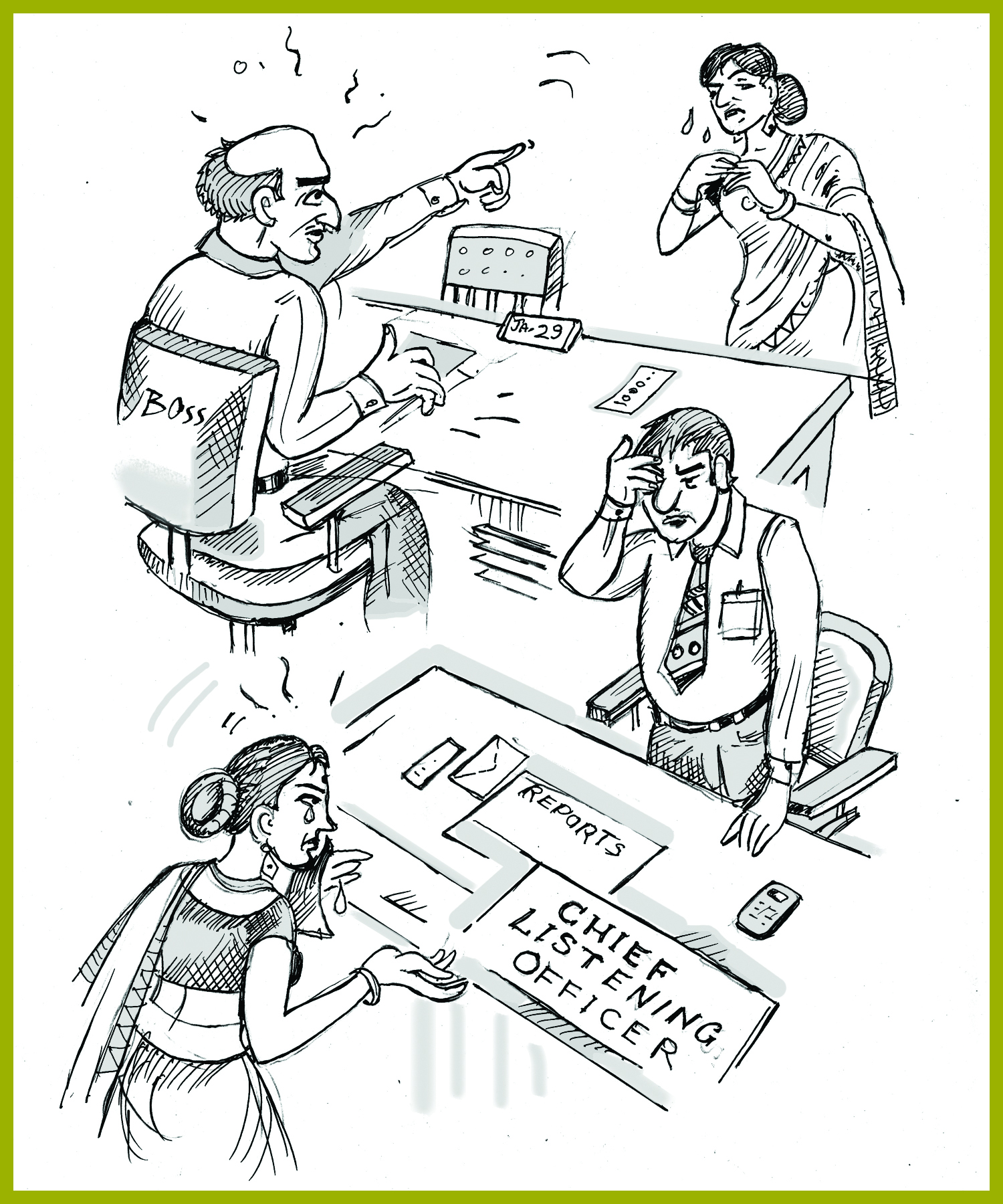
This breed thrives in an organization where the top boss happens to be unduly aggressive by nature. Employees often face an identity crisis. The CEOs offer a crying shoulder to those who feel harassed and victimized. After meeting them, a depressed employee entertaining suicidal thoughts could come back revived and invigorated – much like a watered plant. They are supreme comforters who are forever ready with a sponge, nay, even a bucket and a towel, to wipe off the tears of those who rush to them for solace.

Another designation that fits them is that of a Chief Listening Officer.

Featured Image -- 2827Their ability to convince top performers to not to seek greener pastures at the drop of a hat is unparalleled. So is their proficiency in the realm of grooming and mentoring.

Seniors from the realm of HR, who have decided to come out of their comfort zones and have started grasping the nuances of the core business process of the organization, could gradually evolve into Sponge Comforter CEOs. Externally, they sound like communists. Internally, they happen to be true blue capitalists.

Managements are often sceptical about such CEOs. To ensure that results keep coming in, they get some tough-as-nails managers to support them. Or, they are made to handle portfolios which keep them at an arm’s length from marketing and production.

Managements who excel at running their businesses without much regard for the norms of statutory compliance are desperately on the lookout for this species of CEOs. Members of this breed discharge their obligations with a misplaced sense of loyalty, often getting lynched in the process. An acrimonious parting of ways follows.

Note: Inputs from Ms Somali K Chakrabarti are gratefully acknowledged. She can be found at Scribble and Scrawl (https://prepforum.wordpress.com)

(Related Posts:

https://ashokbhatia.wordpress.com/2015/12/24/looking-for-ceos-inspired-by-the-yuletide-spirit

https://ashokbhatia.wordpress.com/2016/01/07/ceos-who-happen-to-be-charmless-charlies

https://ashokbhatia.wordpress.com/2016/01/14/ceos-who-end-up-becoming-road-rollers)

Read Full Post »

One of the professional hazards CEOs face is that of giving in to relentless pressure and becoming Road Rollers. Quarterly targets have to be necessarily met. Stakeholders have to be kept happy. Auditors have to be kept in good humour. Regulatory agencies have to be held at an arm’s length. Star performers have to be kept excited.

Amidst all this razzmatazz, CEOs run the risk of caring about results alone. They would achieve targets by ruthlessly crushing anything that comes in their way. Concern for Production gets the top priority. Concern for People takes a back seat. Concern for Ethics gets dumped. In terms of the modified Blake Mouton Grid, they end up being slotted at 9,1,1.X Y Z upgraded

Such heartless hard task masters end up neglecting even the genuine needs of their team members. Employees have to be dealt with in a stern manner. Shorter working hours are held to be injurious to employee’s health. Trade unions have to be manipulated. Signs of a white-collar mutiny, if any, are to be handled severely. People are like spare parts in a machine, simply to be replaced at the first signs of trouble.

In their jaundiced view, someone asking for some time off to ensure her kid makes a successful bid to enter a prestigious academic institution simply lacks commitment to organizational goals. A person wanting to leave office one hour early so as to be able to celebrate her marriage anniversary is merely offering an excuse to shirk her responsibility.

In the pursuit of excellence on the bourses, accounting norms evolve to loftier levels. Window dressing of financial information becomes the norm. Customer billings get preponed and get squeezed into the last few days of each month. Hapless auditors are kept busy highlighting Receivables and Customer Returns which get deftly swept under the carpet. Auditors keen on not losing a prestigious client easily get persuaded to fall in line.

Since the entire focus is on quarterly guidelines being exceeded, the organization suffers from Corporate Myopia. Vision Statements remain a set of pious intentions and can be seen only where these belong – on office walls and on display shelves.

When it comes to complying with a plethora of rules and regulations, the regulatory agencies have to be simply ‘managed’. Records need to be fudged, wherever necessary. Testing software and instrumentation has to be rigged, so as to show results within the legal parameters. Liaison officers need to be appointed so the inspectors could be kept in good humour. Government seniors have to be molly cuddled, so that they look the other way when violations are brought to their attention. Lobbying for suitable changes in government policy invariably assumes top priority.

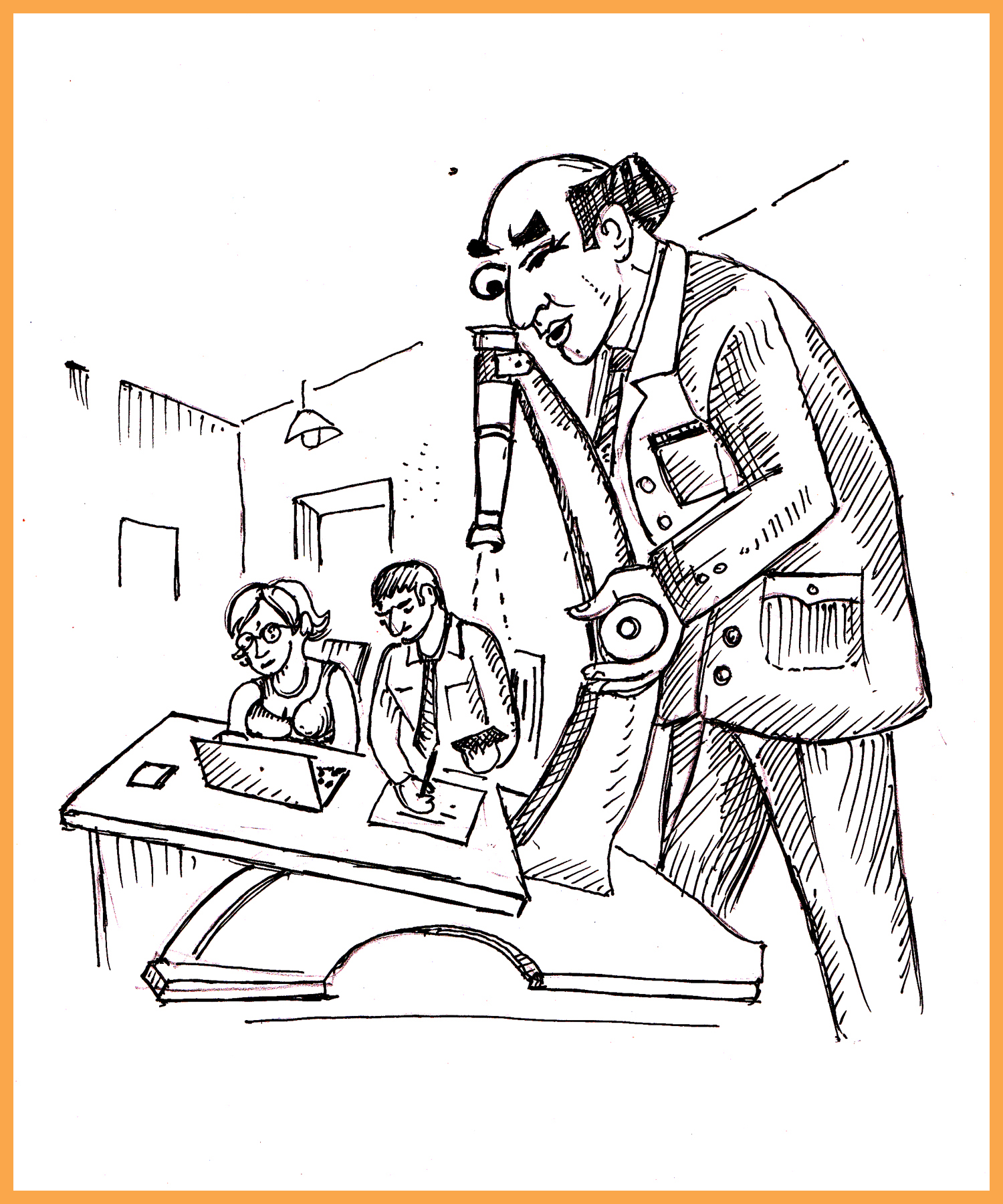
When Road Rollers rule the roost for a long time, organizations often end up sitting on a dormant volcano which could erupt any time. Attrition rates gallop. Key performers get burnt out. People lack focus and work merely to show off. A sense of lethargy pervades. The percentage of employees of the Y-kind plummets. Managements concerned about lack of employee morale and motivation keep calling in experts to cheer up team members, with minimal results. MICROMANAGING

Often, micro-managing skills are applauded. Thus, grooming of future leaders assumes a lower priority. This leads to an absence of succession planning.

When faced with smarter government agencies who either sense a loss of public revenue or a scandal which might sully the image of the political party in power, such CEOs often invite greater trouble for their organizations. In one stroke, financial gains made over several years get wiped out. The organization’s brand image gets sullied.

Most of the times, such CEOs behave like pilots about to press the eject button in their cockpits. However, their reputation precedes them. Parachuting down to greener pastures becomes a challenge.

Have you ever had the good fortune of working with a Road Roller CEO? If so, and if you survived for a long duration, sincere appreciation is in order. You have already developed nerves of chilled steel, a trait so very essential to success in business. What you need now perhaps is a crash course to boost your Emotional and Spiritual Quotients, so your organization and your team members can breathe easy!

Note: Inputs from Ms Somali K Chakrabarti are gratefully acknowledged. She can be found here.

{Related Posts:

https://ashokbhatia.wordpress.com/2015/12/24/looking-for-ceos-inspired-by-the-yuletide-spirit

https://ashokbhatia.wordpress.com/2016/01/07/ceos-who-happen-to-be-charmless-charlies}

Read Full Post »

Lord Krishna, whose birthday will be celebrated tomorrow, happens to be one of the most revered and liked gods of the Hindu pantheon. Looked at from a management point of view, he is a leader par excellence. He manages events and people in such a manner that the end result is eventually positive and leads to a greater good.

Here are some facets of his personality which might be instructive for managers at all levels.

A friendly demeanour

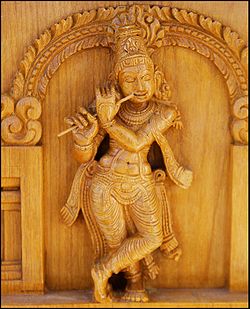
When a devotee plans to seek a straight forward favour, like when a much-awaited promotion is due and hard workKrishna_holding_flute has indeed been put in for the purpose, Lord Rama is often the more sought after religious figure. But when a devious request has to be made, say when praying for the transfer of a CEO who keeps disturbing one’s mental peace, the attention invariably turns to Lord Krishna. After all, he is our friend, with whom we can be frank and open!
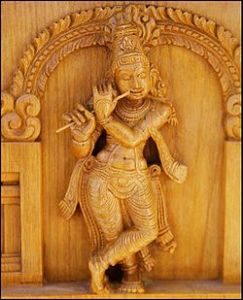
This is the kind of appeal Krishna has. The fact that he has been depicted as a playful child and teenager adds to his unique image. The manner in which he treats his friends like Arjuna and Sudama multiplies his allure as a great problem solver. His ready availability is his Unique Selling Proposition. This is a quality which many a manager would find good to imbibe.

Flexibility in Approach

When it becomes apparent that Jarasandh would not allow the kingdom of Mathura to enjoy uninterrupted peace as long as he and Balarama are there, Krishna does not hesitate to leave his comfort zone. In order to ensure that the denizens of the city remain safe, he decides to build a new capital at Dwarka and shift his operating headquarters there.

When market dynamics change, business leaders and their team members in FMCG companies do not hesitate to travel to the hinterland. This helps them to understand the customer psyche better, thereby improving their presence in diverse markets.

Examples abound of companies which did not keep pace with the changes in technology and the market place. They continue to remain alive in our memories only.

Accessibility

Whosoever happens to be facing a challenge can approach him. Whether it is Arjuna or Duryodhana, there is no hesitation in seeking his help. Yes, whether and how he decides to help depends on which side of ‘Dharma’ we happen to be on. Duryodhana gets the support of his entire army, whereas Arjuna ends up getting him as a personal charioteer.

The privilege of accessibility is granted even to those opposed to him. Sisupala has the liberty of abusing him publically. Admittedly, he has a quota which, when exceeded, results into his death.

True blue leaders are invariably accessible to their team members. When a sudden challenge pops up, anyone can reach out to them and seek guidance.

Adherence to ‘Dharma’ (Righteousness)

The values inherent in a corporate policy, the vision for the company, the mission of the organization – theseMahabharat Disrobing_of_Draupadi constitute the ‘Dharma’ of all leaders, CEOs and managers.
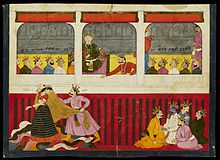
When Krishna gets invited to the palace of Duryodhana for a rich feast, he declines. Instead, he prefers to have simple food at Vidura’s place. When Draupadi gets disrobed in King Dhritarashtra’s court, he manages to protect her honour. When a war becomes inevitable, he sides with the Pandavas. Invariably, he sides with those who follow the path of righteousness.

Strategy and Vision

In a careful reading of the major turning events in the whole narrative of Mahabharata, Krishna emerges as an eminent strategist. He keeps Draupadi’s frustration under check. He knows that Kauravas would never agree to let Pandavas have their share of the kingdom in a peaceful manner. Yet, he himself goes to plead their cause so that peace is given a last chance.

In the battle that ensues, he virtually leads the 7 divisions of Pandavas’ army to a decisive win against the 11 divisions of Kauravas’ army.

All mighty warriors on the Kauaravas’ side fall with specific inputs from Krishna. In case of Bhishma, Arjuna attacks him standing behind Shikhandi. Dronacharya is misled to believe that his son Ashwatthama has fallen. When Duryodhana appears to be invincible in his mace fight with Bhima, Krishna gestures to the latter to hit the former below the navel, thereby incapacitating him. When Balarama gets upset with Bhima for having broken a cardinal principle in his final fight with Duryodhana, Krishna intervenes to pacify him by reminding him of the several injustices perpetrated by the Kauravas on Pandavas.

Detachment

The manner in which Krishna persuades a demoralized Arjuna to take up his arms by enunciating the basic principles Mahabharat Krishna Arjunaof life in the Bhagavad Gita is exemplary. The gospel of devotion to duty, without attachment or desire of reward, continues to show the way of life to all those who seek light in the dark problems of life.

Krishna not only preaches but also practices detachment. Consider the manner in which he decides to leave his home and hearth in Gokul and Vrindaban. To him, the call of duty, of restoring the kingdom of Mathura to King Ugrasena, a just and righteous monarch dethroned and imprisoned by his own son, Kansa, is supreme. The fact that Kansa happens to be his maternal uncle does not stand in the way of Krishna killing him to achieve his goal.

He does not entertain the thought of ruling over Mathura himself. He believes that in order to be a competent ruler, he first needs to complete his study of the Vedas, achieve proficiency in warfare and understand the nuances of governance.

What does a CEO do when business conditions warrant a manufacturing unit to be shut down, even though he himself had painstakingly set it up two decades back? What does a manager do when a much-liked junior commits an act of impropriety and has to be asked to leave the company? Or, when a plum assignment has to be given up due to compelling personal reasons? A sense of detachment comes in handy in all such situations. The higher the level of detachment, the more objective the decision is likely to be.

Unstinted Support

When Abhimanyu gets killed on the battle field, a grief-stricken Arjuna vows to slay the warrior responsible – Jayadratha – by next sunset, or end his own life. Krishna manages to save Arjuna’s honour, bringing much relief to the Pandavas.

To those who remain committed and loyal to them, leaders provide unstinted support.Krishna

The Many Masks

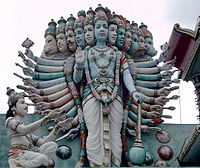
Krishna does not hesitate to reveal himself in his entirety in the midst of the battlefield. Arjuna is petrified to see the ‘Vishwa Roopa’ of someone he considers to be a close friend.

Leaders also wear several masks. They could be polite and gentle. They could be loving and compassionate. But if the situation demands it, they could also invoke dread and fear amongst their team members. Just like Krishna, they possess a multi-faceted personality.

The Inner Voice

One of the basic concepts enunciated by Krishna in the Bhagavad Gita is that of the everlasting nature of the soul. The concept of a soul now finds a resonance even in modern management literature. In ‘The 8th Habit’, Stephen Covey urges professionals to pay heed to their ‘inner voice’. While proposing the whole person paradigm, he speaks of the four dimensions of a person – spirit, body, heart and mind.

Intuition

Once the war gets over and all his sons have got killed, Dhritarashtra attempts to kill Bhima by crushing him in a close embrace. Krishna is able to read his mind and deftly pushes across a metal statue instead, thereby saving Bhima’s life.

Smart managers go beyond ‘analysis paralysis.’ They do use information, but they also rely on their intuition. A more balanced decision-making comes about.

Tenacity and Perseverance

When the disappearance of a valuable gem, the ‘syamantak mani’, is attributed to Krishna, he does not wallow in self-pity. With a chin-up attitude, he keeps working on the problem till the time it becomes clear that his conduct is as pure as the driven snow.

CEOs with a tenacity of purpose build up a unique team of followers. Perseverance is ingrained in their character. To give up does not come easily to them.

A Global MindsetMahabharat Draupadi_and_Pandavas

Personally, Krishna has little to gain from the great war. All his actions are directed towards the overall benefit of the society. Once Yudhishtira assumes the charge of the entire kingdom, peace prevails and development comes about.

Great business leaders share the same quality with Krishna. They try to give back to society in more ways than one. Sustainable business practices ensure that their companies’ operations do not cause irreparable damage to the eco-system.

Leading from Behind

Unlike Lord Rama, who leads an army from the front, Lord Krishna leads it from behind. The former leads an army of monkeys. The latter leads an army of illustrious people. Each one has great prowess, expertise and self-mastery. He also gets to handle people who are more shrewd and cunning.

In the initial phases of industrial revolution, when manufacturing was the primary activity, most of the leaders had to lead their teams from the front. In the services sector, as also in the emerging knowledge economy, leaders mostly manage from behind.

Depending upon the situation at hand, leaders switch from one mode to another. The style also varies from person to person.

A Tryst with Adversity

Krishna lives a unique life which is full of adverse circumstances. He is born in captivity. He is separated with hisKrishna birth parents immediately after his birth. Even as a child, he manages to survive attempts on his life. He leaves his foster home, never to return. He leaves the city of his birth and relocates to a far off place. He continues to be busy solving other’s problems throughout life. His whole clan gets destroyed in a bitter fight between its own members.

At no stage do we find Krishna blaming his circumstances. He is self-assured. He is confident. He is clear on what he wants to achieve. His methods may be rough at times, but they deliver.

Sure enough, like many a business leader, he pays a heavy price for upholding righteousness. With little time for family and children, the progeny is destined to remain unsung.

Tough situations bring out the best within managers. Life strives to chisel their character into a fine shape, much like a finely carved statue which is much admired by those who view it from the outside. Few realize the pain, suffering and sacrifice that the stone has undergone to achieve that exalted beauty and that state of perfection.Krishna_Arjuna_Gita
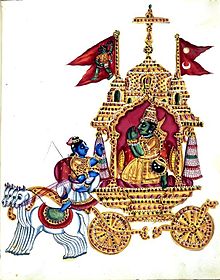
Krishna – A Spiritual Leader

Much like a business leader of modern times, Krishna displays vision, flexibility in approach, resourcefulness and an excellent capacity to command. The authority that he exercises over others is born more out of love and concern, not fear. He is the trouble-shooter par excellence who leads, inspires, guides and motivates. He sets a fine example for business leaders and managers to emulate.

Krishna is a role model for spiritually inclined leaders and managers. He demonstrates that being spiritual does not necessarily mean being soft. It only implies that one’s decisions and actions are rooted in stark pragmatism, backed by sound values and propelled by a desire to achieve the greater good.

(Related posts:

  1. https://ashokbhatia.wordpress.com/2013/05/27/management-lessons-from-ramayana
  2. https://ashokbhatia.wordpress.com/2013/07/12/management-lessons-from-mahabharata)

Read Full Post »

Professionals need to step back every once in a while and check if their brand image is bright and shining. Keeping one’s brand value burnished helps in career progression. It is also an immensely satisfying slice of life which promotes self-worth and boosts self-confidence.

Here is a checklist of the kind of inputs which go into keeping a professional’s brand value burnished.

1. Under-promise, over-deliver
Being aware of our core strengths as well as limitations helps us to assess our chances of success in delivering on a project. By ensuring that we commit conservatively but deliver zealously, we build up a reputation of reliability. There are indeed times when a polite ‘no’ could save us from denting our reputation.

2. Practice honesty and openness in relationships
Our colleagues and team members are equally smart. They are quick to sense a touch of opacity on our part. They detest a lack of transparency in us. Dealing with those around us with honesty ensures that they repose their faith and trust in us. As a result, our capability of getting things done improves.

3. Be a friend, philosopher and guide
All of us have some expertise which may not be directly relevant to our Key Result Area. It could be an insight into theTEAMS realm of alternative therapies which a colleague can use for one of her family members. It could be about handling rebellious teenagers at home. If we put such expertise to use by helping others around us, word goes around and others rush in to seek our counsel. We might have the image of a tough task master, but this softer aspect of our personality helps us to build a unique brand for ourselves.

4. Network
Whether within the organization or outside, networking goes a long way in building up our reputation. The trick, however, is in avoiding those with a negative outlook, while promoting ties with those who have positive vibes.

5. Keep learning
Keeping the saw sharpened always helps. By refreshing our knowledge pool continuously, we remain a leader in more ways than one. Often, a dash of humility is all it needs to remain ahead of the curve.

6. Be genuine
By being ourselves, we enhance our dependability. Others feel reassured and refreshed after each encounter with us. They do not mind confiding in us. In turn, this helps us to understand and address their anxiety and concerns better. Our ability to deliver improves.

A brand is all about reliability and dependability. It offers good value for money. So do professionals who work on the basis of deliverables. Smart ones realize that an image is merely a matter of perception. It needs to be backed by real inputs so one’s brand value remains intact and is kept burnished at all times.

Read Full Post »

« Newer Posts - Older Posts »