Feeds:
Posts
Comments

Posts Tagged ‘Leadership’

Just like ‘Ramayana’, the epic of ‘Mahabharata’ also has many management lessons for the present day business leaders and managers. Greed, jealousy, quest for power, trying to achieve goals irrespective of the fairness of the means deployed – all these contradictions in life are very poignantly brought out.

Here are some lessons which could be drawn from the epic.

  • Merit over Birth

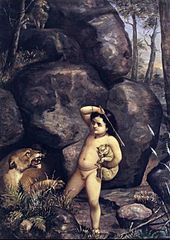
When it comes to announcing a successor to his vast kingdom, King Bharata does not choose any of his own sons. Instead, he namesMahabharat King Bharat Bhumanyu whom he considers more capable to manage the affairs of his kingdom. In a dynastic rule, seeds of democracy are thus sown.
In India Inc’s power rankings, professional CEOs are on the rise. Three of the top ten in the 2013 edition of ‘India Inc’s Most Powerful CEOs’ are professionals. Five years back, K V Kamath was the only professional in the top ten.

In a reversal of an openly declared of Infosys, Chairman N R Narayana Murthy recently stirred a hornet’s nest by insisting on bringing his own son as a team member. Only time will tell if the decision pays off; as of now, seniors in the company are a bit shaken up with the move.

  • Commitment

For his father Shantanu’s happiness, Bhishma swears never to marry. Throughout his life, he remains committed to the kingdom of Hastinapur. Despite his difference of opinion with Dhritarashtra and Duryodhana, and despite his obvious fondness for the Pandavas, he leads a vast army against the latter. However, his conduct is very transparent; he openly tells Duryodhana that though he is fighting for Kauravas, he shall not harm any of the Pandavas.

On the flip side, Bhishma also sets the example of a senior professional who overstays his welcome!

Many organizations have deeply committed silent performers who stick by it irrespective of the business ups and downs being faced. Business houses which follow a healthy set of values do end up attracting more such professionals whose value systems match with their own. In times of crisis, such people tend to be pillars of strength for the company. However, there could be situations when they need to be taken on board merely as advisors and not as executors, so younger blood in the organization also gets a chance to prove its mettle.

  • Failures are Stepping Stones

Bhishma abducts three sisters – Amba, Ambika and Ambalika – to get them married to Vichitravirya. However, Amba claims she is already in love with Salva and cannot accept anyone else as her life partner. Eventually, she is rejected by both Bhishma and her own ex-lover Salva. She takes this failure as a challenge and ends up being born as a person of mixed gender –Shikhandi – in King Drupad’s family. Eventually, he/she becomes the cause of Bhishma’s death in the battlefield.

Those who take their failures as a challenge have the capacity to introspect. They identify their weaknesses and take steps to excel in areas in which their arch rival is strong. Ultimately, victory is theirs.

  • Promises are like Babies!

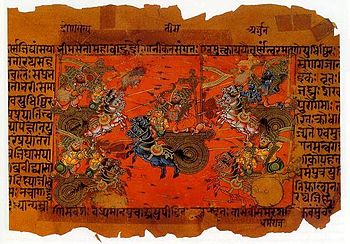
Just like babies, promises are easy to make but difficult to keep. When they are studying together, Drupad, a prince, and Mahabhata KurukshetraDronacharya, a commoner, become good friends. Drupad light-heartedly tells Dronachrya that once he grows up to become a king, he would be happy to share half of his kingdom with Dronacharya. However, once they grow up, Drupad reneges on his statement and even mocks Dronacharya in his court. The result is life-long bitter rivalry between the two which spills onto the battle field, with Dronachrya on the Kaurava’s side and Drupad on the Pandava’s side.
CEOs who promise a promotion merely to achieve short-term results often find that the promotee eventually reaches his level of incompetence at lightning speed, embarrassing all concerned. Smart HR honchos never make promises which they know cannot be kept. Same goes for marketing wizards who fear a severe backlash from customers should the product not live up to the latter’s expectations.

  • Destructive Attachment

Contrast the behavior of King Bharata to that of Dhritarashtra. He has an obsessive attachment to his evil son. He permits the Pandavas to proceed to Varnavat where, by his son’s evil designs, they are persuaded to stay at a house constructed of inflammable materials. He allows a deceptive game of dice, making the Pandavas lose their part of the kingdom. In his presence, Draupadi, his daughter-in-law, is insulted in his royal court. Bhishma, Vidur, Krishna and several others attempt to persuade him to rein in the unbridled ambition of his son Duryodhana, but to no avail. The result is a terrible war leading to devastation of the kingdom.

CEOs who promote their sycophants without assessing the overall welfare of an organization get doomed likewise.

  • Concentration

Multi-tasking is a buzzword in professional circles. But Arjuna displays a kind of concentration which involves a complete focus on Mahabharat Swayamvara_Draupadi_Arjuna_Archerythe task at hand. In the process, he evolves into an excellent archer of his times. Whether it is the bird whose eyes alone he is able to see before shooting his arrow, or the rotating fish whose eye he has to pierce based on the image cast in the water urn placed below in the court of King Drupada, he excels in accomplishing the task at hand.
Managers who look satisfied with their day’s work would invariably share the same secret with you – of having done something satisfactorily that day! Aiming for perfection, they are at least able to excel in the tasks at hand. And focusing on one thing at a time surely helps!

  • Perseverance

Notice the kind of setbacks Pandavas get to suffer in their lives. They survive the insidious designs of their Kaurava cousins at Varanavat. After losing their kingdom and wealth to Kauaravas in an unfair game of dice, they undergo an exile for twelve years in forests. This is followed by a year of remaining incognito, which they do so in King Virata’s palace. When a peace proposal gets discussed with Kauravas, Yudhishthira offers to settle the dispute between the brothers by being content with ownership of five villages only. Even this gets turned down by Duryodhana.

The tenacity of bouncing back in the face of adversity that Pandavas display is worth emulating. Many MNCs are put off by the way the Indian market is skewed – with a miniscule share of the well-heeled who have global exposure and a vast majority of common people who aspire for reliable products and services at highly discounted prices. GE and Nestle have learnt their lessons. McDonald’s, KFC, Domino’s, Pizza Hut and Café Coffee Day in the fast food business have also sharpened their teeth by offering mouth-watering menus in the range of INR 44-119!

  • United We Stand

The mother of Pandavas, Kunti, delivers a master stroke by getting Draupadi to accept all the five brothers as her husbands. The result is a whole unified family which goes through its trials and tribulations as a single unit. Each of the brothers has a USP – if Yudhishthira is the epitome of virtue upholding ‘dhrama’ (righteousness) at all costs, Bhima and Arjuna are great warriors who have to be kept on a tight leash, impatient as they are in extracting revenge from Kauravas. Nakula and Sahdeva have their own unique qualities. Together, the five brothers form a multi-skilled and invincible team.

Large conglomerates like Tatas often sound similar in their overall configuration. Each company within the group’s fold has a unique place in the market. Each is headed by a stalwart who is a subject specialist in the field. The companies operate in fields as disparate as salt and software. Yet, all of them are connected by a common value system and a similar business philosophy.

  • Draupadi Syndrome

Juggling between five husbands is no mean task and Draupadi appears to handle it rather well.

In what are euphemistically known as “matrix” organizations these days, reporting to several bosses at the same time could be a Mahabharat Draupadi_and_Pandavaschallenging experience. One has to learn to balance each boss’ expectations against those of others. Much depends on their relative seniority or clout in the company, based on which one could handle the situation. Of course, it does not pay to pitch one of the bosses against the other, whether directly or indirectly!

  • Excellence in Governance

When Indrapastha is built, Pandavas rule in a fair and just manner. They do not stray from the path of righteousness, thereby winning the love and affection of their subjects. They rule for thirty-six years before falling prey to an unfair game of dice.

Excellence in governance is a vital condition for a business leader to command respect amongst his team members. Taking good care of people is an important part of governance. The HR initiatives taken by the Tata group after The Taj Mahal Palace Hotel was targeted in a terrorist attack on November 26, 2008 in Mumbai, go on to show how well the company cares for its employees.  

  • Being Impartial

In the Yaksha episode, Yudhishthira is asked as to which of his four brothers he would wish to be brought back to life. He chooses Nakula. When queried, he justifies his choice by explaining that of the five of them, three (himself, Bhima and Arjuna) were born to Kunti and two (Nakula and Sahdeva) to his father’s second wife, Madri. Since he is alive, Kunti is only partially bereaved. Likewise, let Madri also be partially bereaved – hence his choice of Nakula. Pleased at this, Yaksha revives all the four remaining brothers.

Being impartial does not come easy to a leader. However, this is indeed the mark of a true statesman.

  • Loyalty to Boss

Karna faces humiliation at the hands of Pandavas for not being born in a royal family. Duryodhana realizes his potential as an ally and immediately comes forward to confer kingship upon him. They become life-long friends. Karna’s loyalty towards Duryodhana is so strong that even after realizing that he is the eldest of the five Pandavas, he chooses to fight against them, for Duryodhana.

Here is an example of unflinching loyalty to a boss!

  • Yin and Yang

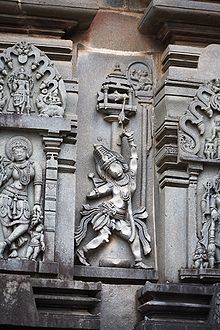
India has a great tradition of real men displaying not only their macho side, but also their effeminate and softer side. The great yin yangwarrior Arjuna spends a whole year incognito in King Virata’s palace, disguised as the eunuch Brihannala, teaching music and dance. One of his pupils, Princess Uttara, ends up becoming his daughter-in-law who gives birth to Parikshit who eventually inherits the kingdom when Pandavas decide to retire.

There is increasing realization amongst corporates in contemporary times to encourage females to assume leadership roles. Companies like Diageo, Cadbury, Coca Cola and others are making conscious efforts in that direction.

Bringing a better gender balance at the board level is the current buzzword. Leading businessmen are hiring icons of the stature of Deepak Parekh, G M Rao, Mukeeta Jhaveri and a host of others to mentor women who can shoulder board level responsibilities in the days to come.

  • Juniors First

When a decision has to be taken as to who should lead the Pandava army in the war, Yudhishthira first consults Sahadeva, the junior most brother.

This approach has several spin-offs. It instills enthusiasm and self-confidence in the younger managers. If the seniors are consulted first, others may not be able to speak with freedom, and even honest differences of opinion may get construed as disrespect.

  • Strategy and Leadership

In a careful reading of the major turning events in the whole narrative, Krishna emerges as an eminent strategist. He keeps Draupadi’s frustration under check. He knows that Kauravas would never agree to let Pandavas have their share of the kingdom in a peaceful manner. Yet, he himself goes to plead their cause so that peace is given a last chance.

In the battle that ensues, he virtually leads the 7 divisions of Pandavas’ army to a decisive win against the 11 divisions of Kauravs’ Mahabharat Disrobing_of_Draupadiarmy. The manner in which Krishna persuades a demoralized Arjuna to take up his arms by enunciating the basic principles of life in the Bhagavad-Gita is exemplary.

One of the basic concepts enunciated by Krishna in the Bhagavad-Gita is that of the everlasting nature of the soul. The concept of a soul now finds a resonance even in modern management literature. In ‘The 8th Habit’, Stephen Covey urges professionals to pay heed to their ‘inner voice’. While proposing the whole person paradigm, he speaks of the four dimensions of a person – spirit, body, heart and mind.

Coming back to ‘Mahabharata’, all mighty warriors on the Kauaravas’ side fall with specific inputs from Krishna. In case of Bhishma, Arjuna attacks him standing behind Shikhandi. Dronacharya is misled to believe that his son Ashwatthama has fallen at the behest of Krishna. When Duryodhana appears to be invincible in his mace fight with Bhima, he gestures to the latter to hit the former below the navel, thereby incapacitating him. When Balarama gets upset with Bhima for having broken a cardinal principle in his final fight with Duryodhana, Krishna intervenes to pacify him by reminding him of the several injustices perpetrated by the Kauravas on Pandavas.

Once the war gets over and all his sons have got killed, Dhritarashtra attempts to kill Bhima by crushing him in a close embrace. Krishna is able to read his mind and deftly pushes across a metal statue instead, thereby saving Bhima’s life.

Much like a business leader of modern times, Krishna displays vision, flexibility in approach, resourcefulness and an excellent capacity to command. He is the trouble-shooter par excellence who leads, inspires, guides and motivates.

  • Execution and Followership

If Krishna proves his leadership skills, Pandavas display the skills of being true followers and executors. Yudhishtira, considered an epitome of virtue, agrees to announce the false news of Ashwatthama’s death, thereby leading to Dronacharya getting vanquished. Motivated by him, Arjuna takes up his arms against his grandfather, Bhishma. Bhima listens to Krishna and ends up killing Jarasandha (much earlier in the narrative) and Duryodhana (towards the fag-end of the battle).

Often, seniors in companies lament about the lack of some qualities in their assigned leader. But one needs a sense of humility, Mahabharat Krishna Arjunaconfidence in another’s ability and the motivation to achieve a super-ordinate goal to work as an effective team member. An objective assessment of the situation at hand, unqualified support for the overall goal, registering dissent wherever necessary and balancing the leader’s weaknesses with one’s own strengths are some of the factors which result into better execution of plans.

  • Do Not Take Help for Granted

Nakula and Sahdeva’s uncle, Shalya, decides to offer his big army to Pandavas in the ensuing war. However, on the way to the battle field, Duryodhana extends a very thoughtful and warm hospitality to Shalya’s army. The result is that Shalya becomes obliged to fight his own nephews in the war! Yudhishthira ends up repenting for having taken Shalya’s help for granted without worrying about the needs of the vast army marching on its way with the intention to assist him.

When working on a project, we often take our friends and colleagues for granted. ‘Mahabharata’ exhorts us to first put ourselves in the other person’s shoes, realize his constraints and then only expect to be helped accordingly.

  • Receive Favors with Humility and Alertness

Shalya receives favors from Duryodhana with humility but without alertness. He does not bother to check whose hospitality he and his army are enjoying.

There are days on which a manager may be pleasantly surprised to find himself being unduly praised by seniors. In some cases, this could be a sign of impending doom – of being saddled with an impossible task which others might be loath to pick up! Alertness while accepting praise surely pays.

  • Key to Failure  

As the crown prince of Kauravas, Duryodhana initiates a war which has to be fought under the leadership of commanders who have a soft corner for the Pandavas! With the exception of Karna and his own brothers like Dushasana et al, all his commanders – like Bhishma, Dronacharya and Shalya – are only duty bound to support him. Their real sympathies are with the Pandavas. Thus, he is saddled with an army which is far superior to that of Pandavas in terms of sheer numbers, but sorely lacks in motivation. Duryodhana’s greed, envy and jealousy lead him to his doom.

In the business world, we often come across fool hardy leaders who set their goals so high as to be unrealistic. If a proper assessment of the resources available at their command is not made, failure is bound to follow.

  • Rash Commitments

Abhimanyu, Arjuna’s son, gets killed unfairly and the main culprit is held to be Jayadratha. Arjuna is livid with rage and declares that he would kill Jayadrath by the following evening or renounce the world. At a crucial moment in the next day’s war, Krishna intervenes to ensure Arjuna’s victory, bringing relief and joy to all.

Faced with a drastic situation, a professional needs to sit back and think for some time before committing himself to a target which could well turn out to be unattainable.  

  • Knowledge vs. Virtue

One of the sub-plots narrates the story of Arvavasu and Paravasu. Both are sons of a great scholar and become great scholars in their own right by acquiring knowledge. But one turns out to be good and the other evil. Moral of the story – knowledge which remains undigested information crammed into the mind cannot instill virtue in a person. Such knowledge merely remains like our clothes, an external factor in our appearance which does not reveal what we are within ourselves.

Post Lehman Brothers, educational institutions have started taking the issue of instilling the right values in their students seriously. A business leader without a strong moral compass and lacking a set of virtuous values and ethics could lead the business to eventual ruin.

  • Seeking Favors sans Competence

In another sub-plot appears the story of Yavakrida, who craves to master the Vedas without having to study them! He is grudgingly granted a boon to this effect, but eventually dies at the hands of a demon after being charmed by a young maiden.

A true blue professional would surely aim to occupy the coveted corner office, but only after he has done his own SWOT analysis.

  • Avoid Arrogance

One of the several sub-plots in ‘Mahabharata’ is that of Nahusha who falls from grace after having occupied the throne of Indra, king of the Gods. His fall comes about because of sheer arrogance and pride.

Power and pelf bring in severe obligations in their wake. Successful CEOs understand this, take extra care to keep their pride in check and tailor their inter-personal relationships accordingly.

‘Mahabharata’ is rich with several other narratives which could be useful to management practitioners. Also, each narrative may be interpreted in several ways, depending upon how one goes about analyzing it.

References:

  1. ‘Mahabharata’ by C Rajagopalachari.
  2. Adi Parva original.
  3. Bhagavat Purana.
  4. Series by K M Munshi.
  5. Series by Ram Kumar Bhramar.

(Related posts:

    1. https://ashokbhatia.wordpress.com/2013/05/27/management-lessons-from-ramayana
    2. https://ashokbhatia.wordpress.com/2015/09/04/management-lessons-from-the-life-of-lord-krishna)

Read Full Post »

India can justifiably boast of a long history of culture, tradition and values. Scriptures of Indian origin are a treasure trove of nuggets of wisdom. These continue to be relevant in the current context and also find ready application in the field of business management and administration.

Here are some of the areas where I believe Ramayana can inspire management14 practitioners.

  • A Premium on Values

Sticking to some core values which are steeped in righteousness eventually leads to success. The main protagonist, Rama, is depicted in Ramayana as an epitome of virtue. He is an ideal king, an ideal son and a pragmatic person. He sets high ethical standards in warfare and invariably sides with dharma, or righteousness.

A random sample of all successful business houses which have been around for more than a century now – Siemens and Tatas, for instance – is ample proof that ethics in business do pay dividends in the long run. Names of such business houses enjoy tremendous brand equity in the market; understandably, that rubs off on their products as well.

  • High on Motivation

To me, the Ahalyaa episode is all about a good leader enthusing a team of demoralized members who have become zombies over a period of time and have stopped delivering results. Once ‘woken up’, they are fully charged and start performing along expected lines.

Rama wages a war on Lanka with very limited resources, backed by an army which is pretty out-of-the-box or unconventional. It is an army which is highly motivated, expecting minimal facilities. Goes on to show the superiority of motivation levels over the availability of physical resources.

A CEO who is out to increase his market share needs the back up of a highly motivated sales staff which – if motivated well – would go all out to win the hearts and wallets of the company’s customers.

  • Mergers and Alliances

When a merger is based upon a congruence of basic value systems of both the parties involved, long-term benefits accrue.

The alliance between Rama and Sita is a turning point in the Ramayana for more reasons than one. Sita is brought up in the household of the sage-king Janaka. When Rama gets banished to the forest after their marriage, she displays a clear absence of any hedonistic tendencies and chooses to accompany him to the forest. Without a synergy of this kind, the sequence of events could have been quite different!

Likewise, the friendship of Rama and Sugriva sets a good example of mutual cooperation between two people facing a similar predicament in life and career. What follows is Sita getting traced in Lanka and Ravana eventually getting vanquished.

When Etihaad decides to team up with Jet Airways, or when Tata Steel ties up with Corus, the parties involved are looking for synergies in their respective core strengths, so as to tap their joint business potential better.

  • Succession Planning

Dasaratha’s plans for installing Rama on the throne of Ayodhya do turn topsy-turvy, but the existence of a clear succession plan can never be denied. This is meant to ensure continuity in governance. It helped that besides being the eldest son, Rama was liked by all and hence chosen to lead the kingdom once his father passed away.

As per Raghuvansham of Kalidasa, when the time comes to relinquish his body, Rama divides the kingdom equitably between his two sons – Lava and Kusha.

All well-managed companies ensure that the career development plans of their top performers are directly linked to succession plans. Ideally, good leaders invariably groom at least three managers under them. When one gets promoted to the coveted slot, it is quite likely that two others may seek greener pastures elsewhere. Whatever happens, the goals and the processes involved in achieving the same enjoy uninterrupted continuity.

  • Leaving the Comfort Zone

When Rama gets ordered to remain in the forest for a span of fourteen years, Sita and Rama take it as an opportunity to engage with the ordinary citizens of their kingdom, rather than remaining confined to the comforts of their palace. This helps them to understand the ground realities better.

CEOs and marketing honchos of today who travel through the hinterland to get a better first-hand feel of the customer’s pulse do a far better job of servicing the market.

  • Excellence in Execution

The plan to locate Sita gets brilliantly executed by Hanuman. The wisdom withRamayana 3 which he conducts the search and the single-minded pursuit of the goal is an example worth emulating by managers at all levels. While crossing the sea, he declines an invitation from Mount Mynaaka to take some rest on the way.

The manner in which he assures Sita of his genuineness exhorts managers to conduct commercial negotiations by first setting the anxieties of the opposite party at rest.

  • Concern for Environment

For three days, Rama prays to the god of the sea to grant a passage to his army. Nothing happens. Rama then shoots arrows into the bosom of the sea, whereupon the sea-god appears and explains that he is bound by the laws of nature, just like earth, air, space, light and all constituents of the universe. Creatures living under his shelter he cannot forsake, but surely a shallow area can be shown where a causeway can be built.

Rama accepts the sea-god’s apology and orders the building process to start. Thus, the objective is met without damaging the eco-system.

In the current context, governments all over the world are realizing the importance of striking a judicious balance between economic growth and environmental concerns. Rama’s approach inspires us to strive to find the middle path and ensure that Mother Nature is not unduly disturbed to pave way for crass commercialism.

  • Dependence on Yes-men!

Ravana is a highly learned and accomplished person. One of the reasons for hisRamayana 2 downfall is to neglect the advice of nay-sayers. His wife, Mandodari, brother Vibheeshana and minster and maternal grandfather Malyavaan – all advise him to return Sita to Rama. Instead, he chooses to listen to his courtiers who play on his ego and pride and advise him not to do so.

A couplet in Sundara Kanda of Ramcharitmanasa clearly advises us to ignore the advice of a paid deputy, a doctor and a teacher who speak positively out of either fear or expectation of a gain. A king who acts upon such motivated advice loses his kingdom, his body and his righteousness (dharma) as well.

  • Humility in Victory

When Ravana is on his death-bed, Rama exhorts Lakshmana to learn the tenets of good governance from him. Lakshmana approaches Ravana rather haughtily first and fails. Rama then advises him to approach Ravana with due humility, whereupon Ravana speaks of the pitfalls of procrastination and shares his knowledge about statecraft and diplomacy.

  • Power of Attorney

The sincerity with which Bharata takes care of the kingdom’s affairs while Rama is away speaks of true values of follower-ship. Upon his return to Ayodhya, Bharata informs him that the kingdom’s revenue had gone up ten-folds during the fourteen years he was away.

Here is an excellent example of a kingdom held in trust and good faith, much akin to the present day concept of a power of attorney getting appointed to take care of administrative and legal matters of a business when owners are not readily available.

  • Make Haste, But Slowly!

Rama has won the war and is on his way back to Ayodhya. He decides not to rush back. Instead, he stays back at Sage Bharadwaj’s ashram for a night and makes enquiries about the state of affairs in Ayodhya. Also, he sends Hanuman upfront to break the news of his imminent arrival to Bharata who is living like an ascetic in Nandigram. He moves to Ayodhya only after receiving adequate feedback about its current situation.

  • Leadership Traits

With the possible exception of his handling of Sita upon her return from Lanka, Rama conducts himself in an exemplary manner throughout the narration. Feminists these days may scoff at the treatment meted out to Sita but the fact remains that Rama acts like a true-blue king for whom the overall welfare of the kingdom comes first, even though he suffers personally in the process.

Whether it is befriending Nishaad Raaj, refusing to return to Ayodhya when Bharat approaches him in Panchavati, conducting the last rites of Jataayu, accepting Vibheeshana in his fold or even when reuniting with his mothers and brothers upon his return to Ayodhya, he sets a high bar for humanity in general.

In the corruption-infested times we live in, his leadership traits inspire managers to do their best even under the most trying circumstances.

  • Ram Rajya

The concept of being fair to all is the bedrock on which modern management is based. For those in power at the top, an impartial conduct of those in authority is a sine qua non for the morale of the people. Sita gets banished to the Valmiki ashram when an ordinary citizen casts an aspersion on her character. Rama’s role is not much different from that of a true-blue CEO whose loyalty to the company’s overall welfare is unflinching.

Skirt-groping CEOs who have a roving eye and managements which look the other Ramayana 1way just because they accord a higher priority to business goals than to the character of their top honchos could take a leaf out of Rama’s conduct.

There are several instances when management has to divulge information on a ‘need to know’ basis. However, if the basic practices are perceived to be fair to all, even management policies which impact the employees adversely – like a down-sizing – are not taken amiss across the company.

Ramayana is rich with several other narratives which could be useful to management practitioners. Also, each narrative may be interpreted in several ways, depending upon how one goes about analyzing it.

References:

Ramcharitamanas by Goswami Tulasidas, Valmiki Ramayana, Ramayana by C. Rajagoplachari, Raghuvansham by Kalidasa, Adhyatma Ramayana, Series on Ramayana by Narendra Kohli.

Illustrations Courtesy Internet

http://attachment.benchmarkemail.com/c117651/July-Augusl.pdf 

(Related Posts: 

https://ashokbhatia.wordpress.com/2013/07/12/management-lessons-from-mahabharata

https://ashokbhatia.wordpress.com/2015/09/04/management-lessons-from-the-life-of-lord-krishna)

Read Full Post »

Is there a scope of improvement in management education? If so, how do we enrich it further?

I confess that management education is not my forte. The only exposure I have had to this exalted field was when I was at the receiving end, so to say – that is, as a MBA student myself! But, over the years, interaction with the younger managers has provided me with valuable clues as to the challenges being faced by the current crop of MBAs. This alone emboldens me to endeavor to propose what I believe could be done to enrich the process further. Of course, I do so with utmost humility at my command!

·         A 360-degree CEO View

Management education opens up one’s mind to various facets of an enterprise. However, it does so through the bifocals of a top honcho’s perspective. Upon entering the industry, a befuddled greenhorn could get a thermal shock. Most of the concepts covered in a typical MBA course appear to be irrelevant at that stage of one’s career. Depending upon an incumbent’s innate strengths and the type of opportunities one gets in one’s career, it could take around 15-20 years for one to reach a level where the first whiff of real business strategy and corporate planning etc comes one’s way.

What we need perhaps is a better emphasis on the dilemmas faced by middle level managers. This can possibly be achieved by structured interactions with management experts in the middle rung of large organizations. Case studies which are designed to showcase the types of challenges faced by middle management could also help.

A 360-degree view is absolutely fine, as long as the gondola takes us not only to a mountain top at 3,500 m in the Swiss Alps, but also delights us with the panoramic views at 1,500 m and 2,500 levels.

·         Business History

The way Tatas, Birlas and Ambanis grew up, adapting to times which ranged from British governance to the license and permit-raj days, followed by the phase of economic reforms in India, is fascinating.

If one group focused on weaving ethical values into its business operations, the other capitalized on the pent-up demand in the market. Even their approach to philanthropy was different – one ploughed back its resources by focusing on the fine arts, fundamental sciences and medical facilities, the other earned the public’s respect by constructing a string of temples and related facilities for the common man.

Dhirubhai Ambani became a darling of the masses and popularized the concept of equity investments amongst the teeming millions of India. Post economic reforms, entrants like Infosys delivered good value to shareholders and employees in the newly emerging knowledge economy of India.

Examples abound from the international business arena as well. One is not talking merely of legends like Henry Ford and Steve Jobs here. Alfred D. Chandler’s ‘The Visible Hand: The Managerial Revolution in American Business’, and Charles Wilson’s ‘History of Unilever’ offer great insights into the field of business history.

While pursuing business history, one comes across entrepreneurial heroes as well as exploitative villains and empire builders as well as corporate raiders. A truly enriching exposure for a wannabe entrepreneur and/or an intra-preneur!

·         Lessons from Scriptures

Whether it is Ramayana, Mahabharat, Thirukkural or Chanakya’s Artha Shastra, there is a rich repertoire of management strategy as well as tactics enshrined in our scriptures. Each one contains gems of wisdom which can be put to effective use by management institutes which are already waking up to utilizing the wealth of wisdom available in literature to drive home some key management concepts.

The story of Lord Rama teaches us about waging a war with very limited resources. It also tells us about succession planning, ideal management practices based on fair and impartial conduct of those in power, humility, besides covering several other concepts.

Mahabharat can teach us about the perils of attachment to one’s near and dear ones in life/career, merit taking precedence over pedigree in promotions, tactical retreats in the face of imminent disaster and the risks of hasty decision making sans careful thought, to name only a few. Bhagavat Gita is full of practical wisdom for those aspiring to become professional managers.

Thirukkural tells us about the duties of a king and so does Chanakya Neeti.

For grooming business leaders who have a strong sense of values embedded in their thought processes, our scriptures are an invaluable resource.

·         Finishing

For those who are aspiring for a global career, the main cultural differences between different continents of the world can improve the value-add of management education. Dining habits, etiquette and manners followed by diverse cultures across the globe can also be incorporated in consultation with institutes of learning in the field of hospitality and tourism management.

Observing and following the organization’s culture when kick-starting one’s career, protocols of behaving with seniors, peers and subordinates and do’s and don’ts of e-manners to be followed while handling e-mails, etc. can also be driven home.

Some of the above could be immensely useful to students who step into management education with socially disadvantaged sections of our society. Covering such areas would tend to make this field more inclusive in nature.

·         A Focus on Follower-ship As Well

‘Leadership’ is a favorite topic in management. We have a rich literature providing invaluable insights into various aspects of leadership. Somehow, the traits of ‘Follower-ship’ have not merited much attention at the hands of management gurus and academics. As a discipline, does management education not need to create good followers as well? After all, a leader without a gang of followers could end up being pretty clueless!

The harsh reality is that an overwhelming majority of MBAs would turn out to be followers. If a leader is expected to have charisma, a follower needs to have common sense. If a leader leads by example, the follower realizes that blind faith could mislead the team. If a leader is supposed to be adept at resolving inter-personal conflicts, a follower is expected to work harmoniously with other team members.

Most business leaders today concur that planning is relatively easy; their real challenge lies in flawless implementation. Now, if a leader lays out a strategic vision backed by meticulous planning, smooth   implementation can only come through a bevy of hard-working followers.

·         Yoga and Meditation

Physical and mental fitness is a sine qua non to do well in one’s career. Institutions training the managers for tomorrow can figure out innovative ways to bring in these elements as well into the management education curriculum.

It appears that we would do well to beef up conceptual knowledge imparted in management courses with skills and values that would make MBAs more competitive and more balanced in their approach to real issues in the industry.

The managers of management education (in India, as also elsewhere) may find some merit in the above propositions.  


Read Full Post »

Even though quite a few business houses from India had joined the World Economic Forum’s Initiative against Corruption in November 2012, not a single Indian company has so far become a signatory to the UN Convention against Corruption. This is deeply regrettable and projects the image of a corrupt business environment in India. It discourages foreign investments and erodes the brand value of Indian companies. In the absence of a level playing field, businesses shy away from potential opportunities. Mr. Ratan Tata’s lament on not having able to enter the field of aviation quite some time back is still fresh in our minds.

Companies can never be faulted for hiring Vice Presidents who are highly virtuous, law abiding and disciplined souls. Understandably, only those who follow high ethical standards and are in sync with the core values of the company would make the grade. However, in quite a few organizations, such qualities are merely necessary but not sufficient. When it comes to handling external agencies, incumbents who can either bend a few rules or interpret the fine print of law creatively to add to the bottom line of the company alone would be rated high and viewed with awe and reverence.

The Dr. Jekyll and Mr. Hyde Scenario

In other words, VPs should not only be ‘Virtue’ Presidents, but should also possess the flexibility of doubling up as ‘Vice’ Presidents while dealing with liaison matters. This stems from the core belief that businesses cannot be run successfully without back-stage dealing and wheeling, obviously with the aid of what many would euphemistically refer to as ‘appeasement initiatives’.

Appeasement of any kind is invariably geared towards either tweaking government policy to suit the ends of business, as also for specific time bound gains in the forms of large contracts, largesse, concessions and indirect favors. Organizations believe that advance knowledge of government plans, policies and rules is a great tool to deliver results to shareholders who not only look for long-term capital gains but also for better results quarter after quarter.

Sleeping with the enemy

If a professional gets stuck with an assignment which involves corrupt practices which do not match his or her personal core values, one option would be to escalate the issue. This would ensure that the matter is reviewed at a higher level in the organization.

If this option turns out to be impractical for some reasons – whether professional or personal – another one would be to start actively searching for career options with companies which value ethical practices in business!

A much better option, however, could be to work for a change from within the organization. This could be done either by presenting alternative business plans to management or by recommending an approach whereby the company could sidestep the issue by projecting its innate strengths in an aggressive manner. Let us consider some of the tactics in a professional’s arsenal which could be used to combat corruption in business deals.

Tackling Business Competition in the Market Place

The best strategy for a business to have is one which is based on avoiding government doles and concessions. By focusing on core competence and by fighting out the competition in the market place, the business can reduce its dependence on a wide section of the government policies. Surely this calls for rare qualities of leadership, statesmanship and openness. Inviting the government to play favorites and to resolve competitive business issues that are better dealt with in the market place could be a boon as well as a bane. However, this may not be possible in industries which are highly regulated.

Operating in an Unethical Environment

If one has absolutely no other option but to operate in an unethical business environment, the following steps might help to avoid corrupt practices.

  1. Building trust: An honest and humble approach, backed by a long relationship built on explaining the contribution of business can and does work. Investments made, employment opportunities offered and revenue generated are a few of the things that can be leveraged to secure favorable decisions without indulging in corruption.
  2. Reputation travels ahead: The fact that a business house does not stoop down to corrupt practice is generally well-known. It is a strategic advantage to have a squeaky clean image which ensures that a request from such an outfit is treated with the respect it deserves.
  3. Investing in underground cables: It never pays to flaunt one’s relationships. By keeping them underground, one not only wards off competition but also ensures that in case of a change of regime, the damage is minimal.
  4. Diversifying one’s liaison ‘assets’: One learns to be friendly with political opponents. In TN, one needs to be friendly with both the Dravidian parties. In WB, it is tough even if both CPM and TMC are one’s friends. In Maharashtra, Congress, NCP and both the variants of Sena must all like one for one’s business to make some headway.                                                                           Business history teaches us the same lesson. In the pre-independence era, Tatas were funding Gokhale and engaging with the nationalist elements while British officers retired from ICS were being employed by the group. JRD had excellent personal rapport with Nehru. G D Birla had been corresponding with Winston Churchill for a long time. Churchill’s dislike for Mahatma Gandhi was well-known; even though he was being supported by Birlas. They gave a job to one of his sons. It is a fact that he was assassinated while staying as a guest at Birla House in Delhi.
  5. Be courteous, humble but firm: Most government officers take a dim view of business executives. Firstly, they are not viewed as being dependable. Secondly, they are thought to be paid exorbitantly high and generate a feeling of awe as well as jealousy in a public servant. Now, if one walks in with one’s latest cell phone and/or tablet in his office and starts showing off the latest Rolex watch, one would be surely shown the door promptly.

Setting the Moral Compass Right

The UN Convention against Corruption is a laudable initiative and deserves to be given a serious thought by our present day business leaders. It binds an organization to (a) reducing corruption risk in procurement and contracts, (b) engaging in competitive and transparent procurement processes and (c) disclosing all payments made in procurement deals. The global panel already has names such as Coca-Cola, Microsoft, Siemens and Accenture.

It is not that India does not have shining examples of groups which have demonstrated the strategic advantage of pursuing business goals while staying the ethical course. The Tata group has been at it for the past 120 years or so. Liberalization of the economy appears to have thrown up quite a few scams, but companies like Infosys keep our hopes alive. As per Elaine Dezenski, senior director at WEF and the head of PACI, Infosys, Godrej Industries, Bajaj Auto, Genpact, Wipro and M&M are already signatories to the initiative.

As argued in an earlier blog (Getting a Moral Compass Would be a Sound Business Strategy for India Inc, published on December 9, 2012), companies in India would do well to seize the opportunity to clean up their business deals. A beginning can be made by persuading major political parties to make their funding transparent. Those in real estate business can come out with a time bound plan to rationalize stamp duties all across India, thereby making their deals more transparent.

Hopefully, progressive companies in India would see the strategic benefits of committing themselves to such initiatives soon enough!

Read Full Post »

Leadership is a much discussed virtue in management literature. However, like Peter Drucker says, there is no ideal type of leader. “Leadership personality’, ‘leadership style’ and ‘leadership traits’ don’t exist”, he writes in The Leader of the Future. The emergence of a leader is the result of a complex interplay of two factors – personality traits of the leader and what needs to be done at a given point in time. The moment the two become congruent, a new leader could emerge on the scene and deliver the goodies!LEADERS

There is no doubt that the leaders of tomorrow would need personality traits which would be qualitatively different from those of today. Here is my take on what business environment circa 2025 would be like, and how our future business leaders would be tackling it.

2025 – A Likely Business Scenario

What would be the business environment like in 2025? Several CEOs I spoke to said that business leaders in 2025 shall be working against the backdrop of a world which would, in all likelihood, be a multi-polar one, with Asia, particularly China, exerting more influence on global events. It would be a world which would be more inter-connected, commercially and otherwise. Thanks to new communication means, the individual empowerment levels would have risen significantly. Also, it would be a more urbanized world. Thanks to the rise of a new global middle-class, society in general would have reached a higher level of aspiration, resulting into a much higher demand for energy, food and water. On the flip side, income disparities would have risen substantially. Changes arising out of our climatic patterns would also pose a formidable challenge to the leaders of those times.

We could still be in for surprises, though. Disruptive changes are quite likely to overwhelm us. These changes could come in the form of impact of new technologies in the field of robotics, biotechnology, space sciences and communication. Increasingly, governments world over may start becoming enablers of entrepreneurship, faced as they will be with direct and intensive pressure from those they govern. We shall surely be seeing more entrepreneurs amongst our midst – whether in the commercial sector or in the societal sector.

A Business Leader in 2025

Decision Making Under Higher Uncertainty

Since the level of entropy in the system would have gone up further by then, a business leader of circa 2025 would have to be adept at making decisions under a higher level of uncertainty. The abnormal today would be the new normal, and many a leader would be feeling more like experts at river rafting in our economic and statutory rapids, often being called upon to go against the current.

I am not an expert in Econometrics, but could venture to guess that for those who are quantitatively inclined, advanced statistical tools would come in even more handy. I say so because there will be an overdose of data as well as information available to a business leader then. However, ultimately, his/her intuitive abilities – based on personal experiences in their formative years – would prove to be more valuable.

Sir Colin Marshall, the ex-Chairman of British Airways, transformed his organization into one of the premier customer service kinds in the days of yore. The uncertainty he faced in the period of his association with BA was monumental and serves as an example to be followed by CEOs of future.

Jeff Bezos of Amazon came up with the concept of ‘predictive analytics’, paving the way for all of us to enjoy the convenience of shopping on-line.

Higher Trust in Instincts

A logical corollary of the above would be the need for a leader to be ahead of the curve. Those who have counter-intuitive responses and place a higher trust in their natural instincts would surely fare better. In turn, there would be a strong need for a much higher degree of inner resilience, because this alone would enable them to keep their stress levels under control even in trying circumstances. Dynamism will be yet another critical input. It would ensure that they are able to steer their businesses through the dense economic fog enveloping the business highways.

The World Economic Forum had proposed a theme centered on the twin traits of resilience and dynamism for 2013. Given that there are no risk free growth models available to leaders and CEOs of the future, one could not agree more with this proposition.

A good example of facing flak and not losing sight of one’s goals is that of Larry Page of Google. He continues to trust his instincts and doing what he thinks is best for his business.

A Global Mindset

Given a much more inter-connected world, a business leader in the future would need to possess a vast knowledge of commercial, behavioral and societal norms followed in different parts of the world. A primary task would obviously be to ensure that his/her organization has world-class management processes. Only those institutionalizing best practices in strategic planning, marketing and human relations would be able to make their organization a successful one.  The fact that a leader would, in all likelihood, be leading a multicultural team of followers would pose a challenge – irrespective of whether the situation demands a leadership which is ‘transactional’ or ‘transformational’.

When one considers the example of Compaq’s Eckard Pfeiffer, who was a leader in a race against himself, it becomes clear as to how organizational renewal can be brought about. “No matter what industry a company competes in”, he said, “it must live with one foot in the present and the other in the future….there is simply no other way to build world leadership”.

A Democratic Style

The profile of the followers would also be different. Hierarchical authority is already proving difficult to manage change; there is no reason to believe this would not be even more so in the future. The followers would demand a higher degree of participation in the decision-making processes. Leaders who recognize this need of their followers and create a working environment which enables the same would achieve higher levels of efficiency and effectiveness in their business processes.

Creating a non-coercive environment in which employees and other stakeholders are clear about the corporate identity and the mission would be far more important than it is today. Reverse mentoring would be more a norm than an exception in the days to come.

Monsanto’s CEO, Robert Shapiro, had the ability to go against traditional hierarchy. He initiated strategy sessions with cross-sections of employees of different ranks, specialties and geographical perspectives and reaped rich dividends for his company.

The Moral Compass

Leaders who believe in sustainable businesses would not only use their commercial compass while determining the direction to take. Using a moral compass would be a valuable trait amongst the future leaders. A strong inner core, embedded with a value system which recognizes the needs of the society at large, would be a great quality to have. A pre-condition for employing key managers would be their endorsement and support of the core values of the business.

When the likes of Siemens and Wal-Mart come clean on their misdemeanors, they set an excellent example of probity in the business world. When Mr. Ratan Tata, the Chairman Emeritus of India’s salt to software conglomerate rues his inability to enter some fields of business because of the absence of a level playing field in India, his focus is on one of the core values of his business.

Indra Nooyi is charting a unique course for PepsiCo globally, shedding traditional markets and going in for healthier food products instead.

 Preparing Leaders for 2025

Captains of industry today can set a personal example by getting cross-functional teams in their organizations to come up with suggestions to face the challenges of future effectively. They can also emulate some of the traits, thereby leading to a trickle-down effect across the entire organization.

HR honchos can re-design their appraisal processes and re-assess training needs of key managers to address this issue.

Those in senior management positions can consciously plan to hone their skills in areas they find themselves deficient.

Management institutes can tweak their course content to ensure that those leaving their hallowed portals possess these traits, so as to improve their contribution towards the organizations they decide to either float or serve.

And our time to start preparing the leaders of tomorrow starts now!


Read Full Post »

KISS FREQUENTLYKISS FREQUENTLY

Managements are well-known for their propensity to give priority to business targets, and to hell with all the systems, controls and procedures! So, go in for systems which are simple and can be operated by idiots. Auditors will keep coming up with new SoPs. Before rolling these out, a manager would do well to apply the KISS (Keep It Simple and Stupid) test.

LAWYERS

Choose a lawyer based on the gravity of the issue at hand. Local lawyers are pretty effective for minor matters. For global issues affecting the industry, get your HO to rope in the second best in the country. This way, you will get first-rate attention, service and results.

LEADERS

Management can be learnt; leadership is inborn. The good news is that in some cases, leadership styles trickle down the organization, and get copied, thereby improving the behavioral consistency across the set up.

Lao-tzu, a Chinese philosopher, said “To lead the people, walk behind them”. LEADERS

LOGIC VS EMOTION

Formal education systems lead us to depend more on the mind, which thrives on logic alone. However, the heart is the seat of emotions, and has intelligence of its own. The power of intuition flows from the heart, and so does empathy. To survive and do well in the corporate jungle, managers need both in equal measure!

LONELINESS BLUES

The men at the top are a lonely lot, with no one to share their blues with. Special care needs to be taken to ensure they have a circle of neutral confidantes who can help them in retaining their balance and perspective on issues facing the organization from time to time.

Read Full Post »

« Newer Posts