Feeds:
Posts
Comments

Posts Tagged ‘Leadership’

The relationship between Efforts and Results

One would have often wondered as to the nature of the relationship between efforts and results. A project on which much energy and time has been spent may get shot down by one of the seniors and never come to fruition. Another one, which has received only a fraction of the attention that was paid to the former one might take off and become a roaring success. Other than the effort, the timing plays a role in the success or failure of a project. Market conditions, government regulations, interpersonal relationships, employee engagement and several other factors also play a role.

A sense of detachment, as brought out by Bhagavad Gita, is not about one losing the sight of the objective sought to be achieved. Nor does it recommend a defeatist attitude in one’s life and career. Rather, it is about handling successes and failures in a balanced manner. Smart leaders, who have achieved a spectacular success, do not become complacent. They remain humble. They determine the critical success factors and store these at the back of their minds, ready to be recalled when necessary. When faced with dire failures, they shoulder the blame, get requisite feedback and take steps to ensure the failure gets avoided the next time round. If they lose interest for some time, they bounce back with renewed enthusiasm and work towards delivering results.

If one were to go through the history of the Apollo series of missions launched by the National Aeronautical Space Agency of USA during the 1960s and 1970s, one would be struck by the kind of tenacity and equipoise demonstrated by the participating astronauts. Despite losing several of their colleagues in accidents, they remained committed to the overall goal, delivering some spectacular results for our scientists and technocrats to work upon. The same trend continues till date. Airspace disasters notwithstanding, we keep sending missions to Mars and to Sun. The quest of humanity to explore our universe continues unabated.

Inner Resilience and Equanimity

A related feature is the need for professionals to improve upon their levels of Inner Resilience and practice Equanimity. This is what Bhagavad Gita says in this context.

योगस्थ: कुरु कर्माणि सङ्गं त्यक्त्वा धनञ्जय |
सिद्ध्यसिद्ध्यो: समो भूत्वा समत्वं योग उच्यते || 2.48||

Be steadfast in the performance of your duty, O Arjun, abandoning attachment to success and failure. Such equanimity is called Yoga.

Professionals need to know not only what is to be done, but also how it has to be done. Lord Krishna does not fail them. He recommends an ‘evenness of mind’, the tranquility of inner composure in handling all the pairs of opposites in their careers and lives – success and failure, praise and reprimand, hiring and firing, sprees of expansion and down-sizing, products and services which are at opposite ends of their life cycles, mergers and demergers, favourable and unfavourable circumstances, and the like. This, indeed, is held to be the real ‘Yoga’.

In the process, we need to give up our false expectations, wrong imaginations, daydreams about the fruits of our actions, anxieties for results, resistance to change, and fears about future events which are still in the womb of the universal force called Time.

The traits of a Super Leader

Hers is a balanced personality, free of unreasonable desires which pose the danger of her losing sight of her sense of righteousness. She does not have a binding attachment with her emotions. Nor does she have a jealous preference for her pet ideas or for her pet people. She scoffs at any signs of nepotism. She encourages her team members to be nay-sayers, so voices of dissent could be heard and judiciously dealt with. She radiates positivity all around her. She is committed to the organization’s goals and looks after her team members much like a lioness would protect her cubs.

Such a person of steady wisdom is described in Bhagavad Gita as a Stitha-Prajna. Consider the following:

दु:खेष्वनुद्विग्नमना: सुखेषु विगतस्पृह: |
वीतरागभयक्रोध: स्थितधीर्मुनिरुच्यते || 2.56||

One whose mind remains undisturbed amidst misery, who does not crave for pleasure, and who is free from attachment, fear, and anger, is called a sage of steady wisdom.

Two concerns may arise here. One, could there really be persons who could be held to have all these qualities? Two, is it really possible for one to be free of one’s basket of desires and one’s ego?

In his book ‘Beyond the Last Blue Mountain‘, R M Lala quotes the case of Jamsetji Tata, the founder of the Tata group of companies. It was he who gave the group a unique position in India. In his later years, he did not ask ‘What enterprise is the most profitable?’ but, ‘What does the nation need?’ Since the answer in his times was steel, hydro-electric power or an institute of science, he made his best efforts to fulfil that need.

He is reported to have once said something very basic:

We do not claim to be more unselfish, more generous or more philanthropic than other people. But we think we started on sound and straightforward business principles, considering the interests of the shareholders our own, and the health and welfare of the employees the sure foundation of our prosperity.’

Alfred Sloan is reported to have once remarked, ‘What is good for General Motors is good for America.’ J R D Tata always thought the other way round. ‘What is good for India is good for Tatas.’

Theirs is only one example of a business house which is clear in its goals and in its priorities. Several others could be quoted in the current context, like N R Narayana Murthy, the founder of Infosys.

Getting rid of desires and ego is no cakewalk. A CEO may introspect and fine tune her desires so the same are aligned with the values of the organization she works for. In the process, her personal desires take a back seat. Likewise, getting rid of one’s ego completely has a flip side. One could end up becoming a doormat and getting taken advantage of by all and sundry. Her wisdom and intuition can help her to retain her individuality even while letting go of the ego. Ask any CEO who has ever worked in a single-owner driven company, and she would attest to the basic principle of leaving the ego at the office gate itself!

Professionals who remain undistracted by transient entrapments have the ability to be rational and calm. They are steadfast in reaching their goals and go on to make successful business leaders.

Read Full Post »


On a lighter note, one needs to be wary of managements which exhort one to follow this much misunderstood principle of detachment expounded in the Bhagavad Gita. They would have one believe that one should continue to slog all year long but would do well not to expect that elusive overdue promotion. One can then either lump it and trudge along, or take prompt action through proper channels to get oneself detached from the company at the earliest possible opportunity!

An inspired self-forgetfulness

What is the secret behind mighty achievements? What is the state of mind in which an artist like Vincent van Gogh would have created his unique gifts to humanity? Could he have done so while being worried if his latest masterpiece would turn out to be better than the one he had made earlier? Could Michelangelo have sculpted Pieta with the sole purpose of receiving a reward or recognition for creating the same?

Was Newton worried about either his past or his future when the apple fell? Had that been so, is there not a chance that he might have missed out on discovering the forces of gravity? What are the conditions under which a product developer based in Silicon Valley comes up with her next bright idea? Which is the state of mind which is conducive to creative work?

Scratch beneath the surface of any work of inspiration and one is apt to discover the ultimate secret of great accomplishments. Living every moment of the present is one of the factors which help one to live an inspired life and also enjoy it to the hilt. The creative process is akin to meditation of sorts, where the creative person, the universe and the surroundings – all end up in a single harmonious state.

This is precisely what Bhagavad Gita means by detachment. It exhorts a CEO not to worry over and get herself preoccupied with the anxieties for the rewards of her actions, thereby avoiding a tendency to live in the future. Nor does it make sense for her to keep analyzing as to what transpired in the past and get overly worked up about it. The advice here is not to waste the present moment in inane memories and in concerns about the future. Rather, she can do her very best in the present moment, keep relevant stakeholders in the loop, and perform her duties, as dictated by a sense of virtuous righteousness. This way, she is released from all of her mental preoccupations. Work alone makes her live in the joy and ecstasy of inspired self-forgetfulness. The work itself becomes the reward.

कर्मण्येवाधिकारस्ते मा फलेषु कदाचन |
मा कर्मफलहेतुर्भूर्मा ते सङ्गोऽस्त्वकर्मणि || 2.47 ||

karmay-evādhikāras te mā phalehu kadāchana
mā karma-phala-hetur bhūr mā te sa
go ’stvakarmai

You have a right to perform your prescribed duties, but you are not entitled to the fruits of your actions. Never consider yourself to be the cause of the results of your activities, nor be attached to inaction.

Management by loftier objectives and Resistance to Change

Is it really possible for one to be detached with the fruits of one’s actions? In a business scenario, when a manager is part of an organization, she is expected to deliver results. Efforts put in by her do not count; results alone do. If so, one might well wonder as to how one can remain detached with the outcome. Would it not be going against the philosophy of Management by Objectives?

What one is being advised here is not to take actions which are at divergence with what is sought to be achieved. The objectives are not under question; the means are. The underlying assumptions, prejudices and attitudes are. Management is the art of the possible. Of doing one’s best under the given constraints. A manager who works to the best of her ability, irrespective of how favourable or unfavourable the situation is, happens to be practising detachment. She is not one who would get swayed by petty short-term considerations. She is not someone who would allow her personal prejudices to shape her actions. Nor would she wallow in self-pity and misery, when faced with an adverse outcome. In other words, detachment helps professionals to not to lose sight of the overall good of the organization.

When an organization takes a decision to down-size, the onus of working out a detailed plan for affected employees falls onto the CEO and her team, especially on the person heading the Human Resources function. Typically, employees who are projected to be competent in the changed business scenario would get transferred to diverse locations. Those whose services in the past have been satisfactory but would not be relevant in future get assisted and out-placed. For the remaining employees, a transparent severance package gets worked upon and executed. In the entire process, a sense of detachment, devoid of personal emotions and prejudices, is essential. By handling separations well, the organization improves upon its brand equity and ends up creating brand ambassadors for itself.

Likewise, when a Chief Marketing Officer decides to either launch a new brand, or change a link in the company’s distribution network, a sense of balance and detachment helps. A Chief Finance Officer, when recommending a change in the external audit firm, has to leave her comfort zone, use a sense of detachment, and initiate a change which would bring better results for the company. A Production Manager, when asked to absorb a new technology or equipment on the shop floor, has to forsake a sense of attachment to the earlier methods of working and embrace change.

Consider the case of a team leader who is yet to learn the art of delegation. She retains a tendency to nano-manage operations and is not able to get work done based on a sense of detachment. The team members find it rather difficult to deliver exemplary results under such a leader, thereby harming the organization in the long run. The art of true delegation is also based on a deeper sense of detachment.

It follows that a sense of detachment helps professionals in many ways – to remain objective, to retain a sense of balance, to embrace change with lesser resistance, to handle adverse situations better, and to remain committed to the overall good of the organization.

Read Full Post »

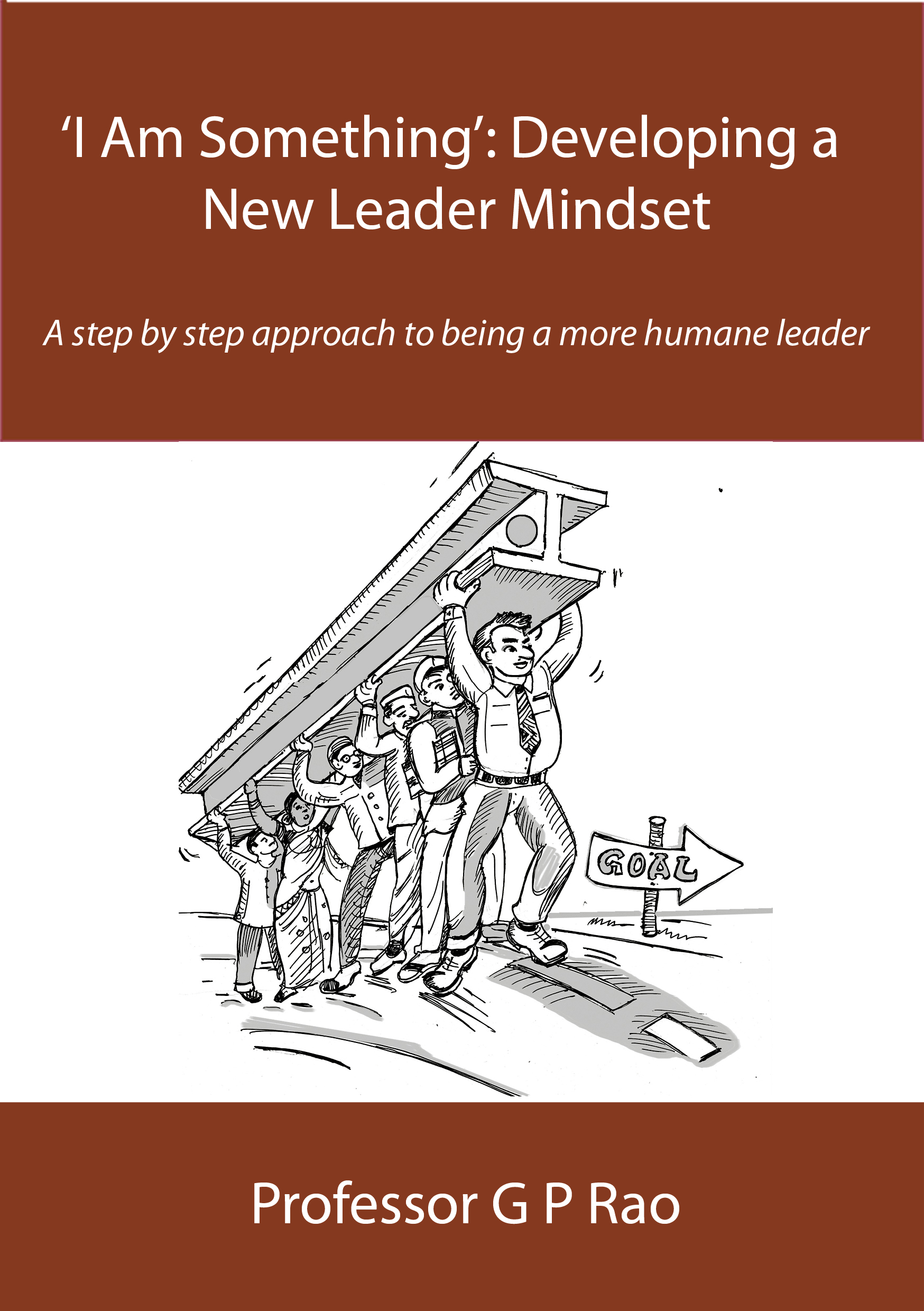
(The following is an abridged and modified excerpt from the book ‘I Am Something: Developing a New Leader Mindset’, authored by Prof G P Rao, founder of SPANDAN, yours truly and others.)

Advances in technology inevitably lead to more efficiencies, better products and improved lifestyles for people. But each leap of faith into the domain of a newer technology brings with it a set of newer challenges for mankind. As machines increasingly take over the drudgery of repetitive tasks and become more intelligent, human beings invariably need to re-skill themselves. This applies to business leaders as well as their followers.

The Fourth Industrial Revolution in the offing now builds on the Digital Revolution, representing new ways in which technology becomes embedded within societies and even the human body.

Skill-sets of the future

As per a World Economic Forum document titled ‘Future of Jobs Report’, employers are said to anticipate a significant shift in the division of labour between humans, machines and algorithms for the tasks of today.

The aforesaid report states that of the total task hours across the industries covered, on an average, 71% are currently performed by humans, whereas 29% are performed by machines or algorithms. By 2022, this average is expected to have shifted to 58% task hours performed by humans, and 42% by machines or algorithms. It can be readily appreciated that this signifies a very rapid pace of change, something for which leaders need to be better prepared.

The report goes on to project that skills related to analytical thinking, active learning, technology design and technology competency would grow in prominence. It also proposes that such ‘human’ skills as creativity, originality and initiative, critical thinking, persuasion and negotiation will either retain or increase their value, as will attention to detail, resilience, flexibility and complex problem-solving.

It follows that in the impending man-machine conflict, human beings are not likely to suffer the same fate as that of the non-avian dinosaurs which went extinct some sixty-five million years ago. But the writing on the wall is clear. They need to roll up their sleeves and get down to the task of sharpening their soft skills. A humane approach to handling team members needs to be consciously developed, especially when operating in a business environment characterized by a shortage of skilled workers. In turn, this would pre-suppose a higher Emotional Quotient and better service orientation. Even as the reliance on artificial intelligence grows for the analytical part of decision making, the role of intuition would become even more crucial.

A focus on the bottom line

Most employers would go in for innovating through technology if it makes business sense. It follows that technology would continue to remain a tool in the arsenal of the corporate world to squeeze more profits out of their operations, thereby making careers more fragile and impacting labour incomes adversely. With 24×7 connectivity, people are already working longer and enjoying lesser leisure time.

In a scenario of this kind, there is a grave risk that leaders would end up losing a connection with themselves even more than at present and hence end up de-humanizing the work place.
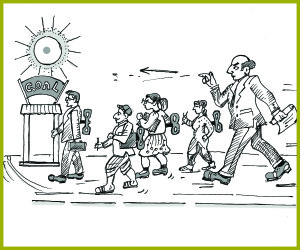
However, values remain indestructible. As an example, honesty and truthfulness in relationships is something which is bound to withstand the onslaught of newer technologies in the centuries to come. Same is the case with empathy, compassion, resilience and a flexible approach in problem solving.

Perhaps there is a need for governments the world over to anticipate newer moral and ethical dilemmas in a proactive manner and influence technological developments suitably, so human dignity and freedom is not compromised.

The perks and the perils

One may also surmise as to how the imminent advances in technology could throw up positive as well as negative factors which are likely to impact the man-machine equation in the times to come.

According to a 2014 report entitled ‘AI, Robotics, and the Future of Jobs’, published by Pew Research Centre, researchers Aaron Smith and Janna Anderson went to the extent of seeking feedback from as many as 1,896 experts. They found that when it came to the impact of advances in technology upon economic opportunity and employment, the opinion was deeply divided.

The optimists opined that technology would free us from day-to-day drudgery and end up redefining our relationship with ‘work’ in a more positive and socially beneficial manner. They felt that we shall adapt to these changes by inventing entirely new types of work and control our own destiny through the choices we make.

The pessimists amongst those who participated in the aforesaid study were of the opinion that the coming wave of innovation would mostly impact those involved in white-collar work. Whereas highly skilled workers will do better, many more might get pushed into lower paying jobs, and might even face permanent unemployment. They also felt that our educational, political and economic institutions are poorly equipped to handle the challenges which are likely to come up.

The aforesaid piece of research throws up instructive insights into how the future might shape up. Leaders and managers really need to think up some innovative ways in which they would handle a highly polarized workforce, comprising a disgruntled lot at one end and a highly skilled one at the other.

The challenge of creating happier workplaces

Unlike the earlier industrial revolutions, which first created and then changed the skill sets required by our blue collar workforce, the Fourth one promises to change the work profile of our white collar workers.

In his book, The Fourth Industrial Revolution, Professor Klaus Schwab, founder and executive chairman of the World Economic Forum, describes how this fourth revolution is fundamentally different from the previous three, which were characterized mainly by advances in technology. According to him, these technologies have great potential to continue to connect billions of more people to the web, drastically improve the efficiency of business and organizations and help regenerate the natural environment through better asset management.

As we grapple to understand the future direction of monumental changes in our socio-economic fabric owing to the next phase of technological evolution, few things stand clear.

One, that our educational institutions are nowhere near the task of training a workforce which would not learn analytical skills by rote but would grasp the importance of creativity, resilience and improve upon their Emotional Quotient.

Two, most of our governments are yet to devise ways and means of regulating issues of protecting individual privacy, executive burnouts arising out of a 24×7 connectivity and heightened civic strife due to growing inequalities. The next phase is bound to create a newer class of elite – those who are adept at newer technologies, leaving far behind those who are not.

Those in the first category could end up believing that they are all too powerful. Those who remain blissfully ignorant and continue to be disconnected to those who are reaping the benefits of newer technologies are likely to gravitate towards a belief that they have no place in the knowledge universe. With poor resources of material as well legal kind at their command, these new ‘have-nots’ of the society may be doomed to languish for a long time, till the governments of the day intervene, willfully or otherwise, and ensure implementation of economic policies which are more inclusive in nature.

The third kind, comprising those left in the middle of the normal distribution curve of technology dispersal, could end up having a balanced approach to issues. In fact, with advances in technology, this kind could well face a higher risk of extinction, paving the way for those who believe themselves to be all too powerful to rule the roost.

The same pattern may become apparent in the realm of management as well. Leaders and executives would need to increase their engagement not only with the society at large, but also with the governments of the day. A massive effort at re-skilling personnel would become a necessity.

A matter of trust and privacy

Infosys co-founder N R Narayana Murthy happens to be of the view that technology is a great leveller. He thinks that technology has improved transparency, conquered distance and class barriers. Also, that it has the potential to create a fair society and enhance the accountability of the rich, the powerful and the elite to the poor and disenfranchised in all societies.

One cannot dispute this. However, concerns regarding an increasing trust deficit remain. Denizens of many countries are feeling increasingly jittery over instances of data privacy. Moral policing, electoral pitching, rumour mongering – all these are fuelling this trust deficit.

One case in point is that of Facebook which is already armed with tools to dig deep into our lives, with the singular aim of moulding our thoughts and opinions about diverse aspects of our lives.

Employees in most organizations already resent living in a virtual fish bowl, where all their communications are suspected to be getting monitored. No one likes to be micro-managed, especially those who are capable and self-confident. Business enterprises have already started deploying tools to monitor employee productivity by collecting and analyzing their activity and inactivity levels.

In the long run, a work environment of this nature would end up impacting productivity, commitment and motivation levels adversely.

(Since 2020, the coronavirus has brought into focus the perils of techno-capitalism, dividing the society into those who can readily access technology and those who cannot. In an emerging economy like that of India, many school students have been left out of the formal learning loop because of their not having been able to access online classes. Rather than technology proving to be a leveller, it has instead proved itself to be a disruptor. Work-from-home has brought in behavioural changes amongst the knowledge workers, whereas migrant labourers have suffered from the trauma of displacement and loss of earnings.) 

The ever-increasing rate of change

One thing is certain. Change is not only a constant. With each passing year, the rate of change is also increasing. Much like Alice in Wonderland, Homo sapiens are discovering that they need to keep running faster and faster, with nary a respite in sight. Mankind is bound to evolve further much earlier than what was believed in the past. Alvin Toffler would perhaps heartily approve of this proposition.

Unlike thought so far, the man machine relationship shall become more integrated with each other in the near future. As a result, the combined force of processing of billions of data points for efficient decision making by machines, and contextual, emotional and intuitive aspects of decision making by human beings, would be, to that extent, higher and greater in their respective impacts – for good or bad.

What can be done to meet the challenge

– Employees, whether present or potential, can go beyond the formal education system and aggressively look for avenues to hone their skills, so as to remain employable. As Stephen R Covey has said, we need to keep our saws sharpened.

– Same applies to our business leaders, who would do well to improve upon their Emotional Quotient.

– The agenda for educationists and politicians is clear: To keep taking steps to facilitate the change already upon us; to anticipate the challenges of privacy and rumour mongering and to intervene to have appropriate safeguards embedded in upcoming technologies.

(References:
https://www.weforum.org/reports/the-future-of-jobs-report-2018
“Future of Jobs.” Pew Research Center, Washington, D.C. (December 11, 2014);
http://www.pewinternet.org/2014/08/06/future-of-jobs)

(Illustrations courtesy www)

Read Full Post »

Vision and Mission Statements of corporates adorn their walls and can be readily copied. However, the value system of an organization is not something which can be copied very easily. It permeates the entire organization – its hierarchy, its various divisions or departments. It rubs off on most of its employees. Even service providers and supporting manufacturers get tuned to the same frequency. It would perhaps not be wrong to surmise that values are to an organization what the soul is to a physical body. Organizations which thrive over a long period of time and achieve sustainable commercial success would invariably be found to have sound values at the core of their operations.

Manifestation of values

Small things reflect the values being followed – whether spaces in the car parking lot are allotted hierarchy wise or are based on a first-come-first-served basis, whether the corner office has high sound-proof walls all around or is open to all to signify transparency, whether the boss is entitled to charge the company for her spouse accompanying her on a business trip, whether office stationery items get whisked off to executives’ households for use by their kids, or whether use of cell phones or social media platforms is viewed with a sense of benign resignation by a hapless human resources honcho.

One striking feature of values is that even if these remain spoken of in hushed tones and get communicated more effectively through grapevines which are embedded deep in any organization, it is leadership which sets the tone. Those down the ladder fall in line. Those who shape up, and have a reasonably good performance on the job, survive and do well. Those who do not, get eventually shipped out. The latter then try to look for other organizations where the values – theirs and those of the organization – happen to be in harmony.

When head-hunting for a CFO, Human Resources honchos know pretty well that even though the final three short-listed aspirants happen to have near-identical qualifications and experience, their personal value systems would set them apart. One would not mind being used to extensive window dressing to please diverse stakeholders, thereby raising the concern for a disaster lurking round the corner in not so distant a future. Another might admit to being open to transactions in hard cash, thereby consolidating his own power and pelf in the company, if appointed. Yet another one might take a dim view of any underhand dealings and project the image of someone who believes in transparency with the internal as well as the statutory auditors, thereby leaving the CEO and the board of directors breathing easier. If the management cares about maintaining high standards of corporate governance, the last one would land the assignment.

At the macro level, values of an organization manifest in the wisdom which underlies their actions. When it comes to achieving the heights of corporate excellence, organizations which have sound long-term values are invariably found to enjoy strong brand equity. Scratch beneath the surface and one is apt to discover the wiser ways in which it conducts its operations. Its initiatives lead to a sustainable growth of the business, giving back to society in ways which are imaginative as well as pragmatic.

Take the case of Tatas, a salt-to-software business conglomerate which has more than one hundred companies in its fold, spread over more than one hundred countries. Their businesses might be as diverse as chalk and cheese but much like beads strung together by a string, what holds all these outfits together is a common set of values which the group stands for. The name stands for dependability and better value for money. Around two-thirds of the profits of the group flow into Tata trusts which channelize these back to the society in myriad ways.

Speaking to the conglomerate’s leadership recently, Ratan Tata, Chairman Emeritus, said that the group has been under “fire” for the past few months due to allegations of mismanagement and “being in business for reasons other than good corporate governance”. “The spirit that we had that made us grow to $100-billion revenues has not been through mismanagement and unethical procedures,” he said, adding that it has grown by being a visionary, having a spirit of integrity, unity and doing philanthropy.

Products and organizations have life cycles of their own. Just like the human body is prone to many changes – birth, existence, growth, decay, disease and death. But values outlive these perils of life; somewhat akin to the Self which Gita holds to be eternal and deathless. Values pervade all arms of any organization.

अविनाशि तु तद्विद्धि येन सर्वमिदं ततम् |
विनाशमव्ययस्यास्य न कश्चित्कर्तुमर्हति || 17||

avināśhi tu tadviddhi yena sarvam ida tatam
vināśham avyayasyāsya na k
aśhchit kartum arhati

That which pervades the entire body, know it to be indestructible. No one can cause the destruction of the imperishable soul.

An inner connection to handle myriad challenges with aplomb

Hapless CEOs face myriad challenges. There are pinpricks from customers, employees, suppliers and many other stakeholders. The directors and the shareholders have to be kept in a positive frame of mind. Regulatory agencies and government departments have to be kept in good humour. Concerns for upholding norms of corporate governance keep snapping at their heels. Only nerves of chilled steel and deep reserves of inner resilience can help them to keep performing on all the twelve cylinders. An inner connection surely helps.

In an indirect manner, Gita touches upon the importance of an inner connection for business leaders. It holds that wise are those who enjoy a tranquility and calmness within themselves. Their inner being is in harmony with their outer being. Their decision-making is based on balanced, well-considered and a holistic view of the facts of the case. They do not manage crises in business with knee-jerk reactions. They deal with people according to their nature and with occurrences in the business environment according to their force and the truth or hard reality they represent. Impartial they are. Detached they are. Compassionate they happen to be, but never at the cost of their innate wisdom and truth. And never do they compromise on their core values.

Read Full Post »

The short half-life of all things material

If Marie Curie had decided to become a human resources professional at some point of time in her sterling career, she would surely have had something to say about the half-life of so many things:  Interpersonal Relationships, Joys and Sorrows, Promotions, Increments, Awards and other recognition which come one’s way all the time. Even insults, abuses and rebukes hurled at managers by their bosses, whether in private or in public, would have invited a comment or two.

Consider this. When one is about to join a company, a sage looking junior executive responsible for handling one at the selection stage would invariably paint a rosy picture about the state of affairs. One would be shown the kind of awards won by the company while discharging its Corporate Social Responsibility mandate.

If selected and upon joining, the demo version would continue right into one’s induction period. A honeymoon phase would invariably follow. All would be hunky and dory. Till the day, of course, when the boss would call one in, look her in the eye, and suggest that she start preparing for a bigger challenge – something like camping on the Mars and peddling the company’s goods and services out there. The scales would then start falling from one’s eyes. The warts would start becoming visible.

Likewise, when a special promotion or increment comes one’s way, a short span of happiness and exhilaration is bound to lift one’s morale. However, with the passage of time, the recognition would start losing its sheen. Challenges in the new position would weigh one down. Ask a canteen boy who is suddenly promoted as a canteen manager. Ask a production supervisor upon whom fate has smiled and who has suddenly found himself promoted to the level of a production manager. Ask a sales representative who finds himself elevated to the rank of a sales manager. There is a good chance that most of such promotees, having found their level of incompetence, would start ruing the day they got promoted. To their utter horror, they would discover that doing a job with their own hands was far easier than getting others to do the same job. Bosses who had originally pushed for the promotion of these souls would be looking sheepish and diffident in such group meetings where the performance, or the lack of it, of the promotees would be on full public display. The management may eventually come to regret the decision to confer a promotion on such souls.

Or, take the case of a bloomer having been made and the resultant rebuke delivered by a senior. If the same is delivered in private, it could lead to some soul-searching and perhaps some improvement in the future handling of similar assignments. Once the basic feedback is ingrained within, the incident may tend to get relegated back into one’s consciousness. However, if the same feedback is delivered in public, the impact would be much higher. A feeling of guilt, shame and remorse may come about, leading to poorer performance on the job. One could then be caught in a downward vicious cycle. A feeling of revolt and revenge may also pop up. Depending upon one’s sensitivity levels, the incident may remain in one’s active memory for a long time to come, leading to a drop in self-esteem and self-confidence.

The common thread in all these occurrences is that nothing is of a permanent nature. Life keeps throwing bouquets and brickbats one’s way. The impression created on one remains a function of time. That is how, wise men say that ‘Time is a great healer.’

Of reversal of polarities

Yet another feature of mortal things is what experts in the science of magnetism would thoroughly approve of. This one pertains to reversal of polarities. A person, an object or even a relationship which happens to be positive at one point in time could easily become negative at another point in time.

A boss who happens to be a role model could one day metamorphose into a villain in one’s career. Over a period of time, unstinted support from her could vanish and assume the sinister shades of vehement opposition to whatever brainy scheme one comes up with. The underlying reasons could be many. An inner sense of insecurity in her. A mere suspicion that you are in cahoots with a senior of hers she takes a jaundiced view of. A personal issue which has made her lose a sunnier outlook about life.

Likewise, a much coveted transfer or promotion could eventually prove to be an albatross around one’s neck. Unforeseen dimensions could open up when handling the situation on the ground. When wisdom dawns, one might realize exactly what the boss meant when she looked one in the eye with a steely eye and surmised that the only person who she thought could gleefully take up a challenge of that nature would have been one alone! The glamour which appeared to have been associated with the event gives way to a sense of entrapment. A sense of despondency overtakes one.

This is what the Gita has to say on the nature of material things:

मात्रास्पर्शास्तु कौन्तेय शीतोष्णसुखदु: खदा: |
आगमापायिनोऽनित्यास्तांस्तितिक्षस्व भारत || 14||

mātrā-sparśhās tu kaunteya śhītoha-sukha-dukha-dā
āgamāpāyino ’nityās tans-titik
hasva bhārata

“O son of Kunti, the contact between the senses and the sense objects gives rise to fleeting perceptions of happiness and distress. These are non-permanent, and come and go like the winter and summer seasons. O descendent of Bharat, one must learn to tolerate them without being disturbed.”

Why sweat over the small stuff

The fact remains that life rarely unfolds the way one wants it to. Others do not necessarily behave as one would like them to. There are always those who would disagree with one. Things are not handled the way one would expect them to be handled. Some things work out with little effort. Others do not, even with much greater effort. So, if one chooses to fight against this strong undercurrent of life, one would spend much of one’s time in life fighting battles of an insignificant import. Instead, much like Arjuna, one could eventually choose to fight in a war which is based on the principles of righteousness.

One needs to realize that things are of a transient nature, whether people, objects or incidents. Also, what emanates positive vibes and gives pleasure today could well turn out to be a source of torment tomorrow.

If so, there is no reason for one to sweat over such transient things. One might instead focus one’s energy, time and resources on things which are have a much longer shelf life.

A hapless CEO lives from one financial quarter to the next. A gentle nudge to her Chief Financial Officer brings about some improvement in the quarterly guidance values. However, there are limits to which receivables can be stretched, inventories can be buoyed up and expenses deferred to the next quarter. Sweating over the same stuff every quarter takes its own toll on the team’s stress levels. A myopic vision gets developed. A long-term value-based view runs the risk of getting relegated to the background.

Of things which have a much longer shelf life – Values, Character

Which are the things which have a longer shelf life, one may well ask. One’s value system. One’s character. One’s attitude towards life in general. One’s own brand equity. One’s capacity to be able to handle the rough and tumble of a management career. One’s ability to take decisions based not only on big data analytics but also on intuition.

These are the kind of things which are made of sterner stuff, so to say. Vagaries of time find it difficult to chip away at these innate qualities of one. Once this core is managed well, external things fall in place most of the times. One’s responses to people and circumstances become more nuanced, thereby improving one’s managerial effectiveness.

Putting a realisation to practice

It is one thing to know about the impermanence of things in one’s life. But it is quite another to learn to ignore the small stuff and not get swayed by the immediate circumstances. Nerves of chilled steel need to be developed. A state of inner calm needs to be cultivated. A habit of calm endurance, both in pleasure and in pain, needs to be formed. Inner Resilience needs to be imbibed.

Bhagavad Gita exhorts one to do precisely this. It goes on to propose that a person who has attained this state of mental equipoise attains immortality. The principle of reincarnation comes in here.

यं हि न व्यथयन्त्येते पुरुषं पुरुषर्षभ |
समदु:खसुखं धीरं सोऽमृतत्वाय कल्पते || 15||

ya hi na vyathayantyete puruha puruharhabha
sama-du
kha-sukha dhīra so ’mitatvāya kalpate

“O Arjun, noblest amongst men, that person who is not affected by happiness and distress, and remains steady in both, becomes eligible for liberation.”

Leading a vibrant life

Lord Krishna is not exhorting one to lead a monastic life which would be somewhat monochromatic in nature. He is merely saying not to get swayed by the ups and downs of life. In one’s journey towards attaining perfection, one can make the conscious choice of enduring meekly the little joys and pinpricks of life.

Here, He does not allude to a hapless endurance of the setbacks experienced in one’s career. That would indicate an attitude which has its origins in the dark recesses of the mind, harbouring such tendencies as procrastination. Instead, the reference here is to the sunlit valleys of life through which flow the rivulets of wisdom and understanding.

Consider the case of a manager who has been given a pep talk by his boss. He is now aware of the bigger picture and is fired with a missionary zeal to achieve his target. He is prepared to make many sacrifices on the way, because he has found a deeper purpose behind the task he is entrusted with. If a bouquet is received in the interim, he feels happy but does not slacken his efforts. If some brickbats get flung at him, he takes the feedback in his stride, sifts the wheat from the chaff, and chugs along till the target is achieved.

(A version of this post will appear in a yet-to-be released book authored by yours truly on Management and Bhagavad Gita)

Read Full Post »

Members of the tribe of managers who believe in the ‘I and Me’ approach have swollen minds and shallow hearts. They live in a virtual reality of their own, surfing atop the turbulent waves of life in a belief that they remain in total control of things. They think that they punch all the right buttons in their careers. Successes get attributed to their own actions and initiatives. Failures get attributed to external circumstances, to other people, or to the business environment in general.

In terms of an upgraded Blake-Mouton Grid, they have a propensity to evolve into a leader for whom results alone count. Concern for People gets relegated to the background. Concern for Ethics gets swept under the carpet and conveniently forgotten. In other words, they become CEOs who end up becoming road rollers.

Take the case of a young engineer from India who goes on to pursue his higher studies in one of the advanced countries of the world. He builds a career for himself, gets married, buys his own house, raises a family and even acquires the citizenship of the country where he has settled down. He starts believing that he is an all-powerful and accomplished person, and has the freedom to do what he wants. He prides himself on the fact that his spouse, an independent professional in her own right, is in that country owing to him alone. By implication, she has to be beholden and subservient to him. What he does not realize is the role destiny also has played in his career and life. A hard blow could well make him see the folly of ascribing all his achievements to his capabilities alone.

Free Will, Destiny and a dash of humility

One of the things such persons badly need is a dash of humility, professionally as well as personally. They could do with some introspection in all cases of successes and failures. A pitiless analysis of any success would invariably reveal key factors which not only assisted but also enabled them to achieve it. Likewise, a root cause analysis of a failure might reveal to them what they could have done better in the given situation. It might even show where they personally contributed to their own downfall.

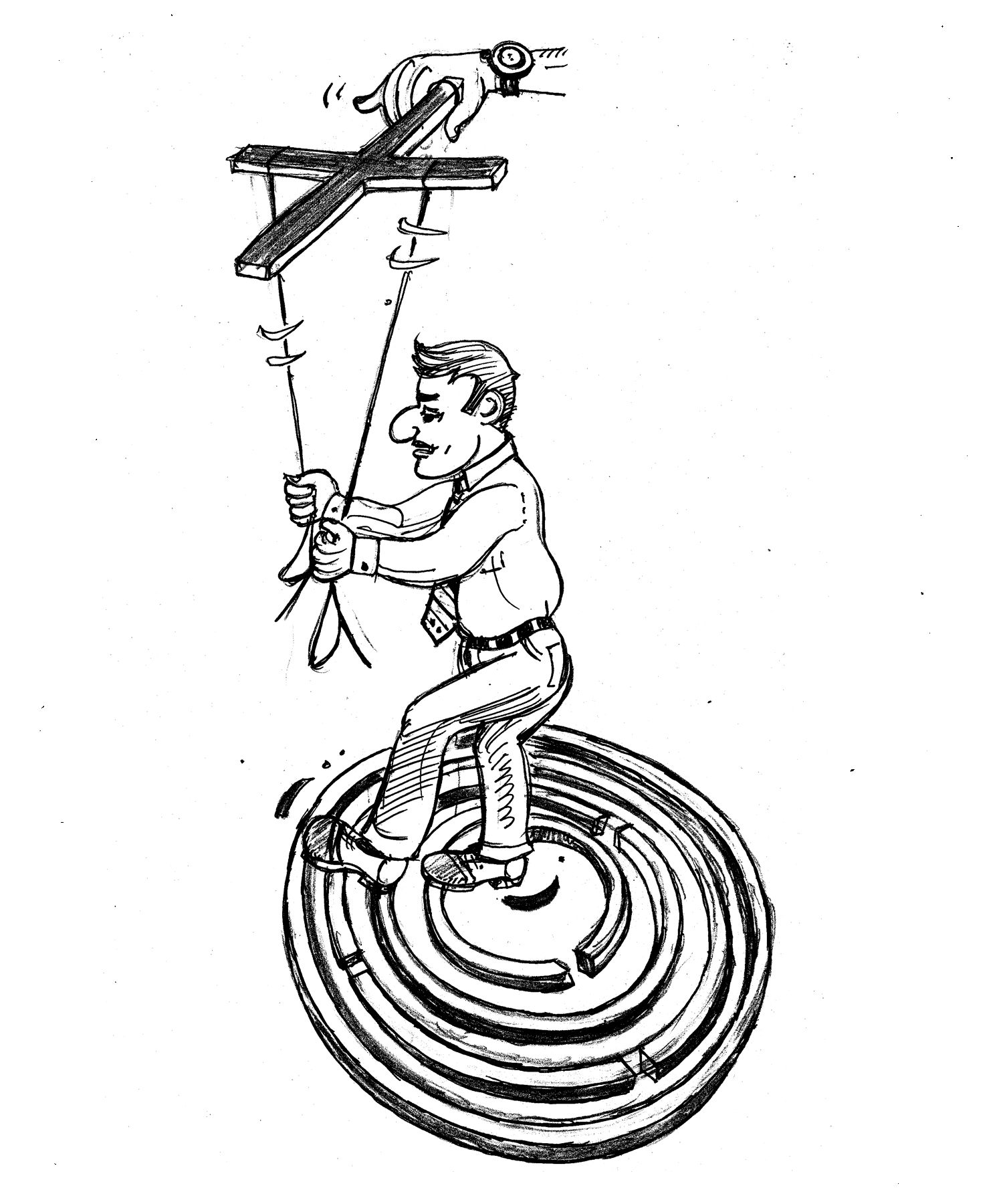
A realization that one is not destined to exercise one’s so-called free will indiscriminately can help one to progress on the path of humility. In any case, the view that human beings are free to exercise their free will has always been a debatable one. Often, hapless Homo sapiens feel as if they are mere puppets going through motions in life according to a grand plan, ostensibly pre-determined by a superior power.

Take the case of an aspiring manager who has just finished her education from an Ivy League institution. She does not entirely control the kind of company she ends up starting her career with. Nor does she control the kind of boss, peers or subordinates she might end up working with. She could very well analyze the business environment the organization operates in. But she has little control over the same.

Going with the flow

Generally speaking, in life, one does not control one’s own birth or death. Nor does one control the kind of parents, extended family and friends one may merit. One merely goes with the flow, so to say.

Omar Khayyam thought one is no better than water, flowing willy-nilly, ‘where Destiny with men for Pieces plays’. He proposed that one merely follows an unalterable script in one’s life, as dished out by our Guardian Angels.

Contrast this with the traditional view of Judgment Day of Judaism, Christianity and Islam. This view is based on the conviction that each person is wholly responsible for her conduct in life. The Hindu view of karma also supposes choice for individual human beings.

To participate in, and to submit to, the collective rhythm of creation is to attain bhakti, Narada Sutra says. This marks progress towards humility.

‘The fault, dear Brutus, is not in our stars, but in ourselves, that we are underlings’, says the poet (Julius Ceaser, Act 1, Scene 2).

The ‘We and Us’ Approach to decision-making

Life is much like river rafting, where one may make choices while negotiating the rapids. But the scope of the individual will is rather limited. In one’s career, the scope of the individual will is to choose between making decisions entirely based on one’s individual ego, thereby becoming an ‘I and Me’ manager. Alternately, one may choose to surrender to a higher power, and perform one’s action without attachment to the results thereof. This choice would lead one to a ‘We and Us’ approach to decision-making.

In the Bhagavad Gita, Lord Krishna exhorts us to do precisely this: Practice detachment.

कर्मण्येवाधिकारस्ते मा फलेषु कदाचन |
मा कर्मफलहेतुर्भूर्मा ते सङ्गोऽस्त्वकर्मणि || 47 ||

karmaṇy-evādhikāras te mā phaleṣhu kadāchana
mā karma-phala-hetur bhūr mā te saṅ
go ’stvakarmaṇi

You have a right to perform your prescribed duties, but you are not entitled to the fruits of your actions. Never consider yourself to be the cause of the results of your activities, nor be attached to inaction.

In this unique scripture, the performance of one’s own duties is said to lead to the creation of one’s destiny. Thus, one’s actions are held to be superior to one’s destiny.

(A version of this post appears in a yet-to-be-released book by yours truly. It connects Gita to the realm of Management.) 

(Related Post: https://ashokbhatia.wordpress.com/2018/04/13/heartfulness-management-and-leadership)

Read Full Post »

Those exposed to the vicissitudes of a manager’s life often get unduly perturbed about the people around them, or the circumstances and formidable challenges they face in their careers.

But think of it. A manager would strongly protest if another one is made to occupy the office space assigned to her. Why, even a parking space allocation could disturb office harmony! The boss, spending a lot of time with a favourite manager of hers, could create a sense of envy amongst other managers; it could even initiate a chain of rumours and lead to animated discussions at the coffee machine.

Envy, jealousy, hatred, unbridled ambition – all of these happen to be strong undercurrents which could be detected within an outwardly quiet and serene looking manager. Given a chance, managers, like politicians and other professionals, would never cede even a square inch of their turf to someone else.

But if so, one may well ask as to how managers end up permitting others to enter their mental space and cause internal turbulence, often losing a well-earned peaceful sleep at night. They suffer at the hands of a boss or a colleague whom they have come to trust. They get swayed by external circumstances and people, losing their mental equipoise and balance in the process. This obfuscates their vision and disturbs their thinking processes. At times, such negative occurrences even chip off a part of their own self-confidence as well.

Tough bosses routinely rebuke their team members but end up affecting different people differently. Those with a lower self-esteem and a lower Inner Resilience might even contemplate taking a drastic step under external provocation, in some cases leading even to homicidal thoughts. But those who are wired differently might just take such occurrences in their stride, just shrugging off, noticing the underlying lessons and going ahead with the task at hand in a more effective manner.

Higher Inner Resilience is a stress buster

This shows the importance for a manager to have a high degree of Inner Resilience within her mental makeup. This way, she retains her sense of self-esteem. Her perception of reality remains balanced and objective. She is able to punch the right buttons and take better decisions. She owns her actions and takes responsibility for what she does. She does not gloat in a success, attributing it only to her own efforts and initiatives. Nor does she get unduly depressed when faced with failure. The tendency to blame other people or circumstances for her failures does not appeal to her. Instead, a pitiless analysis of the situation at hand gets done. A bout of introspection is attempted.

Her anxiety and stress levels are low. She is more likely to remain in the pink of health. This enables her to live her life to the hilt. An inner bliss is often experienced.

Much like a person who enters the sea for a swim, she is aware that it involves handling mighty waves. Also, that the water is not sweet. So, she is better prepared. Likewise, a manager who possesses a high degree of Inner Resilience is better prepared to handle challenges in her career, whether mighty or otherwise.

In other words, she is smarter than those around herself, better equipped to break the glass ceiling and make it to the higher echelons of an organization.

The risk of Sensitivity

Managers who are sensitive to others’ needs do not necessarily make better bosses. Emotions could cloud their judgement, thereby lowering their level of Inner Resilience. An excess of the Milk of Human Kindness sloshing about in the veins could make them lose their effectiveness as a manager. Moderation is what the doctor would recommend.

However, when Sensitivity gets deployed in tandem with Rational Thought, as drawn from the company’s objectives and policies, they end up being realistically empathic.

Another way of conveying this delicate balance is by the means of a Blake Mouton Grid, which is built upon two dimensions – Concern for People and Concern for Production. Add to this the third dimension – that of Concern for Ethics – and one gets somewhat closer to the quality which the Bhagavad Gita refers to as equipoise.

Learning from Bhagavad Gita

Lord Krishna explains this beautifully to Arjuna. In verse 38 of Chapter 2 of the Bhagavad Gita, He says:

सुखदु:खे समे कृत्वा लाभालाभौ जयाजयौ |
ततो युद्धाय युज्यस्व नैवं पापमवाप्स्यसि || 38||

sukha-dukhe same kitvā lābhālābhau jayājayau
tato yuddhāya yujyasva naiva
pāpam avāpsyasi

‘Having made pleasure and pain, gain and loss, victory and defeat the same, engage in battle for the sake of battle; thus, you shall not incur sin.’

When it comes to understanding the happenings around us, this inner equilibrium is the key facilitator. By attaining this state, a manager can shore up her Spiritual Quotient, of which Inner Resilience is a critical component.

Building up Inner Resilience

Meditative practices help. So does a realization that one is acting as per one’s own conscience and what one believes to be right. In other words, one is following one’s ‘swa-dharma’.

The ability and openness to appreciate a deemed adversary’s view point also helps.

Ignoring people with a negative persona and consciously choosing to remain in the company of some positive thinkers assists.

An attitude of ‘This too shall pass’ helps.

Above all, the wisdom gained from the harsh slings and arrows of Life supports in this endeavour. It follows that introspection helps.


Read Full Post »

Of Swollen Minds and Shallow Hearts

A vast majority of managers fall in this category. With money power ruling their lives, they cannot be blamed for behaving like robots, relentlessly chasing materialistic goals. With the heart playing a subservient role to that of the mind, analytical skills rule supreme. Intuition, feelings and emotions take a back seat, leading to rapid burnouts and build up of stress. We run into managers who are driven entirely by results, a prospect tolerated with much glee by top managements. Often, they lose the trust and confidence of their team members, resulting into a human relations crisis. External titillations offered by life provide transient moments of gratification. The inner glow of happiness eludes them.

This tribe, which puts a premium on the ‘I and Me’ approach to decision-making, experiences a hollowness within. Minds are whirling with ideas, indicating the dire need to practice brain-stilling, as opposed to brain-storming. Hearts are shallow, resulting into lack of empathy and concern for others. They need the maximum amount of the kind of meditation practice one would refer to as Heartfulness.

Of Balanced Hearts and Minds

Managers in this category are indeed the luckier ones, because they are able to deliver results on a more sustainable basis. Their heads are screwed on right. Their hearts have a modicum of the milk of human kindness flowing through its chambers. By balancing the output of their active brains with the emotional vibes generated by their empathic hearts, they lead happier and more contented lives.

This tribe takes the ‘We and Us’ approach to decision-making. Loved by their team members, they make better business leaders. Since the emphasis placed on results is balanced by the importance given to their people, they command a high level of trust from their loyal team members. If one were to look back at the kind of bosses one still keeps in touch with, even if the formal association had occurred quite some time back, one is apt to find them having achieved this delicate balancing act between the mind and the heart while handling matters.

Of Larger Hearts and Sharper Minds

These are the ones who care about humanity in general. They end up assuming leadership roles while handling challenges facing a particular business group or the society at large. Their thinking is strategic. Their vision is lofty and innovative, at times even disruptive. They take a holistic view of matters at hand. In the process, they extend their sphere of influence to all stakeholders of business. Corporate Social Responsibility is not a mere public relations exercise for them, but an agenda which has to be pursued as vigorously as any other business goal. The inner glow of happiness and contentment does not elude them.

This is a rare breed indeed. It believes in, and follows, a ‘They’ approach to decision-making. Fame comes easily to them. Humility is one of their key personality traits. They become role models, not only for those who observe them at close quarters, but also for people at large. Their minds are vibrant, firing on all twelve cylinders. Their hearts are already overgrown, encompassing a much wider segment of humanity. They are living examples of the potential Heartfulness has, and what it can offer to humanity.

The opportunity of a transformation  

A manager has it within herself to bring about an inner transformation from the ‘I and Me’ attitude to the ‘We and Us’ mindset. Introspection can lead to it. A benevolent senior could propel her on this path of an inner journey of evolution. Even a major setback in life could lead to it.

The germ of this inner desire nestles within her, silently planted there in an embryonic form by their upbringing. The trick lies in discovering and nurturing it, so an opportunity of transforming oneself is not lost. Her core personality and attitudes help. The catalyst of this process of transformation happens to be the value system inherited by her from her elders.

Managers who ignore the need for a transformation of this kind run the risk of being poor team players, stunting their own growth.

Read Full Post »

Why do we hold leadership to be something which is fascinating? Perhaps we do so because of the inherent complexity it represents.

One, it is the outcome of a delicate chemistry between an individual and his/her environment. All individuals have personality traits. Some of these come to the fore under some special circumstances. Take away those circumstances, and the trait may continue to remain dormant for a long time.

It follows that there is as much probability at work here as, say, in the tossing of a coin or in a game of chance. In the realm of human resources, we see examples of dullards becoming heroes in a given situation. In case of brands and organizations, we come across several cases where some which were ‘nothing’, when assiduously worked upon and when the market conditions were right, evolved into ‘everything’ and started enjoying commendable market equity.

Two, experts have always been at pains to distinguish it from management. To the initiated, if management is all about people and processes which enable an organization to run smoothly, leadership is all about disruptive vision which could spur innovation and end up transforming the way the organization works and responds.

If one were to draw a parallel from the vast pantheon of Hindu gods and goddesses, one could perhaps say that if management is represented by someone like Lord Vishnu, leadership could be held to be portrayed better by someone like Lord Shiva. One is said to be maintaining and running the universe, while the other is the disruptive force which creates things anew.

Three, the term leadership itself leads us to another pertinent question – that of people being led. Just who are these followers? What are their characteristics? What are their aspirations? It is regrettable that while much research has been done on leadership, the followers – who make a leader what he/she is – have got a short shrift. The traits of this multitude of humanity have never been directly addressed; these are merely covered elsewhere, under the guise of subjects like motivation, communication, delegation, and the like.

Be that as it may, the charisma which a leader is said to possess remains a subject of relentless enquiry. This is yet another reason as to why leadership is fascinating. The inherent difficulty in defining the aura of a leader perhaps makes the phenomenon called leadership an enigma. Anything which is not readily grasped by the human mind invites even more attention. Such are indeed its ways. However, if one were to speak to one’s heart, the mystery unfolds. Human values, compassion and empathy come into play. The cumulative effort of a leader to connect with his/her followers goes a long way in creating the larger-than-life charismatic image of a leader.

Read Full Post »

ashokbhatia's avatarashokbhatia

The management issues R K Laxman touches upon in his witty cartoons are wide-ranging. The messages are hard-hitting. For any manager who is trying to beat the blues, here is an effective anti-dote.

Driving the Boss Nuts

Cartoon Admitting Mistakes

The perils of over-committing oneself

Cartoon Flexibility in Jobs

Punctuality

Cartoon Punctuality

Caught reading naughty magazines in office?

Cartoon Taking Work Home

Simplifying systems and procedures

Cartoon Simplifying Procedures

A manager’s life never has a dull moment. His/her career is like driving a crazy car which is always going either too fast or too slow. From the time a manager enters the n-dimensional space of his/her career space, till the time the boots/sandals are hung right and proper, a roller-coaster ride with uncertain twists and turns is the only certainty.

To maintain one’s sanity, it helps to revisit the works of literary geniuses who have created an eternal world full of blooming flowers bathed in the soft glow of  humor. For those amongst us who are…

View original post 49 more words

Read Full Post »

« Newer Posts - Older Posts »