Feeds:
Posts
Comments

Posts Tagged ‘Literature’

In one of my earlier posts, I had already confessed that I do not suffer from an affliction which could best be alluded to as Shakespearitis. Given the limited supply of grey cells that nature has bequeathed upon me, I can be held to be a person who has a rather high Pumpkin Quotient. William Shakespeare’s literary outpourings need a much higher level of intellect to be understood and enjoyed. Unfortunately, that I simply do not possess. The stuff he has dished out is meant for brainy coves whose eyes shine with keen intelligence and whose heads bulge at the back, much like Jeeves’.   

However, all this does not necessarily guarantee peace of mind. On the contrary, it makes life even more of a challenge. The brow is invariably furrowed. The heart is leaden with woe. This is so because he is to be found everywhere and is apt to spring surprises at all times, not a very pleasing prospect for a faint-hearted person like me. Surely, the fault lies in my stars.

My last trip to the United Kingdom proved to be no exception. A few days after I had unpacked the proverbial toothbrush, on a fine morning, my genial host had whipped up a sumptuous breakfast. While tucking into it with much gusto, I was feeling on top of the world. But just when you feel that life is a bed of roses, God is in heaven, and all is well with the world, Fate sneaks up from the back. Your Guardian Angel decides to proceed on a vacation. The blow falls, leaving one shaken and stirred.

I was informed that the birthplace of The Bard was just an hour’s drive from the town I was in at the time. The host, grace personified, thought it was his patriotic duty to drive me down to the place. Hiding my trepidation somehow, I consented. Well, one must be civil, you see.

As you like it

The journey to Stratford-upon-Avon was part of the charm. Surrounded by the serene English countryside, the town turned out to be a beautiful blend of cobbled streets, Tudor-style buildings, and winding pathways that echo centuries of history. The drive had the effect of converting my initial hesitation to a reluctant sense of anticipation.

Visiting William Shakespeare’s birthplace in Stratford-upon-Avon proved to be like stepping into a time machine that transports one to the relatively simpler times of the late 16th century. Nestled in the charming market town in Warwickshire, England, the house on Henley Street is a unique time capsule that offers a glimpse into the life of Shakespeare and his family, set against the backdrop of a picturesque Elizabethan town. It is instructive to see how Henley Street has evolved over time.

Despite being armed with a Google app, we had to repeatedly disturb a few locals to ask for directions to the Shakespeare Centre.

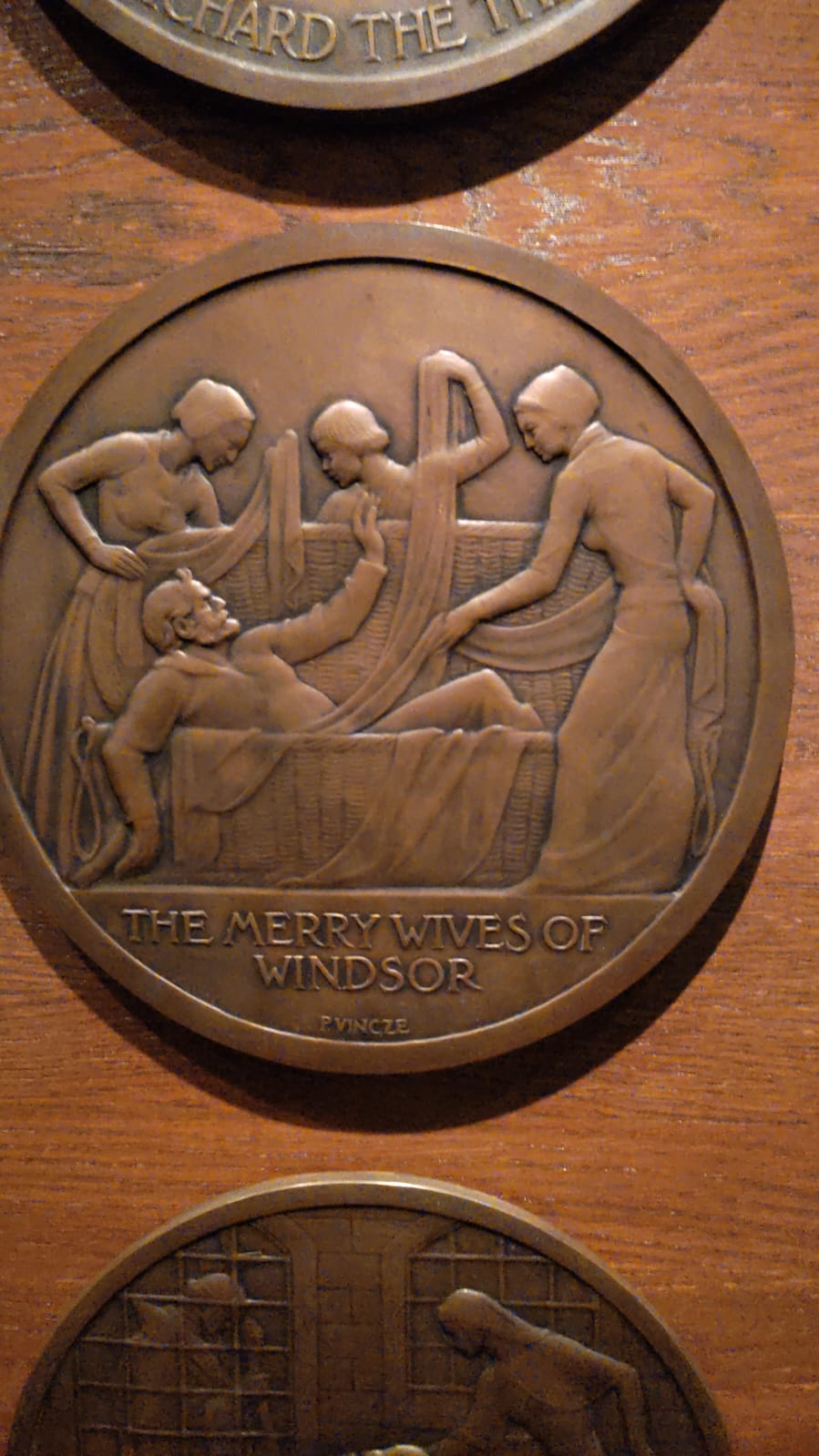
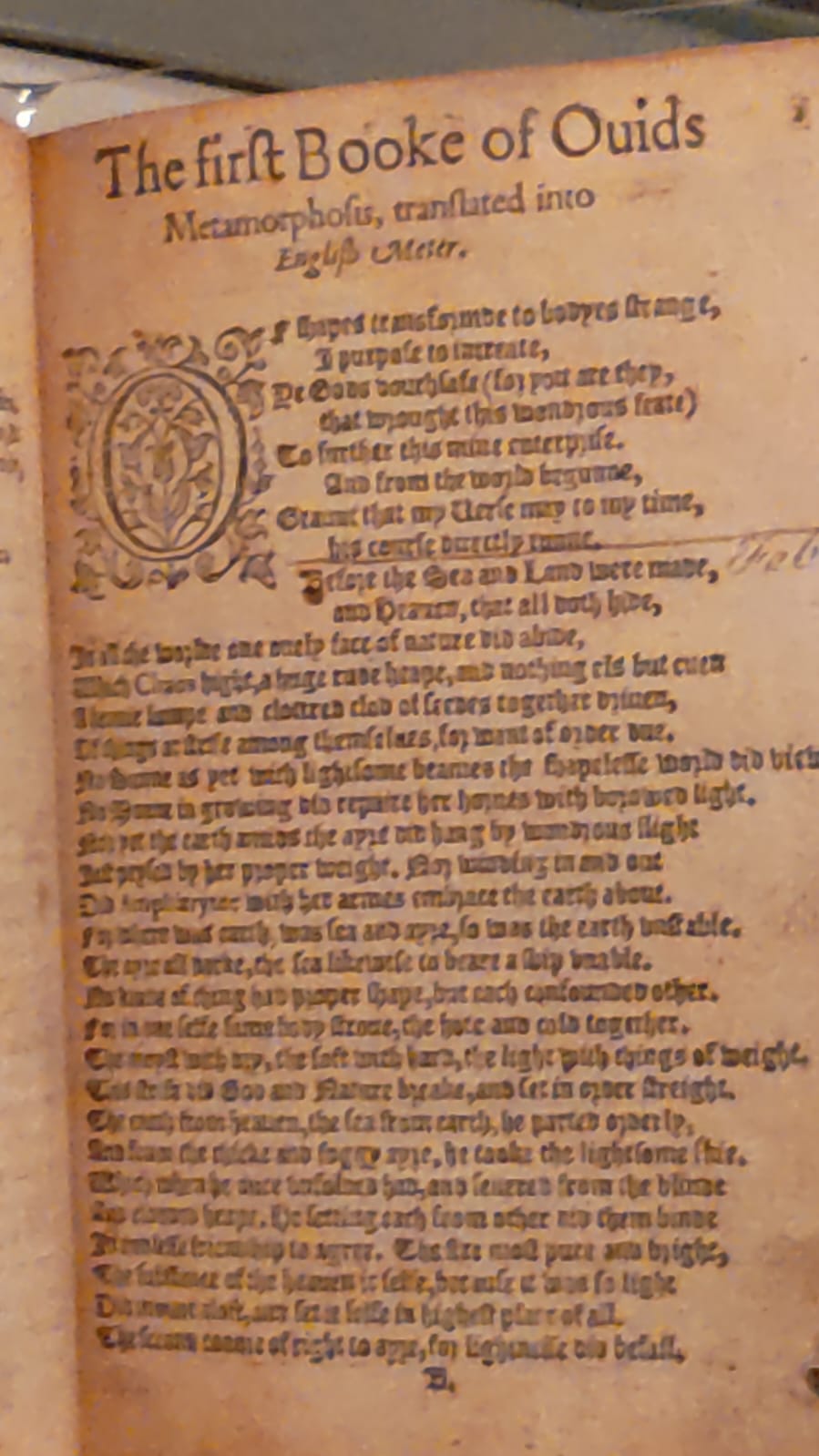
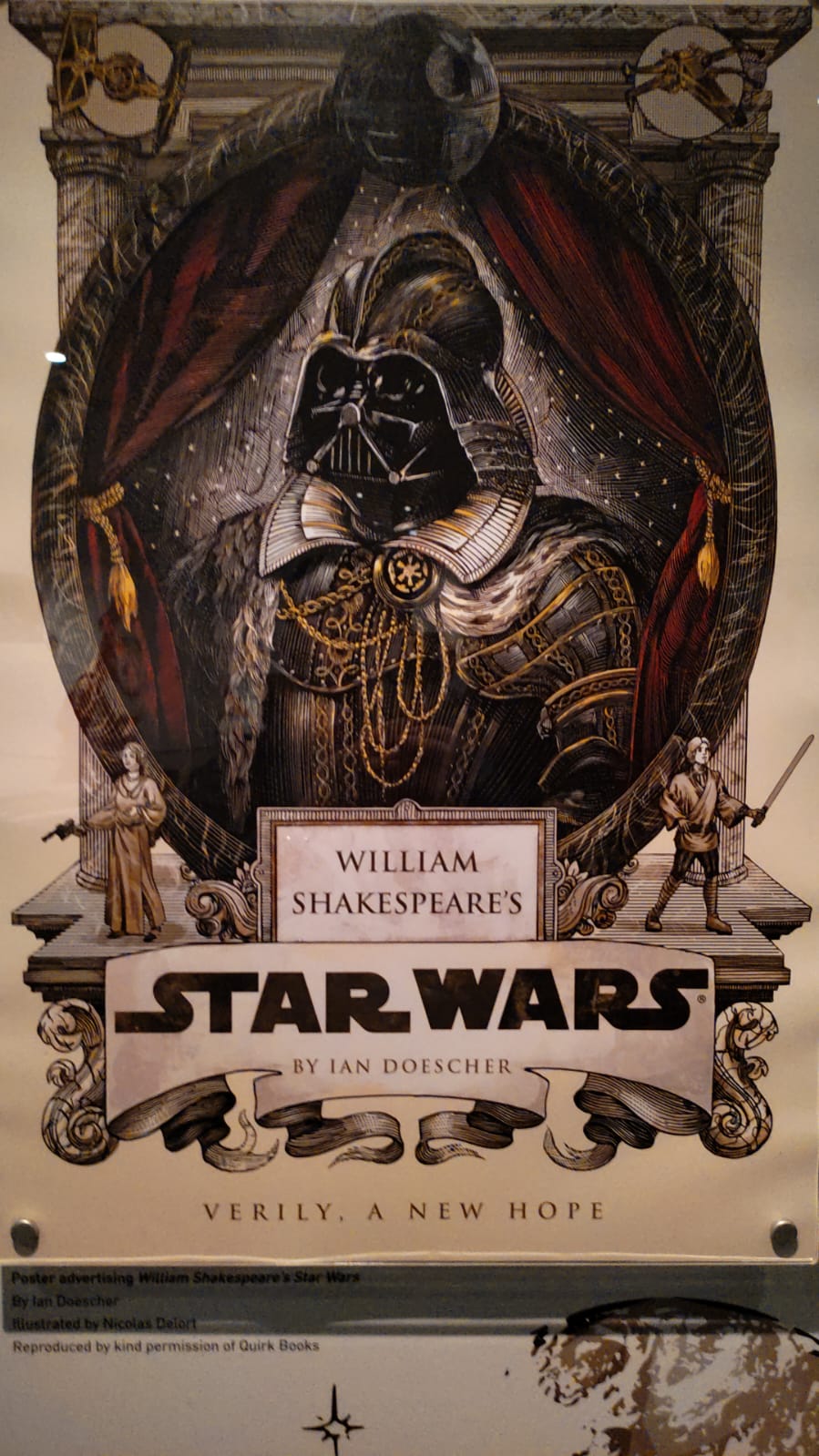
The modern visitor centre serves as an introduction to the playwright’s life, works, and the world in which he lived. It offers exhibits, displays of historical artefacts, and multimedia presentations that set the stage for the main attraction. One can see copper plaques devoted to many of his works, besides creative illustrations that connect him to the contemporary world.  

The heaven’s lieutenants

Before we move on to the birthplace itself, a family tree greets us. This is in the fitness of things, because The Bard placed a high premium on families. Some of you may recall this quote of his:

The voice of parents is the voice of gods, for to their children they are heaven’s lieutenants.

I am amazed to find that he was married to a lady by the name of Anne Hathaway; of course, not the Hollywood diva we happen to know since her The Devil wears Prada days!

Home: The place where he could waste his time!

The dwelling is a modest two-story, half-timbered house with a traditional wattle-and-daub construction typical of the Elizabethan era. Its architectural simplicity contrasts with the monumental legacy of the man who was born here in 1564. The house has been carefully preserved and restored to reflect the period as accurately as possible, down to the original furniture styles, wooden floors, and narrow doorways that would have been familiar to Shakespeare. Every corner of the home feels authentic, almost like the Bard himself or his family members might pop up at any moment. (Further details about the place can be found here)

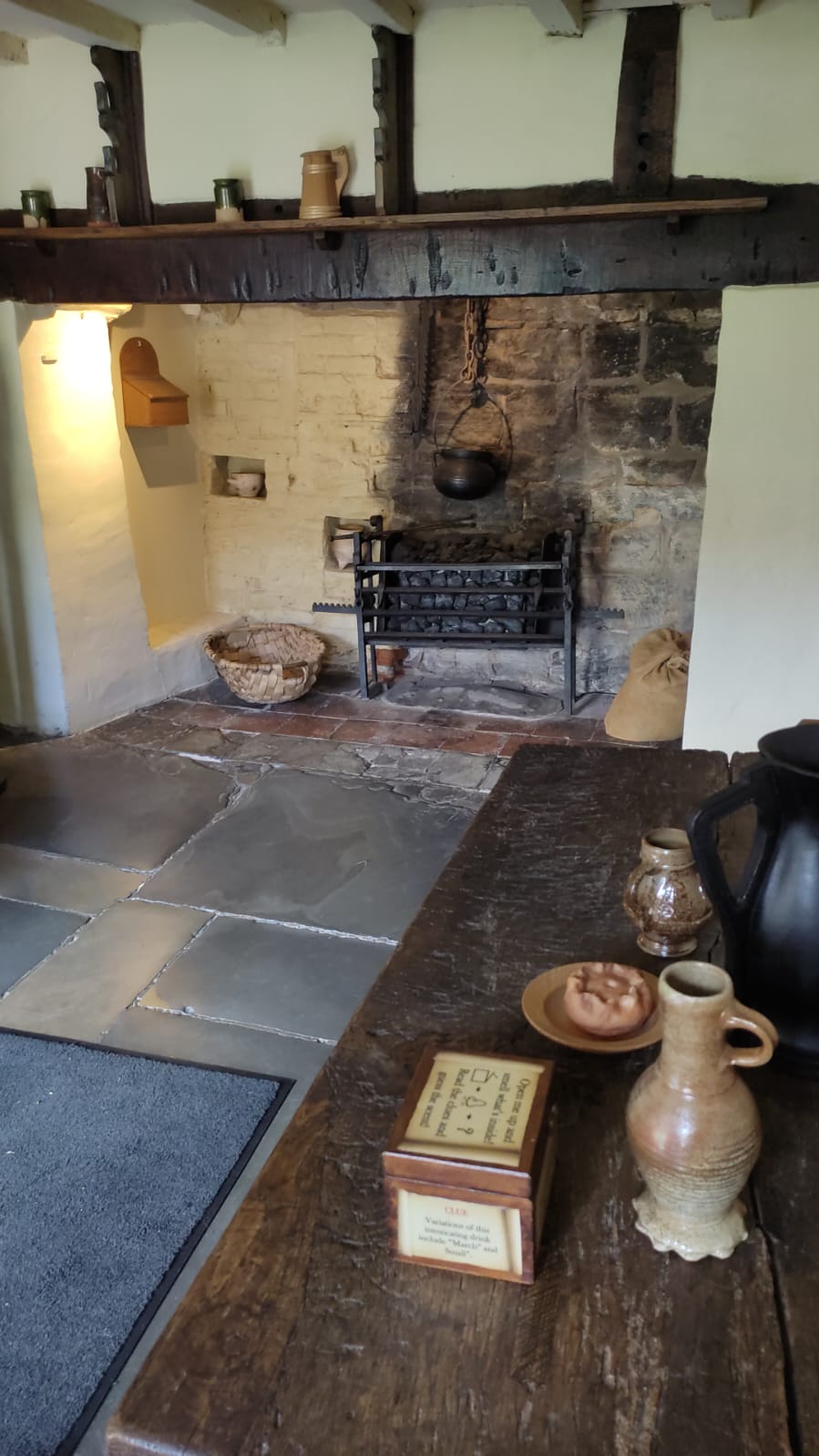
Entering through the main door, visitors walk through the same rooms where young William would have spent his formative years. The ground floor houses a small enclosure where he would have met and entertained visitors. Then comes the main hall where the family would have gathered for meals, with a large hearth and a sturdy wooden table, showcasing how a typical middle-class family of that period lived.

One can readily appreciate how the house served as both a home and a business venue, as Shakespeare’s father, John Shakespeare, was a glove maker and wool dealer. His workspace, along with the tools of his trade, is laid out in one of the rooms, illustrating a connection between commerce and home life in the 16th century.

Upstairs, visitors can see the room traditionally thought to be the room where Shakespeare was born. The tiny window lets in a sliver of daylight, highlighting the simplicity of the furnishings and the room’s plain walls. One can see a tiny cradle where the young one might have had his maiden midsummer night’s dream.  

A literary genius who was born great

Standing in that room, it’s hard to reconcile the humble surroundings with the profound literary genius that Shakespeare would become. But as a guide explains stories from Shakespeare’s early life, you get a sense of the young boy’s curiosity and imagination—qualities that must have been nurtured in this very place. Surely, he was not someone who became great, or upon whom greatness was thrust by his Guardian Angels. Indeed, he was born great.   

The garden outside the house is another lovely feature. To a fan of P G Wodehouse, it sounds like a miniature version of the ones at Blandings Castle. It is filled with plants and flowers that are mentioned in Shakespeare’s plays and sonnets. Walking through, you may recognize some of the herbs and flowers—like rosemary and pansies—from his writings. There is a sense that these natural elements inspired him, giving rise to his poetic descriptions of the natural world.

Understanding the world that shaped him makes it easier to understand how his plays reflected both the universality of human nature and the specific issues of his time.

To be or not to be

As the visit ends, scales have already fallen from one’s eyes. To be or not to be a fan of the Bard is a question which leaves one baffled, bewildered, confounded, confused, disconcerted, flummoxed, mystified, perplexed, and puzzled. In any case, one leaves with a newfound appreciation for the humble origins of William Shakespeare. His birthplace, though small and unpretentious, radiates with the legacy of a man whose works have shaped literature and drama worldwide and who is revered for his unique contributions to the Queen’s language. I am sure that he must have enriched the language in a manner that might be vaster and deeper than those who have either preceded or succeeded him. But lesser mortals like me, surely at the bottom of the English Proficiency Pyramid, are apt to feel very dense while endeavouring to devour any of his works.

However, for literary coves and linguistic purists, Stratford-upon-Avon remains a pilgrimage site, a place that celebrates not just Shakespeare’s legacy but also the power of words and stories to transcend time and space.

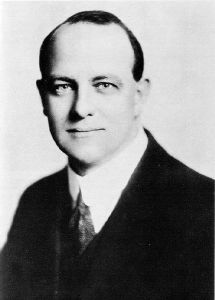
P G Wodehouse was one of those who held the Bard in high esteem. He once said: “Shakespeare’s stuff is different from mine, but that is not to say that it is inferior.” His frequent use of Shakespearean phrases in his stories and books merely attests to the same. Those of you who wish to explore this subject further may find this link useful.

All is well that ends well

Visiting the birthplace of William Shakespeare is more than a historical tour; it’s a journey through the formative environment of a literary legend. It provides a tangible sense of where the world’s most celebrated playwright came from and reminds visitors of the timeless influence of Shakespeare’s words, which continue to resonate across the ages.

Note: Thanks are due to Dominique Conterno, my host in the UK, who enabled this visit.

Related Posts

Read Full Post »

Introduction

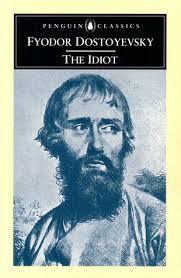
Fyodor Dostoevsky’s The Idiot is a profound journey into the clash between innocence and the disillusionment of a morally complex society. First published in 1869, this novel remains a monument of philosophical inquiry and character depth. Dostoevsky, a visionary in Russian literature, was no stranger to human suffering and societal injustices. His own trials, including facing near-execution, find a voice in The Idiot. Through Prince Myshkin, Dostoevsky ventures into the possibility of purity in a world overcome by cynicism, greed, and moral ambiguity. Can innocence survive in a landscape marred by corruption? Dostoevsky invites us to ponder this question.

Dramatis Personae

  1. Prince Lev Nikolayevich Myshkin

Known as the “idiot” for his naive, unguarded nature, Myshkin stands as the embodiment of childlike idealism. He is described as a “positively beautiful man,” possessing a purity that starkly contrasts with the self-interest and moral ambiguity of those around him. Myshkin’s nature makes him vulnerable to manipulation, but his unwavering compassion and ability to forgive create an indelible impact on others. His words, “I’m sure you think me incredibly stupid, but I assure you that I understand many things” (Part 1, Chapter 7), resonate as an assertion of his deeper understanding beyond superficial judgments.

  • Nastasya Filippovna

A tragic figure, Nastasya Filippovna is tormented by feelings of worthlessness and self-hatred. Her beauty captivates Myshkin and Rogozhin alike, but her traumatic past and self-destructive tendencies create a complex inner conflict. Her declaration, “I’m a nobody, a sick soul, I don’t deserve you” (Part 3, Chapter 3), reveals her deep-seated vulnerability and her struggle with self-acceptance, which drives much of the novel’s drama.

  • Parfyon Rogozhin

Rogozhin, passionate and impulsive, serves as a dark counterpoint to Myshkin’s purity. His obsessive love for Nastasya Filippovna leads him down a destructive path, symbolizing love’s potential for ruin when tainted by possessiveness and jealousy. His volatile nature and capacity for violence create a tragic tension that culminates in inevitable disaster. Rogozhin’s intensity and Myshkin’s gentleness interact in a way that illustrates the broader dichotomy between purity and corruption.

  • Aglaya Ivanovna

Representing idealism and the potential for happiness, Aglaya is drawn to Myshkin’s goodness but is constrained by societal expectations. Her struggle between her admiration for Myshkin and the weight of social pressure is poignantly expressed in her lament, “Why do they always make me do what I don’t want to do?” (Part 3, Chapter 8). Her character embodies the tension between personal desires and societal demands, further illustrating the novel’s exploration of unattainable ideals.

  • Gavril Ardalionovich Ivolgin (Ganya)

An ambitious young man, Ganya seeks social mobility through a marriage to Nastasya Filippovna, driven by his desire for wealth and status. His conflicting feelings for Nastasya and his disdain for Myshkin’s ideals illustrate the personal costs of ambition and moral compromise.

  • Ferdyshchenko

A minor character but essential for comic relief, Ferdyshchenko is outspoken and often disrupts social gatherings with his crude humour. He reflects the novel’s theme of hypocrisy by exposing the pretensions of those around him through his blunt honesty.

Plot Summary and Themes

The Idiot traces Myshkin’s return to Russia from a Swiss sanatorium, where his arrival in St. Petersburg sets off a series of events that unveil the moral and spiritual decay of the people around him. His genuine kindness and childlike honesty clash with society’s cynicism, resulting in misunderstandings and conflicts, especially around Nastasya Filippovna and Aglaya Ivanovna. Themes like innocence versus corruption, love’s complexities, and the ongoing struggle between good and evil make The Idiot a timeless masterpiece that critiques societal norms while examining the possibility of redemption. Dostoevsky’s philosophical views on justice and compassion, illustrated by Myshkin’s reflection on capital punishment, reveal his belief in a humane approach to morality—one that transcends the ordinary.

A pivotal moment in the book occurs during Nastasya’s dramatic party, where she throws 100,000 roubles into the fire, daring her suitors to retrieve it. This act symbolises her contempt for wealth and societal values, as she exclaims, “There’s no end to my vileness!” (Part 1, Chapter 15).

Myshkin on Capital Punishment

In The Idiot, Prince Myshkin’s commentary on capital punishment reflects Dostoevsky’s deep moral convictions and individual experiences. Myshkin recounts witnessing a guillotine execution in France, emphasising the psychological torment of the condemned rather than the physical pain. He argues that the preparations for execution—leading a man to the scaffold—are more horrific than the act itself, as they strip away humanity and instil profound fear. Myshkin’s belief that “thou shalt not kill” underscores his view that punishing evil with evil is fundamentally wrong, echoing Dostoevsky’s own traumatic near execution.

Historical and Biographical Context

Dostoevsky wrote The Idiot during a turbulent period in his life. After suffering through the death of his first daughter and facing financial difficulties, he sought to create a narrative that explored the possibility of a genuinely good and beautiful person. The novel was written in the late 1860s, a time of social and political upheaval in Russia, which is reflected in the characters’ struggles and societal critique.

Dostoevsky’s views on capital punishment were profoundly shaped by his firsthand experiences, particularly a mock execution he faced in 1849. Sentenced to death for his involvement in the Petrashevsky Circle, he was blindfolded and prepared for execution, only to be spared at the last moment. This psychological torture left a lasting impact, leading him to explore themes of suffering, compassion, and the moral implications of state-sanctioned death in his works, especially through the character of Prince Myshkin in The Idiot, who articulates the deep anguish of awaiting execution and the inherent cruelty of capital punishment.

Narrative Techniques and Character Relationships

Dostoevsky employs a variety of narrative techniques to bring depth to his characters and their relationships. The novel’s contrapuntal structure allows multiple voices and perspectives to coexist, creating a rich tapestry of conflicting ideologies and emotions. This approach provides insight into the characters’ inner lives and reflects the chaotic and multifaceted nature of human existence.

Prince Myshkin’s relationships with other characters are central to the novel’s exploration of moral integrity versus and corruption. His interactions with Nastasya Filippovna are particularly poignant, as he is drawn to her suffering and seeks to save her despite her self-destructive tendencies. Myshkin’s compassion for Nastasya is evident when he says, “I will follow you wherever you go, even to your grave” (Part 2, Chapter 7). This relationship highlights the tension between Myshkin’s idealism and the harsh realities of the world.

Similarly, Myshkin’s bond with Rogozhin is marked by a blend of friendship and rivalry, underpinned by their mutual obsession with Nastasya. Rogozhin’s passionate nature contrasts sharply with Myshkin’s gentleness, creating a dynamic that leads to tragedy. Rogozhin’s declaration, “You and I cannot live together; the one will destroy the other” (Part 4, Chapter 10), foreshadows the novel’s dramatic conclusion.

Myshkin’s relationship with Aglaya Ivanovna introduces another layer of complexity, as she represents a potential for happiness and normalcy. However, societal pressures and misunderstandings prevent their union, underscoring the novel’s theme of unattainable idealism. Aglaya’s struggle to reconcile her feelings for Myshkin with her family’s expectations is poignantly expressed when she asks, “Why do they always make me do what I don’t want to do?” (Part 3, Chapter 8).

Adaptations and Cultural Impact

Mani Kaul’s Ahamaq (1992) serves as a reinterpretation of Dostoevsky’s The Idiot, adapting its themes to an Indian context. Both works explore the concept of “idiocy” through their protagonists—Prince Myshkin in The Idiot and his counterpart in Ahamaq, who struggles with epilepsy, often misinterpreted as madness.

While Dostoevsky’s narrative culminates in tragedy, reflecting societal cynicism, Kaul’s adaptation emphasises cultural nuances and the complexities of faith and desire within a contemporary Indian setting, offering a unique lens on the original themes of purity and delusion. In the television adaptation, Shah Rukh Khan portrayed the role of Rogozhin, Mita Vashisth the role of Nastasya, and M.K. Raina portrayed the role of Myshkin. Personally, I wish Shah Rukh had instead portrayed the role of Myshkin as he was doing enough negative roles on screen then.

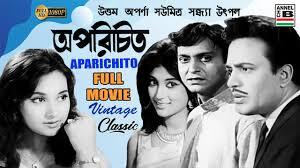
Samaresh Basu’s novel Aparichita draws considerable influence from Fyodor Dostoevsky’s The Idiot. Both works explore themes of innocence, morality, and the complexities of human relationships. In Aparichita, the protagonist’s struggles mirror those of Dostoevsky’s Prince Myshkin, highlighting the tension between idealism and societal corruption. The narrative delves into the psychological landscapes of its characters, reflecting Dostoevsky’s polyphonic style, where multiple voices and perspectives coexist, enriching the emotional depth of the story. The film (1969) portrays Uttam Kumar as Rogozhin, Soumitra Chatterjee as Myshkin, and Aparna Sen as Nastasya. Soumitra Chatterjee’s performance in the movie was power-packed.

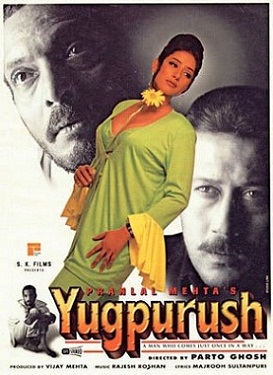
Additionally, the Bollywood film Yugpurush (1998) is based on Samaresh Basu’s novel Aparichita. The film starred Nana Patekar as Myshkin, Jackie Shroff as Rogozhin, and Manisha Koirala as Nastasya. The movie featured songs with music heavily influenced by Rabindra sangeet, composed by Rajesh Roshan. Yugpurush provides a fascinating lens on the themes of The Idiot, set within the Indian cultural milieu, and showcases the adaptability of Dostoevsky’s timeless themes.

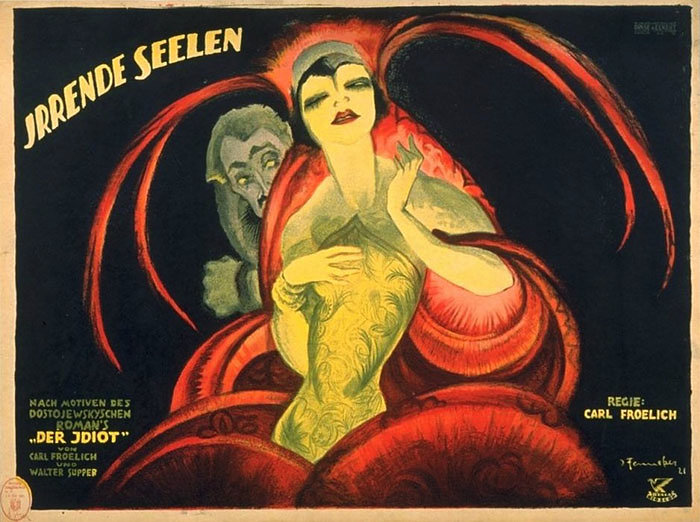
Internationally also, The Idiot has inspired quite a few movies from such diverse countries as Russia, Germany, Japan, Estonia, and France.

The earliest example is that of Wandering Souls (German: Irrende Seelen), a 1921 German silent drama film directed by Carl Froelich and starring Asta Nielsen, Alfred Abel, and Walter Janssen.

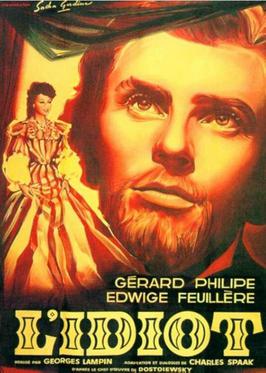
Yet another example is that of L’idiot (1946), a French drama film which was directed by Georges Lampin and starred Edwige Feuillère, Lucien Coëdel and Jean Debucourt. 

Conclusion

The Idiot remains a profound exploration of the human condition, examining the fragile balance between integrity and corruption. Dostoevsky’s masterful characterisations and narrative depth invite readers to ponder the true nature of goodness and the possibility of redemption. As we reflect on Myshkin’s journey, we are reminded of the enduring relevance of Dostoevsky’s vision of a world where compassion and integrity can shine, even in the darkest of times.

The Idiot remains as relevant as it was in Dostoevsky’s time. Humanity faces many challenges today. Wars. Poverty. Income disparities. Climate change. Challenges posed by rapid advances in technology. If we were to dig deeper, we are apt to discover that what we face is a crisis of leadership in all realms of human endeavour. The themes of authenticity, integrity, and morality have all been relegated to the background. Few big corporates rule the world. Social media puts blinkers on our eyes, masks the reality, and shapes our opinions. Forget carbon monoxide. Hate, cynicism, and hypocrisy also pollute the air we breathe in.

Myshkin’s journey resonates with contemporary readers facing a world where virtues are often overshadowed by self-interest and superficiality, reminding us of the power of goodness even in the darkest of circumstances. Dostoevsky’s portrayal of Myshkin’s kindness and compassion challenges readers to consider the value of empathy, sincerity, and integrity in our interactions with others.

References

  1. Fyodor Dostoevsky, The Idiot. Translated by Richard Pevear and Larissa Volokhonsky. Vintage Classics, 2003.
  2. CliffsNotes on The Idiot
  3. [Schlemiel Theory] (https://schlemielintheory.com/2014/11/26/what-happens-when-an-idiot-reflects-on-a-beheading-on-dostoevskys-reading-of-the

Related Post

Read Full Post »

Wodehouse

P. G. Wodehouse is essentially a romantic at heart. Matters of the heart play a vital role in almost all the narratives dished out by him.

Bertie Wooster keeps avoiding a walk down the aisle, thanks to the support he gets from Jeeves. Yet, at the end of The Mating Season, we find him basking in the glow of satisfaction at having been instrumental in putting the affairs of quite a few couples in order.

In the Blandings saga, we meet a morose Gertrude who is pining for Beefy Bingham, her lover. She spreads depression in the house and, worse still, tries to be “helpful” to Lord Emsworth by tidying his study.

Mr. Mulliner keeps recounting love stories of various nephews and nieces of his. Ukridge may try and run a chicken farm, but the subplot of the love affair between Jeremy Garnet and Phyllis runs throughout the narrative. The spell of a quiet summer evening prompts Jeremy to confide his love to Phyllis.

The Literary Parabola of Seasons

It is hard to think of romance without thinking about the seasons. Whether it is the first warmth of spring pulling us out of hibernation or the quiet reflection that comes with autumn, there is an innate connection between the rhythm of nature and the emotional lives we lead. Wodehouse, of course, recognises this. He does not just use the seasons as convenient backdrops for romantic entanglements; he weaves them into the very fabric of his characters’ emotional journeys. Like that feeling of optimism you get on the first sunny day after months of grey skies, Wodehouse’s characters are often moved by the weather in ways they barely recognize themselves. It is this subtlety—this almost imperceptible nudge from nature—that aligns him with the great literary tradition of using the external world to reflect inner states.

The motif of seasons is deeply embedded in literature, symbolising various emotional and psychological states of characters. Many English literary experts have skilfully employed seasons to reflect inner turmoil, personal growth, and other emotional shifts.

In Sonnet 18 (“Shall I compare thee to a summer’s day?”), Shakespeare compares the beloved to a summer’s day, symbolising beauty, and vitality, while also lamenting the fleeting nature of summer and, by extension, life, and youth. In The Winter’s Tale, the season of winter represents both the coldness of jealousy and tyranny as seen in King Leontes’ irrational behaviour, whereas spring (in the later acts) symbolises rebirth, redemption, and forgiveness.

In his poem To Autumn, John Keats captures the beauty and melancholy of autumn, a season of maturity and ripeness and goes on to meditate on the bittersweetness of life’s temporality.

Tess of the d’Urbervilles by Thomas Hardy aligns Tess’s emotional journey with the changing seasons. The novel starts in spring, symbolising Tess’s innocence, and moves through summer and autumn, reflecting her growing despair and tragedy. Winter, in the end, represents death and loss.

In A Christmas Carol, Charles Dickens uses winter as a backdrop to explore themes of coldness, isolation, and redemption. The harsh, biting cold reflects Ebenezer Scrooge’s miserly, frozen heart. Yet, through transformation, the holiday spirit (and warming of his heart) mirrors a kind of internal spring-like rejuvenation.

Robert Frost, in Stopping by Woods on a Snowy Evening, depicts winter as representing solitude, contemplation, and the pull of death. The character’s momentary pause in a quiet, snow-covered wood suggests the allure of rest and surrender, while the journey he must continue reflects the mundane obligations of life.

These writers masterfully intertwined the natural cycle of seasons with human emotions, adding symbolic depth to their character’s emotional and psychological experiences. The ever-changing seasons become metaphors for the ups and downs of human life, making them a timeless tool in literary exploration.

The USP of Wodehouse

What sets Wodehouse apart is his imaginative use of Cupid’s machinations during different seasons. Cupid is indubitably one of the author’s most important comrade-in-arms. But the freedom to strike at will does not come without its attendant responsibilities. Love is in the air. Devotion is permitted. But physical intimacy is a taboo. Aphrodite has limited access to the goings-on. Eroticism is denied entry. An occasional occurrence which could amount to mild titillation alone is allowed. Across the oeuvre, Cupid is subject to strict Victorian norms of behaviour.

However, all this does not lessen his ingenuity in bringing lovers together. There are occasions on which even a member of either the feline or the canine species facilitates the development of a bond. Behind the frivolity and farcical events of Wodehouse’s narratives, Cupid ensures an almost imperceptible use of natural elements to influence the lives of the author’s characters. While stuck together on a rock by the seaside, a high tide in Mr. Wilton’s Holiday leads to a reconciliation between Jack and Mary.

Cupid even goes on to use different seasons as arrows in his quiver to smoothen the way to new relationships blossoming. In many of the relationships between two love birds, seasons provide a perfect backdrop. While the seasons may appear incidental to the plot, these not only embody the emotional states of the characters but also serve as invisible matchmakers.

Seasons become mere puppets in the deft hands of Cupid in a few cases. These play a key role in nudging Wodehouse’s characters toward romantic resolutions. Spring, summer, autumn, and winter often serve as metaphorical agents of Cupid, facilitating encounters, softening hearts, and reuniting sundered hearts. In fact, in such cases, seasons don the hat of an active participant in the narrative, behaving like key actors involved in the act.

Let us consider a few examples to see how Cupid assists Wodehouse in propelling the romantic chemistry between his characters by using various seasons as either a backdrop or a catalyst.

Spring: The Season of Blossoming Love

In Wodehouse’s fiction, spring invariably represents renewal, hope, and the blossoming of love. The imagery of spring, with its vibrant colours, warming temperatures, and burgeoning life, mirrors the rekindling or the birth of romantic feelings among characters. Wodehouse takes advantage of spring’s association with new beginnings to nudge his characters towards forging romantic affiliations, often underlining the season’s role as Cupid’s chief lieutenant.

Bertie Wooster takes some inspiration from Tennyson when he says:

“In the spring, Jeeves, a livelier iris gleams upon the burnish’d dove.”

He even imagines a charming girl to come up to him and seek his assistance in saving her from assassins.

“I don’t know if you know that sort of feeling you get on these days around the end of April and the beginning of May, when the sky’s a light blue, with cotton-wool clouds, and there’s a bit of a breeze blowing from the west? Kind of uplifted feeling. Romantic, if you know what I mean. I’m not much of a ladies’ man, but on this particular morning it seemed to me that what I really wanted was some charming girl to buzz up and ask me to save her from assassins or something.”

Similarly, in No Wedding Bells for Bingo, Cupid assists Wodehouse in explicitly tying romantic developments to the season. Bertie Wooster’s bumbling friends, eager to woo their respective partners, often find their romantic aspirations coming to fruition as spring blooms. Wodehouse seems to imply that the very air of spring carries romance, infecting even the most hopeless of suitors with renewed vigour and enthusiasm. Even Jeeves, who, when surprised, raises his eyebrows merely a fraction of an inch, is affected by spring fever. Towards the end of the story, we find that Bertie tells Bingo Little’s uncle that Bingo wants to marry Mabel, a waiter, and he, moved by the books read out to him, approves. Uncle declares that he plans to marry his cook, in whom Jeeves had shown interest earlier. However, Jeeves has already scratched the fixture and instead has another engagement of sorts with another girl, Mabel, the waiter whom Bingo had wanted to marry!

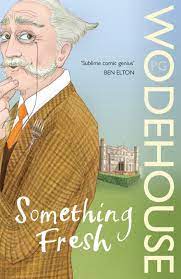
In Something Fresh, the sunshine of a fair spring morning incites a feeling of novel jauntiness amongst the residents of London. This is followed by the scene where Ashe Marson and Joan Valentine discover each other, and the seeds of romance get planted.

It is not that Cupid’s arrows prove to be effective in all the cases.

The spring motif continues with novels like Uncle Fred in the Springtime wherein the affair between Valerie and Horace comes to a satisfactory conclusion. However, Cupid’s arrows fail in the case of Polly and Gilpin. In Spring Fever too, Terry, who is initially wary of Mike due to his overwhelming good looks, warms up to him when she sees his battered face after a failed burglary attempt. Stanwood and Eileen also get together. But Mrs Punter runs off with Augustus Robb, leaving Shorty and Spink ruing their loss in love.

In the short story The Custody of the Pumpkin, the annual Spring Flower Show provides the backdrop for a classic Wodehouse romance. Lord Emsworth, obsessed with his prized pumpkin, is blissfully unaware that his son, Freddie Threepwood, is using the occasion to court a gardener’s daughter. The setting, with its blossoming flowers, is emblematic of the unanticipated flourishing of romance. While Lord Emsworth is preoccupied with his vegetables, spring’s inherent charm works on Freddie and his love interest, quietly orchestrating their courtship. Spring’s effect here is subtle but inevitable, as the characters seem unable to resist its influence.

Spring is also often a time for transformation in Wodehouse’s world. Characters who, during winter, might have been cynical, brooding, or emotionally distant, find themselves rejuvenated as the warmer weather arrives. When the ogre of winter is around, the characters’ instincts for self-preservation often dominate their tender thoughts of love. But once the winter is gone, the seasonal change from gloom to joie de vivre affects not only flora and fauna but also causes an emotional thawing amongst the Homo sapiens. Cupid assists Wodehouse in using this to show characters moving from a state of emotional hibernation to one of action and, eventually, romantic fulfilment.

Summer: Love in Full Bloom

If spring is the season of new beginnings, then summer in Wodehouse’s works represents the full bloom of love. It is as if Cupid decides to deploy the season at full throttle, its quiver operating on all its six cylinders. The warmth of the sun, long days, outdoor events such as garden parties and village fairs, a quick swim in a lake, and occasional bouts of rain create ideal conditions for love to grow further, often leading to a cementing of romantic affiliations. The languid pace of summer reflects the unhurried nature of developing affections, where flirtations deepen, and scales fall from couples’ eyes as they realise their love for each other.

Summer is the time when you can hear a snail clear its throat a mile away. When the sun is finishing its obligations for the day and rushing to a well-earned night of rest and repose, gnats and many other kinds of insects start fooling about all over the place.

In Right Ho, Jeeves, Bertie tells us it is July twenty-fifth when he returns from a trip to Cannes looking bronzed and fit. While at Cannes, a crisis arises in the matter of Tuppy Glossop and Angela Travers. They fall out due to Angela saying that Tuppy was getting fat and Tuppy not believing that a shark attacked her while at Cannes. Gussie Fink-Nottle is besotted with Madeline Bassett but does not have the courage to express his love to her. Eventually, it takes a dangerous midnight cycle ride by Bertie for Angela and Tuppy to reconcile their differences and for Madeline and Gussie to make up.

In The Mating Season, Madeline is yet again convinced that Bertie is secretly pining for her when he catches a 2.45 AM Milk Train and hides in the shrubbery, aiming to intercept the morning post which carries a letter from Gussie scratching the fixture with Madeline, thereby throwing a spanner in his plans to retain his bachelorhood. By the time the narrative ends, we find that Madeline and Gussie are reunited, Esmond Haddock has defied his aunts and is engaged to Corky, Constable Dobbs is reconciled with Queenie, and Gertrude has eloped with Catsmeat. Bertie’s bachelor status remains protected.

Cupid’s Benign Arrows

Cupid’s quiver contains many kinds of arrows. Other than the normal ones directed at consenting adults, on a few occasions, he also shoots the benign kind which are devoid of amorous intentions of any kind. Instead, these uplift the Spiritual Quotient of the ones at the receiving end. Or the kind that make one live up to the expectations of someone who is much younger in age, thereby also proving oneself worthy of one’s glorious ancestors.

In The Love that Purifies, we come across boys of a tender age who happen to be infatuated with Hollywood divas. We have Thos, who is besotted with Greta Garbo. We have Bonzo, who is in awe of Lilian Gish. Then, we have Sebastian Moon, whose affections are focused on Clara Bow. How these infatuations transform the behaviour of young boys is the nub or crux of the story. We are reminded that even menaces to society, in general, assume a saintly disposition when under the influence of the charms of their transient heartthrobs.

In Lord Emsworth and the Girl Friend, we discover that the lordship detests wearing stiff collars and making speeches. However, on the Parva School Treat Day, coinciding with the August Bank Holiday, when Blandings Castle becomes, in his lordship’s opinion, a miniature Inferno, he has little option but to fall in line with the command of Lady Constance Keeble. But that does not come in the way of his developing a respectful devotion towards Gladys. When she desires to have some flarze and gets spotted by Angus McAllister when doing so, the latter comes out of the potting shed at forty-five miles per hour. Gladys is quick to seek protection. She not only clutches the tails of Lord Emsworth’s coat but also slips her small, hot hand into his. It is a mute vote of confidence, and Lord Emsworth intends to be worthy of it. He stands up to the gardener and even defies his sister by refusing to deliver a speech.

The experience of Esmond Haddock and Lord Emsworth shows us that when Cupid strikes, even spines made of cottage cheese get transformed into those made of chilled steel!

When Rain Gods Assist Cupid 

In Summer Lightning, Hugo Carmody is surprised to find that it has been raining and decides to rush to the cottage nearby.

Ho! for the cottage, felt Hugo, and headed for it at a gallop. He had just reached the door, when it was flung open. There was a noise rather like that made by a rising pheasant, and the next moment something white had flung itself into his arms and was weeping emotionally on his chest.

The ‘something white’ is Millicent, Lord Emsworth’s niece, frightened by the Empress stashed in the gamekeeper’s cottage.

In Leave it to Psmith, the hero’s first encounter with Eve comes about when she is caught in a sudden spell of rain beneath the awning of Messers Thorpe & Briscoe. Even though he says he is above softer emotions in general, Eve, who is sumptuously upholstered at the time, stirs a chord within him. Chivalry comes into play. Stealing the best umbrella available in the cloakroom of the club and rushing out to offer it to her is the work of a moment for him. Had Cupid not been assisted by the Rain Gods at the time, his machinations might have been in vain.

Summer’s role as Cupid’s agent is also evident in the way characters often find themselves outdoors during the warm months, in situations that lend themselves to romantic misunderstandings and reconciliations. Wodehouse’s characters often attend tennis matches, picnics, and boating excursions during the summer, all of which provide opportunities for private conversations, furtive glances, and sudden declarations of love. The idyllic natural settings serve as romantic catalysts, drawing characters together under the spell of the summer sun.

Moreover, summer’s association with heat and intensity often mirrors the emotional heat of Wodehouse’s love stories. The heightened emotions of characters — whether it is the confusion of unspoken feelings, jealousy, or the passion of newfound love — often come to a head during this season.

Autumn: The Season of Mists and Mellow Fruitfulness

Autumn, with its falling leaves and cooling air, often signals a time of reflection in Wodehouse’s works. This season is less about the exuberance of new love and more about characters realizing their feelings, coming to terms with past mistakes, or making decisions about their romantic futures. In many ways, autumn represents a transitional phase in the romantic arc of Wodehouse’s characters — a period of contemplation before the final act of a romantic resolve. Cupid, perhaps tired of the hectic time he has had in the previous two seasons – spring and summer – does a bit of introspection, reviewing the progress of the arrows shot earlier on whatever technical gizmo he uses to keep a track of things, and deciding the future course of action in each case.  

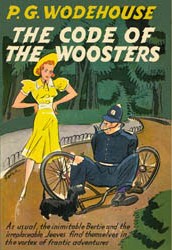
In The Code of the Woosters, Jeeves tells Bertie that autumn is a season of mists and mellow fruitfulness.

One of the reasons for Bertie visiting Totleigh Towers is to heal a rift between Gussie Fink-Nottle and Madeline, Sir Watkyn’s daughter. Madeline incorrectly believes Bertie to be in love with her, and she has promised to marry him if her engagement should ever fail. To avoid this calamity to befall him, Bertie persuades Madeline to invite him down, but he learns upon arriving that Gussie and Madeline have already reconciled. A parallel romantic track is that of Stiffy Byng and Harold Pinker. A silver cow creamer, a notebook of Gussie’s which insults the host, Sir Watkyn Bassett, a policeman’s helmet, and the Eulalie effect on Roderick Spode – all take turns to play a spoilsport. Eventually, Cupid succeeds in his mission and both the couples get united.

In Jeeves and the Old School Chum, when a carefully packed lunch basket goes missing at the Lakenham Races, and the car carrying Rosie M Banks and her old school friend Laura Pyke runs out of fuel in the middle of nowhere, a fight ensues between the two friends. Bingo Little wins an intense argument with the owner of a house nearby and ensures that his wife gets her afternoon cup of tea. The romance between the couple is back on its throne.

She turned for an instant to Bingo, and there was a look in her eyes that one of those damsels in distress might have given the knight as he shot his cuffs and turned away from the dead dragon. It was a look of adoration, of almost reverent respect. Just the sort of look, in fact, that a husband likes to see.

“Darling!” she said.

“Darling!” said Bingo.

“Angel!” said Mrs Bingo.

“Precious!” said Bingo.

Cupid is thus successful in rekindling the romance between the wife and the husband, which had earlier come under strain owing to a clash between Bingo’s dietary habits and Laura Pyke’s strict diet regime based only on fat-soluble vitamins.

The Indian Summer

Many of Wodehouse’s fans are aware of his evocative use of the term Indian Summer, which is said to be a period of unseasonably warm, dry weather that sometimes occurs in autumn in temperate regions of the northern hemisphere. The UK Met Office Meteorological Glossary published in 1916 defines an Indian summer “a warm, calm spell of weather occurring in autumn, especially in October and November”.

In Indian Summer of an Uncle, Wodehouse touches upon yet another facet of love – that of a more mature variety. When Uncle Goerge starts planning a walk down the aisle with a much younger Rhoda Platt, Jeeves explains the phenomenon as follows:

“One must remember, however, that it is not unusual to find gentlemen of a certain age yielding to what might be described as a sentimental urge. They appear to experience what I may term a sort of Indian summer, a kind of temporarily renewed youth.”

For those in an advanced age, holding hands and physical intimacy gets relegated to the background. Instead, common ailments and related medications and therapies rule the roost. At times, the lining of the stomach paves the way for a couple to start sharing the trials and tribulations of life with each other. When Piggy and Maudie, the latter being the aunt of Rhoda Platt, happen to meet after a gap of many years, Cupid is quick to seize the initiative and ensures that their romance gets rekindled.

While autumn may lack the vibrancy of spring and summer, its quiet beauty is essential to Wodehouse’s romantic narratives. It allows characters the space to reflect, reconsider, and eventually take action to secure their happy endings. In this way, autumn becomes an integral agent of Cupid, providing the emotional clarity needed for love to succeed.

Autumn’s natural imagery — with its sudden riot of beige, yellow and brown colours, and the promise of winter’s chill and its eventual strokes of brilliant white on the landscape — often evokes a sense of urgency in Wodehouse’s characters. As the days grow shorter, characters are compelled to make decisions about their romantic futures. Cupid can be seen using this season to build tension, pushing characters toward decisive action. The cooling air of autumn can often be seen as a metaphor for the characters’ cooling patience, forcing them to act before it is too late.

Winter: Love Amidst the Chill

Though less frequently employed in Wodehouse’s works, winter nonetheless plays a significant role in his romantic comedies. The cold, stark landscape of winter can serve as a powerful contrast to the warmth of human affection. In some of his stories, the challenges of winter — whether it be physical cold, isolation, or the dormant state of nature — underscore the importance of companionship and love as a source of warmth and vitality.

In The Ordeal of Young Tuppy, the latter and Angela have again had the proverbial lover’s tiff. While on a rebound, Tuppy starts flirting with an athletic girl named Miss Dalgleish who lives near Bleaching. The girl is fond of dogs; Bertie supposes Tuppy wants an Irish water-spaniel to give her as a Christmas gift. To impress the girl, Tuppy participates in a local game of football, where he performs well but is sad to find out later that the girl was not present on the occasion, having rushed off to London looking for an Irish water-spaniel. A fake telegram imploring Tuppy to rush to the aid of an ailing Angela lands up, restoring the relationship between the two.

In Something Fresh, a concatenation of circumstances leads to Ashe Marson travelling in an open cart from Market Blandings to the Castle in biting cold. Wodehouse describes cold as an ogre that drives all beautiful things into hiding.

Below the surface of a frost-bound garden there lurk hidden bulbs, which are only biding their time to burst forth in a riot of laughing colour; but shivering Nature dare not put forth her flowers until the ogre has gone. Not otherwise does cold suppress love. A man in an open cart on an English Spring night may continue to be in love; but love is not the emotion uppermost in his bosom. It shrinks within him and waits for better times.

In The Knightly Quest of Mervyn, Mervyn Mulliner wants to marry Clarice Mallaby. She thinks he is a chump and does not consent to marry him. Mervyn wants to prove himself and asks her to give him a quest, like the knights of old. It is December, and she has always wanted to eat strawberries in the middle of winter, so she tells Mervyn that she will reconsider his proposal of marriage if he acquires a basket of strawberries for her before the end of the month. After having had many setbacks in his knightly mission, he lands up at Clarice’s house and intercepts a package which has strawberries for her from Oofy Posser in whom Mervyn had earlier confided. He gets an idea and calls out to Clarice that he brought her strawberries. However, by the time she reaches the room, he has absent-mindedly eaten all the strawberries. Clarice throws him out in the chilly weather, not even allowing him to retrieve his hat. Cupid fails yet again, though Mr Mulliner concludes the story to his companions at Angler’s Rest thus:

“So there the matter rests. The whole thing has been a great blow to my cousin’s son, for he considers — and rightly, I suppose — that, if you really come down to it, he failed in his quest. Nevertheless, I think that we must give him credit for the possession of the old knightly spirit to which our friend here was alluding just now.

He meant well. He did his best. And even of a Mulliner more cannot be said than that.”

In A Damsel in Distress, Maud is shocked to see how fat Geoffrey has become since the one year they met in Wales. Though he has inherited a great deal of money, he now sports a triple chin and talks only of food. Winter forms a backdrop when Geoffery speaks of his having lived on a yacht during the previous winter.

Upon discovering that the party of the other part is now close to thirty pounds overweight, the tender emotion of love in Maud’s bosom evaporates. She realises her mistake. She rushes to the nearest phone, gets George on the line, and asks if he has gained any weight in the last year and if he has ever been to Florida during winter and relished a fish called pompano! When George replies in the negative, Cupid’s endeavours succeed, and their romantic affiliation is sealed.

Winter’s challenges — both literal and metaphorical — often lead characters to realise the value of love as a source of comfort and joy in an otherwise cold world. The season’s emphasis on survival and endurance mirrors the perseverance required for love to thrive despite obstacles. In many ways, Cupid uses the season of winter as a test of true love, as couples must navigate the season’s difficulties to find warmth and happiness in each other’s company.

Though less romantic on the surface than spring or summer, winter provides Wodehouse with opportunities to explore the depth and resilience of romantic relationships. It is a season where love tries to prove its worth by enduring hardship and by a conduct which is not only chivalrous but also knightly. Seeds of love may occasionally lie dormant in the frozen soil, ready to sprout as and when the season of spring kicks in.

The Six Seasons of Kalidasa

Yet another literary figure who, like Wodehouse, has captured different seasons with highly insightful narratives is Kalidasa.

Kalidasa, said to be born in India in the fourth century AD, is widely regarded as the greatest poet and dramatist in the Sanskrit language. His evocative portrayal of female beauty, an enthusiastic depiction of the affairs of the heart, and the diverse ways in which ladies dress up for a romantic encounter with their beloved in each of the six seasons typical of a tropical country would have surely attracted Cupid’s attention.

In one of his seminal works, Ritusamhara (Medley of Seasons), Kalidasa describes six seasons in his inimitable style: Spring (Vasanta), Summer (Greeshma), Monsoon (Varsha), Autumn (Sharad/Patjhad), Pre-winter (Hemant), and Winter (Shishir). Each one is dealt with evocative descriptions of the elements of nature. The seasons form a backdrop for the affairs of the heart and the sensuous pleasures of the skin.

In Harmony with Mother Nature

In the works of P.G. Wodehouse, the seasons play a subtle yet significant role in shaping the romantic lives of his characters. Spring brings new beginnings and the promise of love, summer sees romance in full bloom, autumn provides space for reflection and realisation, and winter challenges love to survive amidst the cold. Each season, with its unique qualities, acts as an agent of Cupid, quietly orchestrating the romantic entanglements and resolutions that define Wodehouse’s timeless comedies.

All of us have occasionally experienced that curious, unexplainable surge of nostalgia that comes with a crisp autumn breeze or a sudden downpour in summer. An often-overlooked slice of his literary brilliance is how he grounds quite a few exaggerated situations in something so universal — the changing seasons. We have all watched relationships blossom in spring, only to weather the storms of winter. Wodehouse reminds us, with a wink and a smile, that love, like the seasons, goes through its cycles. And while his characters might find themselves tangled in knots, he trusts that much like nature itself, things have a way of sorting themselves out in time. In a world that so often feels chaotic, it is this quiet reassurance that keeps us coming back to his stories, much like the comfort of the seasons returning year after year.

By aligning the emotional journeys of his characters with the changing seasons, Wodehouse creates a world where love is not only a matter of human interaction but also a natural phenomenon, influenced by the rhythms of the earth itself. The seasons, in their silent and invisible way, become crucial agents in the hands of Cupid to stage the grand drama of attraction, affection, desire, infatuation, and love.

After all, he is supposed to be the son of the love goddess Venus and the god of war Mars. His role in nudging Wodehouse’s characters towards a conclusion of their affairs of the heart deserves to be appreciated and applauded.

Notes:

  1. This article is inspired by Plumtopia’s blog post ‘The Four Seasons of Wodehouse’ (link below).
  2. Inputs from a Wodehouse expert and Suryamouli Datta are gratefully acknowledged.
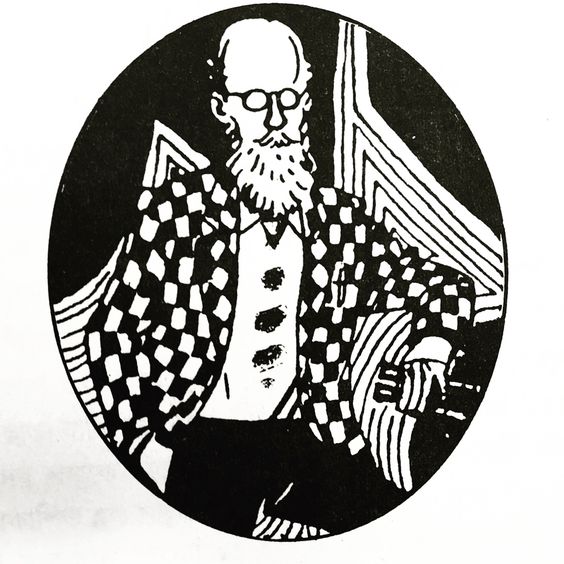
  3. Plum’s caricature courtesy Suvarna Sanyal.
  4. A version of this article appears in the March 2025 issue of Wooster Sauce, quarterly journal of the P G Wodehouse Society (UK).

Related Posts:

Read Full Post »

Introduction

As the sombre mist of mortality settles upon the world, I find myself, along with countless others, lost in the labyrinth of thought, pondering the enigmatic fate that had beckoned the great poet, Rabindranath Tagore, to the realm of the eternal, on the 7th of August, 1941. For the 83rd time, we are forced to confront the stark reality of his passing, and the weight of his absence settles upon our collective conscience like a shroud. And yet, as we gaze upon the canvas of his extraordinary life, we cannot help but wonder what wondrous tapestry of words and ideas the Bard of India might have woven had he remained among us, a tantalizing what-if that haunts us like a persistent melody.

Looking back to early days

As a child of tender years, his idealistic nature found expression in a paean to the raindrops’ embrace upon leaves, their gentle patter evoking the rhythmic swaying of an elephantine behemoth –

Water pours, leaves dance, 

Crazy elephant’s head sways in a trance

To attempt to encapsulate his colossal contribution to the arts would be like trying to capture the sun in a teacup. Like a literary Gargantua, he devoured every realm of culture, leaving behind a Gargantuan feast of creative output.

His ‘Nobel’ contribution

The year 1913 was a moment in the annals of literary history when the world finally awakened to the profound significance of Rabindranath Tagore’s contributions to world literature. It was as if the veil of ignorance had been lifted, and the international community beheld, with a mixture of wonder and reverence, the sheer brilliance of the Bengali bard’s thoughts. And we, as Indians, were filled with a sense of pride, nay, a deep-seated sense of ownership, for it was our own Tagore who had been instrumental in illuminating the path of human understanding.

It is worth noting that Tagore himself had taken the initiative to translate his creation, ‘Gitanjali’, into the English language, thereby rendering his exquisite and sensitive verse accessible to a global audience. The response was nothing short of astonishing, as the world was left agog at the beauty and profundity of his poetry. And it was none other than Thomas Sturge Moore, that erudite British poet, author, and artist, who had the foresight to recommend Tagore’s name for the Nobel Prize, even before the year 1913 had dawned.

Tagore in Bollywood

However, in this discourse, our attention shall be directed solely to the instances wherein the cinematic artisans of Bollywood have sought to translate the essence of his creations into the vibrant medium of visual storytelling. It is not easy to capture the nuances of a work of a literary kind in the medium of moving images. As we shall see, while some movie directors have done it very diligently, others have taken a few liberties with the original narrative. Nevertheless, let us consider some such endeavours where his words have found expression on the silver screen, making them reach out to a much wider audience.  

Milan (1946)

Adapted Story: Noukadubi (The boat wreck)

Director: Nitin Bose

Cast: Dilip Kumar, Mira Misra, Ranjana, Moni Chatterjee, S. Nazeer 

Synopsis: In the arcane tapestry of 1905 Calcutta, a city pulsating with intellectual fervour, Ramesh, our cogent protagonist, becomes ensnared in a labyrinth of societal dogma and the yearnings of the heart.

Dilip Kumar imbues Ramesh, a fledgling law student, with a palpable yearning for Hemnalini, portrayed by the enigmatic Ranjana. However, their burgeoning romance is stymied by the machinations of Akshay, menacingly brought to life by Pahari Sanyal, thus weaving a thread of intrigue into the narrative.

As the relentless tendrils of fate interlock, familial duty and the dictates of the heart collide. Ramesh is summoned back to his ancestral village, setting in motion a whirlwind of events characterized by mistaken identities and emotional tempests. Amidst this turmoil, Ramesh’s virtuous aspirations are put to the test as he grapples with the precarious equilibrium between obligation and amour, a timeless theme in the grand theatre of life.

Upon his return to Calcutta, Ramesh’s noble efforts to enlighten Kamala, his unanticipated bride, lend an intricate layer to the unfolding tale. The reverberations of Ramesh’s clandestine union resonate throughout the hallowed halls of society, threatening to shatter his impending marriage to Hemnalini.

As tensions escalate to a fever pitch, the stage is set for a grand denouement, wherein truths are elucidated, hearts are mended, and love emerges victorious, transcending the constraints of adversity. 

The Music: Verily, the musical composition of this cinematic endeavour was undertaken by the esteemed Anil Biswas. The lyrics, crafted with utmost precision and elegance, sprang forth from the minds of the renowned Pyare Lal Santoshi and Arzu Lakhnavi.

Parul Ghosh, a vocal virtuoso who lent her dulcet tones to a significant portion of the filmic arias, shared a familial bond with Anil Biswas, being his sibling of less advanced years. Historia attests to her as one of the inaugural exemplars of that novel method of sonic preservation known as playback singing within our realm of cinematic entertainment.

Geeta Dutt, another vocalist of exceptional talent, graced the film with her mellifluous contributions. 

Trivia: In a spirit of dialectical inquiry, it is imperative to elucidate that the cinematic narrative of this film emanated from the pen of Sajanikanta Das, editor of Shanibarer Chithi (Saturday’s Letter). Das, a man possessed of a keen intellect and a mordant wit, had previously directed his critical gaze upon the esteemed Rabindranath Tagore. With a discerning eye, he had dissected Tagore’s literary aesthetics and his profound societal influence, finding them wanting. 

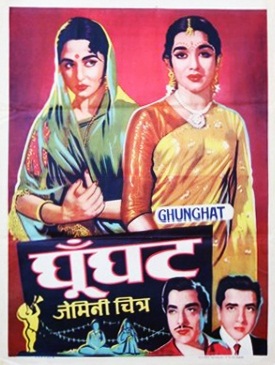
Ghunghat (1960)

Adapted Story: Noukadubi (The boat wreck)

Director: Ramanand Sagar

Cast: Bharat Bhushan, Pradeep Kumar, Bina Rai, Asha Parekh

Synopsis: In a tale akin to Milan’s classic narrative, the annals of modernity unveil a poignant drama. A young man, Ravi, faces an agonizing dilemma when his parents demand that he sever his affection for Laxmi and marry another. With a heavy heart, he acquiesces to their wishes.

As fate would have it, a fateful train journey brings together a group of newlyweds, including Ravi and his bride. Tragedy strikes and the train is engulfed in a catastrophic accident. Ravi awakens to find an unconscious bride lying beside him. Mistaking her for his own wife, he transports her to his abode.

Upon realizing the demise of his true wife, Ravi is horrified to discover that the bride he has brought home is a different lady named Parvati. Tormented by guilt and compassion, he embarks on a desperate search for her husband, Gopal.

Unbeknownst to Ravi, Parvati had already stumbled upon the truth and made her escape. Seeking solace, she wandered aimlessly until she fell into the river Jamuna. Her fate led her to the doorstep of Gopal’s residence, where she encountered his brother, Manohar, who had lost his eyesight in the accident.

Torn between her newfound duty to care for Manohar and her longing to reunite with Gopal, Parvati remained silent about her true identity. A web of secrets and unspoken truths now intertwined their lives, leaving them adrift in a sea of uncertainty. 

Music: The renowned music maestro Ravi brought forth the essence of Shakeel Badayuni’s exquisite lyrics on the silver screen. The ten melodious compositions were rendered by such legendary artists such as Mohd. Rafi, Asha Bhosle, Lata Mangeshkar, and Mahendra Kapoor. Among these, stand-out gems like Lata Mangeshkar’s rendition of ‘Lage Na Mora Jiya’, Mohd. Rafi’s soulful ‘Insan Ki Majbooriyan’, Asha Bhosle’s enchanting ‘Gori Ghunghat Mein’, and the mesmerizing duet of Mahendra Kapoor and Asha Bhosle in ‘Kya Kya Nazaray Dikhati Hai Ankhiyan’.

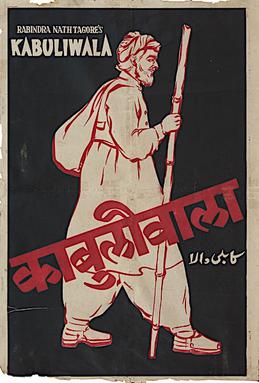
Kabuliwala (1961)

Adapted Story: Kabuliwala

Director: Hemen Gupta

Cast: Balraj Sahni, Sonu, Usha Kiran

Synopsis: In the realm of human narratives, we encounter a departure from convention—a tale in which the traditional roles of “boy” and “girl” are defined differently, “boy,” an elderly gentleman, finds himself interacting with a diminutive “girl” of five years of age, reminiscent of the incongruous coupling in P.G. Wodehouse’s “Lord Emsworth and Girlfriend.” However, this narrative possesses a distinctiveness that renders it a tale wholly its own.

Rahamat, a peripatetic merchant from Afghanistan, ventures to India seeking to peddle his wares. Here, he makes the acquaintance of Mini, a young lady of tender years. As their interactions deepen, a profound bond forms between them, akin to that of a father and daughter. Rahamat, reminded of his own daughter of Mini’s age, finds his paternal instincts stirring.

Circumstances conspire against them, and Rahamat is unjustly incarcerated. Upon his release, he seeks to reunite with Mini, unaware that the passage of time has wrought a significant change in her appearance. Mini, now a young woman, has no recollection of her former companion.

Grief-stricken, Rahamat departs India with a forlorn hope that his lost daughter may yet recognize him upon his return. Such is the nature of this enigmatic tale, where love and longing collide in a poignant exploration of the complexities of human relationships.

Music: Salil Choudhury, a veritable polymath, has bestowed upon us an ethereal symphony that perfectly encapsulates the narrative upon which it rests. In my humble estimation, there is no individual more adept at translating the Bengali soul into the universal language of music than this esteemed composer.

Furthermore, the illustrious voices of Hemant Kumar, Mohd. Rafi, Manna Dey, and Usha Mangeshkar serve as veritable conduits for the emotive lyrics penned by Prem Dhawan and Gulzar. Their vocal artistry transcends the realm of mere performance, becoming an integral thread in the tapestry of this cinematic masterpiece. Personally speaking, the “Ganga” song by Hemant Kumar is my all-time favourite!

Trivia: The Bengali iteration of the film was helmed by Tapan Sinha, a cinematic visionary whose repertoire extended beyond the hallowed borders of our country. His masterful direction of such seminal works as “Sagina” and “Zindagi Zindagi” has indelibly etched his name in the annals of cinematic history. To this humble observer, his unparalleled versatility renders him the paramount cinematic luminary of our times. 

Uphaar (1971)

Adapted Story: Samapti (The Ending)

Director: Sudhendu Roy

Cast: Swarup Dutta, Jaya Bhaduri, Suresh Chatwal, Nandita Thakur

Synopsis: The eternal entanglements of the human heart! In the sweltering metropolis of Calcutta, a most intriguing tale of love, duty, and, dare I say, a pinch of mayhem unfolds. Our protagonist, Anoop, a law student with a mind as sharp as a razor, finds himself ensnared in the time-honoured tradition of arranged matrimony. His widowed mother, no doubt with the best of intentions, sets her sights on the lovely Vidya, a neighbour with a face as fresh as the morning dew.

But, alas, fate has a way of playing the mischief-maker. Upon making the acquaintance of Vidya, Anoop’s heart is suddenly hijacked by none other than Minoo, a rustic beauty from the village, with a smile that could charm the birds from the trees. In a most unbecoming display of defiance, Anoop defies his mother’s carefully laid plans and instead takes Minoo as his bride.

Now, it’s not long before the newlyweds discover that Minoo’s domestic skills are, shall we say, somewhat lacking. The poor dear can’t boil water to save her life, and Anoop’s mother, God bless her, is left to wonder if she’s made a grave mistake in letting her son marry this…this…Minoo.

The inevitable friction ensues, and Anoop, in a fit of exasperation, absconds to Calcutta, leaving Minoo to her own devices. But, as the days turn into weeks, Minoo’s love for Anoop begins to simmer, like a potent curry left to stew. She takes it upon herself to pen a heartfelt letter, a cri de coeur, if you will, only to have it met with deafening silence.

Still, undeterred by the setbacks, Minoo’s love for Anoop remains unwavering, a beacon of hope in the midst of marital turmoil. And it is at Anoop’s sister’s humble abode in Calcutta, a veritable haven of familial warmth, that the star-crossed lovers finally reunite, their love stronger and more resilient than ever.

As I see it, Minoo’s carefree spirit and boyish charm evoke the irrepressible Maria of ‘The Sound of Music’, yet whereas Maria had the solace of the Mother Superior at the Abbey who grasped the essence of her personality and encouraged her to ‘Climb every mountain…’, Minoo wandered, unguided, misunderstood and alone. It’s a difference that strikes a poignant chord.

Music: As I recall, the melodies that wafted through the evening air were the handiwork of the esteemed duo, Laxmikant Pyarelal, whose mastery of the musical arts is renowned far and wide. And, it was the legendary vocal triumvirate of Mohd. Rafi, Lata Mangeshkar, and Mukesh who lent their golden voices to the proceedings, imbuing the entire affair with a sense of grandeur and elegance.

Trivia: In 1971, this movie was chosen to represent India at the Academy Awards, but it did not get nominated. Later, it was dubbed into different South Indian languages, becoming successful in Malayalam as “Upaharam” in 1972. “Samapti” was originally a Bengali movie directed by Satyajit Ray and is one of three short films based on stories by Tagore, released together as “Teen Kanya.”

Geet Gata Chal (1975)

Adapted Story: Atithi (The Guest)

Director: Hiren Nag

Cast: Sachin, Sarika, Khyati, Urmila Bhatt

Synopsis: Durga Babu and his wife, Ganga, found themselves in the presence of Shyam, a lad possessing a talent for singing and dancing that was nothing short of extraordinary. Touched by his plight as an orphan, they extended a warm invitation to him to take up residence within their abode. As Shyam gradually assimilated into the daily routine of the household, a strong friendship blossomed between him and their daughter, Radha.

Little did Shyam realize, but Radha’s fondness for him extended beyond the boundaries of mere companionship. However, his feelings for her remained rooted in the soil of camaraderie. Shyam, with a heart yearning for the open road and unbridled liberty, recoiled at the very idea of settling down. When he caught wind of the family’s designs to wed him off, he felt a sense of confinement akin to that of a bird ensnared within a cage. In a dramatic turn of events, he made a swift getaway, leaving behind a heartbroken Radha.

The question lingers in the air like the scent of a freshly baked pie – will Shyam ever uncover his path back to the homestead? And what tumultuous repercussions will this sudden departure have upon the delicate balance of domestic relationships within the family? 

Music: The music was scored by Ravindra Jain and Kishore Kumar, Mohd. Rafi, Aarti Mukherjee lent their voices.

Trivia: This cinematic tale too was brought to life in the Bengali language from literary origins by Tapan Sinha who had a discussion with Satyajit Ray about how to portray the ending of the story on-screen for an international audience. The original tale concludes with Tarapada leaving the mansion just before his marriage, abandoning his would-be wife. However, in a bid to conclude the story differently, Tapan Sinha depicted the bride-to-be weeping over the lost marriage. Satyajit Ray, sensing this wouldn’t resonate with international audiences, insisted on sticking to the original storyline of the protagonist vanishing. In contrast, the Hindi film adaptation opted for a happy ending, reuniting Shyam and Radha.

Lekin (1991)

Adapted Story: Kshudhita Pashaan (The Hungry Stones)

Director: Gulzar

Cast: Vinod Khanna, Dimple Kapadia, Amjad Khan, Hema Malini, Beena Banerjee

Synopsis: Sameer Niyogi (Vinod Khanna) encounters a mysterious woman, leading to a captivating tale set in Rajasthan. 

This movie, produced by Lata Mangeshkar, is not a direct adaptation but rather an inspiration from Tagore’s original story wherein the protagonist, a fresh-faced tax collector, finds himself stationed in a quaint village. Opting to dwell in an ancient, decrepit palace, rumoured to be haunted, he dismisses the warnings of the townsfolk. They caution him that past occupants have either lost their sanity or met untimely demises, claiming the structure itself is voracious. Yet, he soon discovers a beguiling woman, shrouded in mystery, wandering the palace’s corridors under the cloak of darkness.

Music: The music was composed by Pt. Hridaynath Mangeshkar and the lyrics were penned by Gulzar. Each composition was unique and tugged at our heartstrings.

Trivia: This cinematic tale was brought to life from its literary origins in Bengali under the masterful direction of Tapan Sinha, the actors Soumitra Chatterjee and Arundhuti Devi graced the silver screen, weaving the characters into the fabric of our imaginations. 

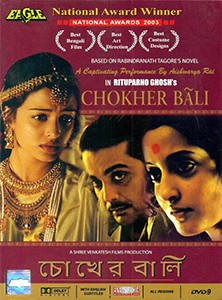
Sand in the Eye(2003)

Adapted Story: Chokher Bali (Eyesore)

Director: Rituparno Ghosh

Cast: Aishwarya Rai, Prosenjit Chatterjee, Raima Sen, Lily Chakravarty, Tota Roy Chowdhury

Synopsis: The tangled web of human relationships! Like a delicate spider’s silk, it ensnares us all, only to leave us dangling in a mess of our own making. Meet Binodini, a young widow, thrust into a world of moral ambiguity, where the lines between right and wrong are as blurred as the tears on her lovely face.

She finds herself in the midst of a most unsavoury triangle, with Mahendra, the self-absorbed cad, and his wife, Ashalata, who is naive and inexperienced. Mahendra, it seems, has a penchant for sampling the wares, only to discard them like a worn out [air of gloves. Binodini, however, is no fool, and she sees through his façade, recognizing the emptiness that lies beneath.

As the drama unfolds, we find ourselves entangled in a dance of deceit, where allegiances are forged and broken with all the finesse of a seasoned juggler. Behari, the stalwart friend, stands as a beacon of hope, a shining example of integrity in a sea of moral turpitude. But even he is not immune to the whims of fate, as Binodini’s mercurial heart leads him on a merry chase.

In the end, it is a tale of shattered dreams, of relationships reduced to tatters, like the fragile petals of a once beautiful flower. And yet, amidst the wreckage, we find a glimmer of hope, a testament to the human spirit’s capacity to endure, to persevere, and to love, despite the ravages of time and the cruel whims of fate. Ah, the human heart, that most confounding of puzzles, forever a mystery, forever a delight!

Music: The haunting strains of Debojyoti Mishra’s background score swirl around one, a melancholy mist that shrouds the narrative.

Trivia: This film is a dubbed version of the Bengali movie ‘Chokher Bali’.

Bioscopewala (2018)

Adapted Story: Kabuliwala

Director: Deb Medhekar

Cast: Danny Denzongpa, Geetanjali Thapa, Adil Hussain, Tisca Chopra

Synopsis: This cinematic offering is a departure from its literary progenitor. “Bioscopewala” chronicles the life of Rehmat Khan, a Kabulian cinemagician who regaled tykes with his flickering bioscope. Among his youthful admirers was Minnie, a lass of equal years to his own little cherub. But alas! Rehmat vanished as swiftly as a dodo, leaving Minnie to ponder his abrupt departure.

Fast forward, and Minnie, now a documentarist residing in the land of croissants and mime artists, stumbles upon a startling revelation: her father perished in an aerial catastrophe while attempting a pilgrimage to Afghanistan. Driven by an unquenchable thirst for knowledge, Minnie reunites with Bioscopewala, the narrator of her childhood adventures, to unravel the enigmatic circumstances surrounding her father’s fateful journey.

Prepare yourself for a tale that interweaves the whimsical with the poignant, where the complexities of human existence unfold amidst the flickering shadows of a Bioscope. May this cinematic concoction tickle your intellect and leave you pondering the true nature of life’s grand and enigmatic spectacle. 

Music: There is only one song in the film, titled “Bioscopewala.” It was sung by K Mohan, and composed by Sandesh Shandilya, with lyrics written by Gulzar.

Influences of Tagore in Bollywood

In addition to the films I’ve already mentioned, here are a few Bollywood movies I can recall that are heavily influenced by Tagore’s works.

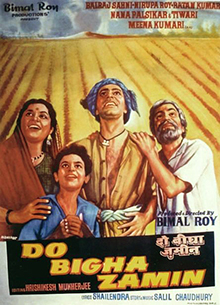
Do Bigha Zamin (1953)

Adapted Poem: Dui Bigha Jomi (Two Bighas of Land)

Cast: Balraj Sahni, Nirupa Roy, Ratan Kumar, Nana Palsikar, Meena Kumari, Mehmood

Director: Bimal Roy

Synopsis: The tale centres on Shambhu Maheto, a humble farmer living in a drought-stricken village with his family. When the rains finally arrive, Shambhu’s joy is short-lived as the scheming landlord, Harnam Singh, eyes Shambhu’s precious two bighas of land for a profitable mill project. Despite Shambhu’s desperate attempts, including selling all household items and moving to Calcutta to earn money, he fails to repay the inflated debt. His journey in Calcutta is fraught with hardship, culminating in his wife’s injury and his son’s foray into petty crime. Ultimately, Shambhu returns home to find his land auctioned off and a factory replacing his farm, leaving his family to walk away from their former life with nothing but memories.

Music: Salil Chowdhury composed the music for the film, with lyrics penned by Shailendra. In an interview with All India Radio, Chowdhury explained that the melody for “Apni Kahani Chod Ja – Dharti kahe pukaar ke” was inspired by a Red Army march song. Lata Mangeshkar, Manna Dey and Mohd. Rafi lent their voices.

Durban (2020)

Adapted Story: Khokababur Protyabartan (The Return of the Child)

Director: Bipin Nadkarni

Cast: Sharib Hashmi, Sharad Kelkar, Rasika Dugal, Flora Saini

Synopsis:, This film tells the story of a wealthy man’s son and his caretaker. Despite their social differences, they share a deep bond. However, an unfortunate incident drives them apart, leading the caretaker on a journey of redemption.

Music: The film’s soundtrack is composed by Amartya Bobo Rahut and Raajeev V. Bhalla, with lyrics written by Manoj Yadav, Siddhant Kaushal, and Akshay K. Saxena. Arijit Singh lent his voice.

Laapataa Ladies (2024)

Adapted Story: Noukadubi (The boat wreck)

Cast: Nitanshi Goel, Pratibha Ranta, Sparsh Shrivastav, Chhaya Kadam

Director: Kiran Rao

Synopsis: In 2001, in fictional Nirmal Pradesh, farmer Deepak travels with his new bride, Phool Kumari. On a crowded train, amidst other veiled brides, Deepak dozes off and accidentally disembarks with the wrong bride, Jaya, leaving Phool with another groom, Pradeep. The mix-up mirrors Rabindranath Tagore’s “Noukadubi.”

Deepak’s family realizes the mistake but Jaya, using the name Pushpa, lies about her identity. Phool, stranded at another station, is helped by Manju Mai. Deepak, searching for Phool, files a report. Jaya is arrested but reveals her troubled past and desire for independence. Eventually, Phool reunites with Deepak, and Jaya pursues her education.

Besides the wife-exchange element, there is little in common between this movie and the works of Tagore. The theme of women’s empowerment takes centre stage. If Manju Mai cautions Phool in respect of the ills of patriarchy, Jaya breaks the matrimonial bond with a self-centred, greedy and domineering husband. Instead, she decides to pursue an independent course in life.

Music: The film’s music was composed by Ram Sampath, featuring lyrics by Divyanidhi Sharma, Prashant Pandey, and Swanand Kirkire.

Conclusion

As we stand at the threshold of the great unknown, it is the poet-philosophers who have always dared to illuminate the darkness that lies beyond. Like the Dutch sage Spinoza, who glimpsed the infinite in the finite, and Wordsworth, who in his sublime poem “A Slumber Did My Spirit Seal” wrote,

No motion has she now, no force;

She neither hears nor sees;

Rolled round in earth’s diurnal course,

With rocks, and stones, and trees.

Rabindranath Tagore, the great Bard of India, has similarly beheld death not as an end, but as a new beginning, a gateway to the eternal.

To Tagore, death is not the extinguishing of the flame, but the merging of the individual spirit with the universe, a reunification that sets the stage for a new drama of thought to unfold. As he so eloquently put it, death is merely the “reunion of one’s spirit to the universe and thereby to eternity,” a notion that transcends the petty boundaries of mortality. It is here, in this realm of eternity, that the legacy of thought germinates, and the development of a society can continue, unfettered by the constraints of time and space.

And so, as we ponder the mystery of death, we would do well to recall Tagore’s wise words: “The song that I came to sing remains unsung to this day. I have spent my days in stringing and in unstringing my instrument.” For, in the end, it is not the song that we sang, but the song that we came to sing, that truly matters. And it is in this eternal realm, where thought and spirit converge, that our true legacy resides, waiting to be discovered, and sung anew. 

So dear readers, as we fondly remember him on the day he embarked on his celestial journey, I wish to thank you for going through my musings on how Bollywood has honoured his legacy through its cinematic endeavours. I am certain that the list I have presented to you here is merely indicative and not exhaustive.

Which are the other movies you would like to add to this list of mine? Please leave a comment below, mentioning the name of the movie and its year of release. I shall be obliged.

Related Post:

Where the Mind is without Fear

Tribute to a Cinematic and Literary Genius: Guest Post by Suryamouli Datta

Read Full Post »

Allow me to share with you how his creative genius has exercised his soft power on a lesser mortal like me.

My earliest interactions with the master of Indian Cinema

I shall not delve into an analysis of his writing or filmmaking style here. Instead, allow me to recount my enduring fascination with this individual, a fascination that has only grown over the years despite conceding to certain critics who possess a profound understanding of the art of cinema and literature. My initial encounter with this luminary was through his debut film, ‘Panther Panchali (Verses of the Road).’

Back then, in the third grade, I was enthralled by action-packed movies and witty dialogues, the kind that resonated with my young mind. To me, Spiderman, Superman, and He-Man held more allure than any film of that era. I would eagerly watch the screen, whether on television or at the cinema, during fight scenes, shootouts, or comedic moments. It was during this time that I first encountered ‘Verses of the Road.’ Watching it alongside my younger cousin, who was two years my junior, I experienced a newfound appreciation for storytelling. Unlike the captivating action sequences, my interest in this film stemmed not from its technical aspects, which was perhaps too much to expect from me at that time, but rather from its narrative, which evoked the storytelling style of my elders.

Then, a film called ‘Shakha Proshakha’ (‘The Branches of a Tree’) was aired on television. Despite being by the same director, it failed to captivate me, save for a few clever lines delivered by a young child actor who amusingly mimicked phrases like ‘Batman’ and ‘Superman’. His familiar gestures, like darting into a thicket with a toy gun, alone resonated with me deeply.

As I followed his journey, other films like ‘Apur Sansar’ (The World of Apu) and ‘Mohapurush’ (The God Man) caught my attention, yet failed to resonate, perhaps because I was too young to grasp their significance back then.

Back in my fifth-grade days, I harboured a fervent desire to emulate him – a film director, you see. It stemmed from my own struggles with academic achievements of any kind, a trait that he shares with me.  I recall stumbling upon his stories in books or magazines and catching a glimpse of him on TV. Looking back, I cannot help but chuckle at my youthful naivety. As I’ve matured, both physically and mentally, I’ve come to understand that he occupies a pedestal beyond my reach. Critics may nitpick, and there may have been filmmakers of greater acclaim before and after him, but none hold a candle to the place he holds in my heart. He serves as a guiding light, steering me towards a deep appreciation for the world of film and literature.

Immersed in the legend’s Literary Palette: An Anthology of Wonder

In the 5th grade, amidst one of my summer breaks, I stumbled upon a book from my mother’s collection titled ‘Ek Dojon Goppo’ (‘An Anthology of a Dozen Stories’). The initial tale, ‘Septopus-er Khide’ (‘The Hungry Septopus’), depicted a carnivorous plant resembling an octopus, bringing peril to its owner. At the time, while I found some scenes thrilling, overall, the story failed to captivate me.

Following this was ‘Bankubabu-r Bandhu’ (‘Banku’s Friend’), narrating the story of an innocent village schoolmaster teased by peers and students until encountering an alien named ‘Ang,’ subsequently altering his life. Interestingly, I had already watched a televised adaptation of this story, featuring Sadhu Meher as Banku. Having also seen ‘E.T.’ by then, the narrative felt somewhat familiar. Controversy arose when the author, also a filmmaker, envisioned earlier adapting the tale into a Hollywood collaboration film named ‘Alien,’ encountering similarities with ‘E.T.’ Yet, irrespective of the debate, the story failed to resonate with me at the time, likely due to my prior exposure to its audio-visual renditions.

First Realization: Indigo Terror

As I delved into the pages of the book ‘Ek Dojon Goppo,’ initially sceptical of its worth, one particular short story, ‘Neel Atanka’ (The Indigo Terror), captured my attention entirely. Aniruddha Bose, a 29-year-old employee of a prestigious multinational corporation, embarks on a journey to Dumka, near Bolpur, Shantiniketan, in his own car. Along the way, he encounters a series of mishaps—his car’s tires bursting at regular intervals, forcing him to rely on only one replacement. With no other recourse, he seeks refuge in a nearby house overseen by a caretaker, a narrative device that may have subsequently inspired the Ramsay Brothers, albeit uncredited (wink!). Exhausted, Aniruddha resigns himself to rest for the night. However, in the dead of night, he awakens to find himself transformed into the former owner of the house, a European indigo planter from long ago. The story unfolds with Aniruddha grappling with his new identity and the events that follow.

Long before the film ‘Bhool Bhulaiyaa,’ this narrative evoked the eerie atmosphere of a psychological horror tale. Moreover, being a short story, it left unresolved whether Aniruddha was possessed or was merely grappling with a psychological affliction that fateful night. Much like Tagore’s ‘The Hungry Stones,’ this tale masterfully navigated a complex plot with deceptive simplicity.

How The Indigo Terror Brought Out The Creator In Me

Let me share more reflections on this story, particularly the profound impact it had on me. Aniruddha, in my perception, embodied the essence of a western cowboy, albeit without the guns and horses. He exuded a down-to-earth demeanour, living life on his own terms. Even when faced with the peculiar experience in the former European indigo planter’s house, he approached it with remarkable nonchalance, almost as if it were just another day. This aspect deeply resonated with me. By no stretch of imagination can I be held to be an expert in the craft of dishing out screenplays. However, such was the grip of the narrative that I found myself compelled to draft my own screenplay.  Let me recount a few memorable elements from my envisioned screenplay:

FADE IN:

EXT. HIGHWAY – DAY

Aniruddha drives his Ambassador car at full speed on a highway, flanked by trucks and lorries. Tense and escalating background music sets the mood.

CUT TO:

INT. AMBASSADOR CAR – DAY

Close up on Aniruddha, his face filled with determination as he drives with full concentration. The camera shifts focus to three tyres – one on the driver’s side and two at the back.

CUT TO:

EXT. HIGHWAY – DAY

The right tyre at the back bursts suddenly, startling Aniruddha. He grips the steering wheel tightly, his irritation evident. The camera quickly moves outside to show the car stopped in a peculiar position on the side of the road.

CUT TO:

EXT. HIGHWAY – DAY

Aniruddha steps out of the car, frustration evident in his movements. He begins working on replacing the burst tyre, his hands moving swiftly. The camera blacks out from a top view, only the sharp sound of metal is heard.

CUT TO:

EXT. HIGHWAY – DAY

The camera lights up, revealing Aniruddha having completed his mission. His shirt clings to his body due to sweat, but his expression is one of determination and accomplishment.

End of Scene.

In the narrative, I recollect the scene vividly, perhaps the most haunting sequence I experienced at that time. Aniruddha gradually comes to the realization that he has transformed into someone else. His slumber is abruptly interrupted by the howling of a hound. Aniruddha casually attempts to check his watch, an automatic timepiece that was quite in vogue when the tale was penned, only to discover it missing. With a sense of dread creeping over him, he turns around to reach for his torch, only to find it absent as well! Gripped by fear, he wonders if he has been pilfered during the night in this unfamiliar locale. Springing out of bed, he rushes to inspect his luggage, only to find it gone too!

I recall envisioning myself directing this scene with a not-so-well-defined screenplay in my mind.

**FADE OUT.**

**INT. ANIRUDDHA’S BEDROOM – NIGHT**

Aniruddha’s POV: Darkness envelops the room. Moonlight spills in through the window, casting eerie shadows.

SOUND: Howling of the hound continues, distant yet haunting.

Camera captures Aniruddha’s left hand, indicating he was trying to look at his watch, finding it bare. Panic flickers in the darkness.

SOUND: A muffled gasp, barely audible.

Camera captures Aniruddha’s other hand that darts to the other side of the bed, finding emptiness where the torch should be.

SOUND: Howling of the hound intensifies, heightening the tension.

Aniruddha’s body lurches forward, the camera capturing the movement as he dives under the bed.

SOUND: Silence, broken only by the faint howling of the hound.

The camera captures the floor under the bed  which looks clean and empty.

SOUND: The rustle of fabric, as Aniruddha’s hand brushes against the floor.

**FADE OUT.**

**THE END.**

Discovering More of his Literature

The narrative left such an indelible mark upon me that I eagerly delved into the next tale, ‘Anathbabur Bhoy’ (The Fear of Anathbabu), with heightened anticipation. Even on a sweltering, sun-drenched afternoon, I recall vividly the lingering sense of unease that enveloped me after reading it. The enchantment, it seems, lies in the seamless integration of the supernatural, depicted with such casual and natural flair that its presence lingers long after the story concludes.

The next story I delved into was ‘Badur Bibhishika’ (The Terror of the Bat) – a tale infused with a werewolf or vampire undertone. The protagonist, also serving as the narrator, harbours a degree of chiroptophobia. Encountering a stranger named Jagdish Parcival Mukherjee in a local graveyard in Siuri, the situation takes a peculiar turn for the protagonist. He begins to suspect that Jagdish possesses the ability to transform into a bat! Undoubtedly, I found the story intriguing and maintained my curiosity into the following one – ‘Bipin Choudhury-r Smritibhram’ (Bipin Choudhury’s Amnesia). Here, Bipin Choudhury, the central character, encounters a stranger named Parimal Ghosh in a bookstore, who asserts a past connection with Bipin in Ranchi. Bipin is taken aback as he has never set foot in Ranchi before. As the narrative unfolds, Bipin confides in his close friends and realizes that indeed he visited Ranchi, yet cannot recollect the memories. The climax of the story hinges on what transpires with him. While this story adopts a thriller format, it inherently delves into the matter of values. It offers a unique fusion of values with the thriller genre. However, I must note that this narrative was adapted into a Netflix web series titled ‘Forget Me Not,’ which failed to captivate me. After revisiting ‘Bipin Choudhury-r Smritibhram,’ I revisited the stories that initially left me unimpressed, only to now find them intriguing. Thus, I found myself developing what one might dub ‘an acquired taste’ for the author’s oeuvre.

Exploring the World of a Master Storyteller: A Journey of Passion and Persistence

Following a series of articles in various newspapers and magazines, I found myself gradually developing a profound interest in the author behind these captivating stories. With each piece I read, my curiosity deepened.  I started grasping the remarkable genius underlying his diverse range of writings, films, and unique filmmaking approach, including his interactions with actors. Intrigued by his distinctive style, I embarked on a quest for more knowledge.

In those days, devoid of internet access, my pursuit led me to rely solely on the insights garnered from magazines and newspapers to uncover the next book to delve into. I vividly recall spending countless hours in local bookshops, yearning to simply touch and feel the pages of his works, knowing my limited financial resources barred me from purchasing them outright. Determined to acquire his books, I meticulously saved every penny, whether gifted to me on birthdays or in recognition of other achievements. My maternal aunt played a pivotal role in assisting me in obtaining these literary treasures.

Titles like ‘Aro Ek Dojon’ (One More Dozen), ‘Aro Baro’(Twelve More), ‘Ebaro Baro’ (Twelve Again This Time), and ‘Eker pithe dui’ (One Tenths and Two) proudly adorned my book rack, marking the beginning of a cherished collection. Moreover, delving into crime thrillers penned by this author became a thrilling adventure that I eagerly looked forward to with a keen sense of anticipation.

Simultaneously, my cinematic journey continued as I immersed myself in his films, gradually developing an acquired taste for his distinct storytelling prowess.

Tales of Crime and Detection

In the same book, ‘Ek Dojon Goppo,’ nestled at its conclusion were a couple of short stories: ‘Feludar Goendagiri’ (The Investigation by My Elder Brother Felu) and ‘Kailash Chowdhurir Pathor’ (The Gems of Kailash Choudhury), which whisked me away into a captivating universe of detective tales.

Enter ‘Felu,’ a detective extraordinaire, accompanied by his trusty cousin and sidekick, delving into a myriad of mysteries, each more intriguing than the last. These tales, so uniquely crafted, were bound to astonish any reader of my tender age. Thus began my enchantment with this universe, fuelling a relentless quest for Feluda books across bookshops, libraries, and even within the confines of relatives’ homes. And never once was I left disappointed, for ‘Feluda’ was a name omnipresent on the Bengali bookshelves, an iconic figure etched into the collective consciousness of every Bengali. Fortunately, a school friend, already steeped in the delights of this literature, graciously aided me in my quest, generously sharing volumes penned by this esteemed author. It’s worth noting that this friend of mine possessed a remarkable talent for storytelling, effortlessly weaving narratives that held us spellbound during our free periods. As the monitor of our class, I now realize, it served him twofold – honing his storytelling prowess while simultaneously diverting attention away from classroom duties. Soon, our circle of friends caught the fever, engaging in book swaps and animated discussions fuelled by the gripping adventures of Feluda.

Continuing with the same method outlined in the previous section, I embarked on my quest for the treasures of Feluda, the iconic fictional detective. Pouring over magazines and newspapers, I eagerly purchased and devoured books dedicated to him in rapid succession. Titles like ‘Feluda one, Feluda two’, ‘Feluda and Co.’, ‘Badshahi Angti’ (The Ring of the Emperor), ‘Baksho Rohossyo’ (The Mystery of the Suitcase), and many more swiftly found their place on my bookshelf, filling it with an ever-growing collection.

The dynamic chemistry between the trio who belong to different age groups – Feluda, his cousin Topse, and his humorous friend Lalmohanbabu – proved to be exceptional. It is this chemistry that makes revisiting these books a delight. Sometimes, I daresay, the camaraderie between them surpasses even that of Sherlock Holmes and Watson.

Much like the majority of the author’s other tales, Feluda narratives, frequently lacking in female presence, deftly entwine moral themes amidst their exhilarating plots. Isn’t it rather curious? The absence of women in Feluda tales – is simplicity the key to less complication? Though one might raise an eyebrow at the notion of a crime thriller sans complexity, I dare say this author was a virtuoso in such matters! His narratives, akin to a well-orchestrated symphony, subtly unveil moral motifs amidst the pulse-pounding intrigue. However, though told simply, some stories feature female characters and are given a noirish treatment, such as ‘Chinnamastar Abhishap’ (The Curse of Goddess Chinnamasta) and ‘Doctor Munshi-r Diary’ (The Diary of Doctor Munshi), reminiscent of Raymond Chandler, showcasing moral dilemmas and values subtly. In ‘Baksho Rahassya’ (The Mystery of the Suitcase), Feluda opts to let the antagonist go due to a lack of evidence for a courtroom conviction. However, when the same story is adapted into a screenplay by the author, Feluda harshly punishes the antagonist, labelling him a ‘thief’ in front of others. Perhaps the author aimed to underscore the importance of ‘values’ when presenting the story in a visual format.

One of my favourite Feluda tales, ‘Joto Kando Kathmandu Te’, was later remade as ‘Kissa Kathmandu Mein’ (The Trouble at Kathmandu) for television, targeting a national audience. Though I’m uncertain if any version of it exists online today, the adaptation featured Shashi Kapoor as Feluda, Alankar as Topshe, and Mohan Agashe as Lalmohan Babu.

Cinematic Revival: Rediscovering Masterpieces

A few days after enchanting me with his literary prowess, the author was bestowed with Oscars for his monumental contributions to world cinema before departing for his heavenly abode.

During that period, ‘Doordarshan’, the Indian Television Network, aired movies directed by him. I revisited ‘Panther Panchali’ with renewed reverence for the director, followed by the delightful ‘Goopy Gayen Bagha Bayen’ (Adventures of Goopy and Bagha), which I savoured thoroughly. Finally, a Feluda tale, ‘Sonar Kella’ (The Golden Fortress), captured my attention. I recall the television host summarizing the story before its airing, describing it as the tale of Mukul, who could recall his past life and claimed to have resided in a fort in Rajasthan. Pressured by the revelation of valuable stones in his past home, Mukul becomes the target of nefarious individuals. His father seeks the aid of a private investigator. As a kid, I distinctly recall a twinge of disappointment towards the television host as she casually mentioned Feluda (who, in my eyes as well as those of many Bengalis, had already attained an iconic status) as a ‘private detective.’

Deep Focus on the author as a filmmaker

After his Oscar-winning triumph and subsequent passing away, the media was flooded with articles delving into his life and work. Immersed in these pieces, I uncovered a deeper understanding of the man and his keen eye for detail, his cinematic philosophy, and his fusion of art and science. Concurrently, I delved into his literary repertoire. His eclectic interests permeated his writings, from the adventures of detective Feluda to his captivating science fantasy tales. Yes, I purposefully employ the term ‘fantasy’ because these narratives transcend the bounds of scientific certainty, inviting readers to imagine what science might one day substantiate.

The Professor Shonku stories, in particular, transported me to a realm where viruses inhabit spherical worlds, trees thrive on human cognition, and an enigmatic pistol has the power to make beings and objects vanish from existence.  In the past, depictions of robots, that are mentioned in such stories, mimicking human behaviour, seemed utterly fantastical. These days,  with the rise of artificial intelligence, one is left in awe of the prescient nature of the author’s works and wonders if such portrayals may eventually blur the lines of reality.

I embarked on my journey of maturation alongside this multi-talented artist, who excelled as a director, author, and illustrator, revelling in his imaginative works. Subsequently, post-college, I had the opportunity to revisit some of his cinematic masterpieces when they were reissued in theatres. Films like ‘Arannyer Din Ratri’ (Days and Nights of the Forest) and ‘Pratidwandi’ (The Adversary) captivated me anew, allowing me to rekindle my admiration for his boundless creativity.

The Author and Wodehouse: A Meeting of Literary Minds

My fascination with P.G. Wodehouse was initially nurtured within my family circle, but his novels and stories significantly bolstered my admiration for the beloved author. I stumbled upon an article mentioning his affinity for Wodehouse, and as I matured, I discerned a striking resemblance between his works and those of the maestro himself. Whether through the sharp repartee in his films or the witty banter within his stories, his writing exudes a similar charm. Just as Feluda and Shonku have their own series, he crafted a distinct collection centered around ‘Tarini Khuro’ (Uncle Tarini), reminiscent of Wodehouse’s ‘Mulliner’ tales. While Tarini’s narratives occasionally veer into the supernatural or delve into emotional depths, the essence remains consistent. Moreover, the ‘Tarini Khuro’ stories serve as a masterclass in the art of storytelling, showcasing the creator’s versatility and prowess. One can truly grasp the breadth of his talent by delving into his literary oeuvre alone.

Feluda, the ingenious detective crafted by the author, to me, bears a striking resemblance to Psmith in his poised demeanour amid crises. Much like Feluda, who confronts his nemesis Maganlal Meghraj with remarkable calmness, Psmith maintains his cool in challenging circumstances. In ‘Joy Baba Felunath’ (The Elephant God), Feluda faces off against the formidable Maganlal Meghraj, yet his serene and collected demeanour never falters. Similarly,  in P.G. Wodehouse’s tales, Psmith confronts adversaries with a suave approach and an unflappable attitude.

In the story ‘Bombaiyer Bombete’ (The Bandits of Mumbai), the author weaves a narrative where the Bengali iconic sleuth Feluda steps forward to assist his friend and companion, Lalmohanbabu. This action surely evokes memories of Wodehouse’s character Bertie Wooster, who, to aid his friends, frequently finds himself in perilous situations.  The only divergence here is that Feluda must don both the Berite and Jeeves hats simultaneously to unravel the mystery.

Another story that I can remember at the moment is ‘Ghurghutiar Ghotona’ (The Trouble at Ghurghutiya) wherein, like Wodehouse’s stories, problem-solving involved misunderstandings and witty dialogues.

In ‘Shonku-r Shonir Dosha’ (Prof. Shonku in Dread Problem) we find, much like Wodehouse, characters resorting to mistaken identities and getting entangled in difficult situations.

P. G. Wodehouse is best known as a humourist. However, he had also dabbled in crime fiction, perhaps a rub-off of his having been an admirer of Sir Arthur Conan Doyle and Agatha Christie. Crime had found its way into some of his own writing, including into some of his Jeeves and Wooster and Blandings Castle stories. The range of misdemeanours depicted therein comprises thefts, bank heists, and airgun shootings, and even blackmail. In Wodehouse’s venture, ‘Death at the Excelsior’, he endeavours to concoct a crime thriller with a meticulously arranged sequence of events. Yet, at the close of the day, it leaves one with the impression of a light-hearted tale, with ‘murder’ serving as the solitary sombre element, a departure from his usual literary escapades.

While I’m fully aware that my stance might provoke the ire of passionate readers and discerning critics, let’s just say the comparison here is akin to trying to fit a square peg into a round hole. Allow me to elaborate. In the whimsical world of Wodehouse, these predicaments are served up with a generous dollop of humour and charm, akin to a delightful soufflé rising in the oven. On the other hand, our novel protagonists find themselves grappling with these challenges in the midst of murky criminal investigations, where the stakes are higher than a giraffe’s necktie. So, you see, it’s a bit like comparing apples to oranges – both fruit, but with vastly different flavours and textures!

Unveiling Wisdom: Exploring the Depths of Knowledge Through Timeless Tales

These stories are not only  exciting and mysterious but also teach us new things. For example, I learned what galoshes are from reading the story ‘Neel Atanka’, even though the internet didn’t exist then! The description was so clear and vivid that I could picture them in my mind, even though I had never seen them before.

Since many of the stories about Feluda, Shonku, and Tarini Khuro are also about travel, they not only make us want to visit new placesbut also to learn more about them.

Also, I learned the meaning of the word incredible in a really easy way from the story ‘Feludar Goendagiri.’ In the story, Topse, Feluda’s cousin, helper  narrator of the story, is sitting in a  Darjeeling mall and overhears two old people talking about something, and the word incredible comes up. Topse knew the meaning of the word and since he’s telling the story, he explains it to the readers. Later, Feluda uses his amazing skills like Sherlock Holmes to figure out which side of the mall Topse was sitting on just by looking at his face! Topse is surprised and thinks of the word incredible in his mind. This is the easiest way to learn new words in school: first know the word, then know the meaning, and finally use it. But this story teaches us the same thing without making it feel like we’re being taught something! 

From ‘Bankubabur Bondhu,’ I got a glimpse into the fascinating world of piranhas, those creatures of the depths with their sharp teeth. I also learned about the curious penguins that live in faraway lands.

There are many other such tales that I could share, but I do not  wish to overwhelm you with my discoveries. Instead, I encourage you to read these wonderful writings for yourselves and embark on your own journey of knowledge. 

Although the author is renowned as a director, his writings first stirred my soul. This inspired me to seek out his films, which I found equally endearing.

I may not have delved deeply into his cinematic endeavours here, for I believe the same have already been meticulously analysed by countless critics with a keen understanding of the art far surpassing my own.

Homage to the Maestro: Celebrating the Legacy of Satyajit Ray

On the auspicious occasion of his 103rd birth anniversary, I humbly acknowledge his creative genius.  I offer my reverence to the individual who, alongside my parents, has steered me on my path of this lifetime, and undoubtedly will continue to do so in the days ahead.

Incidentally, throughout the entire article, I realize that I have not once mentioned his name. Yet, for the sake of thoroughness, it’s worth noting – his name, in case you are still twiddling your thumbs, is Satyajit Ray.

(All illustrations courtesy the world wide web)

Related Posts:

Read Full Post »

Esteemed patrons, you may recall that Father’s Day gets celebrated on the third Sunday of every month of June. It manifests as a sporadic event that, to the detriment of fathers, does not adequately recognize their rightful place in our lives. Perhaps, this terrible reality stems from the fathers themselves, who, misguided by their own inadequacies, fail to embrace their pivotal role in their offspring’s lives. This woeful state of affairs tragically relegates countless fathers to a rather unjust oblivion, depriving them of the heartfelt admiration that they so richly deserve.On this propitious occasion, I invite you to join me in honouring the esteemed progenitors of our race by embarking upon a transcendental sojourn among the multidimensional fatherly exemplars who grace the literary canon that I happen to be somewhat familiar with.

In Our Vernacular

Allow me to commence with the riches of my mother tongue: literary jewels on paternal relationships in Bengali literature.

1. Firstly, dear readers, let me draw your attention to Rabindranath Tagore’s “Kabuliwala,” for it masterfully celebrates the profound bond between a father and daughter. Rahmat, the protagonist, is estranged from his daughter because of his professional commitments, but he gradually finds solace in Mini, a young Indian girl he encounters. Through its tender narration, “Kabuliwala” deftly explores Rahmat’s connection with Mini, as documented (in first person) by Mini’s biological father.

2. Another Tagore masterpiece that deserves mention is “Khokababur Protyabartan,” (“The Return of the Kid”) which tells the tale of a father’s sacrifice in replacing his child as his master’s son after the latter drowned in water. He does so out of his tremendous sense of duty and loyalty towards his master

3. “Yoggeshwarer Yagna,” (“The Offerings of Yoggeshwar”) is another literary gem from Tagore’s treasury. It delves into a father’s anxiety regarding his daughter’s marriage and the eventual resolution of his tribulations.

4. Furthermore, it would be remiss of me not to mention Sarat Chandra Chattopadhyay’s “Mahesh,” which beautifully presents the tender connection shared between a father and his daughter, although the story primarily revolves around the bond between a human and an animal.

5. Lastly, one should not forget Upendrakishore Roychowdhury’s “Adventures of Goopy and Bagha,” where a subtle fatherly figure emerges in the form of the ghost king. Though the story does not explicitly delve into the father-ward relationship, the king of ghosts offers unwavering support to the protagonists, embodying the essence of a father – to proffer guidance, care, and love during times when it is most imperative.

I confess that what I have covered here is but a minuscule fragment from the vast oceanic expanse of Bengali literature which beautifully bestows accolades upon the patriarchs who are undoubtedly the quintessential protagonists of any narrative.

In English Language

English literature, too, sketches out numerous father-ward relationships deserving of exploration on Father’s Day. Countless literary works illustrate the profound bond between a father and his ward showcased ingeniously by their creators.

Some of the noteworthy examples, my discerning readers, include:

1. The venerable Shakespeare’s opus magnum, Hamlet, lends itself to a peculiar intergenerational dynamic in the familial sphere, where the titular ‘Prince of Denmark’ attains the realisation that the passing of his father was an act of corporeal malevolence, perpetrated by his own mother and dear uncle. Fuelled by an unbridled sense of filial devotion to his patriarch, he makes a covenant to exact just retribution. One of my innumerable preferences is when the knightly Hamlet emits the immortal line – “He was a man. Take him for all in all, I shall not look upon his like again”.

2. Jane Austen’s “Pride and Prejudice” portrays the paternal figure of Mr. Bennet exuding an endearing tenderness towards his family, particularly his daughters, effectively representing the epitome of a responsible father within any household.

3. Upon perusing P.G. Wodehouse’s sagacious and witty “Blandings Castle” chronicles, one cannot help but admire the touching rapport between Freddy and his paternal figure– none other than the woolly-headed Lord Emsworth. Though at first, his lordship’s distaste for his offspring may seem unjustified, an explanation, documented in Wodehouse’s literary oeuvre, lays bare the reasoning thus:

Unlike the male codfish which, suddenly finding itself the parent of three million five hundred thousand little codfish, cheerfully resolves to love them all, the British aristocracy is apt to look with a somewhat jaundiced eye on its younger sons.

Nevertheless, in a display of magnanimous character, the nobleman strives zealously to extricate Freddy from the ramifications of his follies.

Wodehouse presents to us a wide range of paternal figures. Bingo Little feels proud when Algernon Aubrey Little tops a bonny baby contest. Blumenfeld Senior depends upon his kid to vet his upcoming theatrical productions before unleashing them upon the unsuspecting public. At the other end of the spectrum, we find a hapless Sir Roderick Glossop who, upon refusing to part with a sum of ten shillings by way of protection money to his soon-to-be stepson Seabury, gets treated to a tumble down a staircase duly covered with butter. To Mr. Pett, never at his ease with boys, Ogden Ford is a constant irritant. He dislikes his stepson’s personality, and he more than suspects him of stealing his cigarettes. He is frustrated at his own inability to be able to catch him in the act. 

4. The literary figment by the great Margaret Mitchell, in her monumental masterpiece ‘Gone With The Wind’: a character of singular fortitude and paternal instinct, Gerald O’ Hara, an Irishman of rough-hewn exterior, loud of voice and manner, with a penchant for tippling and carousing, yet despite his brusque proclivities, provides a glimpse into the tenderest of fathers, as he moulds his daughter Scarlet into a force to be reckoned with, a lioness amongst men. Truly, Mitchell’s creation of Gerald is a nuanced and complex portrayal of an individual who, despite his faults, remains a loveable figure, endearing himself to the readers as he enchants his daughter with tales and kisses her goodnight.

5. In “The Godfather,” Mario Puzo masterfully depicts the intricate father-son bond of Vito Corleone and his four children. Vito lavishes his love on his eldest, Sonny, imparting his business know-how with hopes of a successful succession. He dutifully protects his other sons – Freddy and Michael – with equal fervour. He approves of Michael’s pursuit of education which aligns with his own lifelong aspiration. Vito also cares deeply for his daughter Connie, readily coming to her aid. As family head, Vito staunchly defends his children whenever they are in peril.

6. The creation of Harper Lee, ‘To Kill a Mockingbird’, chronicles the life of a patriarch who sets an arduous benchmark for fatherhood. The eminent Atticus Finch, with his lofty principles, intrepid spirits, august demeanour, staunch fidelity, and altruistic benevolence, stands tall as an embodiment of the ideal father figure, capable of instilling awe and admiration in any progeny. Indeed, he epitomizes what every child could possibly fantasize about their dream daddy.

7. In Alistair MacLean’s “Fear is the Key,” Talbot, the father, tormented by the untimely death of his son, embarks on a vengeful quest against those responsible.

8. Robin Cook’s “Fever” chronicles Charles Martel’s desperate struggle to save his daughter from the clutches of acute leukaemia, vividly capturing the depth of their relationship.

By no stretch of imagination can these honourable mentions considered to be exhaustive. As is the case with all the languages of the world, the Anglo-Saxon dialect affords innumerable variants in its portrayal of paternal figures. One bows in reverence to all the literary geniuses who have immortalized fathers by depicting them empathically for posterity.

In Other Languages

Whilst one may contend that this is perhaps not the most suitable juncture, I am strongly compelled to discuss yet another aspect of a father’s impact on his offspring’s life and offer a word of caution.

My understanding of foreign literature (excluding English) is limited. However, I find a remarkable book that explores a troubled father-son relationship.

Henrik Ibsen’s Norwegian play “Ghosts”, written in 1881, shows how a father can negatively affect his son’s life. In the story, Oswald suffers because of his father’s past mistakes, which lead to bad consequences.

Honestly, I have not read much foreign literature besides English works. But I do aspire to change that and explore more of the many amazing books available to us. Like the stories mentioned before, we are bound to find innumerable tales of brave fathers that would keep inspiring future generations for a long time.

Fathers in Indian Epics

In the vast and rich tapestry of the Indian literary tradition, the two epics that stand out like sparkling jewels are the Ramayana and the Mahabharata. These ancient works of art are not only a testament to the prodigious creative imagination of the Indian psyche but also a poignant portrayal of the sublime bonds between family members.

1. If I am to think of the Ramayana, my consciousness about father’s agony for his child is prominent with the image of Dasharatha, the father of Rama, whose life was plunged into an abyss of sorrow and despair when his own transgressions resulted in the exile of his beloved son. The heartrending portrayal of Dasharatha’s plight, as he withers away in unceasing agony, is a testament to the towering genius of Valmiki.

2. In a similar vein, the Mahabharata is a sublime exposition of familial relations. One of the main characters is that of Dhritarashtra, the blind king, whose blind love for his own sons leads to disastrous consequences not only for the Kuru clan but also for the society at large. When crushed by the weight of his unutterable grief arising out of the loss of all his sons in the ill-fated war between the Pandavas and the Kauravas, he intends to crush his nephew Bheema with his bare hands. Lord Krishna, however, manages to save the day by letting him instead crush an iron statue of the nephew. This is a vivid portrayal that invokes both pity and admiration for the old king.

Yet another key character, Arjuna, the mighty warrior, laments the death of his teenage son Abhimanyu by a group of cunning warriors on the Kauravas’ side. Overcome by grief, he vows either to kill Jayadrath by the time the sun sets the next day, or, if unsuccessful, to immolate himself thereafter. Here also, Lord Krishna intervenes by means of a celestial trick, thereby saving Arjuna’s life and avoiding an eventual loss in the war for the Pandavas.

Henceforth, it can be declared with utmost conviction that the oeuvres of literature not only eulogize sundry acts of valour and divinity but do so with great intensity, capturing a father’s unmistakable predilection towards his offspring.  

To Conclude

To most of us, fathers happen to be role models. When they are emotionally present, we, the kids, become more resilient and confident. When they listen to our woes and setbacks with affirmation and empathy, we get an inner resilience. When they apologize, they show us the value of humility, courage, and emotional accountability. A hug, irrespective of how grown up we are, boosts our morale no end. 

In summation, fathers, my splendid patrons, shoulder the weight of numerous literary masterpieces. On a day exclusively dedicated to celebrating fathers, let us extend our warmest admiration to all of them anywhere on this planet. Let us unreservedly acknowledge their invaluable contributions to the lives of their beloved children, thus affirming their truly splendid and invaluable roles. 

(Reviewed and somewhat spruced up by yours truly!)

Related Posts:

Read Full Post »

What happens when one comes across a bevy of super-brainy persons who ended up contributing something significant to the society at large?

For one, the sheer creativity and perseverance of such persons leaves one shaking one’s head in awe, admiration, and bafflement. One wonders as to from which plane of consciousness these persons were operating while making discoveries which have improved our lives. It also makes one realize how little one has achieved in one’s own life. A deep feeling of humility envelopes one. And yes, it motivates us lesser mortals to do something better in our own lives!

On a recent visit to Stockholm, your truly could visit the Nobel Prize Museum in the city. In the process, all the feelings mentioned above were experienced.

When Negativity Leads to Positivity

Swedish industrialist Alfred Nobel (1833-1896) was a chemist, engineer, and inventor. He amassed a fortune during his lifetime, with most of his wealth coming from his 355 inventions, of which dynamite is the most famous.

In 1888, Nobel was astonished to read his own obituary, titled “The merchant of death is dead”, in a French newspaper. In fact, it was Alfred’s brother Ludvig who had died in an uncontrolled experiment relating to explosives. The article disconcerted Nobel and made him apprehensive about how he would be remembered.

Nobel wrote several wills during his lifetime. Inspired by the death of his brother, he composed the last one over a year before he died, signing it at the Swedish–Norwegian Club in Paris on 27 November 1895, bequeathing all his ‘remaining reliable assets’ to create the prestigious prize named after him. In his will, he wrote that he wanted to reward those who had ‘conferred the greatest benefit to humankind’.

On December 10, 1896, Alfred Nobel died in his villa in San Remo, Italy, from a cerebral haemorrhage. He was 63 years old then.

Owing to scepticism surrounding the will, it was not approved by the Norwegian Parliament until 26 April 1897.

Nobel Prizes were first awarded in 1901.

Nobel Prizes were originally awarded in the fields of Physics, Chemistry, Physiology or Medicine, Literature, and Peace. In 1968, Sweden’s central bank funded the establishment of the Prize in Economic Sciences in Memory of Alfred Nobel, to also be administered by the Nobel Foundation.

In 1905, the union between Sweden and Norway was dissolved. Till this day, except for the Peace Prize, the Nobel Prizes are presented in Stockholm, Sweden, at the annual Prize Award Ceremony on December 10, the anniversary of Nobel’s death.

The Prize

The prize ceremonies take place annually. Each recipient (known as a “laureate”) receives a gold medal, a diploma, and a monetary award. In 2021, the Nobel Prize monetary award was 10,000,000 SEK.

The recipients’ lectures are normally held in the days prior to the award ceremony. The Peace Prize and its recipients’ lectures are presented at the annual Prize Award Ceremony in Oslo, Norway, usually on December 10.

The award ceremonies and the associated banquets are major international events. One can secure an invitation to these only if one happens to know some of the laureates! I understand that these are now broadcast live.  

The Prizes awarded in Sweden’s ceremonies are held at the Stockholm Concert Hall, with the Nobel banquet following immediately at Stockholm City Hall.

The Nobel Peace Prize ceremony has been held at the Norwegian Nobel Institute (1905–1946), at the auditorium of the University of Oslo (1947–1989), and at Oslo City Hall (1990–present).

The highlight of the Nobel Prize Award Ceremony in Stockholm occurs when each Nobel laureate steps forward to receive the prize from the hands of the King of Sweden. In Oslo, the chairman of the Norwegian Nobel Committee presents the Nobel Peace Prize in the presence of the King of Norway and the Norwegian royal family.

After the award ceremony in Sweden, a banquet is held in the Blue Hall at the Stockholm City Hall, which is attended by the Swedish Royal Family and around 1,300 guests. The Nobel Peace Prize banquet is held in Norway at the Oslo Grand Hotel after the award ceremony. Apart from the laureate, guests include the president of the Norwegian Parliament, on occasion the Swedish prime minister, and, since 2006, the King and Queen of Norway. In total, about 250 guests attend.

The Curious Case of India’s Apostle of Non-violence

Although Mahatma Gandhi, an icon of non-violence in the 20th century, was nominated for the Nobel Peace Prize five times, in 1937, 1938, 1939, 1947, and a few days before he was assassinated on January 30, 1948, he was never awarded the prize, possibly due to the cordial relations between Norway and the United Kingdom.  

In 1948, the year of Gandhi’s death, the Norwegian Nobel Committee decided to make no award that year on the grounds that “there was no suitable living candidate”.

In 1989, this omission was publicly regretted, when the 14th Dalai Lama was awarded the Peace Prize, the chairman of the committee said that it was “in part a tribute to the memory of Mahatma Gandhi”.

Geir Lundestad, 2006 Secretary of Norwegian Nobel Committee, said:

The greatest omission in our 106-year history is undoubtedly that Mahatma Gandhi never received the Nobel Peace Prize. Gandhi could do without the Nobel Peace Prize. Whether Nobel committee can do without Gandhi is the question.

Display at the Museum

Besides the history of the Nobel Prize, the museum displays many gifts from many of the laureates. These include a letter from Albert Einstein confessing the inability of mathematical formulae to capture the nuances of human behaviour. There is a unique display of the kind of dresses used by celebrities while attending some of the banquets and many other details.

A guided tour lasting about 30 minutes shares interesting anecdotes from the lives of some of the laureates.

At the age of 17, Malala Yousafzai, is so far the youngest to have received a Nobel Peace Prize in 2014.

The Cultural Outreach

Being a symbol of scientific or literary achievement which is recognisable worldwide, the Nobel Prize is often depicted in fiction. In my younger days, I recall having read The Prize, a novel by Irwing Wallace. There have been films like The Prize (1963), Nobel Son (2007), and The Wife (2017) about fictional Nobel laureates, as well as fictionalised accounts of stories surrounding real prizes such as Nobel Chor (The Nobel Thief), a 2012 film based on the theft of Rabindranath Tagore’s prize. In a series named Genius (2017) on Netflix, a meeting between Albert Einstein and Marie Curie at one of the Nobel Prize ceremonies was depicted.

Improving the World

The Nobel Prize shows that ideas can change the world. The courage, creativity and perseverance of the Nobel Laureates inspire us and give us hope for the future.

Such initiatives help create exciting encounters between people – people who dare to challenge the status quo, who want to ask new questions, think new thoughts and contribute to a better world.

(Sources: The Nobel Museum guided tour and website, Wikipedia)

(Related Post:

Read Full Post »

I conclude this series in celebration of the 10th anniversary of this blog site! I wish to thank all my followers and readers who have always encouraged me (and keep doing so) in this journey.

ashokbhatia's avatarashokbhatia

Uncle Fred and Shakespeare

Yet another sterling example of Wodehouse’s use of Shakespeare is found in Uncle Fred in the Springtime (1939).

When Alaric, Duke of Dunstable decides to take Empress of Blandings away from her loving master and get her fit, Lord Emsworth calls in the services of the redoubtable Uncle Fred. Fred arrives full of the joys of spring, with nephew Pongo Twistleton and old friend Polly Pott in tow, and despite the efforts of the efficient Baxter, endeavours to scupper the Duke and bring together a variety of romantic couplings.

The perils of a financial obligation

‘Beginning by quoting from Polonius’s speech to Laertes, which a surprising number of people whom you would not have suspected of familiarity with the writings of Shakespeare seem to know, Mr Pott had gone on to say that lending money always made him feel as if he were rubbing velvet the…

View original post 1,386 more words

Read Full Post »

ashokbhatia's avatarashokbhatia

A tide in the affairs of men

Amongst the not-so-delicately-nurtured characters in the Wodehouse canon, there are at least three brainy coves we all admire – Jeeves, Lord Ickenham and Psmith. As to the last one, here is how one of his theories of Life gets bolstered by The Bard.

‘It was one of Psmith’s theories of Life, which he was accustomed to propound to Mike in the small hours of the morning with his feet on the mantelpiece, that the secret of success lay in taking advantage of one’s occasional slices of luck, in seizing, as it were, the happy moment. When Mike, who had had the passage to write out ten times at Wrykyn on one occasion as an imposition, reminded him that Shakespeare had once said something about there being a tide in the affairs of men, which, taken at the flood, &c., Psmith had acknowledged with…

View original post 1,342 more words

Read Full Post »

ashokbhatia's avatarashokbhatia

There are several reasons as to why P G Wodehouse, fondly referred to as Plum, is revered so very highly. For lesser mortals, one of these is surely the manner in which he makes fun of a decadent British aristocracy. He does so by skillfully juxtaposing strict social norms against nonsensical and ridiculous acts which rank rather high on the Goofiness Index. Then there is his unique use of the English language, with twists which could gladden the hearts of some of the most morose amongst us.

One other factor which endears Wodehouse to his ardent fans is the manner in which he draws upon the works of such other literary figures as Shakespeare, Keats, Shelley, Tennyson, Rudyard Kipling, Sir Arthur Conan Doyle and Oscar Wilde.

In the Wodehouse canon, The Bard has a unique place. Almost all of Plum’s works are littered with references to the literary outpourings of…

View original post 1,434 more words

Read Full Post »

Older Posts »