Feeds:
Posts
Comments

Posts Tagged ‘Lord Emsworth’

To suggest that P. G. Wodehouse championed the cause of any kind of socialist thought appears, at first glance, wholly implausible, if not mildly absurd. He is the laureate of ethereality, spreading joy, light, and sweetness through his innumerable narratives. He is a painter whose canvas comprises country houses, gentlemen’s clubs, seaside hotels, and film studios. He is the creator of characters who not only amuse and educate but also entertain us. These could be earls with wayward nieces, lordships with unique eccentricities, amiable Drone Club bachelors in doubtful engagements, obdurate aunts, and the occasional lively interloper — be it a alimony-collector, bookie, detective, insurance agent, valet, and village policeman who knows far more than the gentry imagine. Plumsville, his world, is replete with comic complications that restore themselves at the end, more or less as they began. In the bright sunshine of Plum’s subtle humour, quietly incisive wit, could an esoteric concept like social consciousness really exist?

Having devoured and admired his narratives repeatedly over the past few decades, I am often left wondering about this facet of his wordcraft; how delicately he handles questions of power, status, labour, and value. Wherever he does so, it is with kid gloves. Plum is not an in-your-face political analyst. Neither does he advance economic blueprints, nor does he sermonise about statecraft. In many of his narratives, one is apt to notice that there does exist an undercurrent of empathy for the less privileged. Seldom does he showcase the perks of following thoughts steeped in the pristine and rather idealistic stream of socialism. As a Pierre-Auguste Renoir of language, he uses pastel shades of many kinds to present to his readers a pale parabola of social consciousness.

When it comes to exposing the faultlines in the characters of the wealthy, he does not shy away. Most of his stories elevate competence above birth, applauding work that delivers satisfaction, and presenting us with small communities organised less by dominance than by a pally accommodation. Admittedly, these are not the characteristics of conventional political socialism. Instead, he comes out as a champion of egalitarian thought. Underlying most of his narratives is the conviction that title and monetary resources do not necessarily align with merit; that hierarchies can be negated and overcome by intelligence, diplomacy, and an occasional dash of cunning; and that a happy life rests more upon decency and reciprocity than upon accumulation. And if that unveils a streak of social consciousness in his works, it merits a gentle airing.

The Classes as well as the Masses

His admirers as well as critics aver that he concentrates more on the aristocracy and the eccentricities of the upper echelons of British society. However, to be fair to him, he is an author who is concerned not only about the classes but also about the masses. For instance, while Something Fresh takes a detailed look at life below the stairs, Psmith, Journalist dwells at length on the plight of those who live in the Big Apple’s slums, and the courage shown by Psmith to serve them in some way. Elsewhere, romantic alliances take place across the class divide. Or, consider the case of Bertie Wooster, who, we are told, has gone to a school that teaches the aristocracy to fend for itself in case he faces impecunious circumstances (Ring for Jeeves). In narratives like Aunts Aren’t Gentlemen and Plum Pie, denizens protest government policies. In The Inimitable Jeeves, small groups which despise the wealthy and do not mind being seen running around streets with knives dripping with their blood are brought to our notice. Fiery speeches get made, lampooning the idle rich.

I believe Rupert Psmith is the one character created by Plum who could qualify to be alluded to as a socialist in the classical mould. Note his comment on the sartorial choices of a colleague:

Why, Comrade Bristow sneaks off and buys a sort of woollen sunset. I tell you I was shaken. It is the suddenness of that waistcoat which hits you. It’s discouraging, this sort of thing. I try always to think well of my fellow man. As an energetic Socialist, I do my best to see the good that is in him, but it’s hard. Comrade Bristow’s is the most striking argument against the equality of man I’ve ever come across (Psmith in the City).

There are quite a few other characters as well who could be said to be wearing a badge of socialism on their sleeves.

We run into Syd Price (If I Were You), who is a socialist barber. He is part of a mix-up involving the aristocratic Anthony, 5th Earl of Droitwich, with whom he was accidentally swapped at birth. The plot centres on a complicated inheritance scheme involving the two men. 

We also get introduced to true-blue socialist politicians who argue against the British military system of ranks in The Swoop! and against the House of Lords in ‘Fate.’

Then we have Miss Trimble in Piccadilly Jim, a “Sogelist” in her clenched-teeth speech; Archibald Mulliner, a temporary Socialist in ‘Archibald and the Masses;’ a newspaper cartoonist referred to in The Small Bachelor; and a Socialistic schoolmistress in ‘Feet of Clay.’

Legislation of a socialistic kind gets decried in ‘Came the Dawn,’ Right Ho, Jeeves, and Jeeves and the Feudal Spirit.

Here are the main aspects to consider when examining the theme of social consciousness in his works.

A Gentle and Kindly Rebuke to Inherited Authority

Plum’s most enduring proposition is that the upper classes are not fit to rule. In the Jeeves stories, his superior intellect keeps pulling Bertie Wooster and his pals out of the kind of scrapes they keep getting into. The valet’s cool and quiet competence eventually saves the day. The plots may be exquisitely repetitive, but their social meaning is clear. Knowledge, judgement, and sheer common sense come out with flying colours. The psychology of the individual reigns supreme. Birth and inheritance may have conferred upon Bertie a large allowance, a formidable address book, and memberships in exclusive clubs, but he is often perceived as someone who is mentally negligible. If ever he decides to exert his own cerebellum to solve a problem for a pal of his, he ends up tying himself in knots and eventually needs the support of his valet to extricate himself from the mess he creates for himself and those around him. When solutions are needed, they are designed and executed by a professional whose head bulges at the back. We get to realise that each of the narratives is a gentle and kindly rebuke to inherited authority. Plum drives home his point more as a comedy rather than an ideology. The joke lands because we, the readers, instinctively recognise the underlying strains of justice.

The Blandings series paints the same theme over a broader canvas. Lord Emsworth’s endearing forgetfulness, his obsession with a pumpkin and the Empress of Blandings, and the disruptive behaviour of his relatives form the backdrop against which his suspicious secretaries, moody gardeners, conscientious pig-keepers, unwelcome guests, and impostors of all sizes and shapes keep waltzing in and out. The worth of a person is neither a title nor wealth; it is steadiness of service, the pomp and show with which it gets delivered in a methodical manner, and the gift of getting such things done as locating the master’s glasses or making a newly bought telescope yield satisfactory results. Plum may be merciless when capturing the self-importance of the aimless rich, but never mean-spirited about them as people. His satirical treatment remains humane.
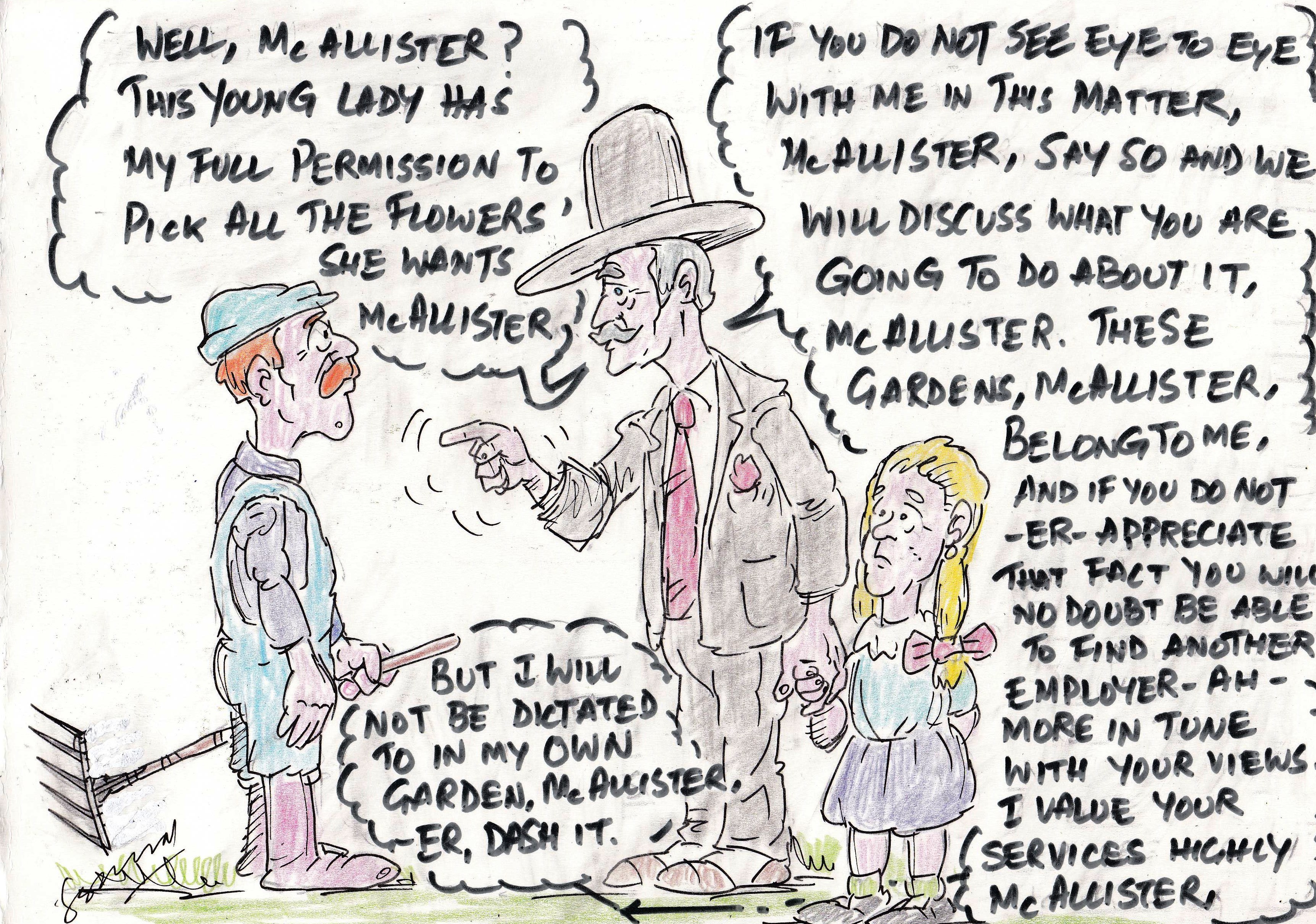
Lord Emsworth might hate visiting London, but respects Gladys and her brother Ern as city-bred insouciant kids reared among the tin cans and cabbage stalks of Drury Lane and Clare Market. They could hurl stones at his Scottish gardener and even stand up to his obdurate sister. When Gladys slips one of her tiny hot hands into his, seeking protection from Angus McAllister advancing at a speed of forty-five miles per hour, he develops a spine of chilled steel. He wishes to be worthy of the lofty standards of employee discipline and servility enforced by his ancestors.

‘This young lady,’ said Lord Emsworth, ‘has my full permission to pick all the flowers she wants, McAllister. If you do not see eye to eye with me in this matter, McAllister, say so and we will discuss what you are going to do about it, McAllister. These gardens, McAllister, belong to me, and if you do not – er – appreciate that fact you will, no doubt, be able to find another employer – ah – more in tune with your views. I value your services highly, McAllister, but I will not be dictated to in my own garden, McAllister. Er – dash it,’ added his lordship, spoiling the whole effect.

One laughs, then one notices the underlying theme touching upon a socialist stream of thought (“Lord Emsworth and the Girl Friend”, Blandings and Elsewhere).

Competence as Moral Capital

Much like Jeeves, there are a host of characters who, whilst brimming with charm, occupy a morally higher ground. They are not only carriers of wisdom, but also more conscientious in the discharge of their duties. These are qualities which their superiors lack. Club stewards, rozzers, head gardeners, secretaries, and nurses reveal their steadfast characters while pushing the plot along. They deliver satisfactory results.

Consider rozzers who invariably refuse nourishment of any kind while on duty. An open display of emotions does not sit well with them. Inwardly, they squirm when told by a Justice of the Peace to lay off someone who violates the law. However, they know when to eat humble pie and quietly follow their orders.

In The Mating Season, Corky loves Esmond but will not marry him until he stands up to his domineering aunts, who disapprove of Corky because she is an actress. When the dog Sam Goldwyn is arrested by Constable Dobbs, Corky, the resourceful owner, charms Gussie Fink-Nottle into extracting him from confinement. Constable Dobbs assumes it was Catsmeat who stole the dog. Since Catsmeat happens to be his fiancée Corky’s brother, Esmond Haddock, a Justice of Peace, decides to assert himself, protect his romantic interests, and make Dobbs drop the case. He points out the slender evidence he has against the alleged accused, while dismissing Dobbs without a stain on his character.

Likewise, in Joy in the Morning, Stilton Cheesewright accuses Bertie of pinching his uniform to be able to participate in a fancy dress ball. Uncle Percy, a Justice of Peace, needs Bertie’s support in standing up to his formidable spouse, Aunt Agatha, to provide an alibi for him to have spent a night away from his living quarters at Steeple Bumpleigh. Uncle Percy refuses to sign the warrant against Bertie. In fact, he goes a step further in ticking off the cop. He laments a despicable spirit creeping into the Force – that of forgetting their sacred obligations and bringing up wild and irresponsible accusations in a selfish desire to secure promotion.

Thus, whereas aristocratic characters are frequently paralysed by pride, a feudal spirit, embarrassment, or romantic affiliations, working professionals act. They take a stand. They take responsibility. On a moral scale, they rank higher than their seniors. In Plumsville, it is their feudal spirit which often saves the day. Their loyalty to their masters scores over the latter’s wealth or inheritance.

Coming back to Blandings Castle, one finds that it takes a bevy of servants to keep things running in an orderly fashion. Below the stairs, we discover a rigid hierarchy, backed by customs and rituals which need to be scrupulously observed. Under the auspices of Mr Beach and Mrs Twemlow, things are always done properly at the Castle, with the right solemnity. There are strict rules of precedence among the servants. A public rebuke from the butler is the worst fate that can befall a defaulting member of this tribe.

When it comes to passing judgement on the state of affairs in society, they have their own mind. For example, when the matter of breach of promise cases comes up, Beach holds the following view:

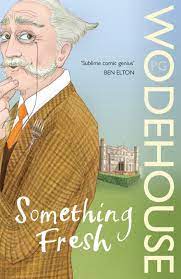
And in any case, Miss Simpson,” he said solemnly, “with things come to the pass they have come to, and the juries–drawn from the lower classes–in the nasty mood they’re in, it don’t seem hardly necessary in these affairs for there to have been any definite promise of marriage. What with all this socialism rampant, they seem so happy at the idea of being able to do one of us an injury that they give heavy damages without it. A few ardent expressions, and that’s enough for them. You recollect the Havant case, and when young Lord Mount Anville was sued? What it comes to is that anarchy is getting the upper hand, and the lower classes are getting above themselves. It’s all these here cheap newspapers that does it. They tempt the lower classes to get above themselves (Something Fresh).

Plum’s narratives have a clear undercurrent: down the stairs for genuine perspiration and up the stairs for feigned inspiration. This scheme of things debunks the notion that hierarchies are justified by birth.

Comrade Psmith and the Whiff of Reform

In Psmith, Journalist, the monthly journal Cosy Moments undergoes a transformation when the suave and unflappable Rupert Psmith takes over as a voluntary subeditor. Cosy Moments is a journal for the home. It is the sort of paper which the father is expected to take home from his office and read aloud to the kids at bedtime. Its circulation is nothing to write home about. Psmith suggests a different strategy. He outlines his vision for the magazine thus:

Cosy Moments should become red-hot stuff. I could wish its tone to be such that the public will wonder why we do not print it on asbestos. We must chronicle all the live events of the day, murders, fires, and the like in a manner which will make our readers’ spines thrill. Above all, we must be the guardians of the People’s rights. We must be a search-light, showing up the dark spot in the souls of those who would endeavour in any way to do the PEOPLE in the eye. We must detect the wrong-doer, and deliver him such a series of resentful buffs that he will abandon his little games and become a model citizen.

Eventually, Psmith decides to help impecunious dwellers of poorly maintained tenements. He ends up dealing with New York’s slum landlords and crooked bosses. The tone of the narrative is airy, but the targets are not. Psmith uses Cosy Moments, the magazine he runs, to expose exploitation, cheer on reform, and defend the powerless. The satire in this narrative is not merely of the weak points in his adversaries, which he exploits with aplomb; it is of systemic injustice. Plum does not allow the narrative to curdle into earnestness, yet he reveals an unmistakable sympathy for the urban poor and a hatred of the sharp practice of those who profit from misery.
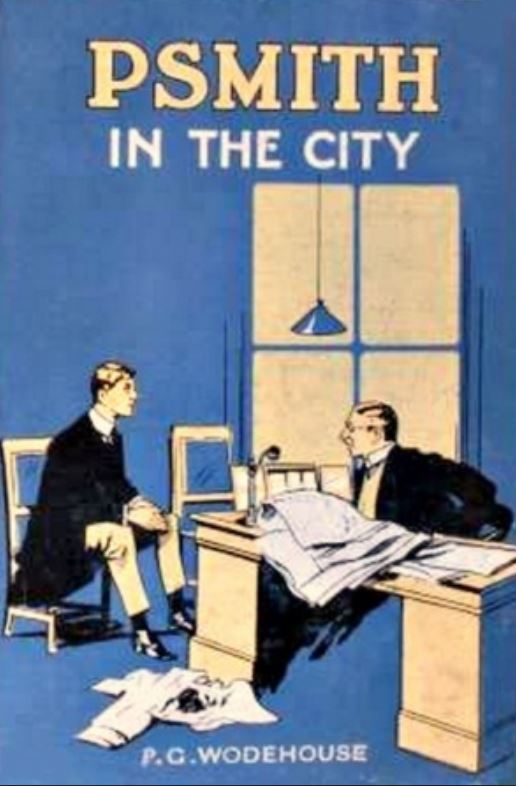
Likewise, Psmith in the City gives us a ringside view of the soul-tormenting processes of routine banking, highlighting the underlying spiritual drudgery. Rigid procedures rule, so does hierarchy. One experiences soul-deadening routine, petty tyrannies, the suffocation of youthful promise by a gigantic machine that puts a premium on conformity over talent. Tea breaks and lunch breaks are the only occasions which break the monotony. In any case, the atmosphere chimes with a wider early twentieth-century suspicion of bureaucratised capitalism. Plum can be imagined to be more amused than angry, but he is not insensitive.
Flirtations with the Left

A highly diluted version of what political purists might mistakenly allude to as socialism not only appears occasionally but is also an integral part of Plum’s cultural landscape. It is not an alien menace which deserves to be despised and discarded outright. Plum treats it as a place where excitable but good-hearted people congregate, make speeches, even if under the transient spell cast upon them by the party of the other part. He does flirt with the Left, though his trademark subtle humour arises from a kind of recognition: the Left is not monstrous, merely dramatic, and susceptible to the same follies as everyone else.

There are also moments when Plum plays directly with socialist imagery.

Bertie Wooster always seems to stumble into chaos, and protests are no exception. One day, he gets stuck in a London traffic snarl caused by an angry crowd, only to spot his former fiancée, Vanessa Cook, leading the march (Aunts Aren’t Gentlemen).

His friend Bingo Little is not much different — he once grew a beard and joined a radical group just to impress a fiery revolutionary, even going as far as to insult Bertie as an idler, a non-producer, a prowler, a trifler, and a bloodsucker. Bingo even goes on to call out his own uncle Lord Bittlesham in a speech:

And the fat one!” proceeded the chappie. “Don’t miss him. Do you know who that is? That’s Lord Bittlesham! One of the worst. What has he ever done except eat four square meals a day? His god is his belly, and he sacrifices burnt-offerings to it till his eyes bubble. If you opened that man now you would find enough lunch to support ten working-class families for a week,” he claims (‘Comrade Bingo’, The Inimitable Jeeves).

Later, while working as an editor of Wee Tots, Bingo gets dragged into another protest by a red-haired girl named Mabel, who sits down in Trafalgar Square to make headlines for her anti-bomb campaign. Bingo reluctantly joins her, gets arrested, lands in the papers, and ends up in trouble with his wife — though, as always, things somehow work out in the end (‘Bingo Bans the Bomb’, Plum Pie).

Of Hollywood, Movie and Publishing Moguls

Plum’s forays into Hollywood and publishing are perhaps among his sharpest class critiques. His narratives dispel the mystique of aristocracy associated with them and often bring into focus the raw power of capital. Megalomaniac studio bosses, slick agents, and moguls obsessed with formulas for profit become his new earls and aunts.

When a fluffy-minded Lord Emsworth pockets a fork at the Senior Conservative Club, Adams happens to check him. Aunt Dahlia may threaten to ban Bertie from her dining table, which offers lavish spreads by Anatole, if he does not do her bidding.

Likewise, an aspiring wannabe heroine Vera Prebble proves to have better negotiating skills when she outwits three studio chiefs and secures her future as a movie star. Their weakness? Well, they desperately need liquor during prohibition days for a party they are hosting at one of their places. Lord Tilbury keeps missing his former star editor, Percy Pilbeam, whose seedy society gossip had ensured soaring business for Society Spice, one of the journals published by the Mammoth Publishing Company (‘The Rise of Minna Nordstrom’, Blandings Castle and Elsewhere; Frozen Assets).

To his credit, he honours craft and talent above everything else – the proficient writer, the adaptable actor, the competent fixer. Again, his target is not wealth per se, but the worship of money as the sole metric of value. When a character is reduced to a “nodder”, whose primary role is to agree with the boss, Plum is presenting to us an organisational pathology that corrodes judgement and humiliates labour (‘The Nodder’, Blandings Castle and Elsewhere).

In no way does his approach differ much from the one he adopts in Psmith in the City (Chapter 21), while introducing us to the concept of a “mistake-clerk” whose duty it is to get squarely blamed when a fuming customer trots in to register a complaint. He is hauled into the presence of the foaming customer, cursed, and sacked. The bank gets a satisfied customer. The mistake-clerk, if the showdown has indeed been traumatic, promptly applies for a jump in his salary.

One might as well consider this to be a notably democratic instinct. Plum sides with people who take pride in their work and who want to be treated as grown-ups. He lampoons gigantic corporate machines, which often treat their most crucial asset – the people – as mere nuts and bolts. His works highlight an ethical respect for the dignity of labour.

Money, Inheritance, and the Comedy of Redistribution

It is amazing to see how often Plum’s plots are driven by inheritances, allowances, trust funds, and the conditions attached to them. In Plumsville, money has high viscosity. It moves, albeit hesitantly. It is socially consequential. It shapes marriages, motivates impostures, and invites moral tests. Fortunes are threatened, allowances are cut, dowries are reconsidered; pearls, pigs, and even French cooks who happen to be “God’s gift to our gastric juices” can function as mobile capital that could reshape relationships. The whole scheme is designed to behave like a comic model of redistribution, orchestrated by Jeeves-like planners who understand how to reallocate resources so that the largest number of people can chug along in their lives with ease.

It is tempting to over-emphasise this. Plum’s interest in money is not economic but only theatrical. His narratives invariably tie money to emotional well-being and social status, thereby demystifying it. Even death becomes a cause for celebration, often conferring wealth and social status upon the inheritors. Money is not portrayed as a demon. It is merely presented as a tool that can be used to produce human flourishing or human misery, depending on the wisdom of those who control it. Thus, he chooses to write about wealth in a deeply mature way. It is sympathetic to a social democratic ethic that treats the economy as a servant of life rather than its master. Perhaps Plum indirectly nudges us to live our lives while remaining somewhat detached from wealth, worldly possessions, titles, fame, and all other trappings of power and pelf – things which are essentially transient in nature.

Of Alliances across the Social Divide  

When it comes to Cupid’s machinations, age, caste, creed, profession, and social status do not really matter. Even time ceases to matter. Love may remain dormant for a long time but can get revived in a moment – much like Psyche getting revived by Cupid’s kiss!

Uncle George’s plans to saunter down the aisle with a girl from the lower middle classes face a serious glitch – that of a stout disapproval from Aunt Agatha. After all, family honour is at stake. She promptly gives a blank cheque to Bertie, who is expected to rally around and pay off the girl to secure a ‘release’ for Uncle George.

The family remembers that years ago, long before this uncle came into the title, he had had a dash at a romantic alliance. The woman in question at that time had been a barmaid at the Criterion. Her name was Maudie. To her went the credit of addressing Uncle George as Piggy. He loved her dearly, but the family would brook no such nonsense. Eventually, she was paid off and the family honour protected.

It transpires that Maudie happens to be the aunt of the girl who appears to have cast a spell over Piggy in the present situation. When Piggy and Maudie come face-to-face after many years, the chemistry between them is found to be intact. Admittedly, time has extracted its toll. Concerns about the lining of the stomach end up acting as a catalyst to bring the two souls together (‘Indian Summer of an Uncle’, Very Good, Jeeves!).

A similar theme unfolds in the matter of Joe Danby and Bertie’s Aunt Julia Mannering-Phipps (‘Extricating Young Gussie’, The Man with Two Left Feet).

Bingo Little depends on his uncle, Mr Mortimer Little, for an allowance, and fears Mr Little will not approve of Bingo marrying a waitress. By way of a solution, Jeeves suggests books by the romance novelist Rosie M. Banks, which portray inter-class marriage as not only possible but noble. Bertie tells Mr Little that Bingo wants to marry a waitress, and Mr Little, moved by the books, approves. When Bertie asks him to raise Bingo’s allowance, however, Mr Little refuses, saying it would not be fair to the woman he soon intends to marry, his cook, Miss Watson (‘No Wedding Bells for Bingo’, The Inimitable Jeeves).

George Bevan’s friend and colleague Billie Dore, a chorus girl, visits Belpher Castle and bonds with Lord Marshmoreton over their shared love of roses. Eventually, Lord Marshmoreton and Billie get married, whereas his daughter, Lady Patricia Maud Marsh, agrees to walk down the aisle with George Bevan (A Damsel in Distress).

In Frozen Assets, Gwendoline Gibbs is secretary to Gerald ‘Jerry’ Shoesmith’s formidable employer, Lord Tilbury, who owns and runs the Mammoth Publishing Company. She saves his employer from many an embarrassing situation, and the two get engaged.

Through all these narratives, Plum goes on to assert the precedence of the emotion of love over such social considerations as one’s socio-economic status in life and the class to which one belongs. Enter Cupid, and class differences simply melt away. A long-forgotten relationship might get revived, with the lining of the stomach playing the role of a catalyst. An alliance could also be formed based on the fulfilment of a basic need. In any case, there is a limit to which a family can attempt to maintain the purity of its so-called blue blood and protect its genealogy. Here again, Plum highlights the importance of embracing the concept of a society built on egalitarian values and norms.

The Village and Its Ethical Ecosystem

Much of Plum’s comedy unfolds in rural or semi-rural settings where custom and negotiation score over sheer coercion. Village fêtes, church halls, conduct of local constables, and family retainers create an ecosystem of mutual respect and recognition. Debts of honour matter. Kindnesses are remembered with gratitude. A spirit of quid pro quo prevails. The law, when it appears, is comically lenient. The wheels of justice do move, though not always along predictable lines.

For instance, in The Girl in Blue, when Chippendale, a butler, gets in trouble with a cop for using his bicycle to teach a girl to ride, his employer refuses to help. Feeling stuck, Chippendale sulks — until Barney Clayborne, a lady he knows, steps in, and pushes the cop into a brook where he usually cools his feet at the end of a day. The cop decides to drop the complaint.

Magistrates, such as the one at the Vinton Street police court (Jeeves and the Feudal Spirit), often portray the less lovable qualities of a senior officer of the Spanish Inquisition. However, considering Bertie’s youth, he shows leniency. Instead of a long stretch in the chokey, he merely slaps a fine of ten pounds for having assaulted an officer of the law and obstructing him in his duties. Justice feels more like restoration than retribution. Problems are solved by dialogue, apology, and by clever offers of mundane incentives, which make life smoother.

Human values prevail. So does the milk of human kindness. A treatment of this kind proves to be a soothing balm for our wounded souls, endearing Plum to all those who come across his narratives.

Characters in Plumsville frequently rely on each other for support and assistance, regardless of their social standing. This theme can be seen as a nod to the idea of collective effort and mutual aid, which are central to the concept of a society which has a conscience that is alive and kicking.

Here again, Plum does not offer a manifesto. Rather, the basic premise is that people have an innate goodness in them, are willing to improve themselves, and that communities can be steered better by humour, patience, and good sense. Plum’s tendency to showcase social life as a web of relationships, not an arena of domination, is deeply compatible with the communitarian strand of the British way of life. It puts a premium on collaboration over competition, preferring reconciliation to victory.
A Stark Difference in Upbringing

Plum says that one of the compensations life offers to those whom it has handled roughly is that they can take a jaundiced view of the petty troubles of the sheltered. He posits that just like beauty, trouble is in the eyes of the beholder. Aline Peters, the daughter of an American millionaire, may not be able to endure with fortitude the loss of even a brooch, whereas Joan Valentine, who is forever struggling to keep the wolf away from her door, must cope with situations which often mean the difference between having just enough to eat or starving. For the reward of a thousand pounds, Joan finds it worth her while to accompany Aline to Blandings Castle as a lady’s maid.

This is Plum’s subtle way of heightening our level of awareness about the contrast between the haves and the have-nots of society. We realise the stark difference between the upbringings of Peters and Valentine. It is not difficult to fathom why their attitudes towards life are distinct (Something Fresh).

A Libertarian Temperament

There is one major caveat. Plum despised sectarianism of any kind. In Roderick Spode, he presents to us the immortal profile of a would-be dictator in black shorts. However, what he presents to us is not an argument for any kind of socialism – whether of a stiff-upper-lip kind or a super-soft version of it. Instead, it is a cautionary message against handing power over to people with swollen heads and shrunken hearts. Instinctively, he distrusts those who consider human beings as personal chattel and follow the use-and-throw practice popularised by the corporate world. If one takes socialism to mean a politics of doctrinal certainty, Plum offers nothing of the kind. His temperament is essentially libertarian. He wishes people to be left alone to grope their way towards their personal vision of happiness. If one rules over them, one does it by being compassionate and by introducing measures and policies which enable them to live more contented lives.

It is easy to see that his fiction aligns more naturally with an egalitarian ecosystem than with a hierarchical one. He lampoons the eccentricities and vulnerabilities of the privileged but celebrates the intelligence and perseverance of workers. He proposes that real satisfaction can be derived in the doing, not the owning.  His narratives paint a world in which social peace is built by courtesy, patience, and practical knowledge, not by authoritative decrees. These are the building blocks of a humane and even-handed society.

His brand of socialism is not so in a doctrinal sense. However, the depiction of his characters and the way they handle challenges coming their way rhymes well with the core ideology.
The Innate Goodness of Homo sapiens

Plum refuses to sneer. Nor is he a champion of the underdogs. Adams, the head steward at the Senior Conservative Club, is quick to identify Lord Emsworth when he comes in for a spot of lunch. Plum paints a positive picture of the man when he says that:

It was Adams’ mission in life to flit to and fro, hauling would-be lunchers to their destinations, as a St. Bernard dog hauls travellers out of Alpine snowdrifts.

Having finished his lunch, Lord Emsworth leaves Adam in a euphoric state of mind. After all, on that day, he had found the Lord in full form when it came to his absent-mindedness. He is imagining the newfound jokes he can narrate to his wife and to the guests that evening while entertaining them at his lair (Something Fresh).

Even his roguish characters are handled with a delicacy that suggests an underlying belief that they have the potential to do better tomorrow. He does not compartmentalise people into categories. He captures detail, cultivates sympathy, and prizes forgiveness. In the end, his comedy’s most persistent message is that people – all sorts of people – can be nudged gently towards right action.

Plum wants us to develop the capacity to laugh at our errors and to imagine our way back into a community of like-minded people.

What Plum is Not

It would be improper and unkind to label Plum as a writer in the same league as, say, George Bernard Shaw or George Orwell. The political economy, the state, or the machinery of welfare do not attract his attention. He is comfortable writing about small groups where affection and ingenuity can solve problems without recourse to law or revolution. Nowhere does he present labour as collective action. Instead, he puts a premium on the agency of gifted individuals. The concluding scenarios in his narratives typically restore the social order, albeit with some improvements. If there is redistribution, it is along ethical lines before it is material: people learn a lesson, they apologise, and they decide to reform themselves.

He is, however, allergic to arrogance and pretension, sensitive to exploitation, and appreciates the dignity of competence wherever it appears. The milk of human kindness courses through the veins of most of his characters. It is surely not socialism in a doctrinal sense, but it resonates well with the core ideology.

Why the Question Matters

Many a time I get asked as to why one should bother about the presence of social consciousness in Plum’s works. I believe that humour is one of culture’s stealthiest instructors. When combined with a dash of wit and wisdom, it softens the rigidity inherent in hierarchies. It also goes on to celebrate the triumph of skill over status. Even before one may argue, it helps readers instinctively realise that a just society is one in which intelligence, patience, and a tendency to help others prevail over swagger and birthright. Here is something profound Plum says about happiness:

As we grow older and realise more clearly the limitations of human happiness, we come to see that the only real and abiding pleasure in life is to give pleasure to other people.

Like many other truths of life embedded in his narratives, Plum imparts similar lessons effectively. A reader who has learned to appreciate the quiet brilliance of a valet has already taken one step away from worshipping one’s inheritance.

Results for the Greater Good

Such lessons could find a final resonance here for leaders of any persuasion. Plum repeatedly demonstrates that leadership is service delivered to obtain results which are meant not for individual gain but for the greater good. Of course, this involves deep preparation, genuine care for human foibles, and a bias for solutions that allow everyone to save face. If one is looking for a parable of humane, non-authoritarian authority, Jeeves comes through as a prime example. He listens. He observes. His cunning knows no bounds. Using intelligence, tact, and resource, he designs paths through challenging circumstances that leave communities in a happy state of mind. To put it simply, he delivers satisfaction. His character represents a vision that fits well into the gentler aspirations of an ethical society and the broader ideals of a conscious, empathetic, and collaborative civic life.

The undercurrent of social conscience which runs across the oeuvre of Plum is a facet of his works that deserves to be explored and popularised further, to sensitise people to the benefits which could accrue to everyone. In his inimitable style, he gently raises our level of social consciousness. He does so by satirising privilege, showcasing competence as moral capital, demonstrating how a journal could be used as a means to bring about social reform, occasionally flirting with the left, giving us a peek into the world of movie and publishing moguls, presenting to us a comedy of redistribution of wealth, forging alliances between the classes and the masses, delineating the rural ethical ecosystem, and highlighting the stark differences in our attitude towards life based on our upbringing. Such are the hues that comprise the pale parabola of social conscience dished out by him.

Towards a Softer Egalitarianism

One may well ask if Plum has a socialist streak. Not in the sense that would satisfy either a politician or a political scientist. However, when it comes to gut instincts, his comic universe is indeed egalitarian. He dissolves the mystical aura of privilege, redistributes honour to those who earn it, and imagines communities patched together by kindness and craft rather than command. The politics is sotto voce, but the music is audible. If one listens carefully, amid the musical laughter, latent are many a whisper: people matter more than positions, competence outranks pedigree, and the best societies are those in which everyone, whatever their station, is allowed to be intelligently, decently useful.
Call it a social consciousness if you like; call it, perhaps more accurately, either a civilised sense of fairness or a conscious way to live our lives. Either way, the pale parabola is there, peeping through his narratives, much like diffused sunlight descending upon Blandings Castle, gently lighting up its ivied walls, its rolling parks and gardens, its moss-covered Yew Alley, lake, outhouses, its inhabitants, and, of course, the Empress’ den.

Reference

If I Were You — Annotated’, Madame Eulalie: The Annotated P. G. Wodehouse, available at: https://madameulalie.org/annots/pgwbooks/pgwiiwy1.html#socialist

Notes

  1. Inputs from Tony Ring and Neil Midkiff are gratefully acknowledged.
  2. Likewise, support received from Dominique Conterno, Co-founder of Conscious Enterprises Network (https://www.consciousenterprises.net)

Related Posts

Read Full Post »

Read Full Post »

Read Full Post »

Read Full Post »

Read Full Post »

Read Full Post »

Read Full Post »

ashokbhatia's avatarashokbhatia

Whether in literature or in fine arts, we relate to characters when we find an inner connection. There could either be a similarity in personality traits, or in the challenges faced. When this happens, we laugh with the person. We cry with the person. We willingly suspend our own beliefs and virtually start living the life of the character.

As a member of the tribe of the so-called sterner sex, I confess I have shades of quite a few characters etched out by P G Wodehouse. These could be males, or even females.

Amongst males, when it comes to notions of chivalry and a chin up attitude towards the harsh slings and arrows of Fate, Bertie Wooster becomes my role model. When the summons arrive from someone higher up in the hierarchy, and the prospects of a severe dressing down cloud the horizon, I meekly surrender and follow the messenger…

View original post 657 more words

Read Full Post »

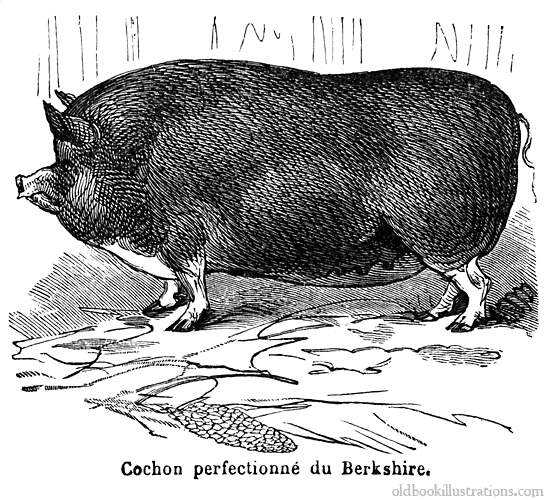
Those of you who watch the career achievements of the Empress of Blandings with keen interest may already be aware that the silver medal in the Fat Pigs class at the one-hundred-and-seventy-fifth annual Shropshire Agricultural Show held in 2023 has been won by the Earl of Emsworth’s black Berkshire sow.

Very few people, however, are aware how near that fine specimen of the porcine species came to missing the coveted honour.

Now it can be told.

This brief chapter of Secret History may be said to have begun on the night of the 6th of February, when news trickled in that the Animal Welfare Board of India (an advisory body under the Ministry of Fisheries, Animal Husbandry and Dairying), in its infinite wisdom, had issued a diktat exhorting all the lovers of ‘Gau-mata’ (cow mother) to celebrate the upcoming Valentine’s Day as ‘Cow Hug Day’. It extolled the many virtues of this much-revered animal, describing it as the backbone of Indian culture and even claimed that hugging with cow will bring emotional richness to the hugger, thereby making their life happy and full of positive energy.

As luck would have it, starting on the 13th of February, Lord Emsworth was away to the metropolis for a trip which was supposed to last three days. He hated being in London, but when one has to be a worthy descendant of one’s ancestors and duty calls, one has to take the rough with the smooth.  

While he was away, the Efficient Baxter hatched a juicy scheme in connivance with Lady Constance Keeble. An ingenious plan to boost the revenues of the Castle was unleashed. Learning from the unique initiative of the Government of India, a promotional poster went around on the social media announcing that, for a nominal charge, a person could walk into the Castle and hug the Empress on Valentine’s Day. As an exception, on the day, visitors were permitted to pose for a selfie with the regal animal. Of course, flash photography was not permitted, lest the Empress lose her sense of equanimity and sang froid.

Given the sound reputation of the Empress in the nearby counties, a good many people landed up on the day, and went back with big smiles on their faces, having just clicked a selfie of their having hugged the famous personality. Some even purchased different kinds of mementos, duly cast in ceramic and papier mâché, which were put up on sale on the occasion, depicting the Empress of Blandings in different poses. Special balloons shaped like her were eagerly lapped up by parents who were relentlessly pestered by their obdurate kids.    

At the end of the day, Lady Constance Keeble was delighted when The Efficient Baxter reported back on the magnitude of collections made. She was chuffed that she could not only manage to pay the exorbitant power charges for an entire year of operations at the Castle, but also execute the much-delayed plans for repairs and upgradation of facilities for all its guests, visitors, and impostors.

On the 15th of February, Empress of Blandings, always a hearty and even a boisterous feeder, for the second time on record, declined all nourishment.

On the 16th of February, George Cyril Wellbeloved, the pigman in the employ of Lord Emsworth, sent a telegram to Lord Emsworth which caused many at the local post office to raise their eyebrows by at least a quarter of an inch. The communication read thus:

Empress refuses feeding. Urgent. Need doctor immediately.

Lord Emsworth made an urgent call to the veterinary surgeon, cut short his visit to London, and rushed back to the Castle.

And on the morning of the 17th of February, the doctor called in to diagnose and deal with this strange asceticism, was compelled to confess to Lord Emsworth that the thing was beyond his professional skill.

To recapitulate the events so far:

February 6 – ‘Cow Hug Day’ notification gets issued in India.

February 7 – The Efficient Baxter comes up with a revenue-generation model by declaring the upcoming Valentine’s Day as the ‘Empress Hug Day’.

February 8 – Lady Constance Keeble, anxious about the finances at the Castle, approves the plan.

February 9 – Unbeknown to Lord Emsworth, a poster promoting the gala event gets released on social media.

February 10 – The Animal Welfare Board of India issues a terse notification declaring that its appeal for celebration of Cow Hug Day on 14th February stands withdrawn. Rupert Baxter promptly reports this to Lady Constance Keeble. Nevertheless, both decide to go ahead with their plans.

February 13 – Lord Emsworth leaves for the metropolis.

February 14 – ‘Empress Hug Day’ gets celebrated.

February 15 – Empress lays off the vitamins.

February 16 – Veterinary surgeon gets summoned.

February 17 – Veterinary surgeon baffled.

Right.

The effect of the veterinary surgeon’s announcement on Lord Emsworth was overwhelming. As a rule, the wear and tear of our complex modern life left this vague and amiable peer unscathed. So long as he had sunshine, regular meals, and complete freedom from the society of his younger son Frederick, he was placidly happy. But there were chinks in his armour, and one of these had been pierced this morning. Dazed by the news he had received, he stood at the window of the great library of Blandings Castle, looking out with unseeing eyes.

As he stood there, the door opened. Lord Emsworth turned, and having blinked once or twice, as was his habit when confronted suddenly with anything, recognized in the handsome and imperious-looking woman who had entered – his sister, Lady Constance Keeble. Her demeanour, unlike his own, betrayed the inner sense of gratification she was experiencing, having made a substantial contribution to the Castle’s coffers.

‘Clarence,’ she chipped in, ‘have you heard the good news?’

Lord Emsworth looked at her doubtfully.

‘What could be good these days? That man is an ass.’

As frequently happened to her when in conversation with her brother, Lady Constance experienced a swimming sensation in the head.

‘Will you kindly tell me, Clarence, in a few simple words, what you imagine we are talking about?’

‘I am talking about Smithers. Empress of Blandings is refusing her food, and Smithers says he can’t do anything about it. And he calls himself a vet!’

‘Then you haven’t heard? Clarence, Baxter, and I have managed to make a hefty collection on this Valentine’s Day. You no longer need to worry about our backlog of power bills and the critical repairs you were dreaming of carrying out at the Castle. Are you not happy?!’

‘And the Agricultural Show is already upon us!’

‘What on earth has that got to do with it?’ demanded Lady Constance, feeling a recurrence of the swimming sensation.

‘What has it got to do with it?’ said Lord Emsworth warmly. ‘My champion sow, with less than ten days to prepare herself for a most searching examination in competition with all the finest pigs in the county, starts refusing her food—’

‘Will you stop fussing over your insufferable pig and give your attention to something that really matters? I am trying to tell you that we have made a big pile of money while you were off to London to take care of some legal work.’

There was a silence. Brother and sister remained for a space plunged in thought. Lord Emsworth was the first to speak.

‘We’ve tried acorns,’ he said. ‘We’ve tried skim milk. And we have tried potato-peel. But, no, she will not touch them.’

Conscious of two eyes raising blisters on his sensitive skin, he came to himself with a start.

‘Pile of money, you say? How?’

Lady Constance spilled the beans. As she went on spilling the beans, the colour of her brother’s face started changing from a dull pink to a dark shade of red. His physical frame shuddered. His eyes, normally dull, looked like something out of an oxyacetylene blowpipe. As far as he was capable of being disturbed by anything that was not his younger son Frederick, he was disturbed. Somehow controlling his rage, he enquired.

‘Where is Rupert Baxter?’

‘He has gone off to the bank to deposit the amount we collected.’

‘I would surely like a word with him the moment he is back. If he thinks he can go about the place playing fast and loose with the Empress, exposing her to the trauma of getting hugged by all and sundry, and leading her to a mental state where she would refuse her daily quota of fifty-seven thousand and eight hundred calories, he is sorely mistaken. Absurd! Ridiculous! Did he think of seeking her consent before exposing her to such a preposterous arrangement?’

‘Clarence!’

Lord Emsworth blinked. Something appeared to be wrong, but he was convinced that he had struck just the right note – strong, forceful, dignified.

‘Eh?’

‘We had only worked for the overall good of the Castle.’

Lord Emsworth reflected.

‘But we have to take a strong line,’ he said firmly. ‘When it comes to her, I stand no nonsense. We have no right to deprive the Empress of her right to privacy. I am now going to the pigsty to see how to go about soothing her frayed nerves.’

There is no doubt that, given time, Lady Constance would have found and uttered some adequately corrosive comment on this imbecile suggestion; but even as she was swelling preparatory to giving tongue, Lord Emsworth looked wistfully at the door.

It was smoothly done. A twist of the handle, and he was where harmony prevailed. Galloping down the stairs, he charged out into the sunshine and rushed to the Empress’ abode. Each step that took him nearer to the sty where the ailing Empress resided seemed a heavier step than the last. He reached the sty, and, draping himself over the rails, peered moodily at the vast expanse of the pig within.

The imperial residence of the Empress of Blandings looked very snug and attractive in the mild sunlight. But beneath even the beautiful things of life there is always an underlying sadness. This was supplied in the present instance by a long, low trough, plainly full to the brim of succulent mash and acorns. The fast, obviously, was still in progress.

Not surprisingly, he found George Cyril Wellbeloved on duty there, wistfully viewing the untouched trough.   

‘What does she convey, George?’

‘Sir, I have an impression that it is a matter of time before Reason returns to its throne.’

‘But time is what we do not have’, pointed out Lord Emsworth gloomily.

‘From what I could gather from her grunts and oinks, and also from her body language, she is quite upset at being exposed to so many hugs on a single day. However, she is also happy that she could spread some sweetness and light in the lives of the common public reeling under the impact of unemployment, inflation and the harsher slings and arrows of Fate which are the lot of the lower and the middle classes. She feels that by permitting people to hug her, she has contributed towards bringing about societal change and motivated many to choose the path of universal peace and harmony on a day which celebrates love.’

‘What a fine soul she has!’, quipped Lord Emsworth. ‘I wonder if she has caught the Indian craze of females of all kinds inwardly aspiring to attain what is euphemistically alluded to as Size Zero. But she has never entertained such ambitions. Those who keep a track of her dietary habits already know that she is a hearty and boisterous feeder. You know very well that she lives to feed, thus fulfilling her innate desire to drink deep from the fountain called Life. She has never cared about looking like a balloon with two ears and a tail. She lives a blissful life without bothering about her Size Infinity looks. I daresay all this hugging business has left her totally shaken and stirred, right from her snout to her tail.’

‘Indeed, sir.’

‘It fails me as to how you permitted her getting exposed to such a traumatic experience.’

‘Lady Keeble instructed me to give the Empress a nice bath for the occasion, sir. Mr. Baxter asked me to make a temporary enclosure for people who came over and waited for a long time to do the honours. I merely followed my orders, sir.’

Lord Emsworth drew himself up and adjusted his pince-nez. He felt filled with a cool masterfulness. He felt strongly tempted to fire the pig man. But an inner voice reminded him of the impending competition due to take place in a few days. He also recalled his having had to eat humble pie in respect of Angus McAllister when a favourite pumpkin had to win a prize.

‘Orders, eh, what, what, what? How many times do I have to remind you that when it comes to the Empress’ welfare, you take orders only from me. No one else, and I repeat no one else, is permitted to do so. If you do not see eye to eye with me in this matter, Cyril, say so and we will discuss what you are going to do about it. I value your services highly, Cyril, but I will not be dictated to in my own Castle in any matter, especially anything pertaining to the Empress. Do I make myself clear?’

George Cyril Wellbeloved stood aghast. He thought he had done an outstanding job by following his instructions. He knew the unpredictable temper of Lord Emsworth and wondered if he was about to get sacked. He disliked the idea very much. Blandings Castle was in his bones. Elsewhere, he would feel as if he were in exile.

‘Indeed, sir’, said the pig man sheepishly.

‘You know you have a way of saying, “Indeed, sir,” which gives the impression that it’s only your feudal sense which prevents you from substituting the words, “Says you!”’

‘Is that so, sir?’

‘But how are going to get her to start feeding again? Being an expert at pig rearing, surely you can resolve this issue without further delay? We run the serious risk of her losing out on a medal at the upcoming Shropshire Agricultural Show and instead being relegated to the mean obscurity of merely an ‘Honourably Mentioned.’

‘Sir, I have a suggestion for you to consider. You may remember the time when I was arrested by police constable Evans of Market Blandings for being drunk and disorderly at the Goat and Feathers. I was then jugged for fourteen days without the option of a fine.’

‘What has that got to do with this?’, Lord Emsworth enquired, blinking his eyes. The agony of having to rejig his memory cells showed on his face.

‘But you had then managed to persuade the Empress to approach the trough?’, he said, brightening up a wee bit.

“Oh, is it?” said Lord Emsworth, and paused awhile in thought. He had a vague recollection that someone had once told him to do something – what, he could not at the moment recall – about someone of that name.

Beach was duly summoned to resolve the mystery. He reminded his employer rather frigidly that his previous attempts at pig-calling in his company, duly aided by Angela, had failed to deliver the goods. He went on to point out that what had eventually brought home the bacon then was a pig-call made by James Belford.

The expression on Lord Emsworth’s face was that of a drowning man who sees a lifeline. He fumbled in his trouser pockets and, duly aided and abetted by Beach, could locate his smart phone. He lost no time in getting James on the line. Once the preliminary greetings had been exchanged, the challenge was brought to James’ notice.

‘Most people don’t know it, but I had it straight from the lips of Fred Patzel, the hog-calling champion of the Western States. It is a traditional call which all pigs instantly recognize and respond to. Can I get to speak to your pig-man on the line? I shall explain it to him.’

‘Splendid idea,’ said a cheered-up Lord Emsworth, handing over the instrument to Cyril Wellbeloved.

After a brief exchange, Cyril repeated what he was told.   

‘Pig-hoo-o-o-o-ey!’

‘Nothing like it,’ James said. ‘You want to begin the “Hoo” in a low minor of two quarter notes in four-four time. From this build gradually to a higher note, until at last the voice is soaring in full crescendo, reaching F sharp on the natural scale, and dwelling for two retarded half-notes, then breaking into a shower of accidental grace-notes.’

Cyril went on practising the same till the time James approved of the outcome. The call was terminated, with Lord Emsworth offering profuse thanks to James and even inviting him and Angela to visit the Castle sometime soon.

The moment of reckoning had finally arrived.

Resting his hands on the rail before him, Cyril swelled before their eyes like a young balloon. The muscles on his cheekbones stood out, his forehead became corrugated, his ears seemed to shimmer. Then, at the very height of the tension, he let it go, as advised.

‘Pig-HOOOOO-OOO-OOO-O-O-ey!’

Slowly, fading off across hill and dale, the vast bellow died away. And suddenly, as it died, another, softer sound succeeded it. A sort of gulpy, gurgly, plobby, squishy, wofflesome sound, like a thousand eager men drinking soup in a foreign restaurant. And, as he heard it, Lord Emsworth uttered a cry of rapture.

The Empress was feeding.

The rest, as they say, is history.

Regrettably, both the unique ideas – whether that of a ‘Cow Hug Day’ or of a ‘Pig Hug Day’ – now remain consigned to a dustbin. Perhaps the ideas were a little ahead of their times. Were these to ever get revived, Valentine’s Days in future would witness disgruntled denizens experiencing a surge of positive energy and an inner glow of joy and satisfaction. Physical contact with a member of another species could work wonders for the psychology of an individual. Such initiatives would surely enthuse people to choose a more peaceable and wholesome approach to life, while keeping them away from such inane acts of mischief as aggression against some movies, coffee shops, fashionable retail outlets and even shops selling potatoes, tomatoes, and cucumbers.

Notes:

  1. Based on the story of the same name by P. G. Wodehouse.
  2. Also, inspired by https://thewire.in/humour/cow-hug-day-cancelled
  3. Illustration of the Empress courtesy Shiva Kumar.

Related Posts:

Read Full Post »

(Some autobiographical notes from a member of the canine species; based on true incidents; inspired by ‘The Mixer’, a story written by P G Wodehouse; I confess having fallen into the temptation of shamelessly borrowing some parts of the original story, for which I seek advance forgiveness.) 

Looking back at my life, I always consider that my career as a dog proper really started when I was bought over by a lovely – and loving – family. That event marked the end of my puppyhood.

I was pleasantly surprised to know that they paid a princely sum to acquire an ugly and thin pup like me. Suddenly, I realized that I was worth something in life. Moreover, the knowledge that I was considered worthy of the love of a family filled me with a sense of pride and new responsibilities. It also sobered me because howsoever interesting life may be at the small ken in a chalet up above the hills in a beautiful country where I was born and I used to live, it is only when you go out into the world that you really broaden your outlook and begin to see things. You get an opportunity to learn many new aspects of life. You come to know what refinement, manners and true culture means. The whole world becomes an oyster, as a brainy cove whose name I forget now said once upon a time. All you got to do is to sniff at it, lick it, prise it open, and savour it to your heart’s content.   

Within its limitations, my life till then had been singularly full and vivid. I was born, as I say, in a ken occupied by my doting Mother and a few playful and goofy set of brothers and sisters. I have heard that my then Master was a breeder of the canine species. I therefore suspect that my extended family may include several stepfathers, uncles, aunts, cousins, nieces, and nephews.

There was plenty of excitement. Before I was six weeks old, I had upset three visitors to the Master who inhabited the chalet by getting between their legs when they came round to the side-door, thinking they had heard suspicious noises; and I can still recall the interesting sensation of being chased twelve times round the yard with a broom-handle after a well-planned and completely successful raid on the flower beds so lovingly maintained by Master. I do not really blame him, because much like Lord Emsworth of Blandings Castle fame, he used to love flowers and would often be found pottering about in his garden while wearing a not-so-tidy pair of trousers.

When I separated from Mother, she barked advice, telling me to be a credit to the family. Of course, I was then too excited to listen to her. But I did carry the thought in my bosom.

About Me  

I believe that I am a Yorkshire terrier, perhaps not of a Scottish origin but of a sub-breed which subsequently originated in Germany. I say this with some confidence because I am not particularly fond of chasing and catching rats. I have a long bushy tail which I can wag rather well. My hair is fluffy. My eyes are brown but can hardly be seen because of being covered by a mass of hair. My skin is white, though with large patches of black. My head has a golden-brown hue to it.

I have never disguised it from myself, and nobody has ever disguised it from me, that I am not a handsome dog. Even Mother never thought me beautiful. You may call me a European-cheese-hound if you like. No offence will be taken. As they say, beauty is only skin deep.

Like all those belonging to my breed, I believe I have far more strength than I really possess. I am playful and energetic. I like to make friends. While on a walk outside, if I run into another dog, I try my best to make it a point to exchange greetings in the finest tradition of our species – that of sniffing at each other’s snouts and so-called private parts. In case the perception is positive, we part with feelings of mutual acceptance and admiration. If either one feels threatened by the party of the other part, we bark at each other, our tails high up in the air. If hostilities ensue, our respective owners are bound to take prompt action and disentangle us. Then we go off our separate ways.

Just like humans, dogs also behave differently. If some suffer from an inferiority complex, there are many others who behave as if they are God’s gift to the universe. I am not fond of dogs who cast supercilious glances at me, simply ignore me and go on, holding their heads high in a haughty manner. Nor do I like the large ones who are not democratic in nature and start barking even before the first greetings have been exchanged. Mother always said: “A dog without influence or private means, if he is to make his way in the world, must have either good looks or amiability.” Since I have followed her advice and have cultivated an amiable disposition, I wish even my detractors well in their lives. By harbouring any anger against them, I know I shall be hurting myself more, even while they might continue to be blissfully unaware of my feelings towards them.

The Psychology of a Dog

We, the dogs, tend to be philosophical by nature. We soon forget such setbacks. We forgive. We do not waste time regretting what might have been. Nor do we worry ourselves sick thinking about what the morrow may bring. We live in the present. We relish it fully. Our idea is to simply enjoy our lives as much as we can. Our Intelligence Quotient levels may not be much to write home about. But our Emotional and Spiritual Quotients are rather high.

We are quick to understand the vibes of different persons and readily empathize with them. When they are in an uplifted mood, we also play around, often jumping with joy, wagging our tails, and licking their toes. When their brow is furrowed owing to a setback in life, we try to cheer them up by curling up near their feet and looking at them with soulful eyes. We are no match to Jeeves, but, like him, when we realize that our company is no longer desired, we respectfully slink away from point A to point B and reappear only when necessary.

We may not be able to deliver intellect-rich lessons from the Bhagavad Gita, the much-revered Indian scripture. But anyone observing us keenly will readily see how we could teach a thing or two to humans when it comes to living a happy and contented life. As Mother used to say, “Don’t bother your head about what doesn’t concern you. The only thing a dog need concern himself with is the quality of care and food he gets.” In some ways, Mother’s was a narrow outlook, but she was never hesitant to dish out some sane advice based on unalloyed common sense. 

My Parentage

Mother prided herself on being the best watchdog in the entire township. I hear that in her younger days, she had been a popular local belle with a good deal of sex-appeal. As to the question of my paternity, only she may be able to comment on it. I merely suspect that my father might have been one of the several stud-dogs who would have become enamoured of her charms over her long reproductive career. Otherwise, those who understand genealogy and are familiar with the concept of DNA tests might be able to throw some light on the subject. 

Many of the Homo sapiens are keen on forging what they label as matrimonial alliances. I am happy to see that over time, they are learning something from my species and living a free life, leaving owners of labs specializing in DNA and related tests laughing all the way to their banks.   

Since my puppyhood days, I have been restless, unable to settle down in one place and anxious to get on to the next thing. This may be either due to a nomadic strain in my ancestry or owing to my artistic temperament which makes me love nature. Perhaps, I acquired this temperament from a great grandfather who had been trained to perform in an orchestra at the famous Ukridge Academy of Performing Arts for Canines.

I owe the fullness and variety of my earlier life to this initial phase of restlessness of mine. However, I confess, I feel ‘settled’ now after having become a member of a doting Family. I keep learning the usefulness of family values from all its members. I no longer wish to move out of my newly acquired home to follow some perfect stranger who might mistreat me.

The Family   

The Family which has adopted me has many interesting characters.

There is a trim-and-slim father who is an upcoming entrepreneur. I hear that he is highly educated and has previously held senior management positions in companies in different European countries. He is an amiable and compassionate gentleman. He is fondly referred to as Ba.

Then there is a mother who is highly skilled at home making and fawns over her two kids and, of course, me. When it comes to cooking, she could easily beat Anatole hollow. Her Bollywood dancing classes are also very popular. She is known as Mumma.

The couple has an intelligent, cute, and loving daughter who is not only good at studies but also in drawing and story-writing. They also have a dashing son who is equally intelligent and physically active. He cuddles me fondly, though, at times, he punches me in the ribs in an unfriendly fashion. But, like all other dogs, I can always take the rough with the smooth.

The Family has named me Chicco.

The Family has relatives living not too far off. All the three families keep visiting each other frequently, making me feel responsible for the safety and security of all of them. Then there are family seniors who come visiting us occasionally. I am always pally with them, especially with those who fondle me, tickle me behind my ears, and take me out for regular walks. These ensure that I keep my muscles agile and rippling. Walks outside also help me to avoid soiling their homes. Besides, there are many perks of breathing in pristine air, and soaking in the beautiful scenery this unique country dotted with mountains and lakes offers. I love lolling about in lush green grass and hunt for some worms; this helps me to easily fulfil my daily quota of consuming around 200 calories.  

Another reason of my liking a saunter in the great open spaces is that I often run into my cousin Mailo. He has also been adopted by a loving family in the neighbourhood. Whenever we run into each other, we goof around quite a bit, vigorously sniffing and licking each other.   

In general, being of an amiable nature, I like humans. The smell of their feet, footwear, lower garment, and speech appeal to me. When they look me in the eye and address me, my spirits get uplifted, and I express my gratitude by wagging my bushy tail. I am rather unlike Bartholomew, a pet of Stiffy Byng’s, who is to be watched closely if he gets near anyone’s ankles, for he biteth like a serpent and stingeth like an adder.

We also get many visitors. Those who are the regular ones, I welcome them warmly. When the family praises me endlessly to any of the visitors, I blush and feel elated. At others, I bark, trying to frighten them out of their wits. There are indeed times when I behave like the dachshund Poppet who charges at people with the apparent intention of seeing the colour of their insides but, closer to destination, he merely rises like a rocket and licks people on the chin. My feudal spirit prompts me to use my vocal cords and my body language effectively, so the family and its members remain safe. No harm should ever come their way.

Well, I ask you, I ask any dog, what else would you do in my place? Ever since I was old enough to listen, Mother had told me repeatedly what I must do in a case like this. It is the A.B.C. of a dog’s education. “If you are in a room, and you hear anyone trying to get in,” Mother used to say, “bark. It may be someone who has business there, or it may not. Bark first and inquire afterwards. Dogs were made to be heard and not seen. Your bark must always be worse than your bite.”

Whenever imposters, intruders or unknown people pay us a visit, I simply lift my head and yell. I have a good, deep, and throaty voice, possibly due to the hound strain in my pedigree. I also have strong lungs. Back at the chalet, when there was a full moon and I yelled because I thought something was amiss, I had often had the Master come rushing out to investigate what was wrong. On such occasions, I felt an inner glow of satisfaction, knowing that I had done my job well.

Some Adventures

I am happy that I have never had the experience of dog McIntosh who had to be extracted from a hotel room using aniseed powder which is popular in the dog-stealing industry. But I have lived through quite a few harsh slings and arrows of Fate. By practising equanimity, I have not only managed to survive these but have also added to my knowledge bank about various aspects of life.

Whenever I became restless and went on about wanting to go out into the world and see life, Mother often used to say, “You’ll be sorry when you do. The world isn’t all bones and liver.” On a few rare occasions, life has made me realize how right she was.

Learning About Gravity

On a fine day in summer, Family had decided to spend some time at a swimming club. Since dogs were not allowed near the main facility, they decided to smuggle me in, over a wire-net boundary, parking themselves in a remote corner of the vast lawns, quite some distance away from the main pool. The idea of not leaving me behind all alone in the house was indeed very appealing to me. All went well and I thoroughly enjoyed the open spaces, though I was not free to chase the birds and squirrels visiting the place and giving me envious looks owing to the kind of high-quality food I was consuming intermittently.   

While being smuggled back outside, I was hauled back over the boundary, with one person each on either side of the fence. That is when disaster struck. I slipped from the hand of one of the persons, leaving me mid-air, struggling to find my feet. A traumatic experience it was. However, it lasted a few seconds only and I was safely hauled back into the loving hands of the daughter. It reminded me of Sam Goldwyn who had likewise got into the loving arms of Corky once.

It’s a funny thing, but it seems as if it always happens that, when you are feeling most miserable, you end up learning something new in life. This brief experience taught me about the forces of gravity which pull all things down to the ground. Some brainy cove known as Newton had apparently discovered this force long time back, when, while sitting under an apple tree, he saw an apple fall on to the ground. If you ever get to see Newton, you can tell him that he is an ass. If I had been in his place, I would have rushed to put that apple down the hatch, rather than exercising my grey cells about the laws of nature. 

Causing A Highway Blockade

You never know what kind of adventure life hurls at you on any given day. Family had to go out to an amusement park quite far off and decided to leave me behind in the care of a neighbour of ours, who lives next door.

Mumma had apparently forgotten something, and she returned home soon for a brief visit to pick up the stuff. I could sense her presence from within the neighbour’s flat. Finding the door open, I ran out to tell her how lonely I was feeling. However, before I could reach her, she sped off in her car, on to the highway next to our community.

Dogs have an innate sense of direction, coupled with basic intelligence, ingenuity, and a sense of enterprise. I am no exception. To crawl beneath the fence and rush on to the highway was with me the work of a moment. But this was an unnerving experience, what with all the trucks and cars zipping past, making all kinds of threatening noises and spewing some poisonous fumes.

But drivers in my country need to be praised for their sense of decency and respect for life. Traffic came to a halt. A long queue soon piled up, blocking the highway. Shaking out of fear from the tip of my snout till the end of my tail, I ran underneath the chassis of the first car which had screeched to a halt near me. I felt more secure there. Luckily, the owner turned out to be an Air Force vet who somehow managed to entice me into his loving hands and put me in his car.

I am lucky the traffic police did not come over, sirens blaring, to arrest me for a patent illegality. I do hope that their chief gets awarded the highest civilian honour by the local government for his ethical and humane treatment of a member of the canine species; much like Eustace Mulliner, who excelled in his performance at the British Embassy in Berne and upon whom the Swiss government had conferred the Order of the Crimson Edelweiss, Third Class, with crossed cuckoo-clocks, carrying with it the right to yodel in the presence of the Vice-President.

The friendly Air Force officer took me to his home some 90 kms away. Unlike humans, dogs do not really mind when it comes to getting tagged and living in a surveillance state. The officer could easily identify the Family. He contacted them, and assured them that all was well, and that he would return me after a week or so, when he was due to come back for a visit to the area that the Family lives in.

He also found me a little skinny for my age and advised them about some changes in my diet. While with him, I got some sumptuous meals, rich in fat soluble vitamins, nutrients, and minerals of all kinds. After my return, the Family put me on an improved dietary regime.

I soon felt like a dog raised on Donaldson’s Dog-Joy biscuits and went on to become one of those fine, strong, upstanding dogs who go about with their chins up and both feet on the ground and look the world in the eye. If Freddie ever comes to know of me, he could feature me in one of his company advertisements. In the process, I could earn something for the Family.

Of Love, Care and Affection

Circumstances and incidents often alter our perception of life. We realize how our Guardian Angels ensure that we get all the love and care that we deserve.

Out on a biking expedition, I was sprinting behind Ba and the son when disaster struck yet again. One of my feet somehow came under the back wheel of one of the bikes. A painful fracture followed. Since the local vet was busy, I was rushed over to another one, some 75 kms away. A plaster was put, and I had to laze about on my comfortable bed in the house for a six-week period of rest and recuperation. It was great initially but soon became rather boring.

What stood out was the gentle care and affection the entire Family showered on me during the whole episode. They made a great fuss over me, pampering me with my favourite dishes, often making me forget the pain I had undergone. In about six weeks’ time normalcy returned to my life.

Family Values

By now, you might have noticed the kind of rich lessons I have learnt so far in my life. The virtues of practising forgiveness and equanimity. The perks of living in the present. Handling the harsh slings of arrows of fate with a chin-up attitude. Being amiable. Standing up to bullies. Judging people wisely. Cultivating a feudal spirit.

Given my introspective nature, I am sure many more will follow, broadening my outlook in life. For a dog, nothing could be more fulfilling. Flowers are in bloom, God is in heaven, and all is well with the world.

Families are all about caring and sharing. I hope, wish, and pray that all other puppies in the world are as lucky as I have been in getting adopted by a loving family. 

A hearty woof, woof!

(Illustration of Highway Blockade by Shalini)

Related Posts:

Read Full Post »

Older Posts »