Feeds:
Posts
Comments

Posts Tagged ‘Lord Emsworth’

(Some autobiographical notes from a member of the canine species; based on true incidents; inspired by ‘The Mixer’, a story written by P G Wodehouse; I confess having fallen into the temptation of shamelessly borrowing some parts of the original story, for which I seek advance forgiveness.) 

Looking back at my life, I always consider that my career as a dog proper really started when I was bought over by a lovely – and loving – family. That event marked the end of my puppyhood.

I was pleasantly surprised to know that they paid a princely sum to acquire an ugly and thin pup like me. Suddenly, I realized that I was worth something in life. Moreover, the knowledge that I was considered worthy of the love of a family filled me with a sense of pride and new responsibilities. It also sobered me because howsoever interesting life may be at the small ken in a chalet up above the hills in a beautiful country where I was born and I used to live, it is only when you go out into the world that you really broaden your outlook and begin to see things. You get an opportunity to learn many new aspects of life. You come to know what refinement, manners and true culture means. The whole world becomes an oyster, as a brainy cove whose name I forget now said once upon a time. All you got to do is to sniff at it, lick it, prise it open, and savour it to your heart’s content.   

Within its limitations, my life till then had been singularly full and vivid. I was born, as I say, in a ken occupied by my doting Mother and a few playful and goofy set of brothers and sisters. I have heard that my then Master was a breeder of the canine species. I therefore suspect that my extended family may include several stepfathers, uncles, aunts, cousins, nieces, and nephews.

There was plenty of excitement. Before I was six weeks old, I had upset three visitors to the Master who inhabited the chalet by getting between their legs when they came round to the side-door, thinking they had heard suspicious noises; and I can still recall the interesting sensation of being chased twelve times round the yard with a broom-handle after a well-planned and completely successful raid on the flower beds so lovingly maintained by Master. I do not really blame him, because much like Lord Emsworth of Blandings Castle fame, he used to love flowers and would often be found pottering about in his garden while wearing a not-so-tidy pair of trousers.

When I separated from Mother, she barked advice, telling me to be a credit to the family. Of course, I was then too excited to listen to her. But I did carry the thought in my bosom.

About Me  

I believe that I am a Yorkshire terrier, perhaps not of a Scottish origin but of a sub-breed which subsequently originated in Germany. I say this with some confidence because I am not particularly fond of chasing and catching rats. I have a long bushy tail which I can wag rather well. My hair is fluffy. My eyes are brown but can hardly be seen because of being covered by a mass of hair. My skin is white, though with large patches of black. My head has a golden-brown hue to it.

I have never disguised it from myself, and nobody has ever disguised it from me, that I am not a handsome dog. Even Mother never thought me beautiful. You may call me a European-cheese-hound if you like. No offence will be taken. As they say, beauty is only skin deep.

Like all those belonging to my breed, I believe I have far more strength than I really possess. I am playful and energetic. I like to make friends. While on a walk outside, if I run into another dog, I try my best to make it a point to exchange greetings in the finest tradition of our species – that of sniffing at each other’s snouts and so-called private parts. In case the perception is positive, we part with feelings of mutual acceptance and admiration. If either one feels threatened by the party of the other part, we bark at each other, our tails high up in the air. If hostilities ensue, our respective owners are bound to take prompt action and disentangle us. Then we go off our separate ways.

Just like humans, dogs also behave differently. If some suffer from an inferiority complex, there are many others who behave as if they are God’s gift to the universe. I am not fond of dogs who cast supercilious glances at me, simply ignore me and go on, holding their heads high in a haughty manner. Nor do I like the large ones who are not democratic in nature and start barking even before the first greetings have been exchanged. Mother always said: “A dog without influence or private means, if he is to make his way in the world, must have either good looks or amiability.” Since I have followed her advice and have cultivated an amiable disposition, I wish even my detractors well in their lives. By harbouring any anger against them, I know I shall be hurting myself more, even while they might continue to be blissfully unaware of my feelings towards them.

The Psychology of a Dog

We, the dogs, tend to be philosophical by nature. We soon forget such setbacks. We forgive. We do not waste time regretting what might have been. Nor do we worry ourselves sick thinking about what the morrow may bring. We live in the present. We relish it fully. Our idea is to simply enjoy our lives as much as we can. Our Intelligence Quotient levels may not be much to write home about. But our Emotional and Spiritual Quotients are rather high.

We are quick to understand the vibes of different persons and readily empathize with them. When they are in an uplifted mood, we also play around, often jumping with joy, wagging our tails, and licking their toes. When their brow is furrowed owing to a setback in life, we try to cheer them up by curling up near their feet and looking at them with soulful eyes. We are no match to Jeeves, but, like him, when we realize that our company is no longer desired, we respectfully slink away from point A to point B and reappear only when necessary.

We may not be able to deliver intellect-rich lessons from the Bhagavad Gita, the much-revered Indian scripture. But anyone observing us keenly will readily see how we could teach a thing or two to humans when it comes to living a happy and contented life. As Mother used to say, “Don’t bother your head about what doesn’t concern you. The only thing a dog need concern himself with is the quality of care and food he gets.” In some ways, Mother’s was a narrow outlook, but she was never hesitant to dish out some sane advice based on unalloyed common sense. 

My Parentage

Mother prided herself on being the best watchdog in the entire township. I hear that in her younger days, she had been a popular local belle with a good deal of sex-appeal. As to the question of my paternity, only she may be able to comment on it. I merely suspect that my father might have been one of the several stud-dogs who would have become enamoured of her charms over her long reproductive career. Otherwise, those who understand genealogy and are familiar with the concept of DNA tests might be able to throw some light on the subject. 

Many of the Homo sapiens are keen on forging what they label as matrimonial alliances. I am happy to see that over time, they are learning something from my species and living a free life, leaving owners of labs specializing in DNA and related tests laughing all the way to their banks.   

Since my puppyhood days, I have been restless, unable to settle down in one place and anxious to get on to the next thing. This may be either due to a nomadic strain in my ancestry or owing to my artistic temperament which makes me love nature. Perhaps, I acquired this temperament from a great grandfather who had been trained to perform in an orchestra at the famous Ukridge Academy of Performing Arts for Canines.

I owe the fullness and variety of my earlier life to this initial phase of restlessness of mine. However, I confess, I feel ‘settled’ now after having become a member of a doting Family. I keep learning the usefulness of family values from all its members. I no longer wish to move out of my newly acquired home to follow some perfect stranger who might mistreat me.

The Family   

The Family which has adopted me has many interesting characters.

There is a trim-and-slim father who is an upcoming entrepreneur. I hear that he is highly educated and has previously held senior management positions in companies in different European countries. He is an amiable and compassionate gentleman. He is fondly referred to as Ba.

Then there is a mother who is highly skilled at home making and fawns over her two kids and, of course, me. When it comes to cooking, she could easily beat Anatole hollow. Her Bollywood dancing classes are also very popular. She is known as Mumma.

The couple has an intelligent, cute, and loving daughter who is not only good at studies but also in drawing and story-writing. They also have a dashing son who is equally intelligent and physically active. He cuddles me fondly, though, at times, he punches me in the ribs in an unfriendly fashion. But, like all other dogs, I can always take the rough with the smooth.

The Family has named me Chicco.

The Family has relatives living not too far off. All the three families keep visiting each other frequently, making me feel responsible for the safety and security of all of them. Then there are family seniors who come visiting us occasionally. I am always pally with them, especially with those who fondle me, tickle me behind my ears, and take me out for regular walks. These ensure that I keep my muscles agile and rippling. Walks outside also help me to avoid soiling their homes. Besides, there are many perks of breathing in pristine air, and soaking in the beautiful scenery this unique country dotted with mountains and lakes offers. I love lolling about in lush green grass and hunt for some worms; this helps me to easily fulfil my daily quota of consuming around 200 calories.  

Another reason of my liking a saunter in the great open spaces is that I often run into my cousin Mailo. He has also been adopted by a loving family in the neighbourhood. Whenever we run into each other, we goof around quite a bit, vigorously sniffing and licking each other.   

In general, being of an amiable nature, I like humans. The smell of their feet, footwear, lower garment, and speech appeal to me. When they look me in the eye and address me, my spirits get uplifted, and I express my gratitude by wagging my bushy tail. I am rather unlike Bartholomew, a pet of Stiffy Byng’s, who is to be watched closely if he gets near anyone’s ankles, for he biteth like a serpent and stingeth like an adder.

We also get many visitors. Those who are the regular ones, I welcome them warmly. When the family praises me endlessly to any of the visitors, I blush and feel elated. At others, I bark, trying to frighten them out of their wits. There are indeed times when I behave like the dachshund Poppet who charges at people with the apparent intention of seeing the colour of their insides but, closer to destination, he merely rises like a rocket and licks people on the chin. My feudal spirit prompts me to use my vocal cords and my body language effectively, so the family and its members remain safe. No harm should ever come their way.

Well, I ask you, I ask any dog, what else would you do in my place? Ever since I was old enough to listen, Mother had told me repeatedly what I must do in a case like this. It is the A.B.C. of a dog’s education. “If you are in a room, and you hear anyone trying to get in,” Mother used to say, “bark. It may be someone who has business there, or it may not. Bark first and inquire afterwards. Dogs were made to be heard and not seen. Your bark must always be worse than your bite.”

Whenever imposters, intruders or unknown people pay us a visit, I simply lift my head and yell. I have a good, deep, and throaty voice, possibly due to the hound strain in my pedigree. I also have strong lungs. Back at the chalet, when there was a full moon and I yelled because I thought something was amiss, I had often had the Master come rushing out to investigate what was wrong. On such occasions, I felt an inner glow of satisfaction, knowing that I had done my job well.

Some Adventures

I am happy that I have never had the experience of dog McIntosh who had to be extracted from a hotel room using aniseed powder which is popular in the dog-stealing industry. But I have lived through quite a few harsh slings and arrows of Fate. By practising equanimity, I have not only managed to survive these but have also added to my knowledge bank about various aspects of life.

Whenever I became restless and went on about wanting to go out into the world and see life, Mother often used to say, “You’ll be sorry when you do. The world isn’t all bones and liver.” On a few rare occasions, life has made me realize how right she was.

Learning About Gravity

On a fine day in summer, Family had decided to spend some time at a swimming club. Since dogs were not allowed near the main facility, they decided to smuggle me in, over a wire-net boundary, parking themselves in a remote corner of the vast lawns, quite some distance away from the main pool. The idea of not leaving me behind all alone in the house was indeed very appealing to me. All went well and I thoroughly enjoyed the open spaces, though I was not free to chase the birds and squirrels visiting the place and giving me envious looks owing to the kind of high-quality food I was consuming intermittently.   

While being smuggled back outside, I was hauled back over the boundary, with one person each on either side of the fence. That is when disaster struck. I slipped from the hand of one of the persons, leaving me mid-air, struggling to find my feet. A traumatic experience it was. However, it lasted a few seconds only and I was safely hauled back into the loving hands of the daughter. It reminded me of Sam Goldwyn who had likewise got into the loving arms of Corky once.

It’s a funny thing, but it seems as if it always happens that, when you are feeling most miserable, you end up learning something new in life. This brief experience taught me about the forces of gravity which pull all things down to the ground. Some brainy cove known as Newton had apparently discovered this force long time back, when, while sitting under an apple tree, he saw an apple fall on to the ground. If you ever get to see Newton, you can tell him that he is an ass. If I had been in his place, I would have rushed to put that apple down the hatch, rather than exercising my grey cells about the laws of nature. 

Causing A Highway Blockade

You never know what kind of adventure life hurls at you on any given day. Family had to go out to an amusement park quite far off and decided to leave me behind in the care of a neighbour of ours, who lives next door.

Mumma had apparently forgotten something, and she returned home soon for a brief visit to pick up the stuff. I could sense her presence from within the neighbour’s flat. Finding the door open, I ran out to tell her how lonely I was feeling. However, before I could reach her, she sped off in her car, on to the highway next to our community.

Dogs have an innate sense of direction, coupled with basic intelligence, ingenuity, and a sense of enterprise. I am no exception. To crawl beneath the fence and rush on to the highway was with me the work of a moment. But this was an unnerving experience, what with all the trucks and cars zipping past, making all kinds of threatening noises and spewing some poisonous fumes.

But drivers in my country need to be praised for their sense of decency and respect for life. Traffic came to a halt. A long queue soon piled up, blocking the highway. Shaking out of fear from the tip of my snout till the end of my tail, I ran underneath the chassis of the first car which had screeched to a halt near me. I felt more secure there. Luckily, the owner turned out to be an Air Force vet who somehow managed to entice me into his loving hands and put me in his car.

I am lucky the traffic police did not come over, sirens blaring, to arrest me for a patent illegality. I do hope that their chief gets awarded the highest civilian honour by the local government for his ethical and humane treatment of a member of the canine species; much like Eustace Mulliner, who excelled in his performance at the British Embassy in Berne and upon whom the Swiss government had conferred the Order of the Crimson Edelweiss, Third Class, with crossed cuckoo-clocks, carrying with it the right to yodel in the presence of the Vice-President.

The friendly Air Force officer took me to his home some 90 kms away. Unlike humans, dogs do not really mind when it comes to getting tagged and living in a surveillance state. The officer could easily identify the Family. He contacted them, and assured them that all was well, and that he would return me after a week or so, when he was due to come back for a visit to the area that the Family lives in.

He also found me a little skinny for my age and advised them about some changes in my diet. While with him, I got some sumptuous meals, rich in fat soluble vitamins, nutrients, and minerals of all kinds. After my return, the Family put me on an improved dietary regime.

I soon felt like a dog raised on Donaldson’s Dog-Joy biscuits and went on to become one of those fine, strong, upstanding dogs who go about with their chins up and both feet on the ground and look the world in the eye. If Freddie ever comes to know of me, he could feature me in one of his company advertisements. In the process, I could earn something for the Family.

Of Love, Care and Affection

Circumstances and incidents often alter our perception of life. We realize how our Guardian Angels ensure that we get all the love and care that we deserve.

Out on a biking expedition, I was sprinting behind Ba and the son when disaster struck yet again. One of my feet somehow came under the back wheel of one of the bikes. A painful fracture followed. Since the local vet was busy, I was rushed over to another one, some 75 kms away. A plaster was put, and I had to laze about on my comfortable bed in the house for a six-week period of rest and recuperation. It was great initially but soon became rather boring.

What stood out was the gentle care and affection the entire Family showered on me during the whole episode. They made a great fuss over me, pampering me with my favourite dishes, often making me forget the pain I had undergone. In about six weeks’ time normalcy returned to my life.

Family Values

By now, you might have noticed the kind of rich lessons I have learnt so far in my life. The virtues of practising forgiveness and equanimity. The perks of living in the present. Handling the harsh slings of arrows of fate with a chin-up attitude. Being amiable. Standing up to bullies. Judging people wisely. Cultivating a feudal spirit.

Given my introspective nature, I am sure many more will follow, broadening my outlook in life. For a dog, nothing could be more fulfilling. Flowers are in bloom, God is in heaven, and all is well with the world.

Families are all about caring and sharing. I hope, wish, and pray that all other puppies in the world are as lucky as I have been in getting adopted by a loving family. 

A hearty woof, woof!

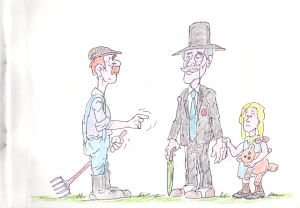
(Illustration of Highway Blockade by Shalini)

Related Posts:

Read Full Post »

ashokbhatia's avatarashokbhatia

Lord Emsworth

Much like all masters perched on the literary high table, P G Wodehouse also used Nature as a colluding partner in his narratives. When all is well with the world, roses are in bloom, bees and birds go about doing what they are ordained to do, and the sun goes about spreading cheer with due benevolence. But when giant egos clash or a disaster looms large, Nature stops in its tracks, birds stop chirping noisily, breeze ceases to blow and even flowers stand still.

In other words, Nature is depicted as having a sensitive soul, cheered up when the proceedings are going as per plans, but looking askance when the reverse happens. In the hands of proficient wordsmiths, it assumes a character of its own and provides mute support to the goings on in the narrative.

By way of an example, consider the story ‘Lord Emsworth and the Girl…

View original post 742 more words

Read Full Post »

ashokbhatia's avatarashokbhatia

Lord Emsworth

The narratives dished out by Plum not only amuse but also educate the lay reader. Critics may label these as escapist fares, but that does not take away the kind of social and spiritual lessons which are embedded therein.

When a girl whom you have come to respect seeks your protection, you try to rise to her expectations. Suddenly, the spine which was made of cottage cheese gets transformed into one of chilled steel. You stand up to bullies and tell them where they get off. You look them in the eye and make them wilt, making them beat a hasty retreat from their time-tested positions. Like Angus McAllister, they suddenly find more merit in ‘ceasing to be a Napoleon than to become a Napoleon in exile.’

The Parva School Treat Transformation

When the story begins, we find that Lord Emsworth’s soul is weighed down with woe. The…

View original post 786 more words

Read Full Post »

ashokbhatia's avatarashokbhatia

Allow us to welcome you belatedly to this wonderful world on a special day,

When you turn one and fans in different continents are celebrating Plum;

For this is the day he decided to hand in his dinner pail,

Leaving a rich legacy of joy, should we ever become glum.

Unbeknown to you, you have brought happiness in many lives,

Not only to that of your parents and immediate family members;

But also to the lives of fans suffering from Corona-induced blues,

You brought hope to a sick planet and kept aglow joyful embers.

You dispelled our manner of death-where-is-thy-sting-fullness,

Keeping us safe indoors, devouring the works of the Master;

Reveling in the antics of those who lived almost a century back,

Keeping our sanity intact, building immunity, recovering faster.

In Plumsville, Death is surely not a dreaded phenomenon,

On the contrary, it confers wealth, castles and titles upon heirs;

View original post 701 more words

Read Full Post »

My nerves are all of a twitter these days.

I learn from reliable sources that some time back, David Bennett, a resident of the USA, has had his ailing human heart replaced by a porcine one.

Of course, I wish David all the very best. May he remain in the pink of health for a long time to come and keep vanquishing any cardiac Goliath he comes across. May he even develop such traits as having an insatiable appetite and a penchant for rollicking in the mud. May he relish his moments as a Pig-hearted person of eminence and remain a metaphor for medical triumph amongst the Homo sapiens.

Some of you may know that the kidneys of my species have already been transplanted amongst humans, thereby enabling them to live a wee bit longer. Few others may recall that the first insulin used to treat a diabetic patient was derived from one amongst us. Assorted chemicals used in vaccines and medicines are formulated from different organs of ours. Speak of items ranging from gelatin and anti-coagulants to digestive supplements, and you will find us contributing to the general well being of all humans.

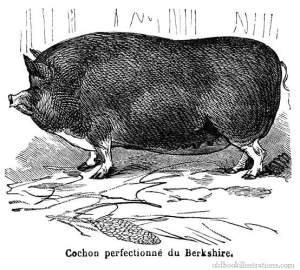
Those who do not mind their stomachs being treated as a graveyard of the animal kingdom would be aware that my species yields ham, bacon, spar ribs, loins, sides, shoulders, trotters and even heads. We add a unique allure to the pleasures of the table, something which can only be overcome by those who have nerves of chilled steel.  

But the latest development is worrisome. Given the innate greed of humans, the time is not far off when an entrepreneur in the mould of Ukridge would start pig farming in a big way, specializing in supplying genetically modified pigs which would be ready-to-use for the heart transplant industry.

I accept that our hearts are more readily acceptable by the human frame. Also, that we are easy to raise since we happen to be open to devouring all kinds of nourishment. Besides, we have a rather healthy litter size and lesser gestation periods. But the prospect of being reared in bulk in a genetically modified mode merely for our organs to be harvested so the human race may lead a happier life leaves me shaken from my snout to my tail.  

This is the nightmare which is making me lose my sleep these days. Soon, I intend to follow the fine example set by Mahatma Gandhi and start refusing my daily quota of 57,800 calories. This time, I am determined not to get swayed by a call of ‘pig-hoo-o-o-o-ey’ and give up my protest. Pepping me up without addressing my genuine concerns on the subject of xenotransplantism, the art and science of using animal organs for human purposes, will just not work.  

I do hope Lord Emsworth would rise to the occasion and order Rupert Baxter to start an intense campaign on social media against any such onslaught on me and my kind. The Shropshire Agricultural Show is just coming up and I am certain he would like me to win a prize without fail.  

If this does not happen, the development has to be faced by those of the porcine species with an upper stiff lip. I wonder why we can’t have wings.

(PS: Am sorry to note that David survived only two months after his surgery. RIP.)

(Related Post:

A dilemma faced by the Empress of Blandings

Read Full Post »

ashokbhatia's avatarashokbhatia

What happens when a banking professional like Suvarna Sanyal, who has spent a life time poring over bulky ledgers and checking debit and credit figures, turns his attention to one of the popular stories dished out by P G Wodehouse? Well, he simply whips up a series of illustrations which figure some of the better known characters from the canon in some selected scenes from the story!

Savour below the results of his labour of love which, incidentally, have already undergone a scrutiny under the precise microscope of an expert in all Plummy matters.

‘The day was so warm, so fair, so magically a thing of sunshine and blue skies and bird-song that anyone acquainted with Clarence, ninth Earl of Emsworth, and aware of his liking for fine weather, would have pictured him going about the place on this summer morning with a beaming smile and an uplifted heart.’

View original post 901 more words

Read Full Post »

Introduction

Lord Emsworth, as we all know him, is a very kind, loveable and harmless soul. Still, a park-keeper in Kensington Gardens once characterized him as: “a dangerous criminal, the blackest type of evil-doer on the park-keeper’s index.”

This provoked some other questions:

  • How is it possible that this mild man could cause such a harsh judgement?
  • What terrible deeds had he committed?
  • Are there other incidents in the “Blandings Saga” when people consider Lord Emsworth’s activities as evil deeds, skullduggery or crime?

In the following I present occasions when Lord Emsworth in the opinion of other people might be regarded as guilty of misdemeanour. I am just presenting a list of possible accusations, not prosecuting nor judging him. I don’t claim the list to be exhaustive, and all comments, corrections and complements from readers are most welcome. You find my email below, in the ‘About the Author’ paragraph.

Criminal acts frequently occur in Wodehouse’s stories and are often important ingredients in the plot. A bunch of criminals, for instance Chimp Twist and the couple Dolly and Soapy Molloy, are recurring as minor characters in many stories. However, not only crooks commit criminal acts. Wodehouse’s heroes and heroines as well sometimes commit crimes. Finding themselves deep in the soup they resort to acts like theft and blackmail as a way out of tight places. Besides, many young men regard certain violations of the law, like pinching a policeman’s helmet, as a proof of courage and thus as an quite excusable peccadillo, especially on the night after the Boat Race. To occasionally spend a night in the quod is nothing unusual for a Drone and is not regarded as a blot on his escutcheon.

But back to the amiable and absentminded ninth earl of Emsworth? When we associate him with crime and transgressions, we usually think of him as a victim of criminal acts such as pig theft and blackmail. In Service with a Smile (1962), Plum wrote: “Lord Emsworth was a man with little of the aggressor in his spiritual make-up.” But, when upset, Lord Emsworth’s judgement is obscured and on some occasions also he is wandering astray in the back-country around and outside the limits of the law. And he is not totally devoid of aggressiveness.

In The Clicking of Cuthbert (1922), Plum wrote: “There is an ethical as well as a legal code, and this it was obvious that Raymond Parsloe Devine had transgressed.” In line with this thought I present Clarence’s transgressions of legal rules as well as of common social rules and ethical codes, such as lying. Besides, it depends on one’s perspective if you regard a certain act as an evil deed. Plum pointed out that the opinion about fox-hunting very much depends on at which end of the rifle you are. The perpetrator and the victim may have opposing ethical views on the same act. My perspective down is that of the victim, and I include deeds which from the victim’s point of view might be regarded as evil even if Lord Emsworth certainly had no evil intentions. His sister, Lady Constance, has her very rigid views on which ethical and behavioural code is appropriate for the head of the family. In A Pelican at Blandings (1969), she is called “the Führer of Blandings Castle”. I don’t include her accusations of his lordship’s possible transgressions of her rules.

What terrible deeds did the “evil-doer” Lord Emsworth really commit?

Down, is a list of some different kinds of perpetrations/crimes/evil-doings Lord Emsworth is accused of. The incidents are listed in a random order. Intentional as well as unconscious malefactions are mixed. Deeds just planned and deeds actually committed are mixed. Crimes are mixed with peccadilloes.

Theft/unlawful misappropriation

A few times the absentminded Lord Emsworth happens to bag an object that doesn’t belong to him. In Something Fresh (1915), the first novel in which Lord Emsworth is the main character, he commits two unconscious thefts. The first incident occurs in his club, where he pockets a fork, something the head steward makes him aware of. Later, in the home of Mr. Peters, he pockets an Egyptian scarab. When, at home, he discovers the scarab he remembers Mr. Peters showing it to him and supposes that he got it as a gift. The plot in the novel then circulates around Mr. Peters’ efforts to get the scarab back. Mr. Peters promises a reward to the one who gets it back and several persons engage in stealing attempts.

In the short story The Custody of the Pumpkin, (1924) the absentminded Lord Emsworth again falls foul of the law. He is in Kensington Gardens in London. Mesmerized by the beauty of all the flowers he forgets where he is and begins picking flowers. A park-keeper watches him, and becomes horrified: “ … the stranger was in reality a dangerous criminal, the blackest type of evil-doer on the park-keeper’s index. He was a Kensington Gardens flower-picker.” The park-keeper yells, a crowd gathers, a police-man materializes and asks the sinner for his name. When he gives it, his statement is rewarded with a roar of laughter from the crowd. Fortunately, Lord Emsworth’s gardener Angus McAllister is at hand and can confirm the poor peer’s identity. The policeman, who is a glowing admirer of blue blood, chooses to turn a blind eye. This incident evidently stuck in Lady Constance’s memory. Later (in Service with a Smile, 1962), she exclaims: “I forgot to tell Clarence to be sure not to pick the flowers in Hyde Park. He will wander off there, and he will pick the flowers. He nearly got arrested once for doing it.”

Forgive me a short digression from the topic, a short reflection. Plum didn´t mention it, but perhaps a memory of the incident in Kensington Gardens subconsciously appeared in Lord Emsworth’s (Plum’s) mind some time later? Perhaps a dim reminiscence and a deep feeling that flower-picking should be allowed for real flower-lovers cropped out when his lordship once met a small girl from London who was punished for picking “flarze” in the garden of Blandings. Lord Emsworth this time showed unusual heroism, revolted against the authorities, took command and declared that young Gladys was allowed to pick all the flowers she wished. (Lord Emsworth and the Girl Friend, 1928).

Extortion/blackmailing/taking bribes

In the short story The Birth of a Salesman (1950), Lord Emsworth visits his younger son Freddie in New York. A young lady, selling encyclopædias of Sport, knocks at the door and Lord Emsworth courteously, but carelessly, promises to help her. A neighbour, “named Griggs or Follansbee or something”, is hosting orgies in his house while his wife is away. Clarence begins with this neighbour, who several times has noticed Lord Emsworth drooping over his (the neighbour’s) fence. He (Lord E) was really admiring the flowers, but the neighbour suspects that he (still Lord E) is a private eye snooping around on behalf of his (the neighbour’s) wife and he (the neighbour again) tries to bribe him (Lord E). His (Lord E’s) mind is absorbed by the idea of selling encyclopædias and when the neighbour asks “How much?” he (Lord E) interprets it as “How many?” Lord Emsworth emphasizes that the encyclopædias could be used as appreciated gifts and suggests a number of one gross, 144 copies, which the neighbor accepts. The earl is happy that he has been able to help the young lady and is absolutely unaware that he had provoked bribery, or that the neighbour regarded his lordship’s suggestion of such a great number as blackmail.

Armed threat

In Summer Lightning (1929), Lord Emsworth is quite convinced that his secretary Rupert Baxter has gone mad as a coot as well as violent, and furthermore that he has stolen the Empress of Blandings. Armed with a gun, Lord Emsworth forces the unhappy, angry and humiliated Baxter to crawl out from his hiding place under a bed.

In Service with a Smile (1962), Plum tells us how Clarence enters his sister Connie’s room: “He was a light mauve in colour, and his eyes, generally so mild, glittered behind their pince-nez with a strange light. It needed but a glance to tell her that he was in one of his rare berserk moods.” We know nothing about his earlier fits of rage and it seems that Lord Emsworth luckily avoided to commit serious crimes during them. This time his rage is aroused by discovering that his pigman, Wellbeloved, is plotting to steal the Empress. Clarence naturally fires him, not at him, but furiously tells him that he will be after him with a shotgun if he isn’t out of the place in ten minutes. He clearly has forgotten that he himself once participated in plotting a pig-napping! (See further down.)

Firing at people

Lord Emsworth doesn’t only use guns as a threat, but actually fires them. Fortunately, he never causes serious wounds.

In Something Fresh (1915) he empties a revolver with six shots in the darkness of the night in the hall at Blandings. He heard some noise and believes he is firing at burglars. As a matter of fact, it is poor Baxter, who, in his turn in pursuit of what he believes are burglars, has overturned a table and fallen on the floor. Luckily no living person was hit by any of the bullets, but one bullet hit a portrait of his lordship’s maternal grandmother in the face and “improved it out of all knowledge”.

In Plum’s unfinished novel Sunset at Blandings (1977) a person catching a burglar says: “It’s all right shooting a burglar. I asked my solicitor.” I’m not sure whether this is true, but anyhow, when Lord Emsworth fired the revolver in the hall it was at random, in complete darkness and no burglar had actually been revealed.

In the short story The Crime Wave at Blandings (1936) he actually shoots his former secretary and tormentor Rupert Baxter in his back-side, fortunately with an air gun. Lady Constance had confiscated the gun from his lordship’s grandson, who had shot Baxter with it. Furthermore, his lordship commits this crime twice! The first time, he was holding the confiscated gun in his hands, reviving his youth, and wondered if his marksmanship was still intact. Seeing the nuisance Baxter turning his back to him a bit away outside an open window, the temptation overpowered him. It may be considered a mitigation that his victim was such a menace. The wounds were insignificant, but the shot caused a sharp pain, a kangaroo-jump up in the air and wounded pride. The second time Lord Emsworth shot Baxter, he wanted to prove his marksmanship to his butler Beach, and Baxter was already leaving Blandings on his motor-bicycle. This farewell salute was both a further revenge and a message to Baxter to stay away from Blandings for all future, which purpose he achieved. The crime wave in the story didn’t consist only of Lord Emsworth and his grandson shooting Baxter. Beach does the same thing and even Lady Constance yields to an impulse to test her accuracy of aim. She shoots at the backside of Beach, really a not very challenging target to hit. She believes her shot was a hit. It wasn’t, but Connie’s shot gave Clarence the ability to get away from the events without consequences.

Lies

Lord Emsworth’s most frequent violation against common ethical values is probably to lie and stoutly deny what he has done, even if this is not so often told explicitly in the “saga”. Blank denial has become almost a reflex when he is accused, especially by Lady Constance, for having done something. “He was a great believer in stout denial and very good at it.” Pigs have wings (1952).

In the short story The Crime Wave at Blandings (1936) Connie asks him if he shot Baxter and Clarence flatly denies it: “Of course I didn’t.” He further adds to his lie by telling that he doesn’t even know how to load the gun. He fabricates two other explanations, either that Baxter was stung by a wasp or that he once more had relapsed into hallucinations. One of his lordship’s nieces happened to see when he shot Baxter, who was overhearing it when she told Lord Emsworth. Although revealed, Lord Emsworth flatly denies it again. Baxter asks him: “Do you deny that you shot me, Lord Emsworth?” and his lordship remorselessly lies: “Certainly I do.”

Attempted dog-napping

Lord Emsworth once makes an unsuccessful attempt to steal a dog. His son Freddie has (again) got into the soup. This is told in the short story First Aid for Freddie (1966). Eager to sell dog biscuits Freddie gave away a dog, to a young lady in the neighbourhood, despite the fact that the dog belonged to his wife Aggie. Freddie’s intention was to replace the dog by buying another. But Aggie announces her early return before he had time to fix this. If the dog isn’t at Blandings when she arrives, a possible outcome is divorce and that Freddie loses his job in USA. Lord Emsworth faces the frightful prospect of having Freddie living at Blandings again. The dog has to be brought home quickly. Freddie has got a sprained ankle so Clarence has to perform the theft. Of course, he fails. Snooping around the house where the dog is, he gets caught, is believed to be a crook and is locked into the coal cellar. Beach rescues him from both cellar and disgrace. The young lady fortunately returns the dog in time, because it had bitten one of her father’s favourite dogs.

Plotting a pig-napping

To his horror, Lord Emsworth’s prizewinning pig The Empress of Blandings has been stolen. The perpetrator is his sister’s son Ronnie Fish, but this Lord Emsworth doesn’t know. Ronnie’s plan is to “find” the pig, return it and then be able to extract money from a most thankful uncle. Clarence and Gally are absolutely convinced that Lord Parsloe-Parsloe at Matchingham Hall lies behind the theft, in order to make his own sow, The Pride of Matchingham, becomes the prizewinner as the fattest pig at the coming exhibition. Gally and Clarence conspire about appropriate contra strikes and decide that stealing The Pride of Matchingham would give them a good position to negotiate. The idea came of course from Gally and Clarence is naturally out of question as participant in the pig-napping act, but he has no objections of any kind against the plans. However, the plans were never executed, because the Empress was found in Baxter’s camping van. (Summer Lightning 1929).

Damaging property of others

Ignoring her brother’s protests, Lady Constance has allowed the Church Lads to camp by the lake in Service With a Smile (1962). Clarence caught a Church Lad red-handed, occupied with the worst possible sort of cruelty to animals Lord Emsworth could imagine: The Lad had put a potato on a string and jerked it away from the Empress when she tried to eat it! Another Church Lad took advantage of Lord Emsworth’s dim eyesight and prompted him to jump into the lake, with his clothes on, to save a fellow Lad from drowning. The presumed drowning Lad was a floating log. Lord Emsworth broods on revenge. Inspired by Lord Ickenham he sneaks out early in the morning and cuts off their tent ropes while the Church Lads are asleep. The Church Lads and Lady Constance consider this as an appalling skullduggery. Afterwards, his lordship has no remorse whatsoever, but he is scared to death that somehow Connie will get to know the identity of the perpetrator.

Intrusion

A deep rift had arisen in the lute between Freddie and his wife Aggie. One of Aggie’s female “friends” has informed her that she had seen Freddie in a restaurant together with a glamourous female movie star and she advocates divorce. It was an innocent meeting, for a good, but secret, reason, so Freddie had not informed Aggie about it. She has moved out to a hotel suite. Divorce is threatening and Lord Emsworth again fears to become stuck with Freddie living at Blandings. This is told in the short story Lord Emsworth Acts for the Best (1926). Aggie refuses to see Freddie, who asks his father to go to her and plead for him and convince her that the whole thing was innocent. His lordship and Aggie had never met before. Confronted with the threat of having Freddie at Blandings Lord Emsworth reluctantly goes to Aggie’s hotel suite. No one hear him knocking at the door to the suite, but he finds out that the door isn’t quite closed. So, he enters the suite, uninvited, as an intruder. The drawing-room is empty and his attention is caught by the beautiful flowers. He potters around putting his nose into the flowers, sniffing. The “friend” enters, takes him for a burglar and threats him with a pistol. She doesn’t believe him when he tells his name. Soon, Freddie arrives and confirms his lordship’s identity. The rift is eliminated, the “friend” is disposed of, and his lordship happily escapes the horror of having Freddie living at Blandings.

Some final comments

Exceptionally, Lord Emsworth is regarded by some others as an evil-doer. Wodehouse created him a kind of unobtrusive hero, without the normal characteristics of a hero. He is timid, not bold; whimsical, not decisive; evasive, not action-oriented; usually striving just to be left alone and to do no harm. According to Wikipedia, an anti-hero is “a protagonist in a story who lacks conventional heroic qualities and attributes such as idealism, courage, and morality. Although antiheroes may sometimes do the right thing, it is not always for the right reasons, often acting primarily out of self-interest or in ways that defy conventional ethical codes”. Lord Emsworth for sure lacks conventional heroic qualities. I regard Lord Emsworth as a kind of comical anti-hero, even if anti-heroes normally are crooks and are more complicated souls than the harmless, simple-minded peer, who just wants to please everybody, but now and then fails.

Often Lord Emsworth is absentminded and unaware of his transgressions, but a few times he commits them deliberately. If his reasons are strong enough, Lord Emsworth doesn’t hesitate even to commit crime. To prevent Freddie from settling down at Blandings, (in his lordship’s opinion a disaster worse than if the Castle should suffer from an outbreak of foot-and-mouth disease and an invasion of green-flies at the same time), he is prepared to transgress both legal and ethical codes.

His lordship can also be vindictive. If an opportunity appears, for instance to shoot Baxter, and he thinks he can get away with it, he can take revenge. His transgressions are however very rare. They are mostly provoked by others, and his victims are often unsympathetic characters and we feel that they have deserved to be “punished”.

It is very easy to feel sympathy for the amiable and whimsical peer, to understand and forgive him. Almost all the time he is kind and benevolent to all and sundry. However, this doesn’t mean that he never has hostile intentions. He avoids quarrels and fights if possible, but there is a limit for what he can stand, and he is no saint. Under enough pressure, if pushed and cornered, this meek man can at times feel compelled not to turn his other cheek. I, for one, can’t blame him.

By writing an essay on this topic, with this headline, it may be that some friends of Lord Emsworth might accuse me for being an evil-doer against his lordship. I certainly have no evil intentions and really enjoy spending time with him. However, Plum didn’t create Lord Emsworth an infallible hero. When upset, when his “world” and way of life is threatened, his mind and judgement may become obscured and his acts too hasty. Why should we close our eyes to these very human qualities? His weaknesses, in my opinion, just make him more loveable. Among all the heroes and anti-heroes in the world which Wodehouse created for our joy, he is my favourite. As Pope said: To err is human, to forgive is divine.

(Notes:

  1. A version of this article appeared in the March 2021 issue of Wooster Sauce, the quarterly journal of The P. G. Wodehouse Society of UK.
  2. Illustrations are from the serialized version “Something New” in Saturday Evening Post. Ill. F. R. Gruger.
  3. The author’s permission to reproduce this piece here is gratefully acknowledged.)

About the Author

Mr Tomas Prenkert has been a Wodehouse addict since his teens. He popularized the principles of management as a Lecturer in Business Administration at Linné University in Växjö (Sweden) till 2006. Thereafter, he opted to spread sweetness and light all around by bringing Plum’s works to denizens of Sweden.

Of his own initiative, he and a fellow Wodehouse fan undertook a research project and discovered Plum texts in old forgotten Swedish magazines. He edited and published two collections of these stories in 2010 and 2011. A third collection, with translations made by members of the Wodehouse Society in Sweden (WSS), was brought out by the WSS in 2015.

He has done commendable work in digging up innumerable texts of the Master. Over the years, he has undertaken an editorial endeavour and also dished out several translations and insightful articles which can often be found in Wooster Sauce, Plum Lines and Jeeves – the yearbook of the WSS.

His work can be accessed at the following two websites of his:
http://www.wodehousebibliografier.n.nu
and http://www.wodehouseforskning.weebly.com.

He can be reached at tomas.prenkert@gmail.com.

Read Full Post »

ashokbhatia's avatarashokbhatia

There come some truly humbling moments in one’s life when, while imagining that one’s Guardian Angels are surely in a benevolent mood, one suddenly wakes up to a reality which appears to be quite to be contrary. Scales fall from one’s eyes. One realizes with sudden horror that one had perhaps been promoted to the post of an honorary Vice President of the Global Association of Morons, exuding negative vibes to all the hapless souls around. Or, as P G Wodehouse would have put it, one looks ‘like the hero of a Russian novel debating the advisability of murdering a few near relations before hanging himself in the barn.’ 

Yours truly was recently in a suburb of a city known as Trondheim in Norway. Nudged by my hosts, I had decided to take a walk on a relatively lonely road overlooking the fjord. Seagulls were having a gala time…

View original post 1,023 more words

Read Full Post »

ashokbhatia's avatarashokbhatia

The placid streets of the village of Market Blandings were adorned on this June afternoon by a jaunty figure in a pale grey suit and matching derby hat and by his companion, somewhat less well-attired, in patched tweed and a battered straw boater.

The natty dresser dabbed his brow with a silk handkerchief, for the day was warm. Beach, the butler who had driven them down from Blandings Castle, had opted to remain at the Emsworth Arms for a cool one, while Galahad, for it was he, and his brother Clarence, the ninth Earl of Emsworth, strolled off to the tobacconist.

“I had a letter from young Ronnie the other day,” said Gally.

“Ah, yes, Ronnie. Yes, indeed. Ronnie who? “ asked Lord Emsworth courteously.

“Your nephew Ronnie. Ronald Overbury Fish. You know, Clarence- Julia’s boy— pink face, married Sue Brown, prettiest girl in three counties.”

“Ah yes, Ronnie, of…

View original post 1,765 more words

Read Full Post »


Allow us to welcome you belatedly to this wonderful world on a special day,

When you turn one and fans in different continents are celebrating Plum;

For this is the day he decided to hand in his dinner pail,

Leaving a rich legacy of joy, should we ever become glum.


Unbeknown to you, you have brought happiness in many lives,

Not only to that of your parents and immediate family members;

But also to the lives of fans suffering from Corona-induced blues,

You brought hope to a sick planet and kept aglow joyful embers.


You dispelled our manner of death-where-is-thy-sting-fullness,

Keeping us safe indoors, devouring the works of the Master;

Reveling in the antics of those who lived almost a century back,

Keeping our sanity intact, building immunity, recovering faster.


In Plumsville, Death is surely not a dreaded phenomenon,

On the contrary, it confers wealth, castles and titles upon heirs;

Hiring Jeeves or Anatole, buying white jackets with brass buttons,

But not behaving like an American millionaire, putting on airs.


Your first year on this planet was a tough year indeed,

When many of us lost our clear vision of 20:20;

Plum’s works kept us afloat, giving us hope of a brighter future,

We have survived to the day and can read these lines aplenty.


A stern look from you and the virus would have gone into hiding,

Like a rhino retreating upon seeing a White hunter with a shotgun;

Enthused, we also took it head on, savouring our enforced isolation,

Relishing opportunities for introspection and having fun.


Like Bertie Wooster, you may approve of our chin up attitude,

Deploying nerves of chilled steel, surviving a sudden lockdown;

Oh, how we craved renting a cottage in the countryside,

Free of the fear of an Edwin the Scout who may burn it down.


Lest we may contract the dreaded virus,

We had to let go of Anatole, God’s gift to our gastric juices;

A Laura Pyke type diet regime we had to follow,

Partaking immunity boosting foods, sans any dietary excuses.


Many unopened books adorning our shelves we could go through,

Improving our intellect with tomes dished out by brainy coves;

Curled up in a corner with a tissue restorative by our side,

While affianced couples connected over internet, cooing like turtle doves.


Never in our lives did we imagine watching so many flicks,

Many inane, some average and few so very well made;

Homemakers turned creative and tried myriad recipes,

Prompting many of us to don a figurative skirt and chip in with due aid.


The pleasures of offline shopping sprees had to be given up,

Instead, online shopping alone saved the day for many of us;

With the giant wheels of commerce temporarily shut down,

A revival of the environment turned out to be a big plus.


Some rarely seen birds trooped in, giant butterflies fluttering,

The bees were active, flora and fauna flourished, sky was azure;

Flowers bloomed with gaiety, greener trees swayed gently,

Nature was bountiful; the air one breathed was pure.


Those in metros were severely hit, spinsters all alone and forlorn,

Musicals like ‘Hamilton’ and ‘Pretty Woman’ were sorely missing;

Engagements and nuptials had to be postponed, wedding plans trimmed,

Couples had a tougher time, unsure of even an act like kissing.


You have brought great joy into the lives of your parents,

As you grow, you shall surely return their nurturing ways;

They are bringing you up with lots of love and care,

Your innocent smiles and hugs brightening their days.


May your intellect be always one up on that of Jeeves,

Your investigative skills as sharp as those of Baxter the efficient;

In culinary skills, may you surpass Anatole, in smartness, Psmith,

A heart that bleeds for its pals may also be sufficient.


When it comes to heartily gorging on your daily nourishment,

The Empress could already learn a few things from you;

As to keeping the enthusiasm of a big sister under check,

Clarence could imbibe you, proving worthy in his ancestors’ view.


Your crawling skills would soon evolve into brisk walking ones,

If ever you get besotted with a Hollywood diva in your pre-teen days,

Like Thos, you may walk six miles to fetch the Sporting Times for Bertie,

Aspiring to win the Good Conduct competition, winning Greta Garbo’s praise.


You shall grow to be like a Hercules with nerves of chilled steel,

With abundant milk of human kindness coursing through your veins;

Following the Code of the Woosters with alacrity and aplomb,

Handling overbearing aunts, using Esmond Haddock’s tact and brains.


You chose to be born on a very special day,

Resurrecting the spirit of Plum, of whom your grandmother is a fan;

May your own life be full of light, sweetness and joy,

As long as a benevolent and humorous sun keeps cheering up man.


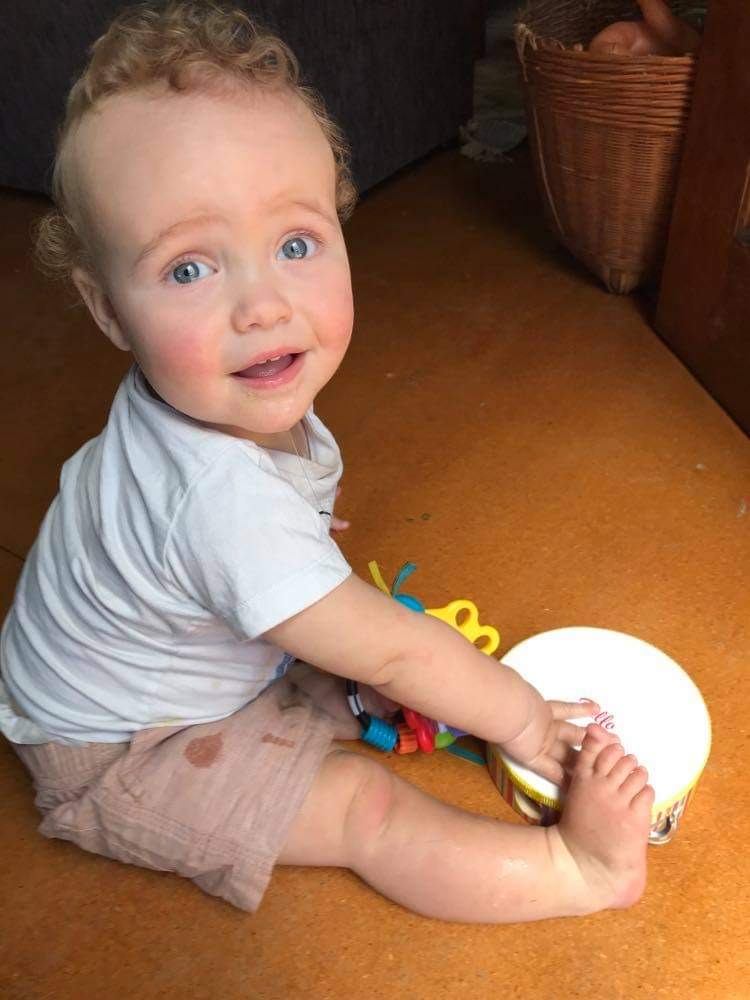
(Master John Jasper happens to be the grandson of Lucy Smink, a fan of P G Wodehouse Down Under. This impromptu composition is addressed to him. Permission of the family to publish it here is gratefully acknowledged.)

(Related Posts: 

https://ashokbhatia.wordpress.com/2019/06/08/lord-emsworth-and-the-girl-friend-a-visual-version

https://ashokbhatia.wordpress.com/2016/10/23/my-dear-clarence

https://ashokbhatia.wordpress.com/2015/07/05/the-gallery-of-rogue-kids-in-plumsville

https://ashokbhatia.wordpress.com/2015/04/01/when-masters-thos-bonzo-and-moon-rise-in-love)

Read Full Post »

« Newer Posts - Older Posts »