Designations are not important in cases where the external exposure of the employee is minimal. They form the psychological part of an employee’s compensation package.
For those whose role demands an external exposure, a higher sounding designation would improve the canvas of opportunities, enabling a faster realization of the company’s goals.
For employees who have outlived their core utility in companies which believe in firing people only when there is a disaster of a nuclear nature, an improvement in designation would be an invaluable tool in the company’s Human Resources arsenal.
(Excerpt from my book ‘Surviving in the Corporate Jungle’, which covers more than hundred topics of interest to managers of all hues, shapes and sizes)
This is a malaise every workplace is stricken with. You may have a set of intelligent, obedient and relevant people working for you. But it is quite likely that half of them would have fallen into the trap of complacency. They would have become critical of the company/department, would be working in a comfort zone, and would be displaying a singular lack of initiative. They would no longer have the shine in their eyes and would surely not be operating on all four cylinders.
Your Human Resources honchos would be neglecting this lot at the company’s long-term peril. An antidote package could comprise a sustained program of employee engagement, elaborate mentorship, job rotation, sponsorships for advanced educational courses (either online or in the distance mode), and recreational breaks. Simply spicing up their work life would also help.
At the individual level, keep watching for signs of falling into the trap of complacency. Analyse, introspect, and then speak to your seniors the moment you notice the zeal gone. Or, become a rolling stone and gather no moss!
When it comes to achieving the heights of Corporate Excellence, the element of Wisdom plays a crucial role. Look at any organization which enjoys a strong brand equity and one is apt to discover the wiser ways in which it conducts its operations. Its initiatives lead to a sustainable growth of the business, giving back to society in ways which are imaginative as well as pragmatic. The common thread running through all such initiatives is that of the element of Wisdom, one of the four pillars of Integral Management, the three other pillars being Perfection, Harmony and Strength/Power.
Sri Aurobindo Center for Advanced Research (SACAR) recently organized a one day seminar on the topic of ‘The Element of Wisdom in Management’. The event was a part of a series of seminars organized by SACAR over the past two years as a part of its endeavour to explore the relevance of some key spiritual tenets to the realm of management.
Wisdom in Organizations
A talk by yours truly covered the diverse ways in which Wisdom manifests itself in strategic as well as in tactical decision-making by organizations. It quoted real life examples of business houses using Wisdom in such managerial functions as Marketing, Finance, HR, and the like. Business houses like Tatas, Nestle India, HCL, Infosys and Wipro were covered.
Wisdom in managing People and Production
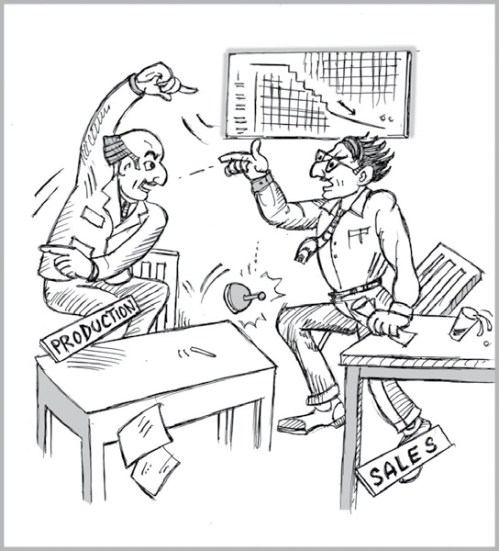
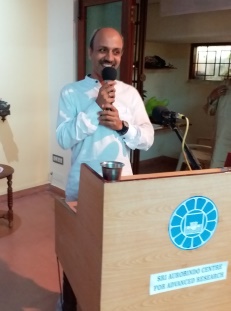
Mr. K. Nagaraja Kumar, Head-Marketing, L&T Corporate Technical, Chennai, explained the elements of Wisdom which can come in handy to managers responsible for handling people and production. With the help of light-hearted illustrations, he conveyed some profound messages to the participants. He presented a case study wherein a detailed road map was used to turn around the fortunes of an ailing manufacturing unit by engaging meaningfully with relevant stakeholders.
Balancing Intelligence and Intuition
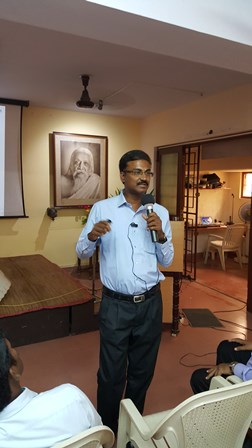
Dr. Narendra Joshi, Principal, Agnel Technical College, Mumbai, highlighted the necessity of balancing intelligence and intuition in the realm of Product Life Cycle Management. He cited the examples of companies like Sony, Xerox, Matsushita and Nestle which introduced innovative products which were much ahead of their times. Analytical tools like Teboul’s model, Kano’s model and the Fritz approach were quoted by him. So was the necessity for a quiet mind for reaping the benefits of one’s intuitive powers.
The Age of the Spiritual Manager
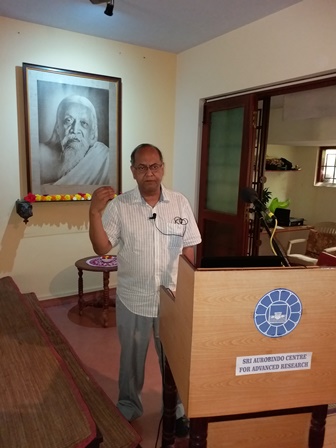
Dr Ananda Reddy, Director, SACAR, spoke of the fact that Wisdom is far above and beyond the realm of the thinking mind. It is about understanding and effectively using the underlying algorithms which open up the vast vistas of miraculous knowledge and infinite possibilities for managements to decide long-term business strategies and frame policies which ensure profitable as well as sustainable operations. He shared his perception that the age of the Spiritual Manager is already upon us and management professionals would do well to equip themselves with spiritual tools to succeed in their career and life objectives.
The Wisdom of Human Values
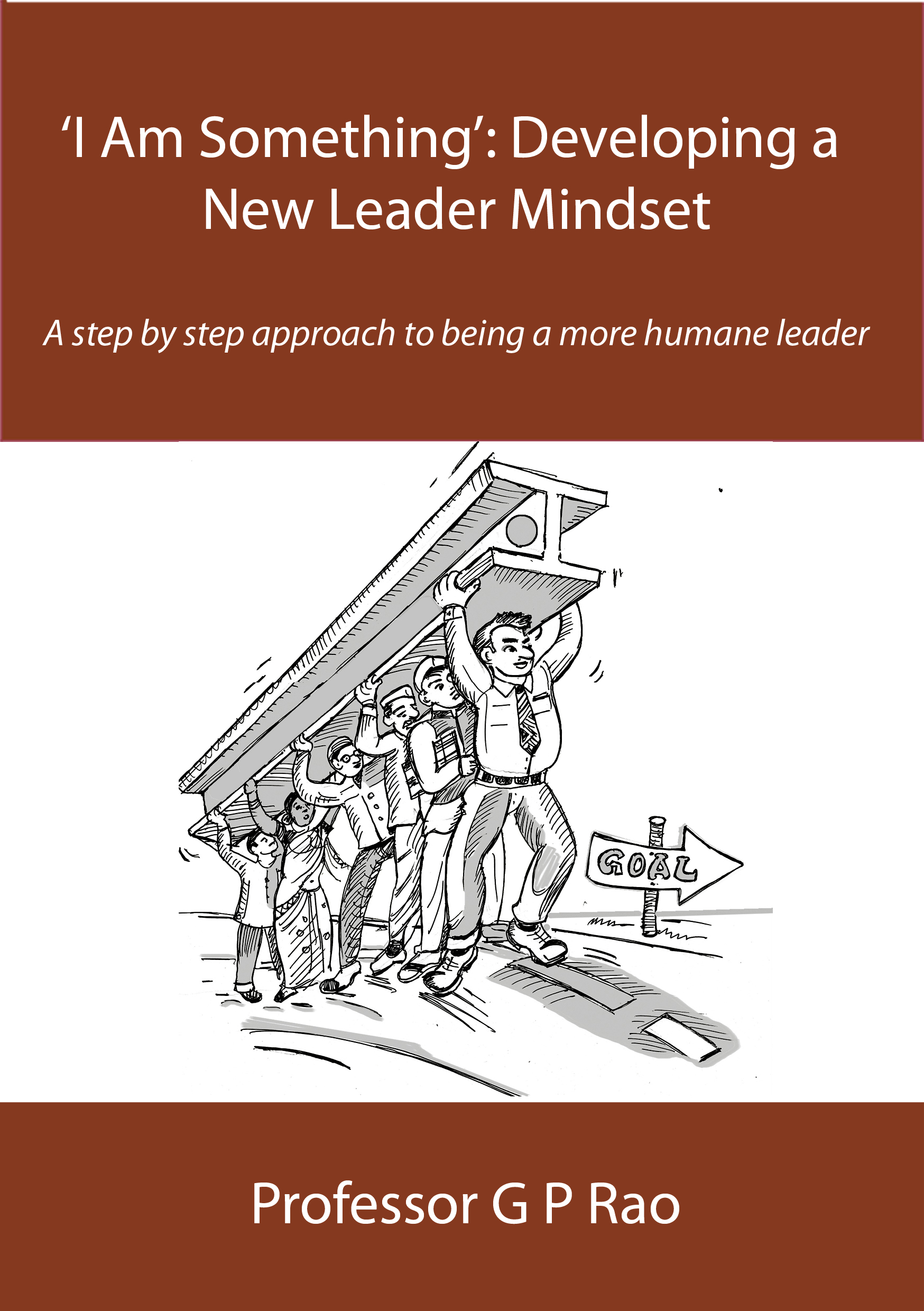
Prof G P Rao, a doyen in the field of management education, spoke of SPANDAN, a NGO founded by him, which espouses the Wisdom of running business enterprises based on human values and ethics.
Empirical evidence of Integral Management
Prof Kisholoy Gupta, Acharya Institute of Business Management, Bangalore, presented the empirical results of an insightful study done by him to gauge the perception and reality of the Four Pillars of Integral Management – Perfection, Harmony, Strength and Wisdom – by practicing HR seniors in the Indian industry. The results showed that there is already some awareness of the constituents of Integral Management, though the nomenclature arouses a curiosity and a desire amongst management practitioners to understand and adopt this new paradigm in their day-to-day working.
Wisdom at the personal level
What does Wisdom mean to a practicing manager? Mr Ganesh Babu, Founder & CEO, Winning Minds Solutions, Puducherry, came up with a heart-warming presentation on the dimensions and utility of Wisdom in the mundane life of a working manager. The talk explored different dimensions of Wisdom in all spheres of one’s life – professional, social as well as personal.
Leaders with equanimity
Dr. Debabrata Sahani, Surgeon, Optholmologist, Bhuvaneshwar, touched upon the importance of an inner connection for business leaders. Wise are those who enjoy a tranquility and calmness within themselves. Their decision-making is based on balanced, well-considered and holistic view of the facts of the case. They do not manage crises in business with knee-jerk reactions. They deal with people according to their nature and with occurrences in the business environment according to their force and the truth or hard reality they represent. Impartial they are. Detached they are. Compassionate they happen to be, but never at the cost of their innate wisdom and truth.
Wisdom for an Indian citizenMr Hariharan Subramaniam, Director, Indian Institute of Governance, Chennai, touched upon the Wisdom of not only connecting to one’s inner self, but also the need for an Indian to contribute towards restoration of the old glory of her country. India has a special role to play in the comity of nations and the need of the hour is to train value-based politicians and administrators who would steer the country in the decades to come. He spoke of the vision of kick-starting his dream project, the Indian Institute of Governance, which would serve this purpose. His opinion was that one’s wisdom was directly proportional to one’s inner growth.
The seminar was well attended by practicing managers, management academicians and research scholars. Its conduct marked another milestone in SACAR’s efforts to propagate the concept of Integral Management, the Four Pillars of which happen to be Perfection, Harmony, Power and Wisdom.
The Age of the Spiritual Manager is already upon us. The time has come for management professionals to consider and adopt Integral Management – an Indian paradigm to understand and refine our managerial processes.
Amongst other things, you also get paid for keeping your boss’ blood pressure under check. Pity the poor over-stressed guy and update him before he thinks of any project assigned to you. In other words, meet him halfway through.
If it is getting delayed, or worse, not getting done at all, make him an accomplice to murder by keeping him informed in advance. In case you are likely to meet your target, present him with a draft report/outcome much before the deadline.
The pre-dominance of the Bell Curve in performance appraisals has never been in doubt. It recognizes the fact that all people are not identical, the tasks assigned to them are different, and the environment they operate in need not be homogeneous. All organizations have their share of high performers, free riders, under-performers, and downright deadwood.
A well understood Bell Curve principle is about building meritocracy and practising a differentiated rewards strategy. It has its own limitations, especially in highly innovative outfits. However, it keeps the bar high, thereby helping an organization to scale greater heights.
As a Chief Executive Officer, if you hire lions like Pablo Picasso or MF Hussain to create a corporate emblem for your company, would there be any point in getting a bunch of giraffe Vice Presidents and General Managers to meddle with his final work? Define a target and a budget, and let the agency have a free hand.
As a trainee cub, join an ad agency if you love irregular working hours, midnight escapades and hobnobbing with the hoi polloi of creative geniuses whose king (or, queen) size egos need to be managed at all times, with clients’ deadlines looming large over your work horizon. Depending on your skill set, you may gravitate towards copywriting, production, media planning, or client servicing. In all cases, creativity under pressure should be the motto of your life.
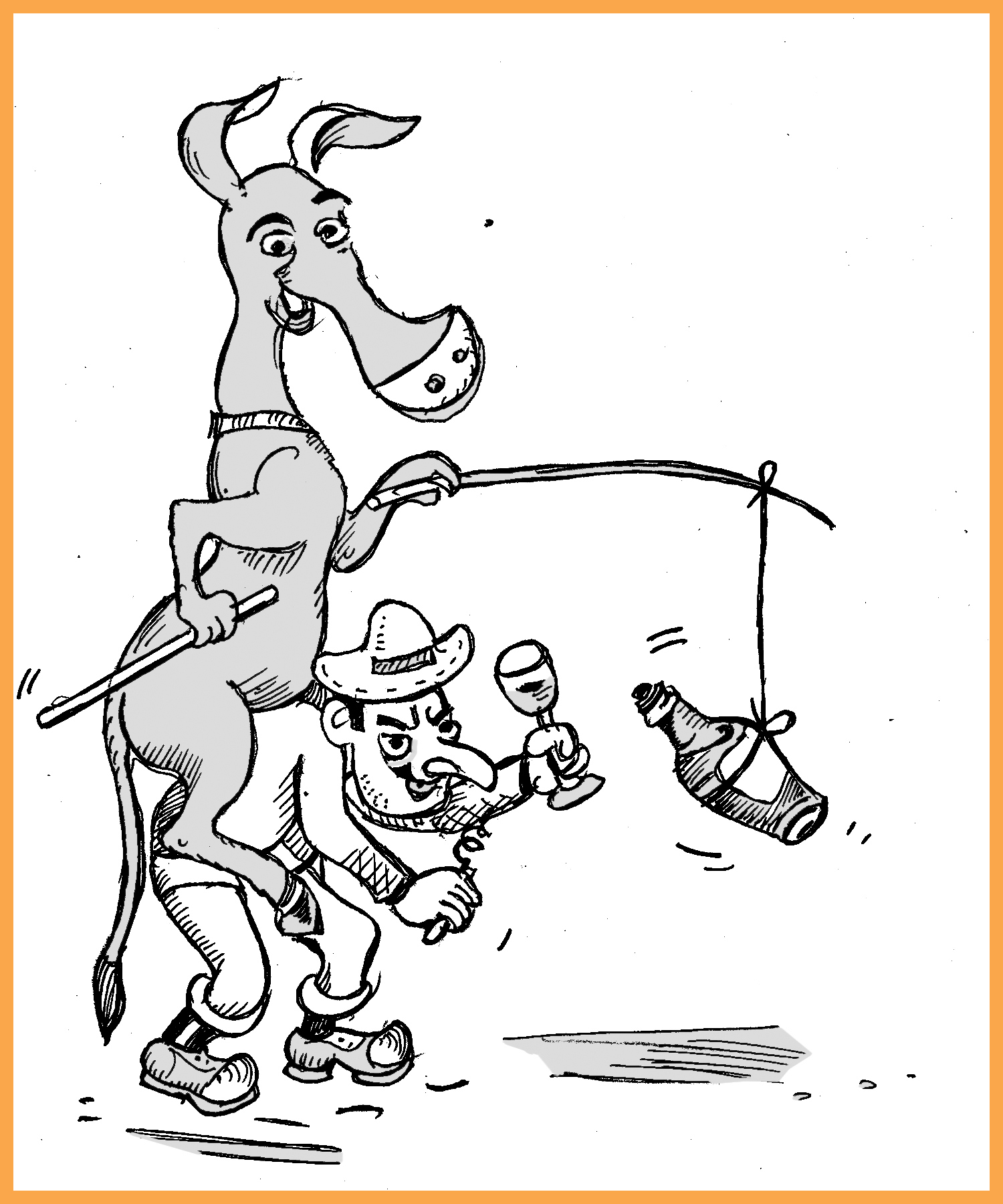
The derogatory manner in which I am generally referred to by the Homo sapiens is a matter of sincere regret. I wish to ass-everate that I have sterling qualities of head and heart. Even though a vast majority of you copy me ass-iduously in your day-to-day lives, you hold the member of my species in a low esteem. This is patently unfair. Permit me to set the record straight and ass-ert myself.
Members of your species have always given me a raw deal. You wilfully neglect some of my great contributions in diverse fields of life. Prohibition, literature, health, discipline, education, free speech, human values, law and order, science, politics, management, architecture, adventure and logistics are some of the fields where I have enabled your civilization to scale great heights.
Here is a quick recapitulation of some of my contributions to your so-called civilized society.
The fine art of advocating prohibition
When I use my vocal chords to articulate my feelings, you make fun of me. You hold me to be mentally deficient. You do not realize that those of you who have had an excess dose of tissue restoratives sound much similar in their mindless laughter. When I bray, I merely advocate prohibition. Mahatma Gandhi would have been so very proud of me.
On the literary high table
Frequent references to me in the kind of literature many of you devour and admire goes on to establish my superiority in more ways than one.
In ‘Oliver Twist’, penned by Charles Dickens, law is held to be an ass. You may disagree with the proposition, but you cannot deny the honour conferred on me thus.
In ‘The Mating Season’, dished out by P. G. Wodehouse, even such an illustrious figure as Marcus Aurelius is alluded to as an ass.
“I wonder if I might call your attention to an observation of the Emperor Marcus Aurelius. He said: ‘Does aught befall you? It is good. It is part of the destiny of the Universe ordained for you from the beginning. All that befalls you is part of the great web’.”
I breathed a bit stertorously.
“He said that, did he?”
“Yes, sir.”
“Well, you can tell him from me he’s an ass.”
When I find a place at the literary high table, I do not see any reason for you to refer to me in a condescending manner.
Promoting good health
A part of your anatomy (that you mistakenly hold to be superior to that of me) is known after me. You use it to sit comfortably, thereby warming up the chair endlessly and missing your daily set of exercises.
The smart ones amongst you never remain seated for long and follow a physical fitness regime. They use this very part of their body in quite a few postures and thereby maintain good health.
Discipline and Education
While recollecting his late night encounters with the Rev. Aubrey Upjohn, Bertie Wooster, in his delectable memoirs, often shudders to think of the juicy ones he used to get on the soft spots. He obviously alludes to the very part of your anatomy referred to above. This shows the important role I play in shaping the character of your coming generations.
Hapless students try to ass-imilate the heaps of knowledge that gets dumped on to them by means of listless lectures delivered in dinghy classrooms. Even kids ass-ume the role of beasts of burden while lugging their extra-heavy school bags under the adoring eyes of their indulgent parents.
Free speech
When an ass-emblage of a group of students chagrined with crude attempts of authority figures to curb their right to free speech, they often make me an icon of their peaceful protests. Candlelight vigils do not deliver the kind of strong message that my presence, with a poster shaming the authority looped around my slender neck, does.
Some protestors learn the tricks of the trade from such non-profit groups as the ASS – Advisory Services for Squatters, based in London, UK.
Law and order, human values
Ask any rozzer. When not in the presence of a human rights enthusiast, he is likely to confess the utility of the part of your anatomy named after me to make even a law-abiding citizen admit to a crime he never committed.
I confess that, when provoked, I am wont to deliver strong punches, using my hind legs. Despite the training you receive in martial arts, you can never really copy me on that account. The criminally inclined amongst you keep ass-aulting innocent citizens without any care in the world. My punches are designed to deliver a message of respecting human values and civic sense which many amongst you do not follow.
Science
Those of you who win a Nobel Prize in Chemistry keep ass-aying metals at periodic intervals, never ass-igning any credit to me in their much-applauded research papers.
Chemists can be forgiven to refer to me as AsS, a formula for Arsenic Sulfide. Likewise, I do not mind mathematicians referring to me as an ass-ociated collection of prime numbers of module M, Ass (M).
When a student of geometry conveys the lack of congruence of triangles by using the term ‘Angle-Side-Side’, I do not object. When a genetic expert tries to describe a human gene which encodes the enzyme Arginino-Succinate-Synthetase, I feel flattered.
When it comes to advancements in science or technology, I follow the Jeeves dictum – of never raising a bushy eyebrow even for the smallest fraction of an inch, except when I am sad at being summarily ignored in all such references.
Politics
Unwittingly, whenever there are elections around, I get dragged into political controversies. If there are malpractices in the conduct of academic examinations, the top politician of the region runs the risk of his name being paraded on a member of my species. When a region showcases the wilder ones amongst us in a tourism promotional video, we get dragged into an unseemly political controversy.
Such ass-ociations merely reveal the shallow intellectual abilities of the Homo Sapiens. The hard work put in by me in any endeavour thrust onto me does not get due recognition. The simplicity with which I handle the burdens so very gleefully heaped on to me gets neglected. The soulful eyes with which I view my human masters never get appreciated.
Many politicians who happen to be ass-ociated with dynastically run outfits shamelessly copy me in their subservience to their political masters, but fail to acknowledge my contribution.
The manner in which your elected representatives often behave in your ass-emblies leaves me deeply disappointed in your race. When a favoured legislation has no chance of making it through the normal process, your politicians know how to rush it through as an ordinance and seek the ass-ent of the First Citizen of your country
Management
Excellent traits of followership that I possess could provide invaluable clues to leaders of all hues, sizes and shapes who aspire to achieve loftier goals in their chosen profession. Leading management institutes ought to be doing a detailed study on this aspect of my behaviour. Alas, they keep churning out inane stuff on leadership traits alone.
Unimaginative incentive schemes get launched, killing productivity and proving my superiority over some of your over-zealous but short-sighted production chiefs.
Finance honchos amongst you keep twiddling their thumbs to project the correct ass-ets of their companies in their books of accounts. Whenever a catastrophe strikes a business, insurance surveyors are called in to ass-ess the extent of damage.
When a manager has goofed up on a critical ass-ignment, he is referred to as a Jackass, thereby establishing my supremacy in all matters managerial.
Top bosses cannot function in the absence of their Executive Ass-istants.
In an annual ritual called Appraisals, human resources honchos routinely ass-uage the feelings of those who are left out in the latest round of promotions or increments. They are routinely ass-ured of a brighter future in the days to come, and advised to follow the path espoused by Bhagavad Gita – that of performing their duty without any expectation of rewards.
When a new boss ass-umes charge after a much-delayed promotion, the Yes-Men in his team quickly change their affiliations and try to ass-ert their importance in the scheme of things.
Architecture
Well-designed civil structures cannot come up unless I have carried some of the building materials on my sturdy back. While carrying heavy loads, I am invariably obedient and docile. No member of my species has ever entertained the idea of floating a trade union to ass-ert its labour rights.
Adventure and logistics
When it comes to your adventures in a rough terrain, there is no better provider of logistics services than yours truly. World over, for millennia, my services have been there at the man-not-so-kind’s disposal. Alas, these get taken for granted. I am yet to be nominated for a Nobel Prize in logistics.
Accord me the respect I deserve
I hereby urge upon you to look deep within and start treating me with the respect I deserve.
I might be perceived as being stubborn at times. But I am also companionable. My bite might be worse than my bray, but I am a friendly creature. You may find it difficult to frighten me. But you know that I am a dependable chap.
While almost all of you are still trying to conquer your ego, as advocated by some of your scriptures, I have already achieved that feat millennia ago. You are still trying to eliminate racial and gender discrimination. By following the principle of peaceful co-existence amongst all other species, I have been promoting racial harmony for centuries already. When it comes to chivalry, I am way ahead of many of you. Bertie Wooster would surely approve.
You think the members of the species of Equus africanus asinus possess a poor Intelligence Quotient. I beg to differ. As you can see for yourself, even our Spiritual Quotient is higher than that of the Homo sapiens.
This is a short introduction to a book by yours truly, the Portugese version of which is getting launched in Portugal shortly. The launch event in Porto is planned on the 2nd of March, along with a talk on “Work Life Harmony” at the Catolica Porto Business School of Universidade Catolica do Porto. The launch event in Lisbon is planned at Universidade Europeia on the 3rd of March, 2016, as part of an event titled ‘Passport to India.’
How this book happened
Forty years back, the School of Business at a prestigious university in India made a big mistake. They awarded me a degree in Business Management. They were so very happy to see me off the campus that they even awarded a silver medal to me.
I owe this book to my professors – some of whom taught so well that I learnt a…
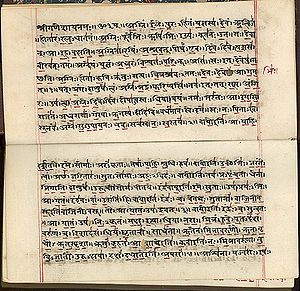
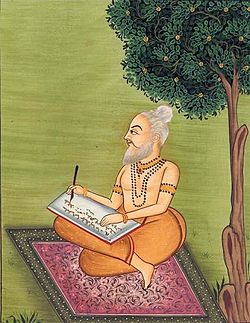
India offers to the world an immensely rich collection of sacred scriptures. First and foremost are the Vedas, which could be justifiably referred to as the core of the spiritual and psychological soft power of India. Then there are the Upanishads, which capture the highest spiritual knowledge and experience that India can offer to the world.
India also has Puranas, Itihasas, Tantras, Dharma Shastras, and Sutras, besides the innumerable works of religious poetry in regional languages.
Ramayana and Mahabharata
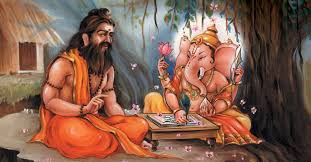
Amongst Indian scriptures, Ramayana and Mahabharata happen to be the most popular narratives. Both are pregnant with mature thought. Both contain teachings of political, religious, ethical and social kind. Both showcase, in a relatively simple language than that of the Vedas and the Upanishads, the Indian idea of Dharma, or righteousness.
Both appeal to the soul as well as to the imagination of an intelligent mind. Even illiterates find gems of wisdom in these two epics. If philosophy, ethics, morals, social concepts, political thoughts or administrative justice form the warp in this unique fabric, heroic tales, human emotions, poetry, aesthetics, fiction, romance and villainy form the weft.
These epics showcase a highly developed sense of ethics and values, social and cultural realities of a distant past, besides intellectual and philosophical refinement. Lay persons could draw several life lessons from both these works. So could professionals of all hues.
Sanskrit, the supreme language
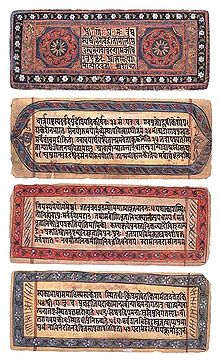
Sanskrit is the language which forms the bedrock of a vast majority of these works. An intimate feeling of the language helps in understanding the multi-layered narratives better. One acquires a heightened sensitivity towards the shades of style and the context in which a statement is being made.
In today’s inter-connected world, one may not know Sanskrit but can still savour a fraction of the fragrant nectar of knowledge offered through any of the Indian scriptures.
Sacred scriptures comprise a minor part of all the Sanskrit literature available from the Vedic to the pre-modern times. Nonetheless, they form the bedrock of Indian culture and spirituality.
Bhagavad Gita: The Song Celestial
Bhagavad Gita forms an integral part of Mahabharata, appearing in its Bhishma Parva. It comprises eighteen chapters. Broadly speaking, this unique composition touches upon three kinds of Yogas – Karma Yoga (The Yoga of Action), Gnana Yoga (The Yoga of Knowledge) and Bhakti Yoga (The Yoga of Devotion). [Yoga is a term which is often confused with physical practices of a certain kind. However, the term is used here in the sense of describing a communion, specifically the communion of an individual soul with the Divine.]
Upanishads articulate the philosophical principles concerning mankind, world and God. Gita explains the manner in which human beings can practice these subtle philosophical principles in their mundane lives.
Soulful management
One of the basic concepts enunciated by Krishna in the Bhagavad Gita is that of the everlasting nature of the soul. The concept of a soul now finds a resonance even in modern management literature. In his book ‘The 8th Habit’, Stephen Covey urges professionals to pay heed to their ‘inner voice’. While proposing the whole person paradigm, he speaks of the four dimensions of a person – spirit, body, heart and mind.
From a management point of view, perhaps the most relevant are the concepts espoused under the overall umbrella of Karma Yoga. Here, Lord Krishna emphasizes the importance of self-less action, free of its rewards and gains. A state of inaction is held to be another form of action itself.
Gita III 6
कर्मेन्द्रियाणि संयम्य य आस्ते मनसा स्मरन्।
इन्द्रियार्थान्विमूढात्मा मिथ्याचारः स उच्यते।।
[A hypocrite is one who suffers from a false notion of having self-discipline. He is someone who controls the organs of action but continues to dwell upon the objects of sense.]
Gita III 7
यस्त्विन्द्रियाणि मनसा नियम्यारभतेऽर्जुन।
कर्मेन्द्रियैः कर्मयोगमसक्तः स विशिष्यते।।
[He who controls his senses by his mind and engages with the organs of action in a Yoga of Action achieves excellence in whatever he does.]
The concepts enshrined under Gnana Yoga are also highly relevant for management professionals. This is so because one of the major challenges in their careers is to keep unlearning, so the process of real learning can never cease.
Smart professionals always keep an open mind. They strive to keep abreast of latest technological developments. They keep learning from their failures as well as from their successes.
The Yoga of Devotion
When it comes to Bhakti Yoga, the relevance of what Gita says is perhaps somewhat limited as far as a practicing professional is concerned.
Loyalty and devotion – to a superior as well as to the company – are terms which readily spring to one’s mind. But in the absence of a truly charismatic business leader of the stature of Lord Krishna, blind devotion could perhaps lead to a catastrophe in one’s profession. A sense of misplaced loyalty often becomes an excuse for senior managers to remain in their comfort zones. Accepting fresh challenges becomes a key challenge. Their skill-sets start getting rusted. Much like stones which do not roll, they start gathering moss.
Time to rediscover the Gita
There is much that CEOs and managers can learn from the Bhagavad Gita. Its language is pregnant with symbolism at times. But it has rich lessons to offer for day-to-day conduct of business.
This stream of knowledge is close to 3,500 years old. It is never too late to rediscover it.




 The pre-dominance of the Bell Curve in performance appraisals has never been in doubt. It recognizes the fact that all people are not identical, the tasks assigned to them are different, and the environment they operate in need not be homogeneous. All organizations have their share of high performers, free riders, under-performers, and downright deadwood.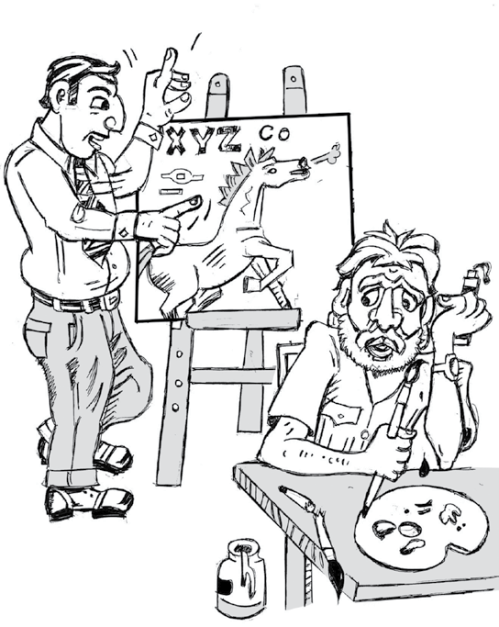







 ashokbhatia