Feeds:
Posts
Comments

Posts Tagged ‘Management’

Quite a few CEOs, when they wake up the day after having secured a crucial business deal, experience a sense of calm happiness within. The flowers are in full bloom, the sun shines with due benevolence, the birds and the bees hop around doing what Mother Nature has ordained them to do, God is in heaven and all appears to be fine with the world.

If they happen to be at a resort with a fresh water lake nearby, they prefer to splash about a bit and invigorate themselves. While taking a leisurely swim, they even start exercising their vocal chords, belting out a favourite song of theirs, generating in the process an off-tune gruesome sound which is calculated to startle the stoutest. Two bees, buzzing among the roses, stop as one bee and look at each other with raised eyebrows. Snails withdraw into their shells. A squirrel practicing for her athletic performance in the upcoming Olympics on a nearby tree nearly falls off its branch. A deer roaming around in the bushes nearby, its reverie disrupted, decides to scoot off to a quieter location. But such CEOs, blissfully unaware of the confusion being caused in the animal kingdom by virtue of their expression of inner bliss, persevere in their endeavours.

Bhagavad Gita speaks of three kinds of happiness – the Sattvic (Pure) kind, the Rajasic (Passionate) kind, and the Tamasic (Dull) kind.

Sattvic: The unalloyed bliss of happiness

The happiness that a CEO experiences when she has executed a business plan successfully, or has convinced the board of directors of the merits of an acquisition proposal, would be that of the pure kind. A path-breaking approach has been taken. Her vision, courage and conviction are easily visible. Much hard work and effort has gone into the work accomplished. Details have been examined with a fine tooth comb. While working on such plans, the proverbial midnight oil has been burnt. Some personal sacrifices have been made. Initial pain and difficulties have been suffered and overcome. A combination of the hard work put in, the self-control exercised in the process, and the resultant sense of self-perfection leads to this kind of happiness.

When we use the term Peace, this is indeed the kind of happiness we refer to.

यत्तदग्रे विषमिव परिणामेऽमृतोपमम् |
तत्सुखं सात्विकं प्रोक्तमात्मबुद्धिप्रसादजम् || 18.37||

That which seems like poison at first, but tastes like nectar in the end, is said to be happiness in the mode of goodness. It is generated by the pure intellect that is situated in self-knowledge.

For those of you who have come across the movie Invictus, the visionary leadership of Nelson Mandela comes across very clearly. He blunts the edge of apartheid by using the game of rugby to unite his populace, when they cheer Springboks, the team of the South African Rugby Union, to a victory in the 1995 Rugby World Cup.

The title of the movie could be translated from Latin to mean ‘unconquered’. Here is the poem bearing the same title:

Out of the night that covers me,

Black as the pit from pole to pole,

I thank whatever gods may be

For my unconquerable soul.


In the fell clutch of circumstance

I have not winced nor cried aloud.

Under the bludgeonings of chance

My head is bloody, but unbowed.


Beyond this place of wrath and tears

Looms but the Horror of the shade,

And yet the menace of the years

Finds and shall find me unafraid.


It matters not how strait the gate,

How charged with punishments the scroll,

I am the master of my fate,

I am the captain of my soul.


(William Ernest Henley)

 One can well imagine the kind of unalloyed happiness experienced by those at the helm of affairs in a challenging situation of that kind.

Many CEOs keep fighting the battle of the abdominal bulge. When they take their doctor’s advice seriously and start either jogging or brisk walking, the initial pain and resistance from within act as a deterrent. However, once a habit gets formed, they enjoy better health and happiness.

Rajasic: The mundane shade of happiness

The passionate kind of happiness gets experienced when her ambition of a C-suite gets fulfilled. Or, when she gets a reserved parking slot earmarked for her vehicle. Or, even when the security guard and the liftman salute her upon entry to her fiefdom. Power, pelf and prestige present a package which gives rise to a fleeting sense of happiness in her bosom. But beneath the happiness is a layer of anxiety, because none of these can be taken for granted. In fact, the risk of her developing a queen-size ego and believing that she is omnipotent is pretty high. A major setback in career could just be around the corner, sneaking up and striking her with the stuffed eel-skin of business life.

विषयेन्द्रियसंयोगाद्यत्तदग्रेऽमृतोपमम् |
परिणामे विषमिव तत्सुखं राजसं स्मृतम् || 38||

Happiness is said to be in the mode of passion when it is derived from the contact of the senses with their objects. Such happiness is like nectar at first but poison at the end.

Indira Nooyi, ex-President of PepsiCo, says:

‘Just because you are CEO, don’t think you have landed. You must continually increase your learning, the way you think, and the way you approach the organization.’


Tamasic: Happiness which leads to a fall from grace

The dull kind is one which is based entirely on the gratification of senses. Lord Krishna points out three specific causes which result in a happiness of this kind:

  1. When emotional and mental sleep leads to one not being able to understand the reality, or one trudges through life without a clear goal in life;
  2. A state of inertia of the intellect when one decides to let others govern one’s life, or allows one’s instincts and impulses to govern her decisions and approach to problem solving.
  3. Ignoring the ‘inner voice’, one perfects the art of heedlessness and often gets into an adventurous mode, indulging in sensory gratification, eventually leading to a spectacular downfall.

यदग्रे चानुबन्धे च सुखं मोहनमात्मन: |
निद्रालस्यप्रमादोत्थं तत्तामसमुदाहृतम् || 39||

That happiness which covers the nature of the self from beginning to end, and which is derived from sleep, indolence, and negligence, is said to be in the mode of ignorance.

Ask Martin Winterkorn, the former chairman of the board of directors of Volkswagen AG, who put in his papers during September 2015, several days after the infamous emissions cheating scandal came up. He also resigned as chairman of Audi on 11 November 2015, after further information associated with the scandal was revealed in regard to VW’s gasoline-powered engines. He was criminally indicted over the emissions cheating scandal in the USA on May 3, 2018 on charges of fraud and conspiracy. In April 2019, he was criminally indicted on charges of fraud in Germany. His is a clear case for the kind of transient happiness CEOs should not aim for.

A wise CEO who happens to be aware of different hues of happiness would manage the wild horses of her desires, her egoistic tendencies and her anger and resentments in such a manner as to truly aim for the Sattvic variety of happiness. In other words, do a great job and experience the inner glow of contentment.

Peter Drucker is also of the opinion that happiness is irrelevant in the management context:

‘Never mind your happiness; do your duty.’


(Related Posts:

https://ashokbhatia.wordpress.com/2018/12/05/looking-for-a-ceo-who-is-peaceful-and-happy

https://ashokbhatia.wordpress.com/2014/07/02/a-quest-for-true-happiness)
Read Full Post »

Much like a proficient swimmer participating in a competition, a smart CEO needs to operate in two  diametrically opposite styles at the same time – one of attachment and another of detachment. She needs to be an enthusiastic participant in the operations and swim along with the current. Often, she also needs to sit back on the banks of the river, keenly observe the direction in which she is headed and make a detached and objective assessment of the situation. There is thus an inherent duality embedded in her role. Her role as a passionate participant must always embrace that of the intellectual spectator. The “who” and “why” of her concerns should constantly enfold the “what” and “how” of our methods.

With maturity, a person gains the ability to detach from passionate participation in the operations and do a pitiless analysis of the overall shape and working of the system. Successful CEOs know that after all the analysis is done, they still have to throw themselves back into the mix. One may call this art a hybrid style of functioning.

Detachment in Action

A sense of detachment, as brought out by Bhagavad Gita, is not about one losing the sight of the objective sought to be achieved. Nor does it recommend a defeatist attitude in one’s life and career. Rather, it is about handling successes and failures in a balanced manner. Smart leaders, who have achieved a spectacular success, do not become complacent. They remain humble. They determine the critical success factors and store these at the back of their minds, ready to be recalled when necessary. When faced with dire failures, they shoulder the blame, get requisite feedback and take steps to ensure the failure gets avoided the next time round. If they lose interest for some time, they bounce back with renewed enthusiasm and work towards delivering results. In other words, detachment helps one to be more objective.

Peter Drucker, when he dished out advice to CEOs, invariably acted as a dispassionate observer. He was critical but fair, assisting some of the best brains in the American corporate world in their crucial jobs of scaling up huge businesses so that their vastness became an asset rather than a liability. He refrained from developing a sense of attachment towards any of the CEOs he interacted with and maintained a critical detachment. He studied and commented upon the latest key issues without selling universal truths to his clients, followers and managers everywhere. This was one of his key qualities which added to the greatness of his thoughts.

If one were to go through the history of the Apollo series of missions launched by the National Aeronautical Space Agency of USA during the 1960s and 1970s, one would be struck by the kind of tenacity and equipoise demonstrated by the participating astronauts. Despite losing several of their colleagues in accidents, they remained committed to the overall goal, delivering some spectacular results for our scientists and technocrats to work upon. The same trend continues till date. Airspace disasters notwithstanding, we keep sending missions to Mars and to Sun. The quest of humanity to explore our universe continues unabated.

Inner Resilience and Equanimity

Attaining a state of detachment gets facilitated if a professional were to improve upon her levels of Inner Resilience and practice Equanimity. This is what Bhagavad Gita says in this context.

योगस्थ: कुरु कर्माणि सङ्गं त्यक्त्वा धनञ्जय |
सिद्ध्यसिद्ध्यो: समो भूत्वा समत्वं योग उच्यते || 2.48||

Be steadfast in the performance of your duty, O Arjun, abandoning attachment to success and failure. Such equanimity is called Yoga.

Professionals need to know not only what is to be done, but also how it has to be done. Lord Krishna does not fail them. He recommends an ‘evenness of mind’, the tranquility of inner composure in handling all the pairs of opposites in their careers and lives – success and failure, praise and reprimand, hiring and firing, sprees of expansion and down-sizing, products and services which are at opposite ends of their life cycles, mergers and demergers, favourable and unfavourable circumstances, and the like. This, indeed, is held to be the real ‘Yoga’.

In the process, we need to give up our false expectations, wrong imaginations, daydreams about the fruits of our actions, anxieties for results, resistance to change, and fears about future events which are still in the womb of the universal force called Time.

The traits of a Super Leader

Hers is a balanced personality, free of unreasonable desires which pose the danger of her losing sight of her sense of righteousness. She does not have a binding attachment with her emotions. Nor does she have a jealous preference for her pet ideas or for her pet people. She scoffs at any signs of nepotism. She encourages her team members to be nay-sayers, so voices of dissent could be heard and judiciously dealt with. She radiates positivity all around her. She is committed to the organization’s goals and looks after her team members much like a lioness would protect her cubs.

Such a person of steady wisdom is described in Bhagavad Gita as a Stitha-Prajna. Consider the following:

दु:खेष्वनुद्विग्नमना: सुखेषु विगतस्पृह: |
वीतरागभयक्रोध: स्थितधीर्मुनिरुच्यते || 2.56||

One whose mind remains undisturbed amidst misery, who does not crave for pleasure, and who is free from attachment, fear, and anger, is called a sage of steady wisdom.

Two concerns may arise here. One, could there really be persons who could be held to have all these qualities? Two, is it really possible for one to be free of one’s basket of desires and one’s ego?

In his book ‘Beyond the Last Blue Mountain’, R M Lala quotes the case of Jamsetji Tata, the founder of the Tata group of companies. It was he who gave the group a unique position in India. In his later years, he did not ask ‘What enterprise is the most profitable?’ but, ‘What does the nation need?’ Since the answer in his times was steel, hydro-electric power or an institute of science, he made his best efforts to fulfill that need.

He is reported to have once said something very basic:

We do not claim to be more unselfish, more generous or more philanthropic than other people. But we think we started on sound and straightforward business principles, considering the interests of the shareholders our own, and the health and welfare of the employees the sure foundation of our prosperity.’

Alfred Sloan is reported to have once remarked, ‘What is good for General Motors is good for America.’ J R D Tata always thought the other way round. ‘What is good for India is good for Tatas.’

Theirs is only one example of a business house which is clear in its goals and in its priorities. Several others could be quoted in the current context, like N R Narayana Murthy, the founder of Infosys.

Getting rid of desires and ego is no cakewalk. A CEO may introspect and fine tune her desires so the same are aligned with the values of the organization she works for. In the process, her personal desires take a back seat. Likewise, getting rid of one’s ego completely has a flip side. One could end up becoming a doormat and getting taken advantage of by all and sundry. Arguably, her wisdom and intuition can help her to retain her individuality even while letting go of the ego. Ask any CEO who has ever worked in a single-owner driven company, and she would attest to the basic principle of leaving the ego at the office gate itself!

Professionals who remain undistracted by transient entrapments have the ability to be rational and calm. They are steadfast in reaching their goals and go on to make successful business leaders.

Read Full Post »


Hapless leaders keep getting bombarded with an overdose of new ideas these days. Other than leading their followers into a world where the roses would always be in bloom and where the sun would never set, poor souls are expected to work upon path-breaking ideas. Consultants keep dishing out advice, followed by hefty bills. Other leaders whose scintillating speeches act like Botox shots to the sagging visage of their organizations have to be incessantly tracked. Political outfits of all hues and shapes need to be kept in good humour. Hellhounds of various taxation departments have to be kept at an arm’s length. Relentless window-dressing of quarterly accounts leaves them no time to pause and reflect on the basic meaning of life. Being connected to operations makes it impossible for them to relax and unwind.

Authors and intellectuals, whose contribution to the evolution of our species is dubious in any case, also do not leave them in peace. They keep churning out literary tomes and books which a leader would not touch with a hundred foot pole even on a space flight to a distant galaxy.

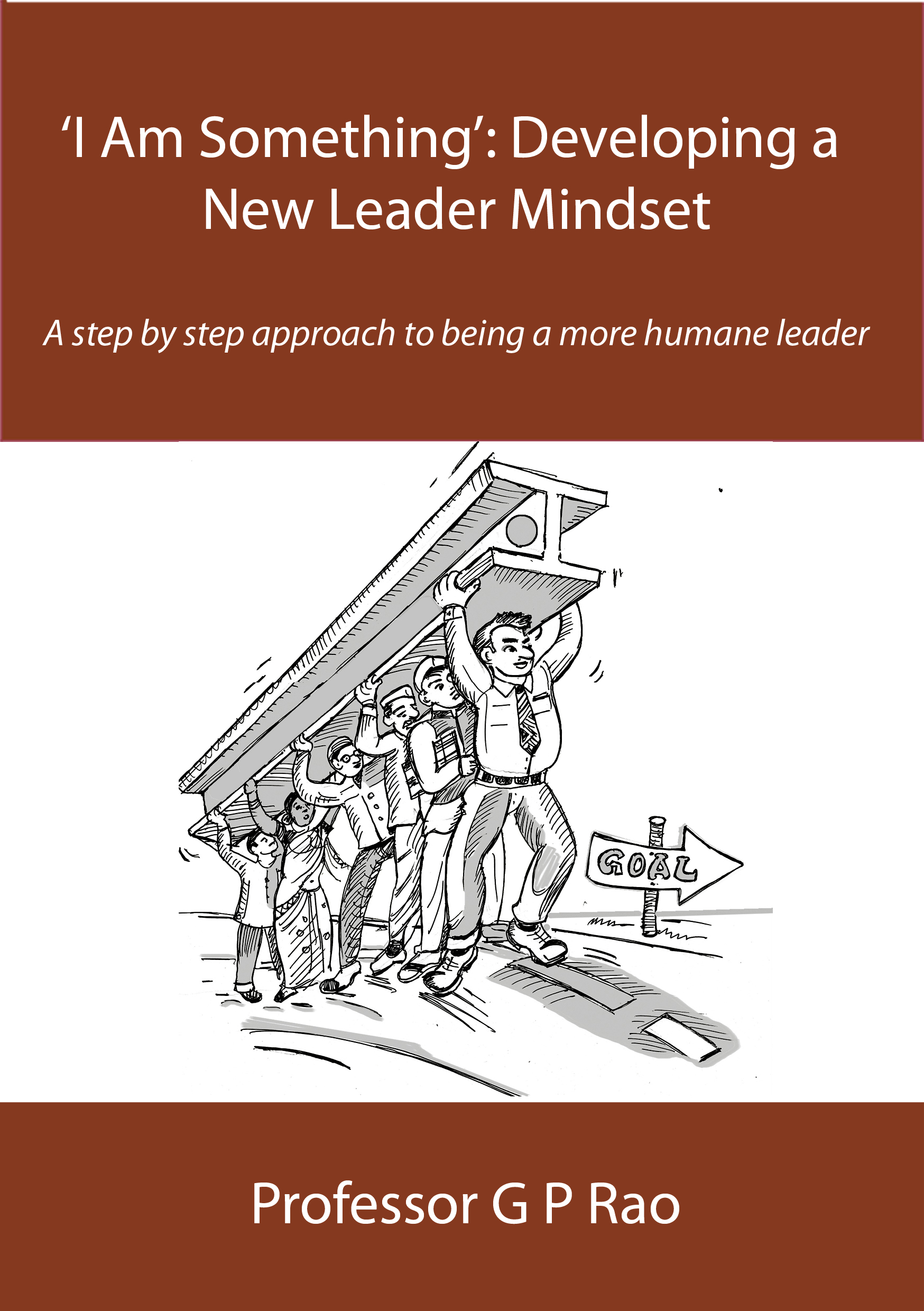
Take the case of the latest book on Leader Mindsets. Here are some reasons they can avoid picking it up.

  1. Even though the focus of the book is on universal human values, it appears to be based on an Asian view point. When leaders think of this part of the world, they only remember irrelevant scriptures, outdated religious beliefs, widespread poverty and illiteracy, and a certain lack of decency in public spaces which others on the planet could readily deride. In other words, there could not be much to learn from the book.
  2. At a time when leaders are grappling with the upheavals being caused by Industrial Revolution 4.0, the need is to understand and adapt newer technologies. The underlying belief is that in the times to come, the human dimension is going to be less important. Understanding machines is what should be a priority. Human behaviour has already been mapped thoroughly. Even if one were to understand it better, one would run the risk of ending up being a ‘soft’ leader who is unable to take ‘hard’ decisions, thereby compromising one’s effectiveness as a leader.
  3. The book appears to be based on the premise that to become an effective leader, one has to change oneself – a tough proposition, indeed. There is nothing wrong with the leaders in their present mould; hence, there is no need to tweak anything within them.

The book goes on to propose that having changed one’s mindset, one should help others to change their mindsets. If the first step is undesirable, this one is near impossible; and the next one – that of changing the entire organization – even more so.

After all, management is the art of the possible. Leaders are happy the way they are.

Smart leaders would do well to brood over these thoughts. It would save them lot of time and trouble. Their followers would heave a sigh of relief upon realizing that they have been spared the trauma of being asked to change themselves in any way; that they can trudge along merrily without a care in the world, focusing on immediate and important tasks at hand. If the critical and strategic tasks get neglected in the process, so be it.

Even if the author were to gift a copy of the book to a leader, the latter would do well to either gift it to one of his arch-rivals, or to simply throw it into the nearest waste paper basket. If the shameless author persists by sending a soft copy as well, prompt use of the delete command would be highly useful.

(Related Post: https://ashokbhatia.wordpress.com/2019/02/10/a-word-about-the-book-on-leadership)


Read Full Post »


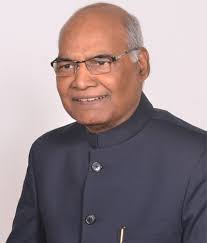
As per press reports, the Hon’ble President of India, Shri Ram Nath Kovind, had some time back touched upon the fact that nature provides rich lessons in harmony. On a retreat at Mashobra in Himachal Pradesh, President Ram Nath Kovind wrote that nature provides lessons in harmony as nation debates big challenges of education and health.

Excerpts:

  • I was experiencing nature at its most divine. I was also experiencing nature at its most caring. The sanctuary nurtures Shimla and its people. It cares for us as only Mother Nature can. Nature loves us and we love it back.
  • We don’t know the answers (for future). But what we do today- the social, intellectual, ethical and ecological investments that today’s generation makes – will help determine the answers. It is we who will determine the capacities of those who will build India in the next 25 to 50 years. It is we who will determine whether rivers and mountains and forests, with us for millennia, will still be available in all their glory for succeeding generations.
  • The wildlife sanctuary I visited does not distinguish between one and the other. It provides water to all. Its trees provide shade to all. Its clean air nourishes all. Its clean air nourishes all. Fraternity and compassion are written into nature’s DNA… Nature does not compartmentalise. Its instinct is integrative and holistic. Nature promotes mutualism. The flower nourishes the bee. The river waters quench the thirst of all living beings. And trees provide a welcoming home to so many birds and animals… There is a rhythm to this togetherness. And there is an almost cosmic bond that allows every living being, small and big, silent and loud, to live in harmony, to flourish, and to thrive. Human beings can learn from this.

(Source: Compassion, mutual dignity will protect the future of all Indians, The Times of India, May 25, 2018)

(Yours truly has contributed some of the chapters in the book and has also edited it.)

(Related Posts:

https://ashokbhatia.wordpress.com/2019/03/11/some-quotable-quotes-which-appear-in-the-book-on-leader-mindsets

https://ashokbhatia.wordpress.com/2019/03/18/some-quotable-quotes-which-appear-in-the-book-on-leader-mindsets-part-2

https://ashokbhatia.wordpress.com/2019/04/01/some-quotable-quotes-which-appear-in-the-book-on-leader-mindsets-part-3)


Read Full Post »

ashokbhatia's avatarashokbhatia

It is not altogether wrong to say that it is the early worm which gets caught! Quite a few managers have perfected the art of selective amnesia and acquired honorary membership of the Global Procrastinators’ Club.COMPLACENCY

Procrastination works best when the idea is to delay a crucial decision which, if taken at that point in time, could create more problems than it would solve. Governments appear to do it all the time. The flip side is the higher probability of losing a business opportunity.

With due respects to Newton and Einstein, we do have some Laws of Procrastination:

The First Law

A task which has been put on hold will remain undone till the time an external force is applied.

The force could come either from your boss or from a peer or a subordinate. In matters of domestic chores, reluctant husbands succumb to the pressure applied by a nagging…

View original post 451 more words

Read Full Post »

When owners and founders of businesses hire CEOs, they hope for an attitude of quiet and respectful deference towards themselves, sans dissidence of any kind. Often, their attachment to the business surpasses all other considerations. Thus, fissures between the two power centers soon start popping up. If some of the actions of a CEO are leading to a compromise on the basic values of the business, like in the case of Tatas and Cyrus Mistry, or like in the case of Infosys and Vishal Sikka, it is understandable. But if the gaps have arisen due to the manner in which operations are getting handled, it just shows that the owner or founder is not willing to let go.

In family owned businesses, the younger generation is often raring to go. Many a scion keep twiddling their thumbs trying to figure out as to when the elder owner would hang his corporate boots or sandals, so they could have a free hand to nudge the enterprise towards newer markets, adopting the latest technologies sprouting in the era of Industrial Revolution 4.0. But for most of the elderly owners, it is a tough challenge to give up controls. Like the proverbial man who keeps clinging to a tree but blames the tree for not allowing him to let go, they refuse to fade away gracefully into the sunset. During the period of transition, chaos and confusion reigns. Hapless employees continue to suffer silently, caught as they are between the divergent thought processes of the two generations.

The war depicted in the epic Mahabharata, of which Bhagavad Gita is an integral part, came about only because King Dhritarashtra could not overcome his attachment to either the throne or his son, Duryodhana. The outcome was the death of all his hundred sons, loss of prestige and kingdom and, of course, social and economic misery of the multitudes who had earlier thrived during his reign.

Different Hues of Attachment

Attachment is an intoxicant which, when taken in excessive doses, leads to perilous outcomes. When consumed without a moderating dose of detachment, it could prove to be a disastrous tissue restorative, a concoction which is surely injurious to the efficiency and effectiveness of a manager.

Attachment with a Lion King could leave a sheep ending up as its prey. If the Lion King himself feels attached to a wily Finance-Fox and ends up promoting him as a CEO, the organization may soon start running only on Standard Operating Procedures, neglecting customer service and employee relationships. A Production-Bovine who is attached to the technology in use on the shop floor would take a jaundiced view of a more efficient technology being planned to be introduced by the management. A Human-Resources-Canine may start hiring people only from his own ethnic background, resulting into lack of diversity in the organization. Separations with non-performing employees do not get handled well, impacting down-sizing initiatives of the management. A sprightly Operations-Reindeer might start believing that the whole organization would collapse if he were to proceed on leave.

Often, attachment to a person leads to complications. Those who do not deserve a raise might even end up getting a promotion, impacting employee morale adversely. Those who are competent could get sidelined, increasing the chances of their seeking greener pastures. Ultimately, the organization suffers. Undue attachment to a senior could gradually transform one into a seasoned Yes-person. If ever the senior’s career graph takes a hit, the one hanging onto his coat tails would also suffer.

Likewise, when one gets attached to an experience, whether positive or negative, one’s Guardian Angels go into a state of hibernation and disaster lurks around the corner. A promotion could go to one’s head, leading to aberrant behaviour, with negative results quick to follow. Spectacular success in a project could lead to complacency. On the flip side, a sharp public rebuke from someone senior could make one withdraw into an emotional shell, thereby impacting one’s performance. One could decide to play the victim card for some time and continue to seek solace from those who are in no way capable of helping. It does not bring about desired results.

Attachment and Resistance to Change

In other words, attachment often leads to resistance to change. One’s sense of objectivity gets compromised. A tendency to remain in one’s comfort zone rules the roost. Innovation takes a back seat. Procrastination kicks in. Delegation gets dumped. Distortions start popping up. Conflicts and dilemmas do not get resolved in an unbiased manner. Relationships with key stakeholders turn sour. Signals of an imminent shift in customer tastes and preferences start getting neglected. Market share starts shrinking. Advances in technology do not get absorbed in the organizational processes. Business takes a hit. Brand equity nosedives. Existence of a business itself may come under a cloud.

Elsewhere, we have already touched upon the manner in which such market leaders as Kodak and Nokia have suffered in the past. Likewise, organizations which resist absorbing the newer technologies coming up in Industrial Revolution 4.0 could face a serious threat of either scaling down or getting completely wiped off in the times to come.

The Approach of Detached Attachment

All this is not to say that attachment is something which can be completely avoided. The concept of attachment is central to organizational life. Attachment is essentially an enduring emotional bond between people, events and belief systems. Experts have studied the nature, development, maintenance, and dissolution of this emotional bond through the lens of Attachment Theory, providing an insightful perspective in the understanding of human relationships. Dynamics of leadership is surely impacted by it. So is the concept of trust, mentoring and employer-employee relationships. Employees get motivated and become proactive when under the spell of attachment. It impacts ethical behaviour in a significant manner.

If the Western models of Attachment touch upon its gravitational pull and inevitability, Lord Krishna presents an Eastern template of Detachment, which could be held to be a spaceship which enables one to foray into interstellar space and enjoy the captivating beauty of a fraction of the universe.

Can a target be cracked unless the team working on it is truly attached to it? But the sense of attachment need not cloud the team’s judgement and even make it blind to other options which might result in the target being achieved more effectively and efficiently. Similarly, a leader has to give up his likes and dislikes for individual team members and handle all in an impartial manner, thereby highlighting the need to remain detached.

What is desirable is a healthy combination of Attachment and Detachment. Some may allude to it as a Detached Attachment!

Detachment: The Art of Living in the Present

Bhagavad Gita elaborates on the basic concept of detachment. It exhorts a CEO not to worry over and get herself preoccupied with the anxieties for the rewards of her actions, thereby avoiding a tendency to live in the future. Nor does it make sense for her to keep analyzing as to what transpired in the past and get overly worked up about it. The advice here is not to waste the present moment in inane memories and in concerns about the future. Rather, she can do her very best in the present moment, keep relevant stakeholders in the loop, and perform her duties, as dictated by a sense of virtuous righteousness. This way, she is released from all of her mental preoccupations. Work alone makes her live in the joy and ecstasy of inspired self-forgetfulness. The work itself becomes the reward.

कर्मण्येवाधिकारस्ते मा फलेषु कदाचन |
मा कर्मफलहेतुर्भूर्मा ते सङ्गोऽस्त्वकर्मणि || 2.47 ||

You have a right to perform your prescribed duties, but you are not entitled to the fruits of your actions. Never consider yourself to be the cause of the results of your activities, nor be attached to inaction.


Cultivating a sense of detachment is easier said than done. CEOs need to make frequent inward journeys a habit. What helps is a practice to mentally walk away from a given situation and view it not as a participant but as a neutral witness or observer. As a neutral person, the CEO does not interfere with things. Nor does she expect or impose anything. She may still experience thoughts, but does not judge them or fight with them. There may still be chaos all around, but the witness is disinterested, and does not react to these inputs. To the witness, they are like the clouds that merely pass us by.

Who is this witness? It is not the mind. The mind is incapable of witnessing. Lord Krishna says that one’s soul is the Witness. If the CEO assumes a witness-like stance – witnessing her own thoughts, likes, dislikes actions and intentions – she is in resonance with her inner self. This has the potential to bring about a harmony between her thoughts, her words and her actions, thereby making her an inwardly happier and an outwardly successful professional.


(Published in the April 2019 issue of New Race journal of SACAR, Sri Aurobindo Centre for Advanced Research)


Read Full Post »


Vision and Mission Statements of corporates adorn their walls and can be readily copied. However, the value system of an organization is not something which can be copied very easily. It permeates the entire organization – its hierarchy, its various divisions or departments. It rubs off on most of its employees. Even service providers and supporting manufacturers get tuned to the same frequency.

Our youth are already reeling under the impact of latest technologies being unleashed on the unsuspecting work-force with gay abandon, leading to drastic changes in the skills required to survive and do well in the times to come. Were they to decide to join an owner-driven smaller business, it would be wise on their part to be aware of the nature of values that such outfits could be following.

Those who get hired by such businesses are the ones who offer willing service and selfless cooperation, even to the extent of taking pay cuts when they are told that business is in the red. They need to be quiet, respectful and deferential by nature. They need to have an adventurous outlook on life and be always prepared to receive a pink slip at a very short notice.

Employees are expected to be timid and behave like worms endowed with a backbone made of cottage cheese. Smarter ones who have backbones made of sterner stuff would be inclined to look for greener pastures within a few months of joining up. Those who somehow survive longer would soon find getting hauled out unceremoniously, much like worms found floating on top of a bowl of chicken soup meant for the Lion King.

While entering the company campus, the employees find it worth their while to leave their ego at the main gate. A doormat-like behaviour alone ensures that they do not suffer the spiritual anguish like that of the person who, having grown accustomed to opening the crackling salary envelope on the first day of each month, reaches out for it one day and finds it empty.

When securing a job offer, only the naïve ones amongst us would expect to be issued a formal appointment letter. As to firing, the axe could fall any time anywhere, irrespective of the length of service. A person who gets fired would do well to not only forget about any parting compensation being shelled out but also give up hopes of ensuring that the money deducted towards provident fund etc has indeed been deposited with the regulatory bodies. 

When asking for leave, they need to deploy tact and delicacy. Long vacations are obviously ruled out, simply because the stiff-upper-lip visage of the Lion King simply discourages such inane requests, work-life balance be damned.

The proceedings are invariably of a nature as to create an inferiority complex amongst its employees. Whenever anything goes wrong, even if the decision had emanated from either the Lion King or a member of his family, they willingly take the rap and get frequently ticked off by the top brass. Over time, they start resembling one of the more shrinking and respectful breeds of rabbit.

One of the values which some owner-driven companies find difficult to imbibe is that of respecting its people. Employees often get treated like chattel, getting hired and fired based on assessments made either in the bedroom or on the dining table of the owner’s abode. If the mood of the Lion King fluctuates in tandem with either the Dow Jones Index or the Sensex, the employees feel as if they are always on a roller coaster ride.

An incoming employee is never permitted to meet the outgoing one, thereby ensuring that negative vibes do not get passed on from the latter to the former. Inevitably, this ensures that past experience continues to get lost. Continuity in systems and procedures becomes a victim. Each incumbent keeps trying to reinvent the wheel.

When a meeting gets called, the Lion King alone presides. When he throws out a statement of opinion, a respectful silence prevails. He looks about him expectantly. This is the cue for the senior Yes-Sheep to say yes. He is followed, in order of precedence, by the middle-rung Yes-Sheep and then the junior Yes-Sheep. Then the turn of all the Nodder-Dormice comes. They simply nod, one after the other.

When the Lion King delineates a new business plan, he merely informs. He directs the Marketing-Monkeys, the Production-Bovines and the Supply-Chain-Management-Goats to get down to their respective tasks without delay. The Human-Resources-Canines are told to take care of their part of the work, while the Finance-Felines are told to keep a sharp eye on the collections against invoices raised by the Marketing-Monkeys. The Research-Pachyderms are exhorted to keep coming up with innovative products and services. The System-Giraffes are advised to ensure that the high-hanging fruits of the latest advances in technology are made available to the team. The Liaison-Fox is tasked to see that all regulatory permissions are in place well within due time.

All this is not to say that all smaller outfits fit the pattern outlined here. There are many others who respect the people who contribute towards their goals. But if one does willy-nilly get stuck with one of the obnoxious kinds, one can work with a sense of true detachment and seek greener pastures at the earliest possible opportunity. 

Working in a smaller outfit has some unique perks as well. Besides being able to observe the core business processes at a close quarter, one is apt to face mighty challenges, thereby growing spiritually. One can pretty soon evolve into a Spiritual Manager who practices detachment and handles tough situations with alacrity and equanimity.

Peter Drucker, the renowned management expert, has this to say about imbibing spiritual values:

‘The individual needs the return to spiritual values, for he can survive in the present human situation only by reaffirming that man is not just a biological and psychological being but also a spiritual being, that is creature, and existing for the purposes of his Creator and subject to Him.’

Different organizations sport different cultures, presenting an interesting rainbow of values. The most prominent colour in such parabolas of joy happens to be black, denoting profits. The most disliked colour is obviously red, a prospect which leaves many a business owner and CEO cold in the feet and shuddering.

Read Full Post »


  1. Mahatma Gandhi held that “To remake ourselves as human beings, our greatness lies not so much in remaking the world – which is the myth of atomic age – as in being able to remake ourselves.”
  2. Jacquelyn Small, the French psychologist, stated, “We are not small human beings trying to be spiritual, we are spiritual beings practicing to be human”.
  3. Proust: We don’t receive wisdom; we must discover it for ourselves after a journey that no one can take for us or spare us.
  4. Johann Goethe: Self-knowledge is best learned not by contemplation, but by action. Strive to do your duty and you will soon discover what stuff you are made of.
  5. Albert Einstein: The only source of knowledge is experience.
  6. Oliver Wendell Holmes, Jr: A mind that is stretched by a new experience can never go back to its old dimensions.

(Yours truly has contributed some of the chapters in the book and has also edited it.)

(Related Post: https://ashokbhatia.wordpress.com/2019/03/18/some-quotable-quotes-which-appear-in-the-book-on-leader-mindsets-part-2)


Read Full Post »


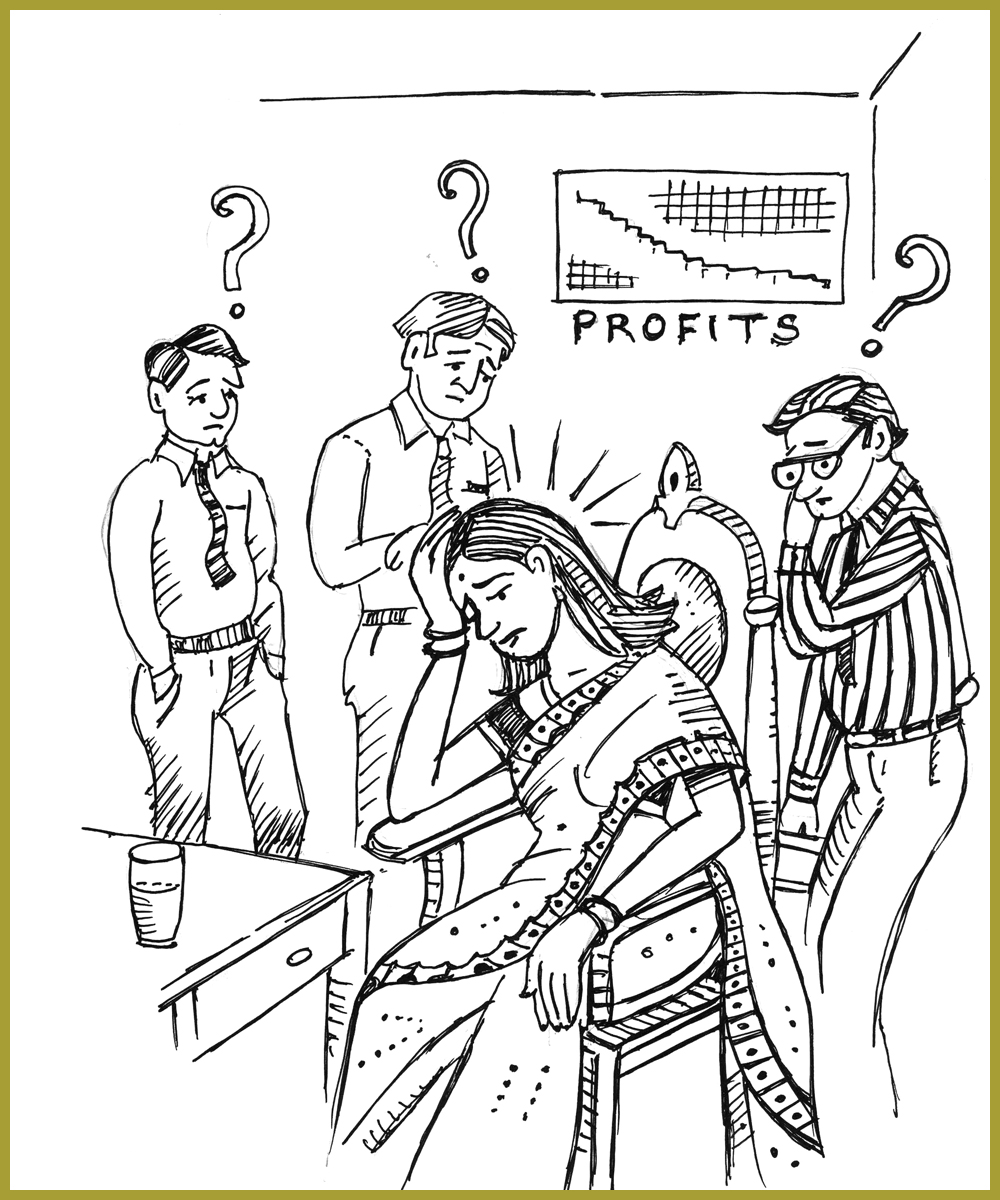
Many a times, CEOs and managers give in to a mood of despondency, much like Arjuna on the battle field of Mahabharata. It becomes a case wherein the person may approve of the broad general principle of a strategy to be followed or a target to be cracked, but cannot help but shudder inwardly at the prospect of putting it into effect.

Outside the window of the incumbent’s corner office, the sun may be shining. The sky may be an azure blue. A gentle breeze may be swaying the trees. Birds may be chirping. But Nature fails to provide solace. The mind is boggled. The heart is laden with woe. Confusion and self-doubt reign. A defeatist attitude prevails. Decisions taken in a mental state of this nature merely add to the chaos.

When the mind is boggled

CEOs would formulate a business strategy and even go into detailed planning of the steps involved with their team members. But when implementation starts, there is always a chance that they might develop cold feet. Practical considerations which were latent earlier suddenly pop up. Some initial steps reveal a chink in the organization’s armour. Or, some fresh feedback comes in, changing their perception of reality.

A new product launch could have been conceptualized and details worked out. Product attributes and design might have got frozen. R&D and Production might have burnt the proverbial night oil to come up with bulk samples which would have been successfully test marketed. Pricing might have been finalized. Packaging might have been given the go ahead. Members of the supply chain might have been brought on board.

However, when the launch day dawns, they might wake up all of a twitter, trying to imagine the reaction of a mightier competitor, or discover an environmental challenge or a customer health issue the product may pose, when pushed aggressively in the market.

Likewise, when a big manufacturing unit has to be shut down in the overall interest of the business, the unit head may develop feet of clay, twiddling her thumbs about the future of the career of so many capable persons who would have to be called in, looked into the eye, and handed over a pink slip. Persons with whom there has been a long working relationship. Professionals who have been groomed by the unit head herself. Those who have been key members of the next rung of the organization’s hierarchy.  Employees who are elder in age and had assisted her in so many ways to settle down when she came into the organization and took over the reins of the unit. Those who have been loyal and had supported her through the slings and arrows of business faced by the unit.

Ramping down a business unit

Yours truly once faced a similar situation. A premium unit of a very large export house had become a liability in more ways than one. Over time, quality had suffered. Productivity was abysmally poor. Industrial relations had deteriorated. Every month, the headquarters had to be approached with a begging bowl, so wages and statutory dues could be paid off. Repeated attempts to revive the fortunes of the unit had failed. The mists of doubt had engulfed the befuddled mind.

Aided by a senior team member, a water tight case recommending immediate closure of the unit was prepared and presented to the management. A long phase of discussions, exchange of ideas and explanations ensued. Finally, clear thought and perseverance paid off. The painful decision to ramp down that part of the business was taken. Careful separation plans were worked out in advance. The pain of implementation followed. Some professionals had to suffer in the process. But in the overall interest of the organization, the task was carried out.

Of corporate dilemmas

The dilemma facing Arjuna on a battlefield some 3,500 years back was whether to go ahead with a war against his own cousins and senior family members.

Here are only two of the several cases which arose due to in-family disputes and misunderstandings.

Of Puma and Adidas

When brothers Adolf and Rudolf Dassler founded a shoe company in their mother’s laundry room in the town of Herzogenaurach, Germany, in 1924, little did they imagine that their relations would turn sour during World War II. A split followed in 1948, leading to the emergence of two brands – Puma and Adidas. The two still have rival factories on opposite sides of a river. Rudolf died in 1974 at age 76, Adolf in 1977 at 78. Never did they reconcile. Both are reportedly buried at opposite ends of the same cemetery.

The human pain behind Raymonds

Back in India, retired tycoon Vijaypat Singhania, entangled in a property dispute with his son Gautam Singhania, concluded thus: “Love your children and care for them, but don’t love them so much that you are blinded”.

Having made Raymond a household name across India, the father had handed over his shares, worth over Rs. 1,000 crore, to his son who now controls the Rs. 6,000-crore group. At the core of the dispute between the father and son were their rights over JK House, a family owned 36-storey redeveloped property in the posh Malabar Hill area of south Mumbai. The father was forced by the son to move to a rented accommodation, causing him discomfort and mental anguish.

If one considers the mental state of the businessmen who acted in the manner they did in a given situation, one’s mind invariably goes back to the kind of despondency and fatalism experienced by the great warrior Arjuna, upon surveying the armies facing each other. The army of Kauravas was not only numerically superior, but was also led by Bhishma, the grandsire. The futility of war which had cousins belonging to the same clan on either side left him twiddling his thumbs and wondering why to go ahead with the same, causing death and ruin all around.

Of Dualities, Dilemmas and Analysis Paralysis

CEOs of today face not only challenges of an economic nature, but also emotional upheavals caused by ethical and moral dilemmas involved in decision making. Regulators and NGOs keep snapping at their heels, while they are busy in a relentless pursuit of materialistic goals. There are indeed times when self-doubt plagues them. They feel as if they have reached the level of incompetence and can neither face a business battle, nor dare to tinker with the targets of economic expansion and business lust which normally pervade any business enterprise.

CEOs in the corporate world routinely face dilemmas which arise out of the dual nature of things. Almost all business situations are based on dualities. Often, these lead to the CEOs suffering from an Analysis Paralysis Syndrome.

Peter Drucker, the renowned management expert, frequently touched upon the dualities of freedom and power, authority and responsibility, progress and conservation, good and evil, worldly actions and spiritual fulfillment. He believed in the sanctity of spiritual creation. He considered traditional Christian values to be a type of practical wisdom and an ethical basis for responsible corporate leadership.

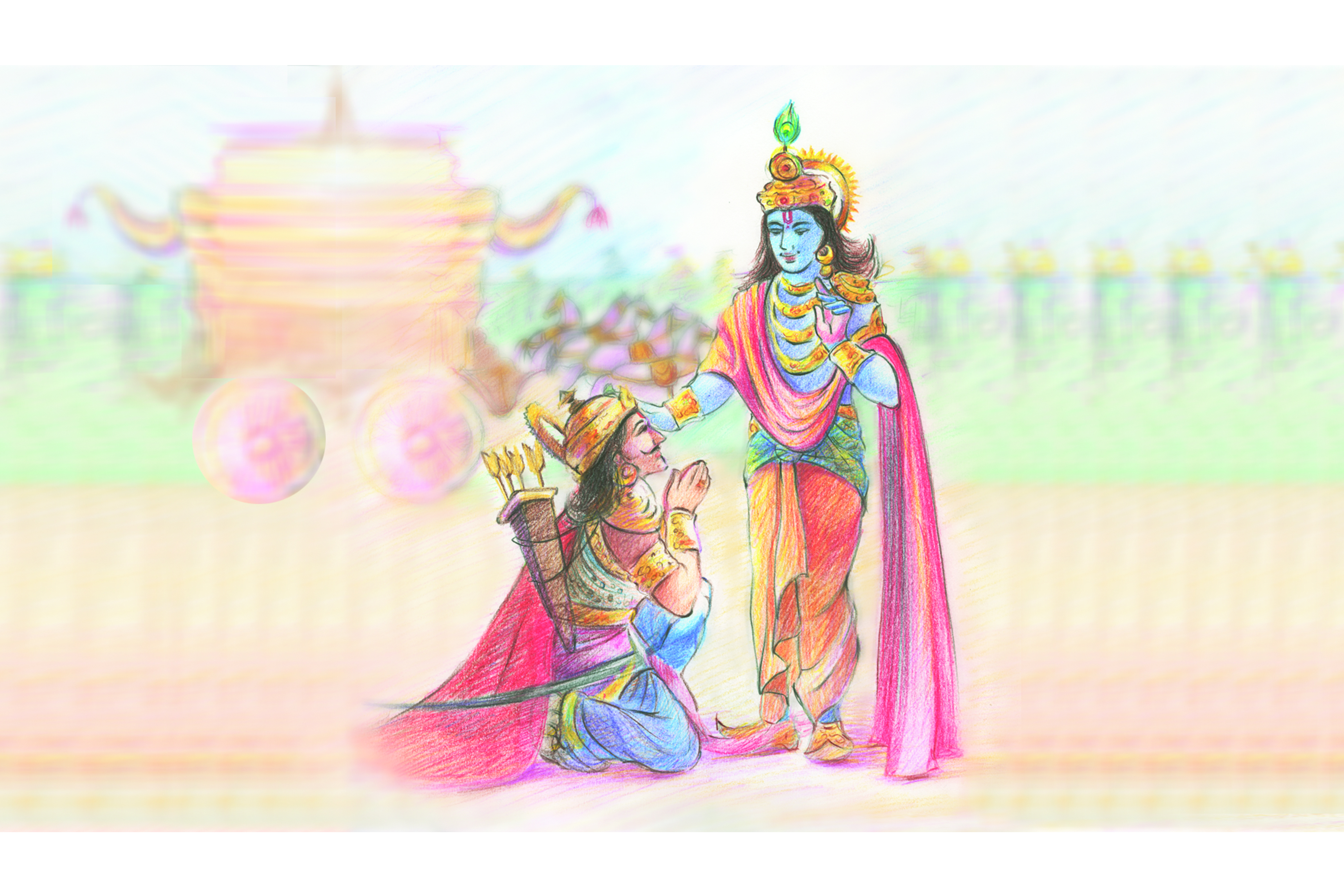
But Arjuna is smart. He is not only a proficient warrior prince, but also someone who has had the sterling sense of befriending a great friend, philosopher and guide in Lord Krishna. Gita is all about how Krishna pulls Arjuna out of this sense of despondency and motivates him to do his duty without attachment to the result thereof. Krishna has extraordinary skills in transforming the thinking of his disciple’s mind, gently steering it towards the task at hand.

The Bhagavad Gita for a befuddled mind

It is a human tendency to magnify one’s weaknesses and provide some extraneous reasons for justifying one’s state of inaction. Also, when one realizes the kind of sacrifices one has to make to achieve the goal one has set for oneself, doubts arise about the worth of the goal itself.

This is how Arjuna expresses himself at the beginning of the Great War, in Chapter 1:


वेपथुश्च शरीरे मे रोमहर्षश्च जायते || 29||
गाण्डीवं स्रंसते हस्तात्वक्चै व परिदह्यते |

My whole body shudders; my hair is standing on end. My bow, the Gandiv, is slipping from my hand, and my skin is burning all over. My mind is in quandary and whirling in confusion; I am unable to hold myself steady any longer. O Krishna, killer of the Keshi demon, I only see omens of misfortune. I do not foresee how any good can come from killing my own kinsmen in this battle.


न काङ्क्षे विजयं कृष्ण न च राज्यं सुखानि च |
किं नो राज्येन गोविन्द किं भोगैर्जीवितेन वा || 32||

O Krishna, I do not desire the victory, kingdom, or the happiness accruing it. Of what avail will be a kingdom, pleasures, or even life itself, when the very persons for whom we covet them, are standing before us for battle?


येषामर्थे काङ्क्षितं नो राज्यं भोगा: सुखानि च |
त इमेऽवस्थिता युद्धे प्राणांस्त्यक्त्वा धनानि च || 33||

They for whose sake we desire kingdom, enjoyment and pleasures stand here in battle, having renounced life and wealth.


Handling the lioness of a mighty challenge

When mighty challenges in one’s career menacingly stare at one, much like a lioness surprised when running into a hunter in the forest, one is apt to see no ray of light in one’s life. One feels as if one’s Guardian Angels have gone off on a long vacation, that too without seeking any prior consent, let alone permission.

At such times, when the fighting option has simply evaporated, Bhagawad Gita gives one a chance to introspect and make an objective assessment of the situation at hand. In the midst of an overwhelming situation, reason returns to its throne. Trees and bushes nearby, which are just a step away and offer a possibility of the flight option getting exercised, get evaluated. The time it would take to load the rifle and shoot the lioness gets assessed. One even weighs the option of smiling and looking into the eyes of the animal, thereby hoping to settle down in a spirit of peaceful coexistence. One thinks of nibbling at some juicy lamb sandwiches after having first shared some with the cub lurking around nearby. Sure enough, a gesture of this kind is apt to make the lioness take a less jaundiced view of the proceedings, enabling the hunter to emerge unscathed from the encounter.

When one has sunk to the bottom of an emotional pit, and the horizon looks bereft of any hope, one can safely find solace, inspiration and guidance in the Bhagavad Gita. It speaks in detail about such concepts as detachment, equanimity and the need to uphold righteousness under all circumstances. It describes in detail the kind of practical steps one can take to handle the harsh slings and arrows of one’s life and career.


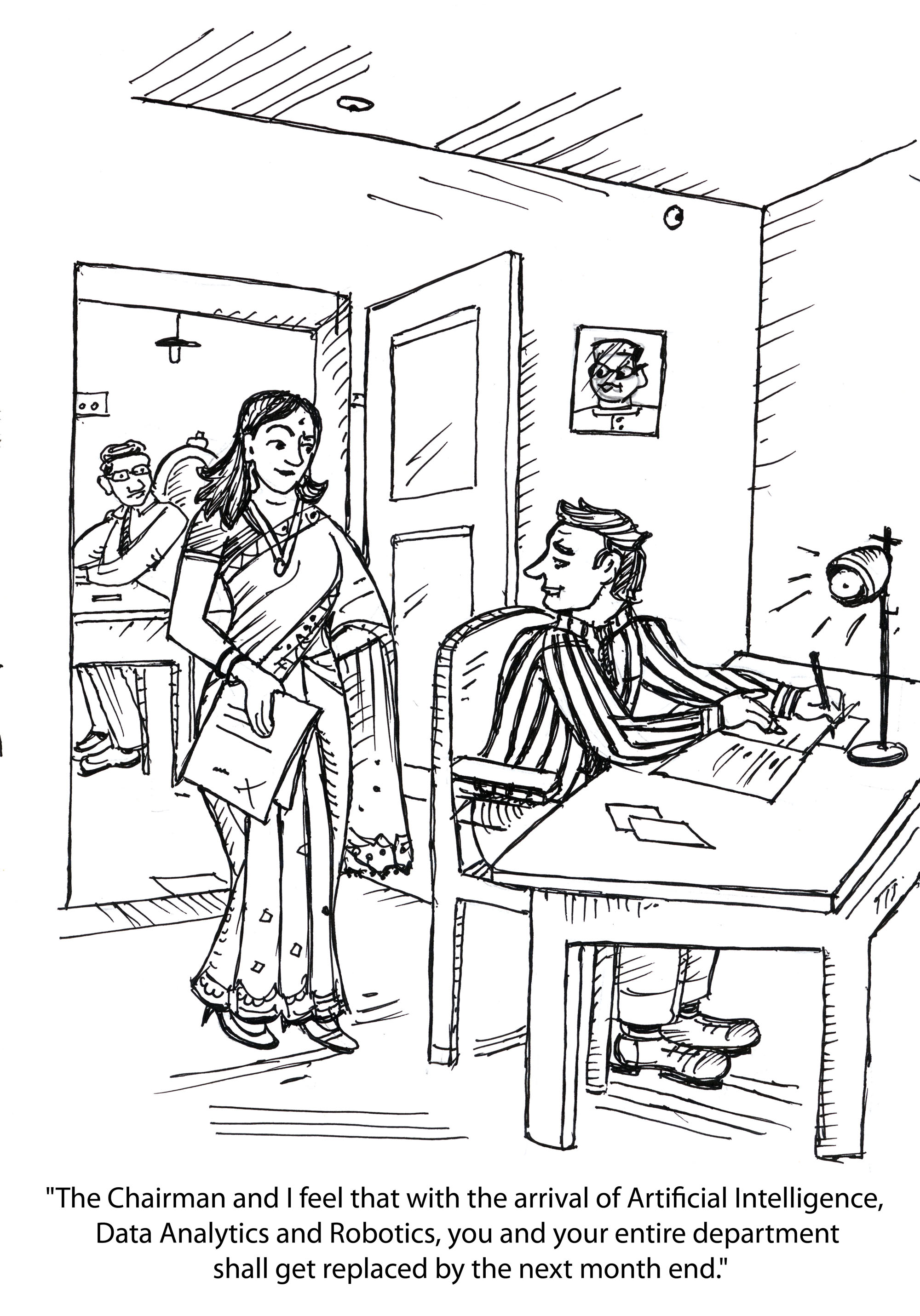
(Illustration on top has been drawn by Mr Upendra Ratra, an artist. The illustration depicting Krishna and Arjuna in the battlefield has been reproduced with permission from the illustrator, Arati Shedde, and Heartfulness Magazine – www.heartfulnessmagazine.com.)


Read Full Post »


Here are some more gems of wisdom from the book:

  1. I am what I am.
  2. Samuel Johnson: There lurks, perhaps, in every human heart a desire of distinction, which inclines every man, first to hope, and then to believe, that Nature has given him something peculiar to himself.
  3. ‘I Am Something’ mindset believes that I am neither above you, nor below you. I am neither in front of you, nor behind you. I am neither away from you, nor near to you. I am along with you. I am however different and distinct. So are you.
  4. Mukesh Ambani, Indian industrialist: In the journey of an entrepreneur, the most important thing is self belief and the ability to convert that belief into reality.
  5. Maxwell Maltz: Low esteem is like driving through life with your hand brake on.
  6. The significance of being insignificant.
  7. Ravi Thilagan, Management Educator: ‘I Am Something’ is assertion. ‘I Am Everything’ is aggression and ‘I Am Nothing’ leads to submission. ‘I Am Something’ perhaps leads to courage and humility in right proportion?

(Yours truly has contributed some of the chapters in the book and has also edited it.)

(Related Post: https://ashokbhatia.wordpress.com/2019/03/11/some-quotable-quotes-which-appear-in-the-book-on-leader-mindsets)

Read Full Post »

« Newer Posts - Older Posts »