For avid fans of P G Wodehouse, it is not easy to relish the kind of comedies Bollywood keeps churning out. Humour which is loud, crass and uncouth repels them. Back-slapping and guffawing is something they do not take kindly to. What appeals to their finer sensibilities is a subtle brand of humour. Even mild sarcasm does not make their shapely eyebrows arch upwards by a fraction of an inch, as long as it is delivered in fine taste.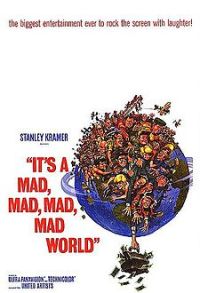
Play a so-called comedy which is full of inane humour, double entendres and much back-slapping, and they are apt to recoil in horror. Bring in a typical rom-com and they would bemoan the repetitive nature of the goings on. But switch to a movie with a dash of Wodehousian humour, and one would find them in good cheer, nibbling a yummy chocolate with their soul-mate sprawled next to them on the couch.
The purists amongst us would argue that movies mentioned below are not even a pale shadow of the original sunlit brilliance of the Wodehousian brand of humour. No disagreement whatsoever. Wodehouse is Wodehouse. He stands tall and alone in providing soothing comfort to tormented souls on this planet.
Yet, let us not overlook the fact that the luxury of eloquence enjoyed by literature is simply not available to movie  makers. Moreover, the commercial considerations weigh much more on the minds of a producer-director duo whose principal aim is to set the box office afire. Given these constraints, if a team does come up with an offering which is clean and unalloyed fun, due credit may be given. Yes, the movies listed below were not based on Wodehousian narratives. But they deserve a mention because at least a part of them manages to capture the kind of subtle humour which the residents of Plumsville relish.
From the stable of Hollywood, one fondly recalls movies like ‘It is a Mad, Mad, Mad, Mad, World’, ‘Honey, I Shrunk the Kids’, ‘Mrs. Doubtfire’, ‘Baby’s Day Out’ and ‘Dunston Checks In’, just to mention a few.
Bollywood has also churned out quite a few rollicking comedies, but very few of these have the dash of subtlety which is the hallmark of Wodehouse in literature.
Here is a quick look at movies which have provided us a clean, sumptuous and sophisticated comic fare over the years.
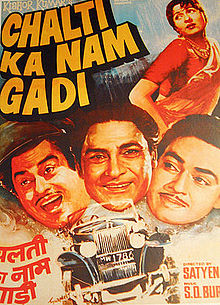
Chalti ka Naam Gaadi, 1958 (That which runs is a vehicle)

A story of three brothers who run an auto garage. The eldest takes a jaundiced view of the delicately nurtured and complications arise when the younger ones start behaving like Bingo Little and discover the Rosie M Banks of their lives.
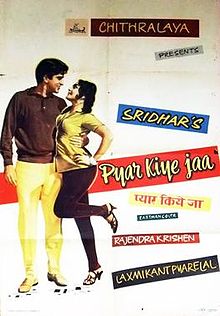
Pyar Kiye Jaa, 1966 (Keep Loving) A story of two couples who resort to a bag of tricks to get united. The scene where a Tuppy Glossop (Mehmood) aspiring to turn a movie director narrates a scene to Pop Glossop (Om Prakash) shall forever remain fresh in the memory of those who love a dash of Wodehousian humour on celluloid.
Padosan, 1968 (The Lady Neighbor) A musical which brought out the Indian North-South divide in a humorous manner. A Bertie-like simpleton attempts to woo the woman in a neighboring house. A Jeeves-like friend, played by the inimitable Kishore Kumar, helps him in his mission.
Bawarchi, 1972 (The Chef)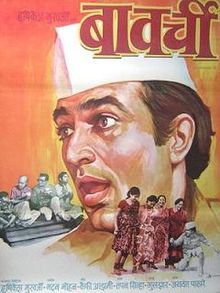 Warmth of relationships in a joint family gets revived, thanks to the efforts of a servant. Much like Jeeves, he has a solution to all their problems.
Piya Ka Ghar, 1972 (House of the Beloved)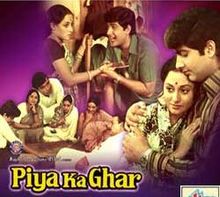 A humorous take on the shortage of housing in the city of Mumbai. A newly married couple tries to find some privacy in a small place which is infested with parents, an elder brother and his wife, a young brother, inquisitive neighbors, intrusive friends and, of course, some mice.
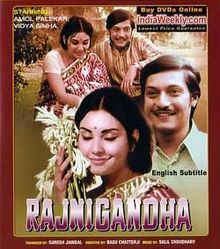
Rajnigandha, 1974 (Tuberose) A Madeline Bassett has to make a choice between two persons, eventually deciding in favor of a Bertie-like simpleton. Based on a story by Manu Bhandari.
Chhoti Si Baat, 1975 (Such a Small Matter)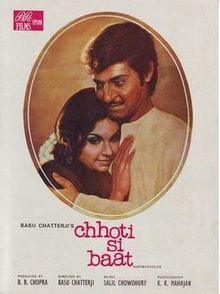 A Gussie Fink-Nottle type hero, shy and diffident to the core, gets tongue-tied when it comes to winning over the love of his life. Coaching by a Jeeves-type expert makes him successful in his endeavors. Based on ‘The School for Scoundrels’, a 1960 British comedy.
Chupke Chupke, 1975 (Hush Hush) A rip-roaring treatise on the eccentricities of the linguistic purists. Tired of the lavish praises being heaped by his newly wedded wife onto her Lord Emsworth type brother-in-law, the husband assumes the role of a driver in the latter’s family. Much hilarity ensues as one subterfuge leads to another, eventually making the brother-in-law realize that he has indeed been outwitted.
Khatta Meetha, 1978 (Sweet and Sour)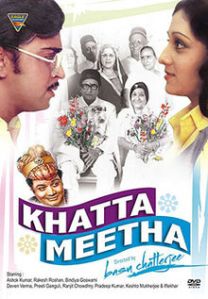 An elderly couple ties the knot and handles the challenge of keeping their grown up children together. If Piggy and Maudie had children when they decided to live together, the scenario would have perhaps played out along similar lines. Unfortunately, a Jeeves does not figure in the narrative, nor does the lining of the stomach.
Baton Baton Mein, 1979 (By the way) A light-hearted comedy about two young persons discovering their love for each other. The only complication in their love story is the Gussie-like boy’s shyness in clearly expressing his love for the girl.
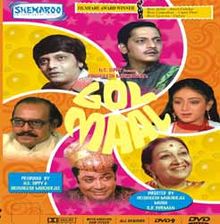
Gol Maal, 1979 (Hodgepodge) A well-intended pun directed at moustache maniacs. A father, in the mould of a Pop Bassett, is convinced that those without a moustache are characterless. Unwittingly, his daughter falls for a smart young man who wears a false moustache to get a well-paying job with her father. Much hilarity ensues and the father eventually relents and accepts their marriage.
Khubsoorat, 1980 (The Beautiful One) The need to strike a healthy balance between freedom and discipline in family life, espousing the cause of nirmal anand (unalloyed bliss). The lady of the house is a strict disciplinarian; a stiff-upper-lipped person, much like Aunt Agatha. A Bobby Wickham type heroine who believes in spontaneity walks in and wins the heart of the family.
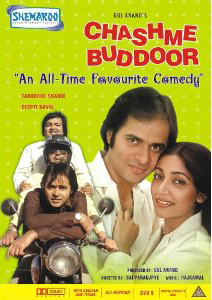
Chashme Buddoor, 1981 (Let No Evil Glance Come Your Way) A youthful story of three friends and a damsel who is not in distress. Two of the friends are jealous of the third one for whom the damsel falls and create a rift between the two. Luckily, the damsel has an aunt fashioned on the lines of Dahlia, who intervenes to reunite the couple.
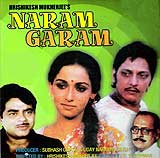
Naram Garam, 1981 (Soft but Hot) When a Lord Emsworth type landlord decides to get married to a much younger Honoria Glossop, the employee hero needs to call in the landlord’s young daughter and former mother-in-law to the marriage venue so as to walk down the aisle himself. In the process, he is able to negotiate a hefty increment as well as secure possession of a big house to stay in. The hero sounds like a Bertie, though with brains of a Jeeves.
Angoor, 1982 (The Grapes)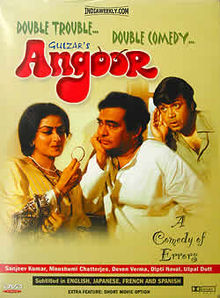 A modern-day take on ‘The Comedy of Errors’, with two pairs of identical twins getting mixed up in a series of funny situations.
Satte pe Satta, 1982 (Seven on Seven)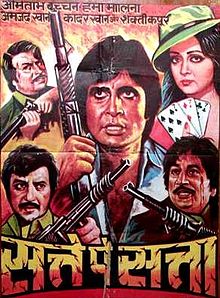 A comic thriller, adapted from the 1954 Movie ‘Seven Brides for Seven Brothers.’
Hamari Bahu Alka, 1982 (Alka, our Daughter-in-law)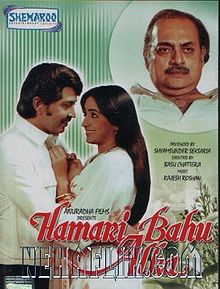 A newly married couple tries to find some privacy by running away from home.
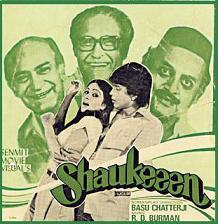
Shaukeen, 1982 (The Connoisseurs) How three elderly but young-at-heart friends learn to give up their lecherous and voyeuristic ways.
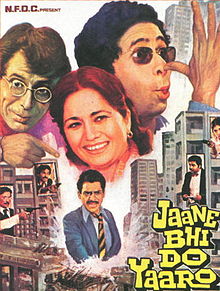
Jaane Bhi Do Yaaron, 1983 (Let It Pass, friends) The perils of investigative journalism.
Kisi Se Na Kehna, 1983 (Don’t Tell Anyone) An educated lady-love is projected as a traditional village belle. Post-marriage, however, it becomes a challenge for the couple to live the lie.
Rang Birangi, 1983 (The Colourful)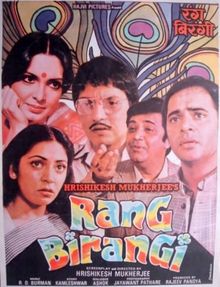 How a bored housewife gets helped by a friend to rekindle the embers of love between herself and her husband. Many of us still remember the role played by Utpal Dutt, that of a police inspector named Dhurandhar Bhatawadekar. Goes on to show what a Constable Oates could achieve, when not restrained by a Justice of the Peace.
Chameli ki Shaadi, 1986 (Chameli’s Marriage) A comic look at how a couple overcomes objections from their guardians to get united, all thanks to a lawyer friend. A satire on the caste system prevalent in India.
Pushpak, 1987 (The Love Chariot)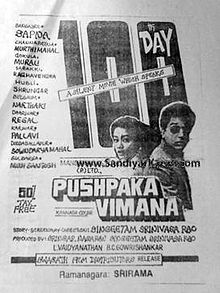 A full length feature film sans dialogues of any kind, the movie remains a critic’s delight. Somewhat dark and pungent in parts, but otherwise a perfect fit to the kind of subtle humour a Wodehouse fan yearns for. A Bertie type hero faces joblessness but ends up with a positive attitude, with squared shoulders and a chin-up disposition.
Chachi 420, 1997 (Aunty 420)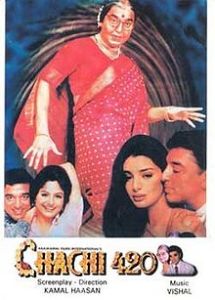 Loosely based on Mrs. Doubtfire, the movie was about a father impersonating as a house maid so as to be close to his daughter.
Jhoot Bole Kauwa Kaate, 1998 (Speak a Lie and the Crow will Bite)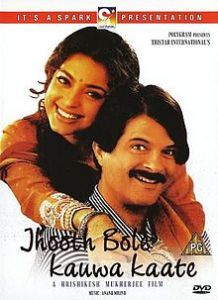 The value of truthfulness in all relationships. The hero begins to create a series of lies (hence the title – whenever he lies, the crow caws) in attempting to get the person he loves.
Munna Bhai MBBS, 2003 A hilarious movie showcasing the gaps in the medical education system. When a medical college is headed by a principal who is built along the lines of Rev. Aubrey Upjohn, a rowdy-turned-student determines to show him the need to treat patients with empathy.
Lage Raho Munna Bhai, 2006 (Keep at it, Munna Bhai)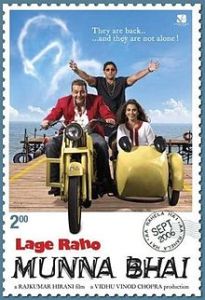 The hero does not wear a green colour beard, but projects himself as a college lecturer with high ideals. In reality, he is a gangster. A rip-roaring comment on property sharks, inane superstitions and the need to uphold Gandhian values.
3 Idiots, 2009 The spirit of innovation often gets killed by the pressures of society and parents, when youngsters are not free to chase their own dreams and take up professions which they are passionate about. An Aubrey Upjohn, a Bertie Wooster, a Bingo Little, a Tuppy Glossop, a Roderick Spode and an Angela come together and present a sparkling narrative.
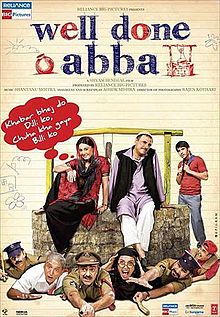
Well Done, Abba, 2009
Shyam Benegal is renowned for having exposed oppression and corruption of different kinds in his earlier works during the ‘parallel cinema’ wave. ‘Ankur’ (1974), ‘Nishant’ (1975), ‘Manthan’ (1976) and ‘Bhumika’ (1977) etc left us stirred and shaken up in the earlier years. All these were very intense and serious movies. In the recent past, he has effectively used humour and satire to convey a similar message. A remarkable transformation!
A clueless Sir Cuthbert, desirous of having a well of his own on his agricultural land, is unable to handle rampant corruption which makes a mockery of the benefit schemes rolled out by the government. His daughter, Bobbie Wickham, comes up with a fruity scheme. They report to the police that their non-existent well has been ‘stolen’! What ensues is sheer hilarity. Upcoming state assembly elections ensure the complaint gets heard and acted upon.
Atithi, Tum Kab Jaoge? 2010 (Dear Guest, When Would You Depart?)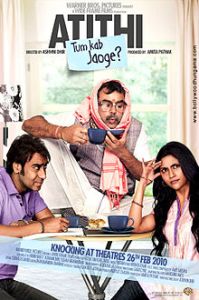 How even elderly strangers can add value to a family’s life.
Vicky Donor, 2012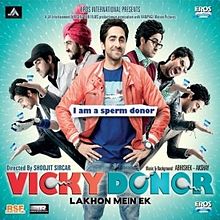 A delightful spoof on sperm donation and infertility. One of the main characters, a pseudo doctor who claims to specialize in assisting couples in begetting designer babies, sounds much like a Jeeves who has all the right answers.
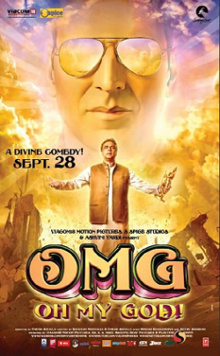
Oh My God! 2012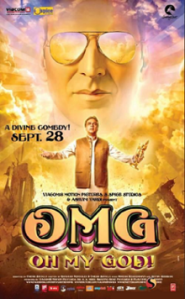 A satire on the ills plaguing organized religion and idle worship.
Finding Fanny, 2014 This one is like a Joe searching for a long-lost Julia. The story is essentially about a road trip set in Goa and follows the journey of five dysfunctional friends who set out in search of Fanny, the love-interest of Naseeruddin Shah. A gracefully matured Dimple Kapadia and a voyeuristic Pankaj Kapur add some extra zing to the proceedings.
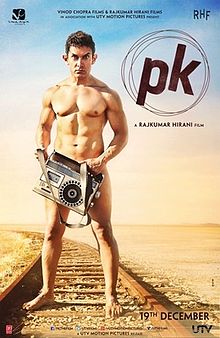
PK, 2015 A delightful comedy which depicts the satirical outlook of an extra-terrestrial being towards our religious beliefs and practices. Some fundamental questions relating to faith get raised, but with liberal doses of sophisticated humour.
We are in luck that God has not stopped dishing out directors who excel at regaling the audience with sunlit humour woven into their scripts. If we had the likes of Hrishikesh Mukherji, Basu Chatterji, Gulzar and Sai Paranjpe in the past, now we have Ashwani Dheer, Shoojit Sircar and Rajkumar Hirani who have perfected the art of blending social messages with a dash of Wodehousian humour.
Admittedly, this could not have happened but for the support of some exceptional character actors. In the days of yore, we had the likes of Gope, Mehmood, Johny Walker, Mukri, Dhumal, Tun Tun, Manorama, Jagdeep and Asrani regaling the audience with their raucous and overdone funnies which kept popping up a dime a dozen. In the recent past, the likes of Raghuvir Yadav, Rajpal Yadav and Paresh Rawal have kept us rollicking in our chairs.
Nevertheless, one would be tempted to put Om Prakash and Utpal Dutt at the top of the pack. Their virtuosity, mannerisms and body language were always understated, and kept tickling our funny bones in the right spot.
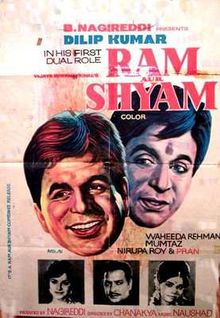
When it comes to providing a comic relief, heroes of mainstream commercial movies have often competed with hard-core comedians. Raj Kapoor came up with his Chaplinesque mannerisms. The ‘tragedy king’ Dilip Kumar made us smile with his antics in such movies as ‘Kohinoor’ and ‘Ram aur Shyam.’ The comic timing of Amitabh Bachhan and Dharmendra is legendary. In fact, over a period of time, mainstream heroes and heroines have somewhat managed to make the role of a stand-alone comedian redundant.
Even our much-hated villains have surprised us with their flair for comedy. Pran did a tango with the inimitable Ashok Kumar in ‘Victoria No. 203’. Amjad Khan, whom we all hated in ‘Sholay’, did not disappoint us in such movies as ‘Chameli Ki Shaadi’ and ‘Qurbani.’
The core message in earlier Bollywood comedies was either about the value of togetherness and harmony or about the travails of a Sippy-type hero who suffers from an inferiority complex. Recent offerings have instead touched upon the ills plaguing our society. Many Bollywood movies have managed to deliver a message crafted of chilled steel couched in a velvet-like mirthfulness.
May the tribe of such directors, producers, actors and script-writers continue to multiply!
Read Full Post »
As Indian cinema completes 103 years of its remarkable journey, it is time to remember the doyen of the industry whose passion, determination and perseverance started it all.


 My article is but a small tribute to this visionary genius…






















 ashokbhatia