Feeds:
Posts
Comments

Posts Tagged ‘Music’

In Ritusamhara, Kalidasa paints a highly romantic picture of the pre-winter season. Given the lower temperatures, metallic embellishments get avoided by the delicately nurtured. The fabric chosen for clothing undergoes a subtle change. The pastes and lotions to be applied to the body are different. Liquors come into play. Passions get aroused by the sheer promise of the winter season which is yet to arrive.

When it comes to capturing different shades of passion and putting across suggestions of love-making, Bollywood is never found wanting. Snow-covered mountains, gently murmuring rivulets, enchanting lakes, flying birds and lotuses in bloom form the perfect backdrop for romantic songs. Heroes can be seen aggressively pursuing lissome heroines clad in figure-enhancing dresses.

Here are some of the couplets from Canto Four of Ritusamhara and the kind of songs which could possibly do some justice to the poet’s evocative portrayal of nature and romance.

“Delightful are trees and fields with the outgrowth of new tender-leaves and crops; Lodhra trees are with their blossomy flowers, crops of rice are completely ripened, but now lotuses are on their surcease by far, for the dewdrops are falling. Hence, this is the time of pre-winter that drew nigh. [4-1]

Hamraaz (1967, B R Chopra)

Jewel Thief (1967, Vijay Anand)

Silsila (1981, Yash Chopra)

Veer-Zaara (2004, Yash Chopra)

“Unbearable is the touch of metallic circlets on wrists and bicep-lets on upper-arms of the couple of arms of vivacious women, or the touch of new silk cloths on the discoid of their waistline, or fine fabric on their robust breasts. [4-4]

Madhumati (1958, Bimal Roy)

Bees Saal Baad (1962, Biren Nag)

Chandni (1989, Yash Chopra)

“Overspread with abundant rice crops and ornamented with herds of she-deer, and delightfully reverberated by the ruddy geese, with their calls and counter-calls, the complacent corridors of confines are captivating hearts. [4-8]

Dharti Kahe Pukar Ke (1969, Dulal Guha)

Aradhana (1969, Shakti Samanta)

Prem Pujari (1970, Dev Anand)

Saathiya (2002, Shaad Ali)


“Now the lakes are adorned with fully blossomed black-lotuses, and elaborated with swan-like water fowls in their excitement, and sheeted with considerably coldish waters that are depurated, thus these lakes are stealing the hearts of men, for men look up to them as the visages of women that are with black-lotus-like hairdo, with swan like eyes, and whose bodies are cold, wanting a warm hug. [4-9]

Hum Dono (1961, Amarjeet, Vijay Anand)

Ek Musafir Ek Hasina (1962, Raj Khosla)

 Tere Ghar Ke Samne (1963, Biren Nag, Vijay Anand)

Who Kaun Thi? (1964, Raj Khosla)

Sangam (1964, Raj Kapoor)

Kabhie Kabhie (1976, Yash Chopra)


“Oh, dear, the Priyangu plants that give fragrant seeds are ripened by the snow caused coldness, and they are frequently wobbled by the snowy winds, and they now appear like the fragrant and frisky women gone into paleness and wobbliness by their dissociation from their lovers. [4-10]

Jab Jab Phool Khile (1965, Suraj Prakash)

Prem Pujari (1970, Dev Anand)

Aandhi (1975, Gulzar)

“Let this season hemanta, dew fall, pleasant with many an attribute, a stealer of the hearts of women, fields of villages abundantly overspread with rice-crop, sky overlaid with garlands of ruddy geese flights, and which always is a heart-pleasing season, endow comfort to all of you passionate people. [4-18]

Waqt (1965, Yash Chopra)

Dil To Pagal Hai (1997, Yash Chopra)

Saathiya (2002, Shaad Ali)

Veer Zara (2004, Yash Chopra)

Lakshya (2004, Farhan Akhtar)


During this season, the sky is a clear blue, the water is sparkling clean and the trees are lush green. Flowers are in full bloom and fields are about to deliver a bountiful harvest to humanity. Snow has just started reminding us that winter is not too far away.

Kalidasa captures the pre-winter season in all its glory, interspersed with some details of passionate love-making. Bollywood strives hard to catch up with the poet and, quite understandably, leaves much to the imagination of the viewers. Poets obviously enjoy certain degrees of freedom which our dream merchants lack, though they often make up for it by bringing in lewd lyrics and suggestive body gyrations in what are euphemistically referred to as ‘item numbers.’

[Note: Translation of ‘Ritusamhara’ courtesy Mr. Desiraju Hanumanta Rao:http://www.sanskritdocuments.org/sites/giirvaani/giirvaani/rs/rs_4.htm]


(Related Posts:

https://ashokbhatia.wordpress.com/2016/05/14/the-six-seasons-of-kalidasa-in-bollywood

https://ashokbhatia.wordpress.com/2016/05/15/the-six-seasons-of-kalidasa-in-bollywood-summer

https://ashokbhatia.wordpress.com/2016/05/20/the-six-seasons-of-kalidasa-in-bollywood-monsoon

https://ashokbhatia.wordpress.com/2016/05/27/the-six-seasons-of-kalidasa-in-bollywood-autumn)
 

Read Full Post »

After a long spell of a harsh summer, the monsoon ushers in a season of joy and relief. The aroma of the scorched earth touched by the first torrent of rains is intoxicating. Birds and beasts are equally delighted. The whole nature changes its texture.

This is indeed the season where Bollywood outdoes itself. Farmers rejoice. Those who are lonely go about dancing in the rain, hoping that a beloved would be discovered soon enough. Lissome heroines prance about in their fully drenched attires, performing dance steps which could put an Olympic gymnast to shame. When it gets pitch dark, lightning helps young ladies to locate their lovers.

Courtship reaches a higher level of intensity. Hormones run amok. Sounds of thunder make the heroine cling closer to the hero. Those who have lost their beloveds to the harsh workings of Fate fondly recollect their lady-love in this season. Perched on their mighty swings, groups of young ones indulge in much playfulness.

Kalidasa holds monsoon to be the king of all seasons and draws a parallel between sweaty elephants and dark water-laden clouds. The copious rains these bring are even compared to the elixir of life on the lips of offspring: mother’s milk. Peacocks dance in gay abandon. Rainbows get linked to the waistline ornaments of young ladies. Rivers in spate get compared with damsels who flirt with their lovers with gay abandon. In doing so, both are reckless about their own kith and kin. The season unites a separated couple. It also brings about separation between lovers.

Consider some of the couplets from Canto Two of Ritusamhara and few Bollywood songs which come to one’s mind.

“Oh, dear, now the kingly monsoon radiantly shining like a king is arriving with a convoy of rainy clouds as its ruttish elephants; lighting flashes as its pennants and buntings; percussive thunder-claps as its drum beats… welcome it for it is the delight of voluptuous people… [2-1]

Do Bigha Zameen (1953, Bimal Roy)

Chhalia (1960, Manmohan Desai)

Dil To Pagal Hai (1997, Yash Chopra)

“Oh, dear, sheeny are the faces of the deer with their swiftly zipping eyes, which are akin to black-lotuses and to your eyes as well, and they the deer and you, zip your eyes more and more, when there is a thunder or a rumble, then you run into my embrace, as they run to overcrowd the white sand-beds amidst lushly thickets of forests, and this gorgeous beauty of forests and the graceful beauty of yours, all this is promptly rendering the heart highly ecstatic… [2-9]

Chalti Ka Naam Gaadi (1958, Satyen Bose)

1942: A Love Story (1994, Vidhu Vinod Chopra)

Koi Mil Gaya (2003, Rakesh Roshan)

Hum Tum (2004, Kunal Kohli) 2004

“Though the cloud-cover rendered the nights as pitch-dark, and though thundering is thunderous, and though the pathways on ground are indiscernible for it is pitch-black, even in such nights the lover-seeking women are making haste on those paths, that are indiscernibly shown by the flashes of torch-lights, called the flashes of lightning, for they are impassioned to meet their lovers, to all intents and purposes… [2-10]

Kala Bazar (1960, Vijay Anand)

Barsaat Ki Raat (1960, P L Santoshi)

Mera Naam Joker (1972, Raj Kapoor)

“Well decorated are the water-bearing blackish clouds with the wiry flashes of lightning and with rainbows, and they are flashily dangling down with the weight of water, likewise the jewelly ear-hangings and waist-strings of the womenfolk are dangling down that flashily, thus even those vivacious women are instantly stealing the hearts of sojourners, for these exotic women are reminiscent of the lady loves of those sojourners… [2-19]

Parakh (1960, Bimal Roy)

Jeevan Mrityu (1970, Satyen Bose)

Guru (2007, Mani Ratnam)

“These days the women are not applying sandal-paste that is mixed with yellow camphor etc., for it will be too coolant, and hence their limbs are quietly bedaubed with the powder of aloe vera and sandal-paste as bodily scents, and with flowers bedecked as ear-hangings at hairslides, their plaited hairdo is rendered fragrant with these flowers and shampoos, such as they are, they are in the service of their in-laws in their chambers, but on hearing the rumbles of clouds, they are hastening themselves to their own bedchambers, where their men are in long wait, though the nightfall has not fallen that deep…[2-21]

Barsaat (1949, Raj Kapoor)

Milan (1967, Adurthi Subba Rao)

Fanaa (2006, Kunal Kohli)

“In this rainy season when congeries of clouds have showered enough, plethoric is the flowery blossom, hence the womenfolk embed their hairdos with the tassels of Maalati flowers together with Vakula flowers, and with other new blossomy flowers, and the tassels of new buds of Kadamba flowers are pinned and pensile like their ear-hangings, and this has all the hallmarks of lovers, that decorate the hairdos of their lady loves, themselves with their own hands… [2-24]

Chandni (1989, Yash Chopra)

Lamhe (1991, Yash Chopra)

Rudaali (1993, Kalpana Lajmi)

Bollywood uses rains to depict not only the hopes and aspirations of spinsters and the blossoming of romantic affairs of ardent lovers. Once in a while, it also uses the rainy season to capture the moods of separation and melancholy. Some of the compositions and their settings in a movie are quite innovative, and are based on pure classical music, like this one:

Saaz (1997, Sai Paranjpye) 

In Ritusamhara, Kalidasa captures different shades of the rainy season so very eloquently. Luckily for us, he lived and worked in a tropical country and thus included this season in his classic work.

Our dream merchants also do a fine job, armed as they happen to be with a medium which is visual and has a greater potential for engrossing the senses. However, Bollywood songs often lack the emotional depth and societal context which the poet captures in some detail.

[Notes:

  1. Translations of ‘Ritusamhara’ courtesy Mr. Desiraju Hanumanta Rao:

http://www.sanskritdocuments.org/sites/giirvaani/giirvaani/rs/rs_2.htm

  1. Movie buffs might be surprised at not finding the iconic song from Shri 420 ‘Pyaar hua iqrar hua…’ here. Since it has already been covered in the opening post, one did not wish to repeat it here as well.]

(Related Posts: https://ashokbhatia.wordpress.com/2016/05/14/the-six-seasons-of-kalidasa-in-bollywood

https://ashokbhatia.wordpress.com/2016/05/15/the-six-seasons-of-kalidasa-in-bollywood-summer)


Read Full Post »

When Kalidasa speaks of Summer in Ritusamhara, he not only talks of the hot and dusty earth but also of the comfort of fountains and lily ponds, the moonlit nights spent either on cold slabs of marble or on terraces, the expectations of a good monsoon soon to follow and the affairs of the heart. He touches upon the manner in which lovers prepare for courtship in this harsh season. The use of fragrant flowers and sandal paste gets mentioned. The mention of soft sounds of the anklets worn by lissome damsels fires up our imagination.

How does Bollywood depict summer?  If the hero happens to be an agriculturist, and the script has a situation pertaining to drought, starvation or death, despondency prevails. Prayers get offered to the Rain God. Farmers even repose their faith in a saint-like man who, they believe, has miraculous powers to bring copious rains.

Romance is invariably in the air. Lovers continue to express their sentiments for the party of the other part. Young ladies pine for the company of their beloved, either alone or in the company of a close friend and confidante. Nights, moonlit or otherwise, offer a unique opportunity for a couple to enjoy few moments of privacy. The intoxicating fragrance of flowers cannot be smelt, though the joyful faces of the hero and heroine say it all.

Let us consider translation of some of the couplets of ‘Ritusamhara’ and some Bollywood songs which give us an inkling of the various ways in which our dream merchants depict the summer season.

“Oh, beloved, somewhere the moon is shoving the blackish columns of night aside, somewhere else the palace-chambers are highly exciting with water showering, sprinkling and splashing machines, and elsewhere the matrices of gems like moon-stones, coolant pearls etc are there, and even the pure sandalwood is liquefied with other coolant scents for smearing on bodies… thus, this season is getting an adoration from all the people…” [1-2]

Chori Chori (1956, Anant Thakur)

Dilli Ka Thug (1958, S D Narang)

Silsila (1981, Yash Chopra)

Razia Sultan (1983, Kamal Amrohi)

“Throughout the night the moon beheld the lineaments of damsels comfortably sleeping on white terraced rooftops and he is ecstasised, for he is unpossessed of any such flawless face; for his own face is dented with rabbit or deer; he is becoming pale-faced with the dwindling of night and surely he must be going into hiding as he has no face to face the flawless sun.”[1-9]

Asli-Naqli (1962, Hrishikesh Mukherjee)

Pakeezah (1972, Kamal Amrohi)

Lamhe (1991, Yash Chopra)

“The intolerable westerly wind of the summer is upheaving the clouds of dust; set by the blazing sun even the earth is ablaze; for the itinerants whose hearts are already put to blaze by the blaze called the detachment from their lady loves, now it has become impossible even to look at the blazing earth, to tread further…” [1-10]

Lekin (1991, Gulzar)

 Saathiya (2002, Shaad Ali)

“Certain women with their eagerness to meet their lovers are decorating necklaces on biceps, girdle chains at arms, eye mascara on forehead, and the vermilion mark of forehead – tilaka – on cheeks, and red lipstick as eye mascara etc in ecstatic confusion, which is inciting love in the hearts of itinerants.” [1-12]

Saudagar (1973, Sudhendu Roy)

Utsav (1984, Girish Karnad)

“Extremely withered as though by wildfire and utterly shriveled are the tender stalks of crops; as if windswept by harsh winds they are uprooted and completely wilted and reduced to straw; all over scorched are they in an overall manner as the water is vanished; if seen from highlands till the end of forest, this summer is foisting upon the onlookers a kind of disconcert, as the straw in the wind about the monsoon is unnoticeable.” [1-22]

Guide (1965, Vijay Anand)

Lagaan (2001, Ashutosh Gowariker)

“Oh, dear melodious singer, what if the summer is scorching… fragrant lotuses are overlaid on coolant waters, agreeably refreshing is the fragrance of Trumpet flowers, comfortable is the fresh water in bathing pools, pleasurable are those moonbeams, and with these pearly pendants and these jasmine garlands, let our simmering summer nights enjoyably slip by, while we abide on the tops of buildings right under the moonscape, savouring potations and amidst music and song…” [1-28]

Jaal (1952, Guru Dutt)

Leader (1964, Ram Mukherjee)

Kalidasa also speaks of forest fires and its devastating effect on the flora and fauna. He talks of lions, elephants and buffaloes who roam around with their parched throats. The searing heat makes them forget the natural animosity towards each other. Snakes find a shade beneath the plumage of peacocks, who are otherwise their sworn enemies. Even animals, when they face a mighty challenge of nature, they tend to forget a basic instinct – that of attacking their prey and devouring them.  Social dangers pale in significance when a natural calamity strikes.

“When wildfire scorched their bodies, elephants, buffalos and lions are coming together as friends discarding their dichotomic thinking of mutual hostilities; blighted thus by the fire, they are quickly exiting their habitual confines to enter the areas of rivers that have broad sandbanks…” [1-27]

Bollywood does not appear to have paid much attention to this aspect of Kalidasa’s work.

Admittedly, literature and movies are different genres in the realm of art and entertainment. The endeavour in this series of posts is not to compare Kalidasa’s inimitable works to Bollywood songs. It is merely to connect the dots, as it were, and check if some songs generate the kind of emotions the poet so very poignantly captures in his classical work.

[Note:

Translations of ‘Ritusamhara’ courtesy Mr. Desiraju Hanumanta Rao (http://www.sanskritdocuments.org/sites/giirvaani/giirvaani/rs/rs_1.htm)]

(Related Post: https://ashokbhatia.wordpress.com/2016/05/14/the-six-seasons-of-kalidasa-in-bollywood)


Read Full Post »

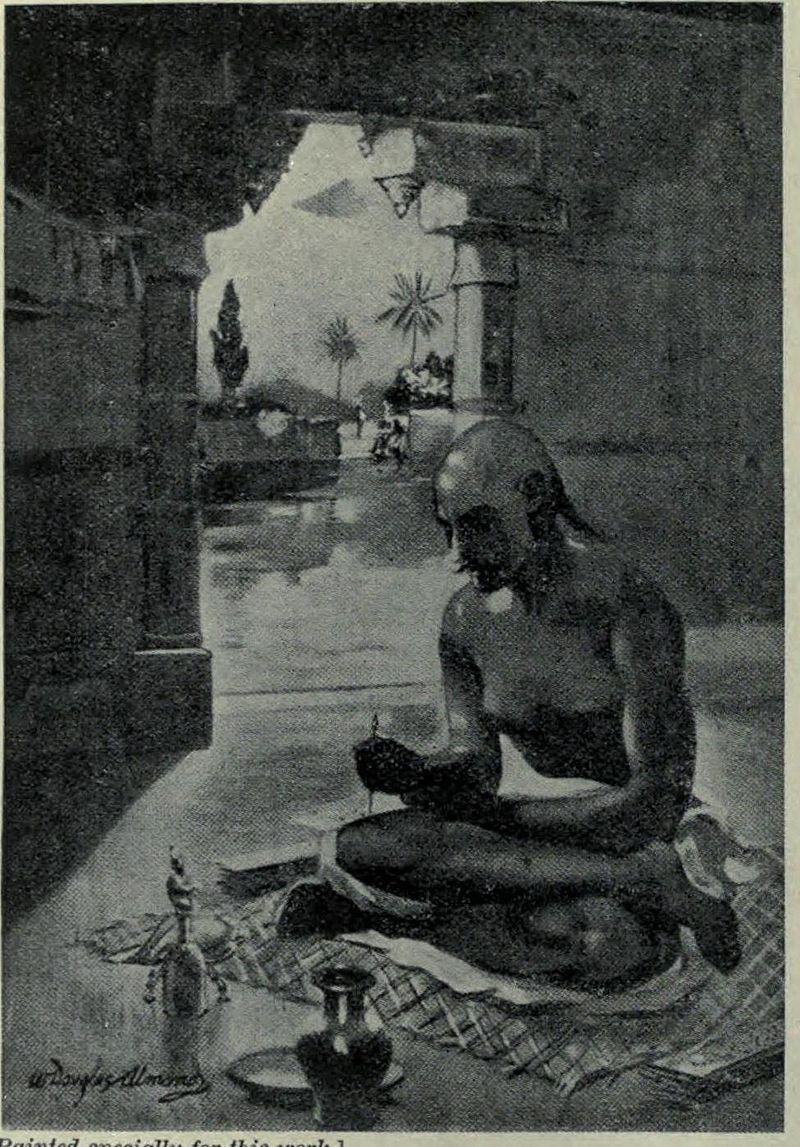
KalidasaKalidasa, said to be born in the 4th century AD, is widely regarded as the greatest poet and dramatist in the Sanskrit language.  Had he been alive today, he would have been a very busy man, possibly assisted by a huge team of research assistants, dishing out scripts, dialogues and lyrics for a vast majority of our dream merchants in Bollywood.

His emphasis on capturing the innate beauty of nature might not have enthused many of our present day producers and directors. However, his evocative portrayal of female beauty and the passionate depiction of the affairs of the heart would have surely had the Bollywood movie makers in enthrall.

In his ‘Ritusamhara’ (Medley of Seasons), Kalidasa describes six seasons in his inimitable style: Summer (Greeshma), Monsoon (Varsha), Autumn (Sharad/Patjhad), Pre-winter (Hemant), Winter (Shishir) and Spring (Vasanta). Each one is dealt with evocative descriptions of the elements of nature. The seasons form a backdrop for the affairs of the heart and the sensuous pleasures of the skin.

The four seasons of Bollywood

Bollywood movies also capitalize on the affairs of the heart. But these use primarily four seasons as a backdrop: Summer, Monsoon, Winter and Spring. Autumn and Pre-winter do not get covered so very explicitly, though the landscape and the situation in the story can often give the viewer a clue about the same.

The following songs readily attest to the concept of four seasons expounded by Bollywood.

Jhanak Jhanak Payal Baaje (1955, Director: V. Shantaram)

Aap Ki Kasam (1974, Director: J. Om Prakash)

Some Bollywood songs and the lens of Kalidasa

Even though Bollywood explicitly speaks of four seasons, it is tempting to use the lens of Kalidasa to view Bollywood songs.

Bollywood lovers court each other with gay abundance in all the seasons. Seasons often act as a complimentary backdrop to the mood of the hero and the heroine.

Moonlit nights of Summer facilitate singing of melodious songs in gardens with swaying palm trees.

Love Marriage (1959, Subodh Mukherjee)

Monsoon invariably induces a bolder expression of love. Hormones get all charged up.

Shri 420 (1955, Raj Kapoor)

Autumn is the season when lovers pine for each other.

Arzoo (1965, Ramanand Sagar)

Pre-winter is the season of renewed hope for the lovers.

Silsila (1981, Yash Chopra)

Winter ushers in a season of warm embraces and closer encounters of the amorous kind.

Aap Ki Kasam (1974, J. Om Prakash)

Spring is decidedly the season when thoughts of the young ones turn to romance.

Aandhi (1975, Gulzar)

For each of the seasons, a wide variety of songs can be mentioned. In the following posts, we shall review the six seasons of Kalidasa in some detail and try to see if Bollywood has willy-nilly celebrated these in the same spirit as that of the great Sanskrit poet.

Kalidasa’s challenges in the 21st century

Kalidasa, had he been around in our materialistic times, would have surely been laughing all the way to the bank, thanks to the insatiable appetite of Bollywood producers and directors for bolder and raunchier item numbers year after year. Commercial success being the motto, the demand for situations which justify an erotic twist to their scripts would have kept him and his team overworked at all times.

Nevertheless, one doubts if he would have been a happy man. Feminists of all hues would have hounded him no end, perhaps charging him with objectification of women’s anatomies. The delicately nurtured might have taken offence at the graphic details of their intimate affairs. Even those belonging to the tribe of the so-called sterner sex would have registered strong protests, demanding equal rights for their muscular and brawny anatomies also to be covered in the future editions of ‘Ritusamhara’.

Kalidasa might have taken a jaundiced view of the cinematic liberties taken with his scripts. He would have surely protested at being asked to pen inane soulless songs to suit whacky situations – that too with his lyrics expected to fit into a melody which would have already been composed and decided upon.

He would have lamented the lack of reference to nature, flora and fauna in Bollywood’s present day offerings. He would have fervently wished for yet another V. Shantaram to have burst upon the scene, with a delectable offering like this one from the movie Boond Jo Ban Gayi Moti of 1967 vintage.

(Related Posts:

https://ashokbhatia.wordpress.com/2016/05/15/the-six-seasons-of-kalidasa-in-bollywood-summer

https://ashokbhatia.wordpress.com/2016/05/20/the-six-seasons-of-kalidasa-in-bollywood-monsoon

https://ashokbhatia.wordpress.com/2016/05/27/the-six-seasons-of-kalidasa-in-bollywood-autumn

https://ashokbhatia.wordpress.com/2016/06/01/the-six-seasons-of-kalidasa-in-bollywood-pre-winter-hemanta

https://ashokbhatia.wordpress.com/2016/06/04/the-six-seasons-of-kalidasa-in-bollywood-winter-shishira

https://ashokbhatia.wordpress.com/2016/06/11/the-six-seasons-of-kalidasa-in-bollywood-spring-vasanta)

Read Full Post »

The Indian view of the discipline of management speaks of four pillars of Integral Management – Wisdom, Power, Harmony and Perfection. Of these, Harmony stands out as a key enabler for CEOs and business leaders to achieve their goals.

An individual manager can improve his/her effectiveness by ensuring harmony and balance within oneself – between his/her inner thoughts and outer actions and between the mind and soul.Technology MEDITATION-ENTREPRENEUR-SUCCEED

Large corporations and owners of the family businesses have to ensure that harmony prevails within the various arms of the organisation. The latter have to ensure that there is a clear succession plan in place, so that no disharmony is created at any stage. Maintaining a harmonious liaison with the financial institutions and the regulatory agencies is a key concern for many MSMEs.

Much like musicians in an orchestra, managers have to move in tandem with each other so as to create a symphony. A harmonious working inevitably leads to ‘synergy’, a term often used in the realm of management.

From a strategic point of view, operations have to be so conducted as to remain in harmony with the environment and the society at large.

A cordial relationship between the organization and its distributors allows a Marketing Manager to sleep peacefully.

A Finance Manager has to ensure the right balance between cost controls being implemented and the efficiency of departments which are affected by the same.

A Production Manager has to maintain harmony between his supervisors and workmen. He not only needs to deliver finished goods on a target date but also within the cost limits specified.

Harmony between management and employees is essential for a smooth run of the business. So is the harmony between employees at different levels of hierarchy and between employees of different age groups.

At the personal level, the owner of a family business has to ensure that a harmonious succession plan is in place. An individual manager can improve her effectiveness by ensuring there is harmony between her inner thoughts and outer actions.

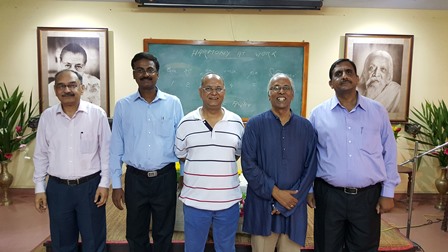
At a one-day seminar on “Harmony in Management” organized by SACAR on the 20th of March, 2016, speakers from a wide spectrum of managerial expertise addressed the participants on the need for, and the ways to achieve, harmony in operations.SACAR Harmony 2

Dr. G. Natchiar, co-founder, Emeritus, Director Aravind Eye Hospital, Madurai, the chief guest, stressed upon the importance of the Vision and Mission of an organization. She not only spoke about the “Aravind Eye Model” but also shared with those present,the innovative HR policies of Aravind Eye Care. Dr. Natchiar highlighted the frugal aspect of her organization which enables it to continue to offer affordable eye care to people of India and bring about harmony in its operations. She detailed the steps taken to improve the productivity of doctors, thereby making the operations cost-effective and the institution becoming a role model for similar health care providers in other parts of the world.SACAR Harmony 1

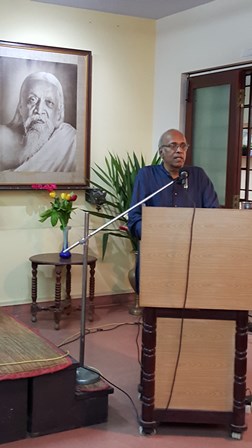
Dr. Ananda Reddy, the Director of SACAR, elaborated upon the four essential components of Harmony ― Collaboration, Goodwill, Benevolence and Tolerance. These alone enable organizations to work and progress smoothly. Management education in India needs to be re-engineered to impart training in these components as well, so as to make it more holistic and in tune with the times.SACAR Harmony 3

Mr. B. R. Babu, IAS, Secretary Welfare, Government of Puducherry, shared with the participants his experiences of bringing about industrial harmony in public sector undertakings. He highlighted the need for managers to take ownership of their tasks and fulfill those within the ambit of the law.SACAR Harmony 4

Prof. Sibnath Deb, Prof. of Psychology and Director Incharge of the Directorate of Distance Education, Pondicherry University, elaborated upon the psychological aspects of inter-personal relationships which alone contribute towards bringing about harmony and happiness in one’s personal life.SACAR Harmony 5

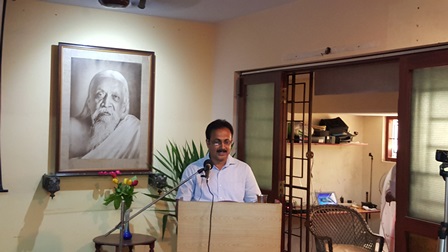
Yours truly spoke about ways of establishing harmony at work. I touched upon the manner in which challenges faced by managers from customers, suppliers, personnel, superiors, peers and subordinates could be successfully met.SACAR Harmony 6

Mr. Ganesh Babu, Director of “Winning Minds”, emphasized the importance of harmonizing oneself first. He stressed upon the fact that performance of CEOs is evaluated based on not only the results they achieve but also the quality of relationships they have with other stakeholders in their organizations.SACAR Harmony 7

Ms. Uma Prajapati, Director of Upasana, Auroville, spoke of the inner call of a professional designer and the satisfaction gained when serving the community around a business. She highlighted her singular achievement of creating Tsunamika, a tiny doll, which brought about a positive change in the lives of women affected by the 2004 tsunami.

Prof. Kisholoy Gupta conducted an interactive group discussion which led the participants to articulate their major takeaways from the day-long event and also imparted the value of appreciating others.SACAR Harmony 8

Dr. Arvind Gupta, Assistant Director, Directorate of Distance Education, Pondicherry University, coordinated the entire event. His back up support was invaluable in the planning as well as the hosting of the entire event.

Dr.Shruti Bidwaikar, Assistant Director, SACAR, summed up the proceedings and offered a vote of thanks.

The seminar received an overwhelming response from participants coming from various walks of life, like government officials, management educationists, corporate executives, businessmen, Aurovillians, entrepreneurs and students.

The Integral Management Group of SACAR had already covered the facet of Perfection during September 2015. The next event, focusing on the facet of Power, is planned to be hosted during August, 2016.

(http://www.bienveillance-entreprise.fr/entreprise-2/la-bienveillance-ou-lharmonie-dans-le-management-chez-les-dirigeants-indiens)

(Press coverage by The Hindu:

http://googleweblight.com/?lite_url=http://www.thehindu.com/news/cities/puducherry/harmony-in-management-builds-a-successful-team/article8408054.ece&ei=o_mBYHhC&lc=en-IN&s=1&m=225&host=www.google.co.in&ts=1459225799&sig=APY536zzDjXkqVeszf8Ya9EQqwJnWp7JFg)

(Related Posts:

https://ashokbhatia.wordpress.com/2015/10/06/managerial-perfection-notes-from-a-seminar-at-pondicherry-india

https://ashokbhatia.wordpress.com/2015/03/17/an-inner-approach-to-leadership-and-management-note-on-a-seminar)

Read Full Post »

All of us encounter angry bosses – whether at our places of work or at our homes. Permit me to re-share some thoughts on this subject with you.

ashokbhatia's avatarashokbhatia

Quite often, life gives us a roller-coaster ride. We get pulled and pushed by forces beyond our control. Then, we suddenly discover someone on whom we can work off our pent-up feelings. In the house, it could be the unsuspecting spouse who ends up absorbing the shock. In an office setting, we ourselves could be at the receiving end. If so, we quickly find a scapegoat onto whom our own brand of vitriol could be off-loaded.

Consider this. The CEO, when things are going wrong, takes it out on the VP. The VP goes and ticks off the General Manager. The GM, the unpleasant OVERSTAYING ONE’S WELCOMEinteraction concluded, immediately proceeds to crucify the Manager. The Manager loses no time in giving a piece of his mind to the hapless Executive. While the Manager sits down to have a cup of coffee in an attempt to cool off, the fuming Executive takes the…

View original post 1,177 more words

Read Full Post »

The latest family movie soon to hit a restricted number of screens is “Shankar-the bold”. It captures the life and times of the youngest one in our family, right from his birth till the time he celebrates his second birthday. Shankar The Bold  cd cover

Preparing for the Movie

As always, the process remains the same. Going through family pictures and videos. Selecting the ones which are worth preserving. Conceptualizing the overall script. Deciding on various sections. Putting them in a tentative sequence. Screening the photos once again. Rearranging some of these into newer sections. Putting these through an Adobe Photoshop wringer.

Selecting the music to be used in the background. Consulting friends and family members for the choice of music. Seeking the help of others to download relevant songs. For some favourite songs, creating a special sequence of the visuals, in sync with the lyrics. Rearranging the script, if necessary.

Getting Connected

For the period to be covered, ensuring that all important events and people are getting covered. Retrieving poems, notes and letters specifically composed for some of these events. Planning to use these at appropriate places in the narrative. Using instrumental music as a backdrop so it does not distract from the verbal content on the screen.

The younger generation needs to understand the background of the family. It also needs to know who all comprise the extended family. Members are spread over all the continents. To collect their photos, getting their names and relationships right and inserting them in the narrative is no mean task.

Elders in the family are immensely useful in providing the finer details of the lives and times of our ancestors. A whiff of nostalgia, laced with family history, ensures that the movie does not remain an exercise in narcissism. Instead, it ends up being a valuable addition to the family archives.

Composing the Movie

There are several movie-making softwares available. The one that we have liked is Womble Multimedia. Arranging the photos section-wise and inserting relevant audio tracks is a skill which one learns over a period of time.

Once the movie has been composed, the question of its disc reproduction comes up. Each set has to be individually checked for its correctness. Defects in sound track or composition have to be ironed out. Eventually, a Master Disc takes shape. This is again played out on a dvd player, just to check that the aspect ratio and other details are well taken care of.

Scope for Innovation

Making each family movie unique is one of the serious challenges. For the latest offering, we came up with the idea of linking family events to important events. So, if the boy was born at a time when an important merger and acquisition had taken place in the business world, the event found a mention in the narrative.

Since ours is a family of movie buffs, we decided to link important family events to movies released around that time. Let us say a marriage in the family took place in a year in which a blockbuster had hit the silver screen. So, a short clip from the movie found a place in the narrative.

A Labor of Love

An exhausting but uplifting process. The unalloyed joy of creativity. The satisfaction of having made something which entertains, educates and celebrates a milestone for the family. Something which the younger ones would cherish when they grow up. A fragment of the subtle connection between the past and the future.

(If you like this post, there is a good chance you may like an earlier one as well: https://ashokbhatia.wordpress.com/2012/07/07/some-baby-steps-in-movie-making)

Read Full Post »

Quite often, life gives us a roller-coaster ride. We get pulled and pushed by forces beyond our control. Then, we suddenly discover someone on whom we can work off our pent-up feelings. In the house, it could be the unsuspecting spouse who ends up absorbing the shock. In an office setting, we ourselves could be at the receiving end. If so, we quickly find a scapegoat onto whom our own brand of vitriol could be off-loaded.

Consider this. The CEO, when things are going wrong, takes it out on the VP. The VP goes and ticks off the General Manager. The GM, the unpleasant OVERSTAYING ONE’S WELCOMEinteraction concluded, immediately proceeds to crucify the Manager. The Manager loses no time in giving a piece of his mind to the hapless Executive. While the Manager sits down to have a cup of coffee in an attempt to cool off, the fuming Executive takes the office boy to task. The office boy delivers a stunning kick to the dog. The dog, realizing that this is surely not his day, steps out in the street to bark at the cat. The cat starts scouring the drains for a mouse which deserves to be at least rebuked, if not devoured.

Note that down the line, each one is unhappy. Each one is looking for someone else to whom the baggage of anger can be passed on. It is like a relay race, where the torch of anger is being kept ablaze. As the day progresses, we find that the place is replete with dull faces, bent backs and slouching shoulders. People go around with a highly constipated look on their faces. Possibly the only people left suppressing a chuckle are the ones who serve tea and coffee at the tables of the high and mighty. For the better part of the day, white-collar productivity goes for a toss.

When Anger Becomes Predictable and Routine

Many bosses have honed their skills of managing and controlling affairs by using what they consider to be the most deadly weapon they have at their disposal – anger. A public display of anger leaves those around them shaking and shivering. This gives them a feeling of having overpowered their hapless subjects. However, when this becomes a predictable and a routine affair, several things happen.

One, the blame game starts. I did not do it, sir. It was she who forgot to ship the material on time, sir. Thus, the power of human ingenuity gets used up in inventing new excuses.

Two, the quick-fix approach comes into play. People get used to seeking look-good short-term fixes. The long-term implications are forgotten.

Three, some people develop resistance to it. Next bout of shouting and one could see them merely shuffling their feet and trying to put on a melancholy mask so as to hide their chuckles. In other words, there is no attempt at a genuine improvement in the situation.

Four, the boss willy-nilly acquires a reputation of someone who apportions blame without a fair hearing being given to all the parties concerned. All employees detest this disservice to the principles of natural justice. The respect for a senior is no longer real; it is feigned. A culture of hypocrisy gets perpetuated. Eventually, operational efficiency nosedives.

In such outfits, when the boss enters the work place, a frenzy of activity starts. Electrified at the boss’ presence, the employees run around like headless chickens. Physical presence and activity gets interpreted as a sign of efficiency. Those who can think quickly on their feet suddenly remember a very crucial issue for which they need to seek valuable guidance from the boss.

Five, seniors supporting the boss end up having to spend a great deal of time on mollifying the hurt souls. Invariably, they have an extra box of tissue papers readily available, just in case the tormented souls need to wipe off their tears. No senior is comfortable having to work with a sulking manager who might otherwise be a star performer. Many of them end up donning the extra hat of being Chief Listening Officers of the company. Seniors’ contribution towards company’s goals faces a real risk of getting diluted.

Handling Anger – Countering vs. Conditioning

Admittedly, there are juniors who feel they have been wronged and do not hesitate the register a protest. They have the guts to look the boss in the eye JOB LABELSand make him/her beat a hasty retreat, much like a hunter with a shotgun who, while taking a stroll in the corporate jungle, suddenly encounters a lioness who has just had a fight with her soul mate.

In one such situation, the telephone operator, a sprightly and spirited soul from amongst the delicately nurtured species, failed to transfer a customer’s overseas phone call because the top boss’ extension was busy with another call. The customer got through finally on her third attempt to call up the boss. All hell broke loose as the boss lost no time in court martialling the hapless operator, with the head of administration and the head of HR also getting ticked off in the process. Drawing herself to her full height, the operator stood her ground. Eventually, the boss realized that it was his own secretary who had kept the extension busy and was responsible for the delay. The operator got a well-earned reprieve. In due course of time, she even ended up being promoted as a secretary to the boss!

In such organizations, one could often run into morose executives. When prodded as to the reasons for their despondency, they are quite likely to come up with the explanation that they were yet to get the daily ‘quota’ of shouting from the boss! Pavlov would have been delighted to include this form of conditioning as well in his research work.

Of Oceans and Immersed Volcanoes

Once, when I asked one such CEO what he thought of his frequent display of anger, he gave me a rather harsh look and said ‘Do you think I like doing this? To be frank, it ruins a few hours of my day. But what to do? These people are so very stupid…etc, etc.’ I ended up pitying the fellow. He was working on a wrong premise – that anger alone can resolve issues – and was causing long-term damage to his own health.

Anger is highly contagious, much like negative news is. Mankind can perhaps be divided into two kinds. There are the ‘ocean’ types – those who are turbulent on the surface but calm deeper inside. Then there are the ‘immersed volcano’ types – the vast lake may look very placid on the surface but could be seething with anger within. It is this kind which causes maximum damage to its own well-being.

Selective Use of Anger

There are no easy solutions to controlling one’s anger. One has to first learn to accept oneself and feel happy and contented inside. One also needs to empathize with others and accept them as they are. Then alone does one stand a chance of guiding others around oneself in rectifying the mistake and in ensuring that it does not recur. The basic quality one needs to have is the capacity of observing oneself at all times, and following a strict self-discipline as to when a display of anger is done and when it is not.

Soothing music surely helps. Agitated nerves can get calmed down by a bout of meditation. A ‘laughter break’ with a colleague who has a sunny outlook towards life could bring some relief. Getting busy with another challenge for the day is another anti-dote to anger.

Yes, I also happen to know bosses who have perfected the art of displaying anger selectively, while not feeling it within themselves. But they do so once in a while, when a situation really demands a show of temper. I admire them for their wisdom and sagacity.

How do you deal with anger at the work place?

Read Full Post »

Music has great power. It touches the innermost recesses of our being. It invigorates. When we attend a concert and soak in music which is uplifting and rich, there are moments when we can hardly bear the sheer bliss. Mellifluous notes surround us. We float in an ocean of musical waves, enjoying its depth and grandeur. We just wish for the time to stop its relentless onward march. We wish to forever live in that frozen moment of inward happiness. We crave to be left alone in space and time.

We live in exciting times. We have geniuses who enthrall us with music of diverse genres. Scintillating dance performances, mesmerizing concerts and rapturous vocals keep us spellbound. Right from the snow-clad Swiss Alps to the lush green plains of India, one is fortunate to have heard and seen maestros who have perfected the art of touching our souls and made us appreciate the nobler aspects of our lives.   

By way of a humble salute to some such maestros, one recalls some encounters of a musical kind.

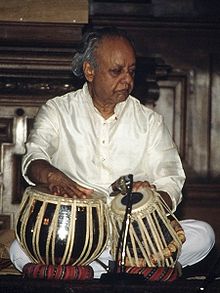
Rythmic repartee on tabla, Ustaad Alla Rakha, Hyderabad, India, 1960

Alla_Rakha

Ram Leela of Sri Ram Bharatiya Kala Kendra, Mathura, India, 1967

Ramlila

Soulful notes of the strings, Ustad Amjad Ali Khan, Chandigarh, India, 1975

Ustad Amjad Ali Khan

Soft mellifluous rendering of Hindustani Classical music, Pandit Kumar Gandharva, Dewas, India, 1978

Pandit_Kumar_Gandharva

A unique voice with a classical touch, Manna Dey, Chandigarh, India, 1983

manna-dey

A captivating ballet, Swan Lake, Moscow, Russia, 1989Swan lake balletOne of the great voices of India, Shubha Mudgal, Chennai, India, 1996

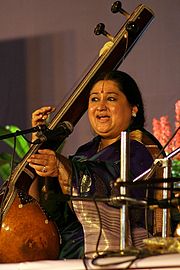
Shubha_Mudgal

A velvet-like voice and some exquisite Urdu ghazals, Jagjit Singh, Chennai, India, 1998

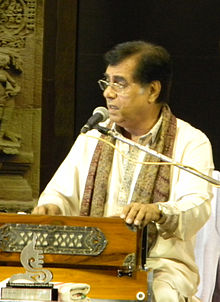
Jagjit_Singh_(Ghazal_Maestro)

Fluid notes of the flute, Shashank, Tiruvannamalai, India, 2000

shashank 1

Swaying with the beats, Ustad Zakir Hussain, Chennai, India, 2001

Ustad_Zakir_Hussain

Enchanting Bharatnatyam, Mallika Sarabhai, Auroville, India, 2004

mallika_sarabhai

Captivating and graceful Kathak, Uma Sharma, Auroville, India, 2006

uma sharma

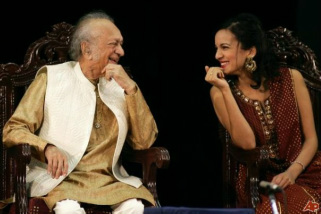
Rapturous notes on the sitar, Pandit Ravi Shankar and Anoushka Shankar, Chennai, India, 2008

ravi and anoushka shankar

Flowing with the tide of Sufi music, Abida Parveen, Chennai, India, 2009

Abida Parveen Nov 09

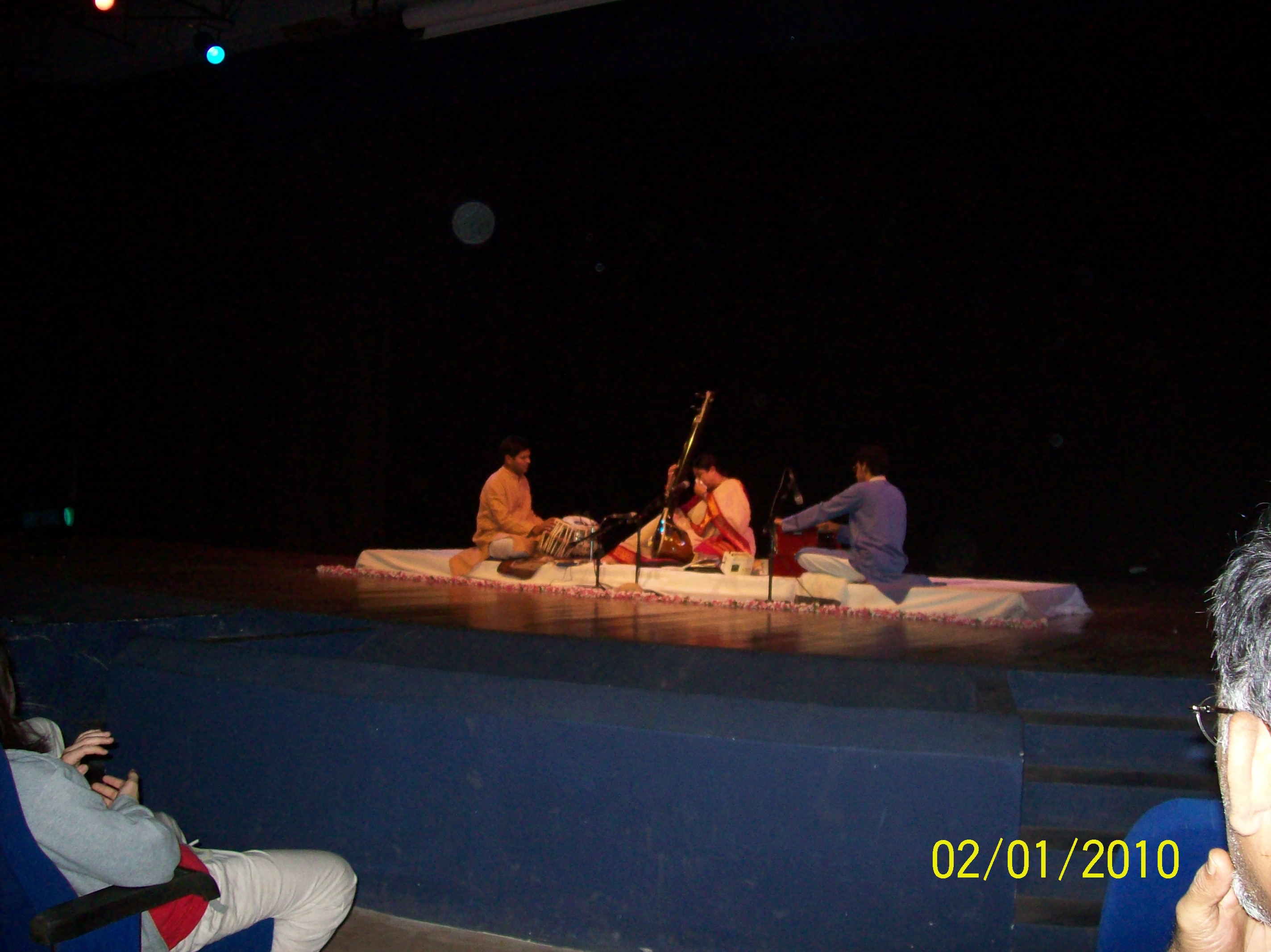
Rich tapestry of melody, Kalapini Komalini, Auroville, India, 2010

Kalapini Komalini Jan 2010 1

Haunting sounds of the flute, Pandit Hariprasad Chaurasia, Pondicherry, India, 2010

220px-Hariprasad_Chaurasia_at_Bhubaneswar,_Odisha

Experiencing devotional ecstasy, Parvathy Baul, Pondicherry, India, 2011

parvathy_baul

Casting a spell with local folk music, Obwald Bhutan Appenzell, Sarnen, Switzerland, 2012

Obwald quartet July 2012

Sonorous chants of the monks from Bhutan, Sarnen, Switzerland, 2012

obwald 2012

Mesmerizing harmony of St. Louis Symphony, David Robertson, Lucerne, Switzerland, 2012

robertson-david

Captivating notes of the violin, Christian Tetzlaff, Lucerne, Switzerland, 2012

christian tetzlaff

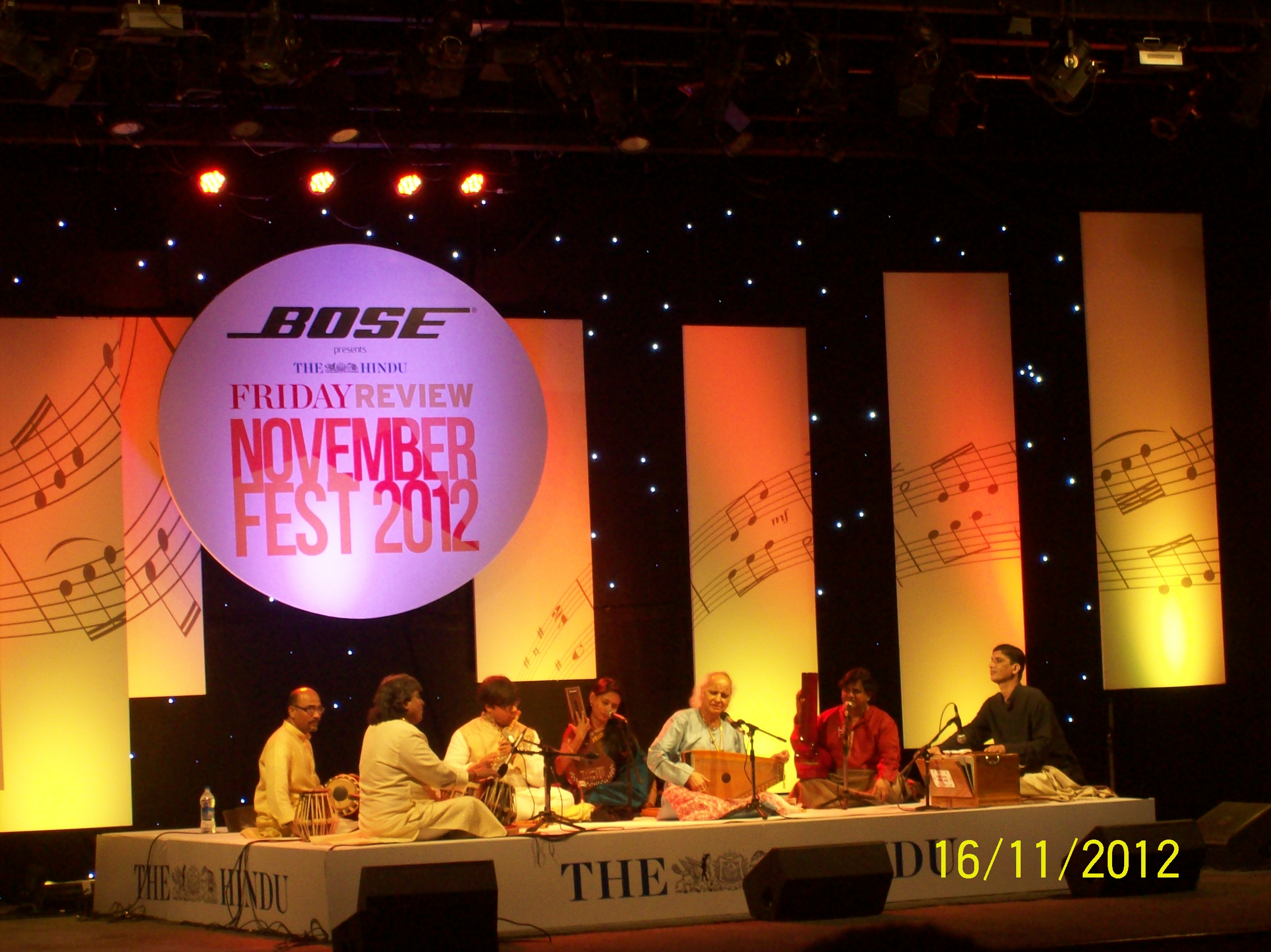
Sheer bliss of virtuosity in Hindustani classical music, Pandit Jasraj, Chennai, India, 2012

Pt Jasraj

Mesmerizing steps of Kathak, Mahua Shankar, Pondicherry, India, 2014

Mahua Shankar

Improvisations on the santoor, Pandit Shiv Kumar Sharma, Pondicherry, India, 2014

Pt Shiv Kumar Sharma Mar 2014

The spirit of perfection such artists imbibe is worth emulating for those who truly wish to excel in any field of life. They could be first-generation enthusiasts. Or, they could be from illustrious families with true blue artistic blood coursing through their veins. Invariably, their humility is praiseworthy. The magic latent in their fingers, vocal chords and lissome bodies leaves us spellbound. What they offer somehow resonates with our inner being.

Music is indeed food for the soul. The genre does not really matter. Our choices and preferences may differ widely. But what matters is the way it touches our hearts. We just need to feel it. We merely need to go with the flow. If we bring in our minds and try to analyze it, we just end up losing the charm and the essence of it.

Music makes us experience a glowing harmony between our inner and outer selves. It helps us to dig beneath the veneer of several masks that we wear in our mundane life. It also acts as a catalyst in our quest for our true inner selves. Indeed, it is a true friend of our souls!

Does this post remind you of the kind of musical encounters you have experienced? Would you like to share these with some of us in the blogosphere?!

(Some of the photographs appearing in this post are from the personal collection of yours faithfully. Others are courtesy the world-wide-web. These may not correspond to the specific live performance covered here.)


Read Full Post »

At present, the term GDP in India appears to have come to represent our collective Gross Despondency Perception. Our economists and statisticians can perhaps cheer up the hapless and overtly depressed citizens. They can do so by overcoming their obsession with pure materialistic growth. There are several ‘intangibles’ as well as ‘tangibles’ which can get added to the quantitative measure of our progress. For all you know, they could end up depicting a rosier picture which would also be closer to reality.

The following invisible facets of GDP could do with better visibility in the public domain:GDP Housewife

1.   Grand Domestic Pampering 

Household chores performed by a vast majority of the better half of our citizenry continue to remain invisible even to prominent economists who take such services for granted at their own homes. Home makers surely deserve a better deal. Without their contribution, the wheels of our economy would grind to a complete halt in no time. Home management services are provided by them 24×7. There is no doubt that they possess a high degree of multi-tasking skills. Also, their inventory management techniques always ensure that there are no stock-outs in the kitchen when uninvited guests suddenly pop up over the weekends.

 2.   Gross Dramatic ProduceGDP Tagore

Why neglect works of entertainment, literature, music and art works? The movie industry keeps churning out pot-boilers one after the other. Over the years, only the bar of success at the box office keeps getting raised. Television has already blossomed into a primary source of entertainment for the masses. Both the mediums have transcended international boundaries and gone global. India boasts of prolific writers across all languages and there is no reason their contribution to the social thought process should get neglected. Creative personalities and achievers of all kinds have added value to the Indian identity – right from Rabindranath Tagore to M F Husain, from M S Subbulakshmi to Pandit Ravi Shankar, from Munshi Premchand to Vikram Seth and from Lala Amarnath to Saina Nehwal. The relative soundness of the Indian IP regime can facilitate the inclusion of this parameter in the GDP computation without much fuss.

 3.  Groovy Digital Products

With broadband getting rolled out across the country, and with spectrum sales eventually coming out of the depressing shadow of scams GDP Aishwaryaand judicial overreach, the Indian economy would soon start getting digitalized at a faster pace. Digital experiences are slated to improve in terms of reach as well as quality. This sector can boast of a unique range of intangible assets of its own. Such developments can only be ignored at our own risk and peril.

4.   Great Domestic Patience

Yet another soft power which remains ‘invisible’ to the Homo economicus (as opposed to the Homo reciprocans) amongst us is the religiosity, the innate bent towards spirituality and the resultant bias towards non-violence. The patience displayed by most of our denizens in dealing with shoddy civic facilities, super-slow public services and systemic corruption is perhaps a result of our social mores which are steeped in spirituality. By ignoring this facet, a great mechanism to handle setbacks in life is therefore left out of the reckoning.

GDP R&D

5.   Grand Design Patronage

R&D expenditure in the private sector is another area which deserves attention. Admittedly, we are far behind in the realm of innovation and design. But we do have the potential to catch up with the rest of the world. If such expenditure is considered an investment in the economy, a more realistic perspective would emerge.

6.   Green Development Plans

In the relentless pursuit of economic growth, we are guilty of drawing more than we replenish to Mother Nature. Whether it is mining, spectrum-sharing or water-management, we are taking myopic liberties which would prove very expensive, if not irreversible, in the timesGDP environment to come. Green initiatives taken to compensate for the loss of natural resources surely merit inclusion in our scheme of things. The aggregate value of ‘production’ should surely be adjusted to reflect the permanent damage caused to our fragile environment.

Considering intangibles in macroeconomics data is not a new idea at all. Way back in 1908, Thorstein Veblen, a sociologist and economist, had used the phrase ‘intangible investment’ to cover everything from innovation to promotion and advertising. At a business level as well, the proportion of tangible assets backing up a brand could be a miniscule 5% of the overall value of the brand.

The Bureau of Economic Analysis of US has recently created history of sorts by publishing a revised series of public accounts which include the R&D investment in private sector as well as original works of art such as films, books and music. As an example, for the period from 2002-12, the new data shows an annual average growth rate of 1.8% in place of the earlier declared rate of 1.6%.

We have a number of institutions, bodies, statisticians and economists who can surely propose a more balanced way of capturing the realities of the Indian economy. The data may not be easily available and may have its own share of initial controversies, but the attempt would certainly be an improvement in the right direction.

PS: Whatever little I understand of Economics, it is due to the learning received from late Prof. S P Singh, a friend, philosopher and guide. This article is merely a humble tribute to the great person. 

Read Full Post »

« Newer Posts