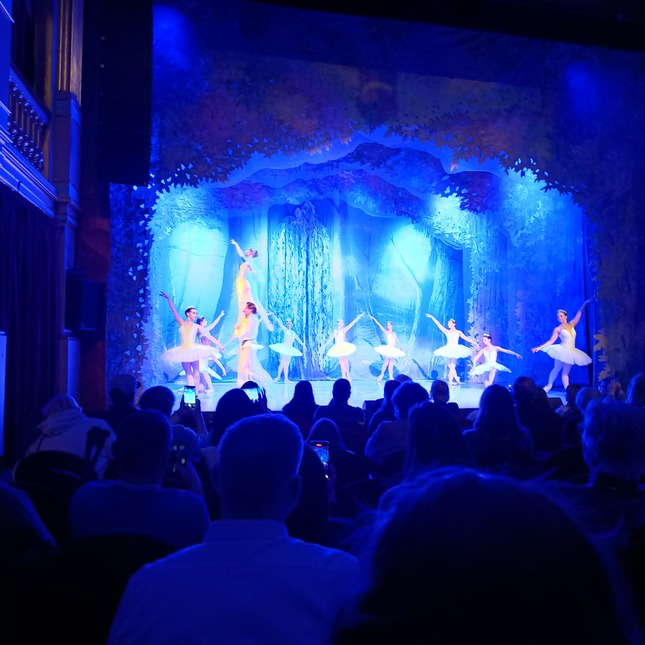
It is not often that one comes across a live performance that promotes the cause of environment and sustainable living. The ballet from Ukraine, aptly titled Song of the Forest, takes the issue of environmental protection to a different level altogether.
The Theme
It is a magical tale of love between the forest girl Mavka and the young man Lukash. The world of man and nature interact. There is love, betrayal, despair, and human greed. There is the dependence of the animal kingdom on the forest. Either of the main protagonists cannot forget the magical moment of love. It is also a story about how fate changes for someone who loses touch with nature and stops listening to his inner voice.
The relationship between Mavka and Lukash develops gradually and coincides with the seasons. The ballet portrays the beginning of a relationship between Lukash and Mavka during spring. Their love blossoms during the summer, a season of fertility of the Ukrainian land.
Autumn brings Lukash’s betrayal as he marries another woman. Come winter, and both Mavka and Lukash die. Their souls eventually meet in the world of eternity.
The ballet has many mythological images from Ukrainian fairy tales. What is also endearing is the occasional presence of forest animals that appear on the stage at regular intervals. Characters with malevolent intentions are also unobtrusively woven into the flawless movements of the dancers.
At its core, the ballet is a story of the fearless Mavka, who seeks peace in her world, just as Ukraine fights for freedom and peace in her country today.

Background
Song of the Forest is a legendary ballet that has been the pride of Ukrainian choreography for over 75 years. It celebrates romance as well as the purity of classical ballet technique. The ballet has already entered the Golden Fund of Ukrainian musical culture.

It is based on a play of the same name The Song of the Forest (1911) by Lesya Ukrainka, who was one of Ukrainian literature’s foremost writers, best known for her poems and plays. She was also an active political, civil, and feminist activist.

Gentle and lyrical music by the Ukrainian composer Mykhailo Skorulskyi was written for the ballet in 1936. It would not be wrong to say that he has gifted us with a real hymn to living nature and pure love. The music has a romantic aspect, is full of folklore, and captures the vivid moods of nature in a musical language. However, in the soundtrack, one misses a few sounds one typically associates with a forest. Like, either the occasional chirping of birds, or an infrequent roar of some animals.
Premiered in 1946, the ballet highlights the crucial need to promote a dialogue between man and nature, an aspect of our lives that most of us ignore these days, albeit at our own peril.
The Skill of the Artists
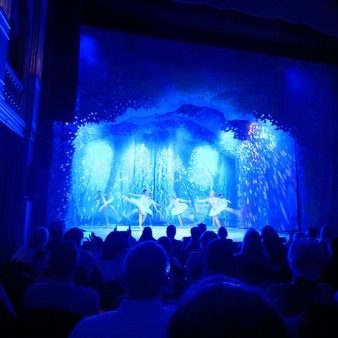
The ballet is filled with complex duet supports and has fascinating choreographic patterns. The skill and sophistication of the artists of Grand Kyiv Ballet artists leave the audience spellbound. The grace with which they move and the poise with which they perform either an assemble, a grande jeté, a plié, a pirouette, or a tour en l’air, leaves one mesmerised.
Forests in Indian Epics and Dramas
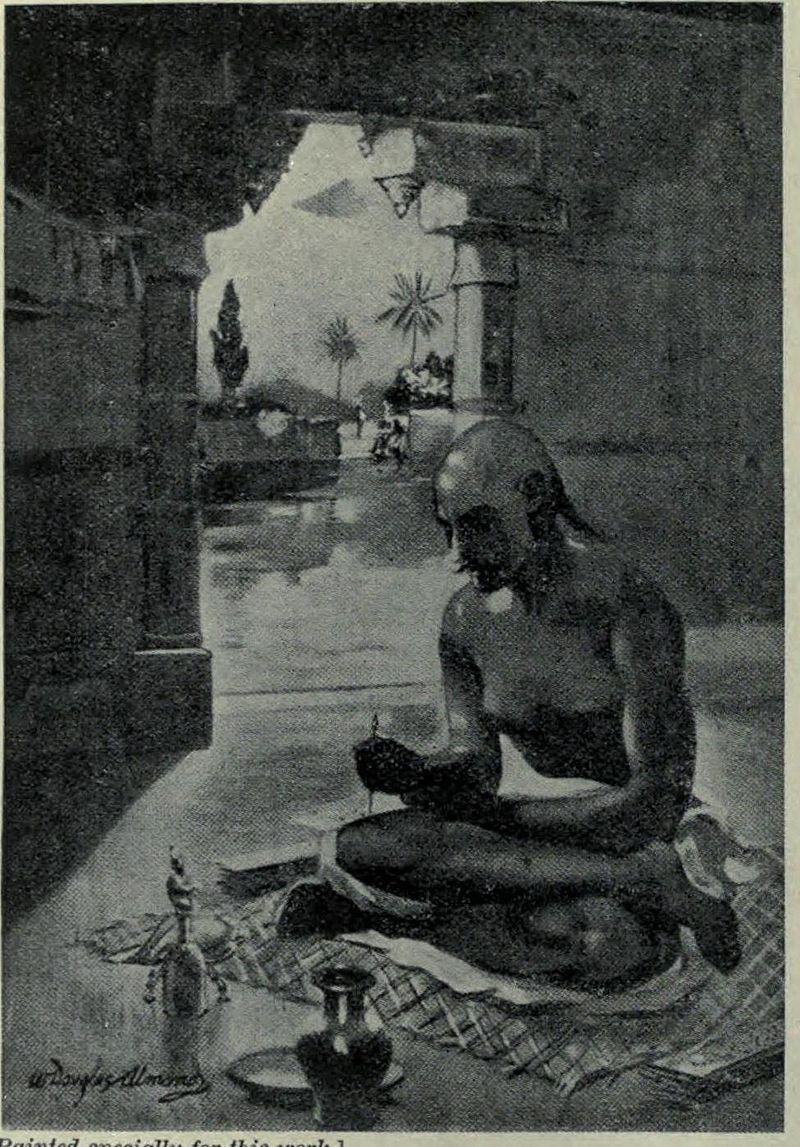
Forests play an important role on our planet and are part of many epic plays from India and elsewhere. Narratives of the Ramayana and the Mahabharata – both epics that are revered across South Asia – keep shifting from the kings’ palaces to forests. Almost all the works of Kalidasa in Sanskrit are replete with references to nature.
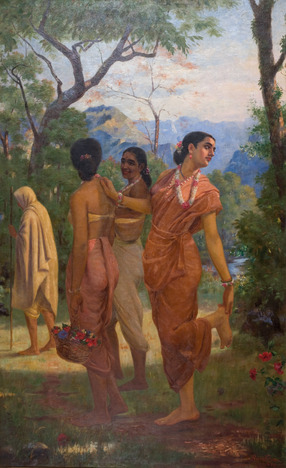
By way of an example, the heroine of Abhigyan Shakuntalam (The Recognition of Shakuntala) adores nature and is brought up in an area populated by dense forests. The play moves freely from the deep forest to the urban palace and from the earth to different levels of the heavens. The heroine falls in love with a king. Like Mavka and Lukash, their love also blossoms in the forest. However, upon return to his palace, the king forgets her. Eventually, the king realises his folly and the two get united.
Abhigyan Shakuntalam was probably the first Asian drama translated into Western languages. It is also one of the very first Sanskrit works ever translated into English. The first translation was done by the famous orientalist, Sir William Jones, in 1789. Its publication was a sensation and it went into five editions over two decades. It was translated into German in 1791, and into French in 1803. Later it was translated into several other Western languages. It inspired operas and ballets, including Marius Petipa’s ballet La Bayadère.
The hero of Meghadootam (The Cloud Messenger), a classic poem composed by Kalidasa, is a love-lorn yaksha. He has been banished by his master to a remote region for a year and is pining for his wife who lives in a far-off land. He requests a cloud hovering above to take a message of love to his wife.
Likewise, Ritu Samhara (An Account of All Seasons), a medium-length poem, captures in evocative detail all the six seasons in a tropical country like India. In all these literary masterpieces, nature plays an integral part.

The Venue
During April 2024, the Song of the Forest was performed at the Drammen Theatre in Norway.
It is a magnificent building dating back to 1870 and has faced many challenges, including fires. But with each setback, it has risen like a Phoenix and emerged stronger. The last upgrade of the complex happened in 1997.
The theatre, and its courteous staff, enabled many amongst the audience to create a memory to be cherished for a long time to come!
Notes:
- Part of the text is borrowed from the websites of Grand Kyiv Ballet and Drammens Theatre.
- Illustrations are courtesy the world wide web. Painting of Shakuntala is by Raja Ravi Varma.
Related Posts:
https://ashokbhatia.wordpress.com/2016/05/14/the-six-seasons-of-kalidasa-in-bollywood




 ashokbhatia