
For more than six decades, Suchitra Sen, originally named Roma Dasgupta, stood as the undisputed queen of Bengali cinema, embodying the essence of Bengali femininity, beauty, and elegance. Even after her unexpected withdrawal from the public eye in 1978, her allure and mystique remained intact; in fact, her choice to retreat into seclusion only deepened the intrigue surrounding her.
It is believed that one of director Sukumar Dasgupta’s assistants was responsible for bestowing upon Roma Dasgupta the iconic screen name, Suchitra Sen. Sukumar Dasgupta was the director of her debut film, Saat Number Kayedi.
Her passing on January 17, 2014, signified the conclusion of a remarkable era in Bengali cinema.
The Suchitra Sen phenomenon was unprecedented in the history of Bengali cinema. Not only was she the leading female actor of her time, but she also emerged as one of the most significant stars to grace the Bengali film industry, with her widespread popularity rivaling only that of Uttam Kumar, with whom she shared the screen in 30 of her 60 films. She was the first and only actress to earn the title ‘Mahanayika,’ a distinction that was only similarly awarded to Uttam Kumar in Bengali cinema.
During the height of her fame in the 1950s and 1960s, it is estimated that she commanded a fee of around ₹ 1 lakh per film. Her immense star power made her a central figure in the film industry, often featured prominently on movie posters, and her name was typically highlighted even more than that of the male lead, with the exception of Uttam Kumar, where they shared equal prominence.
The partnership of Suchitra Sen and Uttam Kumar on screen marked a pivotal era in Bengali cinema. Their collaboration spanned 30 films, starting with Sharey Chuattar in 1953, and significantly altered the landscape of Bengali film history. For over two decades, from 1953 to 1975, Suchitra and Uttam reigned supreme in the industry, delivering memorable hits such as Agnipariksha, Shap Mochan, Sagarika, Harano Sur, Indrani, Saptapadi, and Bipasha.
They became icons that resonated with the youth, embodying their dreams and aspirations. Their undeniable on-screen chemistry was so powerful that they transcended their individual stardom, merging into a single entity: Suchitra-Uttam or Uttam-Suchitra. Uttam Kumar himself acknowledged this bond, stating, ‘Had Suchitra Sen not been by my side, I would never have been Uttam Kumar.’
Suchitra is hailed as the first style icon of Bengali cinema, with her unique mannerisms inspiring generations of young Bengali women. The characters she portrayed were often progressive, reflecting the aspirations of women ahead of their time. In many of her films, she took on the roles of ‘professional women,’ whether as an artist in Jiban Trishna, a doctor in Harano Sur, or a politician in Aandhi.
Madhuja Mukherjee, an associate professor of Film Studies at Jadavpur University, noted, ‘Her star persona was shaped by her roles. She exuded a remarkable star quality, both in her appearance and her performances. Compared to the societal norms of her time, she was almost placed on a pedestal, embodying the aspirations of women.’ Remarkably, according to Mukherjee, Suchitra maintained her status as a leading star throughout the 1960s, even as she entered her thirties.

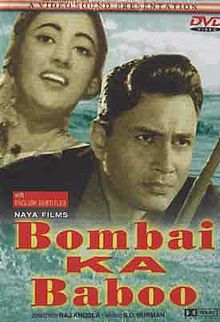
Suchitra’s stunning beauty and immense fame frequently eclipsed her acting talent. Nevertheless, she made history as the first Indian actress to win the best actress award at an international film festival, receiving the honor for her role in Saat Paake Bandha (1963) at the Moscow International Film Festival. Her star power was well-recognized in the Hindi film industry, where she appeared in several major films, including Devdas, Bambai Ka Babu, Mamta, and Aandhi.
Born on April 6, 1931, in Pabna, now part of Bangladesh, Roma was one of eight siblings. Her father, Karunamoy Dasgupta, served as a school headmaster, and she was raised in a culturally rich environment. The Partition led her family to West Bengal, and Roma, already a captivating beauty, soon married Dibanath Sen, the son of a prosperous industrialist. Before venturing into acting, Roma aspired to pursue a music career and reportedly recorded several songs in her own voice.
Despite the admiration she garnered and the unwavering attention from her devoted fans, Suchitra Sen remained a mystery. Known as ‘Mrs Sen’ in the film industry, she was often viewed as distant and hard to approach. By the time she entered the film world, she was already a married woman and a young mother, and her striking looks, reserved demeanor, and privileged background often intimidated those around her. However, she was also recognized for her warmth and friendliness.
Veteran actress Moushumi Chatterjee remarked, ‘Suchitra Sen embodied elegance. She had a remarkable ability to distinguish her personal life from her public persona.’
Industry insiders believe that Suchitra’s keen awareness of her own celebrity status contributed to the myth surrounding her. This understanding may explain her enduring reign as the queen of Bengali cinema and the continued fascination with her, even 36 years after she chose to live in complete seclusion. Her abrupt withdrawal from the public eye only heightened interest in her, sparking numerous discussions, debates, and theories about the reasons behind her choice to retreat.
Rarely spotted in public, she became the most renowned recluse in West Bengal, drawing comparisons to Hollywood’s Greta Garbo. Her commitment to privacy and the lengths she reportedly went to maintain it often seemed almost obsessive.
In 2005, she allegedly declined the Dada Saheb Phalke Award because accepting it in person would compromise her privacy. Even in death, she preserved her enigmatic aura: her final journey was conducted in a black-tinted hearse, obscuring her body from public view.
Suchitra Sen had never collaborated with any of the three giants of Bengali parallel cinema: Satyajit Ray, Ritwik Ghatak, or Mrinal Sen. According to reports, she turned down an opportunity to work with Satyajit Ray because he requested that she refrain from taking on other projects while filming. Suchitra expressed her willingness to honor her commitment to him but was unwilling to promise exclusivity. As a result, the collaboration fell through, and Satyajit Ray ultimately abandoned the project.
While discussing her views on Hindi actors, she touched upon her decision to decline a collaboration with Raj Kapoor. Suchitra explained that the reason for her refusal stemmed from an encounter where the legendary actor and director positioned himself near her feet and presented her with a bouquet of roses. She expressed her preference for men who engage in sharp, intelligent dialogue, which made her uncomfortable with Raj Kapoor’s gesture.

Suchitra Sen and Dharmendra starred together in the film Mamta, directed by Asit Sen. According to a report, Suchitra recounted an incident where Dharmendra unexpectedly kissed her on the back during a scene. She revealed that this moment was not scripted, but the director, Asit Sen, found it compelling enough to include in the final cut of the film. Describing it as an ’embarrassing moment,’ Suchitra made it clear that she was not fond of Dharmendra’s spontaneous kiss.
The world had undergone significant changes in those 36 years of her seclusion, yet the image of Suchitra Sen remains timeless. This enduring presence continues to resonate with the Bengali community, as demonstrated by the large crowds of all ages that filled the streets of Kolkata during her final farewell.
While many regarded Suchitra Sen’s passing as a profound loss for the film industry, the esteemed director Buddhadeb Dasgupta offered a poignant perspective: ‘She will forever be celebrated as the greatest heroine of Bengali cinema. No one can rival her mass appeal. However, the industry truly lost her when she chose to live in seclusion over 30 years ago.’
Suchitra Sen has been honored with four BFJA Awards, the Best Actress Award at the 3rd Moscow International Film Festival, a Filmfare Bangla Award, the Filmfare East Lifetime Achievement Award, the Banga Bibhushan, and the Padma Shri.
Today marks Suchitra Sen’s 94th birthday, a perfect occasion to celebrate her remarkable film legacy. You can catch some of her iconic performances on Prime Video, where titles like Agnipariksha, Sagarika, Indrani, Bipasha, and Devdas are available. On YouTube, check out Shap Mochan, Harano Sur, Saptapadi, Jiban Trishna, Aandhi, Bambai Ka Babu, Mamta, and Uttar Phalguni. On Hoichoi, don’t miss Saat Paake Bandha, Deep Jwele Jai, and Sharey Chuattar.
Notes
- A version of this article first appeared in The Reviewer Collective group on Facebook. The author’s consent to reproduce it here is gratefully acknowledged.
- I believe that after she retired from acting, she lived in Pondicherry for a few years as a reclusive inmate of the Sri Aurobindo Ashram.
- All the visuals are courtesy the World Wide Web.






 ashokbhatia